Feverishly Racing Toward Our Own Destruction…

By Michael Snyder

Source: End of the American Dream

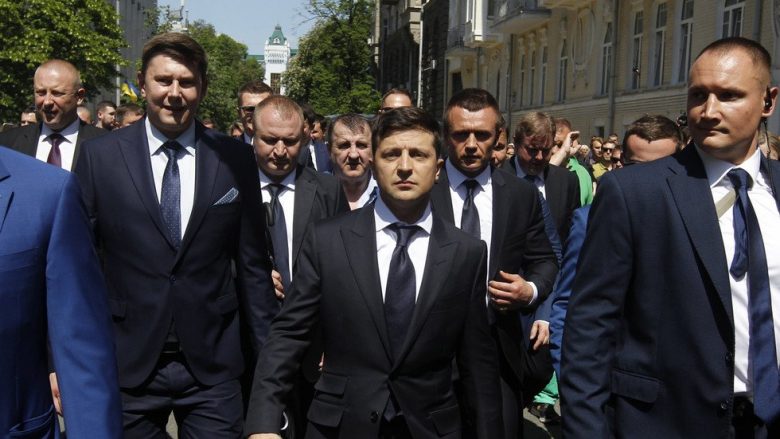
We are careening directly into an abyss of war, pain and misery, and our leaders are thunderously applauding as it happens.  Ukrainian President Volodymyr Zelenskyy came to Washington this week because he wanted more money, and our politicians in Washington definitely did not disappoint him.  Even though we had already given Ukraine far more money than the rest of the world combined, our politicians agreed to give him another colossal mountain of cash.  On some level, we all have to respect Zelenskyy’s skills as a con man.  Even though he has banned the main opposition party in Ukraine, and even though he has banned all television stations that were critical of him, and even though he just banned an entire ancient Christian denomination, our politicians continue to worship him like some sort of a pop music star.  Zelenskyy has become an extremely oppressive dictator that has set himself up to rule Ukraine for as long as he wants, but members of Congress from both parties continue to hail him as a “champion of democracy” that deserves our unquestioning support.

What makes this so dangerous is that Zelenskyy has been trying very hard to pull the United States into his war with Russia.

Throughout 2022 the U.S. has been getting increasingly involved in the conflict, and at this point we are “providing most of the funding, most of the equipment, most of the ammunition, most of the high level intelligence and much of the training” for the international army that is fighting the Russians in Ukraine.

In other words, we are essentially a direct participant in the war.

For years I have been warning my readers that there would be a war with Russia, and now it is here.

If we had rational leaders in Washington, they would be trying to end this conflict before the nukes start flying.

But instead, they are pledging to give Zelenskyy whatever he needs for as long as it takes to defeat the Russians.

When Zelenskyy visited Washington this week, the White House literally rolled out the red carpet for him.

To see such an honor bestowed upon a cruel foreign dictator that is ruthlessly oppressing anyone that opposes him should nauseate all of us.

And when Zelenskyy arrived to deliver his speech to a joint session of Congress, he was greeted with a standing ovation.

It isn’t just the Democrats that have fallen for Zelenskyy’s act.

At this point, Mitch McConnell says that showering Ukraine with money should be our “number one priority”

“Providing assistance for Ukrainians to defeat the Russians is the number one priority for the United States right now according to most Republicans. That’s how we see the challenges confronting the country at the moment.”

Thankfully, there are still at least a few voices of reason that can see exactly what Zelenskyy is trying to do.

One of them is Tucker Carlson.

According to Carlson, it is absurd to give a foreign tyrant so much money when we have so many pressing needs here at home.

But no matter how hard Zelenskyy oppresses his own people, our politicians are going to continue to shower him with more money, and that is because Zelenskyy has done an amazing job of positioning his war as the most important “current thing”.  I really like how John Nolte made this point in one of his most recent articles

Zelensky has brilliantly — brilliantly! — positioned himself to be The Thing Through Which The Establishment Proves Its Purity.

That means the only questions anyone dares ask about Zelensky and Ukraine are…

Who can give Ukraine the most money?

Who can give Ukraine the most weapons?

Who can give Ukraine the most praise?

Who can lick Zelensky’s boots the cleanest?

Zelensky is getting everything he wants and more, including America flirting with nuclear war. Why? Because he was savvy enough to crack the code of the shallow, insecure, conformist idiots we elect and reelect as our leaders.

Nolte is quite right.

And once a con man has identified a “golden goose”, he is just going to keep coming back again and again.

So even though we have already given Ukraine more money than everyone else combined, it will never be enough to satisfy Zelenskyy.

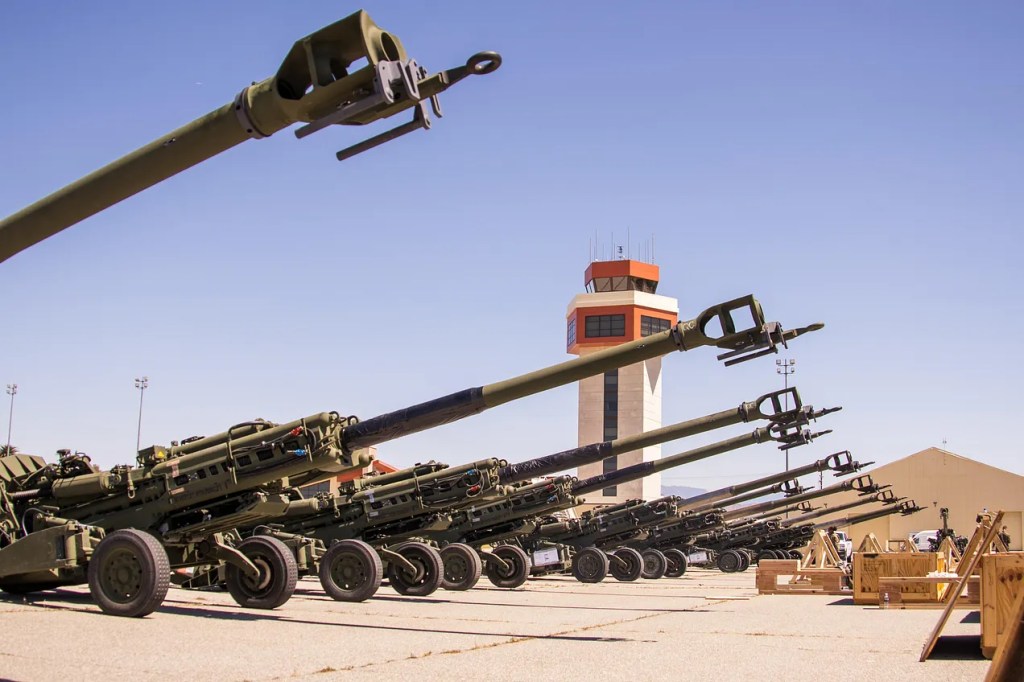
In addition to cold, hard cash, the U.S. also continues to give the Ukrainians some of our best military equipment.

The Biden administration just agreed to send Patriot missile systems to Ukraine, and that represents another huge escalation.

The Biden administration will send to Ukraine the most advanced air defense weapon in its arsenal, the Patriot missile system, officials said Wednesday, marking the most significant addition to American military support for the government in Kyiv in months.

Meanwhile, the Russians continue to escalate the conflict as well.

In fact, it appears that the Russians have been very busy moving tanks into position for another major offensive campaign from the north.

If both sides just keep escalating matters, we will eventually reach a point where somebody crosses a line that will never be able to be uncrossed.

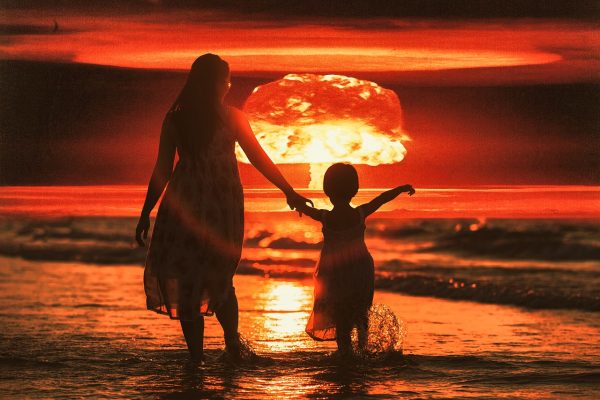
We have been pushed to the brink of nuclear war, and the Russians are getting ready to officially deploy their new Sarmat intercontinental ballistic missiles in January

Putin said on Wednesday during a meeting with military chiefs that he aimed to deploy his terrifying RS-28 Sarmat missile – nicknamed Satan-2 – in January.

The world-ending missile can blast targets at almost 16,000mph – meaning it has the potential to obliterate the UK 1,600 miles away in just six minutes.

Sadly, the quote that you just read is not an exaggeration.

Each Sarmat can reportedly carry up to 15 independently-targetable nuclear warheads.

That means that one missile goes up, and 15 warheads come down.

And each one of those warheads can instantly wipe out an entire major city.

The Sarmat is the most advanced intercontinental ballistic missile in the entire world by a wide margin, and we have no way to defend against them.

So maybe we should think twice before getting into a nuclear war with Russia.

Unfortunately, our leaders seem to have gone completely mad at this point, and of course our leaders in Washington are simply a reflection of what has happened to the rest of our society.

When Ronald Reagan described the Soviet Union as the “Evil Empire” in the 1980s, he was quite correct.

But since that time just about every form of evil that you can possibly imagine has absolutely exploded in our own nation.

So are we “the baddies” now?

Sadly, most Americans will not even entertain that question.

And our leaders are just going to continue to push us toward a nuclear conflict that could ultimately mean the end of our society once and for all.

Beware of Long Wars: Ukrainian Attacks on Russia Are Dangerously EscalatoryBeware of Long Wars:

By W.J. Astore

Source: Bracing Views

Reports that Ukraine is launching modified drones to strike airbases deep in Russia highlight the unpredictability and escalatory nature of wars. Ukraine is no longer content at defending itself against Russian aggression; Russia itself must be made a target, which will likely provoke harsher Russian counterattacks. Meanwhile, the U.S. Congress continues to authorize billions in military aid to Ukraine, which is pitched as defending democracy and freedom.

War is many things but it is rarely democratic. Indeed, as James Madison warned, war is inherently anti-democratic. It strengthens authoritarian forces and contributes to abuses of power and corruption. As the Russia-Ukraine War goes on, with no clear resolution in sight, Ukraine suffers more even as the chances of escalation rise.

James Madison warned that no nation can preserve its freedom in the midst of continual warfare

What’s needed now is resolute diplomacy — a committed effort to end the war by all parties involved, obviously Russia and Ukraine but also the U.S. and NATO. The longer this disastrous war lasts, the more unpredictable it will become, the more atrocious it will prove, and the more likely ordinary Ukrainians and Russians will suffer and die, whether at various battlefronts or on the homefront.

Negotiation is not weakness nor is it appeasement. Negotiation is sensible, rational, and life-affirming. But there’s little reason for Ukraine to negotiate when it’s enjoying a blank check of support from the U.S. and NATO.

Meanwhile, as Ukraine continues striking deep into Russia, one wonders to what extent the U.S. military and intelligence agencies are involved. Did the U.S. provide technology?  Targeting information?  Intelligence? Or is Ukraine doing this entirely on its own, a scenario that is less than comforting?

I sure hope the U.S. and Russia are talking.  In the confusion and chaos of war, how is Russia to know for sure that an attack on one of their strategic air bases is coming from Ukraine and not from NATO territory?  Even if it’s clearly coming from Ukraine, if these attacks are enabled or approved by the U.S./NATO, will the Russians see them as an act of war? Will they respond militarily, creating even more escalatory pressure?

Bizarrely, Ukraine’s defensive war against Russia has been sold as America’s “good” war, a chance to weaken Russia and Putin in the cause of defending Ukrainian “democracy.” But as Ukraine’s tactics turn more offensive, and as the Ukrainian government likely becomes more authoritarian due to the pressures of war, how wise is it for the United States to continue to send massive amounts of military aid there while discouraging diplomacy?

Policies that end in prolonging the Russia-Ukraine War in the name of teaching Putin a lesson and eroding his power may teach us all a lesson in how war is not just anti-democratic. War runs to extremes, and only fools believe they can control it in a way that is conducive to liberty and freedom and justice.

America’s 2022 Allocations to Ukraine Total $112 Billion

By Eric Zuesse

Source: The Duran

During this year, the U.S. Government has allocated $112 billion to Ukraine, in order to defeat Russia in the battlefields of Ukraine. Russia allocates normally $60 billion per year for its entire military, but this year has increased that 40% to $84 billion, because of its invasion of Ukraine. Russia invaded Ukraine because, on 17 December 2021, Russia had demanded that the U.S. Government and its NATO anti-Russian military alliance stop trying to place its missiles on and near Russia’s borders (especially in Ukraine, which is the nearest of all bordering nations to Moscow); and, on 7 January 2022 America and NATO said no. Russia then invaded Ukraine on 24 February 2022, in order to prevent Ukraine from becoming a launch-pad for U.S. missiles. That’s what the war in Ukraine is — and always has been — about, from the Russian viewpoint: not being faced with U.S. missiles that are only a five-minute missile-flight-time away from Russia’s central command in Moscow.

The war in Ukraine started in February 2014, by America’s coup there that overthrew Ukraine’s democratically elected neutralist Government and replaced it by a rabidly anti-Russian and pro-American one on Russia’s border, in order ultimately to become able to place just 317 miles away from the Kremlin U.S. missiles which would be only a five-minute flight-time away from nuking Russia’s central command — far too little time in order for Russia’s central command to be able to verify that launch and then to launch its own retaliatory missiles. It would be nuclear checkmate of Russia, by the U.S. (with the assistance of its NATO allies, which then would include Ukraine).

Whereas Russia’s objective is to not become nuclearly checkmated by America placing its missiles that close to Moscow, America’s objective is to nuclearly checkmate Russia in order to capture the world’s largest and most resource-rich country — to force Russia to capitulate and become another U.S. ‘ally’ (that is, vassal-nation).

President Biden had requested Congress to add $38 billion more this year for Ukraine than the $67 billion that was funded earlier in the year, but Congress decided to increase his requested amount by $7 billion (almost a 20% increase in his suggested increase), so that there will be a total of $45 billion added to the $67 billion previously allocated, for a total U.S. allocation to Ukraine this year of $112 billion. That amount is $28 billion more than Russia will have spent this year for all of its military — the vast majority of which Russian military expenditure isn’t being allocated to the war in Ukraine, but instead to other aspects of Russia’s defense against the threat to its national security from America and its allies. America alone has been spending annually  on its military around 20 times what Russia has been spending on its; and, in order to make America’s expenditure appear not to be so gargantuan as it actually is, large portions of it are being paid out from other federal Departments than the Defense (or Aggression) Department, but the total annual U.S. military expenditures have, for over a decade, been over a trillion dollars per year.

On November 16th, I headlined “U.S. Will Have Spent $100B on Ukraine This Year”, and now it’s clear that my prediction was on the conservative side, by $12 billion.

—————

Investigative historian Eric Zuesse’s new book, AMERICA’S EMPIRE OF EVIL: Hitler’s Posthumous Victory, and Why the Social Sciences Need to Change, is about how America took over the world after World War II in order to enslave it to U.S.-and-allied billionaires. Their cartels extract the world’s wealth by control of not only their ‘news’ media but the social ‘sciences’ — duping the public.

The Conflict In Ukraine Has Evolved Into A War Between The United States And Russia

By Michael Snyder

Source: End of the American Dream

Let’s be honest about what is really going on in Ukraine.  The United States is providing most of the funding, most of the equipment, most of the ammunition, most of the high level intelligence and much of the training.  That makes the United States a direct participant in the conflict.  Yes, many other NATO countries are also contributing in various ways, and that makes them direct participants as well.  But the mainstream media here in the western world continues to insist that this is Ukraine’s war and that we are just helping them out.  Without a doubt, Ukraine has lost an enormous number of soldiers over the course of 2022, but at this point the Ukrainians are really a junior partner in the war.  If the U.S. and NATO had not intervened on an epic scale, the war would already be over and Russia would have won.  Unfortunately, now that we are so deeply invested in the conflict there is no easy way out, and that has very serious implications for all of us.

So much of the death and destruction that we have already witnessed could have been avoided so easily, and we should be constantly pushing our politicians to find a peaceful way out of this mess before nuclear weapons are used.  Back in 2020, I published a book in which I specifically warned that war with Russia would be coming, and a lot of people thought that I was nuts to say such a thing.  But sure enough we now have a war with Russia.

And the Russians are very clear about who they are really fighting.  Earlier this month, Russian Foreign Minister Sergey Lavrov boldly declared that the U.S. and NATO are “directly participating” in the conflict in Ukraine…

“You shouldn’t say that the US and NATO aren’t taking part in this war, you are directly participating in it,” Lavrov said in a video call with reporters. “And not just by providing weapons but also by training personnel. You are training their military on your territory, on the territories of Britain, Germany, Italy, and other countries.”

I wish that this wasn’t true.

Sadly, in this particular case Lavrov is quite correct.

Most Americans don’t realize this, but Ukrainian soldiers are being flown into the United States all the time.  The following comes from a BBC article about one location in Kansas where Ukrainian officers have been receiving “strategic training”…

Senior-level Ukrainian officers have been studying in the US state of Kansas, thousands of miles from Russia’s invasion and the battlefields of Donbas.

Outside the Fort Leavenworth army base, wheat fields are starting to turn. Wide, open prairie land, with softly rolling hills, stretches for miles, and the sky is huge.

This quintessentially Kansas landscape has become the backdrop for generations of international soldiers, who head to the US base to receive strategic training.

Of course Ukrainians are also being trained in the UK and in other NATO countries as well.

Unless we actually want to be considered direct participants in the war, we should not be doing this.

All of us should also be deeply alarmed by how much money we are giving to Ukraine.

According to the Kiel Institute, as of October 3rd the U.S. had already given 54.43 billion dollars worth of military and non-military aid to the Ukrainians…

Eventually I tracked down a database operated by the Kiel Institute, a German think tank. They have been tracking total military and non-military aid to Ukraine since the beginning of the conflict. Their numbers include all aid from Jan. 24, 2022 to Oct. 3, 2022 (the data is scheduled for an update on Dec. 6).

According to Kiel, the U.S. has transferred military and non-military aid worth $54.43 billion to the government of Ukraine. The database Kiel has maintained is by far the most granular and detailed accounting of what the U.S. government has provided to Ukraine, including descriptions of the individual batches of military equipment. If you’re interested, you can check it out here.

Needless to say, more aid has been authorized for the Ukrainians since October 3rd.

So the grand total is even higher now.

At this point we have actually spent far, far more money on the war than the Ukrainians have.

The Ukraine military is now outfitted with cutting edge equipment and ammunition, but all of that money is being spent in other ways as well.

Vast hordes of international mercenaries have been hired to fight, and your tax dollars are paying for them.

You see, the truth is that the Ukrainian army that existed at the beginning of the war has mostly been destroyed.  To replace them, Ukraine conscripted a whole bunch of new soldiers, and they also hired large numbers of mercenaries from other nations in Europe.

Yes, there are some western Europeans and Americans among the mercenaries, but the vast majority of them appear to be from the poorer countries of eastern Europe.

Unfortunately, most of us don’t seem to care that these poor mercenaries are being fed into an endless meatgrinder that is unlike anything that we have seen since the worst days of World War I

As Russia moved fresh formations to the area in recent weeks, including reinforcements previously in the Kherson region, the fighting in the Bakhmut sector has descended into trench warfare reminiscent of the first world war.

Over the weekend, images emerged of Ukrainian soldiers in flooded, muddy trenches and battlefields dotted with the stumps of trees cut down by withering artillery barrages.

For a moment, I would like for you to consider what it is like to be a soldier on the front lines in eastern Ukraine.

Imagine standing in a muddy trench that is filled up with water up to your waist.  Your teeth are chattering like crazy because of the bitter cold, but you don’t dare crawl out of the trench because you are likely to be killed.  Your socks are soaked, your underwear is soaked and everything else you are wearing is soaked.  Both sides are endlessly shelling one another, and so it is almost impossible for you to sleep.  There are dead bodies all around you for as far as the eye can see, and you just hope that you will be able to make it through another day somehow.

At military hospitals all across eastern Ukraine, there is an endless parade of the dead and the wounded.  The following comes from the New York Times

For almost an hour, the stream of Ukrainian casualties in the eastern city of Bakhmut seemed unending: Ambulances, an armored personnel carrier and private vehicles all screamed to a halt, one after another, and disgorged the wounded in front of the city’s only military hospital.

A soldier propped up by his comrades, his face a mass of mangled flesh, walked in the main gate. The dark green stretcher that awaited him was one of several still covered in blood.

Sadly, there is no end to the war in sight.

In fact, both sides just continue to escalate matters.  The Ukrainians are now regularly shelling targets inside Russian territory, and the Russians are now systematically going after power and water systems all over Ukraine.

This is going to be an extremely bitter winter for both the Ukrainians and the Russians.

And as this war intensifies, there is a growing risk that someone could eventually use weapons of mass destruction.

Once that happens, there will be no going back.

BYE, BYE KIEV, HELLO COTE D’AZUR: AS WESTERNERS SEND AID, HERE’S HOW UKRAINE’S CORRUPT ELITES ARE PROFITING FROM THE CONFLICT

Ukraine’s newly elected President Volodymyr Zelensky (C) walks to his Presidential office after a ceremony of his oath in the Ukrainian Parliament, in Kiev, Ukraine. © STR / NurPhoto via Getty Images

By Olga Sukharevskaya

Source: New Cold War

For years, and particularly since the beginning of Russia’s military offensive in Ukraine, the United States, the European Union – and their allies – have provided Kiev with $126 billion worth of aid, a number almost equal to the country’s entire GDP but Olga Sukharevskaya reports that officials and oligarchs have diverted much of the financial support sent to Kiev
__________________________

Since the beginning of Russia’s military offensive in Ukraine, the United States, the European Union – and their allies – have provided Kiev with $126 billion worth of aid, a number almost equal to the country’s entire GDP. Moreover, millions of Ukrainians have found refuge in the EU where they were given housing, food, work permits, and emotional support. The scope is huge, even by western standards. Considering that the bloc has been funding Kiev while coping with an economic and energy crisis of its own, the assistance is perhaps especially notable.

Kiev bases its endless funding requests on the collapse of its economy, due to the war, and its need to “resist Russian aggression.” But is the aid reaching its intended destination?

The Monaco Battalion

While Ukraine has undergone a general mobilization affecting all men under the age of 60, many former and current high-ranking officials, politicians, businessmen, and oligarchs have moved to safety abroad – mainly to the EU.

The mass flight of Ukrainian elites started even prior to the armed conflict. On February 14, 2022, 37 deputies from the Ukrainian president’s parliamentary faction “Servant of the People” suddenly went “missing.” Had MPs not been banned from leaving the country the very next day, others would’ve definitely joined them. Meanwhile, former officials and oligarchs enjoyed more freedom to move around. According to the Italian newspaper La Repubblica, 20 business jets took off from Kiev’s Boryspol airport on the 14th as well.

Tycoons were at the front of the line. Entrepreneur and MP Vadim Novinsky, businessmen Vasily Khmelnitsky and Vadim Stolar, Vadim Nesterenko, and Andrey Stavnitzer all left the country on charter flights. Millionaire politician Igor Abramovich booked a private flight to Austria for 50 people – taking relatives, business partners, and fellow party members aboard. Oligarchs flew from Kiev to Nice, Munich, Vienna,  Cyprus, and other EU destinations. Another group of businessmen took off from Odessa on private planes. The owner of Vostok Bank departed for Israel, while the head of the Transship group flew to Limassol. An ex-governor of the Odessa region, Stalkanat’s Vladimir Nemirovsky, also left the country.

In the summer and early fall of 2022, ‘Ukrainska Pravda’ prepared several investigative documentaries about fit-for-service Ukrainian billionaires and officials spotted vacationing on the Côte d’Azur during the war. A movie with the ironic title “The Monaco Battalion” shows Ukrainian oligarchs resting at their villas, mansions, and on yachts. In the first part, we see businessman Konstantin Zhevago, who is included on Interpol’s wanted list, relaxing on his private yacht worth $70 million. The yacht graces the shoreline of the Côte d’Azur as Zhevago’s family disembarks. Kharkov entrepreneur Alexander Yaroslavsky, who promised to sell his yacht and transfer the funds towards the restoration of Kharkov, can be seen sailing alongside.

‘Ukrainska Pravda’ journalists also got a glimpse of the Surkis brothers in France, who’re currently renting apartments worth €2 million per year. Meanwhile, a $300,000 Bentley belonging to Ukrainian businessman Vadim Ermolaev was spotted near the casino in Monaco, and Eduard Kohan, the co-founder of Euroenergotrade, was seen at one of Monte Carlo’s chic hotels.

A whole colony of Ukrainian oligarchs has apparently taken up residence in the elite French commune of Cap-Ferrat. Land developer Vadim Solar, oligarchs Dmitry Firtash, Vitaly Khomutynnik, and Sergey Lovochkin are among those enjoying high life in the middle of the war. The Cap-Ferrat villa once belonging to King Leopold II of Belgium was bought by the richest Ukrainian oligarch Rinat Akhmetov. His neighbors are Alexander Davtyan, President of the Investment Group DAD LLC, and Vladislav Gelzin, a former deputy of the Donetsk Regional Council.

As the creators of the film repeatedly emphasize, deputies and businessmen of “pro-Russian” parliamentary factions left the country during the war. Yet many active supporters of the current government also prefer to defend their homeland from abroad.

‘Ukrainska Pravda’ managed to interview Andrei Kholodov, an MP from Vladimir Zelensky’s faction “Servant of the People”, from his current residence in Vienna. The Austrian capital was also chosen by nationalist Nikita Poturaev and Sergei Melnichuk, a former head of the Aidar battalion known for war crimes reported by Amnesty International. The former head of the Constitutional Court of Ukraine, 59-year-old Alexander Tupitsky, and the 45-year-old ex-prosecutor general of Ukraine Ruslan Ryaboshapka also preferred foreign “trenches.”

Members of the Ukrainian parliament are in no hurry to adopt vitally important laws for the country during wartime. According to the Telegram channel “Volyn News,” as of March 11, 2022, more than 20 MPs had moved abroad for unspecified reasons. The geography is extensive: Great Britain, Poland, Qatar, Spain, France, Austria, Romania, Hungary, UAE, Moldova, Israel, etc. In March, the Prosecutor General’s Office of Ukraine launched an investigation into the actions of six parliamentarians who have remained abroad.

Apparently, neither war nor punishment can put Ukrainian legislators to work. Only 99 deputies out of 450 attended the session of the Parliament on July 20. Presumably distracted by summer, the Côte d’Azur, the Maldives, and yachts… As for defending Ukraine itself – just leave it to the foreign volunteers, they say.

Where’s all the military and humanitarian aid going?

Some western benefactors have recently noticed that most of the military and humanitarian aid never reaches Ukraine’s army or ordinary citizens.

In an original documentary, CBS reported that about 70% of military aid failed to find its way to the intended beneficiaries and donor countries are often unable to control its intended use. According to the creators of the report, some of the weapons are sold on the black market. As US Marine Corps veteran Andy Milburn said, “I can tell you unarguably that on the frontline units these things are not getting there. Drones, Switchblades, IFAKs. They’re not, alright. Body armor, helmets, you name it.”

The Grayzone writes that weapons and humanitarian aid provided by the West to the Ukrainian military is being stolen along the way and never reaches the soldiers. At the same time, Ukrainian MPs recently gave themselves a 70% pay raise. The author of the piece argues that billions of dollars from the USA and the EU have been diverted.

A Ukrainian soldier named Ivan told journalists about western funds never reaching the front: “Imagine telling an American soldier that we are using our personal cars in the war, and we’re also responsible for paying for repairs and fuel. We’re buying our own body armor and helmets. We don’t have observation tools or cameras, so soldiers have to pop their heads out to see what’s coming, which means at any moment, a rocket or tank can tear their heads off.”

Samantha Morris, a medical doctor from the US, drew attention to the theft of medical supplies and the overall corruption: “The lead doctor at the military base in Sumy has ordered medical supplies from and for the military at different points in time, and he has had 15 trucks of supplies completely disappear,” she said. The doctors couldn’t even set up courses for medical assistants until a friend of the Sumy region governor interceded.

CNN talked to a retired US colonel who said that Ukrainian troops are short on supplies. Small arms, medical equipment, field hospitals and a lot more are under the control of private organizations – more concerned about stealing money than saving the lives of their compatriots.

As Stephen Myers, a former member of the US Department of State Advisory Committee on International Economic Policy, insisted“There is little to prevent a field commander from diverting some of the equipment to buyers, aka the Russians, the Chinese, the Iranians or whomever, while claiming the equipment and weapons were destroyed…”

Thousands of tons of humanitarian aid is being stolen. In September, the National Anti-Corruption Bureau of Ukraine (NABU) proved that the head of the Office of the President, Andrei Yermak, his deputy Kirill Tymoshenko, the head of “The Servant of the People” faction David Arakhamiya and his friend Vemir Davityan were behind the large-scale theft of humanitarian aid in the Zaporozhye region. Zaporozhye officials Starukh, Nekrasova, Sherbina, and Kurtev only superficially carried out the task of distributing aid. In six months, they organized the theft of 22 sea containers, 389 railway cars, and 220 trucks. Humanitarian aid was sold in ATB and Selpo – supermarkets owned by Gennady Butkevich and Vladimir Kostelman, respectively. Of course, Tymoshenko, Nekrasova and Davityan all became “refugees” and found asylum in Vienna.

Admittedly, not everyone is on the run. Andrei Yarmolsky, the scandalous former deputy head of the Volyn regional administration – accused of stealing humanitarian aid, supplying defective bulletproof vests, and illegally moving men out of the country – was promoted. He now works for the National Security and Defense Council.

Medical supplies are also being stolen. The Telegraph reportsthat “some of the donated supplies later made their way onto the hospitals’ pharmacy shelves: priced, and listed for sale”. Health workers appropriate medicine, bandages, and medical equipment, and resell them to patients for whom they were intended to be free, the article says.

A similar story was told by the aforementioned doctor Dr Morris: “I got a call from a nurse at a military hospital in Dnipro. She said the president of the hospital had stolen all the pain medications to resell them, and that the wounded soldiers being treated there had no pain relief. She begged us to hand-deliver pain medications to her. She said she would hide them from the hospital president so that they’d reach the soldiers. But who can you trust? Was the hospital president really stealing the medications, or was she trying to con us into giving her pain medications for her to sell or use? Who knows. Everyone is lying.”

War for some, Gucci for others

Enormous cash flows from Western countries are continuously used by corrupt Ukrainian officials for personal enrichment and to acquire luxury goods.

In a recently busted corruption scheme, Odessa customs smuggled shirts, backpacks, sports shoes, belts, and other luxury items by Givenchy, Gucci, Polo, Dolce & Gabbana, Michael Kors, Chanel, Louis Vuitton, and Armani under the guise of army equipment. The documents, declaring the cargo as “for the needs of the Armed Forces of Ukraine,” were signed by the acting head of the Odessa customs Vitaly Zakolodyazhny. According to MP Alexander Dubinsky, this is a common theft scheme. “The work of the customs is unsatisfactory because while some are fighting at the front, others are making money under the guise of their customs uniforms,” the parliamentarian said.

To take another example, in May 2022, Western countries abolished customs duties for Ukraine. Within a week, over 14,000 passenger cars were imported into the country. As the Deputy Minister of Infrastructure Mustafa Nayem commented, “Considering we’re a country at war, our partners in Poland, Slovakia, and Romania were quite surprised by this fast-paced upgrade to our vehicle fleet.”

As they go about acquiring luxurious clothes and cars, the thieves are also taking care to withdraw capital from Ukraine.

According to the Bureau of Economic Security of Ukraine, Ukraine’s budget is missing UAH 4.5 billion worth of taxes from agrotraders: “In August-September 2022, almost 12 million tons of grain crops and oil estimated at UAH 137 billion were exported through the customs territory of Ukraine. Of these, almost 4 million tons were exported by fake companies existing only on paper.” Moreover, “most of the non-resident companies to which grain is exported are high-risk and involved in criminal investigations.” Is this the “grain deal” that the global community is actively cheering? It looks like Ukrainian fraudsters are corrupting not just their own country, but foreign states as well. And this is just one example out of many.

When the Surkis brothers left Ukraine, they took $17 million with them. But that’s just a trifle compared to the “heroes of the Euromaidan.” According to former People’s Deputy of Ukraine Oleg Tsarev, after the outbreak of hostilities leading Ukrainian politicians sent both their capital and their families abroad.

He mentions that the parents and relatives of President Vladimir Zelensky and his wife all left the country. Zelensky’s predecessor, former president Petr Poroshenko, moved not just his children but also about a billion US dollars in cash to the UK.

The same applies to other major Ukrainian officials: former Minister of Internal Affairs Arsen Avakov, the head of the Office of the President Andriy Yermak, the second President of Ukraine Leonid Kuchma, the former Prime Minister of Ukraine Arseniy Yatsenyuk and many others all took their families and fortunes, estimated at around a billion dollars, out of the country. And that’s not to mention the numerous politically-affiliated oligarchs.

Scammers of smaller stature can “individually join the EU” as well. A system of bribery allows military-age males to leave the country. According to Izvestia, the fee is currently between $8,000 and $10,000. The Ukrainian media also actively reports on people paying to cross the border.

***

The sympathy of Westerners towards a country at war is understandable. But while some countries are doing their upmost to aid Ukraine – even while facing an economic crisis themselves – corrupt Ukrainian officials are using the funding to amass personal fortunes and live the high life at fancy resorts. And all at the expense of taxpayers in the West.

In 2015, Arseniy Yatsenyuk, upon leaving the post of the Prime Minister of Ukraine, openly declared that he had become a billionaire. It is yet to be seen how many new Ukrainian super rich tycoons – nurtured by foreign military aid – will appear in the West by the end of the conflict.

***

Olga Sukharevskaya is a former Ukrainian diplomat

NATO prolongs the Ukraine proxy war, and global havoc

With diplomacy thwarted, the US and its allies plan for “open-ended” military and economic warfare against Russia, no matter the costs at home and abroad.

(US Dept. of Defense)

By Aaron Maté

Source: Aaron Mate Substack

Russia has announced plans to mobilize an additional 300,000 troops for the war in Ukraine. In his speech unveiling the expanded war effort, Vladimir Putin vowed to achieve his main goal of the “liberation of Donbas,” and issued a thinly veiled nuclear threat in the process. The move comes days ahead of planned referendums in breakaway Ukrainian areas to formalize Russian annexation.

Russia’s escalation ensures that the fighting is entering an even more dangerous phase. While Russia bears legal and moral responsibility for its invasion, recent developments underscore that NATO leaders have shunned opportunities to prevent further catastrophe and chosen instead to fuel it.

Putin’s announcement comes just after the Ukrainian military’s routing of Russian forces from Kharkiv, which relied extensively on US planning, weaponry and intelligence, sparked triumphant declarations that the tide has turned.

According to The Atlantic’s Anne Applebaum, “Americans and Europeans need to prepare for a Ukrainian victory,” one so overwhelming that it may well bring “about the end of Putin’s regime.”

Beyond the chorus of emboldened neoconservatives, Western officials are less sanguine.

“Certainly it’s a military setback” for Russia, a US official said of the Kharkiv retreat to the Washington Post. “I don’t know if I could call it a major strategic loss at this point.” Germany’s defense chief, General Eberhard Zorn, said that while Ukraine “can win back places or individual areas of the frontlines,” overall, its forces can “not push Russia back over a broad front.”

Whether or not it marked a major strategic loss for Russia, the battle in Kharkiv is already a major victory for NATO leaders seeking to prolong their proxy war in Ukraine and economic warfare next door.

Ukraine’s expulsion of Russian forces in the northeast, the New York Times reports, has “amplified voices in the West demanding that more weapons be sent to Ukraine so that it could win.”

“Despite Ukrainian forces’ startling gains in the war against Russia,” the Washington Post adds, “the Biden administration anticipates months of intense fighting with wins and losses for each side, spurring U.S. plans for an open-ended campaign with no prospect for a negotiated end in sight.”

As has been apparent since the Ukraine crisis erupted, US planning for open-ended proxy warfare against Russia has led it to sabotage any prospect of a negotiated end.

The US rejection of diplomacy around Ukraine has been newly substantiated by former White House Russia expert Fiona Hill. Citing “multiple former senior U.S. officials,” Hill reports that in April of this year “Russian and Ukrainian negotiators appeared to have tentatively agreed on the outlines of a negotiated interim settlement.” Under this framework, Russia would withdraw to its pre-invasion position, while Ukraine would pledge not to join NATO “and instead receive security guarantees from a number of countries.”

In confirming that US officials were aware of this tentative agreement, Hill bolsters previous news that Washington’s junior partner in London was enlisted to thwart it. As Ukrainian media reported, citing sources close to Ukrainian President Volodymyr Zelensky, UK Prime Minister Boris Johnson traveled to Kiev in April and relayed the message that Russia “should be pressured, not negotiated with.” Johnson also informed Zelensky that “even if Ukraine is ready to sign some agreements on [security] guarantees with Putin,” his Western patrons “are not.” The talks promptly collapsed.

In his speech announcing the expanded war effort, Putin invoked this episode. After the invasion began, he said, Ukrainian officials “reacted very positively to our proposals… After certain compromises were reached, Kyiv was actually given a direct order to disrupt all agreements.”

Having undermined the prospect of a negotiated peace in the war’s early weeks, proxy warriors in Washington are openly celebrating their success.

“I like the structural path we’re on here,” Republican Senator Lindsey Graham recently declared. “As long as we help Ukraine with the weapons they need and the economic support, they will fight to the last person.”

Graham’s avowed willingness to expend every “last person” in Ukraine to fight Russia is in line with a broader US strategy that views the entire world as subordinate to its war aims. As the Washington Post reported in June, the White House is willing to “countenance even a global recession and mounting hunger” in order to hand Russia a costly defeat. In Ukraine, this now means also countenancing the threat of nuclear disaster, as the crisis surrounding the Zaporizhzhia nuclear power plant has laid bare.

The prevailing willingness to sacrifice civilian well-being extends to the US public, as National Security Advisor Jake Sullivan has newly made clear. Appearing at the Aspen Security Conference, Sullivan was asked if he is worried about the “American people’s staying power” on the Ukraine proxy war, amid “criticism that we’re spending billions and billions to support Ukraine, and not spending it here.”

 “Fundamentally not,” Sullivan responded. “It’s very important for Putin to understand what exactly he’s up against from the point of view of the United States’ staying power.” That staying power, Sullivan explained, was cemented in the $40 billion war funding measure overwhelmingly approved by Congress (including every self-identified progressive Democrat) in May.

“That can go on, just on the basis of what we have already had allocated to us and resources for a considerable period of time,” Sullivan vowed. “And then, I strongly believe that there will be bipartisan support in the Congress to re-up those resources should it become necessary.”

To policymakers like Sullivan, there is not only an endless pool of money to “re-up” the war, but a “fundamentally” indifferent posture toward the taxpayers footing the bill.

Despite Biden’s reported scolding of Defense Secretary Lloyd Austin for admitting that the US goal in Ukraine is to leave Russia “weakened,” Sullivan – speaking before a friendly Beltway crowd — also forgot to stick to the script.

The US “strategic objective” in Ukraine, Sullivan explained, is to “ensure that Russia’s invasion of Ukraine… is a strategic failure for Putin,” and that “Russia pay a longer-term price in terms of the elements of its national power.” This would teach a “lesson,” he added, “to would-be aggressors elsewhere.”

By “would-be aggressors elsewhere”, Sullivan naturally precludes the US and its allies, whose aggression is not only permitted but promoted under the US-led “rules-based international order.”

President Biden has made that clear by abandoning his pledge to make Saudi Arabia a “pariah” state, notwithstanding its murderous (US-backed) aggression in Yemen. The regular aggression by US ally Israel against Gaza and Syria also continues unabated. The United Nations just reported that an Israeli strike on the Damascus international airport in June – one of hundreds of Israeli bombings on Syria that go largely ignored — “led to considerable damage to infrastructure” and “meant the suspension of U.N. deliveries of humanitarian assistance” to Syrians in need for nearly two weeks. As of this writing, the latest Israeli strike killed five Syrian soldiers, eliciting no Western media and political protest. It is more accurate to describe Israeli aggression on Syria as a joint Israeli-US effort, given that the US reviews and approves the strikes.

Allied NATO leaders are also vocally countenancing the Ukraine proxy war’s costs on their domestic populations. In response to the European sanctions, Russia has now halted gas deliveries to the EU via the key Nord Stream 1 pipeline. Having previously relied on Russia for close to 40 percent of its gas needs, European industries are facing layoffs, factory closures, and higher energy bills that “are pushing consumers to near poverty,” the Financial Times reports.

“People want to end the war because they cannot bear the consequences, the costs,” the EU’s Josep Borell observed this month. While ending the war might appeal to some, it does not interest the EU’s top diplomat. “This mentality must be overcome,” Borell declared. “The offensive on the northeastern front helps with that.”

Europe, NATO chief Jens Stoltenberg recently wrote, may even face “civil unrest,” as economies contract and temperatures drop, but “for Ukraine’s future and for ours, we must prepare for the winter war and stay the course.”

“No matter what my German voters think, I want to deliver to the people of Ukraine,” Germany’s Foreign Minister Annalena Baerbock told a conference in Prague last month. During the upcoming winter, Baerbock acknowledged, “we will be challenged as democratic politicians. People will go in the street and say ‘We cannot pay our energy prices’.” While pledging to help people “with social measures,” Baerbock insisted that the European Union’s sanctions on Russia will remain. “The sanctions will stay also in wintertime, even if it gets really tough for politicians,” she said.

Whereas Western leaders appear confident they can manage civil unrest at home, they face additional resistance abroad. In Africa, a leaked report from the European Union’s envoy to the continent warns that African nations are blaming the EU’s Russia sanctions for food shortages. The report also cautions that “the EU is seen as fueling the conflict,” in Ukraine, “not as a peace facilitator.”

Rather than address these African concerns, the envoy’s office proposes a “more transactional… approach” in which the EU makes “clear” that its “willingness” to “maintain higher levels” of foreign aid “will depend on working based on common values and a joint vision,” – in short, on Africa falling in line.

That is undoubtedly the US policy, as UN Ambassador Linda Thomas-Greenfield made clear last month. After promising a “listening tour,” Thomas-Greenfield instead came to Africa with a dictate and an outright threat. “Countries can buy Russian agricultural products, including fertilizer and wheat,” she decreed. But “if a country decides to engage with Russia” and break US sanctions, “they stand the chance of having actions taken against them.” That Africa faces a food security crisis, with hundreds of millions going hungry, is apparently of lower importance.

While Western sanctions on Russia wreak havoc worldwide, the architects in Washington seem only perturbed by their failure, so far, to inflict the intended levels of suffering on Russian civilians. “We were expecting” that US sanctions “would totally crater the Russian economy” by now, a disappointed senior US official told CNN.

Other US officials are leaving room for hope. “There’s going to be long-term damage done to the Russian economy and to generations of Russians as a result of this,” CIA Director William Burns told a cybersecurity conference this month. Burns’ long-term forecast of harming “generations of Russians” is based on extensive planning. As one US official explained it to CNN, when the sanctions were designed, Biden officials not only “wanted to keep pressure on Russia over the long term as it waged war on Ukraine,” but also “wanted to degrade Russia’s economic and industrial capabilities.” Accordingly, “we’ve always seen this as a long-term game.”

The “long-term game” of trying to destroy Russia’s economy and immiserate “generations” of its citizens is accompanied by increasing plans for a long-term fight. The Biden administration plans to formally name the US military mission in Ukraine – such as in prior campaigns like Operation Desert Storm — while also appointing a general to oversee the effort. The naming, the Wall Street Journal observes, is “significant bureaucratically, as it typically entails long-term, dedicated funding.”

The US plan for a long-term military and economic campaign against Russia is being implemented despite the awareness that Ukraine could face far worse.

“Some American officials express concern that the most dangerous moments are yet to come,” the New York Times reports. To date, “Putin has avoided escalating the war in ways that have, at times, baffled Western officials.” Unlike US military campaigns in Iraq, Russia “has made only limited attempts to destroy critical infrastructure or to target Ukrainian government buildings.”

“The current moment draws attention to a tension that underlies America’s strategy for the war,” the Washington Post observes, “as officials channel massive military support to Ukraine, fueling a war with global consequences, while attempting to remain agnostic about when and how Kyiv might strike a deal to end it.”

These rare admissions not only contradict the typical portrayal of a genocidal Russia that is used to justify the proxy war, but capture the underlying policy driving it. More than six months in, US officials are aware that Russia has “avoided escalating the war” and targeting “critical infrastructure,” – to the point where these same officials are “baffled” by Russian restraint. Despite this, their policy centers on “fueling” this same war, while remaining “agnostic” about ending it.

War being fluid – and US-led military support for Ukraine ever-expanding – it is of course possible that Ukraine will continue to defy expectations and drive out the invading Russian forces.

What the latest developments on and off the battlefield make undoubtedly clear is that NATO states are willing to use Ukraine for as long as it takes to achieve the stated aim of leaving Russia “weakened” or even achieving regime change, no matter the damage knowingly inflicted on Ukrainians, Russians, the Global South, and their own citizens.

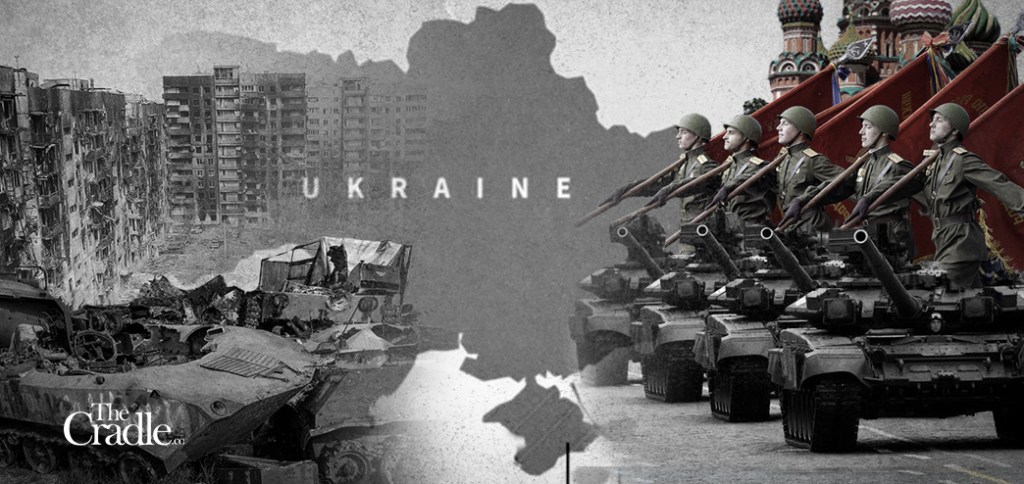
Ukraine: Somewhere between Afghanization and Syrianization

Ukraine is finished as a nation – neither side will rest in this war. The only question is whether it will be an Afghan or Syrian style finale.

Photo Credit: The Cradle

By Pepe Escobar

Source: The Cradle

One year after the astounding US humiliation in Kabul – and on the verge of another serious comeuppance in Donbass – there is reason to believe Moscow is wary of Washington seeking vengeance: in the form of the ‘Afghanization’ of Ukraine.

With no end in sight to western weapons and finance flowing into Kiev, it must be recognized that the Ukrainian battle is likely to disintegrate into yet another endless war. Like the Afghan jihad in the 1980s which employed US-armed and funded guerrillas to drag Russia into its depths, Ukraine’s backers will employ those war-tested methods to run a protracted battle that can spill into bordering Russian lands.

Yet this US attempt at crypto-Afghanization will at best accelerate the completion of what Russia’s Defense Minister Sergei Shoigu describes as the “tasks” of its Special Military Operation (SMO) in Ukraine. For Moscow right now, that road leads all the way to Odessa.

It didn’t have to be this way. Until the recent assassination of Darya Dugina at Moscow’s gates, the battlefield in Ukraine was in fact under a ‘Syrianization’ process.

Like the foreign proxy war in Syria this past decade, frontlines around significant Ukrainian cities had roughly stabilized. Losing on the larger battlefields, Kiev had increasingly moved to employ terrorist tactics. Neither side could completely master the immense war theater at hand. So the Russian military opted to keep minimal forces in battle – contrary to the strategy it employed in 1980s Afghanistan.

Let’s remind ourselves of a few Syrian facts: Palmyra was liberated in March 2016, then lost and retaken in 2017. Aleppo was liberated only in December 2016. Deir Ezzor in September 2017. A slice of northern Hama in December and January 2018. The outskirts of Damascus in the Spring of 2018. Idlib – and significantly, over 25 percent of Syrian territory – are still not liberated. That tells a lot about rhythm in a war theater.

The Russian military never made a conscious decision to interrupt the multi-channel flow of western weapons to Kiev. Methodically destroying those weapons once they’re in Ukrainian territory – with plenty of success – is another matter. The same applies to smashing mercenary networks.

Moscow is well aware that any negotiation with those pulling the strings in Washington – and dictating all terms to puppets in Brussels and Kiev – is futile. The fight in Donbass and beyond is a do or die affair.

So the battle will go on, destroying what’s left of Ukraine, just as it destroyed much of Syria. The difference is that economically, much more than in Syria, what’s left of Ukraine will plunge into a black void. Only territory under Russian control will be rebuilt, and that includes, significantly, the bulk of Ukraine’s industrial infrastructure.

What’s left – rump Ukraine – has already been plundered anyway, as Monsanto, Cargill and Dupont have already bagged 17 million hectares of prime, fertile arable land – over half of what Ukraine still possesses. That translates de facto as BlackRock, Blackstone and Vanguard, top agro-business shareholders, owning whatever lands that really matter in non-sovereign Ukraine.

Going forward, by next year the Russians will be applying themselves to cutting off Kiev from NATO weapons supplies. As that unfolds, the Anglo-Americans will eventually move whatever puppet regime remains to Lviv. And Kiev terrorism – conducted by Bandera worshippers – will continue to be the new normal in the capital.

The Kazakh double game

By now it’s abundantly clear this is not a mere war of territorial conquest. It’s certainly part of a War of Economic Corridors – as the US spares no effort to sabotage and smash the multiple connectivity channels of Eurasia’s integration projects, be they Chinese-led (Belt and Road Initiative, BRI) or Russian-led (Eurasian Economic Union, EAEU).

Just like the proxy war in Syria remade large swathes of West Asia (witness, for instance, Erdogan about to meet Assad), the fight in Ukraine, in a microcosm, is a war for the reconfiguration of the current world order, where Europe is a mere self-inflicted victim in a minor subplot. The Big Picture is the emergence of multipolarity.

The proxy war in Syria lasted a decade, and it’s not over yet. The same may happen to the proxy war in Ukraine. As it stands, Russia has taken an area that is roughly equivalent to Hungary and Slovakia combined. That’s still far from “task” fulfillment – and it’s bound to go on until Russia has taken all the land right up to the Dnieper as well as Odessa, connecting it to the breakaway Republic of Transnistria.

It’s enlightening to see how important Eurasian actors are reacting to such geopolitical turbulence. And that brings us to the cases of Kazakhstan and Turkey.

The Telegram channel Rybar (with over 640k followers) and hacker group Beregini revealed in an investigation that Kazakhstan was selling weapons to Ukraine, which translates as de facto treason against their own Russian allies in the Collective Security Treaty Organization (CSTO). Consider too that Kazakhstan is also part of the Shanghai Cooperation Organization (SCO) and the EAEU, the two hubs of the Eurasian-led multipolar order.

As a consequence of the scandal, Kazakhstan was forced to officially announce the suspension of all weapons exports until the end of 2023.

It began with hackers unveiling how Technoexport – a Kazakh company – was selling armed personnel carriers, anti-tank systems and munitions to Kiev via Jordanian intermediaries, under the orders of the United Kingdom. The deal itself was supervised by the British military attaché in Nur-Sultan, the Kazakh capital.

Nur-Sultan predictably tried to dismiss the allegations, arguing that Technoexport had not asked for export licenses. That was essentially false: the Rybar team discovered that Technoexport instead used Blue Water Supplies, a Jordanian firm, for those. And the story gets even juicier. All the contract documents ended up being found in the computers of Ukrainian intel.

Moreover, the hackers found out about another deal involving Kazspetsexport, via a Bulgarian buyer, for the sale of Kazakh Su-27s, airplane turbines and Mi-24 helicopters. These would have been delivered to the US, but their final destination was Ukraine.

The icing on this Central Asian cake is that Kazakhstan also sells significant amounts of Russian – not Kazakh – oil to Kiev.

So it seems that Nur-Sultan, perhaps unofficially, somehow contributes to the ‘Afghanization’ in the war in Ukraine. No diplomatic leaks confirm it, of course, but bets can be made Putin had a few things to say about that to President Kassym-Jomart Tokayev in their recent – cordial – meeting.

The Sultan’s balancing act

Turkey is a way more complex case. Ankara is not a member of the SCO, the CSTO or the EAEU. It is still hedging its bets, calculating on which terms it will join the high-speed rail of Eurasian integration. And yet, via several schemes, Ankara allows Moscow to evade the avalanche of western sanctions and embargoes.

Turkish businesses – literally all of them with close connections to President Recep Tayyip Erdogan and his Justice and Development Party (AKP) – are making a killing, and relishing their new role as crossroads warehouse between Russia and the west. It’s an open boast in Istanbul that what Russia cannot buy from Germany or France they buy “from us.” And in fact several EU companies are in on it.

Ankara’s balancing act is as sweet as a good baklava. It gathers    economic support from a very important partner right in the middle of the endless, very serious Turkish economic debacle. They agree on nearly everything: Russian gas, S-400 missile systems, the building of the Russian nuclear power plant, tourism – Istanbul is crammed with Russians – Turkish fruits and vegetables.

Ankara-Moscow employ sound textbook geopolitics. They play it openly, in full transparence. That does not mean they are allies. It’s just pragmatic business between states. For instance, an economic response may alleviate a geopolitical problem, and vice-versa.

Obviously the collective west has completely forgotten how that normal state-to-state behavior works. It’s pathetic. Turkey gets “denounced” by the west as traitorous – as much as China.

Of course Erdogan also needs to play to the galleries, so every once in a while he says that Crimea should be retaken by Kiev. After all, his companies also do business with Ukraine – Bayraktar drones and otherwise.

And then there’s proselytizing: Crimea remains theoretically ripe for Turkish influence, where Ankara may exploit the notions of pan-Islamism and mostly pan-Turkism, capitalizing on the historical relations between the peninsula and the Ottoman Empire.

Is Moscow worried? Not really. As for those Bayraktar TB2s sold to Kiev, they will continue to be relentlessly reduced to ashes. Nothing personal. Just business.

Ukraine and the Politics of Permanent War

Permanent war requires permanent censorship.

War Inc. – by Mr. Fish

By Chris Hedges

Source: The Chris Hedges Report

No one, including the most bullish supporters of Ukraine, expect the nation’s war with Russia to end soon. The fighting has been reduced to artillery duels across hundreds of miles of front lines and creeping advances and retreats. Ukraine, like Afghanistan, will bleed for a very long time. This is by design.

On August 24, the Biden administration announced yet another massive military aid package to Ukraine worth nearly $3 billion. It will take months, and in some cases years, for this military equipment to reach Ukraine. In another sign that Washington assumes the conflict will be a long war of attrition it will give a name to the U.S. military assistance mission in Ukraine and make it a separate command overseen by a two- or three-star general. Since August 2021, Biden has approved more than $8 billion in weapons transfers from existing stockpiles, known as drawdowns, to be shipped to Ukraine, which do not require Congressional approval.

Including humanitarian assistance, replenishing depleting U.S. weapons stocks and expanding U.S. troop presence in Europe, Congress has approved over $53.6 billion ($13.6 billion in March and a further $40.1 billion in May) since Russia’s February 24 invasion. War takes precedence over the most serious existential threats we face. The proposed budget for the Centers for Disease Control and Prevention (CDC) in fiscal year 2023 is $10.675 billion while the proposed budget for the Environmental Protection Agency (EPA) is $11.881 billion. Our approved assistance to Ukraine is more than twice these amounts. 

The militarists who have waged permanent war costing trillions of dollars over the past two decades have invested heavily in controlling the public narrative. The enemy, whether Saddam Hussein or Vladimir Putin, is always the epitome of evil, the new Hitler. Those we support are always heroic defenders of liberty and democracy. Anyone who questions the righteousness of the cause is accused of being an agent of a foreign power and a traitor.

The mass media cravenly disseminates these binary absurdities in 24-hour news cycles. Its news celebrities and experts, universally drawn from the intelligence community and military, rarely deviate from the approved script. Day and night, the drums of war never stop beating. Its goal: to keep billions of dollars flowing into the hands of the war industry and prevent the public from asking inconvenient questions. 

In the face of this barrage, no dissent is permitted. CBS News caved to pressure and retracted its documentary which charged that only 30 percent of arms shipped to Ukraine were making it to the front lines, with the rest siphoned off to the black market, a finding that was separately reported upon by U.S. journalist Lindsey Snell. CNN has acknowledged there is no oversight of weapons once they arrive in Ukraine, long considered the most corrupt country in Europe. According to a poll of executives responsible for tackling fraud, completed by Ernst & Young in 2018, Ukraine was ranked the ninth-most corrupt nation from 53 surveyed. 

There is little ostensible reason for censoring critics of the war in Ukraine. The U.S. is not at war with Russia. No U.S. troops are fighting in Ukraine. Criticism of the war in Ukraine does not jeopardize our national security. There are no long-standing cultural and historical ties to Ukraine, as there are to Great Britain. But if permanent war, with potentially tenuous public support, is the primary objective, censorship makes sense.

War is the primary business of the U.S. empire and the bedrock of the U.S. economy. The two ruling political parties slavishly perpetuate permanent war, as they do austerity programs, trade deals, the virtual tax boycott for corporations and the rich, wholesale government surveillance, the militarization of the police and the maintenance of the largest prison system in the world. They bow before the dictates of the militarists, who have created a state within a state. This militarism, as Seymour Melman writes in The Permanent War EconomyAmerican Capitalism in Decline, “is fundamentally contradictory to the formation of a new political economy based upon democracy, instead of hierarchy, in the workplace and the rest of society.” 

“The idea that war economy brings prosperity has become more than an American illusion,” Melman writes. “When converted, as it has been, into ideology that justifies the militarization of society and moral debasement, as in Vietnam, then critical reassessment of that illusion is a matter of urgency. It is a primary responsibility of thoughtful people who are committed to humane values to confront and respond to the prospect that deterioration of American economy and society, owing to the ravages of war economy, can become irreversible.”

If permanent war is to be halted, as Melman writes, the ideological control of the war industry must be shattered. The war industry’s funding of  politicians, research centers and think tanks, as well as its domination of the media monopolies, must end. The public must be made aware, Melman writes, of how the federal government “sustains itself as the directorate of the largest industrial corporate empire in the world; how the war economy is organized and operated in parallel with centralized political power — often contradicting the laws of Congress and the Constitution itself; how the directorate of the war economy converts pro-peace sentiment in the population into pro-militarist majorities in the  Congress; how ideology and fears of job losses are manipulated to marshal support in Congress and the general public for war economy; how the directorate of the war economy uses its power to prevent planning for orderly conversion to an economy of peace.”

Rampant, unchecked militarism, as historian Arnold Toynbee notes, “has been by far the commonest cause of the breakdown of civilizations.” 

This breakdown is accelerated by the rigid standardization and uniformity of public discourse. The manipulation of public opinion, what Walter Lippman calls “the manufacture of consent,” is imperative as the militarists gut social programs; let the nation’s crumbling infrastructure decay; refuse to raise the minimum wage; sustain an inept, mercenary for-profit health care system that resulted in 25 percent of global Covid deaths — although we are less than 5 percent of the world’s population — to gouge the public; carries out deindustrialization; do nothing to curb the predatory behavior of banks and corporations or invest in substantial programs to combat the climate crisis. 

Critics, already shut out from the corporate media, are relentlessly attacked, discredited and silenced for speaking a truth that threatens the public’s quiescence while the U.S. Treasury is pillaged by the war industry and the nation disemboweled. 

You can watch my discussion with Matt Taibbi about the rot that infects journalism here and here.

The war industry, deified by the mass media, including the entertainment industry, is never held accountable for the military fiascos, cost overruns, dud weapons systems and profligate waste. No matter how many disasters — from Vietnam to Afghanistan — it orchestrates, it is showered with larger and larger amounts of federal funds, nearly half of all the government’s discretionary spending. The monopolization of capital by the military has driven the U.S. debt to over $30 trillion, $6 trillion more than the U.S. GDP of $24 trillion. Servicing this debt costs $300 billion a year. We spend more on the military, $813 billion for fiscal year 2023, than the next nine countries, including China and Russia, combined.

An organization like NewsGuard, which has been rating what it says are trustworthy and untrustworthy sites based on their reporting on Ukraine, is one of the many indoctrination tools of the war industry. Sites that raise what are deemed “false” assertions about Ukraine, including that there was a U.S.-backed coup in 2014 and neo-Nazi forces are part of Ukraine’s military and power structure, are tagged as unreliable. Consortium NewsDaily KosMint Press and Grayzone have been given a red warning label. Sites that do not raise these issues, such as CNN, receive the “green” rating” for truth and credibility.  (NewsGuard, after being heavily criticized for giving Fox News a green rating of approval in July revised its rating for Fox News and MSNBC, giving them red labels.) 

The ratings are arbitrary. The Daily Caller, which published fake naked pictures of Alexandria Ocasio-Cortez, was given a green rating, along with a media outlet owned and operated by The Heritage Foundation. NewsGuard gives WikiLeaks a red label for “failing” to publish retractions despite admitting that all of the information WikiLeaks has published thus far is accurate. What WikiLeaks was supposed to retract remains a mystery. The New York Times and The Washington Post, which shared a Pulitzer in 2018 for reporting that Donald Trump colluded with Vladimir Putin to help sway the 2016 election, a conspiracy theory the Mueller investigation imploded, are awarded perfect scores. These ratings are not about vetting journalism. They are about enforcing conformity.

NewsGuard, established in 2018, “partners” with the State Department and the Pentagon, as well as corporations such as Microsoft. Its advisory board includes the former Director of the CIA and NSA, Gen. Michael Hayden; the first U.S. Homeland Security director Tom Ridge and Anders Fogh Rasmussen, a former secretary general of NATO.

Readers who regularly go to targeted sites could probably care less if they are tagged with a red label. But that is not the point. The point is to rate these sites so that anyone who has a NewsGuard extension installed on their devices will be warned away from visiting them. NewsGuard is being installed in libraries and schools and on the computers of active-duty troops. A warning pops up on targeted sites that reads: “Proceed with caution: This website generally fails to maintain basic standards of accuracy and accountability.”

Negative ratings will drive away advertisers, which is the intent. It is also a very short step from blacklisting these sites to censoring them, as happened when YouTube erased six years of my show On Contact that was broadcast on RT America and RT International. Not one show was about Russia. And not one violated the guidelines for content imposed by YouTube. But many did examine the evils of U.S. militarism.

In an exhaustive rebuttal to NewsGuard, which is worth reading, Joe Lauria, the editor-in-chief of Consortium News, ends with this observation:

NewsGuard’s accusations against Consortium News that could potentially limit its readership and financial support must be seen in the context of the West’s war mania over Ukraine, about which dissenting voices are being suppressed. Three CN writers have  been kicked off Twitter. 

PayPal’s cancellation of Consortium News’ account is an evident attempt to defund it for what is almost certainly the company’s view that CN violated its restrictions on “providing false or misleading information.” It cannot be known with 100 percent certainty because PayPal is hiding behind its reasons, but CN trades in information and nothing else.  

CN supports no side in the Ukraine war but seeks to examine the causes of the conflict within its recent historical context, all of which are being whitewashed from mainstream Western media.

Those causes are: NATO’s expansion eastward despite its promise not to do so; the coup and eight-year war on Donbass against coup resisters; the lack of implementation of the Minsk Accords to end that conflict; and the outright rejection of treaty proposals by Moscow to create a new security architecture in Europe taking Russia’s security concerns into account.  

Historians who point out the onerous Versailles conditions imposed on Germany after World War I as a cause of Nazism and World War II are neither excusing Nazi Germany nor are they smeared as its defenders.

The frantic effort to corral viewers and readers into the embrace of the establishment media — only 16 percent of Americans have a great deal/quite a lot of confidence in newspapers and only 11 percent have some degree of confidence in television news — is a sign of desperation. 

As the persecution of Julian Assange illustrates, the throttling of press freedom is bipartisan. This assault on truth leaves a population unmoored. It feeds wild conspiracy theories. It shreds the credibility of the ruling class. It empowers demagogues. It creates an information desert, one where truth and lies are indistinguishable. It frog-marches us towards tyranny. This censorship only serves the interests of the militarists who, as Karl Liebknecht reminded his fellow Germans in World War I, are the enemy within.