Right to Burn

Free-market economics gives the poor equal rights to substandard housing

 By Siddhartha Deb

Source: The Baffler

At the very end of the film High-Rise, Ben Wheatley’s 2015 adaptation of J.G. Ballard’s novel from the seventies, we hear a familiar authoritarian voice extolling the virtues of capitalism. Against the backdrop of the high-rise building that is in many ways the protagonist of the film, the camera closes in on a young boy sitting on a jerry-rigged structure made up of discarded tires, a golf bag, a hockey stick, and a profusion of wires that have allowed him to tune in to the wisdom of Margaret Thatcher. “There is only one economic system in the world, and that is capitalism,” Thatcher says, and the only remaining argument is whether this is to be a form of state capitalism, “where there will never be political freedom,” or if capitalism is to be “in the hands of people outside State control.”

The fire last month that killed eighty people in Grenfell Tower, a twenty-four-story high-rise for low-income, mostly minority Londoners, is a stark example of what that Thatcherite vision looks like when carried out to its logical extreme. Built in the seventies in what can now be seen as the last great wave of public housing in Britain, a trend that started under the post-war Labour Government with the New Towns Act of 1946, Grenfell Tower steadily came under assault from the market forces unleashed by Thatcher. Located in London’s wealthiest borough of Kensington and Chelsea, the upkeep of the building was outsourced by the borough council to the ingeniously named Kensington and Chelsea Tenants Management Organisation, a body that steadfastly ignored, and sometimes used lawyers to threaten, tenants protesting about safety concerns.

The cladding newly installed on the exterior, apparently more for the purpose of making the building appear attractive to private buyers of available units than for reasons of maintenance, was found to be highly flammable and responsible for spreading the fire throughout the building. Other “refurbishment” work left the building with just one staircase and exit, and that too partially blocked. In the aftermath of the fire, when the Conservative party prime minister Theresa May visited the site to talk to members of the emergency services, she avoided meeting residents of the building. The borough council, meanwhile, at first refused to admit residents and media into its “public” meeting. Then, when ordered by a court to allow the media to attend its proceedings, it cancelled a scheduled session.

When Ballard’s novel was published in 1975, Thatcher was merely a rising star in the Conservative Party, still four years away from occupying 10 Downing Street. From there, she would go on to use every lever of the state to promote her vision of state-less capitalism, a ferocious ideology of elite self-interest that would ravage Britain and, promoted across the Atlantic by her American counterpart Ronald Reagan, blight the United States. Given a massive boost by the end of the Cold War, this worldview received regular technocratic updates from the Anglo-American leaders who succeeded Thatcher and Reagan, the old piss always managing to find new bottles—Tony Blair’s New Labour, Bill Clinton’s New Democrats, George Bush’s New American Century and so on, all the way to Barack Obama and David Cameron until we reach what now looks like the terminal point of that blight, the endgame of Theresa May and Donald Trump.

The rhetoric of neoliberalism was that, with a market society taking root in Britain and the United States, the model could be exported to the world at large. Grenfell Tower shows, instead, that it meant turning Britain, the so-called home of free markets and democracy, into a banana republic. The same could be said of the United States, where crises in infrastructure show a similar trajectory, including in the cost-cutting measures that led to the presence of lead and other toxins in the drinking water of Flint, Michigan, in the very town that, as portrayed by Michael Moore in the documentary Roger and Me, was once home of the nation’s largest General Motors plant.

In London, this transformation was achieved, by successive Conservative governments as well as by Blairite New Labour types, through a relentless stripping away of public housing in favor of private residences for the extremely wealthy. Thatcher, in 1979, had introduced “Right to Buy,” allowing tenants in public housing to buy their units at discounts of up to 50 percent. Initially reluctant at the idea of providing a state subsidy to buyers, and nudged into the populist move by other Conservative politicians, Thatcher was nevertheless the one who endowed Right to Buy with an aspirational flavor that everyone could become middle class. The buyers, however, tended to be the most well-off among the tenants, and although the units were initially meant to be lived in, they were eventually often sold at market rates to private landlords, in effect a privatization carried out with the help of public money. It is a process similar to what has happened to Mitchell-Lama housing in New York as buildings have steadily been acquired by private investors, including a building in East Harlem where seven died in a fire in 1987 and that, once purchased by a company backed by a Morgan Stanley investment fund, saw long-time minority residents harassed to make way for new, wealthier tenants.

The resulting housing crisis in London has been accompanied by an evisceration of services, as in the cuts in fire services and policing pioneered by May as home secretary. And all this has been achieved swiftly, accompanied by a technocratic jargon that appears utterly self-referential. Among these are words like deregulation, outsourcing, and, especially, “austerity,” as if what has been going on is some kind of secular Ramadan, a communal fasting to be followed by an iftar party, rather than a refusal by elites to provide basic services to citizens of the sort depicted, recently, in Ken Loach’s film, I, Daniel Blake.

Ballard’s novel captures all this quite perfectly, including the arc from enlightened self-interest to enlightened dementia as his high-rise, which starts out as a self-contained utopia for the professional classes, descends steadily into a small-scale civil war. It ends, as emphasized by the opening passage of the novel where a character eats “the roast hindquarter of the Alsatian,” in a man-eats-dog free enterprise society. With its forty floors, thousand apartments, supermarket, swimming-pools, bank, and school, Ballard’s high-rise, one guesses, has been at least partially funded by taxpayers’ money. It is built, after all, in a reclaimed area of London’s “abandoned dockland and warehousing along the north bank of the river.” Once completed, however, one of five such towers, it looks out with a glance every bit as predatory as the wealthy in Kensington and Chelsea eyeing the property values near Grenfell Tower, at the “rundown areas around it, decaying nineteenth-century terraced houses and empty factories already zoned for reclamation.”

But if Grenfell is a working-class, minority other to Ballard’s tower, ravaged from the outside by predatory capitalists rather than a gated community devoured from within, it also provokes something that is not to be found in Ballard’s prescient work. The tenants who voiced concerns about safety, including two minority women who went missing in the blaze, exemplify a social vision quite different from Ballard’s crazed professionals turning upon each other. In the continuing protests of survivors and their allies asking to be let into the closed meetings being conducted by the borough council and in the demands made by the Labour party leader  that empty residences in the borough, owned by absentee rich landlords, be used to house survivors, we see the inverse of Ballard’s psychotic elites competing to the death. Corbyn’s proposal stirred a Tory writer to ventilate about his “true, disturbing nature,” as if he were beginning a class war. But in Corbyn’s bringing to life a moribund Labour party in the face of a relentless media campaign against him, in the votes his party received in the recent general elections, especially from the disenfranchised young, the working class, and minorities, there is a profound stirring of hope, the beginnings of a refusal of Thatcher’s diseased world of man eats dog in a gutted tower.


The Value of Everything

By James Howard Kunstler

Source: Kunstler.com

We are looking more and more like France on the eve of its revolution in 1789. Our classes are distributed differently, but the inequity is just as sharp. America’s “aristocracy,” once based strictly on bank accounts, acts increasingly hereditary as the vapid offspring and relations of “stars” (in politics, showbiz, business, and the arts) assert their prerogatives to fame, power, and riches — think the voters didn’t grok the sinister import of Hillary’s “it’s my turn” message?

What’s especially striking in similarity to the court of the Bourbons is the utter cluelessness of America’s entitled power elite to the agony of the moiling masses below them and mainly away from the coastal cities. Just about everything meaningful has been taken away from them, even though many of the material trappings of existence remain: a roof, stuff that resembles food, cars, and screens of various sizes.

But the places they are supposed to call home are either wrecked — the original small towns and cities of America — or replaced by new “developments” so devoid of artistry, history, thought, care, and charm that they don’t add up to communities, and are so obviously unworthy of affection, that the very idea of “home” becomes a cruel joke.

These places were bad enough in the 1960s and 70s, when the people who lived in them at least were able to report to paying jobs assembling products and managing their distribution. Now those people don’t have that to give a little meaning to their existence, or cover the costs of it. Public space was never designed into the automobile suburbs, and the sad remnants of it were replaced by ersatz substitutes, like the now-dying malls. Everything else of a public and human associational nature has been shoved into some kind of computerized box with a screen on it.

The floundering non-elite masses have not learned the harsh lesson of our time that the virtual is not an adequate substitute for the authentic, while the elites who create all this vicious crap spend millions to consort face-to-face in the Hamptons and Martha’s Vineyard telling each other how wonderful they are for providing all the artificial social programming and glitzy hardware for their paying customers.

The effect of this dynamic relationship so far has been powerfully soporific. You can deprive people of a true home for a while, and give them virtual friends on TV to project their emotions onto, and arrange to give them cars via some financing scam or other to keep them moving mindlessly around an utterly desecrated landscape under the false impression that they’re going somewhere — but we’re now at the point where ordinary people can’t even carry the costs of keeping themselves hostage to these degrading conditions.

The next big entertainment for them will be the financial implosion of the elites themselves as the governing forces of physics finally overcome all the ruses and stratagems of the elites who have been playing games with money. Professional observers never tires of saying that the government can’t run out of money (because they can always print more of it) but they can certainly destroy the value of that money and shred the consensual confidence that allows it to operate as money.

That’s exactly what is about to commence at the end of the summer when the government runs out of cash-on-hand and congress finds itself utterly paralyzed by party animus to patch the debt ceiling problem that disables new borrowing. The elites may be home from the Hamptons and the Vineyard by then, but summers may never be the same for them again.

The Deep State may win its war against the pathetic President Trump, but it won’t win any war against the imperatives of the universe and the way that expresses itself in the true valuation of things. And when the moment of clarification arrives — the instant of cosmic price discovery — the clueless elites will have to really and truly worry about the value of their heads.


Love, Western Nihilism and Revolutionary Optimism


By Andre Vltchek

Source: Dissident Voice

How dreadfully depressing life has become in almost all of the Western cities! How awful and sad.

It is not that these cities are not rich; they are. Of course, things are deteriorating there, the infrastructure is crumbling and there are signs of social inequality, even misery, at every corner. But if compared to almost all other parts of the world, the wealth of the Western cities still appears to be shocking, almost grotesque.

The affluence does not guarantee contentment, happiness or optimism. Spend an entire day strolling through London or Paris, and pay close attention to people. You will repeatedly stumble over passive aggressive behavior, over frustration and desperate downcast glances, over omnipresent sadness.

In all those once great [imperialist] cities, what is missing is life. Euphoria, warmth, poetry and yes – love – are all in extremely short supply there.

Wherever you walk, all around, the buildings are monumental, and boutiques are overflowing with elegant merchandize. At night, bright lights shine brilliantly. Yet the faces of people are gray. Even when forming couples, even when in groups, human beings appear to be thoroughly atomized, like the sculptures of Giacometti.

Talk to people, and you’ll most likely encounter confusion, depression, and uncertainty. ‘Refined’ sarcasm, and sometimes a bogus urban politeness are like thin bandages that are trying to conceal the most horrifying anxieties and thoroughly unbearable loneliness of those ‘lost’ human souls.

Purposelessness is intertwined with passivity. In the West, it is increasingly hard to find someone that is truly committed: politically, intellectually or even emotionally. Big feelings are now seen as frightening; both men and women reject them. Grand gestures are increasingly looked down upon, or even ridiculed. Dreams are becoming tiny, shy and always ‘down to earth’, and even those are lately extremely well concealed. Even to daydream is seen as something ‘irrational’ and outdated.

*****

To a stranger who comes from afar, it appears to be a sad, unnatural, brutally restrained and, to a great extent, a pitiful world.

Tens of millions of adult men and women, some well educated, ‘do not know what to do with their lives’. They take courses or go ‘back to school’ in order to fill the void, and to ‘discover what they want to do’ with their lives. It is all self-serving, as there appear to be no greater aspirations. Most of the efforts begin and end with each particular individual.

Nobody sacrifices himself or herself for others, for society, for humanity, for the cause, or even for the ‘other half’, anymore. In fact, even the concept of the ‘other half’ is disappearing. Relationships are increasingly ‘distant’, each person searching for his or her ‘space’, demanding independence even in togetherness. There are no ‘two halves’; instead there are ‘two fully independent individuals’, co-existing in a relative proximity, sometimes physically touching, sometimes not, but mostly on their own.

In the Western capitals, the egocentricity, even total obsession with one’s personal needs, is brought to a surreal extreme.

Psychologically, it can only be described as a twisted and pathological world.

Surrounded by this bizarre pseudo reality, many otherwise healthy individuals eventually feel, or even become, mentally ill. Then, paradoxically, they embark on seeking ‘professional help’, so they can re-join the ranks of the ‘normal’, read ‘thoroughly subdued’ citizens. In most cases, instead of continuously rebelling, instead of waging personal wars against the state of things, the individuals who are still at least to some extent different, get so frightened by being in the minority that they give up, surrender voluntarily, and identify themselves as ‘abnormal’.

Short sparks of freedom experienced by those who are still capable of at least some imagination, of dreaming about a true and natural world, get rapidly extinguished.

Then, in a short instant, everything gets irreversibly lost. It may appear as some horror film, but it is not. It is the true reality of life in the West.

I cannot function in such an environment for more than a few days. If forced, I could last in London or Paris for two weeks at most, but only while operating on some ‘emergency mode’, unable to write, to create and to function ‘normally’. I cannot imagine ‘being in love’ in a place like that. I cannot imagine writing a revolutionary essay there. I cannot imagine laughing, loudly, happily, freely.

While briefly working in London, Paris or New York, the coldness, purposelessness, and chronic lack of passion and of all basic human emotions, is having a tremendously exhausting effect on me, derailing my creativity and drowning me in useless, pathetic existentialist dilemmas.

After one week there, I’m simply beginning to get influenced by that terrible environment: I’m starting to think about myself excessively, ‘listening to my feelings’, instead of considering the feelings of the others. My duties towards humanity get neglected. I put on hold everything that I otherwise consider essential. My revolutionary edge loses its sharpness. My optimism begins to evaporate. My determination to struggle for a better world begins to weaken.

This is when I know: it is time to run, to run away. Fast, very fast! It is time to pull myself from the stale emotional swamp, to slam the door behind the intellectual bordello, and to escape from the terrifying meaninglessness that is dotted with injured, even wasted lives.

I cannot fight for those people from within, only from outside. Our way of thinking and feeling do not match. When they get out and visit ‘my universe’, they bring with them resilient prejudices: they do not register what they see and hear, they stick to what they were indoctrinated with, for years and decades.

For me personally there are not many significant things that I can do in Western cities. Periodically I come to sign one or two book contracts, to open my films, or to speak briefly at some university, but I don’t see any point of doing much more. In the West, it is hard to find any meaningful struggle. Most struggles there are not internationalist; instead they are selfish, West-oriented in nature. Almost no true courage, no ability to love, no passion, and no rebellion remain. On closer examination, there is actually no life there; no life as we human beings used to perceive it, and as we still understand it in many other parts of the world.

*****

Nihilism rules. Was this mental state, this collective illness something that has been inflicted on purpose by the regime? I don’t know. I cannot yet answer this question. But it is essential to ask, and to try to understand.

Whatever it is, it is extremely effective – negatively effective but effective nevertheless.

Carl Gustav Jung, a renowned Swiss psychologist and psychiatrist, diagnosed Western culture as ‘pathological’, right after WWII. But instead of trying to comprehend its own abysmal condition, instead of trying to get better, even well, Western culture is actually made to expand, to rapidly spread to many other parts of the world, dangerously contaminating healthy societies and nations.

It has to be stopped. I say it because I do love this life, the life, which still exists outside the Western realm; I’m intoxicated with it, obsessed with it. I live it to the fullest, with great delight, enjoying every moment of it.

I know the world, from the ‘Southern Cone’ of South America, to Oceania, the Middle East, to the most god-forsaken corners of Africa and Asia. It is a truly tremendous world, full of beauty and diversity, and hope.

The more I see and know, the more I realize that I absolutely cannot exist without a struggle, without a good fight, without great passions and love, and without purpose; basically without all that the West is trying to reduce to nothing, to make irrelevant, obsolete and ridiculous.

My entire being is rebelling against the awful nihilism and dark pessimism that is being injected almost everywhere by Western culture. I’m violently allergic to it. I refuse to accept it. I refuse to succumb to it.

I see people, good people, talented people, wonderful people, getting contaminated, having their lives ruined. I see them abandoning great battles, abandoning their great loves. I see them choosing selfishness and their ‘space’ and ‘personal feelings’ over deep affection and inseparability, opting for meaningless careers over great adventures of epic battles for humanity and a better world.

Lives are being ruined one by one, and by millions, every moment and every day. Lives that could have been full of beauty, full of joy, of love, full of adventure, of creativity and uniqueness, of meaning and purpose, but instead are reduced to emptiness, to nothingness, in brief: to thorough meaninglessness. People living such lives are performing tasks and jobs by inertia, respecting without questioning all behavior patterns ordered by the regime, and obeying countless grotesque laws and regulations.

They cannot walk on their own feet anymore. They have been made fully submissive. It is over for them.

That is because the courage of the people in the West has been broken. It is because they have been reduced to a crowd of obedient subjects, submissive to the destructive and morally defunct Empire.

They have lost the ability to think for themselves. They have lost courage to feel.

As a result, because the West has such an enormous influence on the rest of the world, the entire humanity is in grave danger, is suffering, and is losing its natural bearing.

*****

In such a society, a person overflowing with passion, a person fully committed and true to his or her cause can never be taken seriously. It is because in a society like this, only deep nihilism and cynicism are accepted and respected.

In such a society, a revolution or a rebellion could hardly go beyond the pub or a living room couch.

A person, who is still capable of loving in such an emotionally constipating and twisted environment, is usually seen as a buffoon, even as a ‘suspicious and sinister element’. It is common for him or for her to be ridiculed and rejected.

Obedient and cowardly masses hate those who are different. They distrust people who stand tall and who are still capable of fighting, people who know perfectly well what their goals are, people who do and not just talk, and those who find it easy to throw their entire life, without the slightest hesitation, at the feet of a beloved person or an honorable cause.

Such individuals terrify and irritate those suave, submissive and shallow crowds in Western capitals. As a punishment, they get deserted and divorced, ostracized, socially exiled and demonized. Some end up getting attacked, even thoroughly destroyed.

The result is: there is no culture, anywhere on Earth, so banal and so obedient as that which is now regulating the West. Lately, nothing of revolutionary intellectual significance is flowing from Europe and North America, as there are hardly any detectable unorthodox ways of thinking or perceptions of the world there.

The dialogues and debates are flowing only through fully anticipated and well-regulated channels, and needless to say they fluctuate only marginally and through the fully ‘pre-approved’ frequencies.

*****

What is on the other side of the barricade?

I don’t want to glorify our revolutionary countries and movements.

I don’t even want to write that we are the “exact opposite” of that entire nightmare that has been created by the West. We are not. And we are far from being perfect.

But we are alive if not always well. We are standing, trying to advance this wonderful ‘project’ called humanity, attempting to save our planet from Western imperialism, its nihilist gloom, as well as absolute environmental disaster.

We are considering many different ways forward. We have never rejected socialism and Communism, and we are studying various moderate and controlled forms of capitalism. The advantages and disadvantages of the so-called ‘mixed economy’ are being discussed and evaluated.

We fight, but because we are much less brutal, orthodox and dogmatic than the West, we often lose, as we recently (and hopefully only temporarily) lost in Brazil and Argentina. We also win, again and again. As this essay goes to print, we are celebrating in Ecuador and El Salvador.

Unlike in the West, in such places like China, Russia and Latin America, our debates about the political and economic future are vibrant, even stormy. Our art is engaged, helping to search for the best humanist concepts. Our thinkers are alert, compassionate and innovative, and our songs and poems are great, full of passion and fire, overflowing with love and longing.

Our countries do not steal from anyone; they don’t overthrow governments in the opposite parts of the world, they do not undertake massive military invasions. What we have is ours; it is what we have created, produced and sown with our own hands. It is not always much, but we are proud of it, because no one had to die for it, and no one had to be enslaved.

Our hearts are purer. They are not always absolutely pure, but purer than those in the West are. We do not abandon those whom we love, even if they fall, get injured, or cannot walk any longer. Our women do not abandon their men, especially those who are in the middle of fighting for a better world. Our men do not abandon their women, even when they are in deep pain or despair. We know whom and what we love, and we know whom and what we hate: in this we rarely get ‘confused’.

We are much simpler than those living in the West. In many ways, we are also much deeper.

We respect hard work, especially work that helps to improve the lives of millions, not just our own lives, or the lives of our families.

We try to keep our promises. We don’t always succeed in keeping them, as we are only humans, but we are trying, and most of the times we are managing to.

Things are not always exactly like this, but often they are. And when “things are like this”, it means that there is at least some hope and optimism and often even great joy.

Optimism is essential for any progress. No revolution could succeed without tremendous enthusiasm, as no love could. No revolution and no love could be built on depression and defeatism.

Even in the middle of the ashes to which imperialism has reduced our world, a true revolutionary and a true poet can always at least find some hope. It will not be easy, not easy at all, but definitely not impossible. Nothing is ever lost in this life for as long as our hearts are beating.

*****

The state in which our world is right now is dreadful. It often feels that one more step in a wrong direction, another false turn, and everything will finally collapse, irreversibly. It is easy, extremely easy, to give up, to throw everything up into the air, and to land on a couch with a six-pack of beer, or to simply declare “there is nothing that can be done”, and then resume one’s meaningless life routine.

Western nihilism has already done its devastating work: it has landed tens of millions of thinking beings on their proverbial couches of defeatism. It has spread pessimism and gloom, and a general belief that things can never improve anymore. It has maneuvered people into refusing to ‘accept labels’, into rejecting progressive ideologies, and into a pathological distrust of any power. The “all politicians are the same” slogan could be translated clearly into: “We all know that our Western rulers are gangsters, but do not expect anything else from those in other parts of the world.” “All people are the same” reads: “The West has been plundering and murdering hundreds of millions, but don’t expect anything better from Asians, Latin Americans or Africans”.

This irrational, cynical negativism already domesticated in virtually all countries of the West, has successfully been exported to many colonies, even to such places as Afghanistan, where people have been suffering incessantly from crimes committed by the West.

Its goal is evident: to prevent people from taking action and to convince them that any rebellion is futile. Such attitudes are brutally choking all hopes.

In the meantime, collateral damage is mounting. Metastases of the passivity and nihilistic cancers which are being spread by the Western regime are already attacking even that very human ability to love, to commit to a person or to a cause, and to stand by one’s pledges and obligations.

In the West and in its colonies, courage has lost its entire luster. The Empire has managed to reverse the whole scale of human values, which was firmly and naturally in place on all the continents and in all cultures, for centuries and millennia. All of a sudden, submission and obedience have come to vogue.

It often feels that if the trend is not reversed soon, people will increasingly start to live like mice: constantly scared, neurotic, unreliable, depressed, passive, unable to identify true greatness, and unwilling to join those who are still pulling our world and humanity forward.

Billions of lives will get wasted. Billions of lives are already being wasted.

Some of us write about invasions, coups and dictatorships imposed by the Empire. However, almost nothing is being written about this tremendous and silent genocide that is breaking the human spirit and optimism, throwing entire nations into a dark depression and gloom. But it is taking place, even as these lines are being penned. It is happening everywhere, even in such places as London, Paris and New York, or more precisely, especially there.

In those unfortunate places, fear of great emotions has already been deeply rooted. Originality, courage and determination are now evoking fear. Great love, great gestures and unorthodox dreams are all observed with panic and mistrust.

But no progress, no evolution is possible without entirely unconventional ways of thinking, without the revolutionary spirit, without great sacrifices and discipline, without commitment, and without that most powerful and most daring set of emotions, which is called love.

The demagogues and propagandists of the Empire want us to believe that ‘something ended’; they want us to accept defeat.

Why should we? There is no defeat anywhere on the horizon.

There are only two separate realities, two universes, into which our world had been shattered into: one of Western nihilism, another of revolutionary optimism.

I have already described the nihilism, but what do I imagine when I dream about that better, different world?

Do I envision red flags and people forming closed ranks, charging against some lavish palaces and stock exchanges? Do I hear loud revolutionary songs blasted from loudspeakers?

I actually do not. What comes to my mind is essentially very quiet and natural, human and warm.

There is a park near the old train station in the city of Granada, Nicaragua. I visited it some time ago. There, several old trees are throwing fantastic shadows on the ground, providing a desirable shade. Into a few big metal columns are engraved the most beautiful poems ever written in this country, while in between those columns stand simple but solid park benches. I sat on one of them. Not far from me, a couple of ageing lovers was holding hands, reading cheek to cheek from an open book. They were so close that they appeared to be forming a simple and totally self-sufficient universe. Above them were the shining verses written by Ernesto Cardenal, one of my favorite Latin American poets.

I also recall two Cuban doctors, sitting on a very different bench, thousands of miles away, chatting and laughing next to two goodhearted and corpulent nurses, after performing a complex surgery in Kiribati, an island nation ‘lost’ in the middle of South Pacific.

I remember many things, but they are never monumental, only human. Because that is what revolution really is, I think: a couple of ageing peasants in a beautiful public park, both of them in love, holding hands, reading poetry to each other. Or two doctors travelling to the end of the world, just in order to save lives, far from the spotlight and fame.

And I always remember my dear friend, Eduardo Galeano, one of the greatest revolutionary writers of Latin America, telling me in Montevideo, about his eternal love for his wonderful lady called “Reality”.

Then I think: no, we cannot lose. We are not going to lose. The enemy is mighty and many people are weak and scared, but we will not allow the world to be converted into a mental asylum. We’ll fight for each and every person who has been affected, and drowned in gloom.

We’ll expose the abnormality and perversity of Western nihilism. We’ll fight it with our revolutionary enthusiasm and optimism, and we will use the greatest weapons, such as poetry and love.


Andre Vltchek is a philosopher, novelist, filmmaker and investigative journalist. He has covered wars and conflicts in dozens of countries. Three of his latest books are the revolutionary novel Aurora and two bestselling works of political non-fiction: Exposing Lies Of The Empire and Fighting Against Western Imperialism. View his other books here. Watch his Rwanda Gambit, a documentary about Rwanda and DRCongo. He continues to work around the world and can be reached through his website and Twitter. Read other articles by Andre.

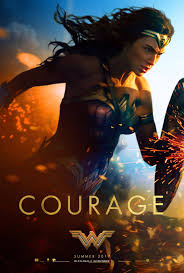
Wonder Woman Is a Hero Only The Military-Industrial Complex Could Create

By Jonathan Cooke

Source: TruePublica

For a while I have been pondering whether to write a review of the newly released Wonder Woman, to peel back the layers of comic-book fun to reveal below the film’s disturbing and not-so-covert political and militaristic messages.

There is usually a noisy crowd who deride any such review with shouts of “Lighten up, it’s only a movie!” – as though popular culture is neither popular nor culture, the soundtrack to our lives that slowly shapes our assumptions and our values, and does so at a level we rarely examine critically.

My argument is that this much-praised Gal Gadot vehicle – seemingly about a peace-loving superhero, Wonder Woman, from the DC Comics stable – is actually carefully purposed propaganda, designed to force-feed aggressive western military intervention, dressed up as humanitarianism, to unsuspecting audiences.

In short, this is straight-up propaganda for the military-industrial complex. It would have looked and sounded identical had it been scripted by a joint team from the Pentagon and the Israel Defense Forces.

My reticence to review the film has lifted after reading the latest investigations of Tom Secker and Matthew Alford into the manifold ways the U.S. military and security services interfere in Hollywood, based on a release of 4,000 pages of documents under Freedom of Information requests.

In their new book National Security Cinema, the pair argue that the Pentagon, CIA and National Security Agency have meddled in the production of at least 800 major Hollywood movies and 1,000 TV titles. That is likely to be only the tip of the iceberg, as they concede:

“It is impossible to know exactly how widespread this military censorship of entertainment is because many files are still being withheld.”

They write that their book “details how U.S. government involvement also includes script rewrites on some of the biggest and most popular films, including James Bond, the Transformers franchise, and movies from the Marvel and DC cinematic universes.”

The need for Pentagon toys

This isn’t just about minor adjustments, but wholesale collusion between film-makers and the military: “If there are characters, action or dialogue that the DoD [Department of Defense] don’t approve of then the film-maker has to make changes to accommodate the military’s demands. If they refuse then the Pentagon packs up its toys and goes home. To obtain full cooperation the producers have to sign contracts — Production Assistance Agreements — which lock them into using a military-approved version of the script.”

The fact that script-writers, producers and directors on these mega-budget pictures know their film may never make it into production if it does not get a thumbs-up from the Pentagon inevitably influences the choice of subjects, the political and military premises of selected films, and the story lines.

One movie, Countermeasures, was ditched after the military objected to a script that “included references to the Iran-Contra scandal … Similarly Fields of Fire and Top Gun 2 were never made because they couldn’t obtain military support, again due to politically controversial aspects of the scripts.”

One can imagine just how stringent the conditions imposed by the Pentagon must be, if it felt compelled to reject a movie like Top Gun 2, the sequel to the “flyboys with toys” killing fest that starred a young Tom Cruise.

The two authors add: “The documents also record the pro-active nature of the military’s operations in Hollywood and that they are finding ways to get involved during the earliest stages of development, ‘when characters and storylines are most easily shaped to the Army’s benefit’.”

Bad apples, not bad institutions

In addition, film-makers are pressured into changing scripts that suggest institutional or systemic problems in the U.S. security agencies.

The two authors observe that producer Jerry Bruckheimer has admitted that the script of the film Enemy of the State was changed under pressure from the NSA so that the wrongdoings at the heart of the film would be the responsibility of a single individual, not the agency itself.

“This idea of using cinema to pin the blame for problems on isolated rogue agents or bad apples, thus avoiding any notion of systemic, institutional or criminal responsibility, is right out of the CIA/DOD’s playbook,” they observe.

So not only are movies critical of U.S. and western politics and militarism almost certain to be off-limits for a big-budget production, but that void is certain to be filled by film proposals the studio is confident will win approval from the Pentagon, CIA and NSA.

And this is, of course, on top of the fact that the Hollywood money-men are themselves part of a larger globalized financial elite that depends on the proceeds of the homeland security industry, arms manufacturers and war profiteers. These financiers are certain to prefer funding films that support a neoliberal worldview at home and a neoconservative policy of warmongering abroad.

As Secker and Alford conclude: “In societies already eager to use our hard power overseas, the shaping of our popular culture to promote a pro-war mindset must be taken seriously.

Gal Gadot and the IDF

All of this is the context for deciphering the egregious propaganda in favor of western military violence, and the portrayal of peace-seeking as “appeasement”, that is Wonder Woman.

There has been plenty of guffawing at Middle East countries, including Lebanon, for seeking to ban Wonder Woman because it stars Gal Gadot, an Israeli beauty queen turned actress.

In fact, it is understandable that the Lebanese might object to a film heavily promoting Gadot as the world’s savior, given that she served in the Israeli army, one that brutally occupied parts of their country for two decades, until 2000, and continues to maintain a belligerent occupation of the Palestinians.

But there is also an undeniable irony to Gadot playing an Amazonian goddess who opposes the militarism of men, and cannot bear to see the suffering of children in war, when in real life she publicly cheered on the Israeli army’s massive bombardment in 2014 of the imprisoned population of Gaza, which led to the killing of some 500 Palestinian children there.

But more importantly, it is not just that Gadot, a former IDF soldier, is now the face of Wonder Woman; it is that the film’s superhero character too almost perfectly embodies the shared militaristic values of the IDF and the Pentagon. If there is one film whose script suggests it was jointly engineered by the Pentagon and Israeli army, it is Wonder Woman.

Hillary Clinton as Wonder Woman?

The film is set near the end of the First World War, a cataclysmic confrontation between two colonial powers, Britain and Germany, each trying to assert its dominance in Europe. The film-makers blur their focus sufficiently to gloss over the problem that there were no good guys in that “war to end all wars”. Instead in true Hollywood fashion, the First World War is presented simply as a prelude (or prequel) to the Second World War and the rise of the Nazis.

The Germans are murderous villains, while the British are the flawed – until Gadot shows them the error of their ways – defenders of humanity. In fact, the film prefers to cast the anti-German side as “Allies”, the humane members of the world community, represented by the U.S. – Chris Pine is the male lead and Gadot’s love interest – and a ragtag support group that includes a Scot, a native American, and a generic Arab, presumably symbolizing “moderate” Arab states like Saudi Arabia, Egypt and Jordan.

The British leadership is trying to find ways to make peace and bring the war to an end, but is stymied by an evil presence. A German super-general, Erich Ludendorff (Danny Huston), believes he can win the war decisively by developing a horrifying gas that will wipe out men, women and children, forcing the British to surrender on his terms. To demonstrate his power, he tests the gas on innocent villagers on the front lines in Belgium.

All of this might sound disconcertingly familiar to anyone who has been following the western media-scripted coverage that has for several years now been trying to promote more aggressive “humanitarian intervention” in Syria – and before that, in Libya and Iraq.

Is Ludendorff supposed to be Bashar Assad, the evil Syrian president who – as long as we discount the dissenting voices of some experts – has twice used the chemical weapon sarin against innocent civilians?

Are the British leaders, seeking a peace deal with the Germans, supposed to be those “appeasers” in the West who have stood in the way of “intervention” in Syria, blocking no-fly zones and bombing runs that could bring down the Syrian government?

And in an even more disturbing, if now outdated, parallel, given the film’s insistent identity politics, is Wonder Woman – the Amazonian who brings peace through overpowering military violence – a stand-in for Hillary Clinton? When the movie was in production, the filmmakers must have assumed it would be released as Clinton was enjoying her early months in office as the first female U.S. president.

The use of Wonder Woman to justify Clinton’s well-documented blood lust–the woman who laughed as “our rebels” murderously sodomized Libya’s Col Gaddafi, saying: “We came, we saw, he died” – would have proved timely had the U.S. election turned out differently.

War is Peace, Ignorance is Strength

Those who have not seen the film, and take it seriously as entertainment, may wish to skip this section, which includes a significant spoiler.

The source of man’s evil in Wonder Woman is the only surviving Greek god, Ares, who is hiding somewhere in the human world. Wonder Woman believes she can end all war and human suffering only if she can locate Ares and kill him – before he kills her.

No one in the human world, of course, believes Wonder Woman, and foolishly they dismiss her ideas as lunacy. And for a while Wonder Woman makes a terrible mistake in thinking the German Ludendorff (Saddam / Gaddafi / Assad) is Ares. It is late in the film that she discovers she has been on the wrong scent.

Humankind’s ultimate enemy is not Ludendorff, but the kindly Sir Patrick Morgan (David Thewlis), the British leader who has spent the entire film counseling for negotiations and peace with the Germans.

The ultimate evil, the wolves in sheep’s clothing, Wonder Woman finds, are  those among us who preach fraternity, compassion and turning the other cheek. They make possible the killing of the innocents.

Those who appear to care, those who seem to offer a route out of bloodshed and war – those who defeat the aims and threaten the profits of the military-industrial complex – are in truth nothing more than appeasers. Their efforts are certain, even intended, to lead to greater suffering.

Militarism, superior firepower, and an absolute belief in the justness of one’s cause, as Wonder Woman is reminded by her Amazonian tutors during her childhood Krav Maga training (Gadot was herself an Israeli army combat trainer) are the way to save mankind from the evildoers.

There is no time to delay, to stand back, to question or to negotiate. Wonder Woman is outraged by the dithering of the men around her. She wants to be at the front line as soon as possible, to kick ass.

“War is peace, freedom is slavery, ignorance is strength” – and all of it is good for business, the film Wonder Woman concludes in truly Orwellian fashion.

A veneer of identity politics

Of course, this story – like all effective propaganda – is supposed to work its magic at a subconscious level, where it cannot be interrogated by our reason and our critical faculties. But even so, a few critics – themselves enthusiastic liberal interventionists – seem to have intuited the movie’s message.

Perhaps not surprisingly, a reviewer with the clearest sense of how the film panders to the pro-war sentiments and identity politics of many liberals is the film critic of the conservative Washington Free Beacon.

Sonny Bunch applauds the way the film “highlights the need for the strong to intervene on behalf of the weak and the oppressed, and treats as villains quislings who sue for a peace that will bring only more destruction.

But he also understands how the film has been crafted to make its war-mongering more palatable to liberals. Wonder Woman, he writes, proves “you could slap an identity politics veneer on just about any neoconservative policy and progressives would lap it up. … Liberal interventionism is back, baby!”

Drooling from liberals

And sure enough, the community of largely liberal film reviewers has mostly drooled over Wonder Woman. Despite dire acting from Gadot, preposterous dialogue and a risible screenplay, the film has racked up an astounding 92 percent approval rating from critics on the review aggregator website Rotten Tomatoes.

Here is a brief selection of their assessments:

Dana Stevens, of Slate: “This is a movie about battling evil that pauses to ask what evil is and whether it’s necessary to understand its nature in order to defeat it.”

Mick LaSalle, of the San Francisco Chronicle: “What lingers … is the feeling of hope that the movie brings, that it someday might be possible for female rationality to defeat male brutality.”

Richard Brody, of the New Yorker: Wonder Woman is “an entry in the genre of wisdom literature that shares hard-won insights and long-pondered paradoxes of the past with a sincere intimacy.”

A. O. Scott, of the New York Times: “Her sacred duty is to bring peace to the world. Accomplishing it requires a lot of killing, but that’s always the superhero paradox. … Unlike most of her male counterparts, its heroine is not trying to exorcise inner demons or work out messiah issues. She wants to function freely in the world, to help out when needed and to be respected for her abilities. No wonder she encounters so much resistance.”

The paradoxes of power

Wonder Woman grapples with the paradoxes of military power every American interventionist and Israeli patriot understands. To save the “beautiful children”, she must sometimes rush to intervene and kill with extreme prejudice, even if the other side’s children are among those who are sacrificed.

Wonder Woman wants to “function freely”: she must enjoy the right to go wherever her interests take her. She cannot be shackled by borders in her quest for justice. She is there to “help out” others in trouble, even if she alone gets to decide who needs help and what counts as trouble. And she needs “respect”, and is prepared to force others to accord it to her, through her superior strength if need be.

She will face “much resistance” because others are jealous of her power and her freedoms. They are the evildoers, and they must and will be defeated.

Is it any surprise that in the Hollywood-Pentagon-IDF world of Wonder Woman, the values of a female superhero sound exactly like those of the military men who run the West’s wars?

Now roll on “Wonder Woman 2: Time to Intervene (Humanely)”.

Google ‘News’ is hideous

By Wayne Madsen

Source: Intrepid Report

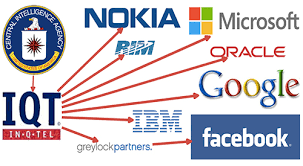
Even before its recent “redesign,” which was claimed to provide an “uncluttered” look, Google News was one of the worst news aggregator sites on the Internet. Many longtime Google News users have complained about the site’s quality and dubious “news” content. Google has offered no reasonable explanations for its poor business decisions that have resulted in Google News being a repository for misleading news links. Keeping in mind that Google received its initial seed investment from the CIA’s IN-Q-IT, now known as IN-Q-TEL, the agency’s venture capital firm in the Silicon Valley, the CIA may be playing some sort of massive social network experiment on Google News users.

The fact that Google News programmers cannot seem to distinguish between “World News” and “U.S. News” is laughable for a multi-billion dollar company that has supposedly recruited the best and brightest technologists into its ranks. The following appeared under Google News’s “World News” section on July 3, 2017:

“Media reaps benefit from Trump attacks,” The Hill

“White House pays women 80 cents for every dollar paid to men,” CNN

“New Jersey welfare fund arrests spark anti-Semitic sentiment,” USA Today

“Police Say Abduction Suspect Viewed Sexual Fetish Website,” U.S. News & World Report, with a story on the same subject regarding the University of Illinois appearing in the Champagne/Urbana News-Gazette

“Colorado man mistakes son for intruder, shoots and kills him,” WHIO

“5 significant gas explosions in Pennsylvania in the past decade,” PennLive.com

Something is seriously wrong with Google’s algorithms or the foreign programmers they have hired, to the exclusion of American employees, do not realize that from a U.S. perspective, events in Washington, DC, New Jersey, Illinois, Colorado, and Pennsylvania do not constitute “World News.”

Even Google News’s Science offering is trashed by nonsensical click bait, such as a Washington Post story, titled “No, NASA is not hiding kidnapped children on Mars.” The story emanates from comments made on the Infowars show by Alex Jones and his guest Robert Steele about a secret program to kidnap children and send them to Mars. With the advent of the Trump presidency, those who were once considered “controversial” are now just plain crazy. Yet, such wild rantings are found under “Science” in Google News!

Google News’s search engine is no better. Some apologists for Google claim that the searches are tailored for each customer. If that is so, why do this editor’s searches on various countries and areas of the world come back with the first ten stories being about sports. I do not like professional sports and never visit sporting websites. Therefore, if Google is to be believed, no sports stories should be returned on searches on international place names.

As an example, the following comes back from Google News on a search for “Barbados”:

“Marion makes Africa umpire team,” The Nation

“Barbados lose football opener to Dominica,” Nation News

“Young Gems leave for Botswana,” Nation News

Try out a search for “South Africa,” not an insignificant country, and returned are:

“England v South Africa: Faf du Plessis to miss first Test for family reasons,” BBC Sport. Among professional sports, which I detest in general, cricket is dead last on the list of topics to be ignored. This “top news story” about South Africa is followed by:

“South Africa disappointed by Cosafa exit,” BBC Sport. Cosafa is the Council of Southern Africa Football Associations and not a Covfefe-like typo by Donald Trump. This is a totally unimportant story about professional football of the soccer variety. Who cares? I don’t. Ranked around number five is a story about an upcoming no-confidence vote by the South African parliament against Jacob Zuma, the president of the country. Yet, cricket and soccer stories are given more prominence by Google News.

Try another country, New Zealand, and the result is the same, except rugby is considered more important by Google News than anything else happening in the nation:

“Lions beat New Zealand on tiniest of margins, and a thrilling finale awaits,” The Guardian

“New Zealand club rugby player in intensive care with spinal injury,” Telegraph (UK). Sad story, but the player might have taken up a safer line of work, like programming actual news stories for Google News searches.

Ranked third by Google in the search return is a fairly important story:

“New Zealand’s immigration laws favour the rich, a South African family says.” Radio New Zealand.

Ranked fourth is another non-news topic concerning Google News’s other distraction affectation, Entertainment News:

“Katy Perry gushes about her great ‘love’ for New Zealand,” Newshub. Katy Perry? Really, who gives a crap about her? Hillary Clinton loves her, as do many women motorcyclists. I don’t and don’t want stories about Katy Perry, Lady Gaga, or Taylor Swift returned on searches about important events around the world. Unless, of course, Katy Perry and Lady Gaga, along with Madonna, go missing on a flight over New Guinea and Don McLean writes a song about them. He could title it “American Magpies.”

Google News received five thumbs down before their recent “redesign.” Now, there are not enough thumbs in the world to express displeasure about them.


How Fear of Russia Misleads Americans

NSA whistleblower Thomas Drake sees grave dangers in the U.S. government and media exaggerating foreign threats as a means to mislead and control the American public, reports Dennis J Bernstein.

By Dennis J Bernstein

Source: Consortium News

Russia has been made “the go-to scapegoat” for distracting Americans from the serious problems afflicting the U.S. government, says Thomas Drake, a former senior executive at the National Security Agency who blew the whistle on multi-billion-dollar waste and violations of the rights of citizens through secret mass surveillance programs after 9/11.

As retaliation, the Obama Administration indicted Drake in 2010 as the first whistleblower since Daniel Ellsberg charged with espionage, carrying a possible 35-year prison term. However, in 2011, the government’s case against him collapsed and he went free in a plea deal. He became the recipient of the 2011 Ridenhour Truth-Telling Prize.

I sat down with Thomas Drake on June 3, 2017, at the home of ConsortiumNews editor Robert Parry in Arlington, Virginia, on the occasion of the awarding of the 2016 Gary Webb Freedom of the Press Award to Oliver Stone.

Dennis Bernstein: I want to ask you about a story. ConsortiumNews has offered quite a different perspective on the relationship between the U.S. government and Russia [questioning the allegations about] Trump collaborating with Putin. What’s your take on this story? Do you think that ConsortiumNews is onto something in terms of really questioning that whole line?

Thomas Drake: Yes. This hyperbolic narrative that is posited almost to the point of hysteria. They would say that Russians are behind everything. “It’s all the Russians’ fault and you can blame Russia.” It’s just pure political pretension and there is a significant amount of propaganda behind it.

It’s intended to distract. It’s intended to keep people from really looking at some of the deeper truths of our own government and so it is very convenient for the political elites, on both sides of what has become the Democratic/Republican divide, which in fact is not a divide; it’s two sides of the same coin, with slightly different narrative – to project all the blame on Russia and particularly the hyper-conflation of the littlest thing that would appear to be that Trump is ruining the country or Trump is the worst thing that has ever happened. Just really taking this
way, way beyond the pale.

And ConsortiumNews — having written for ConsortiumNews going back several years now as a result of my case and mass domestic surveillance and government abuse of power — is one of the few – it’s surreal for me to say this right now – it’s one of the few alternative media outlets who have the courage to stand up to the elite narrative and get behind this hyper-partisan politicization of blaming it all on external entities.

And, in this case, Russia has become the go-to scapegoat, frankly. And it’s easy to simply focus on that as your excuse without having to concern yourself with the deeper trends in terms of the darker history of American politics.

And Gary Webb – I am quite familiar with his case. Remember he had his own profession turn on him because they wanted to curry favor with power and they wanted to have access to power. So it was full access press and power is an aphrodisiac. Henry Kissinger said that. …

DB: Access press, as in, if you don’t say the right thing […] they can toss you into prison.

TD: Yep, precisely. And so you’re willing to overlook what may be done under the cover or blanket of government, the government structure. And so ConsortiumNews is one of the few. …

I was sort of the pre-Snowden Snowden. …

DB: He cites you for opening that door….

TD: Well, he has said there wouldn’t have been him without me. And he has cited a number of people who have preceded him, right? And I was there at the foundation, at this extraordinary willful violation of, in secret, of what I call the subversion of the Constitution. Really, it was a silent coup against the Constitution….

DB: What are the multiple dangers of the way in which information is used now, and slanted to support policy as opposed to inform?

TD: Well, it’s self-interest. It’s largely self-interest driven. You have, what I have sometimes called Gov-Corp, which is a combination of government and corporations and it’s an extraordinarily pathological relationship because they feed on each other. One protects the other and when you have the government corrupting itself to serve very powerful interests at the expense of public interests, guess what? Something has to give and what gives is public transparency. What gives is accountability. What gives is responsible power. What gives is the promise. What gives is “we the people”, right?

Power just… generally at least, power is about the people and it’s pathological, and so unfortunately the checks and balances that have in the past – Ellsberg is eyewitness to this — he’s certainly a key person by simply standing up with his colleague Edgar Russo, standing up to power in terms of the bright and shiny light called Vietnam, right? He clearly brought into the public purview what was really going on with Vietnam and, ultimately, as we know, I was a very young teen growing up in the ’70s. He was already in his early 40s at the time. That, yeah, the government can use power… and that, yeah, power does tend to corrupt. Lord Acton was right.

So, what became known as the imperial presidency of Nixon, this era makes that era look like a hyper type of person, especially post-9/11. It’s just extremely concerning. It’s what I would call the devolution of democracy and constitutional rights following 9/11 and Ellsberg has said and I have said, what was actually unlawful and unconstitutional has been made legal from his time.

And the old, what became the infamous statement made by Nixon, “You know, if the President says it’s okay, it’s not illegal.” I heard almost those exact same words when I confronted the lead attorney in the Office of General Counsel. That was the first week in October 2001. I had already found out about the massive domestic surveillance program that had been unleashed. And I confronted him and he said, “This is great. The White House has approved the program. It’s all legal.” …. The hairs on the back of my neck were like…. I’m having major flashbacks… Wait a minute, just because the White House approves it, it makes it okay? I mean, history is not kind. He says,” Yep, we’re the executive agent – all approved. Yes. Don’t ask any more questions.”

So, because the White House approved it, then it’s okay to violate the Constitution. All those checks were put in place as a result of the … president resigning, the standing committees and intelligence House and the Senate, the Foreign Intelligence Surveillance Act and a whole lot of others, right? So that was the check and balance, right? Nah, just, hey 9/11, the failure of the government to provide the common defense. 3,000 people murdered that day. It should never have happened. It really should never have happened. And so we are going to use that as sort of a reverse false flag. We’re going to use that as an excuse, because, “Hey, after all, the Constitution is not a suicide pact… you know, we don’t know where the enemy is.”

So just this weird, everything is existential now. We now know how the enemy is because of 9/11. And so it’s weird for me, having been brought up as a very young lad during the Cold War and remembering alarms going off and they’d turn off the lights and block the hall and face your lockers, right? The air raid sign drills and fears of the nuclear winter. It’s like these people want a World War 2.0.

We have far more in common with the Russians than we don’t. We have far in common than our own disputes. I assume there are some differences, right? I recognize, I am well aware, in terms of historical notes, but hey we have far more in common than we have difference.

DB: I guess what we all have in common is the state of the Earth at this point.

TD: The state of the Earth? We are the third rock from the sun. I mean, this is our home. The world is a much smaller place, in part because of technology and in part because we find out that, yeah, we really are dependent on each other.

And yet there is this addiction to conflict. There is this addiction to have threats. There is this addiction to divide. And this is not pretty. I mean, human history, the dark side of human history, and if the 20th century is not an optic lesson, then I don’t know what is….. I could go back to any of the others, in terms of written history that we know of, right? And yet here we are. And so, to me it is a sign of an empire….

The U.S. is an empire… and it is a sign of an empire that is losing it. And so, just like the Roman Empire, I mean, if you go back to the rise and fall of the Roman Empire, you know…. Those who don’t learn the lessons of the past are doomed to repeat them.

DB: Well, and the beat goes on. We’re going to let you join the party.

TD: The beat does go on. Yeah.

DB: But as we speak, there’s a major bombing, frightening bombing in Iran today.

TD: I did not know that. Wow.

DB: After the President of the United States is in Saudi Arabia. When is the last time you heard of a major suicide bomb in Iran?

TD: Not in Iran, no.

DB: So, here we go and who knows what comes next, who know what that’s going to bring in that part of the world. We thank you for all of your courage and all the suffering you did for all of us so we could know more. Thank you very much.

TD: Yeah. No. I have really become a warrior for peace. That’s what I have become. Ultimately it’s about who we are as human beings and who we are for each other and after all it is us, right? And in terms of U.S. culture and background, I think Pogo was right. We have met the enemy and the enemy is us. We are our own worst enemies.

It’s just that, for some of us, it’s critical to hold power accountable. We recognize we don’t govern ourselves very well. If you put people over others, yeah, bad things happen. But bad things tend to happen. And it’s that whole control, power. It’s all about — psychopathy is an area of study that I increasingly have as an issue, because of this idea that people gaining pleasure from the distress of others. So, it’s a disease. It really is. And some of us, at great sacrifice, weren’t going to just sit idly by and watch it all happen.

I care deeply about who we are as human beings. And I’ve spent a lot of time in front of college students and high school students and civic auditoriums and small group settings and churches and college campuses talking about these things. These are things that matter.https://consortiumnews.com/2017/06/20/how-fear-of-russia-misleads-americans/