The US government has shut down multiple news media websites based in the Middle East, including Iran’s state-owned Press TV, and al-Masirah TV which is owned by the Houthi group Ansarullah in Yemen. The Department of Justice said on Tuesday it had seized 36 Iranian-linked websites, claiming without evidence that they were associated with “either disinformation activities or violent organizations” and were shut down for a violation of US sanctions.
He tweeted this the month before the US government shut down dozens of Middle East-based news media websites and weeks before US-sponsored military explosives were used to destroy over 20 Palestinian media outlets in Gaza, all while Julian Assange wastes away in Belmarsh Prison. https://t.co/iZw7BxxhoV
The Biden administration has been bleating “rules-based order” so frequently and with such obvious meaninglessness that even The New York Timesvoiced some criticism of the way that vapid, idiotic phrase is being used instead of the well-defined term “international law”. As Medea Benjamin and Nicolas JS Davies wrote for Salon last month:
For Blinken, the concept of a “rules-based order” seems to serve mainly as a cudgel with which to attack China and Russia. At a May 7 UN Security Council meeting, Russian Foreign Minister Sergey Lavrovsuggested that instead of accepting the already existing rules of international law, the United States and its allies are trying to come up with “other rules developed in closed, non-inclusive formats, and then imposed on everyone else.”
…
Today, far from being a leader of the international rules-based system, the United States is an outlier. It has failed to sign or ratify about 50 important and widely accepted multilateral treaties on everything from children’s rights to arms control. Its unilateral sanctions against Cuba, Iran, Venezuela and other countries are themselves violations of international law, and the new Biden administration has shamefully failed to lift these illegal sanctions, ignoring UN Secretary-General António Guterres’ request to suspend such unilateral coercive measures during the pandemic.
Indeed, US government officials babble endlessly about “rules”, and the “rules” are literally always tools used for the benefit of the US government, and the US government literally always flouts those “rules” exponentially worse than any other government on earth.
What the phrase “rules-based order” actually means is Washington-based order. It means a world order imposed by the US government and its lackey states on pain of devastation and death, which exists solely to keep the US at the head of a unipolar empire. It means do as I say, not as I do. It means rules for thee but not for me. It means we decide what happens based on what suits our interests.
If you peel away all the narrative spin and outward politeness, the US empire just looks like any other tyrannical force that has ever existed throughout human history, except it kills a lot more people than most of the others. In the old days the thugs with the most effective killing force would dominate everyone else using terror, wearing frightening battle costumes adorned with the body parts of their enemies. Nowadays they still dominate everyone else using terror, except they do it while wearing suits, and while waxing self-righteously about the “rules-based international order”. And they are much better at killing.
There is no other government on earth that is less qualified to impose any “order” upon the world. This is the only government on earth which has killed millions of people and displaced tens of millions just since the turn of this century, the only government on earth that is circling the planet with hundreds of military bases and working to destroy any nation which disobeys its dictates. Yemen alone completely delegitimizes any claim the US may have had to be the arbiter of “order” in the world, to say nothing of Iraq, Vietnam, Libya and all the other innumerable atrocities that this monstrous regime has inflicted upon our species.
The sooner humanity can extract the parasite that is the US empire from its skin, the better off the whole world will be.
The Biden administration’s Department of Justice (DoJ) confirmed on Tuesday that the US had seized 33 websites affiliated with the Iranian Islamic Radio and Television Union (IRTVU) and three others operated by Kata’ib Hizballah (Hezbollah Brigades), an Iraqi Shia group supported by Iran.
In a press statement, the DoJ stated that the website domains—including the English and French language PressTV.com based in Teheran—were “in violation of US sanctions.” The statement said that the US Office of Foreign Assets and Control (OFAC) had “designated IRTVU as a Specially Designated National (SDN)” during the Trump administration in October 2020 for “being owned or controlled by the Islamic Revolutionary Guard Corps Quds Force (IRGC).”
The DoJ also said that organizations labeled as SDNs are “prohibited from obtaining services, including website and domain services, in the United States without an OFAC license” and that IRTVU “and others like it” are not news organizations but are used to launch “disinformation campaigns and malign influence operations.” It also claimed that the 33 website addresses were owned in the US by IRTVU which “did not obtain a license from OFAC prior to utilizing the domain names.”
In the case of Kata’ib Hizballah (KH), the DoJ says that it was both designated an SDN by OFAC and as a Foreign Terrorist Organization by the Department of State in July 2009. It claims that KH has “committed, directed, supported or posed a significant risk of committing acts of violence against Coalition and Iraqi Security Forces” and also did not obtain an OFAC license prior to acquiring the domain names.
Whatever the public justifications provided for its aggressive act, the transparent political purpose of the Biden administration’s website seizures is the effort to ratchet up pressure on Iran amid ongoing negotiations in Vienna over the 2015 nuclear agreement and following the June 18 selection of the hardline conservative Ebrahim Raisi as the next Iranian president.
Iran’s foreign ministry on Wednesday called the seizure an example of a “systematic effort to distort freedom of speech on a global level and silence independent voices in media.”
One of the seized sites, Al-Masirah, is not owned by Iran, but by Ansarullah, the movement of the Houthis in Yemen, a faction the US has claimed to be “proxies” of Iran. The news outlet is headquartered in Beirut, Lebanon.
In a statement reported by RT, Al Masirah said it was “not surprised” by the seizure, as it “comes from those that have supervised the most heinous crimes against our people.” The website shutdown , “reveals, once again, the falsehood of the slogans of freedom of expression and all the other headlines promoted by the United States of America, including its inability to confront the truth,” the statement said.
Indicating the broader political aims of the website seizures, the Associated Press (AP) reported that the US took over the domain name of the news website Palestine Today, which publishes the views of Gaza-based Islamic militant groups Hamas and Islamic Jihad, redirecting the site to the same takedown notice.
Visits to the seized websites bring up a graphic with the headline, “This website has been seized” and a message that says the domain has been taken offline due to a “seizure warrant” issued under the authority of US code involving civil and criminal forfeiture and special powers given to the president during “unusual and extraordinary threat; declaration of national emergency.”
Some of the websites have been operating for many years, such as PressTV.com which was launched in 2007. The Wikipedia entry for the Iranian news and documentary network says that the annual budget of PressTV was $8.3 million and it had 400 employees worldwide as of 2009.
AP reported that most of the seized domains are .net, .com and .tv domains. The .net and .com domains are considered generic “top level domains” (TLDs) and they are controlled by the global provider of the domain name registry, Verisign, based in Reston, Virginia. The contract with Verisign is managed jointly by the US-based non-profit Internet Corporation for Assigned Names and Numbers (ICANN) and the US Department of Commerce.
The domain .tv is “owned by the Pacific Island nation of Tuvalu but administered by the US company Verisign,” according to AP. Other news and media domains which are owned by Iran, such as the website PressTV.ir which also publishes in English, have not been affected by the seizures.
A similar action was taken by the DoJ under the Trump administration in November 2020, when the FBI seized 27 domain names it claimed were used by Iran’s IRGC to spread a “global covert influence campaign.” Coming from the number one worldwide purveyor of “influence campaigns” involving money, murder and military occupation, the unsubstantiated accusations against the Iran-based media outlets must be completely rejected as part of the preparations for further wars of aggression in the Middle East and Central Asia.
Meanwhile, the use by Biden of designations made by both the Obama and Trump administrations makes clear the fundamental agreement over foreign policy between the two parties of Wall Street and the US military-intelligence apparatus regardless of whether it is the Democrats or Republicans that control the executive or legislative branches of government.
A year ago, the idea that Covid-19 leaked from a lab in Wuhan – a short distance from the wet market that is usually claimed to be the source of the virus – was dismissed as a crackpot theory, supported only by Donald Trump, QAnon and hawks on the right looking to escalate tensions dangerously with China.
Now, after what has been effectively a year-long blackout of the lab-leak theory by the corporate media and the scientific establishment, President Joe Biden has announced an investigation to assess its credibility. And as a consequence, what was treated until a few weeks ago as an unhinged, rightwing conspiracy is suddenly being widely aired and seriously considered by liberals.
Every media outlet is running prominent stories wondering whether a pandemic that has killed so many people and destroyed the lives of so many more can be blamed on human hubris and meddling rather than on a natural cause.
For many years, scientists at labs like Wuhan’s have conducted Frankenstein-type experiments on viruses. They have modified naturally occurring infective agents – often found in animals such as bats – to try to predict the worst-case scenarios for how viruses, especially coronaviruses, might evolve. The claimed purpose has been to ensure humankind gets a head start on any new pandemic, preparing strategies and vaccines in advance to cope.
Viruses are known to have escaped from labs like Wuhan’s many times before, and leaked US cables show Washington was concerned about safety procedures and security at the Wuhan lab two years before the emergence of Covid-19. There are now reports, rejected by China, that several staff at Wuhan got sick in late 2019, shortly before Covid-19 exploded on to the world stage. Did a human-manipulated novel coronavirus escape from the lab and spread around the world?
No interest in truth
Here we get to the tricky bit. Because nobody in a position to answer that question appears to have any interest in finding out the truth – or at least, they have no interest in the rest of us learning the truth. Not China. Not US policy-makers. Not the World Health Organisation. And not the corporate media.
The only thing we can state with certainty is this: our understanding of the origins of Covid has been narratively managed over the past 15 months and is still being narratively managed. We are being told only what suits powerful political, scientific and commercial interests.
We now know that we were misdirected a year ago into believing that a lab leak was either fanciful nonsense or evidence of Sinophobia – when it was very obviously neither. And we should understand now, even though the story has switched 180 degrees, that we are still being misdirected. Nothing that the US administration or the corporate media have told us, or are now telling us, about the origins of the virus can be trusted.
No one in power truly wants to get to the bottom of this story. In fact, quite the reverse. Were we to truly understand its implications, this story might have the potential not only to hugely discredit western political, media and scientific elites but even to challenge the whole ideological basis on which their power rests.
Which is why what we are seeing is not an effort to grapple with the truth of the past year, but a desperate bid by those same elites to continue controlling our understanding of it. Western publics are being subjected to a continuous psy-op by their own officials.
Virus experiments
Last year, the safest story for the western political and scientific establishments to promote was the idea that a wild animal like a bat introduced Covid-19 to the human population. In other words, no one was to blame. The alternative was to hold China responsible for a lab leak, as Trump tried to do.
But there was a very good reason why most US policy-makers did not want to go down that latter path. And it had little to do with a concern either to refrain from conspiracy theories or to avoid provoking unnecessary tension with a nuclear-armed China.
Nicholas Wade, a former New York Times science writer, set out in May, in an in-depth investigation, why the case for a lab leak was scientifically strong, citing some of the world’s leading virologists.
But Wade also highlighted a much deeper problem for US elites: just before the first outbreak of Covid, the Wuhan lab was, it seems, cooperating with the US scientific establishment and WHO officials on its virus experiments – what is known, in scientific parlance, as “gain-of-function” research.
Gain-of-function experiments had been paused during the second Obama administration, precisely because of concerns about the danger of a human-engineered virus mutation escaping and creating a pandemic. But under Trump, US officials restarted the programme and were reportedly funding work at the Wuhan lab through a US-based medical organisation called the EcoHealth Alliance.
The US official who pushed this agenda hardest is reported to have been Dr Anthony Fauci – yes, the US President’s chief medical adviser and the official widely credited with curbing Trump’s reckless approach to the pandemic. If the lab leak theory is right, the pandemic’s saviour in the US might actually have been one of its chief instigators.
And to top it off, senior officials at the WHO have been implicated too, for being closely involved with gain-of-function research through groups like EcoHealth.
Colluding in deceit
This seems to be the real reason why the lab-leak theory was quashed so aggressively last year by western political, medical and media establishments without any effort to seriously assess the claims or investigate them. Not out of any sense of obligation towards the truth or concern about racist incitement against the Chinese. It was done out of naked self-interest.
If anyone doubts that, consider this: the WHO appointed Peter Daszak, the president of the EcoHealth Alliance, the very group that reportedly funded gain-of-function research at Wuhan on behalf of the US, to investigate the lab-leak theory and effectively become the WHO’s spokesman on the matter. To say that Daszak had a conflict of interest is to massively understate the problem.
He, of course, has loudly discounted any possibility of a leak and, perhaps not surprisingly, continues to direct the media’s attention to Wuhan’s wet market.
The extent to which major media are not only negligently failing to cover the story with any seriousness but are also actively continuing to collude in deceiving their audiences – and sweeping these egregious conflicts of interest under the carpet – is illustrated by this article published by the BBC at the weekend.
The BBC ostensibly weighs the two possible narratives about Covid’s origins. But it mentions none of Wade’s explosive findings, including the potential US role in funding gain-of-function research at Wuhan. Both Fauci and Daszak are cited as trusted and dispassionate commentators rather than as figures who have the most to lose from a serious investigation into what happened at the Wuhan lab.
Given this context, the events of the past 15 months look much more like a pre-emptive cover-up: a desire to stop the truth from ever emerging because, if a lab leak did occur, it would threaten the credibility of the very structures of authority on which the power of western elites rests.
Media blackout
So why, after the strenuously enforced blackout of the past year, are Biden, the corporate media and the scientific establishment suddenly going public with the possibility of a China lab leak?
The answer to that seems clear: because Nicholas Wade’s article, in particular, blew open the doors that had been kept tightly shut on the lab-leak hypothesis. Scientists who had formerly feared being associated with Trump or a “conspiracy theory” have belatedly spoken up. The cat is out of the bag.
Or as the Financial Times reported of the new official narrative, “the driving factor was a shift among scientists who had been wary of helping Trump before the election or angering influential scientists who had dismissed the theory”.
The journal Science recently upped the stakes by publishing a letter from 18 prominent scientists stating that the lab-leak and animal-origin theories were equally “viable” and that the WHO’s earlier investigation had not given “balanced consideration” to both – a polite way of suggesting that the WHO investigation was a fix.
And so we are now being subjected by the Biden administration to Plan B: damage limitation. The US President, the medical establishment and the corporate media are raising the possibility of a Wuhan lab leak, but are excluding all the evidence unearthed by Wade and others that would implicate Fauci and the US policy elite in such a leak, if it occurred. (Meanwhile, Fauci and his supporters have been preemptively muddying the waters by trying to redefine what constitutes gain-of-function.)
The growing clamour on social media, much of it provoked by Wade’s research, is one of the main reasons Biden and the media are being forced to address the lab-leak theory, having previously discounted it. And yet Wade’s revelations of US and WHO involvement in gain-of-function research, and of potential complicity in a lab leak and a subsequent cover-up are missing from almost all corporate media reporting.
Evasion tactic
Biden’s so-called investigation is intended to be cynically evasive. It makes the administration look serious about getting to the truth when it is nothing of the sort. It eases pressure on the corporate media that might otherwise be expected to dig out the truth themselves. The narrow focus on the lab leak theory displaces the wider story of potential US and WHO complicity in such a leak and overshadows efforts by outside critics to highlight that very point. And the inevitable delay while the investigation is carried out readily exploits Covid news fatigue as western publics start to emerge from under the pandemic’s shadow.
The Biden administration will hope the public’s interest rapidly wanes on this story so that the corporate media can let it drop off their radar. In any case, the investigation’s findings will most likely be inconclusive, to avoid a war of duelling narratives with China.
But even if the investigation is forced to point the finger at the Chinese, the Biden administration knows that the western corporate media will loyally report its accusations against China as fact – just as they loyally blacked out any consideration of a lab leak until they were forced to do so over the past few days.
Illusion of truth
The Wuhan story provides a chance to understand more deeply how elites wield their narrative power over us – to control what we think, or are even capable of thinking. They can twist any narrative to their advantage.
In the calculations of western elites, the truth is largely irrelevant. What is of utmost importance is maintaining the illusion of truth. It is vital to keep us believing that our leaders rule in our best interests; that the western system – despite all its flaws – is the best possible one for arranging our political and economic lives; and that we are on a steady, if sometimes rocky, path towards progress.
The job of sustaining the illusion of truth falls to the corporate media. It will be their role now to expose us to a potentially lengthy, certainly lively – but carefully ring-fenced and ultimately inconclusive – debate about whether Covid emerged naturally or leaked from the Wuhan lab.
The media’s task is to manage smoothly the transition from last year’s unquestionable certainty – that the pandemic had an animal origin – to a more hesitant, confusing picture that includes the possibility of a human, but very much Chinese, role in the virus’ emergence. It is to ensure we do not feel any cognitive dissonance as a theory we were assured was impossible by the experts only weeks ago suddenly becomes only too possible, even though nothing has materially changed in the meantime.
What is essential for the political, media and scientific establishments is that we do not ponder deeper questions:
How is it that the supposedly sceptical, disputatious, raucous media once again spoke mostly with a single and uncritical voice on such a vitally important matter – in this case, for more than a year on the origins of Covid?
Why was that media consensus broken not by a large, well-resourced media organisation, but by a lone, former science writer working independently and publishing in a relatively obscure science magazine?
Why did the many leading scientists who are now ready to question the imposed narrative of Covid’s animal origin remain silent for so long about the apparently equally credible hypothesis of a lab leak?
And most importantly, why should we believe that the political, media and scientific establishments have on this occasion any interest in telling us the truth, or in ensuring our welfare, after they have been shown to have repeatedly lied or stayed silent on even graver matters and over much longer periods, such as about the various ecological catastrophes that have been looming since the 1950s?
Class interests
Those questions, let alone the answers, will be avoided by anyone who needs to believe that our rulers are competent and moral and that they pursue the public good rather than their own individual, narrow, selfish interests – or those of their class or professional group.
Scientists defer slavishly to the scientific establishment because that same establishment oversees a system in which scientists are rewarded with research funding, employment opportunities and promotions. And because scientists have little incentive to question or expose their own professional community’s failings, or increase public scepticism towards science and scientists.
Similarly, journalists work for a handful of billionaire-owned media corporations that want to maintain the public’s faith in the “benevolence” of the power structures that reward billionaires for their supposed genius and ability to improve the lives of the rest of us. The corporate media has no interest in encouraging the public to question whether it can really operate as a neutral conduit that channels information to ordinary people rather than preserves a status quo that benefits a tiny wealth-elite.
And politicians have every reason to continue to persuade us that they represent our interests rather than the billionaire donors whose corporations and media outlets can so easily destroy their careers.
What we are dealing with here is a set of professional classes doing everything in their power to preserve their own interests and the interests of the system that rewards them. And that requires strenuous efforts on their part to make sure we do not understand that policy is driven chiefly by greed and a craving for status, not by the common good or by a concern for truth and transparency.
Which is why no meaningful lessons will be learnt about what really happened in Wuhan. Maintaining the illusion of truth will continue to take precedence over uncovering the truth. And for that reason we are doomed to keep making the same screw-ups. As the next pandemic will doubtless attest.
Last year, a government commission called for the US to adopt an AI-driven mass surveillance system far beyond that used in any other country in order to ensure American hegemony in artificial intelligence. Now, many of the “obstacles” they had cited as preventing its implementation are rapidly being removed under the guise of combating the coronavirus crisis.
Last year, a U.S. government body dedicated to examining how artificial intelligence can “address the national security and defense needs of the United States” discussed in detail the “structural” changes that the American economy and society must undergo in order to ensure a technological advantage over China, according to a recent document acquired through a FOIA request. This document suggests that the U.S. follow China’s lead and even surpass them in many aspects related to AI-driven technologies, particularly their use of mass surveillance. This perspective clearly clashes with the public rhetoric of prominent U.S. government officials and politicians on China, who have labeled the Chinese government’s technology investments and export of its surveillance systems and other technologies as a major “threat” to Americans’ “way of life.”
In addition, many of the steps for the implementation of such a program in the U.S., as laid out in this newly available document, are currently being promoted and implemented as part of the government’s response to the current coronavirus (Covid-19) crisis. This likely due to the fact that many members of this same body have considerable overlap with the taskforces and advisors currently guiding the government’s plans to “re-open the economy” and efforts to use technology to respond to the current crisis.
The FOIA document, obtained by the Electronic Privacy Information Center (EPIC), was produced by a little-known U.S. government organization called the National Security Commission on Artificial Intelligence (NSCAI). It was created by the 2018 National Defense Authorization Act (NDAA) and its official purpose is “to consider the methods and means necessary to advance the development of artificial intelligence (AI), machine learning, and associated technologies to comprehensively address the national security and defense needs of the United States.”
The NSCAI is a key part of the government’s response to what is often referred to as the coming “fourth industrial revolution,” which has been described as “a revolution characterized by discontinuous technological development in areas like artificial intelligence (AI), big data, fifth-generation telecommunications networking (5G), nanotechnology and biotechnology, robotics, the Internet of Things (IoT), and quantum computing.”
However, their main focus is ensuring that “the United States … maintain a technological advantage in artificial intelligence, machine learning, and other associated technologies related to national security and defense.” The vice-chair of NSCAI, Robert Work – former Deputy Secretary of Defense and senior fellow at the hawkish Center for a New American Security (CNAS), described the commission’s purpose as determining “how the U.S. national security apparatus should approach artificial intelligence, including a focus on how the government can work with industry to compete with China’s ‘civil-military fusion’ concept.”
The recently released NSCAI document is a May 2019 presentation entitled “Chinese Tech Landscape Overview.” Throughout the presentation, the NSCAI promotes the overhaul of the U.S. economy and way of life as necessary for allowing the U.S. to ensure it holds a considerable technological advantage over China, as losing this advantage is currently deemed a major “national security” issue by the U.S. national security apparatus. This concern about maintaining a technological advantage can be seen in several other U.S. military documents and think tank reports, several of whichhave warned that the U.S.’ technological advantage is quickly eroding.
The U.S. government and establishment media outlets often blame alleged Chinese espionage or the Chinese government’s more explicit partnershipswith private technology companies in support of their claim that the U.S. is losing this advantage over China. For instance, Chris Darby, the current CEO of the CIA’s In-Q-Tel, who is also on the NSCAI, told CBS News last year that China is the U.S.’ main competitor in terms of technology and that U.S. privacy laws were hampering the U.S.’ capacity to counter China in this regard, stating that:
“[D]ata is the new oil. And China is just awash with data. And they don’t have the same restraints that we do around collecting it and using it, because of the privacy difference between our countries. This notion that they have the largest labeled data set in the world is going to be a huge strength for them.”
In another example, Michael Dempsey – former acting Director of National Intelligence and currently a government-funded fellow at the Council on Foreign Relations – argued in The Hill that:
“It’s quite clear, though, that China is determined to erase our technological advantage, and is committing hundreds of billions of dollars to this effort. In particular, China is determined to be a world leader in such areas as artificial intelligence, high performance computing, and synthetic biology. These are the industries that will shape life on the planet and the military balance of power for the next several decades.”
In fact, the national security apparatus of the United States is so concerned about losing a technological edge over China that the Pentagon recently decided to join forces directly with the U.S. intelligence community in order “to get in front of Chinese advances in artificial intelligence.” This union resulted in the creation of the Joint Artificial Intelligence Center (JAIC), which ties together “the military’s efforts with those of the Intelligence Community, allowing them to combine efforts in a breakneck push to move government’s AI initiatives forward.” It also coordinates with other government agencies, industry, academics, and U.S. allies. Robert Work, who subsequently became the NSCAI vice-chair, said at the time that JAIC’s creation was a “welcome first step in response to Chinese, and to a lesser extent, Russian, plans to dominate these technologies.”
Similar concerns about “losing” technological advantage to China have also been voiced by the NSCAI chairman, Eric Schmidt, the former head of Alphabet – Google’s parent company, who argued in February in the New York Times that Silicon Valley could soon lose “the technology wars” to China if the U.S. government doesn’t take action. Thus, the three main groups represented within the NSCAI – the intelligence community, the Pentagon and Silicon Valley – all view China’s advancements in AI as a major national security threat (and in Silicon Valley’s case, threat to their bottom lines and market shares) that must be tackled quickly.
Targeting China’s “adoption advantage”
In the May 2019 “Chinese Tech Landscape Overview” presentation, the NSCAI discusses that, while the U.S. still leads in the “creation” stage of AI and related technologies, it lags behind China in the “adoption” stage due to “structural factors.” It says that “creation”, followed by “adoption” and “iteration” are the three phases of the “life cycle of new tech” and asserts that failing to dominate in the “adoption” stage will allow China to “leapfrog” the U.S. and dominate AI for the foreseeable future.
The presentation also argues that, in order to “leapfrog” competitors in emerging markets, what is needed is not “individual brilliance” but instead specific “structural conditions that exist within certain markets.” It cites several case studies where China is considered to be “leapfrogging” the U.S. due to major differences in these “structural factors.” Thus, the insinuation of the document (though not directly stated) is that the U.S. must alter the “structural factors” that are currently responsible for its lagging behind China in the “adoption” phase of AI-driven technologies.
Chief among the troublesome “structural factors” highlighted in this presentation are so-called “legacy systems” that are common in the U.S. but much less so in China. The NSCAI document states that examples of “legacy systems” include a financial system that still utilizes cash and card payments, individual car ownership and even receiving medical attention from a human doctor. It states that, while these “legacy systems” in the US are “good enough,” too many “good enough” systems “hinder the adoption of new things,” specifically AI-driven systems.
Another structural factor deemed by the NSCAI to be an obstacle to the U.S.’ ability to maintain a technological advantage over China is the “scale of the consumer market,” arguing that “extreme urban density = on-demand service adoption.” In other words, extreme urbanization results in more people using online or mobile-based “on-demand” services, ranging from ride-sharing to online shopping. It also cites the use of mass surveillance on China’s “huge population base” is an example of how China’s “scale of consumer market” advantage allowing “China to leap ahead” in the fields of related technologies, like facial recognition.
In addition to the alleged shortcomings of the U.S.’ “legacy systems” and lack of “extreme urban density,” the NSCAI also calls for more “explicit government support and involvement” as a means to speed up the adoption of these systems in the U.S. This includes the government lending its stores of data on civilians to train AI, specifically citing facial recognition databases, and mandating that cities be “re-architected around AVs [autonomous vehicles],” among others. Other examples given include the government investing large amounts of money in AI start-ups and adding tech behemoths to a national, public-private AI taskforce focused on smart city-implementation (among other things).
With regards to the latter, the document says “this level of public-private cooperation” in China is “outwardly embraced” by the parties involved, with this “serving as a stark contrast to the controversy around Silicon Valley selling to the U.S. government.” Examples of such controversy, from the NSCAI’s perspective, likely include Google employees petitioning to end the Google-Pentagon “Project Maven,” which uses Google’s AI software to analyze footage captured by drones. Google eventually chose not to renew its Maven contract as a result of the controversy, even though top Google executives viewed the project as a “golden opportunity” to collaborate more closely with the military and intelligence communities.
The document also defines another aspect of government support as the “clearing of regulatory barriers.” This term is used in the document specifically with respect to U.S. privacy laws, despite the fact that the U.S. national security state has long violated these laws with near complete impunity. However, the document seems to suggest that privacy laws in the U.S. should be altered so that what the U.S. government has done “in secret” with private citizen data can be done more openly and more extensively. The NSCAI document also discusses the removal of “regulatory barriers” in order to speed up the adoption of self-driving cars, even though autonomous driving technology has resulted in several deadlyand horrific car accidents and presents other safety concerns.
Also discussed is how China’s “adoption advantage” will “allow it to leapfrog the U.S.” in several new fields, including “AI medical diagnosis” and “smart cities.” It then asserts that “the future will be decided at the intersection of private enterprise and policy leaders between China and the U.S.” If this coordination over the global AI market does not occur, the document warns that “we [the U.S.] risk being left out of the discussions where norms around AI are set for the rest of our lifetimes.”
The presentation also dwells considerably on how “the main battleground [in technology] are not the domestic Chinese and US markets,” but what it refers to as the NBU (next billion users) markets, where it states that “Chinese players will aggressively challenge Silicon Valley.” In order to challenge them more successfully, the presentation argues that, “just like we [view] the market of teenagers as a harbinger for new trends, we should look at China.”
The document also expresses concerns about China exporting AI more extensively and intensively than the U.S., saying that China is “already crossing borders” by helping to build facial databases in Zimbabwe and selling image recognition and smart city systems to Malaysia. If allowed to become “the unambiguous leader in AI,” it says that “China could end up writing much of the rulebook of international norms around the deployment of AI” and that it would “broaden China’s sphere of influence amongst an international community that increasingly looks to the pragmatic authoritarianism of China and Singapore as an alternative to Western liberal democracy.”
What will replace the US’ “legacy systems”?
Given that the document makes it quite clear that “legacy systems” in the U.S. are impeding its ability to prevent China from “leapfrogging” ahead in AI and then dominating it for the foreseeable future, it is also important to examine what the document suggests should replace these “legacy systems” in the U.S.
As previously mentioned, one “legacy system” cited early on in the presentation is the main means of payment for most Americans, cash and credit/debit cards. The presentation asserts, in contrast to these “legacy systems” that the best and most advanced system is moving entirely to smartphone-based digital wallets.
It notes specifically the main mobile wallet provider in India, PayTM, is majority owned by Chinese companies. It quotes an article, which states that “a big break came [in 2016] when India canceled 86% of currency in circulation in an effort to cut corruption and bring more people into the tax net by forcing them to use less cash.” At the time, claims that India’s 2016 “currency reform” would be used as a stepping stone towards a cashless society were dismissed by some as “conspiracy theory.” However, last year, a committee convened by India’s central bank (and led by an Indian tech oligarch who also created India’s massive civilian biometric database) resulted in the Indian government’s “Cashless India” program.
Regarding India’s 2016 “currency reform,” the NSCAI document then asserts that “this would be unfathomable in the West. And unsurprisingly, when 86% of the cash got cancelled and nobody had a credit card, mobile wallets in India exploded, laying the groundwork for a far more advanced payments ecosystem in India than the US.” However, it has become increasingly less unfathomable in light of the current coronavirus crisis, which has seen efforts to reduce the amount of cash used because paper bills may carry the virus as well as efforts to introduce a Federal Reserve-backed “digital dollar.”
In addition, the NSCAI document from last May calls for the end of in-person shopping and promotes moving towards all shopping being performed online. It argues that “American companies have a lot to gain by adopting ideas from Chinese companies” by shifting towards exclusive e-commerce purchasing options. It states that only shopping online provides a “great experience” and also adds that “when buying online is literally the only way to get what you want, consumers go online.”
Another “legacy system” that the NSCAI seeks to overhaul is car ownership, as it promotes autonomous, or self-driving vehicles and further asserts that “fleet ownership > individual ownership.” It specifically points to a need for “a centralized ride-sharing network,” which it says “is needed to coordinate cars to achieve near 100% utilization rates.” However, it warns against ride-sharing networks that “need a human operator paired with each vehicle” and also asserts that “fleet ownership makes more sense” than individual car ownership. It also specifically calls for these fleets to not only be composed of self-driving cars, but electric cars and cites reports that China “has the world’s most aggressive electric vehicle goals….and seek[s] the lead in an emerging industry.”
The document states that China leads in ride-sharing today even though ride-sharing was pioneered first in the U.S. It asserts once again that the U.S. “legacy system” of individual car ownership and lack of “extreme urban density” are responsible for China’s dominance in this area. It also predicts that China will “achieve mass autonomous [vehicle] adoption before the U.S.,” largely because “the lack of mass car ownership [in China] leads to far more consumer receptiveness to AVs [autonomous vehicles].” It then notes that “earlier mass adoption leads to a virtuous cycle that allows Chinese core self-driving tech to accelerate beyond [its] Western counterparts.”
In addition to their vision for a future financial system and future self-driving transport system, the NSCAI has a similarly dystopian vision for surveillance. The document calls mass surveillance “one of the ‘first-and-best customers’ for AI” and “a killer application for deep learning.” It also states that “having streets carpeted with cameras is good infrastructure.”
It then discusses how “an entire generation of AI unicorn” companies are “collecting the bulk of their early revenue from government security contracts” and praises the use of AI in facilitating policing activities. For instance, it lauds reports that “police are making convictions based on phone calls monitored with iFlyTek’s voice-recognition technology” and that “police departments are using [AI] facial recognition tech to assist in everything from catching traffic law violators to resolving murder cases.”
On the point of facial recognition technology specifically, the NSCAI document asserts that China has “leapt ahead” of the US on facial recognition, even though “breakthroughs in using machine learning for image recognition initially occurred in the US.” It claims that China’s advantage in this instance is because they have government-implemented mass surveillance (“clearing of regulatory barriers”), enormous government-provided stores of data (“explicit government support”) combined with private sector databases on a huge population base (“scale of consumer market”). As a consequence of this, the NSCAI argues, China is also set to leap ahead of the U.S. in both image/facial recognition and biometrics.
The document also points to another glaring difference between the U.S. and its rival, stating that: “In the press and politics of America and Europe, Al is painted as something to be feared that is eroding privacy and stealing jobs. Conversely, China views it as both a tool for solving major macroeconomic challenges in order to sustain their economic miracle, and an opportunity to take technological leadership on the global stage.”
The NSCAI document also touches on the area of healthcare, calling for the implementation of a system that seems to be becoming reality thanks to the current coronavirus crisis. In discussing the use of AI in healthcare (almost a year before the current crisis began), it states that “China could lead the world in this sector” and “this could lead to them exporting their tech and setting international norms.” One reason for this is also that China has “far too few doctors for the population” and calls having enough doctors for in-person visits a “legacy system.” It also cited U.S. regulatory measures such as “HIPPA compliance and FDA approval” as obstacles that don’t constrain Chinese authorities.
More troubling, it argues that “the potential impact of government supplied data is even more significant in biology and healthcare,” and says it is likely that “the Chinese government [will] require every single citizen to have their DNA sequenced and stored in government databases, something nearly impossible to imagine in places as privacy conscious as the U.S. and Europe.” It continues by saying that “the Chinese apparatus is well-equipped to take advantage” and calls these civilian DNA databases a “logical next step.”
Who are the NSCAI?
Given the sweeping changes to the U.S. that the NSCAI promoted in this presentation last May, it becomes important to examine who makes up the commission and to consider their influence over U.S. policy on these matters, particularly during the current crisis. As previously mentioned, the chairman of the NSCAI is Eric Schmidt, the former head of Alphabet (Google’s parent company) who has also invested heavily in Israeli intelligence-linked tech companies including the controversial start-up “incubator” Team8. In addition, the committee’s vice-chair is Robert Work, is not only a former top Pentagon official, but is currently working with the think tank CNAS, which is run by John McCain’s long-time foreign policy adviser and Joe Biden’s former national security adviser.
Safra Catz, CEO of Oracle, with close ties to Trump’s top donor Sheldon Adelson
Steve Chien, supervisor of the Artificial Intelligence Group at Caltech’s Jet Propulsion Lab
Mignon Clyburn, Open Society Foundation fellow and former FCC commissioner
Chris Darby, CEO of In-Q-Tel (CIA’s venture capital arm)
Ken Ford, CEO of the Florida Institute for Human and Machine Cognition
Jose-Marie Griffiths, president of Dakota State University and former National Science Board member
Eric Horvitz, director of Microsoft Research Labs
Andy Jassy, CEO of Amazon Web Services (CIA contractor)
Gilman Louie, partner at Alsop Louie Partners and former CEO of In-Q-Tel
William Mark, director of SRI International and former Lockheed Martin director
Jason Matheny, director of the Center for Security and Emerging Technology, former Assistant director of National Intelligence and former director of IARPA (Intelligence Advanced Research Project Agency)
Katharina McFarland, consultant at Cypress International and former Assistant Secretary of Defense for Acquisition
Andrew Moore, head of Google Cloud AI
As can be seen in the list above, there is a considerable amount of overlap between the NSCAI and the companies currently advising the White House on “re-opening” the economy (Microsoft, Amazon, Google, Lockheed Martin, Oracle) and one NSCAI member, Oracle’s Safra Katz, is on the White House’s “economic revival” taskforce. Also, there is also overlap between the NSCAI and the companies that are intimately involved in the implementation of the “contact tracing” “coronavirus surveillance system,” a mass surveillance system promoted by the Jared Kushner-led, private-sector coronavirus task force. That surveillance system is set to be constructed by companies with deep ties to Google and the U.S. national security state, and both Google and Apple, who create the operating systems for the vast majority of smartphones used in the U.S., have said they will now build that surveillance system directly into their smartphone operating systems.
Also notable is the fact that In-Q-Tel and the U.S. intelligence community has considerable representation on the NSCAI and that they also boast close ties with Google, Palantir and other Silicon Valley giants, having been early investors in those companies. Both Google and Palantir, as well as Amazon (also on the NSCAI) are also major contractors for U.S. intelligence agencies. In-Q-Tel’s involvement on the NSCAI is also significant because they have been heavily promoting mass surveillance of consumer electronic devices for use in pandemics for the past several years. Much of that push has come from In-Q-Tel’s current Executive Vice President Tara O’Toole, who was previously the director of the Johns Hopkins Center for Health Security and also co-authored several controversial biowarfare/pandemic simulations, such as Dark Winter.
In addition, since at least January, the U.S. intelligence community and the Pentagon have been at the forefront of developing the U.S. government’s still-classified “9/11-style” response plans for the coronavirus crisis, alongside the National Security Council. Few news organizations have noted that these classified response plans, which are set to be triggered if and when the U.S. reaches a certain number of coronavirus cases, has been created largely by elements of the national security state (i.e. the NSC, Pentagon, and intelligence), as opposed to civilian agencies or those focused on public health issues.
Furthermore, it has been reported that the U.S. intelligence community as well as U.S. military intelligence knew by at least January (though recent reports have said as early as last November) that the coronavirus crisis would reach “pandemic proportions” by March. The American public were not warned, but elite members of the business and political classes were apparently informed, given the record numbers of CEO resignations in January and several high-profile insider trading allegations that preceded the current crisis by a matter of weeks.
Perhaps even more disconcerting is the added fact that the U.S. government not only participated in the eerily prescient pandemic simulation last October known as Event 201, it also led a series of pandemic response simulations last year. Crimson Contagion was a series of four simulations that involved 19 U.S. federal agencies, including intelligence and the military, as well as 12 different states and a host of private sector companies that simulated a devastating pandemic influenza outbreak that had originated in China. It was led by the current HHS Assistant Secretary for Preparedness and Response, Robert Kadlec, who is a former lobbyist for military and intelligence contractors and a Bush-era homeland security “bioterrorism” advisor.
In addition, both Kadlec and the Johns Hopkins Center for Health Security, which was intimately involved in Event 201, have direct ties to the controversial June 2001 biowarfare exercise “Dark Winter,” which predicted the 2001 anthrax attacks that transpired just months later in disturbing ways. Though efforts by media and government were made to blame the anthrax attacks on a foreign source, the anthrax was later found to have originated at a U.S. bioweapons lab and the FBI investigation into the case has been widely regarded as a cover-up, including by the FBI’s once-lead investigator on that case.
Given the above, it is worth asking if those who share the NSCAI’s vision saw the coronavirus pandemic early on as an opportunity to make the “structural changes” it had deemed essential to countering China’s lead in the mass adoption of AI-driven technologies, especially considering that many of the changes in the May 2019 document are now quickly taking place under the guise of combatting the coronavirus crisis.
The NSCAI’s vision takes shape
Though the May 2019 NSCAI document was authored nearly a year ago, the coronavirus crisis has resulted in the implementation of many of the changes and the removal of many of the “structural” obstacles that the commission argued needed to be drastically altered in order to ensure a technological advantage over China in the field of AI. The aforementioned move away from cash, which is taking place not just in the U.S. but internationally, is just one example of many.
For instance, earlier this week CNN reported that grocery stores are now considering banning in-person shopping and that the U.S. Department of Labor has recommended that retailers nationwide start “‘using a drive-through window or offering curbside pick-up’ to protect workers for exposure to coronavirus.” In addition, last week, the state of Florida approved an online-purchase plan for low income families using the Supplemental Nutrition Assistance Program (SNAP). Other reports have argued that social distancing inside grocery stores is ineffective and endangering people’s lives. As previously mentioned, the May 2019 NSCAI document argues that moving away from in-person shopping is necessary to mitigate China’s “adoption advantage” and also argued that “when buying online is literally the only way to get what you want, consumers go online.”
Reports have also argued that these changes in shopping will last far beyond coronavirus, such as an article by Business Insider entitled “The coronavirus pandemic is pushing more people online and will forever change how Americans shop for groceries, experts say.” Those cited in the piece argue that this shift away from in-person shopping will be “permanent” and also states that “More people are trying these services than otherwise would have without this catalyst and gives online players a greater chance to acquire and keep a new customer base.” A similar article in Yahoo! News argues that, thanks to the current crisis, “our dependence on online shopping will only rise because no one wants to catch a virus at a shop.”
In addition, the push towards the mass use of self-driving cars has also gotten a boost thanks to coronavirus, with driverless cars now making on-demand deliveries in California. Two companies, one Chinese-owned and the other backed by Japan’s SoftBank, have since been approved to have their self-driving cars used on California roads and that approval was expedited due to the coronavirus crisis. The CPO of Nuro Inc., the SoftBank-backed company, was quoted in Bloomberg as saying that “The Covid-19 pandemic has expedited the public need for contactless delivery services. Our R2 fleet is custom-designed to change the very nature of driving and the movement of goods by allowing people to remain safely at home while their groceries, medicines, and packages are brought to them.” Notably, the May 2019 NSCAI document references the inter-connected web of SoftBank-backed companies, particularly those backed by its largely Saudi-funded “Vision Fund,” as forming “the connective tissue for a global federation of tech companies” set to dominate AI.
California isn’t the only state to start using self-driving cars, as the Mayo Clinic of Florida is now also using them. “Using artificial intelligence enables us to protect staff from exposure to this contagious virus by using cutting-edge autonomous vehicle technology and frees up staff time that can be dedicated to direct treatment and care for patients,” Kent Thielen, M.D., CEO of Mayo Clinic in Florida stated in a recent press release cited by Mic.
Like the changes to in-person shopping in the age of coronavirus, other reports assert that self-driving vehicles are here to stay. One report published by Mashable is entitled “It took a coronavirus outbreak for self-driving cars to become more appealing,” and opens by stating “Suddenly, a future full of self-driving cars isn’t just a sci-fi pipe dream. What used to be considered a scary, uncertain technology for many Americans looks more like an effective tool to protect ourselves from a fast-spreading, infectious disease.” It further argues that this is hardly a “fleeting shift” in driving habits and one tech CEO cited in the piece, Anuja Sonalker of Steer Tech, claims that “There has been a distinct warming up to human-less, contactless technology. Humans are biohazards, machines are not.”
Another focus of the NSCAI presentation, AI medicine, has also seen its star rise in recent weeks. For instance, several reports have touted how AI-driven drug discovery platforms have been able to identify potential treatments for coronavirus. Microsoft, whose research lab director is on the NSCAI, recently put $20 million into its “AI for health” program to speed up the use of AI in analyzing coronavirus data. In addition, “telemedicine”– a form of remote medical care – has also becomewidely adopted due to the coronavirus crisis.
Several other AI-driven technologies have similarly become more widely adopted thanks to coronavirus, including the use of mass surveillance for “contact tracing” as well as facial recognition technology and biometrics. A recent Wall Street Journal report stated that the government is seriously considering both contact tracing via phone geolocation data and facial recognition technology in order to track those who might have coronavirus. In addition, private businesses – like grocery stores and restaurants – are using sensors and facial recognition to see how many people and which people are entering their stores.
As far as biometrics go, university researchers are now working to determine if “smartphones and biometric wearables already contain the data we need to know if we have become infected with the novel coronavirus.” Those efforts seek to detect coronavirus infections early by analyzing “sleep schedules, oxygen levels, activity levels and heart rate” based on smartphone apps like FitBit and smartwatches. In countries outside the U.S., biometric IDs are being touted as a way to track those who have and lack immunity to coronavirus.
In addition, one report in The Edge argued that the current crisis is changing what types of biometrics should be used, asserting that a shift towards thermal scanning and facial recognition is necessary:
“At this critical juncture of the crisis, any integrated facial recognition and thermal scanning solution must be implemented easily, rapidly and in a cost-effective manner. Workers returning to offices or factories must not have to scramble to learn a new process or fumble with declaration forms. They must feel safe and healthy for them to work productively. They just have to look at the camera and smile. Cameras and thermal scanners, supported by a cloud-based solution and the appropriate software protocols, will do the rest.”
Also benefiting from the coronavirus crisis is the concept of “smart cities,” with Forbes recently writing that “Smart cities can help us combat the coronavirus pandemic.” That article states that “Governments and local authorities are using smart city technology, sensors and data to trace the contacts of people infected with the coronavirus. At the same time, smart cities are also helping in efforts to determine whether social distancing rules are being followed.”
That article in Forbes also contains the following passage:
“…[T]he use of masses of connected sensors makes it clear that the coronavirus pandemic is–intentionally or not–being used as a testbed for new surveillance technologies that may threaten privacy and civil liberties. So aside from being a global health crisis, the coronavirus has effectively become an experiment in how to monitor and control people at scale.”
Another report in The Guardian states that “If one of the government takeaways from coronavirus is that ‘smart cities’ including Songdo or Shenzhen are safer cities from a public health perspective, then we can expect greater efforts to digitally capture and record our behaviour in urban areas – and fiercer debates over the power such surveillance hands to corporations and states.” There have also been reports that assert that typical cities are “woefully unprepared” to face pandemics compared to “smart cities.”
Yet, beyond many of the NSCAI’s specific concerns regarding mass AI adoption being conveniently resolved by the current crisis, there has also been a concerted effort to change the public’s perception of AI in general. As previously mentioned, the NSCAI had pointed out last year that:
“In the press and politics of America and Europe, Al is painted as something to be feared that is eroding privacy and stealing jobs. Conversely, China views it as both a tool for solving major macroeconomic challenges in order to sustain their economic miracle, and an opportunity to take technological leadership on the global stage.”
It is indeed striking how the coronavirus crisis has seemingly fulfilled the NSCAI’s entire wishlist and removed many of the obstacles to the mass adoption of AI technologies in the United States. Like major crises of the past, the national security state appears to be using the chaos and fear to promote and implement initiatives that would be normally rejected by Americans and, if history is any indicator, these new changes will remain long after the coronavirus crisis fades from the news cycle. It is essential that these so-called “solutions” be recognized for what they are and that we consider what type of world they will end up creating – an authoritarian technocracy. We ignore the rapid advance of these NSCAI-promoted initiatives and the phasing out of so-called “legacy systems” (and with them, many long-cherished freedoms) at our own peril.
Dr. Anthony Fauci, the top U.S. virus expert, acknowledged the risk of a pandemic from an accidental leak of a fortified virus but supported the research anyway, The Australian newspaper has reported.
Dr. Anthony Fauci, director of the U.S. National Institute of Allergy and Infectious Diseases, wrote in an academic paper nine years ago that he supported “gain-of-function” research on viruses despite admitting a “remote” possibility that such “important work” could lead to a global pandemic if such a fortified virus escaped from a lab, The Australian newspaper reported on Friday.
In October 2012, Fauci wrote a paper for the American Society for Microbiology, in which he said:
“In an unlikely but conceivable turn of events, what if that scientist becomes infected with the virus, which leads to an outbreak and ultimately triggers a pandemic? Many ask reasonable questions: given the possibility of such a scenario – however remote – should the initial experiments have been performed and/or published in the first place, and what were the processes involved in this decision?
Scientists working in this field might say – as indeed I have said – that the benefits of such experiments and the resulting knowledge outweigh the risks. It is more likely that a pandemic would occur in nature, and the need to stay ahead of such a threat is a primary reason for performing an experiment that might appear to be risky.”
The newspaper’s revelation comes as President Joe Biden announced this week an investigation into whether the coronavirus that causes Covid-19 leaked out of the Wuhan Institute of Virology (WIV)’s lab in Wuhan, China, where the pandemic first broke out.
Fauci, who had dismissed that possibility and insisted the virus had natural transmission from another species to humans, on May 11 reversed himself, saying at a conference that he was “not convinced” of the coronavirus’ natural origins and said authorities needed to learn “exactly what happened.”
Fauci has denied allegations that his NIH helped fund gain-of-function experiments at the Wuhan lab. He told a U.S. Senate hearing this month that the NIH “has not ever and does not now fund gain-of-function research in the WIV.” But The Australian reported: “Papers published as late as last year in American peer-reviewed academic journals that include WIV researchers – including its prominent virologist Shi Zhengli – disclose that work on coronaviruses had been funded by at least three NIH grants.”
Lifted the Ban
The newspaper also revealed that in December 2017 Fauci unilaterally reversed an Obama administration 2014 ban on such experiments precisely because of the danger that a leak could cause a pandemic. The Australian quoted former Trump administration officials as saying that no one at the Trump White House knew that Fauci had lifted Obama’s ban.
“It kind of just got rammed through,” one official told the newspaper. “I think there’s truth in the narrative that the (National Security Council) staff, the president, the White House chief-of-staff, those people were in the dark that he was switching back on the research.”
Gain-of-function research by manipulating, splicing and recombining viruses increases its lethality and contagiousness in the apparent attempt to help combat future viruses.
The Australian reported that prominent scientists oppose the research, including 200 researchers at the Cambridge Working Group who issued this warning in a 2014 letter:
“Accident risks with newly created ‘potential pandemic pathogens’ raise grave new concerns. Laboratory creation of highly transmissible, novel strains of dangerous viruses, especially but not limited to influenza, poses substantially increased risks.
An accidental infection in such a setting could trigger outbreaks that would be difficult or impossible to control. Historically, new strains of influenza, once they establish transmission in the human population, have infected a quarter or more of the world’s population within two years.”
Steven Salzberg, at the Johns Hopkins School of Medicine, wrote in 2015 that gains from the research were “minimal at best” and could “far more safely be obtained through other avenues of research.”
“I am very concerned that the continuing gain-of-function research on influenza viruses, and more recently on other viruses, presents extremely serious risks to the public health,” he wrote.
Acknowledging the Risks
In his academic paper, Fauci detailed the risks involved with gain-of-function research, particularly in labs with substandard safety measures.
“Within the research community, many have expressed concern that important research progress could come to a halt just because of the fear that someone, somewhere, might attempt to replicate these experiments sloppily. This is a valid concern.
“Putting aside the specter of bioterrorism for the moment, consider this hypothetical scenario: an important gain-of-function experiment involving a virus with serious pandemic potential is performed in a well-regulated, world-class laboratory by experienced investigators, but the information from the experiment is then used by another scientist who does not have the same training and facilities and is not subject to the same regulations.”
Fauci said virologists needed to respect “that there are genuine and legitimate concerns about this type of research, both domestically and globally.” He added:
“We cannot expect those who have these concerns to simply take us, the scientific community, at our word that the benefits of this work outweigh the risks, nor can we ignore their calls for greater transparency, their concerns about conflicts of interest, and their efforts to engage in a dialogue about whether these experiments should have been performed in the first place.
Those of us in the scientific community who believe in the merits of this work have the responsibility to address these concerns thoughtfully and respectfully.
Granted, the time it takes to engage in such a dialog could potentially delay or even immobilize the conduct of certain important experiments and the publication of valuable information that could move the field forward for the good of public health.
If we want to continue this important work, we collectively need to do a better job of articulating the scientific rationale for such experiments well before they are performed and provide discussion about the potential risk to public health, however remote.”
Among the evidence being looked at in the U.S. probe into a possible lab leak is a CIA finding, first reported in February from a State Dept. fact sheet by The Wall Street Journal, that three lab workers at the WIV became seriously ill with a flu-like disease and were hospitalized in November 2019.
Blinken is staying close to his boss during the whirlwind tour, because Biden is liable to spin out of control and reap an embarrassing collapse.
It’s a big ask for a frail 78-year-old U.S. president to rally the world around a series of myths and falsehoods. Biden flies to Europe this week to galvanize allies under strong American leadership of supposed shared “democratic values” in a “historic confrontation” with the “autocracies” of China and Russia.
President Joe Biden’s worldview is so disconnected from reality that it is going to prove difficult mentally for him to consistently and coherently make the case over a series of summits in the next week.
That’s why he has his more youthful Secretary of State Antony Blinken (59) tagging along when Biden meets G7 leaders in England on June 11-13, followed by a NATO summit on June 14 in Brussels as well as top-level discussions with European Union leaders. After all that, Blinken is “to participate” in the face-to-face meeting between Biden and Russian President Vladimir Putin on June 16 in Geneva, according to the U.S. State Department.
The latter detail in the busy itinerary – Biden’s first overseas trip since taking office in January – is the most salient. It is unprecedented that the U.S. foreign secretary should “participate” in what was previously billed as a one-on-one meeting between the American and Russian leaders. There is no indication so far from Russian media reports that Sergei Lavrov – Blinken’s counterpart – is to take part in the Geneva summit.
What this unusual arrangement suggests is that Biden is not up to the task of dealing with Putin in an equal setting. The American president’s health and mental acuity have been under the media spotlight after several public gaffes in which Biden has forgotten names of his aides and has seemed befuddled in recalling details. The Democrat-supporting U.S. media have been criticized for giving Biden an easy time from their soft approach towards the president.
This raises further questions about Biden’s health condition when he has to have his top diplomat at his side during the forthcoming summits, especially the final one with Putin whom the American president disparaged previously as a “killer”.
It is all the more taxing on Biden given that his mission is more about contriving a narrative than actually engaging with reality. The contrived narrative is the attempt to rally European and other Western allies under American leadership against “autocratic adversaries” China and Russia. In other words, fabricating a new Cold War. The trouble is the fabrication is based on myths, falsehoods, smears, delusions, and outright lies. All in all, that’s a tall order for a president who tends to get people and names mixed up and who appears to struggle at finishing press conferences with coherent thoughts.
In an op-ed for the Washington Post before his big tour of Europe, Biden presented his mission thus: “My trip to Europe is about America rallying the world’s democracies”.
In a familiar mantra of the 46th president, he demarcated the world into two camps: one under “strong American leadership” with “shared democratic values”, and the other purportedly represented by rival “autocracies” of China and Russia. This is nothing but the recreation of a Cold War whereby Washington polarizes the world into hostile entities in order to give itself a position of “moral leadership” as a guise for imperialist hegemony.
To accept this mythical framing of the world, then it is necessary to demonize the designated adversaries. Lamentably, the European allies of America (more accurately, “vassals”) are all too credulous in accepting the provocative fantasies.
Nevertheless, sometimes self-interests intrude and the Europeans find the American depiction of the world too much to bear. Hence, there is pushback from the European Union on Biden’s attempts to sabotage the economic partnership between the 27-member bloc and China. There are limits to which the EU will go in damaging the landmark Comprehensive Investment Agreement it signed with Beijing in December.
Likewise, Germany is not tolerating any attempts by the Biden administration to scupper the Nord Stream 2 gas pipeline with Russia which will be vital for fuelling German industry. Again, self-interest kicks in to bring mundane common sense into conflict with the American mythology of a Cold War.
Notwithstanding, Biden’s itinerary is purposed to orchestrate an adversarial transatlantic position towards Russia and China.
In his Washington Post op-ed, Biden pointedly outlines how his first meetings are aimed at drumming up American leadership pitted against Moscow.
The president wrote: “So, when I meet with Vladimir Putin in Geneva, it will be after high-level discussions with friends, partners and allies who see the world through the same lens as the United States, and with whom we have renewed our connections and shared purpose. We are standing united to address Russia’s challenges to European security, starting with its aggression in Ukraine, and there will be no doubt about the resolve of the United States to defend our democratic values, which we cannot separate from our interests.”
Note the inane assertion as if fact that Russia is threatening Europe’s security and is aggressing Ukraine, when in reality it is the U.S. and NATO powers that are weaponizing a rogue regime in Kiev against Russia. The U.S. has supplied $2 billion in weaponry to Kiev since the Western-backed coup d’état in 2014 and NATO forces are on the ground in Ukraine. It is NATO forces building up offensive power around Russia, not the other way around.
Biden threw in a few bromides such as “the United States does not seek conflict” with Russia, and he mentioned his extension of the New START treaty back in February (preventing an arms race is hardly a claim to virtue). But these platitudes aside, Biden went on to make lame accusations about Russia’s “interference in our democratic elections”.
It can be confidently posited that President Putin will demolish the baseless claims that Biden is attempting to put forward in Geneva. It will be an intellectual slamming match, not simply due to Putin’s formidable command of detail and argumentation, but largely because the American side has an untenable case owing to its fundamental fallacies.
Let’s just say, the American case against Russia and China is a weak charade of myths and lies, full of hypocrisy and contradiction. It would be hard enough for an agile mind to maintain the implausible narrative that underpins America’s bid for global hegemony. It’s all the more difficult for an aging president to keep up the performance.
That’s why Blinken is staying close to his boss during the whirlwind tour. Because Biden is liable to spin out of control and reap an embarrassing collapse.
The State Department said Biden will be coming from his meeting with allies with “the wind at his back” as he goes on to challenge Putin. More accurately, it should be said, with Blinken propping up the president by reminding him of the dubious script.
“We’ll know our disinformation program is complete when everything the American public believes is false.” – William Casey, CIA Director, Feb. 1981
It is well known that the endless U.S. war on terror was overtly launched following the mass murders of September 11, 2001 and the linked anthrax attacks. The invasion of Afghanistan and the Patriot Act were immediately justified by those insider murders, and subsequently the wars against Iraq, Libya, Syria, etc. So too the terrorizing of the American people with constant fear-mongering about imminent Islamic terrorist attacks from abroad that never came.
It is less well known that the executive director of the U.S. cover story – the fictional 9/11 Commission Report – was Philip Zelikow, who controlled and shaped the report from start to finish.
Perhaps it’s unknown or just forgotten that The Family Steering Committee for the 9/11 Commission repeatedly called for Zelikow’s removal, claiming that his appointment made a farce of the claim that the Commission was independent.
Zelikow said that for the Commission to consider alternative theories to the government’s claims about Osama bin Laden was akin to whacking moles. This is the man, who at the request of his colleague Condoleezza Rice, became the primary author of (NSS 2002)The National Security Strategy of the United States of America, that declared that the U.S. would no longer abide by international law but was adopting a policy of preemptive war, as declared by George W. Bush at West Point in June 2002. This was used as justification for the attack on Iraq in 2003 and was a rejection of the charter of the United Nations.
So, based on Zelikow’s work creating a magic mountain of deception while disregarding so-called molehills, we have had twenty years of American terror wars around the world in which U.S. forces have murdered millions of innocent people. Wars that will be continuing for years to come despite rhetoric to the contrary. The rhetoric is simply propaganda to cover up the increasingly technological and space-based nature of these wars and the use of mercenaries and special forces.
Simultaneously, in a quasi-volte-face, the Biden administration has directed its resources inward toward domestic “terrorists”: that is, anyone who disagrees with its policies. This is especially aimed at those who question the COVID-19 story.
If you wistfully think the corona crisis will soon come to an end, I suggest you alter your perspective. Zelikow’s involvement, among other things, suggests we are in the second phase of a long war of terror waged with two weapons – military and medical – whose propaganda messaging is carried out by the corporate mainstream media in the pursuit of the World Economic Forum’s Great Reset. Part one has so far lasted twenty years; part two may last longer. You can be certain it won’t end soon and that the new terrorists are domestic dissidents.
Did anyone think the freedoms lost with The Patriot Act were coming back some day? Does anyone think the freedoms lost with the corona virus propaganda are coming back? Many people probably have no idea what freedoms they lost with the Patriot Act, and many don’t even care.
And today? Lockdowns, mandatory mask wearing, travel restrictions, requirements to be guinea pigs for vaccines that are not vaccines, etc.?
And they thought they were free, as Milton Mayer wrote about the Germans under Hitler. Like frogs in a pot of cold water, we need to feel the temperature rising before it’s too late. The dial is turned to high heat now.
But that was so long ago and far away, right? Don’t exaggerate, you say. Hitler and all that crap.
Are you thankful now that government spokespeople are blatantly saying that they will so kindly give us back some freedoms if we only do what they’re told and get “vaccinated” with an experimental biological agent, wear our masks, etc.? Hoi polloi are supposed to be grateful to their masters, who will grant some summer fun until they slam the door shut again.
Pfizer raked in $3.5 billion from vaccine sales in the first quarter of 2021, the first three months of the vaccine rollouts, and the company projects $26 billion for the year. That’s one vaccine manufacturer. Chump change? Only a chump would not realize that Pfizer is the company that paid $2.3 billion in Federal criminal fines in 2009 – the largest ever paid by a drug company – for being a repeat offender in the marketing of 13 different drugs.
Meanwhile, the commission justifying the government’s claims about COVID-19 and injections (aka “vaccines”) will be hard at work writing their fictive report that will justify ex post facto the terrible damage that has occurred and that will continue to occur for many years. Censorship and threats against dissidents will increase. The disinformation that dominates the corporate mainstream media will of course continue, but this will be supplemented by alternative media that are already buckling under the pressure to conform.
The fact that there has been massive censorship of dissenting voices by Google/ YouTube, Facebook, Twitter, Wikipedia, etc., and equally massive disinformation by commission and omission across media platforms, should make everyone ask why. Why repress dissent? The answer should be obvious but is not.
The fact that so many refuse to see the significance of this censorship clearly shows the hypnotic effects of a massive mind control operation.
Name calling and censorship are sufficient. Perfectly healthy people have now become a danger to others. So mask up, get your experimental shot, and shut up!
Your body is no longer inviolable. You must submit to medical procedures on your body whether you want them or not. Do not object or question. If you do, you will be punished and will become a pariah. The authorities will call you crazy, deviant, selfish. They will take away your rights to travel and engage in normal activities, such as attend college, etc.
Please do not recall The Nuremberg Code. Especially number 7: “Proper preparations should be made and adequate facilities provided to protect the experimental subject against even remote possibilities of injury, disability or death.” (my emphasis)
“Now is the time to just do what you are told,” as Anthony Fauci so benevolently declared.
I am not making a prediction. The authorities have told us what’s coming. Pay attention. Don’t be fooled. It’s a game they have devised. Keep people guessing. On edge. Relieved. Tense. Relaxed. Shocked. Confused. That’s the game. One day this, the next that. You’re on, you’re off. You’re in, you’re out. We are allowing you this freedom, but be good children or we will have to retract it. If you misbehave, you will get a time out. Time to contemplate your sins.
If you once thought that COVID-19 would be a thing of the past by now, or ever, think again. On May 3, 2021 The New York Times reported that the virus is here to stay. This was again reported on May 10. Hopes Fade for Global Herd Immunity. You may recall that we were told such immunity would be achieved once enough people got the “vaccine” or enough people contracted the virus and developed antibodies.
On May 9, on ABC News, Dr. Fauci, when asked about indoor mask requirements being relaxed, said, “I think so, and I think you’re going to probably be seeing that as we go along, and as more people get vaccinated.” Then he added: “We do need to start being more liberal, as we get more people vaccinated.”
But then, in what CNN reported as a Mother’s Day prediction, he pushed the date for “normality” out another year, saying, “I hope that [by] next Mother’s Day, we’re going to see a dramatic difference than what we’re seeing right now. I believe that we will be about as close to back to normal as we can. We’ve got to make sure that we get the overwhelming proportion of the population vaccinated. When that happens, the virus doesn’t really have any place to go. You’re not going to see a surge. You’re not going to see the kinds of numbers we see now.”
Notice the language and the vaccination meme repeated three times: “We get more people vaccinated.” (my emphasis) Not that more people choose to get vaccinated, but “we get” them vaccinated. Thank you, Big Daddy. And now we have another year to go until “we will be about as close to back to normal as we can.” Interesting phrase: as we can. It other words: we will never return to normality but will have to settle for the new normal that will involve fewer freedoms. Life will be reset, a great reset. Great for the few and terrible for the many.
Once two vaccines were enough; then, no, maybe one is sufficient; no, you will need annual or semi-annual booster shots to counteract the new strains that they say are coming. It’s a never-ending story with never-ending new strains in a massive never-ending medical experiment. The virus is changing so quickly and herd immunity is now a mystical idea, we are told, that it will never be achieved. We will have to be eternally vigilant.
But wait. Don’t despair. It looks like restrictions are easing up for the coming summer in the northern hemisphere. Lockdowns will be loosened. If you felt like a prisoner for the past year plus, now you will be paroled for a while. But don’t dispose of those masks just yet. Fauci says that wearing masks could become seasonal following the pandemic because people have become accustomed to wearing them and that’s why the flu has disappeared. The masks didn’t prevent COVID-19 but eliminated the flu. Are you laughing yet?
Censorship and lockdowns and masks and mandatory injections are like padded cells in a madhouse and hospital world where free-association doesn’t lead to repressed truths because free association isn’t allowed, neither in word nor deed. Speaking freely and associating with others are too democratic. Yes, we thought we were free. False consciousness is pandemic. Exploitation is seen as benevolence. Silence reigns. And the veiled glances signify the ongoing terror that has spread like a virus.
We are now in a long war with two faces. As with the one justified by the mass murders of September 11, 2001, this viral one isn’t going away.
We can be assured that Zelikow and his many associates at Covid Collaborative, including General Stanley McChrystal, Robert Gates, Arnie Duncan, Deval Patrick, Tom Ridge, et al. – a whole host of Republicans and Democrats backed by great wealth and institutional support, will not be “whacking moles” in their search for truth. Their agenda is quite different.
But then again, you may recall where they stood on the mass murders of September 11, 2001 and the endless wars that have followed.
In 2020, we saw the enshrinement of techno-feudalism – one of the overarching themes of my latest book, Raging Twenties.
In lightning speed, the techno-feudalism virus is metastasizing into an even more lethal, wilderness of mirrors variant, where cancel culture is enforced by Big Tech all across the spectrum, science is routinely debased as fake news in social media, and the average citizen is discombobulated to the point of lobotomy.
Top political analyst Alastair Crooke has attempted a sharp breakdown of the broader configuration.
Geopoliticallly, the Hegemon would even resort to 5G war to maintain its primacy, while seeking moral legitimization via the woke revolution, duly exported to its Western satrapies.
The woke revolution is a culture war – in symbiosis with Big Tech and Big Business – that has smashed the real thing: class war. The atomized working classes, struggling to barely survive, have been left to wallow in anomie.
The great panacea, actually the ultimate “opportunity” offered by Covid-19, is the Great Reset advanced by Herr Schwab of Davos: essentially the replacement of a dwindling manufacturing base by automation, in tandem with a reset of the financial system.
The concomitant wishful thinking envisages a world economy that will “move closer to a cleaner capitalist model”. One of its features is a delightfully benign Council for Inclusive Capitalism in partnership with the Catholic Church.
As much as the pandemic – the “opportunity” for the Reset – was somewhat rehearsed by Event 201 in October 2019, additional strategies are already in place for the next steps, such as Cyber Polygon, which warns against the “key risks of digitalization”. Don’t miss their “technical exercise” on July 9th, when “participants will hone their practical skills in mitigating a targeted supply chain attack on a corporate ecosystem in real time.”
A New Concert of Powers?
Sovereignty is a lethal threat to the ongoing cultural revolution. That concerns the role of the European Union institutions – especially the European Commission – going no holds barred to dissolve the national interests of nation states. And that largely explains the weaponizing, in varying degrees, of Russophobia, Sinophobia and Iranophobia.
The anchoring essay in Raging Twenties analyzes the stakes in Eurasia exactly in terms of the Hegemon pitted against the Three Sovereigns – which are Russia, China and Iran.
It’s under this framework, for instance, that a massive, 270-plus page bill, the Strategic Competition Act , has been recently passed at the US Senate. That goes way beyond geopolitical competition, charting a road map to fight China across the full spectrum. It’s bound to become law, as Sinophobia is a bipartisan sport in D.C.
Hegemon oracles such as the perennial Henry Kissinger at least are taking a pause from their customary Divide and Rule shenanigans to warn that the escalation of “endless” competition may derail into hot war – especially considering AI and the latest generations of smart weapons.
On the incandescent US-Russia front, where Foreign Minister Sergey Lavrov sees the lack of mutual trust, no to mention respect, as much worse than during the Cold War, analyst Glenn Diesen notes how the Hegemon “strives to convert the security dependence of the Europeans into geoeconomic loyalty”.
That’s at the heart of a make-or-break saga: Nord Stream 2. The Hegemon uses every weapon – including cultural war, where convicted crook Navalny is a major pawn – to derail an energy deal that is essential for Germany’s industrial interests. Simultaneously, pressure increases against Europe buying Chinese technology.
Meanwhile, NATO – which lords over the EU – keeps being built up as a global Robocop, via the NATO 2030 project – even after turning Libya into a militia-ridden wasteland and having its collective behind humiliatingly spanked in Afghanistan.
For all the sound and fury of sanction hysteria and declinations of cultural war, the Hegemon establishment is not exactly blind to the West “losing not only its material dominance but also its ideological sway”.
So the Council on Foreign Relations – in a sort of Bismarckian hangover – is now proposing a New Concert of Powers to deal with “angry populism” and “illiberal temptations”, conducted of course by those malign actors such as “pugnacious Russia” who dare to “challenge the West’s authority”.
As much as this geopolitical proposal may be couched in benign rhetoric, the endgame remains the same: to “restore US leadership”, under US terms. Damn those “illiberals” Russia, China and Iran.
Crooke evokes exactly a Russian and a Chinese example to illustrate where the woke cultural revolution may lead to.
In the case of the Chinese cultural revolution, the end result was chaos, fomented by the Red Guards, which started to wreak their own particular havoc independent of the Communist Party leadership.
And then there’s Dostoevsky in The Possessed, which showed how the secular Russian liberals of the 1840s created the conditions for the emergence of the 1860s generation: ideological radicals bent on burning down the house.
No question: “revolutions” always eat their children. It usually starts with a ruling elite imposing their newfound Platonic Forms on others. Remember Robespierre. He formulated his politics in a very Platonic way – “the peaceful enjoyment of liberty and equality, the reign of eternal justice” with laws “engraved in the hearts of all men”.
Well, when others disagreed with Robespierre’s vision of Virtue, we all know what happened: the Terror. Just like Plato, incidentally, recommended in Laws. So it’s fair to expect that the children of the woke revolution will eventually be eaten alive by their zeal.
Canceling freedom of speech
As it stands, it’s fair to argue when the “West” started to go seriously wrong – in a cancel culture sense. Allow me to offer the Cynic/Stoic point of view of a 21st century global nomad.
If we need a date, let’s start with Rome – the epitome of the West – in the early 5th century. Follow the money. That’s the time when income from properties owned by temples were transferred to the Catholic Church – thus boosting its economic power. By the end of the century, even gifts to temples were forbidden.
In parallel, a destruction overdrive was in progress – fueled by Christian iconoclasm, ranging from crosses carved in pagan statues to bathhouses converted into churches. Bathing naked? Quelle horreur!
The devastation was quite something. One of the very few survivors was the fabulous bronze statue of Marcus Aurelius on horseback, in the Campidoglio/ Capitoline Hill (today it’s housed in the museum). The statue survived only because the pious mobs thought the emperor was Constantine.
The very urban fabric of Rome was destroyed: rituals, the sense of community, singin’ and dancin’. We should remember that people still lower their voices when entering a church.
For centuries we did not hear the voices of the dispossessed. A glaring exception is to be found in an early 6th century text by an Athenian philosopher, quoted by Ramsay MacMullen in Christianity and Paganism in the Fourth to Eight Centuries.
The Greek philosopher wrote that Christians are “a race dissolved in every passion, destroyed by controlled self-indulgence, cringing and womanish in its thinking, close to cowardice, wallowing in all swinishness, debased, content with servitude in security.”
If that sounds like a proto-definition of 21st century Western cancel culture, that’s because it is.
Things were also pretty bad in Alexandria. A Christian mob killed and dismembered the alluring Hypatia, mathematician and philosopher. That de facto ended the era of great Greek mathematics. No wonder Gibbon turned the assassination of Hypatia into a remarkable set piece in Decline and Fall of the Roman Empire (“In the bloom of beauty, and in the maturity of wisdom, the modest maid refused her lovers and instructed her disciples; the persons most illustrious for their rank or merit were impatient to visit the female philosopher”).
Under Justinian – emperor from 527 to 565 – cancel culture went after paganism no holds barred. One of his laws ended imperial toleration of all religions, which was in effect since Constantine in 313.
If you were a pagan, you’d better get ready for the death penalty. Pagan teachers – especially philosophers – were banned. They lost their parrhesia: their license to teach (here is Foucault’s brilliant analysis).
Parrhesia – loosely translated as “frank criticism” – is a tremendously serious issue: for no less than a thousand years, this was the definition of freedom of speech (italics mine).
There you go: first half of the 6th century. This was when freedom of speech was canceled in the West.
The last Egyptian temple – to Isis, in an island in southern Egypt – was shut down in 526. The legendary Plato’s Academy – with no less than 900 years of teaching in its curriculum – was shut down in Athens in 529.
Guess where the Greek philosophers chose to go into exile: Persia.
Those were the days – in the early 2nd century – when the greatest Stoic, Epictetus, a freed slave from Phrygia, admirer of both Socrates and Diogenes, was consulted by an emperor, Hadrian; and became the role model of another emperor, Marcus Aurelius.
History tells us that the Greek intellectual tradition simply did not fade away in the West. It was a target of cancel culture.



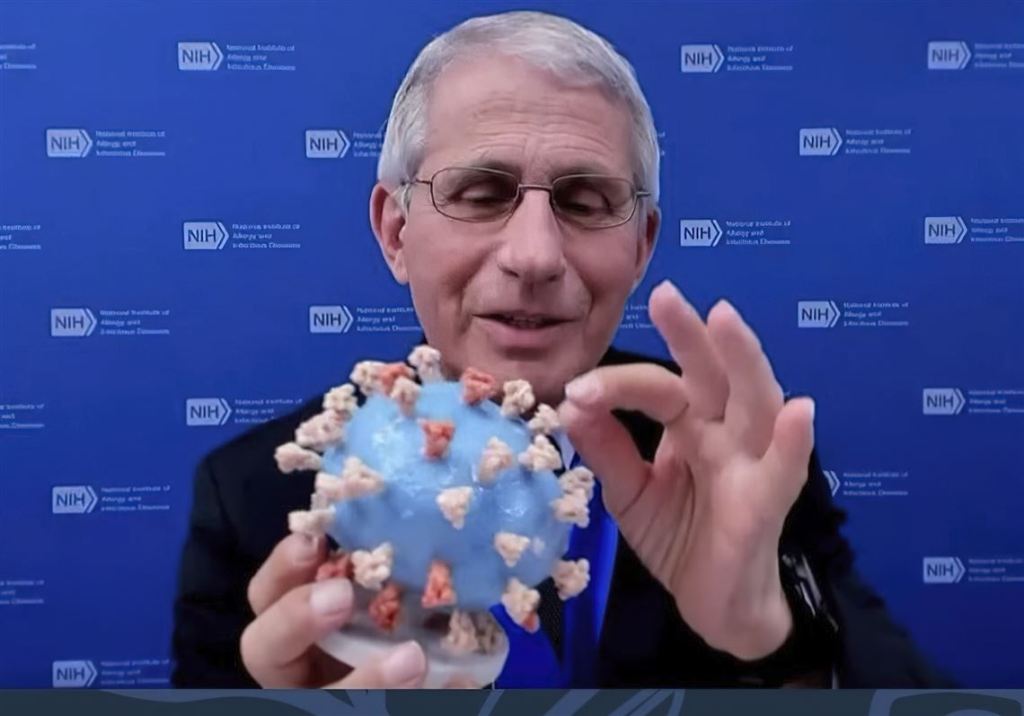
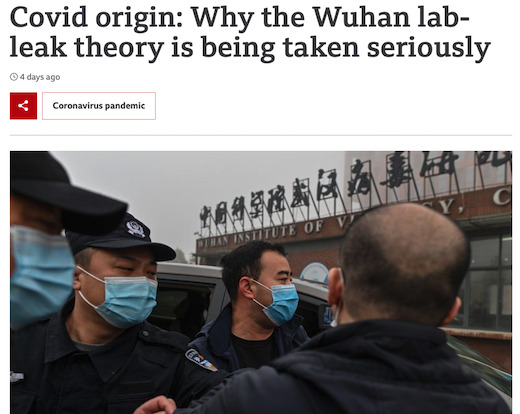


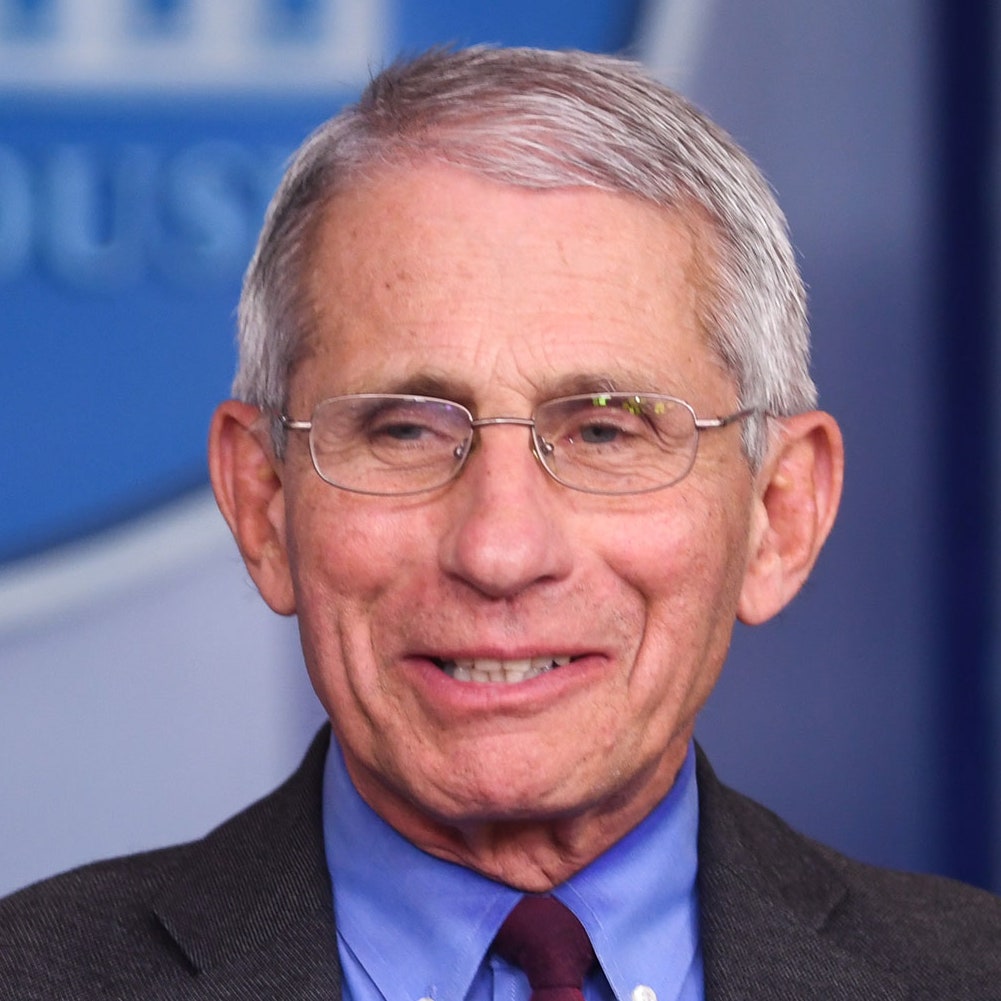



 After the Crash