Saturday Matinee: Tomato Is Another Day

Un(der)seen Cinema: Tomato Is Another Day

By TNI AV

Source: The New Inquiry

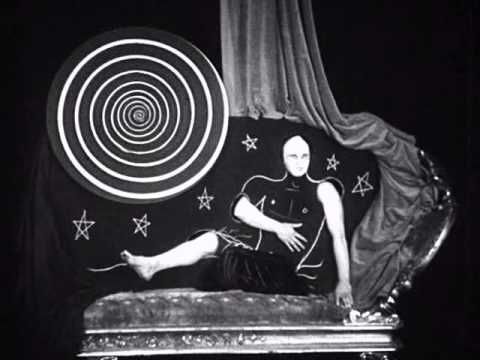
James Sibley Watson, doctor and Western Union heir, will be famous to some as publisher and president of The Dial, the literary magazine which, more than any other publication, brought Modernism to America. Under Watson’s patronage, the magazine was the first to publish T.S Eliot’s The Waste Land stateside, brought the work of Picasso, Munch, Chagall and many others to a major American audience for the first time, and regularly featured D.H Lawrence, William Carlos Williams, Marianne Moore, Virginia Woolf, Edmund Wilson, Bertrand Russell, John Dos Passos, etc. etc.

To others, Watson will be known for directing The Fall of the House of Usher and Lot in Sodom, important early works in the American Avant-Garde. Heavily influenced by the poetic theories of Ezra Pound and E.E Cummings (Cummings worked with Watson on treatments for Usher) and the cinematic innovations of German Expressionism and Jean Cocteau, these films are literary, hallucinatory and often nightmarish experiments in film language and the unconscious.

We here at A/V, however, prefer his even less well known Tomato is Another Day, which strikes us as an unparalleled bit of Dadaist pranksterdom and parody whose pun-heavy critique of Hollywood writing and directing styles, at six and a half minutes long and eighty-two years old, still resonates more forcefully and hilariously then most that have followed.

End-times for humanity


Humanity is more technologically powerful than ever before, and yet we feel ourselves to be increasingly fragile. Why?

By Claire Colebrook

Source: Aeon

The end of the world is a growth industry. You can almost feel Armageddon in the air: from survivalist and ‘prepper’ websites (survivopedia.com, doomandbloom.net, prepforshtf.com) to new academic disciplines (‘disaster studies’, ‘Anthropocene studies’, ‘extinction studies’), human vulnerability is in vogue.

The panic isn’t merely about civilisational threats, but existential ones. Beyond doomsday proclamations about mass extinction, climate change, viral pandemics, global systemic collapse and resource depletion, we seem to be seized by an anxiety about losing the qualities that make us human. Social media, we’re told, threatens our capacity for empathy and genuine connection. Then there’s the disaster porn and apocalyptic cinema, in which zombies, vampires, genetic mutants, artificial intelligence and alien invaders are oh-so-nearly human that they cast doubt on the value and essence of the category itself.

How did we arrive at this moment in history, in which humanity is more technologically powerful than ever before, and yet we feel ourselves to be increasingly fragile? The answer lies in the long history of how we’ve understood the quintessence of ‘the human’, and the way this category has fortified itself by feeding on the fantasy of its own collapse. Fears about the frailty of human wisdom go back at least as far as Ancient Greece and the fable of Plato’s cave, in which humans are held captive and can only glimpse the shadows of true forms flickering on the stone walls. We prisoners struggle to turn towards the light and see the source (or truth) of images, and we resist doing so. In another Platonic dialogue, the Phaedrus, Socrates worries that the very medium of knowledge – writing – might discourage us from memorising and thinking for ourselves. It’s as though the faculty of reason that defines us is also something we’re constantly in danger of losing, and even tend to avoid.

This paradoxical logic of loss – in which we value that which we’re at the greatest risk of forsaking – is at work in how we’re dealing with our current predicament. It’s only by confronting how close we are to destruction that we might finally do something; it’s only by embracing the vulnerability of humanity itself that we have any hope of establishing a just future. Or so say the sages of pop culture, political theory and contemporary philosophy. Ecological destruction is what will finally force us to act on the violence of capitalism, according to Naomi Klein in This Changes Everything: Capitalism vs the Climate (2014). The philosopher Martha Nussbaum has long argued that an attempt to secure humans from fragility and vulnerability explains the origins of political hierarchies from Plato to the present; it is only if we appreciate our own precarious bodily life, and the emotions and fears that attach to being human animals, that we can understand and overcome racism, sexism and other irrational hatreds. Disorder and potential destruction are actually opportunities to become more robust, argues Nassim Nicholas Taleb in Antifragile (2012) – and in Thank You for Being Late (2016), the New York Times’ columnist Thomas Friedman claims that the current, overwhelming ‘age of accelerations’ is an opportunity to take a pause. Meanwhile, Oxford University’s Future of Humanity Institute pursues research focused on avoiding existential catastrophes, at the same time as working on technological maturity and ‘superintelligence’.

It’s here that one can discern a tight knit between fragility and virility. ‘Humanity’ is a hardened concept, but a brittle one. History suggests that the more we define ‘the human’ as a subject of intellect, mastery and progress – the more ‘we’ insist on global unity under the umbrella of a supposedly universal kinship – the less possible it becomes to imagine any other mode of existence as human. The apocalypse is typically depicted as humanity reduced to mere life, fragile, exposed to all forms of exploitation and the arbitrary exercise of power. But these dystopian future scenarios are nothing worse than the conditions in which most humans live as their day-to-day reality. By ‘end of the world’, we usually mean the end of our world. What we don’t tend to ask is who gets included in the ‘we’, what it cost to attain our world, and whether we were entitled to such a world in the first place.

Stories about the end of time have a long history, from biblical eschatology to medieval plague narratives. But our fear of a peculiarly ‘human’ apocalypse really begins with the 18th-century Enlightenment. This was the intellectual birthplace of the modern notion of ‘humanity’, a community of fellow beings united by shared endowments of reason and rights. This humanist ideal continues to inform progressive activism and democratic discourse to this day. However, it’s worth taking a moment to go back to René Descartes’s earlier declaration of ‘I think, therefore I am’, and ask how it was possible for an isolated self to detach their person from the world, and devote writing, reading and persuasion to the task of defending an isolated and pure ego. Or fast-forward a few centuries to 1792, and consider how Mary Wollstonecraft had the time to read about the rights of man, and then demand the rights of woman.

The novelist Amitav Ghosh provides a compelling answer in his study of global warming, The Great Derangement (2017). Colonisation, empire and climate change are inextricably intertwined as practices, he says. The resources of what would become the Third World were crucial in creating the comfortable middle-class existences of the modern era, but those resources could not be made available to all: ‘the patterns of life that modernity engenders can only be practised by a small minority … Every family in the world cannot have two cars, a washing machine and a refrigerator – not because of technical or economic limitations but because humanity would asphyxiate in the process.’

Ghosh disputes one crucial aspect of the story of humanity: that it should involve increasing progress and inclusion until we all reap the benefits. But I’d add a further strand to this dissenting narrative: the Enlightenment conception of rights, freedom and the pursuit of happiness simply wouldn’t have been imaginable if the West had not enjoyed a leisured ease and technological sophistication that allowed for an increasingly liberal middle class. The affirmation of basic human freedoms could become widespread moral concerns only because modern humans were increasingly comfortable at a material level – in large part thanks to the economic benefits afforded by the conquest, colonisation and enslavement of others. So it wasn’t possible to be against slavery and servitude (in the literal and immediate sense) until large portions of the globe had been subjected to the industries of energy-extraction. The rights due to ‘us all’, then, relied on ignoring the fact that these favourable conditions had been purchased at the expense of the lives of other humans and non-humans. A truly universal entitlement to security, dignity and rights came about only because the beneficiaries of ‘humanity’ had secured their own comfort and status by rendering those they deemed less than human even more fragile.

What’s interesting about the emergence of this 18th-century humanism isn’t only that it required a prior history of the abjection it later rejected. It’s also that the idea of ‘humanity’ continued to have an ongoing relation to that same abjection. After living off the wealth extracted from the bodies and territories of ‘others’, Western thought began to extend the category of ‘humanity’ to capture more and more of these once-excluded individuals, via abolitionism, women’s suffrage and movements to expand the franchise. In a strange way these shifts resemble the pronouncements of today’s tech billionaires, who, having extracted unimaginable amounts of value from the mechanics of global capitalism, are now calling for Universal Basic Income to offset the impacts of automation and artificial intelligence. Mastery can afford to correct itself only from a position of leisured ease, after all.

But there’s a twist. While everyone’s ‘humanity’ had become inherent and unalienable, certain people still got to be more fully ‘realised’ as humans than others. As the circle of humanity grew to capture the vulnerable, the risk that ‘we’ would slip back into a semi-human or non-human state seemed more present than before – and so justified demands for an ever more elevated and robust conception of ‘the human’.

One can see this dynamic at work in the 18th-century discussions about slavery. By then the practice itself had become morally repugnant, not only because it dehumanised slaves, but because the very possibility of enslavement – of some humans not realising their potential as rational subjects – was considered pernicious for humanity as a whole. In A Vindication of the Rights of Woman (1792), for example, Wollstonecraft compared women to slaves, but insisted that slavery would allow no one to be a true master. ‘We’ are all rendered more brutal and base by enslaving others, she said. ‘[Women] may be convenient slaves,’ Wollstonecraft wrote, ‘but slavery will have its constant effect, degrading the master and the abject dependent.’

These statements assumed that an entitlement to freedom was the natural condition of the ‘human’, and that real slavery and servitude were no longer genuine threats to ‘us’. When Jean-Jacques Rousseau argued in The Social Contract (1762) that ‘man is born free, and everywhere he is in chains’, he was certainly not most concerned about those who were literally in chains; likewise William Blake’s notion of ‘mind-forg’d manacles’ implies that the true horror is not physical entrapment but a capacity to enslave oneself by failing to think. It’s thus at the very moment of abolition, when slavery is reduced to a mere symbol of fragility, that it becomes a condition that imperils the potency of humanity from within.

I’m certainly not suggesting that there is something natural or inevitable about slavery. What I’m arguing is that the very writers who argued against slavery, who argued that slavery was not fitting for humans in their very nature, nevertheless saw the unnatural and monstrous potential for slavery as far too proximate to humans in their proper state. Yet rather than adopt a benevolence towards the world in light of this vulnerability in oneself, the opposite has tended to be the case. It is because humans can fail to reach their rational potential and be ‘everywhere in chains’ that they must ever more vigilantly secure their future. ‘Humanity’ was to be cherished and protected precisely because it was so precariously elevated above mere life. The risk of debasement to ‘the human’ turned into a force that solidified and extended the category itself. And so slavery was not conceived as a historical condition for some humans, subjected by ruthless, inhuman and overpowering others; it was an ongoing insider threat, a spectre of fragility that has justified the drive for power.

How different are the stories we tell ourselves today? Movies are an interesting barometer of the cultural mood. In the 1970s, cinematic disaster tales routinely featured parochial horrors such as shipwrecks (The Poseidon Adventure, 1972), burning skyscrapers (The Towering Inferno, 1974), and man-eating sharks (Jaws, 1975). Now, they concern the whole of humanity. What threatens us today are not localised incidents, but humans. The wasteland of Interstellar (2014) is one of resource depletion following human over-consumption; the world reduced to enslaved existence in Elysium (2013) is a result of species-bifurcation, as some humans seize the only resources left, while those left on Earth enjoy a life of indentured labour. That the world will end (soon) seems to be so much a part of the cultural imagination that we entertain ourselves by imagining how, not whether, it will play out.

But if you look closely, you’ll see that most ‘end of the world’ narratives end up becoming ‘save the world’ narratives. Popular culture might heighten the scale and intensity of catastrophe, but it does so with the payoff of a more robust and final triumph. Interstellar pits the frontier spirit of space exploration over a miserly and merely survivalist bureaucracy, culminating with a retired astronaut risking it all to save the world. Even the desolate cinematic version (2009) of Cormac McCarthy’s novel The Road (2006) concludes with a young boy joining a family. The most reduced, enslaved, depleted and lifeless terrains are still opportunities for ‘humanity’ to confront the possibility of non-existence in order to achieve a more resilient future.

Such films hint at a desire for new ways of being. In Avatar (2009), a militaristic and plundering West invades the moon Pandora in order to mine ‘unobtanium’; they are ultimately thwarted by the indigenous Na’vi, whose attitude to nature is not one of acquisition but of symbiotic harmony. Native ecological wisdom and attunement is what ultimately leads to victory over the instrumental reason of the self-interested invaders. In Mad Max: Fury Road (2015), a resource-depleted future world is controlled by a rapacious, parasitic, and wasteful elite. But salvation comes from the revolutionary return of a group of ecologically attuned and other-directed women, all blessed with a mythic wisdom that enables ultimate triumph over the violent self-interest of the literally blood-sucking tyrant family. These stories rely on quasi-indigenous and feminist images of community to offer alternatives to Western hyper-extraction; both resolve their disaster narratives with the triumph of intuitive and holistic modes of existence over imperialism and militarism. They not only depict the post-post-apocalyptic future in joyous terms, but do so by appealing to a more benevolent and ecologically attuned humanity.

These films whisper: take a second glance at the present, and what looks like a desperate situation might actually be an occasion for enhancement. The very world that appears to be at the brink of destruction is really a world of opportunity. Once again, the self-declared universal humanity of the Enlightenment – that same humanity that enslaved and colonised on the grounds that ‘we’ would all benefit from the march of reason and progress – has started to appear as both fragile and capable of ethical redemption. It’s our own weakness, we seem to say, that endows humanity with a right to ultimate mastery.

What contemporary post-apocalyptic culture fears isn’t the end of ‘the world’ so much as the end of ‘a world’ – the rich, white, leisured, affluent one. Western lifestyles are reliant on what the French philosopher Bruno Latour has referred to as a ‘slowly built set of irreversibilities’, requiring the rest of the world to live in conditions that ‘humanity’ regards as unliveable. And nothing could be more precarious than a species that contracts itself to a small portion of the Earth, draws its resources from elsewhere, transfers its waste and violence, and then declares that its mode of existence is humanity as such.

To define humanity as such by this specific form of humanity is to see the end of that humanity as the end of the world. If everything that defines ‘us’ relies upon such a complex, exploitative and appropriative mode of existence, then of course any diminution of this hyper-humanity is deemed to be an apocalyptic event. ‘We’ have lost our world of security, we seem to be telling ourselves, and will soon be living like all those peoples on whom we have relied to bear the true cost of what it means for ‘us’ to be ‘human’.

The lesson that I take from this analysis is that the ethical direction of fragility must be reversed. The more invulnerable and resilient humanity insists on trying to become, the more vulnerable it must necessarily be. But rather than looking at the apocalypse as an inhuman horror show that might befall ‘us’, we should recognise that what presents itself as ‘humanity’ has always outsourced its fragility to others. ‘We’ have experienced an epoch of universal ‘human’ benevolence, a globe of justice and security as an aspiration for all, only by intensifying and generating utterly fragile modes of life for other humans. So the supposedly galvanising catastrophes that should prompt ‘us’ to secure our stability are not only things that many humans have already lived through, but perhaps shouldn’t be excluded from how we imagine our own future.

This is why contemporary disaster scenarios still depict a world and humans, but this world is not ‘the world’, and the humans who are left are not ‘humanity’. The ‘we’ of humanity, the ‘we’ that imagines itself to be blessed with favourable conditions that ought to extend to all, is actually the most fragile of historical events. If today ‘humanity’ has started to express a sense of unprecedented fragility, this is not because a life of precarious, exposed and vulnerable existence has suddenly and accidentally interrupted a history of stability. Rather, it reveals that the thing calling itself ‘humanity’ is better seen as a hiatus and an intensification of an essential and transcendental fragility.

Saturday Matinee: Fellini Satyricon

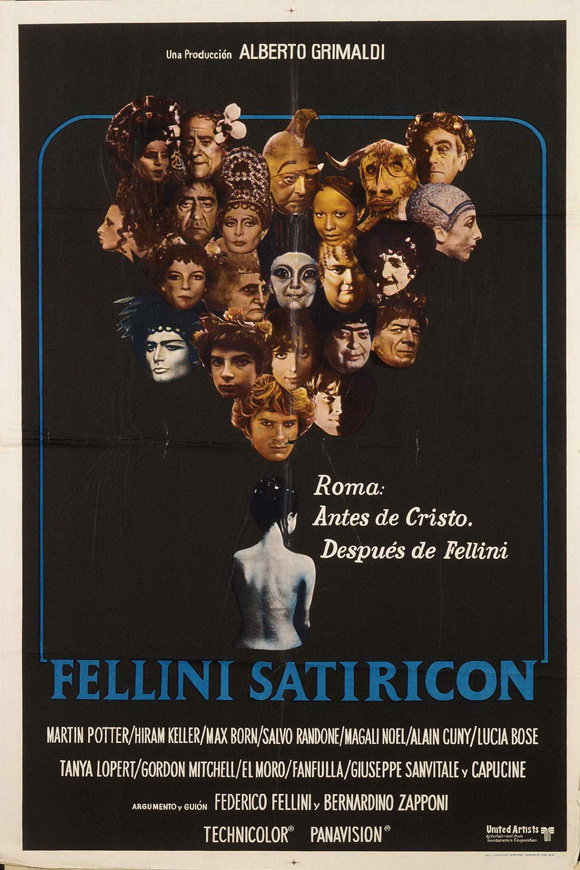
“Fellini Satyricon” (1969) is a surreal fantasy written and directed by Federico Fellini and loosely based on Satyricon, written by Petronius during Nero’s reign over imperial Rome. The film’s episodic structure follows the scholar Encolpius and friend Ascyltus as they navigate a dreamlike and decadent Roman landscape.

An English subtitled version of the film can be found here.

Saturday Matinee: Good Morning Mr. Orwell

PETER GABRIEL, LAURIE ANDERSON, OINGO BOINGO, ALLEN GINSBERG, JOHN CAGE & OTHERS USHER IN 1984

By Martin Schneider

Source: Dangerous Minds

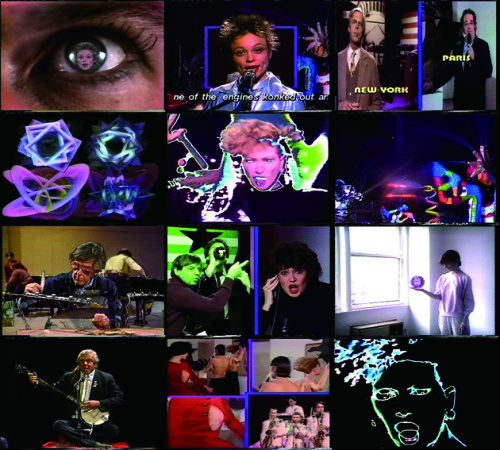
George Orwell’s sinister novel Nineteen Eighty-Four made it inevitable that the arrival of his eponymous year would be a media event. Decades after his death, Orwell made it onto the cover of Time magazine in late 1983, but on the big day itself—January 1, 1984—TV visionary Nam June Paik ushered in the year with an ambitious international video program called Good Morning, Mr. Orwell that was broadcast live simultaneously from New York (WNET public television), Paris, and San Francisco, with broadcasters in Germany and South Korea also carrying the transmissions if not contributing content.

According to Plimpton, Paik aptly referred to the project as a “global disco.” As the title suggested, Paik’s take on 1984 was considerably rosier than that of Orwell. In the spirit of Fluxus and/or technological optimism, as you please, Paik gathered a roster of artists with less inclination to lean on bleak themes such as Peter Gabriel, Laurie Anderson, John Cage, Allen Ginsberg, Merce Cunningham, Salvador Dalí, Oingo Boingo and many others for a stimulating showcase of art, music, theater, and video manipulation. One might imagine a band like DEVO being invited but it’s difficult to imagine Mark Mothersbaugh and Jerry Casale mustering up any enthusiasm for a project in which it was unironically asserted that technology is a boon to mankind.

The show was hosted by George Plimpton—the John Hodgman of his day, kind of—with assistance from the Centre Pompidou in Paris. In a move you can’t imagine happening today, Plimpton enthusiastically names the satellite—Bright Star—assisting with the remote sync-up. We would consider that akin to singling out the dedicated server permitting YouTube to bring you a video.

Among the performances: Gabriel and Anderson combine on a duet called “Excellent Birds”; a fitfully amusing comedy sketch called “Cavalcade of Intellectuals” in which a transatlantic discussion devolves into an interpersonal spat (a gag that worked better in Airplane! using airport PA announcers); a sprightly song by Yves Montand; John Cage plays “amplified cacti and plant materials” with a feather (so great); Oingo Boingo perform a song called “Wake Up (It’s 1984)”; Allen Ginsberg and Peter Orlovsky sing a little ditty about meditation to the cello stylings of Arthur Russell; and much more.


Saturday Matinee: David Lynch Presents the History of Surrealist Film (1987)

By Colin Marshall

Source: Open Culture

What living director has drawn the descriptor “surreal” more often than David Lynch? If you’ve seen, or rather experienced, a few of his films — particularly Eraserhead, Lost Highway, Mulholland Dr., or Inland Empire, or even the first half of his television series Twin Peaks — you know he’s earned it. Like any surrealist worth his salt, Lynch creates his own version of reality, with its own set of often unfathomable and inexplicably but emotionally and psychologically resonant qualities. In 1987, the year after his breakthrough Blue Velvet opened in theaters, the BBC apparently thought him enough of an authority on the matter of cinematic surrealism to enlist him to present an episode of Arena on the subject.

And so we’ve highlighted, just above in two parts, the fruit of their collaboration, with apologies for the straight-from-the-VHS quality of the video. (I just think of the slight muddledness as adding another welcome layer of unreality to the proceedings.)

Lynch’s duties on the broadcast include providing facts about the films and filmmakers excerpted throughout to tell the history of surrealist film. (He also provides several choice opinions, as when he calls Philadelphia “one of the sickest, most corrupt, decadent, fear-ridden cities that exists.”) We see bits and pieces of pictures like Luis Buñuel and Salvador Dali’s 1929 Un Chien Andalou, Jean Cocteau’s 1932 Blood of a Poet, Fernand Léger’s 1947 The Girl with the Prefabricated Heart, and Chris Marker’s 1962 La Jetée. Not only does Lynch contextualize them, he discusses their influence on his own work. Casual filmgoers who’ve caught a Lynch movie or two and taken them as the imaginings of an entertaining weirdo will, after watching this episode, come to understand how long a tradition they fit into — and they’ll no doubt want to see not just more of Lynch’s work, but his sources of inspiration as well. (They may, however, after hearing all he has to say here, still regard him as a weirdo.)


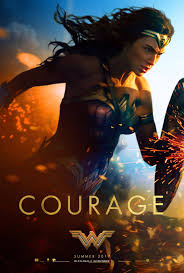
Wonder Woman Is a Hero Only The Military-Industrial Complex Could Create

By Jonathan Cooke

Source: TruePublica

For a while I have been pondering whether to write a review of the newly released Wonder Woman, to peel back the layers of comic-book fun to reveal below the film’s disturbing and not-so-covert political and militaristic messages.

There is usually a noisy crowd who deride any such review with shouts of “Lighten up, it’s only a movie!” – as though popular culture is neither popular nor culture, the soundtrack to our lives that slowly shapes our assumptions and our values, and does so at a level we rarely examine critically.

My argument is that this much-praised Gal Gadot vehicle – seemingly about a peace-loving superhero, Wonder Woman, from the DC Comics stable – is actually carefully purposed propaganda, designed to force-feed aggressive western military intervention, dressed up as humanitarianism, to unsuspecting audiences.

In short, this is straight-up propaganda for the military-industrial complex. It would have looked and sounded identical had it been scripted by a joint team from the Pentagon and the Israel Defense Forces.

My reticence to review the film has lifted after reading the latest investigations of Tom Secker and Matthew Alford into the manifold ways the U.S. military and security services interfere in Hollywood, based on a release of 4,000 pages of documents under Freedom of Information requests.

In their new book National Security Cinema, the pair argue that the Pentagon, CIA and National Security Agency have meddled in the production of at least 800 major Hollywood movies and 1,000 TV titles. That is likely to be only the tip of the iceberg, as they concede:

“It is impossible to know exactly how widespread this military censorship of entertainment is because many files are still being withheld.”

They write that their book “details how U.S. government involvement also includes script rewrites on some of the biggest and most popular films, including James Bond, the Transformers franchise, and movies from the Marvel and DC cinematic universes.”

The need for Pentagon toys

This isn’t just about minor adjustments, but wholesale collusion between film-makers and the military: “If there are characters, action or dialogue that the DoD [Department of Defense] don’t approve of then the film-maker has to make changes to accommodate the military’s demands. If they refuse then the Pentagon packs up its toys and goes home. To obtain full cooperation the producers have to sign contracts — Production Assistance Agreements — which lock them into using a military-approved version of the script.”

The fact that script-writers, producers and directors on these mega-budget pictures know their film may never make it into production if it does not get a thumbs-up from the Pentagon inevitably influences the choice of subjects, the political and military premises of selected films, and the story lines.

One movie, Countermeasures, was ditched after the military objected to a script that “included references to the Iran-Contra scandal … Similarly Fields of Fire and Top Gun 2 were never made because they couldn’t obtain military support, again due to politically controversial aspects of the scripts.”

One can imagine just how stringent the conditions imposed by the Pentagon must be, if it felt compelled to reject a movie like Top Gun 2, the sequel to the “flyboys with toys” killing fest that starred a young Tom Cruise.

The two authors add: “The documents also record the pro-active nature of the military’s operations in Hollywood and that they are finding ways to get involved during the earliest stages of development, ‘when characters and storylines are most easily shaped to the Army’s benefit’.”

Bad apples, not bad institutions

In addition, film-makers are pressured into changing scripts that suggest institutional or systemic problems in the U.S. security agencies.

The two authors observe that producer Jerry Bruckheimer has admitted that the script of the film Enemy of the State was changed under pressure from the NSA so that the wrongdoings at the heart of the film would be the responsibility of a single individual, not the agency itself.

“This idea of using cinema to pin the blame for problems on isolated rogue agents or bad apples, thus avoiding any notion of systemic, institutional or criminal responsibility, is right out of the CIA/DOD’s playbook,” they observe.

So not only are movies critical of U.S. and western politics and militarism almost certain to be off-limits for a big-budget production, but that void is certain to be filled by film proposals the studio is confident will win approval from the Pentagon, CIA and NSA.

And this is, of course, on top of the fact that the Hollywood money-men are themselves part of a larger globalized financial elite that depends on the proceeds of the homeland security industry, arms manufacturers and war profiteers. These financiers are certain to prefer funding films that support a neoliberal worldview at home and a neoconservative policy of warmongering abroad.

As Secker and Alford conclude: “In societies already eager to use our hard power overseas, the shaping of our popular culture to promote a pro-war mindset must be taken seriously.

Gal Gadot and the IDF

All of this is the context for deciphering the egregious propaganda in favor of western military violence, and the portrayal of peace-seeking as “appeasement”, that is Wonder Woman.

There has been plenty of guffawing at Middle East countries, including Lebanon, for seeking to ban Wonder Woman because it stars Gal Gadot, an Israeli beauty queen turned actress.

In fact, it is understandable that the Lebanese might object to a film heavily promoting Gadot as the world’s savior, given that she served in the Israeli army, one that brutally occupied parts of their country for two decades, until 2000, and continues to maintain a belligerent occupation of the Palestinians.

But there is also an undeniable irony to Gadot playing an Amazonian goddess who opposes the militarism of men, and cannot bear to see the suffering of children in war, when in real life she publicly cheered on the Israeli army’s massive bombardment in 2014 of the imprisoned population of Gaza, which led to the killing of some 500 Palestinian children there.

But more importantly, it is not just that Gadot, a former IDF soldier, is now the face of Wonder Woman; it is that the film’s superhero character too almost perfectly embodies the shared militaristic values of the IDF and the Pentagon. If there is one film whose script suggests it was jointly engineered by the Pentagon and Israeli army, it is Wonder Woman.

Hillary Clinton as Wonder Woman?

The film is set near the end of the First World War, a cataclysmic confrontation between two colonial powers, Britain and Germany, each trying to assert its dominance in Europe. The film-makers blur their focus sufficiently to gloss over the problem that there were no good guys in that “war to end all wars”. Instead in true Hollywood fashion, the First World War is presented simply as a prelude (or prequel) to the Second World War and the rise of the Nazis.

The Germans are murderous villains, while the British are the flawed – until Gadot shows them the error of their ways – defenders of humanity. In fact, the film prefers to cast the anti-German side as “Allies”, the humane members of the world community, represented by the U.S. – Chris Pine is the male lead and Gadot’s love interest – and a ragtag support group that includes a Scot, a native American, and a generic Arab, presumably symbolizing “moderate” Arab states like Saudi Arabia, Egypt and Jordan.

The British leadership is trying to find ways to make peace and bring the war to an end, but is stymied by an evil presence. A German super-general, Erich Ludendorff (Danny Huston), believes he can win the war decisively by developing a horrifying gas that will wipe out men, women and children, forcing the British to surrender on his terms. To demonstrate his power, he tests the gas on innocent villagers on the front lines in Belgium.

All of this might sound disconcertingly familiar to anyone who has been following the western media-scripted coverage that has for several years now been trying to promote more aggressive “humanitarian intervention” in Syria – and before that, in Libya and Iraq.

Is Ludendorff supposed to be Bashar Assad, the evil Syrian president who – as long as we discount the dissenting voices of some experts – has twice used the chemical weapon sarin against innocent civilians?

Are the British leaders, seeking a peace deal with the Germans, supposed to be those “appeasers” in the West who have stood in the way of “intervention” in Syria, blocking no-fly zones and bombing runs that could bring down the Syrian government?

And in an even more disturbing, if now outdated, parallel, given the film’s insistent identity politics, is Wonder Woman – the Amazonian who brings peace through overpowering military violence – a stand-in for Hillary Clinton? When the movie was in production, the filmmakers must have assumed it would be released as Clinton was enjoying her early months in office as the first female U.S. president.

The use of Wonder Woman to justify Clinton’s well-documented blood lust–the woman who laughed as “our rebels” murderously sodomized Libya’s Col Gaddafi, saying: “We came, we saw, he died” – would have proved timely had the U.S. election turned out differently.

War is Peace, Ignorance is Strength

Those who have not seen the film, and take it seriously as entertainment, may wish to skip this section, which includes a significant spoiler.

The source of man’s evil in Wonder Woman is the only surviving Greek god, Ares, who is hiding somewhere in the human world. Wonder Woman believes she can end all war and human suffering only if she can locate Ares and kill him – before he kills her.

No one in the human world, of course, believes Wonder Woman, and foolishly they dismiss her ideas as lunacy. And for a while Wonder Woman makes a terrible mistake in thinking the German Ludendorff (Saddam / Gaddafi / Assad) is Ares. It is late in the film that she discovers she has been on the wrong scent.

Humankind’s ultimate enemy is not Ludendorff, but the kindly Sir Patrick Morgan (David Thewlis), the British leader who has spent the entire film counseling for negotiations and peace with the Germans.

The ultimate evil, the wolves in sheep’s clothing, Wonder Woman finds, are  those among us who preach fraternity, compassion and turning the other cheek. They make possible the killing of the innocents.

Those who appear to care, those who seem to offer a route out of bloodshed and war – those who defeat the aims and threaten the profits of the military-industrial complex – are in truth nothing more than appeasers. Their efforts are certain, even intended, to lead to greater suffering.

Militarism, superior firepower, and an absolute belief in the justness of one’s cause, as Wonder Woman is reminded by her Amazonian tutors during her childhood Krav Maga training (Gadot was herself an Israeli army combat trainer) are the way to save mankind from the evildoers.

There is no time to delay, to stand back, to question or to negotiate. Wonder Woman is outraged by the dithering of the men around her. She wants to be at the front line as soon as possible, to kick ass.

“War is peace, freedom is slavery, ignorance is strength” – and all of it is good for business, the film Wonder Woman concludes in truly Orwellian fashion.

A veneer of identity politics

Of course, this story – like all effective propaganda – is supposed to work its magic at a subconscious level, where it cannot be interrogated by our reason and our critical faculties. But even so, a few critics – themselves enthusiastic liberal interventionists – seem to have intuited the movie’s message.

Perhaps not surprisingly, a reviewer with the clearest sense of how the film panders to the pro-war sentiments and identity politics of many liberals is the film critic of the conservative Washington Free Beacon.

Sonny Bunch applauds the way the film “highlights the need for the strong to intervene on behalf of the weak and the oppressed, and treats as villains quislings who sue for a peace that will bring only more destruction.

But he also understands how the film has been crafted to make its war-mongering more palatable to liberals. Wonder Woman, he writes, proves “you could slap an identity politics veneer on just about any neoconservative policy and progressives would lap it up. … Liberal interventionism is back, baby!”

Drooling from liberals

And sure enough, the community of largely liberal film reviewers has mostly drooled over Wonder Woman. Despite dire acting from Gadot, preposterous dialogue and a risible screenplay, the film has racked up an astounding 92 percent approval rating from critics on the review aggregator website Rotten Tomatoes.

Here is a brief selection of their assessments:

Dana Stevens, of Slate: “This is a movie about battling evil that pauses to ask what evil is and whether it’s necessary to understand its nature in order to defeat it.”

Mick LaSalle, of the San Francisco Chronicle: “What lingers … is the feeling of hope that the movie brings, that it someday might be possible for female rationality to defeat male brutality.”

Richard Brody, of the New Yorker: Wonder Woman is “an entry in the genre of wisdom literature that shares hard-won insights and long-pondered paradoxes of the past with a sincere intimacy.”

A. O. Scott, of the New York Times: “Her sacred duty is to bring peace to the world. Accomplishing it requires a lot of killing, but that’s always the superhero paradox. … Unlike most of her male counterparts, its heroine is not trying to exorcise inner demons or work out messiah issues. She wants to function freely in the world, to help out when needed and to be respected for her abilities. No wonder she encounters so much resistance.”

The paradoxes of power

Wonder Woman grapples with the paradoxes of military power every American interventionist and Israeli patriot understands. To save the “beautiful children”, she must sometimes rush to intervene and kill with extreme prejudice, even if the other side’s children are among those who are sacrificed.

Wonder Woman wants to “function freely”: she must enjoy the right to go wherever her interests take her. She cannot be shackled by borders in her quest for justice. She is there to “help out” others in trouble, even if she alone gets to decide who needs help and what counts as trouble. And she needs “respect”, and is prepared to force others to accord it to her, through her superior strength if need be.

She will face “much resistance” because others are jealous of her power and her freedoms. They are the evildoers, and they must and will be defeated.

Is it any surprise that in the Hollywood-Pentagon-IDF world of Wonder Woman, the values of a female superhero sound exactly like those of the military men who run the West’s wars?

Now roll on “Wonder Woman 2: Time to Intervene (Humanely)”.

Saturday Matinee: Eraserhead

“Eraserhead” (1977) is an infamous cult classic and debut feature film written, produced, and directed by David Lynch. The majority of the plot involves the struggles of Henry (Jack Nance) as he cares for a severely deformed baby in an industrial, possibly post-apocalyptic wasteland. Like Tarkovsky’s Stalker, the film’s pace is slow, which is a good thing for those who appreciate its unforgettable atmosphere and immersiveness.

Watch the full film here.

Saturday Matinee: Day of the Locust

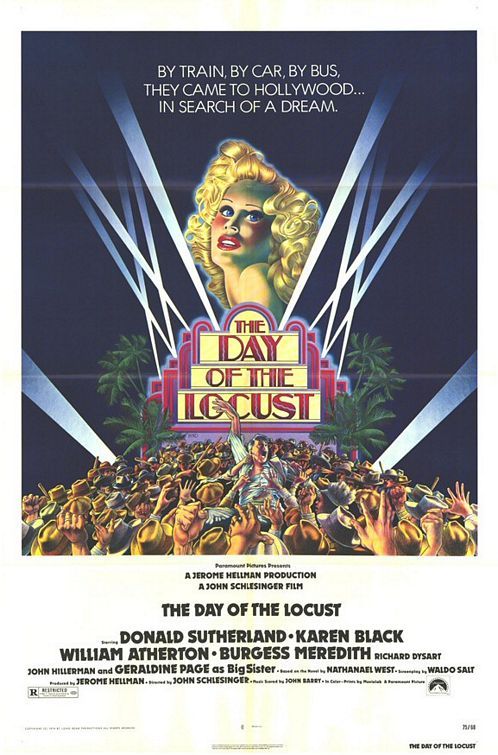
“The Day of the Locust” (1975) is a dark historical drama directed by John Schlesinger (Midnight Cowboy) with a screenplay by blacklisted writer Waldo Salt based on a novel by Nathaniel West. The plot follows aspiring art director Tod (William Atherton) who, after moving to Hollywood, becomes entangled in a community of desperate and deluded dreamers. The film’s exploration of the dark side of Hollywood and human nature is a likely influence on David Lynch’s Mulholland Drive.

Watch the full film here.