Dictatorship in Disguise: Authoritarian Monsters Wreak Havoc on Our Freedoms

By John & Nisha Whitehead

Source: The Rutherford Institute

“You see them on the street. You watch them on TV. You might even vote for one this fall. You think they’re people just like you. You’re wrong. Dead wrong.” — They Live 

We’re living in two worlds.

There’s the world we see (or are made to see) and then there’s the one we sense (and occasionally catch a glimpse of), the latter of which is a far cry from the propaganda-driven reality manufactured by the government and its corporate sponsors, including the media.

Indeed, what most Americans perceive as life in America—privileged, progressive and free—is a far cry from reality, where economic inequality is growing, real agendas and real power are buried beneath layers of Orwellian doublespeak and corporate obfuscation, and “freedom,” such that it is, is meted out in small, legalistic doses by militarized police and federal agents armed to the teeth.

All is not as it seems.

Monsters with human faces walk among us. Many of them work for the U.S. government.

This is the premise of John Carpenter’s film They Live, which was released in November 1988 and remains unnervingly, chillingly appropriate for our modern age.

Best known for his horror film Halloween, which assumes that there is a form of evil so dark that it can’t be killed, Carpenter’s larger body of work is infused with a strong anti-authoritarian, anti-establishment, laconic bent that speaks to the filmmaker’s concerns about the unraveling of our society, particularly our government.

Time and again, Carpenter portrays the government working against its own citizens, a populace out of touch with reality, technology run amok, and a future more horrific than any horror film.

In Escape from New York, Carpenter presents fascism as the future of America.

In The Thing, a remake of the 1951 sci-fi classic of the same name, Carpenter presupposes that increasingly we are all becoming dehumanized.

In Christine, the film adaptation of Stephen King’s novel about a demon-possessed car, technology exhibits a will and consciousness of its own and goes on a murderous rampage.

In In the Mouth of Madness, Carpenter notes that evil grows when people lose “the ability to know the difference between reality and fantasy.”

And then there is Carpenter’s They Live, in which two migrant workers discover that the world is not as it seems. In fact, the population is actually being controlled and exploited by aliens working in partnership with an oligarchic elite. All the while, the populace—blissfully unaware of the real agenda at work in their lives—has been lulled into complacency, indoctrinated into compliance, bombarded with media distractions, and hypnotized by subliminal messages beamed out of television and various electronic devices, billboards and the like.

It is only when homeless drifter John Nada (played to the hilt by the late Roddy Piper) discovers a pair of doctored sunglasses—Hoffman lenses—that Nada sees what lies beneath the elite’s fabricated reality: control and bondage.

When viewed through the lens of truth, the elite, who appear human until stripped of their disguises, are shown to be monsters who have enslaved the citizenry in order to prey on them.

Likewise, billboards blare out hidden, authoritative messages: a bikini-clad woman in one ad is actually ordering viewers to “MARRY AND REPRODUCE.” Magazine racks scream “CONSUME” and “OBEY.” A wad of dollar bills in a vendor’s hand proclaims, “THIS IS YOUR GOD.”

When viewed through Nada’s Hoffman lenses, some of the other hidden messages being drummed into the people’s subconscious include: NO INDEPENDENT THOUGHT, CONFORM, SUBMIT, STAY ASLEEP, BUY, WATCH TV, NO IMAGINATION, and DO NOT QUESTION AUTHORITY.

This indoctrination campaign engineered by the elite in They Live is painfully familiar to anyone who has studied the decline of American culture.

A citizenry that does not think for themselves, obeys without question, is submissive, does not challenge authority, does not think outside the box, and is content to sit back and be entertained is a citizenry that can be easily controlled.

In this way, the subtle message of They Live provides an apt analogy of our own distorted vision of life in the American police state, what philosopher Slavoj Žižek refers to as dictatorship in democracy, “the invisible order which sustains your apparent freedom.”

We’re being fed a series of carefully contrived fictions that bear no resemblance to reality.

Tune out the government’s attempts to distract, divert and befuddle us and tune into what’s really going on in this country, and you’ll run headlong into an unmistakable, unpalatable truth: what we are dealing with today is an authoritarian beast that has outgrown its chains and will not be restrained.

Through its acts of power grabs, brutality, meanness, inhumanity, immorality, greed, corruption, debauchery and tyranny, the government has become almost indistinguishable from the evil it claims to be fighting, whether that evil takes the form of terrorism, torture, disease, drug traffickingsex trafficking, murder, violence, theft, pornography, scientific experimentations or some other diabolical means of inflicting pain, suffering and servitude on humanity.

We have let the government’s evil-doing and abuses go on for too long.

We’re being fed a series of carefully contrived fictions that bear no resemblance to reality.

Despite the fact that we are 17,600 times more likely to die from heart disease than from a terrorist attack; 11,000 times more likely to die from an airplane accident than from a terrorist plot involving an airplane; 1,048 times more likely to die from a car accident than a terrorist attack, and 8 times more likely to be killed by a police officer than by a terrorist , we have handed over control of our lives to government officials who treat us as a means to an end—the source of money and power.

As the Bearded Man in They Live warns, “They are dismantling the sleeping middle class. More and more people are becoming poor. We are their cattle. We are being bred for slavery.”

We have bought into the illusion and refused to grasp the truth.

From the moment we are born until we die, we are indoctrinated into believing that those who rule us do it for our own good. The truth is far different.

The powers-that-be want us to feel threatened by forces beyond our control (terrorists, pandemics, mass shootings, etc.).

They want us afraid and dependent on the government and its militarized armies for our safety and well-being.

They want us distrustful of each other, divided by our prejudices, and at each other’s throats.

Most of all, they want us to continue to march in lockstep with their dictates as fearful, controlled, pacified zombies.

This brings me back to They Live, in which the real zombies are not the aliens calling the shots but the populace who are content to remain controlled.

When all is said and done, the world of They Live is not so different from our own. As one of the characters points out, “The poor and the underclass are growing. Racial justice and human rights are nonexistent. They have created a repressive society and we are their unwitting accomplices. Their intention to rule rests with the annihilation of consciousness. We have been lulled into a trance. They have made us indifferent to ourselves, to others. We are focused only on our own gain.”

We, too, are focused only on our own pleasures, prejudices and gains. Our poor and underclasses are also growing. Injustice is growing. Inequality is growing. A concern for human rights is nearly nonexistent. We too have been lulled into a trance, indifferent to others.

Oblivious to what lies ahead, we’ve been manipulated into believing that if we continue to consume, obey, and have faith, things will work out. But that’s never been true of emerging regimes. And by the time we feel the hammer coming down upon us, it will be too late.

So where does that leave us?

The characters who populate Carpenter’s films provide some insight.

Underneath their machismo, they still believe in the ideals of liberty and equal opportunity. Their beliefs place them in constant opposition with the law and the establishment, but they are nonetheless freedom fighters.

When, for example, John Nada destroys the alien hypno-transmitter in They Live, he delivers a wake-up call for freedom. As Nada memorably declares, “I have come here to chew bubblegum and kick ass. And I’m all out of bubblegum.”

In other words: we need to get active and take a stand for what’s really important.

Stop allowing yourselves to be easily distracted by pointless political spectacles and pay attention to what’s really going on in the country.

As I make clear in my book Battlefield America: The War on the American People and in its fictional counterpart The Erik Blair Diaries, the real battle for control of this nation is taking place on roadsides, in police cars, on witness stands, over phone lines, in government offices, in corporate offices, in public school hallways and classrooms, in parks and city council meetings, and in towns and cities across this country.

All the trappings of the American police state are now in plain sight.

Wake up, America.

If they live (the tyrants, the oppressors, the invaders, the overlords), it is only because “we the people” sleep.

Saturday Matinee: Time Warp Vol 1-3

Documentary Review — “Time Warp: The Greatest Cult Films of All Time”

By Roger Moore

Source: Movie Nation

Ask a hundred film buffs what their favorite cult film is, and you’ll get 500 answers.

Because nobody wants to limit that pick to the obvious — “The Rocky Horror Picture Show,” “Harold & Maude,” “Eraserhead” — to admit how many times they’ve watched “The Evil Dead,” or to interrupt their latest trip to Lebowski Fest to give the question more serious thought.

So it’s no wonder that Quiver and director Danny Wolf couldn’t limit themselves to a single documentary, rounding up stars, directors, academics and critics to swoon over and deconstruct their favorites.

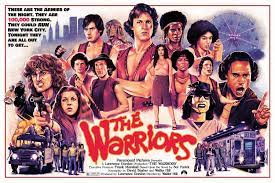
“Time Warp: The Greatest Cult Films of All Time” is a three-part mini-series, covering everything from “Freaks” to “The Warriors,” “Spinal Tap” to “Valley Girl.”

There are lots of opinions about the definition of a “cult” film, taking into account its “edge,” forbidden fruit “danger,” rejection by the mass movie audience (many were bonafide “flops” that found their audience over decades) and that ineffable “something” that makes you want to call your best friend and yell, “Friend, you have GOT to see this.”

I think John Cleese comes the closest to getting that definition right.

A cult film, Our Lord J.C. (of “Monty Python and the Holy Grail”) says, is one “that you think is much better than it is.”

“The Rocky Horror Picture Show (1975)” is celebrated as the greatest cult film of them all, a movie that opened to little notice, but which “never ever left the cinema,” as Patricia Quinn, one of several members of the cast speaking here, declares. Fans and critics and cult director John Waters (“Pink Flamingos”) talk of its impact on the culture, putting a “transvestite transexual” on screens where isolated, closeted fans could see someone that might be closer to their own sexuality than anything mainstream Hollywood was putting out.

Tod Browning’s still alarming “differently-abled” thriller “Freaks” (1932) is titled “the scariest movie ever made” by the likes of comic writer Bruce Vilanch and others.

Pam Grier talks of her glory days in Blaxploitation cinema like “Foxy Brown” and “Coffy.”

Gary Busey goes hyperbolic over “Point Break,” which has gained stature via a growing online fandom.

“Harold & Maude,” “The Decline of Western Civilization” punk documentaries, the films of the cleavage-cultist Russ Meyers and the down and dirty noir classics of Sam Fuller (“The Naked Kiss”), John Carpenter’s “Assault on Precinct 13” — a lot of ground is covered just in “Volume One: Midnight Madness.”

Everybody here is an enthusiast, and director Danny Wolf got Jeff Bridges and John Turturro to talk about “The Big Lebowski,” Rob Reiner and several others to speak about “Spinal Tap” and David Patrick Kelly to reminisce of the glory that was and remains “The Warriors.”

Those big names missing (Tim Curry, Keanu, Kathryn Bigelow, Tarantino, David Lynch, seen only in a ’70s interview) are barely missed.

Not all of it works. The conceit of having a “panel” consisting of directors Joe Dante (“Gremlins”) and John Waters, actress Ileana Douglas (?) and comic and actor Kevin Pollack (!?) could have left the hosting to Waters — the real authority, the Cult King.

There’s a whole subgenre of “revolting cult films” that aren’t so labeled but show up here. “Eraserhead” and any of the early warped Waters movies could turn your stomach.

Later installments will dwell on everything from masterpieces like “A Clockwork Orange” and “Blade Runner” to the obscure “Liquid Sky,” bonafide hits (no “cult” to them) like “Fast Times at Ridgemont High” to the zombie genre — “Living Dead” movies no longer having any cult appeal.

What, no “Stunt Man?” Well, they got to “Show Girls.” That’ll have to do.

But that’s the fun of it all, the arguments it starts. Because what really defines this sub-category of cinema is movies that have taken on a life of their own, taken over by fans.

And if the fans prefer “The Warriors” (popular, enduring, classic) to “Streets of Fire” (a lot more “cultish” for my money), they’re the arbiters.

“Time Warp,” in three installments, shows up via VOD and digital streaming, April 21 (ep. 1), May 19 (ep. 2) and June 23 (ep. 3).

Tune in. All the cool kids will be there.

Watch the Time Warp trilogy on Kanopy here:

Vol 1 – https://www.kanopy.com/en/product/11188290

Vol 2 – https://www.kanopy.com/en/product/11188292

Vol 3 – https://www.kanopy.com/en/product/11188294

FILMMAKER REVEALS THE TRUTH ABOUT SUBLIMINAL MESSAGES

By Dylan Charles

Source: Waking Times

We’re all being conditioned to think and believe certain things without any rational explanation through subliminal messaging in advertising, music, film, television, political propaganda, and military psychological operations.

Considering the definition of the word subliminal – ‘existing or functioning below the threshold of consciousness’ – it is easy to downplay the power of this brainwashing technique because most people are not consciously aware that it is happening, yet, it is affecting their lives. Once you realize that subliminal messaging is real and start to pay attention, it becomes much easier to recognize the we are, indeed, all being conditioned to behave a certain way, to want certain things, and to believe in ideas, without being able to rationally explain why.

Below is a short video in which Jeff Warrick, the director of Programming the Nation (2011), offers his take on the truth about subliminal messaging. Warrick shares a few examples of messages embedded within ads, which are not likely to be seen consciously, but are admitted into the subconscious mind.

A common response to this type of revealing information is skepticism and disbelief that sexual innuendos or random words embedded in pictures or film will not impact a person’s willingness to buy a product.

Although it is a common assumption that sex sells because for most people it is associated with feelings of pleasure, excitement, enjoyment or even love, subliminal messaging is about much more than helping advertisers sell more product. These messages are designed to have an impact on general consumer behavior and affect people’s life patterns, thus molding society as a whole, creating and captivating more and more receptive consumers.

When bombarded with subliminal messaging, the mind is likely to trigger emotions, memories or feelings, without a person’s conscious recognition of why they feel a certain way. A person may not consciously realize why they start to become more attracted to certain behaviors, lifestyles or products, but they are more likely to succumb to the attraction.

“..subliminal ads are used as a technique not only to increase sales but is also used to divert youth and involve them in such type of behaviour which is only hazardous to the consumer.” ~ (Impact of Subliminal Messaging in TV Advertisements on Consumer Behaviour – A Case Study of Youth in Kashmir Province of J&K, Blue Ocean Research Journalssource)

Are subliminal messages contributing to a variety of economic, social, and political problems currently present in our culture, such as over-competitiveness, low self-esteem, obesity, over-consumption and debt? There are many examples that support this idea and demonstrate that subliminal messaging, over time, can have a powerful impact.

Take, for instance, advertising to women. If you look at any variety of ads that are targeted at women ages 18-35, an overwhelming majority will personify that women and girls should be thin, wear lots of makeup, style their hair in certain ways, and, of course, look very sexy. It almost appears as though it is the advertisers’ job to make young women feel bad about themselves.

See the following example of women in advertising in the video below:

Other examples are films such as the Rambo series of the 1980’s and the more resent American Sniper, which glorify mindless military self-sacrifice, torture and violence. They romanticize obedience to authority and unquestioning loyalty to a war-mongering government.

“‘American Sniper’ lionizes the most despicable aspects of U.S. society—the gun culture, the blind adoration of the military, the belief that we have an innate right as a “Christian” nation to exterminate the “lesser breeds” of the earth, a grotesque hypermasculinity that banishes compassion and pity, a denial of inconvenient facts and historical truth, and a belittling of critical thinking and artistic expression.” – Chris Hedges

Below is the complete documentary by Jeff Warrick, Programming the Nation, that offers a full history behind subliminal message. In the film, Warrick examines if subliminal messaging and other subconscious techniques have conditioned the United States public to become one of the highest consuming nations in the world, accounting for about 25 percent use of the worlds natural resources even though its populace makes up less than 5 percent of the global population.

Saturday Matinee: The Wailing

Film Analysis: The Wailing (2016) by Na Hong-jin screening on Fantasia International Film Festival

By Panos Kotzathanasis

Source: Asian Movie Pulse

Na Hong-jin is one of those rare cases in S. Korean cinema, which, despite having enormous success with their films, are not exactly eager to follow up. In that fashion, he has shot just three films in eight years, with the previous one (The Yellow Sea) screening six years before. His absence was quite felt in the country’s cinema, but his return fully compensates. “The Wailing” is already an international success, amassing more the $51 million in international revenue, while it has also won five Blue Dragon Awards (Director, Supporting Actor, Popularity Award, Editing, and Music). Here are seven reasons for the film’s success.

In a seemingly peaceful village, a kind of epidemic suddenly breaks out, with people losing their minds and attacking their relatives and with their skin suffering from a hideous infection. Their attacks have resulted in violent deaths, and the local police seem unable to deal with the case, eventually concluding that poisonous mushrooms are causing this behavior. Among them is officer Jong-goo, who hears a rumor about a Japanese man living on the top of a nearby hill being the actual perpetrator, a suspicion that becomes stronger after a strange young woman, named Moo-myeong confirms the fact. Eventually, he tracks down the man’s house and comes across a series of truly horrific spectacles. Being kind of coward himself, he tries to avoid the situation as much as possible, but when his little daughter, Hyo-jin, comes down with similar symptoms, Jong-doo is willing to go to extremes to save her. Meanwhile, his mother-in-law invites Il- gwang, a shaman, to perform an exorcism on the girl while a deacon  named Yang Yi-sam, is also involved, as a translator of Japanese for the police. The truth about what is really going on, and who the actual evil characters are, changes all the time, until the end. In that fashion, Na Hong-jin manages to retain the agony for the whole duration of the movie, as the twists are continuous and quite shocking.

Underneath the elaborate script, Na Hong-jin has hidden a very sharp, sociopolitical allegory, which my friend and expert on Korean film allegory, Bastian Meiresonne has pointed out to me. Moo-myeong, the shaman woman, is a direct reference to South Korea’s current president, Park Geun-hye, who has an intense connection with shamanism (or Muism, as is the Korean version of it) through the Eternal Life Church and her advisor, Choi Soon-sil, the instigator of the latest scandal that has led to her impeachment trial. In that fashion, Moo-myeong (shaman / white woman) is manipulating people to accuse the foreigner (or the past of South Korea in another interpretation). Her accusations make the people of the town become more and more racist, and to eventually kill the foreigner. It is always a dream sequence or a story told that has the Japanese man doing magic, or he is nearby, but he never actually does anything. The only time that he performs shamanism is in order to counter the woman’s sorcery.

The sequence where Moo-myeong is throwing stones at Jong-goo symbolizes how racism gets to people. It takes quite awhile, and lots of small “stones”, and people in the beginning are negative, like Jong-goo, who tells the woman to leave. Eventually though, it gets to them, and when they understand what is happening, it is too late. This allegory becomes clear during the sequence where the Japanese man turns into a monster in front of the wannabe priest, Yang Yi-sam. He says to him: “You only see me as you want to see me – and if I would tell you how I really look like (normal guy), you wouldn’t believe me anyway.” In that fashion, racism makes targeted people seem like monsters. The wannabe priest is an allegory regarding South Korea’s very troubled religious history, with Protestants and Catholics doing a lot of wrong in the country.

At one point, people call upon Korea’s traditional past – the shaman – (Il-Gwang) to help them, whose first question is how much he will be paid. As soon as the ritual is over (where he actually did nothing), he puts on his brand sportswear, in a symbolism of how old Korea has been left behind for money and western “values”. The only one who seems to realize the truth is the little girl, Hyo-jin, who symbolizes the children in general. She continuously yells “STOP”, but her parents continue to do the wrong thing and trust the shaman – Park Geun-hye – as they succumb to racism. In that fashion, Na Hong-jin means that the children will turn against their parents for the consequences they will have to pay, due to their mistakes.

Na Hong-jin directs and pens an agonizing thriller, building the tension gradually as the story progresses, until the utterly shocking finale, one of the film’s greatest sequences. He incorporates a plethora of horror-favorite elements and notions, including zombies, vampires, demons, and exorcists, although the only one majorly implemented is the latter, with the rest existing, for the most part, to create an atmosphere of supernatural horror. In that fashion, he avoids the reef of hyperbole, maintaining a very serious approach throughout the film, despite some minor moments of unexpected humor. The pace is neither fast nor slow, but has the most fitting speed for the story, which artfully escalates as the time passes, until the impressive ending with the continuous plot twists. Apart from that, there is much cursing, violence, and a number of truly grotesque bloodbaths and spectacles in general, which supplement the general aesthetics of the film. Lastly, the allegories are another element that moves the film beyond the typical horror movie, adding another level and more substance.

The cast is another point of excellence, with Kwak Do-won giving a wonderful performance as Jong-goo, an easily intimidated police officer who transforms into a relentless hunter for the sake of his daughter. Kwak has been mostly cast in secondary roles during his career, and he proves in this film that he is made of protagonist material. Hwang Jung-min is great as usual as Il-gwang, in his path to become the next Song Kang-ho. The exorcism scene is the highlight of his impressive performance. The one who truly steals the show, however, is Jun Kunimura as the mysterious Japanese man, whose acting and physique make him the perfect choice for the particular role, as he constantly exhibits a subtle but obvious threat, despite the fact that he does not speak very much. Kim Hwan-hee is also great as little Hyo-jin, in a rather difficult role that demanded her transformation from a cute and smart little girl to a violent, constantly cursing, possessed individual. Lastly, the gorgeous Chun Woo-hee shines particularly in the end, with a truly eerie performance.

Technically the film is magnificent, with Hong Kyung-pyo’s cinematography wonderfully presenting the grotesque atmosphere in the rural surroundings of the film, while exhibiting images of bucolic beauty as much as of onerous terror, particularly inside the various houses in the area. Furthermore, the extensive shooting in natural light gives the film an eerie essence that so suits its general atmosphere. Kim Sun-min’s editing is also great, retaining the agony throughout the film, while the sequencing is a work of art, particularly during the exorcism scene and the ending. Jang Young-gyu magnificently supplements the general atmosphere of the film, especially during the agonizing scenes.

All of the film’s aspects find their apogee in the exorcism scene, the movie’s most impressive and meaningful sequence. In terms of acting, Hwang Jung-min has the central role, presenting an exorcist performing a complicated ritual, as he dances around, killing a cock and chanting the whole time. Kw ak Do-won wonderfully portrays his character’s agony, particularly due to the reactions of his daughter, as Kim Hwan-hee is truly terrifying screaming and kicking as if she is being killed. Jun Kunimura is also great, as he presents his character’s stress over countering the ritual. The cinematography of the scene is extraordinary, as the difference in the two exorcisms is presented by the opposite colors (white and black) of the cocks sacrificed and the setting where they take place: the first in full light, and the second one in the darkness. Since the two rituals occur simultaneously, the editing is also masterful, as the two scenes alternate magnificently. The music, mainly produced through hand drums, heightens the tension even more.

“The Wailing” features many grotesque scenes. Cannibalism, violent killings, people acting like zombies, the terribly depicted skin infection, the cock killing ritual, and the amounts of blood all point towards an extreme horror film. The same applies to Hyo-jin’s behavior, which is very hard to watch, particularly during the ritual scene. The sequences involving the dog and the interior of the Japanese man’s house also move in the same direction. However, Na Hong-jin manages to “hide” this grotesqueness, as the other more artful elements of the film are the ones that dominate in the end. The intricate script with the deep and meaningful allegory, the well-analyzed characters, the fitting pace, and the elaborate cinematography that presents images of extreme beauty, alongside those of extreme grotesqueness, succeed in making the film watchable by anybody. The sporadic humor also moves in this direction, and this along with the aforementioned elements make “The Wailing” a great combination of artistry, meaningfulness, and entertainment, which even applies to fans of the extreme.

“The Wailing” is a truly great spectacle, a must-see for every fan of S. Korean cinema and a great return for a great filmmaker.

Watch The Wailing on Hoopla here: https://www.hoopladigital.com/title/11707489

Saturday Matinee: Phantasm

Screen Screams: ‘Phantasm’ Review

By Rascal F. Kennedy

Source: Full Circle

The 70s and 80s were a great time for movies. They were fun, they were strange, and sci-fi, fantasy, and horror films were top tier. There would be one film in 1979 that would combine all three of the genres, Phantasm. This film would seemingly be the catalyst for an entire niche of horror films. It was the first of its kind, and there have been many films that followed in its footsteps.

Phantasm follows Mike Pearson (A. Michael Baldwin), a teenager that’s lost his parents and lives with his brother Jody (Bill Thornburry). After the death of Jody’s friend, Tommy (Bill Cone), they of course hold a funeral. After the funeral, Mike sees a man rob Tommy’s grave, and he becomes curious. This leads Mike down a rabbit hole of trouble where he discovers the Tall Man (Angus Scrimm), a man that uses flying balls to kill his victims. There’s also interdimensional travel involved, so it’s just one very fun and short ride.

Don Coscarelli literally did everything, this is HIS movie. He wrote the film, directed, edited, and shot it. Quite honestly, he did them very well. He had an idea and saw it to fruition. The film is extremely creepy and has a score that lends a hell of a helping hand. Fred Myrow and Malcolm Seagrave give us a score for the ages. This was around the time when the synthesizer would become a great tool for music. It led straight into the 80s which is why I enjoy the era so much.

The acting in the film might be its only downfall, but that’s what makes midnight movies. They’re B-grade films that are cheesy ultimately. Baldwin, Thornburry, and Scrimm give the best performances. Reggie Bannister (Reggie) has his moments, and Kathy Lester (Lady in Lavender) also gives us a few good moments. Other than the acting, this is a solid film that takes you on a journey.

Phantasm is trippy, and it just has late-night vibes. Everything about this film screams midnight movie, and its cult-like following helps carry that mantle. It’s the first film to mix three genres in such a manner that while ridiculous in concept, it’s near flawless in execution. Coscarelli has all my respect and then some. He took the idea of a grave robber and flipped into something completely off the rails, you have to admire the ambition. I can firmly say, this film deserves a lot of love.

Watch Phantasm on Hoopla here: https://www.hoopladigital.com/title/11726004

Saturday Matinee: Annihilation

Movie review: Annihilation

By Frank Kaminski

Source: Resilience.org

Annihilation

Directed by Alex Garland; screenplay by Alex Garland; based on the novel Annihilation by Jeff VanderMeer; cinematographed by Rob Hardy; edited by Barney Pilling; music by Geoff Barrow and Ben Salisbury; production design by Mark Digby; produced by Eli Bush, Andrew Macdonald, Allon Reich and Scott Rudin. Released in Feb. 2018 by Paramount Pictures. Running time: 115 minutes. Rated NNN

Starring: Natalie Portman as Lena, Oscar Isaac as Kane, Jennifer Jason Leigh as Dr. Ventress, Gina Rodriguez as Anya Thorensen, Tuva Novotny as Cass Sheppard, Tessa Thompson as Josie Radek, David Gyasi as Daniel and Benedict Wong as Lomax

There are many layers to this smart, tense, slow-building science fiction drama. It’s at once a nuanced exploration of trauma and identity, a surreal excursion into high-concept cosmic horror and an endlessly rich subject for intellectual debate. It’s a movie that invites many interpretations, having been read as a metaphor for everything from depression to cancer to radioactive contamination following a nuclear accident. Perhaps its most poignant subtext is that of nature fighting back against the encroachments of human civilization.

Loosely based on an eponymous 2014 novel by Jeff VanderMeer, Annihilation centers around a journey to the heart of an anomalous region known as Area X on America’s southern coast. Three years earlier, a meteorite crashed into a lighthouse in a national park, bringing with it an extraterrestrial entity that has since been transforming everything around it. During its spread inland, the alien has forged new ecosystems filled with mutations like something out of a psychedelic vision. At the edge of the contaminated zone lies a hypnotic, pulsating electromagnetic field called The Shimmer, from which almost no one who enters ever emerges—the one man to have done so bearing little trace of his former personality or memories afterward.

A clandestine government organization called Southern Reach has been created to study Area X with the aim of halting and reversing its progress. But Area X is impervious to satellite surveillance, and no one has picked up radio transmissions from any of the numerous teams that have ventured inside. So far, Southern Reach has managed to keep Area X under wraps, using the pretext of a chemical spill to evacuate the sparsely populated swampland that has thus far been consumed. But it’s only a matter of months before Area X will begin to expand into population centers, raising the prospect of mass evacuations that will be much harder to explain.

In the movie’s opening scene, the sole survivor of the latest expedition into Area X, a cellular biologist named Lena (Natalie Portman), is being questioned in a small, bare room by Southern Reach agents in hazmat suits. It’s been four months since she and the rest of her team embarked on their mission to reach and study the lighthouse that appears to be The Shimmer’s epicenter. The other members of her group were psychologist Dr. Ventress (Jennifer Jason Leigh), paramedic Anya Thorensen (Gina Rodriguez), geomorphologist Cass Sheppard (Tuva Novotny) and physicist Josie Radek (Tessa Thompson). They left with food rations, camping gear, weapons and their various scientific instruments. Lena’s questioners want to know what became of the others, how Lena lasted for months on only two weeks’ worth of food and what transpired between her and the lighthouse entity. The movie then flashes backward to recount the saga.

Portman gives a strong, sympathetic performance. Her character’s personal journey—which involves coming to terms with the fate of her husband Kane (Oscar Isaac), a special forces officer who was part of an earlier mission—forms the emotional core of the story. Leigh, who plays the group’s stoic leader, seems strangely subdued at first, until we come to understand her character’s motivations for heading into Area X. All of the actresses excel as action heroines during the movie’s periodic swings into action-thriller mode.

Unfortunately, some of the characters are given more to do than others. Lena and Josie are the only ones who really put their respective areas of expertise to use, each making important discoveries that advance our understanding of the entity’s threat. The others might as well just be soldiers.

Though subtle at first, the aberrations to the landscape and its flora and fauna grow increasingly dreamlike the closer the group comes to the lighthouse. The early mutations are, to use Lena’s words, “Corruptions of form. Duplicates of form.” But eventually the women encounter humanoid shrubs, stems harboring multiple plant species, an alligator with shark-like concentric rows of teeth, deer with flowering branches for antlers and trees made of glass. Josie hypothesizes that the alien being is a prism that refracts not only light rays and energy waves, but molecular structures as well, including DNA. This explains how shark’s teeth ended up in the mouth of an alligator, how sand formed into glass trees and how plants have melded with one another and with humans and deer.

Freakish things soon begin happening to the bodies and minds of our protagonists. Examining a drop of her own blood under a microscope, Lena finds it suffused with rapidly dividing alien cells. Anya is unnerved to see her fingerprint patterns moving. Paranoia begins to overrun the group. Some of the women fall victim to the creatures of Area X, while others turn into them, like Gregor Samsa becoming a cockroach in Franz Kafka’s “The Metamorphosis.” Characterized by intense emotions and moments that seem to occur out of sequence and without logical explanation, these events play out much like a dream sequence. This feeling is heightened by Geoff Barrow and Ben Salisbury’s musical score, whose sounds become increasingly unnatural and mesmerizing.

The movie’s frights are a mixed bag. At their best, they’re superb at evoking a sense of incomprehensible horror such as one finds in the works of H. P. Lovecraft. Indeed, Annihilation has been likened to Lovecraft’s 1927 short story “The Colour Out of Space”—as well as its numerous film adaptations—in which a life form brought to Earth on a meteorite wreaks madness and all manner of physical deformities upon the wildlife and human residents of a tract of Massachusetts woodland. (Unlike Annihilation’s alien, however, the being in that tale decimates its surroundings rather than creating something new from them.) The film also contains some very effective Cronenberg-esque body horror. However, not all the scares arise naturally from the plot and the characters; there are some monster attacks and shoot ’em up scenes that belong in a less lofty movie, and which are nowhere to be found in the book.

Beyond its similarity to the Lovecraft story (and despite VanderMeer stoutly denying he was influenced by either of the following two works), Annihilation also has obvious echoes of Arkady and Boris Strugatsky’s 1972 novel Roadside Picnic and its 1979 movie adaptation, Stalker. These also involve journeys through a restricted zone rife with strange mutations and inexplicable phenomena brought on by contamination left by an extraterrestrial presence.

Annihilation’s screenwriter and director is Alex Garland, whose previous film was another landmark of intelligent sci-fi filmmaking—and his directorial debut, no less—2014’s Ex Machina. With Annihilation, he takes great liberties with his source material, changing much of the plot, premise and thematic emphasis. The film has more human connection, more emotional interplay among the characters, than the novel does. (The book’s characters don’t relate; they’ve completely shed their names and pasts.) The book begins in medias res and bypasses much of its backstory, whereas the film starts more conventionally, with a full act of setup that relies on clichés such as a getting-to-know-you session between Lena and her future fellow expeditioners and tearful flashbacks to Lena’s personal drama that led her to agree to the mission. Neither version of the story is superior, really; they’re more like “refractions” of a single underlying inspiration.

The novel repeatedly stresses the pristineness of Area X. It’s a region that has managed, even if by otherworldly means, to beat back humankind. In the real world, of course, industrial humanity faces pushback from nature in the form of droughts, floods, diminishing returns in soil fertility, emerging infectious diseases and uncountable other threats to human habitat. Clearly, annihilation runs both ways.

Watch Annihilation on Hoopla here: https://www.hoopladigital.com/title/15222198

Saturday Matinee: Conquest of the Planet of the Apes

Conquest of the Planet of the Apes: The

Most Violent and Bleak of the Franchise

The fourth Apes movie, Conquest of the Planet of the Apes, showcased Caesar’s controversial and timely fight for freedom.

By Don Kaye

Source: Den of Geek

On June 30, 1972, 20th Century Fox released the fourth film in the original Planet of the Apes cycle, titled Conquest of the Planet of the Apes. It followed up the previous year’s Escape from the Planet of the Apes, the first of the Apes films to deliberately end with the promise of a sequel. In that film, two intelligent chimps from the future, Cornelius (Roddy McDowall) and Zira (Kim Hunter), traveled back to our time only to be brutally slain by the U.S. government over fears that they would plant the seeds for the apes’ eventual domination of humankind. Their baby, however, secretly survived, hidden away by the circus owner Armando (Ricardo Montalban) and already beginning to form words.

As Conquest of the Planet of the Apes opens, Armando and the child ape, now grown and named Caesar (played by McDowall), arrive at an unnamed North American city. The year is 1991 and the U.S. government has turned totalitarian. A virus from space has destroyed all the world’s cats and dogs, leading humans to turn toward apes as first pets and then slaves. When Caesar expresses outrage at the cruel treatment of an ape by police, he’s forced to flee and hide — since he was officially declared dead 20 years earlier and his very existence is a threat to humanity.

Caesar makes his way to the ape training facilities and assimilates himself there, eventually going up for auction — where he is sold to the city’s ape-hating governor Breck (Don Murray) and placed under the command of Breck’s assistant MacDonald (Hari Rhodes), who is sympathetic to the plight of the apes. But when Armando is killed while in the government’s custody, an enraged Caesar begins to plot a revolution — slowly but surely organizing his fellow apes for a violent uprising that will be the first step toward the downfall of the human race.

By the time that Conquest of the Planet of the Apes was in production, Apes producer Arthur P. Jacobs and his studio partner Fox were in truly uncharted territory. Even though Planet of the Apes (1968) was a critical success and a box office smash, sequels at the time were considered quick, disposable vehicles to milk a few more bucks out of the audience. Instead, what Jacobs did — aided by the inspired efforts of screenwriter Paul Dehn — was create an ongoing sci-fi story and intricate future history over the course of his Apes movies, the likes of which had never been attempted before in the genre.

Jacobs, however, was still up against the studio mindset that sequels had to cost less, so by the time he made Conquest the budget for the film was a third of the price of the original Planet of the Apes. He had a meager $1.7 million to visualize the ape revolution that had been discussed in the previous films, economizing by using the brand new Century City high-rise complex in Los Angeles as the exterior of the city of the future — but also skimping on the makeup budget, resulting in some clearly fake-looking ape masks.

Dehn’s third screenplay for the series, following Beneath the Planet of the Apes (1970) and Escape from the Planet of the Apes, was the most explicitly political of the series. The previous Apes films had commented obliquely on race and other social issues, but against the backdrop of ongoing racial tensions in America, Dehn crafted a story that drew directly upon the 1965 Watts riots in Los Angeles for the imagery of his ape revolution. His screenplay was also the most violent of the franchise, initially ending in a bleak standoff that found Caesar ordering the cold-blooded execution of the sadistic Governor Breck and forecasting the complete subjugation of the human race.

To direct, Jacobs hired J. Lee Thompson (Cape FearThe Guns of Navarone), who had been approached for Planet of the Apes but had to turn it down due to a previous commitment. Thompson was skilled at handling both large-scale action and low budgets, making him uniquely suited to the twin challenges of Conquest. He embraced the themes of Dehn’s screenplay with relish, giving a documentary quality to the third act’s scenes of revolution that was both realistic and unnerving in its ferocity.

As with all the Apes sequels, Conquest of the Planet of the Apes works on a very simplistic and often slapdash logic, a flaw evident in many key scenes of the film (how does Caesar, for example, know to fake being electrocuted? How does female ape Lisa magically acquire the power of speech?).

At the same time, however, Dehn’s screenplay is bolstered in a huge way by McDowall’s performance, perhaps the finest of his four in the series. His makeup similar to but also different from the appliances he wore as Cornelius, the actor makes Caesar’s transformation from frightened youth to fiery revolutionary leader believable and powerful. His climactic speech, in which he prophesizes that humanity will ultimately turn on itself and allow the apes to ascend in its place, is one of Dehn’s best pieces of writing and a haunting high point for the franchise.

That ending, as first conceived, proved controversial. The pitch-black original climax did not play well with test audiences already disturbed by the movie’s intense violence (which Thompson also trimmed to avoid a series-first R rating). With no time left for reshoots, the use of existing takes and dubbed dialogue by McDowall created a more optimistic ending, in which Caesar halts the murder of Breck and decides that it’s time for the apes to lay down their arms and find a way to live in peace with their former captors. While the idea that Caesar takes his first step toward being a true leader and not just a vengeful warrior is a sound one, the re-edited scene is clumsily handled: the timbre of McDowall’s voice is noticeably different on the new lines, and the scene uses just close-ups of his eyes or wide shots of him from a distance so that we can’t see that his mouth is not actually saying the added dialogue.

Conquest of the Planet of the Apes is a powerful film in either version (the original is available on the Blu-ray edition alongside the theatrical cut) and, despite its shortcomings, remains a riveting and frequently chilling entry. In depicting the events that launch the eventual ascendancy of the apes, it also brings the clever circular structure of the entire series dramatically into focus. The series’ 2011 reboot, Rise of the Planet of the Apes, is a loose remake of Conquest (albeit with many different plot elements) and it’s easy to see why: the ape uprising is narratively and emotionally a strong starting point from which to retell this still unique and even eccentric saga. 

Saturday Matinee: Call of Heroes

CALL OF HEROES: Old School Story, New School Style

By Alexander Miller

Source: Film Inquiry

Hong Kong has been making genre films for decades, and many of them adhere to the formulaic structure that has maintained their reputation as foremost purveyors of action movies. Benny Chan is one of the few noted Hong Kong directors to have transitioned from the early nineties action movies through the handover into current action films, from period wuxia films like Shaolin 2010, to contemporary actioners like the Gen X Cops, and Jackie Chan vehicles Who am I? and New Police Story. Although Benny Chan’s filmography might suggest that of a hired gun working amid the many cogs in the modicum of action films in Hong Kong, there’s a slightly transgressive and gritty tone throughout his career.

Taking place in 1914, Call of Heroes opens when our napping protagonist, an amiable rapscallion Ma Feng (Eddie Peng), pummels some thugs who try to rob a noodle bar in the country; did the bandits offend his sense of honor and propriety? Not really, it seems Ma Feng is more annoyed that they interrupted what should have been a peaceful lunch.

After the introductory clobbering, he meets a teacher, Ms. Pak (Jiang Shuying), who has narrowly escaped (with a group of children in tow) a military siege on her school led by the sinister Cao Shaolun, who murders with impunity being the son of a general.

Meanwhile, in the village of Pucheng, led by the honorable Sheriff Yang (Lau Ching-Wan), there is an area that has become a haven for refugees as a result of the murderous military campaigns going on through the lands. While Ms. Pak and her accompanying travelers are met with resistance, they are welcomed by the locals; however, the mysterious wanderer arrives around the same time as the nefarious Cao Shaolun, and our seemingly ambivalent loner is intertwined in the ensuing intrigue.

In concert with the cultural influence, what with John Ford inspiring Kurosawa, whose samurai epics were later remade into westerns in Hollywood and Italy, Call of Heroes has the dirty look of a Cinecittà production, with the twangy electric guitar echoing Ennio Morricone as a tasteful homage.

Old School, New School

Does this incidental hybrid of east-west convey an entertaining action yarn? Considering some edges that need sanding off, Call of Heroes is a fun trip to the dusty plains of both samurai and western movies, with the now prototypical stray dog hero. Here Eddie Peng’s Ma Feng is equal parts Toshiro Mifune’s Sanjuro character with Clint Eastwood’s laconic ‘Man With No Name’ and a hint of Elliott Gould’s iteration of Phillip Marlowe – Benny Chan’s film isn’t shy about its modernist mashup, and we’re all the better for it too, because the action is fun and the drama feels genuine.

This crossover of revisionist platitudes retains its accumulative power while sturdily fitting the wuxia formula; there’s good versus bad, and the moral boundaries are clearly drawn. Its black and white ethics are a perfect fit for this handsome little epic of quality, and in the past few years Hong Kong has gotten closer to reclaiming their throne as the foremost purveyors of fun action films. Not in the bullet ballets of John Woo and Ringo Lam, but in the period dramas that have populated the Chinese film market in their post-handover era. Benny Chan’s latest is just as much a return to form as it is a continuation of (relatively) recent hits like 7 AssassinsBrotherhood of Bladesand Bodyguards & Assassins.

“A Hero is Only as Good as His Villain”

Call of Heroes has an air of familiarity in its execution, but plays towards a more mature demeanor. Koo’s performance of Cao Shaolun is more than a mustache-twirling baddie; he’s homicidal, sadistic and it shows as he mercilessly guns down man, woman, and child. The film doesn’t shy from the nasty bits of his bastardly demeanor.

Veteran actor Koo might seem hammy, but he succeeds in filling out the archetypal story, and in concert with the rest of the leading cast who are delivering top-notch work. Johnnie To mainstay Lau Ching-Wan, (who starred in LifelineMad Detective, and Running out of Time) is powerful as the Pucheng village chief, but it’s baby-faced Eddie Peng who steals the show as the unkempt defender of the innocent; rightfully so, he’s funny, charming, and convincingly tough.

Influence of International Action

Deviating from the “cleaner” titles before it, Call of Heroes is as much a full-blooded action film as it is a martial arts movie; the blood flow makes the tenor of Chan’s feature feel more developed. Instead of anonymous henchman (who cease to be when they’re kicked out of frame), swords, bullets, spikes, fists and spears injure people, and violence has consequence.

The fight choreography, courtesy of martial arts guru Sammo Hung, employs a handful of fighting styles, from blunt punches and kicks, gravity-defying swordplay, as well as classic hand-to-hand combat. Call of Heroes might not have any headline martial artists such as Jackie Chan or Donnie Yen, but there’s no shortage of carefully choreographed action. Eddie Peng, under the tutelage of Sammo Hung, carries the film with stalwart Lau Ching-Wan doing some heavy lifting as well. Men, women, and children get in on the collective ass kicking, during some of the film’s exciting group brawls.

For the gravitas offered throughout, Hung and director Chan aren’t trying to mask the fantastical wire work, and in the spirit of high-flying fun it works to the film’s advantage; it’s the myth of heroism that we romanticize, and that comes off the screen every time someone trapezes themselves during the many scenes of combat.

Conclusion

What we are presented with is a thoroughly modern and satisfyingly self-aware action film; both classic, old fashioned, and authentically exciting. Fight sequences are plentiful and inventive; some standout moments include a waterside skirmish with walls of wooden spikes, a moonlit brawl with weaponized baskets and cookware; capped with a knockout finale involving Peng and accomplished martial artist Wu Jing duking it out with a mountain of clay pots.

I’d like to think of this inventive set piece as a nod to the 1976 John Woo/Jackie Chan vehicle Strike of Death (aka Hand of Death, choreography thanks to Sammo Hung), but this might be wishful thinking on my part.

Evolution in action films might take the form of stoic warriors abiding by Buddhist mantras in Jean-Pierre Melville’s heist films, or the operatic violence hyperbolized in the westerns of Sergio Leone. At the risk of evoking a cliché, action speaks every language and the more international cross pollinating that occurs the better off we all are; Hollywood’s been drawing from the eastern well for decades, and seeing the inverse in Call of Heroes is a pleasure.

Watch Call of Heroes on Hoopla here: https://www.hoopladigital.com/title/11726006