Did you know chimpanzees hunt smaller primates for food?
They do. They’re actually very skillful hunters due to their size, their strength, and especially their intelligence. They coordinate their attacks, working together to cut off the escape routes of their prey to greatly increase their success rate. Scientists have even frequently observed them using crude spears to kill a small primate species called the lesser bush baby for their meat.
One of the many interesting things about this behavior in our primate cousins is that they are so good at hunting they can become victims of their own success, wiping out entire populations of prey in their area. Red colobus monkeys have been hunted to the brink of local extinction in Uganda by chimpanzees hungry for a quick protein fix, solely because they’ve been gobbling up those delicious little guys faster than they can reproduce.
Sound familiar?
The tendency of homo sapiens to overburden our ecosystem with our consumption is not unique to us, and is not new. In fact, it looks like we’ve been on this trajectory toward ecocide since our ancient evolutionary ancestors began evolving extra brain matter.
And it is possible to just stop there and conclude that we are no different from our chimp relatives in this sense. That we will simply keep overhunting the red colobus monkey until there are none left, that we will keep depleting and destroying our biosphere until it can no longer sustain life. That the human brain differs from the chimpanzee’s only in intelligence, not in wisdom. That we are in essence no different from the cyanobacteria at the dawn of the Proterozoic Era, a new species showing up on the scene and causing a mass extinction event in an ecosystem overburdened by their rapid flourishing.
You do also however have the option of openness to the possibility that maybe, just maybe, our species is destined for greater things. That maybe, just maybe, we have within us the capacity to transcend the mindless patterning of our evolutionary ancestors and move into a mindful relationship with this planet and its life forms. That maybe, just maybe, this whole human adventure doesn’t need to end in disaster after all.
From what I can tell, the only people who find this idea outlandish are those who have never experienced a great unpatterning of their own. Who have never healed the wounds of their past and transcended the unwholesome mental habits which were given to them by their conditioning. To anyone who has experienced a dramatic transformation from dysfunction into health, it’s obvious that any human could potentially go through such transformations as well. Or even all humans.
It is possible that our descendents will look back on humanity’s existence on this planet from prehistoric times up until this crucial present moment as a kind of bridge between animal life and a new terrestrial expression that isn’t driven by the unconscious conditioning patterns that have driven the movements of every species on this planet from the very first single-celled organisms onward. That what we’re experiencing right now at this critical juncture is what it looks like before the emergence of the Earth’s first conscious species.
An unconscious human is one driven compulsively by deep-seated mental habits they don’t really see and can’t do much to control, so they’ll often find themselves engaged in unwholesome behavior patterns like addiction, unkindness, greed and neurosis, and making the same mistakes over and over for reasons they don’t quite understand.
A conscious human is one who doesn’t have unseen conditioning pulling the strings from behind the scenes in their subconscious mind, because they have done their work and drawn their inner demons into the light of consciousness where they can be healed. They are therefore able to move through life deliberately and in the interest of what’s best, rather than compulsively and in a way that spreads trauma to others.
A conscious humanity would mean that this way of functioning blossoms throughout the entire species.
Doesn’t it kind of look like that might be what’s happening? Like all the chaos and confusion of these strange times could simply be the birth pangs of a species whose relationship with consciousness is about to take a dramatic pivot? The increasingly shrill mass media narratives rapidly approaching white noise saturation? The increasingly widespread awareness that our society’s rules are made up and we can change them whenever we want? The mysterious increase in incidents of spiritual awakening as reported by teachers of enlightenment? Just how goddamn weird everything’s been getting these last few years?
I think it’s possible. I think it’s possible we are moving as a species toward an adaptation that will enable us to survive in a situation which is very different from the one we first emerged in, as every species eventually does if it doesn’t go extinct. If this is indeed what is happening, it stands to reason that it will be an adaptation that prevents us from wiping ourselves out via ecocide or nuclear war, and that a collective movement into consciousness is what that adaptation will look like.
A conscious species would be able to work in cooperation with its ecosystem, rather than compulsively consuming it due to primitive impulses to obtain and dominate and egoic impulses to be rich and have more. A conscious species would be able to convert civilization from competition-based models into collaboration-based models, where rather than trying to climb over each other to get ahead we all work together to make sure everyone has what they need to live. A conscious species would no longer see the sense in dividing itself up into separate competing nation-states which brandish armageddon weapons at each other out of fear and greed.
The more I learn about humanity, and the more I learn about myself, the more possible such a world appears to be. Sure the world’s a chaotic and distressing mess right now, but so is childbirth. However bad things get for us, as long as we’re still alive our problems are nothing that can’t be fixed with a collective movement into consciousness.
Anyway. That’s my pet theory right now. And the cool thing about my theory is that if you like it too, you don’t have to wait for it to come true. You can start becoming more conscious on your own right now and leading the charge for the rest of us. Investigate your true nature, heal your wounds, be responsible with your actions, and begin working to coax all your endarkened bits into the light.
And then hopefully the rest will follow. If they don’t, worst-case scenario is you wind up a lot more happy and functional than you otherwise would have been, because you brought so much more consciousness to your inner processes and your habits of perception and cognition.
This is where the real adventure is at, in my opinion. This is where the rubber meets the road.
The idea of the Great Reset derives from the New World Order which is still alive in the minds of the establishment or who we can call the globalists from people like Henry Kissinger to the current US president, Joe Biden. Of course there are many others on the top levels of the pyramid whose ideas range from establishing a police state, to implanting microchips the day we are born to track and trace us, to depopulating the planet. I know it all sounds insane but that’s what the globalists have planned for us for a very long time. Klaus Schwab’s protégé, Yuval Noah Harari, is an Israeli born intellectual who authored a popular bestseller titled ‘Sapiens: A Brief History of Humankind’ and is also a professor of history at the Hebrew University of Jerusalem. Harari once asked a disturbing question, “what to do with all these useless people?” Harari is an intelligent man, there is no doubt about that, but his intelligence has led him to the level of insanity. Harari is an influential member of the World Economic Forum (WEF) who supports the idea of creating a dystopian society managed by a handful of globalists who will rule over every human being on earth from the day they are born. According to Harari, planet earth is overpopulated:
Again, I think the biggest question in maybe in economics and politics of the coming decades will be what to do with all these useless people? The problem is more boredom and how what to do with them and how will they find some sense of meaning in life, when they are basically meaningless, worthless?
My best guess, at present is a combination of drugs and computer games as a solution for [most]. It’s already happening…In under different titles, different headings you see more and more people spending more and more time or solving the inner problems with the drugs and computer games both legal drugs and illegal drugs…
They also want people to stay home connected to the Metaverse world, a virtual reality simulation and at the same time get them addicted to all sorts of drugs. The kind of world they are trying to create for us is pure lunacy. Wired, a monthly magazine describes the metaverses as a combination of the digital and physical worlds that creates a virtual reality as in the Hollywood film, ‘Ready Player One,’ The article ‘What is the Metaverse, Exactly?’answers that question, “Broadly speaking, the technologies companies refer to when they talk about “the metaverse” can include virtual reality—characterized by persistent virtual worlds that continue to exist even when you’re not playing—as well as augmented reality that combines aspects of the digital and physical worlds.”
Many other Hollywood films that are based on virtual reality in the future includes Jumanji, Source Code, The Matrix, Total Recall, Inception, and many others. The globalists want you to believe that a dystopic society is in the works for us, but no worries, you will be completely happy at least according to Klaus Schwab. In my opinion, the notion that the human species will be living their lives through virtual reality is far-fetched, it’s an illusion that will take decades even centuries to accomplish and that would only happen if we allowed it to happen. Harari is saying that under a scientific, technocratic world order, the state will be your sole provider for everything, so basically, he says that families are not needed in this new world they are creating for us, in other words, having a family will be a thing of the past:
After millions of years of evolution suddenly within 200 years the family and the intimate community break, that they collapse most of the roles filled by the family for thousands and tens of thousands of years are transferred very quickly to new networks provided by the state and the market, you don’t need children, you can have a pension fund, you don’t need somebody to take care of you, you don’t need neighbors and sisters or brothers to take care of you if you’re sick, the state takes care of you, the states provide you with police, with education, with help with everything
Listen to Harari’s own words in this video:
The World in Crisis: A Stakeholder Economy, the Green Agenda and Covid-19
Rahm Emanuel worked for US presidents Bill Clinton and Barack Obama under various titles, but one quote he will always be remembered for was when he said “you never let a serious crisis go to waste. And what I mean by that it’s an opportunity to do things you think you could not do before.” That is exactly what happened under the Covid-19 global health emergency. Klaus Schwab, who is the original founder, and executive chairman of the WEF published an article that outlines three basic components of the Great Reset titled ‘Now is the Time for a ‘Great Reset,’ in the first component, they would help steer or “improve coordination (for example, in tax, regulatory, and fiscal policy), upgrade trade arrangements, and create the conditions for a “stakeholder economy.” How would this work? There are more than 195 countries in the world meaning that all these countries would have to establish a “unified” tax, regulatory and fiscal policy, all in sync, all with the same laws and that would be impossible even if they tried because all countries have different tax systems, different economies and cultures and that will not change because of a handful of globalists with outlandish ideas of a unified financial system they want to control for their own benefit. It’s a ridicules idea. In fact, more countries today are more open to imposing less taxes and regulations to attract foreign investments to grow their economies, so the WEF ‘s recommendations will never work, in fact its dead-on arrival.
Then there is the looming financial crisis that can ultimately force the world into a Federal Reserve Bank “Digital Currency” known as central bank digital currencies (CBDCs) that will be tracked by the government on how you spend your money. What can go wrong with this idea? If in any case, you are not politically aligned with a particular party or refuse an experimental injection, then the government may block your transactions. In other words, they can literally control when and how you spend your money and that is something most people will not accept. An article published by Stefan Gleason who is an investor, political strategist, and grassroots activist wrote an interesting analysis last year for fxstreet.com titled ‘The Great Reset is Coming for the Currency’asks what will be the next major issue for a Global Reset? “As the Great Reset proceeds from globalist think tanks and technology billionaires to allied media elites, governments, schools, and Woke corporations, what will be “reset” next? The next reset will most likely take place in the financial sector as “Supporters of the World Economic Forum’s all-encompassing Great Reset agenda are eyeing BIG changes for the global monetary system.” Biden’s Treasury Secretary and former Federal Reserve Chair, Janet Yellen wants to end the use of various cryptocurrencies and have the International Monetary Fund (IMF) issue CBDC’s. “Yellen derided Bitcoin as “an extremely inefficient way to conduct transactions” because “the amount of energy consumed in processing those transactions is staggering.” Gleason says that Yellen and her colleagues are planning to have the public use digitized tokens issued by the central bank. The bottom line is that “They just want to make sure those digits are issued and controlled by governments and central banks.”
The best way to avoid the Federal Reserve bank’s control over your finances is to own gold, silver, and other safe-haven assets. “Anyone who is concerned about the prospect of being herded into a new digital currency regime should make it a high priority to own tangible money that exists outside the financial system.” Gleason makes the case for owning gold and silver, “No technology or government mandate can change the fact that gold and silver have universally recognized, inflation-resistant value.” At some point, the public will reject the Federal Reserve and its ‘digital currency’ if they can avoid it. However, the best way to bypass CBDC’s in the future is to buy gold, silver, and other metals that that can maintain value and become resistant to inflationary pressures. An important note to consider is that all US silver coins that were produced before 1964 were minted with 90% silver and 10% copper, so keep an eye on your pocket-change just in case you come across some silver coins with value.
The second component “would ensure that investments advance shared goals, such as equality and sustainability. Here, the large-scale spending programs that many governments are implementing represent a major opportunity for progress.” Which means that governments will be required to print an unlimited money supply to support their agenda that will eventually lead to inflationary pressures which can devastate their respective economies. “Here, the large-scale spending programs that many governments are implementing represent a major opportunity for progress. The European Commission, for one, has unveiled plans for a €750 billion ($826 billion) recovery fund. The US, China, and Japan also have ambitious economic-stimulus plans.” They are pushing for an expensive Green Agenda which is part of Joe Biden’s Build Back Better plan to reduce greenhouse gas emissions that will change how the world operates when it comes to using traditional energy resources such as coal, oil, and natural gas:
Rather than using these funds, as well as investments from private entities and pension funds, to fill cracks in the old system, we should use them to create a new one that is more resilient, equitable, and sustainable in the long run. This means, for example, building “green” urban infrastructure and creating incentives for industries to improve their track record on environmental, social, and governance (ESG) metrics
The vast majority of human beings want high rather than low economic growth, and so politicians ultimately choose policies that make energy cheap, not expensive.
And the limitations of weather-dependent renewables are more visible than ever. If California’s large wind energy project is built, it will provide less than half of the energy of California’s Diablo Canyon nuclear plant Newsom is planning to close in 2025, and it will be unreliable. During the heatwave-driven blackouts last summer, there was little wind in California or other Western states, meaning we can’t count on wind energy when we need it most.
In other words, the Democrats’ climate change and renewable energy agenda is rapidly falling apart, and the reasons have far more to do with physics than with politics
Schwab proposes that the third component is basically the innovations that will lead to centralized control of the world’s health policies by the World Health Organization (WHO) However, the innovations began the moment WHO officials declared a global Public Health Emergency more than 2 years ago. Schwab mentioned the ‘Fourth Industrial Revolution’ which is described on the World Economic Forum’s website as a new system that “shapes new policies and strategies in areas such as artificial intelligence, blockchain and digital assets, the internet of things or autonomous vehicles, and enables agile implementation and iteration via its fast-growing network of national and sub-national centres.” Regarding Covid-19 or any other declared public health emergency in the future, the new system will be able “to support the public good, especially by addressing health and social challenges. During the COVID-19 crisis, companies, universities, and others have joined forces to develop diagnostics, therapeutics, and possible vaccines; establish testing centers; create mechanisms for tracing infections; and deliver telemedicine.”
However, there was a unified response put forward by a several nations including Brazil, India, Russia, China, Iran, South Africa, Malaysia and the practically the entire continent of Africa that rejected a pandemic treaty developed by the World Health Organization. They all agreed that the treaty would allow authorities from the WHO to gain control of their health policies bypassing their rights as sovereign nations. As the spirit of Tanzania’s late President, John Magufuli lives on, Reuters published the positive move on behalf of the African continent ‘Africa objects to U.S. push to reform health rules at WHO assembly’regarding Africa’s 47 nations who rejected the treaty “African countries raised an objection on Tuesday to a U.S.-led proposal to reform the International Health Regulations (IHR), a move delegates say might prevent passage at the World Health Organization’s annual assembly.” The treaty brought forward by the WHO and the US government was technically defeated which is a positive outcome considering what’s at stake:
If Africa continues to withhold support, it could block one of the only concrete reforms expected from the meeting, fraying hopes that members will unite on reforms to strengthen the U.N. health agency’s rules as it seeks a central role for itself in global health policy.
The IHR set out WHO members’ legally binding obligations around outbreaks. The United States has proposed 13 IHR reforms which seek to authorise the deployment of expert teams to contamination sites and the creation of a new compliance committee to monitor implementation of the rules.
But the African group expressed reservations about even this narrow change, saying all reforms should be tackled together as part of a “holistic package” at a later stage
Great news just came out of Geneva. We informed you about a meeting of the World Health Organisation that took place this past week in Geneva from the 22-28 May 2022 where some legally binding US Amendments to the International Health Regulations were to be signed.
The 198 countries that belong to the World Health Assembly were asked to sign the legally binding US Amendments into International Law which in essence would have robbed nations their sovereignty. The @A_C_D_P objected & drew a petition against it. The good news is that it failed
Western powers along with top level WHO officials will try to persuade or blackmail sovereign nations who originally rejected the IHR treaty to reverse their decision with a new modified version in hopes of centralized control of any future pandemic, but the current decision made by those nations who rejected the treaty is welcoming news indeed.
Just imagine the concept of a group of mostly unelected bureaucrats with the power to oversee a centralized control grid to rule over a global pandemic is Orwellian, in fact, the Great Reset kind of reminds me of the 1973 classic Hollywood film, Soylent Green with Charlton Heston based on the 1966 science fiction novel ‘Make Room! Make Room! by Harry Harrison based on a dystopian society. The story is about a police investigation into the murder of a wealthy businessman while the world is experiencing a slow death from “greenhouse gases” that produced a variety of problems for humanity including overpopulation, pollution, poverty, crime, and the concept of enforced euthanasia by the state.
Soylent Green is an example of what a deranged group of globalists or in this case, government bureaucrats would do to humanity if we did nothing to stop them. In the film, Detective Thorn (played by Charlton Heston) warned his colleague Chief Hatcher (Brock Peters) “The ocean’s dying! Plankton’s dying! It’s people – Soylent Green is made out of people! They’re making our food out of people! Next thing they’ll be breeding us like cattle for food! You’ve gotta tell them, you’ve gotta tell them!” Although Soylent Green is obviously fictional, it’s a metaphor on how far globalists will be willing to go so that their agenda of world control and depopulation can succeed. In the film, the state strongly encouraged and even facilitated suicide which turned the people into food for the remaining population. It sounds insane but reading about the agenda of the Great Reset of you ‘owning nothing and being happy is the start of something more sinister in our future. I am not saying that they will try to turn people into food in the future, but they are certainly trying to push forward other outrages solutions to feed the world such as the possibility of people eating insects to survive. I wish this was a joke, but it’s not.
Globalists are calling for the world’s population to be completely vaccinated with their Covid-19 experimental injections, in other words, they want total control over the world’s healthcare policies to enforce the use of facemasks and endless vaccination schemes through government-imposed mandates on the population although Covid-19 experimental injections are injuring and even killing thousands of people around the world. Globalist plotters began their plan of action to implement their vaccine mandates as soon as the Public Health Emergency was announced, but there were governments who rejected the idea from the start. On December 3rd, 2020, Brazil’s Minister of Foreign Affairs Ernesto Araujo clearly rejected the World Economic Forum’s Great Reset agenda by addressing the United Nations (UN) special session on COVID-19 by saying that “Those who dislike freedom always try to benefit from moments of crisis to preach the curtailing of freedom. Let’s not fall for that trap” In his conclusion, Araujo clearly states what is Brazil’s position on the idea of the Great Reset:
Fundamental freedoms are not an ideology. Human dignity requires freedom as much as it requires health and economic opportunities. Those who dislike freedom always try to benefit from moments of crisis to preach the curtailing of freedom. Let’s not fall for that trap. Totalitarian social control is not the remedy for any crisis. Let’s not make democracy and freedom one more victim of COVID-19
Is the World Ready to Embrace the Great Reset?
In the geopolitical spectrum, globalists are set on punishing sovereign countries who do not obey a rules-based order under the Great Reset agenda in partnership with the US-NATO alliance leading the world to some form of conflict or regime change against Russia, China, Iran, Belarus, Syria, Venezuela, Nicaragua, Cuba, and any other nation who wants to remain sovereign at all costs. There are many who are vehemently opposed to such an idea, for example, on January 27th, 2021, Russian President Vladimir Putin spoke at the World Economic Forum (WEF) and basically rejected the idea of the Great Reset and gave a reasonable idea of humanity working together to achieve a prosperous future for all with “calls for inclusive growth and for creating decent standards of living for everyone are regularly made at various international forums. This is how it should be, and this is an absolutely correct view of our joint efforts” and that “It is clear that the world cannot continue creating an economy that will only benefit a million people, or even the golden billion. This is a destructive precept. This model is unbalanced by default.” Putin’s perception of the Great Reset or a unipolar world order is correct because it is destined for failure since the world is a complex place where nations have distinct cultures and history. Putin questions how nations would respond to a Great Reset with a rules-based order run by an elite group of psychopaths that expect a harmonious transition from all nations who are willing to comply:
We are open to the broadest international cooperation, while achieving our national goals, and we are confident that cooperation on matters of the global socioeconomic agenda would have a positive influence on the overall atmosphere in global affairs, and that interdependence in addressing acute current problems would also increase mutual trust which is particularly important and particularly topical today.
Obviously, the era linked with attempts to build a centralized and unipolar world order has ended. To be honest, this era did not even begin. A mere attempt was made in this direction, but this, too, is now history. The essence of this monopoly ran counter to our civilization’s cultural and historical diversity.
The reality is such that really different development centers with their distinctive models, political systems and public institutions have taken shape in the world. Today, it is very important to create mechanisms for harmonizing their interests to prevent the diversity and natural competition of the development poles from triggering anarchy and a series of protracted conflicts
The rejection of the Great Reset and its associated global institutions and industries such as the WHO, NATO and Big Pharma is a step in the right direction and the globalists are in panic. Brazil, Russia, the continent of Africa and others are proving that the Great Reset or that century’s old idea of a New World Order has become a failed project. Some people might disagree with my analysis because many are pessimistic about their future because they believe that a Great Reset is inevitable, that there is no escape from it because it seems that things are getting out of control with ongoing wars, coming food shortages and a growing danger of a global medical tyranny. However, I do believe that we are in the early stages of a great awakening, not a rules-based order managed by a group of globalists despite the endless propaganda on how the Great Reset will make the planet a better place for all of us.
People and certain governments are awakening to the fact that a group of globalists are working against them on every level, and they are starting to fight back. We do not want to be ruled by a centralized power telling us what to do or how to think. The concept of the Great Reset has failed in many ways, but there is still work to do.
Never give up, never allow a group of influential globalists whether they are billionaires or bankers, government bureaucrats or special interest groups, resist this ideology of a unipolar world order. We can win this war, there is still time, I believe that we will prevail if we just don’t comply with their goal of them trying to control us, the useless people.
Do you remember the iconic Union Carbide image from the 1950s or early 1960s? The one with the giant hand coming from the sky, pouring pesticides onto Indian soil.
The blurb below the image includes the following:
Science helps build a new India – India has developed bold new plans to build its economy and bring the promise of a bright future to its more than 400 million people. But India needs the technical knowledge of the western world. For example working with Indian engineers and technicians, Union Carbide recently made available its fast scientific resource to help build a chemicals and plastics plant near Bombay. Throughout the free world, Union Carbide has been actively engaged in building plants for the manufacture of chemicals, plastics, carbons, gases and metals.”
In the bottom corner is the Union Carbide logo and the statement ‘A HAND IN THINGS TO COME’.
This ‘hand of god’ image has become infamous. Union Carbide’s ‘hand in things to come’ includes the gas leak at its pesticides plant in Bhopal in 1984. It resulted in around 560,000 injured (respiratory problems, eye irritation, etc), 4,000 severely disabled and 20,000 dead.
As for the chemical-intensive agriculture it promoted, we can now see the impacts: degraded soils, polluted water, illness, farmer debt and suicides (by drinking pesticides!), nutrient-dense crops/varieties being side-lined, a narrower range of crops, no increase in food production per capita (in India at least), the corporate commodification of knowledge and seeds, the erosion of farmers’ environmental learning, the undermining of traditional knowledge systems and farmers’ dependency on corporations.
Whether it involves the type of ecological devastation activist-farmer Bhaskar Save outlined for policy makers in his 2006 open letter or the social upheaval documented by Vandana Shiva in the book The Violence of the Green Revolution, the consequences have been far-reaching.
And yet – whether it involves new genetic engineering techniques or more pesticides – there is a relentless drive by the agritech conglomerates to further entrench their model of agriculture by destroying traditional farming practices with the aim of placing more farmers on corporate seed and chemical treadmills.
These corporations have been pushing for the European Commission to remove any labelling and safety checks for new genomic techniques. The European Court of Justice ruled in 2018 that organisms obtained with new genetic modification techniques must be regulated under the EU’s existing GMO laws. However, there has been intense lobbying from the agriculture biotech industry to weaken the legislation, aided financially by the Gates Foundation.
Since 2018, top agribusiness and biotech corporations have spent almost €37 million lobbying the European Union. They have had 182 meetings with European Commissioners, their cabinets and director generals. More than one meeting a week.
In recent weeks, Syngenta (a subsidiary of ChemChina) CEO Erik Fyrwald has come to the fore to cynically lobby for these techniques.
But before discussing Fyrwald, let us turn to another key agribusiness figure who has been in the news. Former Monsanto chairman and CEO Hugh Grant recently appeared in court to be questioned by lawyers on behalf of a cancer patient in the case of Allan Shelton v Monsanto.
Shelton has non-Hodgkin lymphoma and is one of the 100,000-plus people in the US claiming in lawsuits that exposure to Monsanto’s Roundup weedkiller and its other brands containing the chemical glyphosate caused their cancer.
His lawyers argued that Grant was an active participant and decision-maker in the company’s Roundup business and should be made to testify at the trial.
Why not? After all, he did make a financial killing from peddling poison.
Bayer acquired Monsanto in 2018 and Grant received an estimated $77 million post-sale payoff. Bloomberg reported in 2017 that Monsanto had increased Grant’s salary to $19.5 million.
By 2009, Roundup-related products, which include genetically modified seeds developed to withstand glyphosate-based applications, represented about half of Monsanto’s gross margin.
Roundup was integral to Monsanto’s business model and Grant’s enormous income and final payoff.
Consider the following quote from a piece that appeared on the Bloomberg website in 2014:
Chairman and Chief Executive Officer Hugh Grant is focused on selling more genetically modified seeds in Latin America to drive earnings growth outside the core US market. Sales of soybean seeds and genetic licenses climbed 16%, and revenue in the unit that makes glyphosate weed killer, sold as Roundup, rose 24%.”
In the same piece, Chris Shaw, a New York-based analyst at Monness Crespi Hardt & Co, is reported as saying “Glyphosate really crushed it” – meaning the sales of glyphosate were a major boost.
All fine for Grant and Monsanto. But this has had devastating effects on human health. ‘The Human Cost of Agrotoxins. How Glyphosate is killing Argentina’, which appeared on the Lifegate website in November 2015, serves as a damning indictment of the drive for “earnings growth” by Monsanto. Moreover, in the same year, some 30,000 doctors in that country demanded a ban on glyphosate.
The bottom line for Grant was sales and profit maximisation and the unflinching defence of glyphosate, no matter how carcinogenic to humans it is and, more to the point, how much Monsanto knew it was.
Noam Chomsky underlines the commercial imperative:
… the CEO of a corporation has actually a legal obligation to maximize profit and market share. Beyond that legal obligation, if the CEO doesn’t do it, and, let’s say, decides to do something that will, say, benefit the population and not increase profit, he or she is not going to be CEO much longer – they’ll be replaced by somebody who does do it.”
Syngenta’s CEO is cut from the same cloth as Grant. While Monsanto’s crimes are well documented, Syngenta’s transgressions are less well publicised.
In 2006, writer and campaigner Dr Brian John claimed:
GM Free Cymru has discovered that Syngenta, in its promotion of GM crops and foods, has been involved in a web of lies, deceptions and obstructive corporate behaviour that would have done credit to its competitor Monsanto.”
Some weeks ago, Fyrwald called for organic farming to be abandoned. In view of the food crisis, brought on by the war in Ukraine, he claimed rich countries had to increase their crop production – but organic farming led to lower yields. Fyrwald also called for gene editing to be at the heart of the food agenda in order to increase food production.
He stated:
“The indirect consequence is that people are starving in Africa because we are eating more and more organic products.”
In response, Kilian Baumann, a Bernese organic farmer and president of the Swiss Small Farmers’ Association, called Fyrwald’s arguments “grotesque”. He claimed Fyrwald was “fighting for sales”.
Writing on the GMWatch website, Jonathan Matthews says the Russian invasion of Ukraine seems to have emboldened Fyrwald’s scaremongering.
Matthews states:
Fyrwald’s comments reflect the industry’s determination to undermine the European Union’s Farm to Fork strategy, which aims by 2030 not just to slash pesticide use by 50% and fertilizer use by 20% but to more than triple the percentage of EU farmland under organic management (from 8.1% to 25%), as part of the transition towards a ‘more sustainable food system’ within the EU’s Green Deal.”
He adds:
Syngenta view[s] these goals as an almost existential threat. This has led to a carefully orchestrated attack on the EU strategy.”
Mathews quotes research that shows GM crops have no yield benefit. He also refers to a newly published report that draws together research clearly showing GM crops have driven substantial increases – not decreases – in pesticide use. The newer and much-hyped gene-edited crops look set to do the same.
Syngenta is among the corporations criticised by a report from the UN for “systematic denial of harms” and “unethical marketing tactics”. Matthews notes that selling highly hazardous pesticides is actually at the core of Syngenta’s business model.
According to Matthews, even with the logistical disruptions to maize and wheat crops caused by the war in Ukraine, there is still enough grain available to the world market to meet existing needs. He says the current price crisis (not food crisis) is a product of fear and speculation.
Matthews concludes:
If Erik Fyrwald is really so concerned about hunger, why isn’t he attacking the boondoggle that is biofuels, rather than going after organic farming? The obvious answer is that the farmers being subsidised to grow biofuels are big consumers of agrichemicals and, in the US case, GMO seeds – unlike organic farmers, who buy neither.”
Fyrwald has a financial imperative to lobby for particular strategies and technologies. He is far from an objective observer. And he is far from honest in his appraisal – using fear of a food crisis to push his agenda.
Meanwhile, the sustained attacks on organic agriculture have become an industry mainstay, despite numerous high-level reports and projects indicating it could feed the world, mitigate climate change, improve farmers’ situations, lead to better soil, create employment and provide healthier and more diverse diets.
Transnational agribusiness has lobbied for, directed and profited from policies that have caused much of the above. And what we now see is these corporations and their lobbyists espousing (fake) concern (a cynical lobbying tactic) for the plight of the poor and hungry while attempting to purchase EU democracy to the tune of €37 million. Cheap at the price considering the financial bonanza that its new patented genetic engineering technologies and seeds could reap.
Various scientific publications show these new techniques allow developers to make significant genetic changes, which can be very different from those that happen in nature. These new GMOs pose similar or greater risks than older-style GMOs.
By attempting to dodge regulation as well as avoid economic, social, environmental and health impact assessments, it is clear were the industry’s priorities lie.
Unfortunately, Fyrwald, Bill Gates, Hugh Grant and their ilk are unwilling and too often incapable of viewing the world beyond their reductionist mindsets that merely regard seed/chemical sales, output-yield and corporate profit as the measuring stick of success.
What is required is an approach that sustains indigenous knowledge, local food security, better nutrition per acre, clean and stable water tables and good soil structure. An approach that places food sovereignty, local ownership, rural communities and rural economies at the centre of policy and which nurtures biodiversity, boosts human health and works with nature rather than destroying these.
Fyrwald’s scaremongering is par for the course – the world will starve without corporate chemicals and (GM) seeds, especially if organics takes hold. This type of stuff has been standard fare from the industry and its lobbyists and bought career scientists for many years.
It flies in the face of reality, not least how certain agribusiness concerns have been part of a US geopolitical strategy that undermines food security in regions across the world. These concerns have thrived on the creation of dependency and profited from conflict. Moreover, there is the success of agroecological approaches to farming that have no need for what Fyrwald is hawking.
Instead, the industry continues to promote itself as the saviour of humanity – a hand of god powered by a brave new techno-utopian world of corporate science, pouring poison and planting seeds of corporate dependency with the missionary zeal of Western saviourism.
For all the people outside the UK who don’t understand what the “Queens Speech” actually is, it’s a farcical state occasion in which the Queen (or, in this case, Prince Charles since her majesty is ill/secretly dead/having “mobility issues”) makes a speech about what “her government” intends to do for the next 12 months.
Of course, the Queen doesn’t actually write the speech, or have any input on its content, or have any control at all over what “her” government intends to do. She’s just a mouthpiece in a big gold hat.
It’s the UK equivalent of the State of the Union, only done in Halloween costumes made out of shiny stolen rocks.
The whole thing is nothing but a grand, gilt statement of intent from the British Deep State, wrapped in mink and draped in medals they never earned. It’s a joke, but it is worth listening to.
Or, if you have a sensitive stomach, you can just read the full text the next day on the UK government’s website (that’s what I do).
A lot of the content is entirely predictable.
More money to Ukraine, with a promise the UK will “lead the way in championing security around the world”. More online censorship via the “Online Safety Bill”. A compulsory register for homeschooled children via the “Schools Reform Bill”.
There’s also mention of “securing the constitution” by introducing the UK’s own “Bill of Rights”. We broke down that particular Trojan Horse back in February.
But the part I found most interesting is the stated plan to “encourage agricultural and scientific innovation at home” via the proposed Genetic Technology (Precision Breeding) Bill.
To quote the National Institute of Agricultural Botany (NIAB), the legislation would “take certain precision breeding techniques out of the scope of restrictive GMO rules”.
Essentially, this would see new “gene-edited” foods as distinct from old-fashioned “genetically modified” foods, and therefore not subject to the same rules and oversight.
The claimed distinction is that gene editing, as opposed to genetic modification, doesn’t introduce DNA from other species. Therefore, in effect, is merely speeding up what could potentially naturally happen over time.
Now, you might think this is just semantics, and that such a law will just provide a loophole for ALL “genetically modified” foods to simply rebrand themselves as “genetically edited” foods, and thereby avoid regulation. But that is disgustingly cynical and shame on you for even thinking it.
All in all, this is pretty on-message stuff, and not especially surprising. What’s noteworthy is – by pure happenstance, I’m sure – it appears to coincide with a renewed push on the GM food front in other countries all over the world.
In December 2021, Switzerland added an amendment to its moratorium on GMO crops, permitting the use of certain “gene editing” techniques.
Last month, Egypt announced their new strain of GM wheat. Just two days ago, Ethiopia’s National Agricultural Biotechnology Research Center announced they had researched, and the country will now be growing, genetically modified cotton and maize.
Britain’s deregulation of GM food is always described as a “post-Brexit” move – with the EU chided around the world for its “precautionary principle” on GM crops – and yet as long ago as last April, the EU was calling for a “rethink” on GM crops.
In fact, just today, European Biotechnology Magazine reports:
The EU Commission has launched its final consultation on the deregulation of new breeding techniques in agriculture
WHY THIS? WHY NOW?
So, we’re seeing a sudden increase in the variety of GM crops available and a simultaneous push for deregulation of the industry in Western nations.
Why would they be doing this now?
Well, there is a food crisis.
Or, more accurately, they have just created a food crisis. And as the cliched Hegelian dialectic inevitably goes, their manufactured “problem” is now in need of their contrived “solution”.
We should expect to see genetic engineering pitched as a solution to our food crisis in the very near future…like yesterday. Or indeed, two months ago.
That’s how fast they work now, with barely a pretence at concealing the plan. Spitting out the answer so fast they make it obvious they knew the question beforehand.
On March 15th, when the “special operation” in Ukraine was less than 3 weeks old, the Time was already headlining:
War forces farmers to think again about GM crops
…and reporting:
Genetic modification could make Britain’s food system less susceptible to geopolitical turmoil
A week later Verdict published an article titled“Improving food self-sufficiency with GM crops during geopolitical crises”
Can gene editing help farmers satisfy the rising demand for food?
Four days ago, the Manila Times published an article titled “In times of food scarcity: Revisiting genetically modified crops”.
Two days ago (so before the Queen’s speech specifically mentioning the gene editing bill), Scotland’s Press & Journal ran an opinion piece headlined: “Scottish Government must lift GM crop ban to ease cost of living crisis”.
The Ukraine-Russia conflict has demonstrated the fragility and vulnerability of global and European food supply chains. Around the world, governments in leading agricultural-producing countries are now catching up with the United States, both to better legislate gene-edited (GE) products, as well as differentiate them from the older Genetically Modified Organism (GMO) technology, and its negative connotations to some consumers, commentators, farmers, retailers, politicians and lawmakers.
And just today, the Genetic Literacy Project published an article by Ukrainian-Canadian David Zaruk, railing against the EU’s “precautionary principle” on GMOs and calling for an embracing of “new technology” to prevent widespread hunger and increase food sovereignty.
It goes on and on and on.
…LET’S NOT FORGET CLIMATE CHANGE, GUYS
Of course, it’s not all about the food crisis – giving corporate giants free rein to genetically alter all the food we eat will also be good for the planet. They talk about that a lot recently.
On February 8th this year, the University of Bonn published a new study claiming “Genetic engineering can have a positive effect on the climate”
On February 24th this year, the Cornell-based NGO “Alliance for Science” published an article claiming “GMOs could shrink Europe’s climate footprint”, based on the study mentioned above.
In a response to the Queen’s Speech, the UK’s National Institute of Agriculture and Botany claimed that genetic modification will make farming “more sustainable”.
In a reminder we’re not just talking about crops but genetically engineering livestock as well, in February Deutsche Welle suggested that genetically altered “Climate sheep and eco pigs could combat global heating”.
The narrative is clearly set: Genetically engineered food will save us all from the food crisis, and global warming too. Plus anything else they can think of.
THE KNIVES ARE OUT FOR ORGANICS
Not content with the semi-constant fluffing of the GM business, the MSM are also turning their guns on organic farming and giving it both barrels.
Ukraine Crisis Reveals the Folly of Organic Farming: As food prices skyrocket, the world needs to admit it can’t live without modern, efficient agriculture.
The “Allliance for Science” article mentioned above goes out of its way to criticise the EU’s pro-organic “farm to fork” plans, claiming “[organic farming] has lower yields and would be associated with increases in global [greenhouse gas] emissions by causing land-use changes elsewhere”.
Meanwhile, Erik Fyrwald, the CEO of the Swiss agrochemicals group Syngenta (so possessing somewhat of a conflict of interests), told Swiss newspaper NZZ am Sonntag that the West must “stop organic farming to help future food crisis”, adding that organic farming is worse for the planet, because ploughing up fields releases more carbon dioxide into the atmosphere.
NOTE: In an interesting (again, probably totally accidental) parallel, the currently simmering “Bird Flu outbreak” has also hit organic and free-range farmers hard, with one (sponsored) Guardian article asking if “year-round” bird flu could spell “the end of free-range eggs”.
CONCLUSION
Having just seen how the Covid19 “vaccine” campaign unfolded, it’s not hard to see how the pro-GM push will go from here. Genome-edited crops and farm animals are going to become the new “settled science”.
They will be sold to the public as cheaper, more nutritious, better for the environment and good for “preventing future pandemics” (yes, they literally did say that already).
Naturally, anyone who resists the push for gene-edited food, and/or mourns the planned death of organic farming, will be accused of “questioning the science”.
Eating British GM foods will be “doing your part” and “helping Ukraine”, while people who want more expensive organic products will be deemed “unpatriotic” or “selfish”.
Just as we saw Covid sceptics denounced as spreading “Russian disinformation”, despite Russia’s willing complicity in the Covid lie, those who argue against genome-edited food will be said to be “sharing Russian talking points” or “doing Putin’s work for him” despite Russia being well onboard the gene-editing train.
It all gets very predictable from there. Organic farmers will probably be “anti-vaxxer conspiracy theorist Russian spies” by the end of the summer.
The beach was pure perfection. March’s sunshine warmed the wintry air. Cobalt waves lapped the shore with soothing persistence. Yet my soul started stirring and I became aware of a deep emotional discomfort — a yearning for peace of mind that not even the ocean could deliver. The infinite beauty of the moment reminded me of the fragility of the world, and the avoidable suffering that it contains.
I suppose it was, in some ways, a manifestation of the dissonance I’ve been feeling lately. The news tells devastating stories of war and environmental crises, yet here I am, in paradise. My nervous system knows there’s danger, but my physical reality says otherwise. It’s becoming harder and harder to enjoy and appreciate my utopia, because it’s harder and harder to ignore the externalized costs its creation and maintenance require.
In To Paradise, Hanya Yanagihara’s dystopia is grim and disarmingly familiar — a near-future New York City, in a world ravaged by pandemics, where the US has fought, and lost, a war with China. The protagonist and narrator, Charlie, ostensibly suffered intellectual damage from experimental treatment for a virus during childhood. Pliant and accepting, she describes her life and its quotidian horrors with a seeming lack of emotion and imagination. Yanagihara encourages us to join Charlie’s family and colleagues in underestimating her, while subtly providing evidence to undermine those assumptions.
Since finishing the book I haven’t been able to stop thinking about this dystopia. Through masterful structuring, Yanagihara takes us on a journey from the present day to the future, showing how we arrive at dystopia via a series of events that are unimaginable until the moment they occur, and are then readily assimilated to become the new normal. Through it all, people remain fundamentally unchanged, driven by love, ambition, and the drive to escape suffering.
Back in the real world, life is imitating art. My longed-for post-pandemic paradise has been destroyed by war in Ukraine. Yet even as I write those words I recognize the dissonance. I feel in my body that individual happiness is incomplete while others experience avoidable suffering. I’m also aware that apocalypse is not a future to be feared, avoided or prepared for, but a lived reality for the majority of the world’s inhabitants, past, present and (at this rate) future — from the devastation wrought by slavery, war, and colonialism, to environmental destruction and the unfolding climate catastrophe.
Post Growth Fellow, Monika Bielskyte, frames the concept of utopia vs dystopia as a false binary informed by multiple biases and centuries of injustice. After all, “Haven’t most utopias been someone else’s dystopias, and vice versa?” Bielskyte calls out utopias as exclusionary, colonialist projects that perpetuate “the gaze and the experience of privilege.”
Utopian Futures are generally envisaged as so “perfect” that they can only exist by prodigiously leapfrogging all of the most urgent inequities of the present. Consequently, they are mostly closed to critical inquiry. Utopian imaginings pertain to communicating a peaceful and magically post-austerity world, yet somehow the peace of such a future is always peace without justice.
Bielskyte also criticizes dystopian futures as “despair escapism, and excuses for inaction and further consumption.” I find myself guilty of this to some extent — I savored Yanagihara’s dystopia, basking in the art of it. Yet dystopias can contain wisdom and lessons:
This is not to say that, historically, dystopian warnings, especially by authors of marginalized backgrounds, have not been extraordinarily prescient and valuable. For example, if our policy makers would have heeded the lessons of Octavia Butler’s The Parable Of The Sower (1993), we could have diminished or at least been better prepared for some of the most disheartening aspects of the last decade: the disinformation warfare-driven resurgence of inequality, alienation, xenophobia, racism, fascism, and biosphere collapse. Butler’s dystopia rings true in 2021 PRECISELY because the systems of oppression she critiques remain. Further, her embodied experiences as a Black woman, impoverished and disenfranchised early in her writing career, positioned her to see the broader societal implications of these injustices because she and those in her community were already living in these dystopias (*Ash Baccus-Clark).
As dystopia descends in real life (my life), casting a shadow over the last remaining patches of light, it’s time to finally stop pretending. When you look at capitalism’s fragile foundations and false premises, these economic, environmental, and geopolitical collapses are inevitable. The current global socio-economic system is founded on extraction and exploitation. The west has built its utopia by creating multiple dystopias, across time and space.
I’ve been asking myself lately how to honor life and find joy in its myriad gifts while acknowledging the uncertainty, fear, sadness, and loss that are its price. My instinct is to run and hide, to hold my breath and wait for ‘things to get back to normal’ — in other words, for my utopia to be restored — yet all the while I’m doing that I’m missing what life there is left, and with it any opportunity to have agency over the future.
As I continue to discover in my work at the Post Growth Institute, arguing that the current system is the only option represents a massive failure of imagination. Who’s to say we can’t maintain and develop what’s working while reframing or removing what’s not? Taking this approach requires a shift to a worldview beyond binaries.
Buddhist and deep ecologist Joanna Macy has shown that accepting our profound losses and grieving for them offers a way through shutdown and despair, towards activism and the building of hopeful, meaningful alternatives. As an alternative to the dystopia-utopia dichotomy, Bielskyte proposes Protopia, a blueprint for action based on continuous dialog that centers previously marginalized perspectives and “explores visions of embodied HOPE, futures wherein we have come together, as imperfect as our condition is.”
Imagination and speculation are not the only tools available. As several Post Growth Fellows point out, the dystopias created by capitalism also contain real-life narratives of agency and the existence of alternatives, some of which predate the current economic system and some of which are responses to it. Shrishtee Bajpai, outlines some examples from Africa, Latin America, and Southeast Asia in her article about the Global Tapestry of Alternatives; and Yusra Bitar, explores glimpses of systemic, post-carbon alternatives that are emerging in Lebanon in the wake of the country’s economic and political collapse.
These stories reveal the privilege and pretension of trying to avoid the cascading collapse of the current system. In looking to people and communities who have faced their own version of dystopia, I see power and possibility in the agency and alternatives that exist beyond the binary. Like Yanagihara’s Charlie, between the lines there is resilience, not resignation. It’s in accepting the end of my utopia, as difficult as it is, that I can find peace of mind — and the space to start dreaming of Protopia.
The UK government’s Behavioural Insights Team helped to push the public towards accepting the COVID narrative, restrictions and lockdowns. It is now working on ‘nudging’ people towards further possible restrictions or at least big changes in their behaviour in the name of ‘climate emergency’. From frequent news stories and advertisements to soap opera storylines and government announcements, the message about impending climate catastrophe is almost relentless.
Part of the messaging includes blaming the public’s consumption habits for a perceived ‘climate emergency’. At the same time, young people are being told that we only have a decade or so (depending on who is saying it) to ‘save the planet’.
Setting the agenda are powerful corporations that helped degrade much of the environment in the first place. But ordinary people, not the multi-billionaires pushing this agenda, will pay the price for this as living more frugally seems to be part of the programme (‘own nothing and be happy’). Could we at some future point see ‘climate emergency’ lockdowns, not to ‘save the NHS’ but to ‘save the planet’?
A tendency to focus on individual behaviour and not ‘the system’ exists.
But let us not forget this is a system that deliberately sought to eradicate a culture of self-reliance that prevailed among the working class in the 19th century (self-education, recycling products, a culture of thrift, etc) via advertising and a formal school education that ensured conformity and set in motion a lifetime of wage labour and dependency on the products manufactured by an environmentally destructive capitalism.
A system that has its roots in inflicting massive violence across the globe to exert control over land and resources elsewhere.
In his 2018 book The Divide: A Brief Guide to Global Inequalities and its solutions, Jason Hickel describes the processes involved in Europe’s wealth accumulation over a 150-year period of colonialism that resulted in tens of millions of deaths.
By using other countries’ land, Britain effectively doubled the size of arable land in its control. This made it more practical to then reassign the rural population at home (by stripping people of their means of production) to industrial labour. This too was underpinned by massive violence (burning villages, destroying houses, razing crops).
Hickel argues that none of this was inevitable but was rooted in the fear of being left behind by other countries because of Europe’s relative lack of land resources to produce commodities.
This is worth bearing in mind as we currently witness a fundamental shift in our relationship to the state resulting from authoritarian COVID-related policies and the rapidly emerging corporate-led green agenda. We should never underestimate the ruthlessness involved in the quest for preserving wealth and power and the propensity for wrecking lives and nature to achieve this.
Commodification of nature
Current green agenda ‘solutions’ are based on a notion of ‘stakeholder’ capitalism or private-public partnerships whereby vested interests are accorded greater weight, with governments and public money merely facilitating the priorities of private capital.
A key component of this strategy involves the ‘financialisation of nature’ and the production of new ‘green’ markets to deal with capitalism’s crisis of over accumulation and weak consumer demand caused by decades of neoliberal policies and the declining purchasing power of working people. The banking sector is especially set to make a killing via ‘green profiling’ and ‘green bonds’.
According to Friends of the Earth (FoE), corporations and states will use the financialisation of nature discourse to weaken laws and regulations designed to protect the environment with the aim of facilitating the goals of extractive industries, while allowing mega-infrastructure projects in protected areas and other contested places.
Global corporations will be able to ‘offset’ (greenwash) their activities by, for example, protecting or planting a forest elsewhere (on indigenous people’s land) or perhaps even investing in (imposing) industrial agriculture which grows herbicide-resistant GMO commodity crop monocultures that are misleadingly portrayed as ‘climate friendly’.
Offsetting schemes allow companies to exceed legally defined limits of destruction at a particular location, or destroy protected habitat, on the promise of compensation elsewhere; and allow banks to finance such destruction on the same premise.
This agenda could result in the weakening of current environmental protection legislation or its eradication in some regions under the pretext of compensating for the effects elsewhere. How ecoservice ‘assets’ (for example, a forest that performs a service to the ecosystem by acting as a carbon sink) are to be evaluated in a monetary sense is very likely to be done on terms that are highly favourable to the corporations involved, meaning that environmental protection will play second fiddle to corporate and finance sector return-on-investment interests.
As FoE argues, business wants this system to be implemented on its terms, which means the bottom line will be more important than stringent rules that prohibit environmental destruction.
Saving capitalism
The envisaged commodification of nature will ensure massive profit-seeking opportunities through the opening up of new markets and the creation of fresh investment instruments.
Capitalism needs to keep expanding into or creating new markets to ensure the accumulation of capital to offset the tendency for the general rate of profit to fall (according to writer Ted Reese, it has trended downwards from an estimated 43% in the 1870s to 17% in the 2000s). The system suffers from a rising overaccumulation (surplus) of capital.Reese notes that, although wages and corporate taxes have been slashed, the exploitability of labour continued to become increasingly insufficient to meet the demands of capital accumulation. By late 2019, the world economy was suffocating under a mountain of debt. Many companies could not generate enough profit and falling turnover, squeezed margins, limited cashflows and highly leveraged balance sheets were prevalent. In effect, economic growth was already grinding to a halt prior to the massive stock market crash in February 2020.
In the form of COVID ‘relief’, there has been a multi-trillion bailout for capitalism as well as the driving of smaller enterprises to bankruptcy. Or they have being swallowed up by global interests. Either way, the likes of Amazon and other predatory global corporations have been the winners.
New ‘green’ Ponzi trading schemes to offset carbon emissions and commodify ‘ecoservices’ along with electric vehicles and an ‘energy transition’ represent a further restructuring of the capitalist economy, resulting in a shift away from a consumer oriented demand-led system.
It essentially leaves those responsible for environmental degradation at the wheel, imposing their will and their narrative on the rest of us.
Global agribusiness
Between 2000 and 2009, Indonesia supplied more than half of the global palm oil market at an annual expense of some 340,000 hectares of Indonesian countryside. Consider too that Brazil and Indonesia have spent over 100 times more in subsidies to industries that cause deforestation than they received in international conservation aid from the UN to prevent it.
These two countries gave over $40bn in subsidies to the palm oil, timber, soy, beef and biofuels sectors between 2009 and 2012, some 126 times more than the $346m they received to preserve their rain forests.
India is the world’s leading importer of palm oil, accounting for around 15% of the global supply. It imports over two-thirds of its palm oil from Indonesia.
Until the mid-1990s, India was virtually self-sufficient in edible oils. Under pressure from the World Trade Organization (WTO), import tariffs were reduced, leading to an influx of cheap (subsidised) edible oil imports that domestic farmers could not compete with. This was a deliberate policy that effectively devastated the home-grown edible oils sector and served the interests of palm oil growers and US grain and agriculture commodity company Cargill, which helped write international trade rules to secure access to the Indian market on its terms.
Indonesia leads the world in global palm oil production, but palm oil plantations have too often replaced tropical forests, leading to the killing of endangered species and the uprooting of local communities as well as contributing to the release of potential environment-damaging gases. Indonesia emits more of these gases than any country besides China and the US, largely due to the production of palm oil.
The issue of palm oil is one example from the many that could be provided to highlight how the drive to facilitate corporate need and profit trumps any notion of environmental protection or addressing any ‘climate emergency’. Whether it is in Indonesia, Latin America or elsewhere, transnational agribusiness – and the system of globalised industrial commodity crop agriculture it promotes – fuels much of the destruction we see today.
Even if the mass production of lab-created food, under the guise of ‘saving the planet’ and ‘sustainability’, becomes logistically possible (which despite all the hype is not at this stage), it may still need biomass and huge amounts of energy. Whose land will be used to grow these biomass commodities and which food crops will they replace? And will it involve that now-famous Gates’ euphemism ‘land mobility’ (farmers losing their land)?
Microsoft is already mapping Indian farmers’ lands and capturing agriculture datasets such as crop yields, weather data, farmers’ personal details, profile of land held (cadastral maps, farm size, land titles, local climatic and geographical conditions), production details (crops grown, production history, input history, quality of output, machinery in possession) and financial details (input costs, average return, credit history).
Is this an example of stakeholder-partnership capitalism, whereby a government facilitates the gathering of such information by a private player which can then use the data for developing a land market (courtesy of land law changes that the government enacts) for institutional investors at the expense of smallholder farmers who find themselves ‘land mobile’? This is a major concern among farmers and civil society in India.
Back in 2017, agribusiness giant Monsanto was judged to have engaged in practices that impinged on the basic human right to a healthy environment, the right to food and the right to health. Judges at the ‘Monsanto Tribunal’, held in The Hague, concluded that if ecocide were to be formally recognised as a crime in international criminal law, Monsanto could be found guilty.
The tribunal called for the need to assert the primacy of international human and environmental rights law. However, it was also careful to note that an existing set of legal rules serves to protect investors’ rights in the framework of the WTO and in bilateral investment treaties and in clauses in free trade agreements. These investor trade rights provisions undermine the capacity of nations to maintain policies, laws and practices protecting human rights and the environment and represent a disturbing shift in power.
The tribunal denounced the severe disparity between the rights of multinational corporations and their obligations.
While the Monsanto Tribunal judged that company to be guilty of human rights violations, including crimes against the environment, in a sense we also witnessed global capitalism on trial.
Global conglomerates can only operate as they do because of a framework designed to allow them to capture or co-opt governments and regulatory bodies and to use the WTO and bilateral trade deals to lever influence. As Jason Hickel notes in his book (previously referred to), old-style colonialism may have gone but governments in the Global North and its corporations have found new ways to assert dominance via leveraging aid, market access and ‘philanthropic’ interventions to force lower income countries to do what they want.
The World Bank’s ‘Enabling the Business of Agriculture’ and its ongoing commitment to an unjust model of globalisation is an example of this and a recipe for further plunder and the concentration of power and wealth in the hands of the few.
Brazil and Indonesia have subsidised private corporations to effectively destroy the environment through their practices. Canada and the UK are working with the GMO biotech sector to facilitate its needs. And India is facilitating the destruction of its agrarian base according to World Bank directives for the benefit of the likes of Corteva and Cargill.
The TRIPS Agreement, written by Monsanto, and the WTO Agreement on Agriculture, written by Cargill, was key to a new era of corporate imperialism. It came as little surprise that in 2013 India’s then Agriculture Minister Sharad Pawar accused US companies of derailing the nation’s oil seeds production programme.
Powerful corporations continue to regard themselves as the owners of people, the planet and the environment and as having the right – enshrined in laws and agreements they wrote – to exploit and devastate for commercial gain.
Partnership or co-option?
It was noticeable during a debate on food and agriculture at the United Nations Climate Change Conference in Glasgow that there was much talk about transforming the food system through partnerships and agreements. Fine-sounding stuff, especially when the role of agroecology and regenerative farming was mentioned.
However, if, for instance, the interests you hope to form partnerships with are coercing countries to eradicate their essential buffer food stocks then bid for such food on the global market with US dollars (as in India) or are lobbying for the enclosure of seeds through patents (as in Africa and elsewhere), then surely this deliberate deepening of dependency should be challenged; otherwise ‘partnership’ really means co-option.
Similarly, the UN Food Systems Summit (UNFSS) that took place during September in New York was little more than an enabler of corporate needs. The UNFSS was founded on a partnership between the UN and the World Economic Forum and was disproportionately influenced by corporate actors.
Those granted a pivotal role at the UNFSS support industrial food systems that promote ultra-processed foods, deforestation, industrial livestock production, intensive pesticide use and commodity crop monocultures, all of which cause soil deterioration, water contamination and irreversible impacts on biodiversity and human health. And this will continue as long as the environmental effects can be ‘offset’ or these practices can be twisted on the basis of them somehow being ‘climate-friendly’.
Critics of the UNFSS offer genuine alternatives to the prevailing food system. In doing so, they also provide genuine solutions to climate-related issues and food injustice based on notions of food sovereignty, localisation and a system of food cultivation deriving from agroecological principles and practices. Something which people who organised the climate summit in Glasgow would do well to bear in mind.
Current greenwashed policies are being sold by tugging at the emotional heartstrings of the public. This green agenda, with its lexicon of ‘sustainability’, ‘carbon neutrality’, ‘net-zero’ and doom-laden forecasts, is part of a programme that seeks to restructure capitalism, to create new investment markets and instruments and to return the system to viable levels of profitability.
Just in time for the UN’s policy push for “30 x 30” – 30% of the earth to be “conserved” by 2030 – a new Wall Street asset class puts up for sale the processes underpinning all life.
A month before the 2021 United Nations Climate Change Conference (known as COP26) kicked off in Scotland, a new asset class was launched by the New York Stock Exchange that will “open up a new feeding ground for predatory Wall Street banks and financial institutions that will allow them to dominate not just the human economy, but the entire natural world.” So writes Whitney Webb in an article titled “Wall Street’s Takeover of Nature Advances with Launch of New Asset Class”:
Called a natural asset company, or NAC, the vehicle will allow for the formation of specialized corporations “that hold the rights to the ecosystem services produced on a given chunk of land, services like carbon sequestration or clean water.” These NACs will then maintain, manage and grow the natural assets they commodify, with the end goal of maximizing the aspects of that natural asset that are deemed by the company to be profitable.
The vehicle is allegedly designed to preserve and restore Nature’s assets; but when Wall Street gets involved, profit and exploitation are not far behind. Webb writes:
[E]ven the creators of NACs admit that the ultimate goal is to extract near-infinite profits from the natural processes they seek to quantify and then monetize….
Framed with the lofty talk of “sustainability” and “conservation”, media reports on the move in outlets like Fortune couldn’t avoid noting that NACs open the doors to “a new form of sustainable investment” which “has enthralled the likes of BlackRock CEO Larry Fink over the past several years even though there remain big, unanswered questions about it.”
BlackRock is the world’s largest asset manager, with nearly $9.5 trillion under management. That is more than the gross domestic product of every country in the world except the U.S. and China. BlackRock also runs a massive technology platform that oversees at least $21.6 trillion in assets. It and two other megalithic asset managers, State Street and Vanguard (BlackRock’s largest shareholder), already effectively own much of the world. Adding “natural asset companies” to their portfolios could make them owners of the foundations of all life.
A $4 Quadrillion Asset — The Earth Itself
Partnering with the New York Stock Exchange team launching the NAC is the Intrinsic Exchange Group (IEG), major investors in which are the Rockefeller Foundation and the Inter-American Development Bank, notorious for imposing neo-colonialist agendas through debt entrapment. According to IEG’s website:
We are pioneering a new asset class based on natural assets and the mechanism to convert them to financial capital. These assets are essential, making life on Earth possible and enjoyable. They include biological systems that provide clean air, water, foods, medicines, a stable climate, human health and societal potential.
The potential of this asset class is immense. Nature’s economy is larger than our current industrial economy ….
The immense potential of “Nature’s Economy” is estimated by IEG at $4,000 trillion ($4 quadrillion).
Webb cites researcher and journalist Cory Morningstar, who maintains that one of the aims of creating “Nature’s Economy” and packaging it via NACs is to drastically advance massive land grab efforts made by Wall Street and the oligarch class in recent years, including those made by Wall Street firms and billionaires like Bill Gates during the COVID crisis. The land grabs facilitated through the development of NACs, however, will largely target indigenous communities in the developing world. Morningstar observes:
The public launch of NACs strategically preceded the fifteenth meeting of the Conference of the Parties to the Convention on Biological Diversity, the biggest biodiversity conference in a decade. Under the pretext of turning 30% of the globe into “protected areas”, the largest global land grab in history is underway. Built on a foundation of white supremacy, this proposal will displace hundreds of millions, furthering the ongoing genocide of Indigenous peoples.
The UN’s “30 x 30”
The land grab of which Morningstar speaks is embodied in a draft agreement called the “Post-2020 Global Biodiversity Framework,” currently being negotiated among the 186 governments that are signatories to the Convention for Biological Diversity. Part I of its 15th meeting (COP15) closed on October 15, just ahead of COP26 (the 26th UN Climate Change Conference of the Parties) hosted in Glasgow from October 31 through November 12. COP26 focuses on climate change, while COP 15 focuses on preserving diversity. Part II of COP15 will be held in 2022. The draft text for the COP 15 nature pact includes a core pledge to protect at least 30% of the planet’s land and oceans by 2030.
In September 2020, 128 environmental and human rights NGOs and experts warned that the 30 x 30 plan could result in severe human rights violations and irreversible social harm for some of the world’s poorest people. Based on figures from a paper published in the academic journal Nature, they argued that the new target could displace or dispossess as many as 300 million people. Stephen Corry of Survival International contended:
The call to make 30% of the globe into “Protected Areas” is really a colossal land grab as big as Europe’s colonial era, and it’ll bring as much suffering and death. Let’s not be fooled by the hype from the conservation NGOs and their UN and government funders. This has nothing to do with climate change, protecting biodiversity or avoiding pandemics – in fact it’s more likely to make all of them worse. It’s really all about money, land and resource control, and an all out assault on human diversity. This planned dispossession of hundreds of millions of people risks eradicating human diversity and self-sufficiency – the real keys to our being able to slow climate change and protect biodiversity.
How that is to be done is not clearly specified, but proponents insist it is not a “land grab.” Critics, however, contend there is no other way to pull it off. Only about 12% of land and water in the U.S. is now considered to be “in conservation,” including wilderness lands, national parks, national wildlife refuges, state parks, national monuments, and private lands with permanent conservation easements (contracts to surrender a portion of property rights to a land trust or the federal government). According to environmental expert Dr. Bonner Cohen, raising that figure to 30%, adding 600 million acres to the total, “means putting this land and water (mostly land) off limits to any productive use in perpetuity. To accomplish this goal, the federal government will have to buy up – through eminent domain or other pressures on landowners making them ‘willing sellers’ of their property – millions of acres of private land.”
This requires restricting a land area the size of the State of Nebraska every year, each year, for the next nine years, or in other words a landmass twice the size of Texas by 2030.
This goal is especially radical given that the President has no constitutional authority to take action to conserve 30% of the land and water.
The Real Threat to Mother Nature
The federal government may have no constitutional authority to take the land, but a megalithic private firm such as BlackRock could do it simply by making farmers and local residents an offer they can’t refuse. This ploy has already been demonstrated in the housing market.
According to a survey reported in The Guardian on October 12, 2021, nearly 40% of U.S. households are facing serious financial problems, including struggling to afford medical care and food; and 30% of lower income households (those earning under $50,000 per year) said they had lost all their savings during the coronavirus pandemic. In the first quarter of 2021, 15% of U.S. home sales went to large corporate investors including BlackRock, which beat out families in search of homes just by offering substantially more than the asking price. Sometimes whole neighborhoods were bought up at once for conversion into rental properties.
BlackRock’s chairman Larry Fink is on the board of the World Economic Forum, which until recently featured a controversial promotional video declaring “You will own nothing, and you’ll be happy.”
We all want a clean environment, and we want to preserve species biodiversity. But that includes human biodiversity – acknowledging the rights of rural landowners and Indigenous peoples, the land’s natural stewards. The greatest threat to the land is not the people living on it but those well-heeled investors who swoop in to buy up the rights to it, financializing the earth for profit.
Not just private property but those public lands and infrastructure once known as “the commons” are now under threat. We face an existential moment in our economic history, in which accumulated private wealth is acquiring carte blanche control of the essentials of life. Whether that juggernaut can be stopped remains to be seen, but the first step in any defensive action is to be aware of the threat at our doorsteps.
Judge Loretta Preska, an advisor to the conservative Federalist Society, to which Chevron is a major donor, sentenced human rights attorney and Chevron nemesis Steven Donziger to six months in prison Friday for misdemeanor contempt of court after he had already spent 787 days under house arrest in New York.
Preska’s caustic outbursts — she said at the sentencing, “It seems that only the proverbial two-by-four between the eyes will instill in him any respect for the law” — capped a judicial farce worthy of the antics of Vasiliy Vasilievich, the presiding judge at the major show trials of the Great Purges in the Soviet Union, and the Nazi judge Roland Freisler who once shouted at a defendant, “You really are a lousy piece of trash!”
Donziger, a graduate of Harvard Law School, has been fighting against polluting American oil companies for nearly three decades on behalf of indigenous communities and peasant farmers in Ecuador. His only “crime” was winning a $9.5 billion judgment in 2011 against Chevron for thousands of plaintiffs. The oil giant had bought Texaco oil company holdings in Ecuador, inheriting a lawsuit alleging it deliberately discharged 16 billion gallons of toxic waste from its oil sites into rivers, groundwater, and farmland. Since the verdict, Chevron has come after him, weaponizing litigation to destroy him economically, professionally, and personally.
The sentencing came a day after Donziger petitioned the court to consider an opinion by the United Nations human rights council that found his house arrest a violation of international human rights law. The U.N human rights council said his house arrest counted as detention under international law and it was therefore illegal for Judge Preska to demand an additional six months in jail. Amnesty International also called for Donziger’s immediate release.
Donziger and his lawyers have two weeks to appeal the judge’s order that Donziger be sent immediately to jail. Preska denied Donziger bail claiming he is a flight risk. If the Federal Court of Appeals turns down Donziger’s appeal he will go to jail for six months. The irony, not lost on Donziger and his lawyers, is that the higher court may overturn Preska’s ruling against him, but by the time that decision is made he will potentially have already spent six months in jail.
“What Judge Preska is trying to do is force me to serve the entirety of my sentence before the appellate court can rule,” Donziger told me by phone on Monday. “If the appellate court rules in my favor, I will still have served my sentence, although I am innocent in the eyes of the law.”
Donziger, his lawyers have pointed out, is the first person under U.S. law charged with a “B” misdemeanor to be placed on home confinement, prior to trial, with an ankle monitor. He is the first person charged with any misdemeanor to be held under home confinement for over two years. He is the first attorney ever to be charged with criminal contempt over a discovery dispute in a civil case where the attorney went into voluntary contempt to pursue an appeal. He is the first person to be prosecuted under Rule 42 (criminal contempt) by a private prosecutor with financial ties to the entity and industry that was a litigant in the underlying civil dispute that gave rise to the orders. He is the first person tried by a private prosecutor who had ex parte communications with the charging judge while that judge remained (and remains) unrecused on the criminal case.
“No lawyer in New York for my level of offense ever has served more than 90 days and that was in home confinement,” Donziger told the court. “I have now been in home confinement eight times that period of time. I have been disbarred without a hearing where I have been unable to present factual evidence; thus, I am unable to earn an income in my profession. I have no passport. I can’t travel; can’t do human rights work the normal way which I believe I am reasonably good at; can’t see my clients in Ecuador; can’t visit the affected communities to hear the latest news of cancer deaths or struggles to maintain life in face of constant exposure to oil pollution. In addition, and this is little known, Judge [Lewis A.] Kaplan has imposed millions and millions of dollars of fines and courts costs on me. [Kaplan is the judge for Chevron’s lawsuit against Donziger; Preska is his handpicked judge for the contempt charges.] He has ordered me to pay millions to Chevron to cover their legal fees in attacking me, and then he let Chevron go into my bank accounts and take all my life’s savings because I did not have the funds to cover these costs. Chevron still has a pending motion to order me to pay them an additional $32 [million] in legal fees. That’s where things stand today. I ask you humbly: might that be enough punishment already for a Class B misdemeanor?”
Judge Preska was unmoved.
“Mr. Donziger has spent the last seven years thumbing his nose at the U.S. judicial system,” Preska said at his sentencing hearing. “Now it’s time to pay the piper.”
The six-month sentence was the maximum the judge was allowed to impose; she ruled that his house arrest cannot be counted as part of his detention. From start to finish, this has been a burlesque. It is emblematic of a court system that has been turned over to lackies of corporate power, who use the veneer of jurisprudence, decorum, and civility to make a mockery of the rule of law.
When the law is neutered, judges become the enforcers of injustice. These corporate judges, who epitomize what Hannah Arendt called the banality of evil, now routinely make war on workers, civil liberties, unions, and environmental regulations.
Preska sent Jeremy Hammond to prison for a decade for hacking into the computers of a private security firm that works on behalf of the government, including the Department of Homeland Security, and corporations such as Dow Chemical. In 2011, Hammond released to the website WikiLeaks and Rolling Stone and other publications some three million emails from the Texas-based company Strategic Forecasting Inc., or Stratfor. The sentence was one of the longest in U.S. history for hacking and the maximum Preska could impose under a plea agreement in the case. I sat through the Hammond trial. I watched Preska spew her bile and contempt at Hammond from the bench with the same vitriol she used to attack Donziger.
Preska is also infamous for her long judicial crusade to force New York public schools to provide tax-subsidized free space for evangelical churches based on blatantly illogical readings of the Constitution.
The persecution of Donziger fits a pattern familiar to millions of poor Americans who are coerced into accepting plea deals, many for crimes they did not commit, and sent to prison for decades. It fits the pattern of the judicial lynching and prolonged psychological torture of Julian Assange and Chelsea Manning. It fits the pattern of those denied habeas corpus and due process at Guantánamo Bay or in CIA black sites. It fits the pattern of those charged under terrorism laws, many held at the federal Metropolitan Correctional Center (MCC) in Lower Manhattan, who cannot see the evidence used to indict them. It fits the pattern of the widespread use of Special Administrative Measures, known as SAMs, imposed to prevent or severely restrict communication with other prisoners, attorneys, family, the media, and people outside the jail. It fits the pattern of the extreme sensory deprivation and prolonged isolation used on those in our black sites and prisons, a form of psychological torture, the refinement of torture as science. By the time a “terrorist” is dragged into our secretive courts the bewildered suspect no longer has the mental and psychological capability to defend themselves. If they can do this legally to the demonized they can, and one day will, do it to the rest of us. The Donziger case is an ominous warning that the American legal system is broken.
Ralph Nader, who graduated from Harvard Law School, has long decried the capture of the courts and law schools by corporate power, calling the nation’s attorneys and judges “lucrative cogs in the corporate wheel.” He notes that law school curriculums are “built around corporate law, and corporate power, and corporate perpetration, and corporate defense.”
Victor Klemperer, who was dismissed from his post as a professor of Romance languages at the University of Dresden in 1935 because of his Jewish ancestry, astutely noted how at first the Nazis “changed the values, the frequency of words, [and] made them into common property, words that had previously been used by individuals or tiny troupes. They confiscated words for the party, saturated words and phrases and sentence forms with their poison. They made language serve their terrible system. They conquered words and made them into their strongest advertising tools [Werebemittle], at once the most public and most secret.” And, Klemperer noted, as the redefinition of old concepts took place the public was oblivious.
This redefinition of words and concepts has, as Klemperer witnessed during the rise of fascism, allowed the courts to twist the law into an instrument of injustice, revoking our rights by judicial fiat. It has seen the courts permit unlimited dark money into political campaigns under Citizens United, defending our money-saturated elections as the right to petition the government and a form of free speech. The courts have revoked our right to privacy and legalized wholesale government surveillance in the name of national security. The courts grant corporations the rights of individuals, while rarely holding the individuals who run the corporations accountable for corporate crimes.
Very few of the legal rulings that benefit corporate power have popular support. The corporate disemboweling of the country, therefore, is increasingly given cover by Christian fascists, who energize their base around abortion, prayer in schools, guns and breaking down the separation of church and state. These issues are rarely addressed in cases before federal courts. But they distract the base from the slew of pro-corporate rulings that dominate most court dockets.
Corporations such as Tyson Foods, Purdue, Walmart, and Sam’s Warehouse have poured millions into institutions that indoctrinate these Christian fascists, including Liberty University and Patrick Henry Law School. They fund the Judicial Crisis Network and the U.S. Chamber of Commerce, which campaigned for Amy Coney Barrett’s appointment to the Supreme Court. Barrett opposes abortion and belongs to People of Praise, a far-right Catholic cult that practices “speaking in tongues.” She and the other far-right ideologues are hostile to LGBTQ rights. But this is not why she is so beloved by corporations, who are not interested in abortion, LGBTQ equality or gun rights.
Barrett and the Christian fascists embrace an ideology that believes that God will take care of the righteous. Those who are poor, those who are sick, those who go to prison, those who are unemployed, those who cannot succeed in society do so because they have failed to please God. In this worldview there is no need for unions, universal health care, a social safety net or prison reform. Barrett has ruled consistently in favor of corporations to cheat gig workers out of overtime, green-light fossil fuel extraction and pollution and strip consumers of protection from corporate fraud. The watchdog group Accountable.US found that as a circuit court judge, Barrett “faced at least 55 cases in which citizens took on corporate entities in front of her court and 76% of the time she sided with the corporations.”
The Christian fascists, allied with organizations such as the Federalist Society, under the Trump administration gave lifetime appointments to nearly 200 judges, roughly 23 percent of all federal judgeships. That included 53 to the nation’s appellate courts, the court immediately under the Supreme Court. The American Bar Association, the country’s largest nonpartisan coalition of lawyers, has rated many of these appointments as unqualified. There are currently six Federalist Society Supreme Court justices, including Amy Coney Barrett, Neil Gorsuch, and Brett Kavanaugh, who Nader calls “a corporation masquerading as a human being.” Two Federalist Society Supreme Court justices, Clarence Thomas and the late Antonin Scalia, who was an original faculty advisor to the organization founded by conservative law students in 1982, were supported in the nomination process by Joe Biden.
The stacking of the courts with corporate puppets, however, began long before Trump. It was carried out by both Republican and Democratic administrations. Preska was appointed by Republican President G.W. Bush. However, the judge who preceded Preska in the Donziger case, Judge Lewis A. Kaplan, a former lawyer for the tobacco industry who had undisclosed investments in funds with Chevron holdings, according to his public financial disclosure statement, was appointed by Democratic President Clinton.
The targeting of the courts was one of the key goals of Lewis Powell, a corporate lawyer later elevated to the Supreme Court by President Nixon. In Powell’s 1971 memo to the Chamber of Commerce, a blueprint for the slow-motion corporate coup that has taken place, he called on business interests to pack the judiciary with corporate-friendly judges.
The courts in all tyrannies are dominated by mediocrities and buffoons. They make up for their intellectual and moral vacuity with a zealous subservience to power. They turn courtroom trials into opera buffa, at least until the victim is shackled and pushed out the door to a prison cell. They fulminate in caustic tirades at the condemned, whose sentence is never in doubt and whose guilt is never in question.
“It started when Texaco went into Ecuador in the Amazon in the 1960s and cut a sweetheart deal with the military government then ruling Ecuador,” Donziger told me for a column I wrote about his case a year ago. “Over the next 25 years, Texaco was the exclusive operator of a very large area of the Amazon that had several oil fields within this area, 1500 square miles. They drilled hundreds of wells. They created thousands of open-air, unlined toxic waste pits where they dumped the heavy metals and toxins that came up from the ground when they drilled. They ran pipes from the pits into rivers and streams that local people relied on for their drinking water, their fishing, and their sustenance. They poisoned this pristine ecosystem, in which lived five indigenous peoples, as well as a lot of other nonindigenous rural communities. There was a mass industrial poisoning.”
“The verdict came down, about $18 billion in favor of the affected communities, which is what it would take at a minimum to clean up the actual damage and compensate the people for some of their injuries,” Donziger told me. “That eventually got reduced on appeal in Ecuador to $9.5 billion, but it was affirmed by three appellate courts, including the highest court of Ecuador. It was affirmed by the Canadian Supreme Court, where the Ecuadorians went to enforce their judgment in a unanimous opinion in 2015.”
Chevron promptly sold its assets and left Ecuador. It refused to pay the fees to clean up its environmental damage. It invested an estimated $2 million to destroy Danziger. Chevron sued him, using a civil courts portion of the federal law famous for breaking the New York Mafia in the 1970s, the Racketeer Influenced and Corrupt Organizations, or RICO Act. Chevron, which has more than $260 billion in assets, hired an estimated 2,000 lawyers from 60 law firms to carry out its campaign, according to court documents. But the oil giant, which did not want a jury to hear the case, dropped its demand for financial damages, which would have allowed Donziger to request a jury trial. This allowed Judge Kaplan to decide the RICO case against Donziger alone. He found credible a witness named Alberto Guerra, an Ecuadorian judge, relocated to the US by Chevron at a cost of some $2 million, who claimed the verdict in Ecuador was the product of a bribe. Kaplan used Guerra’s testimony as primary evidence for the racketeering charge, although Guerra, a former judge, later admitted to an international tribunal that he had falsified his testimony.
John Keker of San Francisco, one of Donziger’s lawyers on that case, said he was up against 160 lawyers for Chevron and during the trial he felt “like a goat tethered to a stake.” He called the court proceedings under Kaplan “a Dickensian farce” and a “show trial.”
In the end, Kaplan ruled that the judgment in the Ecuadorean court against Chevron was the result of fraud. He also ordered Donziger to turn over decades of all client communication to Chevron, in effect eradicating attorney-client privilege, a backbone of the Anglo-American legal system with roots dating to ancient Rome. Donziger appealed what was, according to legal experts following the case, an unprecedented and illegal order. While Donziger’s appeal was pending, Kaplan charged him with misdemeanor criminal contempt for this principled stance — carrying a maximum sentence of six months — as well as his refusal to turn over his passport, his personal electronics and to refrain from seeking the collection of the original award against Chevron. When the U.S. attorney’s office declined for five years to prosecute his criminal contempt charges against the environmental lawyer, Kaplan, using an exceedingly rare judicial maneuver, appointed the private law firm of Seward & Kissel, to act in the name of the government to prosecute Donziger. Neither the judge nor the law firm disclosed that Chevron has been a client of Seward & Kissel.
Kaplan also violated the established random case assignment protocol to personally assign Preska, who had served on an advisory board of the Federalist Society, a group to which Chevron has been a lavish donor, to hear the case. Kaplan had Preska demand Donziger post an $800,000 bond on the misdemeanor charge. Preska placed him under house arrest and confiscated his passport, which he has used to meet with attorneys around the world attempting to enforce the judgment against Chevron. Kaplan managed to have Donziger disbarred. He allowed Chevron to freeze Donziger’s bank accounts, slapped Donziger with millions in fines without allowing him a jury, forced him to wear an ankle monitor 24 hours a day and effectively shut down his ability to earn a living. Kaplan allowed Chevron to impose a lien on Donziger’s apartment in Manhattan where he lives with his wife and teenage son.
None of this would surprise those targeted by the tyrannies of the past. What would be surprising, perhaps, to many Americans is how advanced our own corporate tyranny has become. Donziger never stood a chance. Neither does Julian Assange. These judges are not, in the end, focused on Donziger or Assange, but on us. The show trials they preside over are meant to be transparently biased. They are designed to send a message. All who defy corporate power and the national security state will be lynched. There will be no reprieve because there is no justice.






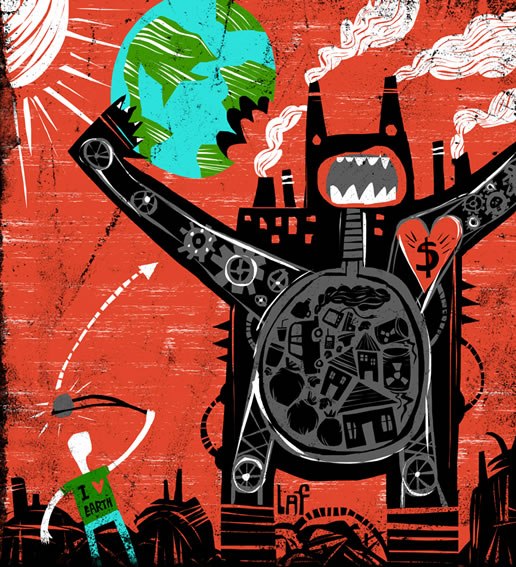
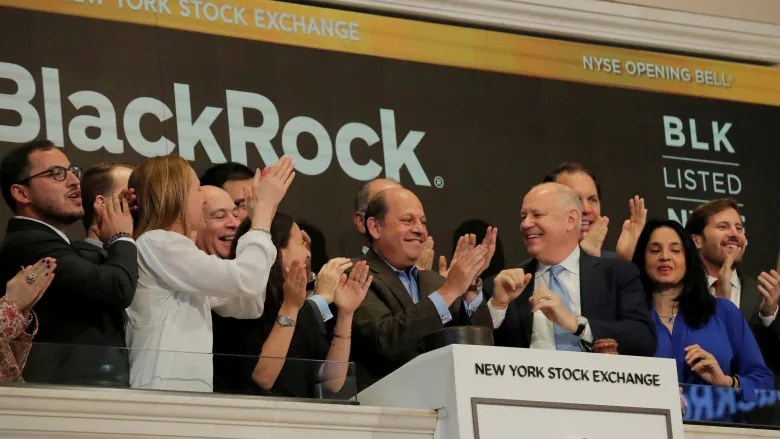
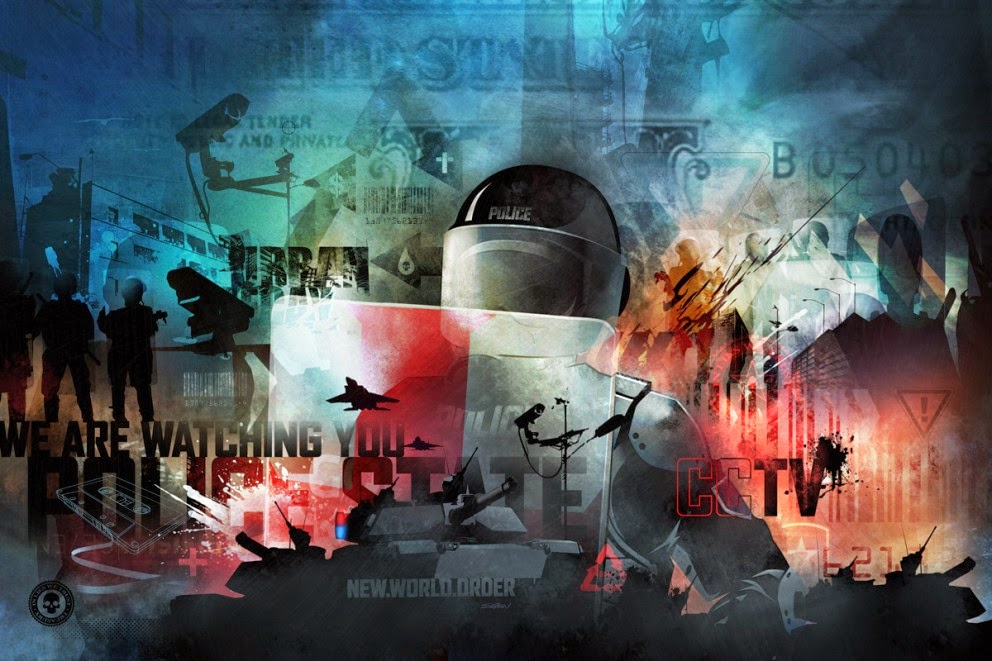
 After the Crash