Small farmers produce up to 80% of the food in the non-industrialised countries. However, they are currently squeezed onto less than a quarter of the world’s farmland. The period 1974-2014 saw 140 million hectares – more than all the farmland in China – being taken over for soybean, oil palm, rapeseed and sugar cane plantations.
GRAIN noted that the concentration of fertile agricultural land in fewer and fewer hands is directly related to the increasing number of people going hungry every day. While industrial farms have enormous power, influence and resources, GRAIN’s data showed that small farms almost everywhere outperform big farms in terms of productivity.
In the same year, policy think tank the Oakland Institute released a report stating that the first years of the 21 century will be remembered for a global land rush of nearly unprecedented scale. An estimated 500 million acres, an area eight times the size of Britain, were reported bought or leased across the developing world between 2000 and 2011, often at the expense of local food security and land rights.
Institutional investors, including hedge funds, private equity, pension funds and university endowments, were eager to capitalise on global farmland as a new and highly desirable asset class.
This trend was not confined to buying up agricultural land in low-income countries. Oakland Institute’s Anuradha Mittal argued that there was a new rush for US farmland. One industry leader estimated that $10 billion in institutional capital was looking for access to this land in the US.
Although investors believed that there is roughly $1.8 trillion worth of farmland across the US, of this between $300 billion and $500 billion (2014 figures) is considered to be of “institutional quality” – a combination of factors relating to size, water access, soil quality and location that determine the investment appeal of a property.
In 2014, Mittal said that if action is not taken, then a perfect storm of global and national trends could converge to permanently shift farm ownership from family businesses to institutional investors and other consolidated corporate operations.
WHY THIS MATTERS
Peasant/smallholder agriculture prioritises food production for local and national markets as well as for farmers’ own families, whereas corporations take over fertile land and prioritise commodities or export crops for profit and markets far away that tend to cater for the needs of more affluent sections of the global population.
In 2013, a UN report stated that farming in rich and poor nations alike should shift from monocultures towards greater varieties of crops, reduced use of fertilisers and other inputs, increased support for small-scale farmers and more locally focused production and consumption of food. The report stated that monoculture and industrial farming methods were not providing sufficient affordable food where it is needed.
In September 2020, however, GRAIN showed an acceleration of the trend that it had warned of six years earlier: institutional investments via private equity funds being used to lease or buy up farms on the cheap and aggregate them into industrial-scale concerns. One of the firms spearheading this is the investment asset management firm BlackRock, which exists to put its funds to work to make money for its clients.
BlackRock holds shares in a number of the world’s largest food companies, including Nestlé, Coca-Cola, PepsiCo, Walmart, Danone and Kraft Heinz and also has significant shares in most of the top publicly traded food and agriculture firms: those which focus on providing inputs (seeds, chemicals, fertilisers) and farm equipment as well as agricultural trading companies, such as Deere, Bunge, ADM and Tyson (based on BlackRock’s own data from 2018).
Together, the world’s top five asset managers – BlackRock, Vanguard, State Street, Fidelity and Capital Group – own around 10–30% of the shares of the top firms in the agrifood sector.
The article Who is Driving the Destructive Industrial Agriculture Model? (2022) by Frederic Mousseau of the Oakland Institute showed that BlackRock and Vanguard are by far the biggest shareholders in eight of the largest pesticides and fertiliser companies: Yara, CF Industries Holdings K+S Aktiengesellschaft, Nutrien, The Mosaic Company, Corteva and Bayer.
These companies’ profits were projected to double, from US$19 billion in 2021 to $38 billion in 2022, and will continue to grow as long as the industrial agriculture production model on which they rely keeps expanding. Other major shareholders include investment firms, banks and pension funds from Europe and North America.
Through their capital injections, BlackRock et al fuel and make huge profits from a globalised food system that has been responsible for eradicating indigenous systems of production, expropriating seeds, land and knowledge, impoverishing, displacing or proletarianizing farmers and destroying rural communities and cultures. This has resulted in poor-quality food and illness, human rights abuses and ecological destruction.
SYSTEMIC COMPULSION
Post-1945, the Rockefeller Chase Manhattan bank with the World Bank helped roll out what has become the prevailing modern-day agrifood system under the guise of a supposedly ‘miraculous’ corporate-controlled, chemical-intensive Green Revolution (its much-heralded but seldom challenged ‘miracles’ of increased food production are nothing of the sort; for instance, see the What the Green Revolution Did for India and New Histories of the Green Revolution).
Ever since, the IMF, the World Bank and the WTO have helped consolidate an export-oriented industrial agriculture based on Green Revolution thinking and practices. A model that uses loan conditionalities to compel nations to ‘structurally adjust’ their economies and sacrifice food self-sufficiency.
Countries are placed on commodity crop production treadmills to earn foreign currency (US dollars) to buy oil and food on the global market (benefitting global commodity traders like Cargill, which helped write the WTO trade regime – the Agreement on Agriculture), entrenching the need to increase cash crop cultivation for exports.
Today, investment financing is helping to drive and further embed this system of corporate dependency worldwide. BlackRock is ideally positioned to create the political and legislative framework to maintain this system and increase the returns from its investments in the agrifood sector.
The firm has around $10 trillion in assets under its management and has, according to William Engdahl, positioned itself to effectively control the US Federal Reserve, many Wall Street mega-banks and the Biden administration: a number of former top people at BlackRock are in key government positions, shaping economic policy.
So, it is no surprise that we are seeing an intensification of the lop-sided battle being waged against local markets, local communities and indigenous systems of production for the benefit of global private equity and big agribusiness.
For example, while ordinary Ukrainians are currently defending their land, financial institutions are supporting the consolidation of farmland by rich individuals and Western financial interests. It is similar in India (see the article The Kisans Are Right: Their Land Is at Stake) where a land market is being prepared and global investors are no doubt poised to swoop.
In both countries, debt and loan conditionalities on the back of economic crises are helping to push such policies through. For instance, there has been a 30+ year plan to restructure India’s economy and agriculture. This stems from the country’s 1991 foreign exchange crisis, which was used to impose IMF-World Bank debt-related ‘structural adjustment’ conditionalities. The Mumbai-based Research Unit for Political Economy locates agricultural ‘reforms’ within a broader process of Western imperialism’s increasing capture of the Indian economy.
Yet ‘imperialism’ is a dirty word never to be used in ‘polite’ circles. Such a notion is to be brushed aside as ideological by the corporations that benefit from it. Instead, what we constantly hear from these conglomerates is that countries are choosing to embrace their entry and proprietary inputs into the domestic market as well as ‘neoliberal reforms’ because these are essential if we are to feed a growing global population. The reality is that these firms and their investors are attempting to deliver a knockout blow to smallholder farmers and local enterprises in places like India.
But the claim that these corporations, their inputs and their model of agriculture is vital for ensuring global food security is a proven falsehood. However, in an age of censorship and doublespeak, truth has become the lie and the lie is truth. Dispossession is growth, dependency is market integration, population displacement is land mobility, serving the needs of agrifood corporations is modern agriculture and the availability of adulterated, toxic food as part of a monoculture diet is feeding the world.
And when a ‘pandemic’ was announced and those who appeared to be dying in greater numbers were the elderly and people with obesity, diabetes and cardio-vascular disease, few were willing to point the finger at the food system and its powerful corporations, practices and products that are responsible for the increasing prevalence of these conditions (see campaigner Rosemary Mason’s numerous papers documenting this on Academia.edu). Because this is the real public health crisis that has been building for decades.
But who cares? BlackRock, Vanguard and other institutional investors? Highly debatable because if we turn to the pharmaceuticals industry, we see similar patterns of ownership involving the same players.
A December 2020 paper on ownership of the major pharmaceuticals companies, by researchers Albert Banal-Estanol, Melissa Newham and Jo Seldeslachts, found the following (reported on the website of TRT World, a Turkish news media outlet):
Public companies are increasingly owned by a handful of large institutional investors, so we expected to see many ownership links between companies — what was more surprising was the magnitude of common ownership… We frequently find that more than 50 per cent of a company is owned by ‘common’ shareholders who also own stakes in rival pharma companies.”
The three largest shareholders of Pfizer, J&J and Merck are Vanguard, SSGA and BlackRock.
In 2019, the Centre for Research on Multinational Corporations reported that payouts to shareholders had increased by almost 400 per cent — from $30 billion in 2000 to $146 billion in 2018. Shareholders made $1.54 trillion in profits over that 18-year period.
So, for institutional investors, the link between poor food and bad health is good for profit. While investing in the food system rakes in enormous returns, you can perhaps double your gains if you invest in pharma too.
These findings predate the 2021 documentary Monopoly: An Overview of the Great Reset, which also shows that the stock of the world’s largest corporations are owned by the same institutional investors. ‘Competing’ brands, like Coke and Pepsi, are not really competitors, since their stock is owned by the same investment companies, investment funds, insurance companies and banks.
Smaller investors are owned by larger investors. Those are owned by even bigger investors. The visible top of this pyramid shows only Vanguard and Black Rock.
A 2017 Bloomberg report states that both these companies in the year 2028 together will have investments amounting to $20 trillion.
While individual corporations – like Pfizer and Monsanto/Bayer, for instance – should be (and at times have been) held to account for some of their many wrongdoings, their actions are symptomatic of a system that increasingly leads back to the boardrooms of the likes of BlackRock and Vanguard.
Today, capitalist power can be summed up with the names of the three biggest investment funds in the world: BlackRock, Vanguard and State Street Global Advisor. These giants, sitting at the centre of a huge galaxy of financial entities, manage a mass of value close to half the global GDP, and are major shareholders in around 90% of listed companies.”
These firms help shape and fuel the dynamics of the economic system and the globalised food regime, ably assisted by the World Bank, the IMF, the WTO and other supranational institutions. A system that leverages debt, uses coercion and employs militarism to secure continued expansion.
The Bear is an unusually involving story about animals that will give you a fresh perspective on their world. It is not a documentary nor is it the kind of cute children’s fare usually cranked out by Hollywood. This strange and affecting film is directed by Frenchman Jean-Jacques Annaud (Quest for Fire) based on a 1916 novel by James Oliver Curwood set in British Columbia in 1853.
When a young bear’s mother is killed by a rock slide while she is trying to extract honey from a beehive, he wanders off into the wilderness whimpering. After several misadventures, the cub finds a protector in a ferocious grizzly bear who has been shot in the shoulder. The cub licks his wounds and soon the two are partners. The giant bear introduces the little vulnerable one to a wider world — catching fish, tracking down and killing a caribou, and knocking down trees to demonstrate strength in a courtship ritual with a female bear. The cub must then square off against hunters and a menacing mountain lion.
The scramble for survival in this wilderness world is exhausting. The cub manages a few moments of reverie — seeing the moon’s reflection in a pond and swirling around after eating a mushroom. Watching him mimic the elder bear’s activities, it is difficult to remember that this is a story being directed rather than a glimpse of life in the wild. Philippe Rousselot’s photography is magical, and the musical score by Philippe Sarde adds emotional breadth to the story.
The Bear has all the marks of a classic. Lauded by animal rights groups for its respect for the integrity of all species, it manages to speak out eloquently against the senseless hunting of wildlife without having to depict killing to make its point. Instead, it emphasizes the ties that bind the human and animal worlds together.
As an Australian, it troubles me that if the whole world lived like us, we would need 4.5 planet Earths. Thanks to over-consuming nations like mine, worldwide we are living as if we have 1.75 planet Earths, a figure that has increased from 1 (that is, living within our means) since 1970. What this boils down to is that those of us in the global north are taking from both countries in the global south and future generations to fuel our lifestyles today. The ‘Earth Overshoot’ research is supported by the work of the late Earth System Scientist, Professor Will Steffen, who brought to our attention The Great Acceleration, whereby “[a]fter 1950 we can see that major Earth System changes became directly linked to changes largely related to the global economic system.” Steffen is referring to our growth-based economies, and while three percent economic growth each year might sound small, it means that within 24 years we will be consuming twice as many resources as today, and within 100 years 19 times as many. As economist Kenneth Boulding said: “[a]nyone who believes that exponential growth can go on forever in a finite world is either a madman or an economist.”
For this reason, I am a big proponent of degrowth in over-consuming nations in order to fit back within planetary boundaries. For anyone not familiar with the term, degrowth is a planned, democratic reduction in material and energy use in high-income nations while improving the well-being of people in those nations. It is more than this though. While very often the focus of degrowth is on how life can be better in a smaller economy, Federico Demaria and Serge Latouche argue that “[t]he point of degrowth is to escape from a society that is absorbed by the fetishism of growth…. It implies decolonization of the imaginary and the implementation of other possible worlds”. In this respect, the former definition of degrowth applies only to over-consuming nations, while the latter definition applies to all nations, and to all people. It is this second definition of degrowth to which this essay relates.
The concept of degrowth is powerful because it is clear that we need systemic change to avoid ecological collapse: business as usual with a “green tinge” isn’t going to be enough. It is also true that individual change drives cultural change which can be the key to unlocking political change leading to fundamental change. On this point, I find it fascinating to consider how “growth has entered our minds and souls”, and how an awareness of these “mental infrastructures of growth” might free us from growthism and help unlock the cultural changes that will bring about the necessary systemic changes.
With this in mind, here are a couple of points to consider in relation to how growth may be enshrined in the psychological structure of our collective minds, largely based on the work of Harald Welzer:
Our dreams for the future are centred around it being better than today, in the sense of ‘more’ (e.g., a bigger house, a larger salary, more travel).
We see ourselves as something to continually develop and optimise, our lives are seen as a process of creating biographies or filling curriculum vitae.
While we used to see paid labour as drudgery and something we did until we had met our needs, now we view it as noble, esteemed even, to be sought out and with no end. Sadly, this cultural 180° turnaround becomes a regret of many as they are dying.
Similarly, society views ‘hard-work’ as virtuous and thus ‘hard-work’ entitles those who undertake it to whatever their heart desires without limit or consideration of the harm caused, their purchases being the fruits of their labour.
We typically live by the rhythms of the industrial workday via a standardised worldwide time regime, unaware that there is a natural rhythm of time (for example, consider that in 2023 there will be 13 moons but only 12 calendar months or that, on the whole, our pace of work is unchanged by the seasons).
It is a collective belief that we should be able to own parcels of land, excluding others from that land. An example of this is that home (and correspondingly land) ownership in Australia is described as the ‘Great Australian Dream’, a term derived from the ‘American Dream’ of the same nature.
In various ways, these – and probably many more aspects of our modern day lives – relate back to the surpluses created by industrialisation (enabling the future to have more than today, a concept that is “historically quite recent”), the enclosure of the commons (the very foundation of growth-dependent capitalism) and the subsequent imperative to work to have our needs met (rather than simply being able to directly meet our needs). Our ability to recognise and unpick these ‘mental infrastructures’ – that is, the worldview that influences all of our actions – will be key to throwing off the shackles of growth and unlocking a culture of sufficiency, whereby we recognise when we have ‘enough’ in a material sense and from then on meet our “nonmaterial needs nonmaterially”, increasing our sense of wellbeing and contentment.
The work of Antonio Gramsci on cultural hegemony is relevant in unlocking a culture of sufficiency. Michael Mezz describes Gramsci’s theory on how the ruling class maintains power via a cultural form of dominance:
“…the ruling class creates an ideology in which its own values become common sense for the rest of society and Gramsci argued that the role of the state is to maintain institutions such as media and the education system that educate the masses on the cultural ideology of the ruling class. The goal of that education being that the working class develop a sense of freedom and a good life that serves the purposes of the people in power. In other words, the working class starts to value things like innovation and productivity and economic growth that doesn’t actually serve them.”
Gramsci tells us that the way to overcome cultural hegemony is by creating a new culture that is not based on the values of the ruling class. A counter-culture, if you like.
So, what are the counter-hegemonic narratives that we can begin to embrace? What would a mind and soul not infiltrated by growth look like? There is much to learn from indigenous cultures on this topic. As Jeff Sparrow highlights in his book, Crimes Against Nature, First Nation Australians found paid labour to be antithetical to their egalitarian lifestyles:
“Today, we take the wages system for granted. It appears normal, almost eternal, since we can barely conceive of an alternative. It did not seem normal to pre-colonial people. In Australia, as elsewhere in the world, they found capitalist practices utterly horrifying…. Indigenous people, accustomed to an egalitarian ethos and to work carried out for the collective good, saw the authority exerted by employers as tyranny. As late as 1888, a churchman complained of the difficulty he had in persuading Indigenous people that one man was innately better than another, that a certain individual, by virtue of his possessions, mandated obedience from his fellows…. Indigenous people did not despise wage labour primarily because of the effort that it entailed. Rather, they thought the work demanded by capitalists stripped life of its humanity.”
Furthermore, First Nations people lived with the rhythms of nature, not the industrial workday, and there was no private land ownership, they had the wisdom to know that “… you are undone if you once forget that the fruits of the earth belong to us all, and the earth itself to nobody” (Jean-Jacques Rousseau).
There are many examples of counter-hegemonic narratives arising more recently too. The following list is skewed more towards examples from the global North because the global North represents the vast majority of the over-consumption and is therefore where cultural change is most needed. Such examples include:
Those people, like the Futuresteaders and others who practice voluntary simplicity and frugal abundance, who appreciate the simple things in life, and find happiness in what they have rather than what they want. Seeking only ‘enough’ and not ‘more’ represents an affront to the dominant culture of dreams of the future being materially greater than today. This point is relevant only to those whose needs are already met. Of course, those who are living in conditions of deprivation should have access to ‘more’, until they too have ‘enough’.
People who choose to spend their time doing work that is traditionally undervalued and lacking in both career trajectory and pay increases, but is socially valuable, forgoing future surpluses (think of the stay-at-home parents, childcare workers, teachers, nurses, carers, small farmers, those who work part-time voluntarily, and those who volunteer their time to worthy but under-funded causes).
The move towards minimalism which seeks to value time and non-material items over ‘the grind’ and the accumulation of things as a reward for hard work. The Tiny House Movement shows us that it is possible to enjoy living with less, including the freedom of a smaller mortgage.
The tang ping (lying flat) movement in China and quiet quitting in the U.S.A. are taking back our right to be humans, not simply workers who devote more time than they would like to paid labour.
Anyone advocating for job guarantees, enabling anyone who wants to work to do so. Job guarantees seek to remove the artificial scarcity of employment we see today, where the threat of joblessness looms ever large and we constantly need to better ourselves so that we can compete for work. Those who advocate for a Universal Basic Income – an unconditional liveable wage for all – are fighting to remove the need for waged employment at all.
People organising for the community rather than the individual are prioritising others over their own interests, giving up the opportunity to build their own CVs in favour of the greater good, and there are some wonderful examples of such union building here, here and here.
The move towards a 4-day work week challenges the dominant narrative that more time at work is better.
The many activists calling out the harm caused by the carbon-intensive lifestyles revered by the dominant culture, such as Greta Thunberg (who beautifully articulated in her book, The Climate Book, that “we all have a responsibility to find quick ways of making that [extremely high-emitting] lifestyle socially unacceptable”), activists who block private jets, people promoting going flight free, and those seeking to reduce the dominance of cars on our streets. For these people, simply having the means to live a materially intensive lifestyle – regardless of the hard work involved in acquiring those means – isn’t enough to justify the harm it causes.
The locals of the Greek Island Ikaria, who do things in their own time, not that of the industrial workday. This fascinating paper describes “people arriving to appointments in ‘Ikarian time’, that is, a ‘few hours late’ or shopkeepers telling bewildered tourists that ‘the shop will open when it is time to open’”.
There are, of course, many other wonderful counter-culture examples beyond this short list – this is merely scratching the surface – but the point is that we need to advance these, and those of the same theme, until they become the leading narrative.
Unpicking the dominant, growth-based worldview will mean closely analysing the stories we have been told (and who those stories might serve), and bravely and courageously assessing whether all of this growth really does bring us ‘the good life’. We will likely find that we can achieve ‘a good life’ (that is, harmony with ourselves, our community, and the physical world) by living simpler but more meaningful lives. Perhaps we will even come to realise the very wise words of English writer, Alan Watts: “the meaning of life is just to be alive. It is so plain and so obvious and so simple. And yet, everybody rushes around in a great panic as if it were necessary to achieve something beyond themselves”. The way that growth manifests in our minds, our thoughts, our dreams, and our souls is important to consider because if we can create a culture of sufficiency, we will have found the key to systemic change and avoiding ecological catastrophe. I’m sure we can all agree that this is a worthy task indeed.
Eliot Jacobson is a retired professor of mathematics and computer science who regularly appears on our Twitter feed discussing the climate crisis. He sends tweets under the grim title, ‘Your “moment of doom” for the day’. These channel the latest news on rapidly rising carbon emissions and temperatures, catastrophic examples of extreme weather, and so on. It’s depressing fare, and Jacobson is candid about the level of anguish he feels:
‘I woke up feeling angry at about 2:30 AM this morning.
‘It’s easy to find something wrong with just about anything I look at. It’s all projection. I’ve been writing and deleting Tweets, but I still feel angry.
‘I’m angry that there’s very little I can do and there’s no way out.’
‘This sadness is so overwhelming, so all-consuming, that it takes my breath away. The things I do to cope with the weight of it all are mere distractions from this sadness. Volunteer for a few hours, then sadness. Go for a walk, then sadness. Listen to music, read, visit websites, then sadness. Visit with friends or family, then sadness. Sadness returns every time I have a moment to reflect on the predicament of the present moment.’
I’m no stranger to this emotional roller-coaster. 1988 was the big year for me, when NASA scientist James Hansen told the world we were heading for disaster. I had no difficulty believing him.
It seemed inconceivable to me that the profit motive driving global industry could be restrained, let alone reversed, in time. I was then working as a marketing manager for British Telecom in the West End of London where I set up a Green Initiatives Group. Small changes were made, but they were just window dressing – deeper changes impacting profit were completely unthinkable. It seemed obvious to me that this fundamentalist corporate resistance must, sooner or later, lead to disaster.
I first protested for action on climate change with Friends of the Earth on the streets of central London in October 1989. I was 27 when I started campaigning; I’m now 61. I’ve thought a lot, worried a lot, talked a lot, read a lot, and written a lot about these issues for three and a half decades, more than half my life.
It seems absolutely incredible to me – by which I mean it seems something that I honestly would not have believed was possible – that what seemed like an urgent crisis to me in the late 1980s can still seem like ‘hype’, a ‘liberal tax scam’, an ‘oligarch plot’ and ‘bourgeois hysteria’ to large numbers of people in 2023. In the 1980s, we said things would change when there were ‘bodies in the streets’ – but the bodies are all around us now, and there is still no sign of meaningful change.
I say all this to make clear that I am in no way complacent about, or indifferent to, the looming climate catastrophe (it seems absurd to even describe it as ‘looming’). My comments below are not intended to detract from the vital need to take immediate action; they are addressed to the despair that I know many people, like Jacobson, are feeling.
You, Me And The Mysterium Tremendum
After everything I have myself suffered, it seems to me that we have two main tasks at the present time: first, to do everything in our power to avert the terrifying crisis threatening us with extinction. Second, to do everything we can to transform the fear and suffering of our predicament into love and bliss.
The first of these is new. The second may sound preposterous, even annoying, but it has actually always been the great human task.
Many activists devoted to action, to change, despise the very idea that our own happiness should be any kind of concern. The suggestion is dismissed as self-indulgent ‘navel gazing’. We have to dispense with all such ‘sentimentality’ and focus on ‘hard politics’. We have to plunge into the darkness of realpolitik and fight for our lives. It’s going to be bruising, to hurt – forget all kitten-cuddling ideas about ‘love’ and feeling good. And how on earth can you feel ‘bliss’ when the world is falling apart? Such nonsense!
As so often, the anger is rooted in fear – the fear that such concerns will divert energy and attention away from what really matters. The counter-argument is that not giving a damn about personal feelings, about our needs as human beings in this short life, is actually one of the key factors that got us into this fine mess in the first place. (See my Cogitation: ‘Our Indifference To Ourselves’ – Beyond The ‘Virtue’ Of Self-Sacrifice – Parts 1 and 2)
Just as I can’t understand how so many people can fail to see the truth of the existential crisis we’re facing, I can’t understand how people can feel so absolutely certain about the significance, the meaning, of this crisis that they fall into absolute despair.
First of all, we need to remember that despair is a function of mind; it is not something mandated by Existence. As Thoreau noted, we have a choice:
‘However mean your life is, meet it and live it; do not shun it and call it hard names.’ (Thoreau, ‘Walden’, Oxford University Press, 1997, p.292)
This has been as true for everyone in human history facing death from illness, starvation, genocide, as it is for all of us now, facing extinction.
I find the universe so mysterious, so fundamentally Unknown, and even Unknowable, that I cannot establish a solid base of existential certainty that allows me to be confidently desperate about even this situation.
Of course, climate collapse is terrible for us – I don’t want to die, you don’t want to die; we don’t want so-called human ‘civilisation’ to disappear. But we all do have to die and the deeper significance of even a disaster on this scale is fundamentally unknown.
We are a miniscule part of billions of years of existence involving 200 billion galaxies each containing 200 billion stars, and who knows how many planets, swirling over distances that completely defy imagination – all of it emerging out of the mysterium tremendum, the how and why of Existence (we can’t say Creation; we don’t even know if it has a beginning or an end).
This immensity of space and time has led to this moment that stands before us. Here we are! Everything in this cosmos has led us here. We can’t just blame politicians, corporate executives and their journalistic enablers – the universe made them as they are and this is what the universe has given us to deal with.
Who are we to break down in despair as if we were certain about the final meaning of what is happening? What do we really know about anything? Do we really know enough to find a solid position from which we can cast judgement even on the extinction of human life, or even of all life, on this planet?
In November, spiritual writer Steve Taylor posted a poem, ‘Being Watched by The Moon’, on Facebook. Taylor wrote of our cosmic near neighbour:
‘Then I noticed a look of concern on her face.
There was a glint of disapproval, a hint of dismay
in her gaze, as it followed me home
as if she was witnessing an accident, or a crime.
Had I done something wrong? I wondered.
Had I injured or offended someone?
Had I gone astray, and lost the meaning of my life?
But then I looked closer, and realised:
she wasn’t just watching me.
She was watching the whole world.’
A glint of ‘concern’, ‘disapproval’ and ‘dismay’, as if ‘witnessing an accident, or a crime’? Is this really the most likely reaction of the Moon? After all, she has seen a lot – she’s around 4.5 billion years old, about the same age as the Earth. Human beings have been around for just 2.8 million years, and in our problematic modern form for just 200,000 years. The Sun formed about 4.6 billion years ago from an enormous molecular cloud that gave birth to numerous other stars. Our star has about 5 billion years of life left; she’s in her prime. The universe itself is about 13.8 billion years old – at least in this cycle, if it is a cycle. We don’t know where all this comes from, what it means, what lies at the base of it all.
Worst case scenarios suggest that human-induced climate change might devastate most animal and plant species to such an extent that it could take five million years for life to recover. But 5 million years is a blink of the cosmic eye to old-timers like the Moon, Earth and Sun whose memories stretch back, not millions, but billions of years. And if things don’t work out here post-climate collapse, maybe they’ll go better among the billions and billions of stars out there – that’s a lot of stars, a lot of possibility. From this perspective, one might surmise that human despair at the prospect of human extinction is one more manifestation of an egotism that causes us to vastly overestimate our own importance.
Might it alter our despairing perspective to consider that the enlightened mystics might be right in declaring that, not just plants and animals, but the entire universe is alive? We think life arises miraculously, ‘accidentally’ (what on earth does that mean?), Lazarus-like, from dead matter. But atoms are pretty lively phenomena; they are whizzing flea circuses of jumping sub-atomic particles, quantum waves and other forms of energy. Might we one day conclude that what we call life arises from these subtler forms of life? Is energy in some sense life?
And might our despair be leavened by the possibility, as mystics also insist, that, not just human beings, but the entire cosmos is conscious? What would it mean, if it turns out that even rocks are consciousness in a kind of coma; that evolution is ultimately a process of consciousness awakening from the slumber (not the death) of matter?
If everything is alive and everything is conscious, then even human beings are unable to inflict any real damage – a manifestation of eternal life rises and falls, comes and goes, but the ocean of living consciousness continues completely unharmed.
The universe seems to consist of objects, of material ‘things’. But that is not all: these rocks, animals, planets and stars appear in the something that is no-thing that we call space. Likewise, our awareness also provides an internal space in which sense perceptions, thoughts and emotions can appear and be known. We assume the universe is material and yet awareness seems non-material, seems entirely other than that which is material. Is it possible that external space and the internal space of awareness are related? Could they actually be the same phenomenon? We tend to see our internal space as an epiphenomenon of the brain, but is external space an epiphenomenon of matter?
Could the mystics even be right when they insist that awareness evolves in the universe by moving from ageing bodies to new ones? Westerners find this a childishly obvious example of wishful thinking. But does that make it untrue? Do we imagine that Buddha, Bodhidharma, Nagarjuna, Lao tse and all other enlightened humans were inventing when they made this claim over and over again? Could they even be right in arguing that consciousness moves from old, exhausted planets to fresh, new planets better suited to the continued evolution of consciousness?
If that sounds ludicrous, is it any crazier than the idea that the universe suddenly emerged from nothingness – nothing, nothing, nothing, then, Bang! – or that it has somehow always existed? These appear to be the only two possibilities, and yet both seem totally nonsensical to us. If the only logical possibilities seem impossible, how can we so confidently root our despair in our clearly inadequate human capacity for logic?
‘Satchitananda‘
I controversially suggested our task was to find bliss in the face of looming extinction. Is that possible? Is it moral even to try in the face of so much suffering?
Seasoned meditators tell us that the mysterious awareness perceiving these words is inherently blissful. Not just pleasurable, mind you – ecstatic. We are told the bliss is already there, is always there; that it is the very nature of awareness. The idea is captured in the Sanskrit epithet ‘satchitananda’, or ‘reality, consciousness, bliss’ – existence is aware and awareness is blissful.
This sounds counter-intuitive standing at a bus stop on a rainy Monday morning commute to work. We are here, we are aware, thank you very much, and we are emphatically not beaming with delight.
There are two possible explanations for this contradiction: either all the enlightened mystics were talking nonsense, or we are not in fact here, not in fact aware, and are therefore not able to experience the bliss that is here.
But if we’re not here, where on earth are we?
We are physically here, of course, but our minds are not in the present; they are in the past and in the future. Because the past and future do not exist, because they are mere ideas in the mind, when we are thinking we are absent; we are not truly here.
There are times when I sit in meditation for an hour when thoughts finally drop away; thoughts by which I am otherwise unceasingly plagued by day and night (dreams are thinking in pictures). When thoughts drop away, even for a moment, something very subtle, but very powerful slips through. In my experience, it emerges like a wispy strand of pink candy floss spinning out from some completely unknown depth and melting into my heart (my ‘dantian’ and ‘lower dantian’, in the terminology of Qigong). The melting is experienced as a sweetness, a delight, that glows with unconditional love for everyone and everything.
It is clear, sitting alone in a room, that this loving bliss is uncaused. I may have been as miserable as sin about the state of the world before slumping down to watch my thoughts and feelings – nothing in my world has objectively changed in that hour. In fact, as all the mystics insist, this loving delight has not been caused; it has simply been unveiled, revealed.
Thought is the veil. This is why we can’t feel the bliss of existence: it is hidden from us by layer upon layer of thought, rather like the multiple layers of cloud that typically greet solemn holidaymakers returning to Britain.
Human beings are the only animal that can become lost in the unreal world of mentation. All the virtuous, politically correct and well-intentioned thought by which we have always hoped to make the world a better place – the whole, misguided 17th and 18th century dream of the European ‘Enlightenment’ – has combined with all other thoughts to form an almost impenetrable barrier between us and the real source of civilisation, of personal and global salvation, within us.
The truth is that we have destroyed our planet and become almost completely estranged from the inherent bliss of being because we have sought civilisation and happiness in our heads. In reality, true civilisation – not the ability to build machines to pyrrhically ‘conquer’ nature, other animals and humans – is found when we transcend thought and connect deeply and often with our hearts.
‘The Best People In The World’ – Actual Human Civilisation
The very idea of technological ‘progress’ implies some kind of ‘Manifest Destiny’. It is our ‘destiny’ – the natural path of any ‘advanced’ civilisation on any planet – to develop ever more powerful technology, that we might one day voyage across the cosmic ocean just as we once voyaged across the water and air of our home planet.
But this may be wrong. It may be that the right option is to journey inwards in an exploration of being, of consciousness, to an unimagined brave new world of love and bliss.
Perhaps we don’t hear anything from highly technological ‘civilisations’ out there in the cosmos because the whole effort is a suicidal wrong turn that leads to near-instant decline and extinction. The cosmos may nevertheless be teeming with genuinely civilised beings who have gone in a very different direction.
After all, even on our planet, there have been examples of authentically civilised humans – people who live in their hearts rather than in their heads, who are free of our obsessive thinking. They appear to have rooted their daily lives in the kind of love and bliss that we in the West can only find in meditation.
In his book, ‘The Conquest of Paradise’, writer and ecologist Kirkpatrick Sale described the low-tech, Taino society encountered by the Spanish conquistadors in 1492:
‘So little a part did violence play in their system that they seem, remarkably, to have been a society without war (at least we know of no war music or signals or artifacts, and no evidence of intertribal combats) and even without overt conflict (Las Casas reports that no Spaniard ever saw two Tainos fighting).’ (Kirkpatrick Sale, ‘The Conquest of Paradise’, Papermac, 1992, p.99)
But the lack of violence was only one aspect of the Tainos’ towering civilisation:
‘And here we come to what was obviously the Tainos’ outstanding cultural achievement, a proficiency in the social arts that led those who first met them to comment unfailingly on their friendliness, their warmth, their openness, and above all – so striking to those of an acquisitive culture – their generosity.’ (p.99)
Even Admiral Cristobal Colon (‘Christopher Columbus’ in old money), the man who brought death and disaster to the lives of the Taino, recorded in his journal:
‘They are the best people in the world and above all the gentlest. They became so much our friends that it was a marvel… They traded and gave everything they had, with good will.’ (pp.99-100)
He continued:
‘I sent the ship’s boat ashore for water, and they very willingly showed my people where the water was, and they themselves carried the full barrels to the boat, and took great delight in pleasing us. They are very gentle and without knowledge of what is evil; nor do they murder or steal.’
Colon added:
‘They love their neighbours as themselves, and they have the sweetest talk in the world, and are gentle and always laughing.’ (p.100)
Sale wrote poignantly:
‘It is to be regretted that the Admiral, unable to see past their nakedness, as it were, knew not the real virtues of the people he confronted. For the Tainos’ lives were in many ways as idyllic as their surroundings, into which they fit with such skill and comfort. They were well fed and well housed, without poverty or serious disease. They enjoyed considerable leisure, given over to dancing, singing, ballgames, and sex, and expressed themselves artistically in basketry, woodworking, pottery, and jewellery. They lived in general harmony and peace, without greed or covetousness or theft.’ (pp.100-101)
American geographical scholar Carl Sauer concluded:
‘…the tropical idyll of the accounts of Columbus… was largely true’. (p.101)
The Tainos were human beings who lived in their hearts, not in their heads. They had no august universities packed with thinkers, philosophers and other half-crazed intellectuals; no 24/7 outpourings of media pollution – they lived in the bliss of awareness unclouded by obsessive thought.
As for us! By painful contrast, in his book, ‘Impact of Western Man’, historian William Woodruff commented on the society from which Colon had sailed:
‘No civilization prior to the European had occasion to believe in the systematic material progress of the whole human race; no civilization placed such stress upon the quantity rather than the quality of life; no civilization drove itself so relentlessly to an ever-receding goal; no civilization was so passion-charged to replace what is with what could be; no civilization had striven as the West has done to direct the world according to its will; no civilization has known so few moments of peace and tranquillity.’ (Sale, ibid, p.91, my emphasis)
To live in the head, to sacrifice the moment for the future, to prioritise the ‘serious’, ‘important’ work of the greedy, plotting mind over the bliss of the heart is to build a self-destructive, doomed version of fake ‘civilisation’.
Or consider the experience of the Mexican anthropologist Miguel Covarrubias on visiting the island of Bali in 1938. Covarrubias wrote:
‘No other race gives the impression of living in such close touch with nature, creates such a complete feeling of harmony between the people and the surroundings… The Balinese belong in their environment in the same way that a humming-bird or an orchid belongs in a Central American jungle.’ (Miguel Covarrubias, ‘Island of Bali’, KPI, 1986, p.11)
Covarrubias added:
‘A man is assisted by his neighbours in every task he cannot perform alone; they help him willingly and as a matter of duty, not expecting any reward other than the knowledge that, were they in his case, he would help in the same manner’. (p.14)
The result, Covarrubias wrote, was a village system which operated as ‘a closely unified organism in which the communal policy is harmony and cooperation – a system that works to everybody’s advantage’. (p.15)
In the late 1990s, I worked with the Swedish ecologist and activist Helena Norberg-Hodge who lived for many years among the people of Ladakh on the Tibetan plateau of Northern India. In her book ‘Ancient Futures’, Norberg-Hodge wrote of how she was bewildered by the strange fact that the Ladakhis were always smiling:
‘At first I couldn’t believe that the Ladakhis could be as happy as they appeared. It took me a long time to accept that the smiles I saw were real. Then, in my second year there, while at a wedding, I sat back and observed the guests enjoying themselves. Suddenly I heard myself saying, “Aha, they really are that happy”. Only then did I recognize that I had been walking around with cultural blinders on, convinced that the Ladakhis could not be as happy as they seemed. Hidden behind the jokes and laughter had to be the same frustration, jealousy, and inadequacy as in my own society. In fact, without knowing it, I had been assuming that there were no significant cultural differences in the human potential for happiness. It was a surprise for me to realize that I had been making such unconscious assumptions, and as a result I think I became more open to experiencing what was really there.’ (Helena Norberg-Hodge, ‘Ancient Futures – Learning From Ladakh,’ Sierra, 1992, p.84)
As amongst the Tainos, fighting in traditional Ladakhi society was unknown, disputes were settled quickly and peaceably, and when one person had a problem the entire community did its best to help:
‘In traditional Ladakh, aggression of any sort is exceptionally rare: rare enough to say that it is virtually non-existent… Even arguments are rare. I have hardly ever seen anything more than mild disagreement in the traditional villages—certainly nothing compared with what you find in the West.’ (p.46)
Norberg-Hodge concluded:
‘I have never met people who seem so healthy emotionally, so secure, as the Ladakhis.’ (p.85)
These societies that seem so ‘primitive’ and ‘uncivilised’ to goal-oriented, power-obsessed, head-trapped Europeans, were actually exemplars of authentic human civilisation.
I am not suggesting that we can become like the Tainos, Balinese and Ladakhis. If we are too high-tech primitive to save ourselves from climate disaster, we can obviously not hope to create that kind of paradise on earth.
What I am suggesting, though, is that the existence of these societies powerfully supports the contention of the mystics: that awareness unclouded by obsessive thinking is indeed in the nature of bliss and love. I am suggesting that such low-tech civilisations may exist in abundance, undetected, on other planets that will of course continue to thrive no matter what happens on our planet. I am also suggesting that you and I can create a little patch of this paradise in our own hearts.
Perhaps in our world as it is, genuinely civilised, loving societies are doomed to be destroyed by brutal, head-trapped, Western-style societies. But you and I still have the freedom, even in the face of this wider brutality, even in the face of environmental catastrophe, to live a life overflowing with love and bliss. Maybe that is all that is possible for us, and maybe that is enough.
YOU’VE SEEN IT BEFORE. An industrial disaster poisons a town’s food or water supply. Residents get angry. Public officials try to dispel that anger through a public act of self-sacrifice, of reassurance. They convene a press conference, whereupon some hapless courtier brings forth a chalice of the supposedly poisoned material. And then, in front of God and the television cameras, the public official imbibes.
Examples from recent history abound. In 2019, former Japanese prime minister Shinzo Abe ate possibly irradiated rice balls from Fukushima to demonstrate the progress made toward rebuilding the prefecture since its 2011 nuclear meltdown. In 2013, former Colorado governor John Hickenlooper claimed he drank fracking fluid to assuage his constituents’ concerns around natural gas drilling. (Not “tasty,” he said.) And, most famous of all, in 2016 Barack Obama took a sip of (filtered) water from the lead-poisoned water supply of Flint, Michigan, to prove it was safe. (“This is not a stunt,” he noted of the stunt.)
Officials are already lining up to drink the forbidden poison issuing from East Palestine, Ohio. When a Norfolk Southern freight train derailed there earlier this month, producing an airborne toxic event of hazardous chemicals, concerns about the water inevitably arose. Enter one Troy Nehls, a Republican congressman from Texas, who became the first intrepid soul through the breach. On February 16, Nehls—who was inexplicably in Ohio, some fourteen hundred miles away from his district—posted a video to Twitter to get word out that the water was safe. To prove it, Nehls slurped it up. This was promptly followed by a video from Ohio lieutenant governor Jon Husted, wherein a group of public officials huddled together and threw back shots of supposed tap water like they were freshman college students out on the town.
But Nehls and Husted were just the undercard features. On February 21, following reports that Norfolk Southern had funded preliminary tests declaring the water totally safe, Ohio’s Republican governor Mike DeWine and a merry caravan, including an EPA official and a congressman, stalked around East Palestine with news cameras, gamely drinking from residents’ taps. (“That’s good,” the EPA official gushed. “That’s really cold coming from the tap.”) The photos and videos from this danse macabre mirrored Husted’s, but on a grander scale—half a dozen people standing around, toasting and clashing cups together like they were at a medieval banquet. If these dizzying trends hold, it’s probably a matter of time before Transportation Secretary Pete Buttigieg, or even President Biden, follows suit.
Years ago, I surveyed the literature looking for a name or term to describe this phenomenon of consuming potentially tainted materials. After all, it seemed to be increasing in frequency, and I’d even started witnessing it at the level of local politics. But if there was a name, I couldn’t find it. So I gave it one: the Devil’s Milkshake.
The Devil’s Milkshake is bipartisan. Neither Democrats nor Republicans hold monopoly on it. Which means it can be multiple things, depending on who wields it. To some, it’s cynical political theater, meant to make the politician look invincible and brave. To others, it can be a genuine—yet transparently phony—attempt at showing solidarity. And to others still, it abets a kind of mass hysteria, in which public officials feel increasingly pressured to outdo each other for attention and admiration.
The Devil’s Milkshake can also be an effective way for a public official to shirk any commitment to doing something about the conditions that gave rise to the disaster in the first place. One time I was at a town hall in Martin County, Kentucky, where the water system has been degraded by years of coal mining, corruption, and neglect. Residents were getting sick, and they’d convened the town hall to demand action from the local government. But instead of committing to any substantive action, one local official ran to the front of the hall and demanded a glass of that sweet local tap, so he could drink it right there on the spot, and thus prove that nothing needed changing. A few awkward minutes passed, wherein the crowd grew uncomfortable with the prospect of witnessing a man poison himself in public. So they talked the official down. To this day, Martin County’s water is still unsafe to drink.
It’s likely the Devil’s Milkshake is a modern phenomenon. After all, medieval rulers used to employ taste testers precisely in order to avoid being poisoned. But historical examples are nonetheless difficult to track down because the phenomenon has been heretofore unnamed. So I’ve had to crowdsource its history. It’s clear, reviewing this data, that public officials have had to tweak, refine, and workshop the spectacle; it developed over time through a process of trial and error.
A PhD student at Indiana University, Justin Hawkins, sent me what is perhaps the earliest historical example. In the 1850s, New York City was in the middle of an adulterated milk scandal. Across the country, thousands of infants were dying every year from milk cut with “swill”—excess mash from nearby distilleries, whitened with plaster and drained of nutrients. Tammany Hall sent an Alderman named Michael Tuomey to investigate. But Tuomey vigorously defended the dairy owners and their milk supply. While visiting one dairy, Tuomey threw back some whiskey with the farmers, concluded the milk was perfectly safe, and slandered anyone who thought otherwise as “prejudice[d].” But, as Hawkins points out, it’s unclear whether or not Tuomey’s stunt was performed before a crowd. This highlights a crucial ingredient in the Devil’s Milkshake formula: for it to be a proper Devil’s Milkshake, it must be performed in public, or at least in front of cameras.
The second criteria of the Devil’s Milkshake is that one must actually gothrough with it. This example came to me by way of a researcher friend, Jack Norton. It’s the story of New York governor Hugh Carey who, in 1981, volunteered to drink a big glass of polychlorinated biphenyls, or PCBs, from a contaminated state office building in order “to satisfy the unions” that the building was safe. Carey, however, was warned that doing so might actually make him sick, and so he reportedly did not follow through. He nonetheless displayed a curious willingness to put his body on the line for the sake of scoring political points.
Occasionally, the Devil’s Milkshake can be fobbed off on the inferiors or family members of the elected official trying to harness its powers. To illustrate this, we turn to our cousins across the pond. In 1990, four years after the fatal mad cow disease was discovered in Britain’s beef supply, the nation’s agriculture minister, John Selwymn Gummer, carted his four-year-old daughter before news cameras and tried to feed her an “absolutely delicious” hamburger. Six years later, researchers confirmed humans could be infected with the degenerative neurological disease—and in 2007, the daughter of a Gummer family friend died of it. Perhaps Gummer’s logic was that of a hostage taker: if his audience saw his craven recklessness, they, too, might be willing to put their lives on the line to make beef sales go up.
But perhaps the grimmest example of the Devil’s Milkshake is that of Peruvian president Alberto Fujimori and his fisheries minister, Felix Alberto Canal Torres. This story was sent to me by Twitter user @JimmyFalunGong. In 1991, cholera was spreading throughout Peru by way of raw fish, resulting in massive profit losses to the Peruvian fishing industry. In order to get the industry back on its feet, President Fujimori and Minister Torres chowed down on some raw fish live on television, hoping to encourage the public to do the same. Unfortunately, the epidemic wore on for months, eventually killing over three thousand people, and Minister Torres reportedly wound up hospitalized with cholera, no doubt acquired from the raw fish.
The Gummer and Fujimori-Torres debacles show that, from the very beginning, the Devil’s Milkshake was always just that: a deal with the devil. A gamble. One that, if successful, could pay enormous dividends. But, if unsuccessful, could be very embarrassing. Perhaps that’s why nowadays, the Devil’s Milkshake is most likely just a stage trick. When that aide brings out the chalice, whatever’s inside almost certainly isn’t poison. It’s something harmless that is meant to look poisonous. (Someone on Twitter even pointed out that the officials taking shots of East Palestine’s water in lieutenant Governor Husted’s video had neglected to hide their bottle of Smart Water.) Besides, even if President Obama really did drink lead-poisoned water in Flint, his stunt missed the point: prolonged, chronic exposure is what leads to severe impairment, not a single sip. Race, class, and geography are the major determinants of environmental harm. Most people know this, which is why many Flint residents viewed Obama’s theatrics with skepticism.
Yet I would argue that leaders like President Obama are, like the constituents they seek to deceive, fully aware of this structural truth. It’s what makes the Devil’s Milkshake so strange. The stunt seems to be a tacit acknowledgement by the ruling class that they know the general public doesn’t trust them. (Only 19 percent of Americans believe they can trust the government “most of the time.”) Its recent proliferation must be seen as proof of a ruling class desperate to uphold the illusion of democracy. It is the last gasp of a dying order, drinking and eating its way to the grave, restrained or unwilling to fix anything, and thus doomed to play act a fantasy before klieg lights and newscasters. The dizzying amount of Devil’s Milkshake footage issuing from East Palestine only proves their desperation: these people could not be more unlike you. In fact, the only thing you have left in common with them is the fact that they, too, still have to eat food and drink water to stay alive. That’s it. The Devil’s Milkshake is a measure of the gaping chasm between you and them.
The sad thing is that, sometimes, the water or food in question is actually safe to consume. Watersheds can be hard to wrap your head around. A lot of hysterical and paranoid information leeched into the ether following the East Palestine toxic event. People upstream from the Ohio River worried that they, too, were at risk of exposure. Were boil water advisories fifty miles southeast in Pittsburgh related to the derailment—even though local officials said otherwise? Were birds dying in Kentucky because of the crash? All these places probably are under threat, but from other things entirely: chemical plants, microplastics, algae blooms, air pollution, you name it.
The public has by now seen so many of these large-scale pollution events that they well understand no one will be held accountable; that the clean-up will be, at best, half-assed; and that we’re just going to bide our time until the next one occurs. (Indeed, in the weeks since the East Palestine incident, a commercial tanker truck full of chemicals crashed outside Tucson, killing the driver and releasing a plume of nitric acid into the air; a train derailed in Texas, killing one; another train carrying coal derailed in Nebraska; and on and on.) People, naturally, have lost trust in their leaders to keep them safe. No amount of poisonous water consumed by governors, congressmen, or EPA officials will restore that trust.
This is why the Devil’s Milkshake is ultimately an insult to your intelligence. The point isn’t to give you actionable information about what’s going on. If it was, public officials would just do that, instead of histrionically parading around in front of the cameras to show off the sacrifice they’re making. Nor is the point to rebuild trust in institutions. After all, these figures could just fix the problems, and make our natural and infrastructural environments responsive to crises and safe to navigate.
No, the point of the Devil’s Milkshake is to arrest further complaint. To recycle anger back into “acceptable” forms of discourse and mechanisms of accountability. To move on, forget it ever happened. It’s almost as if, through this act of symbolic consumption, a public official telegraphs their willingness to die for corporate America’s sins. That, because they’re willing to literally metabolize the issue, it’s been addressed, processed, and fixed.
The problem with this is that no one ever forgets. People remember it all. Not just the fear and terror of seeing a black pillar of smoke towering over their community. Not just the health scares and medical bills, the family members and friends and pets dying before their time. Not just the agonizing mystery of it all, of wondering which recent toxic event is responsible for their debilitating sickness, or if they’re crazy for even having that thought.
They’ll also remember the most terrifying, mind-bending thing of all: that their leaders sacrificed them at the almighty altar of profit, and then mocked them for daring to question it. They’ll wake up in the middle of the night, their minds retracing the choreographed ritual of power known as the Devil’s Milkshake, their gleeful leaders sending up veritable toasts to the fact they were getting away with it all. And this remembering brings on a final realization: that the next time may be even worse.
A freight train derailment brought environmental catastrophe to a small Ohio town. While the circumstances are somewhat unique, events followed a predictable pattern in a country run by and for the ruling class.
The U.S. is an oligarchy. Stating this fact explains events that may seem mysterious if this simple truth is not spelled out. The ruling class are fully in control and ensure that their needs are met. They disregard the public good and any claims of democracy are easily exposed as a cruel hoax. Americans have no representation in congress or the white house and the corporate media are also part of the oligarchic class. They expose nothing that their partners in crime want to hide. Governmental action and inaction if the wake of a freight train derailment exemplify all of these dynamics.
On February 3, 2023 a 150-car Norfolk Southern freight train derailed in East Palestine, Ohio near the Pennsylvania border. Twenty of those cars were carrying chemicals such as vinyl chloride, butyl acrylate, ethylene glycol, isobutylene, and ethylhexyl acrylate. One doesn’t need to be a scientist to figure out that none of these should be in the air or water.
Despite photographic and video evidence of an environmental catastrophe, the accident initially received little media attention. Nothing is covered unless the Biden administration wants it to be and East Palestine didn’t make the cut when there was war propaganda about Ukraine to stir up. In addition, Biden had already made clear that the railroads are in the class of corporate untouchables who are to be placated. They are among those who were promised that “nothing would fundamentally change” and he kept his promise to them by giving the derailment little attention. However he did give these corporations all the attention they demanded.
When railroad unions rejected a contract that didn’t include paid sick leave provisions the Biden administration forbade them to strike. There was a phony show among “progressives” about having made a good deal but they were lying. Barack Obama excluded the railroads from a requirement that federal contractors provide paid sick leave. Biden could have issued an executive order changing that policy. But he had no intention of doing anything that might upset the oligarchs, and the Democratic Party succeeded in presenting a false narrative.
Pete Buttigieg is Secretary of the Department of Transportation (DOT), and is responsible for overseeing railroad safety. But he has made it clear that he follows his boss’s dictate to change nothing that would upset their oligarchic bosses.
As DOT Secretary, Buttigieg has the ability to regulate corporations such as airlines in regard to their public service. When a series of Southwest airlines snafus left thousands of passengers stranded during the holiday season, Buttigieg made a great show of saying his hands were tied. Of course he is the one person who can direct the airlines or levy large fines. Buttigieg was a no-show when the people needed him to act.
It took Buttigieg three weeks to show up in East Palestine and he only did so after Donald Trump visited. The town residents may have been better off without him. When he arrived he whined about railroad companies, “fighting us every time we try to do a regulation.” It is hard to believe that Buttigieg makes any effort to fight back when corporate chieftains tell him what to do.
The duopoly worked together to cover up their mess. Ohio’s republican governor Mike DeWine and Biden’s EPA Administrator Michael Regan took a page out of Barack Obama’s Flint, Michigan book by dramatically drinking East Palestine water . Fortunately the U.S. still has plenty of lawyers, and one of many lawsuits filed in recent days specifically names the stunt as having made a “mockery of Ohio citizens.”
The back and forth over freight train regulations isn’t complicated. Trump undid regulations that Obama enacted but Biden didn’t undo what Trump had done. But even worse, regulations currently on the books allowed Norfolk Souther to get away with not labeling the train as carrying hazardous materials because it also carried wheat and vegetables. All over the country trains go through residential areas carrying hazardous materials but the law doesn’t require anyone to be informed of the dangers. And yes, the oligarchs like it that way.
The Biden administration is siding with Norfolk Southern in a case before the Supreme Court . A worker claims to have developed cancer as a result of exposure to carcinogens without having had the proper protective equipment. Norfolk Southern wants to restrict plaintiffs from choosing the venue in which they file suits, a practice known as forum shopping. Corporations are the biggest proponents of forum shopping, for themselves, but want to restrict where they can be sued. The Biden administration filed a brief in favor of Norfolk Southern. It doesn’t matter if the presidents are democrats or republicans, at the end of the day they end up doing what the oligarchs want.
Next year in 2024 the people will be subjected to the quadrennial political hoax, i.e., a presidential election. Let’s tell the truth before the theater begins anew. The power doesn’t rest with the presidency. It rests with the people who do the presidential hiring, and they don’t care about railroad workers or any other workers or people who have hazardous chemicals traveling through their communities. Should an accident happen, their hirelings will just drink water for the camera.
If you want a perfect example of how corrupt our system of government has become, just look at the massive cover up that is going on in East Palestine, Ohio right now. Federal, state and local officials are telling the public that everything is just fine when everything is obviously not just fine. On February 3rd, a 50 car Norfolk Southern train derailed in East Palestine. 5 of the cars were carrying vinyl chloride which is an extremely hazardous substance that has been proven to cause several types of cancer. Unfortunately, with the approval of Ohio Governor Mike DeWine, a decision was made on February 6th to conduct a “controlled burn” of the wreckage. They knew that burning the vinyl chloride would create vast amounts of phosgene gas. By now, most of you already know that phosgene gas was actually used as a chemical weapon in World War I. The cloud of toxic chemicals that was created by the “controlled burn” was so large that it could literally be seen from space, and the long-term health problems that are being caused all over the east coast could stretch on for decades.
But Ohio Governor Mike Dewine doesn’t want to be blamed.
He is telling everyone from East Palestine to go back to their homes, and he insists that the water in the area is “safe to drink”…
Ohio Governor Mike Dewine: "The water is safe to drink. We never thought that the municipal water was contaminated. But out of abundance of caution our Ohio EPA took samples which were analyzed and they in fact came back and were shown to be safe." pic.twitter.com/sGJYZHrG8S
Visited a local creek in East Palestine today. These waterways are still very polluted. It’s time for Norfolk Southern to finish the cleanup. Check this video out: pic.twitter.com/4lsHBmrMJj
The head of the US Environmental Protection Agency has said he would allow his own children to drink and bathe in public water near the site of a train derailment and chemical spill in Ohio, so long as it had been tested and deemed safe by officials.
EPA Administrator Michael Regan visited the site of the East Palestine derailment on Thursday, seeking to reassure skeptical residents that the water is fit for drinking and the air is safe to breathe.
Nobody wants to see your children do that Michael Regan.
But we would love to see you down a tall, cool glass of tap water from a home right in the middle of East Palestine.
Unfortunately, the Biden administration is going to work relentlessly to downplay the severity of this crisis because they know that if they admitted the truth it would make them look bad to the voters.
And there is a presidential election coming up in less than two years.
The White House explained why it turned down Ohio Gov. Mike DeWine’s request for disaster relief this week in the aftermath of a derailment of a train hauling toxic chemicals.
A Biden administration official told Fox News Digital that it has provided extensive assistance to surrounding communities following the chemical release earlier this month in eastern Ohio. However, the official said the Federal Emergency Management Agency (FEMA), the agency that usually provides relief to communities hit by hurricanes and other natural disasters, isn’t best equipped to support the state’s current needs.
I was floored when I saw that.
We have just witnessed one of the greatest environmental disasters in the entire history of our country, and the Biden administration is not even willing to grant a request for disaster relief?
Ultimately, this is all about protecting the asses of the politicians and protecting the asses of the executives and shareholders of Norfolk Southern.
To the elite, it really doesn’t matter if the poor people of East Palestine all get cancer and die.
What matters is controlling the narrative, and up to this point the corporate media is doing a wonderful job of helping them do it.
Building on millennia of learning how to structure and manage an economy to accumulate and consolidate control and wealth in particular hands, as explained in Part 1 of this investigation, the Global Elite launched its final coup in January 2020 under cover of the fake Covid-19 ‘pandemic’. Using the health threat supposedly implied by the existence of a pathogenic ‘virus’, the bulk of the world population was terrorized into submitting to an onerous series of violations of their human rights which was tantamount to a declaration of martial law. See ‘The Final Battle For Humanity: It Is “Now or Never” In The Long War Against Homo Sapiens’.
Under a barrage of propaganda delivered by Elite agents – including organizations such as the World Economic Forum, the United Nations, the World Health Organisation, governments, the pharmaceutical industry and corporate media as well as individuals such as Klaus Schwab, Yuval Noah Harari and Bill Gates – people were compelled to wear masks, use QR codes, stay locked down in their homes and, later, submit to a series of experimental but involuntary gene-altering bioweapons to acquire a ‘vaccine passport’, among other measures.
This inevitably adversely impacted the entire supply chain: That is, the process that connects the production of raw materials, such as food grown on farms and minerals mined from the Earth, to factories that produce everything from canned food to computers, and then to outlets that sell these products to the public. All components of this chain were either shut down completely at one or more times, as part of the imposed restrictions or other policy measures – watch, for example, ‘Biden pays farms to STOP – EU out of Feed – Meat taxes & Chicken permits – Up to you to GROW FOOD!’ – or just substantially curtailed by the unavailability of essential inputs, ranging from replacement parts to competent labour.
To exacerbate matters, the transport industry (trucking, railroads, shipping, airlines) was also effectively shut down, containers became unavailable (because they were in the wrong places) and logistics corporations (that organize the movement of trade goods) were disabled, including by cyber attacks. The airline and tourist industries were just two industries that were profoundly disrupted. But so was much of small business, with many businesses destroyed. As a result, hundreds of millions of people lost employment, many permanently, throughout the industrial economies and millions more were starved to death in Africa, Asia and Central/South America because the day-to-day economy, by which many survive, was shuttered and any ameliorative measures by governments and international organizations were, deliberately, woefully inadequate (or were siphoned into elite wallets). See ‘The Global Elite’s “Kill and Control” Agenda: Destroying Our Food Security’.
But ‘behind the (obvious) scenes’ outlined above, there has been a great deal more going on that has been deliberately concealed from public view, and this has been considered and discussed by some fine analysts.
According to Catherine Austin Fitts, using ‘national security’ as the justification, the U.S. National Security Act 1947 and the CIA Act 1949 were the basis of a series of Acts and Executive Orders that ‘created a secrecy machinery’ which essentially meant that ‘the most powerful financial interests in the world can keep a whole bunch of money secret’, thus creating a secret black budget. And, starting in 1998, according to US federal government documentation, huge sums of money were not accounted for while private equity firms began exploding and, despite having no capacity to raise such amounts, were suddenly investing huge sums of money in emerging markets. According to Fitts ‘we are now missing over $US21 trillion’, which she calls a ‘financial coup d’etat’ that is clearly in ‘massive violation’ of the US constitution. The financial value of what has transpired under the Covid-19 narrative is that the ‘magic virus’ can be used to explain, for example, why there is no money for healthcare or pension funds cannot pay on retirement those who paid into them throughout their lives. Watch ‘We Need to Talk about Mr Global – Part Two’ with a simple summary here: ‘The Real Game of Missing Money’.
‘We are now over $US100 trillion of undocumentable adjustments if we use their most recent figures and so I would say we are describing a financial system which is completely and utterly out of control…. If any of the allegations about financial fraud in the 2020 [US Presidential] election are true, and I believe that many of them are, we’ve now delinked both the election system and the finances [from] the constitution and the law so we are are now operating both in terms of who governs and how they spend the money completely outside of the law and completely outside of any democratic process. So this is a coup.’
To which Professor Skidmore responds:
‘The reason that I really struggled… watching what was going on during the last financial crisis, [was that] I thought ‘Wow we don’t have the rule of law’. It was so obvious that we didn’t ten years ago and it’s like it’s devolving even more and so I am not sure how much further we can go before we are just completely devoid of the rule of law at least for a subset of the very powerful.’
As an aside, while genuinely appreciative of the research of Fitts and Skidmore, as outlined earlier in this article and previously demonstrated, democracy has always been a sham and the Elite has always operated beyond the rule of law, routinely corrupting national political processes in pursuit of Elite ends. See ‘The Elite Coup to Kill or Enslave Us: Why Can’t Governments, Legal Actions and Protests Stop Them?’ All we are seeing in the current context is Elite corruption being flaunted in a way that reflects the sure knowledge that it can act corruptly, on a global scale, with impunity.
But to return to the subject at hand: In 2019, the central bankers of the G7 countries met for their regular conference at Jackson Hole, Wyoming and agreed to the ‘Going Direct Reset’, a plan devised (and later orchestrated) by BlackRock – see ‘Dealing with the next downturn’ – and, as explained by John Titus, the fundamental purpose of this ‘Reset’ was to orchestrate the largest asset transfer in history under cover of the forthcoming Covid-19 ‘pandemic’. Watch ‘Larry & Carstens’ Excellent Pandemic’ with a summary here: ‘Summary – Going Direct Reset’.
In the words of Titus: ‘In a nutshell, the arrival of the 2020 pandemic was about as accidental as an assassination. The pandemic narrative is nothing but a cover story to conceal from the public what in reality is the biggest asset transfer ever.’ See ‘Summary – Going Direct Reset’.
While you can learn the mechanics of how this was conducted in the excellent documents and videos immediately above, as Fitts points out in relation to the central banks: ‘Controlling and having access to data on fiscal and monetary policy is the basis of huge fortunes.’ And, combined with the secrecy that has protected their manipulations from public view – ‘if you look at all the technology and assets that have been transferred, by questionable means, into private and corporate hands, the liability is over the top’ – it has engendered the view that their only way forward is ‘complete, total central control’.
Central Bank Digital Currencies
How will this ‘total control’ be achieved? One key element will be the introduction of Central Bank Digital Currencies (CBDCs). According to Fitts: The fundamental value of digitized systems, from the elite perspective, is that they enable centralized control. So, by creating CBDCs the financial transaction control grid becomes the means by which you enable centralized control; that is, slavery. Watch ‘We Need to Talk about Mr Global – Part Two’.
How does this work? CBDCs allow the Central Bank to determine exactly what products and services your digital currency can be spent on, when it can spent and where it can be spent. It also allows the issuing authority to freeze, reduce or empty your bank account, and to alter its functionality with the latest ‘update’, based on your ‘social credit score’, political allegiance or if you do not comply with certain directives. But it goes beyond this.
According to the Bank for International Settlements:
‘The G20 has made enhancing cross-border payments a global priority and has identified CBDC as a potential way forward to improving such payments. A “holy grail” solution for cross-border payments is one which allows such payments to be immediate, cheap, universally accessible and settled in a secure settlement medium. For wholesale payments, central bank money is the preferred medium for financial
market infrastructures. A multi-CBDC platform upon which multiple central banks can issue and exchange their respective CBDCs is a particularly promising solution for achieving this vision, and mBridge is a wholesale multi-CBDC project that aims to advance towards this goal. It builds on previous work…. Project mBridge tests the hypothesis that an efficient, low-cost, real-time and scalable cross-border multi-CBDC arrangement can provide a network of direct central bank and commercial participant connectivity and greatly increase the potential for international trade flows and cross-border business at large…. All the while safeguarding currency sovereignty and monetary and financial stability by appropriately integrating policy, regulatory and legal compliance, and privacy considerations.’ See ‘Project mBridge: Connecting economies through CBDC’.
Apart from the fact that the G20 governments are distinctly unrepresentative of the world’s people, these words are typical of the type usually chosen when the Elite is intent on sugarcoating their lies to conceal their true agenda.
Fortunately, Agustin Carstens of the Bank for International Settlements has been more forthcoming: ‘We don’t know, for example, who’s using a $100 bill today, we don’t know who is using a 1,000 peso bill today. The key difference with the CBDC is the central bank will have absolute control on the rules and regulations that will determine the use of that expression of central bank liability, and also we will have the technology to enforce that.’ Watch ‘Cross-Border Payments: A Vision for the Future’. And here is the Bank of England advising government ministers in the UK on the issue of programming CBDCs: ‘Bank of England tells ministers to intervene on digital currency “programming”’. For a more detailed explanation, see ‘What Is Programmable Money?’ And for an update on progress in your country, see ‘CBDC: A Country-by-Country Guide’.
Before proceeding, however, it is worthwhile noting the conflict that is going on between the central banks and the commercial banks (the traditional actors in the retail banking sector, that is, the part of banking where people interact directly with a bank), as well as that between the commercial banks and the big tech companies, such as PayPal, Alipay, Facebook and Amazon that have developed or are developing their own digital currencies and/or payments systems outside the traditional financial system. While non-bank financial institutions long-ago overtook commercial banks in lending, bank influence generally continues to decline and is accelerating in the face of the competition from the technology giants. Why the conflict? Because a CBDC risks collapsing the commercial banking sector completely by eliminating retail banking and thus destabilizing the long-standing financial system. For some discussion of this, watch Alice Fulwood’s presentation ‘Could digital currencies put banks out of business?’ There is no doubt, of course, that this conflict will be resolved and that it will not be in our favour.
And to elaborate the significance of imprisoning you in a ‘smart’ city, Patrick Wood points out the evidence both in the literature and in practice: The intention is to force us off the land, as is already happening in China, and at gunpoint if necessary, so that ‘vacated farm land’ can be combined ‘into giant factory farms to be operated by advanced technology such as agricultural robots and automated tractors’. Once relocated into the ‘smart’ city of the government’s choice, everyone will be subject to 24 hour surveillance using a plethora of ‘smart’ technologies such as biometric facial scanning, geospatial tracking and CBDCs, forced onto public transport which will not include the option of leaving the city, and confined to those work and other activities approved by the relevant technocrats. See ‘Day 9: Technocracy And Smart Cities’.
The bottom line, in simple language however, is the same as it has always been: Endlessly acting to consolidate their control over the rest of us, our money is being stolen by the Elite for their own ends and they are not required to report it and they cannot be held accountable, legally or otherwise. The only difference to what has happened historically is that now even the pretense of some form of equity, the rule of law and even the notion of democracy are being abandoned in the final rush to techno-totalitarianism and wealth concentration.
Not content with these measures, however, the war in central Asia was precipitated by the Elite to advance key elements of their program. Superficially portrayed by most politicians and corporate media as a war between Russia and Ukraine, many thoughtful analysts perceive some of the deeper strands of what has occurred: Since the collapse of the Soviet Union and NATO commitments made at the end of the Cold War, NATO has consistently violated those commitments and there has been routine Ukrainian attacks on Donetsk and Luhansk over the past eight years. These and other events have ensured a long but steady ‘lead time’ in the final build up to the war, precipitating the military response of Russia, as intended. For just four thoughtful analyses, see ‘Understanding The Great Game in Ukraine’, ‘Ukraine, Russia, and the New World Order’, ‘Some of Us Don’t Think the Russian Invasion Was “Aggression.” Here’s Why.’ and ‘The U.S. Is Leading the World Into the Abyss’.
Obscured by the war, however, the leaderships of both Russia and Ukraine are heavily involved in the World Economic Forum and both have been heavily committed to imposing the elite agenda on their populations. In short, the Russia-Ukraine war serves elite purposes well with consequences including even greater disruption of food and fuel supply chains than the ‘Great Reset’ was able to achieve alone. See ‘The War in Ukraine: Understanding and Resisting the Global Elite’s Deeper Agenda’.
Similarly, the sabotage of the Nord Stream 1 & 2 gas pipelines – see ‘Ukraine War: New Developments’ – might be seen through various lenses but, again, it serves elite purposes well. As Tom Luongo noted: ‘The important thing I keep trying to point out [is] that thinking in terms of “country” is ultimately the wrong lens to view these people’s actions. Factions are the better lens. Factions cross political borders.’ See ‘The Curious Whodunit of Nordstreams 1 and 2’. Given that the sabotage of these two pipelines is seriously exacerbating the energy crisis in Europe, while displacing people’s anger onto one or other parties in the war, as always the elite forces driving destruction of the world economy escape scrutiny.
Beyond this, on 7 October 2022 the Biden Administration dealt a ‘nuclear’ strike to the hi-tech industry by imposing onerous new export rules that cut off supply of essential technology (advanced semiconductors, chip-making equipment and supercomputer components) to China, immediately and adversely impacting Chinese production. See ‘Implementation of Additional Export Controls: Certain Advanced Computing and Semiconductor Manufacturing Items’. But whatever pain this will inflict on the Chinese, it will inflict far more pain on ordinary people who will be required to deal with the outcomes of this latest supply-chain disruption: higher prices, more battered household budgets and fewer families able to scrape by on shrinking wages. See ‘Biden’s Tech-War Goes Nuclear’ and ‘US Economic War on China Threatens Global Microchip Industry’.
In any case, the ongoing destruction of the global economy will continue even while, apparently, considerable effort is being made to restructure key elements of it, such as those in relation to trade relations, trade routes, currencies and international banking being undertaken in various international fora. For one discussion of these ongoing efforts, see ‘Russia, India, China, Iran: the Quad that really matters’.
But, again, how serious are these efforts when all governments are collaborating closely on the fundamental Elite program? At one of these meetings, recently concluded, the G20 Summit in Bali – see ‘G20 Bali Leaders’ Declaration’ – Moscow, Beijing, Washington and all other governments present, agreed to ‘the creation of a global health-preserving Pandemic Fund sponsored by the WHO, the World Bank, Bill Gates, and the Rockefeller Foundation. The fund will ensure there is plenty of money for experimental genetic vaccines in the weeks, months, and decades ahead.’ Beyond this, however, the Declaration contains ‘purple prose’ about ‘digital transformation’, ‘interoperability of Central Bank Digital Currencies (CBDCs) for cross-border payments’, and other elements of the Elite’s technocratic program. As Riley Waggaman observed: ‘It’s truly heart-warming that even amidst ceaseless geopolitical squabbling, Moscow and the Collective West can sit down at the negotiating table, break bread, and agree to cattle-tag the entire world.’ See ‘World leaders agree to cattle-tag the planet’.
And while a recent World Economic Forum report, based on the views of 50 chief economists from around the world, sanitized economic prospects by simply referring to a likely forthcoming ‘recession’ either in 2022 or 2023, spokesperson Saadia Zahidi couldn’t avoid mentioning the heavy consensus that real wages will decline, poverty will increase and ‘social unrest is expected to continue to rise’ in response to rises in the cost of living, particularly due to production and supply chain disruptions in fuel and food supplies. See ‘Special Agenda Dialogue on the Future of the Global Economy’.
Taking a similarly ‘moderate’ stance, in its recent ‘World Economic Outlook’, the International Monetary Fund warned that ‘More than a third of the global economy will contract this year or next, while the three largest economies – the United States, the European Union, and China – will continue to stall. In short, the worst is yet to come, and for many people 2023 will feel like a recession.’ See ‘World Economic Outlook – Countering the Cost-of-Living Crisis’. At the media briefing to launch the report, the Director of the IMF’s Research Department, Pierre-Olivier Gourinchas, noted that ‘the global economy is headed for stormy waters’ and ‘Too many low-income countries are close to or are already in debt distress. Progress toward orderly debt restructuring… is urgently needed to avert a wave of sovereign debt crises. Time may soon run out.’ See ‘WEO Press Briefing Annual Meetings 2022’.
But other reports suggest something far worse.
Summarizing his own extensive research on the subject over the past three years, in a recent interview Professor Michel Chossudovsky simply explains what triggered the economic collapse, referring to the origin of the crisis with decisions made in early 2020: ‘This is really Economics 101:… the announcement of the lockdown… implies the confinement of the labor force on the one hand and the freezing of the workplace on the other…. What happens? The answer is obvious: Collapse! Economic and social collapse on an unprecedented basis because it was implemented simultaneously in 190 countries.’ Watch ‘The Worldwide Corona Crisis, Global Coup d’Etat Against Humanity’.
Noting the complete failure of authorities to hold even one corporate executive to account for the financial collapse they caused in 2008 – when banking institutions intentionally sold securities they knew were bad to defraud customers and increase their own profits, as carefully reported in a ‘Frontline’ documentary in 2013 – Dr Joseph Mercola argues that the ‘same criminal bankers are now intentionally destroying the global financial system in order to replace it with something even worse – social credit scores, digital identity and Central Banking Digital Currencies (CBDCs), which will give them the ability to control not only your individual finances but also everything else in your life’. Apparently unaware of the extensive lead time on what is happening, he goes on to observe that ‘We’re now at the point where banksters have self-selected themselves to rule the whole world, tossing notions of democracy, freedom and human dignity in the waste bin along the way.’ See ‘Who Is Behind the Economic Collapse?’
As explained above, these ‘banksters’ operate beyond the rule of law too.
According to the Irish economist Philip Pilkington: ‘The Western world today faces a serious risk of slipping into another Great Depression. This risk has arisen… due to global economic relations deteriorating to the point of all out warfare.’ Noting the critical importance of the sabotage of the Nord Stream pipelines, leaving Europe with ‘insufficient access to energy, the price of energy in Europe will remain extremely high for years to come. European industry, for which energy is a key input, will become uncompetitive.’ See ‘The next Great Depression? Economic warfare has severe implications’.
According to former BlackRock manager, Edward Dowd, the outcome of what has been happening, which is being accelerated by the corruption that has plagued Wall Street since the 1990s, is that the forthcoming financial collapse is a ‘mathematical certainty’ and will occur within the next six to 24 months. Watch ‘Ex-BlackRock Manager: Global Financial Collapse a “Mathematical Certainty”’.
Or, in the words of strategic risk consultant William Engdahl: What is coming in the months ahead, barring a dramatic policy reversal, ‘is the worst economic depression in history to date’. See ‘Global Planned Financial Tsunami Has Just Begun’.
After listing a sequence of industry shutdowns and other measures in Europe because of energy shortages, Michael Snyder simply observes that ‘This is what an economic collapse looks like’, notes the prospect (also predicted by NATO Secretary General Jens Stoltenberg and, as we saw above, the World Economic Forum) of ‘civil unrest’ and warns that ‘Europe is going to descend into “the new Dark Ages” this winter, and the entire world will experience extreme pain as a result.’ See ‘This Winter, Europe Plunges Into “The New Dark Ages”’.
According to Irina Slav, countries of the European Union have suffered a consistent decline in gas and electricity consumption this year amid record-breaking prices. Businesses are shutting down factories, downsizing or relocating, while production of such basic products as steel, zinc, aluminium, chemicals, plastics and ceramics has been cut substantially, if not slashed dramatically. Observing that the European Union is heading for a recession that is ‘quite clear to anyone watching the indicators’ she goes on to state that ‘Europe may well be on the way to deindustrialization’. See ‘Europe May See Forced De-Industrialization As Result Of Energy Crisis’.
Dr. Seshadri Kumar agrees. He has offered an intensively detailed critique of the economic fallout from the ongoing Russia-Ukraine war and events such as the sanctions against Russia and the sabotage of the Nord Stream 1 & 2 gas pipelines. Following his careful analysis, he notes a series of conclusions including that ‘The scarcity of oil and gas, combined with the scarcity of commodities, will lead to the De-Industrialization of Europe in short order.’
‘Europe needs what Russia has (and what China has). It cannot do without those things. But Russia (and China) can do without what Europe has. They are self-sufficient. The financial impact of European sanctions on Russia is minimal. Therefore, economic sanctions against Russia (or China) will never work. But, because of the overwhelming dependence of Europe on Russian (and Chinese) goods, sanctions on Russia (or China) will utterly destroy Europe. The only hope for Europe to prevent a total economic catastrophe is to achieve an agreement with Russia that ends the current destructive sanctions as soon as possible, and at whatever political cost, including the abandonment of Ukraine and cession of Ukrainian territory to Russia. The longer this is postponed, the more extensive the permanent economic damage to Europe will be….
‘A New World Order is taking birth before our eyes….
Commenting on the banking system, precious metals businessman Stefan Gleason warns that ‘The global fractional-reserve banking system is teetering on the brink of failure. Financial strains are exposing major banks as under-capitalized and ill prepared to weather additional strains from high inflation, rising interest rates, and a weakening economy. Banks operating outside the United States are presently most vulnerable. A spike in interest rates concomitant with a spike in the exchange rate of the Federal Reserve note “dollar” is wreaking havoc in global debt markets and driving capital flight. Many analysts fear bank runs are coming. They are already hitting developing countries.’ See ‘Banks on the Brink: Is Your Money Safe?’
Noting that imposition of technologies associated with the fourth industrial revolution and the war in Ukraine are impacting the labor force, among a wide variety of other impacts on society as a whole, ‘Winter Oak’ observes that while anticipating future employment trends is not easy, ‘the combined threat of pandemics and wars means the labour force is on the brink of an unprecedented reshuffle with technology reshaping logistics, potentially threatening hundreds of millions of blue and white collar jobs, resulting in the greatest and fastest displacement of jobs in history and foreshadowing a labour market shift which was previously inconceivable.’
Furthermore: the nation state model is being upended ‘by a global technocracy, consisting of an unelected consortium of leaders of industry, central banking oligarchs and private financial institutions, most of which are predominantly non-state corporate actors attempting to restructure global governance and enlist themselves in the global decision-making process.’ See ‘The Great Reset Phase 2: War’.
James Corbett simply observes that ‘the financial order we have known our whole lives is slated for destruction’. The demolition of the economy provides cover to conceal implementation of other key elements of the elite plan in which all fit neatly together: ‘vaccine passports introduce the digital ID. The digital ID provides the infrastructure for the CBDCs. The CBDCs provide a mechanism for enforcement of a social credit system.’ As Corbett notes: ‘To see these events as separate events unfolding haphazardly and coincidentally is to miss the entire point.’ See ‘The Controlled Demolition of the Economy’.
And, according to a source cited by Anviksha Patel, executives at the giant hedge-fund firm Elliott Management Corp. recently sent a letter to investors advising that the world is ‘on the path to hyperinflation’ which could lead to ‘global societal collapse and civil or international strife’. See ‘Hedge-fund giant Elliott warns looming hyperinflation could lead to “global societal collapse”’.
Among many other commentaries offering insight into one or more aspects of what is happening, Oxfam documents the fact that ‘billionaires in the food and energy sectors are increasing their fortunes by $1 billion dollars every two days’ and that a new billionaire is being created every 30 hours while nearly a million people are being pushed into extreme poverty at nearly the same rate. See ‘Pandemic creates new billionaire every 30 hours – now a million people could fall into extreme poverty at same rate in 2022’.
But perhaps the most evocative account of what is transpiring is offered by Egon von Greyerz, founder and managing partner of Matterhorn Asset Management in Switzerland, a company that has ‘always held a deep respect for analysing and managing risk’: By the end of the 1990s, it was clear ‘that global [financial] risk was growing increasingly apparent as debts and derivative levels rapidly rose’. See Matterhorn Asset Management: History.
Noting that laws governing the functioning of modern economies ensure that ‘No banker, no company management or business owner ever has to take the loss personally if he makes a mistake. Losses are socialised and profits are capitalised. Heads I win, Tails I don’t lose!’ Greyerz goes on to note that ‘there are honourable exceptions.’ Some Swiss banks still operate in accordance with the principle of unlimited personal liability for the partners/owners which clearly encourages a responsible, ethical approach to the conduct of business.
He observes: ‘If the global financial system and governments applied that principle, imagine how different the world would look not just financially but also ethically.’ If we had such a system, he contends, then human values would come before adoration of ‘the golden calf’. And evaluation of an investment proposal or a loan would be based on a judgment about its soundness economically and ethically, as well as a judgment that the risk of loss was minimal, rather than just the size of the personal profit it might return.
Instead, since 1971 (when President Nixon unilaterally terminated convertibility of the US dollar into gold, effectively ending the 1944 Bretton Woods system) ‘governments and central banks have contributed to the creation of almost $300 trillion of new money plus quasi money in the form of unfunded liabilities and derivatives [‘the most dangerous and aggressive financial instrument of destruction’] of $2.2 quadrillion making $2.5 [quadrillion] in total. As debt explodes, the world could easily face a debt burden of $3 quadrillion by 2025-2030.’ At the same time, ‘Central banks around the world hold $2 trillion [in gold reserves].’
The outcome is inevitable: ‘with over $2 quadrillion (2 and 15 zeros) of debt and liabilities resting on a foundation of $2 trillion of government-owned gold that makes a gold coverage of 0.1% or a leverage of 1000X!… an inverse pyramid with a very weak foundation.’ Noting that a sound financial system ‘needs a very solid foundation of real money’ it is simply the case that quadrillions of debt and liabilities ‘can not survive resting on this feeble amount of gold. So the $2 quadrillion financial weapon of mass destruction is now on the way to totally destroy the system. This is a global house of cards that will collapse at some point in the not too distant future…. No government and no central bank can solve the problem that they have created. More of the same just won’t work.’ See ‘$2 Quadrillion Debt Precariously Resting on $2 Trillion Gold’.
The fundamental summary then, according to Greyerz, is this: ‘This system will start to implode.’… ‘The whole banking system is rotten. With the problems in Europe now it is actually a critical situation…. We have a two tier economy:… the rich are still rich but the poor are really poor. And you see that in every country in the world now… People haven’t got enough money to live…. This is going to be a human disaster of major proportions: it’s so sad and governments will not have any chance of doing anything about it.’ In the US outside the metropolitan areas, ‘the poverty is incredibly high and people live in boxes… poverty is everywhere and sadly, we are only seeing the beginning and there is no solution…. From a human point of view, we are looking at a major disaster.’ Watch ‘$2.5 Quadrillion Disaster Waiting to Happen’.
Will action be taken to halt the collapse? According to alternative economist Brandon Smith, it won’t. Consider this: ‘What if the goal of the Fed is the destruction of the middle class?… What if they are luring investors into markets with rumors of a pivot, tricking those investors into pumping money back into markets and then triggering losses yet again with more rate hikes and hawkish language? What if this is a wealth destruction steam valve? What if it’s a trap? I present this idea because we have seen this before in the US, from 1929 through the 1930s during the Great Depression. The Fed used very similar tactics to systematically destroy middle class wealth and consolidate power for the international banking elites.’
And that, of course, is the point: the crash has been engineered. Why?
In summarizing the ongoing collapse of European infrastructure and industry, and energy shortages in the USA, Mike Adams notes that the ‘globalists are decimating the pillars of civilization in order to cause collapse and depopulation…. The overarching goal is to exterminate the vast majority of the human population, then enslave the survivors.’ See ‘Dark Times: Industry and infrastructure collapsing by the day across Europe and the USA’.
But this is no surprise. All that any thoughtful observer needs to do is consider history, listen to what the Global Elite is telling us they are doing, observe them doing it, and then simply inform people what is at hand: The destruction of the global economy, as part of the fundamental reshaping of world order.
After all, the Elite has been crystal clear. It’s fundamental aim is to kill off a substantial proportion of the human population and reduce those humans and transhumans left alive to slavery while confined in their technocratic prison; even wealth concentration is anciliary to that, although a product of it. See ‘The Elite Coup to Kill or Enslave Us: Why Can’t Governments, Legal Actions and Protests Stop Them?’ And if you crash the global economy denying people regular food, energy to stay warm and the capacity to communicate effectively, most of those left alive will be inclined to submit to whatever conditions they are offered in order to survive. How bad does your technocratic prison sound now? Even if you are eating insects?
So, to reiterate a vital point, the Elite agenda in relation to the economy is intimately related to its wider agenda in relation to eugenics and technocracy.
How will this happen? While it will obviously require several of the range of measures being introduced, particularly including the deployment of 5G, the digitization of your identity and the utilization of a range of other technologies such as artificial intelligence and geofencing, here is what Clive Thompson, retired Managing Director of Union Bancaire Privée in Switzerland, believes might happen:
‘I think its quite likely that the CBDC will arrive and it will also be the subject of the currency reset at the same time. At some point the world is going to go into a crisis or a country is going to go into a crisis…. When that happens I think they will close the banks, you will wake up on a Sunday morning and hear the news that they’ve shut the banks, they’re not going to open on Monday. Then by Monday evening or Tuesday you’ll get the announcement that we’re having a new currency – the CBDC – and don’t worry it will be one-to-one against the old currency but there will be some restrictions on your ability to convert your old money into the new money.
‘So if you’re poor and you have a small bank account it will be converted one-to-one straight away, and you’ll probably even find that you get a free gift from the government to kickstart the system, maybe three or five thousand pounds will be given to every citizen gratuitiously to kickstart the new system to the new CBDC. But if you have a hundred thousand or a million in the bank you’re going to be told ‘Yes, it’s one-to-one but you’re going to have to wait to convert it to the new currency.’ Now “wait” means “never”, we all know that. But they won’t tell you that. They’ll say it’s a temporary suspension because we’re in the middle of a crisis, the people are rioting in the street, we need to calm the system so ‘Here’s some free money everybody, go and enjoy yourselves.’…
‘So I think the CBDC will arrive as a consequence of a crisis and when that happens there will be a limitation on how much of your old currency you can convert, at one-to-one, with the new one…. But the advantage of this, from the government’s point of view, is it’s to all intents and purposes wiping the slate clean because all their liabilities will be denominated in a currency that nobody can use, nobody can spend.’ Watch ‘The Currency Reset Will Wipe Out Creditors and Usher in CBDCs. Part 1’.
In preparing to cope with the disruption this must inevitably cause, among other assets that would be critically useful while retaining value, such as open-pollinated (non-hybrid) seeds, Thompson suggests gold and silver (including gold and silver coins), land, property, equities, collectibles (such as art and rarer coins), machine and other tools, electricity generators, useful items, animals, firewood, washing powder, canned food and house extensions. See ‘The Currency Reset Will Wipe Out Creditors and Usher in CBDCs. Part 2.’
Of course, Thompson might be wrong in his prediction of precisely how the technocratic state will ultimately be imposed. But imposed it will be, one way or another, unless we are effectively resisting the foundational components of the Elite program.
Is cryptocurrency part of the answer?
Many people are suggesting cryptocurrencies as one way around some of the problems we face. However, the very basis of sound economy for any world that is unfolding is self-reliance, particularly in relation to essential needs around food, water, clothing, shelter and energy, within a local, sustainable community that is as self-sufficient as possible, and able to nonviolently defend itself.
Complemented by use of local markets and trading schemes – whether using local currencies or goods and services directly – this will maximise economic survival prospects for those participating (and no doubt some others besides).
And unless a currency is backed by something with genuine value – as currencies were backed by gold or other metals in earlier eras – or there is widespread confidence in a currency for another reason (as currencies around the world have been backed by their governments until now), it can become valueless very quickly.
But for an extremely succinct warning against crypto, check out this brief statement from Catherine Austin Fitts: ‘If you move to crypto, and I just want to really underscore this, crypto is not a currency, it is a control system.’ See ‘The Dangers Of Cryptocurrencies’.
For another of the many critiques of crypto, see retired corporate accountant Lawrence A. Stellato’s ‘The Dangers of Cryptocurrencies’.
Crypto has a high environmental cost too, given the technology it uses and the energy it needs to run.
In essence: Just not part of the future we must work together to build.
The Rothschilds and Transhumanism
Before concluding this investigation, it is worth returning to consideration of the Rothschild family in relation to one final issue: Transhumanism.
Why is this important?
Throughout this investigation, I have endeavoured to document a few basic facts: The Global Elite is intent on reshaping world order by killing off a substantial proportion of the human population and enslaving those left alive as transhuman slaves imprisoned in ‘smart’ cities. As part of achieving this outcome, the global economy is being ransacked and destroyed: This is intended to deprive people of the sustenance necessary to resist the entire Elite program that, among other outcomes, will concentrate virtually all remaining wealth in Elite hands.
This program has been planned in detail by elite agents in organizations like the World Economic Forum and the World Health Organization and is being implemented by relevant international organizations and multinational corporations (particularly those in the pharmaceutical and biotechnology industries, and the corporate media), as well as national governments and medical organizations.
But, as I have pointed out, every organization, corporation and government is composed of individual human beings who make decisions (consciously or unconsciously) about what they do in any given circumstance. And while structural power is not something that can be ignored, individuals do have agency.
To illustrate this point, I have used the House of Rothschild as one example of a family of individuals who make decisions about how to act in the world and how the decisions of this family exercise enormous influence over world events. Consider another brief example of the decisions made by Rothschild family members and what has transpired as a result.
The Rothschild influence over world banking and the global economy, and thus political systems, is heavily documented and illustrated above. So, given the current Elite push to substantially reduce the human population and introduce a technocratic state populated by transhuman slaves, one question that inevitably suggests itself as worthy of further investigation concerns the possible involvement of the Rothschilds in the research and development of the technologies and biotechnologies that make this all possible.
An investigation soon reveals that Nathaniel Mayer Victor Rothschild, the 3rd Baron Rothschild, was born in 1910 and attended Trinity College, Cambridge, where he read physiology, later gaining a PhD. After working for MI5 during World War II, ‘he joined the zoology department at Cambridge University from 1950 to 1970. He served as chairman of the Agricultural Research Council from 1948 to 1958 and as worldwide head of research at Royal Dutch/Shell [as noted above, a family business] from 1963 to 1970.’ See ‘Victor Rothschild, 3rd Baron Rothschild’.
Beyond this, however, articles in ‘The Financial Times’ in 1982-1983 reveal that N.M. Rothschild, of which the biologist Lord Rothschild was head, had established a venture capital fund called Biotechnology Investments in 1981 to attract £25m investments for biotechnology research. However, the fund, registered in the tax haven of Guernsey, had such exacting scientific and financial standards that it was having trouble identifying companies that could meet those standards despite the rapidly growing field. According to one news report in 1982: ‘City [of London] estimates put the number of new technology companies established in the last five years at about 150, mostly in North America. At least 70 are practising genetic engineering.’ See ‘Newsclippings re. Biotechnology Investments Limited (BIL) owned by N.M. Rothschild Asset Management’.
But lest you are concerned that the Rothschilds failed to establish a firm foothold in this fledgling industry, you might be reassured, but no wiser, to read the entry on the CHSL Archives Repository (that focuses on ‘Preserving and promoting the history of molecular biology’) titled ‘Rothschild Asset Management – Rothschild, Lord Victor’.
You will be no wiser because the archive is marked ‘Closed until Jan 2045 – Suppress all images for 60 years’.
As it turns out, however, the Rothschilds, whose business acumen is never questioned, are still raising funds and investing heavily in biotechnology. See ‘Edmond de Rothschild private equity unit to invest in biotech’. It’s just that, as usual, while you are hearing from elite agents (such as Klaus Schwab, Yuval Noah Harari and Elon Musk) who publicly promote transhumanist endeavours, you are hearing very little from those, like the Rothschilds, who prefer control and profit to publicity.
Consequently, the Rothschilds are playing a key role both in the ongoing ransacking of the global economy and in profiting from the control they are helping to make possible through introduction of transhumanist technologies. It goes without saying that the family has heavy investments in many other technologies too, including those that will be critical to the success of the imminent technocratic world order, such as the Internet of Things. See, for example, Rothschild Technology Limited.
Because it controls the political, economic, financial, technological, medical, educational, media and other important levers of society, the Elite profits hugely from daily human activity. But it can also precipitate an ‘extreme event’ (or the delusion of one) – a war, financial crisis (including depression), revolution, ‘natural disaster’, ‘pandemic’ (if you think that the Covid-19 scam was the last of its kind, see ‘Who’s Driving the Pandemic Express?’ and watch the plan for the next one, already available: ‘Catastrophic Contagion’) – and use its control of the political, economic, technological and other levers mentioned to manage how events unfold while simultaneously managing the narrative about what is taking place so that the truth is concealed.
This means that the Elite’s killing and exploitation of the human population at large is hidden behind whatever ‘enemy’ (human or otherwise) that Elite agents in government and the media direct the attention of the public towards at any given time.
It doesn’t matter whether we all end up blaming Hitler, Saddam or ‘the Russians’, ‘the capitalists’ or ‘Wall Street’, ‘the government’, ‘the climate’ or ‘the virus’, we never blame the Elite. So we never take action that is focused on stopping those individuals and their corporations and institutions that are fundamentally responsible for inflicting unending harm on us all, as well as the Earth and all of its other creatures too.
Fortunately, while the Elite is adept at devising an ever-expanding range of tools that can be used to manipulate events while simultaneously concealing this behind a barrage of propaganda, there is still just enough time to finally recognize what is happening and to end it. Otherwise, just as in the board game ‘Monopoly’, where one player finally owns everything and the other players have been forced out of the game, the Elite will win the ‘final battle’ against humanity, capture all wealth and reduce those humans and transhumans left alive to the status of slaves. See ‘The Final Battle for Humanity: It is “Now or Never” in the Long War Against Homo Sapiens’.
But just because someone is insane and their plan is insane, it doesn’t mean they cannot succeed. Remember Adolf Hitler? Idi Amin in Uganda? Pol Pot in Cambodia? Insane violence of unspeakable magnitude can succeed if too many people either cannot perceive the insanity, are afraid of it or simply believe it is too preposterous – ‘It can’t be true.’ – and do nothing about it. Or, in the cases just mentioned, not until it was too late to prevent vast killing.
So here is the summary: Humanity faces the gravest threat in our history. But because our opponent – the Global Elite – is insane, we cannot rely on reason or thoughtfulness alone to get us out of this mess: You cannot reason with insanity. And because the Global Elite controls international and national political processes, the global economy and legal systems, efforts to seek redress through those channels must fail. See ‘The Elite Coup to Kill or Enslave Us: Why Can’t Governments, Legal Actions and Protests Stop Them?’
Hence, if we are going to defeat this long-planned, complex and multifaceted threat, we must defeat its foundational components, not delude ourselves that we can defeat it one threat at a time or even by choosing those threats we think are the worst and addressing those first.
This is because the elite program, whatever its flaws and inconsistencies, as well as its potential for technological failure at times, is deeply integrated so we must direct our efforts at preventing or halting those foundational components of it that make everything else possible. This is why random acts of resistance will achieve nothing. Effective resistance requires the focused exercise of our power. In simple terms, we must be ‘strategic’.
If you are interested in being strategic in your resistance to the ‘Great Reset’ and its related agendas, you are welcome to participate in the ‘We Are Human, We Are Free’ campaign which identifies a list of 30 strategic goals for doing so.
In addition and more simply, you can download the one-page flyer that identifies a short series of crucial nonviolent actions that anyone can take. This flyer, recently updated and now available in 23 languages (Chinese, Croatian, Czech, Danish, Dutch, English, Finnish, French, German, Greek, Hebrew, Hungarian, Italian, Japanese, Malay, Polish, Portuguese, Romanian, Russian, Serbian, Spanish, Slovak and Turkish) with several more languages in the pipeline, can be downloaded from here: ‘One-page Flyer’.
If this strategic resistance to the ‘Great Reset’ (and related agendas) appeals to you, consider joining the ‘We Are Human, We Are Free’ Telegram group (with a link accessible from the website).
And if you want to organize a mass mobilization, such as a rally, at least make sure that one or more of any team of organizers and/or speakers is responsible for inviting people to participate in this campaign and that some people at the event are designated to hand out the one-page flyer about the campaign.
If you like, you can also watch, share and/or organize to show, a short video about the campaign here: ‘We Are Human, We Are Free’ video.
In parallel with our resistance, we must create the political, economic and social structures that serve our needs, not those of the Elite. That is why long-standing efforts to encourage and support people to grow their own food, participate in local trading schemes (involving the exchange of knowledge, skills, services and products with or without a local medium of exchange) and develop structures for cooperation, governance, nonviolent defence and networking with other communities are so important. Of course, indigenous peoples still have many of these capacities – lost to vast numbers of humans as civilization has expanded over the past five millennia – but many people are now engaged in renewed efforts to create local communities, such as ecovillages, and local trading schemes, such as Community Exchange Systems. Obviously, we must initiate/expand these forms of individual and community engagement in city neighbourhoods too.
Moreover, as Catherine Austin Fitts reminds us, if we choose that option, there is nothing to stop us having our own decentralised money system, starting with our own local community central bank and our own local community currency. Watch ‘We Need to Talk about Mr Global – Part Two’.
Finally, as noted by Professor Carroll Quigley in the very last words of his nearly-1,000 page epic Tragedy & Hope:
‘Some things we clearly do not yet know, including the most important of all, which is how to bring up children to form them into mature, responsible adults.’ See Tragedy & Hope: A History of the World in Our Time, p. 947.
Fortunately, the passage of time since Quigley wrote these words has revealed an answer to this challenge. So, if you want to raise children who are powerfully able to investigate, analyze and act, you are welcome to make ‘My Promise to Children’.
Conclusion
Since the dawn of human civilization 5,000 years ago, in one context after another, some people who are more terrified than others in their immediate vicinity have sought what they perceived to be increased personal ‘security’ by gaining and exercising greater control over the people and resources around them.
Progressively, over time, this serious psychological dysfunctionality has been compounding until, today, the degree of ‘security’ and control that some people require includes all of us and all of the world’s resources. For want of a better term, we might call them the ‘Global Elite’ but it is important to understand that they are insane, criminal and ruthlessly violent.
This takeover of all of us and everything on Planet Earth is currently being attempted by this Elite through the ‘Great Reset’ and its related fourth industrial revolution, eugenicist and transhumanist agendas.
In essence, the intention is to kill off a substantial proportion of us, as is now happening, enclose the commons forever (and force those who live in regional areas off the land) while imprisoning those left alive as transhuman slaves in their technocratic ‘smart cities’ where we will ‘own nothing’ but provide the compliant workforce necessary to serve Elite ends.
Whether wars or financial crises (including depressions), ‘natural disasters’, revolutions or ‘pandemics’, great events are contrived by the Elite to distract attention from and facilitate profound changes in world order and obscure vast transfers of wealth from ordinary people to this Elite.
And this is done with the active complicity of Elite agents – including international organizations such as the United Nations, national governments and legal systems – which is why redress cannot be found through mainstream political or legal channels.
However, distracted by an endless stream of irrelevant ‘news’, superficial debates such as capitalism vs. socialism, monarchy vs. democracy, this political party vs. that political party, or even which football team is better, virtually all people are oblivious to how the world really works and who is orchestrating how history will be written by elite agents.
Is there conflict between individuals, families and groups within the Elite? Of course! But unlike the conflicts they endlessly throw in our faces to distract and manipulate us, the unifying agenda to which they all subscribe is to perpetually restructure world order to expand Elite control and extract more wealth for Elites. 5,000 years of human history categorically demonstrates that point.
Hence, if humanity is to defeat this Elite program, we must do it ourselves.
And if you want your resistance to this carefully-planned Elite technocratic takeover to be effective, then it must be strategic. Otherwise, your death or technocratic enslavement is now imminent.
I thank Anita McKone for thoughtful suggestions to improve the original draft of this investigation.
Robert J. Burrowes has a lifetime commitment to understanding and ending human violence. He has done extensive research since 1966 in an effort to understand why human beings are violent and has been a nonviolent activist since 1981. He is the author of ‘Why Violence?’ His email address is flametree@riseup.net and his website is here. He is a regular contributor to Global Research.

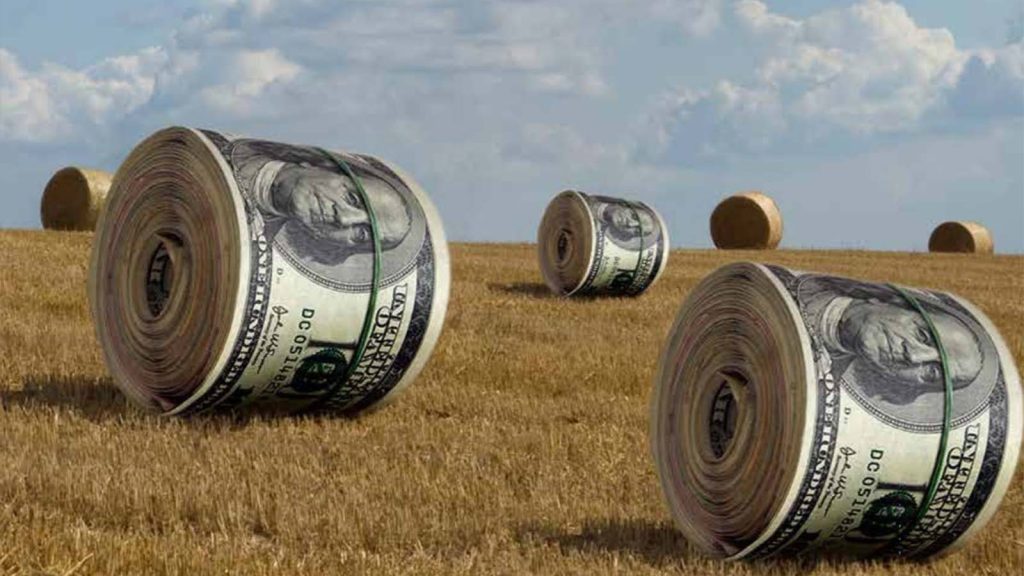




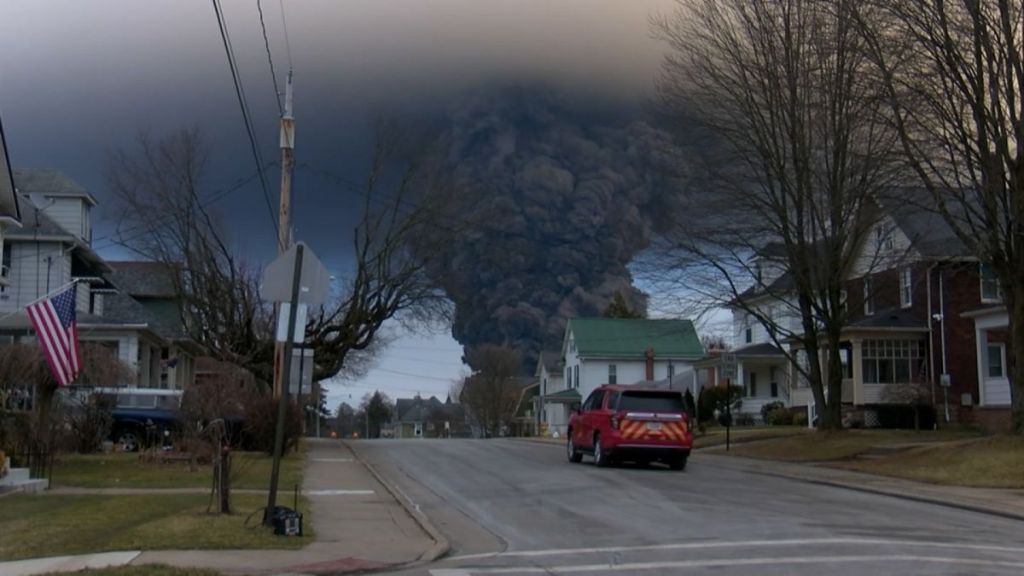



 After the Crash