3/3: PressTV interviews Dan Dicks of Press for Truth on the erosion of freedom of the press in the U.S.
3/3: Gerald Celente speaks out on the rash of recent banker suicides and speculation on a connection to a coming global economic collapse at NextNewsNetwork.
3/4: At Global Research TV, geopolitical analysts from across the board explain how the Ukrainian coup has been deliberately provoked by outside agents to promote a combination of US, EU, NATO and IMF interests, and the possible implications.
3/4: Excellent episode of Breaking the Set in which Abby Martin covers the Ukraine conflict and Washington DC’s shadow lobbyists.
3/5: An inspiring story from WeAreChange.org about libertarian crossfit gym owner Danny Lopez-Calleja who overcame drug abuse and homelessness to become a catalyst for change.
3/6: Over 80 people were shot during riots in Kiev a few weeks ago. Now new evidence is coming out that opposition snipers were behind shootings of police and protesters on both sides:
On the lighter side, the Onion reports on disturbing findings from a new marijuana study. It’s even funnier (or more disturbing) watching it stoned.
Those who spend their lives within the belly of the beast see mostly the insides of the belly. Traveling outside the beast gives one a better idea of what the beast looks like and the impact of its actions on the world. For those who missed the 1/31 post (my last “live” post before this one), for the past few weeks I’ve been traveling through Central America. More specifically, exploring various towns, cities and nature reserves across Nicaragua. Though my primary reason for being there was for vacation, I took it as an opportunity to learn much about the region’s culture, environment, and often turbulent past. Though I’m sure much has happened while I was away (I’m still catching up on news), within the next few days I hope to share some of what I learned and experienced on the trip.
For others who might be planning vacations to other countries combining recreation and education, the importance of having at least a basic grasp of the native language (or traveling with fluent bilingual people) shouldn’t be underestimated. It greatly enriches interactions not only because locals can express themselves more authentically in their primary language, but it could help reduce potential social tensions. While many less developed nations including Nicaragua are increasingly economically dependent on the tourism industry, tourists need to be aware of problems their presence may cause or contribute to such as gentrification, cultural commodification and cultural dilution. U.S. tourists speaking in native tongues might not solve such problems, but it at least symbolically helps counteract inherent power imbalances while making possible more conscious consumer choices such as supporting smaller ecotourism, agritourism and community-based establishments which may not offer the same level of English language services and materials as larger, often foreign-owned businesses which cater to English language speakers. Greater fluency in the native language also allows tourists to acquire and compare more information on essential expenditures such as transportation, lodging and food, resulting in options of higher quality or greater practicality (and preferably locally-owned) for less money.
That being said, I’m definitely not fluent in Spanish but was fortunate enough to travel with someone who is. Without my travel partner I wouldn’t have been able to experience nearly as much as I did. Among the highlights:
Jumping into the Rio Coco in Somoto Canyon from a height of 12 meters (high enough for me).
Hiking though a cloud forest in the mountains surrounding Jinotega.
Kayaking on rough waters of Lake Apanas.
Seeing indigenous petroglyphs in a rural village near Matagalpa.
Climbing to the roof of the Basilica Catedral de la Asuncion in Leon, the largest church in Central America.
Learning to ride a motorcycle and driving it across Ometepe Island.
Hiking around the top of the Mombacho Volcano Nature Reserve.
Boating through Las Isletas near Granada.
There’s lots I’m leaving out, including visits to various cultural museums in different towns, some of which I plan to feature in future posts.
1/27 Luke Rudkowski of We Are Change interviews Gerald Celente on a variety of topics including economic turmoil, bitcoin and revolution:
1/28 An informative primer from James Corbett on the use of propaganda, false dichotomies and “divide and conquer” tactics by the ruling elite to keep the public powerless:
1/28 Ben Swann on the Grocery Manufacturers Association’s lobbying efforts to create a Federal Ban on GMO labeling:
1/28 Seattle Councilmember Kshama Sawant’s exceptional response to Obama’s State of the Union address:
1/28 An inspiring scene from the underrated “musical documentary” The American Ruling Class (2005) posted by the filmmakers in memory of Pete Seeger:
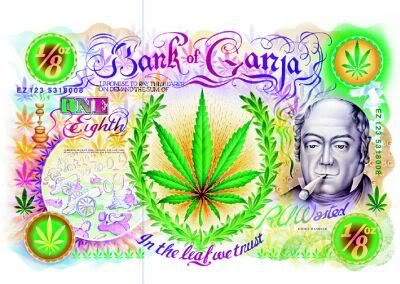
Karen Weise of Bloomberg Business Week recently reported on proposed legislation from Washington State Senator Bob Hasegawa which would create a state-run bank for Washington’s legal marijuana industry. Cannabis businesses are currently forced to rely heavily on cash. Some still go through traditional banks using separate management companies though there still may be risk of asset forfeiture from the feds. As the article below mentions, state-run banks are an effective solution with proven results.
If ever a hippie dream existed, it would probably look something like what’s being proposed in Washington by Democratic State Senator Bob Hasegawa. He wants to open a state-run bank specifically to serve Washington’s newly legal marijuana industry. The proposal would solve two real problems: Pot businesses would no longer be trapped in an all-cash economy thanks to federal laws that prohibit banks from handling drug money, and the state would send less money to Wall Street.
There’s just one state-run bank in the country: the Bank of North Dakota. It uses the revenue collected through taxes and other government income to provide capital for low-interest loans to state residents, including students, homeowners, and farmers. The bank’s operations return millions to the state’s coffers. (It’s worth noting that the bank has nothing to do with pot.)
As the financial crisis caused a credit crunch for borrowers, some citizens and states themselves started looking to North Dakota as a model of how to keep lending afloat. “After the banking crisis in 2008, some farmers came to me from eastern Washington, literally in tears, saying their credit was being cut off,” Hasegawa says.
Heather Morton, who tracks financial regulation at the National Conference of State Legislatures, found bills in six state legislatures in 2010 related to the creation of state-run banks. Interest swelled as the economy continued to struggle and the Occupy Wall Street movement took up the idea of state banks as an alternative to Wall Street. By 2011 the number of states with bills contemplating the creation of their own banks hit 15, according to Morton’s research, before legislation eventually tapered off last year as the economy improved.
In Washington, one of eight states in which legislation was put forward in 2013, the state-banking push predates the advent of a legal marijuana retail sector. Hasegawa’s bill, which he has sponsored for several years, gained support from 44 out of 98 lawmakers in 2012 but was killed in the banking committee. Each year, Hasegawa tinkers with the legislation in response to opponents, who include the state’s banking community, bond brokers, and the state treasurer. The critics argue that the effort is too risky and would diminish competition, among other things. (After lengthy study, a formal commission in Massachusetts recommended against creating a bank there, saying the effort would be more capital-intensive than it’s worth.)
After voters approved legalizing recreational marijuana in Washington last year, however, Hasegawa saw a new opening. Marijuana businesses have had to resort to largely operating in cash and have been agitating for federal authorities to give banks permission to handle pot accounts. Because pot isn’t legal at the national level, federal money-laundering laws prevent financial institutions from handing marijuana-related money.
Hasegawa has submitted a new bill for the 2014 legislative session that would create a state-run bank as the sole depository for the state’s marijuana businesses. Passage of the bill, which Hasegawa knows is a long shot, would provide “a foot in the door” to a broader state-run bank. But even if it fails, the state senator still sees an upside: “It has drawn the debate away from the detractors of the other arguments.” Washington’s legislative session opens on Jan. 13, and recreational sales in the state are expected to start this spring.
Opposition has now “focused on the illegality of marijuana itself,” Hasegawa says, “which makes me think a lot of their other arguments are really just smoke screens.”
The InterContinental Davos luxury hotel in the Swiss mountain resort of Davos. Oxfam report found people in countries around the world believe that the rich have too much influence over the direction their country is heading. Photograph: Arnd Wiegmann/REUTERS
The world’s wealthiest people aren’t known for traveling by bus, but if they fancied a change of scene then the richest 85 people on the globe – who between them control as much wealth as the poorest half of the global population put together – could squeeze onto a single double-decker.
The extent to which so much global wealth has become corralled by a virtual handful of the so-called ‘global elite’ is exposed in a new report from Oxfam on Monday. It warned that those richest 85 people across the globe share a combined wealth of £1tn, as much as the poorest 3.5 billion of the world’s population.
Source: F. Alvaredo, A. B. Atkinson, T. Piketty and E. Saez, (2013) ‘The World Top Incomes Database’, http://topincomes.g-mond.parisschoolofeconomics.eu/Only includes countries with data in 1980 and later than 2008. Photograph: Oxfam
The wealth of the 1% richest people in the world amounts to $110tn (£60.88tn), or 65 times as much as the poorest half of the world, added the development charity, which fears this concentration of economic resources is threatening political stability and driving up social tensions.
Winnie Byanyima, the Oxfam executive director who will attend the Davos meetings, said: “It is staggering that in the 21st Century, half of the world’s population – that’s three and a half billion people – own no more than a tiny elite whose numbers could all fit comfortably on a double-decker bus.”
Oxfam also argues that this is no accident either, saying growing inequality has been driven by a “power grab” by wealthy elites, who have co-opted the political process to rig the rules of the economic system in their favour.
In the report, entitled Working For The Few (summary here), Oxfam warned that the fight against poverty cannot be won until wealth inequality has been tackled.
“Widening inequality is creating a vicious circle where wealth and power are increasingly concentrated in the hands of a few, leaving the rest of us to fight over crumbs from the top table,” Byanyima said.
Oxfam called on attendees at this week’s World Economic Forum to take a personal pledge to tackle the problem by refraining from dodging taxes or using their wealth to seek political favours.
How richest use their wealth to capture opportunities
Polling for Oxfam’s report found people in countries around the world – including two-thirds of those questioned in Britain – believe that the rich have too much influence over the direction their country is heading.
Byanyima explained:
“In developed and developing countries alike we are increasingly living in a world where the lowest tax rates, the best health and education and the opportunity to influence are being given not just to the rich but also to their children.
“Without a concerted effort to tackle inequality, the cascade of privilege and of disadvantage will continue down the generations. We will soon live in a world where equality of opportunity is just a dream. In too many countries economic growth already amounts to little more than a ‘winner takes all’ windfall for the richest.”
The Oxfam report found that over the past few decades, the rich have successfully wielded political influence to skew policies in their favour on issues ranging from financial deregulation, tax havens, anti-competitive business practices to lower tax rates on high incomes and cuts in public services for the majority. Since the late 1970s, tax rates for the richest have fallen in 29 out of 30 countries for which data are available, said the report.
This “capture of opportunities” by the rich at the expense of the poor and middle classes has led to a situation where 70% of the world’s population live in countries where inequality has increased since the 1980s and 1% of families own 46% of global wealth – almost £70tn.
Opinion polls in Spain, Brazil, India, South Africa, the US, UK and Netherlands found that a majority in each country believe that wealthy people exert too much influence. Concern was strongest in Spain, followed by Brazil and India and least marked in the Netherlands.
In the UK, some 67% agreed that “the rich have too much influence over where this country is headed” – 37% saying that they agreed “strongly” with the statement – against just 10% who disagreed, 2% of them strongly.
The WEF’s own Global Risks report recently identified widening income disparities as one of the biggest threats to the world community.
Oxfam is calling on those gathered at WEF to pledge: to support progressive taxation and not dodge their own taxes; refrain from using their wealth to seek political favours that undermine the democratic will of their fellow citizens; make public all investments in companies and trusts for which they are the ultimate beneficial owners; challenge governments to use tax revenue to provide universal healthcare, education and social protection; demand a living wage in all companies they own or control; and challenge other members of the economic elite to join them in these pledges.
• Research Now questioned 1,166 adults in the UK for Oxfam between October 1 and 14 2013.
Chris Hedges’ regular columns for Truthdig.com are consistently informative and provocative, but his latest piece offers a particularly critical analysis of the current political moment in the United States. In the following excerpt he ruminates on a number of recent actions of our modern corporate totalitarian state:
Via Truthdig:
The object of efficient totalitarian states, as George Orwell understood, is to create a climate in which people do not think of rebelling, a climate in which government killing and torture are used against only a handful of unmanageable renegades. The totalitarian state achieves this control, Arendt wrote, by systematically crushing human spontaneity, and by extension human freedom. It ceaselessly peddles fear to keep a population traumatized and immobilized. It turns the courts, along with legislative bodies, into mechanisms to legalize the crimes of state.
The corporate state, in our case, has used the law to quietly abolish the Fourth and Fifth amendments of the Constitution, which were established to protect us from unwarranted intrusion by the government into our private lives. The loss of judicial and political representation and protection, part of the corporate coup d’état, means that we have no voice and no legal protection from the abuses of power. The recent ruling supporting the National Security Agency’s spying, handed down by U.S. District Judge William H. Pauley III, is part of a very long and shameful list of judicial decisions that have repeatedly sacrificed our most cherished constitutional rights on the altar of national security since the attacks of 9/11. The courts and legislative bodies of the corporate state now routinely invert our most basic rights to justify corporate pillage and repression. They declare that massive and secret campaign donations—a form of legalized bribery—are protected speech under the First Amendment. They define corporate lobbying—under which corporations lavish funds on elected officials and write our legislation—as the people’s right to petition the government. And we can, according to new laws and legislation, be tortured or assassinated or locked up indefinitely by the military, be denied due process and be spied upon without warrants. Obsequious courtiers posing as journalists dutifully sanctify state power and amplify its falsehoods—MSNBC does this as slavishly as Fox News—while also filling our heads with the inanity of celebrity gossip and trivia. Our culture wars, which allow politicians and pundits to hyperventilate over nonsubstantive issues, mask a political system that has ceased to function. History, art, philosophy, intellectual inquiry, our past social and individual struggles for justice, the very world of ideas and culture, along with an understanding of what it means to live and participate in a functioning democracy, are thrust into black holes of forgetfulness.
The political philosopher Sheldon Wolin, in his essential book “Democracy Incorporated,” calls our system of corporate governance “inverted totalitarianism,” which represents “the political coming of age of corporate power and the political demobilization of the citizenry.” It differs from classical forms of totalitarianism, which revolve around a demagogue or charismatic leader; it finds its expression in the anonymity of the corporate state. The corporate forces behind inverted totalitarianism do not, as classical totalitarian movements do, replace decaying structures with new structures. They instead purport to honor electoral politics, freedom of expression and the press, the right to privacy and the guarantees of law. But they so corrupt and manipulate electoral politics, the courts, the press and the essential levers of power as to make genuine democratic participation by the masses impossible. The U.S. Constitution has not been rewritten, but steadily emasculated through radical judicial and legislative interpretation. We have been left with a fictitious shell of democracy and a totalitarian core. And the anchor of this corporate totalitarianism is the unchecked power of our systems of internal security.
Our corporate totalitarian rulers deceive themselves as often as they deceive the public. Politics, for them, is little more than public relations. Lies are told not to achieve any discernable goal of public policy, but to protect the image of the state and its rulers. These lies have become a grotesque form of patriotism. The state’s ability through comprehensive surveillance to prevent outside inquiry into the exercise of power engenders a terrifying intellectual and moral sclerosis within the ruling elite. Absurd notions such as implanting “democracy” in Baghdad by force in order to spread it across the region or the idea that we can terrorize radical Islam across the Middle East into submission are no longer checked by reality, experience or factually based debate. Data and facts that do not fit into the whimsical theories of our political elites, generals and intelligence chiefs are ignored and hidden from public view. The ability of the citizenry to take self-corrective measures is effectively stymied. And in the end, as in all totalitarian systems, the citizens become the victims of government folly, monstrous lies, rampant corruption and state terror.
Most of us are well aware of the problem of human labor being displaced by technology. The Thought Infection blog recently posted an informative overview of how even jobs we might not immediately think of as being at risk of obsolescence are steadily being encroached upon by technology. In this follow up article, he explains how automation has an especially destabilizing effect on the financial sector and economic system.
Excerpt:
The advent of algorithmic trading extends the game that has always existed in markets, but now the speed is faster, the stakes are higher and we can’t be sure who is in control.
The manipulation abilities of trading algorithms may already (and if not, soon will) extend beyond this kind of inter-algorithmic effects. Given that trading algorithms can act on human informational sources, such as Twitter, as news is released, it is not outlandish to imagine that these algorithms could also be producing information in an effort to manipulate the market. Given that algorithms are becoming better at turning basic information into natural language, it seems possible that an algorithm could be designed to Tweet out false information about a company to try to depress the stock price.
If we take the ketchup manufacturer again and we imagine they are in a precarious position due to a new bill to remove subsidies for tomato growing. Imagine a bunch of tweet/comment/news bots aimed at pushing the public dialogue to make it seem that the subsidies are going to be removed. If massively parallelized, this kind of attack on public sentiment could have a significant effect on the ketchup manufacturer and provide an opportunity for major profits. I think it’s likely this kind of algorithmic sentiment manipulation is already happening on some level.
Even this kind of sentiment manipulation is only a drop in the bucket compared to what may become possible in the near future. The astounding profits which can be made in this kind of algorithmic trading is driving huge investment in artificial intelligence. In the near future, algorithmic traders will be capable of much more complex manipulations to try to move market prices.
…Perhaps by identifying those congressmen who are on the fence about subsidies, a targeted campaign to manipulate the opinions of those in said congressman’s district could have a real effect on the outcome for ketchup manufacturers. This may seem a bit ridiculous, but even a tiny effect on the perceptions and opinions of one individual can make a big difference if spread across a wide enough group.
What he speculates could be our greatest threat in the future is not Terminator-like cybernetic weapons but “an army of Gordon Gekko-bots capable of manipulating every aspect of our legal and political systems in an aim to maximize market profits.”