As the circus of the 2016 presidential election grinds on, Hillary Clinton has posited herself as the candidate of the people. But not many “candidates of the people” have vacation homes in the Hamptons that cost $200,000 per month, or hang out with the world’s billionaires.
It’s hard to know who she is really–while once being a proponent of Donald Trump type positions, like building a wall at the Mexican border, supporting torture, and opposing same-sex marriage until 2013, today she presents herself as the anti-Trump, anti-Republican candidate.
There’s been a lot of outrage about the impression that the establishment has already anointed her as the Democratic nominee, and has carved out her path to the presidency.
But like in 2008, her guaranteed seat on the throne is being derailed by the unpredictable moods of the masses, and millions of young progressive voters. She continues to play her shape shifting game, morphing her positions to try to capture the support for her opponent, but the real Hillary is still inside.
In fact, every layer of Hillary’s career shows why, far from being a candidate of the people, she’s the top pick by corporations to do the real job of any US president: CEO of the Empire.
Digging deep into Hillary’s connections to Wall Street, Abby Martin reveals how the Clinton’s multi-million-dollar political machine operates. This episode of The Empire Files chronicles the Clinton’s rise to power in the 90s on a right-wing agenda, the Clinton Foundation’s revolving door with Gulf state monarchies, corporations and the world’s biggest financial institutions, and the establishment of the hyper-aggressive “Hillary Doctrine” while Secretary of State.
A few weeks after leaving office, former Secretary of State Hillary Clinton may have breathed a sigh of relief and reassurance when Director of National Intelligence James Clapper denied reports of the National Security Agency eavesdropping on Americans. After all, Clinton had been handling official business at the State Department like many Americans do with their personal business, on an unsecured server.
In sworn testimony before the Senate Intelligence Committee on March 12, 2013, Clapper said the NSA was not collecting, wittingly, “any type of data at all on millions or hundreds of millions of Americans,” which presumably would have covered Clinton’s unsecured emails.
But NSA contractor Edward Snowden’s revelations — starting on June 5, 2013 — gave the lie to Clapper’s testimony, which Clapper then retracted on June 21 – coincidentally, Snowden’s 30th birthday – when Clapper sent a letter to the Senators to whom he had, well, lied. Clapper admitted his “response was clearly erroneous – for which I apologize.” (On the chance you are wondering what became of Clapper, he is still DNI.)
I would guess that Clapper’s confession may have come as a shock to then ex-Secretary Clinton, as she became aware that her own emails might be among the trillions of communications that NSA was vacuuming up. Nevertheless, she found Snowden’s truth-telling a safer target for her fury than Clapper’s dishonesty and NSA’s dragnet.
In April 2014, Clinton suggested that Snowden had helped terrorists by giving “all kinds of information, not only to big countries, but to networks and terrorist groups and the like.” Clinton was particularly hard on Snowden for going to China (Hong Kong) and Russia to escape a vengeful prosecution by the U.S. government.
Clinton even explained what extraordinary lengths she and her people went to in safeguarding government secrets: “When I would go to China or would go to Russia, we would leave all my electronic equipment on the plane with the batteries out, because … they’re trying to find out not just about what we do in our government, they’re … going after the personal emails of people who worked in the State Department.” Yes, she said that. (emphasis added)
Hoisted on Her Own Petard
Alas, nearly a year later, in March 2015, it became known that during her tenure as Secretary of State she had not been as diligent as she led the American people to believe. She had used a private server for official communications, rather than the usual official State Department email accounts maintained on federal servers. Thousands of those emails would retroactively be marked classified – some at the TOP SECRET/Codeword level – by the department.
During an interview last September, Snowden was asked to respond to the revelations about highly classified material showing up on Clinton’s personal server: “When the unclassified systems of the United States government, which has a full-time information security staff, regularly gets hacked, the idea that someone keeping a private server in the renovated bathroom of a server farm in Colorado is more secure is completely ridiculous.”
Asked if Clinton “intentionally endangered US international security by being so careless with her email,” Snowden said it was not his place to say. Nor, it would seem, is it President Barack Obama’s place to say, especially considering that the FBI is actively investigating Clinton’s security breach. But Obama has said it anyway.
“She would never intentionally put America in any kind of jeopardy,” the President said on April 10. In the same interview, Obama told Chris Wallace, “I guarantee that there is no political influence in any investigation conducted by the Justice Department, or the FBI – not just in this case, but in any case. Full stop. Period.”
But, although a former professor of Constitutional law, the President sports a checkered history when it comes to prejudicing investigations and even trials, conducted by those ultimately reporting to him. For example, more than two years before Bradley (Chelsea) Manning was brought to trial, the President stated publicly: “We are a nation of laws. We don’t let individuals make decisions about how the law operates. He [Bradley Manning] broke the law!”
Not surprisingly, the ensuing court martial found Manning guilty, just as the Commander in Chief had predicted. Though Manning’s purpose in disclosing mostly low-level classified information was to alert the American public about war crimes and other abuses by the U.S. government, Manning was sentenced to 35 years in prison.
On March 9, when presidential candidate Clinton was asked, impertinently during a debate, whether she would withdraw from the race if she were indicted for her cavalier handling of government secrets, she offered her own certain prediction: “Oh, for goodness sake! It’s not going to happen. I’m not even answering that question.”
Prosecutorial Double Standards
Merited or not, there is, sadly, some precedent for Clinton’s supreme confidence. Retired General and ex-CIA Director David Petraeus, after all, lied to the FBI (a felony for “lesser” folks) about giving his mistress/biographer highly classified information and got off with a slap on the wrist, a misdemeanor fine and probation, no jail time – a deal that Obama’s first Attorney General Eric Holder did on his way out the door.
We are likely to learn shortly whether Attorney General Loretta Lynch is as malleable as Holder or whether she will allow FBI Director James Comey, who held his nose in letting Petraeus cop a plea, to conduct an unfettered investigation this time – or simply whether Comey will be compelled to enforce Clinton’s assurance that “it’s not going to happen.”
Last week, Fox News TV legal commentator Andrew Napolitano said the FBI is in the final stages of its investigation into Clinton and her private email server. His sources tell him that “the evidence of her guilt is overwhelming,” and that the FBI has enough evidence to indict and convict.
Whether Napolitano has it right or not, it seems likely that Clinton is reading President Obama correctly – no profile in courage is he. Nor is Obama likely to kill the political fortunes of the now presumptive Democratic presidential nominee. Yet, if he orders Lynch and Comey not to hold Hillary Clinton accountable for what – in my opinion and that of most other veteran intelligence officials whom I’ve consulted – amounts to at least criminal negligence, another noxious precedent will be set.
Knowing Too Much
This time, however, the equities and interests of the powerful, secretive NSA, as well as the FBI and Justice, are deeply involved. And by now all of them know “where the bodies are buried,” as the smart folks inside the Beltway like to say. So the question becomes would a future President Hillary Clinton have total freedom of maneuver if she were beholden to those all well aware of her past infractions and the harm they have done to this country.
One very important, though as yet unmentioned, question is whether security lapses involving Clinton and her emails contributed to what Clinton has deemed her worst moment as Secretary of State, the killing of Ambassador Christopher Stevens and three other U.S. personnel at the lightly guarded U.S. “mission” (a very small, idiosyncratic, consulate-type complex not performing any consular affairs) in Benghazi, Libya, on Sept. 11, 2012.
Somehow the terrorists who mounted the assault were aware of the absence of meaningful security at the facility, though obviously there were other means for them to have made that determination, including the State Department’s reliance on unreliable local militias who might well have shared that inside information with the attackers.
However, if there is any indication that Clinton’s belatedly classified emails contained information about internal State Department discussions regarding the consulate’s security shortcomings, questions may be raised about whether that information was somehow compromised by a foreign intelligence agency and shared with the attackers.
We know that State Department bureaucrats under Secretary Clinton overruled repeated requests for additional security in Benghazi. We also know that Clinton disregarded NSA’s repeated warnings against the use of unencrypted communications. One of NSA’s core missions, after all, is to create and maintain secure communications for military, diplomatic, and other government users.
Clinton’s flouting of the rules, in NSA’s face, would have created additional incentive for NSA to keep an especially close watch on her emails and telephone calls. The NSA also might know whether some intelligence service successfully hacked into Clinton’s server, but there’s no reason to think that the NSA would share that sort of information with the FBI, given the NSA’s history of not sharing its data with other federal agencies even when doing so makes sense.
The NSA arrogates to itself the prerogative of deciding what information to keep within NSA walls and what to share with the other intelligence and law enforcement agencies like the FBI. (One bitter consequence of this jealously guarded parochialism was the NSA’s failure to share very precise information that could have thwarted the attacks of 9/11, as former NSA insiders have revealed.)
It is altogether likely that Gen. Keith Alexander, head of NSA from 2005 to 2014, neglected to tell the Secretary of State of NSA’s “collect it all” dragnet collection that included the emails and telephone calls of Americans – including Clinton’s. This need not have been simply the result of Alexander’s pique at her disdain for communications security requirements, but rather mostly a consequence of NSA’s modus operandi.
With the mindset at NSA, one could readily argue that the Secretary of State – and perhaps the President himself – had no “need-to-know.” And, needless to say, the fewer briefed on the NSA’s flagrant disregard for Fourth Amendment protections against unreasonable searches and seizures the better.
So, if there is something incriminating – or at least politically damaging – in Clinton’s emails, it’s a safe bet that at least the NSA and maybe the FBI, as well, knows. And that could make life difficult for a Clinton-45 presidency. Inside the Beltway, we don’t say the word “blackmail,” but the potential will be there. The whole thing needs to be cleaned up now before the choices for the next President are locked in.
Ray McGovern works with Tell the Word, a publishing arm of the ecumenical Church of the Saviour in inner-city Washington. He served as a CIA analyst for 27 years, during which he prepared and briefed the morning President’s Daily Brief for Presidents Nixon, Ford, and Reagan.
The Democratic Party was once the party of the New Deal and the ally of organized labor. But by the time of Bill Clinton’s presidency, it had become the enemy of New Deal programs like welfare and Social Security and the champion of free trade deals. What explains this apparent reversal? Thomas Frank—best known for his analysis of the Republican Party base in What’s the Matter with Kansas?—attempts to answer this question in his latest book, Listen Liberal: Or, What Ever Happened to the Party of the People?
According to Frank, popular explanations which blame corporate lobby groups and the growing power of money in politics are insufficient. Frank instead points to a decision by Democratic Party elites in the 1970s to marginalize labor unions and transform from the party of the working class to the party of the professional class. In so doing, the Democratic Party radically changed the way it understood social problems and how to solve them, trading in the principle of solidarity for the principle of competitive individualism and meritocracy. The end result is that the party which created the New Deal and helped create the middle class has now become “the party of mass inequality.” In These Times spoke with Frank recently about the book via telephone.
The book is about how the Democratic Party turned its back on working people and now pursues policies that actually increase inequality. What are the policies or ideological commitments in the Democratic Party that make you think this?
The first piece of evidence is what’s happened since the financial crisis. This is the great story of our time. Inequality has actually gotten worse since then, which is a remarkable thing. This is under a Democratic president who we were assured (or warned) was the most liberal or radical president we would ever see. Yet inequality has gotten worse, and the gains since the financial crisis, since the recovery began, have gone entirely to the top 10 percent of the income distribution.
This is not only because of those evil Republicans, but because Obama played it the way he wanted to. Even when he had a majority in both houses of Congress and could choose whoever he wanted to be in his administration, he consistently made policies that favored the top 10 percent over everybody else. He helped out Wall Street in an enormous way when they were entirely at his mercy.
He could have done anything he wanted with them, in the way that Franklin Roosevelt did in the ‘30s. But he chose not to.
Why is that? This is supposed to be the Democratic Party, the party that’s interested in working people, average Americans. Why would they react to a financial crisis in this way? Once you start digging into this story, it goes very deep. You find that there was a transition in the Democratic Party in the ‘70s, 80’s and ‘90s where they convinced themselves that they needed to abandon working people in order to serve a different constituency: a constituency essentially of white-collar professionals.
That’s the most important group in their coalition. That’s who they won over in the ’70s, ’80s and ’90s. That’s who they serve, and that’s where they draw from. The leaders of the Democratic Party are always from this particular stratum of society.
A lot of progressives that I talk to are pretty familiar with the idea that the Democratic Party is no longer protecting the interests of workers, but it’s pretty common for us to blame it on mainly the power of money in politics. But you start the book in chapter one by arguing there’s actually something much deeper going on. Can you say something about that?
Money in politics is a big part of the story, but social class goes deeper than that. The Democrats have basically made their commitment [to white-collar professionals] already before money and politics became such a big deal. It worked out well for them because of money in politics. So when they chose essentially the top 10 percent of the income distribution as their most important constituents, that is the story of money.
It wasn’t apparent at the time in the ‘70s and ‘80s when they made that choice. But over the years, it has become clear that that was a smart choice in terms of their ability to raise money. Organized labor, of course, is no slouch in terms of money. They have a lot of clout in dollar terms. However, they contribute and contribute to the Democrats and they almost never get their way—they don’t get, say, the Employee Free Choice Act, or Bill Clinton passes NAFTA. They do have a lot of money, but their money doesn’t count.
All of this happened because of the civil war within the Democratic Party. They fought with each other all the time in the ‘70s and the ‘80s. One side hadn’t completely captured the party until Bill Clinton came along in the ‘90s. That was a moment of victory for them.
Bill Clinton’s presidency is what progressives usually cite as the time when things went bad. But there’s a trend that goes back to the ’70s, right?
Historians always cite the ’68 election as the turning point. The party was torn apart by the controversy over the Vietnam war, protesters were in the streets in Chicago and the Democratic candidate Hubert Humphrey went on to lose. Democrats thought this was terrible, and it was. So they set up a commission to reorganize the party, the McGovern Commission.
The McGovern Commission basically set up our modern system of primaries. Before the commission, we didn’t have these long primary contests in state after state after state. Primaries are a good thing, as were most things the McGovern Commission did.
But they also removed organized labor from its structural position of power in the Democratic Party. There was a lot of resentment towards labor during the Vietnam War. A lot of unions took President Johnson’s side on Vietnam. There was also this sense—which I think was correct at the time—that labor was a dinosaur, that it was out of touch and undemocratic and very white.
There were a lot of reasonable objections to organized labor at the time. The problem is, when you get rid of labor in your party, you also get rid of issues that matter to working people. That’s the basic mistake that Democrats made in the ’70s. Of course, labor still is a big part of the Democratic coalition—it gives them their money, it helps out at election time in a huge way. But unions no longer have the presence in party councils that they used to. That disappeared.
One of the most shocking quotes in the book is from Alfred Kahn, an advisor to Jimmy Carter, who said, “I’d love the Teamsters to be worse off. I’d love the automobile workers to be worse off.” He then basically says that unionized workers are exploiting other workers.
Isn’t that amazing? He’s describing a situation in the 1970s. There was all this controversy in the 1970s about labor versus management—this was the last decade where those fights were front and center in our national politics. And he’s coming down squarely on the side of management in those fights.
And remember, Kahn was a very important figure in the Carter administration. The way that he describes unions is incorrect—he’s actually describing professionals. Professionals are a protected class that you can’t do anything about—they’re protected by the laws of every state that dictate who can practice in these fields. It’s funny that he projects that onto organized labor and holds them responsible for the sins of another group.
This is a Democrat in an administration that is actually not very liberal. This is the administration that carried out the first of the big deregulations. This is the administration that had the great big capital gains tax cuts, that carried out the austerity plan that saw the Federal Reserve jack its interest rates sky high. They clubbed the economy to the ground in order to stop “wage inflation,” in which workers, if they have enough power, can keep demanding higher wages. It was incredible.
What’s the content of the ideology of the professional class and how does it hurt working people? What are their guiding principles?
The first commandment of the professional class is the idea of meritocracy, which allows people to think that those on top are there because they deserve to be. With the professional class, it’s always associated with education. They deserve to be there because they worked really hard and went to a good college and to a good graduate school. They’re high achievers. Democrats are really given to credentialism in a way that Republicans aren’t.
If you look at the last few Democratic presidents, Bill Clinton and Obama, and Hillary Clinton as well, their lives are a tale of educational achievement. This is what opened up the doors of the world to them. It’s a party of who people who have gotten where they are by dint of educational accomplishment.
This produces a set of related ideas. When the Democrats, the party of the professionals, look at the economic problems of working-class people, they always see an educational problem, because they look at working class people and say, “Those people didn’t do what I did”: go and get advanced degrees, go to the right college, get the high SAT scores and study STEM or whatever.
There’s another interesting part of this ideology: this endless search for consensus. Washington is a city of professionals with advanced degrees, and Democrats look around them there and say, “We’re all intelligent people. We all went to good schools. We know what the problems are and we know what the answers are, and politics just get in the way.”
This is a very typical way of thinking for the professional class: reaching for consensus, because politics is this ugly thing that you don’t really need. You see this in Obama’s endless efforts to negotiate a grand bargain with Republicans because everybody in Washington knows the answers to the problems—we just have to get together, sit down and make an agreement. The same with Obamacare: He spent so many months trying to get Republicans to sign on, even just one or two, so that he could say it was bipartisan. It was an act of consensus. And the Republicans really played him, because they knew that’s what he’d do.
To go back to your point about education: At one point you quote Arne Duncan, who was Obama’s secretary of education, saying that the only way to end poverty is through education. Why can’t that work?
The big overarching problem of our time is inequality. If you look at historical charts of productivity and wage growth, these two things went hand in hand for decades after World War II, which we think of as a prosperous, middle-class time when even people with a high school degree, blue-collar workers, could lead a middle class life. And then everything went wrong in the 1970s. Productivity continued to go up and wage growth stopped. Wage growth has basically been flat ever since then. But productivity goes up by leaps and bounds all the time. We have all of these wonderful technological advances. Workers are more productive than ever but they haven’t benefited from it. That’s the core problem of inequality.
Now, if the problem was that workers weren’t educated enough, weren’t smart enough, productivity would not be going up. But that productivity line is still going up. So we can see that education is not the issue.
It’s important that people get an education, of course. I spent 25 years of my life getting an education. It’s basic to me. It’s a fundamental human right that people should have the right to pursue whatever they want to the maximum extent of their individual potential. But the idea that this is what is holding them back is simply incorrect as a matter of fact. What’s holding them back is that they don’t have the power to demand higher wages.
If we talk about the problem as one of education rather than power, then the blame goes back to these workers. They just didn’t go out and work hard and do their homework and get a gold star from their teacher. If you take the education explanation for inequality, ultimately you’re blaming the victims themselves.
Unfortunately, that is the Democratic view. That’s why Democrats have essentially become the party of mass inequality. They don’t really have a problem with it.
So really, the solution would have to be solidarity and organized power.
That was an essential point that I try to make in Listen Liberal: that there is no solidarity in a meritocracy. A meritocracy really is every man for himself.
Don’t get me wrong. People at the top of the meritocracy, professionals, obviously have enormous respect for one another. That is the nature of professional meritocracy. They have enormous respect for the people at the top, but they feel very little solidarity for people beneath them who don’t rise in the meritocracy.
Look at the white-collar workplace. If some professional gets fired, the other professionals don’t rally around and go on strike or protest or something like that. They just don’t do that. They feel no solidarity because everything goes back to you and whether or not you’ve made the grade. If somebody gets fired, they must’ve deserved it somehow.
I have my own personal experience. Look at academia over the last 20 years. They’re cranking out these Ph.D.s in the humanities who can’t get jobs on tenure track and instead have to work as adjuncts for very low pay, no benefits. One of the fascinating parts about this is that, with a few exceptions, the people who do have tenure-track jobs and are at the top of their fields, do very little about what’s happened to their colleagues who work as adjuncts. Essentially this is the Uberizing of higher education. The professionals who are in a position of authority have done almost nothing about it. There are academics here and there who feel bad about what’s happened to adjuncts and do say things about it, but by and large, overall, there is no solidarity in that meritocracy. They just don’t care.
Do you think there’s a connection between the fact that the Democratic Party has turned against workers and the rise of Donald Trump?
Yes. Because if you look at the polling, Trump is winning the votes of a lot of people who used to be Democrats. These white, working-class people are his main base of support. As a group, these people were once Democrats all over the country. These are Franklin Roosevelt’s people. These are the people that the Democrats essentially decided to turn their backs on back in the 1970s. They call them the legatees of the New Deal. They were done with these guys, and now look what’s happened—they’ve gone with Donald Trump. That’s frightening and horrifying.
But Trump talks about their issues in a way that they find compelling, especially the trade issue. When he talks about trade, they believe him. Ironically, he’s saying the same things that Hillary Clinton and Bernie Sanders are saying about trade, but for whatever reason people find him more believable on this subject than they do Hillary Clinton.
Do you think that the rise of the Bernie campaign could herald a new era in the history of the Democratic Party?
I hope so. Both Trump and Bernie are turning their respective parties upside down. What Bernie is doing is very impressive. I interviewed him a few years ago and have always admired him. I think he’s a great man. To think that he could beat a Clinton in a Democratic primary anywhere in this country, let alone many primaries, was unthinkable a short time ago. And he’s done it without any Wall Street or big-business backing. That is extraordinary. It shows the kind of desperation that’s out there.
He has shown the way, and whether he gets the nomination or not (he probably won’t), there’ll be another Bernie four years from now. And there’ll also be another Trump. The Republican Party is being turned on its head much more violently than the Democrats. Hillary will probably get the nomination. I live in Washington, D.C., and I spend time around Hillary-style Democrats. They really think that they’ve got this thing in the bag. And I don’t just mean her versus Bernie. I mean the Democratic Party winning the presidency for the rest of our lives. From here to eternity. They can choose whoever they want. They could nominate anybody and they would win. They think they’re in charge.
One of your villains from the ’70s is Frederick Dutton, who wrote a book about how the Democratic Party needed to realign itself. You have a quote from him saying, “Every major realignment in U.S. political history has been accompanied by the coming of a large new group into the electorate.” You’re very critical of how he uses that idea in the ‘70s. But if you look at the newer voters attached to the Bernie campaign, it looks like the Democratic Party is experiencing something like that now.
Yes, in both cases you’re talking about a generational shift. That’s what he meant in 1971. He was talking about the counterculture and the “Now Generation” and the idea that they would come into the electorate and demand a different kind of politics—specifically his kind of politics.
Everybody always sees this new group that’s coming in as supporting what they want. That’s what he thought. I have a certain amount of contempt for that. Many years ago I wrote a book about the counterculture and how it was used for this purpose—specifically by the advertising industry. But Bernie’s doing the same thing. He’s using it for his own purposes.
Millenials’ take on the world is fascinating. Just a few years ago, people thought of them as very different. But now they’re coming out of college with enormous student debt, and they’re discovering that the job market is casualized and Uberized. The work that they do is completely casual. The idea of having a middle-class lifestyle in that situation is completely off the table for them.
Every time I think about these people, it burns me up. It makes me so angry what we’ve done to them as a society. It really gives the lie to Democratic Party platitudes about the world an education will open up for you. That path just doesn’t work anymore. Millenials can see that in their own lives very plainly.
So I’m very excited that they’re pro-Bernie. They really are the future.
Tobita Chow is chair of The People’s Lobby, an independent political organization based in Chicago, and co-author of “The Movement We Need,” a pamphlet on analysis and strategy for the progressive movement. He has been involved in faith-based community organizing on the South Side of Chicago since 2009, and is a leader in the “Moral Mondays Illinois” campaign against state budget cuts. He is an MDiv student at the Lutheran School of Theology at Chicago.
here are two things we all need to know about the upcoming 2016 election:
Millions of likely Democratic voters have already been stripped from the voter rolls in critical states like Ohio. The key reporting on this has been done by the great Greg Palast, who has shown that a computer program coordinated by the Republican secretary of state of Kansas is being used in some two dozen states to steal from a substantial percentage of the citizenry their right to vote. The raw numbers are high enough that they could have a significant impact on the presidential, US Senate, House and many other elections this fall. The ACLU has now sued Jon Husted, Ohio’s secretary of state, over the stripping of two million citizens from Ohio’s voter rolls.
There is no way to verify the official tally on the electronic machines on which the majority of Americans will vote this fall. Nearly all the machines are a decade old, most are controlled by a single company (ES&S, owned by Warren Buffett) and the courts have ruled that the software is proprietary, making the vote counts beyond public scrutiny. In fact, they are beyond all independent monitoring altogether. In many key swing states (including Ohio, Michigan, Iowa and Arizona) GOP governors and secretaries of state will have a free hand to flip the vote count to whatever they want it to be without detection or accountability. This could turn control of our government over to the GOP come November, as it did in 2000 and 2004.
These two critical markers of the upcoming national election are at center stage in our compendium The Flip & Strip Selection of 2016: Five Jim Crows and Electronic Election Theft (www.freepress.org / www.solartopia.org), which we’ll be publishing at the end of April.
For some reason many on the left have had a hard time accepting these realities. But they’re in fact far more critical than the question of who will make the better Democratic candidate.
In the interim, the usually solid Josh Holland has published a piece at The Nation with which we must take issue. It challenges writings that have put forward the idea that Hillary Clinton might be stealing the primaries from Bernie Sanders.
To avoid the circular firing squad in which the left indulges every election year, we should make it clear that we are both members of the Green Party. We prefer Bernie to Hillary, but like Jill Stein most of all. We hope Bernie at some point will establish a substantial string of grassroots training camps so the thousands of highly active young people who are supporting him will convert those energies to great long-term community organizing.
We are most concerned about the possibility of a GOP president come November. (For what it’s worth, we currently lay the highest odds of that nominee being the absolutely terrifying Paul Ryan. Ryan has said he won’t campaign for the nomination, but he has NOT said he’ll refuse it at a convention where he’ll be holding the gavel. His pockets will be stuffed with Koch cash. Enough said.)
We plead guilty to writing a piece at Reader Supported News pointing out that the exit polls show Bernie doing far better than the official vote count. Josh dismisses the reliability of exit polls, along with our mention of those in Germany. Suffice it to say that exit polling is the most reliable way we have of monitoring the vote count. In Germany they are usually within 1% of the official tally.
Here they are corrupted after the original compilations. They’re generally post-rigged to conform to the final official vote count, which is often pre-rigged. What matters is the original raw data, which we feel after much study is the gold standard for knowing how the public actually voted.
Of course that data can be messed with along the way. But at this point it’s the best we’ve got. And the original data can be hard to get. When statistician Ron Baiman requested original data from big-time pollster Warren Mitofsky (since deceased) Mitofsky told to him to “go fuck yourself.”
For some reason Josh drags “conspiracy theory” into the mix, with a lengthy soliloquy on 9/11. Neither of us writes about 9/11, though we know plenty of people who do. We find much of the official story not credible, but that’s about it at this point.
However, history warns us to be discerning about so-called conspiracy theories. Josh paints them all with a broad brush when he says they “tend to fall apart under the weight of their own internal illogic.”
But at the risk of rolling some eyeballs, here are (briefly) five that have proved indisputably true: Spain did NOT torpedo the battleship Maine in 1898, a false charge the led to a terrible war (the US Navy has confirmed the Maine blew up from the inside); the Lusitania WAS carrying munitions in 1915, as Germany argued; the Gulf of Tonkin incident NEVER happened, as confirmed by former Defense Secretary Robert McNamara; Richard Nixon DID treasonably subvert Vietnam peace talks in 1968; and there were NO WMDs in Iraq.
Maybe we can leave the Mexican War; Pearl Harbor; the assassinations of JFK, MLK and RFK; and the “October Surprise” timing of the release of hostages from Iran in 1980-1981, etc., for another discussion.
About the elections of 2000 and 2004, we are way beyond conspiracy theory. That the voter rolls were stripped in numbers exceeding 90,000 throughout Florida 2000, and the vote count electronically flipped in Volusia County at the key moment, are simply beyond dispute. So is the reality that had the Supreme Court not stopped the recount, Gore would have won.
In Ohio 2004, it’s also beyond dispute that more than 300,000 voters were stripped from the registration rolls from mostly Democratic urban areas, and that the vote count was flipped by 6.7% from Kerry to Bush between 12:20 and 2 a.m. on machines in a basement in Chattanooga where the servers for Karl Rove and the Republican National Committee also resided. Thousands of Ohioans were deliberately robbed of their vote with the stripping of precincts and denial of voting machines and back-up paper ballots in African-American and student strongholds. In an election with an official victory margin of 118,775, more than 250,000 votes remain uncounted to this day. Thousands of provisional ballots were also pitched in the trash, as they already have been in this primary season, and will be again in November.
Imagine a world in which, instead of George W. Bush, Al Gore had been inaugurated as the rightfully elected president in 2001, or John Kerry in 2005. It’s easy if you open your eyes to what actually happened in those elections, and terrifying if you think about what could happen this year.
For some reason, Josh also takes us into the purported mind of a Hillary operative who would never think of rigging a primary election because she was winning anyway.
This a bit hard to follow. But let’s just say that the exit polls have indicated Bernie doing better than the official vote count, that (according to Richard Charnin) Bernie won all the hand-counted precincts in Massachusetts but lost all the machine-counted ones, and that all the caucuses have been extremely messy and open to all sorts of manipulation by both sides.
Far more important to say is that the voting machines this fall will be significantly more vulnerable to being flipped than ever before, because they are now nearly all at least ten years old. Some are decrepit enough to have been used to play PacMan or the University of Michigan fight song in public displays.
For us, the most significant event of the primary season has been the 5-hour lines in Arizona and the one-hour lines in Wisconsin. We are less concerned about whether Hillary did this to Bernie than we are worried that these will become the defining moments on the rigged path to a GOP victory in November.
Meantime, how about a piece on the “strip and flip” realities both the Democrats and the Greens will face come November? Whether it’s Hillary, Bernie, or Jill, as things stand now we are certain to see deliberately engineered long lines that will disenfranchise countless young, African-American. and Hispanic voters. We also know that in certain key swing states, the electronic vote count will come out however the hell the governor wants it to.
To you this may be conspiracy theory. But remember the Maine.
Bob Fitrakis & Harvey Wasserman have co-authored six books on election integrity, including the upcoming Strip & Flip Selection of 2016: Five Jim Crows and Electronic Election Theft (www.freepress.org / www.solartopia.org). Bob’s Fitrakis Files are at www.freepress.org. Harvey’s America at the Brink of Rebirth: The Organic Spiral of US History will be out soon at www.solartopia.org.
Hillary Clinton has a dark history in foreign policy. Indeed, if the Nuremberg principles were applied evenly, her name would certainly be on the docket, along with her former boss in the White House, who is actually less of a hawk than she. When Donald Trump publicly expressed a willingness to negotiate with Russia over international conflicts, she referred to such an idea as putting “Christmas in the Kremlin.” She’s red-baited Bernie Sanders for his support for the Cuban and Nicaraguan revolutions back in the 1980s. Clinton basically backs not “political realism,” but the more imperial tradition of neoconservative “American exceptionalism,” a chauvinist mindset by which the US sets the political, economic, and military priorities of the world and the places and times of its interventions, sometimes with allied support, sometimes without, at its own discretion.
Hillary is a product of her husband’s alignment with Democratic Leadership Council (DLC) and the right wing shift of the party, which moved the Democrats away from its moorings in organized labor, the New Deal, civil rights, and the Great Society. Bill Clinton’s successful election undoubtedly inspired the formation of “New” Labour in Britain, which likewise broke with its party history in the labor movement. In the 1990s, then MP Tony Blair, his shadow government chancellor of the exchequer Gordon Brown, and his chief pollster Philip Gould came to America as apprentices of the Clinton presidential campaigns to study their public relations and other electioneering tactics. This became part of New Labour’s successful “Third Way” victorious strategy in 1997. Back then, Anthony Howard, writing in the Times of London, said that Clinton’s New Democrats “lighted the path” for Blair’s New Labour. Blair partnered with Clinton and the DLC in taking a more militarist stance toward Saddam Hussein, which paved the way for Bush’s and Blair’s 2003 invasion of Iraq.
Bill Clinton’s and the DLC’s legacy candidate is Hillary. And what better way to prove her cojones, in case anyone thought a woman president might turn out to be a negotiator and peacenik, than to pick on Russia and reignite the Cold War. Despite the Russians’ brilliant mix of negotiation – warding off a US invasion of Iran, getting the US off Assad’s back with the disposal of his chemical weapons stash – and their effective military intervention against ISIS, Obama, Clinton, and now Kerry will not relent in their hostility. The US neocon inner circle cannot countenance a balance of power arrangement with the Kremlin, disregarding Russia’s status as the second most militarily powerful country in the world. Clinton has called Putin a dictator, the favorite term of disgrace in American ruling circles, except when it comes to America’s allies in the Gulf states, Erdogan, and the long list of authoritarian friends the US has backed over the entire course of the postwar era. Indeed, Putin may be a strongman of sorts, and an extremely popular one in his own country, but is far less of an authoritarian than his predecessor, ” Boris Yeltsin, who ruled by decree and whom Hillary’s husband lauded and financed as a genuine, if quite inebriated, democrat.
Was Hillary in on Bill’s political choices? Recently speaking to Amy Goodman on Democracy Now, Clinton’s secretary of labor Robert Reich said that Bill never made an important decision without consulting the first lady. What are the programs to which Hillary can claim advisory credit during her husband tenure? NAFTA, welfare reform (“ending welfare as we know it,” said Bill), balancing the budget (inflicting austerity measures), the 1994 crime bill (“three strikes and you’re out”), bank deregulation (a sonata for the Great Recession). All of these projects, says author Thomas Frank, were for working Americans and people of color absolute disasters. And one might add to his list the expansion of NATO and the assault on Yugoslavia.
As secretary of state, Hillary backed CIA director Petraeus’ plan to overthrow the Assad government in Syria, from which Obama eventually backed away, thanks to Russia’s intervention and defense of Syria’s sovereignty. As a good neocon soldier for American exceptionalism, Clinton aligns herself with whatever appears at the moment to be the “national interest” center of political gravity (promoting the oil industry, arms sales, the pro-Zionist alliance, divide and rule aid to opponents of secular nationalism, right-to-protect military and economic interventions). The distraction over her emailgate and the Benghazi investigation hides the real crimes of her active support for the bombing of Libya, the overthrow of the government, and the resulting chaos and ISIS organizing in the country, not to mention her backing for the Honduran coup d’etat. Former secretary of defense Robert Gates says that it was Hillary who pushed Obama into the decision on Libya, for which the president now publicly expresses regret, calling the present condition of the country (his words) “a shit show.”
Her champions who cheer her work with women and children ignore the thousands of women and children in Libya and elsewhere in the Middle East, who were slaughtered under her leadership in the State Department. Speaking on regime change, even a right-wing former Pentagon analyst, Michael Maloof, didn’t believe it was appropriate to attack Iraq. “Now with Libya,” he says, “it’s the same. And Hillary Clinton was very much responsible for that.”
If she becomes president, what can be expected of her on domestic policy? She’ll be a good team player – that is, the neocon team – and may even get something accomplished, such as privatizing part of social security and medicare, which was always part of the DLC agenda, and working more closely with the oil companies. Among her other achievements during her years in the State Department, according to investigative journalist, Lee Fang, was her creation of a separate bureau, with more than 60 staff, whose focus was on energy resources. Traveling the world, Clinton used her position, partnered with Chevron, to promote the practice of fracking in developing countries.
With the power couple in the White House, their assets already worth well over $100 million, and with a Congress being mostly a millionaires’ club, no serious tax increase on the rich can be expected. Indeed, the White House will be more of a revolving door for government officials and staff moving back and forth between the corporate world and “public service.” Open Secrets.org found 84 revolving door personnel working for Hillary, more than on any other politician’s staff: “the greatest number of staffers who either came to Capitol Hill after representing private interests or left the member’s staff for a lobbying position.”
Her march to the White House relies on over 400 superdelegates pledged to her – a number of them also wearing the hat of corporate lobbyist – rather than to the democratic voice of the people, Even if nominated and then elected, Hillary, lacking credibility about her authenticity, will not be a popular president. Nearly half of Democrats don’t trust her (56% express trust vs. 81% for Bernie). And a new AP-GfK poll reveals that 55% of all Americans hold a negative opinion of her. Under her presidency, and with the return of the first man, American politics will continue to be business as usual.
Gerald Sussman is a Professor in the Toulan School of Urban Studies and Planning at Portland State University
As it turns out, Hillary Clinton and Donald Trump share something pertinent in common, after all — a tax haven cozily nested inside the United States.
This brick-and-mortar, nondescript two-story building in Wilmington, Delaware would be awfully crowded if its registered occupants — 285,000 companies — actually resided there. What’s come to be known as the “Delaware loophole” — the unassuming building at 1209 North Orange Street — has become, as the Guardian described, “famous for helping tens of thousands of companies avoid hundreds of millions of dollars in tax.”
Reportedly dozens of Fortune 500 companies — Coca-Cola, Walmart, American Airlines, and Apple, to name a few — use Delaware’s strict corporate secrecy laws and legal tax loopholes by registering the North Orange Street address for official business.
“Big corporations, small-time businesses, rogues, scoundrels, and worse — all have turned up at the Delaware address in hopes of minimizing taxes, skirting regulations, plying friendly courts or, when needed, covering their tracks,” the New York Times’ Leslie Wayne described in 2012. “It’s easy to set up shell companies here, no questions asked.”
While the legitimacy of taxes as a concept may be up to personal interpretation, what matters in Clinton’s use of the so-called Delaware loophole, in particular, is her constant harping on the need for corporations and elite individuals to pay their fair share. In other words, Clinton’s employment of North Orange Street amounts to a telling, Do As I Say, Not As I Do. And, as the Guardian notes, both of “the leading candidates for president – Hillary Clinton and Donald Trump – have companies registered at 1209 North Orange, and have refused to explain why.”
As Rupert Neate explained for the Guardian, being registered in the tiny state allows “companies to legally shift earnings from other states to Delaware, where they are not taxed on non-physical incomes generated outside of state.”
In fact, some have claimed — all revelations of Panamanian documents aside — the use of tax-friendly locations inside the U.S. makes it the biggest tax haven in the world, with Delaware, alone, costing other states some $9 billion in lost taxes over the past decade. Clinton has repeatedly touted the needs for tax transparency and to shut down foreign havens with similar loopholes.
“Some of you may have just heard about these disclosures about outrageous tax havens and loopholes and superrich people across the world are exploiting in Panama and elsewhere,” Clinton told the Pennsylvania AFL-CIO annual Constitutional Convention earlier this month. “We are going after all these scams and make sure everyone pays their fair share here in America.”
Oh, the irony.
According to Neate, a Clinton spokesman explained, “ZFS [Holdings, LLC] was set up when Secretary Clinton left the State Department as an entity to manage her book and speaking income. No federal, state, or local taxes were saved by the Clintons as a result of this structure.”
Why, if what the spokesman claims to be true, would Clinton bother using an address in Delaware?
Of the 515 companies Trump officially registered with the Federal Election Commission, “We have 378 entities registered in the state of Delaware,” the billionaire told the Guardian, “meaning I pay you a lot of money, folks. I don’t feel guilty at all, OK?”
Delaware’s incredibly business-friendly structure that allows for such a crowded address is completely legal, though the ability to create shell corporations lends to shady dealings and is “a magnet … which individuals and corporations can use to evade an inestimable amount in federal and foreign taxes,” as a report by the Institute on Taxation and Foreign Policy has described.
Still, Clinton’s constant moralizing on tax transparency — and her spokesperson’s claims she hasn’t benefited from the North Orange Street address — proves, yet again, her stances offer little in the way of a solid foundation.
If there were any doubts that Hillary Clinton favors a neoconservative foreign policy, her performance at Thursday’s debate should have laid them to rest. In every meaningful sense, she is a neocon and – if she becomes President – Americans should expect more global tensions and conflicts in pursuit of the neocons’ signature goal of “regime change” in countries that get in their way.
Beyond sharing this neocon “regime change” obsession, former Secretary of State Clinton also talks like a neocon. One of their trademark skills is to use propaganda or “perception management” to demonize their targets and to romanticize their allies, what is called “gluing white hats” on their side and “gluing black hats” on the other.
So, in defending her role in the Libyan “regime change,” Clinton called the slain Libyan leader Muammar Gaddafi “genocidal” though that is a gross exaggeration of Gaddafi’s efforts to beat back Islamic militants in 2011. But her approach fits with what the neocons do. They realize that almost no one will dare challenge such a characterization because to do so opens you to accusations of being a “Gaddafi apologist.”
Similarly, before the Iraq War, the neocons knew that they could level pretty much any charge against Saddam Hussein no matter how false or absurd, knowing that it would go uncontested in mainstream political and media circles. No one wanted to be a “Saddam apologist.”
Clinton, like the neocons, also shows selective humanitarian outrage. For instance, she laments the suffering of Israelis under crude (almost never lethal) rocket fire from Gaza but shows next to no sympathy for Palestinians being slaughtered by sophisticated (highly lethal) Israeli missiles and bombs.
She talks about the need for “safe zones” or “no-fly zones” for Syrians opposed to another demonized enemy, Syria’s President Bashar al-Assad, but not for the people of Gaza who face the wrath of Israeli Prime Minister Benjamin Netanyahu.
“Yes, I do still support a no-fly zone [in Syria] because I think we need to put in safe havens for those poor Syrians who are fleeing both Assad and ISIS and have some place that they can be safe,” Clinton said. But she showed no such empathy for Palestinians defenseless against Israel’s “mowing the grass” operations against men, women and children trapped in Gaza.
In Clinton’s (and the neocons’) worldview, the Israelis are the aggrieved victims and the Palestinians the heartless aggressors. Referring to the Gaza rocket fire, she said: “I can tell you right now I have been there with Israeli officials going back more than 25 years that they do not seek this kind of attacks. They do not invite the rockets raining down on their towns and villages. They do not believe that there should be a constant incitement by Hamas aided and abetted by Iran against Israel. …
“So, I don’t know how you run a country when you are under constant threat, terrorist attack, rockets coming at you. You have a right to defend yourself.”
Ignoring History
Clinton ignored the history of the Israeli-Palestinian conflict, which dates back to the 1940s when Israeli terrorist organizations engaged in massacres to drive Palestinians from their ancestral lands and murdered British officials who were responsible for governing the territory. Israeli encroachment on Palestinian lands has continued to the present day.
But Clinton framed the conflict entirely along the propaganda lines of the Israeli government: “Remember, Israel left Gaza. They took out all the Israelis. They turned the keys over to the Palestinian people. And what happened? Hamas took over Gaza. So instead of having a thriving economy with the kind of opportunities that the children of the Palestinians deserve, we have a terrorist haven that is getting more and more rockets shipped in from Iran and elsewhere.”
So, Clinton made clear – both at the debate and in her recent AIPAC speech – that she is fully in line with the neocon reverence for Israel and eager to take out any government or group that Israel puts on its enemies list. While waxing rhapsodic about the U.S.-Israeli relationship – promising to take it “to the next level” – Clinton vows to challenge Syria, Iran, Russia and other countries that have resisted or obstructed the neocon/Israeli “wish list” for “regime change.”
In response to Clinton’s Israel-pandering, Sen. Bernie Sanders, who once worked on an Israeli kibbutz as a young man, did the unthinkable in American politics. He called out Clinton for her double standards on Israel-Palestine and suggested that Netanyahu may not be the greatest man on earth.
“You gave a major speech to AIPAC,” Sanders said, “and you barely mentioned the Palestinians. … All that I am saying is we cannot continue to be one-sided. There are two sides to the issue. … There comes a time when if we pursue justice and peace, we are going to have to say that Netanyahu is not right all of the time.”
But in Hillary Clinton’s mind, the Israeli-Palestinian dispute is essentially one-sided. During her speech to the American Israel Public Affairs Committee last month, she depicted Israel as entirely an innocent victim in the Mideast conflicts.
“As we gather here, three evolving threats — Iran’s continued aggression, a rising tide of extremism across a wide arc of instability, and the growing effort to de-legitimize Israel on the world stage — are converging to make the U.S.-Israel alliance more indispensable than ever,” she declared.
“The United States and Israel must be closer than ever, stronger than ever and more determined than ever to prevail against our common adversaries and to advance our shared values. … This is especially true at a time when Israel faces brutal terrorist stabbings, shootings and vehicle attacks at home. Parents worry about letting their children walk down the street. Families live in fear.”
Yet, Clinton made no reference to Palestinian parents who worry about their children walking down the street or playing on a beach and facing the possibility of sudden death from an Israeli drone or warplane. Instead, she scolded Palestinian adults. “Palestinian leaders need to stop inciting violence, stop celebrating terrorists as martyrs and stop paying rewards to their families,” she said.
Then, Clinton promised to put her future administration at the service of the Israeli government. Clinton said, “One of the first things I’ll do in office is invite the Israeli prime minister to visit the White House. And I will send a delegation from the Pentagon and the Joint Chiefs to Israel for early consultations. Let’s also expand our collaboration beyond security.”
Pleasing Phrases
In selling her neocon policies to the American public, Clinton puts the military aspects in pleasing phrases, like “safe zones” and “no-fly zones.” Yet, what she means by that is that as President she will invade Syria and push “regime change,” following much the same course that she used to persuade a reluctant President Obama to invade Libya in 2011.
The Libyan operation was sold as a “humanitarian” mission to protect innocent civilians though Gaddafi was targeting Islamic militants much as he claimed at the time and was not engaging in any mass slaughter of civilians. Clinton also knew that the European allies, such as France, had less than noble motives in wanting to take out Gaddafi.
As Clinton confidant Sidney Blumenthal explained to her, the French were concerned that Gaddafi was working to develop a pan-African currency which would have given Francophone African countries greater freedom from their former colonial master and would undermine French economic dominance of those ex-colonies.
In an April 2, 2011 email, Blumenthal informed Clinton that sources close to one of Gaddafi sons reported that Gaddafi’s government had accumulated 143 tons of gold and a similar amount of silver that “was intended to be used to establish a pan-African currency” that would be an alternative to the French franc.
Blumenthal added that “this was one of the factors that influenced President Nicolas Sarkozy’s decision to commit France to the attack on Libya.” Sarkozy also wanted a greater share of Libya’s oil production and to increase French influence in North Africa, Blumenthal wrote.
But few Americans would rally to a war fought to keep North Africa under France’s thumb. So, the winning approach was to demonize Gaddafi with salacious rumors about him giving Viagra to his troops so they could rape more, a ludicrous allegation that was raised by then-U.S. Ambassador to the United Nations Susan Rice, who also claimed that Gaddafi’s snipers were intentionally shooting children.
With Americans fed a steady diet of such crude propaganda, there was little serious debate about the wisdom of Clinton’s Libyan “regime change.” Meanwhile, other emails show that Clinton’s advisers were contemplating how to exploit Gaddafi’s overthrow as the dramatic moment to declare a “Clinton Doctrine” built on using “smart power.”
On Oct. 20, 2011, when U.S.-backed rebels captured Gaddafi, sodomized him with a knife and then murdered him, Secretary of State Clinton couldn’t contain her glee. Paraphrasing a famous Julius Caesar quote, she declared about Gaddafi, “we came, we saw, he died.”
But this U.S.-organized “regime change” quickly turned sour as old tribal rivalries, which Gaddafi had contained, were unleashed. Plus, it turned out that Gaddafi’s warnings that many of the rebels were Islamic militants turned out to be true. On Sept. 11, 2012, one extremist militia overran the U.S. consulate in Benghazi killing U.S. Ambassador Christopher Stevens and three other Americans.
Soon, Libya slid into anarchy and Western nations abandoned their embassies in Tripoli. President Obama now terms the Libyan fiasco the biggest mistake of his presidency. But Clinton refuses to be chastened by the debacle, much as she appeared to learn nothing from her support for the Iraq invasion in 2003.
The Libyan Mirage
During Thursday’s debate – instead of joining Obama in recognition of the Libyan failure – Clinton acted as if she had overseen some glowing success: “Well, let me say I think we did a great deal to help the Libyan people after Gaddafi’s demise. … We helped them hold two successful elections, something that is not easy, which they did very well because they had a pent-up desire to try to chart their own future after 42 years of dictatorship. I was very proud of that. …
“We also worked to help them set up their government. We sent a lot of American experts there. We offered to help them secure their borders, to train a new military. They, at the end, when it came to security issues, … did not want troops from any other country, not just us, European or other countries, in Libya.
“And so we were caught in a very difficult position. They could not provide security on their own, which we could see and we told them that, but they didn’t want to have others helping to provide that security. And the result has been a clash between different parts of the country, terrorists taking up some locations in the country.”
But that is exactly the point. Like the earlier neocon-driven “regime change” in Iraq, the “regime change” obsession blinds the neocons from recognizing that not only are these operations violations of basic international law regarding sovereignty of other nations but the invasions unleash powerful internal rivalries that neocons, who know little about the inner workings of these countries, soon find they can’t control.
Yet, America’s neocons are so arrogant and so influential that they simply move from one catastrophe to the next like a swarm of locust spreading chaos and death around the globe. They also adapt readily to changes in the political climate.
That’s why some savvy neocons, such as the Brookings Institution’s Robert Kagan, have endorsed Clinton, who The New York Times reported has become “the vessel into which many interventionists are pouring their hopes.”
Kagan told the Times, “I feel comfortable with her on foreign policy. If she pursues a policy which we think she will pursue it’s something that might have been called neocon, but clearly her supporters are not going to call it that; they are going to call it something else.”
Now with Clinton’s election seemingly within reach, the neocons are even more excited about how they can get back to work achieving Syrian “regime change,” overturning Obama’s nuclear deal with Iran, and – what is becoming their ultimate goal – destabilizing nuclear-armed Russia and seeking “regime change” in Moscow.
After all, by helping Assad bring some stability to Syria and assisting Obama in securing the Iranian nuclear deal, Russian President Vladimir Putin has become what the neocons view as the linchpin of resistance to their “regime change” goals. Pull Putin down, the thinking goes, and the neocons can resume checking off their to-do list of Israel’s adversaries: Syria, Iran, Hezbollah, Hamas, etc.
And what could possibly go wrong by destabilizing nuclear-armed Russia and forcing some disruptive “regime change”?
By making Russia’s economy scream and instigating a Maidan-style revolt in Moscow’s Red Square, the neocons see their geopolitical path being cleared, but what they don’t take into account is that the likely successor to Putin would not be some malleable drunk like the late Russian President Boris Yeltsin but, far more likely, a hardline nationalist who might be a lot more careless with the nuclear codes than Putin.
But, hey, when has a neocon “regime change” scheme veered off into a dangerous and unanticipated direction?
A Neocon True-Believer
In Thursday’s debate, Hillary Clinton showed how much she has become a neocon true-believer. Despite the catastrophic “regime changes” in Iraq and Libya, she vowed to invade Syria, although she dresses up that reality in pretty phrases like “safe zones” and “no-fly zones.” She also revived the idea of increasing the flow of weapons to “moderate” rebels although they, in reality, mostly fight under the command umbrella of Al Qaeda’s Nusra Front.
Clinton also suggested that the Syria mess can be blamed on President Obama’s rejection of her recommendations in 2011 to authorize a more direct U.S. military intervention. “Nobody stood up to Assad and removed him,” Clinton said, “and we have had a far greater disaster in Syria than we are currently dealing with right now in Libya.”
In other words, Clinton still harbors the “regime change” goal in Syria. But the problem always was that the anti-Assad forces were penetrated by Al Qaeda and what is now called the Islamic State. The more likely result from Clinton’s goal of removing Assad would be the collapse of the Syrian security forces and a victory for Al Qaeda’s Nusra Front and/or the Islamic State.
If that were to happen, the horrific situation in Syria would become cataclysmic. Millions of Syrians – Alawites, Shiites, Christians, secularists and other “infidels” – would have to flee the beheading swords of these terror groups. That might well force a full-scale U.S. and European invasion of Syria with the bloody outcome probably similar to the disastrous Iraq War.
The only reasonable hope for Syria is for the Assad regime and the less radical Sunni oppositionists to work out some power-sharing agreement, stabilize most of the country, neutralize to some degree the jihadists, and then hold elections, letting the Syrian people decide whether “Assad must go!” – not the U.S. government. But that’s not what Clinton wants.
Perhaps even more dangerous, Clinton’s bellicose rhetoric suggests that she would eagerly move into a dangerous Cold War confrontation with Russia under the upside-down propaganda theme blaming tensions in Eastern Europe on “Russian aggression,” not NATO’s expansion up to Russia’s borders and the U.S.-backed coup in Ukraine in 2014 which ousted an elected president and touched off a civil war.
That coup, which followed neocon fury at Putin for his helping Obama avert U.S. bombing campaigns against Syria and Iran, was largely orchestrated by neocons associated with the U.S. government, including Assistant Secretary of State for European Affairs Victoria Nuland (Robert Kagan’s wife), Sen. John McCain and National Endowment for Democracy President Carl Gershman.
After the violent coup, when the people of Crimea voted by 96 percent to secede from Ukraine and rejoin Russia, the U.S. government and Western media deemed that a “Russian invasion” and when ethnic Russians in eastern Ukraine rose up in resistance to the new authorities in Kiev that became “Russian aggression.”
NATO on the Move
Though President Obama should know better – and I’m told that he does know better – he has succumbed this time to pressure to go along with what he calls the Washington “playbook” of saber-rattling and militarism. NATO is moving more and more combat troops up to the Russian border while Washington has organized punishing economic sanctions aimed at disrupting the Russian economy.
Hillary Clinton appears fully onboard with the neocon goal of grabbing the Big Enchilada, “regime change” in Moscow. Rather than seeing the world as it is, she continues to look through the wrong end of the telescope in line with all the anti-Russian propaganda and the demonization of Putin, whom Clinton has compared to Hitler.
Supporting NATO’s military buildup on Russia’s border, Clinton said, “With Russia being more aggressive, making all kinds of intimidating moves toward the Baltic countries, we’ve seen what they’ve done in eastern Ukraine, we know how they want to rewrite the map of Europe, it is not in our interests [to reduce U.S. support for NATO]. Think of how much it would cost if Russia’s aggression were not deterred because NATO was there on the front lines making it clear they could not move forward.”
Though Clinton’s anti-Russian delusions are shared by many powerful people in Official Washington, they are no more accurate than the other claims about Iraq’s WMD, Gaddafi passing out Viagra to his troops, the humanitarian need to invade Syria, the craziness about Iran being the principal source of terrorism (when it is the Saudis, the Qataris, the Turks and other Sunni powers that have bred Al Qaeda and the Islamic State), and the notion that the Palestinians are the ones picking on the Israelis, not the other way around.
However, Clinton’s buying into the neocon propaganda about Russia may be the most dangerous – arguably existential – threat that a Clinton presidency would present to the world. Yes, she may launch U.S. military strikes against the Syrian government (which could open the gates of Damascus to Al Qaeda and the Islamic State); yes, she might push Iran into renouncing the nuclear agreement (and putting the Israeli/neocon goal to bomb-bomb-bomb-Iran back on the table); yes, she might make Obama’s progressive critics long for his more temperate presidency.
But Clinton’s potential escalation of the new Cold War with Russia could be both the most costly and conceivably the most suicidal feature of a Clinton-45 presidency. Unlike her times as Secretary of State, when Obama could block her militaristic schemes, there will be no one to stop her if she is elected President, surrounded by likeminded neocon advisers.
Investigative reporter Robert Parry broke many of the Iran-Contra stories for The Associated Press and Newsweek in the 1980s. You can buy his latest book, America’s Stolen Narrative, either in print here or as an e-book (from Amazon and barnesandnoble.com).
If you haven’t heard yet about John Podesta, don’t be surprised – the major media’s radio silence belies his power and influence, working both inside and outside the US government to bundle campaign money and influence policy. Outside the US, his family’s lobbying firm is a magnet for gobs of cash coming from Saudi Arabia, Russia, Iraq, Azerbaijan, Qatar and many others hoping to curry favor on the inside track.
The above video demonstrates the bluntness of Mr. Podesta, one time chief of staff to Bill Clinton, as he lay out his ill-fated scheme for public education, raining aggressive standardized testing policies, Common Core and charter schools onto the states through an avalanche of money. Buddied up with Jeb Bush, this 42 minute conference unpacked in 2012 how the Race to the Top initiative would transform every 3rd-8th grade public school into testing factories built on unproven, secret logarithmic formulas to rank students, teachers and schools.
PEARSON PAYDAY: The clip shows Bush and Podesta laughing about how strongly they agreed that billionaire philanthropists, corporations, hedge fund managers and political action committees should pump money into “infrastructure” for education reform. The plot would succeed, farming out major education functions to testing firms and consultants as schools lost student funding, precious learning time, arts, sports and counseling services.
Part of the plan was to generate PR and “communications” through advocacy organizations, but the heavy lifting came as hedge funders flooded statehouses with campaign cash. Once elected, Podesta’s revolving door came into use, dispatching staffers to write the policy for busy politicians. He founded Center for American Progress, the think tank Politico calls Hillary’s “policy shop” and hired a slew of former Dept of Education officials to write articles.
The implementation of Common Core has been roundly panned, with Hillary Clinton herself deeming it a botch-job after it led to explosive test refusals across the states, led in striking fashion by New York. Podesta noted in the video that education “reform” would go through ups and downs, insisting the donors anticipate fierce, sustained resistance.
He accurately described how teachers would reject his corporatization, but he left out how parents and students would opt-out of exams en masse, turning the resultant data into “swiss cheese” and thereby, making expectations of standardization pointless. Yet Hillary doubled down just last week, saying she would encourage her granddaughter to take the Common Core exams. This signals to education reformers to keep funding candidates and keep promoting the “valuable data” claim.
DEEDS, NOT WORDS: Hillary promised last month to end the revolving door onstage in televised debates, but her closest advisers took funding from the Gates, Waltons and Wall Street to promote privatization. Her current staff includes lobbyists for Keystone XL, private prisons and big finance firms.
The idea that she takes Wall Street money yet would still be tough on them defies common sense, as did the claim Obama was tough on banks after he took their millions. Like David Dayen, those following the issue know Obama went exceedingly soft on banks, failing to prosecute securities fraud, robosigning and granting backdoor immunity deals that only cut in the government on the heist.
Hillary says she needs corporate cash to compete with Republicans, but this was proven wrong by Bernie, raising record-breaking amounts at the same time making PAC money a liability. Hillary’s lack of vision shows how little faith she had in working class Americans.
THE ESTABLISHMENT HELPS IT’S OWN: But it also shows how entrenched Hillary is in the money-fueled status quo. Podesta has been running SuperPACs since the Obama years, but was also given powerful advisory positions in the White House, picking Obama’s cabinet members and advising on education and environmental issues.
Podesta’s family lobbies for a variety of corporate interests, foreign governments and fossil fuel producers, including Sberbank, the biggest state-influenced bank in Russia, who was looking to avoid sanctions following the occupation of Crimea. The same bank was just found to have shell corporations in the Panama Papers.
The major media won’t report this, but here, Salon exposes how foreign entities ply The Podesta Group with rich lobbying fees, notably Saudi royalty, the governments of Iraq and Kuwait, Qatari liquid natural gas producers and many US corporations including Walmart, Monsanto and Lockheed Martin.
The Podesta Group was founded by John Podesta but is now run by Tony Podesta, also a large bundler for Hillary. The firm was instrumental in brokering unconscionable deals as Clinton administration officials like Madeline Albright and Wesley Clark actually acquired major telecoms in Kosovo, capitalizing on their diplomatic contacts. The revolving door is still in full swing today. Dubbing John Podesta the “Hillary moneyman”, reporter Michael Isikoff listed a number of foreign lobbyists who also bundle big bucks for Hillary including some who served with her at the State Dept.
ABOVE REPROACH: The Podestas maintain that the millions the firm receives do not affect John’s work on policy matters. John also told Politico that speeches the Clintons gave to Wall Street and overseas conglomerates don’t affect their decisions. Podesta himself advised Bill Clinton to repeal Glass-Steagall, in a hasty 3-day decision that is today seen as a contributing cause of the 2008 fiscal crisis, only to lobby for Bank of America and others after leaving office.
Writing for The Nation in 2013, Ken Silverstein described CAP as an uncommonly secretive revolving door to the Obama White House, basically an unregistered lobby shop promising access to important officials for large contributions. CAP took exception, yet refused to disclose donors or basic financial statements.
PRO-UNION, THIS WEEK: In NY, Hillary visited the picket line of striking Verizon workers but she has taken major campaign cash from Verizon. She also took over $330k from the Waltons, the largest anti-union employer in the US. But Hillary’s union support is decidedly top-down. Here the NY Post, Fox News, Jacobin, the LA Times, Slate, and union teachers themselves disapprove of the extremely early endorsement of Clinton by the AFT, followed later by the NEA.
MEDIA MALPRACTICE: The fix will not be televised. CNN’s parent corp is a top donor to Hillary’s campaign which is hard to ignore seeing their “Bernie Blackout”. Here a CNN anchor actually tells Amy Goodman that Bernie’s speech was censored because he didn’t win more states than Hillary.
In order to paint Hillary’s win as a foregone conclusion, media regularly reports delegate totals including superdelegates which are subject to change. But the media didn’t cover Bernie at all for 2-3 months until Rachel Maddow and Chris Hayes started reporting his large crowds. The NY Times was caught stealth-editing a positive Bernie article after it was shared widely. The WaPo’s bias was evident as they publushed 16 anti-Bernie articles right before Super Tuesday.
THANKS HILLARY: Since the first Citizens United ruling in January 2012, media firms have enjoyed over $5 billion per year in expanded ad spending. Ironically, the case began as a lawsuit pitting Citiens United, a right wing organization against Hillary Clinton who wanted to block them from distributing DVDs called Hillary The Movie. The Supreme Court however greatly expanded the scope of the case to categorize almost all political spending in national races as “free speech”.
Later that year, a second Citizens United ruling made unlimited, anonymous spending legal in all political races, including state and local contests. So what started as a bitter vendetta against Hillary became a key ruling greenlighting uncontrollable money orgies during elections, particularly encouraging negative ads as “independent” expenditures are less controversial. The prohibition against coordination between PACs and campaigns has become something of an open joke, but the greater irony is the way Hillary now harnesses the PAC money and unlimited spending as the frontrunner.
THE SUPERDELEGATE FIX: Leaving little to chance, Hillary “bought” hundreds of superdelegates in 2015 before Bernie was even running. The Hillary Victory Fund is a PAC run by her campaign and the DNC which uses the campaign finance loophole created by the awful McKutcheon SCOTUS decision.
Hillary’s wealthy supporters max out contributions to 33 different state parties who then transfer the money to Hillary. It’s legal but this is money laundering. Then, the fund distributes less than a third of the donations to local candidates, securing the votes of superdelegates long before a single primary vote was cast.
They double the money by maxing out spouses, and then double it again by doing it in calendar years 2015 and 2016. So even though we have limits, Hillary found a way to get $25 million from her core contributors and hundred of superdelegates committed. This is how the game was rigged before votes were cast. Wyoming showed us that people’s votes don’t matter, Bernie won by 12% but got 7 delegates to Hillary’s 11.
As the primary progresses, many voters are realizing how byzantine and unfair party primaries are, with many controls on the idea of one person-one vote, not the least of which has been voting improprieties such as the hours-long lines in Arizona, reports of unrequested party affiliation switching in NY, PA and elsewhere.
The bottom line here is class war, with the 1% doing their all to secure a win for the most corporatist candidate they can. An anti-establishment Republican voter backlash has led to unimaginable success by Donald Trump, but so too have Democratic voters flocked to Bernie Sanders as 2016 increasingly becomes an election about rejecting money-in-politics. We can only hope the truth somehow gets out to the largest voting block in the country – the non-voter – to motivate them to get active and defend the middle class.
About the Author:
(OpEdNews Contributing Editor since October 2006) Inner city schoolteacher from New York, mostly covering media manipulation. I put election/finance reform ahead of all issues but also advocate for fiscal conservatism, ethics in journalism and curbing overpopulation. I enjoy open debate, history, the arts and hope to adopt a third child. Gustav Wynn is a pseudonym, but you knew that.


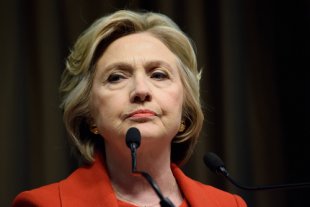
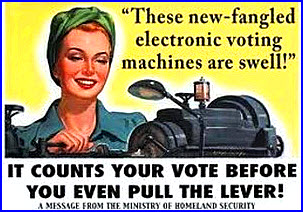
 here are two things we all need to know about the upcoming 2016 election:
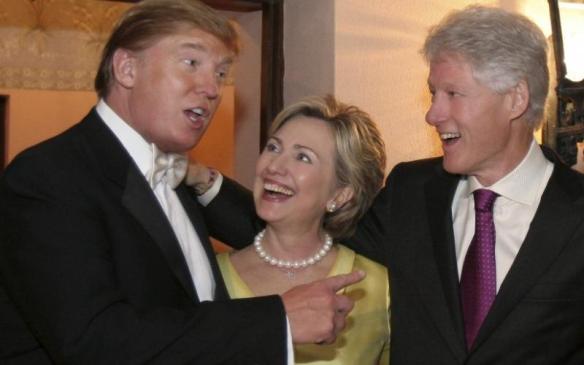

 After the Crash