Podcast Roundup

3/11: Srini Rao has an interesting conversation with animal rights activist Peter Young covering community activism, communication, survival tips, and his former life as a fugitive on the “Unmistakable Creative” podcast.

https://sitebuilderio.s3.amazonaws.com/unmistakablecreative/audios/012b5fac-3695-42b3-9a2d-ffd7d4d7f213/lessons-in-communication-from-a-fugitive-peter-young.mp3

3/11: On the latest “Guns and Butter”, Bonnie Faulkner interviews John Whitehead of  the Rutherford Institute. They discuss aspects of  “Police State America” including the Corporate State, American Legislative Exchange Council (ALEC), Offices of Inspector General (OIG), SWAT Teams, No-Knock Raids, the Schoolhouse to Jailhouse Track, the New York Prototype, MRAPs, Operation Vigilant Eagle, Atlas Four Androids, TSA and VIPR Teams, the Google/NSA connection and Fusion Centers.

http://archives.kpfa.org/data/20150311-Wed1300.mp3

3/11: Host Dave Lindorff discusses the recent coup plan disrupted by police in Venezuela with veteran journalist Alfredo Lopez — a story largely blacked out or mocked as bogus by the US corporate media despite solid evidence of a plot, and of US involvement in that plot on “This Can’t Be Happening”. Lindorff and Lopez, who are colleagues on the news site thiscantbehappening.net, also talk about why President Obama on Tuesday declared Venezuela an “unusual and extraordinary national security threat” to the US, and what that declaration means to Venezuela and Latin America.

http://s36.podbean.com/pb/0c1337348a3a2a92b0bdb73308121756/5503328c/data1/blogs18/661545/uploads/ThisCantBeHappening_031115.mp3

3/12: On the first of their recent “Media Roots” podcasts, Robbie and Abby Martin discuss the ending of the RT program “Breaking the Set”, the establishment’s Cold War resurrection, and the splintering of the left over Obama’s military policies. The second program features an interview with Mark Weisbrot, co-director of the Center for Economic and Policy Research, on current U.S. government actions against Venezuela.

Corporate Monopoly Themes in ROBOCOP

index

An interesting analysis of the corporate themes in Paul Verhoeven’s Robocop (note: original video was removed by author but will be available on Rob Ager films & articles volume 7 at his site. This shorter version is still up at the moment):

The creator of the video, Rob Ager, has a number of equally intriguing film dissections on his YouTube channel and website for other genre classics such as 2001: A Space Odyssey, A Clockwork Orange, The Shining, The Matrix, Starship Troopers and Alien.

Bonus Clip: Ager’s first impressions of Mad Max 4: Fury Road

The Soft Drink That Conquered the World

coca_cola_coke_india

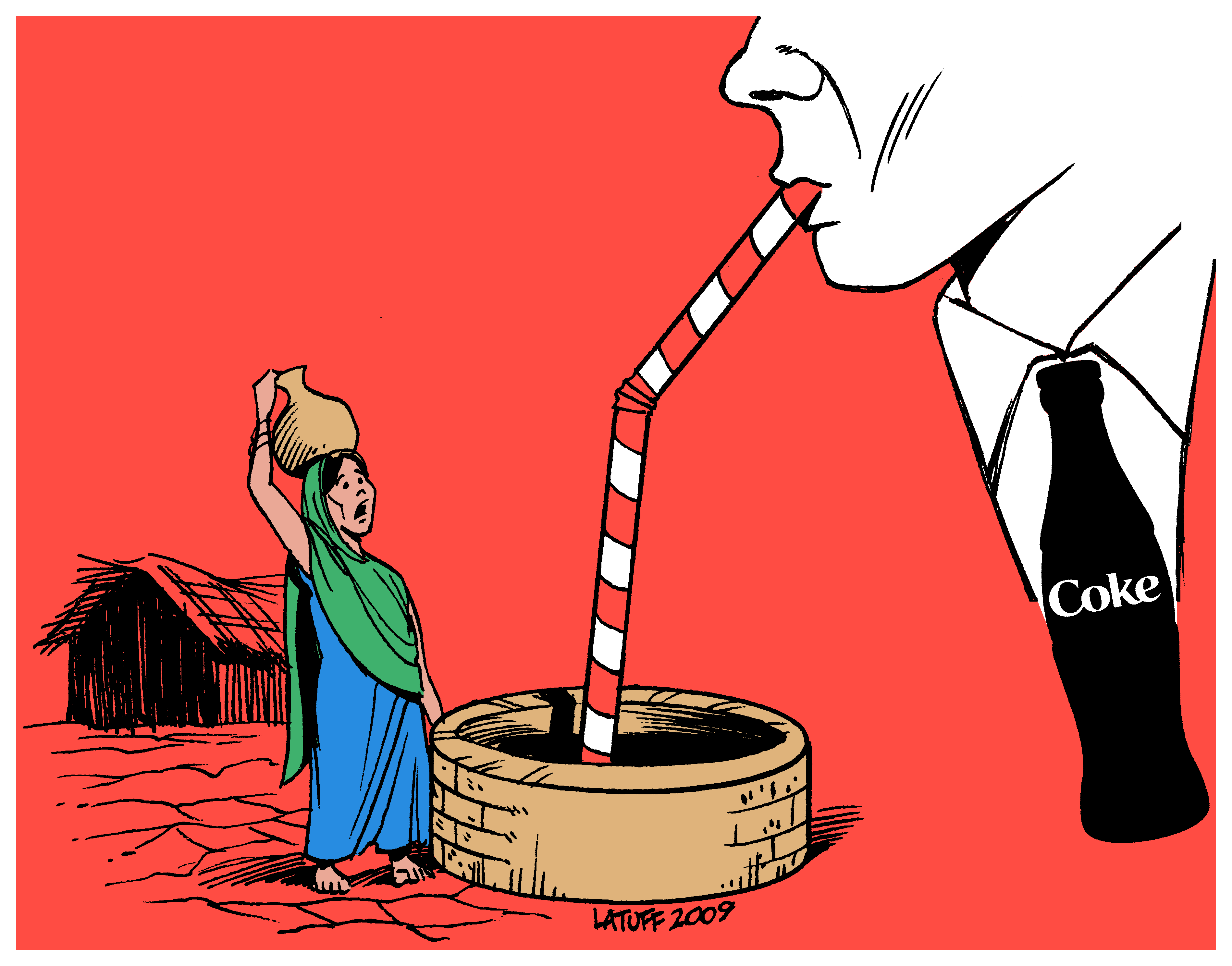
Environmental historian Bartow J. Elmore discusses the global consequences of ‘Coca-Cola capitalism.’

By Elaina Koros

Source: USnews.com

From its origins as a patent medicine formulated in a small southern pharmacy, Coca-Cola has grown into a multibillion-dollar company. Headquartered in Atlanta, it possesses one of the world’s most valuable brands. Yet despite its exponential growth over the decades, Coca-Cola has kept its operations streamlined by relying on partnerships with commercial titans like Monsanto and integrating its manufacturing plants with public water and recycling infrastructures, explains Bartow J. Elmore, an environmental historian at the University of Alabama. In his new book, “Citizen Coke: The Making of Coca-Cola Capitalism,” he argues that this business model, though widespread and successful, has global environmental consequences in the modern age. Elmore recently spoke with U.S. News about the sustainability and applicability of what he calls “Coca-Cola capitalism.” Excerpts:

What inspired you to write this book?

I grew up in Atlanta, born and raised on the syrupy Coke soft drink. Seeing this product that was from my hometown end up everywhere, I wondered how [something] that had started in the Jim Crow South in 1886 ended up all over the world. As someone who was interested in environmental history, I was particularly interested in answering that question from a materials standpoint. Beyond the advertising and marketing, how did the company acquire the natural resources it needed to put its product on retail shelves around the globe?

What is Coca-Cola’s business model?

I call the model Coca-Cola capitalism. I’d say what makes Coke great is not so much what Coke does, but what it doesn’t do. Coca-Cola embeds itself in systems of production and distribution that it doesn’t own. Coke didn’t own sugar plantations. It didn’t own caffeine processing plants. It didn’t own bottling businesses for most of its history. [Instead, it] relied on a host of independent businesses to supply its needs and to distribute its products.

How are Coke operations impacting the environment globally?

Coke is expanding into increasingly arid regions of the developing world, and that’s in part because Coke is going to places where there aren’t the same kinds of health concerns that there are in the United States. Unfortunately, that means they’re extracting water from places that don’t have a great deal of water to spare.

I think of the human body as part of the environment, and I end the book by explaining how the stomach has become a kind of silo, a storage unit for Coke’s excess. In a nation where more than 30 percent of people are obese today, this is a hot issue for Coca-Cola.

How has Coke’s expansion impacted other companies and the public?

One great example is Monsanto. You wouldn’t have a chemical company like Monsanto without Coke, because Coke in the early 20th century bought all of Monsanto’s main product, which was saccharin, an artificial sweetener. If you go to the Monsanto website, they say that in 1903 and 1905, without Coca-Cola’s massive purchases of their saccharin, they would not exist. I think that’s true of a lot of companies. It’s amazing how many businesses Coke has kept alive through its huge purchasing contracts.

When I say that Coca-Cola capitalism involves partnering with people, that often means the government. I think two good examples of this are public water supplies and recycling. Coke, throughout its history, depended on bottlers who tapped into the public water supply to access 80 percent of what they sold to consumers, which was water, 80 percent of the finished product. In the early 20th century, cities and even the federal government participated in building this infrastructure, spending billions of dollars to bring fresh, clean water to cities and increasingly to rural areas of the country. So, what made Coke expand so rapidly was that it was able to tap into that government infrastructure.

The other example would be recycling. If you look at the history, you see that Coca-Cola and its industry partners lobbied heavily in Congress to try and get curbside recycling to be the solution to the nation’s litter problem. Why not have you and I, the regular taxpayer, pay for that infrastructure and, in a way, conveniently bring the company’s packaging back to the company?

How would you curb some of the negative effects of Coke’s operations and products?

One thing is to make companies pay for the pollution they generate. If we don’t like litter, then we should force corporations to realize that by putting a price tag on it. I would say the same thing goes for obesity. If we think that these products contribute to really expensive health costs like obesity, then let’s make these corporations change. They’ll find ways to respond to the pressures that people put on them.

How the War on Drugs Advances Transnational Capitalism

dwc-cvr-small_72web

How US drug policy in the Americas is a pretext for extending militarization and global capitalism south of the border.

By Mark Karlin

Source: Alternet

Dawn Paley, a Canadian journalist, offers a transformative view of the US war on drugs in the Western Hemisphere (with the exclusion of Canada as a targeted nation because it is a neoliberal partner of the United States in exploitation). Her just-released book,  Drug War Capitalism, is a sweeping, exhaustively detailed analysis that reveals the insidious actual goals of the US-led and funded militarization south of the border in the name of destroying drug cartels. As Paley writes, “This war is about control over territory and society [and market share, cheap labor, mineral rights and profits], much more so than it is about cocaine or marijuana.”

The following is the Truthout interview with Dawn Paley about  Drug War Capitalism:

Mark Karlin: You state the so-called war on drugs is really a war on people. This is a key point in your exhaustively documented and cogently threaded book. Can you expand on that – and of course you are talking about a certain class and background of person: the indigenous and the poor south of the US Border?

Dawn Paley: There is excellent work being done in the US examining and resisting the impacts of the drug war, specifically when it comes to the mass incarceration of young people from communities of color on that pretext.  Drug War Capitalism looks at how the drug war is deployed south of the US border, where the key mechanism for social control is the use of terror against the people/ el pueblo/los pueblos. Some activists and writers use words like social cleansing to describe the impacts of drug war militarization and paramilitarization, and how both primarily target poor young men in urban and rural environments. The case of Ayotzinapa, with the disappearance of 43 students and the murder of three others (one of the disappeared students is now confirmed to have been murdered) by municipal police in Iguala, Guerrero, is just the latest example of how often the victims of the drug war come from marginalized – and often well organized – communities and groups.

In the US, many people have been turned into frightened puppets who support any action in the name of the war on terrorism, even when such military and police action has to do with the goal of expanding transnational business opportunities. How is this analogous to the use of the war on drugs as a cover for US military intervention in Mexico, Central America, Colombia and the rest of most of the Western Hemisphere, with the exclusion of Canada? After all, doesn’t the US benefit by having a state of violence among the poor and socially marginal people keep them from considering populist political rebellion in these nations?

I’d like to approach this question a little differently, and ask instead why it is that the hundreds of thousands of people who mobilized throughout the United States against the unjust war in Iraq were able to make the connection between US invasions and oil extraction, and why it has been so difficult for folks to mobilize and make the same connections to resource extraction and capitalism in the case of the US-backed war on drugs in Colombia, Mexico and elsewhere.

Once we can start to make the connections between US-backed war agendas in the form of Plan Colombia or the Merida Initiative and the expansion of capitalism in Mexico and Colombia, a lot of things begin to make sense. In the immediate term, the militarization and the paramilitarization stemming from these plans to sow terror and strengthen the state repressive apparatus, which, as we are well aware, works to protect transnational capital, like mining companies or oil companies.

Over the longer term, the structural reforms that go hand in hand with Plan Colombia and the Merida Initiative deepen neoliberalism. With the privatization of Petroleos Mexicanos (Pemex), Mexico’s state oil company, for example, 70 percent of Mexico’s federal budget is at stake, something I argue could lead to a previously unknown level of austerity in Mexico. Already financially starved sectors like health and public education could be impacted, as could existing subsidies for transportation, basic goods and otherwise.

As the privatization of Pemex kicks in and the effects begin to be felt over the next decade, should people rise up in protest, the fact that police and military forces as well as nominally non-state armed actors were strengthened through the Merida Initiative will certainly come in handy in order to control dissent.

You bring up how narcotrafficking money laundering has been profitable for banks and even that the cash liquidity of such funds helped some large US banks survive the 2008 implosion of the economy. In addition, drug cartels invest a lot of their money – 85 percent of which you note is generated in the US, in the cocaine market – in legitimate businesses. Aren’t narcotraffickers often the shady cousins of neoliberal capitalists, who collaborate for mutual benefit at times?

I suppose you could say that, yes. The book doesn’t focus on the role of banks, as this is one of the areas of the drug war that has been extensively covered in the mainstream media. However, There’s a tendency towards showing images of Mexican traffickers with stacks of US dollars, but their proceeds represent a fraction of the overall cash generated because of prohibition. I think it’s important to point out that when we talk about the wealth generated by the drug trade it is essential to remember that the vast majority of that cash is generated in the United States and helps prop up the US economy in various ways.

Perhaps the linchpin to your investigative reporting is that the war on drugs is a cover, in many ways, for the expropriation of land for excavation and fossil fuel companies – as well as the creation of secure manufacturing, assembly and marketing environments for other international corporations. I know that specific alliances of corruption are often difficult to ascertain when it comes to the so-called war on drugs, but how do paramilitary groups (sometimes drug cartels), the military and the police play a role in securing land and providing security for transnational corporations. As you point out, large corporations and their employees are rarely victims of violence in the nations that have been targeted for drug war capitalism.

Colombia provides us with the strongest examples of this: paramilitaries hired to kill union organizers, or companies like BP and Drummond using paramilitaries to ensure they had access to lands for mining and pipeline building. These cases are extensively documented by court cases which have led to settlements for victims.

In a place like Ciudad Juarez we see how, for example, it is workers and their families who are terrorized by the drug war, and especially by state forces, while police go to great extents to protect the US-based owners of manufacturing plants when they visit the city. In the book I document how communal landowners dedicated to protecting their land from resource extraction are threatened by Federal Police deployed in the name of fighting the war on drugs, or how they are murdered by so called cartel hitmen, who I consider to be more akin to paramilitaries. And this is just the beginning. Unfortunately these trends are likely to become more obvious in Mexico, as they did in Colombia, as time goes on.

What role did NAFTA and other trade agreements play in having laid the groundwork for killing, kidnapping and displacing people to seize land for excavation and fossil fuel development? As a further note, you are a Canadian, and Canadian mining companies appear to play a large role in land seizures, hiring of enforcers (in many cases assassins and torturers), and cooperation with corrupt governments, police and even drug cartels. Is it safe to assume that this is with the full support of the Harper government?

Well, in Colombia it was actually Plan Colombia that paved the way for the Canada-Colombia Free Trade Agreement and the US-Colombia Free Trade Agreement. They didn’t advertise it at the time, but following Plan Colombia it was made clear by officials from both the US and Colombia that though the flow of drugs wasn’t reduced, Plan Colombia was a success because it created the conditions for the implementation of these new free trade agreements.

In some ways NAFTA, which became active in January 1994, happened too soon. Let me explain: While NAFTA went a long way towards destroying local economies especially in rural areas and impoverishing small farmers, by 2008 when the Merida Initiative kicked off, it left much to be desired in terms of how open the Mexican economy actually was to transnational capital. At that time, the Mexican government continued to be the full owner of the Federal Electricity Commission and the national oil company, Pemex.

Communal landowners were refusing to enter into privatization schemes made possible when Article 27 of the Mexican Constitution was changed prior to the signing of NAFTA in 1992. Elite Mexican families took control over certain sectors of the economy that were privatized, as NAFTA era privatizations did not include regulations that meant that US bidders would be considered on equal footing with national bidders. All of these elements, among others, meant that Mexico was ripe for a new round of neoliberalism and austerity that would open new areas for investment. That’s part of what the Merida Initiative has provided a platform to do.

NAFTA was a key ingredient in opening up Mexico’s mining sector. Large scale, modern mining, especially gold mining, provides us with a bit of a preview of the kinds of conflicts that could erupt if widespread private sector oil and gas exploration and exploitation goes ahead in Mexico. Gold mining in Mexico is dominated by companies based in Canada, which gives them a litany of financial as well as diplomatic and legal supports for their activities. In the book, I document cases where these Canadian mining companies take advantage of the conditions created by the Merida Initiative in order to push their projects forward.

It appears ironic that the free trade treaties squeeze out small business people and entrepreneurs, benefiting almost exclusively the large multinational corporations. After all, the promoters of the treaties claim that they stimulate the business environment for everyone. You provide evidence, however, on why that is just a sales point for free trade agreements, but hardly the reality.

Free trade agreements decimate local economies and small businesses. They allowed the US and other nations to dump their subsidized agricultural products, like corn, into a diverse national market that included many small holders, as in Mexico, who operate with very few subsidies. There are social classes that benefit greatly from these kinds of agreements, but they are the minority, in the US as well as in target countries like Mexico. Rendering small farms and family businesses unprofitable is more than an economic issue: It is a root cause of forced migration, of displacement, and in the destruction of social and community fabric. This, in turn, is beneficial in terms of increasing state and corporate control over peoples’ lives and lands.

You provide a good deal of clarity on how Plan Colombia was the model for the Mérida Initiative in Mexico. What was the real priority of Plan Colombia in terms of creating a nation that is structured to provide an accommodating and secure environment for transnational businesses?

I believe the real priority of Plan Colombia was just that: improving the conditions for investment throughout the country. Officially this takes a couple of forms, including regulatory and judicial reforms and the extension of police forces and soldiers throughout the national territory. Off the books, it is known that paramilitary groups work closely with police and soldiers throughout the country, and that this tends towards benefiting the activities of transnational companies.

One of the implications of the US working to graft its legal model on nations south of the border is that it appears likely to increase prison populations. Given that the United States has the highest percentage of its population incarcerated, that is an ominous portent, isn’t it?

It is indeed. The Merida Initiative also included funds for building and expanding Mexico’s prison facilities and training Mexican prison guards in the ways of US jailers.

That brings us back to the first question. Who is responsible for the social cleansing that is a significant component of the violence associated with the alleged war on drugs? Who gains from killing “disposable people”?

There are cases where we can talk about individuals responsible for killings, but the approach I take in the book is to try and present what I argue are structural elements which allow this kind of killing and terror to take place. Certainly US-funded militarization is a key component. There’s the media and the government, which blame victims for their own deaths by linking them with drug trafficking. Then there is the impunity, the fact that those responsible for criminal acts not only get away with their crimes, but that various levels of government are actively involved and thus also cover their tracks. That impunity exists at a national level in Mexico and elsewhere, but it is allowed to thrive because it is backed by the US State Department, which boasts that it has had closer relations with the Mexican government since the beginning of the Merida Initiative than at any previous juncture.

One of your key points is that the US State Department basically concedes that the flow of drugs into the US will never really significantly diminish. However, as you point out, by constantly militarizing nations south of the border, the US is able to – through its Northern and Southern Commands – gain large footholds in the militaries, police, paramilitaries (who not infrequently are at the service of global corporations) and even drug cartels that can cooperate to favor US financial interests. In that sense, we are really talking about drug war capitalism, aren’t we?

We are! I hope folks will be inspired to pick up  Drug War Capitalism and explore these issues. In the conclusion, I write that I consider the book to be an early attempt to articulate and make visible connections between the war on drugs and the expansion of capital. Sadly, as recent events in Ayotzinapa, Guerrero and Tlatlaya, Mexico State, have shown, it is likely to become increasingly obvious that the drug war is in fact a war on the people, waged in large part by US-backed state forces.

Zombie Apocalypse and the Politics of Artificial Scarcity

By Colin Jenkins

Source: The Hampton Institute

cdc_zombie_attacksDystopian narratives have long been an alluring and thought-provoking form of entertainment, especially for those who take an interest in studying social and political structures. From classics like Nineteen Eighty-Four and Brave New World to the current hit, The Hunger Games, these stories play on our fears while simultaneously serving as warning signs for the future.

Their attractiveness within American society is not surprising. Our lives are driven by fear. Fear leads us to spend and consume; fear leads us to withdraw from our communities; and fear leads us to apathy regarding our own social and political processes. This fear is conditioned as much as it is natural. The ruling-class handbook, Machiavelli’s The Prince, made it clear: “Since love and fear can hardly exist together, if we must choose between them, it is far safer to be feared than loved.”

The idea of apocalypse is a central tenet of human society. We’ve been taught about Armageddon, Kali Yuga, Judgement Day, Yawm ad-Dīn, nuclear holocaust, the end times, the four horsemen, and the Sermon of the Seven Suns. Hierarchical societal arrangements leave us feeling powerless. Exploitative systems like capitalism leave us feeling hopeless. And the widespread deployment of fear ultimately keeps us in our place, and out of the business of those who own our worlds.

The last half-century has brought us the zombie apocalypse – a fictional world where the human race has largely been transformed into a brainless, subhuman hoard of flesh-eaters, with only a few random survivors left to carve out any semblance of life they can find in a barren landscape. The emergence and immense popularity of the TV show The Walking Dead is the latest, and perhaps most influential, piece in a long line of narratives centered within themes of survival, human interaction, and scarcity.
Human Nature and Interaction

Behind all political battles, social critiques, and theoretical inquiries lies the most fundamental question: when left to our own accord, how will we interact with one another? How one answers this question usually goes a long way to how one perceives the world, and how issues are viewed and opinions are formed. To our dismay, potential answers are typically presented in dualities. Are we good or evil? Competitive or cooperative? Generous or greedy? Violent or peaceful?

A common theme among religion has been that human beings are “born into sin” and heavily influenced by “evil forces” to do harmful things. One who embraces this theme will tend to have less faith in humanity than one who does not. For, if we really are engaging in a daily struggle to resist the powers of evil, it is reasonable to assume that evil will take hold of many. How can we trust anyone who, at a moment’s notice, could potentially lose the ability to act on their own conscience? The common theme of our dominant economic system – capitalism – is that human beings are inherently competitive and self-centered. When combined, it is easy to see how such ideologies may create intensely authoritative and hierarchical systems. After all, people who are influenced by strong and evil metaphysical forces while also being drawn toward callous, self-interest certainly cannot be trusted with free will.

This lesson is drilled deep into our psyches with each episode of The Walking Dead, where the potential threat of flesh-eating zombie hoards become an afterthought to the clear and present danger of “evil” humans who are out to get one another. Whether it’s a sadistic governor charming an entire town with violent gladiator events, an outlaw gang with the obligatory pedophile, or a pack of hipster cannibals salivating at the thought of eating their next visitor, the intended theme is clear – human beings are not capable of co-existing, even in a world where they rarely interact.

But is this idea accurate? Are we really drawn toward conflict? Must we compete with one another to survive? Is it appropriate to apply Darwin’s evolutionary theories in a social sense where the “fit” are meant to gain wealth and power over the “weak”? Or are we, as Peter Kropotkin theorized in his classic Mutual Aid, more inclined to mimic most other species on Earth, which have been observed over the course of centuries to exhibit “Mutual Aid and Mutual Support carried on to an extent which made me suspect in it a feature of the greatest importance for the maintenance of life, the preservation of each species, and its further evolution?”

There is ample evidence that we are drawn to cooperation. “Caring about others is part of our mammalian heritage, and humans take this ability to a high level,” explains neuroscientist Sandra Aamodt. “Helping other people seems to be our default approach, in the sense that we’re more likely to do it when we don’t have time to think a situation through before acting. After a conflict, we and other primates-including our famously aggressive relatives, the chimpanzees-have many ways to reconcile and repair relationships.” Studies have shown that in the first year of life, infants exhibit empathy toward others in distress. Evolutionary Anthropologist Michael Tomasello has put “the concept of cooperation as an evolutionary imperative to the test with very young children, to see if it holds for our nature and not just our nurture. Drop something in front of a two-year-old, he finds, and she is likely to pick it up for you. This is not just learned behavior, he argues. Young children are naturally cooperative.”

So, if we are truly inclined to cooperate with one another, why is there so much division and turmoil in the world? The answer to this question may be found by assessing not only the mechanisms of capitalism, but more importantly in the creation of artificial scarcity as a means to maintain hierarchies.
Capitalism and Artificial Scarcity

It is no secret that capitalism thrives off exploitation. It needs a large majority of people to be completely reliant on their labor power. It needs private property to be accessible to only a few, so that they may utilize it as a social relationship where the rented majority can labor and create value. It needs capital to be accessible to only a few, so that they may regenerate and reinvest said capital in a perpetual manner. And it needs a considerable population of the impoverished and unemployed – “a reserve army of labor,” as Marx put it – in order to create a “demand” for labor and thus make such exploitative positions “competitive” to those who need to partake in them to merely survive. It needs these things in order to stay intact – something that is desirable to the 85 richest people in the world who own more than half of the world’s entire population (3.6 billion people).

But wealth accumulation through alienation and exploitation is not enough in itself. The system also needs to create scarcity where it does not already exist. Even Marx admitted that capitalism has given us the productive capacity to provide all that is needed for the global population. In other words, capitalism has proven that scarcity does not exist. And, over the years, technology has confirmed this. But, in order for capitalism to survive, scarcity must exist, even if through artificial means. This is a necessary component on multiple fronts, including the pricing of commodities, the enhancement of wealth, and the need to inject a high degree of competition among people (who are naturally inclined to cooperation).

Since capitalism is based in the buying and selling of commodities, its lifeblood is production. And since production in a capitalist system is not based on need, but rather on demand, it has the tendency to produce more than it can sell. This is called overproduction. Michael Roberts explains:

Overproduction is when capitalists produce too much compared to the demand for things or services. Suddenly capitalists build up stocks of things they cannot sell, they have factories with too much capacity compared to demand and they have too many workers than they need. So they close down plant, slash the workforce and even just liquidate the whole business. That is a capitalist crisis.

When overproduction occurs, it must be addressed. There are multiple ways to do this. Marx addressed three options: “On the one hand by enforced destruction of a mass of productive forces; on the other, by the conquest of new markets, and by the more thorough exploitation of the old ones.” Another is through the destruction of excess capital and commodities. Whichever measure is taken, it is paramount that the economy must emerge from a starting point that is different from the ending point where the crisis began. This is accomplished through creating scarcity, whether in regards to labor, production capacity, or commodities and basic needs.

Maintaining scarcity is also necessary for wealth enhancement. It is not enough that accumulation flows to a very small section of the population, but more so that a considerable portion of the population is faced with the inherent struggles related to inaccessibility. For example, if millions of people are unable to access basic needs such as food, clothing, shelter, and healthcare, the commodification of those needs becomes all the more effective. On the flip side, the mere presence of accessibility – or wealth – which is enjoyed by the elite becomes all the more valuable because it is highly sought after.

In this sense, it is not the accumulation of personal wealth that creates advantageous positions on the socioeconomic ladder; it’s the impoverishment of the majority. Allowing human beings access to basic necessities would essentially destroy the allure (and thus, power) of wealth and the coercive nature of forced participation. This effect is maintained through artificial scarcity – the coordinated withholding of basic needs from the majority. These measures also seek to create a predatory landscape – something akin to a post-apocalyptic, zombie-filled world where manufactured scarcity pits poor against poor and worker against worker, all the while pulling attention away from the zombie threat.
Control through Commodification

A crucial part of this process is commodification – the “transformation of goods and services, as well as ideas or other entities that normally may not be considered goods, into commodities” that can be bought, sold, used and discarded. The most important transformation is that of the working-class majority who, without the means to sustain on their own, are left with a choice between (1) laboring to create wealth for a small minority and accepting whatever “wages” are provided, or (2) starving.

In The Socioeconomic Guardians of Scarcity, Philip Richlin tells us that:

“When society deprives any community or individual of the necessities of life, there is a form of violence happening. When society commodifies the bare necessities of life, they are commodifying human beings, whose labor can be bought and sold. Underneath the pseudo-philosophical rationalizations for capitalism is a defense of wage slavery. For, if your labor is for sale, then you are for sale.”

We are for sale, and we sell ourselves everyday – in the hopes of acquiring a wage that allows us to eat, sleep, and feed our families. In the United States, the 46 million people living in poverty haven’t been so lucky. The 2.5 million who have defaulted on their student loans have been discarded. The 49 million who suffer from food insecurity have lost hope. The 3.5 million homeless are mocked by 18.6 million vacant homes. And the 22 million who are unemployed or underemployed have been deemed “unfit commodities” and relegated to the reserve army of labor.

The control aspect of the commodification of labor comes in its dehumanizing effect – an effect that was commonly recognized among 18th and 19th century thinkers. One of those thinkers, Wilhelm Von Humboldt, when referring to the role of a wage laborer, explained “as whatever does not spring from a man’s free choice, or is only the result of instruction and guidance, does not enter into his very nature; he does not perform it with truly human energies, but merely with mechanical exactness, suggesting that “we may admire what he (the laborer) does, but we despise what he is,” because he is essentially not human.

The worker, in her or his role in the capital-labor relationship, exists in a position of constant degeneration. This is especially true with the onset of mass production lines and the division of labor – both of which are inevitable elements within this system. “As the division of labor increases, labor is simplified,” Marx tells us. “The special skill of the worker becomes worthless. He becomes transformed into a simple, monotonous productive force that does not have to use intense bodily or intellectual faculties. His labor becomes a labor that anyone can perform.” As automation and technology progress, such specialized task-mastering even seeps into what was once considered “skilled” labor, thus broadening its reach.

In this role, workers are firmly placed into positions of control within a highly authoritative and hierarchical system.
A World beyond Profit

Dystopian narratives are no longer fiction. From birth, we are corralled into a system that scoffs at free will, stymies our creative and productive capacities, and leaves us little room to carve our own paths. The constructs directed from above are designed to strip us of our inclination to care and cooperate, and make us accept the need to step over one another to get ahead. This is not our nature. Whether we’re talking about Kropotkin’s studies in “the wild” or Tomasello’s experience with children, observable evidence tells us we’ve been duped.

Another world is not just possible; it is inevitable if we are to exist in the long-term. In Post-Scarcity Anarchism, Murray Bookchin offers a glimpse into this world not constructed on labor, profit, and artificial scarcity:

“It is easy to foresee a time, by no means remote, when a rationally organized economy could automatically manufacture small “packaged” factories without human labor; parts could be produced with so little effort that most maintenance tasks would be reduced to the simple act of removing a defective unit from a machine and replacing it by another-a job no more difficult than pulling out and putting in a tray. Machines would make and repair most of the machines required to maintain such a highly industrialized economy. Such a technology, oriented entirely toward human needs and freed from all consideration of profit and loss, would eliminate the pain of want and toil-the penalty, inflicted in the form of denial, suffering and inhumanity, exacted by a society based on scarcity and labor.”

The barren landscape for which we’ve been placed has a future beyond Hershel’s overrun farm, the confines of a prison, the Governor’s creepy town of Woodbury, and the trap known as Terminus. It has a future beyond the artificial constructs of capitalism and hierarchy. Human nature is talking to us… and we’re starting to listen.


What They’re Not Telling You About Monsanto’s Role in Ukraine

MOnsanto-Blackwater

Will This be a Takeover of Ukraine’s Farmland?

By Christina Sarich

Source: Natural Society

The World Bank and International Monetary Fund (IMF) is helping biotech run the latest war in Ukraine. Make no mistake that what is happening in the Ukraine now is deeply tied to the interests of Monsanto, Dow, Bayer, and other big players in the poison food game.

Monsanto has an office in Ukraine. While this does not shout ‘culpability’ from every corner, it is no different than the US military’s habit to place bases in places that they want to gain political control. The opening of this office coincided with land grabs with loans from the IMF and World Bank to one of the world’s most hated corporations – all in support of their biotech takeover.

Previously, there was a ban on private sector land ownership in the country – but it was lifted ‘just in time’ for Monsanto to have its way with the Ukraine.

In fact, a bit of political maneuvering by the IMF gave the Ukraine a $17 billion loan – but only if they would open up to biotech farming and the selling of Monsanto’s poison crops and chemicals – destroying a farmland that is one of the most pristine in all of Europe. Farm equipment dealer, Deere, along with seed producers Dupont and Monsanto, will have a heyday.

In the guise of ‘aid,’ a claim has been made on Ukraine’s vast agricultural riches. It is the world’s third largest exporter of corn and fifth largest exporter of wheat. Ukraine has deep, rich, black soil that can grow almost anything, and its ability to produce high volumes of GM grain is what made biotech come rushing to take it over.

As reported by The Ecologist, according to the Oakland Institute:

“Whereas Ukraine does not allow the use of genetically modified organisms (GMOs) in agriculture, Article 404 of the EU agreement, which relates to agriculture, includes a clause that has generally gone unnoticed: it indicates, among other things, that both parties will cooperate to extend the use of biotechnologies.

There is no doubt that this provision meets the expectations of the agribusiness industry. As observed by Michael Cox, research director at the investment bank Piper Jaffray, ‘Ukraine and, to a wider extent, Eastern Europe, are among the most promising growth markets for farm-equipment giant Deere, as well as seed producers Monsanto and DuPont’.”

The nation WAS Europe’s breadbasket – and now in an act of bio-warfare, it will become the wasteland that many US farmlands have become due to copious amounts of herbicide spraying, the depletion of soil, and the overall disruption of a perfect ecosystem.

The aim of US government entities is to support the takeover of Ukraine for biotech interests (among other strategies involving the prop-up of a failing cabalistic banking system that Russia has also refused with its new alignment with BRICS and its own payment system called SWIFT). This is similar to biotech’s desired takeover of Hawaiian islands and land in Africa.

The Ukraine war has many angles that haven’t been exposed to the general public – and you can bet that biotech has their hands in the proverbial corn pie.


The Pro-GMO Lobby: Anti-science and a Politically Motivated Agenda

gmo_crops_genfood_735_350-400x190

By Colin Todhunter

Source: RINF

The pro-GMO lobby claims that there is a scientific consensus on the safety of GM food and therefore the GMO debate is over. It claims that GMOs guarantee higher yields and less pesticide/herbicide use. The claim is also made that GM agriculture has no adverse impact on soil, the nutritional value and health of crops or biodiversity. The industry and its supporters claim that the ‘scientific community’ believes GMOs can only have positive effects and point to research to back this up.

These claims are bogus. Many analyses have highlighted the inadequacies of the research cited by the pro-GMO lobby, not least in terms of methodology, the glossing over of the significance of certain findings and conclusions that do not necessarily fit the evidence provided [1-3]. Moreover, numerous studies demonstrate the often worrying physiological abnormalities derived from ingesting GMOs as well as poor/falling yields, increased pesticide use, lower nutritional values and degraded soil and plant health (etc) associated with GM agriculture [4].

When certain pro-GMO figures proclaim that the debate over GMOs is over, their proclamations are based on propaganda, not science. They say that people who challenge their views are anti-science, politically motivated and are mounting a ‘campaign’ against the industry. Like all good propagandists, this is doublespeak.

Given the existing scientific evidence that challenges the claims of the pro-GMO lobby, a rational and reasonable response would involve applying a precautionary approach to GMOs [5] because there is clearly no scientific consensus. Yet public safety concerns are regarded by the GMO lobby as a barrier to bringing its products to the commercial market and are to be sidelined by all means possible [6-9]. To justify this, it promotes the falsehood that GMOs are ‘substantially equivalent’ to non-GMO products, which is certainly not the case [10].

It is therefore with good reason that concerned people have organised to ensure the precautionary principle is adopted or strengthened and to challenge the industry and officials that are driving the GMO agenda.

It is the GMO sector itself that is politically motivated, anti-science and mounting a campaign in favour of its products. Its faulty science has been challenged, and as a result it is unable to produce the evidence that would convince us that GMOs are safe and provide the benefits claimed. Little wonder the industry hides behind the notion of ‘commercial confidentiality’ to maintain a veil of secrecy over its own research that regulators too often accept at face value [11].

Having failed to win the day with science, it resorts to placing restrictions on independent research into its products, censors findings, intimidates, smears, bribes, uses fakery and has successfully used its wealth and power to hijack regulatory bodies and co-opt bodies and officials who propagate lies on its behalf [12-15]. Yet it is those who highlight and challenge such tactics who are attacked for attempting to derail an industry which likes to portray itself as working for the public interest.

One of the main PR weapons used by the sector is that anti-GMO campaigners are taking food from the mouths of the hungry [16]. Let’s get one thing clear: GMOs are not the answer to feeding the world [17-22] and that type of emotional blackmail will only ever work on the ignorant, misinformed and those who believe the industry’s propaganda.

There is enough scientific evidence to warrant serious concern over GMOs. After all, evidence is mounting that some of these companies may have already been poisoning us for decades with their cocktail of agricultural inputs [23,24].

However, it is easy for the layperson to become confused by an endless parade of studies claiming to back up one or other side of the debate. For that reason, sometimes they have to look beyond science to sharpen their focus. They have to look at motives. They must ask who is controlling the GMO agenda? For what purpose? What is the track record of those involved? Should we ever in a million years trust certain players given their criminal record [25]?

Commercial concerns are driven by profit. Capitalism compels companies to capture and maintain market shares. However, cartels, price rigging, threats, cronyism and having politicians in your back pocket are a much better guarantee to seize and dominate markets than any economic model taught in textbooks and based on the ‘free’ market being determined by supply and demand. Such economic theory is the smokescreen that modern day neoliberalism tries (but fails) to hide behind [26]. As far as the GMO issue is concerned, however, there is much more to it than the need to make a fast buck.

There is a reason why well-known proponents (Rockefeller, Gates) of depopulation and eugenics are involved with the GMO sector; there is a reason why these very people have funded a giant seed bank on an island in the Arctic [27,28]. There is a sinister side to this industry, which points to a heady mix of US geopolitical hegemony based on the global control of agriculture, the hijack of the world’s seeds and food supply and depopulation [29].

If the science around GMOs is confusing to some, then ambiguity is what powerful corporations want: the tobacco industry was happy for the waters to be muddied for decades over the link to lung cancer. But if ambiguity over the efficacy of GMOs does indeed reign, the underlying politics is much clearer to grasp.

colintodhunter.com 

Notes

1] http://gmwatch.org/index.php/news/archive/2014/15669-why-jon-entine-s-trillion-meal-study-won-t-save-us-from-gmo-dangers

2] http://gmwatch.org/index.php/news/archive/2014/15618-biology-fortified-misleads-the-public-on-gmo-safety

3] http://rightbiotech.tumblr.com/post/103665842150/correlation-is-not-causation

4] http://gmomythsandtruths.earthopensource.org/

5] http://www.theguardian.com/science/political-science/2013/jul/08/precautionary-principle-science-policy

6] http://corporateeurope.org/pressreleases/2014/07/agribusiness-biggest-lobbyist-eu-us-trade-deal-new-research-reveals

7] http://corporateeurope.org/trade/2013/05/open-door-gmos-take-action-eu-us-free-trade-agreement

8] http://www.gmfreeze.org/actions/42/

9] http://corporateeurope.org/food-and-agriculture/2014/05/biotech-lobbys-fingerprints-over-new-eu-proposal-allow-national-gmo

10] http://www.i-sis.org.uk/Substantial_Non-Equivalence.php

11] http://gmwatch.org/index.php/news/archive/2014/15519-the-glyphosate-toxicity-studies-you-re-not-allowed-to-see

12]http://indiatoday.intoday.in/story/Monsanto+’faked’+data+for+approvals+claims+its+ex-chief/1/83093.html

13] http://www.globalresearch.ca/gmo-scandal-the-long-term-effects-of-genetically-modified-food-on-humans/14570

14] http://www.gmwatch.org/latest-listing/1-news-items/12715-seralini-vs-fellous-a-gmo-libel-case-over-independent-expertise-and-science

15] http://www.globalresearch.ca/gmo-researchers-attacked-evidence-denied-and-a-population-at-risk/5305324

16] http://www.globalresearch.ca/the-gmo-biotech-lobbys-emotional-blackmail-and-bogus-claims-monsantos-genetically-modified-crops-will-not-feed-the-world/5407080

17] http://www.cban.ca/Resources/Topics/Feeding-the-World

18]http://www.srfood.org/images/stories/pdf/officialreports/20110308_a-hrc-16-49_agroecology_en.pdf

19] http://vivakermani.blogspot.in/2014/07/gm-food-crops-why-india-must-say-no.html

20] http://www.globalresearch.ca/india-genetically-modified-seeds-agricultural-productivity-and-political-fraud/5328227

21] http://unctad.org/en/PublicationsLibrary/tdr2013_en.pdf

22]http://www.unep.org/dewa/agassessment/reports/IAASTD/EN/Agriculture%20at%20a%20Crossroads_Global%20Report%20(English).pdf

23] http://naturalsociety.com/americans-suffering-chronic-disease-due-glyphosate-herbicides-new-study/

24] http://www.tonu.org/2013/12/03/shivchopra_squamish/

25] http://www.wakingtimes.com/2014/06/20/complete-history-monsanto-worlds-evil-corporation/

26] http://www.washingtonsblog.com/2013/05/is-every-market-rigged.html

27] http://www.naturalnews.com/034468_doomsday_seed_vault_secrets.html#

28]http://www.naturalnews.com/035105_bill_gates_monsanto_eugenics.html

29] http://www.globalresearch.ca/menace-on-the-menu-development-and-the-globalization-of-servitude/5416488

Maui is winning the war against Monsanto

hawaiians_against_gmo_720_375

By Michelle Kennedy Hogan

Source: Inhabitat

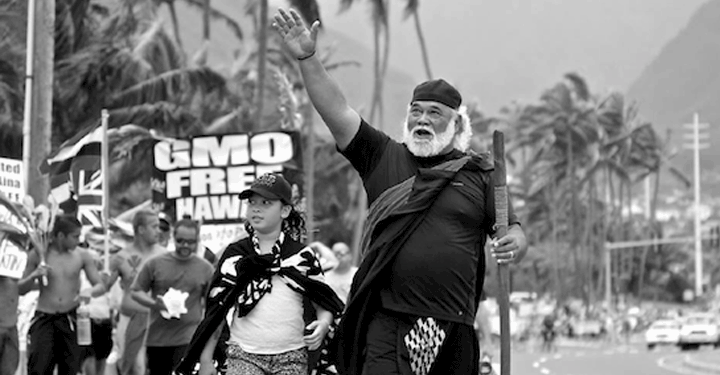
Maui is winning the war against Monsanto, according to an attorney for the Sustainable Hawaiian Agriculture for the Keiki and the Aina (SHAKA) Movement. On November 4, Maui voters approved a measure that would ban GMOs in Maui County. But earlier this year, Hawaii Judge Barry Kurren ruled that only states, not counties, can ban GMOs, saying that county laws are pre-empted by state law so they are “invalid.” Monsanto, Dow and others sued to stop the legislation, hoping that Kurren would rule the same after the Maui initiative passed, but Kurren decided to pass the case onto Chief Judge Susan Oki Mollway after public pressure mounted against him. Now the Maui ban on GMOs can move forward, marking a definitive win for the people of Maui.

According to the Natural Society, “until at least the fall of 2011, Judge Kurren’s wife, Faye, was a trustee of The Nature Conservancy (TNC), a 6-billion-dollar environmental group.” TNC specializes in working with mega-corporations, who donate major money, in return for receiving TNC’s “good housekeeping seal of approval” as friends of the environment. “In 2011, TNC leveraged a blockbuster deal with Dow Chemical. Dow pledged a $10 million donation. In exchange, Dow could forthwith use the TNC logo on its site and all its products. Among TNC’s council are businesspersons from Monsanto, Coca Cola, and of course, Dow. Among TNC’s corporate funders are again – Dow, Coke, DuPont, and Pepsi,” according to Natural Society.

In addition to striking down GMO bans, Kurren also recently struck down Ordinance 960 – a pesticide and GMO regulatory bill – in Kauai. Kurren was to be the presiding judge in the Maui County case, but knowing that Kurren has multiple ties to Big Agriculture, the people of Maui County pushed back. Many thought that the case could not be won, given Kurren’s past rulings and Big-Ag ties, and that Maui county would not be able to uphold the ban on GMOs on their island.

RELATED: How Monsanto is turning an island paradise into a GMO wasteland

Originally, the SHAKA Movement agreed to allow a magistrate judge to preside over the case – in this case, it was Kurren. Once the SHAKA Movement found out Kurren would be in charge of their case, they withdrew their approval. Kurren then relinquished the position to Chief Judge Susan Oki Mollway.

Having a different judge – a judge without known ties to the financial dealings of Monsanto and Dow Chemical – could have huge implications for the GMO ban and lead Maui to a win over Monsanto. The ruling further allows Maui County to file their own motions and respond to motions filed by the plaintiffs, according to SHAKA attorney Michael Carroll. If the law stands as voted, only the Maui County Council will be able to lift the ban on GMOs in their county.