Fiscal Insanity: The Government Borrows $6 Billion a Day, and We’re Stuck with the Bill

By John & Nisha Whitehead

Source: The Rutherford Institute

We’re not living the American dream.

We’re living a financial nightmare.

The U.S. government is funding its existence with a credit card.

The government—and that includes the current administration—is spending money it doesn’t have on programs it can’t afford, and “we the taxpayers” are the ones being forced to foot the bill for the government’s fiscal insanity.

According to the number crunchers with the Committee for a Responsible Federal Budget, the government is borrowing roughly $6 billion a day.

As the Editorial Board for the Washington Post warns:

“The nation has reached a hazardous moment where what it owes, as a percentage of the total size of the economy, is the highest since World War II. If nothing changes, the United States will soon be in an uncharted scenario that weakens its national security, imperils its ability to invest in the future, unfairly burdens generations to come, and will require cuts to critical programs such as Social Security and Medicare. It is not a future anyone wants.

Let’s talk numbers, shall we?

The national debt (the amount the federal government has borrowed over the years and must pay back) is $31 trillion and will grow another $19 trillion by 2033. That translates to roughly $246,000 per taxpayer or $94,000 for every single person in the country.

The bulk of that debt has been amassed over the past two decades, thanks in large part to the fiscal shenanigans of four presidents, 10 sessions of Congress and two wars.

It’s estimated that the amount this country owes is now 130% greater than its gross domestic product (all the products and services produced in one year by labor and property supplied by the citizens).

In other words, the government is spending more than it brings in.

The U.S. ranks as the 12th most indebted nation in the world, with much of that debt owed to the Federal Reserve, large investment funds and foreign governments, namely, Japan and China.

Interest payments on the national debt are estimated to top $395 billion this year, which is significantly more than the government spends on veterans’ benefits and services, and according to Pew Research Center, more than it will spend on elementary and secondary education, disaster relief, agriculture, science and space programs, foreign aid, and natural resources and environmental protection combined.

According to the Committee for a Reasonable Federal Budget, the interest we’ve paid on this borrowed money is “nearly twice what the federal government will spend on transportation infrastructure, over four times as much as it will spend on K-12 education, almost four times what it will spend on housing, and over eight times what it will spend on science, space, and technology.”

In ten years, those interest payments will exceed our entire military budget.

This is financial tyranny.

We’ve been sold a bill of goods by politicians promising to pay down the national debt, jumpstart the economy, rebuild our infrastructure, secure our borders, ensure our security, and make us all healthy, wealthy and happy.

None of that has come to pass, and yet we’re still being loaded down with debt not of our own making while the government remains unrepentant, unfazed and undeterred in its wanton spending.

Indeed, the national deficit (the difference between what the government spends and the revenue it takes in) remains at more than $1.5 trillion.

If Americans managed their personal finances the way the government mismanages the nation’s finances, we’d all be in debtors’ prison by now.

Despite the government propaganda being peddled by the politicians and news media, however, the government isn’t spending our tax dollars to make our lives better.

We’re being robbed blind so the governmental elite can get richer.

In the eyes of the government, “we the people, the voters, the consumers, and the taxpayers” are little more than pocketbooks waiting to be picked.

“We the people” have become the new, permanent underclass in America.

Consider: The government can seize your home and your car (which you’ve bought and paid for) over nonpayment of taxes. Government agents can freeze and seize your bank accounts and other valuables if they merely “suspect” wrongdoing. And the IRS insists on getting the first cut of your salary to pay for government programs over which you have no say.

We have no real say in how the government runs, or how our taxpayer funds are used, but we’re being forced to pay through the nose, anyhow.

We have no real say, but that doesn’t prevent the government from fleecing us at every turn and forcing us to pay for endless wars that do more to fund the military industrial complex than protect us, pork barrel projects that produce little to nothing, and a police state that serves only to imprison us within its walls.

If you have no choice, no voice, and no real options when it comes to the government’s claims on your property and your money, you’re not free.

It wasn’t always this way, of course.

Early Americans went to war over the inalienable rights described by philosopher John Locke as the natural rights of life, liberty and property.

It didn’t take long, however—a hundred years, in fact—before the American government was laying claim to the citizenry’s property by levying taxes to pay for the Civil War. As the New York Times reports, “Widespread resistance led to its repeal in 1872.”

Determined to claim some of the citizenry’s wealth for its own uses, the government reinstituted the income tax in 1894. Charles Pollock challenged the tax as unconstitutional, and the U.S. Supreme Court ruled in his favor. Pollock’s victory was relatively short-lived. Members of Congress—united in their determination to tax the American people’s income—worked together to adopt a constitutional amendment to overrule the Pollock decision.

On the eve of World War I, in 1913, Congress instituted a permanent income tax by way of the 16th Amendment to the Constitution and the Revenue Act of 1913. Under the Revenue Act, individuals with income exceeding $3,000 could be taxed starting at 1% up to 7% for incomes exceeding $500,000.

It’s all gone downhill from there.

Unsurprisingly, the government has used its tax powers to advance its own imperialistic agendas and the courts have repeatedly upheld the government’s power to penalize or jail those who refused to pay their taxes.

While we’re struggling to get by, and making tough decisions about how to spend what little money actually makes it into our pockets after the federal, state and local governments take their share (this doesn’t include the stealth taxes imposed through tolls, fines and other fiscal penalties), the government continues to do whatever it likes—levy taxes, rack up debt, spend outrageously and irresponsibly—with little thought for the plight of its citizens.

To top it all off, all of those wars the U.S. is so eager to fight abroad are being waged with borrowed funds. As The Atlantic reports, “U.S. leaders are essentially bankrolling the wars with debt, in the form of purchases of U.S. Treasury bonds by U.S.-based entities like pension funds and state and local governments, and by countries like China and Japan.”

Of course, we’re the ones who have to repay that borrowed debt.

For instance, American taxpayers have been forced to shell out more than $5.6 trillion since 9/11 for the military industrial complex’s costly, endless so-called “war on terrorism.” That translates to roughly $23,000 per taxpayer to wage wars abroad, occupy foreign countries, provide financial aid to foreign allies, and fill the pockets of defense contractors and grease the hands of corrupt foreign dignitaries.

Mind you, that’s only a portion of what the Pentagon spends on America’s military empire.

The United States also spends more on foreign aid than any other nation, with nearly $300 billion disbursed over a five-year period. More than 150 countries around the world receive U.S. taxpayer-funded assistance, with most of the funds going to the Middle East, Africa and Asia. That price tag keeps growing, too.

As Forbes reports, “U.S. foreign aid dwarfs the federal funds spent by 48 out of 50 state governments annually. Only the state governments of California and New York spent more federal funds than what the U.S. sent abroad each year to foreign countries.”

Most recently, the U.S. has allocated nearly $115 billion in emergency military and humanitarian aid for Ukraine since the start of the Russia invasion.

As Dwight D. Eisenhower warned in a 1953 speech, this is how the military industrial complex continues to get richer, while the American taxpayer is forced to pay for programs that do little to enhance our lives, ensure our happiness and well-being, or secure our freedoms.

This is no way of life.

Yet it’s not just the government’s endless wars that are bleeding us dry.

We’re also being forced to shell out money for surveillance systems to track our movements, money to further militarize our already militarized police, money to allow the government to raid our homes and bank accounts, money to fund schools where our kids learn nothing about freedom and everything about how to comply, and on and on.

There was a time in our history when our forebears said “enough is enough” and stopped paying their taxes to what they considered an illegitimate government. They stood their ground and refused to support a system that was slowly choking out any attempts at self-governance, and which refused to be held accountable for its crimes against the people. Their resistance sowed the seeds for the revolution that would follow.

Unfortunately, in the 200-plus years since we established our own government, we’ve let bankers, turncoats and number-crunching bureaucrats muddy the waters and pilfer the accounts to such an extent that we’re back where we started.

Once again, we’ve got a despotic regime with an imperial ruler doing as they please.

Once again, we’ve got a judicial system insisting we have no rights under a government which demands that the people march in lockstep with its dictates.

And once again, we’ve got to decide whether we’ll keep marching or break stride and make a turn toward freedom.

But what if we didn’t just pull out our pocketbooks and pony up to the federal government’s outrageous demands for more money?

What if we didn’t just dutifully line up to drop our hard-earned dollars into the collection bucket, no questions asked about how it will be spent?

What if, instead of quietly sending in our tax checks, hoping vainly for some meager return, we did a little calculating of our own and started deducting from our taxes those programs that we refuse to support?

As I make clear in my book Battlefield America: The War on the American People and in its fictional counterpart The Erik Blair Diaries, if we don’t have the right to decide what happens to our hard-earned cash, then we don’t have any rights at all.
Technology and a Tyranny Worse than Prison 

By Bert Olivier

Source: Brownstone Institute

In an outstanding piece of political-theoretical writing, titled ‘The Threat of Big Other’ (with its play on George Orwell’s ‘Big Brother’) Shoshana Zuboff, succinctly addresses the main issues of her book, The Age of Surveillance Capitalism – The Fight for a Human Future at the New Frontier of Power (New York: Public Affairs, Hachette, 2019), explicitly linking it to Orwell’s 1984

Significantly, at the time she reminded readers that Orwell’s goal with 1984 was to alert British and American societies that democracy is not immune to totalitarianism, and that “Totalitarianism, if not fought against, could triumph anywhere” (Orwell, quoted by Zuboff, p. 16). In other words, people are utterly wrong in their belief that totalitarian control of their actions through mass surveillance (as depicted in 1984, captured in the slogan, “Big Brother is watching you”) could only issue from the state, and she does not hesitate to name the source of this threat today (p. 16):

For 19 years, private companies practicing an unprecedented economic logic that I call surveillance capitalism have hijacked the Internet and its digital technologies. Invented at Google in 2000, this new economics covertly claims private human experience as free raw material for translation into behavioural data. Some data are used to improve services, but the rest are turned into computational products that predict your behaviour. These predictions are traded in a new futures market, where surveillance capitalists sell certainty to businesses determined to know what we will do next. 

By now we know that such mass surveillance does not merely have the purpose – if it ever did – of tracking and predicting consumer behaviour with the aim of maximising profits; far from it. It is generally known among those who prefer to remain informed about global developments, and who do not only rely on the legacy media for this, that in China such mass surveillance has reached the point where citizens are tracked through a myriad of cameras in public places, as well as through smartphones, to the point where their behaviour is virtually completely monitored and controlled. 

Small wonder that Klaus Schwab of the World Economic Forum (WEF) does not let an opportunity pass to praise China as the model to be emulated by other countries in this respect. It should therefore come as no surprise that investigative reporter, Whitney Webb, also alluding to Orwell’s prescience, draws attention to the striking similarities between mass surveillance that was developed in the United States (US) in 2020 and Orwell’s depiction of a dystopian society in 1984, first published in 1949. 

In an article titled “Techno-tyranny: How the US national security state is using coronavirus to fulfil an Orwellian vision,” she wrote:

Last year, a government commission called for the US to adopt an AI-driven mass surveillance system far beyond that used in any other country in order to ensure American hegemony in artificial intelligence. Now, many of the ‘obstacles’ they had cited as preventing its implementation are rapidly being removed under the guise of combating the coronavirus crisis.

Webb proceeds to discuss an American government body that focused on researching ways in which artificial intelligence (AI) could promote national security and defence needs, and which provided details concerning the “structural changes” which American society and economy would have to undertake to be able to maintain a technological advantage in relation to China. According to Webb the relevant governmental body recommended that the US follow China’s example in order to surpass the latter, specifically regarding some aspects of AI-driven technology as it pertains to mass surveillance. 

As she also points out, this stance on the desired development of surveillance technology conflicts with (incongruous) public statements by prominent American politicians and government officials, that Chinese AI-technological surveillance systems instantiate a significant threat for Americans’ way of life), which did not, however, prevent the implementation of several stages of such a surveillance operation in the US in 2020. As one knows in retrospect, such implementation was undertaken and justified as part of the American response to Covid-19. 

None of this is new, of course – by now it is well-known that Covid was the excuse to establish and implement Draconian measures of control, and that AI has been an integral part of it. The point I want to make, however, is that one should not be fooled into thinking that strategies of control will end there, nor that the Covid pseudo-vaccines were the last, or worst, of what the would-be rulers of the world can inflict upon us to exercise the total control they wish to achieve – a level of control that would be the envy of the fictional Big Brother society of Orwell’s 1984

For example, several critically thinking people have alerted one to the alarming fact that the widely touted Central Bank Digital Currencies (CBDCs) are Trojan horses, with which the neo-fascists driving the current attempt at a ‘great reset’ of society and the world economy aim to gain complete control over people’s lives. 

At first blush the proposed switch from a fractional reserve monetary system to a digital currency system may seem reasonable, particularly in so far as it promises the (dehumanising) ‘convenience’ of a cashless society. As Naomi Wolf has pointed out, however, far more than this is at stake. In the course of a discussion of the threat of ‘vaccine passports’ to democracy, she writes (The Bodies of Others, All Seasons Press, 2022, p. 194):

There is now also a global push toward government-managed digital currencies. With a digital currency, if you’re not a ‘good citizen,’ if you pay to see a movie you shouldn’t see, if you go to a play you shouldn’t go to, which the vaccine passport will know because you have to scan it everywhere you go, then your revenue stream can be shut off or your taxes can be boosted or your bank account won’t function. There is no coming back from this.

I was asked by a reporter, ‘What if Americans don’t adopt this?’

And I said, ‘You’re already talking from a world that’s gone if this succeeds in being rolled out.’ Because if we don’t reject the vaccine passports, there won’t be any choice. There will be no such thing as refusing to adopt it. There won’t be capitalism. There won’t be free assembly. There won’t be privacy. There won’t be choice in anything that you want to do in your life.

And there will be no escape.

 In short, this was something from which there was no returning. If indeed there was a ‘hill to die on,’ this was it. 

This kind of digital currency is already in use in China, and it is being rapidly developed in countries like Britain and Australia, to mention only some.

Wolf is not the only one to warn against the decisive implications that accepting digital currencies would have for democracy. 

Financial gurus such as Catherine Austin Fitts and Melissa Cuimmei have both signalled that it is imperative not to yield to the lies, exhortations, threats and whatever other rhetorical strategies the neo-fascists might employ to force one into this digital financial prison. In an interview where she deftly summarises the current situation of being “at war” with the globalists, Cuimmei has warned that the drive towards digital passports explains the attempt to get young children ‘vaccinated’ en masse: unless they can do so on a large scale, they could not draw children into the digital control system, and the latter would therefore not work. She has also stressed that the refusal to comply is the only way to stop this digital prison from becoming a reality. We have to learn to say “No!”

Why a digital prison, and one far more effective that Orwell’s dystopian society of Oceania? The excerpt from Wolf’s book, above, already indicates that the digital ‘currencies’ that would be shown in your Central World Bank account, would not be money, which you could spend as you saw fit; in effect, they would have the status of programmable vouchers that would dictate what you can and cannot do with them. 

They constitute a prison worse than debt, paralysing as the latter may be; if you don’t play the game of spending them on what is permissible, you could literally be forced to live without food or shelter, that is, eventually to die. Simultaneously, the digital passports of which these currencies would be a part, represent a surveillance system that would record everything you do and wherever you go. Which means that a social credit system of the kind that functions in China, and has been explored in the dystopian television series, Black Mirror, would be built into it, which could make or break you.  

In her The Solari Report, Austin Fitts, for her part, elaborates on what one can do to “stop CBDCs,” which includes the use of cash, as far as possible, limiting one’s dependence on digital transaction options in favour of analog, and using good local banks instead of the banking behemoths, in the process decentralising financial power, which is further strengthened by supporting small local businesses instead of large corporations. 

One should be under no illusion that this will prove to be easy, however. As history has taught us, when dictatorial powers attempt to gain power over people’s lives, resistance on the part of the latter is usually met with force, or ways of neutralising resistance.

As Lena Petrova reports, this was recently demonstrated in Nigeria, which was one of the first countries in the world (Ukraine being another), to introduce CBDCs, and where there was initially a very tepid response from the population, where most people prefer using cash (partly because many cannot afford smartphones). 

Not to be outdone, the Nigerian government resorted to dubious shenanigans, such as printing less money and asking people to hand in their ‘old’ banknotes for ‘new’ ones, which have not materialised. The result? People are starving because they lack cash to buy food, and they do not have, or do not want, CBDCs, partly because they lack smartphones and partly because they resist these digital currencies. 

It is difficult to tell whether Nigerians’ doubts about CBDCs is rooted in their awareness that, once embraced, the digital passport of which these currencies will comprise a part, would allow the government complete surveillance and control of the populace. Time will tell whether Nigerians will accept this Orwellian nightmare lying down.

Which brings me to the significant philosophical point underpinning any argument about resisting the drive for dictatorial power through mass surveillance. As every enlightened person should know, there are different kinds of power. One such variety of power is encapsulated in Immanuel Kant’s famous motto for enlightenment, formulated in his famous 18th-century essay, “What is Enlightenment?” The motto reads: “Sapere aude!” and translates as “Have the courage to think for yourself,” or “Dare to think!” 

This motto may be said to correspond with what contributors to the activities of Brownstone Institute engage in. Hence, the emphasis on critical intellectual engagement is indispensable. But is it sufficient? I would argue that, while speech act theory has demonstrated, accurately – emphasising the pragmatic aspect of language – that speaking (and one could add writing) is already ‘doing something,’ there is another sense of ‘doing.’ 

This is its meaning of acting in the sense one encounters in discourse theory – which demonstrates the interwovenness of speaking (or writing) and acting through the imbrication of language with power relations. What this implies is that language use is intertwined with actions that find their correlate(s) in speaking and writing. This is compatible with Hannah Arendt’s conviction, that of labour, work and action (the components of the vita activa), action – the verbal engagement with others, broadly for political purposes, is the highest embodiment of human activity.

Philosophers Michael Hardt and Antonio Negri have shed important light on the question of the connection between Kant’s “Sapere aude!” and action. In the third volume of their magisterial trilogy, Commonwealth (Cambridge, Mass., Harvard University Press, 2009; the other two volumes being Empire and Multitude), they argue that although Kant’s “major voice” shows that he was indeed an Enlightenment philosopher of the transcendental method, who uncovered the conditions of possibility of certain knowledge of the law-governed phenomenal world, but by implication also of a practical life of dutiful social and political responsibility, there is also a seldom-noticed “minor voice” in Kant’s work. 

This points, according to them, towards an alternative to the modern power complex that Kant’s “major voice” affirms, and it is encountered precisely in his motto, articulated in the short essay on enlightenment referred to above. They claim further that the German thinker developed his motto in an ambiguous manner – on the one hand “Dare to think” does not undermine his encouragement, that citizens carry out their various tasks obediently and pay their taxes to the sovereign. Needless to stress, such an approach amounts to the strengthening of the social and political status quo. But on the other hand, they argue that Kant himself creates the aperture for reading this enlightenment exhortation (p. 17): 

[…] against the grain: ‘dare to know’ really means at the same time also ‘know how to dare’. This simple inversion indicates the audacity and courage required, along with the risks involved, in thinking, speaking, and acting autonomously. This is the minor Kant, the bold, daring Kant, which is often hidden, subterranean, buried in his texts, but from time to time breaks out with a ferocious, volcanic, disruptive power. Here reason is no longer the foundation of duty that supports established social authority but rather a disobedient, rebellious force that breaks through the fixity of the present and discovers the new. Why, after all, should we dare to think and speak for ourselves if these capacities are only to be silenced immediately by a muzzle of obedience? 

One cannot fault Hardt and Negri here; notice, above, that they include ‘acting’ among those things for which one requires the courage to ‘dare.’ As I have previously pointed out in a discussion of critical theory and their interpretation of Kant on the issue of acting, towards the conclusion of his essay, Kant uncovers the radical implications of his argument: if the ruler does not submit himself (or herself) to the very same rational rules that govern the citizens’ actions, there is no obligation on the part of the latter to obey such a monarch any longer. 

In other words, rebellion is justified when authorities themselves do not act reasonably (which includes the tenets of ethical rationality), but, by implication, unjustifiably, if not aggressively, towards citizens. 

There is a lesson in this as far as the ineluctable need for action is concerned when rational argument with would-be oppressors gets one nowhere. This is especially the case when it becomes obvious that these oppressors are not remotely interested in a reasonable exchange of ideas, but summarily resort to the current unreasonable incarnation of technical rationality, namely AI-controlled mass surveillance, with the purpose of subjugating entire populations. 

Such action might take the form of refusing ‘vaccinations’ and rejecting CBDCs, but it is becoming increasingly apparent that one will have to combine critical thinking with action in the face of merciless strategies of subjugation on the part of the unscrupulous globalists.

The Everything Bubble and Global Bankruptcy

By Charles Hugh Smith

Source: Of Two Minds

The resulting erosion of collateral will collapse the global credit bubble, a repricing/reset that will bankrupt the global economy and financial system.

Scrape away the complexity and every economic crisis and crash boils down to the precarious asymmetry between collateral and the debt secured by that collateral collapsing. It’s really that simple.

In eras of easy credit, both creditworthy and marginal borrowers are suddenly able to borrow more. This flood of new cash seeking a return fuels red-hot demand for conventional assets considered “safe investments” (real estate, blue-chip stocks and bonds), demand which given the limited supply of “safe” assets, pushes valuations of these assets to the moon.

In the euphoric atmosphere generated by easy credit and a soaring asset valuations, some of the easy credit sloshes into marginal investments (farmland that is only briefly productive if it rains enough, for example), high-risk speculative ventures based on sizzle rather than actual steak and outright frauds passed off as legitimate “sure-fire opportunities.”

The price people are willing to pay for all these assets soars as the demand created by easy credit increases. And why does credit continue increasing? The assets rising in value create more collateral which then supports more credit.

This self-reinforcing feedback appears highly virtuous in the expansion phase: the grazing land bought to put under the plow just doubled in value, so the owners can borrow more and use the cash to expand their purchase of more grazing land. The same mechanism is at work in every asset: homes, commercial real estate, stocks and bonds: the more the asset gains in value, the more collateral becomes available to support more credit.

Since there’s plenty of collateral to back up the new loans, both borrowers and lenders see the profitable expansion of credit as “safe.”

This safety is illusory, as it’s resting on an unstable pile of sand: bubble valuations driven by easy credit. We all know that price is set by what somebody will pay for the asset. What attracts less attention is price is also set by how much somebody can borrow to buy the asset.

Once the borrower has maxed out their ability to borrow (their income and assets-owned cannot support more debt) or credit conditions tighten, then those who might have paid even higher prices for assets had they been able to borrow more money can no longer borrow enough to bid the asset higher.

Since price is set on the margin (i.e. by the last sales), the normal churn of selling is enough to push valuations down. At first the euphoria is undented by the decline, but as credit tightens (interest rates rise and lending standards tighten, cutting off marginal buyers and ventures) then buyers become scarce and skittish sellers proliferate.

Questions about fundamental valuations arise, and sky-high valuations are found wanting as tightening credit reduces sales, revenues and profits. Once the “endless growth” story weakens, the claims that bubble prices are “fair value” evaporate.

As defaults rise, lenders are forced to tighten credit further. The first tumbling rocks are ignored but eventually the defaults trigger a landslide, and the credit-inflated bubble in asset valuations collapses.

As valuations plummet, so too does the collateral backing all the new debt. Debt that appeared “safe” is soon exposed as a potential push into insolvency. When the bungalow doubled in value from $500,000 to $1 million, the trajectory of valuation gains looked predictably rosy: every decade housing prices went up 30% or more. So originating a mortgage for $800,000 on a house that looked to be worth $1.3 million in a few years looked rock-solid safe.

But the $1 million was a bubble based solely on easy, abundant, low-cost credit. When credit tightens, the home is slowly but surely repriced at its pre-bubble valuation ($500,000) or perhaps much lower, if that value was merely an artifact of a previous unpopped bubble.

Now the collateral is $300,000 less than the mortgage. The owner who made a down payment of $200,000 will be wiped out by a forced sale at $500,000, and the lender (or owner of the mortgage) will take a $300,000 loss.

Given the banking system is set up to absorb only modest, incremental losses, losses of this magnitude render the lender insolvent. The lender’s capital base is drained to zero by the losses and then pushed into negative net-worth by continued losses.

The collateral collapses when bubbles pop, but the debt loaned against the now-phantom collateral remains.

This is the story of the Great Depression, a story that’s unloved because it calls into question the current series of credit-inflated bubbles and resulting financial crises. So the story is reworked into something more palatable such as “the Federal Reserve made a policy error.”

This encourages the fantasy that if central banks choose the right policies, credit bubbles and valuations detached from reality can both keep expanding forever. The reality is credit bubbles always pop, as the expansion of borrowing eventually exceeds the income and collateral of marginal borrowers, and this tsunami of cash eventually pours into marginal high-risk speculative vebtures that go bust.

There is no way to thread the needle so credit-asset bubbles never pop. Yet here we are, watching the global Everything Bubble finally start collapsing, guaranteeing the collapse of collateral and all the debt issued on that collateral, and the rabble is arguing about what policy tweaks are needed to reinflate the bubble and save the global economy from bankruptcy.

Sorry, but global bankruptcy is already baked in. Too much debt has been piled on phantom-collateral and income streams derived from bubble assets rising (for example, capital gains, development taxes, etc.). The asymmetry is now so extreme that even a modest decline in asset valuations/collateral due to a garden-variety business-cycle recession of tightening financial conditions will trigger the collapse of The Everything Bubble and the mountain of global debt resting on the wind-blown sands of phantom collateral.

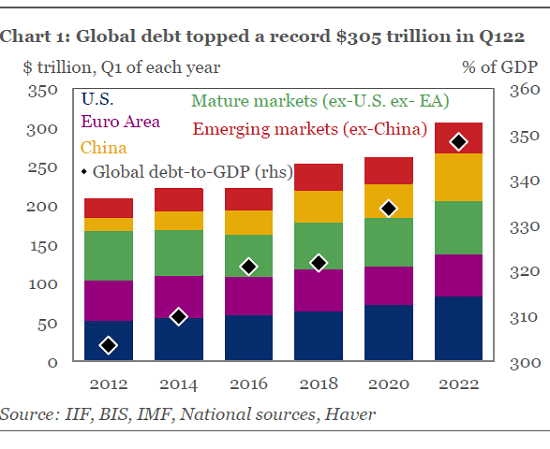
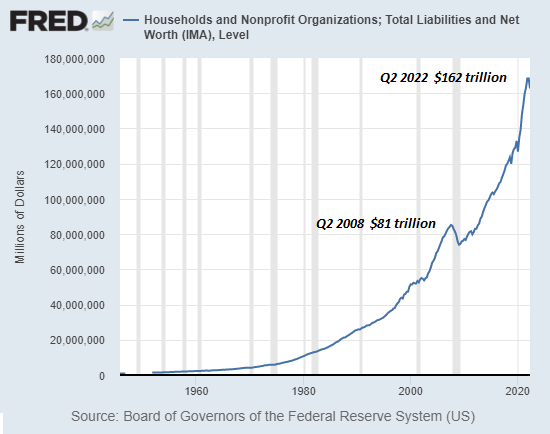
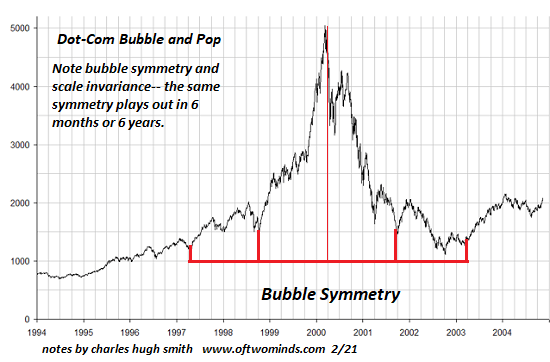
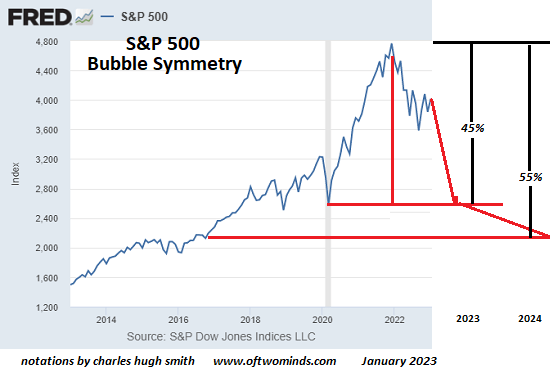
There are persuasive reasons to suspect global debt far exceeds the official level around $300 trillion, most saliently, the largely opaque shadow banking system. When assets roughly double in a few years, bubble symmetry suggests that valuations will decline back to the starting point of the bubble in roughly the same time span.

The resulting erosion of collateral will collapse the global credit bubble, a repricing/reset that will bankrupt the global economy and financial system.

The Plight of a Woman Who Questioned Vaccine Safety in Malaysia

By Simay B

Source: TrialSite News

Since 2021, a legal tussle has persisted between a single mother, Liyana Razali, and the Malaysian government. This is due to her statements concerning the safety of COVID-19 vaccines for 12-17 year-olds. The government outlawed Razali’s statement for fear that the public would develop negative perceptions of the vaccine, which could jeopardize the vaccination program. She was allegedly subjected to police harassment, media defamation, and a 30-day detention at Ulu Kinta Mental Hospital. TrialSite is following the controversial issue of vaccinating children against COVID-19, as well as the medical community’s perspective on this topic.

Razali made her speech on September 28, 2021, in front of the Ministry of Higher Education. She said, “Here I would like, on behalf of today’s parents who are present at the Ministry of Higher Education Malaysia … to express our solidarity with parents.” She went on to name three families whose children were experiencing side effects following COVID-19 vaccinations, or had passed away shortly after receiving the vaccines. She also referred to three other children who had died after being vaccinated: two students at Sekolah Menengah Kebangsaan Tasik Damai in Ipoh, and one teenager in Lahad Datu, Sabah.

As well as expressing solidarity, she called on listeners to report side effects through the proper channels. “Report it to the authorities,” she said. “Do not just post them on social media. Come forward, and send your information, and we will try to fight for your rights.”

Police Intervention and Possible Misinterpretation of Razali’s Speech in Mainstream Media

Five days later (October 3), Razali was called to the police station for questioning. They asked her, without having official paperwork, to appear at a magistrates court. When she was asked to appear at Ipoh Magistrates Court on November 30, 2021, they cancelled the court appointment.

Meanwhile, the news of the police looking for Razali was published in mainstream media, including her photograph and home address. The reports stated that she had made “false COVID vaccine claims,” and that her allegations that students had died after receiving the vaccine were untrue.

The police returned on May 20, 2022, with an arrest warrant from Putrajaya Magistrates Court. They took Razali to court, where she refused to enter a plea for lack of a verified criminal complaint against her. The deputy public prosecutor (DPP) proposed a 30-day observation in Ulu Kinta Mental Hospital, to which the magistrate agreed.

Lawyers’ attempts to get Razali out were rejected. The DPP took a long time in building a case against her, and the trial began on November 22, 2022.

Exception in Penal Code 505

Razali has been charged under Penal code 505 (b), which states, “Whoever makes, publishes, or circulates any statement, rumor, or report with intent to cause, or which is likely to cause, fear or alarm to the public, or to any section of the public whereby any person may be induced to commit an offense against the State or against the public tranquility.” This implies that the government is claiming that her words were intended to cause public distress, which might incite the public to rally against the state.

Razali’s lawyers petitioned the DPP to apply the exception to penal code 505 (b), which reads, “It does not amount to an offense within the meaning of this section, when the person making, publishing, or circulating any such statement, rumor, or report has reasonable grounds for believing that such statement, rumor, or report is true and makes, publishes or circulates it without any such intent as aforesaid.”

Based on this exception, if Razali had reasonable grounds to believe her statement was true at the time she said it, her actions were not against the law. Her representation was rejected without reason, and the case was motioned to continue.

The Appearance of Seven Witnesses in Razali’s Case

After Razali’s speech, over a period of almost one year, the DPP arranged for a range of people to testify against her. Seven of them have since appeared in court to testify and under cross-examination they have admitted that their previous statements had been influenced rather than being their own stand.

Two Ministry of Health (MOH) workers participating in the vaccine rollout claimed that they had been ordered to write their reports. Two MOH doctors and Ipoh school’s headmaster said that they had filed reports with the police out of fear of jeopardizing the vaccination program. Fathers of the two deceased Ipoh children had been summoned and instructed to testify that their children had died before vaccination.

The witnesses helped to shed some light on Razali’s case and how the public had perceived her speech, and the failure to stand their ground for fear of the government.

Doctors’ Testimonies

The doctors who have so far testified have claimed that the COVID-19 vaccine’s side effects were not severe and included allergies, Bell’s palsy, and myocarditis.

At least one witness for the government, a medical doctor, also said that when seeking consent from parents or guardians, there was no need to spend time on obtaining fully informed consent because it was all too complex for most people to understand, so there was no point wasting time like this. These witnesses also stated, however, that once consent had been given, patients must be responsible for any negative effects.

Effectiveness of COVID-19 Vaccines

According to the Centers for Disease Control and Prevention (CDC), COVID-19 vaccines are safe and effective at preventing severe illness, hospitalization, or death.

Several studies have further demonstrated the effectiveness of these vaccines. One such study is a Hong Kong population-based observational study conducted in 2022. Results from this study revealed that two doses of the CoronaVac or BNT162b2 vaccines offered protection against severe illness or death within 28 days of a positive SARS-CoV-2 test.

Another study previously reported by TrialSite on COVID-19 vaccines for teens 12-17 years old has been carried out and continues in various regions globally. Pfizer-BioNTech and Moderna mRNA vaccines are indicated by the vaccine companies to be safe and effective at preventing severe infections for this age bracket.

Furthermore, in 2021, the Global Advisory Committee on Vaccine Safety (GACVS) resolved that the benefits of mRNA COVID-19 vaccines far outweighed their risks.

The Risk of COVID-19 Vaccine Side Effects

There is data from around the world showing safety warning signals following the COVID-19 vaccine (including severe disability and death). However, according to the World Health Organization (WHO) there are only a few cases of very rare adverse severe events, namely myocarditis and pericarditis, that have been reported so far. These conditions were mainly observed in younger men aged 16-24 years and occurred after the second dose of an mRNA COVID-19 vaccine. Generally, the conditions appeared within a few days after vaccination. The WHO indicates that these injuries were mild and responsive to conservative treatment.

The Malaysian Ministry of Health (KKM) informed the media in January 2023 that over 94% of reported vaccine reactions to Pfizer-BioNTech’s Comirnaty had been mild, but that “a small number” amounting to 1,162 serious cases of effects such as anaphylaxis, acute facial paralysis, myocarditis, and intravenous thrombosis had been recorded. This followed more than one year of claims by KKM that there had been no serious post-vaccine injuries reported in Malaysia.

These figures are similar to those reported by the CDC for teen vaccine reactions, which found 91.6% of cases were nonserious, and only 8.4% were severe. Common side effects after vaccination include headaches, muscle or joint soreness, fever, nausea, and vomiting. The injected area may redden, swell, itch, or have some pain. Most people recover quickly from the side effects, including the rare myocarditis and pericarditis cases reported after vaccination, which are claimed to be not as severe as those caused by COVID-19 infection.

These claims have been contested by world-leading cardiologists, such as Dr. Peter McCullough in the U.S. and Dr. Aseem Malhotra from the UK, who cite research showing that identified myocarditis and pericarditis from the vaccines is more severe than COVID-19-induced cardiac effects. The CDC continues to investigate the long-term effects of myocarditis after COVID-19 vaccination.

In addition, results from randomized control trial data from Pfizer, released under a court order in the U.S., demonstrated that over 1228 deaths occurred after the administration of the Pfizer vaccine. Additionally, 42,086 individuals reported 158,893 adverse events within a 3-month period.

A study done in Thailand in mid-2022 showed that 3.5% of boys showed evidence of pericarditis or myocarditis after the second dose of the Pfizer-BioNTech COVID-19 vaccine.

Research from other countries, such as that done on 12th-grade South Korean students, has shown a low rate of serious adverse events and no vaccine-related deaths. Other studies that targeted Israeli adolescents 16-19 years old put the risk of myocarditis at 1.34 per 100,000 within twenty days after the first dose and 15.07 per 100,000 after the second dose. In the U.S., the rates were 12 cases per million people (12-39 years) who received the second dose of the mRNA vaccine.

However, in March 2023, the Israeli Ministry of Health covertly released a new study showing large numbers of deaths within 60 days of receiving an mRNA COVID-19 vaccine.

In December 2021, health officials in Vietnam had to suspend the use of the Pfizer vaccine after the hospitalization of over 120 children following a group vaccination at school. Additionally, three children died from an overreaction to the vaccine in Bac Giang, a province near Hanoi, and Binh Phuoc, a province in the south.

The Case Continues

Despite the Malaysian Ministry of Health’s firm stance that the COVID-19 vaccines are perfectly safe, Razali is not the only person flagging potential adverse reactions. In the same week that Razali delivered her speech, a vaccination program in Malaysia’s Kajang prison resulted in 18 serious adverse events and two deaths in under 2,500 people. The prison director’s letter to the regulatory department and health office went viral after being leaked.

The health minister claimed that there were no deaths in Malaysia linked to the COVID-19 vaccine while confirming that 535 deaths reported as adverse events “were not directly linked to the vaccines” according to postmortem results. However, an autopsy of 40 people who died within two weeks of vaccination conducted at the University of Heidelberg in Germany showed that specific techniques and stains are required to detect the effect of the vaccine at a cellular level on postmortem. The head of the autopsy project, Peter Schirmacher, concluded that between 30 to 40% of the deaths his team examined had resulted from the vaccination, and might have been missed by regular postmortem protocols.

As with anyone accused of breaking the law, Razali deserves a fair hearing before a court of law to establish whether or not her public statements were in any way a violation of Penal code paragraph 505 (b), especially given the exception that is an integral part of that clause.

As research on COVID-19 vaccine administration to teens between 12-17 years continues, organizations urge parents or guardians to report serious cases for further assessment.

Journalistic Malpractice on Trial: What the Dominion Voting System Tells Us About How the Media Sacrificed their Credibility to Partisan Falsehoods

By Nolan Higdon

Source: Project Censored

“This is direct evidence of knowing falsity” exclaimed RonNell Anderson Jones, Professor of Law at the University of Utah, in a February 2023 interview with Jon Stewart. Jones noted that in most defamation cases “the likelihood that you will find evidence of them [news outlets] saying, ‘We know this is a lie and we would like to move forward with it anyway is deeply unlikely.’” However, in the case of Dominion Voting Systems v. Fox News, “the filing contains just this trove of evidence of emails and text messages and internal memos that are ‘rare’ both in terms of the ‘volume of the evidence and as to the directness of the evidence.’” This sentiment was echoed by Harvard law professor Laurence Tribe who noted, “I have never seen a defamation case with such overwhelming proof that the defendant admitted in writing that it was making up fake information in order to increase its viewership and its revenues.”

In the $1.6 billion defamation lawsuit, Dominion Voting Systems accuses Fox News Channel of falsely reporting that Dominion’s voting machines fraudulently delivered victory to Joe Biden in the 2020 U.S. Presidential Election. Court documents attained by other media outlets reveal that hosts and other high-ranking Fox News Channel officials – including the Chairman and CEO of Fox’s parent company News Corporation, Rupert Murdoch – knew these reports were false, but aired them because they were more concerned with confirming their audience’s belief that Donald Trump won the election.

The evidence presented in the court documents speaks to the journalistic malpractice that plagues the cable news industry. Journalistic malpractice refers to professional journalists who privilege ideological bias and profits over truth in their reporting. Fox News Channel is patient zero for the plague of journalistic malpractice. It was created in 1996 by Rupert Murdoch and the late Roger Ailes, a media consultant for several Republican presidents, as a political project to sell conservative culture and policy to the American public with pro-conservative propaganda disguised as journalism. For example, Fox News Channel has

  • falsely claimed that other media outlets did not cover the conservative Tea Party rallies;
  • utilized videos out of context to inflate the perceived size of conservative protests;
  • labeled former President Barack Obama a racist;
  • declared Osama bin Laden as a John Kerry supporter;
  • perpetuated discredited reports on the existence of Weapons of Mass Destruction in Iraq;
  • introduced digitally altered photos to fabricate Black Lives Matter violence and make New York Timesreporters appear to be revolting.   

Liberals were right to assert that such chicanery was propaganda, not journalism. But before liberal readers scold Fox News viewers, they should remind themselves that the plague of journalistic malpractice has also infected the liberal leaning cable networks such as CNN and MSNBC. Researchers and scholars have noted that the advent of cable and then the internet saw news media outlets shift from attaining the largest audience possible to focusing on a more specific or narrow demographic of the audience. While Fox News Channel sought to cater to Republican Party voting viewers, CNN and MSNBC did the same for Democratic Party voters. This gave the Democratic Party influence over programming that was tantamount to what the Republican Party long enjoyed at Fox.

When Senator U.S. Bernie Sanders’ 2016 Presidential bid posed a threat to their desired candidate Hillary Clinton in 2016, leaders from the Democratic Party admitted they worked to undermine his campaign. Pro-Democratic party outlets like MSNBC and CNN aided in this effort by

  • creating an unfavorable debate schedule;
  • giving Clinton twice as much and more favorable coverage;
  • publishing 16 negative articles about Sanders in Washington Post (owned by major Democratic Party funder Jeff Bezos) in 16 hours;
  • ghost editing previous news articles to diminish Sanders’ quarter century of accomplishments;
  • inviting his opponent’s surrogates to attack his character under the auspices of being objective journalists.

Their smear of Sanders continued in 2020 when

  • the Democratic Party-leaning news outlets misled the public about Sanders’ polling numbers;
  • CNN’s Abby Phillips drew gasps for ignoring Sanders’ claim that he never said a “woman could not be president;”
  • James Carville on MSNBC made the baseless claim that Russia was supporting Sanders;
  • MSNBC’s Chris Matthews compared Sander’s primary victories to the Nazi’s defeat of the French, an unfortunate comparison as Sanders’ family was murdered in the holocaust.

Journalistic malpractice also plagued Covid-19 coverage. Starting in 2020, CNN’s Chris Cuomo utilized his platform – with the approval of CNN leadership – to host his brother, then New York Governor Andrew Cuomo. The jovial segments seemed like campaign advertisements as Chris treated Andrew as the anti-thesis to then President Trump: a competent executive who took decisive action to address the Covid-19 pandemic. Although, the Democratic versus Republican framing attracted partisan audiences, in reality, Andrew Cuomo and Trump were all too similar: both concealed the actual number of Covid-19 deaths in their jurisdiction, both put patients at risk with kickbacks to industry partners, and both utilized media contacts to stifle press reports about their alleged sexual crimes.

The partisan falsehoods in cable news includes the production of powerful, long- running false stories designed to convince their audiences that the other party is wrong and crazy. For years now, conservatives and Fox News Channel perpetuated the baseless Qanon conspiracy, which alleges that a cabal of Satan-worshiping pedophiles – mainly in the Democratic Party – runs global affairs but Trump will break up the conspiracy. The absurdity of this conspiracy is tantamount to liberal leaning news media’s reporting on Russiagate, which sought to discredit Republicans. Since 2016, Russiagate – the story that Russia meddled in and influenced the outcome of the U.S. election in 2016, had direct connections to Donald Trump and his associates, and worked to help defeat Hillary Clinton for the presidency – was perpetuated by a series of false stories from Democratic Party-friendly media including

  • Russia hacking a Vermont power plant;
  • putting a bounty on U.S. soldiers in Afghanistan;
  • shifting election outcomes around the world;
  • turning Trump into an asset since 1987;
  • labeling the Hunter Biden laptop story as fake news.

Conservatives rightly see this reporting and believe liberals are insane.

Both factions need to look in a mirror. While audiences can clearly see the insanity in other networks’ viewers, they rarely seem to see it in themselves. Indeed, in the same week that CNN and others were having a schadenfreude moment over the Dominion v. Fox case, they hosted a commentator on the train derailment in East Palestine, Ohio without disclosing that he had lobbied for the train company Norfolk Southern. This example of hypocrisy and journalistic malpractice is not only costly to CNN’s credibility, but our democracy as well.   

Without a robust media system that privileges truth over preaching to the choir, the public will have endless debates devoid of facts on key issues such as critical race theory, vaccine efficacy, the origins of the COVID-19 virus, climate change, transgender issues, Ukraine, mysterious balloons, and more. Democratic discourse will be reduced to seeing Republicans as MAGA-hat wearing, blue lives matter-flag waving, gun nuts, and Democrats as medical mask wearing, “this house cares about everything” front-lawn sign adorning, professional victims and virtue signalers. These caricatures have never really been accurate, but as long as the nation is infected with the plague of journalist malpractice they will surely be perpetuated.

While the courts are unlikely to deliver solace from political party propaganda disguised as journalism, they have provided some wisdom. Both Rachel Maddow and Tucker Carlson of MSNBC and Fox News Channel respectively, have been brought to court for spreading false information and were exonerated because the judges concluded that no reasonable person would believe either of them were telling the truth. That is good advice, and viewers would be wise to remember it every time they consider watching cable news.

How Covid lockdowns primed the current financial crisis

By Christian Parenti

Source: The Grayzone

The lockdowns and the stimulus required to keep the economy alive helped drive inflation. Then the Fed jacked up interest rates. And all hell broke loose.

On Friday March 10th, 2023, Silicon Valley Bank (SVB) died of Covid. Alright, it’s a little more complicated than that, but Covid lockdowns followed by massive government stimulus were a critical – and massively under-acknowledged – factor in propelling the bank’s demise.

At the heart of the crisis is the gigantic pile of low-interest debt that was issued during the height of the pandemic. While private-sector pandemic-era debt like corporate bonds also soared, US government debt like Treasury bonds piled up.

In a nutshell, during the pandemic the government issued enormous amounts of extremely low interest government debt — about $4.2 trillion of it. But now interest rates, including on government debt, are higher than they have been in 15 years and investors are dumping their old low-interest debt. As they dump, the resale price of the old debt goes down. The more it declines, the more investors want to dump. And thus, a panic is born. 

To understand the problem fully, the question of US government debt has to be put into its larger context, which is: the pandemic response as a whole.

When news of the Covid virus first broke in December 2019, the 2 Year Treasury bond was being offered at 1.64% interest; the 10 year was at about 1.80%, and the resale value of such bonds on secondary markets was strong. Then, in March 2020, as Covid cases and deaths spiked, the US began to shutter its economy with panicked lockdowns that were supposed to “flatten the curve” or slow the spread of the virus and thus protect the hospitals. But Covid was politicized and the lockdowns were extended.  

As the lockdowns dragged on, the US economy began to collapse, shrinking at a record-shattering annualized rate of 31.4% during the second quarter of fiscal year 2020.

To avoid total economic devastation, the federal government began massive debt-financed spending. In March 2020, Trump signed into law the $2.2 trillion economic stimulus bill the CARES Act, or Coronavirus Aid, Relief, and Economic Security. Then, in March 2021, Biden signed the American Rescue Plan Act which contained $1.9 trillion more in Covid relief. Finally, in April 2021, another trillion or so of Covid relief arrived in the Consolidated Appropriations Act. 

Thanks to these laws, every industry and most people received public money. There was increased and extended unemployment payments, as well as the so-called “stimmy checks” or stimulus payments to everyone earning under $75,000 a year (about half the population). The Paycheck Protection Program spent almost a trillion dollars. The Provider Relief Fund doled out $178 billion to the healthcare system. 

All this debt spending kept millions of people in their homes, and helped feed, employ, and care for millions more. The measures allowed hundreds of thousands of businesses to stay afloat even as many thousands of others went under. The impact of the spending on Americans’ well-being was generally positive. For a moment, the US child poverty rate was cut in half, falling to 5.2%. 

But the economically destructive lockdowns were not necessary and did not work. Covid fanatics maintain that the lockdowns were unavoidable because the virus is so deadly. That, however, is uninformed. Last year I explained in detail how the Lockdown Left got the Covid crisis wrong. Not a single critic has challenged any of the facts I presented so there is little point in rehashing them all here. 

Those who advocated an alternative to ham-fisted lockdowns, like the authors of the Great Barrington Declaration, which called for “focused protection” of vulnerable groups like the elderly, were viciously targeted in a reputation destruction campaign covertly orchestrated by former NIH director Francis Collins and de facto Covid czar Anthony Fauci. Never mind that the document’s authors were three eminently qualified scientists: Sunetra Gupta, professor of Theoretical Epidemiology at Oxford University; Jay Bhattacharya, professor of medicine at Stanford; and Martin Kulldorff, formerly a professor of medicine and biostatistics at Harvard. They were portrayed as far-right cranks who were almost eager to see millions die. But now, they have been vindicated.

Ultimately, the federal government spent $4.2 trillion propping up the economy that it was simultaneously choking to death with lockdowns. These two contradictory pressures laid the groundwork for the recent bank failures. Government mandated lockdowns hit the economy like a body blow. Factories closed, small businesses went under, ports and logistic hubs reduced operations, and about 2 million mostly older workers simply resigned. But at the same time, the federal government injected vast amounts of purchasing power into the economy, thus boosting consumption.

These two, contradictory government moves imposed almost unbearable pressure on supply chains. As shortages mounted, prices began to surge. Put simply: lockdowns plus stimulus equaled inflation.

Consider just one of the most important bottlenecks in the whole economy. During lockdown, many commercial driving license schools were closed. This helped create a shortage of about 80,000 truckers. If trucks do not roll supplies run low and prices go up.

At first, the official line on inflation – parroted by the Lockdown Left – maintained that inflation was “transitory.” But it was not. Inflation peaked at 9.1% in June 2022 while wage growth lagged at about 5%. In April 2020 during the worst of the lockdown, the Federal Reserve’s Federal Funds Rate sank to 0.5%. By February 2022, it had only risen to 0.8%.  

Meanwhile, inflation was surging. By February 2022, inflation had reached 7.9%. Only then did the Fed, in an effort to tamp down prices, begin raising interest rates at the fastest pace rate in its history. The federal Funds rate was around 4.57% when SVB went under. Perhaps a massive wave of taxation could have soaked up enough liquidity to have helped cool prices, but that was a political impossibility. The more politically palatable response in Washington was for the Federal Reserve to raise interest rates. 

Herein lies the problem. During the height of the lockdowns, banks bought up enormous amounts of government debt. As the Wall Street Journal put it: “U.S. banks are suffering the aftereffects of a Covid-era deposit boom that left them awash in cash that they needed to put to work. Domestic deposits at federally insured banks rose 38% from the end of 2019 to the end of 2021, FDIC data show. Over the same period, total loans rose 7%, leaving many institutions with large amounts of cash to deploy in securities as interest rates were near record lows.” Awash in deposits with not enough demand for loans, the banks bought US government securities. Their purchases surged 53% between 2019 and the end of 2021, to a total of $4.58 trillion, according to Fed data reported by the Wall Street Journal.

Because so much debt was being issued, it carried super-low interest rates. For example, on July 27, 2020, the 10 Year Treasury was offered at an annual interest rate of only 0.55%. This is fine if you are the borrower of money, but if you are the lender (that is to say, a bank giving the federal government money in exchange for a Treasury bond), it means your income stream will be reduced to a mere trickle. If inflation rises, it essentially disappears. 

As the yield on new government debt reached toward 5% and inflation hung stubbornly at around 6.4%, all of that old, low-interest, pandemic-era debt started to look like garbage and banks began unloading it. The more that banks dumped old debt, the less value that debt had on resale markets. The lower its resale value, the more the banks wanted to dump it. SVB lost almost $2 billion selling off Government securities. And when they announced the loss, their stock price plunged by 60%. 

At the same time, many of SVB’s clients were withdrawing money. This was in part because rising interest rates made borrowing new money more expensive and thus incentivized the use of savings in day-to-day business operations. Also, higher inflation and higher interest rates made low-earning bank deposits less attractive and compelled depositors to redeploy their surplus capital towards higher-earning investments. So, just as SVB needed cash, deposits were evaporating.

By the end of the week of March 10, the four biggest banks in the United States had lost $51 billion because of their panicked dumping of pandemic-era debt. Right after SVB was taken under government control, state regulators closed the New York-based Signature Bank. Before the weekend was over the Federal Reserve announced the creation of a new lending facility that would ensure that “banks have the ability to meet the needs of all their depositors.” Furthermore, the Fed said it was “prepared to address any liquidity pressures that may arise.”

It would seem that the federal government is ready to execute another de facto partial nationalization of US banking, just as they did in 2008 via emergency “cash injections” and then the Troubled Assets Relief Program (TARP). In this current crisis, banks can avoid losses on their low-interest debt if they do not sell it before its maturity. For that to happen, the banks need money. The Fed has said it will pour enormous amounts of money into the banks while all of the relevant officials have proclaimed that the banking system will somehow pay for this. All of this will almost certainly mean even more government debt will be issued. 

Already, interest payments on the federal debt are one of the largest single items in the US budget – set to reach $400 billion this year. That is almost half as much as the grotesquely overdeveloped military budget. By comparison, federal spending on housing is only $78 billion.

Shoring up the banking system is necessary because if it collapses, the whole economy goes with it. At least in the short term, Americans are hostages of the US financial system. But government intervention without any new regulations and taxes upon the financial sector will likely mean more inflation and a bigger financial bubble. By refusing to properly tax the top 1%, the federal government also commits itself to more austerity for the many and more welfare for the rich, because rising government debt means a rising portion of our taxes must go toward interest payments. 

This system of crisis-prone, hyper-financialized capitalism seems ever more like a junkie. If it doesn’t get its regular fix of public sector help, it will simply collapse and die. 

Even if the federal government can stanch the current crisis, the pandemic debt story is global and very likely to cause trouble for some time to come. As a 2021 report by the World Bank put it: “The debt buildup during the pandemic-induced global recession of 2020 was the largest in several decades. This was true for all types of debt—total, government, and private debt; and advanced-economy and EMDE [emerging market and developing economy] debt; external and domestic debt. In 2020, total global debt reached 263 percent of GDP and global government debt 99 percent of GDP, their highest levels in half a century.” 

The US intelligentsia and its media elites are finally beginning to reckon with the impact of misguided and authoritarian lockdowns on student learning and the psychological and physical health of millions. But in all the discussion of the current bank runs, the pivotal role of lockdowns in priming the crisis remains overlooked.

The Devil’s Milkshake

The water’s just fine!

By Tarence Ray

Source: The Baffler

YOU’VE SEEN IT BEFORE. An industrial disaster poisons a town’s food or water supply. Residents get angry. Public officials try to dispel that anger through a public act of self-sacrifice, of reassurance. They convene a press conference, whereupon some hapless courtier brings forth a chalice of the supposedly poisoned material. And then, in front of God and the television cameras, the public official imbibes.

Examples from recent history abound. In 2019, former Japanese prime minister Shinzo Abe ate possibly irradiated rice balls from Fukushima to demonstrate the progress made toward rebuilding the prefecture since its 2011 nuclear meltdown. In 2013, former Colorado governor John Hickenlooper claimed he drank fracking fluid to assuage his constituents’ concerns around natural gas drilling. (Not “tasty,” he said.) And, most famous of all, in 2016 Barack Obama took a sip of (filtered) water from the lead-poisoned water supply of Flint, Michigan, to prove it was safe. (“This is not a stunt,” he noted of the stunt.)

Officials are already lining up to drink the forbidden poison issuing from East Palestine, Ohio. When a Norfolk Southern freight train derailed there earlier this month, producing an airborne toxic event of hazardous chemicals, concerns about the water inevitably arose. Enter one Troy Nehls, a Republican congressman from Texas, who became the first intrepid soul through the breach. On February 16, Nehls—who was inexplicably in Ohio, some fourteen hundred miles away from his district—posted a video to Twitter to get word out that the water was safe. To prove it, Nehls slurped it up. This was promptly followed by a video from Ohio lieutenant governor Jon Husted, wherein a group of public officials huddled together and threw back shots of supposed tap water like they were freshman college students out on the town.

But Nehls and Husted were just the undercard features. On February 21, following reports that Norfolk Southern had funded preliminary tests declaring the water totally safe, Ohio’s Republican governor Mike DeWine and a merry caravan, including an EPA official and a congressman, stalked around East Palestine with news cameras, gamely drinking from residents’ taps. (“That’s good,” the EPA official gushed. “That’s really cold coming from the tap.”) The photos and videos from this danse macabre mirrored Husted’s, but on a grander scale—half a dozen people standing around, toasting and clashing cups together like they were at a medieval banquet. If these dizzying trends hold, it’s probably a matter of time before Transportation Secretary Pete Buttigieg, or even President Biden, follows suit.

Years ago, I surveyed the literature looking for a name or term to describe this phenomenon of consuming potentially tainted materials. After all, it seemed to be increasing in frequency, and I’d even started witnessing it at the level of local politics. But if there was a name, I couldn’t find it. So I gave it one: the Devil’s Milkshake.

The Devil’s Milkshake is bipartisan. Neither Democrats nor Republicans hold monopoly on it. Which means it can be multiple things, depending on who wields it. To some, it’s cynical political theater, meant to make the politician look invincible and brave. To others, it can be a genuine—yet transparently phony—attempt at showing solidarity. And to others still, it abets a kind of mass hysteria, in which public officials feel increasingly pressured to outdo each other for attention and admiration.

The Devil’s Milkshake can also be an effective way for a public official to shirk any commitment to doing something about the conditions that gave rise to the disaster in the first place. One time I was at a town hall in Martin County, Kentucky, where the water system has been degraded by years of coal mining, corruption, and neglect. Residents were getting sick, and they’d convened the town hall to demand action from the local government. But instead of committing to any substantive action, one local official ran to the front of the hall and demanded a glass of that sweet local tap, so he could drink it right there on the spot, and thus prove that nothing needed changing. A few awkward minutes passed, wherein the crowd grew uncomfortable with the prospect of witnessing a man poison himself in public. So they talked the official down. To this day, Martin County’s water is still unsafe to drink.

It’s likely the Devil’s Milkshake is a modern phenomenon. After all, medieval rulers used to employ taste testers precisely in order to avoid being poisoned. But historical examples are nonetheless difficult to track down because the phenomenon has been heretofore unnamed. So I’ve had to crowdsource its history. It’s clear, reviewing this data, that public officials have had to tweak, refine, and workshop the spectacle; it developed over time through a process of trial and error.

A PhD student at Indiana University, Justin Hawkins, sent me what is perhaps the earliest historical example. In the 1850s, New York City was in the middle of an adulterated milk scandal. Across the country, thousands of infants were dying every year from milk cut with “swill”—excess mash from nearby distilleries, whitened with plaster and drained of nutrients. Tammany Hall sent an Alderman named Michael Tuomey to investigate. But Tuomey vigorously defended the dairy owners and their milk supply. While visiting one dairy, Tuomey threw back some whiskey with the farmers, concluded the milk was perfectly safe, and slandered anyone who thought otherwise as “prejudice[d].” But, as Hawkins points out, it’s unclear whether or not Tuomey’s stunt was performed before a crowd. This highlights a crucial ingredient in the Devil’s Milkshake formula: for it to be a proper Devil’s Milkshake, it must be performed in public, or at least in front of cameras.

The second criteria of the Devil’s Milkshake is that one must actually go through with it. This example came to me by way of a researcher friend, Jack Norton. It’s the story of New York governor Hugh Carey who, in 1981, volunteered to drink a big glass of polychlorinated biphenyls, or PCBs, from a contaminated state office building in order “to satisfy the unions” that the building was safe. Carey, however, was warned that doing so might actually make him sick, and so he reportedly did not follow through. He nonetheless displayed a curious willingness to put his body on the line for the sake of scoring political points.

Occasionally, the Devil’s Milkshake can be fobbed off on the inferiors or family members of the elected official trying to harness its powers. To illustrate this, we turn to our cousins across the pond. In 1990, four years after the fatal mad cow disease was discovered in Britain’s beef supply, the nation’s agriculture minister, John Selwymn Gummer, carted his four-year-old daughter before news cameras and tried to feed her an “absolutely delicious” hamburger. Six years later, researchers confirmed humans could be infected with the degenerative neurological disease—and in 2007, the daughter of a Gummer family friend died of it. Perhaps Gummer’s logic was that of a hostage taker: if his audience saw his craven recklessness, they, too, might be willing to put their lives on the line to make beef sales go up.

But perhaps the grimmest example of the Devil’s Milkshake is that of Peruvian president Alberto Fujimori and his fisheries minister, Felix Alberto Canal Torres. This story was sent to me by Twitter user @JimmyFalunGong. In 1991, cholera was spreading throughout Peru by way of raw fish, resulting in massive profit losses to the Peruvian fishing industry. In order to get the industry back on its feet, President Fujimori and Minister Torres chowed down on some raw fish live on television, hoping to encourage the public to do the same. Unfortunately, the epidemic wore on for months, eventually killing over three thousand people, and Minister Torres reportedly wound up hospitalized with cholera, no doubt acquired from the raw fish.  

The Gummer and Fujimori-Torres debacles show that, from the very beginning, the Devil’s Milkshake was always just that: a deal with the devil. A gamble. One that, if successful, could pay enormous dividends. But, if unsuccessful, could be very embarrassing. Perhaps that’s why nowadays, the Devil’s Milkshake is most likely just a stage trick. When that aide brings out the chalice, whatever’s inside almost certainly isn’t poison. It’s something harmless that is meant to look poisonous. (Someone on Twitter even pointed out that the officials taking shots of East Palestine’s water in lieutenant Governor Husted’s video had neglected to hide their bottle of Smart Water.) Besides, even if President Obama really did drink lead-poisoned water in Flint, his stunt missed the point: prolonged, chronic exposure is what leads to severe impairment, not a single sip. Race, class, and geography are the major determinants of environmental harm. Most people know this, which is why many Flint residents viewed Obama’s theatrics with skepticism.

Yet I would argue that leaders like President Obama are, like the constituents they seek to deceive, fully aware of this structural truth. It’s what makes the Devil’s Milkshake so strange. The stunt seems to be a tacit acknowledgement by the ruling class that they know the general public doesn’t trust them. (Only 19 percent of Americans believe they can trust the government “most of the time.”) Its recent proliferation must be seen as proof of a ruling class desperate to uphold the illusion of democracy. It is the last gasp of a dying order, drinking and eating its way to the grave, restrained or unwilling to fix anything, and thus doomed to play act a fantasy before klieg lights and newscasters. The dizzying amount of Devil’s Milkshake footage issuing from East Palestine only proves their desperation: these people could not be more unlike you. In fact, the only thing you have left in common with them is the fact that they, too, still have to eat food and drink water to stay alive. That’s it. The Devil’s Milkshake is a measure of the gaping chasm between you and them.

The sad thing is that, sometimes, the water or food in question is actually safe to consume. Watersheds can be hard to wrap your head around. A lot of hysterical and paranoid information leeched into the ether following the East Palestine toxic event. People upstream from the Ohio River worried that they, too, were at risk of exposure. Were boil water advisories fifty miles southeast in Pittsburgh related to the derailment—even though local officials said otherwise? Were birds dying in Kentucky because of the crash? All these places probably are under threat, but from other things entirely: chemical plants, microplastics, algae blooms, air pollution, you name it.

The public has by now seen so many of these large-scale pollution events that they well understand no one will be held accountable; that the clean-up will be, at best, half-assed; and that we’re just going to bide our time until the next one occurs. (Indeed, in the weeks since the East Palestine incident, a commercial tanker truck full of chemicals crashed outside Tucson, killing the driver and releasing a plume of nitric acid into the air; a train derailed in Texas, killing one; another train carrying coal derailed in Nebraska; and on and on.) People, naturally, have lost trust in their leaders to keep them safe. No amount of poisonous water consumed by governors, congressmen, or EPA officials will restore that trust.

This is why the Devil’s Milkshake is ultimately an insult to your intelligence. The point isn’t to give you actionable information about what’s going on. If it was, public officials would just do that, instead of histrionically parading around in front of the cameras to show off the sacrifice they’re making. Nor is the point to rebuild trust in institutions. After all, these figures could just fix the problems, and make our natural and infrastructural environments responsive to crises and safe to navigate.

No, the point of the Devil’s Milkshake is to arrest further complaint. To recycle anger back into “acceptable” forms of discourse and mechanisms of accountability. To move on, forget it ever happened. It’s almost as if, through this act of symbolic consumption, a public official telegraphs their willingness to die for corporate America’s sins. That, because they’re willing to literally metabolize the issue, it’s been addressed, processed, and fixed.

The problem with this is that no one ever forgets. People remember it all. Not just the fear and terror of seeing a black pillar of smoke towering over their community. Not just the health scares and medical bills, the family members and friends and pets dying before their time. Not just the agonizing mystery of it all, of wondering which recent toxic event is responsible for their debilitating sickness, or if they’re crazy for even having that thought.

They’ll also remember the most terrifying, mind-bending thing of all: that their leaders sacrificed them at the almighty altar of profit, and then mocked them for daring to question it. They’ll wake up in the middle of the night, their minds retracing the choreographed ritual of power known as the Devil’s Milkshake, their gleeful leaders sending up veritable toasts to the fact they were getting away with it all. And this remembering brings on a final realization: that the next time may be even worse.

Silicon Valley Bank Crisis: The Liquidity Crunch We Predicted Has Now Begun

A worker, middle, tells customers that the Silicon Valley Bank headquarters is closed on Friday, March 10, 2023, in Santa Clara, California. Silicon Valley Bank was shut down on Friday morning by California regulators and was put in control of the U.S. Federal Deposit Insurance Corporation. (Justin Sullivan/Getty Images/TNS)

By Brandon Smith

Source: Alt-Market.us

There has been an avalanche of information and numerous theories circulating the past few days about the fate of a bank in California know as SVB (Silicon Valley Bank). SVB was the 16th largest bank in the US until it abruptly failed and went into insolvency on March 10th. The impetus for the collapse of the bank is tied to a $2 billion liquidity loss on bond sales which caused the institution’s stock value to plummet over 60%, triggering a bank run by customers fearful of losing some or most of their deposits.

There are many fine articles out there covering the details of the SVB situation, but what I want to talk about more is the root of it all. The bank’s shortfalls are not really the cause of the crisis, they are a symptom of a wider liquidity drought that I predicted here at Alt-Market months ago, including the timing of the event.

First, though, let’s discuss the core issue, which is fiscal tightening and the Federal Reserve. In my article ‘The Fed’s Catch-22 Taper Is A Weapon, Not A Policy Error’, published in December of 2021, I noted that the Fed was on a clear path towards tightening into economic weakness, very similar to what they did in the early 1980s during the stagflation era and also somewhat similar to what they did at the onset of the Great Depression. Former Fed Chairman Ben Bernanke even openly admitted that the Fed caused the depression to spiral out of control due to their tightening policies.

In that same article I discussed the “yield curve” being a red flag for an incoming crisis:

…The central bank is the largest investor in US bonds. If the Fed raises interest rates into weakness and tapers asset purchases, then we may see a repeat of 2018 when the yield curve started to flatten. This means that short term treasury bonds will end up with the same yield as long term bonds and investment in long term bonds will fall.”

As of this past week the yield curve has been inverted, signaling a potential liquidity crunch. Both Jerome Powell (Fed Charman) and Janet Yellen (Treasury Secretary) have indicated that tightening policies will continue and that reducing inflation to 2% is the goal. Given the many trillions of dollars the Fed has pumped into the financial system in the past decade as well as the overall weakness of general economy, it would not take much QT to crush credit markets and by extension stock markets.

As I also noted in 2021:

We are now at that stage again where price inflation tied to money printing is clashing with the stock market’s complete reliance on stimulus to stay afloat. There are some that continue to claim the Fed will never sacrifice the markets by tapering. I say the Fed does not actually care, it is only waiting for the right time to pull the plug on the US economy.”

But is that time now?  I expanded on this analysis in my article ‘Major Economic Contraction Coming In 2023 – Followed By Even More Inflation’, published in December of 2022. I noted that:

This is the situation we are currently in today as 2022 comes to a close. The Fed is in the midst of a rather aggressive rate hike program in a “fight” against the stagflationary crisis that they created through years of fiat stimulus measures. The problem is that the higher interest rates are not bringing prices down, nor are they really slowing stock market speculation. Easy money has been too entrenched for far too long, which means a hard landing is the most likely scenario.”

I continued:

In the early 2000s the Fed had been engaged in artificially low interest rates which inflated the housing and derivatives bubble. In 2004, they shifted into a tightening process. Rates in 2004 were at 1% and by 2006 they rose to over 5%. This is when cracks began to appear in the credit structure, with 4.5% – 5.5% being the magic cutoff point before debt became too expensive for the system to continue the charade. By 2007/2008 the nation witnessed an exponential implosion of credit…”

Finally, I made my prediction for March/April of 2023:

Since nothing was actually fixed by the Fed back then, I will continue to use the 5% funds rate as a marker for when we will see another major contraction…The 1% excise tax added on top of a 5% Fed funds rate creates a 6% millstone on any money borrowed to finance future buybacks. This cost is going to be far too high and buybacks will falter. Meaning, stock markets will also stop, and drop. It will likely take two or three months before the tax and the rate hikes create a visible effect on markets. This would put our time frame for contraction around March or April of 2023.”

We are now in the middle of March and it appears that the first signs of liquidity crisis are bubbling to the surface with the insolvency of SVB and the shuttering of another institution in New York called Signature Bank.

Everything is tied back to liquidity. With higher rates, banks are hard-pressed to borrow from the Fed and companies are hard-pressed to borrow from banks. This means companies that were hiding financial weakness and exposure to bad investments using easy credit no longer have that option. They won’t be able to artificially support operations that are not profitable, they will have to abandon stock buybacks that make their shares appear valuable and they will have to initiate mass layoffs in order to protect their bottom line.

SVB is not quite Bear Stearns, but it is likely a canary in the coal mine, telling us what is about to happen on a wider scale. Many of their depositors were founded in venture capital fueled by easy credit, not to mention all the ESG related companies dependent on woke loans. That money is gone – It’s dead. Those businesses are quietly but quickly crumbling which also conjured a black hole for deposits within SVB. It’s a terribly destructive cycle. Surely, there are numerous other banks in the US in the same exact position.

I believe this is just the beginning of a liquidity and credit crisis that will combine with overt inflation to produce perhaps the biggest economic crash America has ever seen. SVB’s failure may not be THE initiator, only one among many. I suspect that in this scenario larger US banks may avoid the kind of credit crash that we saw with Bear Stearns and Lehman Brothers in 2008. But, contagion could still strike multiple mid-sized banks and the effects could be similar in a short period of time.

With all the news flooding the wire on SVB it’s easy to forget that all of this boils down to a single vital issue: The Fed’s stimulus measures created an economy utterly addicted to easy and cheap liquidity. Now, they have taken that easy money away. In light of the SVB crash, will the central bank reverse course on tightening, or will they continue forward and risk contagion?

For now, Janet Yellen and the Fed have implemented a limited backstop and a guarantee on deposits at SVB and Signature. This will theoretically prevent a “haircut” on depositor accounts and lure retail investors with dreams of endless stimulus.  It is a half-measure, though – Central bankers have to at least look like they are trying. 

SVB’s assets sit at around $200 billion and Signature’s assets are around $100 billion, but what about interbank exposure and what about the wider implications?  How many banks are barely scraping by to meet their liquidity obligations, and how many companies have evaporating deposits?  The backstop will do nothing to prevent a major contagion.

There are many financial tricks that might slow the pace of a credit crash, but not by much.  And, here’s the kicker – Unlike in 2008, the Fed has created a situation in which there is no escape. If they do pivot and return to systemic bailouts, stagflation will skyrocket even more. If they don’t use QE, then banks crash, companies crash and even bonds become untenable, which puts the world reserve status of the Dollar under threat. What does that lead to? More stagflation. In either case, rapidly rising prices on most necessities will be the consequence.

How long will this process take? It all depends on how the Fed responds. They might be able to drag the crash out for a few months with various stop-gaps. If they go back to stimulus then the banks will be saved along with equities (for a while) but rising inflation will suffocate consumers in the span of a year and companies will still falter. My gut tells me that they will rely on contained interventions but will not reverse rate hikes as many analysts seem to expect.

The Fed will goose markets up at times using jawboning and false hopes of a return to aggressive QE or near-zero rates, but ultimately the trend of credit markets and stocks will be steady and downward.  Like a brush fire in a wind storm, once the flames are sparked there is no way to put things back the way they were.  If their goal was in fact a liquidity crunch, well, mission accomplished.  They have created that exact scenario.  Read my articles linked above to understand why they might do this deliberately.

In the meantime, it appears that my predictions on timing are correct so far. We will have to wait and see what happens in the coming weeks. I will keep readers apprised of events as new details unfold.  The situation is rapidly evolving.