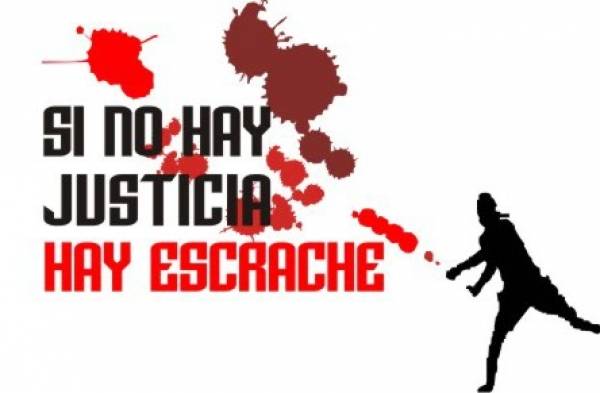
If there’s no justice, there’s escrache!

escrache

From Wikipedia:

Escrache is the name given in Argentina, Paraguay, Uruguay and Spain to a type of demonstration in which a group of activists go to the homes or workplaces of those whom they want to condemn and publicly humiliate in order to influence decision makers and governments into a certain course of action. This term was born in Argentina in 1995 and has since spread to other Spanish-speaking countries.
In Chile these actions are known as funa. In Peru they are known as roche and are often signed “El roche”.
The word was coined for political usage in 1995 by the human rights group HIJOS, to condemn the genocides committed by members of the PROCESO who were pardoned by Carlos Menem.
By 2013, the term was in wide use in Spain, to define the direct action protests of the Plataforma de Afectados por la Hipoteca.

Origin of the term

The lunfardo term “escracho” has been used for some time in Río de la Plata. It was mentioned by Benigno B. Lugones in 1879 referring to a scam in which a lottery ticket supposedly naming the victim is presented to them and they are asked to pay to receive it, for an amount which is inferior to the amount they have “won” in the lottery. Escrache might also have come from the Genoese synonym for a photo “scraccé”, “scraccé” also passed to mean make a portrait, or more recently to smash someone’s face in. Another proposed origin is the English to scratch (the tickets used in the lottery scam were scratched to modify the number) or the Italian scaracio meaning spit.

The term came into wider use in 1995 by the human rights group HIJOS, when Carlos Menem pardoned members of the Proceso de Reorganización Nacional who were accused of human rights violations and genocide. Using chants, music, graffiti, banners, throwing eggs, street theater, etc., they inform neighbors of the presence of criminals in the neighborhood.

From NewTactics.org:

What we can learn from this tactic:

When perpetrators of abuse are granted impunity, whether by law or de facto, they may go on to lead relatively anonymous lives — sometimes in the same communities as their victims. A group in Argentina decided that, even if perpetrators cannot be prosecuted through the courts, they can be revealed — or “unmasked” — to the general public.

Even though amnesty laws have made it difficult to prosecute some perpetrators, H.I.J.O.S. bypasses political and legal systems to encourage a kind of social ostracism, while making use of humor, theater and other cre­ative demonstrations.

This tactic has some serious risks. People adopting this tactic must be certain that they are targeting the right people and that the demonstrations are not used for other political purposes. Organizers of large demonstra­tions around emotional subjects must have mechanisms in place to prevent the events from degenerating into violence.
Public Banking: Funding the New Economy

The most recent episode of “Guns and Butter” featured a compilation of highlights from a conference on public banking in San Rafael, California. Though it was held last year it’s worth a listen and will probably become more relevant in the future. You can listen to the whole show here:

http://archives.kpfa.org/data/20140312-Wed1300.mp3

The following are two of the speeches on the program posted as videos. The first, featuring Jim Hogue, has sound problems in the beginning but is greatly improved about three minutes in. The second clip features Charlie Eaton who discusses how bankers profit off colleges while screwing over students and taxpayers.

Though she wasn’t featured on Guns and Butter, student activist Victoria Grant presented this short but concise speech breaking down the relationship between banks, corporations and governments and how they facilitate corrupt policies.

News Video Roundup

3/3: PressTV interviews Dan Dicks of Press for Truth on the erosion of freedom of the press in the U.S.

3/3: Gerald Celente speaks out on the rash of recent banker suicides and speculation on a connection to a coming global economic collapse at NextNewsNetwork.

3/4: At Global Research TV, geopolitical analysts from across the board explain how the Ukrainian coup has been deliberately provoked by outside agents to promote a combination of US, EU, NATO and IMF interests, and the possible implications.

3/4: Excellent episode of Breaking the Set in which Abby Martin covers the Ukraine conflict and Washington DC’s shadow lobbyists.

3/5: An inspiring story from WeAreChange.org about libertarian crossfit gym owner Danny Lopez-Calleja who overcame drug abuse and homelessness to become a catalyst for change.

3/6: Over 80 people were shot during riots in Kiev a few weeks ago. Now new evidence is coming out that opposition snipers were behind shootings of police and protesters on both sides:

On the lighter side, the Onion reports on disturbing findings from a new marijuana study. It’s even funnier (or more disturbing) watching it stoned.

A Brief History of Nicaragua

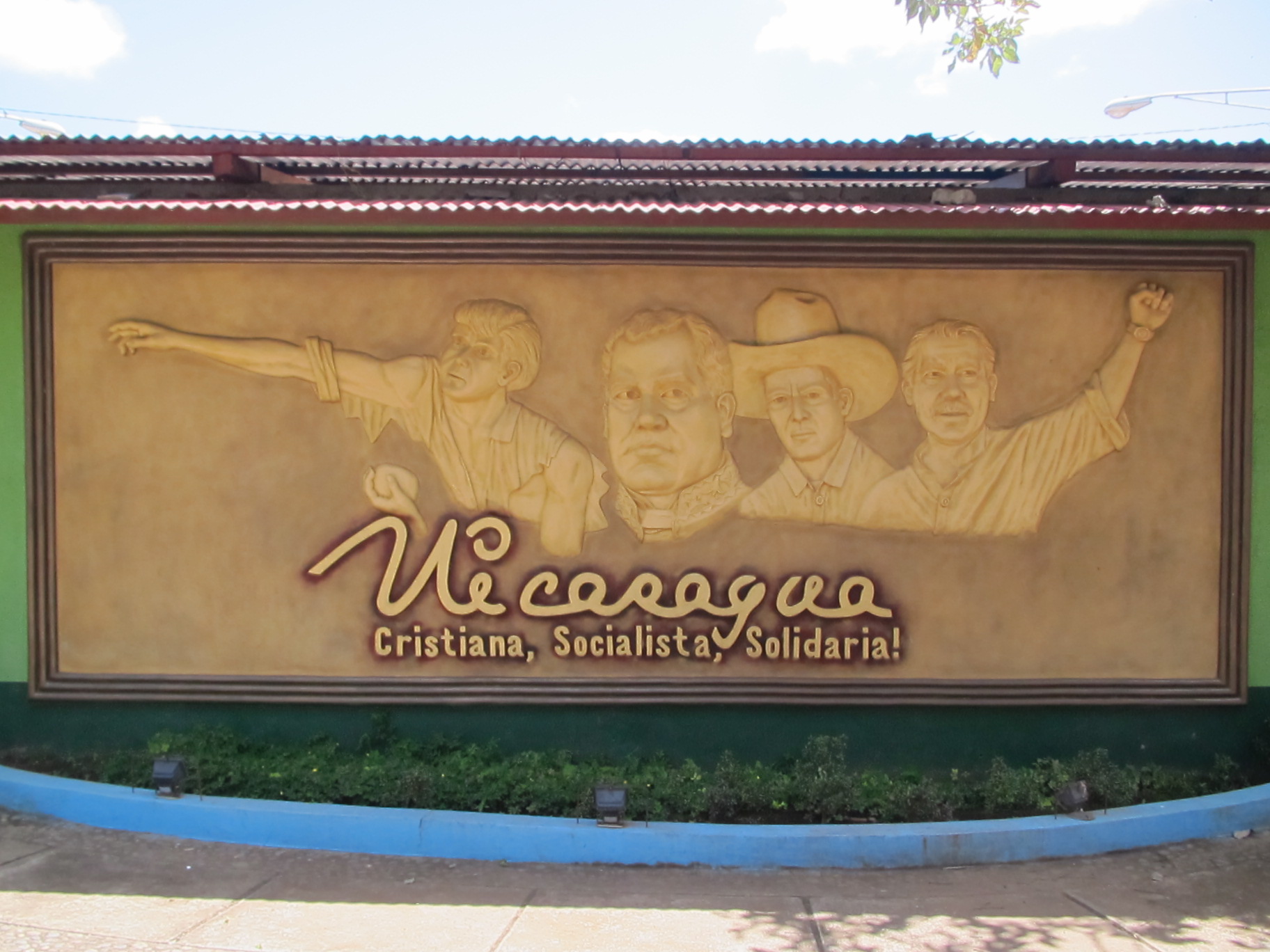
IMG_4398

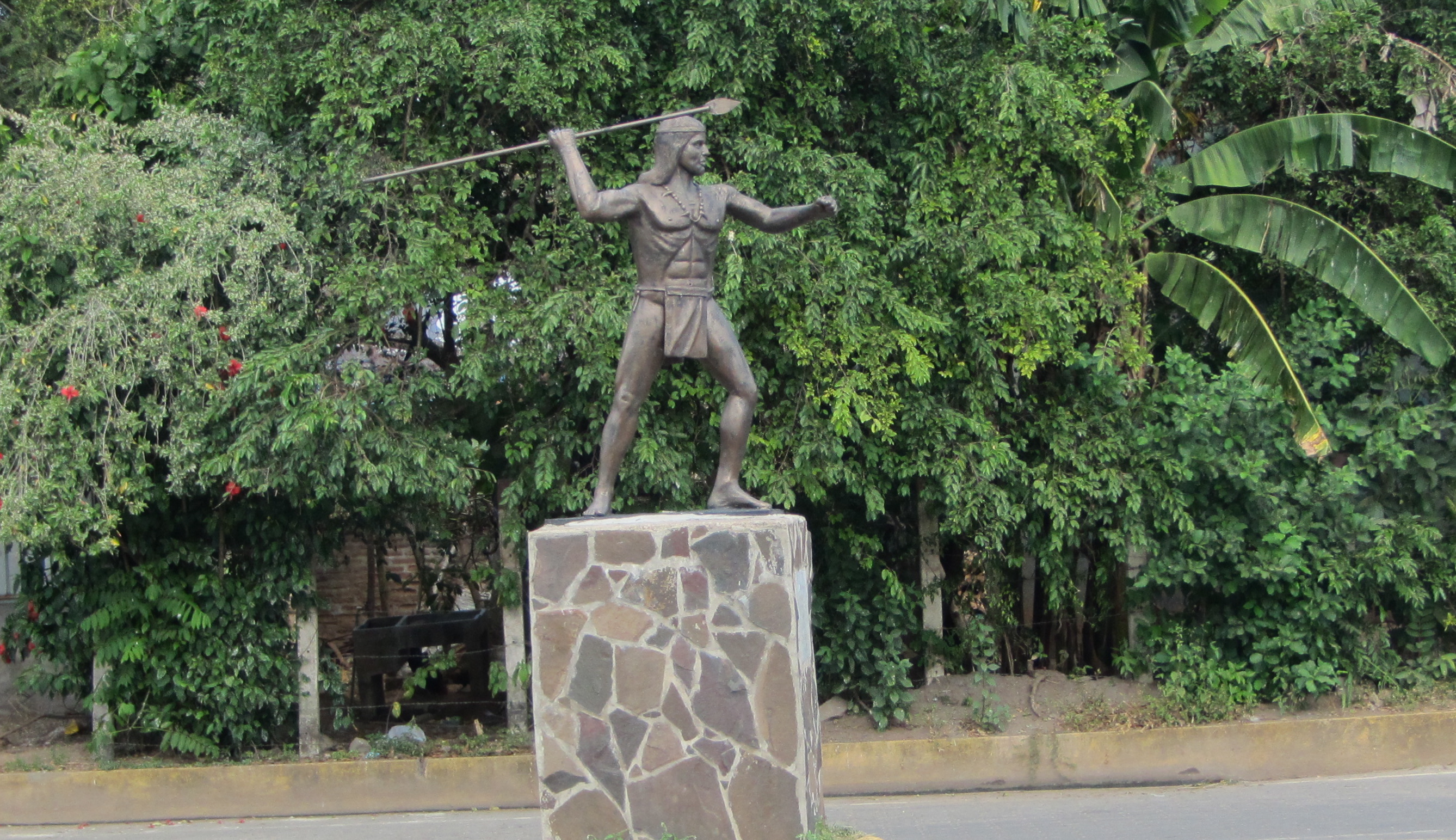
To have even a basic understanding of Nicaraguan culture it’s important to first know a little about the land’s history. In the Pre-Columbian era, the region now called Nicaragua was inhabited by several tribes culturally related to Aztec and Maya civilizations. Not long after Christopher Columbus first reached Nicaragua in 1502, an attempt was made to conquer the region by Gil González Dávila in the 1520s. On April 17, 1523, Dávila first met with Cacique Diriangen, leader of the Dirian peoples. Dávila gave the tribe a three day deadline to become Christians but rather than comply Diriangen led an attack, making him the first known resistance fighter of Nicaragua.

A statue of Diriangen at the entrance to the town of Diria.

A statue of Diriangen at the entrance to the town of Diria.

During over 300 years of colonization, countless indigenous people died of diseases, rival conquistadors waged war on each other, Caribbean pirates raided cities along Lake Nicaragua, British forces fought the Spanish in Nicaragua during a sub-conflict of the the Seven Years’ War, and in 1610 Momotombo volcano erupted, destroying the old capital city of León. In 1838, Nicaragua became an independent republic. Within a few decades, during a power struggle between León and Granada, filibusterer William Walker was hired by the government of León to fight on their side but he exploited the region’s instability and briefly established himself as President of Nicaragua before being forced out of the country a few years later. Three decades of conservative rule followed, during which the U.S. began formulating plans to build a canal across Nicaragua (which may soon become a reality with funding from Chinese corporations). However, when the U.S. shifted their plans to Panama, President Jose Santos Zelaya attempted to negotiate with European partners. Because of the potential threat Zelaya posed to U.S. hegemony and his ambitions to unite the Central American nations, the U.S. government compelled him to resign with the threat of military force and funding of conservative opposition groups, replacing him with a series of puppet regimes. Attempting to prevent insurrection, Nicaragua was occupied by U.S. Marines from 1912 to 1933. From 1927 (the start of Somoza’s rise to power though the National Guard), national hero Augusto César Sandino led a guerrilla war against the conservative government and the U.S. Marines. Shortly after a peace agreement was reached with a newly elected Sacasa administration, the Marines left Nicaragua and the head of the National Guard, Anastasio Somoza García ordered Sandino’s assassination. Sandino was killed by National Guard troops on February 21, 1934. His body was hidden and never found. In 1937 Somoza ousted the Sacasa government in a rigged election.

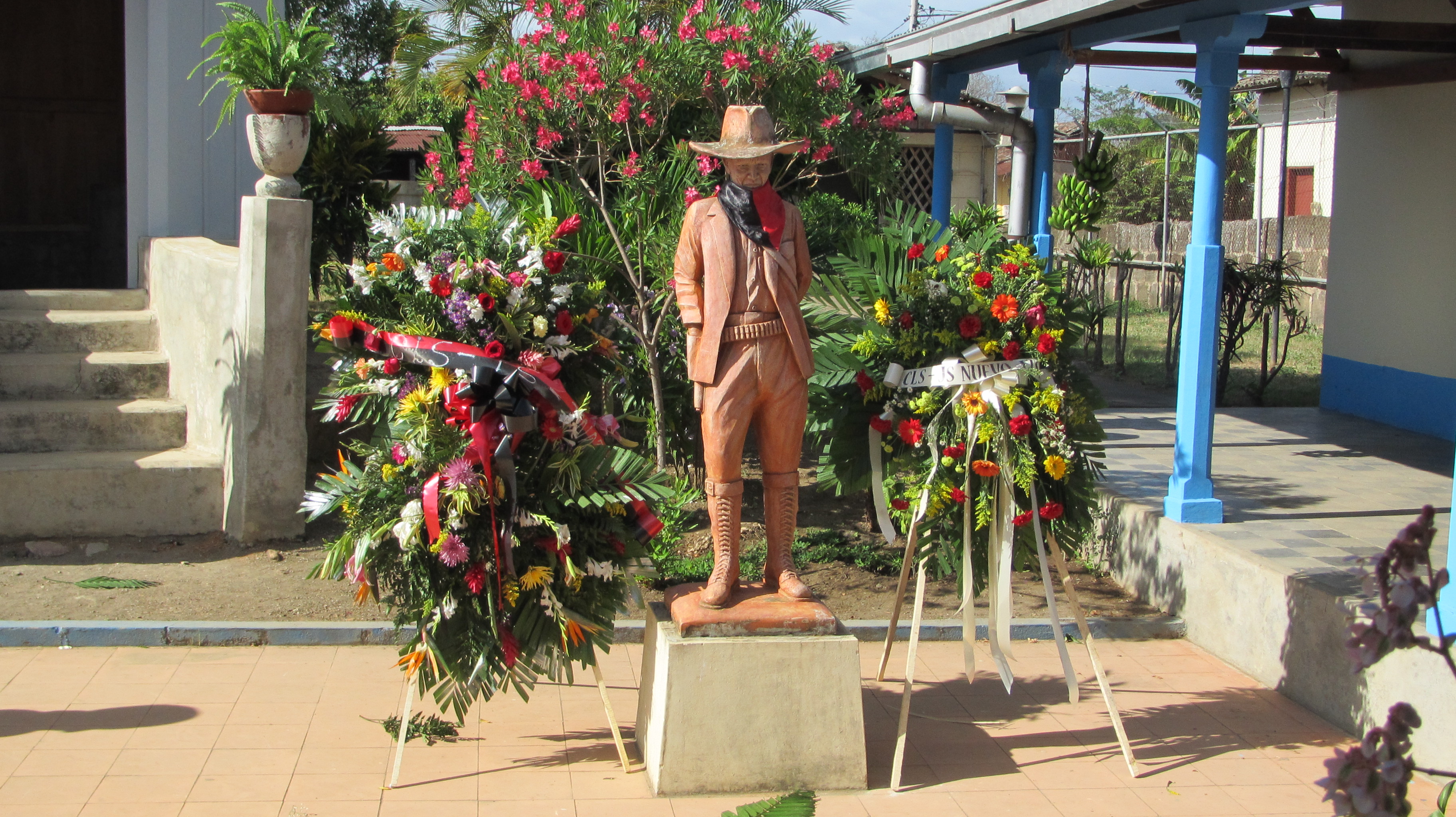
A statue of Sandino at the Augusto C. Sandino Library, a museum located in the house where he grew up in the town of Niquinohomo (Valley of the Warriors).

A statue of Sandino at the Augusto C. Sandino Library, a museum located in the house where he grew up in the town of Niquinohomo (Valley of the Warriors).

The Somoza regime was Nicaragua’s longest lasting hereditary military dictatorship, having ruled for 43 years. The father of the dynasty, Anastasio Somoza García, was famously called “our son of a bitch” by FDR and was assassinated by 27 year old poet Rigoberto López Pérez in León in 1956. In response to increasingly corrupt and reactionary policies of the Somoza government, Carlos Fonseca, Silvio Mayorga, and Tomás Borge led the formation of the Sandinista National Liberation Front (Frente Sandinista de Liberación Nacional or FSLN, named after and inspired by Augusto Sandino) in 1961. In 1972 a major earthquake hit Managua killing 6000 people, injuring tens of thousands and leaving hundreds of thousands homeless. President Anastasio Somoza Debayle mishandled the situation by failing to distribute essential aid and supplies. When it was later revealed that the government was siphoning relief money for personal gain, popularity and membership of the FSLN greatly increased. Hundreds of Chilean refugees also joined their ranks after a CIA-backed coup assassinated Chilean president Salvador Allende in 1973 and installed the dictator Augusto Pinochet the following year.

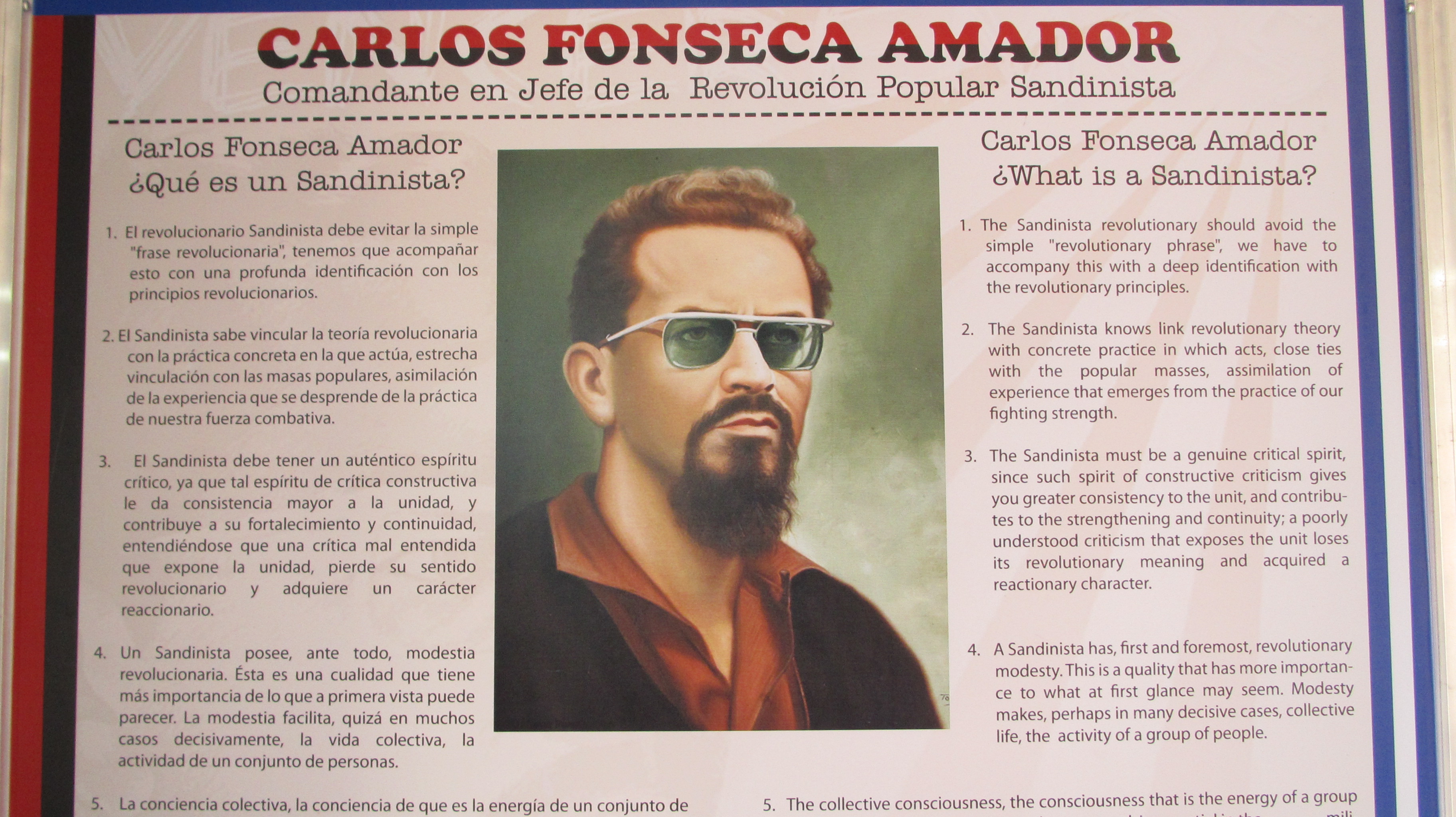
A display at the Carlos Fonseca Museum in Matagalpa.

A display at the Carlos Fonseca Museum in Matagalpa.

When Pedro Joaquin Chamorro, editor of the national newspaper and critic of Somoza, was assassinated by the government on January 10, 1978, a mass insurrection was triggered. By the end of Summer, armed youths took over Matagalpa while factions of the FSLN and civilian recruits had the National Guard under siege in Managua, Masaya, León, Chinandega and Estelí. On July 19, 1979, FSLN forces entered the capital and officially assumed power. Just two days before, Anastasio Somoza Debayle resigned and fled to Miami. He was killed a year later by a rocket attack from members of the Argentinian Revolutionary Workers Party while in exile in Paraguay.

Though the Sandinista government inherited a country in ruins and over a billion dollars in debt, they had an ambitious platform which included:

  • nationalization of property owned by the Somozas and their supporters
  • improved rural and urban working conditions
  • free unionization for all workers, both urban and rural
  • price fixing for commodities of basic necessity
  • improved public services, housing conditions, education
  • abolition of torture, political assassination and the death penalty
  • protection of democratic liberties
  • equality for women
  • non-aligned foreign policy

The Sandinistas had early successes with their education and literacy programs but were soon hindered by emerging conflicts with counter-revolutionary Contra forces heavily financed, armed and trained by the CIA. Investigations into the Iran-Contra scandal revealed some of the funding was acquired through arms sales to Iran and drug shipments to U.S. inner cities (read Gary Webb’s Dark Alliance for more about this). Despite strong support for the opposition by the U.S., the FSLN’s Daniel Ortega won the 1984 elections. Less than a year later the Reagan administration implemented a complete embargo on U.S. trade with Nicaragua that would last five years. By the late 80s, the continuing Contra campaign was notorious for human rights violations, corruption and terrorism. In August 1987, Costa Rican president Oscar Arias Sanchez created a peace accord which led to a ceasefire signed by Contra and Sandinista representatives a year later. Disillusioned by conflict and economic strife (made worse by Reagan’s embargo), Nicaraguan voters elected conservative administrations throughout the 1990s and early 2000s but seeing little improvement and much corruption, they reelected FSLN member Daniel Ortega in 2006 and 2011. So far, there has not yet been radical reforms that corporate investors feared and that more radical liberals hoped for, but Ortega has maintained a skepticism towards capitalism while simultaneously maintaining relations with the U.S. and rivals such as Iran, Libya and Venezuela.

As for how the average Nicaraguan feels about their current situation, opinions seem to vary but I plan to share some of the impressions I got in a future post.

TSA Threatens Satirist’s First Amendment Rights

TSA-airport-security-enhanced-pat-downs

On November 6, 2013 Infowars.com sponsored a “We Will Resist TSA & NSA Tyranny” video contest. One of the participants, Telly “Leatherface” Blackwood, received a call regarding his entry from a man claiming to be from the TSA on Monday afternoon. According to a statement posted with a recording of a follow-up call on YouTube:

I received a call from a man named John on January 19 claiming to be from the TSA and had some questions for me. I asked him to call me back next day that I couldn’t hear him well. He agreed and within an hour or two I download an app so I can record phone calls. Today January 20th around 5:42pm while sitting outside he called back and I was able to record the whole thing. It was a strange call but very laughable. Sounds like one irritated TSA agent had enough of my video.

The contentious video from Blackwood’s comedy group “Off the Hook Television”:

In 2012, a TSA video from Natural News was suppressed by YouTube’s age restrictions (though this reposting got around it):

This is Joy Camp’s submission to the Infowars contest:

Bonus Clip: A new Joy Camp video mocking the contemporary pop music scene:

Open Letter to BoA from Anonymous Olympia

258844_104131489680984_104118713015595_32268_721285_o__1_

In the wake of recent revelations of documents confirming Bank of America’s use of social media trolling teams to spy on activist groups, Anonymous Olympia has released an open letter (reposted below) stating that they will hold them accountable. Whether or not they follow through on their promise, they make good arguments for why we should not be giving our money to such banks. There’s plenty of alternatives more deserving of our trust and which make better investments, such as public banks, community banks, credit unions, community currencies, digital currencies (do careful research first) and safe deposit boxes for physical precious metals. Currently, only North Dakota has a state-owned bank, but it’s been such a success, at least 20 other states are considering proposals to create their own.

—————————————————————————-

Dear Bank of America,

Thank you for your interest in Anonymous Olympia. After careful review

of your actions, we have prepared the following open letter:

Your institution is like a large, festering carcass that smothers all

of the life beneath it as it wallows, decaying in its own gluttonous

vastness. Nobody pretends that you’re a decent banking institution

these days except you, and we all know you’re not. You’re swollen,

sallow with your own misdeeds.

It blows our minds how anyone could still bank with you, or why they

would want to. Your commercials smile and lie, but everyone can smell

the bullshit wafting from behind those carefully constructed scenes of

gentle middle-class life that you promote on television and in the

lobbies of your bank branches.

The way you nickel and dime your customers to financial death is

disgusting, and you should be ashamed. A fee to close an account, a

monthly fee to have an account, a thirty five dollar over-draft fee

for as little as a $0.01 over-draft, a fee for bill-pay, the five

dollar debit-usage fee.

You’re a vampire, Bank of America. You’re a parasite, bloated with the

blood that you suck from the financial life of your customers.

Shall we mention your colluding with Visa and MasterCard to keep ATM

fees outrageously high? Or all the times that you illegally and

wrongfully foreclosed on the homes of families that banked with you,

leaving those families homeless, their lives ruined? Or the miniscule

amount of taxes that you’re supposed to pay, but don’t?

What about the six former Bank of America employees who came forward

and revealed your despicable practices, including rewarding employees

who managed to place ten or more mortgage accounts into foreclosure in

one month with a $500.00 bonus?

We suppose a financial institution with your track record of being

evil could justify spying on a group of average citizens who were

attempting to exercise their right to air grievances through public

assembly, but that doesn’t make it right, and it doesn’t make what we

do any of your business, either.

In fact, your actions directly violate our constitutional right to

privacy. The fact that you worked with Washington State Patrol to

share information represents a terrifying fusion of financial and

state interest, one that I hope keeps your employees up at night.

Fascism is defined as a merging of state and corporate interest, so

make of that what you will, Bank of America.

We know that you were asked to comment on your spying, but declined to

do so- this leaves us with little hope that you will hold yourself

accountable for this and other actions, so we’re going to start

holding you accountable, instead, and we’re going to ask all of our

brothers and sisters to join us.

You may have been watching us, Bank of America, but we’ve been

watching you, too, and our memories are long.

We do not forgive, we do not forget.

Regards,
Anonymous Olympia

Upper 1 Percent Plan Total Control of Internet News

internet-censorship

By Wayne Madsen

Previously published in the Wayne Madsen Report.

With the impending demise of World Wide Web “net neutrality,” which has afforded equal access for website operators to the Internet, the one percent of billionaire investors are busy positioning themselves to take over total control of news reporting on the Internet.

In the latest move by billionaires to monopolize the Internet, Huffington Post founder Arianna Huffington and billionaire Nick Berggruen announced the creation of World Post, a news and views website that will be officially launched at the World Economic Forum conclave of one percenters in Davos, Switzerland.

Among the announced contributors to World Post are Microsoft owner Bill Gates, Google CEO Eric Schmidt, and former British Prime Minister Tony Blair.

The move by Huffington and Berggruen follows the creation of the “investigative” news website First Look, Inc. by PayPal’s billionaire founder Pierre Omidyar. First Look plans to distribute the remaining cache of National Security Agency (NSA) documents originally leaked by NSA whistleblower Edward Snowden to journalist and lawyer Glenn Greenwald.

Another billionaire who has joined the rush to seize part of the Internet is hedge fund tycoon George Soros. Soros has backed two media operations, Pro Publica, which promised to disclose many Snowden documents but has not followed through, and Project Syndicate, which paves the Internet with editorials backing all of Soros’s global initiatives.

Greenwald and his associates have published only one percent of the estimated 50,000 documents downloaded by Snowden from classified NSA databases. In a recent interview by Israel’s Channel Ten, Greenwald made it very clear that he would release more documents concerning NSA surveillance of Israeli leaders based on what the Obama administration does with regard to convicted and jailed Israeli spy Jonathan Pollard. There are increasing calls for Pollard’s release from prison and permission for him to move to Israel.

Greenwald stated to Israeli television that the slow pace of document release would continue and that he agreed with Israel on the issue of Pollard: “I think you are absolutely right to contrast the Jonathan Pollard case with revelations of American spying on their closest allies within the Israeli government, because it does underlie, underscore exactly the hypocrisy that lies at the center of so much of what the U.S. government does.”

Pollard is serving a life sentence in the Butner, North Carolina, federal penitentiary for disclosing a cache of documents that resulted in a number of U.S. intelligence assets in the Middle East being compromised to Mossad. The Mossad approached the U.S. assets and offered them a deal: cooperate with Mossad or risk being outed to their governments as CIA assets. In either case, the assets faced a certain death sentence: disclosure of work for Israel or the United States would have been met with the same fate of execution as spies.

A number of American journalists are now coming out in support of clemency for Pollard to placate Israel over the NSA spying reports leaked by Greenwald. First Look’s initial operating budget is $250 million. Along with Greenwald, journalists such as The Nation’s Jeremy Scahill; Dan Froomkin, formerly with The Washington Post; and Entertainment Weekly.com’s Bill Gannon jumped ship to sign on to First Look. The hiring of an entertainment editor who once worked for Lucas Films, the producer of Star Wars movies, raised eyebrows among those who believed Greenwald and Omidyar intended First Look to be a no-nonsense news operation. It now seems certain that First Look will be no different than Disney Corporation’s running of ABC News.

There have been some outrageous examples of corporate parents spiking stories by their news divisions in order to avoid bad publicity. In 2006, ABC News was pressured by Disney and its then-CEO Michael Eisner to kill an investigation of pedophiles being employed by Disney World in Orlando. The end of net neutrality will stymie and possibly eliminate investigative reporting on the Internet as we now know it.

The formation of the two newest media companies follows Amazon CEO Jeff Bezos’ acquisition of The Washington Post. It is believed that Bezos will begin to streamline the newspaper with more focus on Internet distribution than the print run.

Under President Obama, the Federal Communications Commission and Federal Trade Commission have done little to advance the cause of net neutrality. In fact, the regulatory agencies have gone the other way in order to facilitate the creation of a multi-tiered Internet that will permit high bandwidth access in a “pay to play” scheme. In other words, only billionaires like Omidyar, Berggruen, Bezos, and others will have access to the top tier of the Internet to distribute varnished “news” reports.

Those media organizations without deep pockets will be relegated to the slower tiers of the Internet, sharing limited bandwidth with pornography, quack medicine, and get-rich-quick scam operators.

Rupert Murdoch’s British Sky Broadcasting and Virgin Media, formerly owned by Sir Richard Branson, have been at the forefront of establishing a “two-speed Internet.”

It is painfully clear that the top one percent are feverishly engaged in an orgy of carving up the Internet after the collapse of net neutrality for the benefit of corporatism and oligarchic control over news dissemination.

It is noteworthy that Obama’ old friend from Columbia and Harvard and his first FCC chairman, Julius Genachowski, has just joined a new firm after offering only lukewarm support for net neutrality. Genachowski now works for the eternally dubious Carlyle Group.

There is little wonder why one of World Post’s first contributors will be Google’s Schmidt, the frequent habitué of the Davos and Bilderberg secret conclaves of financial and political vipers who run the world. The journalists who have joined the frenzy to climb into the one percenters’ Internet top tier deserve nothing but condemnation from their peers.

Wayne Madsen is a Washington, DC-based investigative journalist and nationally-distributed columnist. He is the editor and publisher of the Wayne Madsen Report.

Comedian Dieudonné Censored Throughout France

France Controversial Comic

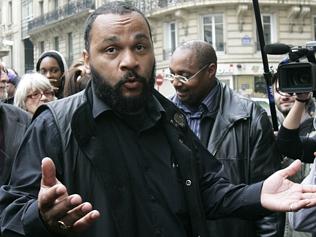
Last week, French comedian, actor and activist Dieudonné M’Bala M’Bala gained international attention when, in a move backed by French President Francois Hollande and the country’s highest court, his comedy tour was banned in several French cities. The bannings followed a January 6 announcement from France’s interior minister Manuel Valls that he considered Dieudonné’s performances anti-semitic and a “a grave disturbance of public order”.

To be honest, I can’t say I’m familiar enough with Dieudonné to know whether he is anti-semitic or, as has happened to many others, he was given that label because he’s anti-Zionist or just critical of certain policies of the Israeli government. However, given his background it’s highly unlikely that he’s racist. He himself is of mixed race, his father being a white artist and his mother a black accountant originally from Cameroon. He was raised mostly by his mother since they divorced when he was one. His first comedy partner and childhood friend was Jewish, and in the 1997 and 2001 legislative elections in Dreux, he campaigned against racism and ran against the National Front.

Even if Dieudonné was a racist and anti-semite he should not have been censored (though it’s true if his performances weren’t banned I may not have heard of him). No matter how offensive one might find someone’s words and ideas, the best policy is open discussion and debate so people can decide for themselves what to believe and what to reject.