Are “Conspiracy Theories” Tearing Society Apart Or Saving Us From Destruction?

By Brandon Smith

Source: Activist Post

The phrase “conspiracy theory” is often used by establishment agencies, the mainstream media and useful idiots as a tool to dismiss legitimate evidence or viewpoints that disagree with their predetermined version of events. This method of propaganda was not always as widespread as it is today. The phrase was not “created” by the CIA, but it was in fact weaponized by them in the 1960s after the assassination of John F. Kennedy with the express purpose of shutting down rational debate.

CIA memo 1035-960, circulated within the CIA in 1967 and exposed through a freedom of information act request by The New York Times in 1976, outlines strategies the agency would use to shut down critics of the Warren Commission Report. Specifically, they suggested the accusation of “conspiracy” with negative connotations attached, predominantly in mainstream books and articles. This was indeed done through the CIA’s many puppets in the media, and the concept of “conspiracy theory” as a pejorative was born.

Through the use of straw man arguments, red herring fallacies and sophistry, the incredible scale of evidence (exposed by investigators like New Orleans District Attorney Jim Garrison) suggesting the Warren Commission was either corrupt or ignorant in its findings was buried in a flurry of hatchet jobs and hit pieces. And this was the goal, of course; to attack the messenger and silence the truth without having to go through the ugly process of directly confronting the truth.

Until recently, this strategy was highly effective. Attacking a person as a “conspiracy theorist” was the only tool critics really needed to keep a piece of evidence or a concrete viewpoint from going viral. Conspiracy theory is equated to insanity, or stupidity, or buffoonery. Everyone knows a conspiracy theorist is not to be taken seriously, so why waste time listening to what they have to say in the first place?

It should come as no surprise that conspiracy REALITY is not something these people want entertained by the public. Conspiracies are a fact of history. Governments lie, all the time, and they have been caught doing it. The media lies, constantly, and has been caught doing it. Yet, we are supposed to ignore this and assume that anyone daring to stand contrary to government and media claims is some kind of lunatic?

In the past 5-10 years, however, things have been changing. Suddenly, anti-establishment views and investigations of corruption are bulldozing the mainstream scripted narrative, and the elites and the media are bewildered. They can see they are losing control of popular thought and they are disturbed, to say the least. A steady stream of articles and essays have been flooding the MSM recently lamenting the rise of “conspiracy culture” and warning of the “death of democracy” if this is allowed to continue.

They seem specifically angered by the idea that their “journalistic” and “professional” status no longer matters to most people. Not long ago, anyone wearing a suit, a uniform, a lab coat, a journalist’s badge or collecting a government paycheck was supposed to be immediately taken seriously as a designated “expert”. As Noam Chomsky describes them in his book Manufacturing Consent, they were the professional class, the top 10% or less of individuals with “all the answers”. These were the people the establishment sought to indoctrinate most of all, because these were the community leaders that many in the public listened to without question.

Now there is a growing movement of people who could not care less about what kind of degree someone’s parents purchased for them from an Ivy League university. They don’t care about establishment designations and fake accolades and titles and credentials. What they care about are facts and evidence. What they care about are the arguments a person puts forth, rather than how important they purport to be. This is causing some consternation among the elites.

A key figure and gatekeeper in the propaganda war against the alternative media and conspiracy reality is Cass Sunstein, former “Information Czar” in the Obama Administration. Sunstein has written numerous books and articles lamenting the growing influence of the alternative media, including his book Conspiracy Theories And Dangerous Ideas.

The main thrust of Sunstein’s position is that conspiracy theories isolate the populace into small groups of like-minded people perpetuating each other’s “misguided” views. He also suggests that these groups represent a concrete threat to the stability of government and of society by spreading wrong (or perhaps inconvenient) information and civil unrest. In other words, a few decades ago all information was centralized and filtered by the corporate media and government, and now the Internet is decentralizing information flow thereby allowing people to think differently and break from the majority narrative, which is unacceptable by Sunstein’s standards.

Sunstein sees the creation of a public hive mind as the best outcome for social order. He suggests in his book Nudge the concept of “Libertarian Paternalism” (which is neither libertarian nor paternal). He advocates for the control of society through subversive means of influence (nudging) while allowing people to continue believing that their choices are actually their own.

But how would Sunstein go about executing this influence? His solution to the threat of the alternative media was first made clear in his paper titled “Conspiracy Theories”, published in 2008. In it, he argues in favor of government interference or control of alternative media or “conspiracy theory” sources. His primary tactic was the infiltration of alternative media forums and sites by government agents or private actors paid by the government to disrupt discussion, derail activism and sow seeds of doubt or chaos. Effectively, Sunstein wanted the covert destruction of the liberty media by paid agitators.

So, the same man who accuses the alternative media of conspiracy mongering and the destruction of the Western world is actively seeking to foment a conspiracy to undermine that movement. Is this irony, or hypocrisy or both?  Doesn’t this mean that Sunstein is a part of one of the very conspiracies he criticizes people like me for being concerned about?

Sunstein and his elitist ilk want the power to erase or sabotage the alternative media. In fact, there are probably a few of their agents provocateurs attacking this article in the comments below right now. They would prefer that the government eventually take full control of the Internet and dictate the terms of media participation directly. This gives rise to one of the most important questions that the establishment does not want to answer – Who gets to decide what is and what is not “dangerous conspiracy theory”?

If pressed, the elites will ultimately suggest that they are the best qualified. Sunstein describes the general public in his books as essentially lazy, unintelligent, impulsive and not to be trusted to make good decisions. He does not seem to include himself and his globalist comrades as being prone to the same weaknesses. They are apparently wise and benevolent enough to make the best decisions for all of us. Imagine that…

This elitism bias and Sunstein’s overall methodology for biting at the ankles of the liberty media is being carried over into a new wave of propaganda in the past couple of years, primarily coming from (though not limited to) the political left.

Sunstein’s gatekeeping has spawned a cancerous growth of copycats in progressive academics. This is going on everywhere, but one particular example I found recently was on Vox, a leftist rag which shamelessly flaunts its political bias and actively slanders conservatives.  Vox‘s article “Conspiracy Theories Are Getting More Absurd And Harder To Refute” promotes a new book which regurgitates Sunstein’s propaganda model. The article takes special time to reassert the old disinformation narrative by stating that:

Democracy requires a minimum amount of mutual trust among citizens, and conspiracism destroys it.

Are you getting the sense yet that there is a repetitive message coming from these people that they want you to embrace? Is there ANYTHING true about the statement above?  The fundamental root of their argument is that conspiracy theories (viewpoints outside the mainstream) must be treated as existential threats to society. In other words, some ideas are so dangerous that they must be controlled or outlawed. The basis of this argument, though, is entirely fraudulent.

First, leftists incessantly refer to our society as a “democracy”, I think because they believe if they tell the lie enough it will become reality by default.  The US was never intended to be a “democracy”, but a Republic, and with good reason. Democracy requires blind and often misplaced faith in the system. A Republic requires constant vigilance and healthy skepticism. In a Republic, we are not supposed to simply “trust” that our leaders are going to do the right thing. We are supposed to put them under a microscope, uncover criminality and corruption, and generally make them uncomfortable at all times. It is our civic duty to become “conspiracy theorists”.

The establishment prefers a democracy because in a democracy 51% of the population can dictate the individual liberties of the other 49%, and they are rightly convinced that they can influence the thinking and decisions of the larger half. Also, in a democracy, society revolves around moral relativism and the ever arbitrary “greater good for the greater number”, instead of governing according to individual liberty, inherent moral compass and human conscience.

The Vox article goes on to make the claim that while there are some correct conspiracy theories, they have all come from the left side of the political spectrum (which they call “progressive conspiracy theories”). They then assert that there are no verifiable conspiracy theories coming from the political right. This is madness.

When Cass Sunstein describes the tribalist isolation and conspiracy delusions of certain groups, he was clearly trying to mislabel conservative activists and the alternative media, but the REAL conspiracy nutbags have actually been on the left this whole time.

A lot of young leftist millennials, professional (I say this with the utmost sarcasm) mainstream media personalities and celebrities foolishly bought into the Russiagate conspiracy theory; a theory based on ZERO concrete evidence and a garbage heap of empty conjecture. For example, how many sessions of Real Time With Bill Maher or Late Night With Stephen Colbert was the Russiagate fantasy propped up as verified fact by a screeching flock of leftist parrots, blanketed in the protective peanut-brained imbecility of the audiences in their Los Angeles and New York echo chambers?

Even today, after the long-anticipated Mueller Report led to no indictments, leftists continue to cling desperately like hemorrhoids to the anus that is Russiagate.

Leftists have to this point justified much of their schizophrenic and sometimes violent and criminal behavior on the lie that Donald Trump is a usurper put into office by Russian manipulation of US elections. Now isn’t this the epitome of a conspiracy theory that is destructive to society?

Not all conspiracy theories are started by the alternative media. Many are started by the establishment itself, and these are indeed designed to cause the destabilization of the nation.

At the same time, the fabricated Russiagate conspiracy has been very effective at leading the left away from the very real conspiracy of Trump’s saturation of his cabinet with banking elites and globalist think tank ghouls like John Bolton, Steven Mnuchin or Wilber Ross. Weren’t these the same elites that Trump was going to “drain from the swamp”? Why hasn’t the left talking about that for the past two years?

The article also makes no mention of the DNC rigging of the Democratic primaries in favor of Hillary Clinton and against Bernie Sanders. This was a conspiracy conservatives had to help expose, while the left sat idle and ignored it, hyperfocusing on their hatred of Trump while propping up Hillary Clinton, a repeat criminal offender. But, hey, conservative conspiracies are always wrong and leftist conspiracies are often correct according to Vox and friends…

And what about the verified fact of mass digital surveillance by government on the public?  This was a conspiracy that conservative groups had been warning about for years.  We were called kooks, because why would the government care about what the average person did in their day-to-day life?  Our fears were verified by the exposure of classified data by people like Edward Snowden and Julian Assange (who is now facing extradition and prosecution for nothing more than publishing truths on the Internet).  Both the political left and political right are aggressively hostile to both these men, and are seeking to bury them.

My question is, what is really more dangerous?  Conspiracy theories, or the actual conspiracies governments and elitists execute against the people?

The message here is not ambiguous at all. To summarize, the establishment wants control of Internet media, by hook or by crook, in the name of protecting people from themselves and from ideas they consider unsettling to the world order. The political left is all on board with this as long as their conspiracy theories are treated with legitimacy; and they will be, because their conspiracy theories are the establishment’s conspiracy theories.

The only theories that are being threatened with subjugation are those of conservatives and the alternative media that are contrary to centralization and government power. Not because our theories are dangerous to the fabric of society, but because our theories are dangerous to the people who want to dictate the fabric of society. Our activism and journalism represents decentralized thought which could choke the engine of the globalist agenda. We aren’t tearing down the Western world, we’re the only thing keeping it alive.


You can read more from Brandon Smith at his site Alt-Market. If you would like to support the work that Alt-Market does while also receiving content on advanced tactics for defeating the globalist agenda, subscribe to our exclusive newsletter The Wild Bunch Dispatch.  Learn more about it HERE.
Understanding NATO, Ending War

By Robert J. Burrowes

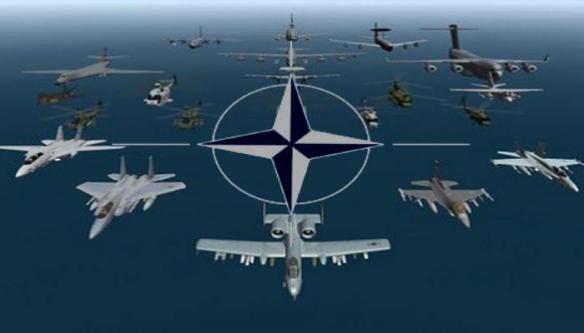
On 4 April 2019, the North Atlantic Treaty Organization, better known as NATO, marked the 70th anniversary of its existence with a conference attended by the foreign ministers of member nations in Washington DC. This will be complemented by a meeting of the heads of state of member nations in London next December.

Coinciding with the anniversary event on 4 April, peace activists and concerned scholars in several countries conducted a variety of events to draw attention to, and further document, the many war crimes and other atrocities committed by NATO (sometimes by deploying its associate and crony terrorist armies – ISIS, Al Qaeda, Al Nusra – recruited and trained by the CIA and funded by Saudi Arabia, other Gulf countries and the US directly or through one or other of its many agencies: see ‘NATO – No Need – NATO-EXIT: The Florence Declaration’), the threat that NATO poses to global peace and security as an appendage of the US military, and to consider ways that NATO might be terminated.

These protests and related activities included several outlined in ‘No To NATO: Time To End Aggressive Militarism’ which also explains how NATO ‘provides a veneer of legality’ when ‘the US is unable to get the United Nations Security Council to approve military action’ and ‘Congress will not grant authority for US military action’ and despite the clearcut fact that NATO has no ‘international legal authority to go to war’, the grounds for which are clearly defined in the Charter of the United Nations and are limited to just two: authorization by the UN Security Council and a response in self-defense to a military attack.

The most significant gathering of concerned scholars was undoubtedly the ‘Exit NATO!’ conference in Florence, Italy, which culminated in the Florence Declaration calling for an end to NATO. See ‘The Florence Declaration: An International Front Calling for NATO-Exit’.

If NATO’s record of military destruction is so comprehensive – in the last 20 years virtually destroying Yugoslavia (balkanized into various successor states), Iraq and Libya, while inflicting enormous damage on many others, particularly Afghanistan and Syria – how did it come into existence and why does it exist now?

The Origin and Functions of NATO

Different authors offer a variety of reasons for the establishment of NATO. For example, Yves Engler argues that two of the factors driving the creation of NATO were ‘to blunt the European Left’ and ‘a desire to bolster colonial authority and bring the world under a US geopolitical umbrella’. See ‘On NATO’s 70th anniversary important to remember its anti-democratic roots’ and ‘Defense of European empires was original NATO goal’.

But few would disagree with Professor Jan Oberg’s brief statement on the origin of NATO: ‘Its raison d’etre… had always and unambiguously been the very existence of the Soviet Union… and its socialist/communist ideology.’ See ‘NATO at 70: An unlawful organisation with serious psychological problems’.

In other words, NATO was established as one response to the deep fear the United States government harbored in relation to the Soviet Union which, despite western propaganda to the contrary and at staggering cost to its population and industrial infrastructure, had led the defeat of Nazi Germany in World War II.

As Professor Michel Chossudovsky elaborates this point: The NATO ‘alliance’ of 29 member states (with Israel also a de facto member), most with US military bases, US military (and sometimes nuclear) weapons and significant or substantial deployments of US troops on their territory, was designed to sustain ‘the de facto “military occupation” of Western Europe’ and to confront the Soviet Union as the US administration orchestrated the Cold War to justify its imperial agenda – global domination guaranteed by massive US military expansion – in service of elite interests (including the profit maximization of the military industrial complex, its fossil fuel and banking corporations, and its media and information technology giants).

While NATO has the appearance of a multinational military alliance, the US controls NATO command structures with the Pentagon dominating NATO decision-making. NATO’s Supreme Allied Commander Europe (SACEUR) and Supreme Allied Commander Atlantic (SACLANT) are Americans appointed by Washington with the NATO Secretary General Jens Stoltenberg performing merely bureaucratic functions.

In light of the above, Chossudovsky observes: ‘Under the terms of the military alliance, NATO member states are harnessed into endorsing Washington’s imperial design of World conquest under the doctrine of collective security.’ Even worse, he argues, given the lies and fabrications that permeate US-NATO military doctrine, key decision-makers believe their own propaganda. ‘Immediately after the Cold War, a new nuclear doctrine was formulated, focused on the preemptive use of nuclear weapons, meaning a nuclear first strike as a means of self-defense.’ More recently: ‘Not only do they believe that tactical nuclear weapons are peace-making bombs, they are now putting forth the concept of a “Winnable Third World War”. Taking out China and Russia is on the drawing board of the Pentagon.’ See ‘NATO-Exit: Dismantle NATO, Close Down 800 US Military Bases, Prosecute the War Criminals’ and ‘NATO Spending Pushes Europe from Welfare to Warfare’.

So, given the ongoing military threats – with an expanding range of horrific weapons (including, to nominate just two, ‘more usable’ low yield nuclear weapons and technologies on ‘weather warfare’ offered by the military/nuclear corporate war planners) that threaten previously unimagined outcomes – and interventions by a US-led NATO, with Venezuela and now Iran the latest countries to be directly threatened – see ‘“Dangerous game”: US, Europe and the “betrayal” of Iran’ – as well as a gathering consensus among peace activists and scholars of the importance of stopping NATO (particularly given the many opportunities, beginning with aborting its origin, that have been missed already as explained by Professor Peter Kuznick: see ‘“Obscene” Bipartisan Applause for NATO in Congress’) how do we actually stop NATO?

While several authors, including those with articles cited above, offer ideas on what should be done about ending NATO, Chossudovsky offers the most comprehensive list of ideas in this regard well aware that stopping NATO is intimately connected to the struggle to end war and globalization. Chossudovsky’s ideas range from organizational suggestions such as integrating anti-war protest with the campaign against the gamut of neoliberal economic ‘reforms’ and the development of a broad based grassroots network independent of NGOs funded by Wall Street, objectives such as dismantling the propaganda apparatus which sustains the legitimacy of war and neoliberalism, challenging the corporate media (including by using alternative media outlets on the Internet), providing encouragement (including information about the illegality of their orders) for military personnel to refuse to fight (perhaps like the GI coffeehouse movement during the US war on Vietnam: see ‘The story of the GI coffeehouses’), working to close down weapons assembly plants and many other suggestions. See Towards a World War III Scenario: The Dangers of Nuclear War and ‘NATO-Exit: Dismantle NATO, Close Down 800 US Military Bases, Prosecute the War Criminals’.

Given my own deep interest in this subject of US/NATO wars and in developing and implementing a strategy that ends their war-making, let me elaborate Chossudovsky’s explanation of NATO’s function in the world today by introducing a book by Professor Peter Phillips.

In his book Giants: The Global Power Elite, Phillips observes that the power elite continually worries about rebellion by the ‘unruly exploited masses’ against their structure of concentrated wealth. This is why the US military empire has long played the role of defender of global capitalism. As a result, the United States has more than 800 military bases (with some scholars suggesting 1,000) in 70 countries and territories. In comparison, the United Kingdom, France, and Russia have about 30 foreign bases. In addition, US military forces are now deployed in 70 percent of the world’s nations with US Special Operations Command (SOCOM) having troops in 147 countries, an increase of 80 percent since 2010. These forces conduct counterterrorism strikes regularly, including drone assassinations and kill/capture raids.

‘The US military empire stands on hundreds of years of colonial exploitation and continues to support repressive, exploitative governments that cooperate with global capital’s imperial agenda. Governments that accept external capital investment, whereby a small segment of a country’s elite benefits, do so knowing that capital inevitably requires a return on investment that entails using up resources and people for economic gain. The whole system continues wealth concentration for elites and expanded wretched inequality for the masses….

‘Understanding permanent war as an economic relief valve for surplus capital is a vital part of comprehending capitalism in the world today. War provides investment opportunity for the Giants and TCC elites and a guaranteed return on capital. War also serves a repressive function of keeping the suffering masses of humanity afraid and compliant.’

As Phillips elaborates: This is why defense of global capital is the prime reason that NATO countries now account for 85 percent of the world’s military spending; the United States spends more on the military than the rest of the world combined.

In essence, ‘the Global Power Elite uses NATO and the US military empire for its worldwide security. This is part of an expanding strategy of US military domination around the world, whereby the US/ NATO military empire, advised by the power elite’s Atlantic Council, operates in service to the Transnational Corporate Class for the protection of international capital everywhere in the world’.

In short, ending NATO requires recognition of its fundamental role in preserving the US empire (at the expense of national sovereignty) and maintaining geopolitical control to defend the global elite’s capital interests – reflected in the capitalist agenda to endlessly expand economic growth – and particularly the profits the elite makes by inciting, supplying and justifying the massively profitable wars that the US/NATO conduct on its behalf.

So if you thought that wars were fought for reasons other than profit (like defense, a ‘just cause’ or ‘humanitarian’ motives) you have missed the essential function of US/NATO wars. And while these wars might be promoted by the corporate media as conflicts over geostrategic considerations (like ‘keeping open the Straits of Hormuz’), access to resources (‘war for oil’) or even markets (so that we can have US junk-food chains in every country on Earth), these explanations are all merely more palatable versions of the word ‘profit’ and are designed to obscure the truth.

And this raises another question worth pondering. Given that wars are the highly organized industrial-scale killing of fellow human beings (for profit) as well as the primary means of expanding the number of fellow human beings who are drawn into the global capitalist economy to be exploited (for profit) and the primary method used for destroying Earth’s climate and environment (for profit), you might wander if those who conduct wars are sane. Well, as even posing the question suggests, the global elite – which drives wars, the highly exploitative capitalist economy and destruction of the biosphere – is quite insane. And there is a brief explanation of this insanity and how it is caused in the article ‘The Global Elite is Insane Revisited’.

Stopping NATO

So if war is precipitated and now maintained perpetually by an insane elite that controls and utilizes the US and NATO military forces to secure profits by killing and exploiting fellow human beings while destroying the climate and environment, how can we stop it? Clearly, not without a sophisticated strategy that addresses each dimension of the conflict.

Hence, my own suggestion is that we do three things simultaneously:

  1. Invite participation in a comprehensive strategy to end war, of which NATO is a symptom
  2. Invite participation in one or another program to substantially reduce consumption to systematically reduce the vital driver of ‘wars for resources’ (which will also reduce the gross exploitation of fellow human beings and humanity’s adverse impact on the biosphere), and
  3. Invite participation in programs to increase human emotional functionality so that an increasing proportion of the human population is empowered to actively engage in struggles for peace, justice and sustainability and to perceive the propaganda of elites and their agents, including NATO functionaries and corporate media outlets, without being deceived by it.

There is a comprehensive strategy to end war explained on this website – Nonviolent Campaign Strategy – which includes identification of the two strategic aims and a basic list of 37 strategic goals to end war. See ‘Strategic Aims’.

There is a strategy for people to systematically reduce their consumption and increase their self-reliance mapped out in ‘The Flame Tree Project to Save Life on Earth’. But if you want a simpler 12-point list which still has strategic impact, see ‘The Earth Pledge’ included in ‘Why Activists Fail’. If you want to better understand why people over-consume, you can find out here: ‘Love Denied: The Psychology of Materialism, Violence and War’.

There is a process for improving your own emotional functionality (which will develop your conscience, courage and capacity to think strategically) described in the article ‘Putting Feelings First’. If you would like to assist children to grow up without emotional dysfunctionalities, consider making ‘My Promise to Children’. If you want to read the foundation behind these two suggestions, see Why Violence? and Fearless Psychology and Fearful Psychology: Principles and Practice.

Complementary to these suggestions, you might like to sign the online pledge of The Peoples Charter to Create a Nonviolent World which links people working to end violence in all contexts.

There is one question that remains unaddressed by the suggestions above: How do we mobilize sufficient people (both anti-war activists and others) and organizations (including anti-war groups and others) to participate in the effort to end elite-sponsored war, including its organizational structures such as NATO?

Given the notorious difficulty of mobilizing activists to act strategically in any context (a much more complex version of the basic problem of mobilizing people), my primary suggestion is that individuals within the anti-war movement invite other individuals and activist groups to choose and campaign on one or more of the strategic goals necessary to end war listed in ‘Strategic Aims’. While some activist groups are already working to achieve one or more of these strategic goals, we clearly need to engage more groups to work on the many other goals so that each of these goals is being addressed. War will not be ended otherwise.

One thing that a section of the climate movement does well is to research and report on those banks, superannuation funds and insurance companies that provide financial services, loans, investment capital and insurance cover to fossil fuel corporations and to then invite concerned people to sign standard letters sent to these organizations requesting them to cease their support of fossil fuels. The anti-war movement could usefully emulate this tactic (on a far wider scale than has existed previously) in relation to weapons corporations and to invite individuals and organizations everywhere to boycott banks, superannuation funds and insurance companies with any involvement in the weapons industry.

But this is just one simple tactic (involving no risk and little effort) on a small but important range of ‘targets’ in the anti-war struggle. Unfortunately, there are plenty more targets that need our attention and that will require more commitment than signing a letter given that, for example, essential funding for the weapons industry is supplied by government procurement programs using your taxes.

Similarly, we need individuals and groups working to mobilize people to substantially reduce their consumption, and individuals and groups working to mobilize people to prioritize their emotional well-being (the foundation of their courage to act conscientiously and strategically in resisting war, exploitation and destruction of the biosphere generally). If we do not undertake these complementary but essential programs, our efforts to end war will be endlessly undermined by our own fear and over-consumption.

Because, in the final analysis, it is our fearfully surrendered tax dollars and our dollars spent consuming the resources seized in wars that will ensure that elite-driven wars for profit by the US and NATO will be financially sustained, whatever words we utter and actions we take.

So our strategy must address this fear and over-consumption too if it is to have the sophistication and comprehensiveness necessary to shut down NATO and end war.


Biodata: Robert J. Burrowes has a lifetime commitment to understanding and ending human violence. He has done extensive research since 1966 in an effort to understand why human beings are violent and has been a nonviolent activist since 1981. He is the author of Why Violence? His email address is flametree@riseup.net and his website is here.

Bullet Points: How Forever War Will End

By

Source: Another Day in the Empire

Forget a popular movement to end the wars.

As George W. Bush said during his murder spree in Afghanistan and Iraq, the antiwar movement at that time (far larger than what we have today) was little more than a “focus group” ignored by the state (with the exception of sending out their operatives to spy on the movement and create disorder and factionalism).

Most Americans are numb to decades of expensive and debilitating wars. They prefer not to think about it. The corporate propaganda media provides plenty of fluff and chaff to distract them—spiked with hate screeds against the president—and the idea of a popular movement to end the wars is now nearly impossible.

Like former dirty trickster Karl Rove famously said, the American people really have no choice but to sit back and watch the creative destructionists “make history.” Any serious effort to mobilize an antiwar movement would be disrupted. The state has perfected the dark art of killing democratic action through subversion.

Economic Armageddon. It’s breathing down our necks, thanks to federal spending out of control for decades, at least half of it going to the “defense” department and associated death merchants.

“The United States recorded a government debt equivalent to 105.40 percent of the country’s Gross Domestic Product in 2017,” Trading Economics points out. “Government Debt to GDP in the United States averaged 61.70 percent from 1940 until 2017, reaching an all-time high of 118.90 percent in 1946 [after participating in the worst act of organized carnage in human history] and a record low of 31.70 percent in 1981.”

According to research conducted by William D. Harding and Mandy Smithberger, the “final annual tally for war, preparations for war, and the impact of war come to more than $1.25 trillion, more than double the Pentagon’s base budget [of the $750 billion Trump budget].”

Last year, the official tally for the national debt was $21,500 trillion. Some believe this is a lowball figure. John Williams of shadowstats.com has shown that with unfunded liabilities, the debt is actually closer to $222 trillion, a staggering number virtually unknown to the American people. Most don’t even realize the average public unfunded liability is $2 million per household (piled atop personal debt, which is at an all-time high).

Obviously, somewhere along the line, and I’d have to say soon, there will be a “reset,” an economic collapse and reordering of the game (on terms beneficial to the bankers). Empires typically fall when they become unsustainable.

Russia and China. Both nations have their own problems and are less than friendly to individual rights, although Russia is far better than totalitarian China. It is now obvious both are working to find an exit to the domination of Federal Reserve fiat funny money scheme that rules international economies and trade around the world. The US has weaponized this system by slapping sanctions on disfavored nations and those it has decided to invade and destroy (and with the current rhetoric from both sides of the one-sided war party, it is obvious the political class and its corporate directors are itching for a fight).

This is, of course, insane. I really do think the hubris—the indispensable nation, the exceptional nation—is so thick these fools can’t see how easily it would be to turn the world into a radioactive cauldron. On the other hand, I do believe, at least in regard to nuclear annihilation, somewhat saner heads will prevail.

News flash. If there is a non-nuclear (or limited nuclear) war with each or both (see the 2001 Sino-Russian Treaty of Friendship), it will not turn out good for the US, which has corrupted its defensive military capacity with a manufactured terror-asymmetrical posture.

This approach is effective in subversion operations to destabilize countries, particularly in the Middle East and South Asia. As we have seen since the end of the Second World War, the United States appears to be incapable of winning wars. This no mistake and primarily benefits Eisenhower’s military-industrial complex with a host of related new “national security” industries in addition to the war merchant stalwarts (Boeing, General Dynamics, General Electric, Lockheed-Martin, Raytheon, etc.), all feeding at the trough. Forever war is a forever profit stream for the ruling elite and its political class.

So, the conclusion is either economic collapse or defeat in a more or less conventional war will halt the trajectory the US is taking now as it is pulled along in a neocon spell with a president that has at best a sixth grade understanding of the world. Both probable outcomes are unthinkable.

Who knows. Maybe the American people will get off their duffs and demand the wars and provocations leading to war end. This was done in the 1960s and early 70s, primarily due to the Vietnam War protest that began in response to military servitude imposed on teenagers. The state ended a military draft, although it retained its “selective service” registration of potential future bullet-stoppers.

The moral aspect was secondary.

Who knows? Who cares? If the Media Claim 50 Countries Reject Venezuela’s Elected President and Repeat It Enough It Must Be True

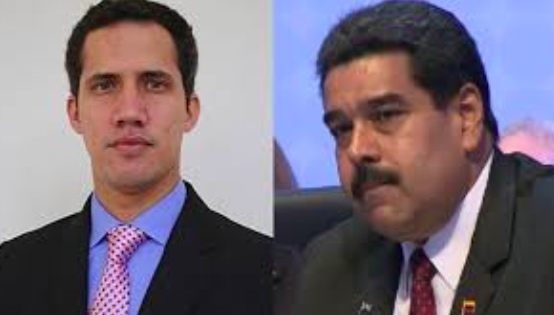
Wno’s the president of Venezuela? The elected Nicolas Maduro or the self-proclaimed unelected Juan Guaido?

By Dave Lindorff

Source: This Can’t Be Happening

American media still refer to Juan Guaidó, America’s hand-picked “legitimate leader” or “legitimate president” of Venezuela, as having an “administration.”

The truth is that his “administration” — consisting of advisors and other opposition leaders — are all either arrested and being held by the government, hiding, seeking asylum in various foreign embassies (Spanish, Italian, Brazilian and Argentinian) in the capital of Caracas, or have fled to other countries like Brazil and Colombia.

Guaidó, apparently a government of one, has so far avoided arrest probably because the elected Venezuelan President Maduro doesn’t want to give the US an excuse to try and rescue him, or to launch military actions of some kind against Venezuela as the White House keeps threatening to do.

Clearly, in calling for US military intervention, Guaidó has both demonstrated almost his total lack of backing among the masses of Venezuelan people, as well as his desperation, given Latin American’s visceral resentment of US interventions in their country, all of which have been designed to put autocrats or even military juntas in power, and many of which have openly overthrown popularly elected governments, as in Guatemala, Chile, Brazil, Nicaragua, Haiti, Dominican Republic, and elsewhere.

None of this gets reported in the US. Only recently has the New York Times, always a reliable backer of US imperial policy in Latin America, at least hinted at the possibility that the reason Maduro remains president and that Guaidó’s efforts to oust him are failing  so abysmally could be that the Venezuelan people want him to stay president, and do not want a US-backed coup or a US military intervention to replace him.

At this point the huffing and puffing coming from Secretary of State Mike Pompeo and especially from the White House National Security Advisor and chief militarist blowhard John Bolton, are looking pretty pathetic, with Bolton trying to sow dissension and distrust by hinting that Maduro “better not trust” his own generals’ loyalty, and by offering rewards to those generals willing to abandon Maduro.

It is an indication of the United States’s declining power and influence in Latin America that few outside the US with its insular mass media believe that the US would or even could successfully invade Venezuela and impose a government on that country of 32 million (a number that keeps declining as the upper middle class and rich flee).

If anything, US sabotage and threats and US backing for a government of the wealthy are probably galvanizing support for Maduro. While people in the US, if they are paying any attention at all to events in Venezuela, may believe that Maduro is a corrupt thug, people in Venezuela itself, and in most of Latin America know full well that the main problems in that oil-rich country have to do with the collapse in oil prices since the heady days of Hugo Chavez when it was going for $100 a barrel, to American efforts to block Venezuela from exporting its oil now, and to freeze or even seize Venezuelan assets and oil receipts from the oil it does manage to export, and to other forms of economic warfare engaged in by the United States. As in Cuba, this kind of strategy by the US only works to build support for the country’s existing government.

At some point Guaidó is going to go. He will either be written off by the US media — his main backer — or will be arrested. Probably the latter will follow the former since once he’s recognized as an impotent charlatan, his arrest will not make him a martyr for the opposition. Already he has lost what public support he had as Venezuela’s wealthy abandon the country for Florida. As well, the “50 countries” that we in the US keep hearing about which supposedly back Guaidó as Venezuela’s “legitimate leader” are realizing that they were hoodwinked by the US. The are now mostly calling for a calmer response to the crisis in Venezuela, and are refusing to buy into US military threats against the Maduro government. Meanwhile nobody in the US media mentions that over 140 countries in the world support Maduro as the leader of Venezuela. 

In truth it’s impossible to find that list of “more than 50 countries” backing a self-proclaimed and unelected Guaidó as Venezuela’s president. The closest I could come by running google searches was a map produced by Bloomberg News listing 13 countries besides the US as supporting Guaidó. These included Canada, the UK, Guatemala, Honduras, Costa Rica, Panama, Ecuador, Colombia, Peru, Chile, Argentina, Paraguay and Brazil. That is 13 plus the United States. Listed as supporting Maduro as elected President are Russia, China, Turkey, Bolivia, and Cuba, though I believe Bloomberg neglected to mention Nicaragua, a strong Maduro backer, which would make it six. All of Africa and much of Asia was left as “no opinion,” though in fact that means they are continuing to recognize the current Maduro government. 

For a time, most of the countries of Europe were lining up behind Guaidó, particularly after Germany announced that it was recognizing him as the new interim leader of Venezuela in late January, and after it ousted the country’s ambassador, but then by late March Germany was having second thoughts, and rejected the person sent there by Guaidó to assume the position of Venezuelan ambassador. At this point, except for the UK, the countries of Europe, along with Mexico and Uruguay, are simply calling for a dialogue and a negotiated solution to the Venezuela political crisis, and in addition to opposing any talk of military action or a coup, are seeking nothing more than a new election (which Maduro would probably win, given the alternative of the return of a government of the rich). The Europeans are no longer really backing Guaidó.

The reporters who continue to refer to “more than 50 countries” calling for Maduro’s ouster all must be using the same wrong or outdated news clip or some exaggerated and dated State Department press release.  (I asked the State Department for an updated list today but so far none has been forthcoming, though it would appear such a list shouldn’t take long to compile given how short it must be.)

Decriminalizing the Drug War?

Calculating the Damage from a Century of Drug Prohibition

By Alfred W. McCoy

Source: TomDispatch.com

We live in a time of change, when people are questioning old assumptions and seeking new directions. In the ongoing debate over health care, social justice, and border security, there is, however, one overlooked issue that should be at the top of everyone’s agenda, from Democratic Socialists to libertarian Republicans: America’s longest war. No, not the one in Afghanistan. I mean the drug war.

For more than a century, the U.S. has worked through the U.N. (and its predecessor, the League of Nations) to build a harsh global drug prohibition regime — grounded in draconian laws, enforced by pervasive policing, and punished with mass incarceration. For the past half-century, the U.S. has also waged its own “war on drugs” that has complicated its foreign policy, compromised its electoral democracy, and contributed to social inequality. Perhaps the time has finally come to assess the damage that drug war has caused and consider alternatives.

Even though I first made my mark with a 1972 book that the CIA tried to suppress on the heroin trade in Southeast Asia, it’s taken me most of my life to grasp all the complex ways this country’s drug war, from Afghanistan to Colombia, the Mexican border to inner-city Chicago, has shaped American society. Last summer, a French director doing a documentary interviewed me for seven hours about the history of illicit narcotics. As we moved from the seventeenth century to the present and from Asia to America, I found myself trying to answer the same relentless question: What had 50 years of observation actually drilled into me, beyond some random facts, about the character of the illicit traffic in drugs?

At the broadest level, the past half-century turns out to have taught me that drugs aren’t just drugs, drug dealers aren’t just “pushers,” and drug users aren’t just “junkies” (that is, outcasts of no consequence). Illicit drugs are major global commodities that continue to influence U.S. politics, both national and international. And our drug wars create profitable covert netherworlds in which those very drugs flourish and become even more profitable. Indeed, the U.N. once estimated that the transnational traffic, which supplied drugs to 4.2% of the world’s adult population, was a $400 billion industry, the equivalent of 8% of global trade.

In ways that few seem to understand, illicit drugs have had a profound influence on modern America, shaping our international politics, national elections, and domestic social relations. Yet a feeling that illicit drugs belong to a marginalized demimonde has made U.S. drug policy the sole property of law enforcement and not health care, education, or urban development.

During this process of reflection, I’ve returned to three conversations I had back in 1971 when I was a 26-year-old graduate student researching that first book of mine, The Politics of Heroin: CIA Complicity in the Global Drug Trade. In the course of an 18-month odyssey around the globe, I met three men, deeply involved in the drug wars, whose words I was then too young to fully absorb.

The first was Lucien Conein, a “legendary” CIA operative whose covert career ranged from parachuting into North Vietnam in 1945 to train communist guerrillas with Ho Chi Minh to organizing the CIA coup that killed South Vietnamese President Ngo Dinh Diem in 1963. In the course of our interview at his modest home near CIA headquarters in Langley, Virginia, he laid out just how the Agency’s operatives, like so many Corsican gangsters, practiced the “clandestine arts” of conducting complex operations beyond the bounds of civil society and how such “arts” were, in fact, the heart and soul of both covert operations and the drug trade.

Second came Colonel Roger Trinquier, whose life in a French drug netherworld extended from commanding paratroopers in the opium-growing highlands of Vietnam during the First Indochina War of the early 1950s to serving as deputy to General Jacques Massu in his campaign of murder and torture in the Battle of Algiers in 1957. During an interview in his elegant Paris apartment, Trinquier explained how he helped fund his own paratroop operations through Indochina’s illicit opium traffic. Emerging from that interview, I felt almost overwhelmed by the aura of Nietzschean omnipotence that Trinquier had clearly gained from his many years in this shadowy realm of drugs and death.

My last mentor on the subject of drugs was Tom Tripodi, a covert operativewho had trained Cuban exiles in Florida for the CIA’s 1961 Bay of Pigs invasion and then, in the late 1970s, penetrated mafia networks in Sicily for the U.S. Drug Enforcement Administration. In 1971, he appeared at my front door in New Haven, Connecticut, identified himself as a senior agent for the Treasury Department’s Bureau of Narcotics, and insisted that the Bureau was worried about my future book. Rather tentatively, I showed him just a few draft pages of my manuscript for The Politics of Heroin and he promptly offered to help me make it as accurate as possible. During later visits, I would hand him chapters and he would sit in a rocking chair, shirt sleeves rolled up, revolver in his shoulder holster, scribbling corrections and telling remarkable stories about the drug trade — like the time his Bureau found that French intelligence was protecting the Corsican syndicates smuggling heroin into New York City. Far more important, though, through him I grasped how ad hoc alliances between criminal traffickers and the CIA regularly helped both the Agency and the drug trade prosper.

Looking back, I can now see how those veteran operatives were each describing to me a clandestine political domain, a covert netherworld in which government agents, military men, and drug traders were freed from the shackles of civil society and empowered to form secret armies, overthrow governments, and even, perhaps, kill a foreign president.

At its core, this netherworld was then and remains today an invisible political realm inhabited by criminal actors and practitioners of Conein’s “clandestine arts.” Offering some sense of the scale of this social milieu, in 1997 the United Nations reported that transnational crime syndicates had 3.3 million members worldwide who trafficked in drugs, arms, humans, and endangered species. Meanwhile, during the Cold War, all the major powers — Britain, France, the Soviet Union, and the United States — deployed expanded clandestine services worldwide, making covert operations a central facet of geopolitical power. The end of the Cold War has in no way changed this reality.

For over a century now, states and empires have used their expanding powers for moral prohibition campaigns that have periodically transformed alcohol, gambling, tobacco, and, above all, drugs into an illicit commerce that generates sufficient cash to sustain covert netherworlds.

Drugs and U.S. Foreign Policy

The influence of illicit drugs on U.S. foreign policy was evident between 1979 and 2019 in the abysmal failure of its never-ending wars in Afghanistan. Over a period of 40 years, two U.S. interventions there fostered all the conditions for just such a covert netherworld. While mobilizing Islamic fundamentalists to fight the Soviet occupation of that country in the 1980s, the CIA tolerated opium trafficking by its Afghan mujahedeen allies, while arming them for a guerrilla war that would ravage the countryside, destroying conventional agriculture and herding.

In the decade after superpower intervention ended in 1989, a devastating civil war and then Taliban rule only increased the country’s dependence upon drugs, raising opium production from 250 tons in 1979 to 4,600 tons by 1999. This 20-fold increase transformed Afghanistan from a diverse agricultural economy into a country with the world’s first opium monocrop — that is, a land thoroughly dependent on illicit drugs for exports, employment, and taxes. Demonstrating that dependence, in 2000 when the Taliban banned opium in a bid for diplomatic recognition and cut production to just 185 tons, the rural economy imploded and their regime collapsed as the first U.S. bombs fell in October 2001.

To say the least, the U.S. invasion and occupation of 2001-2002 failed to effectively deal with the drug situation in the country. As a start, to capture the Taliban-controlled capital, Kabul, the CIA had mobilized Northern Alliance leaders who had long dominated the drug trade in northeast Afghanistan, as well as Pashtun warlords active as drug smugglers in the southeastern part of the country. In the process, they created a post-war politics ideal for the expansion of opium cultivation.

Even though output surged in the first three years of the U.S. occupation, Washington remained uninterested, resisting anything that might weaken military operations against the Taliban guerrillas. Testifying to this policy’s failure, the U.N.’s Afghanistan Opium Survey 2007 reported that the harvest that year reached a record 8,200 tons, generating 53% of the country’s gross domestic product, while accounting for 93% of the world’s illicit narcotics supply.

When a single commodity represents over half of a nation’s economy, everyone — officials, rebels, merchants, and traffickers — is directly or indirectly implicated. In 2016, the New York Times reported that both Taliban rebels and provincial officials opposing them were locked in a struggle for control of the lucrative drug traffic in Helmand Province, the source of nearly half the country’s opium. A year later, the harvest reached a record 9,000 tons, which, according to the U.S. command, provided 60% of the Taliban’s funding. Desperate to cut that funding, American commanders dispatched F-22 fighters and B-52 bombers to destroy the insurgency’s heroin laboratories in Helmand — doing inconsequential damage to a handful of crude labs and revealing the impotence of even the most powerful weaponry against the social power of the covert drug netherworld.

With unchecked opium production sustaining Taliban resistance for the past 17 years and capable of doing so for another 17, the only U.S. exit strategy now seems to be restoring those rebels to power in a coalition government — a policy tantamount to conceding defeat in its longest military intervention and least successful drug war.

High Priests of Prohibition

For the past half-century, the ever-failing U.S. drug war has found a compliant handmaiden at the U.N., whose dubious role when it comes to drug policy stands in stark contrast to its positive work on issues like climate change and peace-keeping.

In 1997, the director of U.N. drug control, Dr. Pino Arlacchi, proclaimed a 10-year program to eradicate all illicit opium and coca cultivation from the face of the planet, starting in Afghanistan. A decade later, his successor, Antonio Maria Costa, glossing over that failure, announced in the U.N.’s World Drug Report 2007 that “drug control is working and the world drug problem is being contained.” While U.N. leaders were making such grandiloquent promises about drug prohibition, the world’s illicit opium production was, in fact, rising 10-fold from just 1,200 tons in 1971, the year the U.S. drug war officially started, to a record 10,500 tons by 2017.

This gap between triumphal rhetoric and dismal reality cries out for an explanation. That 10-fold increase in illicit opium supply is the result of a market dynamic I’ve termed “the stimulus of prohibition.” At the most basic level, prohibition is the necessary precondition for the global narcotics trade, creating both local drug lords and transnational syndicates that control this vast commerce. Prohibition, of course, guarantees the existence and well-being of such criminal syndicates which, to evade interdiction, constantly shift and build up their smuggling routes, hierarchies, and mechanisms, encouraging a worldwide proliferation of trafficking and consumption, while ensuring that the drug netherworld will only grow.

In seeking to prohibit addictive drugs, U.S. and U.N. drug warriors act as if mobilizing for forceful repression could actually reduce drug trafficking, thanks to the imagined inelasticity of, or limits on, the global narcotics supply. In practice, however, when suppression reduces the opium supply from one area (Burma or Thailand), the global price just rises, spurring traders and growers to sell off stocks, old growers to plant more, and new areas (Colombia) to enter production. In addition, such repression usually only increases consumption. If drug seizures, for instance, raise the street price, then addicted consumers will maintain their habit by cutting other expenses (food, rent) or raising their income by dealing drugs to new users and so expanding the trade.

Instead of reducing the traffic, the drug war has actually helped stimulate that 10-fold increase in global opium production and a parallel surge in U.S. heroin users from just 68,000 in 1970 to 886,000 in 2017.

By attacking supply and failing to treat demand, the U.N.-U.S. drug war has been pursuing a “solution” to drugs that defies the immutable law of supply and demand. As a result, Washington’s drug war has, in the past 50 years, gone from defeat to debacle.

The Domestic Influence of Illicit Drugs

That drug war has, however, incredible staying power. It has persisted despite decades of failure because of an underlying partisan logic. In 1973, while President Richard Nixon was still fighting his drug war in Turkey and Thailand, New York’s Republican governor, Nelson Rockefeller, enacted the notorious “Rockefeller Drug Laws.” Those included mandatory penalties of 15 years to life for the possession of just four ounces of narcotics.

As the police swept inner-city streets for low-level offenders, annual prison sentences in New York State for drug crimes surged from only 470 in 1970 to a peak of 8,500 in 1999, with African-Americans representing 90% of those incarcerated. By then, New York’s state prisons held a previously unimaginable 73,000 people. During the 1980s, President Ronald Reagan, a conservative Republican, dusted off Rockefeller’s anti-drug campaign for intensified domestic enforcement, calling for a “national crusade” against drugs and winning draconian federal penalties for personal drug use and small-scale dealing.

For the previous 50 years, the U.S. prison population had remained remarkably stable at just 110 prisoners per 100,000 people. The new drug war, however, doubled those prisoners from 370,000 in 1981 to 713,000 in 1989. Driven by Reagan-era drug laws and parallel state legislation, prison inmates soared to 2.3 million by 2008, raising the country’s incarceration rate to an extraordinary 751 prisoners per 100,000 population. And 51% of those in federal penitentiaries were there for drug offenses.

Such mass incarceration has led as well to significant disenfranchisement, starting a trend that would, by 2012, deny the vote to nearly six million people, including 8% of all African-American voting-age adults, a liberal constituency that had gone overwhelmingly Democratic for more than half a century. In addition, this carceral regime concentrated its prison populations, including guards and other prison workers, in conservative rural districts of the country, creating something akin to latter-day “rotten boroughs” for the Republican Party.

Take, for example, New York’s 21st Congressional District, which covers the Adirondacks and the state’s heavily forested northern panhandle. It’s home to 14 state prisons, including some 16,000 inmates, 5,000 employees, and their 8,000 family members — making them collectively the district’s largest employer and a defining political presence. Add in the 13,000 or so troops in nearby Fort Drum and you have a reliably conservative bloc of 26,000 voters (and 16,000 non-voters), or the largest political force in a district where only 240,000 residents actually vote. Not surprisingly, the incumbent Republican congresswoman survived the 2018 blue wave to win handily with 56% of the vote. (So never say that the drug war had no effect.)

So successful were Reagan Republicans in framing this partisan drug policy as a moral imperative that two of his liberal Democratic successors, Bill Clinton and Barack Obama, avoided any serious reform of it. Instead of systemic change, Obama offered clemency to about 1,700 convicts, an insignificant handful among the hundreds of thousands still locked up for non-violent drug offenses.

While partisan paralysis at the federal level has blocked change, the separate states, forced to bear the rising costs of incarceration, have slowly begun reducing prison populations. In a November 2018 ballot measure, for instance, Florida — where the 2000 presidential election was decided by just 537 ballots — voted to restore electoral rights to the state’s 1.4 million felons, including 400,000 African-Americans. No sooner did that plebiscite pass, however, than Florida’s Republican legislators desperately tried to claw backthat defeat by requiring that the same felons pay fines and court costs before returning to the electoral rolls.

Not only does the drug war influence U.S. politics in all sorts of negative ways but it has reshaped American society — and not for the better, either. The surprising role of illicit drug distribution in ordering life inside some of the country’s major cities has been illuminated in a careful study by a University of Chicago researcher who gained access to the financial records of a drug gang inside Chicago’s impoverished Southside housing projects.  He found that, in 2005, the Black Gangster Disciple Nation, known as GD, had about 120 bosses who employed 5,300 young men, largely as street dealers, and had another 20,000 members aspiring to those very jobs. While the boss of each of the gang’s hundred crews earned about $100,000 annually, his three officers made just $7.00 an hour, his 50 street dealers only $3.30 an hour, and their hundreds of other members served as unpaid apprentices, vying for entry-level slots when street dealers were killed, a fate which one in four regularly suffered.

So what does all this mean? In an impoverished inner city with very limited job opportunities, this drug gang provided high-mortality employment on a par with the minimum wage (then $5.15 a hour) that their peers in more affluent neighborhoods earned from much safer work at McDonald’s. Moreover, with some 25,000 members in Southside Chicago, GD was providing social order for young men in the volatile 16-to-30 age cohort — minimizing random violence, reducing petty crime, and helping Chicago maintain its gloss as a world-class business center. Until there is sufficient education and employment in the nation’s cities, the illicit drug market will continue to fill the void with work that carries a high cost in violence, addiction, imprisonment, and more generally blighted lives.

The End of Drug Prohibition

As the global prohibition effort enters its second century, we are witnessing two countervailing trends. The very idea of a prohibition regime has reached a crescendo of dead-end violence not just in Afghanistan but recently in Southeast Asia, demonstrating the failure of the drug war’s repression strategy. In 2003, Thai Prime Minister Thaksin Shinawatra launched a campaign against methamphetamine abuse that prompted his police to carry out 2,275 extrajudicial killings in just three months. Carrying that coercive logic to its ultimate conclusion, on his first day as Philippine president in 2016, Rodrigo Duterte ordered an attack on drug trafficking that has since yielded 1.3 million surrenders by dealers and users, 86,000 arrests, and some 20,000 bodies dumped on city streets across the country. Yet drug use remains deeply rooted in the slums of both Bangkok and Manila.

On the other side of history’s ledger, the harm-reduction movement led by medical practitioners and community activists worldwide is slowly working to unravel the global prohibition regime. With a 1996 ballot measure, California voters, for instance, started a trend by legalizing medical marijuana sales. By 2018, Oklahoma had become the 30th state to legalize medical cannabis. Following initiatives by Colorado and Washington in 2012, eight more states to date have decriminalized the recreational use of cannabis, long the most widespread of all illicit drugs.

Hit by a surge of heroin abuse during the 1980s, Portugal’s government first reacted with repression that, as everywhere else on the planet, did little to stanch rising drug abuse, crime, and infection. Gradually, a network of medical professionals across the country adopted harm-reduction measures that would provide a striking record of proven success. After two decades of this ad hoc trial, in 2001 Portugal decriminalized the possession of all illegal drugs, replacing incarceration with counseling and producing a sustained drop in HIV and hepatitis infections.

Projecting this experience into the future, it seems likely that harm-reduction measures will be adopted progressively at local and national levels around the globe, while various endless and unsuccessful wars on drugs are curtailed or abandoned. Perhaps someday a caucus of Republican legislators in some oak-paneled Washington conference room and a choir of U.N. bureaucrats in their glass-towered Vienna headquarters will remain the only apostles preaching the discredited gospel of drug prohibition.

Free Julian Assange and All Political Prisoners

By Rob Urie

Source: Counterpunch

The American war against Iraq was among the more idiotic and gratuitous slaughters in human history. It was premised on lies, prosecuted by criminals and fools, outsourced to professional murderers and it isn’t over. In addition to those murdered directly and indirectly in the war, several million refugees were scattered across the Middle East, including over a million into Syria. ISIS grew from the ranks of the disbanded Iraqi army. This fiasco appeared as it was to all the world, the gasp of a dying empire sunk under the weight of its ignorance and arrogance.

Late in the war Julian Assange and his colleagues at Wikileaks published documents and videos allegedly leaked by Chelsea Manning that brought the gratuitous nature of American violence home for all to see. The most damning was this video that shows American soldiers carefully and methodically slaughtering civilians, including Reuters staffers, outside of any determinable theater of war. The label ‘collateral murders’ was attached to the video, but those murdered were targeted— they weren’t ancillary to otherwise justifiable murders.

Julian Assange has reportedly been charged by an American Grand Jury for his role in publishing this leaked video, among others. He will apparently be extradited to the U.S. where he is expected to stand trial for doing what reporters do— publishing true information in the public interest. The New York Times and other newspapers also published the leaked documents, but have as yet not been charged. This legal maneuvering appears to be a politically motivated vendetta against Julian Assange for embarrassing the War Criminals behind the Iraq war.

National Democrats and the liberal press have spent the last 2.5 years demonizing Mr. Assange for his role in publishing leaked DNC emails in the run up to the 2016 Presidential race. As with the government’s case against him, the content of the leaked videos and documents is not in dispute. They are what they are purported to be. American soldiers did murder civilians and Reuters staffers who posed no immediate threat to them. Hillary Clinton’s campaign staff did screw Bernie Sanders out of the Democratic nomination and she did give contradictory information about her political positions depending on what she thought her audience wanted to hear.

Mr. Assange’s accusers are largely those responsible for the imperial decline that his reporting has illuminated. The leading Republicans and Democrats behind the Iraq war should have been charged with War Crimes. There is no statute of limitations on War Crimes. The national security officials among Mr. Assange’s accusers illegally spied on Americans and lied about doing so under oath to congress. The CIA illegally spied on the congressional committee charged with investigating illegal torture in the Iraq War after illegally destroying videotape evidence of its crimes. What is Julian Assange being charged with again?

What Mr. Assange did is expose the crimes of the rich and powerful. Arguments over his methods conflate process errors with the gratuitous murder of civilians. If these murdered civilians had been well-to-do white Americans and staffers at the New York Times, where might ‘process’ fit into the utterly predictable (and justifiable) calls to give those charged fair trials and prison sentences if convicted. Through what lens are the crimes exposed by Mr. Assange and Wikileaks not crimes? As with everything about a gratuitous war in which a million or more civilians are killed, why aren’t its architects and chief instigators in the dock at The Hague pleading for their lives?

While the political pump has been primed in the U.S. by war-state Democrats and war-state liberals to go after Julian Assange without legal restraint, he is lauded by much of the world for bringing the crimes of the American elite into public view. What will be illuminated by prosecuting Mr. Assange is the crimes of the elite and their use of power and office to cover up their crimes. While most Americans haven’t seen the video (link above) of American soldiers murdering civilians and press staffers, the publicity of a trial will certainly stir public interest.

Much as the Iraq War was a late gasp of an empire in decline, the prosecution of Julian Assange is the desperate act of a political establishment that is losing its grip on power. Mr. Assange is but a messenger. This establishment is the agent of its own demise. And it couldn’t happen to a more deserving group of people. Free Julian Assange and All Political Prisoners. All Power to the People!

The Triumph of Evil

(Museum of the Revolution, León, Nicaragua)

By Paul Craig Roberts

Source: PaulCraigRoberts.org

Today (April 17) I heard a NPR “news” report that described the democratically elected president of Venezuela as “the Venezuelan dictator Maduro.” By repeating over and over that a democratically elected president is a dictator, the presstitutes create that image of Maduro in the minds of vast numbers of peoples who know nothing about Venezuela and had never heard of Maduro until he is dropped on them as “dictator.”

Nicolas Maduro Moros was elected president of Venezuela in 2013 and again in 2018. Previously he served as vice president and foreign minister, and he was elected to the National Assembly in 2000. Despite Washington’s propaganda campaign against him and Washington’s attempt to instigate violent street protests and Maduro’s overthrow by the Venezuelan military, whose leaders have been offered large sums of money, Maduro has the overwhelming support of the people, and the military has not moved against him.

What is going on is that American oil companies want to recover their control over the revenue streams from Venezuela’s vast oil reserves. Under the Bolivarian Revolution of Chavez, continued by Maduro, the oil revenues instead of departing the country have been used to reduce poverty and raise literacy inside Venezuela.

The opposition to Maduro inside Venezuela comes from the elites who have been traditionally allied with Washington in the looting of the country. These corrupt elites, with the CIA’s help, temporarily overthrew Chavez, but the people and the Venezuelan military secured his release and return to the presidency.

Washington has a long record of refusing to accept any reformist governments in Latin America. Reformers get in the way of North America’s exploitation of Latin American countries and are overthrown.

With the exceptions of Venezuela, Bolivia, Cuba, and Nicaragua, Latin America consists of Washington’s vassal states. In recent years Washington destroyed reform governments in Honduras, Argentina and Brazil and put gangsters in charge.

According to US national security adviser John Bolton, a neoconservative war monger, the governments in Venezuela, Cuba, and Nicaragua will soon be overthrown. New sanctions have now been placed on the three countries. Washington in the typical display of its pettiness targeted sanctions against the son of the Nicaraguan president Daniel Ortega. https://www.rt.com/news/456841-bolton-russia-venezuela-threat/

Ortega has been the leader of Nicaragua since for 40 years. He was president 1985-1990 and has been elected and reelected as president since 2006.

Ortega was the opponent of Somoza, Washington’s dictator in Nicaragua. Consequently he and his movement were attacked by the neoconservative operation known as Iran-Contra during the Reagan years. Ortega was a reformer. His government focused on literacy, land reform, and nationalization, which was at the expense of the wealthy ruling class. He was labeled a “Marxist-Leninist,” and Washington attempted to discredit his reforms as controversial leftist policies.

Somehow Castro and Ortega survived Washington’s plots against them. By the skin of his teeth so did Chavez unless you believe it was the CIA that gave him cancer. Castro and Chavez are dead. Ortega is 74. Maduro is in trouble, because Washington has stolen Venezuela’s bank deposits and cut Venezuela off the international financial system, and the British have stolen Venezuela’s gold. This makes it hard for Venezuela to pay its debts.

The Trump regime has branded the democratically twice-elected Maduro an “illegitimate” president. Washington has found a willing puppet, Juan Guaido, to take Maduro’s place and has announced that the puppet is now the president of Venezuela. No one among the Western presstitutes or among the vassals of Washington’s empire finds it strange that an elected president is illegitimate but one picked by Washington is not.

Russia and China have given Maduro diplomatic support. Both have substantial investments in Venezuela that would be lost if Washington seizes the country. Russia’s support for Maduro was declared by Bolton today to be a provocation that is a threat to international peace and security. Bolton said his sanctions should be seen by Russia as a warning against providing any help for the Venezuelan government.

Secretary of state Mike Pompeo and vice president Pence have added their big mouths to the propaganda against the few independent governments in Latin America. Where is the shame when the highest American government officials stand up in front of the world and openly proclaim that it is official US government policy to overthrow democratically elected governments simply because those governments don’t let Americans plunder their countries?

How is it possible that Pompeo can announce that the “days are numbered” of the elected president of Nicaragua, who has been elected president 3 or 4 times, and the world not see the US as a rogue state that must be isolated and shunned? How can Pompeo describe Washington’s overthrow of an elected government as “setting the Nicaraguan people free?”

The top officials of the US government have announced that they intend to overthrow the governments of 3 countries and this is not seen as “a threat to international peace and security?”

How much peace and security did Washington’s overthrow of governments in Iraq, Libya, Ukraine, and the attempted overthrow of Syria bring?

Washington is once again openly violating international law and the rest of the world has nothing to say?

There is only one way to describe this: The Triumph of Evil.

“The blood-dimmed tide is loosed, and everywhere the ceremony of innocence is drowned; the best lack all conviction, while the worst are full of passionate intensity.” — William Butler Yeats

The Making of a Monster: We’re All Lab Rats in the Government’s Secret Experiments

By John W. Whitehead

Source: The Rutherford Institute

“But these weren’t the kind of monsters that had tentacles and rotting skin, the kind a seven-year-old might be able to wrap his mind around—they were monsters with human faces, in crisp uniforms, marching in lockstep, so banal you don’t recognize them for what they are until it’s too late.” — Ransom Riggs, Miss Peregrine’s Home for Peculiar Children

The U.S. government, in its pursuit of so-called monsters, has itself become a monster.

This is not a new development, nor is it a revelation.

This is a government that has in recent decades unleashed untold horrors upon the world—including its own citizenry—in the name of global conquest, the acquisition of greater wealth, scientific experimentation, and technological advances, all packaged in the guise of the greater good.

Mind you, there is no greater good when the government is involved. There is only greater greed for money and power.

Unfortunately, the public has become so easily distracted by the political spectacle coming out of Washington, DC, that they are altogether oblivious to the grisly experiments, barbaric behavior and inhumane conditions that have become synonymous with the U.S. government.

These horrors are being meted out against humans and animals alike.

It’s heartbreaking enough when you hear about police shooting family dogs that pose no threat—beloved pets that are “guilty” of little more than barking, or wagging a tag, or racing towards them in greeting—at an alarming rate somewhere in the vicinity of 500 dogs a day.

What I’m about to share goes beyond heartbreaking to horrifying.

For instance, did you know that the U.S. government has been buying hundreds of dogs and cats from “Asian meat markets” as part of a gruesome experiment into food-borne illnesses? The cannibalistic experiments involve killing cats and dogs purchased from Colombia, Brazil, Vietnam, China and Ethiopia, and then feeding the dead remains to laboratory kittens, bred in government laboratories for the express purpose of being infected with a disease and then killed.

It gets more gruesome.

The Department of Veterans Affairs has been removing parts of dogs’ brains to see how it affects their breathing; applying electrodes to dogs’ spinal cords (before and after severing them) to see how it impacts their cough reflexes; and implanting pacemakers in dogs’ hearts and then inducing them to have heart attacks (before draining their blood). All of the laboratory dogs are killed during the course of these experiments.

It’s not just animals that are being treated like lab rats by government agencies.

“We the people” have also become the police state’s guinea pigs: to be caged, branded, experimented upon without our knowledge or consent, and then conveniently discarded and left to suffer from the after-effects.

Back in 2017, FEMA “inadvertently” exposed nearly 10,000 firefighters, paramedics and other responders to a deadly form of ricin during simulated bioterrorism response sessions. In 2015, it was discovered that an Army lab had been “mistakenly” shipping deadly anthrax to labs and defense contractors for a decade.

While these particular incidents have been dismissed as “accidents,” you don’t have to dig very deep or go very back in the nation’s history to uncover numerous cases in which the government deliberately conducted secret experiments on an unsuspecting populace—citizens and noncitizens alike—making healthy people sick by spraying them with chemicals, injecting them with infectious diseases and exposing them to airborne toxins.

At the time, the government reasoned that it was legitimate to experiment on people who did not have full rights in society such as prisoners, mental patients, and poor blacks.

In Alabama, for example, 600 black men with syphilis were allowed to suffer without proper medical treatment in order to study the natural progression of untreated syphilis. In California, older prisoners had testicles from livestock and from recently executed convicts implanted in them to test their virility. In Connecticut, mental patients were injected with hepatitis.

In Maryland, sleeping prisoners had a pandemic flu virus sprayed up their noses. In Georgia, two dozen “volunteering” prison inmates had gonorrhea bacteria pumped directly into their urinary tracts through the penis. In Michigan, male patients at an insane asylum were exposed to the flu after first being injected with an experimental flu vaccine. In Minnesota, 11 public service employee “volunteers” were injected with malaria, then starved for five days.

In New York, dying patients had cancer cells introduced into their systems. In Ohio, over 100 inmates were injected with live cancer cells. Also in New York, prisoners at a reformatory prison were also split into two groups to determine how a deadly stomach virus was spread: the first group was made to swallow an unfiltered stool suspension, while the second group merely breathed in germs sprayed into the air. And in Staten Island, children with mental retardation were given hepatitis orally and by injection to see if they could then be cured.

As the Associated Press reports, “The late 1940s and 1950s saw huge growth in the U.S. pharmaceutical and health care industries, accompanied by a boom in prisoner experiments funded by both the government and corporations. By the 1960s, at least half the states allowed prisoners to be used as medical guinea pigs … because they were cheaper than chimpanzees.”

Moreover, “Some of these studies, mostly from the 1940s to the ’60s, apparently were never covered by news media. Others were reported at the time, but the focus was on the promise of enduring new cures, while glossing over how test subjects were treated.”

Media blackouts, propaganda, spin. Sound familiar?

How many government incursions into our freedoms have been blacked out, buried under “entertainment” news headlines, or spun in such a way as to suggest that anyone voicing a word of caution is paranoid or conspiratorial?

Unfortunately, these incidents are just the tip of the iceberg when it comes to the atrocities the government has inflicted on an unsuspecting populace in the name of secret experimentation.

For instance, there was the U.S. military’s secret race-based testing of mustard gas on more than 60,000 enlisted men. As NPR reports, “All of the World War II experiments with mustard gas were done in secret and weren’t recorded on the subjects’ official military records. Most do not have proof of what they went through. They received no follow-up health care or monitoring of any kind. And they were sworn to secrecy about the tests under threat of dishonorable discharge and military prison time, leaving some unable to receive adequate medical treatment for their injuries, because they couldn’t tell doctors what happened to them.”

And then there was the CIA’s MKULTRA program in which hundreds of unsuspecting American civilians and military personnel were dosed with LSD, some having the hallucinogenic drug slipped into their drinks at the beach, in city bars, at restaurants. As Time reports, “before the documentation and other facts of the program were made public, those who talked of it were frequently dismissed as being psychotic.”

Now one might argue that this is all ancient history and that the government today is different from the government of yesteryear, but has the U.S. government really changed?

Has the government become any more humane, any more respectful of the rights of the citizenry?

Has it become any more transparent or willing to abide by the rule of law? Has it become any more truthful about its activities? Has it become any more cognizant of its appointed role as a guardian of our rights?

Or has the government simply hunkered down and hidden its nefarious acts and dastardly experiments under layers of secrecy, legalism and obfuscations? Has it not become wilier, more slippery, more difficult to pin down?

Having mastered the Orwellian art of Doublespeak and followed the Huxleyan blueprint for distraction and diversion, are we not dealing with a government that is simply craftier and more conniving that it used to be?

Consider this: after revelations about the government’s experiments spanning the 20th century spawned outrage, the government began looking for human guinea pigs in other countries, where “clinical trials could be done more cheaply and with fewer rules.”

In Guatemala, prisoners and patients at a mental hospital were infected with syphilis, “apparently to test whether penicillin could prevent some sexually transmitted disease.” In Uganda, U.S.-funded doctors “failed to give the AIDS drug AZT to all the HIV-infected pregnant women in a study… even though it would have protected their newborns.” Meanwhile, in Nigeria, children with meningitis were used to test an antibiotic named Trovan. Eleven children died and many others were left disabled.

The more things change, the more they stay the same.

Case in point: back in 2016, it was announced that scientists working for the Department of Homeland Security would begin releasing various gasses and particles on crowded subway platforms as part of an experiment aimed at testing bioterror airflow in New York subways.

The government insisted that the gases released into the subways by the DHS were nontoxic and did not pose a health risk. It’s in our best interests, they said, to understand how quickly a chemical or biological terrorist attack might spread. And look how cool the technology is—said the government cheerleaders—that scientists can use something called DNATrax to track the movement of microscopic substances in air and food. (Imagine the kinds of surveillance that could be carried out by the government using trackable airborne microscopic substances you breathe in or ingest.)

Mind you, this is the same government that in 1949 sprayed bacteria into the Pentagon’s air handling system, then the world’s largest office building. In 1950, special ops forces sprayed bacteria from Navy ships off the coast of Norfolk and San Francisco, in the latter case exposing all of the city’s 800,000 residents.

In 1953, government operatives staged “mock” anthrax attacks on St. Louis, Minneapolis, and Winnipeg using generators placed on top of cars. Local governments were reportedly told that “‘invisible smokescreen[s]’ were being deployed to mask the city on enemy radar.” Later experiments covered territory as wide-ranging as Ohio to Texas and Michigan to Kansas.

In 1965, the government’s experiments in bioterror took aim at Washington’s National Airport, followed by a 1966 experiment in which army scientists exposed a million subway NYC passengers to airborne bacteria that causes food poisoning.

And this is the same government that has taken every bit of technology sold to us as being in our best interests—GPS devices, surveillance, nonlethal weapons, etc.—and used it against us, to track, control and trap us.

So, no, I don’t think the government’s ethics have changed much over the years. It’s just taken its nefarious programs undercover.

The question remains: why is the government doing this? The answer is always the same: money, power and total domination.

It’s the same answer no matter which totalitarian regime is in power.

The mindset driving these programs has, appropriately, been likened to that of Nazi doctors experimenting on Jews. As the Holocaust Museum recounts, Nazi physicians “conducted painful and often deadly experiments on thousands of concentration camp prisoners without their consent.”

The Nazi’s unethical experiments ran the gamut from freezing experiments using prisoners to find an effective treatment for hypothermia, tests to determine the maximum altitude for parachuting out of a plane, injecting prisoners with malaria, typhus, tuberculosis, typhoid fever, yellow fever, and infectious hepatitis, exposing prisoners to phosgene and mustard gas, and mass sterilization experiments.

The horrors being meted out against the American people can be traced back, in a direct line, to the horrors meted out in Nazi laboratories. In fact, following the second World War, the U.S. government recruited many of Hitler’s employees, adopted his protocols, embraced his mindset about law and order and experimentation, and implemented his tactics in incremental steps.

Sounds far-fetched, you say? Read on. It’s all documented.

As historian Robert Gellately recounts, the Nazi police state was initially so admired for its efficiency and order by the world powers of the day that Herbert Hoover, then-head of the FBI, actually sent one of his right-hand men, Edmund Patrick Coffey, to Berlin in January 1938 at the invitation of Germany’s secret police, the Gestapo.

The FBI was so impressed with the Nazi regime that, according to the New York Times, in the decades after World War II, the FBI, along with other government agencies, aggressively recruited at least a thousand Nazis, including some of Hitler’s highest henchmen.

All told, thousands of Nazi collaborators—including the head of a Nazi concentration camp, among others—were given secret visas and brought to America by way of Project Paperclip. Subsequently, they were hired on as spies, informants and scientific advisers, and then camouflaged to ensure that their true identities and ties to Hitler’s holocaust machine would remain unknown. All the while, thousands of Jewish refugees were refused entry visas to the U.S. on the grounds that it could threaten national security.

Adding further insult to injury, American taxpayers have been paying to keep these ex-Nazis on the U.S. government’s payroll ever since. And in true Gestapo fashion, anyone who has dared to blow the whistle on the FBI’s illicit Nazi ties has found himself spied upon, intimidated, harassed and labeled a threat to national security.

As if the government’s covert, taxpayer-funded employment of Nazis after World War II wasn’t bad enough, U.S. government agencies—the FBI, CIA and the military—have since fully embraced many of the Nazi’s well-honed policing tactics, and have used them repeatedly against American citizens.

It’s certainly easy to denounce the full-frontal horrors carried out by the scientific and medical community within a despotic regime such as Nazi Germany, but what do you do when it’s your own government that claims to be a champion of human rights all the while allowing its agents to engage in the foulest, bases and most despicable acts of torture, abuse and experimentation?

When all is said and done, this is not a government that has our best interests at heart.

This is not a government that values us.

Perhaps the answer lies in The Third Man, Carol Reed’s influential 1949 film starring Joseph Cotten and Orson Welles. In the film, set in a post-WW II Vienna, rogue war profiteer Harry Lime has come to view human carnage with a callous indifference, unconcerned that the diluted penicillin he’s been trafficking underground has resulted in the tortured deaths of young children.

Challenged by his old friend Holly Martins to consider the consequences of his actions, Lime responds, “In these days, old man, nobody thinks in terms of human beings. Governments don’t, so why should we?

“Have you ever seen any of your victims?” asks Martins.

“Victims?” responds Limes, as he looks down from the top of a Ferris wheel onto a populace reduced to mere dots on the ground. “Look down there. Tell me. Would you really feel any pity if one of those dots stopped moving forever? If I offered you twenty thousand pounds for every dot that stopped, would you really, old man, tell me to keep my money, or would you calculate how many dots you could afford to spare? Free of income tax, old man. Free of income tax — the only way you can save money nowadays.”

As I make clear in my book Battlefield America: The War on the American People, this is how the U.S. government sees us, too, when it looks down upon us from its lofty perch.

To the powers-that-be, the rest of us are insignificant specks, faceless dots on the ground.

To the architects of the American police state, we are not worthy or vested with inherent rights. This is how the government can justify treating us like economic units to be bought and sold and traded, or caged rats to be experimented upon and discarded when we’ve outgrown our usefulness.

To those who call the shots in the halls of government, “we the people” are merely the means to an end.

“We the people”—who think, who reason, who take a stand, who resist, who demand to be treated with dignity and care, who believe in freedom and justice for all—have become obsolete, undervalued citizens of a totalitarian state that, in the words of Rod Serling, “has patterned itself after every dictator who has ever planted the ripping imprint of a boot on the pages of history since the beginning of time. It has refinements, technological advances, and a more sophisticated approach to the destruction of human freedom.”

In this sense, we are all Romney Wordsworth, the condemned man in Serling’s Twilight Zone episode “The Obsolete Man.”

The Obsolete Man” speaks to the dangers of a government that views people as expendable once they have outgrown their usefulness to the State. Yet—and here’s the kicker—this is where the government through its monstrous inhumanity also becomes obsolete. As Serling noted in his original script for “The Obsolete Man,” “Any state, any entity, any ideology which fails to recognize the worth, the dignity, the rights of Man…that state is obsolete.

How do you defeat a monster? You start by recognizing the monster for what it is.