Joni Mitchell on Morgellons Disease

Morgellons fibers embedded in skin. PHOTO: PLOS ONE

Morgellons fibers embedded in skin. PHOTO: PLOS ONE

Influential singer/songwriter Joni Mitchell just turned 70 last Thursday. In a retrospective piece about her career published by U-T San Diego, this particular line caught my attention:

She no longer performs because she has a rare medical condition, Morgellons syndrome, and because decades of chain-smoking have ravaged her once-angelic voice.

It’s a huge tragedy that someone of her talent can no longer sing, but what was truly surprising to me was the revelation that she has Morgellons syndrome. It’s truly courageous for someone as well-known and widely respected as Mitchell to go public about it because people suffering from Morgellons have often been dismissed by the medical establishment as being “delusional”. The issue is clouded by the fact that reported physical symptoms of Morgellons syndrome are indeed similar to delusional parasitosis and in some cases it may also have neurological symptoms (though in most reported cases the symptoms include brain fog, fear, depression, decreased coordination and personality changes rather than delusions).

Joni Mitchell related her personal experience with Morgellons in this excerpt from a 2010 LA Times interview:

LAT: You’ve come out in the media as a sufferer of a controversial condition known as Morgellons. How is your health currently?

JM: I have this weird, incurable disease that seems like it’s from outer space, but my health’s the best it’s been in a while, Two nights ago, I went out for the first time since Dec. 23: I don’t look so bad under incandescent light, but I look scary under daylight. Garbo and Dietrich hid away just because people became so upset watching them age, but this is worse. Fibers in a variety of colors protrude out of my skin like mushrooms after a rainstorm: they cannot be forensically identified as animal, vegetable or mineral. Morgellons is a slow, unpredictable killer — a terrorist disease: it will blow up one of your organs, leaving you in bed for a year. But I have a tremendous will to live: I’ve been through another pandemic — I’m a polio survivor, so I know how conservative the medical body can be. In America, the Morgellons is always diagnosed as “delusion of parasites,” and they send you to a psychiatrist. I’m actually trying to get out of the music business to battle for Morgellons sufferers to receive the credibility that’s owed to them.

As disturbing as symptoms of Morgellons Syndrome are, just as frightening is the fact that we know so little about what it is, what causes it, hows it’s transmitted, and how to cure people who have it. However, in this article recently reposted at GlobalResearch, they uncovered the following information linking Morgellons to GMOs:

In the Sept. 15-21 issue of New Scientist magazine, Daniel Elkan describes a patient he calls “Steve Jackson,” who “for years” has “been finding tiny blue, red and black fibers growing in intensely itchy lesions on his skin.” He quotes Jackson as saying, “The fibers are like pliable plastic and can be several millimeters long. Under the skin, some are folded in a zigzag pattern. These can be as fine as spider silk, yet strong enough to distend the skin when you pull them, as if you were pulling on a hair.”

Doctors say that this type of disease could only be caused by a parasite, but anti-parasitic medications do not help. Psychologists insist that this is a new version of the well-known syndrome known as “delusional parasitosis.” While this is a “real” disease, it is not a physically-caused one.

But now there is physical evidence that Morgellons is NOT just psychological. When pharmacologist Randy Wymore offered to study some of these fibers if people sent them to him, he discovered that “fibers from different people looked remarkably similar to each other and yet seem to match no common environmental fibers.”

When they took them to a police forensic team, they said they were not from clothing, carpets or bedding. They have no idea what they are.

Researcher Ahmed Kilani says he was able to break down two fiber samples and extract their DNA. He found that they belonged to a fungus.

An even more provocative finding is that biochemist Vitaly Citovsky discovered that the fibers contain a substance called “Agrobacterium,” which, according to New Scientist, is “used commercially to produce genetically-modified plants.” Could GM plants be “causing a new human disease?”

To learn more about Morgellons Disease, visit the Charles E. Holman Foundation.

Saturday Matinee: The Plague Dogs

220px-Plaguedogsposter

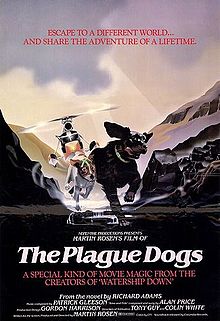
Many of us may have read the Richard Adams book “Watership Down” or have seen the film adaptation, but less known is the film version of his even darker follow-up, “The Plague Dogs” (1982). Like a Disney film, it features anthropomorphized animals and lessons about friendship and courage, but less like Disney, it also has lessons about scientific cruelty, mass media hype, mental illness and mortality. Never in a Disney film would the protagonists be hunted by humans after narrowly escaping vivisection and possibly being exposed to bubonic plague, as happens to Rowf and Snitter, the main characters of The Plague Dogs. It’s an undeniably harrowing and sad story, but it’s also emotionally engaging, intelligent, unsentimental, and an underrated animated masterpiece.

Though The Plague Dogs may be suitable for some kids, it’s also for all film lovers because the artwork is beautiful and the voice acting is subtle yet emotive (especially the voice of John Hurt, who played Winston Smith two years later in a film version of “1984”). It even features a great theme song by Alan Price, former keyboardist for The Animals and best known by cult movie fans as the lead singer of the band featured in Lindsay Anderson’s “O Lucky Man”. Most importantly, The Plague Dog’s message of empathy and arguments for ethical considerations in science are as timely as ever.

If you’re interested in learning more about The Plague Dogs, I recommend this detailed review by the Film Walrus (though it’d be best to read only after watching the film as it reveals spoilers): http://www.filmwalrus.com/2008/08/review-of-plague-dogs.html

The Wisdom in the Dark Emotions

107287-693x693r2-YinYang7

I recently rediscovered the following article (through Disinfo.com) which seems more applicable to the world today than when it was originally written more than ten years ago. It may help explain certain questions about our culture such as:

  • Why so many are obsessed with youth while topics of aging and death are often avoided.
  • Why the most popular narratives in mass media always have a happy resolution.
  • Why children are regularly taught to suppress dark emotions and are shielded from them in stories and in life.
  • Why some choose to ignore or deny current events.
  • Why more people impulsively need to keep themselves distracted at every waking moment.
  • Why approximately 1 in 10 Americans are now on antidepressant drugs.

These may all be symptoms of a multitude of complex problems, but they’re also examples of the unhealthy ways we cope with them. In my view, being open to and understanding dark emotions are necessary to attain true emotional resiliency to endure life’s challenges. It’s important not just for survival, but to enable us to more effectively act to rectify socio-economic problems which are connected to personal and global problems.

The Wisdom in the Dark Emotions

By Miriam Greenspan

Originally posted at Shambhala Sun

Grief, fear and despair are part of the human condition. Each of these emotions is useful, says psychotherapist Miriam Greenspan, if we know how to listen to them.

I was brought to the practice of mindfulness more than two decades ago by the death of my first child. Aaron died two months after he was born, never having left the hospital. Shortly after that, a friend introduced me to a teacher from whom I learned the basics of Vipassana meditation: how to breathe mindfully and meditate with “choiceless” awareness. I remember attending a dharma talk in a room full of fifty meditators. The teacher spoke about the Four Noble Truths. Life is inherently unsatisfactory, he said. The ego’s restless desires are no sooner fulfilled than they find new objects. Craving and aversion breed suffering. One of his examples was waiting in line for a movie and then not getting in.

I asked: “But what if you’re not suffering because of some trivial attachment? What if it’s about something significant, like death? What if you’re grieving because your baby was born with brain damage and died before he had a chance to live?” I wept openly, expecting that there, of all places, my tears would be accepted.

The teacher asked, “How long has your son been dead?” When I told him it had been two months, his response was swift: “Well then, that’s in the past now, isn’t it? It’s time to let go of the past and live in the present moment.”

I felt reprimanded for feeling sad about my son’s death. The teacher’s response baffled me. Live in the present? My present was suffused with a wrenching sorrow—a hole in my heart that bled daily. But the present moment, as he conceived of it, could be cleanly sliced away from and inured against this messy pain. Divested of grief, an emotionally sanitized “present moment” was served up as an antidote for my tears. However well meaning, the message was clear: Stop grieving. Get over it. Move on.

This is a familiar message. Its unintended emotional intolerance often greets those who grieve, especially if they do so openly. I call this kind of intolerance “emotion-phobia”: a pervasive fear and reflexive avoidance of difficult emotions in oneself and/or others. This is accompanied by a set of unquestioned normative beliefs about the “negativity” of painful feelings.

Emotion-phobia is endemic to our culture and perhaps to patriarchal culture in general. You’ll find it in sub-cultures as different as spiritual retreats, popular self-help books and psychiatric manuals. In fact, my teacher’s supposedly Buddhist response was very much in line with the prevailing psychiatric view of grief. According to the Diagnostic and Statistical Manual IV (the “bible” of psychiatry), the patient who is grieving a death is allotted two months for “symptoms” such as sadness, insomnia and loss of appetite before being diagnosable with a “Major Depressive Disorder.” Grief, perhaps the most inevitable of all human emotions, given the unalterable fact of mortality, is seen as an illness if it goes on too long. But how much is too long? My mother, a Holocaust survivor, grieved actively for the first decade of my life. Was this too long a grief for genocide? Time frames for our emotions are nothing if not arbitrary, but appearing in a diagnostic and statistical manual, they attain the ring of truth. The two month limit is one of many examples of institutional psychiatry’s emotion-phobia.

Emotions like grief, fear and despair are as much a part of the human condition as love, awe and joy. They are our natural and inevitable responses to existence, so long as loss, vulnerability and violence come with the territory of being human. These are the dark emotions, but by dark, I don’t mean that they are bad, unwholesome or pathological. I mean that as a culture we have kept these emotions in the dark—shameful, secret and unseen.

Emotion-phobia dissociates us from the energies of these emotions and tells us they are untrustworthy, dangerous and destructive. Like other traits our culture distrusts and devalues—vulnerability, for instance, and dependence—emotionality is associated with weakness, women and children. We tend to regard these painful emotions as signs of psychological fragility, mental disorder or spiritual defect. We suppress, intellectualize, judge or deny them. We may use our spiritual beliefs or practices to bypass their reality.

Few of us learn how to experience the dark emotions fully—in the body, with awareness—so we end up experiencing their energies in displaced, neurotic or dangerous forms. We act out impulsively. We become addicted to a variety of substances and/or activities. We become depressed, anxious or emotionally numb, and aborted dark emotions are at the root of these characteristic psychological disorders of our time. But it’s not the emotions themselves that are the problem; it’s our inability to bear them mindfully.

Every dark emotion has a value and purpose. There are no negative emotions; there are only negative attitudes towards emotions we don’t like and can’t tolerate, and the negative consequences of denying them. The emotions we call “negative” are energies that get our attention, ask for expression, transmit information and impel action. Grief tells us that we are all interconnected in the web of life, and that what connects us also breaks our hearts. Fear alerts us to protect and sustain life. Despair asks us to grieve our losses, to examine and transform the meaning of our lives, to repair our broken souls. Each of these emotions is purposeful and useful—if we know how to listen to them.

But if grief is barely tolerated in our culture, even less are fear and despair. The fact is we are all afraid and act as if we’re not. We fear the sheer vulnerability of existence; we fear its unpredictability. When we are unable to feel our fear mindfully, we turn it into anger, psychosomatic ailments or a host of “anxiety disorders”—displacements of fears we can’t feel or name.

According to experts, some 50 million people in this country suffer from phobias at some point in their lives, and millions more are diagnosed with other anxiety disorders. One reason is that we’ve lost touch with the actual experience of primal, natural fear. When fear is numbed, we learn little about what it’s for—its inherent usefulness as an alarm system that we ignore at our peril. Benumbed fear is especially dangerous when it becomes an unconscious source of vengeance, violence and other destructive acts. We see this acted out on the world stage as much as in the individual psyche.

As for despair, how many among us have not experienced periods of feeling empty, desolate, hopeless, brooding over the darkness in our world? This is the landscape of despair. Judging from my thirty years of experience as a psychotherapist, I would say that despair is common, yet we don’t speak of despair anymore. We speak of clinical depression, serotonin-deficiency, biochemical disorder and the new selective serotonin-reuptake inhibitors. We treat the “illness” with a host of new medications. In my view, “depression” is the word we use in our highly medicalized culture for a condition of chronic despair—despair that is stuck in the body and toxified by our inability to bear it mindfully. When we think of all despair as a mental disorder or a biochemical illness, we miss the spiritual metamorphosis to which it calls us.

In retrospect, a more helpful answer from my meditation teacher (and one more in line with the Buddha’s teachings) might have been, If you are grieving, do so mindfully. Pay attention to your grief. Stop and listen to it. Befriend it and let it be. The dark emotions are profound but challenging spiritual teachers, like the Zen master who whacks you until you develop patience and spiritual discipline. When grief shattered my heart after Aaron’s death, that brought with it an expansion, the beginning of my experience of a Self larger than my broken ego. Grieving mindfully—without recourse to suppression, intellectualization or religious dogmatism—made me a happier person than I’d ever been.

What I learned by listening closely to grief was a transformational process I call “the alchemy of the dark emotions.” Many years after Aaron’s death, after a second radiantly healthy child and a third who was born with a mysterious neuromotor disorder, I began to write about these alchemies—from grief to gratitude, fear to joy, and despair to faith—that I had experienced in my own life and witnessed countless times in my work as a psychotherapist.

The alchemy of the dark emotions is a process that cannot be forced, but it can be encouraged by cultivating certain basic emotional skills. The three basic skills are attending to, befriending and surrendering to emotions that make us uncomfortable. Attending to our dark emotions is not just noticing a feeling and then distancing ourselves from it. It’s about being mindful of emotions as bodily sensations and experiencing them fully. Befriending emotion is how we extend our emotional attention spans. Once again, this is a body-friendly process—getting into the body, not away from it into our thoughts. At the least, it’s a process of becoming aware of how our thoughts both trigger emotions and take us away from them. Similarly, surrender is not about letting go but about letting be. When you are open to your heart’s pain and to your body’s experience of it, emotions flow in the direction of greater healing, balance and harmony.

Attending to, befriending and surrendering to grief, we are surprised to discover a profound gratitude for life. Attending to, befriending and surrendering to fear, we find the courage to open to our vulnerability and we are released into the joy of knowing that we can live with and use our fear wisely. Attending to, befriending and surrendering to despair, we discover that we can look into the heart of darkness in ourselves and our world, and emerge with a more resilient faith in life.

Because we are all pretty much novices at this process, we need to discipline ourselves to be mindful and tolerant of the dark emotions. This is a chaotic, non-linear process, but I have broken it down to seven basic steps: 1) intention, 2) affirmation, 3) sensation, 4) contextualization, 5) the way of non-action, 6) the way of action and 7) the way of surrender.

Intention is the means by which the mind, heart and spirit are engaged and focused. Transforming the dark emotions begins when we set our intention on using our grief, fear and despair for the purpose of healing. It is helpful to ask yourself: What is my best intention with regard to the grief, fear and despair in my life? What would I want to learn or gain from this suffering?

The second step in using the dark emotions for growth is affirming their wisdom. This means changing the way we think about how we feel, and developing and cultivating a positive attitude toward challenging feelings.

Emotional intelligence is a bodily intelligence, so you have to know how to listen to your body. The step I call “sensation” includes knowing how to sense and name emotions as we experience them in the body. We need to become more familiar and friendly with the actual physical sensations of emotional energy. Meditation, T’ai chi, yoga and other physical practices that cultivate mindfulness are particularly useful. How does your body feel when you are sad, fearful or despairing? What kinds of stories does your mind spin about these emotions? What happens when you simply observe these sensations and stories, without trying to understand, analyze or change anything?

In step four, contextualization, you acquaint yourself with the stories you usually tell yourself about your emotional suffering, and then place them in a broader social, cultural, global or cosmic context. In enlarging your personal story, you connect it to a larger story of grief, fear or despair in the world. This gets us out of the isolation and narcissism of our personal history, and opens us to transforming our suffering into compassion.

Step five, the way of non-action, is the skill that psychologists call “affect tolerance.” This step extends our ability to befriend the pain of the dark emotions in the body. When you can tolerate the pain of grief, fear and despair without acting prematurely to escape it, you are practicing the way of non-action. Again, it is helpful to meditate on your emotions with the intention of really listening to them. What does your grief, fear or despair ask of you? In meditation, listen to the answers that come from your heart, rather than from your analytic mind.

The dark emotions ask us to act in some way. While the way of non-action builds our tolerance for dark emotional energy, step six is about finding an action or set of actions that puts this energy to good use. In the way of action, we act not in order to distract ourselves from emotion but in order to use its energy with the intention of transformation. The dark emotions call us to find the right action, to act with awareness and to observe the transformations that ensue, however subtle. Action can be strong medicine in times of trouble. If you are afraid, help someone who lives in fear. For example, volunteer at a battered women’s shelter. If you’re sad and lonely, work for the homeless. If you’re struggling with despair, volunteer at a hospice. Get your hands dirty with the emotion that scares you. This is one of the best ways to find hope in despair, to find connection in a shared grief and to discover the joy of working to create a less broken world. Finally, step seven, the way of surrender, is the art of conscious emotional flow. Emotional flow is something that happens automatically when you know how to attend to and befriend your emotions. When we are in flow with emotion, the energy becomes transformative, opening us to unexpected vistas.

When we look deeply into the dark emotions in our lives, we find both the universality of suffering and how much suffering is unnecessary, the result of social inequities, oppression, large scale violence and trauma. Our awareness both of the universality of suffering and of its socially created manifestations is critical to the healing journey. Knowing how our grief, fear and despair may be connected to larger emotional currents and social conditions de-pathologizes these emotions, allowing us to accept and tolerate them more fruitfully, and with more compassion for ourselves and others. We begin to see the dark emotions as messengers, information-bearers and teachers, rather than “negative” energies we must subdue, tame or deny. We tend to think of our “negative” emotions as signs that there’s something wrong with us. But the deepest significance of the feelings is simply our shared human vulnerability. When we know this deeply, we begin to heal in a way that connects rather than separates us from the world.

Doctors to Use Sterilants to Cure Early Puberty & Obesity

Investigative journalist Susanne Posel of OccupyCorporatism.com just posted a disturbing yet informative article that touches on a number of societal trends. She cited a recent study from the National Institutes of Health (NIH), Molecular Epidemiology in Children’s Environmental Health (MECEH), and the Avon Foundation (AF), which found obesity to be the largest factor for the early onset of puberty. Posel points out that links to BPA and other estrogen-mimicking chemicals were suspiciously left out of the report. In her own words:

BPA is a highly toxic estrogen accelerator that is used in all plastic products commercially produced. The chemical mimics natural estrogen when leeched into the body.

It offsets natural estrogen levels, causing the body to hasten its pubescent generation. Nearly all children are exposed to this chemical through plastic toys, pacifiers, bottles, sippy cups. Its influence on natural hormone distribution within the body has proven to be incredibly damaging.

Girls are finding they are coming into puberty earlier and earlier.

Boys are showing retardation of their sexual anatomy, halting their pubescent maturity.

As our children enter adulthood, these hormonal imbalances cause breast cancer. Because of the lack of mainstream information concerning this chemical, the connection between this trend and BPA is dismissed. The effects of BPA are cumulative and therefore not readily connected as the causation of early pubescent development.

Read the full article here: http://www.occupycorporatism.com/doctors-use-sterilants-cure-early-puberty-obesity/

Typical of the modern medical establishment, rather than address root causes of a problem they focus on the symptoms. Rather than calling for a reduction of BPAs and similar chemicals in products and the environment, or even suggesting healthier lifestyles and diets as the recent study seems to endorse, they have so far been dealing with the problem by recommending earlier sex education and pharmaceutical treatments.

One of the drugs, Lupon Depot, is a fertility drug with a long list of dangerous side effects including hot flashes, memory loss, tachycardia, hematura, hypotension, dizziness, insomnia, anxiety, depression, Vitamin D deficiency, constant gnawing bone/joint pain, osteoarthritis, osteopenia, osteoporosis, fibromyalgia, degenerative disc disease, autoimmune diseases, blood disorders, cancer and death. The other medication, Depo-Provera, is a sterility drug used by the Bill and Melinda Gates Foundation in poverty-stricken nations.

Though Posel doesn’t delve too deeply into this issue in the article, the advocacy of sterilization in the global south by NGOs and “charitable foundations” is a huge issue in itself. Just like the medical establishment, elites like Bill Gates tend to focus on symptoms rather than root causes. Unwanted pregnancies are a problem, but studies have shown that empowering women and providing greater access to education is the most effective way to end poverty and encourage smaller and more stable families. The Gates Foundation is also known for pushing GMOs in Africa through their Alliance for a Green Revolution in Africa (AGRA) as a solution to feeding the world’s hungry. As Raj Patel and others have pointed out, global hunger and starvation has more to do with economic inequity than availability of food. Then again, The Gates Foundation is more about getting tax benefits, funneling money to corporate cronies like Monsanto and getting good PR for appearing to be charitable than actually helping the poor.

Lessons From Washington’s GMO Labeling Campaign

ballot-box-money

As ballots in Washington state are still being counted, current results show that No votes for Ballot Initiative 522 (which would requiring labeling of foods containing GMOs) are leading the Yes votes 54.8% to 45.2%. Though at this point it’s still too close to call, no matter what the outcome there’s important lessons we can learn from the campaign.

Despite increasing awareness of the real dangers of GMOs, thanks largely to independent media and grass-roots organizations, huge influxes of corporate cash can cloud the issue and sway public opinion in an incredibly short period of time. As reported by Al Jazeera:

…in Washington, where television ads of varying levels of accuracy have been running since early September, pro-labeling sentiment has dropped roughly 41 percent in less than 60 days.

Obviously, biotech and processed food companies are extremely alarmed by the notion of people knowing what foods contain GMOs. They must realize there’s enough awareness of the dangers of GMOs for a significant percentage of the population to act on such information and hurt their profits. Why else would they spend a record amount of money in Washington state elections (over $21 million) to defeat I-522? The average donation against I-522 was more than 20,000 times larger than the average donation in support of it. Not surprisingly, the largest percentage was spent by Monsanto. Emma Goldman famously said: “If voting changed anything, they’d make it illegal”. There’s definitely some truth to that, but on the other hand if voting did nothing, corporations like Monsanto wouldn’t spend so much money to influence the outcome.

Not only do they not want the public to know what’s in their foods, they don’t want the public to know who’s spending the money to keep them in the dark. The Grocery Manufacturer’s Association refused to reveal the names of their anti-GMO labeling corporate donors until they were forced to by a lawsuit from the WA State Attorney General. Storylink.com published the following list with respective donation amounts and contact information links:

PepsiCo, Inc. – $1,620,899
Nestle USA Inc. – $1,052,743
The Coca-Cola Company – $1,047,332
General Mills Inc. – $598,819
ConAgra Foods – $285,281
Campbell Soup Company – $265,140
The Hershey Company – $248,305
The J.M. Smucker Company – $241,091
Kellogg Company – $221,852
Mondelez Global LLC – $144,895
Flowers Foods Inc. – $141,288
Abbott Nutrition – $127,459
Pinnacle Foods Group LLC – $120,846
Dean Foods Company – $120,245
McCormick & Company Inc – $102,208
Land O’Lakes, Inc. – $99,803
Cargill Inc. – $98,601
The Hillshire Brands Company – $97,398
Bunge North America, Inc. – $94,993
Bimbo Bakeries USA – $94,693
Del Monte Foods Company – $86,576
Ocean Spray Cranberries Inc. – $55,313
Hormel Foods Corporation – $52,908
Bumble Bee Foods LLC – $36,073
Welch Foods, Inc. $28,859
Shearer’s Foods, Inc. $25,251
Rich Products Corporation – $24,049
Clement Pappas & Company Inc. – $21,043
Sunny Delight Beverages Company – $21,043
Bush Brothers & Company – $16,233
Knouse Foods Cooperative Inc. – $14,429
The Clorox Company – $12,024
Bruce Foods Corporation – $3,006
Moody Dunbar Inc. – $1,804

As can be deduced from this list, there’s probably a lot more GMOs in supermarkets than most people realize. With or without GMO labeling, if one is concerned for personal and planetary health it’d be best to get into the practice of avoiding all processed foods as much as possible and look specifically for foods labeled as “non-GMO”.

As an alternative to the GMO labeling movement, activists such as Jon Rappoport, Mike Adams and others have suggested organizing around banning GMOs as 26 countries have already done and the Los Angeles City Council has recently proposed.

On the lighter side, this should come as no surprise to anyone, but corporate assholes apparently don’t know how to throw a party. While they should’ve been celebrating last night, this is what Seattle’s weekly alternative paper The Stranger reported:

·
MONSANTO DOES NOT KNOW HOW TO THROW A PARTY

8:16 PM
Screen_shot_2013-11-05_at_8.19.36_PM.png

The No on GMO labeling campaign is supposedly hosting a party at the Westin Hotel. They have burned some serious bucks opposing Initiative 522, almost all of it coming from out of state. As for the party? No one is here. There is bottled water, Coca Cola, and cookies on a table. No real food. Seriously, three people in the room—one from Seattle Times. It’s all very strange.

THE MONSANTO MORGUE
8:58 PM

Screen_shot_2013-11-05_at_8.19.36_PM.png

This is what it must feel like to be in a conference room in the Death Star. No one has anything to do. No one is around. But those checking names at the door have to wait and wait like something might happen. Power functions with no one. Power does not need people. People are democracy.

Remember, Remember, the 5th of November

v-for-vendetta-5-11-10-kc

In honor of Guy Fawkes Day I’d like to bring attention to a few intriguing statements from Alan Moore (writer of the graphic novel V for Vendetta) on the connections between his fictions and reality from an interview he did shortly after the start of the Occupy Movement.

Via The Guardian:

I suppose I’ve gotten used to the fact that some of my fictions percolate out into the material world.

…I suppose when I was writing V for Vendetta I would in my secret heart of hearts have thought: wouldn’t it be great if these ideas actually made an impact? So when you start to see that idle fantasy intrude on the regular world… It’s peculiar. It feels like a character I created 30 years ago has somehow escaped the realm of fiction.

…And when you’ve got a sea of V masks, I suppose it makes the protesters appear to be almost a single organism – this “99%” we hear so much about. That in itself is formidable. I can see why the protesters have taken to it. It turns protests into performances.

The mask is very operatic; it creates a sense of romance and drama. I mean, protesting, protest marches, they can be very demanding, very grueling. They can be quite dismal. They’re things that have to be done, but that doesn’t necessarily mean that they’re tremendously enjoyable – whereas actually, they should be.

I think it’s appropriate that this generation of protesters have made their rebellion into something the public at large can engage with more readily than with half-hearted chants, with that traditional, downtrodden sort of British protest. These people look like they’re having a good time. And that sends out a tremendous message.

The reason V’s fictional crusade against the state is ultimately successful is that the state, in V for Vendetta, relies upon a centralised computer network which he has been able to hack. Not an obvious idea in 1981, but it struck me as the sort of thing that might be down the line. This was just something I made up because I thought it would make an interesting adventure story. Thirty years go by and you find yourself living it.

I have no particular connection or claim to what [the protesters] are doing, nor am I suggesting that these people are fans of mine, or of V for Vendetta…So there’s always… Now I didn’t feel responsible, but…at the moment, the demonstrators seem to me to be making clearly moral moves, protesting against the ridiculous state that our banks and corporations and political leaders have brought us to.

…It would probably be better if the authorities accepted this is a new situation, that this is history happening. History is a thing that happens in waves. Generally it is best to go with these waves, not try to make them turn back – the Canute option. I’m hoping that the world’s leaders will realise this.

Vox populi, Voice of the people. And I think that if the mask stands for anything, in the current context, that is what it stands for. This is the people. That mysterious entity that is evoked so often – this is the people.

Read the full article here: http://www.theguardian.com/books/2011/nov/27/alan-moore-v-vendetta-mask-protest

Last July Moore was interviewed by Salon.com to talk about his new Kickstarter project, Jimmy’s End, but he also shared the following relevant observations about emerging NSA revelations, the surveillance state and technology:

There seems to be something going on, even from the briefest appraisal of the news, with the amount of events transpiring. This is such a connected world, it’s useless to isolate any part of it as a discrete phenomenon. You can’t really talk about the problems in Syria, because its problems are global. The waves of discontent and outrage — whether in the Arab countries, or in Brazil, or in America and Europe over the degrees to which its citizens are being monitored — are not separate phenomena. They are phenomena of an emergent world, and the existence of the Internet is one of its major drivers. We have got no idea how it’s going to turn out, because the nature of our society is such that if anything can be invented, then we will invent it. Sooner or later, if it is possible.

So the Internet is changing everything, but I wouldn’t yet want to say for good or ill. I suspect, as ever, that it will be an admixture of both. But we are all along for the ride, even those people like me who do not have Internet connections, mobile phones or even functioning televisions. I’m slowly disconnecting myself. Basically, it’s a feeling that if we are going to subject our entire culture to what is an unpredictable experiment, then I’d like to try to remain outside the petri dish. [Laughs] It’s only sensible to have somebody as a control.

To me, one of the biggest surprises of these recent surveillance revelations is how surprised people are. The level of surveillance we’ve had over here for the past 20 years now is ridiculous — and useless, I would add. Eerily enough, the security cameras on every street corner of Britain was instigated by the incoming Blair government in 1997, which was when I decided, back in 1982 or so, to set the first episode of “V for Vendetta,” which had cameras on every street corner. So yeah, we’ve had those for awhile; they’ve proliferated and multiplied for decades. More recently, there have been troops of police who have said that all these things are useful for is alienating the public. [Laughs] They are not actually useful in the prevention of crimes, or even actually apprehending their suspects.

Here’s the thing: If you’re monitoring every single thing that goes on in a given culture, if you have all the information that is there to be had, then that is the equivalent of having none of it. [Laughs] How are you going to process that amount of information? That’s when you get all these wonderful emerging paradoxes. Recently over here, there was a case where it was suspected that the people who monitor security screens were taking unnecessary toilet breaks and gossiping when they should be watching us. So it was decided that the only sensible thing to do was to put a security camera in the monitor room. [Laughs] This is answering the question that Juvenal asked so succinctly all those years ago: Who watches the watchmen? The answer is more watchmen! And yet more watchmen watch them, and of course it will eventually occur to them to ask: Can those people who are watching the people doing the watching really be trusted? Much better if they were under surveillance.

That’s the level of absurdity these Orwellian solutions bring to our increasingly complex world. George Orwell’s vision was 1947. Yes, the world was more complex than it had been, but nowhere near as complex as it was going to get. We currently have in Northampton — and I think we might be the first to have it — security cameras in some places that actually talk to you. “Pick that cigarette end up! Yes, you!” [Laughs] Which is so much like Patrick McGoohan’s vision for the Village in “The Prisoner,” all those years ago.

…Technology is always a two-edged sword. It will bring in many benefits, but also many disasters. Because of the complexity of our situation, we cannot predict what things will be until they happen. It’s just part of our responsibility as people in the modern world to do our very, very best to deal with them, and think them through, as they occur. While I’m remote from most technology to the point that I’m kind of Amish, I have played a couple of computer games — until I realized I was being bloodied with adrenalin over something that wasn’t real. At the end of a couple of hours of very addictive play, I may have procured the necessary amount of mushrooms to save a princess, but I also wasted hours of my life that I’ll never be able to get back. This is the reason I am not on the Internet. I am aware of its power as a distraction, and I don’t have the time for that.

Despite the constant clamor for attention from the modern world, I do believe we need to procure a psychological space for ourselves. I apparently know some people who try to achieve this by logging off, or going without their Twitter or Facebook for a limited period. Which I suppose is encouraging, although it doesn’t seem that remarkable from my perspective. I think that people need to establish their own psychological territory in face of the encroaching world.

Read the full interview here: http://www.salon.com/2013/07/07/alan_moore_the_revolution_will_be_crowd_funded/

Despite the fact that Moore said he disowned all Hollywood adaptations of his works, in my opinion the quality of his writing can transcend limitations inherent in such attempts, retaining power and resonance even in “watered down” form. Though I was disappointed by the film version of V for Vendetta overall, many who would not have otherwise been exposed to Moore’s work were able to absorb important aspects of his message through it and viral clips such as this:

Inside the Psyche of the 1%

na50_3514938_1_px_470_

Don Fitz, editor of Synthesis/Regeneration, recently wrote an illuminating overview of what current scientific studies can tell us about psychopaths in positions of power. In the following passage he examines why the psychiatric establishment has focused less on “successful psychopathy” than on other anti-social personality disorders:

The concept of “successful psychopath” is not new. An early text described “complex psychopaths” who were very intelligent and included unscrupulous politicians and businessmen. [6] By the 1970s it was more widely recognized that “this category includes some successful businessmen, politicians, administrators.” [7] In other words, the unsuccessful psychopath might go to jail for swindling dozens of people with home improvement scams while successful psychopaths might swindle millions with bank deals, get bailed out by friends in government, and never spend a day in jail.

Perhaps the most fascinating aspect of the medicalization of the disorder is how the psychiatric establishment departed from science in order to grant partial exemption from being characterized as psychopaths to the wealthy. According to the Diagnostic and Statistical Manual of the American Psychiatric Association, in order to receive a diagnosis of “anti-social personality disorder” (i.e., psychopathy) a person must exhibit at least 3 of 7 listed behavior patterns. These include “arrest,” “physical fights or assaults,” and “failure to sustain consistent work behavior.” [8] This means that those who can pay off cops (or never have charges pressed against them due to their social status), or pay someone else to commit violence on their behalf, or own companies instead of having to work for a living are all less likely to receive an official label of “psychopath.”

An increasing number of psychologists are becoming aware that traditional research was limited by the bias of only looking at people in jail. One wrote that subjects in psychopathy research “were usually institutionalized at the time of testing, and consequently our research may not accurately capture the internal structure and dynamics of the successful antisocial or psychopathic individual.” [9]

Support for the concept of successful and unsuccessful psychopaths is provided by the discovery that the “Psychopathic Personality Disorder” syndrome actually has two factors. [10] Statistical analyses have revealed an “emotional detachment” factor, which includes superficial charm and skill at manipulating others, as well as an “anti-social behavior” factor, which includes poor impulse control and the tendency to engage in activities that are illegal.

Multiple studies have confirmed that run-of-the-mill psychopaths (often studied while in jail) score particularly high on anti-social behavior while successful psychopaths score higher on emotional detachment factors. For example, Babiak [11] looked at “industrial psychopaths” and found that they scored higher on “emotional” factors than “deviant life style” factors. Functioning smoothly in the corporate world, they had a “charming façade” that allowed them to easily manipulate others.

In a study of “disordered personalities at work” other researchers [12] were able to give personality tests to business managers and chief executives. They contrasted their personality scores to psychiatric patients and “mentally disordered offenders.” Compared to the mental patients, the corporate executives showed greater “emotional” components of personality disorder and less “acting out” (such as aggressiveness).

There were no clear-cut differences between “psychopaths” and “normals.”
The authors concluded that “participants drawn from the non-clinical population [i.e., business managers] had scores that merged indiscernibly with clinical distributions.” There were no clear-cut differences between “psychopaths” and “normals.” The most likely explanation of psychopathy is that, like any other personality dimension, it has a bell-shaped curve: a few people have almost none of the characteristics, most people have some characteristics of psychopathy, and a few people have a lot. The most visible outlets for people high on psychopathy scales are petty con artists and corporate conniving. Operating in different worlds, their psychopathy expresses itself in different ways.

Now that it is clear that a streak of psychopathy runs through the 1%, it would be worthwhile to go back to those who espouse that “there is no ethic which requires we treat him [the psychopath] as we treat other adults” and ask if that would apply to corporate psychopaths as well. Will editors of scholarly volumes seek out articles heaping abuse on the 1% with the same vigor with which they find articles despising prison inmates? Will academics proclaim that “public health needs” dictate that we suspend civil liberties of corporate executives even if they “have not been convicted of any crime?” Will professors compare the “needed treatment” of the 1% to the “necessary slaughter” of animals?

Since academics know very well where funding for their research comes from, my guess is that they will be a wee bit less harsh on the corporate class than the jailed burglar who provides no grant money. We can be confident that the Tea Party will not be proposing that, if corporate psychopaths who blast the tops off of mountains wreak a thousand times the havoc of petty thieves who steal copper wire from air conditioners, then their punishments should be 1000 times as great.

Yet, it is important not to overstate the evidence and suggest that every capitalist is a psychopath. Not all corporate executives score high on scales of psychopathy. This is likely because many actually believe their ideology of greed makes for a better world.

Fitz also offers plausible explanations for various studies indicating that, on average, test subjects of a higher income have lower levels of empathy while test subjects of a lower income have higher levels of empathy:

Compassion reflects the opposite of psychopathy. When those with wealth and power plan to strangle social security, they never say they intend to hurt people, but rather they want to help them stand on their own. When corporations drive native people from forests, they tell us it is part of their grand scheme to stop climate change. Are we to believe that they are just as compassionate as everyone else…but that they reveal their compassion in their own way? There is now good evidence that there are, in fact, class differences in levels of compassion.

Social class could be linked to compassion more than to any other emotion.
By definition, the rich and powerful have more material resources and spend more of their time telling others what to do. Those with fewer material resources get told what to do. As a result, the rich value independence and autonomy while those with less money think of themselves as more interdependent with others. [13] In other words, the rich prize the image of the “rugged individual” while the rest of us focus on what group we belong to.

How do people explain the extremely unequal distribution of wealth? Those with more money attribute it to “dispositional” causes—they believe that people get rich because their personality leads them to work harder and get what they deserve. Those with less money more often attribute inequality to “external” factors—people’s wealth is due largely to events beyond their control, such as being born into a rich family or having good breaks in life. [14]

People with fewer financial resources live in more threatening environments, whether from potential violence, being unable to pay medical bills, or fearing the possibility of being evicted from their homes. This means that social classes differ in the way that they view the world from an early age. Children from less financially secure homes respond to descriptions of threatening and ambiguous social scenarios with higher blood pressure and heart rate. [15] Adults with lower incomes are also more reactive to emotional situations than are those with more money.

This means that people with fewer financial resources are more attentive to others’ emotions. Since low income people are more sensitive to emotional signals, they might pay more attention to the needs of others and show more altruism in response to suffering.

This was the thinking behind research linking higher income to less compassion. In one study people either watched a neutral video or one depicting a child suffering from cancer. People with lower income had more change in their heart rate and reported feeling more compassion. But they did not rate other emotions as higher. Social class could be linked to compassion more than to any other emotion. [16]

In another study, people reported their emotions toward a partner when the two of them went through a hypothetical job interview. Lower income people perceived more distress in their partners and expressed more compassion toward them. Again, they did not report more intense feelings of other emotions. Nor did participants show more compassion toward people with the same income level as their own. [17]

Like most psychological research, these findings are limited by their use of university students. This makes it hard to conclude that their findings apply to those not in school. Of course, it is quite possible that effects would be even stronger in situations that are far more intense than the somewhat mild experiences that occur in psychological laboratories. A greater problem is interpreting psychological findings as showing absolute differences between groups rather than shades of grey.

It would not be accurate to claim that research proves that the 1% have no compassion while all of the 99% do. But it strongly implies that the 1% feel less compassion, whether watching a videotape of suffering or participating in a live social interaction. Also, lab studies are consistent with findings that people with fewer financial resources give a higher proportion of what they do have to charity. In economic game research, they give more to others. [18]

The greatest reason is the huge jump in happiness as people move out of poverty …
This line of research confirms that (1) people with fewer financial resources identify with a larger “in-group;” (2) “attention to and recognition of suffering is a prerequisite step before compassion can take place;” and (3) “moral emotion is not randomly distributed across social classes…” [19] Compassion toward the suffering of others is less likely among the 1%.

He follows this with a recap of studies indicating how once the accumulation of wealth and material possessions get people above poverty level, it generally doesn’t correlate to increased levels of happiness. There tends to be a “tolerance” effect for happiness derived from wealth while social connection and altruism are more important for sustained happiness for most non-psychopaths. In his conclusion, Fitz argues that for corporate psychopaths, obtaining wealth and power is an addiction with harmful consequences for everyone and the entire planet, and it’s a societal problem requiring nothing less than a cultural transformation to solve:

The 1% could easily find compassion getting in their way as their actions affect an increasing number of lives. Gaining enough wealth to move out of poverty makes a significant difference in the life satisfaction of a person who has little. Gaining the same amount of wealth has no effect on the happiness of the very rich. They must grab the wealth of many impoverished people in order to have a perceptible increase in happiness. As for a drug addict, the rush from an increase in material possessions of those who already have more than enough is merely a temporary fix.

Soon they will have to prevent even more from rising out of poverty if they are to get another short-term happiness rush. Whether the rush is from the actual possessions or the power that they manifest, it still won’t be enough. They must increase the rate of wealth accumulation that they push through their veins. If those with spectacular quantities of obscene wealth are to get their next high, they cannot merely snort enough happiness objects to prevent masses of people from rising out of poverty—they have to manipulate markets to grind an ever-increasing number into poverty.

The petty psychopath and the grand corporate psychopath seek happiness through the act of obtaining material possessions as much as having them. A major difference between them is that the grand psychopath has the ability to cause so much harm. Even more important, the amount of harm that corporate psychopaths cause grows at an exponential rate. Their financial schemes are no longer millions or billions, but now trillions. Not content to drive individual farmers off their land, they design trade deals that force entire countries to plow under the ability to feed their own people and replace it with cash crops to feed animals or produce biofuels.

Finding that the pollution of small communities generates insufficient funds, they blow off the tops of mountain ranges for coal, raze boreal forests for tar sands, attack aquatic ecosystems with deep sea drilling, and contaminate massive natural water systems by mining gold or fracking for gas. While the petty psychopath may become proficient enough to become a godfather, the grand psychopath is driven not merely to planetary destruction but to a frenetic increase in the rate of destruction at precisely the moment when the tipping point of climate change is most haunting. A natural question might seem to follow: Would getting rid of the current batch of corporate psychopaths benefit the world greatly? Actually, no. It would do no good whatsoever because what psychologists call the “reward contingencies” of the corporate world would still exist. The fact that capitalism prizes accumulation of wealth by the few at the expense of the many would mean that, even if the worst corporate criminals disappeared, they would soon be replaced by marketplace clones.

Progressives should avoid using the same “categorical” model so adored by right wing theorists for its utility in hating the poor. A much better explanation for psychopathy among the 1% is that the corporate drive to put profits before all else encourages norms of manipulating people without compassion. The more readily corporate leaders succumb to this mind set, the more likely they will be to climb the ladder. As the corporate mentality dominates society, it reproduces its attitudes and expectations of behavior throughout every organization, institution and individual it touches.

In challenging what the market does to our souls, Alan Nasser said it so well:

A certain kind of society tends to produce a certain kind of person. More precisely, it discourages the development of certain human capacities and fosters the development of others. Aristotle, Rousseau, Marx and Dewey were the philosophers who were most illuminating on this. They argued that the postures required by successful functioning in a market economy tend to insinuate themselves into those areas of social intercourse which take place outside of the realm of the market proper. The result, they claimed, was that the arena for potentially altruistic and sympathetic behavior shrinks over time as society is gradually transformed into a huge marketplace. [35]As mentioned, there are differences in compassion and types of psychopathy between high and low income people. But the differences are not large. Perhaps, even in the corporate board room, many feel the old norms of group loyalty. It is also possible that differences are small, not because of the unwillingness of corporate executives to be ultra-manipulative, but because capitalism pushes everyone toward a “use people” mode.

Thus, building a new society involves going beyond equalizing material wealth. It means changing the core nature of interpersonal relationships. This requires vastly reducing the emphasis on material possessions. Relationships of people to people can never flourish as long as relationships of people to objects reign supreme.

As long as society continues to be deeply divided between those who tell others what to do and those who get told, it will not be possible to establish the emotional sharing that is the basis of widespread altruism. If the 1% are to develop the same level of understanding of others that the 99% has, they will need to walk in their shoes. If they continue to be the ones who live their lives telling others what to do while the rest of us continue being told what to do, they will not develop levels of compassion typical of the 99%.

This means that in office jobs, they should be able to share the joys of typing letters rather than ordering others to type for them. If we decide mining is necessary, those who are now the 1% should get to know that work life. In work at home, they should not be excluded from washing toilets but should participate in the same human activities as the rest of society. Creating a world of universal compassion requires a world of shared experiences.

Read the full article here: http://www.greens.org/s-r/60/60-06.html