The Commencement Controversy and the Real Mumia

n00000875-b

By Kevin Price

Source: TruthThroughStruggle

Three weeks ago I visited imprisoned journalist, Mumia Abu-Jamal, at SCI-Mahanoy in Pennsylvania. I’ve been visiting with Mumia, sometimes regularly, for the last decade. Despite the polarizing rhetoric from those who’ve fought for three decades for Mumia’s state sanctioned murder, the man I met is one of the kindest, funniest, and most intelligent people I’ve had the pleasure to know. The first time I visited with Mumia, on death row at SCI-Greene in 2004, the conversation was so engaging that the visit was halfway over before I realized his hands had been shackled the whole time. After years of organizing around his case I knew he was a brilliant thinker, but I was pleasantly surprised by his sense of humor and silliness.

I learned of Mumia’s case as a teenager in 1997, when my world was rocked by reading his gripping book documenting death row life, “Live From Death Row.” The same week I purchased his newly released collection of musings, essays, and poems, “Death Blossoms.” I stayed up all night reading it, inspired by the empathy and insight coming through the pages. At that point I was a freshmen in high school and had begun to get politicized by an active punk scene in Norfolk, VA. Mumia’s writing opened my eyes to worlds I had never even considered. I started organizing heavily for a new trial for Mumia as well as working on many other causes and movements. After over 15 years studying this case I know that his trial was a travesty of justice (as does Amnesty International and many international governing bodies) and I believe that he is innocent.

In person and in his writings Mumia rarely focuses on his own case, instead focusing on broad international struggles for justice. On our most recent visit we talked about books we’re reading, world events, and mutual friends. For a few years he’s been studying musical composition and when I told him that I didn’t know how to read music he spent an hour passionately explaining the basics to me. I learned a lot. These visits have been some of the most educational hours of my life. It’s easy, absorbed in conversation, to forget that we are in a prison. It’s hard to comprehend that this man was nearly put to death on two separate occasions and that the mere mention of his name will send many into a fit of rage. If they actually met Mumia they wouldn’t recognize him next to the violent cop-killer straw man the media built in his image. Mumia has been characterized by much of the mainstream media as an unrepentant murderer. When word got out that an audio recording by Mumia would be the commencement address at Goddard College this Sunday, Fox News and other media pundits manufactured a media controversy.

Over the years I’ve seen a lot of backlash by the Fraternal Order of Police and others who want Mumia dead. When Rage Against the Machine and the Beastie Boys organized a massive benefit show in his defense there was media uproar and pressure to shut down the show. When Mumia was made the first honorary citizen of Paris, France since Pablo Picasso, and Saint-Denis, France named a street after him, the US House of Representatives passed HR 1082 condemning Mumia and Saint-Denis, France. The hysteria over having Mumia as the commencement speaker at Goddard is just the most recent in a long series of similar media spectacles. This one hits a bit closer to home for me because I graduated from Goddard College in 2012 and have friends who will be graduating this Sunday. I love Goddard and am very protective of it. Conversations with Mumia were part of the catalyst for my enrolling in Goddard. He attended Goddard in the 70s and finished his degree there in 1995, knowing he might be executed before graduation.

It’s difficult to watch a person that you love and respect routinely slandered in the media. Goddard College and their graduating students have been condemned for their decision and attacked as well. I’m impressed with the way the school and the graduating students are defending their decision. There are a number of symbolic reasons it’s valuable to have Mumia speak at commencement. The United States is the largest jailer in the world history, with over 2,000,000 people in the prison system. Racism plays a key role in deciding who will be convicted and the sentence they will receive, and as a result black men are incarcerated at vastly disproportionate numbers. The lack of educational opportunities and diminishing job options are a huge factor in our sky rocketing rates of imprisonment. If we seek to change these conditions I can think of no better speaker than Mumia Abu-Jamal, an accomplished academic, and brilliant black man who is wrongfully convicted. With the rampant police murders of black people, notably Eric Garner and Mike Brown, it’s important to publicly assert that black lives matter and that the victims of police brutality and judicial misconduct must be defended.

These are wonderful symbolic reasons to celebrate the choice of Mumia as a commencement speaker. However, Mumia is not a symbol. He is a man who was wrongfully held in solitary confinement on death row for nearly 30 years and is now being wrongfully held in general population with no legal possibility for parole. He has children who have had children in the years he’s been away. He is a man with a brilliant mind and an unstoppable pen. Those who oppose him have been fighting for decades to silence his voice. Yet every week, often twice a week, Mumia continues work as a journalist, writing and recording audio commentaries over the prison phone calls. With so much at stake it only seems right that we listen.

_______________________________________________________________________________________________
To hear Mumia’s commentaries go to http://www.prisonradio.org

For more information on who Mumia is, his case and his writings go to http://www.freemumia.com

ISIS War Is Peace: Obama Vs. Orwell

By Aaron Dykes and Melissa Melton

Source: Truthstream Media

“We must declare war on war, so the outcome will be peace upon peace.”

This is what our Nobel Peace Prize Winning President said in front of the UN General Assembly on September 24, 2014 — the same day  U.S. military weapons hit some 168 targets including a dozen oil refineries in Syria…

It’s as if Obama is trying to reconcile his peace prize with his legacy of war by arguing that the U.S. is not at a traditional war (because the U.S. is always at war) but just as we go to yet another war, we’re actually at a war against war in the name of peace.

So…war is peace.

Ever read a book called 1984 written by George Orwell?

From The Corbett Report:

Two for Tuesday

Filastine

Colony Collapse production notes:

Please play on some speakers with bass, and share this afterwards.
From the album £00T. Get it here http://postworldindustries.bandcamp.c…
Directed by Astu Prasidya & Grey Filastine / Produced by Grey Filastine & Nova
– – – – – – – – – – – – – – – – – – – – – – – – – – – – – – – – – – – – – – – – – – – – –
Colony Collapse is filmed at sites of ecological friction, the fault lines of conflict between humanity and (the rest of) nature. It is a video made to confront and indict the ongoing catastrophes that are the very fabric of our globalized economic order. For examples we used….

Lapindo (Sidoarjo) Mud Disaster is an eruption of scalding mud and flammable vapors triggered by a gas drilling gone awry. It has buried more than a dozen villages and blocked a major highway, and is expected to keep expanding for the next 25 years. Lapindo is located close to the home town of the the director (Tooliq) and singer (Nova).

Below a freshly shattered dam on the shoulder of Merapi mountain. This required a meeting with an important Islamic mountain shaman, who wanted to know we weren’t up to anything frivolous or disrespectful. After the vetting he sent his crew to guide and protect us, some men went upriver a few kilometers to warn us by mobile phone if a new flood was coming down.

Bantar Gebang is a landscape of trash. Garbage stretches farther than the eye can see. Mountains, rivers, and even villages where the trash-pickers live. Not something easy to summarize in words.

A supermarket nested in a mega-mall within a skyscraper. Air conditioning, shopping carts, muzak, just like any posh supermarket. But right outside is a the permanent traffic jam of Jakarta, a sprawling mega-city of at least 10 million.
– – – – – – – – – – – – – – – – – – – – – – – – – – – – – – – – – – – – – – – – –

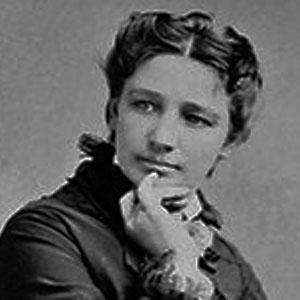
First Female US Presidential Candidate Victoria C. Woodhall (b. September 23, 1838 d. June 9, 1927)

Victoria-Woodhull_001_L_small

Legal Contender….Victoria C. Woodhull: first woman to run for president

By Susan Kullman

Source: The Women’s Quarterly (Fall 1988)

On the 150th anniversary of her birth, September 23, 1988, Victoria Claflin Woodhull was largely lost to history. She still is. Few Americans even recognize her name. Yet “The Woodhull” was once one of the best known women in America — the first woman to run for President and the first to open a bank on Wall Street. Nineteenth-century Americans thrilled to news stories about her exploits. Admirers pored over her weekly newspaper and scooped up her books, pamphlets, and photographs. Her lectures left thousands spellbound.

bewitching brokers

Woodhull worked under the assumption that a “woman’s ability to earn money is better protection against the tyranny and brutality of men than her ability to vote.” She and her younger sister Tennessee Claflin invaded Wall Street to achieve their economic independence. Newspapers hailed America’s first female stockbrokers as “The Queens of Finance” and “The Bewitching Brokers.” Susan B. Anthony applauded the arrival of women in Wall Street in 1870 as “a new phase of the woman’s rights question.”

Woodhull, Claflin & Co., Bankers and Brokers, opened with the silent backing of America’s wealthiest financier, railroad magnate Cornelius Vanderbilt. Their earnings bankrolled Woodhull’s presidential campaign and helped finance her newspaper. With this venture, Woodhull demonstrated her ability as a woman – a married mother of two – to “successfully engage in business.”

Born in 1838, Woodhull witnessed the abolition of slavery and the birth of the dream of racial equality in America. Three months after invading Wall Street, she announced her intention to run for President in one of New York City’s largest daily newspapers. When the thirty-one year old petticoat politician threw her cock’s feather cap into the ring, men of color sat in Congress and several State legislatures. Sexual equality seemed as likely to her as women’s liberation would appear a century later.

queens of the quill

The sister brokers launched Woodhull & Claflin’s Weekly a month later. Initially published as a campaign sheet, the newspaper quickly took on a larger agenda. It evolved into a radical political, economic, and social open forum that shaped Woodhull’s budding reform crusade. The sixteen-page weekly newspaper claimed twenty thousand subscribers and ran for six years.

The “Queens of the Quill” highlighted the lessons they learned on Wall Street. Muckrakers at heart, they published exposés on stock swindles, insurance frauds, and corrupt Congressional land deals. Reports of outrageous scams did not stop more reputable brokerage firms and banks from advertising on the Weekly’s front page.

Above all, the newspaper addressed issues that concerned women with unusual frankness. It advanced the editors’ shared vision that women could live as men’s equals in the work place, political arena, church, family circle, and bedroom. The words and deeds of ordinary and extraordinary women filled the Weekly’s columns.

woman’s rights advocate

Woodhull’s experience as a lobbyist and businesswoman taught her how to penetrate the all-male domain of national politics. A year after she set up shop in Wall Street, she preempted the opening of the 1871 National Woman Suffrage Association’s third annual convention in Washington. Suffrage leaders postponed their meeting to listen to the female broker address the House Judiciary Committee. Woodhull argued that women already had the right to vote – all they had to do was use it – since the 14th and 15th Amendments granted that right to all citizens. The simple but powerful logic of her argument impressed some committee members. Suffragists saw her as their newest champion. They applauded her statement: “women are the equals of men before the law, and are equal in all their rights.”

Woodhull catapulted to the leadership circle of the suffrage movement with her first public appearance as a woman’s rights advocate. Although her Constitutional argument was not original, she focused unprecedented public attention on suffrage. Following Elizabeth Cady Stanton, Woodhull was the second woman to petition Congress in person. Newspapers reported her appearance before Congress. The Time magazine of its day, Frank Leslie’s Illustrated Newspaper, printed a full-page engraving of Woodhull, surrounded by prominent suffragists, as she delivered her argument.

queen of the rostrum

Woodhull invigorated the Cause and became one of the movement’s most articulate speakers. Her Lecture on Constitutional Equality attracted thousands. Newspapers cited her as “the ablest advocate on Woman Suffrage, a woman of remarkable originality and power.” When the Judiciary Committee issued a minority report supporting Woodhull’s position, suffragists distributed thousands of copies throughout the nation.

contemporary supporters and critics

For the most part, those who knew Woodhull personally were willing to accept her “money and brains and unceasing energy” for the Cause. Susan B. Anthony, Isabella Beecher Hooker, Belva Lockwood, Lucretia Mott, Elizabeth Cady Stanton, and other women’s rights leaders befriended her, some for the rest of their lives. Others were offended by her clairvoyant practices, her divorce from her first husband, and the peculiar extended family that she supported in her fashionable Manhattan mansion.

Bestselling author Harriet Beecher Stowe was her most renowned critic. Chagrined by Woodhull’s magnetic blue eyes, rural Ohio speech, and “indelicate” style and behavior, Stowe spoofed her as Miss Audacia Dangereyes, the “advanced woman of the period.” In her novel My Wife and I, the wife applauds her father when he lambasts the idea of a woman running for President with the sentiment:

“…no woman that was not willing to be dragged through every kennel, and slopped into every dirty pail of water, like an old mop, would ever consent to run as a candidate. Why it’s an ordeal that kills a man. And what sort of a brazen tramp of a woman would it be that could stand it, and come out of it without being killed? Would it be any kind of a woman that we should want to see at the head of our government?”

In response to being judged by different standards than male politicians and reformers, Woodhull intensified and expanded her reform agenda.

With Constitution in hand, the Queens of Finance attempted to vote in the 1871 elections. Though turned away from the polls, their effort inspired nationally-circulated Harper’s Weekly to print a half-page illustration showing “Mrs. Woodhull Asserting Her Right to Vote.”

bourgeois feminist

A month after the “Queens of the Quill” attempted to vote, their Weekly provided the public with the first English translation of Karl Marx’s Communist Manifesto published in America. The editors tried to demonstrate their ability to lead the American branch of Marx’s First International Workingmen’s Association. Ironically, not Wall Street profits but the sisters’ devotion to equality between the sexes prompted Marx’s London Council to throw Woodhull and Claflin out of the IWA.

“free lover”

Woodhull’s suffrage lecture marked the beginning of a public speaking career that spanned the next few decades. The “Queen of the Rostrum” spoke about women’s rights, finance, labor and capital, spiritualism, and sexual relations. Her most popular lectures focused on what she called “social freedom.” Sensitized by her own divorce from the alcoholic she married at the age of fourteen, Woodhull denounced legal and religious arguments for enduring a rotten marriage. She compared social freedom to freedom of religion. While she claimed to be a “monogamist,” Woodhull defended the right of others to decided what later generations would call their own lifestyles.

Irritated by her social freedom lecture, popular cartoonist Thomas Nast lampooned Woodhull as “Mrs. Satan” in a full-page engraving for Harper’s Weekly. Nast’s cartoon showed a tired, ragged young woman walking along the edge of a rocky cliff with babe in arms. She carries another child and her drunk husband on her back. A demonic Victoria Woodhull, horned and winged, holds a sign up to the woman: “BE SAVED BY FREE LOVE.” The wife’s response: “Get thee behind me, (Mrs.) Satan! I’d rather travel the hardest path of matrimony than follow your footsteps.”

Woodhull’s message struck a chord in some hearts. One of the largest public assemblies in New York’s history, some 3000, was “cordially disappointed at the high moral ground and limited license which the speaker’s definition of Freedom would allow.” In Boston, Woodhull was “listened to with deference, encouraged with much applause, and retired with the verdict of all that she had spoken much truth.” The Pittsburgh Dispatch called her “the most prominent woman of our time.” Two months later, Woodhull presented the keynote speech at a national suffrage convention.

presidential campaign

In the midst of all this, Woodhull pursued her Presidential campaign [with running mate Frederick Douglass]. She published a 250-page collection of essays that spelled out her position on the problems facing the nation. A leading writer and reformer, Theodore Tilton, wrote Woodhull’s authorized campaign biography. She had a comprehensive platform, two campaign committees, a campaign button, and a bona fide nominating convention. She challenged incumbent Ulysses S. Grant and his Democratic opponent Horace Greeley.

The Equal Rights Party selected her as their standard bearer six months after Woodhull first delivered her social freedom speech. Their convention stands as the largest, most representative third party gathering of the 1872 election. Fifteen hundred men and women lent their voices to Woodhull’s nomination by acclamation.

Woodhull’s support came from suffragists, land and labor reformers, peace and temperance people, Internationalists, and spiritualists. The Equal Rights Party platform supported women’s right to vote, work, and love freely; nationalization of land; cost-based pricing to reduce excessive profits; a fairer division of earnings between labor and capital; the elimination of exorbitant interest rates; and free speech and a free press.

Practical movements, Woodhull learned, alarm “cowardly hearts” more than speeches and publications. Her “impending revolution” was quashed soon after the convention. Unforeseen reprisals devastated her personal life, business, and reform activities. Unable to secure housing in Manhattan, she and her family spent weeks sleeping on the floor of her newspaper office. Her twelve-year-old daughter assumed an alias to attend school without harassment. Financial difficulties forced the suspension of Woodhull & Claflin’s Weekly for four months.

the Beecher-Tilton scandal

The newspaper resumed publication with an acerbic revelation of the editors’ personal and financial difficulties. Renewing the crusade against hypocrisy in high places, the Weekly printed two explicit exposés. One detailed the extramarital affairs of Reverend Henry Ward Beecher, who cuckolded his personal friend, colleague, and parishioner, writer Theodore Tilton – Woodhull’s first biographer. The other focused on a licentious stockbroker, Luther Challis, who boasted about his conquests of innocent young girls. The “scandal issue” created a national sensation.

In an ironic twist of fate, the first woman to run for President spent Election Eve behind bars. Reverend Beecher, Harriet Beecher Stowe’s younger brother, was one of the nation’s most prominent clergymen. His supporters retaliated quickly. Woodhull and Claflin were arrested for using the U.S. mails to “utter obscene publication” in the Challis article. Woodhull described her arrest as an attempt by the government to “establish a precedent for the suppression of recalcitrant Journals.”

The Queens of the Quill became the targets of one of YMCA reformer Anthony Comstock’s earliest censorship campaigns. They spent weeks in various New York City jails, paid more bail – over $60,000 for an alleged misdemeanor – than Tammany Hall’s corrupt “Boss” Tweed, and faced charges related to the scandal issue for nearly two years. Their defense of themselves and the Bill of Rights reached the public through the Weekly and Woodhull’s public lectures. The sisters were found innocent on the obscenity counts in 1873, and innocent of libel in the Challis article in 1874.

Victoria Claflin Woodhull Martin’s legacy

Burned out, Woodhull and Claflin moved to England a few years later. They remained there for the rest of their lives. Both married wealthy men and lived comfortably into the twentieth century. They lectured occasionally and continued to publish. But their zealous reform spirit never recovered to pre-scandal heights.

Victoria Woodhull promoted changes that frightened, embarrassed, or in some cases delighted her contemporaries. She challenged several male-dominated organizations and institutions. She attempted to change society’s views about sexuality and family structure. She tried to use existing law and the political system to achieve a more egalitarian society, and felt the brunt of the establishment when she overstepped propriety and subjected social relations to the same kind of muckraking she used to expose unethical business practices.

Women who threaten patriarchal institutions are particularly vulnerable to being obscured and misunderstood. Her opponents – and there were many – discredited Woodhull and the issues she raised about sexual politics in nineteenth-century America. With few exceptions, historians ignore Woodhull or question her sincerity. Most writers emphasize her notoriety to the point of overshadowing her serious abilities, her notable accomplishments, and her provocative dreams.

Victoria Woodhull’s comet-like career as an American social reformer may have been unequaled by her contemporaries in its scope, in its intensity, and in its visions of equality and justice. Hers is a legacy worth reclaiming.

Podcast Roundup

9/7: On Expanding Minds, hosts Maja D’Aoust and Erik Davis have a conversation with Andy Sharp of English Heretic about death, Horror films, Hiroshima, psychogeography, and his latest release, The Underworld Service.

 
http://s50.podbean.com/pb/fd840a4721e38d3f25dd4ec01834d2c6/541340f7/data2/blogs18/276613/uploads/ExpandingMind_090714.mp3

9/8: R.U. Sirius joins hosts Chris Dancy and Klint Finley to discuss technology transhumanism, and the current social/political climate among other topics.

https://soundcloud.com/itsmweekly/pending-mindful-cyborgs-episode-37
 
9/9: Peter Null interviews Professor Andrew Kolin, a professor of political science at Hilbert College in Hamburg and Kevin Carson, researcher at the Center for a Stateless Society, on militarization of police, centralization of power, war and the military-industrial complex.


http://s53.podbean.com/pb/e788a26888199ef114360f06cc89f48c/541347f9/data1/blogs18/371244/uploads/ProgressiveCommentaryHour_090914.mp3

9/10: On the C-Realm, KMO and June Pulliam discuss and dissect the archetypes and cultural meaning of zombie apocalypse narratives.


http://c-realmpodcast.podOmatic.com/enclosure/2014-09-10T12_48_22-07_00.mp3

9/11: Christopher Knowles joins Aeon Byte Gnostic Radio to examine how Gnosticism connects to alternative cultures, politics and humanity’s existential crisis.


http://content.screencast.com/users/AeonByte/folders/AEON%20BYTE/media/7984ec1d-8363-4162-a034-0dabc54aef33/1.%20Gnosticism%20and%20Politics%20with%20Chris%20Knowles.mp3

9/12: On New World Next Week, James Corbett and James Evan Pilato report on 9/11 terror hysteria, Obama’s private CFR event with Sandy Berger (9/11 document thief) and the cryptocurrency/anti-surveillance potential of a new off-the-grid communications technology.

 
http://www.corbettreport.com/mp3/2014-09-11%20James%20Evan%20Pilato.mp3

Why Independent 9/11 Research and Education Still Matters

Editor’s note: This is a revised article from last year followed by recent podcasts and videos on the topic.

One of the ways corrupt people and institutions retain power is by discouraging criticism and discussions that could lead to organized opposition. A classic tactic is to vilify targets as unpatriotic, disloyal, traitorous, heretical, dangerous, crazy, etc. Think about what happened to critics of capitalism during the peak of the cold-war hysteria. George Orwell’s 1984 depicted how governments could also manipulate language, history, media and other information in order to diminish critical thought (which leads to critical speech and organizing) and to control thought. The creation of a Big Brother-style police/surveillance state is another way to create a climate of fear and foster a culture which discourages the sharing of knowledge about certain topics and prevents people from taking action.

This should be kept in mind when discussing 9/11, because those who still have complete faith in government and corporate media (an increasingly shrinking number), have been conditioned to ignore, deny or dismiss any information that would lead them to question the official story. The most common knee-jerk reaction is to defend the official story by labeling all alternative narratives “conspiracy theory”. Though this argument is not as convincing today, when political scandals and crimes are almost a daily occurrence, the association between “conspiracy theories” and negative terms such as “crazy” and “wacko” are deeply ingrained in the culture, and not by accident.

The term “conspiracy theory” was not used as an ad hominem attack until shortly after the assassination of John F. Kennedy. Documented evidence shows the CIA needed to develop new and more effective ways to attack and discredit those who dared to question the Warren Commission Report. So when one counters questions about the official narrative with “That’s just a crazy conspiracy theory” they’re actually using a psy-op attack developed by and for a conspiracy. Because of experience and greater proliferation of information through the internet, fewer people are naive enough to deny extremely wealthy and powerful people would conspire to protect their position and interests. History and hard evidence shows it would be crazier to suppose that they don’t.

Another common argument is “The government is too incompetent to pull off something of that scale and keep it a secret”. It’s true that aspects of the government are incompetent, but the incompetence is generally limited to things they care little about such as medical and educational systems, the food system, domestic infrastructure, safety, financial regulation, disaster relief, fair elections, etc. When it comes to things they prioritize such as wars, bailouts, black budgets, black ops, cronyism, crowd control, surveillance, propaganda, etc., the US government is extremely effective. And the higher up the hierarchy, the easier it is to keep secrets. All it takes is a relatively small number of people in key positions, and through division of labor, compartmentalization, formation of policies conducive to conspiring, and covert actions and communications protected under the cloak of “national security” (with help from a mass culture of conformity, credulity and fear). One should also keep in mind that governments are not monolithic and are comprised of factions with conflicting interests which can be used, manipulated and/or compromised by players involved in the conspiracy (not just within U.S. government but in foreign governments and the private sector as well).

Some simply can’t accept that individuals and factions within U.S. government could intentionally cause an attack such as 9/11 or let it happen. This speaks to the power of corporate media and establishment propaganda on different levels. It shows how a significant majority of Americans can be kept completely ignorant of decades of violent imperialist policy around the world and how false flags have been used to start wars through history. There’s also a long history of state violence against its own people and on American soil going back to the genocide of Native Americans, murders of countless slaves and people of color, multiple massacres of labor activists, assassination of leaders such as JFK, RFK, MLK, Black Panthers, and MOVE, the 93 WTC bombing, WACO, OK City bombing, etc. There’s also ample documentation proving the US government has at least considered actions not dissimilar to 9/11 such as Operation Northwoods and Project for a New American Century. What this argument presupposes is that powerful and wealthy (mostly) white men are inherently more trustworthy, empathetic, and righteous than “Muslim fanatics” or any other “enemy” most Americans have been conditioned to fear and hate.

Other attacks against independent 9/11 researchers include dismissals like “9/11 is no longer relevant” and/or “there’s more important problems to deal with so we need to move on”. I would argue that when such crimes occur that have harmed and killed vast numbers of people and is responsible for countless casualties and elimination of civil liberties more than a decade after due to policies supposedly justified by the event, we have a moral obligation to uncover who did it and why. There’s no peace without justice and no justice as long as the truth behind such nation-changing crimes remains suppressed. Of course there’s always plenty of immediate and equally important issues to address, but those who don’t know history are condemned to repeat it. More specifically, those who benefit most from historical events such as 9/11 are motivated to repeat it while those who only know a distorted version of history while remaining ignorant of the truth are more likely to let it happen again.

Because of the work of “conspiracy theorists” we are now more aware of the scope of government/corporate criminality and connections between government, wall street, war-profiteers, and the criminal underworld. For example, without the work of independent JFK researchers we wouldn’t be aware of Operation Northwoods which many now view as a false flag template used for 9/11. Gaining a better understanding of how and why 9/11 happened helps us put current geopolitical events in context while providing insight into how such operations work and how they can be counteracted.

There’s also the “straw man” argument which creates the illusion of having refuted a proposition by replacing an argument with a superficially similar yet non-equivalent proposition and refuting it without ever having refuted the original position. This is particularly easy to do with complex high profile incidents such as 9/11 and the JFK assassination, where there can be a wide array of theories and speculation due to the complexity of the narrative, widespread interest, deep secrecy and disinformation or misinformation from “useful idiots” and/or those who would benefit from keeping crucial information hidden.

Discussing controversial subjects is never easy but it’s always rewarding when people turn out to be more receptive and thoughtful than one might suspect. Though corporate media does its best to defend the official stories, more people than ever are waking up. On this 9/11 anniversary with the potential for another war on the horizon, it’s as good a day as any to talk about it, share this information and help others wake up.

9/11/14 Update:

On the 9/3/14 episode of “Guns and Butter” Tod Fletcher uses a contextual approach to analyzing events at the Pentagon, explores origins and elements of the hijacker story (ie. telephone calls from the planes, analysis of eyewitness reports, physical debris, photo/video evidence, black boxes and FBI involvement) and investigates means, motive and opportunity.


audio http://archives.kpfa.org/data/20140903-Wed1300.mp3

This episode was followed by the 9/10/14 Guns and Butter: “9/11 and the Politics of Deception” with Christopher Bollyn.


http://archives.kpfa.org/data/20140910-Wed1300.mp3

Project Censored 9/8/14: With the anniversary of the September 11 attacks at hand, Peter and Mickey speak with Ken Jenkins, organizers of the annual 911 Film Festival in Oakland, California, about questions that still linger 13 years after the attacks. Then Shahid Buttar of the Bill of Rights Defense Committee talks about the scope and implications of the ongoing federal surveillance activities against Americans, and how to resist them. The program concludes with Robbie Martin of Media Roots, speaking about his new documentary “American Anthrax.”

https://s3.amazonaws.com/Pcradiodos/Project+Censored+090514.mp3

9/11: The Mother of All Big Lies by Stephen Lendman

9/11 Truth, Inner Consciousness, and the Public Mind by James Tracy

Thirteen Years After the September 11 Attacks, Blindness Persists by Thierry Meyssan