Former CIA Official Lied in Boston Bombing Cover-Up

index

By Daniel Hopsicker

Source: MadCowNews

Former top CIA official Graham Fuller lied in a press interview about his former son-in-law, Ruslan Tsarni, the uncle of “The Brothers Tsarnaev,” Tamerlan, now dead, and Dzhokhar, soon to go on trial in Boston for allegedly planting a homemade pressure-cooker bomb packed with shrapnel near the finish line of the Boston Marathon. 

“A story on the Internet implying possible connections between Ruslan (Tsarni) and the Agency through me is absurd,” Fuller said in an Apr 27 2013 story headlined “Former CIA officer: ‘Absurd’ to link uncle of Boston suspects, Agency,” in Washington-D.C.-based Al-Monitor, which bills itself as the “Pulse of the Middle East.”

Fuller was responding to an exclusive report published here headlined “Was Boston Bombers ‘Uncle Ruslan’ with the CIA?”,which he and reporter Laura Rosen churlishly refused to credit, calling it merely a “story on the Internet” even as they labored to debunk it. Yet it was reported and re-published so widely in the aftermath of the Boston Marathon terror attack that Fuller felt compelled to respond.

Well,  compelled to respond may be a little strong. Still, respond he did, in an interview which marshalled arguments to indicate questioning whether Ruslan Tsarni’s connection with the CIA had been through his famous former father-in-law were not just an exercise in futility. They were absurd

Just to be clear, there is zero evidence to indicate either Uncle Ruslan Tsarni or the CIA hired the Tsarnaev Brothers to blow up Boston.  There is, however, abundant evidence that elements of the U.S. Government have been playing footsie with Chechen terrorists, presumably to divert Russia from committing the kind of rash Neo-Communist Gangster stuff they’d be doing already unless we’re very very  careful.

Here’s a troubling question: If it was blow-back from that campaign which blew up in Boston—throwing covert U.S. support at Chechen terrorists—do you think anyone in the U.S. Government is eager to let the American people in on that no-doubt classified-for-reasons-of-national-security secret?

Why, the very idea seems—to use Mr. Fuller’s word—absurd.

Uncle Ruslan meets ‘the boys’

In his interview, Graham Fuller admitted that a second bombshell disclosure in an exclusive Apr 26, 2013, report headlined Boston bombers’ uncle married daughter of top CIA official, also was true: The Tsarnaev Brothers’ uncle, Ruslan Tsarni, was his former son-in-law.

Tsarni was married to Graham Fuller’s daughter Samantha between 1994 and sometime near the dawn of the millenium, Fuller grudgingly admitted.  Still, he insisted,without explanation, that suggestions that law enforcement should be checking to see if Ruslan Tsarni had “hooked up” with the CIA through Fuller were “absurd.”

It was an odd assertion. At the very moment he was making it, investigators with the FBI—who remained convinced the Tsarnaev Brothers had outside help and support—were in an intensive manhunt to find foreign connections to the case.  Asking questions about links between Ruslan, the CIA, and the bombers would not be seen as out of bounds. Or would they?

Of course, statements by former top CIA officials should be taken with a large grain of salt. Double the salt allowance if the “former” official is still engaged in intrigue in Central Asia.

Hannibal crosses the Alps; Fuller fords his Rubicon

And that’s before discounting fstill further for being widely and infamously known as the man who convinced the Reagan Administration that it would be a neat idea to send a callow Marine Lt. Col. named Oliver North with a cake under one arm and some TOW missiles under the other to a meet-and-greet in Tehran with the Ayatollah.

But back to the body blows being thrown against the credibility of anyone with the temerity of reporting the obvious…

“Fuller retired from the agency almost a decade before the brief marriage,” sniffed Laura Rosen, the reporter  selected to give him a sympathetic hearing.

“I, of course, retired from CIA in 1987,” Fuller offered helpfully, suggesting his Agency past had receded into the far reaches of recorded history, a dimly-remembered time located somewhere just this side of Hannibal crossing the Alps.

If Fuller retired, moved to Florida, and taken up golf while decked out in the vibrant hues of lime-green and canary-yellow sweater-slack combinations favored in the Florida golfing fraternity, he might have a point.

That was not, alas, how Fuller chose to spend his dwindling years. Even today he keeps stirring the pot in Central Asia, a long-time player in what previous generations called the Great Game.

He’s a consultant at Rand Corp; and he’s written a prodigious number of books with Great-Game-y titles: “Turkey & the Arab Spring;” “The Arab Shia’a;” “The Future of Political Islam;” “Turkey’s Kurdish Question;” “The Geopolitics of Islam & the West. “

Kazakh-style crony capitalism, illustrated

Ruslan Tsarni’s former father-in-law isn’t his only link to the CIA. There’s also his decades-long work history, discovered in a press release from a dodgy oil-related company with no assets and a ridiculous name whose President had been somehow lured away from a life-long career with Halliburton.

It reveals that Tsarni had worked in Central Asia for the Agency for International Development (USAID)—a U.S. Government Agency often used for cover by the CIA, including a two-year stint in the former Soviet Republic of Kazakhstan during the “Wild West” days of the early 1990’s, when anything that wasn’t nailed down in that country was up for grabs.

At a time when vast natural resources and enormous fortunes were ‘in play’ during the economic free-for-all in the “Stans” after the collapse of the Soviet Union, 24-year old Ruslan Tsarni was already a ‘player.’

Ruslan Tsarni is once again working (since 2010) working for USAID. Oddly enough, Russia, the country competing with the US for influence in the region, unceremoniously kicked USAID out of the country just months before the Boston Bombing terror attack, for, according to a Putin spokesmen, encouraging his political opposition.

Ruslan Tsarni & the Congress of Chechen International Organizations

In his interview with Laura Rosen, Fuller uncorked a whopper. Said Fuller,“Like all Chechens, Ruslan was very concerned about his native land, but I saw no particular involvement in politics [although] he did try to contact other Chechens around.”

Perhaps Fuller felt that no one would notice. Perhaps he felt immune to fact-checking, a sentiment common among Reagan-era CIA officials. But whatever his motivation, he has been caught in a provable lie.  Ruslan Tsarni, as Fuller well knows, has been up to his neck in Central Asian political intrigue for decades. 

On August 17,1995, while Ruslan Tsarni and Graham Fuller’s daughter Samantha were still virtual newlyweds, Tsarni incorporated a company in Maryland called the “Congress of Chechen International Organizations.” 

Ruslan Tsarni was listed as the company’s resident agent. The group sent aid to Islamic terrorists in Chechnya, including thousands of pairs of combat boots, coordinating its efforts with another so-called “charity,” Benevolence International, designated “financiers of terrorism” by the Treasury Department before being shut down by US Attorney Patrick Fitzgerald.

The company’s listed address, 11114 Whisperwood Ln. Rockville MD., was the home address of former top CIA official s Graham Fuller.

Today, the home remains listed in his wife’s name.

“An impromptu press conference aired live on network television”

With worldwide attention on the upcoming trial of Boston Marathon bombing suspect Dzhokhar Tsarnaev, what facts could possibly be being deliberately de-selected and hidden from view?

In “Long Mile Home” a book about the Boston Marathon Bombing by two Boston Globe reporters,  everything they have to say about Ruslan Tsarni isn’t much:

“On the Friday morning after Tamerlan was  killed, with police still hunting for Dzhokhar, investigators and reporters found their uncle, Ruslan Tsarni, a corporate attorney living outside Washington D.C.

When he emerged after speaking to FBI agents inside his home, he walked up to television cameras and reporters gathered outside looking for the latest in what had become the biggest story in the world. In an impromptu press conference aired live on network television, Tsarni offered condolences to the bombing victims, denounced his nephews, and ordered Dzhokhar to turn himself in.

Asked to explain what provoked the brothers to attack, Tsarni said, “Being losers. Hatred for those who were able to settles themselves. These are the only reasons I can imagine. Anything else—anything to do with religion, with Islam –that’s a fraud. It’s a fake.”

Asked how he felt about the United States, Tsarni said, “I respect this country. I love this country.”

An opinion writer for the Washington Post called his words “inspiring,” and said his press conference was “a moment we all needed.”

The New Yorker said he “looked like he might hunt his nephew down himself.”

That’s it. That’s everything they wrote about Ruslan Tsarni. Nothing about his work overseas for USAID. Nothing about being the former son-in-law of a top CIA official, or about running an organization out of his house that was sending aid to Chechen terrorists. Most of all nothing about his being—at the same time he was calling his nephews “losers”— a guy involved, according to the London Telegraph, in the biggest bank fraud in history.

By anyone’s standards, that’s a lot not to report. The authors must be proud.

“Uncle” Ruslan Tsarni is the elephant in the living room

“News,” someone once wrote, “is selection.”

And selection is always  based on an ideology and an agenda. Just something to remember the next time you’re reading, or watching, the ‘news.’

As jury selection proceeds in Boston in the upcoming trial of Dzhokhar Tsarnaev, the most pressing question about the attack remains one which is so obvious even Time Magazine is asking it: Did They Really Act On Their Own? 

The logical place to start would be with Uncle Ruslan, who’s been married to the daughter of a former top CIA official who remains a”player” in Central Asia’s Great Game.  But, of course, it ain’t gonna happen.

Whether by accident or design, Ruslan Tsarni played the same role in the aftermath of the Boston terror attack played after the 9/11 terror attack by Rudi Dekkers,  manager of Mohamed Atta’s flight school in Venice. And just like Rudi Dekkers before him, his pronouncements were received uncritically.

The mainstream media fawned all over him. He was soon being called “Uncle Ruslan. He  became the primary go-to source on the suspects, peddling his brief about the perfidy and all-around loser nature of his two nephews, one of whom, who he’d helped raise and bring to America, had just been killed in a hail of gunfire with police.

There were no tears for Uncle Ruslan. He was “protected,” and no doubt glad for it.

When Graham Fuller fibbed about Ruslan’s political activities, was it out of personal loyalty, or in support of a larger operation which had Ruslan Tsarni leading every 24-hour news cycle for more than a week during the biggest story of the year? Is there anyone in America who still thinks this happens by accident?

What does this say about the CIA’s ability to mold news coverage of a major event?

Already a valuable asset, Uncle Ruslan hadn’t even executed his most valuable task yet. Tsarni would soon be single-handedly responsible for leading the entire mainstream media of the Western World on a two-week long wild goose chase. Like a Pied Piper for the electronic age, he led the world away from whoever had actually punched the Tsarnaev Brothers ticket to jihad, towards something that didn’t even exist, “a chubby red-haired Armenian Muslim exorcist named Misha.”

More on this in our next story.

Uncle Ruslan’s  network for “international corruption”

When he was pontificating daily on live network television, why had no one thought to ask him about his contemporaneous  involvement in what London newspapers had begun calling “the biggest bank fraud in history?”

That’s the other side, the well-connected oil executive-side, of Ruslan Tsarni, that remains hidden. When one reporter had the bad manners to ask him what he did, Tsarni got touchy, and would say only, “I work for a living.”

End-of-story,CIA-style.

Tsarni is implicated in an international criminal investigation that oddly enough also involves another name currently in the news: Britain’s Prince Andrew, who sold his run-down estate to a Kazakh billionaire banker-turned-fugitive looking for asylum in London who paid Andrew $10 million more than it was worth.

Before he left Almaty for a more exciting life in London, the banker, with Tsarni’s help, had made off with a cool six billion dollars. Six billion. With a “B.”

More on this in our next story too.

When Graham Fuller was caught lying, it confirmed growing suspicions that huge chunks of the truth about the Boston Marathon Bombing—the biggest act of terrorism in America since the 9/11 attack— are deliberately being hidden from view.

In truth, news that another cover-up is underway comes as no great surprise. What is surprising is how much of cover-up, both in the 9/11 and the Boston Marathon terror attacks, was first identified here, in The MadCow Morning News, whose very name points out the surrealistic absurdity of contemporary American journalism.

Novelist Thomas Pynchon put it best: “If they can get you to ask the wrong questions, they don’t have to worry about the answers.”
Who’s the “Low Life Scum:” Kissinger or CODEPINK?

kissinger-wanted

By Medea Benjamin

Source: Information Clearing House

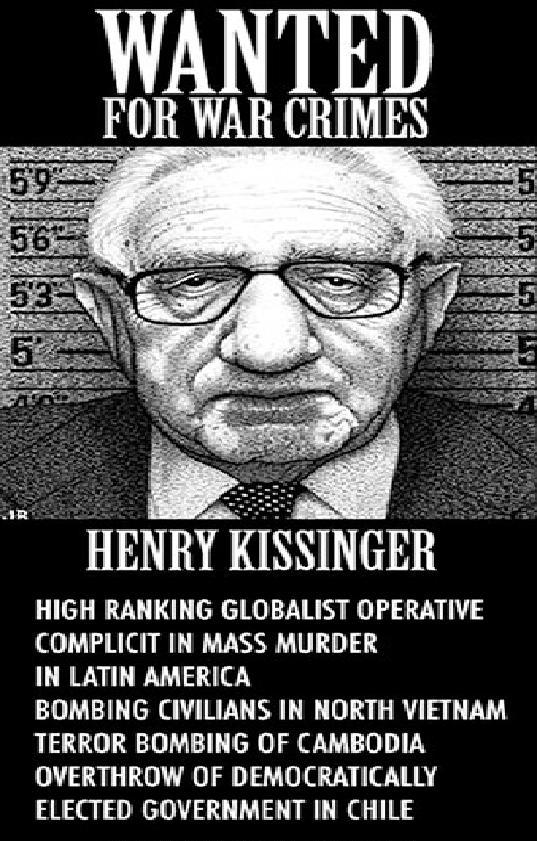
A very angry Senator John McCain denounced CodePink activists as “low-life scum” for holding up signs reading “Arrest Kissinger for War Crimes” and dangling handcuffs next to Henry Kissinger’s head during a Senate hearing on January 29. McCain called the demonstration “disgraceful, outrageous and despicable,” accused the protesters of “physically intimidating” Kissinger and apologized profusely to his friend for this “deeply troubling incident.”

But if Senator McCain was really concerned about physical intimidation, perhaps he should have conjured up the memory of the gentle Chilean singer/songwriter Victor Jara. After Kissinger facilitated the September 11, 1973 coup against Salvador Allende that brought the ruthless Augusto Pinochet to power, Victor Jara and 5,000 others were rounded up in Chile’s National Stadium. Jara’s hands were smashed and his nails torn off; the sadistic guards then ordered him to play his guitar. Jara was later found dumped on the street, his dead body riddled with gunshot wounds and signs of torture.

Despite warnings by senior US officials that thousands of Chileans were being tortured and slaughtered, then Secretary of State Kissinger told Pinochet, “You did a great service to the West in overthrowing Allende.”

Rather than calling peaceful protesters “despicable,” perhaps Senator McCain should have used that term to describe Kissinger’s role in the brutal 1975 Indonesian invasion of East Timor, which took place just hours after Kissinger and President Ford visited Indonesia. They had given the Indonesian strongman the US green light—and the weapons—for an invasion that led to a 25-year occupation in which over 100,000 soldiers and civilians were killed or starved to death. The UN’s Commission for Reception, Truth and Reconciliation in East Timor (CAVR) stated that U.S. “political and military support were fundamental to the Indonesian invasion and occupation” of East Timor.

If McCain could stomach it, he could have read the report by the UN Commission on Human Rights describing the horrific consequences of that invasion. It includes gang rape of female detainees following periods of prolonged sexual torture; placing women in tanks of water for prolonged periods, including submerging their heads, before being raped; the use of snakes to instill terror during sexual torture; and the mutilation of women’s sexual organs, including insertion of batteries into vaginas and burning nipples and genitals with cigarettes. Talk about physical intimidation, Senator McCain!

You might think that McCain, who suffered tremendously in Vietnam, might be more sensitive to Kissinger’s role in prolonging that war. From 1969 through 1973, it was Kissinger, along with President Nixon, who oversaw the slaughter in Vietnam, Cambodia and Laos—killing perhaps one million during this period. He gave the order for the secret bombing of Cambodia. Kissinger is heard on tape saying, “[Nixon] wants a massive bombing campaign in Cambodia. He doesn’t want to hear anything about it. It’s an order, to be done. Anything that flies or anything that moves.”

Senator McCain could have taken the easy route by simply reading the meticulously researched book by the late Christopher Hitchens, The Trial of Henry Kissinger. Writing as a prosecutor before an international court of law, Hitchens skewers Kissinger for ordering or sanctioning the destruction of civilian populations, the assassination of “unfriendly” politicians and the kidnapping and disappearance of soldiers, journalists and clerics who got in his way. He holds Kissinger responsible for war crimes that range from the deliberate mass killings of civilian populations in Indochina, to collusion in mass murder and assassination in Bangladesh, the overthrow of the democratically elected government in Chile, and the incitement and enabling of genocide in East Timor.

McCain could have also perused the warrant issued by French Judge Roger Le Loire to have Kissinger appear before his court. When the French served Kissinger with summons in 2001 at the Ritz Hotel in Paris, Kissinger fled the country. More indictments followed from Spain, Argentina, Uruguay—even a civil suit in Washington DC.

Hitchens was disgusted by the way Henry Kissinger was treated as a respected statesman. He would have been appalled by Senator McCain’s obsequious attitude. “Kissinger should have the door shut in his face by every decent person and should be shamed, ostracized, and excluded,” Hitchens said. “No more dinners in his honor; no more respectful audiences for his absurdly overpriced public appearances; no more smirking photographs with hostesses and celebrities; no more soliciting of his worthless opinions by sycophantic editors and producers.”

Rather than fawning on him, Hitchens suggested, “why don’t you arrest him?”

Hitchens’ words were lost on Senator McCain, who preferred fawning to accountability. That’s where CodePink comes in. If we can’t get Kissinger before a court of law, at least we can show—with words and banners—that there are Americans who remember, Americans who empathize with the man’s many victims, Americans who have a conscience.

While McCain called us disgraceful, what is really disgraceful is the Senate calling in a tired old war criminal to testify about “Global Challenges and the U.S. National Security Strategy.” After horribly tragic failed wars, not just in Vietnam but over the last decade in Iraq and Afghanistan, it’s time for the US leaders like John McCain to bring in fresh faces and fresh ideas. We owe it to the next generation that will be cleaning up the bloody legacy left behind by Kissinger for years to come.


How to Reclaim your Mind and Life from the Cultural Engineers

terence_piv

By Paul Fassa

Source: RealFarmacy.com

“We tend to disempower ourselves. We tend to believe that we don’t matter. And in the act of taking that idea to ourselves we give everything away to somebody else, to something else.”
– Terence McKenna [1]

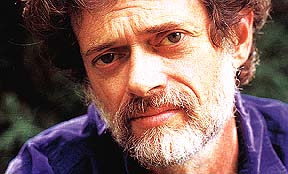
Terence Kemp McKenna (November 16, 1946 – April 3, 2000) was a philosopher, social critic, psychonaut, ethnobotanist, lecturer, writer who authored several books. He examined, deconstructed and expounded on a variety of subjects, including: plant-based entheogens, shamanism, metaphysics, psychedelic drugs, epistemology, alchemy, language, culture, technology and theories about the origins of human consciousness. He created a mathematical theory of time (novelty theory) based on patterns found in the I Ching. [1]

In this short video Terence McKenna explains the necessity reclaiming your mind and creativity from a dying, materialistic consumer oriented society.

“We have to stop consuming our culture. We have to create culture.” –Terrance McKenna [1]

It’s easy to get lost in the noise and hub of the daily grind – dead end jobs, UN-fulfilling careers, relentless consumerism and the constant drone like buzz of the big brother mind control media matrix.

The mass media’s [2] primary purpose and expertise is shaping and programming the “herd” mind with a steady stream of mostly dubious, fear based information overload combined with a cynical parade of buy this NOW advertising.

To say human consciousness has been commercialized is an enormous understatement. Just as day follows night, mass commodification of nature results in the commodification  of human consciousness.

The cultural engineers are obsessed with turning everything into things including people. The predominant value or worth of a person  is based primarily on how many things they can produce directly or indirectly and how many things they own and consume. The sacred intrinsic, non-temporal value of one’s soul is disregarded in favor of the culture’s contrived materialistic value system, which is centered on perishable commodities.

Under these conditions the soul is reified. To reify is to regard (something abstract) as a material or concrete thing. The sacred, inner life of the individual is systemically marginalized and crushed, ensuring  the majority will unblinkingly sell their soul to the externalized value system, which is by design seamlessly interlocked with survival and success on all levels.

“Within this totally jaded society the “individual” had little chance. In fact, his only hope was to escape in some fashion, perhaps into the woods where a person could rediscover the fundamental truths that nature revealed, or into hallucinogenic drugs that pushed the mind past the limitations drilled into it by education and upbringing, or into a completely different lifestyle grounded on more humane and authentic values.” [3]

For those who desire an authentic life created from the inside out and not the other way around, here are some steps that can help you reclaim your mind and life from the cultural engineers.

The burning question is do you really want to reclaim your mind from the gaudy over-commercialized, technological barbarism euphemistically referred to as a consumer oriented society. Are you finally bored with exploitative greed and debt slave materialism? You should be. Why?

“You are a divine being. You matter, you count. You come from realms of unimaginable power and light, and you will return to those realms.”
– Terence McKenna [1]

Assuming you’re ready to leap over the rotting corpse called modern culture and its Kafkaesque matrix society, unfasten your seat-belt and take a deep breath as we take a spin down the road rarely traveled. It’s an esoteric path that takes you back to the source of your creative spirit, intuitive wisdom and your unique connection to all that is or ever will be.

Obviously, a critical first step on this journey into the unknown is to resolutely refuse to be a compliant consumer of ideas, things, and dis-empowering belief systems. Be ready to break the chains of your conceptual prison and be willing to view life from the cracks that exist between ideas. The objective is to have a clear view of reality without the distorting lens of preconceived notions of our “borrowed” reality.

Also, you’ll begin to critically reexamine all the deeply held values that were inserted into your impressionable mind and soul at a very young age before you had the option to critically examine each value in the light and depth of your own consciousness. Unfortunately, at any age the saturation effect of the mass media can instill false values and a substitute reality.

“Personal empowerment means deconditioning yourself from the values and the programs of the society and putting your own values and programs in place.”
– Terence McKenna [1]


The primary tool of the cultural engineers use to control the masses is the media. In fact, for most the media is reality. The media actually creates reality; it does not merely reflect it.

How the media creates our reality:

“… television cultivates a perception of reality among its viewers. . . . “television … has acquired such a central place in daily life that it dominates our symbolic environment, substituting its message about reality for personal experience and other means of knowing about the world.” [2]

2 Simple Methods to Help You Reclaim Your Mind and Your Life:

“My technique is don’t believe anything. If you believe in something, you are automatically precluded from believing its opposite.”
– Terence McKenna [1]


One very practical method for discovering and occupying the unconditioned space between thoughts is by using an ancient Buddhist practice called mindfulness. Jon Kabat-Zinn, PhD, is a scientist, writer, professor, lecturer and meditation teacher who brought mindfulness into the realm of mainstream medicine and society at large.

Zinn’s definition of mindfulness: “Mindfulness means paying attention in a particular way; On purpose, in the present moment, and non- judgmentally.”[3] You cultivate detachment and equanimity of mind regardless of what life throws at you. It really gets interesting when you are finally able to move into the present moment and respond directly to life situations as they occur opposed to reacting to them based on past conditioning.”

With practice, mindfulness enables you to take control of your attention via your intention so you can willfully move your awareness into that clear space of the present moment without interference from the conditioned mind.

Normally our attention automatically drifts and gets stuck in the same ruts and grooves that have already created strong, magnetic like impressions in your mind. This tendency creates a mind lock where the attention is effectively caged in the past and rarely has the opportunity to freshly explore the actual moment that is life that is occurring now. In other words, our attention and thus our life is stuck in the past because where we focus our attention is what our life becomes.

Essentially to break the chains of the past you need to practice anchoring your attention in the present moment. This is when you consciously move beyond your current life “story” perception template into reality directly- moment by moment.

From that operating viewpoint you are free to create your desired reality without dragging the burden of the past or anxiety about the future into the equation. If you ignore the mental noise and turn your attention inward you will eventually discover the expansive space that exists between thoughts.

That space is where the raw, unconditioned power and unfettered freedom to create is found. It’s a timeless reservoir of unlimited possibilities. It’s a no-mind that’s empty with potential. Some refer to it as the quantum mind.

This is where artists go when they want to create something fresh and free from cultural or personal clichés. Sages and shamans are familiar with this space as well. They go there to listen not to think. If they are really good listeners they share what they heard or saw for the benefit of others.

“Half the time you think your thinking you’re actually listening.”
– Terence McKenna [1]

Of course, Terence McKenna primarily relied on various psychedelics and marijuana to help him enter that sacred space beyond the conceptual realm; he was a dedicated psychonaut, but that’s not the only way.

Discover your Imagination

“If you don’t have a plan, you become part of somebody else’s plan.”
– Terence McKenna [1]

The best plan is to first get in touch with reality via direct experience – ditching the ingrained conceptual template your culture indoctrinated into you from birth. That’s when you can really start to harness the true power of your imagination and use it to intentionally create the personal reality you desire to walk into beyond prevailing ideologies. From the perspective of raw imagination there is no past or future, just now. And that is where your essential power lies, in the present moment.

Forget about slavishly following the yellow brick road – create your own experiential road show starting with your imagination. Venture beyond the  current ideological and spiritual constraints and institutionally sanctioned belief systems that tell you what reality is and decide to boldly experience reality directly and journey into terra incognita.

To create a new reality requires skillfully engaging your intention and imagination utilizing all the senses including: visual (seeing), auditory (hearing), kinesthetic (touch), olfactory (smelling) or even gustatory (tasting). Now with your imagination fully engaged, create a subtle imaginary version that exactly reflects your desired intention.  This is basically how one creates a new reality beyond past conditioning.

From a CNN article titled:

The power of perceptions: Imagining the reality you want

“What we are fighting for, Benjamin (Ruha Benjamin, sociology professor) says, is our imagination — the right to imagine a life and relationships and a social world that are happier, less anxious, more harmonious and more just. We are not being diligent enough or deliberate enough about cultivating our imagination. We have to fight, for the ability to imagine the world we want. Because one form of oppression is telling people that they’re not allowed [or can’t] to imagine something better and happier.”

“Either there are no illusions or everything is an illusion,” (…) “And given that we are pretty much all delusional, you might as well choose your delusion.” –  Beau Lotto, neuroscientist and artist[6]

Paul Fassa is a contributing staff writer for REALfarmacy.com. His pet peeves are the Medical Mafia’s control over health and the food industry and government regulatory agencies’ corruption. Paul’s valiant contributions to the health movement and global paradigm shift are world renowned. Visit his blog by following this link and follow him on Twitter here.

Sources:
[1] http://www.endalldisease.com/73-mindblowing-terence-mckenna-quotes/
[2] http://people.missouristate.edu/MichaelCarlie/what_I_learned_about/media.htm NOTE: The term “mass media” refers to the Internet, radio, television, commercial motion pictures, videos, CDs, and the press (newspapers, journals, and magazines) – what are referred to collectively as broadcast and print media.
[3] http://www.shmoop.com/1960s/culture.html
[4] http://www.webmd.com/jon-kabat-zinn (bio)
[5] http://www.wildmind.org/applied/daily-life/what-is-mindfulness
[6] http://www.cnn.com/2012/04/11/health/enayati-power-perceptions-imagination/

Saturday Matinee: if…

sjff_01_img0231“if…” (1968) is one of the all-time classic student rebellion films directed by notorious anarchist Lindsay Anderson. In his first screen role, Malcolm McDowell stars as the oppressed non-conformist Mick Travis who with a few cohorts, stage an armed revolution in their school. According to the film’s Wikipedia entry, shortly before Lindsay Anderson’s death in 1994 he had completed the script for a yet unmade official sequel to “if…” (not to be confused with the other films in the Mick Travis trilogy, “O Lucky Man” and Britannia Hospital”) described as follows:

The sequel takes place during a Founders’ Day Celebration where many of the characters reunite. Mick Travis is now an Oscar-nominated movie star, eschewing England for Hollywood. Wallace is a military major who has lost his arm. Johnny is a clergyman. Rowntree is the Minister of War. In the script Rowntree is kidnapped by a group of anti-war students and saved by Mick and his gang, though not before Mick crucifies Rowntree with a large nail through his palm.

Decentralization and the Future World Order – Part I: The Revolution Is On

Bitcoin-Decentralized-World

Source: Thought Infection

A technological revolution is underway. An array of technologies are being developed that aim to do nothing less than disrupt the deepest fabric of the current world order. In a world where trust is power, decentralization steals the power from the hands of centralized institutions like corporations, banks, and even governments and puts it into the hands of the network. The revolution is beginning with a race to build the next generation of decentralized technologies that may soon replace internet giants like Dropbox or Facebook, but this is only the beginning of a transition to a future world order of decentralized power.

Lets start with a simple question: What is decentralization?

Many people equate decentralization with cryptographic networks like Bitcoin, which combine cryptography with decentralization, but decentralized applications do not inherently require encryption. The prototypical example of a modern decentralized technology would be Bittorrent, a technology with no inherent requirement for encryption. At its base, decentralization is the simple process of taking information and distributing copies among some sort of network so as to enhance data accessibility, security, redundancy, and congruence (consistency between parties).

The idea of decentralization is actually as old as communication itself. Cavemen would share their knowledge of hunting techniques and weapon technology among their tribe in order to be sure that the loss of no single individual would mean the loss of vital information. As humans created increasingly elaborate systems of exchange, organizations learned that keeping two or more copies of important documents was essential to ensuring their security.

The central problem of decentralization is that it also greatly increases the likelihood that information could fall into the hands of untrusted individuals. Thus, balancing the need for privacy and security meant finding a balance between centralized and decentralized structures for information sharing. To solve the age-old problem of privacy in shared information, cryptographic encoding or information was developed. Since at least Medieval times, people have been using simple ciphers to encode messages which they wished to share with only specific individuals.

In the 20th century, cryptography advanced greatly particularly during the world wars, when warring nations needed to be able to move around large amounts of information while preventing it from falling into the hands of the enemy. This spurned great innovations in both encryption and decryption, with both sides pouring resources into figuring out what their enemy was planning. It is widely believed, that the breaking of the Enigma code by British code-breakers which included one of the greatest minds of the 20th century, Alan Turing, was key to winning the war.

With the help of the universal computers Alan Turing helped invent, increasingly secure encryption algorithms were developed over the last half of the 20th century. Using these modern encryption algorithms, we can hide information well enough to confidently exchange sensitive financial information over a network which is essentially open (the internet). Thus, cryptography means that anyone eavesdropping on your web communications with your bank would have no way to understand the messages.

The Bitcoin blockchain is a distributed, encrypted ledger which stores the holdings of users of the network in individually encrypted data. This way, those using the network can be sure to agree on what amount of Bitcoin each user has, while only allowing those with the keys to be able to unlock their data and send some amount of Bitcoin to another user (see more here). Using the encrypted blockchain, Bitcoin is able to seamlessly transfer a limited supply of units of value between individuals in a way which does not rely on backing from any one central authority to provide value to the currency.

The core advance of the blockchain is that it allows the distribution of highly secure and highly congruent information throughout a network with no need for a centralizing authority.

As a side-thought, I would like to point out that although the software instantiation of the blockchain which underlies Bitcoin is totally dependent on digital computation, I see no reason a similar system based on mechanical encryption could not also be possible. Even if we never had invented computers I think we eventually would have come up with a sort of steam punk Bitcoin through which we could distribute value or congruent information using a cryptographic ledger system. 

Bittorrent was the first application to show that sharing of encrypted information over a decentralized network could be used to transfer value securely and efficiently, but there is no reason that decentralized technology could not be used to share any kind of information in a trustless network.

The MaidSafe and Storj projects have the ambitious goal of allowing anyone to share anything securely and efficiently over a decentralized network, something that could have deep consequences for the way that the internet works. If anyone can use the distributed network to share a website, then this could eliminate the needs for centralized servers which currently serve up websites when you visit them. Under these protocols, the cost of storing and sharing data with other users of the network who donate some part of their bandwidth and hard-drive space in exchange for the right to use the network. While some might worry that such a network would be used primarily for content piracy (as has been the case for Bittorrent), the integration of the Safecoin cryptocurrency with the MaidSafe network may actually make it easier than ever for content producers to monetize their content.

According to the project leader, both Maidsafe and Storj could be used to develop alternative, distributed versions of popular services such as Dropbox, Facebook, or even Google. Distributed versions of these centralized services could offer advantages for security and failure resistance. MaidSafe could also dramatically lower the barriers to entry for new players trying to compete such internet institutions as Facebook. While I have doubts whether the massive data-crunching necessary for Google could be pulled off on a decentralized network, a decentralized social network seems an obvious applications for MaidSafe.

Whereas MaidSafe, Storj and Bitcoin are specific applications of distributed technology, the Ethereum project aims to go much further and create a general distributed computer language on top of which anyone could easily develop an application like MaidSafe or Bitcoin. They are essentially trying to create a sort of decentralization operating system on top of which it would be possible to build any sort of program. By allowing the secure sharing of computer programs, Ethereum could allow the creation of advanced smart contracts with defined limits on how and when their funds could be disperse, or potentially even much more complex entities such a corporations.

2014 was a bit of a down year for Bitcoin, with coins falling from a value as high as $1000 to around $230 today. While this might be taken as a sign that the future of Bitcoin is in some danger, it is absolutely clear that it does not reflect at all on the wider cryptocurrency ecosystem. The ability to distribute trust through a network through the use of a Blockchain is a world changing technology, and the value of one currency does nothing to change its utility as a method of exchange. Saying that a drop in the price of bitcoin makes it irrelevant is like saying that the drop in the price of computer chips makes them irrelevant. Bitcoin is just the first in a series of decentralized applications that are already beginning to compete with centralized services.

Decentralization is becoming the gold standard for when you truly need to trust something, and in a world where trust is power it seems inevitable that decentralized technologies are destined to become the new nexus of power. In my next post I will discuss the past present and future of trust and power, and how that has been reshaped by decentralization.

————-

I would like to make a recommendation for a subreddit and a podcast that I think that those stimulated by this article might enjoy following, /r/Rad_Decentralization and the Decentralize Podcast

Edward Abbey’s FBI File

ed-abbey

(Editor’s note: in honor of author/activist Edward Abbey, who was born on this day in 1927, you can learn a little more about his life through this overview of the FBI’s file on the courageous iconoclast beginning in his college days followed by a short video essay filmed in Moab.)

By David Gessner

Source: Orion Magazine

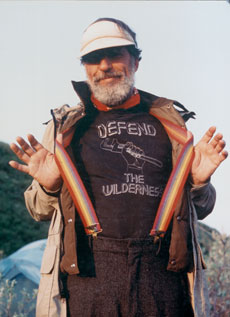
THE FILE BEGINS in 1947, when Abbey, just twenty and freshly back from serving in the army in Europe, posts a type-written notice on the bulletin board at the State Teacher’s College in Pennsylvania. The note urges young men to send their draft cards to the president in protest of peacetime conscription, exhorting them to “emancipate themselves.” It is at this point that Abbey becomes “the subject of a communist index card” at the FBI, and from then until the end of his life the Bureau will keep track of where Abbey is residing. They will note when he heads west and when, as acting editor of the University of New Mexico’s literary magazine, The Thunderbird, he decides to print an issue with a cover emblazoned with the words: “Man will not be free until the last king is strangled with the entrails of the last priest!” The quote is from Diderot, but Abbey thinks it funnier to attribute the words to Louisa May Alcott. And so he quickly loses his editorship while the FBI adds a few more pages to his file. Also quoted in full in his files is a letter to the editor of the New Mexico Daily Lobo, in which he writes: “In this day of the cold war, which every day shows signs of becoming warmer, the individual who finds himself opposed to war is apt to feel very much out of step with his fellow citizens.” He then announces the need to form a group to “discuss implications and possibilities of resistance to war.”

The files contain interviews with fellow students and teachers at the University of New Mexico, who talk of Abbey’s “instability and poor judgment,” with one interviewee saying that, as an editor, Abbey showed “a stubborn ego, a taste for shocking the reader, a lack of maturity.” Abbey, according to other colleagues, was “indiscreet in his individualism” and “demonstrated a somewhat radical rebellious quality . . .” Though the interviews are mildly damning, no one questioned the subject’s loyalty to his country.

One wonders how Abbey would have fared these days. Would the FBI, or the NSA, have simply kept tabs on him or actually called him in for questioning? So many of his views, and so much of his personality, match just the sort of profile we have come to associate with our rather broad definition of domestic terrorism. It isn’t just his gun advocacy, or his monkey wrenching. It’s his belief that wilderness is a place where the last free men can retreat when the tyrants take over. He writes:

Democracy has always been a rare and fragile institution. . . . As social conflict tends to become more severe . . . there will inevitably be a tendency on the part of the authoritarian element—always present in our history—to suppress individual freedoms, to utilize the refined techniques of police surveillance (not excluding torture of course) in order to preserve—not wilderness!—but the status quo . . .

It’s a type of sentiment that anticipates our government’s reaction to 9/11. Thoreau said that under a government that unjustly imprisons its own, “the true place for the just man is also a prison.” Prison is exactly where Abbey’s monkey wrenching and FBI record might have landed him in today’s world.

Abbey’s beliefs in freedom and resistance, and his message of aggressive nonconformity, of screw-you freedom, were perfect for the ’60s and ’70s. But it’s hard to imagine that the same message would get a similar reaction today, or to see, at least at first, how his spirit might be adapted to fit our times. For instance, isn’t monkey wrenching dead as a legitimate possibility for the environmental movement? I must admit that in my own grown-up life as a professor and father I don’t blow a lot of things up. For most of us who care about the environment, Wallace Stegner provides a much more sensible model.

But I don’t want to be so quick to toss Abbey on the scrap heap. If the times have changed, Abbey’s ideas about freedom have in some ways never been more relevant. Many of the things that he foresaw have come to pass: we currently live in an age of unprecedented surveillance, where the government regularly reads our letters (now called e-mails) and monitors our movements. Abbey offers resistance to this. Resistance to the worst of our times, the constant encroaching on freedom and wildness. He says to us: Question them, question their authority. Don’t be so quick to give up the things you know are vital no matter what others say.

David Gessner is the author of nine books, including the forthcoming All the Wild That Remains: Edward Abbey, Wallace Stegner, and the American West from which this essay is adapted. He is the founder of the journal Ecotone.


Production notes by Ned Judge:
An eight minute film essay that I co-produced and directed with Ed Abbey in 1985. At the time I was working for a network magazine show. The executive producer took me to lunch one day. He told me that he was having trouble with his son who was 18. The son thought his dad was a corporate whore. He had told his father if he had any balls at all he’d put Ed Abbey on his show. That’s why the EP was talking to me. Would I see if it was possible? I had an acquaintance who knew Ed and he passed the request along. Ed responded that he’d give it a try. He signed the contract and wrote a script. We met in Moab and went out to Arches National Park to shoot some practice sessions with a home video camera. We would review them at the motel in the evening. After a day or two, Ed was feeling pretty comfortable on camera so we scheduled the shoot. We were all happy with the way it went. But then we ran head-on into network reality. Roger Mudd, the show’s host, was extremely negative about putting an “eco-terrorist” on the show. The executive producer had no choice but to cave. So this Abbey essay was put on the shelf and never aired. Abbey died 3 years later in March 1989.