After the Crash

Dispatches From a Long Recovery (Est. 10/2024)

After the Crash

When Drug Users Aren’t People

d90d9d221dc48be6739092bcee48b1c9

By Ryan Calhoun

Source: Center for a Stateless Society

Judge Katherine Forrest’s decision to lock up Ross Ulbricht for the rest of his life is a momentous tragedy. There were other tragic circumstances on display during Ulbricht’s trial, however. Submitted as evidence against the integrity of the Silk Road were stories of drug overdoses that were allegedly tied to products bought on the darknet drug market. The loss of life in these cases is something we should never look at as unimportant, but their use in condemning Ulbricht’s market are seriously problematic.

“I have no doubt in my mind, that if Preston had not taken that drug which one of his friends had purchased off the internet Silk Road, he would still be alive today,” wrote one grieving mother from Australia. Her son had jumped to his death after purchasing what he may have thought was LSD, but was actually a synthetic known as NBOMe. First please let us take note of where such synthetics come from, a need to produce new designer chemicals which are often more unstable, untested, and easily passed off as what we know to be much safer psychoactive chemicals. The parents and siblings grieving in these cases misplace their ire. What truly led to many people ingesting dangerous chemicals was in fact the laws that are now being used to send Ross Ulbricht to prison. Also worth recognizing is that at the time of ingestion, there was no federal ban on these substances and, at least in America, they could be found or sold discreetly in wholly legal forms of exchange.

Notice also the subtle dehumanization of drug users masquerading as compassion. When someone overdoses people do not recognize the choice of the individual. They do not talk about these people as individual agents, but as symptoms of the individual. In the Silk Road case, parents condemn what Ulbricht’s venue provided for their children — a safe and discreet way to obtain psychoactive chemicals. They would have never sought out these drugs had it not been for Silk Road. This is doubly dehumanizing. They characterize their son’s purchase as somehow inevitable, that he was too weak to help himself and too ignorant to know the dangers inherent in hard drug use. But what compounds the dehumanization of drug consumers in this treatment is that they declare that drug markets OUGHT to be unsafe, ought to be insecure. Their son is a mere exception to the scummy and disposable drug world, he was corrupted by looking through a window to a drug trade which didn’t pose enormous risk to his safety. Drug users, drug distributors, they don’t deserve safety to these people.

Many who are involved in drug subcultures aim to make consumption safer for those who choose freely to consume these substances. Along with being able to read customer reviews that keep merchants within these bazaars held accountable by reputation, there is frequent encouragement to buy test kits for these chemicals. Across the internet you will find no shortage of FAQs on how to prudently go into an experience with drugs, especially for psychedelic experiences which are often delicate and require a good deal of coaching to ensure the best set and setting. At raves across the country people are encouraged by their peers to consume judiciously, to stay hydrated, and most of all to enjoy their experience — which is a frame of mind directly hindered by drug laws and cultural taboos.

These are all voluntary, spontaneous modes of behavior, many born out of a genuine concern for one’s fellow drug users. They are treated as individuals, not addicts. They are met with care, compassion, and resources both physical and mental. What drove these markets underground, what made them more dangerous than they ever needed to be is the intention behind these laws and tragically behind the condemnation of Ulbricht and others as “psychopaths” from people who lost those they loved. It is this legislation, this judicial process, and these cultural norms that must change. We must recognize drug users not as inherently sick and lascivious, but as people who come from the same world as we do, who sought these chemicals not out of an alien urge that overtook them, but because drugs come with a great deal of reward to the user. We can’t let that reward go unchecked from the dangers that are there for those who choose willingly to accept it. We must abolish not only the laws, but the puritanical attitudes which make us see our neighbors and our loved ones as fraught with illness for wanting to get high. It’s time. We must step out of the shadows, break the back of the system that has kept us there, and bring this enormous wealth of human experience into its proper social context. Free Ross Ulbricht, free all drug criminals, and end this dehumanization campaign once and for all.

Assassination as Policy in Washington and How It Failed: 1990-2015

War on Drugs

By Andrew Cockburn

Source: Counterpunch

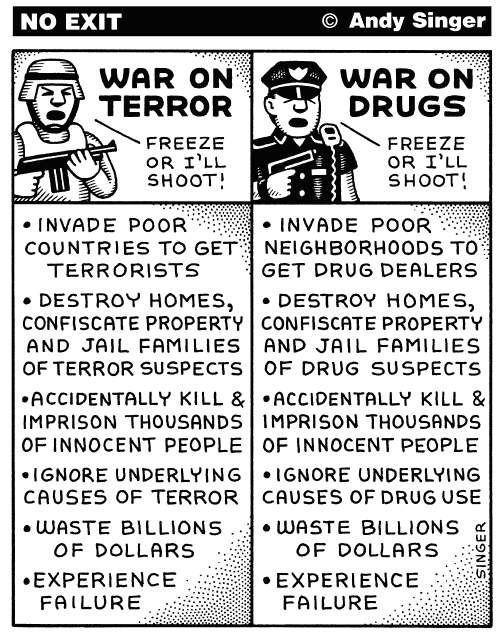
As the war on terror nears its 14th anniversary — a war we seem to be losing, given jihadist advances in Iraq, Syria, and Yemen — the U.S. sticks stolidly to its strategy of “high-value targeting,” our preferred euphemism for assassination.  Secretary of State John Kerry has proudly cited the elimination of “fifty percent” of the Islamic State’s “top commanders” as a recent indication of progress. Abu Bakr al-Baghdadi himself, “Caliph” of the Islamic State, was reportedly seriously wounded in a March airstrike and thereby removed from day-to-day control of the organization. In January, as the White House belatedly admitted, a strike targeting al-Qaeda leadership in Pakistan also managed to kill an American, Warren Weinstein, and his fellow hostage, Giovanni Lo Porto.

More recently in Yemen, even as al-Qaeda in the Arabian Peninsula took control of a key airport, an American drone strike killed Ibrahim Suleiman al-Rubaish, allegedly an important figure in the group’s hierarchy.  Meanwhile, the Saudi news channel al-Arabiya has featured a deck of cards bearing pictures of that country’s principal enemies in Yemen in emulation of the infamous cards issued by the U.S. military prior to the 2003 invasion of Iraq as an aid to targeting its leaders.  (Saddam Hussein was the ace of spades.)

Whatever the euphemism — the Israelis prefer to call it “focused prevention” — assassination has clearly been Washington’s favored strategy in the twenty-first century.   Methods of implementation, including drones, cruise missiles, and Special Operations forces hunter-killer teams, may vary, but the core notion that the path to success lies in directly attacking and taking out your enemy’s leadership has become deeply embedded.  As then-Secretary of State Hillary Clinton put it in 2010, “We believe that the use of intelligence-driven, precision-targeted operations against high-value insurgents and their networks is a key component” of U.S. strategy.

Analyses of this policy often refer, correctly, to the blood-drenched precedent of the CIA’s Vietnam-era Phoenix Program — at least 20,000 “neutralized.” But there was a more recent and far more direct, if less noted, source of inspiration for the contemporary American program of murder in the Greater Middle East and Africa, the “kingpin strategy” of Washington’s drug wars of the 1990s. As a former senior White House counterterrorism official confirmed to me in a 2013 interview, “The idea had its origins in the drug war.  So that precedent was already in the system as a shaper of our thinking.  We had a high degree of confidence in the utility of targeted killing. There was a strong sense that this was a tool to be used.”

Had that official known a little more about just how this feature of the drug wars actually played out, he might have had less confidence in the utility of his chosen instrument.  In fact, the strangest part of the story is that a strategy that failed utterly back then, achieving the very opposite of its intended goal, would later be applied full scale to the war on terror — with exactly the same results.

The Kingpin Strategy Arrives

At the beginning of the 1990s, the Drug Enforcement Administration (DEA) was the poor stepsister of federal law enforcement agencies.  Called into being by President Richard Nixon two decades earlier, it had languished in the shadow of more powerful siblings, notably the FBI.  But the future offered hope.  President George H.W. Bush had only recently re-launched the war on drugs first proclaimed by Nixon, and there were rich budgetary pickings in prospect.  Furthermore, in contrast to the shadowy drug trafficking groups of Nixon’s day, it was now possible to put a face, or faces, on the enemy.  The Colombian cocaine cartels were already infamous, their power and ruthless efficiency well covered in the media.

For Robert Bonner, a former prosecutor and federal judge appointed to head the DEA in 1990, the opportunity couldn’t have been clearer.  Although Nixon had nurtured fantasies of deploying his fledgling anti-drug force to assassinate traffickers, even soliciting anti-Castro Cuban leaders to provide the necessary killers, Bonner had something more systematic in mind.  He called it a “kingpin strategy,” whose aim would be the elimination either by death or capture of the “kingpins” dominating those cartels.

Implicit in the concept was the assumption that the United States faced a hierarchically structured threat that could be defeated by removing key leadership components.  In this, Bonner echoed a traditional U.S. Air Force doctrine: that any enemy system must contain “critical nodes,” the destruction of which would lead to the enemy’s collapse.

In a revealing address to a 2012 meeting of DEA veterans held to commemorate the 20th anniversary of the kingpin strategy’s inauguration, Bonner spoke of the corporate enemy they had confronted.  Major drug trafficking outfits, he said, “by any measure are large organizations. They operate by definition transnationally. They are vertically integrated in terms of production and distribution. They usually have, by the way, fairly smart albeit quite ruthless people at the top and they have a command and control structure. And they also have people with expertise that run certain essential functions of the organization such as logistics, sales and distribution, finances, and enforcement.”  It followed therefore that the removal of those smart people at the top, not to mention the experts in logistics, would render the cartel ineffective and so cut off the flow of narcotics to the United States.

Pursuit of the kingpins promised rich institutional rewards.  Aside from the overbearing presence of the FBI, Bonner had to contend with another carnivore in the Washington bureaucratic jungle eager to encroach on his agency’s territory. “DEA and CIA were butting heads,” recalled the former DEA chief in a 2013 interview. “There was real tension.” Artfully, he managed to negotiate peace with the powerful intelligence agency, “so now we had a very important ally. CIA could use DEA and vice versa.”

By this he meant that the senior agency could use the DEA’s legal powers for domestic operations to good advantage.  This burgeoning relationship brought additional potent allies. Not only was his agency now closer to the CIA, Bonner told me, but “through them, the NSA.” A new Special Operations Division created to work with these senior agencies was to oversee the assault on the kingpins, relying heavily on electronic intelligence.

This new direction would swiftly gain credibility after the successful elimination of the most famous cartel leader of all.  Pablo Escobar, the dominant figure of the Medellín cartel, was an object of obsessive interest to American law enforcement.  He had long evaded U.S.-assisted manhunts before negotiating an agreement with the Colombian government in 1991 under which he took up residence in a “prison” he himself had built in the hills above his home city. A year later, fearing that the government was going to welsh on its deal and turn him over to the Americans, Escobar walked out of that prison and went into hiding.

The subsequent search for the fugitive drug lord marked a turning point. The Cold War was over; Saddam Hussein was defeated in the first Gulf War in 1991; credible threats to the U.S. were scarce; and the danger of budget cuts was in the air. Now, however, the U.S. deployed the full panoply of surveillance technology originally developed to confront the Soviet foe against a single human target. The Air Force sent in an assortment of reconnaissance planes, including SR-71s, which were capable of flying at three times the speed of sound. The Navy sent its own spy planes; the CIA dispatched a helicopter drone.

At one point there were 17 of these surveillance aircraft simultaneously in the air over Medellín although, as it turned out, none of them were any help in tracking down Escobar.  Nor did the DEA make any crucial contribution. Instead, his deadly rivals from Cali, Colombia’s other major trafficking group, played the decisive role in the destruction of that drug lord’s power and support systems, combining well-funded intelligence with bloodthirsty ruthlessness.

His once all-powerful network of informers and bodyguards destroyed, Escobar was eventually located by homing in on his radio and gunned down as he fled across a rooftop on December 2, 1993.  Though the matter is open to debate, a former senior U.S. drug enforcement official assured me unequivocally that a sniper from the U.S. Army’s Special Operations Delta Force had fired the killing shot.

Following this triumph, the DEA turned its attention to the Cali cartel, pursuing it with every resource available: “We really developed the use of wiretaps,” Bonner told me.  Patience and the provision of enormous resources eventually yielded results. In June and July 1995, six of the seven heads of the Cali cartel were arrested, including the brothers Gilberto and Miguel Rodríguez-Orijuela, and the cartel’s cofounder, José “Chepe” Santacruz Londoño.  Although Londoño subsequently escaped from jail, he would in the end be hunted down and killed.  Continued U.S. pressure for the rest of the decade and beyond resulted in a steady flow of cartel bosses into prisons with life sentences or into coffins.

Cartel Heads Go Down and Drugs Go Up

The strategy, it appeared, had been an unqualified success.  “When Pablo Escobar was on the run, for all practical purposes, his organization started going down… ultimately it was destroyed.  And that’s the strategy we have called the kingpin strategy,” crowed Lee Brown, Bill Clinton’s “drug czar,” in 1994.

In public at least, no officials bothered to point out that if that strategy’s aim was to counter drug use among Americans, it had achieved precisely the opposite of its intended goal.  The giveaway to this failure lay in the on-the-street cost of cocaine in this country.  In those years, the DEA put enormous effort into monitoring its price, using undercover agents to make buys and then laboriously compiling and cross-referencing the amounts paid.

The drugs obtained by these surreptitious means, however, were of wildly varying purity, the cocaine itself often having been adulterated with some worthless substitute. That meant that the price of a gram of pure cocaine varied enormously, since a few bad deals of very low purity could cause wide swings in the average. Dealers tended to compensate for higher prices by reducing the purity of their product rather than charging more per gram. As a result, the agency’s price charts showed little movement and so gave no indication of what events were affecting the price and therefore the supply.

In 1994, however, a numbers-cruncher with the Institute for Defense Analysis, the Pentagon’s in-house think tank, began subjecting the data to more searching scrutiny. The analyst, a former Air Force fighter pilot named Rex Rivolo, had been tasked to take an independent look at the drug war at the request of Brian Sheridan, the hardheaded director of the Defense Department’s Office of Drug Control Policy who had developed a healthy disrespect for the DEA and its operations.

Having tartly informed DEA officials that their statistics were worthless, mere “random noise,” Rivolo set to work developing a statistical tool that would eliminate the effect of the swings in purity of the samples collected by the undercover agents. Once he had succeeded, some interesting conclusions began to emerge: the pursuit of the kingpins was most certainly having an effect on prices, and by extension supply, but not in the way advertised by the DEA. Far from impeding the flow of cocaine onto the street and up the nostrils of America, it was accelerating it. Eliminating kingpins actually increased supply.

It was a momentous revelation, running entirely counter to law enforcement cultural attitudes that reached back to the days of Eliot Ness’s war against bootleggers in the 1920s and that would become the basis for Washington’s twenty-first-century counterinsurgency wars. Such a verdict might have been reached intuitively, especially once the kingpin strategy in its most lethal form came to be applied to terrorists and insurgents, but on this rare occasion the conclusion was based on hard, undeniable data.

In the last month of 1993, for example, Pablo Escobar’s once massive cocaine smuggling organization was already in tatters and he was being hunted through the streets of Medellín. If the premise of the DEA strategy — that eliminating kingpins would cut drug supplies — had been correct, supply to the U.S. should by then have been disrupted.

In fact, the opposite occurred: in that period, the U.S. street price dropped from roughly $80 to $60 a gram because of a flood of new supplies coming into the U.S. market, and it would continue to drop after his death.  Similarly, when the top tier of the Cali cartel was swept up in mid-1995, cocaine prices, which had been rising sharply earlier that year, went into a precipitous decline that continued into 1996.

Confident that the price drop and the kingpin eliminations were linked, Rivolo went looking for an explanation and found it in an arcane economic theory he called monopolistic competition. “It hadn’t been heard of for years,” he explained. “It essentially says if you have two producers of something, there’s a certain price. If you double the number of producers, the price gets cut in half, because they share the market.

“So the question was,” he continued, “how many monopolies are there? We had three or four major monopolies, but if you split them into twenty and you believe in this monopolistic competition, you know the price is going to drop. And sure enough, through the nineties the price of cocaine was plummeting because competition was coming in and we were driving the competition. The best thing would have been to keep one cartel over which we had some control. If your goal is to lower consumption on the street, then that’s the mechanism. But if you’re a cop, then that’s not your goal. So we were constantly fighting the cop mentality in these provincial organizations like DEA.”

The Kingpin Strategy Joins the War on Terror

Deep in the jungles of southern Colombia, coca farmers didn’t need obscure economic theories to understand the consequences of the kingpin strategy. When the news arrived that Gilberto Rodríguez-Orijuela had been arrested, small traders in the remote settlement of Calamar erupted in cheers. “Thank the blessed virgin!” exclaimed one grandmother to a visiting American reporter.

“Wait till the United States figures out what it really means,” added another local resident. “Hell, maybe they’ll approve, since it’s really a victory for free enterprise. No more monopoly controlling the market and dictating what growers get paid. It’s just like when they shot Pablo Escobar: now money will flow to everybody.”

This assessment proved entirely correct. As the big cartels disappeared, the business reverted to smaller and even more ruthless groups that managed to maintain production and distribution quite satisfactorily, especially as they were closely linked either to Colombia’s Marxist FARC guerrillas or to the fascist anti-guerrilla paramilitary groups allied with the government and tacitly supported by the United States.

Much of Rivolo’s work on the subject remains classified. This is hardly surprising, given that it not only undercuts the official rationale for the kingpin strategy in the drug wars of the 1990s, but strikes a body blow at the doctrine of high-value targeting that so obsesses the Obama administration in its drone assassination campaigns across the Greater Middle East and parts of Africa today.

Rivolo was, in fact, able to monitor the application of the kingpin strategy in the following decade.  In 2007, he was assigned to a small but high-powered intelligence cell attached to the Baghdad headquarters of General Ray Odierno, who was, at the time, the operational U.S. commander in Iraq.  While there he made it his business to inquire into the ongoing targeting of “high-value individuals,” or HVIs.  Accordingly, he put together a list of 200 HVIs — local insurgent leaders — killed or captured between June and October 2007.  Then he looked to see what happened in their localities following their elimination.

The results, he discovered when he graphed them out, offered a simple, unequivocal message: the strategy was indeed making a difference, just not the one intended. It was, however, the very same message that the kingpin strategy had offered in the drug wars of the 1990s.  Hitting HVIs did not reduce attacks and save American lives; it increased them. Each killing quickly prompted mayhem. Within three kilometers of the target’s base of operation, attacks over the following 30 days shot up by 40%. Within a radius of five kilometers, a typical area of operations for an insurgent cell, they were still up 20%. Summarizing his findings for Odierno, Rivolo added an emphatic punch line: “Conclusion: HVI Strategy, our principal strategy in Iraq, is counter-productive and needs to be re-evaluated.”

As with the kingpin strategy, the causes of this apparently counter-intuitive result became obvious upon reflection.  Dead commanders were immediately replaced, and the newcomers were almost always younger and more aggressive than their predecessors, eager to “make their bones” and prove their worth.

Rivolo’s research and conclusions, though briefed at the highest levels, made no difference.  The kingpin strategy might have failed on the streets of American cities, but it had been a roaring success when it came to the prosperity of the DEA.  The agency budget, always the surest sign of an institution’s standing, soared by 240% during the 1990s, rising from $654 million in 1990 to over $1.5 billion a decade later.  In the same way, albeit on a vaster scale, high-value targeting failed in its stated goals in the Greater Middle East, where terror recruits grew and terror groups only multiplied under the shadow of the drone.  (The removal of al-Baghdadi from day-to-day control of the Islamic State, for instance, has apparently done nothing to retard its operations.)  The strategy has, however, been of inestimable benefit to a host of interested parties, ranging from drone manufacturers to the CIA counterterrorism officials who so signally failed to ward off 9/11 only to adopt assassination as their raison d’être.

No wonder the Saudis want to follow in our footsteps in Yemen. It’s a big world. Who’s next?

Andrew Cockburn is the Washington editor of Harper’s Magazine.  An Irishman, he has covered national security topics in this country for many years.  In addition to publishing numerous books, he co-produced the 1997 feature film The Peacemaker and the 2009 documentary on the financial crisis American Casino.  His latest book is Kill Chain: The Rise of the High-Tech Assassins (Henry Holt).



Liberation Is Unprofitable

c91b81d1dcb043acfb1eed41207da8b5

By Charles Hugh Smith

Source: Of Two Minds

12 examples of how liberation is not profitable and therefore it must be marginalized, outlawed, proscribed or ridiculed.

If we had to summarize the sickness of our economy and society, we could start by noting that liberation is unprofitable, and whatever is not profitable to vested interests is marginalized, outlawed, proscribed or ridiculed. Examples of this abound.

Liberation from digital communication servitude is not profitable. Don’t have a smart phone on 18 hours a day, every day? Loser! Luddite! Liberation from digital communication servitude is not profitable, therefore it is ridiculed.

Liberation from debt is not profitable. Only the wealthy can afford to buy a vehicle without debt, a home without debt or a university education without debt. For everyone else, liberation from debt is not an option, because debt is highly profitable to our financial Overlords and the politicos they buy/own.

This Is How Little It Cost Goldman To Bribe America’s Senators (Zero Hedge)

Liberation from political elites is not profitable. Dependence on the state for monthly payments binds the recipients to the political elites that control the money and payments, and to the financial elites who control the political elites.

Liberation from the staged, soap-opera political drama of elections is not profitable. Election advertising generates staggering profits for media companies, and the ceaseless nurturing of fear, resentment and indignation fuels acceptance of centralized power and control.

Vote all you want. The secret government won’t change.

Liberation from the consumerist mindset is not profitable. Aspirational purchases in the pursuit of appearances are the most profitable of all spending; re-use, repair and informal peer-to-peer sharing are all intrinsically unprofitable.

Narcissistic Consumerism and Self-Destruction (October 20, 2012)

Liberation from the tyranny of central banks is not profitable. Our entire financial system is built on the simple dynamic that everyone is forced to use money issued by the central bank (Federal Reserve) to its member banks and their financier cronies.

Money that is decentralized and not issued by central banks is not profitable.

Common-sense, minimal regulations are not profitable. Regulations feed government fiefdoms and the revolving-door spoils system between the state and private industry, and erect formidable barriers to new competitors. As a result, over-regulation is immensely profitable.

Regulation Run Amok—And How to Fight Back

The ability to think independently is not profitable. The control mechanisms that keep the various classes of serfs in permanent servitude all depend on a dumbed-down populace that has been stripped of the ability to think independently by propaganda, group-think, medications, the education industry and lifelong dependency on the state.

Anti-Intellectualism and the “Dumbing Down” of America

An economy/society without corruption is not profitable. Buying favors, cronyism and cartel control of pricing are the primary sources of corruption. Cartels and the auctioning of favors are highly profitable to politicos and the vested interests who control the tollways of finance, political influence and social mobility.

America’s Main Problem: Corruption

Degrowth is not profitable. Needing fewer, quality things that last for decades is not profitable. Reparing things for nearly-free is not profitable. Giving stuff away to others for free is not profitable. Making do with what you have is not profitable.

Degrowth, Anti-Consumerism and Peak Consumption (May 9, 2013)

A scarcity of stress and anxiety is not profitable. Stress, anxiety and financial insecurity are all highly profitable, as these drive profitably addictive behaviors such as going deep into debt, shopaholic binge buying, multiple anti-anxiety/anti-depression medications, costly therapy and various forms of self-medication.

The Silent Epidemic in a Broken, Deranged System: Stress (April 18, 2013)

Opting out is not profitable. Opting out of debt-serfdom and the burdens of being a tax donkey is not profitable to vested interests or the state. Adopting self-reliance and low-cost/low-impact living and opting out of the status quo culture of consumerism, debt and complicity with a parasitic, exploitive cartel-state Aristocracy/ Plutocracy/ Oligarchy/ Kleptocracy (take your pick–it’s still the same rapacious Elite whatever name you choose)–is not profitable.

Tune In, Turn On, Opt Out (May 17, 2013)


On the State of “Careers”

Bar Code on Bald Man's Neck

By Klint Finley

Source: Technoccult

Is digital journalism a viable career? Financial journalist and media pundit Felix Salmon says no.

His lengthy and dismal assessment of the future of journalism as a career path — ie, a job where your salary increases over time and you make enough money to support a family — was, shall we say, widely panned by other journalists who think he’s being a negative nancy and discouraging young people from entering the field. Personally, I think things are even worse than Salmon says.

Now, Salmon and I are in pretty good posiitons. Him more so than I, but neither of us is cranking out Examiner.com articles for $0 a pop just to build a portfolio in hopes of landing a staff writer job at a community newspaper that pays less than an entry level job at Home Depot. Neither of us is cranking out 10+ “stories” a day for a clickbait site just to make rent. Neither one of us just got laid off from a major urban daily after 20 years. We’re part of the lucky few that get paid a living wage, or better, to produce journalism.

But it’s not just journalism. The entire economy is now geared towards turning humans into fungible commodities. And it’s hard to build a career in an environment where there’s no point in asking for a raise because there are hundreds, perhaps thousands, of people who would do your job for even less than you do.

This is nothing new to billions of manual laborers who are used to being treated like cogs in a machine. But once upon a time unions were able to help workers actually band together to demand things like predictable hours and livable working conditions. That has changed. but the do what you love mantra managed to turn those few jobs that robots can’t yet do into sub-minimum wage gigs that require graduate degrees.

You might think you can escape this fate by becoming a programmer. But code bootcamps are cranking out hundreds of people who can crank out CRUD apps all day. And when you start to go grey, the tech industry will toss you out like an 8-track tape.

I don’t mean to imply that all precariat — from the middle class white guy with a PhD to Rwandan woman who came to the U.S. with nothing — are equally affected by this mechanization of humanity. But we are all affected.

The answer isn’t in picking the right career for the machine age. It’s changing the system.

Saturday Matinee: Dream Deceivers

Dream Deceivers The Story Behind James Vance vs. Judas Priest [Documentary]1992

“Dream Deceivers” (1992) is a documentary directed by David Van Taylor which chronicles the James Vance vs Judas Priest court case. Vance and friend Ray Belknap were teenagers who shot themselves with a shotgun in a Nevada suburb. Belknap died but Vance survived becoming “born again” shortly after and convinced that satanic messages in songs by Judas Priest prompted suicidal thoughts. The film is as much about teen angst and societal hypocrisy as it is about the case and deserves to be seen by more people. Dream Deceivers was originally aired as an episode of the PBS program “POV” but was prevented from getting a legal home video release because the filmmakers couldn’t get clearance for copyrighted material it contained. Thanks to the fair use revolution it was finally released on DVD last summer.

Never Mind FIFA, How about a Crackdown on the Banksters?

banker-thief

By Finian Cunningham

Source: Strategic Culture Foundation

FIFA boss Sepp Blatter’s sudden resignation this week only days after being re-elected shows that the US campaign to bust the football federation over alleged financial corruption is probably going to intensify during the weeks and months ahead.

Blatter had been re-elected for the fifth time last Friday as the federation’s president. He had earlier brushed off calls for his resignation from the American and British governments, amid a storm of media allegations over corruption at the World Cup organising body. Now only four days after being re-elected, the FIFA chief executive is quitting, saying somewhat cryptically that he does not have a sufficient mandate in the world of football to continue at the helm of the organisation.

The dramatic bust in a Zurich hotel last week of FIFA executives is «just the beginning», top US law enforcement officials have warned. British authorities have also jumped on the bandwagon with their own announced probe into financial irregularities at the World Cup organiser.

With seven FIFA officials arrested so far and seven more indicted, and the US authorities vowing to pursue others in the footballing federation over alleged financial corruption, it can be anticipated that this scandal will run and run into interminable extra-time.

An ulterior political agenda behind the apparent American-led crackdown on the international footballing federation could very well be the desire by US and British governments to scupper the 2018 World Cup venue in Russia. Both the Americans and the British lost out when Russia won the bid back in 2010 to host the forthcoming quadrennial tournament, following last year’s event in Brazil. A re-run of the selection process would give the US and Britain a second chance to pitch their bids, and with a generated cloud hanging over Russia due to the FIFA scandal, they both stand a better chance of winning if it comes to a re-selection.

The sporting event is highly coveted, being the most popularly watched on the planet – even exceeding the Olympics. Billions of dollars are at stake for corporations, from construction, hospitality, sportswear and media. There is also the immense national prestige that comes with hosting the global spectacle.

A second, more important, political objective for Washington and its British ally is to augment their ongoing campaign to isolate Moscow over the Ukraine crisis. The West accuses Vladimir Putin’s government of annexing Crimea last year and they have mounted a barrage of economic sanctions on Russia seemingly in retribution. Washington and London have been most gung-ho among Western countries in pushing the anti-Russian agenda over Ukraine.

President Putin has shown no sign of weakening under this relentless Western pressure. Moscow denies any impropriety over Ukraine. Indeed, it accuses the West of fomenting an illegal coup in that country and of trying to use the resulting conflict as a way to destabilise Russia. Moscow has retaliated to Western sanctions by imposing its own bans on European trade exports and, in recent days, imposing travel restrictions on 89 European Union parliamentarians.

So, very plausibly, the Americans and their trusty British ally are using the issue of alleged corruption in World Cup organising body, FIFA, as a stalking horse to further get at Russia over the geopolitical tensions in Ukraine.

US law enforcement officials at the highest level – including attorney-general Loretta Lynch and FBI chief James Comey – say their investigation into FIFA will continue until all suspicions of corruption in the organisation are uncovered. This high-level US involvement in targeting FIFA strongly suggests a political direction being given by the Obama administration.

The concerted nature of the American corruption onslaught against FIFA also points to a top-level decision to go after the Swiss-based federation. The British government, from prime minister David Cameron to his foreign secretary Philip Hammond, quickly stepped into the FIFA scandal following the American lead, making highly unusual public calls for the federation’s president Sepp Blatter to resign.

Both the timing of the US-launched corruption probe – in the week of FIFA’s annual conference and leadership election – plus the way that senior American and British officials, not to mention the publicity of Western news media, have weighed-in to rebuke FIFA suggests that it is all part of a coordinated political campaign authored at the highest level of government. That, in turn, suggests that there is an ulterior political agenda behind the supposed criminal crackdown on FIFA, and that the ulterior agenda is the Western objective to undermine Russia.

Another measure for assessing the credibility of the US-led corruption campaign against FIFA is to put the alleged wrongdoing in perspective with other known spheres of financial corruption. Few people believe that FIFA is free from sleaze and dodgy kickbacks. With so much corporate advertising at stake and broadcasting rights for global media audiences, it would be naive to assume that large wads of money have not crossed palms with a wink and a nod.

The US authorities are throwing a book of charges at the organisation, ranging from bribery to commercial fixing, racketeering to tax evasion. It is claimed by the Americans that the corruption at FIFA amounts to $150 million.

That sounds like a lot of sleazy money, but this figure pales in significance to the amount of corruption and criminality attributable to Wall Street banks and other Western financial institutions. For example, British bank HSBC alone has been caught running tax evasion, money-laundering for drug cartels and other illicit schemes that is estimated at $180 billion – or more than a thousand-fold the scale of criminality alleged at FIFA.

Wall Street banks, including JP Morgan, are accused of massive, systematic rigging of gold price markets all in a shady bid to shield the US dollar value. That criminality, affecting the price of basic commodities and livelihoods for billions of people worldwide, is estimated to be in the order of trillions of dollars – or a thousand, thousand-fold the FIFA debacle.

Moreover, these same banks, along with a slew of other global names – Citibank, Bank of America, Goldman Sachs, Barclays, Deutsche Bank, Credit Agricole among many others – were all directly responsible for the explosion in toxic financial derivatives that made their executives multimillionaires but which led to the global financial and economic meltdown in 2008.

That meltdown – which persists seven years on from its inception – has resulted in millions of lives ruined from unemployment and the collapse of pensions and savings funds. Added to that are the myriad social hardships and crippled lives from the ensuing austerity imposed on the general Western public to pay for the financial catastrophe – a catastrophe that was deliberately and recklessly engineered by the major banks, hedge funds and other capitalist investment agencies.

As Michel Chossudovsky writes in his co-authored book, The Global Economic Crisis: «The meltdown of financial markets in 2008-2009 was the result of institutionalised fraud and financial manipulation. The ‘bank bailouts’ were implemented on the instruction of Wall Street, leading to the largest transfer of money wealth in recorded history, while simultaneously creating an unsurmountable public debt».

It is probable that generations of children to come will be forced to pay for the trillions of dollars of debt that was created by American and European banks, which have now been offloaded on to the public by governments in so-called «bail-outs». Make no mistake, thousands of people have already died from the austerity that Western governments have imposed on their public in order to pay for the corporate fraud, tax evasion, fixing and embezzlement that has taken place in front of our eyes on a massive scale in the order of trillions of dollars.

Yet in the face of this gargantuan, genocidal criminality not one board member or executive from the major banks involved in precipitating the global crash has been charged, let alone prosecuted or imprisoned. In fact, the Wall Street banking elite and their counterparts in the City of London are among the main political donors that helped to re-elect Barack Obama and David Cameron.

The belated focus of American and British authorities on the alleged wrongdoings at FIFA can thus be readily seen as both ludicrous and laughable when we compare that with the absolute dearth of interest by these same authorities in applying law enforcement where it ought to be applied – on the Wall Street and City of London banksters.

Obviously, then, the self-righteous campaign to «root out fraud at FIFA is just so much pious nonsense. The astounding hypocrisy of US and British authorities leaves one with the unmistakable conclusion that the whole media-driven campaign against FIFA is nothing but a self-serving and cynical political agenda. And top of that agenda is to score geopolitical points against Russia.

Until Washington and London governments go after priority financial crime in their midst, then anything they say about FIFA can be taken as very wide off the mark.

Washington Protects Its Lies With More Lies

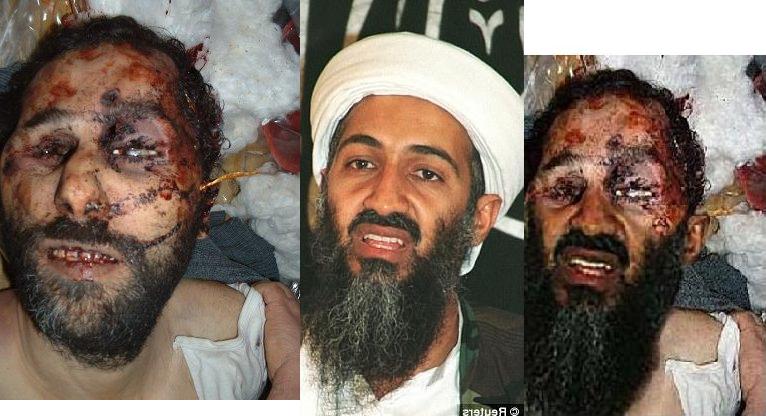
fake_bin-laden

By Paul Craig Roberts

Source: PaulCraigRoberts.org

My distrust has deepened of Seymour Hersh’s retelling of the Obama regime’s extra-judicial murder of Osama bin Laden by operating illegally inside a sovereign country. http://www.paulcraigroberts.org/2015/05/11/seymour-hersh-succumbs-disinformation-paul-craig-roberts/ That Hersh’s story, which is of very little inherent interest, received such a large amount of attention, is almost proof of orchestration in order to substantiate the Obama regime’s claim to have killed a person who had been dead for a decade.

Americans are gullible, and thought does not come easily to them, but if they try hard enough they must wonder why it would be necessary for the government to concoct a totally false account of the deed if Washington kills an alleged terrorist. Why not just give the true story? Why does the true story have to come out years later from anonymous sources leaked to Hersh?

I can tell you for a fact that if SEALs had encountered bin Laden in Abbottabad, they would have used stun grenades and tear gas to take him alive. Bin Laden would have been paraded before the media, and a jubilant White House would have had a much photographed celebration pinning medals on the SEALs who captured him.

Instead, we have a murder without a body, which under law classifies as no murder, and a story that was changed several times by the White House itself within 48 hours of the alleged raid and has now been rewritten again by disinformation planted on Hersh.

Perhaps the release of book titles allegedly found in bin Laden’s alleged residence in Abbottabad is part of the explanation. Who can imagine the “terror mastermind” sitting around reading what the presstitute London Telegraph calls bin Laden’s library of conspiracy theories about 9/11 and Washington’s foreign and economic policies? http://www.telegraph.co.uk/news/worldnews/al-qaeda/11619270/Osama-bin-Ladens-bookshelf-featured-conspiracy-theories-about-his-terror-plots.html

Keep in mind that the government’s claim that these books were in bin Laden’s Abbottabad library comes from the same government that told you Saddam Hussein had weapons of mass destruction, that Assad used chemical weapons, that Iran has a nuclear weapons program, and that Russia invaded Ukraine. There is no evidence whatsoever that bin Laden had these books, just as there is no evidence for any claim made by Washington. In the absence of evidence, Washington’s position amounts to this: “It is true if we say so.”

I would wager that the Hersh story was planted in order to gin up renewed interest in the bin Laden saga, which could then be used to discredit Washington’s critics. Notice that the authors in bin Laden’s alleged library are those careful and knowledgeable people who have severely whipped Washington with the truth. The whip wielders are Noam Chomsky, David Ray Griffin, Michel Chossudovsky, Greg Palast, Michael Scheuer, William Blum. You get the picture. You mustn’t believe these truth-tellers, because bin Laden approved of them and had their books in his library. By extension, will these truth-tellers be accused of aiding and abetting terrorism?

Obama claims to have settled the score in mafia godfather fashion with bin Laden for 9/11. But there is no body and not even a consistent story about what happened to the body. The sailors aboard the ship from which the White House reported bin Laden was given a burial at sea report no such burial took place. The SEAL unit that allegedly supplied the team that killed an unarmed and undefended bin Laden was mysteriously wiped out in a helicopter crash. It turns out that the SEALs were flown into combat against the Taliban in an antique, half-century-old 1960s vintage helicopter. Parents of the dead SEALs are demanding to have unanswered questions answered, a story that the presstitute media has conveniently dropped for Washington’s convenience.

Other than 9/11 itself, never has such a major event as bin Laden’s killing had such an enormous number of contradictory official and quasi-official explanations, unanswered questions and evasions. And the vast number of evasions and contradictions arouse no interest from the Western media or from the somnolent and insouciant American public.

Now it turns out that Washington has “lost” the bin Laden “death files,” thus protecting in perpetuity the fabricated story of bin Laden’s killing. http://www.globalresearch.ca/pentagon-orders-purge-of-osama-bin-ladens-death-files-from-data-bank/5342055

Here is Tom Hartman’s interview with David Ray Griffin: Is bin Laden dead or alive:
https://www.youtube.com/watch?v=fI5b3Ir012k

Here is Philip Kraske’s OpEdNews article on Steve Kroft’s orchestrated “60 Minutes” interview with Obama on the killing of Osama bin Laden: http://www.opednews.com/populum/printer_friendly.php?content=a&id=143300

Lara Trace Hentz

INDIAN COUNTRY NEWS

In Saner Thought

"It is the duty of every man, as far as his ability extends, to detect and expose delusion and error"..Thomas Paine

ZEDJournAI

Human in Algorithms

Rooster Crows

From the Roof Top

Aisle C

I See This

The Free

blog of the post capitalist transition.. Read or download the novel here + latest relevant posts

अध्ययन-अनुसन्धान(Essential Knowledge of the Overall Subject)

अध्ययन-अनुसन्धानको सार