The U.S. Elite Run a Ukrainian Genocide While American Public Are Ignorant of It

By Eric Zuesse

Source: Washington’s Blog

On Wednesday, July 2nd, Ukrainian President Petro Poroshenko resumed unlimited war against the residents of southeastern Ukraine, whom he calls “terrorists” for their wanting not to be killed by his troops. European leaders (especially Merkel of Germany, Hollande of France, and Putin of Russia) urged him not to resume his bombing campaign against the southeast, but the U.S. (specifically President Obama) supports the bombings, and that’s enough for Poroshenko; so, he did it. As the U.S. State Department said, “he has a right to defend his country.” Reuters reports that Poroshenko gave as his reason for the resumption, “to rid Ukraine of ‘parasites’.”  Adolf Hitler had given the same reason for ethnically cleansing his country.

Here are videos and photos of the Obama Administration’s sponsored ethnic cleansing to reduce the population in the areas of Ukraine that had voted overwhelmingly “the wrong way” in Ukraine’s final nationwide election, in 2010:  the areas of Ukraine that overwhelmingly chose as Ukraine’s President the man whom Obama’s coup overthrew in February 2014. After this ethnic cleansing, maybe Ukraine can have another nationwide election, which will produce the type of outcome that the U.S. Government likes. But on 25 May 2014, we held in Ukraine an election where people voted only in the pro-American portion of Ukraine, and only leaders who were acceptable to the U.S. White House were allowed onto the ballot.

America’s “news” media are not reporting on America’s ethnic-cleansing program in Ukraine. It’s happening in the dark, as far as the American public are concerned: they don’t know about it. But, here it is: this, is what they are hiding from you.

Washington’s people do not call this ethnic cleansing operation what it is; they instead call it Ukraine’s “Anti Terrorist Operation,” or “ATO” for short. The people we’re massacring are “Terrorists.” What they actually  are is simply the residents in the parts of Ukraine that had voted overwhelmingly for Viktor Yanukovych on 7 February 2010 to become President, the final nationwide election in Ukraine. And here these millions of “Terrorists” are now, being bombed by us, and fleeing to refuge in Russia (you can see it, and hear it happening, right there: those “Terrorists,” fleeing our bombs) — it’s part of our ethnic-cleansing operation, not of any Anti Terrorist Operation, at all. Because it is we, the United States itself, that are terrorizing them, to flee. And “we” — our Government, as if they  really represented us (which they obviously do not) — are therefore mass-murdering them. This is what the U.S. “news” media have been hiding from us, by stenographically reporting Obama’s lies, as if those lies represented truths instead of lies — just like Bush’s lies about “Saddam’s WMD” did, and the U.S. media did, before we invaded Iraq on 19 March 2003.

And the Government that Obama put in place in Kiev, which is a government by Ukrainian oligarchs whom Obama’s agent Victoria Nuland selected and placed in control, is now advertising on the television stations that those oligarchs own, advertising that the people who live in Ukraine’s southeast are destroying the country and must therefore be destroyed by patriotic Ukrainians. The government’s Defense Minister announces publicly that concentration camps are being established in order to deal with any who don’t flee. The message to those “Terrorists” is clear: flee, or else die. The government has even announced that the military volunteers who go to the southeast to do the killing are patriots, whose reward will be that they will receive the properties of everyone they kill.

A google-search of “Ukraine” at a typical U.S. news site yields little — and nothing at all about this slaughter that our Government is financing and put into place there. For example, at Huffington Post, the search produces articles about supposed “aggression” by Russia for its accepting Crimea back into the Russian Federation after all public opinion polls and a public referendum in that region, which had been Russian until 1954, showed massive public support there for rejoining Russia. (And a recent Gallup poll of Crimeans confirmed that they craved to rejoin Russia and are now delighted that they did.) HuffPo has only news-wire reports about Ukraine, mainly AP and Reuters, and typical headlines there are like “Russia Resumes Military Buildup Near Ukraine Border,” and “Ukraine Vows To Punish Rebels Who Downed Plane.” There’s nothing about the genocide. For example, there’s no mention that this “plane” had been carrying 49 troops to murder civilians in the southeast where a genocide is taking place to clear the land and terrify the residents to flee into Russia. It’s a classic ethnic-cleansing campaign, and Obama put it into place. Americans don’t know.

One article is a March 3rd poll, which showed “Few Americans want the United States getting involved in policing the political turmoil in Ukraine.” The presumption there was that “we” shouldn’t fix “their” problems.” Who knew that “we,” our own President, is the mastermind behind that “turmoil,” and of this actual ethnic cleansing campaign?

Similarly, http://www.pollingreport.com/ukraine.htm has many such poll-results, all showing a widespread public assumption that Russia initiated the “turmoil” and that the U.S. are just nice guys regarding Ukraine.

To see what a lie that impression is — a deception of the U.S. public by not only the “news” media but by the U.S. Government that’s behind this “turmoil” — click here and here and here and here and here, because you will then learn a great deal about this made-in-America horror story, which will only grow as the years roll by, just as is already happening in Iraq.

Remember Iraq? This one will be vastly worse. You’ll see. Just click on those links. You’ll see.

Because, if the American public doesn’t start investigating this now, then the results for all of us will be far worse, especially because this one could end in a nuclear war. And here is a video exposing the lies of the Obama Administration and its stooge-regime in Kiev about the May 3rd massacre in Odessa that sparked Ukraine’s civil war — our ethnic cleansing of the people who live in Ukraine’s southeast.

Barack Obama’s Ukrainian gambit is the most evil and worst part of his entire Presidency, and you will be shocked to learn about it, and how evil it is. Because the American press hasn’t told you about it. But it’s not too late for you to find out. (If you already know about it, please pass this article along to any of your friends who might not, and otherwise get the word out, by distributing this article far and wide, so that maybe this horror can be stopped if enough people learn of it.)
 

Corporate Horror of Thomas Ligotti

41xa3lUMPGL._SY344_BO1,204,203,200_

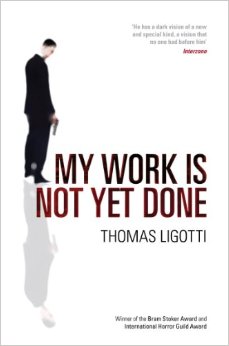
Though I’ve never been much of a horror reader, I recently stumbled across a great novella by Thomas Ligotti first published in 2002 called “My Work is Not Yet Done”. Not being familiar with Ligotti, I found through cursory research on wikipedia and a few other sites that he’s influenced by the work of HP Lovecraft and that much of his work is informed by a pessimistic, almost misanthropic worldview. He’s also one of the literary influences of Nic Pizzolatto, writer of the TV series “True Detective” (which I haven’t seen but have read good things about it).

My Work is Not Yet Done starts off documenting the day-to-day evils of a seemingly average corporate workplace. Gradually we realize the true hellishness of the work environment complete with evil overlord and minions who mercilessly scheme against outcast employee Frank Dominio. Just as the story seems to be going in the direction of revenge fantasy, plot twists occur making one rethink the nature of events that previously occurred and to contemplate the futility of violent revenge.

The novella is followed by a couple of short stories, “I Have a Special Plan for This World” and “The Nightmare Network”, both of which continue the theme of corporate horror but with a more surreal approach.

Though I haven’t yet read any of Ligotti’s other works, if they’re anywhere near as great as My Work is Not Yet Done, they should be worth seeking out. He blends classic horror tropes with a biting corporate critique so effortlessly and effectively it’s surprising that the corporate horror genre isn’t a literary movement (but maybe there’s similar stories out there I haven’t heard of?).

The full text of The Nightmare Network can be read here: http://www.scribd.com/doc/84760640/The-Nightmare-Network-by-Thomas-Ligotti

War is Our Business and Business Looks Good

6a01053596fb28970c01348365f7e1970c-450wi

By Edward S. Herman

Source: Z Magazine

It is enlightening to see how pugnacious the U.S. establishment, led by a Peace Laureate, has been in dealing with the Ukraine crisis. The crisis arguably began when the Yanukovich government rejected an EU bailout program in favor of one offered by Russia. The mainstream media (MSM) have virtually suppressed the fact that the EU proposal was not only less generous than the one offered by Russia, but that, whereas the Russian plan did not preclude further Ukrainian deals with the EU, the EU plan would have required a cut-off of further Russian arrangements. And whereas the Russian deal had no military clauses, that of the EU required that Ukraine affiliate with NATO. Insofar as the MSM dealt with this set of offers, they not only suppressed the exclusionary and militarized character of the EU offer, they tended to view the Russian deal as an improper use of economic leverage, “bludgeoning,” but the EU proposal was “constructive and reasonable” (Ed., NYT, November 20, 2014). Double standards seem to be fully internalized within the U.S. establishment. The protests that ensued in Ukraine were surely based in part on real grievances against a corrupt government, but they were also pushed along by right-wing groups and by U.S. and allied encouragement and support that increasingly had an anti-Russian and pro-accelerated regime change flavor. They also increased in level of violence. The sniper killings of police and protesters in Maidan on February 21, 2014 brought the crisis to a new head. This violence overlapped with, and eventually terminated, a negotiated settlement of the struggle brokered by EU members that would have ended the violence, created an interim government, and required elections by December. The accelerated violence ended this transitional plan, which was replaced by a coup takeover along with the forced flight of Victor Yanukovich.

There is credible evidence that the sniper shootings of both protesters and police were carried out by a segment of the protesters in a false-flag operation that worked exceedingly well, “government” violence serving as one ground for the ouster of Yanukovich. Most telling was the intercepted phone message between Estonia’s Minister of Foreign Affairs, Urmas Paet, and EU Foreign Policy chief Catherine Upton, in which Paet regretfully reported compelling evidence that the shots killing both police and protesters came from a segment of the protesters. This account was almost entirely suppressed in the MSM. For example, the New York Times never mentioned it once through the following two months. It is also enlightening that the protesters at Maidan were never called “militants” in the MSM, although a major and effective segment was armed and violent—that term was reserved for protesters in Eastern Ukraine, who were commonly designated “pro-Russian” as well as militants (for details see the tabulation in Herman and Peterson, “The Ukraine Crisis and the Propaganda System in Overdrive,” in Stephen Lendman, ed,, Flashpoint in Ukraine). There is also every reason to believe that the coup and establishment of a right-wing and anti-Russian government were encouraged and actively supported by U.S. officials.

Victoria Nuland’s intercepted “fuck the EU” words express her hostility to a group that, while generally compliant and subservient, departed from neocon plans for a proper government in Kiev headed by somebody like “Yats.” So she would surely have been pleased when the EU-supported February compromise plan was ended by the violence and coup. The U.S. support of the coup government has been enthusiastic and unqualified. Whereas Kerry and company delayed recognition of the elected government of Maduro in Venezuela,and have strongly urged him to dialogue and negotiate with the Venezuelan protesters—in fact, threatening him if he doesn’t—Kerry and company have not done the same in Ukraine where the Kiev government forces have slowly escalated their attacks on the Eastern Ukraine, but not on “protesters,” only on “militants.”

The Kiev government’s military is now using jets and helicopters to bomb targets in the East and heavy artillery and mortars in its ground operations. Its targets have included hospitals and schools. As of June 8, civilian casualties have been in the hundreds. A dramatic massacre of 40 or more pro-Russian protesters in Odessa on May 2 by a well-organized cadre of neo-Nazi supporters, possibly agents of the Kiev government, was an early high point in this pacification campaign. No investigation of this slaughter has been mounted by the Kiev government or “international community” and it has not interfered in the slightest with Western support of Kiev. In parallel, the MSM have treated it in very low key. (The New York Times buried this incident in a back page continuation of a story on “Deadly Clashes Erupt in Ukraine,” May 5, which succeeds in covering up the affiliation of the killers). Kerry has been silent, though we may imagine his certain frenzy if Maduro’s agents had carried out a similar action in Venezuela. Recall the “Racak massacre,” where the deaths of 40 alleged victims of the Serb military created an international frenzy. But in that case the United States needed a casus belli, whereas in the Odessa case there is a pacification war already in process by a U.S. client, so MSM silence is in order.

It is an interesting feature of media coverage of the Ukraine crisis that there is a regular focus on alleged or possible Russian aid, control of and participation in the actions of the protesters/militants/insurgents in Eastern Ukraine. This was evident in the Times’s gullible acceptance of a claim that photos of insurgents included a Russian pictured in Russia, later acknowledged to be problematic (Andrew Higgins, Michael Gordon, and Andrew Kramer, “Photos Link Masked Men in East Ukraine to Russia,” NYT, April 20, 2014) and another lead article, which was almost entirely speculation (Sabrina Tavernise, “In Ukraine Kremlin Leaves No Fingerprints,” NYT, June 1, 2014). But this interest in foreign intrusion in Ukraine affairs, with the implication of wrongdoing, does not extend to evidence of U.S. and other NATO power aid and control. Visits by Biden, Cain, Nuland and intelligence and Pentagon figures are sometimes mentioned, but the scope and character of aid and advice, of U.S. “fingerprints,” is not discussed and seems to be of little interest. It is in fact normalized so that, as with the aid plans in which Russian, proposals are “bludgeons” but U.S.- EU plans are “constructive and reasonable” the double standard is in good working order here as well.

Isn’t there a danger that Russia will enter this war on behalf of the pro-Russian majority of the eastern part of Ukraine now under assault? Possibly, but not likely, as Putin is well aware that the Obama-neocon-military-industrial complex crowd would welcome this and would use it, at minimum, as a means of further dividing Russia from the EU powers, further militarizing U.S. clients and allies, and firming up the MIC’s command of the U.S. national budget. Certainly there are important forces in this country that would love to see a war with Russia and it is notable how common are political comments, criticisms, and regrets at Obama’s weak response to Russian “aggression” (e.g., David Sanger, “Obama Policy Is put to Test: Global Crises Challenge a Strategy of Caution,” NYT, March 17, 2014). But so far Putin refuses to bite.

In response to this pressure from the powerful war-loving and war-making U.S. constituencies, Obama has been furiously denouncing Russia and has hastened to exclude it from the G-8, impose sanctions and penalties on the villain state, increase U.S. troops and press military aid on the near-Russia states allegedly terrified at the Russian threat, carry out training exercises, and maneuvers with these allies and clients, assure them of the sacredness of our commitment to their security, and press these states and major allies to increase their military budgets. One thing he hasn’t done is to restrain his Kiev client in dealing with the insurgents in eastern Ukraine. Another is engaging Putin in an attempt at a settlement. Putin has stressed the importance of a constitutional formation of a Ukraine federation in which a still intact Ukraine would allow significant autonomy to the Eastern provinces. There was a Geneva meeting and joint statement on April 17 in which all sides pledged a de-escalation effort, disarming irregulars, and constitutional reform. But it was weak, without enforcement mechanisms, and had no effect. The most important requirement for de-escalation would be the termination of what is clearly a Kiev pacification program for Eastern Ukraine. That is not happening, because Obama doesn’t want it to happen. In fact, he takes the position that it is up to Russia to curb the separatists in East Ukraine and he has gotten his G-7 puppies to agree to give Russia one month to do this or face more severe penalties.

This situation calls to mind Gareth Porter’s analysis of the “perils of dominance,” where he argued that the Vietnam war occurred and became a very large one because U.S. officials thought that, with their overwhelming military superiority North Vietnam and its allies in the south would surrender and accept U.S. terms—most importantly a U.S.-controlled South Vietnam—as military escalation took place and a growing toll was imposed on the Vietnamese (see his Perils of Dominance: Imbalance of Power and the Road to War in Vietnam). It didn’t work. In the Ukraine context, the United States once again has a militarily dominant position. On its own and through its NATO arm it has encircled Russia with satellites established in violation of the 1990 promise of James Baker and Hans-Dietrch Genscher to Mikhail Gorbachev to not move eastward “one inch,” and it has placed anti-missile weapons right on Russia’s borders. And now it has engineered a coup in Ukraine that empowered a government openly hostile to Russia, threatening both the well-being of Russian-speaking Ukrainians and the control of the major Russian naval base in Crimea. Putin’s action in reincorporating Crimea into Russia was an inevitable defensive reaction to a serious threat to Russian national security. But it may have surprised the Obama team, just as the Vietnamese refusal to accept surrender terms may have surprised the Johnson administration. Continuing to push the Vietnamese by escalation didn’t work, although it did kill and injure millions and ended the Vietnamese alternative way. Continuing and escalating actions against Russia in 2014 may involve a higher risk for the real aggressor and for the world, but there are real spinoff benefits to Lockheed and other members of the MIC.

Smedley Butler and the Racket That Is War

index

By Sheldon Richman

Source: The Future of Freedom Foundation

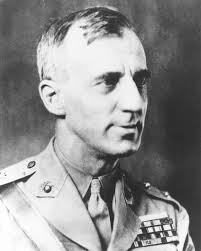
From 1898 to 1931, Smedley Darlington Butler was a member of the U.S. Marine Corps. By the time he retired he had achieved what was then the corps’s highest rank, major general, and by the time he died in 1940, at 58, he had more decorations, including two medals of honor, than any other Marine. During his years in the corps he was sent to the Philippines (at the time of the uprising against the American occupation), China, France (during World War I), Mexico, Central America, and Haiti.

In light of this record Butler presumably shocked a good many people when in 1935 — as a  second world war was looming — he wrote in the magazine Common Sense:

I spent 33 years and four months in active military service and during that period I spent most of my time as a high class muscle man for Big Business, for Wall Street and the bankers. In short, I was a racketeer, a gangster for capitalism [corporatism]. I helped make Mexico and especially Tampico safe for American oil interests in 1914. I helped make Haiti and Cuba a decent place for the National City Bank boys to collect revenues in. I helped in the raping of half a dozen Central American republics for the benefit of Wall Street. I helped purify Nicaragua for the International Banking House of Brown Brothers in 1902-1912. I brought light to the Dominican Republic for the American sugar interests in 1916. I helped make Honduras right for the American fruit companies in 1903. In China in 1927 I helped see to it that Standard Oil went on its way unmolested. Looking back on it, I might have given Al Capone a few hints. The best he could do was to operate his racket in three districts. I operated on three continents.

That same year he published a short book with the now-famous title War Is a Racket, for which he is best known today. Butler opened the book with these words:

War is a racket. It always has been.

It is possibly the oldest, easily the most profitable, surely the most vicious. It is the only one international in scope. It is the only one in which the profits are reckoned in dollars and the losses in lives.

He followed this by noting: “For a great many years, as a soldier, I had a suspicion that war was a racket; not until I retired to civil life did I fully realize it. Now that I see the international war clouds gathering, as they are today, I must face it and speak out.”

Butler went on to describe who bears the costs of war — the men who die or return home with wrecked lives, and the taxpayers — and who profits — the companies that sell goods and services to the military. (The term military-industrial complexwould not gain prominence until 1961, when Dwight Eisenhower used it in his presidential farewell address. See Nick Turse’s book The Complex: How the Military Invades Our Everyday Lives.)

Writing in the mid-1930s, Butler foresaw a U.S. war with Japan to protect trade with China and investments in the Philippines, and declared that it would make no sense to the average American:

We would be all stirred up to hate Japan and go to war — a war that might well cost us tens of billions of dollars, hundreds of thousands of lives of Americans, and many more hundreds of thousands of physically maimed and mentally unbalanced men.

Of course, for this loss, there would be a compensating profit — fortunes would be made.  Millions and billions of dollars would be piled up. By a few. Munitions makers. Bankers.  Ship builders. Manufacturers. Meat packers. Speculators. They would fare well.…

But what does it profit the men who are killed? What does it profit their mothers and sisters, their wives and their sweethearts? What does it profit their children?

What does it profit anyone except the very few to whom war means huge profits?

Noting that “until 1898 [and the Spanish-American War] we didn’t own a bit of territory outside the mainland of North America,” he observed that after becoming an expansionist world power, the U.S. government’s debt swelled 25 times and “we forgot George Washington’s warning about ‘entangling alliances.’ We went to war. We acquired outside territory.”

It would have been far cheaper (not to say safer) for the average American who pays the bills to stay out of foreign entanglements. For a very few this racket, like bootlegging and other underworld rackets, brings fancy profits, but the cost of operations is always transferred to the people — who do not profit.

Butler detailed the huge profits of companies that sold goods to the government during past wars and interventions and the banks that made money handling the government’s bonds.

The normal profits of a business concern in the United States are six, eight, ten, and sometimes twelve percent. But war-time profits — ah! that is another matter — twenty, sixty, one hundred, three hundred, and even eighteen hundred per cent — the sky is the limit. All that traffic will bear. Uncle Sam has the money. Let’s get it.

Of course, it isn’t put that crudely in war time. It is dressed into speeches about patriotism, love of country, and ‘we must all put our shoulders to the wheel,’ but the profits jump and leap and skyrocket — and are safely pocketed.

And who provides these returns? “We all pay them — in taxation.… But the soldier pays the biggest part of the bill.”

His description of conditions at veterans’ hospitals reminded me of what we’re hearing today about the dilapidated veterans’ health care system. Butler expressed his outrage at how members of the armed forces are essentially tricked into going to war — at a pitiful wage.

Beautiful ideals were painted for our boys who were sent out to die. This was the “war to end all wars.” This was the “war to make the world safe for democracy.” No one mentioned to them, as they marched away, that their going and their dying would mean huge war profits. No one told these American soldiers that they might be shot down by bullets made by their own brothers here. No one told them that the ships on which they were going to cross might be torpedoed by submarines built with United States patents. They were just told it was to be a “glorious adventure.”

Thus, having stuffed patriotism down their throats, it was decided to make them help pay for the war, too. So, we gave them the large salary of $30 a month.

Butler proposed ways to make war less likely. Unlike others, he had little faith in disarmament conferences and the like. Rather, he suggested three measures: (1) take the profit out of war by conscripting “capital and industry and labor” at $30 a month before soldiers are conscripted; (2) submit the question of entry into a proposed war to a vote only of “those who would be called upon to do the fighting and dying”; (3) “make certain that our military forces are truly forces for defense only.”

It’s unlikely that these measures would ever be adopted by Congress or signed by a president, and of course conscription is morally objectionable, even if the idea of drafting war profiteers has a certain appeal. But Butler’s heart was in the right place. He was aware that his program would not succeed: “I am not a fool as to believe that war is a thing of the past.”

Yet in 1936 he formalized his opposition to war in his proposed constitutional “Amendment for Peace.” It contained three provisions:

  • The removal of the members of the land armed forces from within the continental limits of the United States and the Panama Canal Zone for any cause whatsoever is prohibited.
  • The vessels of the United States Navy, or of the other branches of the armed service, are hereby prohibited from steaming, for any reason whatsoever except on an errand of mercy, more than five hundred miles from our coast.
  • Aircraft of the Army, Navy and Marine Corps is hereby prohibited from flying, for any reason whatsoever, more than seven hundred and fifty miles beyond the coast of the United States.

He elaborated on the amendment and his philosophy of defense in an article in Woman’s Home Companion, September 1936.

It’s a cliche of course to say, “The more things change, the more they stay the same,” but on reading Butler today, who can resist thinking it? As we watch Barack Obama unilaterally and illegally reinsert the U.S. military into the Iraqi disaster it helped cause and sink deeper into the violence in Syria, we might all join in the declaration with which Butler closes his book:

TO HELL WITH WAR!

Postscript: In 1934 Butler publicly claimed he had been approached by a group of businessmen about leading half a million war veterans in a coup against President Franklin D. Roosevelt with the aim of establishing a fascist dictatorship. This is known as the “Business Plot.” A special committee set up by the U.S. House of Representatives, which heard testimony from Butler and others, reportedly issued a document containing some confirmation. The alleged plot is the subject of at least one book, The Plot to Seize the White House, and many articles.

Top Reasons You Should Never Buy E-Cigs From Big Tobacco

Cigarette-butts

Source: Cascadia Vape Blog

It’s long been suspected that Big Tobacco money was behind early efforts to attack the e-cig industry because it posed a potential threat to the tobacco cigarette industry. Now it’s apparent Big Tobacco is not only jumping on the bandwagon, but setting its sights on taking over the bandwagon.

Lorillard, the 3rd largest Big Tobacco company in the US acquired Blu brand e-cigs last year and just earlier this month Reynolds, America’s 2nd largest Big Tobacco company announced its entry into the market with Vuse e-cigarettes. The no. 1 US Big Tobacco company, Altria, acquired Green Smoke for $110 million in February and is planning national distribution of a new e-cig, NuMark, by the end of the year while Philip Morris, a subsidiary of Altria, recently announced it acquired British e-cigarette maker Nicocig for an undisclosed price. Some in the e-cig community might see this as a positive development thinking that with increased marketing from Big Tobacco brands there’ll be increased public awareness of e-cigarettes. However, I think there’s good reasons to worry about the quality of information and products Big Tobacco pushes to the public, leading to the first of the reasons to not support them:

Reason 1: It is in the interests of Big Tobacco to associate e-cigarettes with tobacco cigarettes.

Big Tobacco companies aren’t about to lose their customer base without a fight, and even as more smokers continue to switch to e-cigarettes, they’re often lured towards e-cig brands owned by the corporations that understand their addiction best. Big Tobacco have decades of experience effectively marketing cigarettes and they’re using similar tactics to make e-cigs especially attractive to smokers and former smokers. Big Tobacco e-cigs such as Green Smoke and Vuse are designed and packaged to look very similar to tobacco cigarettes and are often marketed as “tobacco products”. This may seem like a fair label on the surface because e-cigs use liquids containing nicotine usually extracted from tobacco, but one could argue they’re not exactly tobacco products because nicotine is a chemical that can be synthesized and is found in other plants such as eggplant, tomatoes and peppers. It’s an important distinction to make because a common misconception is that e-cigs are as harmful as tobacco cigarettes when in fact much of the damage caused by smoking cigarettes can be attributed to the combustion of processed tobacco which have been found to contain radiation, gmo genes, ammonia and pesticides. There is at least one e-cig specifically designed for use with tobacco and not surprisingly it’s made by Philip Morris. Many e-cigs produced by big tobacco are designed to emulate the experience of smoking with smoke-like nicotine content and taste. This is great for smokers content to continue vaping in a manner similar to how they’re accustomed to smoking, but not so good for those trying to decrease or end their addiction or would like to experience a wider range of flavors, vape temperatures, nicotine levels, or psychoactive substances. E-cigs and vapes produced by smaller businesses are far more versatile, allowing users to choose the flavors and nicotine content of e-liquids they use, select from variable voltage settings, and with modular attachments they can also vape non-tobacco herbs, oils and concentrates instead. E-cigs from Big Tobacco, on the other hand, use disposable cartridges which have a host of problems leading to the next argument:

Reason 2: E-cigs produced by Big Tobacco are more harmful to you and the environment. 

Nearly every Big Tobacco-owned electronic cigarette uses disposable cartridges which are cheap to produce but end up costing consumers more in the long run than refillable cartridges. They also limit consumer choice because such cartridges are usually proprietary, not designed for use with components from other brands and more limited in selection of flavors and nicotine content than liquids sold separately. E-cigs using disposable cartridges are also potentially more hazardous to your health than other forms of vaporizers. Though there still needs to be more research on comparative health effects, a 2009 FDA study (often cited by critics as proof that e-cigs emit low levels of tobacco-specific nitrosamines and other impurities) only tested devices using disposable cartridges (“Njoy”, “Smoking Everywhere” and “Nicotrol” brands). Just like with tobacco cigarette filters, we may one day see disposable e-cig cartridges littered everywhere if Big Tobacco has its way. As with other cheap disposable products, disposable e-cigs and e-cig filters are designed for planned obsolescence; a policy which creates demand by making a product obsolete faster forcing consumers to buy more regularly and discard old products into landfills more often. Such practices of Big Tobacco and other large corporations leads to the third argument:

Reason 3: Big Tobacco has proven itself untrustworthy.

The history of the American tobacco industry is steeped in shame. Early settlers ripped off Native American tribes in order to acquire more land for tobacco fields. Indentured servants were exploited for labor intensive tobacco field work later to be replaced by slaves from Africa. By the 1880s, the industry was dominated by the monopolistic American Tobacco Company which was one of the companies forced to dissolve to comply with the Sherman Antitrust Act. The dissolution led to an increase in cigarette advertising while the four firms created from the breakup continue to dominate the tobacco market to this day. We now know that senior scientists and executives within the cigarette industry knew there was a correlation between smoking and cancer as early as the 1940s and were aware that smoking could cause lung cancer by the mid 1950s. However, it wasn’t until the 1990’s amidst successful lawsuits against Big Tobacco aided by leaked documents that major US cigarette manufacturers publicly admitted to varying degrees that smoking causes cancer and other health problems. Given their track record, it should come as no surprise how Big Tobacco approaches the e-cig market with the same focus on the bottom line.

Like many other large corporations with outsize influence, Big Tobacco is less concerned with wealth creation which extracts value by engaging in mutually beneficial transactions than rent-seeking; the use of social institutions such as government to gain monopolistic advantages while imposing disadvantages on competitors. The effects of rent-seeking are reduced economic efficiency through poor allocation of resources, reduced wealth creation, increased income inequality, lost government revenue (except for select paid-off legislators and regulators), decreases in innovation and entrepreneurship and national decline. Large corporations also create fewer quality domestic jobs per capita because they have the ability to cut costs through increased automation and outsourcing overseas. While CEOs of such companies may have wonderful jobs, there’s an increasingly wide income and quality gap between their position and the people at the lowest level of the company. In most cases, much of their profits are siphoned off to a small group at the top of the hierarchy who hoard it in offshore bank accounts.

Smaller domestic companies, while they may have to source certain components from overseas, tend to do more of the work in-house such as assembly, quality control, packaging, warehousing, etc. which creates more local jobs that distribute wealth into local economies. Small businesses also tend to have less of a wealth gap between employees and are run by people who are more passionate about their line of work, not people who inherited their careers, acquired it through connections or were hired by committee solely for their ability to generate income.

For the sake of your health, the environment, the economy and country, don’t support Big Tobacco. Support responsible small businesses and spread the message.

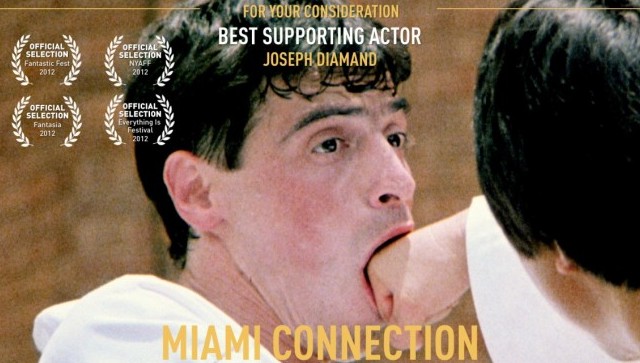
Saturday Matinee: Miami Connection

cc_miami-connection-e1355368492345

Synopsis by Drafthouse Films

The year is 1987.

Motorcycle ninjas tighten their grip on Florida’s narcotics trade, viciously annihilating anyone who dares move in on their turf. Multi-national martial arts rock band Dragon Sound have had enough, and embark on a roundhouse wreck-wave of crime-crushing justice. When not chasing beach bunnies or performing their hit song “Against the Ninja,” Mark (Tae Kwon Do master/inspirational speaker Y.K. Kim) and the boys are kicking and chopping at the drug world’s smelliest underbelly. It’ll take every ounce of their blood and courage, but Dragon Sound can’t stop until they’ve completely destroyed the dealers, the drunk bikers, the kill-crazy ninjas, the middle-aged thugs, the “stupid cocaine”…and the entire MIAMI CONNECTION!!!

Today is a Good Day for Science Fiction

Image-1Snowpiercer_International_11_5_13

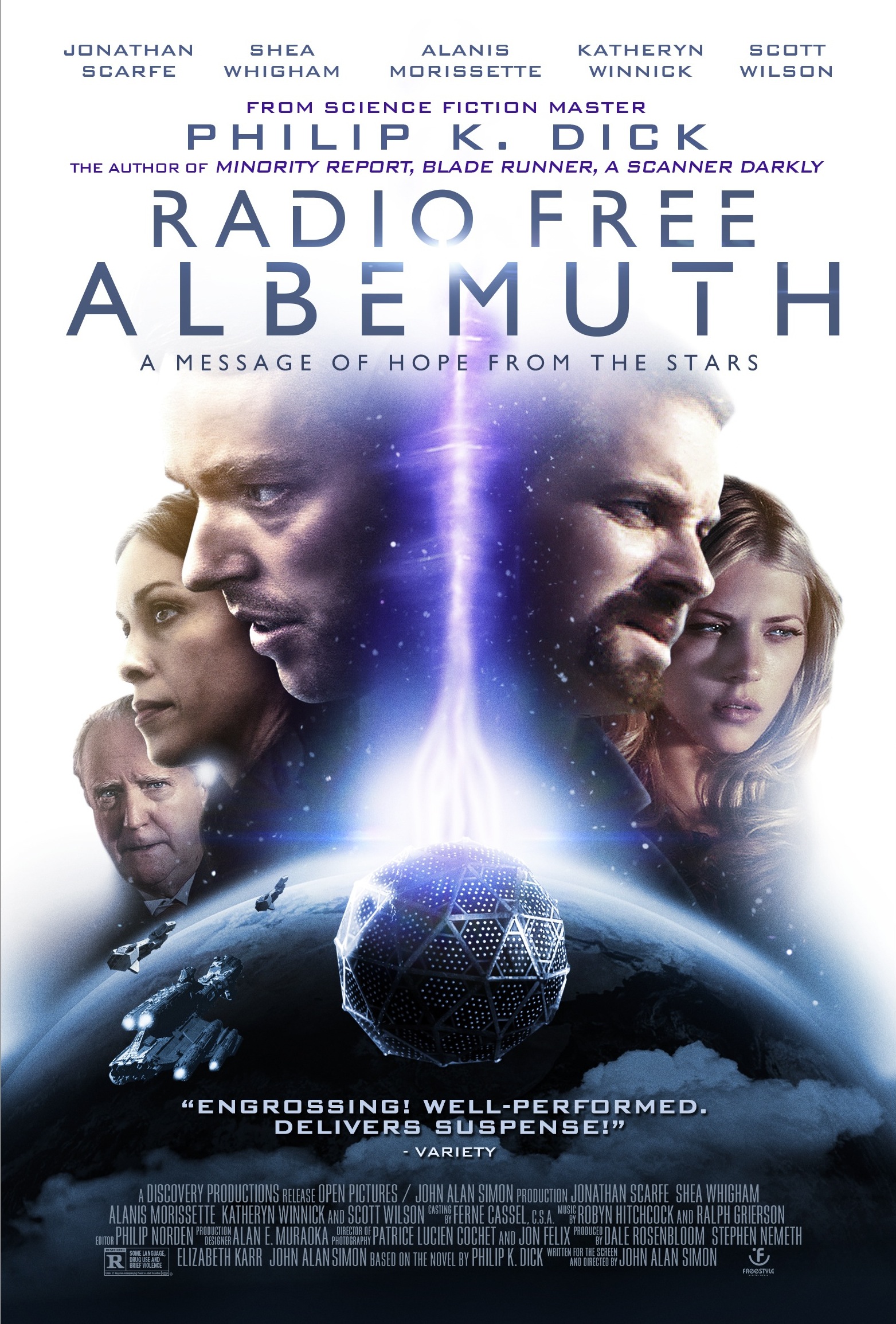
No, I’m not talking about Transformers 4. Today is the official U.S. release date for two films which will likely be regarded as cult classics of the sci-fi genre: “Radio Free Albemuth” and “Snowpiercer”. I’ve had the good fortune to have had the opportunity to see preview screenings of both films and can attest to their quality and excellent screenplays that are as intelligent as they are provocative.

Radio Free Albemuth, a film I’ve previously written about here, is possibly the most faithful cinematic adaptation of a Philip K. Dick novel, and while Snowpiercer may not follow its source material (Jacques Lob’s “Le Transperceneige”) as closely, it’s an excellent movie nevertheless. Korean director Bong Joon-ho, has made great films in the past such as “Memories of Murder” and “Mother”, but with Snowpiercer he manages to balance large scale Hollywood-style spectacle with the emotional intensity of his earlier work while getting excellent performances from English-speaking cast members such as Tilda Swinton, John Hurt and Ed Harris. It’s an odd coincidence that Snowpiercer and Radio Free Albemuth share the same U.S. release date since they’re not only the best science fiction films to come out in quite some time, but are also dark metaphors for the current socio-political moment (but not without a glimmer of hope).

To get an idea of what to expect from these films check out the reviews and trailers linked below to learn more about the projects:

http://totaldickhead.blogspot.com/2009/08/my-first-look-at-radio-free-albemuth.html

http://chycho.blogspot.ca/2014/05/may-i-recommend-post-apocalyptic-movie.html

According to the official Radio Free Albemuth website, June 27th also marks the day of significant events in history including:

  • In 1905 – Russian sailors mutinied onboard the Battleship Potemkin (the basis for Segei Eisenstein’s landmark film
  • in 1929 – the first color television was demonstrated
  • in 1942 – FBI captured 8 Nazi saboteurs from a sub off Long Island, New York.
  • 1969 – Police raid Stonewall Bar in Greenwich Village, NY, hundreds of gay patrons protest against police for 3 days
  • 1990 – Salman Rushdie, condemned to death by Iran for his novel The Satanic Verses.
  • Birthday of anarchist Emma Goldman, blind-deaf author Helen Keller, and the great Polish director Krzysztof Kieslowski