Ralph Nader: “The Total Support Of The Military-industrial Complex And Empire By Barack Obama And Hillary Clinton Is Staggering”

ralph_nader

Source: Reason.com via Investment Watch

“The total support of the military-industrial complex and empire by Barack Obama and Hillary Clinton is staggering,” Ralph Nader tells Reason TV.

Nader’s latest book is Unstoppable: The Emerging Left-Right Alliance to Dismantle the Corporate State.

To watch the full hour-long interview and read a transcript go to http://reason.com/reasontv/2014/06/11/ralph-nader.

Introducing Cascadia Vape

logo5

I’m proud to announce a new partnership with Cascadia Vape, a small business I’ve played a part in developing whose values are in close alignment with my own. Cascadia Vape is a retailer of electronic cigarettes and vaporizers from companies based in the U.S. Electronic cigarettes (or e-cigs) and vaporizers (vapes) work by heating materials with a battery powered atomizer to produce vapors with far less toxins than those found in smoke. This isn’t to say they’re 100% safe since nicotine contained in e-liquids is still addictive and shouldn’t be consumed by minors, pregnant women, and those who have heart problems, allergies or other medical conditions which might be adversely affected by nicotine. However, I’d recommend Cascadia Vape for those who are already smokers or wish to enjoy the effects of nicotine (or in some cases, THC) without the tar, toxins and odors associated with smoking because electronic cigarettes and vaporizers are a relatively healthier alternative. If you aren’t in that category but know someone who is, please share the information with them. Unfortunately Cascadia Vape is currently are not selling to customers outside of the U.S. though this may change in the future.

As a token of appreciation for readers of this site, you can get free shipping by entering coupon code “heroics” at the Cascadia Vape shopping cart.

Saturday Matinee: Documentary Double Feature

MV5BMTQxMjMzMTczM15BMl5BanBnXkFtZTcwNzg5MzUyMQ@@._V1_SY317_CR4,0,214,317_AL_MV5BMTM4Nzk5Mzk4N15BMl5BanBnXkFtZTcwNTk5OTgyMQ@@._V1_SY317_CR5,0,214,317_AL_

Today I’m featuring two classic political documentaries, both more than a decade old (from 2003) yet still equally topical and among the best films on their respective subject matters.

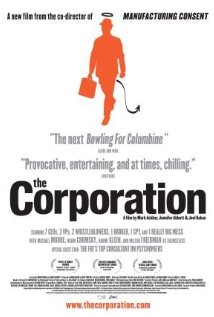
The first is Mark Achbar and Jennifer Abbott’s “The Corporation”, a comprehensive and well-researched film exploring the history of corporations, how they operate and how they’ve come to attain so much political power. Related topics they cover include the 1933 attempted corporate coup exposed by General Smedley Butler, the Fox news coverup of the dangers of Monsanto’s Bovine Growth Hormone, and the mass protests in Bolivia sparked by the attempted privatization of their water supply in 2000.

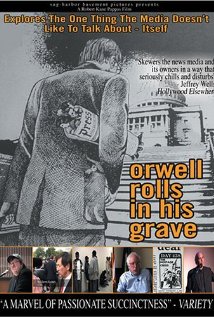
“Orwell Rolls in His Grave” directed by Robert Kane Pappas is possibly the best dissection of contemporary mass media propaganda yet, with a focus on corporate media consolidation and the role of corporate media in the controversial US presidential election of 2000. The film features interviews with Mark Crispin Miller, Bernie Sanders and Danny Schechter among others.

Podcast Roundup

6/8: Hosts Mickey Huff and Peter Phillips discuss the ongoing situation in the Ukraine with Dr. Michael Parenti, Prof. Michel Chossudovsky, and former Congresswomen and Green Party Presidential candidate Cynthia McKinney on “the Project Censored Show”. All of them are contributors to a new book by Clarity Press edited by Stephen Lendman, “Flashpoint Ukraine: How the US Drive for Hegemony Risks WWIII.”

https://s3.amazonaws.com/Pcradiodos/Project+Censored+060614.mp3

6/9: On “the Progressive Commentary Hour”, host Gary Null interviews Dr. Andrew Wakefield, a gastroenterologist and academician specializing in inflammatory bowel disease and the measles-mumps-rubella vaccine or MMR. They discuss how the US government uses corporations and universities to support policies, silence top scientists, jeopardize public health and protect corporate profits.

http://s36.podbean.com/pb/3f11f4e516587793b6f2d38475623afc/5398ccbc/data1/blogs18/371244/uploads/ProgressiveCommentaryHour_060914.mp3

6/10: On “the Higherside Chats”, Adam Gorightly and Vyzygoth joins host Greg Carlwood for a freewheeling but illuminating conversation about the suppressed history of the United States hidden beneath lies and disinformation most have been led to believe.

http://thehighersidechats.com/wp-content/uploads/2014/06/112-Vyzygoth.mp3

6/12: KMO talks with Vincent Horn of Buddhist Geeks on the lastest C-Realm podcast. They discuss the use of mindfulness techniques in technological society and its connection to DIY, Quanitifed Self and Maker movements. KMO wraps up with commentary on the nature of individualism and community.

http://www.c-realm.com/wp-content/uploads/418_Adaptive_Comtemplation.mp3


Individual Wealth in Perspective

billionairehousing

By James Hall

Source: Negotium

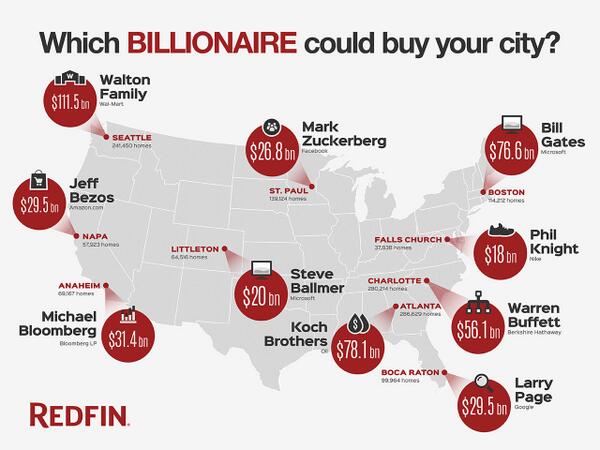
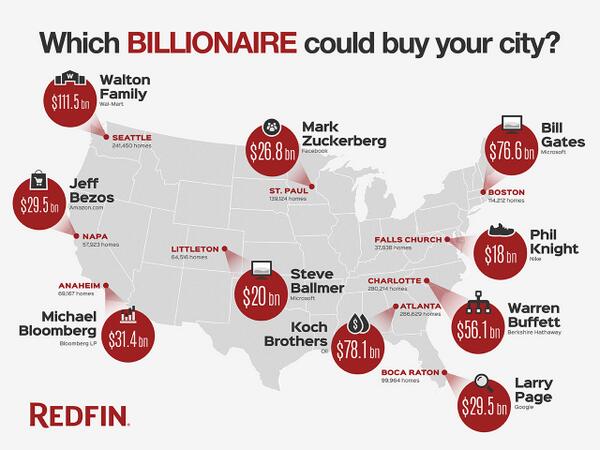
A quaint comparison of what money can buy in today’s market has Bill Gates being able to afford every home in Boston. His $76.6 billion reported by the Washington Post or the $78.4 billion by Forbes seems a pittance when put up against John D. Rockefeller’s peak wealth of $318.3 billion (based on 2007 US dollar). According to your resident commissars over at MSNBC, “The median net worth of American households hasn’t changed much over the past decades, it’s about $20,000.” So if Gates decided to purchase all the Beantown houses, whom would he pay for the bricks and mortar? Certainly, most Americans may think of “their home is their castle”, but few actually own a debt free deed to their grand estate. No wonder the banks and financial institutions, are so fond of placing liens on real property.

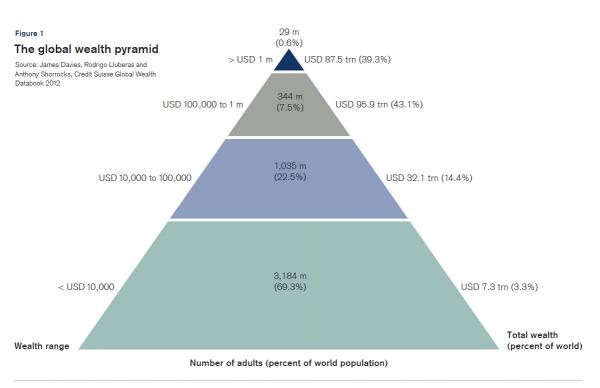
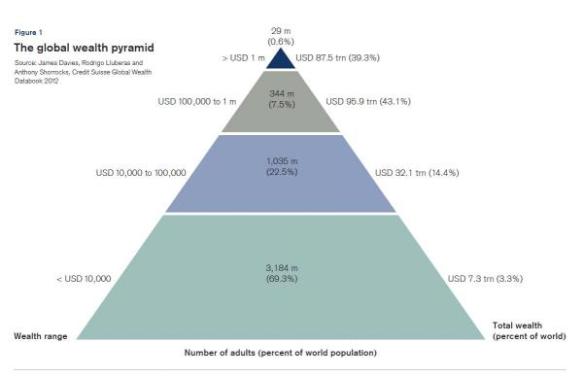
The proportional context of looking at individual wealth within the relative value of global wealth is examined in the essay; It’s A “0.6%” World: Who Owns What Of The $223 Trillion In Global Wealth, seems trite. Zerohedge concludes, “The bottom line: 29 million, or 0.6% of those with any actual assets under their name, own $87.4 trillion, or 39.3% of all global assets.”
CSwealth

Here are the stunning facts:

“In 2012, 3.2 billion individuals – more than two-thirds of the global adult population – have wealth below USD 10,000, and a further one billion (23% of the adult population) are placed in the USD 10,000–100,000 range.

The average wealth holding is modest in the base and middle segments of the pyramid, total wealth amounts to USD 39 trillion, underlining the potential for new consumer trends products and for the development of financial services targeted at this often neglected segment.

The remaining 373 million adults (8% of the world) have assets exceeding USD 100,000.

And then the top of the pyramid: 29 million US dollar millionaires, a group which contains less than 1% of the world’s adult population, collectively owns nearly 40% of global household wealth.

Some 84,500 individuals are worth more than USD 50 million, and 29,000 are worth over USD 100 million.”

After absorbing this macro economic analysis, it should ease the pain that the stewardship of world wealth is in such trustworthy hands. No need to burden the masses with the weight of building wealth, when that formula for getting to the top of the financial pyramid, has room for only the few. The expert obelisk creators never meant for wealth sharing and the tools to construct one’s own prosperity are not included in your capital accumulation education. The liability of mortgage and property tax obligations to retain your edifice requires regular payments to maintain the privilege of possession. Ownership is only a conditional wealth asset.

Investopedia says 3 Simple Steps To Building Wealth are:

“You need to make it. This means that before you can begin to save or invest, you need to have a long-term source of income that’s sufficient enough to have some left over after you’ve covered your necessities.

You need to save it. Once you have an income that’s enough to cover your basics, you need to develop a proactive savings plan.

You need to invest it. Once you’ve set aside a monthly savings goal, you need to invest it prudently.”

Ordinary consumers do not build great fortunes. The elementary prescription for “getting ahead” is severely limited in thinking for a world that frequently conducts business as a blood sport. However, many of the enterprises that carve out a market for their products or services have a distinct edge over the unconnected entrepreneur. Namely, government directed and controlled startups or collaborated ventures frequently become the commercial giants of the economy. Here lays the confusion when defining wealth as an accounting device of personal ownership of assets.

In addition, governments are often in the privatization and sale of state assets. The Economists reports that the “IMF estimate that non-financial government assets average 75% of GDP in advanced economies. In most countries, these are worth more than financial assets (stakes in listed firms, sovereign-wealth and securities holdings and the like).”

Liquid cash flow and high worth individuals, especially with inside track contacts, are able to cherry pick sweet heart deals. Such opportunities, usually transfers treasure, but infrequently are engines of new wealth creation. The only guarantee is that money, made or lost depending upon the accounting needs of the vulture predator, is never an option for the normal hard working taxpayer.

Unless people accept the reality that creating and growing wealth is a noble objective that involves the widespread commerce participation of a merchant class, the outrageous disparity of the top down wealth stream will widen even more, as the top tier inclusion narrows to fewer mega-billionaires.

Global business encourages transnational conglomerates with commercially identifiable names and logos. When entire economies prevail under a business plan that eliminates any rival competition, and achieves sole market dominance, the prospects to advance the individual wealth ledger of the average person diminishes.

An opportunistic society can only exist when independent business flourishes. Government bureaucrats and corporate technocrats oppose an unambiguous free market economy. As the map of the über-billionaires illustrates, their checkbook could swallow up entire cities. However, digesting, let alone growing communities into quality environments for future generations, takes an active involvement in the wealth building process that rewards contributing players.

Without a widespread populace practicing mutually beneficial business transactions, the capacity to achieve the skills necessary to compete successfully, will never develop. Instead of making money, saving money and investing money, learn the aptitude of business as a lifelong endeavor.

The poor will always be scraping the bottom, until they learn how to advance their abilities for the betterment of their own families. The alternative to greater concentration of wealth is to initiate a viable substitute to the financial stranglehold that furthers the appetites of egomaniacs like the character, Bretton James in the movie Money Never Sleeps. In the end, the true individual wealth that anyone can attain is the sincerity and moral substance of his or her own character. Money may not snooze from making more cash, but is only a means to elevate living a life worth lived.

In such a quest, the super rich may have a net worth equivalent to one’s property, but they can never afford the essence of your family or measure of your community.

 

The Six-Hour Day

Source: The Hipcrime Vocab

But don’t look for it in Calvinist America anytime soon, where we’re always on the hunt to ferret out “moochers:”

Gothenburg (Sweden) (AFP) – Robert Nilsson, a 25-year-old mechanic in Sweden’s second city Gothenburg, may be the harbinger of a future where people work less and still enjoy a high standard of living. He gets out of bed at the same time as everyone else, but instead of rushing to work, he takes it easy, goes for a jog, enjoys his breakfast, and doesn’t arrive at his Toyota workshop until noon, only to punch out again at 6:00 pm.

“My friends hate me. Most of them think because I work six hours, I shouldn’t be paid for eight,” Nilsson said, talking while fitting part of a rear window onto a Toyota Prius with swift, expert moves.

Sweden often stuns first-time visitors with its laid-back prosperity, making foreigners wonder how it is possible to have both lots of money and lots of leisure.

Part of the answer, according to economists, is a productive and well-educated workforce that adapts to new technologies quicker than most. Exactly how much –- or how little –- Swedes work compared with other nations is a somewhat open question.

“We have a 40-hour work week, but also we have a little more absence than many people and we start work late in life because we study longer,” said Malin Sahlen, an analyst at Timbro, a libertarian Stockholm-based think tank. In 2012, the average Swede worked a total of 1,621 hours, according to the Paris-based Organisation for Economic Co-operation and Development. This is more than the Netherlands with 1,381 hours, but less than Britain with 1,654 hours or the United States with 1,790 hours – and way below Chile’s 2,029 and Mexico’s 2,226 hours.

“We could work more, that’s a fact,” said Sahlen.

But far from looking to increase time spent at work, some in Sweden are out to prove that less is more and that cutting hours can boost productivity.

In an international productivity ranking by the Conference Board, a non-profit business research organisation, Sweden was already placed close to the top, coming 11th out of 61 countries. The United States was third, the Netherlands number five, and Britain number 13, whereas Chile and Mexico were both in the bottom third.

[…]

Left-wing councillor Pilhem says the concept has already proven its merits — at mechanic Nilsson’s workplace, Toyota. Toyota’s Gothenburg branch introduced the six-hour day in 2002 to make its facilities more efficient by having two shifts, one in the morning and one in the afternoon, instead of a single, longer one. Nilsson confirms that in his experience a six-hour day — paid as much as eight — is more efficient because it requires fewer breaks.

“Every time you have a break, it takes 10 to 15 minutes to get back to work, because you have to see where you were when you left off,” he said.

That efficiency is reflected in the salary, as the Toyota workshop pays technicians like Nilsson 29,700 Swedish kronor (3,300 euro, $4,510) a month, well above the 25,100 kronor (2,790 euro, $3,810) national average for workers in the private sector.

“It was a huge success straight away,” said Toyota service centre manager Elisabeth Jonsson. “We saw the results, and everything was working for the staff, for the company, for the customers, so I don’t think we ever had any discussion about putting an end to it.”

Swedes test a future of less work, more play (Yahoo! News)

Clearly, laziness will turn Sweden into an impoverished, hellish dystopia. Oh, wait, that’s the U.S. I’m describing.

Here’s a Reddit page on the article. From that page:

I used to work salary at 30 hrs a week. They told me I needed to go to 40 and get a corresponding pay increase. I did not want to but they made me.

Getting in at 9am and leaving at 3pm left me so much free time that working 30 hours a week felt like a hobby. I had more time outside of work during the day than at work. Now my butt is stuck in a chair 40 hours a week still doing 30 hours a week worth of work.

Though instead of adding just 2 hours to the work day, it added more like 4.

Extra Rush hour driving time 45 mins each way instead of 15- 1 hour extra.

Necessary Lunch Break- 1 hour extra

2 hours extra at the office- 2 hrs

So, even though I got a corresponding 33% increase in pay (from 6 hrs a day to 8 hrs a day), the time it is costing me increased by 61% (from 6.5 hrs to 10.5 hrs).

So technically, by earning more I got a pay cut.

Despite my top line salary going up 33%, my earnings per hour devoted to work dropped by 17%.

Definitely not worth it.

Comedian Rik Mayall Dead at 56

Rik

I was surprised and saddened to hear the news that counterculture comedian Rik Mayall died in his home in London yesterday. The cause of death hasn’t been released but Scotland Yard reported that it was not believed to be suspicious. Mayall was best known for his memorable roles in cult comedy shows such as “The Young Ones”, “Black Adder”, “The New Statesman” and “Bottom”. In a tribute published by The Guardian yesterday, some of his Young Ones colleagues had this to say about him:

“very, very sad and upset that we’ve lost Rik, who was inspirational, bonkers, and a great life force… a brilliant comedian and someone who made everyone else’s lives more fun. He will be really, really missed”. – Nigel Planer

“Comedy is truly great is when it comes out of nothing, and the greatest of comedians, like Rik, have that rare ability to conjure laugh after laugh, not from endless words, but from a single look or one absurd gesture … It was in his bones. Sweet Rik, much loved – what a loss.” – Alexei Sayle

“There were times when Rik and I were writing together when we almost died laughing. They were some of the most carefree, stupid days I ever had, and I feel privileged to have shared them with him. And now he’s died for real. Without me. Selfish bastard.” – Adrian Edmonson

Not sure exactly when this live performance was recorded, but though it seems to be early in his career it captures the manic energy of some of Mayall’s later roles:

The New Zealand Herald made a commendable attempt to compile some of Rik Mayall’s greatest televised moments (there’s too many to list): http://www.nzherald.co.nz/entertainment/news/article.cfm?c_id=1501119&objectid=11270946

Rik Mayall’s second-to-the-last televised work before his death was as the narrator of the following animation for Channel 4 written and produced by Louis Hudson and Ian Ravenscroft called Don’t Fear Death:

The following is a clip from One By One, an intriguing but difficult to find feature film directed by Diane Jessie Miller and featuring one of Mayall’s final performances: