Reporters Claim Facebook is Censoring Information on Julian Assange Case


“90% of my traffic has just been cut off by what seems to be a general algorithm command of some kind to downplay Assange.” “I think it is as simple as that.”

By Alan Macleod

Source: Mint Press News

Craig Murray, the former British ambassador to Uzbekistan and longtime confidant of Julian Assange, has been fastidiously reporting on the Australian publisher’s extradition hearing to the United States. Yet few people have been reading it. This, according to Murray, is because of a deliberate decision by online media giants to downplay or suppress discussion of the case. On his blog, Murray wrote that he usually receives around 50 percent of his readers from Twitter and 40 percent from Facebook links, but that has dropped to 3 percent and 9 percent, respectively during the hearing. While the February hearings sent around 200,000 readers to his site daily, now that figure is only 3,000.

To be plain that is very much less than my normal daily traffic from them just in ordinary times. It is the insidious nature of this censorship that is especially sinister – people believe they have successfully shared my articles on Twitter and Facebook, while those corporations hide from them that in fact it went into nobody’s timeline,” he added.

Asked about the situation by former New York Times reporter Chris Hedges, Murray explained that

Anybody who is at all radical or takes any view of anything that is outwith the official establishment view gets used to occasional shadow banning, but I have never seen anything on this scale before.”

“90% of my traffic has just been cut off by what seems to be a general algorithm command of some kind to downplay Assange,” he added. “I think it is as simple as that.”

There has been considerable public interest in the court proceedings, but very little mainstream attention given to them. To be fair, British authorities have made it inordinately difficult to cover the case, allowing only a small handful of journalists into the Old Bailey court system, where they can watch a live television link up but cannot bring in recording devices. An online stream can only be watched if one registers and signs in between exactly 9:30 and 9:40 a.m., and if they suffer even a momentary lapse in wifi connection, they are shut out of the session. The court system has also blocked human rights groups, including Amnesty International, from monitoring proceedings.

Still, considering the implications for the future of journalism, the lack of coverage might surprise some. The New York Times, the flagship outlet of American print media (and a Wikileaks partner) printed only two articles on the subject and has not mentioned Assange in over two weeks. Its broadcast journalism equivalent CNN, meanwhile, has not touched the issue at all.

Online media creators have, for many years, lived with the threat of algorithmic suppression or demonetization of content on sensitive or controversial issues. YouTube regularly cuts all advertising on videos on the Syrian Civil War, fracking, or other topics on which advertisers might not wish to promote scrutiny. Even airsoft and paintball enthusiasts have learned not to use words like “shoot” and “gun” in their titles, lest the platform demonetizes their content.

Perhaps more alarmingly, however, Silicon Valley tech giants are becoming increasingly closely intertwined with the state department, to the point where it is often difficult to tell where one ends, and another begins. “What Lockheed Martin was to the twentieth century…technology and cyber-security companies [like Google] will be to the twenty-first,” wrote Google executives Eric Schmidt and Jared Cohen in their book, “The New Digital Age: Reshaping the Future of People, Nations and Business.” For example, Facebook is now in a close partnership with the Atlantic Council, who essentially decides for them what content to promote in people’s news feeds and what content is discarded as fake news, misinformation, or low quality. The problem is that the Atlantic Council is a NATO cutout, and a government-funded organization whose board of directors is a who’s who of deep state officials, including virtually every living ex-C.I.A. director, Bush-era cabinet members like Condoleezza Rice and Colin Powell, and military generals like Wesley Clark and David Petraeus. Thus, an organization like this deciding what the world sees on their screens is barely one step removed from total government control of the flow of information.

The U.S. government also frequently directly interferes with content appearing on prominent social media. Earlier this year, Facebook announced that it would remove all comments or posts in praise of recently-slain Iranian General Qassem Soleimani from all its platforms. This was done to comply with the Trump administration’s designation of the Iranian Revolutionary Guard Corps (which Soleimani led) as a terrorist organization. The problem is that Soleimani was Iran’s most popular political figure, with an over 80 percent approval rating, and that Instagram is used by around one-third of the entire Iranian population. Thus, Iranians speaking in their local language were barred from sharing a majority opinion with their country folk because of a decision by Donald Trump.

The Middle East is a particularly contentious area of the world. Yet when news broke that the British Army’s online psychological operations brigade had managed to become a senior Twitter executive, responsible for Middle Eastern content, media largely ignored it, raising even more questions. Algorithm changes have also hammered independent alternative media outlets — often precisely the ones most likely to cover the Assange case — drastically reducing their search engine traffic flow.

Former C.I.A. chief Leon Panetta (an honorary director of the Atlantic Council) recently admitted that Assange is being prosecuted as a warning to journalists. “All you can do is hope that you can ultimately take action against those that were involved in revealing that information so you can send a message to others not to do the same thing,” he told a German documentary crew. While the message is being heard loud and clear by journalists, the public is far less aware that anything is going on, thanks, in part, to online suppression of news about the case. Judge Vanessa Baraitser is scheduled to pronounce judgment on the media “trial of the century” on January 4, after the U.S. presidential election. Murray will doubtless be there. But will anyone read what he has to say?

Trump’s Murder of Qassem Soleimani: Why We Must Stand Up to the Christianity of Brutality.

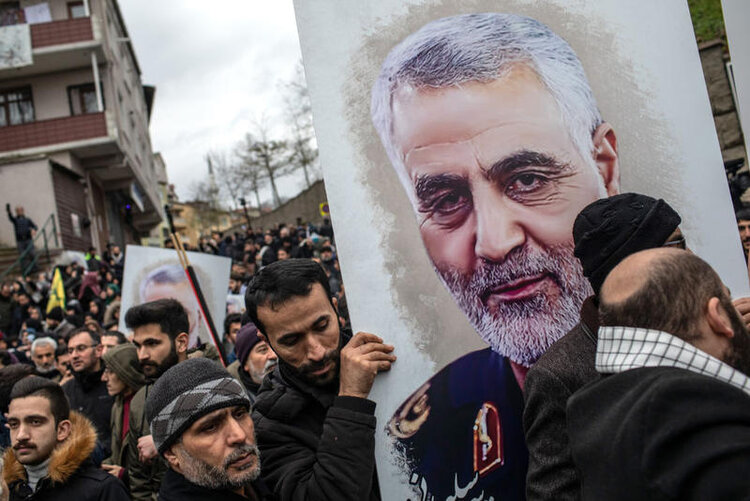
ISTANBUL, TURKEY – JANUARY 05: People hold posters showing the portrait of Iranian Revolutionary Guard Major General Qassem Soleimani and chant slogans during a protest outside the U.S. Consulate on January 05, 2020 in Istanbul, Turkey. Major General Qassem Soleimani, was killed by a U.S. drone strike outside the Baghdad Airport on January 3. Since the incident, tensions have risen across the Middle East. (Photo by Chris McGrath/Getty Images)

By Sander Hicks

Source: New York Megaphone

This is the investigation that prompted our publication to establish an online conference on Nonviolence, and the Legacy of Mahatma Gandhi, Oct. 2, 2020. It’s essential we understand how Pompeo and the GOP justify their violence in the name of Christianity. The future of nonviolence must stand apart from the “Christianity of Brutality.” That’s what Jesus would do.

Earlier this year, President Trump shocked the world by murdering a high-ranking Iranian government official. Pressured by Secretary Pompeo, Trump ordered the assassination of an Iranian general who enjoyed movie-star celebrity status in his home country, General Qassem Soleimani. The killing brought the world to the brink of a major new war. Among the many laws this act broke, it violated Iraqi sovereignty, as it took place in Iraq. It happened in the middle of the night on January 3rd, 2020, using an American MQ-6 Reaper drone.

Dexter Filkins, in the New Yorker, called the hit on Soleimani, “the most consequential act taken against the regime in Tehran in thirty years.” And that’s saying a lot, because the US has inflicted much suffering on Iran over time, from CIA coups, to pushing Iraq to kill a million Iranians in the “Iran-Iraq War,” to today’s harsh economic sanctions. Yet Iran has grown into an influential regional superpower able to stand toe-to-toe with US proxies, Israel and Saudi Arabia, to see through the hypocrisy and the posturing of the War on Terror.

Trump, earlier, wanted to re-open negotiations towards a new Nuclear Agreement with Iran. He was in contact with President Rhouhani. But killing the charismatic Soleimani shut down any chance of a new nuclear deal. Now the Iranians are free to develop their nuclear power capabilities, unhindered.

Trump was left to explain himself. How could the US President justify this attack?

Remember that one year ago, things were boiling over in Iraq/Iran. Various Iran-backed militias rioted in Baghdad and broke the windows at US consulates. An American contractor was killed and US officials feared another Benghazi, or a new Tehran-style Embassy hostage crisis like in 1979. The US Military and Trump responded by killing 25 Shi’a militia members. Pentagon top brass then offered killing Soleimani as an additional option but assumed Trump wouldn’t be so brash. That was like giving a pyromaniac teenager a set of matches and five gallons of gasoline.

Killing a foreign government official is illegal, according to US policy and international law. Trump, at first, asserted Soleimani had plans to target four U.S. embassies, a claim that his own Defense Secretary Esper was not able to substantiate.  It “seems to be totally made up,” said Congressman Justin Amash from Michigan.

On Twitter, Trump tried to give the last word by claiming that the US acted in self-defense because Soleimani posed an “imminent threat.” But Trump seemed unconvinced himself, as he tweeted that it “doesn’t really matter because of his horrible past.”

Ah, but it does matter.

Killing people is a crime, you see, and a lot of people think so. The US has written laws that restrain this kind of thing from coming out of the White House, as it does so much damage to the U.S.’s moral standing in the world. (If capitalism and imperialism haven’t mangled that reputation forever.)

Former DA Vincent Bugliosi, in his book The Prosecution of George W. Bush for Murder, showed that presidents could well go to prison for the extrajudicial killings and illegal wars they engage in. The Hague Convention of 1907 and the UN ban the killing of a foreign government official, outside of wartime. Even Thomas Jefferson, in a letter to James Madison, denounced “assassination, poison, perjury” as brutal statecraft, “held in just horror.”

In the wake of the killings of JFK and MLK and the targeted domestic killings of COINTEL-PRO, the US Congress convened the Church Committee and the House Select Committee on Assassinations in the mid and late ’70s. President Gerald Ford responded by issuing an executive order that has since become standard US policy. No US government employee “shall engage in, or conspire to engage in, political assassination.”

President Reagan affirmed and expanded this policy against assassination. But back at the Trump White House, the pressure to kill Soleimani came from evangelical Christian Secretary of State Mike Pompeo. CNN reported that White House insiders said Pompeo “was the one who made the case to take out Soleimani, it was him absolutely.” Pompeo also made a claim that Soleimani posed an “imminent threat,” but later backed off that claim, and instead explained that Soleimani had the “blood of American [soldiers]” on his hands from working with the Iraqi resistance.

At a loss for legal justification, Vice President Mike Pence stepped up with a “Hail Mary” kind of throw. He asserted that there may be a connection between Soleimani and “the 12 9/11 attackers.” (But Mike, there were 19 hijackers on 9/11.) Students of history will note that the NeoCon Right still invokes 9/11 when it’s desperate to justify a crime. 9/11 still has that power 20 years later. It’s like a myth that is eternal. If we allow it.


Who Was Qassem Soleimani

Millions of Iranians poured out into the streets for a three-day funeral in all top Iranian cities and towns. Hamed Ghashgavi in Tehran, told me, “General Soleimani, we know he was popular but none of us thought millions will mourn his death!”

Qassem Soleimani “had a command presence,” CIA Veteran John Maguire said. “He walked into the room and you could feel him.” Maguire had negotiated with Soleimani in Baghdad in 2004.

A native of the more tribal Southern Iranian province of Kerman, Soleimani was born in 1957. He fought at the front lines of the Iran/Iraq war, that nine-year slog fought with chemical weapon assaults, compliments of Iraq. The grinding agony, often in trenches, was compared to World War I. Inside Iran, the conflict is known as the “War of Holy Defense.” But the Reagan White House viewed the Iran/Iraq War as a chance to get aggressive and retaliate for the late 70’s hostage crisis. The US supported Iran‘s biggest rival, Saddam Hussein, as he invaded Iran. The USA gave Hussein several billions in economic aid and military training to help attack the nascent Islamic Republic.

The experience of Iraq invading Iran was deeply formative on young Soleimani, who lost many friends in the war. But Soleimani there became a legend known as “The Goat Burglar” for his talents at slipping behind enemy lines and coming back with live goats to feed his platoon. He regularly volunteered to fight at the front lines. He had a deep camaraderie with his fellows. Before battle, he would kiss each of them on the forehead and pray with them to be martyred.

From the end of the War, to 1997, Soleimani laid low, he didn’t get on well with President Rafsanjanhi. But sooner after that period, he rose to lead the elite “Quds” aka “Jerusalem” Force division of the Iranian Revolutionary Guard. His power grew, as did his closeness with Iranian Supreme Leader Ayatollah Khamenei. Gen. Petreaus once recalled that Soleimani told him, “You should know that I, Qassem Soleimani, control the policy for Iran with respect to Iraq, Lebanon, Gaza and Afghanistan.”

Soleimani as US Ally Against Terrorism

In the corporate US media, Soleimani’s death was brushed off. He was expendable. A “terrorist.”

But a deeper look past the demonization shows an interesting pattern. Soleimani had a history of working with the Americans. Every time he worked with the USA, it went well for the Americans. In the end, the USA just stabbed him in the back.

When 9/11 happened, the Bush/Cheney regime decided to target Afghanistan and its Taliban regime. Qassem Soleimani saw an opportunity to reduce terrorism in the land immediately to the east of Iran. Soleimani worked with the US attacking forces. He and Iranian diplomats shared intelligence with the US on Taliban positions. The Americans informed the Iranians about an al-Qa`ida agent hiding out in Mashhad in eastern Iran.  Soleimani was, “pleased with [the] cooperation,” and spoke at this time that “maybe it’s time to rethink our relationship with the Americans.”

It was not to be.

Bush and Cheney bowed to pressure from their Zionist wing and slapped the Iranians in the face with the “Axis of Evil” speech. It has been a long-standing policy of Israel to block any rapprochement between the US and Iran. Bush named Iran as a leading proponent of terrorism, despite its recent work against terrorism, with the Americans in Afghanistan. Soleimani felt betrayed.

Cut to 2014, and the US is back asking for Iran’s help, when US coalition forces are losing in Iraq. The jihadists were on the offensive, taking territory in Iraq, including the major city of Mosul. Iraq’s leading Shia cleric Ali al-Sistani, issued a call-to-arms to fight the Sunni extremists. Young Shia men volunteered by the thousands. Soleimani and his elite Quds Force helped organize them.

For the next three years, until 2017, Iran helped turn the tide there against ISIS and Al Nusra. On a number of occasions, Americans were hitting Islamic State targets from the air while General Soleimani directed ground forces against the militants.

At the same time, the US, Saudi Arabia, and Israel were working against Soleimani and Iran in Syria. The US had decided to work against the Ba’ath Arab Socialist, Bashar Assad, who sometimes enjoyed the support of Russia and Iran.

When Rep. Tulsi Gabbard (D-HI) flew to Syria in 2017, it was to better understand the Syrian civil war. She met Assad and top Syrian officials. In the street, Syrian citizens begged her to stop the US funding of ISIS. She returned to Congress and proposed HR 608, the Stop Arming Terrorists Act. Because at this point, the US was fighting ISIS in Iraq, but working with ISIS in Syria. On the ground in Tehran, in 2017 at the New Horizon conference, when I asked Saudis, Arabs, and other locals from the region, who is funding ISIS? People uniformly named either Saudi Arabia or the USA.

Pop Quiz. Name the only country that has consistently opposed the Islamic State and al-Qaeda?

The Answer? No, it’s not the USA. It’s Iran.

The History of the US/Iran Relationship: 

A Crash Course from 1953 to the Present

Iran is a regional superpower in a kind of local “cold war” against Saudi Arabia and Israel. There are a set of facts that no one should do without when trying to figure out the real history of the Iran/US relationship.  A deeper understanding of this history could begin to lay the groundwork to re-establish diplomatic ties, which have been suspended since the Islamic Revolution of 1979.

In 2000, even Madeline Albright recognized that the CIA’s brutal 1953 coup overthrew the democratically-elected progressive Iranian Prime Minister Mohammad Mossadegh, and replaced him with the fickle Iranian king, Reza Shah. With their SAVAK secret police, the Shahs repressed dissidents and communists, and so Islam became the legal method of resistance. When President Jimmy Carter allowed the ailing Shah to travel to the USA to receive healthcare, Ayatollah Khomeini called for a general strike in Iran and flew back to Iran from his exile in France. 98% of the population voted to replace the monarchy with the Islamic Republic, in a referendum vote.

Because of the US’s support of the Shah, the Islamic Revolution resulted in an unplanned take-over of the US embassy. 53 US hostages were kept for 444 days until they were released on the day of Ronald Reagan’s inauguration.

During the Iran/Iraq War, it’s worth noting that young Qassem Soleimani met the young Mahmoud Ahmadinejad, when both were fighting the Iraqi invasion. They would have a long, complicated relationship, as Adhmadinejad would go on to become elected President of Iran, from 2005 to 2013. His politics were “hardliner” compared to his successor, the more moderate Rouhani. Ahmadinejad may be most famous for his 2010 speech in front of the United Nations, in which he questioned the official story about 9/11.

Regarding 9/11/01, Iran was not involved, but US Allies were. The USA’s CIA Counterintelligence Database reports that two Mossad agents were among five Israelis arrested by NJ Police, on 9/11/01, for celebrating the attacks publicly, as they watched the World Trade Center burn. Held in custody for two months by FBI, Bush officials intervened and all five were released to go back to Israel. On Israeli television, they were celebrated as heroes.

15 of the 19 9/11 hijackers were Saudi, including two with ties to Saudi intelligence (Al Mihdhar and Al Hamzi). When Congress’s suppressed “28 Pages” of its own 9/11 Report were released in 2016, they documented Saudi funding of the 19 hijackers, from none other than US Ambassador from Saudi Arabia,  Prince Bandar bin Sultan (aka “Bandar Bush”). But even Bandar’s many appearances in the suppressed “28 Pages” have yet to prompt a grand jury investigation in US courts.

Later that month, in September 2001, General Wesley Clark, reported that a senior general inside the Pentagon told him, “Here’s the paper from the Office of the Secretary of Defense [Rumsfeld] outlining the strategy. We’re going to take out seven countries in five years.’ And he named them…ending with Iran.”

The Iraq War officially started in 2003 and phase one didn’t end until 2011. Similar to the 9/11 official story, the premise for the Iraq War was a loose set of assumptions and insinuations, not hard facts or evidence of Saddam Hussein’s weapons of mass destruction. Hussein’s overthrow and execution was another targeted killing on a grander scale, similar to that of Soleimani. The Bush/Cheney “War on Terror” was a colossal waste of money, even by the libertarian think tank Cato Institute. “A recent study…puts the cost of the War on Terror at roughly $5 trillion — a truly astonishing number. Even if one believes American efforts have made the nation marginally safer, the United States could have achieved far greater improvements in safety and security at far less cost through other means.”

In 2007, German news magazine Die Spiegel leaked that Vice President Dick Cheney had a secret plan to invade Iran next.

Barack Obama was elected as a symbol of hope and change, but his pick of Hillary Clinton as Secretary of State was tragic for Iran. Hillary Clinton removed the Iranian terrorist group MEK from the State Department’s “Terrorism Watch List” in 2012. The media crowed that the lobbyists had done it again, as MEK represents big money ex-patriate Iranians who would like to see violent regime change in Iran. MEK was once a bizarre culty Islamic splinter group, banished to Albania, and hated in Iran for backing Iraq in the Iran/Iraq War. But money changes everything, and now with lavish funding, these days the MEK throws huge gala events in DC and NYC and pays Rudy Giuliani and John Bolton to come speak.

After President Barack Obama jettisoned Hillary Clinton as Secretary of State, he did some ground-breaking work by working with moderate President Rouhani and signing the “Iran Nuclear Deal,” the JCPOA in 2015.

In 2017, with Trump in Office, Defense Secretary Jim Mattis and others routinely ignored the Trump White House’s multiple calls to pressure Iran militarily. Their belief was that Syria’s Assad had effectively won the Syrian civil war, thanks to Iran and Russia, and now the war on ISIS took priority. Mattis quit at the end of 2018 when Trump demanded US withdrawal from Syria.

In 2018, former Exxon CEO Rex Tillerson quit as Secretary of State, and Mike Pompeo succeeded him. Pompeo lost no time in focussing a target on his longtime nemesis, Qassem Soleimani. It started in April of 2019, with the shocking designation of Iran’s entire Revolutionary Guard (IRGC) as a “terrorist organization.” According to The Iran Agenda book by Reuters reporter Reese Erlich, the IRGC is a huge economic entity in Iran, and it controls about 10% of the entire Iranian economy. So declaring IRGC a terrorist organization would be like declaring Amazon a terrorist organization in the US.

But there were more than words in the declaration. The knives were coming out. “Bolton and Pompeo knew that that designation opened up the targeting aperture,” one former senior Trump administration official said.


War Powers

In 1973, Congress passed the War Powers Resolution. It requires the President to report to Congress whenever armed forces are introduced “into hostilities or into situations where imminent involvement in hostilities is clearly indicated,” and to terminate any hostilities after 60 days unless authorized by Congress.

But since 1973, Congress has done little to reclaim its constitutional responsibility to control the war machine. Professor Jack Goldsmith points out, “Our country has, quite self-consciously, given one person, the President, an enormous sprawling military and enormous discretion to use it in ways that can easily lead to a massive war.”

If there’s any one issue that may someday inspire a US Constitutional Convention, it may be the long history the USA has had with a “unitary executive” who abuses their powers to wage undeclared wars on smaller, weaker nations. Our system is running contrary to the spirit and the letter of the US Constitution. What happened in the Soleimani case is more than just the murder of one man. It shows that our current class of leadership, from Clinton to Trump, is so in love with violence, it crosses a line into contempt for the Constitution. The love of war is all.

What could possess their souls?


The Christianity of Brutality

The flaws of the American brand of evangelical Christianity led directly to Soleimani’s fiery death with nine others. The dominant religion in America birthed a bloody global trauma that caused the whole planet to smell the stench of World War III. However, any student of the New Testament will notice that Jesus actually stood against the nationalism and the exclusionary practices of the Jewish leadership. He called the Pharisees and Scribes, “vipers” and even worse, “lawyers.”

Jesus’s pivotal lesson about the Good Samaritan exposes the hypocrisy of the “purity” of the High Priests. They were so obsessed with purity, they wouldn’t help a man beaten up in the street. Their religion blinded them to the basic humanity in all of us. At a time of crisis, when we need something to unite us, religion could reveal an inner light within us all. The Good Samaritan story holds up the forgotten and hated people of our day.  The one who is hated most by society turns out to have the most heart. The outsider, the Samaritan ignores all the codes of the day and stops to care for the crushed and bloodied man. That’s the path. Actions of compassion and healing are the true way, not a religion of showiness, prestige, and power.

Mike Pompeo and the neoConservative Christians are super Pro-Israel, because their Christianity is based in the Old Testament, where God is oftentimes a violent, nationalistic force who favors his “Chosen People” in their many wars.  Pompeo has compared Trump to King Cyrus, and likes to dwell on the Book of Esther, in which the Jewish people commit genocide on the Iranians/Persians, killing over 5,000 in one fell swoop. (An event celebrated every year with the Jewish feast of Purim.)

The Old Testament also has eternal wisdom, great laws, and lessons in it, like “Thou Shalt Not Kill” from the Ten Commandments. The Wisdom literature, such as Psalms and Proverbs, show the universal conception of God, evolving into a more compassionate, loving vision over time. But to rely on the Old Testament as a true book of history is shaky ground. To base US Foreign Policy on it is ahistorical. Most of the Old Testament is war stories, in which genocide and exclusion are held up as ideals. A little-known fact is that some early Christians didn’t at first want to include the Old Testament in their Bible. They felt that the teachings of Christ were complete: be humble, be of service, make your life about truth, integrity, and nonviolence. These were so much more substantial than the old books, which had led directly to the superficial posturing of the Pharisees, and the “Simple Way” resistance of Jesus of Nazareth.

It seems that with the killing of Soleimani, something has hijacked the spirituality of a man like Mike Pompeo. He became a “born-again Christian” inside the super-powered pressure-cooker of West Point US Military Academy. It’s like someone only gave him half the story. The American right-wing wants the righteousness of religion without doing the real work of Jesus’s core command, “Love your enemies, and pray for those who persecute you.”

The story of the New Testament is really this: a young, passionate, former carpenter from the sticks, Jesus of Nazareth, picks up the oral traditions of  a “street rabbi.” Able to quote the prophets, see people’s problems, and inspire people to change, he becomes a traveling street preacher, able to talk about the love of God in a radical new way. He challenges the aristocracy of the high priests and denounces their rigidity and formalism. He gathers a wide range of people “from below.” He teaches and heals among the peasant and working classes (without excluding Roman soldiers). Drawing on the Wisdom literature, he expands and radicalizes his message, in a time in which occupied Palestine was seeking ways to resist the violence of the Roman Empire.  Influenced by the Zealots, and tempted by the lure of political power, Jesus ultimately rejected that path. He did consider it but rejected driving Rome out of Palestine with a sword. He even welcomed Pharisees at his gatherings and teaching sessions. His challenge to “love our enemies” was really a challenge to see that there is a light within all of us, including Americans, Israelis, and Iranians, and that it’s a common love of the truth. The historical Jesus never endorses killing people. He says we should “turn the other cheek” rather than retaliate with violence.

Essentially we have here an avatar, one of history’s most dynamic and radical figures, revered today in both Christianity, Buddhism, and Islam, because he opened up a new space of what is possible for humanity: living in a place of dialogue, a love for the Word, sharing, truth, eating together, healing each other, reveling in our common humanity, and working out problems without violence. That is the space of God.

The violent Christianity of Mike Pompeo feels about as authentic as his boss, Donald Trump, wielding a Bible like a weapon, as a vague warning to protestors and radicals fed up with racism and police brutality.

They need to look deeper, because 2000 years ago, Jesus would have been among those protestors. According to the book Rabbi Jesus by Bruce Chilton, when Jesus cleared the Temple in Jerusalem, he went in with an affinity group of 50-100 followers. It was an “Occupy the Temple” action, in which Jesus stood up to capitalism: the money-changers, animal-sellers, and merchants who had turned religion into a business. Jesus and crew literally pushed over the tables and set the doves free. It clarified Jesus’s work and became one of his last public acts of direct action.

In their zeal to make Christianity about violence and Old Testament rivalries against Iran, Pompeo and Trump totally miss the revolutionary spirituality of compassion for all beings and the essentially anti-capitalist message of Jesus. I am reminded of the young, rich kid who comes up to Jesus in the New Testament and says, “Hey, I have followed all the rules, but nothing is working for me!” So Jesus says, You must give up all your wealth, your power, your status, all you cling to, and get on the road with us, follow this path, be inside our movement, follow me. But the kid couldn’t do it because he was too attached: to luxury, to his self-concept, to his fragile and tender illusions, to a status quo of empire, class, and power.

It’s like that kid today is Mike Pompeo, and all the American Christians who do what he does. They want to follow Jesus, but can’t escape their formalism, their illusions, they can’t give up the habits of easy nationalism, their remote-control high tech violence, their sloganeering and stereotyping. Jesus says something truly radical – it’s not too late to turn around – give up all you have and follow me.

Instead the modern day Pharisees have been sending the FBI out to harass American activists.


Summer of 2019: FBI at My Front Door

I have been researching this article for six weeks, but I began to write the first draft on August 6, 2020. That date is actually the one year anniversary of the FBI visiting my home to stifle my international travel plans to advocate for peace with Iran. It seems that calling for peace has become something of a crime, in the time of Trump and Pompeo.

The FBI also visited such US dissidents as former Pentagon official Michael Malouf, and former US-Saudi diplomatic attaché Michael Springmann, and about fifteen others. What we all had in common was that we had previously attended the Iranian’s New Horizon conference, where dissidents from the USA and other countries were able to gather, share views, network, and brainstorm solutions to the problems of aggression, imperialism, and world peace.

When the FBI was at my house, they handed over a copy of a recent indictment of an American who had defected to Iran. But this situation had nothing to do with the New Horizon conference. The US Treasury, however, had sent the FBI to enforce their recent harsh economic sanctions against New Horizon. Four Iranians from New Horizon were sanctioned for hosting this  international think tank, a kind of “Davos of the Global South.”

The FBI home visit was a gross violation of my core rights to free speech, religion, and the right to peaceably assemble and tackle grievances. The Bill of Rights took a backseat to an obsession with killing. We had been planning to attend the next New Horizon in Beirut that Fall.

This was certainly a nadir for US activists, but shortly thereafter, there was a bit of a thaw, when in September 2019, President Trump fired his White House war-monger, John Bolton.  And then, the next month after that, the “mastermind” of the Trump White Houses’s sanctions on Iran, Sigal Pearl-Mandelker, resigned after being harassed by peace activists at a public event.


Against the Balance of Power, Towards the Balance of Peace

President Woodrow Wilson, once said, “Peace cannot…rest upon an armed balance of power.” Lasting peace, he maintained, required “not a balance of power, but a community of power; not organized rivalries, but an organized common peace.”

So instead of old religions, old rivalries, and old prejudices being given all of the power, what if the world could coalesce around a new vision, in which political assassination was banned, and just not required, because the balance of power was no longer based on violence.

The next step would be to map out a path to a place where we as one people on Earth can declare that war itself is simply out of date. How can we get to a place where we have outgrown it? The answer is to grow. We are close to being capable of global nonviolence. Gandhi said that the roots of nonviolence were already in the heart of all the world’s great religions.

The words of President Wilson ring true, “There is only one power to put behind the liberation of mankind, and that is…the power of the united moral forces of the world.”

“The power of the united moral forces of the world” is a power that peoples of all religions, and no religions, could get behind, support, and live.

Practical Proposals for Global Social Change

It’s time for a Truth and Reconciliation Conference around the murder of Qassem Soleimani. It will be a way to start to talk about the truth behind the “balance of power” and begin the healing among the peoples of the world.

So that’s why, this article is not just some investigative journalism about a criminal act, I have created a way for you to get involved, in an international dialogue, with Iranian and American activists, on Zoon, this Friday, on October 2, the International Day of NonViolence. From 4 PM to 9 PM, we will have political and spiritual speakers from Iran, and the USA, and other countries.

We will hold a global Truth and Reconciliation Conference, to talk about a global cultural shift, to change the entire system. We have a great bunch of speakers: everyone from Lt. Col. (Ret.) Lawrence Wilkerson, to radical priest Fr. John Dear, to Iranian film-maker Nader Talebzedeh.

Qassem Soleimani did not die in vain. He wanted to be a martyr. Now, let us work to have his death help to transform the world.

 

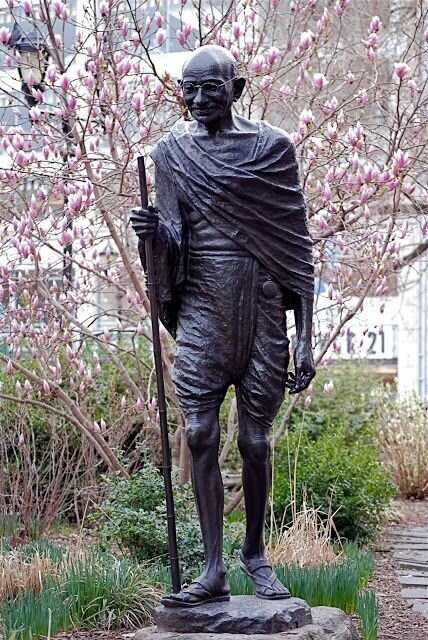
Come Celebrate Peace and Nonviolence, Celebrate Gandhi’s Birthday.

4PM – 9 PM Oct. 2 on Zoom. More Info:

https://www.newyorkmegaphone.com/oct-2-gandhi-nonviolence-day

The author of the article above wishes to acknowledge Porsché Mysticque Steele for her editorial work, and thanks also to C. Maupin for advice.

Saturday Matinee: The War on Journalism: The Case of Julian Assange

WATCH: The War on Journalism: The Case of Julian Assange

A new documentary by Juan Passarelli can be seen here on Consortium News, followed by a panel discussion with Passarelli, director Ken Loach and filmmaker Suzie Gilbert.

Source: Consortium News

Journalists are under attack globally for doing their jobs. Julian Assange is facing a 175 year sentence for publishing if extradited to the United States. The Trump administration has gone from denigrating journalists as ‘enemies of the people’ to now criminalizing common practices in journalism that have long served the public interest.

Imprisoned WikiLeaks founder and editor Assange’s extradition is being sought by the Trump administration, in a hearing to begin Sept. 7,  for publishing U.S. government documents, which exposed war crimes and human rights abuses. He is being held in maximum security HMP Belmarsh in London. There is a war on journalism and Julian Assange is at the centre of that war. If this precedent is set then what happens to Assange can happen to any journalist. Join director Ken Loach and film-maker Suzie Gilbert for a discussion with Juan Passarelli about his new documentary – The War on Journalism: The Case of Julian Assange.

Watch the replay here:

Assange Rips the Matrix

By Finian Cunningham

Source: Information Clearing House

The persecution of Julian Assange is one of those breakthrough moments when suddenly people realise that almost everything they have been told to believe is not true.

This week the Australian-born journalist and publisher has been subjected to a show trial in a British court with the threat of extradition to the United States looming. If he is extradited, the 48-year old is facing 175 years – a death sentence – in prison on wholly contrived espionage charges.

Assange is being persecuted for the sole and simple reason that he exposed war crimes and systematic corruption by the US government and its Western allies. His years of arbitrary detention and the torture endured over the past year while in solitary confinement in a British dungeon are a grim warning to all citizens. The warning is that their supposed democratic rights are non-existent as far as the powers in Washington and London are concerned. If you dare speak truth to power, then this fate will also be yours.

Thus, when it gets down to it, the harsh reality is that there is no such thing as democracy in the US or Britain. Elections and media are but window-dressing to hide the brutal truth that fundamental, basic democratic rights of free speech and due legal process are not inalienable principles, but rather are dispensable privileges whenever the powers-that-be ordain so.

Julian Assange’s incarceration and pillorying is like an inquisition from medieval times happening in the year 2020. He dared expose the rampant, systematic crimes of so-called authorities through his Wikileaks site. His blasphemy was to expose the charlatans and mass-killers who masquerade as pious leaders.

Those revelations showed the public that the pretensions of democracy and rule of law by the American and British governments are nothing but hypocritical, empty posturing. Assange’s courageous publishing work demonstrated how those governments have waged criminal wars and committed genocidal crimes; how they have made a mockery of international law and democratic rights. And for that heroic service to public truth and empowerment with the truth, Assange is being pilloried like a rebellious serf by overlords posing as “governments” and “judges”.

Assange’s show trial is also powerfully revealing of the real nature of Western so-called news media. Not one of the major US or British news outlets have given any coverage, let alone comment, regarding his week-long extradition trial.

A journalist and publisher is being whipsawed in the court as if he is a dangerous terrorist. He is denied elementary due process by being confined to a glass-cage dock, not able to communicate with his defence lawyers, unable to even hear what his accusers are claiming.

His extradition, to be determined at a future court hearing, seems like a foregone conclusion, such is the bias and hostility towards Assange from the presiding British judge, Vanessa Baraitser.

Given the international outcry from hundreds of doctors and UN representatives over Assange’s torture endured while in British custody, and given the grotesque abuse of legal process by the American and British so-called authorities, the case should be thrown out immediately – if there were any modicum of justice.

The vendetta against Assange tells us what kind of societies citizens (or rather subjects) are living under in the US and Britain. These states are oligarchies where “democratic rights” are strictly conditional on subjects not stepping out of line, such as criticising war crimes or illegal global spying.

Julian Assange has torn through the largely invisible matrix of propaganda and power that people really live under. The saccharin myths of “democracy” and “free speech” are shown for the ugly, putrid reality that they are. And the Western corporate-controlled media in their silence about what is going on are also condemned for the lying servile machines that they are.

We must not accept the fate being prepared for Assange as if it is inevitable or as if we are powerless to overthrow it. The first step towards freedom is truth, and thanks to Julian Assange, we have the power to be free. We know the tyrannical nature of the governments that presume to rule over us in our names. There must be a popular uprising in defence of Assange. Because no-one is free until he is.

A final note by way of testimony: anyone who has been enlightened by Wikileaks’ revelations over the past decade will know that the current escalation of conflict in Syria’s Idlib is due to NATO powers illegally occupying that country. They will know that NATO powers have for years covertly sponsored terror groups to carry out a criminal regime-change war. By contrast, anyone who relies on Western governments and mainstream media for “information” will have no idea whatsoever about what is really going in Syria. A wider war could erupt any day and those who are brainwashed by Western regimes and their media are impotent to stop it. The empowerment of citizens by Julian Assange and Wikileaks over the years is the difference between ending wars or fueling them.

The vendetta against Assange tells us what kind of societies citizens (or rather subjects) are living under in the US and Britain. These states are oligarchies where “democratic rights” are strictly conditional on subjects not stepping out of line, such as criticising war crimes or illegal global spying.

Julian Assange has torn through the largely invisible matrix of propaganda and power that people really live under. The saccharin myths of “democracy” and “free speech” are shown for the ugly, putrid reality that they are. And the Western corporate-controlled media in their silence about what is going on are also condemned for the lying servile machines that they are.

We must not accept the fate being prepared for Assange as if it is inevitable or as if we are powerless to overthrow it. The first step towards freedom is truth, and thanks to Julian Assange, we have the power to be free. We know the tyrannical nature of the governments that presume to rule over us in our names. There must be a popular uprising in defence of Assange. Because no-one is free until he is.

A final note by way of testimony: anyone who has been enlightened by Wikileaks’ revelations over the past decade will know that the current escalation of conflict in Syria’s Idlib is due to NATO powers illegally occupying that country. They will know that NATO powers have for years covertly sponsored terror groups to carry out a criminal regime-change war. By contrast, anyone who relies on Western governments and mainstream media for “information” will have no idea whatsoever about what is really going in Syria. A wider war could erupt any day and those who are brainwashed by Western regimes and their media are impotent to stop it. The empowerment of citizens by Julian Assange and Wikileaks over the years is the difference between ending wars or fueling them.

Were the Atomic Bombings of Hiroshima and Nagasaki a War Crime and a Crime Against Humanity?

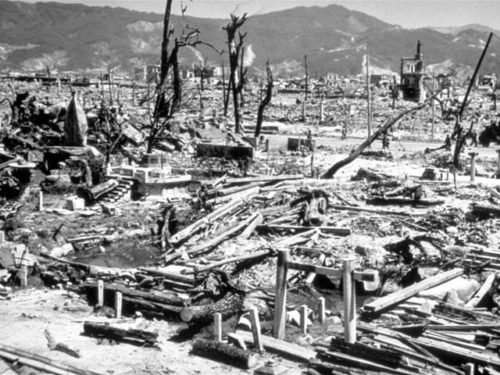
This August 6, 1945 file photo shows the destruction from the explosion of an atomic bomb in Hiroshima Japan AP-Photo-File

By Rossen Vassilev Jr.

Source: Global Research

74 Years Ago, the first atomic bomb was dropped on Hiroshima on August 6, 1945

Was President Harry Truman “a murderer,” as the renowned British analytic philosopher Gertrude Elizabeth Anscombe once charged? Were the atomic bombings of Hiroshima and Nagasaki indeed a war crime and a crime against humanity, as she and other academic luminaries have publicly claimed? A Distinguished Professor of Philosophy and Ethics at Oxford and Cambridge, who was one of the 20th century’s most gifted philosophers and recognizably the greatest woman philosopher in history, Dr. Anscombe openly called President Truman a “war criminal” for his decision to have the Japanese cities of Hiroshima and Nagasaki leveled by atomic bombs in August 1945 (Rachels & Rachels 127). According to another academic critic, the late American historian Howard Zinn, at least 140,000 Japanese civilians were “turned into powder and ash” in Hiroshima. Over 70,000 civilians were incinerated in Nagasaki, and another 130,000 residents of the two cities died of radiation sickness in the next five years (Zinn 23).

The two most often cited reasons for President Truman’s controversial decision were to shorten the war and to save the lives of “between 250,000 and 500,000” American soldiers who could have possibly died in battle had the U.S. military had to invade the home islands of Imperial Japan. Truman reportedly claimed that

“I could not bear this thought and it led to the decision to use the atomic bomb” (Dallek 26).

But Dr. Gertrude Anscombe, who along with her husband, Dr. Peter Geach, Professor of Philosophical Logic and Ethics, were the 20th century’s foremost philosophical champions of the doctrine that moral rules are absolute, did not buy this morally callous argument:

“Come now: if you had to choose between boiling one baby and letting some frightful disaster befall a thousand people—or a million people, if a thousand is not enough—what would you do? For men to choose to kill the innocent as a means to their ends is always murder” (Rachels & Rachels 128-129).

In 1956, Professor Anscombe and other prominent faculty members of Oxford University openly protested the decision of university administrators to grant Truman an honorary degree in gratitude for America’s wartime help. She even wrote a pamphlet, explaining that the former U.S. President was “a murderer” and “a war criminal” (Rachels & Rachels 128).

In the eyes of many contemporaries of Elizabeth Anscombe, the atomic bombings of Hiroshima and Nagasaki violated famous philosophical-ethical norms such as the “Sanctity of Human Life,” the “Wrongfulness of Killing,” and also that “it is wrong to use people as means to other people’s ends.” Former President Herbert Hoover was another early critic, openly declaring that

“The use of the atom bomb, with its indiscriminate killing of women and children, revolts me” (Alperovitz The Decision 635).

Even President Truman’s own Chief of Staff, the five-star Admiral William D. Leahy (the most senior U.S. military officer during the war) made no secret of his strong disapprobation of the atomic bombings:

“It is my opinion that the use of this barbarous weapon at Hiroshima and Nagasaki was of no material assistance in our war against Japan. The Japanese were already defeated and ready to surrender because of the effective sea blockade and the successful bombing with conventional weapons…. My own feeling is that in being the first to use it, we had adopted an ethical standard common to the barbarians of the Dark Ages…. I was not taught to make war in that fashion, and wars cannot be won by destroying women and children” (Claypool 86-87, emphasis added).

The apologists for President Truman, on the other hand, seem to be using the quasi-Utilitarian “Benefits Argument” to justify the barbaric use of a devastating weapon of mass destruction, which killed hundreds of thousands of innocent civilians in the two targeted Japanese cities even though (contrary to Truman’s many public pronouncements at that time) there had been no military troops, no heavy weaponry, or even any major war-related industries in either city. Because nearly the entire adult male population of both Hiroshima and Nagasaki had been drafted by the Japanese military, it was mostly women, children, and old men who fell victims to fiery death from the sky. The excuse that Truman himself repeatedly offered was:

“The dropping of the bombs stopped the war, saved millions of lives” (Alperovitz Atomic Diplomacy 10).

He even boasted that he had “slept like a baby” the night after signing the final order to use the atomic bombs against Japan (Rachels & Rachels 127). But what Truman was saying in self-justification was far from being the truth—let alone the whole truth.

Unleashing a nuclear Frankenstein

At the urging of a fellow nuclear physicist—the anti-Nazi Hungarian émigré Leo SzilardAlbert Einstein wrote a letter to President Franklin D. Roosevelt on August 2, 1939, recommending that the U.S. government should start work on a powerful atomic device as a defensive deterrent to Nazi Germany’s possible acquisition and use of nuclear weaponry (Ham 103-104). But when the top-secret Manhattan Project finally got off the ground in early 1942, the U.S. military obviously had other, much more offensive plans regarding the future targets of America’s A-bombs. While at least 67 other Japanese cities, including the capital Tokyo, were reduced to rubble by daily conventional firebombing, including the use of napalm and other incendiaries, Hiroshima and Nagasaki had been deliberately spared for the sole purpose of testing the destructiveness of the new atomic device (Claypool 11).

An even more important reason for employing the bomb was to scare Stalin, who had turned quickly from “Old Uncle Joe” at the time of the FDR presidency into “the Red Menace” in the eyes of Truman and his top advisers. President Truman had quickly abandoned FDR’s policy of cooperation with Moscow, replacing it with a new policy of hostile confrontation with Stalin, in which America’s newly-acquired monopoly over nuclear armaments would be exploited as an aggressive tool of Washington’s anti-Soviet diplomacy (Truman’s so-called “atomic diplomacy”). Fully two months before Hiroshima and Nagasaki, the same Leo Szilard had met privately with Truman’s Secretary of State, James F. Byrnes, and had tried unsuccessfully to persuade him that the nuclear weapon should not be used to destroy helpless civilian targets such as Japan’s cities. According to Dr. Szilard,

“Mr. Byrnes did not argue that it was necessary to use the bomb against the cities of Japan in order to win the war…. Mr. Byrnes’s view [was] that our possessing and demonstrating the bomb would make Russia more manageable in Europe” (Alperovitz Atomic Diplomacy 1, 290).

The Truman Administration had, in fact, postponed the Potsdam meeting of the Big Three until July 17, 1945—one day after the successful Trinity test of the first A-bomb at the Alamogordo testing range in New Mexico—to give Truman extra diplomatic leverage in negotiating with Stalin (Alperovitz Atomic Diplomacy 6). In Truman’s own words, the atom bomb “would keep the Russians straight” and “put us in a position to dictate our own terms at the end of the war” (Alperovitz Atomic Diplomacy 54, 63).

At this point, the Truman Administration was no longer interested in having Moscow’s Red Army liberate Northern China (Manchuria) from Japanese military occupation (as FDR, Churchill, and Stalin had jointly agreed at the Yalta Conference in February 1945)—let alone invade or capture Imperial Japan itself. Quite to the contrary. Publicly deploring the “political-diplomatic rather than military motives” behind Truman’s decision to nuke Japan, Albert Einstein complained that “a great majority of scientists were opposed to the sudden employment of the atom bomb. I suspect that the affair was precipitated by a desire to end the war in the Pacific by any means before Russia’s participation” (Alperovitz The Decision 444). Winston Churchill privately told his Foreign Secretary, Anthony Eden,at the Potsdam Conference that

“It is quite clear that the United States do not at the present time desire Russian participation in the war against Japan” (Claypool 78).

Not even Tokyo’s last-minute desperate offer (made during and after the Potsdam Conference) to surrender if the Allies promised not to prosecute Japan’s god-like emperor or remove him from office—could prevent this deadly decision, even though Truman “had indicated a willingness to maintain the emperor on the throne” (Dallek 25).

Therefore, sparing the lives of American GIs was hardly one of Truman’s more convincing arguments. In early 1945, FDR and Army General Dwight Eisenhower, Supreme Commander of the Allied Forces in Europe, had together decided to leave the capture of Berlin to Soviet Marshal Georgi Zhukov‘s battle-hardened troops in order to avoid heavy American casualties. After officially declaring war on Tokyo on August 8, 1945, and having destroyed the Japanese military forces in Manchuria, Stalin’s Red Army prepared to invade and occupy Japan’s home islands—which certainly would have saved the lives of thousands of U.S. servicemen about whom Truman seemed so vocally concerned. But following Nazi Germany’s unconditional surrender in May 1945, Truman had come to share Winston Churchill’s famous revisionist assessment that “We have slain the wrong swine.”

It is not even clear whether Tokyo finally surrendered on August 14 due to the two U.S. nuclear attacks carried out on August 6 and August 9, respectively (after which there were practically no more Japanese cities left to destroy nor any more U.S. A-bombs to drop)—or because of the threat of Soviet invasion and occupation after Moscow had entered the war against the Empire of Japan. Just days before the Soviet declaration of war, the Japanese ambassador to Moscow had cabled Foreign Minister Shigenori Togo in Tokyo that Moscow’s entry into the war would spell a total disaster for Japan:

“If Russia…should suddenly decide to take advantage of our weakness and intervene against us with force of arms, we would be in a completely hopeless situation. It is clear as day that the Imperial Army in Manchukuo [Manchuria] would be completely unable to oppose the Red Army which has just won a great victory and is superior to us on all points” (Barnes).

To nuke or not to nuke

General Eisenhower was later quoted as stating his conviction that it had not been “necessary” militarily to use the bomb to force Japanese surrender:

“Japan was, at that very moment, seeking some way to surrender with a minimum loss of ‘face’…it wasn’t necessary to hit them with that awful thing” (Alperovitz Atomic Diplomacy 14).

In private, Eisenhower repeated his objections to his direct boss, Truman’s Secretary of War Henry L. Stimson:

“I had been conscious of a feeling of depression and so I voiced to him my strong misgivings, first on the basis of my belief that Japan was already defeated and that dropping the bomb was completely unnecessary, and secondly because I thought that our country should avoid shocking world opinion by the use of a weapon whose employment was, I thought, no longer mandatory as a measure to save American lives” (Alperovitz Atomic Diplomacy 14).

Admiral William F. Halsey, commander of the U.S. Third Fleet (which conducted the bulk of naval operations against the Japanese in the Pacific during the entire war), agreed that there was “no military need” to employ the new weapon, which was used only because the Truman Administration had a “toy and they wanted to try it out…. The first atomic bomb was an unnecessary experiment…. It was a mistake to ever drop it” (Alperovitz The Decision 445). Indeed, it was quite “certain” at the time that a totally devastated Japan, which was on the verge of internal collapse, would have surrendered within weeks, if not days, without the atomic bombings of Hiroshima and Nagasaki or even without the Soviet declaration of war against Tokyo. As the official U.S. Strategic Bombing Survey concluded at the end of the war, “certainly prior to 31 December 1945, and in all probability prior to 1 November 1945, Japan would have surrendered even if the atomic bombs had not been dropped, even if Russia had not entered the war, and even if no invasion had been planned or contemplated” (Alperovitz Atomic Diplomacy 10-11).

Major General Curtis E. Lemay, commander of the U.S. Twenty-first Bomber Command which had conducted the massive conventional bombing campaign against wartime Japan and dropped the atomic bombs on Hiroshima and Nagasaki, stated publicly: “I felt there was no need to use them [atomic weapons]. We were doing the job with incendiaries. We were hurting Japan badly…. We went ahead and dropped the bombs because President Truman told me to do it…. All the atomic bomb did was, in all probability, save a few days” (Alperovitz The Decision 340).

The fateful decision to drop the two atomic bombs code-named “Little Boy” and “Fat Man” on Japan may have been made a little bit more morally acceptable for Truman by the daily carpet bombing of German and Japanese cities throughout the war, including the firebombings of Hamburg, Dresden, and Tokyowhich had nearly wiped out their civilian populations. The declared goal of these relentless city-busting air raids was to destroy the morale and the will to fight of the German and Japanese people and thus shorten the war. But many years after the war Dr. Howard Zinn (himself a B-17 co-pilot and bombardier who had flown dozens of bombing missions against Nazi Germany) sadly mused: “No one seemed conscious of the irony—that one of the reasons for the general indignation against the fascist powers was their history of indiscriminate bombing of civilian populations” (Zinn 37). But, in fact, Secretary of War Henry Stimson, Admiral William Leahy, and Army General Douglas MacArthur were no less disturbed by what they saw as the barbarity of the “terror” air campaign, with Stimson privately fearing that the U.S. would “get the reputation for outdoing Hitler in atrocities” (Ham 63).

Clearly, Japan was defeated and was preparing to surrender before the bomb was used, whose main—if not the only—purpose was to intimidate the Soviet Union. But there had been several viable alternatives, some of which were discussed prior to the atomic bombings. The Under Secretary of the Navy, Ralph Bard, had become convinced that “the Japanese war was really won” and was so disturbed by the prospect of using atom bombs against defenseless civilians that he secured a meeting with President Truman, at which he unsuccessfully pressed his case “for warning the Japanese of the nature of the new weapon” (Alperovitz Atomic Diplomacy 19). Admiral Lewis L. Strauss, Special Assistant to the Secretary of the Navy, who replaced Bard after the latter’s angry resignation, also believed that “the war was very nearly over. The Japanese were nearly ready to capitulate.” That is why Admiral Strauss insisted that the atom bomb should be demonstrated in a way that would not kill large numbers of civilians, proposing that “…a satisfactory place for such a demonstration would be a large forest of cryptomeria trees not far from Tokyo” (Alperovitz Atomic Diplomacy 19). General George C. Marshall, U.S. Army Chief of Staff, was equally opposed to the bomb being used on civilian areas, arguing instead that

“…these weapons might be used against straight military objectives such as a large naval installation and then if no complete result was derived from the effect of that…we ought to designate a number of large manufacturing areas from which people would be warned to leave —telling the Japanese that we intend to destroy such centers…. Every effort should be made to keep our record of warning clear…. We must offset by such warning methods the opprobrium which might follow from an ill-considered employment of such force” (Alperovitz Atomic Diplomacy 20).

General Marshall also insisted that instead of surprising the Russians with the first use of the atom bomb, Moscow should be invited to send observers to the Alamogordo nuclear test. Many of the scientists working for the Manhattan Project likewise urged that a demonstration be arranged first, including a possible nuclear explosion at sea in close proximity to Japan’s coast, so that the bomb’s destructive power would be made clear to the Japanese before it was used against them. But, like the U.S. military’s dissenting views, the nuclear scientists’ opposition was never considered seriously by the Truman Administration (Alperovitz Atomic Diplomacy 20-21).

Conclusion

As a result of Truman’s immoral decision to use nuclear explosives against the “Japs” (a derogatory name for the Japanese commonly used in public in wartime America, including by President Truman himself), well over 200,000 civilians were instantly cremated and many thousands died later of radiation sickness. J. Robert Oppenheimer, scientific director of the Manhattan Project and “father” of the U.S. atom bomb, declared that Truman’s decision was “a grievous error,” because now “we have blood on our hands” (Claypool 17). Howard Zinn agreed with Dr. Oppenheimer’s judgment, remarking that “much of the argument defending the atomic bombings has been based on a mood of retaliation, as if the children of Hiroshima had bombed Pearl Harbor…. Did American children deserve to die because of the U.S. massacre of Vietnamese children at My Lai?” (Zinn 59).

The controversial General Curtis Lemay, who had opposed the two atomic blasts, later confided to former Secretary of Defense Robert McNamara (who had worked for Lemay during the war, helping select Japanese targets for the American firebombing raids): “If we’d lost the war, we’d all have been prosecuted as war criminals” (Schanberg). Given the unjustifiable and unnecessary use of such an inhumane and indiscriminate weapon of mass destruction as the atomic bombs dropped on Hiroshima and Nagasaki, Professor Elizabeth Anscombe called President Truman a murderer and a war criminal. Until the day she died, Dr. Anscombe believed that Truman should have been put on trial for having committed some of the worst war crimes and crimes against humanity during WWII.


Sources

Alperovitz, Gar. Atomic Diplomacy: Hisroshima and Potsdam. The Use of the Atomic Bomb and the American Confrontation with Soviet Power. London and Boulder, CO: Pluto Press. 1994. Print.

—-. The Decision to Use the Atomic Bomb. New York: Vintage Books. 1996. Print.

Barnes, Michael. “The Decision to Use the Atomic Bomb: Arguments Against.” Web. 14 Apr. 2019.
Claypool, Jane. Hisroshima and Nagasaki. New York and London: Franklin Watts, 1984. Print.

Dallek, Robert. Harry S. Truman. New York: Times Books, 2008. Print.

Ham, Paul. Hiroshima Nagasaki: The Real Story of the Atomic Bombings and Their Aftermath. New York: St. Martin’s Press. 2011. Print.

Rachels, James, and Stuart Rachels. The Elements of Moral Philosophy (8th edition). McGraw-Hill Education, 2015. Print.

Schanberg, Sydney. “Soul on Ice.” The American Prospect, October 27, 2003. Web. 14 Apr. 2019.

Zinn, Howard. The Bomb. San Francisco, CA: City Lights Books, 2010. Print.

The Thought Police Are Coming

By Chris Hedges

Source: TruthDig

Chris Hedges gave this talk Tuesday, June 11, at an event held in London in support of Julian Assange.

Ask the Iraqi parents of Sabiha Hamed Salih, aged 15, and Ashwaq Hamed Salih, aged 16, who were killed by shrapnel in Baghdad on July 31, 2004, what they think of Julian Assange.

Ask the man and his two young daughters who saw their wife and mother shot to death and were themselves wounded in a car fired upon by U.S. Marines in Fallujah on July 22, 2005, what they think of Julian Assange.

Ask the parents of Huda Haleem, an 18-year-old girl, and Raghad Muhamad Haleem, a 5-year-old boy, shot dead by U.S. soldiers on June 2, 2006, in Iraq’s Diyala province what they think of Julian Assange.

Ask the parents of the 15-year-old boy choked with a wire and then shot to death by U.S. Marines in Ramadi on Aug. 10, 2006, what they think of Julian Assange.

Ask the relatives of Ahmed Salam Mohammad, who was shot dead on Nov. 27, 2006, when U.S. troops attacked a wedding party near Mosul, an attack that also left four wounded, what they think of Julian Assange.

Ask the families of the over one dozen people shot to death with .50-caliber machine guns by bantering U.S. Apache helicopter crews in east Baghdad in July 2007—the crew members can be heard laughing at the “dead bastards” and saying “light ’em up” and “keep shooting, keep shooting”—a massacre that included two journalists for Reuters—Namir Noor-Eldeen and Saeed Chmagh—what they think of Julian Assange. Ask the then 10-year-old Sajad Mutashar and his 5-year-old sister, Doaha, both wounded, whose 43-year-old father, Saleh, was shot to death from the air as he attempted to assist one of the wounded men in the Baghdad street what they think of Julian Assange.

There is nothing like the boot of the oppressor on your neck to give you moral clarity.

None of these war crimes, and hundreds more reported to the U.S. military but never investigated, would have been made public without Julian, Chelsea Manning and WikiLeaks. That is the role of journalists—to give a voice to those who without us would have no voice, to hold the powerful to account, to give the forgotten and the demonized justice, to speak the truth.

We have watched over the last decade as freedom of the press and legal protection for those who expose government abuses and lies have been obliterated by wholesale government surveillance and the criminalizing of the leaking and, with Julian’s persecution, publication of these secrets. The press has been largely emasculated in the United States. The repeated use of the Espionage Act, especially under the Obama administration, to charge and sentence whistleblowers has shut down our ability to shine a light into the inner workings of power and empire. Governmental officials with a conscience, knowing all of their communications are monitored, captured and stored by intelligence agencies, are too frightened to reach out to reporters. The last line of defense lies with those with the skills that allow them to burrow into the records of the security and surveillance state and with the courage to make them public, such as Edward Snowden, Chelsea Manning and Jeremy Hammond, now serving a 10-year prison term in the United States for hacking into the Texas-based private security firm Strategic Forecasting Inc., or Stratfor. The price of resistance is high not only for them, but for those such as Julian willing to publish this information. As Sarah Harrison has pointed out: “This is our data, our information, our history. We must fight to own it.”

Even if Julian were odious, which he is not, even if he carried out a sexual offense, which he did not, even if he was a poor houseguest—a bizarre term for a man trapped in a small room for nearly seven years under house arrest—which he was not, it would make no difference. Julian is not being persecuted for his vices. He is being persecuted for his virtues.

His arrest eviscerates all pretense of the rule of law and the rights of a free press. The illegalities carried by the Ecuadorian, British and U.S. governments in the seizure of Julian two months ago from the Ecuadorian Embassy in London are ominous. They presage a world where the internal workings, abuses, corruption, lies and crimes, especially war crimes, carried out by the global ruling elite will be masked from the public. They presage a world where those with the courage and integrity to expose the misuse of power, no matter what their nationality, will be hunted down around the globe and seized, tortured, subjected to sham trials and given lifetime prison terms. They presage an Orwellian dystopia where journalism is outlawed and replaced with propaganda, trivia, entertainment and indoctrination to make us hate those demonized by the state as our enemies.

The arrest of Julian marks the official beginning of the corporate totalitarianism and constant state surveillance, now far advanced in China, that will soon define our lives. The destruction of all protection of the rule of law, which is what we are witnessing, is essential to establishing an authoritarian or totalitarian state.

The BBC China correspondent Stephen McDonell was locked out of WeChatin China a few days ago after posting photos of the candlelight vigil in Hong Kong marking 30 years since student protesters in Beijing’s Tiananmen Square were gunned down by Chinese soldiers in June 1989.

“Chinese friends started asking on WeChat what the event was?” he wrote. “Why were people gathering? Where was it? That such questions were coming from young professionals here shows the extent to which knowledge of Tiananmen 1989 has been made to disappear in China. I answered a few of them, rather cryptically, then suddenly I was locked out of WeChat.”

In order to get back on WeChat he had to agree that he was responsible for spreading “malicious rumors” and provide what is called a faceprint.

“I was instructed to hold my phone up—to ‘face front camera straight on’—looking directly at the image of a human head. Then told to ‘Read numbers aloud in Mandarin Chinese.’ My voice was captured by the App at the same time it scanned my face.”

Governmental abuse of WeChat, he wrote, “could deliver to the Communist Party a life map of pretty much everybody in this country, citizens and foreigners alike. Capturing the face and voice image of everyone who was suspended for mentioning the Tiananmen crackdown anniversary in recent days would be considered very useful for those who want to monitor anyone who might potentially cause problems.”

This is almost certainly our future, and it is a future that Julian has fought courageously to prevent.

In another sign the noose is tightening, the offices of the Australian Broadcasting Corp., the country’s national broadcaster, were raided by federal police last Wednesday. The raid was carried out because the broadcaster had disclosed detailed accounts of Australian special forces in Afghanistan killing unarmed people, including children. That story was generated, in part, by a leak of hundreds of classified military documents. The police raid and search through raw footage and thousands of files, emails and internal documents appear to be part of a hunt for the source, who will, no doubt, be arrested and imprisoned.

Under what law did Ecuadorian President Lenín Moreno capriciously terminate Julian’s rights of asylum as a political refugee? Under what law did Moreno authorize British police to enter the Ecuadorian Embassy—diplomatically sanctioned sovereign territory—to arrest a nationalized citizen of Ecuador? Under what law did Prime Minister Theresa May order the British police to grab Julian, who has never committed a crime? Under what law did Donald Trump demand the extradition of Julian, who is not a U.S. citizen and whose news organization is not based in the United States?

The psychological torture of Julian—documented by the United Nations special rapporteur on torture and ill treatment, Nils Melzer—mirrors the breaking of the dissident Winston Smith at the end of the novel “1984.” It is said the Gestapo broke bones and the East German Stasi secret police broke souls. Today, we too have refined the cruder forms of torture of the Gestapo. We break souls as well as bodies. It is more effective. This is why Julian, his physical and psychological health in serious decline, has been moved to a prison hospital. We can all be taken to George Orwell’s dreaded Room 101 to be made compliant and harmless. These “special administrative measures”—and you can be sure there are American intelligence operatives here assisting the British in the psychological torture of Julian—have destroyed thousands of detainees in black sites around the globe. These techniques, including prolonged solitary confinement, are the staple form of control in maximum-security prisons in the United States, where the corporate state makes war on its most oppressed and politically astute underclass—African Americans.

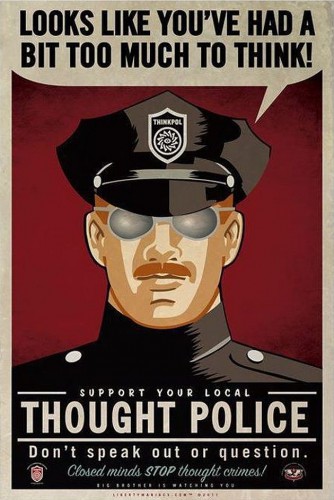
There has been a coordinated smear campaign against Julian by our Thought Police, one that is amplified by the very media organizations that published WikiLeaks material. The campaign was detailed in a leaked Pentagon document prepared by the Cyber Counterintelligence Assessments Branch and dated March 8, 2008. The document called for eradicating the “feeling of trust” that is WikiLeaks’ “center of gravity” and destroying Julian’s reputation.

This character assassination was championed by the Democratic Party establishment after WikiLeaks published 70,000 hacked emails copied from the accounts of John Podesta, Hillary Clinton’s campaign chairman. The Podesta emails exposed the donation of millions of dollars from Saudi Arabia and Qatar, two of the major funders of Islamic State, to the Clinton Foundation. It exposed the $657,000 that Goldman Sachs paid to Hillary Clinton to give talks, a sum so large it can only be considered a bribe. It exposed Clinton’s repeated mendacity. She was caught in the emails, for example, telling the financial elites that she wanted “open trade and open borders” and believed Wall Street executives were best positioned to manage the economy, a statement that contradicted her campaign statements. It exposed the Clinton campaign’s efforts to influence the Republican primaries to ensure that Trump was the Republican nominee. It exposed Clinton’s advance knowledge of questions in a primary debate. It exposed Clinton as the principal architect of the war in Libya, a war she believed would burnish her credentials as a presidential candidate. Journalists can argue that this information, like the war logs provided to WikiLeaks by Chelsea Manning, should have remained hidden, that the public did not have a right to know, but they can’t then call themselves journalists.

WikiLeaks has done more to expose the abuses of power and crimes of the American Empire than any other news organization. In addition to the war logs and the Podesta emails, it made public the hacking tools used by the CIA and the National Security Agency and their interference in foreign elections, including in the French elections. It disclosed the internal conspiracy against British Labour Party leader Jeremy Corbyn by Labour members of Parliament. It intervened to save Snowden from extradition to the United States by helping him flee from Hong Kong to Moscow after he made public the wholesale surveillance of the American public by our intelligence agencies. The Snowden leaks also revealed that Julian was on a U.S. “manhunt target list.”

We must build popular movements to force the British government to halt the extradition and judicial lynching of Julian. We must build popular movements to force the Australian government to intervene on behalf of Julian. We must build popular movements to reclaim democracy and the rule of law. If Julian is extradited and tried, it will create a legal precedent that will terminate the ability of the press, which Donald Trump has attacked as “the enemy of the people,” to hold power accountable. The crimes of war and finance, the persecution of dissidents, minorities and immigrants, the pillaging of the ecosystem and the ruthless impoverishment of working men and women to swell the profits of corporations and consolidate the global oligarchs’ total grip on power will no longer be part of public debate. First Julian. Then us.


Freedom Rider: The “Resistance” Is Silent on Julian Assange

By Margaret Kimberly

Source: Black Agenda Report

Liberals are just as much true believers in imperialism as the right wing they claim to oppose.

“Attacking the person who revealed war crimes is compliance in the service of the state.”

Ever since Donald Trump was elected president we have heard a lot about people who call themselves the “resistance.” That word has very significant meaning and should not be used frivolously. The enslaved Haitian people resisted the French 200 years ago. Harriet Tubman resisted and so did Tecumseh. Brave people all over the world have resisted colonial invasion, occupation, and racist violence.

But resistance for the anti-Trump group doesn’t amount to very much. They are united in dislike of Donald Trump, but only some of the time. They call him a fascist, but they mute themselves when his fascism supports the bipartisan imperialist consensus.

The so-called resistance have been conspicuously silent ever since Julian Assange was arrested after Ecuador withdrew his asylum from its London embassy. Under the guise of defending the press, this same group became hysterical when Trump had a stupid argument with a CNN reporter.They are enraged when he refers to the media as “enemies of the people.” But when publisher and journalist Julian Assange was snatched up by the U.S. and its vassal states they either said nothing or condemned a man whose actions are the very embodiment of resistance.

“This same group became hysterical when Trump had a stupid argument with a CNN reporter.”

Julian Assange now sits in a London prison awaiting extradition hearings. The United States government convened a grand jury in 2017 which handed down a secret indictment against him. He is charged with conspiracy to commit computer intrusionin relation to Chelsea Manning’s 2010 revelation of United States war crimes in Iraq. The Collateral Murder video shows army soldiers killing civilians, returning for a “double tap” killing of first responders, and laughing about their massacre. Anyone who revealed these horrors is a hero and should be supported without any ifs, ands or buts.

The United Kingdom played its usual role of partner in crime for the U.S. Fellow puppet state Australia refused to protect its citizen. Ecuador made off with a cool $4 billion in IMF loans. There is so much corruption to oppose but one wouldn’t know that with all the cheering on behalf of the surveillance state.

“Anyone who revealed these horrors is a hero.”

This resistance is little more than a collective hissy fit from dead ender Democrats who insist on following a party that can’t even reliably stay in office.  They have spent the last three years railing against Trump but bite their tongues when he commits an act that reeks of fascist ideology.

The kindest thing that can be said is that they have been hypnotized by a combination of Democratic Party and corporate media lies. It is very difficult to determine the truth in a culture saturated with all the deformities of an imperial state in panic mode. One has to act as a detective and know which web sites to read or whom to follow on social media in order to learn anything outside of the confines of state propaganda. Ever since election night in November 2016 the public have been subjected to a relentless campaign meant to deflect righteous anger away from the Democrats while furthering imperialist goals at the same time.

Julian Assange has become the poster child for the big lie. His leaks of Democratic National Committee emails are blamed for Hillary Clinton’s defeat. But there was no computer hack of the DNC at all. Assange received leaked materials from an insider and used Wikileaks to publish it.

“His leaks of Democratic National Committee emails are blamed for Hillary Clinton’s defeat.”

But that is only a partial explanation. The reality is far worse. Liberals are just as much true believers in imperialism as the right wing they claim to oppose.They are nothing if not consistent. When the Trump administration announced the coup attempt against the Venezuelan government the resistance didn’t resist at all.

Instead they repeated talking points from the New York Timesand National Public Radio which labeled the elected Venezuelan president a brutal dictator. They didn’t question the United States claim of a right to undo the will of people in another country. Some gave wishy washy criticism of military intervention but none of them questioned an intervention which is fascist by any definition.

“Liberals are just as much true believers in imperialism as the right wing they claim to oppose.”

These people will never defend Julian Assange. According to their world view he doesn’t deserve to be defended. He revealed government secrets, which runs counter to their support of the imperialist state, and they think he deprived them of a second Clinton presidency.

Now we know who is for real and who is a phony. Chelsea Manning sits in jail for a second time because she refused to testify before the grand jury which indicted Assange. There are people all over the world occupying Venezuelan embassies and consulates in order to protect them from the would be usurpers. That is resistance. Attacking the person who revealed war crimes is compliance in the service of the state. Perhaps this group needs a new name. They should be honest and call themselves the conformists. That would be truth in advertising.


Margaret Kimberley’s Freedom Rider column appears weekly in BAR, and is widely reprinted elsewhere. She maintains a frequently updated blog as well at http://freedomrider.blogspot.com . Ms. Kimberley lives in New York City, and can be reached via e-Mail at Margaret.Kimberley(at)BlackAgendaReport.com.     

A Land Uncharted: the Persecution of Julian Assange

Drawing by Nathaniel St. Clair

By Kenn Orphan

Source: CounterPunch

“The freedom of the press is not safe. It’s over. And I think our republic is in its last days, because unauthorized disclosures of this kind are the lifeblood of a republic.”

– Daniel Ellsberg

The persecution and arrest of Julian Assange is the first and most definitive step toward full blown global fascism. The symbolism of a gravely ill journalist being manhandled by uniformed henchmen is the exact imagery it needed to send a chilling message to whistleblowers and the press. The assault and eventual dismantling of what remains of a free press has always been that first step, and it is what lies on the horizon barring mass dissent. For decades the mainstream media has acquiesced to the demands of the corporate world of high finance that now owns them outright and the military and surveillance state that informs their narrative. To be sure, many of them must be trembling at the events that unfolded in London.

That so many prominent American liberals are cheering this on is hardly surprising. History is replete with examples of how the privileged bourgeoisie are the first to capitulate to fascism. It happened in the 1930’s in Germany, Spain and Italy. It happened in the 1970’s in Argentina and Chile. It is happening now across the supposedly “democratic” western world. The animus they possess for Assange is not over his personal ethics, politics or affiliations, which are indeed open for criticism and debate. Like any human being, he is flawed. It is rooted in sore feelings over Wikileaks exposure of the machinations of the corrupt Democratic Party and their Wall Street favoured war hawk, Hillary Clinton. None of what Wikileaks revealed was untrue, but they blame the failure of their deeply flawed candidate on it nonetheless. They care little about the war crimes the platform helped expose through the courage of Chelsea Manning or the threat his persecution represents to press freedom itself.

That the fascist despot Trump has disavowed Wikileaks is hardly surprising either. After all, he may have used the leaks to his benefit, but the man who has relentlessly demonized the press will undoubtedly use this moment to his benefit again. Wikileaks as an organization isn’t perfect and, like any other media outlet, it is not beyond criticism. But nearly every major news outlet has used and published its material, without appreciation or gratitude, because it provided an unprecedented glimpse into the nefarious activities and guiding principles of the ruling elite. The veil had been finally lifted. But with the arrest of Julian Assange this makes all of those news outlets vulnerable to state or corporate repression and censure.

With the Trump administration chomping at the bit to launch a war against Iran and Venezuela, this must come as welcome news to them. After all, it was Wikileaks that exposed the war crimes of the Bush administration in Iraq, not the corporate media. So they can be assured little reporting, aside from a few courageous citizen journalists or those embedded with the troops who parrot Pentagon talking points, will be done to expose the Empire’s war crimes now.

Indeed, Trump has been given a green light with this one event to continue and expand the American Empire, moribund as it is, without reproach. And like a bloated corpse, it will undoubtedly infect and defile everything it touches. More brutal violations of the global south, more coups against democratically elected governments, and bolder acts of authoritarian cruelty at home. He has made no pretense of this. His minions, Pompeo and Bolton, are working tirelessly constructing the next war. And in the past several weeks he has purged his administration of monsters he deemed “too weak” when it comes to crackdowns against immigrants and asylum seekers. A classic tactic of all tyrants. He has anointed the rabid white supremacist, Stephen Miller, in this 21st century pogrom and has also toyed with the idea of making the military in charge of internment camps for migrants. Only a fool would not find such a thing chilling to the bone.

Indeed fascist leaders around the world, along with the military/surveillance establishment and their neoliberal enablers, are celebrating the silencing of Assange. After all, Wikileaks has represented a major thorn in their sides for a decade. From Netanyahu to Duterte to Bolsonaro to Modi and even Putin, all will be emboldened to expand their own attacks on press freedom. All of them will feel empowered to be even more unrestrained in their brutality.

We are on the eve of a sweeping, global, fascist tyranny. Thanks to the continued proliferation of nuclear arms, endless corporate and military assaults on the life sustaining biosphere, catastrophic climate change and the systematic dismantling of democracy, it is a land uncharted. Journalists, especially those who are independent of the corporate stranglehold, are being routinely and relentlessly persecuted and even murdered around the world. They are a bulwark against fascism we dare not lose. But the arrest of Assange is representative of a free press now under constant threat of annihilation. And it will without a doubt grow even more difficult for them to navigate through the mendacity of a ruthless ruling order that has become utterly unrestrained.

Kenn Orphan is an artist, sociologist, radical nature lover and weary, but committed activist. He can be reached at kennorphan.com.