The Limited Mind: Why Fear is Driving Humanity to Extinction

By Robert J. Burrowes

I have previously written many articles describing one or more aspects of the dysfunctional nature of the typical human mind, together with an explanation of how this came about and what we can do about it. See, for example, many of the articles republished in ‘Key Articles’ and the source documents Why Violence?’ and Fearless Psychology and Fearful Psychology: Principles and Practice.

I have also explained that it is this dysfunctional psychological foundation that generated the behaviors, as well as the political, economic, legal and social institutions (such as capitalism), that are driving the multifaceted and existential crisis in which humanity now finds itself.

Moreover, on that basis, my own focus has significantly evolved from the research and nonviolent activism that occupied me for several decades to now include an ongoing effort to have this psychological dysfunctionality addressed as a central feature of our efforts to understand and transform dysfunctional political, economic, legal and social institutions as well as to understand and end war (including the threat of nuclear war), the environmental crisis (including the climate catastrophe) and all other ongoing conflicts that bedevil humanity.

You may believe that psychology is unimportant to your understanding of conflict or that it is the realm of specialists but, in fact, it is crucial to any deeper and complete understanding of the origin and unfolding of our crisis and it is far from complicated simply because any psychological dysfunctionality can be explained in straightforward language which is readily understood by most people. For a sample, try ‘The Disintegrated Mind: The Greatest Threat to Human Survival on Earth’.

But because only the rarest psychologist and psychiatrist understands human psychology – as I have explained in ‘Defeating the Violence of Psychiatry’ – most of the literature on psychology and psychiatry is virtually incomprehensible, not to mention inaccurate. This lack of understanding has four immediate and disastrous outcomes.

First, it leads to groups of psychological symptoms being linked together and then given an arbitrary label (so that the fields of psychology/psychiatry can sound as if they know what they are talking about while excluding those who do not comprehend their jargon).

Second, it provides cover for the pharmaceutical industry to profit massively from the manufacture and sale of drugs that theoretically suppress key symptoms of, rather than cure, the psychological dysfunction that has been ‘diagnosed’.

Third, it precludes accurate diagnosis and treatment of any dysfunction: obviously, if a problem is not understood it cannot be responded to powerfully so that the issue is resolved. (Of course, it is more profitable for practitioners and the pharmaceutical industry if any dysfunction is not resolved but simply requires ongoing – that is, endless – ‘therapy’/drugs.)

Fourth and most fundamentally of all, it limits the domain of what is considered psychological dysfunctionality to those with ‘identifiable’ mental illnesses. But psychological dysfunctionality goes well beyond those considered to have a mental illness and is simply an outcome of the fact that mental health, like physical health, has many dimensions that require appropriate attention for the human organism to function optimally.

So, beyond the many examples I have offered previously in the articles I cited above (and others not cited but also available on the ‘Feelings First’ website), I would now like to describe further common examples of psychological dysfunctionality that are impeding both activists and those they are trying to mobilize in the effort to save Earth’s biosphere and avert human extinction, particularly given the timeframe in which this must now happen. See ‘Human Extinction by 2026? A Last Ditch Strategy to Fight for Human Survival’.

As a result of the ‘socialization’ (more accurately labeled ‘terrorization’) to which all children are subjected throughout their childhood and adolescence (which involves inflicting unending ‘visible’, ‘invisible’ and ‘utterly invisible’ violence on them during these periods) – see Why Violence?’ – the typical young human being obediently (or, often enough, unconsciously) acquires the set of attitudes, beliefs and values (as well as the consequent behaviors) that are approved by the significant adults (and predominant institutions) in their life. These attitudes, beliefs and values, however, are often so deeply entrenched by the (unconscious) fear that holds them in place that they are never subjected to serious scrutiny by the individual: whether functional or otherwise, they are accepted without question and, over time, acquire the status of ‘incontrovertible fact’ (as the individual perceives them).

The most obvious (and highly negative) consequence of being terrorized into accepting the attitudes, beliefs and values of the significant adults (and predominant institutions) around them is that the capacities to analyze a problem or conflict (often including its roots in the nature of their society), to seek out relevant (and perhaps complex) evidence to understand the issues arising from it, to plan a strategy so that underlying drivers of the problem or conflict are addressed in depth and to then behave strategically (often in concert with others) to achieve this outcome are simply never developed beyond the most superficial levels (sufficient, say, for a socially approved career, whether trade or professional).

As a result, the typical human being is simply going through the routine of ‘growing up’ (which also critically involves being further terrorized into becoming a submissive citizen and worker/soldier at school for a decade or more: see ‘Do We Want School or Education?’), choosing post-secondary education and/or an approved job doing what someone else tells you, and then doing that job (or an equivalent) for decades (usually having a partner and children in the process and perhaps some hobby as well).

Fundamentally, humans are terrorized into taking on the ‘socially-constructed delusional identity’ that their society imposes on them and then calling it ‘me’. Their personal life journey is now so utterly obliterated from their awareness that the idea of seeking out their own unique destiny never even occurs to them. Of course, some people (in industrialized societies at least) are compensated for their sacrifice: wages, entertainment, travel and other trinkets. But, for most, these trinkets are given in sparing quantities and for many others around the world (in deliberately ‘underdeveloped’ countries), not at all.

Terrorized into believing that this is all that life has to offer, only the rarest individual aspires to more. Endless consumption of goods and services (no matter the quality, beauty or functionality) – see ‘Love Denied: The Psychology of Materialism, Violence and War’ – at the expense of the Earth, becomes the reason for living. Because life itself no longer has meaning.

So here we are, a human population that is so devoid of self and planetary awareness that we are on the brink of precipitating our own extinction. Do you really believe that this is where we would be if we were all psychologically functional? Manipulated and controlled by an unaccountable global elite that is utterly insane – see ‘The Global Elite is Insane Revisited’ – using its many agents, including governments, to easily deceive us into consuming ever more in pursuit of capitalism’s ‘God’ – endless economic growth (that is, corporate profit, power and privilege) – the bulk of the human population submissively unaware (except of the latest scandal or sports result) and most activists (who purport to be trying to do something about the perilous state of the world) incapable of thinking, planning and acting strategically to struggle for outcomes that are so desperately needed. See, for example, ‘Why Activists Fail’.

So what can we do?

Well, given that the enormous psychological dysfunctionality of most humans is the primary driver of our accelerating rush to extinction – again, see ‘Human Extinction by 2026? A Last Ditch Strategy to Fight for Human Survival’ – I encourage you to seriously consider incorporating strategies to address this dysfunctionality into any effort you make to improve our world.

For most people, this will include starting with yourself. See ‘Putting Feelings First’.

For virtually all adults, it will include reviewing your relationship with children and, ideally, making ‘My Promise to Children’. Critically, this will include learning the skill of nisteling. See ‘Nisteling: The Art of Deep Listening’.

For those who feel psychologically capable, consider campaigning strategically to achieve the outcomes we need. See Nonviolent Campaign Strategy or Nonviolent Defense/Liberation Strategy. The global elite is deeply entrenched – fighting its wars, exploiting people, destroying the biosphere, invading/occupying resource-rich countries – and not about to give way without a concerted effort by many of us campaigning strategically on several key fronts.

If you recognize the pervasiveness of the fear-driven violence in our world, consider joining the global network of people resisting it by signing the online pledge of The Peoples Charter to Create a Nonviolent World.

But if you do nothing else while understanding the simple point that Earth’s biosphere cannot sustain a human population of this magnitude of whom more than half endlessly over-consume, then consider accelerated participation in the strategy outlined in The Flame Tree Project to Save Life on Earth.

Or, if this feels too complicated, consider committing to:

The Earth Pledge

Out of love for the Earth and all of its creatures, and my respect for their needs, from this day onwards I pledge that:

  1. I will listen deeply to children (see explanation above)
  2. I will not travel by plane
  3. I will not travel by car
  4. I will not eat meat and fish
  5. I will only eat organically/biodynamically grown food
  6. I will minimize the amount of fresh water I use, including by minimizing my ownership and use of electronic devices
  7. I will not buy rainforest timber
  8. I will not buy or use single-use plastic, such as bags, bottles, containers, cups and straws
  9. I will not use banks, superannuation (pension) funds or insurance companies that provide any service to corporations involved in fossil fuels, nuclear power and/or weapons
  10. I will not accept employment from, or invest in, any organization that supports or participates in the exploitation of fellow human beings or profits from killing and/or destruction of the biosphere
  11. I will not get news from the corporate media (mainstream newspapers, television, radio, Google, Facebook, Twitter…)
  12. I will make the effort to learn a skill, such as food gardening or sewing, that makes me more self-reliant
  13. I will gently encourage my family and friends to consider signing this pledge.


Conclusion

There is a great deal wrong with our world, which continues to get worse every day. And, as should be obvious from my argument above, if we as a species do not start to remove the (largely unconscious) fear that limits our minds and governs our behavior, we will continue contributing to this predicament rather than resolving it.

I am well aware that this point is not where the typical individual wants to start and that is assuming the point is even understood. After all, because most fear is unconscious, it is easy for people to fail to identify their own dysfunctional behavior (or to rationalize it by believing in the ‘importance’ of what they do). So while you may like to believe that we do not have to ‘start’ with this point, collectively speaking, we cannot ignore it either, if human survival is our aim.

The key issue is that for our strategy to mobilize people in this great struggle for survival to be effective, we must also be mobilizing parents, teachers, religious leaders and other adults to reconsider and profoundly revise their relationship with children. This is because every child who is not dysfunctionalized becomes a powerful agent for change. If we do not do this, we will continue to undermine the overall struggle, even if we precipitate some interim victories along the way.

My own preoccupation is ending violence, averting human extinction and building anew and sustainably our relationships with the Earth and each other. What about you?


Biodata: Robert J. Burrowes has a lifetime commitment to understanding and ending human violence. He has done extensive research since 1966 in an effort to understand why human beings are violent and has been a nonviolent activist since 1981. He is the author of Why Violence? His email address is flametree@riseup.net and his website is here.

Understanding NATO, Ending War

By Robert J. Burrowes

On 4 April 2019, the North Atlantic Treaty Organization, better known as NATO, marked the 70th anniversary of its existence with a conference attended by the foreign ministers of member nations in Washington DC. This will be complemented by a meeting of the heads of state of member nations in London next December.

Coinciding with the anniversary event on 4 April, peace activists and concerned scholars in several countries conducted a variety of events to draw attention to, and further document, the many war crimes and other atrocities committed by NATO (sometimes by deploying its associate and crony terrorist armies – ISIS, Al Qaeda, Al Nusra – recruited and trained by the CIA and funded by Saudi Arabia, other Gulf countries and the US directly or through one or other of its many agencies: see ‘NATO – No Need – NATO-EXIT: The Florence Declaration’), the threat that NATO poses to global peace and security as an appendage of the US military, and to consider ways that NATO might be terminated.

These protests and related activities included several outlined in ‘No To NATO: Time To End Aggressive Militarism’ which also explains how NATO ‘provides a veneer of legality’ when ‘the US is unable to get the United Nations Security Council to approve military action’ and ‘Congress will not grant authority for US military action’ and despite the clearcut fact that NATO has no ‘international legal authority to go to war’, the grounds for which are clearly defined in the Charter of the United Nations and are limited to just two: authorization by the UN Security Council and a response in self-defense to a military attack.

The most significant gathering of concerned scholars was undoubtedly the ‘Exit NATO!’ conference in Florence, Italy, which culminated in the Florence Declaration calling for an end to NATO. See ‘The Florence Declaration: An International Front Calling for NATO-Exit’.

If NATO’s record of military destruction is so comprehensive – in the last 20 years virtually destroying Yugoslavia (balkanized into various successor states), Iraq and Libya, while inflicting enormous damage on many others, particularly Afghanistan and Syria – how did it come into existence and why does it exist now?

The Origin and Functions of NATO

Different authors offer a variety of reasons for the establishment of NATO. For example, Yves Engler argues that two of the factors driving the creation of NATO were ‘to blunt the European Left’ and ‘a desire to bolster colonial authority and bring the world under a US geopolitical umbrella’. See ‘On NATO’s 70th anniversary important to remember its anti-democratic roots’ and ‘Defense of European empires was original NATO goal’.

But few would disagree with Professor Jan Oberg’s brief statement on the origin of NATO: ‘Its raison d’etre… had always and unambiguously been the very existence of the Soviet Union… and its socialist/communist ideology.’ See ‘NATO at 70: An unlawful organisation with serious psychological problems’.

In other words, NATO was established as one response to the deep fear the United States government harbored in relation to the Soviet Union which, despite western propaganda to the contrary and at staggering cost to its population and industrial infrastructure, had led the defeat of Nazi Germany in World War II.

As Professor Michel Chossudovsky elaborates this point: The NATO ‘alliance’ of 29 member states (with Israel also a de facto member), most with US military bases, US military (and sometimes nuclear) weapons and significant or substantial deployments of US troops on their territory, was designed to sustain ‘the de facto “military occupation” of Western Europe’ and to confront the Soviet Union as the US administration orchestrated the Cold War to justify its imperial agenda – global domination guaranteed by massive US military expansion – in service of elite interests (including the profit maximization of the military industrial complex, its fossil fuel and banking corporations, and its media and information technology giants).

While NATO has the appearance of a multinational military alliance, the US controls NATO command structures with the Pentagon dominating NATO decision-making. NATO’s Supreme Allied Commander Europe (SACEUR) and Supreme Allied Commander Atlantic (SACLANT) are Americans appointed by Washington with the NATO Secretary General Jens Stoltenberg performing merely bureaucratic functions.

In light of the above, Chossudovsky observes: ‘Under the terms of the military alliance, NATO member states are harnessed into endorsing Washington’s imperial design of World conquest under the doctrine of collective security.’ Even worse, he argues, given the lies and fabrications that permeate US-NATO military doctrine, key decision-makers believe their own propaganda. ‘Immediately after the Cold War, a new nuclear doctrine was formulated, focused on the preemptive use of nuclear weapons, meaning a nuclear first strike as a means of self-defense.’ More recently: ‘Not only do they believe that tactical nuclear weapons are peace-making bombs, they are now putting forth the concept of a “Winnable Third World War”. Taking out China and Russia is on the drawing board of the Pentagon.’ See ‘NATO-Exit: Dismantle NATO, Close Down 800 US Military Bases, Prosecute the War Criminals’ and ‘NATO Spending Pushes Europe from Welfare to Warfare’.

So, given the ongoing military threats – with an expanding range of horrific weapons (including, to nominate just two, ‘more usable’ low yield nuclear weapons and technologies on ‘weather warfare’ offered by the military/nuclear corporate war planners) that threaten previously unimagined outcomes – and interventions by a US-led NATO, with Venezuela and now Iran the latest countries to be directly threatened – see ‘“Dangerous game”: US, Europe and the “betrayal” of Iran’ – as well as a gathering consensus among peace activists and scholars of the importance of stopping NATO (particularly given the many opportunities, beginning with aborting its origin, that have been missed already as explained by Professor Peter Kuznick: see ‘“Obscene” Bipartisan Applause for NATO in Congress’) how do we actually stop NATO?

While several authors, including those with articles cited above, offer ideas on what should be done about ending NATO, Chossudovsky offers the most comprehensive list of ideas in this regard well aware that stopping NATO is intimately connected to the struggle to end war and globalization. Chossudovsky’s ideas range from organizational suggestions such as integrating anti-war protest with the campaign against the gamut of neoliberal economic ‘reforms’ and the development of a broad based grassroots network independent of NGOs funded by Wall Street, objectives such as dismantling the propaganda apparatus which sustains the legitimacy of war and neoliberalism, challenging the corporate media (including by using alternative media outlets on the Internet), providing encouragement (including information about the illegality of their orders) for military personnel to refuse to fight (perhaps like the GI coffeehouse movement during the US war on Vietnam: see ‘The story of the GI coffeehouses’), working to close down weapons assembly plants and many other suggestions. See Towards a World War III Scenario: The Dangers of Nuclear War and ‘NATO-Exit: Dismantle NATO, Close Down 800 US Military Bases, Prosecute the War Criminals’.

Given my own deep interest in this subject of US/NATO wars and in developing and implementing a strategy that ends their war-making, let me elaborate Chossudovsky’s explanation of NATO’s function in the world today by introducing a book by Professor Peter Phillips.

In his book Giants: The Global Power Elite, Phillips observes that the power elite continually worries about rebellion by the ‘unruly exploited masses’ against their structure of concentrated wealth. This is why the US military empire has long played the role of defender of global capitalism. As a result, the United States has more than 800 military bases (with some scholars suggesting 1,000) in 70 countries and territories. In comparison, the United Kingdom, France, and Russia have about 30 foreign bases. In addition, US military forces are now deployed in 70 percent of the world’s nations with US Special Operations Command (SOCOM) having troops in 147 countries, an increase of 80 percent since 2010. These forces conduct counterterrorism strikes regularly, including drone assassinations and kill/capture raids.

‘The US military empire stands on hundreds of years of colonial exploitation and continues to support repressive, exploitative governments that cooperate with global capital’s imperial agenda. Governments that accept external capital investment, whereby a small segment of a country’s elite benefits, do so knowing that capital inevitably requires a return on investment that entails using up resources and people for economic gain. The whole system continues wealth concentration for elites and expanded wretched inequality for the masses….

‘Understanding permanent war as an economic relief valve for surplus capital is a vital part of comprehending capitalism in the world today. War provides investment opportunity for the Giants and TCC elites and a guaranteed return on capital. War also serves a repressive function of keeping the suffering masses of humanity afraid and compliant.’

As Phillips elaborates: This is why defense of global capital is the prime reason that NATO countries now account for 85 percent of the world’s military spending; the United States spends more on the military than the rest of the world combined.

In essence, ‘the Global Power Elite uses NATO and the US military empire for its worldwide security. This is part of an expanding strategy of US military domination around the world, whereby the US/ NATO military empire, advised by the power elite’s Atlantic Council, operates in service to the Transnational Corporate Class for the protection of international capital everywhere in the world’.

In short, ending NATO requires recognition of its fundamental role in preserving the US empire (at the expense of national sovereignty) and maintaining geopolitical control to defend the global elite’s capital interests – reflected in the capitalist agenda to endlessly expand economic growth – and particularly the profits the elite makes by inciting, supplying and justifying the massively profitable wars that the US/NATO conduct on its behalf.

So if you thought that wars were fought for reasons other than profit (like defense, a ‘just cause’ or ‘humanitarian’ motives) you have missed the essential function of US/NATO wars. And while these wars might be promoted by the corporate media as conflicts over geostrategic considerations (like ‘keeping open the Straits of Hormuz’), access to resources (‘war for oil’) or even markets (so that we can have US junk-food chains in every country on Earth), these explanations are all merely more palatable versions of the word ‘profit’ and are designed to obscure the truth.

And this raises another question worth pondering. Given that wars are the highly organized industrial-scale killing of fellow human beings (for profit) as well as the primary means of expanding the number of fellow human beings who are drawn into the global capitalist economy to be exploited (for profit) and the primary method used for destroying Earth’s climate and environment (for profit), you might wander if those who conduct wars are sane. Well, as even posing the question suggests, the global elite – which drives wars, the highly exploitative capitalist economy and destruction of the biosphere – is quite insane. And there is a brief explanation of this insanity and how it is caused in the article ‘The Global Elite is Insane Revisited’.

Stopping NATO

So if war is precipitated and now maintained perpetually by an insane elite that controls and utilizes the US and NATO military forces to secure profits by killing and exploiting fellow human beings while destroying the climate and environment, how can we stop it? Clearly, not without a sophisticated strategy that addresses each dimension of the conflict.

Hence, my own suggestion is that we do three things simultaneously:

  1. Invite participation in a comprehensive strategy to end war, of which NATO is a symptom
  2. Invite participation in one or another program to substantially reduce consumption to systematically reduce the vital driver of ‘wars for resources’ (which will also reduce the gross exploitation of fellow human beings and humanity’s adverse impact on the biosphere), and
  3. Invite participation in programs to increase human emotional functionality so that an increasing proportion of the human population is empowered to actively engage in struggles for peace, justice and sustainability and to perceive the propaganda of elites and their agents, including NATO functionaries and corporate media outlets, without being deceived by it.

There is a comprehensive strategy to end war explained on this website – Nonviolent Campaign Strategy – which includes identification of the two strategic aims and a basic list of 37 strategic goals to end war. See ‘Strategic Aims’.

There is a strategy for people to systematically reduce their consumption and increase their self-reliance mapped out in ‘The Flame Tree Project to Save Life on Earth’. But if you want a simpler 12-point list which still has strategic impact, see ‘The Earth Pledge’ included in ‘Why Activists Fail’. If you want to better understand why people over-consume, you can find out here: ‘Love Denied: The Psychology of Materialism, Violence and War’.

There is a process for improving your own emotional functionality (which will develop your conscience, courage and capacity to think strategically) described in the article ‘Putting Feelings First’. If you would like to assist children to grow up without emotional dysfunctionalities, consider making ‘My Promise to Children’. If you want to read the foundation behind these two suggestions, see Why Violence? and Fearless Psychology and Fearful Psychology: Principles and Practice.

Complementary to these suggestions, you might like to sign the online pledge of The Peoples Charter to Create a Nonviolent World which links people working to end violence in all contexts.

There is one question that remains unaddressed by the suggestions above: How do we mobilize sufficient people (both anti-war activists and others) and organizations (including anti-war groups and others) to participate in the effort to end elite-sponsored war, including its organizational structures such as NATO?

Given the notorious difficulty of mobilizing activists to act strategically in any context (a much more complex version of the basic problem of mobilizing people), my primary suggestion is that individuals within the anti-war movement invite other individuals and activist groups to choose and campaign on one or more of the strategic goals necessary to end war listed in ‘Strategic Aims’. While some activist groups are already working to achieve one or more of these strategic goals, we clearly need to engage more groups to work on the many other goals so that each of these goals is being addressed. War will not be ended otherwise.

One thing that a section of the climate movement does well is to research and report on those banks, superannuation funds and insurance companies that provide financial services, loans, investment capital and insurance cover to fossil fuel corporations and to then invite concerned people to sign standard letters sent to these organizations requesting them to cease their support of fossil fuels. The anti-war movement could usefully emulate this tactic (on a far wider scale than has existed previously) in relation to weapons corporations and to invite individuals and organizations everywhere to boycott banks, superannuation funds and insurance companies with any involvement in the weapons industry.

But this is just one simple tactic (involving no risk and little effort) on a small but important range of ‘targets’ in the anti-war struggle. Unfortunately, there are plenty more targets that need our attention and that will require more commitment than signing a letter given that, for example, essential funding for the weapons industry is supplied by government procurement programs using your taxes.

Similarly, we need individuals and groups working to mobilize people to substantially reduce their consumption, and individuals and groups working to mobilize people to prioritize their emotional well-being (the foundation of their courage to act conscientiously and strategically in resisting war, exploitation and destruction of the biosphere generally). If we do not undertake these complementary but essential programs, our efforts to end war will be endlessly undermined by our own fear and over-consumption.

Because, in the final analysis, it is our fearfully surrendered tax dollars and our dollars spent consuming the resources seized in wars that will ensure that elite-driven wars for profit by the US and NATO will be financially sustained, whatever words we utter and actions we take.

So our strategy must address this fear and over-consumption too if it is to have the sophistication and comprehensiveness necessary to shut down NATO and end war.


Biodata: Robert J. Burrowes has a lifetime commitment to understanding and ending human violence. He has done extensive research since 1966 in an effort to understand why human beings are violent and has been a nonviolent activist since 1981. He is the author of Why Violence? His email address is flametree@riseup.net and his website is here.

Tackling the ‘Impossible’: Ending Violence

By Robert J. Burrowes

Whenever, in ordinary circumstances, the subject of violence comes up, most people throw up their hands in horror and comment along the lines that it is ‘in our genes’, ‘nothing can be done about it’ or other words that reflect the powerlessness that most people feel around violence.

It is true that violence is virtually ubiquitous, has a near-infinite variety of manifestations and, at its most grotesque (as nuclear war or run-away climate catastrophe), even threatens human extinction in the near-term.

Nevertheless, anyone who pays attention to the subject of violence in any detail soon discovers that plenty of people are interested in tackling this problem, even if it is ‘impossible’. Moreover, of course, at least some people recognize that while we must tackle each manifestation of violence, understanding the cause of violence is imperative if we are to successfully tackle its many manifestations at their source. To do all of this effectively, however, is a team effort. And hopefully, one day, this team will include all of us.

In the meantime, let me start by telling you a little about some of the people who are already working to end violence by tackling one or more of its many manifestations. These individuals are part of a worldwide network set up to focus on ending violence – ‘The People’s Charter to Create a Nonviolent World’ – and they have signed a pledge to do so.

Concerned about US government threats to Iran and Venezuela, several Charter signatories were part of one or both recent peace delegations to Iran and Venezuela respectively. These delegations were designed to open more lines of communication and to demonstrate solidarity with those who do not submit to US hegemony.

The 28-member US peace delegation to Iran from 25 February to 6 March 2019 included long-term nonviolent activists Margaret Flowers, Kevin Zeese and David Hartsough. Unfortunately for David, author of Waging Peace: Global Adventures of a Lifelong Activist and director of Peaceworkers, his trip didn’t go as planned. If you would like to read a compelling account of his time in Iran with some wonderful Iranians, while learning something about what it means to be on the wrong end of US sanctions, you will find it here: ‘An American Casualty of U.S. Economic Sanctions on Iran’. Glad you got the lifesaving medical treatment from our Iranian friends that you needed David, despite the sanctions! And it is a tragedy that Iran has recently suffered even more, as a result of the devastating floods that have hit the country, with the sanctions cruelly denying them vital emergency assistance. See ‘Stop the ongoing U.S. economic terrorism against Iran and help its people!’

In relation to Venezuela, a 13-member peace and solidarity delegation from North America landed in Caracas, Venezuela on the weekend of 9-10 March 2019. The delegation included leaders of antiwar groups from the US and Canada and, once again, Kevin Zeese and Margaret Flowers of ‘Popular Resistance’ and ‘Clearing the Fog’ podcasts. You can read an account of this delegation’s findings in Kevin and Margaret’s highly informative report ‘Venezuela: US Imperialism Is Based On Lies And Threats’.

Another initiative to support Venezuelans was outlined in the article A Nonviolent Strategy to Defeat a US Military Invasion of Venezuela.

Traveling widely to witness and demonstrate solidarity with those on the receiving end of US military violence, another long-term nonviolent activist, Kathy Kelly, recently wrote an article pointing out that ‘Every War Is a War against Children’ in which she evocatively documented examples of what this means for those children living in the war zones we call Yemen and Afghanistan. In an earlier article, Kathy questioned the morality of those corporations – such as Lockheed Martin, Boeing, General Dynamics and Raytheon – that profit from the killing their weapons inflict. See ‘Can We Divest from Weapons Dealers?’

Environmental journalist Robert Hunziker continues to fearlessly research and truthfully document the ongoing assaults that humans are inflicting on Earth’s biosphere. In his most recent article ‘The Blue Ocean Event and Collapsing Ecosystems’, Robert straightforwardly explains the content of a recent interview of Dr. Peter Wadhams, the world’s leading Arctic scientist. Robert notes that ‘Currently, the Arctic is heating up about 4 times faster than the rest of the planet… the temp difference between the Arctic and the tropics is dropping precipitously… thus, driving the jet streams less… creating meandering jet streams… in turn, producing extreme weather events throughout the Northern Hemisphere, especially in mid-latitudes where most of the world’s food is grown.’ Robert also notes that the study of ancient ice cores by a team from the British Antarctic Survey, University of Cambridge and University of Birmingham found ‘major reductions in sea ice in the Arctic’ which will crank up (via temperature amplification as a result of no Arctic sea ice) Greenland regional temperatures ‘by 16°C in less than a decade’ with horrific implications for life on Earth. Thank you, Robert, for reporting what the corporate media won’t touch and even many activists find too terrifying to seriously contemplate.

In Chile, Pía Figueroa continues her heavy involvement in efforts to network those committed to peace and nonviolence and to develop media channels that report the truth. Pía reports that ‘Pressenza International Press Agency’, which celebrated its tenth anniversary last November ‘in more than 40 places of the world’, continues to advance its contribution ‘with a journalism focused on peace and nonviolence, to a world in which all human beings have a place and their rights are fully respected, in a framework of disarmed and demilitarized societies, capable of re-establishing the ecological balance through governments of real and participatory democracy.’

Since attending the Media Forum organized in the city of Chongqing, China, by CCTV+ and CGTN, in October last year, Pía has been busy organizing the upcoming Latinamerican Humanist Forum in Santiago with the objective of ‘Building Convergences’, as its slogan points out. It will be held on 10-12 May with the participation of many grassroots and social organizations involved in more than twenty networks of nonviolent action and inspired by the European Humanist Forum that took place in Madrid, Spain, in May 2018.

Anwar A. Khan was born into ‘a liberal Muslim family in Bangladesh’. As a 16 year old college student, he participated in the ‘Bangladesh Liberation War of 1971, which resulted in horrendous loss of life, genocide against Bangladesh’s intelligentsia and systematic rapes.’ This experience taught him the nature of the US establishment as he was ‘on the battle field along with so many friends of mine and Indian soldiers to fight back the obnoxious nexus of the Pakistani military regime and the Whitehouse establishment’ to create Bangladesh. Khan Bhai went on to complete a post-graduate education, before embarking on a 43-year (so far) business career, involving many different levels of corporate engagement and which took him to many countries of the world, including Venezuela in 2010 where he met both Hugo Chavez and Nicolás Maduro.

He also writes regularly in his spare time and recently wrote an article highlighting the adverse impact of the lack of infrastructure under which many impoverished countries suffer, given the way in which the global economy functions to exploit them. In the article, he describes an inferno that started on the night of 20 February 2019 in a building at Chawkbazar, a 300-year-old Dhaka neighbourhood, ‘where chemicals for making deodorants and other household uses were illegally stored’. The fire ‘quickly spread to four nearby buildings where many people were trapped. Hundreds of firefighters rushed to the scene but traffic jams in the narrow streets held them up. It took almost 12 hours to bring the fire under control….’ The horrific inferno claimed about 100 lives and more were injured. For the full account, see ‘After Nimtali, now Chawkbazar inferno hell, a crisis of humanity’.

Commenting on the current project that she is organizing with friends, Lori Lightning outlines the rationale behind ‘Bear Bones Parenting’:

‘There’s no course or exam to pass to become a parent, and most try to figure this out once a parent, and usually in an exhausted overwhelmed state. Bedtimes, meals, chores, and healthy open communication all become a task without a trusted framework in place.

‘Based on 51 years of combined wisdom as educators, counselors, health practitioners, moms, step moms and foster moms, Bear Bones Parenting offers an intuitive formula to demystify the basics of parenting and a workbook with tools for reflection and wellness practices to take you actively through day to day living no matter where you are at in your life. You dedicate 15 minutes a day and in trade stop being overwhelmed. A “do it yourself” workbook filled with tools to turn life into what you envision for yourself and your family.

‘Our cast of puppets help to inspire playful reflection on our children’s temperaments and our own. Eventual creation of short videos will be easily accessible for busy parents and provide some examples of how things typically play out with temperaments and inspiration of the Bear way, which is curious, intuitive, firm and loving.

‘We hope that BBP can help reduce parental stress and frustration so there is time to connect in joy and curiosity with our children and foster their independence.’

For more information, you can contact Lori at this email address: <BearBonesParenting@gmail.com>

Professor Mazin Qumsiyeh is volunteer Director of The Palestine Institute for Biodiversity and Sustainability (PIBS) and the Palestine Museum of Natural History (PMNH) but he is also actively engaged in the Palestinian struggle for liberation from Israeli occupation. As he evocatively noted in a recent Easter reflection: ‘This is the tenth Easter I celebrate after returning to Palestine in 2008. When we native Christian Palestinians have a few moments to meditate and reflect in this season, we reflect that some 2.5 billion human beings believe in a message that originated with a Palestinian baby born in a manger here and was crucified for being the first revolutionary Palestinian to push for caring for the sick and the poor.

‘We reflect on the real message of Jesus, a message of love and coexistence. The harsh reality on the ground reminds us of our responsibility to shape a better future.

‘We are hopeful because we take a long view of history. Some 150,000 years ago, humans migrated from Africa using Palestine as the passage way to Western Asia and then the rest of the world. 12,000 years ago, this area became the center of development for agriculture (the Fertile Crescent). This was where we humans first domesticated animals like goats and donkeys and plants like wheat, barley, chickpeas, and lentils. This transformation allowed our ancestors time to evolve what we now call “civilization”. Hence, the first writings, the first music, and art, and the first thoughts of deities. From our Aramaic alphabet came the Latin, Arabic, Syriac, and Hebrew alphabets. Aramaic was the language of Jesus and much of our current Palestinian Arabic is still Aramaic words.’

Mazin continues to travel regularly, lecturing about initiatives of the museum but also about the political reality in Palestine. If you would like to volunteer to assist the museum’s projects, or to donate money, books, natural history items or anything else that would be useful, you are welcome to contact Mazin and his colleagues at <info@palestinenature.org>

Finally, we are deeply saddened to report the passing of Tom Shea, a long-time stalwart in the struggle for a better world and one of the original team of individuals who launched ‘The People’s Charter to Create a Nonviolent World’ on 11 November 2011. We include below the testament of his great friend and fellow nonviolent activist, Leonard Eiger:

‘For Tom Shea, Peace WAS the Way

‘My dear friend and fellow Ground Zero member Tom Shea passed away peacefully in the early morning hours of April 3rd surrounded by his family.

‘Earlier in his life Tom had been a Jesuit, a high school teacher, and had started an alternative high school and Jesuit Volunteer Corp: Midwest. He had also been involved in social justice issues on the national level with the Jesuits. Ground Zero member Bernie Meyer remembers Tom with great fondness, from being a student at St. Ignatius High School in Cleveland where Tom was teaching, to resisting together at Ground Zero many years later.

‘Tom was 47 when he left Cleveland for Traverse City, Michigan in 1977. There he met his partner Darylene, and they were inseparable from then on. Together, they participated in the Nuclear Freeze movement, and were part of the Michigan Peace Team. They traveled to New York for the second Conference on Disarmament in 1982. They protested both the first Gulf War and the war in Iraq. They also engaged in war tax resistance.

‘At Darylene’s suggestion, they attended a course in conflict mediation in the early ‘80s at a time when there was little written on the subject. That experience led them to a course taught by Quakers at Swarthmore College in 1986. In 1990 Tom and Darylene founded the five-county Conflict Resolution Service in Northern Michigan and trained the first group of volunteer mediators. Their mission was to promote peace and civility in the community through the use of mediator guided dialogue. In the early days of the program, volunteers met in church basements and around kitchen tables to train, role play and share experiences. They would travel to the homes of people needing mediation, focusing on resolving family and neighborhood conflicts.

‘Tom and Darylene moved to Snoqualmie, Washington in 2007 to spend more time with Darylene’s children. Tom got involved in community issues and continued his war tax resistance work. You could find him every April 15th, in front of the local post office, offering tax resistance information.

‘I was still leading a social justice ministry at the Snoqualmie United Methodist Church when one day Tom called the church office and asked who was doing social justice work in the area. We connected immediately due to common work and friends. Soon, Tom and I were making the pilgrimage together across the water to Ground Zero Center for Nonviolent Action, and the rest (as they say) is history.

‘I have spent countless hours with Tom and Darylene, discussing world affairs and working together on strategies and tactics for our work with Ground Zero. Tom and Darylene have been inseparable as both life partners and co-conspirators for peace. Tom once said that Darylene is like a Jesuit herself: “Jesuits are taken as very scholarly people and she’s very scholarly.”

‘In addition to working on media and communications for Ground Zero, and planning vigils and nonviolent direct actions at the Bangor Trident nuclear submarine base, Tom put himself on the line many times, often entering the roadway blocking traffic, both on the County and Federal sides, symbolically closing the base and risking arrest. Tom also created street theatre scripts that have been used during vigils at the submarine base to entertain and educate people.

‘Robert Burrowes, who cofounded ‘The People’s Charter to Create a Nonviolent World’, said that “Tom was one of the true legends in my life. A long-standing symbol of, and nonviolent fighter for, everything that could be in our world.” When all is said and done, Tom’s life can be summed up by A.J Muste: “There is no way to peace. Peace is the way.”

‘We will be scattering some of Tom’s ashes (per his wishes) at Ground Zero Center during our August Hiroshima-Nagasaki weekend of remembrance and action.

‘I invite you to honor Tom’s memory by supporting the work of the National War Tax Resistance Coordinating Committee. There are many ways we can engage in war tax resistance in the context of a broad range of nonviolent strategies for social change.’

While diminished by the passing of Tom, the Ground Zero Center for Nonviolent Action continues ‘to explore the meaning and practice of nonviolence from a perspective of deep spiritual reflection, providing a means for witnessing to and resisting all nuclear weapons, especially Trident. We seek to go to the root of violence and injustice in our world and experience the transforming power of love through nonviolent direct action.’ You can read about their ongoing efforts on their website, Ground Zero, which also features a ‘Current Action Alert: Stop the “Low-Yield” Trident Warhead!’

Each of the individuals mentioned above is part of the ongoing and steadily expanding effort to end the violence in our world. They refuse to accept that violence cannot be ended, and each has chosen to focus on working to end one or more manifestations of violence, according to their particular interests. If you would like to join these people, you are welcome to sign the online pledge of ‘The People’s Charter to Create a Nonviolent World’.

If your own interest is campaigning on a peace, climate, environment or social justice issue, consider doing it strategically. See Nonviolent Campaign Strategy.

If your focus is a defense or liberation struggle being undertaken by a national group, consider enhancing its strategic impact. See Nonviolent Defense/Liberation Strategy.

If your preference is addressing the climate and environmental catastrophes systematically, consider participating in ‘The Flame Tree Project to Save Life on Earth’.

If you would like to tackle violence at its source, consider revising your parenting in accordance with ‘My Promise to Children’. If you want the evidence to understand why this is so crucial, see ‘Why Violence?’ and ‘Fearless Psychology and Fearful Psychology: Principles and Practice’.

If you are aware enough to know that you are not dealing effectively with our deepening crisis, consider doing the personal healing necessary to do so. See ‘Putting Feelings First’.

It may be that ending human violence is impossible, as many believe. But there are a great number of people around the world who do not accept this and who are struggling, relentlessly, to end violence before it ends us. What about you?


Biodata: Robert J. Burrowes has a lifetime commitment to understanding and ending human violence. He has done extensive research since 1966 in an effort to understand why human beings are violent and has been a nonviolent activist since 1981. He is the author of ‘Why Violence?’ His email address is flametree@riseup.net and his website is here.


Why Activists Fail

By Robert J. Burrowes

Despite enormous ongoing effort over more than a thousand years, during and since the formation and shaping of the modern world, and as the number of issues being contested has steadily increased, activists of many types have made insufficient progress on key issues, particularly in relation to ending violence and war (and the threat of nuclear war), stopping the exploitation of many peoples and halting the endless assaults on Earth’s biosphere.

Of course, in order for those of us who identify as activists to have any prospect of success in these and other endeavors, we need to understand how the world works and to develop an interrelated set of nonviolent strategies that are being effectively implemented to address each of the key aspects of this crisis.

This is because there is a great deal wrong with how the human world functions and a staggering amount that needs to be done if we are to fix it and preserve the planetary biosphere in doing so, particularly given that the primary threats are now so serious that human extinction is likely to occur within a few years. See ‘Human Extinction by 2026? A Last Ditch Strategy to Fight for Human Survival’.

Of course, if human governance systems, ranging from international organizations like the United Nations and its various agencies to national, provincial and local governments functioned effectively, then we might expect these agencies, which theoretically function on our behalf, to have addressed these problems a long time ago. Or to do so now.

However, for reasons that are readily identifiable, these agencies have little power and routinely malfunction (from the viewpoints of ordinary people and the planetary biosphere).

So let me start by briefly explaining how the world works and then elaborating a few key points about strategy so that you can choose, if you wish (and, problematically, assuming there is still time), to play a more active and effective role, in one or more ways, in the struggle to make our world one of peace, justice and sustainability.

How the World Works: A Brief History

The formal human governance systems on Earth – that is, governments and intergovernmental organizations such as the United Nations – are controlled by the global elite which is invisible to, and hence not considered by, most people including activists. This, of course, is how the elite wants it and one can still readily find accounts that ask if the elite (by whatever name it is given) actually exists and even ascribe it a mystical quality. If the idea is not simply written off as a ‘conspiracy theory’.

Well the global elite exists and its membership can be readily identified. But let me start by briefly outlining how the global elite acquired its extraordinary control over world affairs.

Following the Neolithic revolution 12,000 years ago, agriculture allowed human settlement to supersede the hunter-gatherer economy. However, while the Neolithic revolution occurred spontaneously in several parts of the world, some of the Neolithic societies that emerged in Asia, Europe, Central America and South America resorted to increasing degrees of social control in order to achieve a variety of social and economic outcomes, including increased efficiency in food production.

Civilizations emerged just over 5,000 years ago and, utilizing this higher degree of social control, were characterized by towns or cities, efficient food production allowing a large minority of the community to be engaged in more specialized activities, a centralized bureaucracy and the practice of skilled warfare. See ‘A Critique of Human Society since the Neolithic Revolution’.

With the emergence of civilization, elites of a local nature (such as the Pharoahs of Egypt), elites with imperial reach (including Roman emperors), elites of a religious nature (such as Popes and officials of the Vatican), elites of an economic character (particularly the City of London Corporation) and elites of a ‘national’ type (especially the monarchies of Europe) progressively emerged, essentially to manage the administration associated with maintaining and expanding their realms (political, financial and/or religious).

Following the Peace of Westphalia in 1648, which formally established the nation-state system, national elites, increasingly of an economic nature as capitalism progressively developed and rapidly expanded, consolidated their hold over national societies and, as these elites internationalized their reach in the following centuries, by the second half of the C20th, a truly global elite had consolidated its control over the world.

Awareness of elites in earlier eras has been noted by some authors. For example, in his 1775 book An Inquiry into the Nature and Causes of the Wealth of Nations, Adam Smith noted that ‘All for ourselves, and nothing for other people, seems, in every age of the world, to have been the vile maxim of the masters of mankind’.

But the work of C. Wright Mills in his 1956 classic The Power Elite is the original scholarly effort of the post-World War II era to document the nature of this elite, how it functions and why it had total control over US national society. Of course, despite scholarship of this nature, which has been added to routinely ever since, most people still believe the elite-sponsored delusion that international organizations, such as the United Nations, and national governments actually have some significant say in world affairs.

To jump to the present then, for the best recent account of how the global elite manifests today, see the book by Professor Peter Phillips titled Giants: The Global Power Elite. In this book, Phillips identifies the world’s top seventeen asset management firms, such as BlackRock and J.P Morgan Chase, that collectively manage more than $US41.1 trillion in a self-invested network of interlocking capital that spans the globe. The seventeen Giants operate in nearly every country in the world and are ‘the central institutions of the financial capital that powers the global economic system’. They invest in anything considered profitable, ranging from ‘agricultural lands on which indigenous farmers are replaced by power elite investors’ to public assets (such as energy and water utilities), to fossil fuels, nuclear power and war.

More precisely, Phillips identifies the 199 individual directors of the seventeen global financial Giants and the importance of those transnational institutions that serve a unifying function – including the World Bank, International Monetary Fund, G20, G7, World Trade Organization (WTO), World Economic Forum (WEF), Trilateral Commission, Bilderberg Group, Bank for International Settlements and Council on Foreign Relations – and particularly two very important global elite policy-planning organizations: the Group of Thirty (which has 32 members) and the extended executive committee of the Trilateral Commission (which has 55 members).

And Phillips carefully explains why and how the global elite defends its power, profits and privilege against rebellion by the ‘unruly exploited masses’: ‘the Global Power Elite uses NATO and the US military empire for its worldwide security. This is part of an expanding strategy of US military domination around the world, whereby the US/ NATO military empire, advised by the power elite’s Atlantic Council, operates in service to the Transnational Corporate Class for the protection of international capital everywhere in the world’.

‘The US military empire stands on hundreds of years of colonial exploitation and continues to support repressive, exploitative governments that cooperate with global capital’s imperial agenda. Governments that accept external capital investment, whereby a small segment of a country’s elite benefits, do so knowing that capital inevitably requires a return on investment that entails using up resources and people for economic gain. The whole system continues wealth concentration for elites and expanded wretched inequality for the masses….

‘Understanding permanent war as an economic relief valve for surplus capital is a vital part of comprehending capitalism in the world today. War provides investment opportunity for the Giants and Transnational Corporate Class elites and a guaranteed return on capital. War also serves a repressive function of keeping the suffering masses of humanity afraid and compliant.’

If you would like to read other books which also give a clear sense of elites and their agents operating beyond the law to the extraordinary detriment of humanity and the Earth, then I strongly recommend William Blum’s classic Killing Hope: U.S. Military and CIA Interventions Since World War II and Paul L. Williams’ eye-opening account of Operation Gladio: The Unholy Alliance between the Vatican, the CIA and the Mafia.

In plain language then: The global elite manages human governance systems for its benefit with no concern for ordinary people – who are considered unworthy – or the planetary biosphere. And the most important function that international agencies and governments perform, from the elite perspective, is that they appear to have control over certain jurisdictions and matters so that relevant constituencies focus their efforts, for example, on ‘changing government policy’ or changing the party in government. By having activist effort focused on lobbying governments or changing the party in government, this effort is absorbed and dissipated; hence, nothing of consequence changes because the elite has significant control over all major political processes, parties and their policies.

Of course, I should add that the elite is smart enough to make it look like something has changed occasionally, perhaps by allowing a small concession after years of effort (invariably on a ‘social’ issue, such as gay marriage, that doesn’t adversely impact their power, profits and privilege), so that most activist effort remains focused on governments and international governmental agencies. The elite also allows a ‘genuinely progressive’ candidate to emerge regularly so that activists are again suckered into putting effort into electoral outcomes rather than building movements for broad-based social transformation based on grassroots organizing.

In managing their already vast and endlessly accumulating wealth the global elite siphons a staggering amount of financial resources out of the global economy every day and channels these resources through secretive tax havens to evade tax. Globally, $US10billion of wealth produced by the labor of ordinary people is ‘lost’ each week in this way and more than 10% of global financial wealth (which doesn’t include non-financial wealth ranging from racehorses and yachts to artworks and gold bars) is now hidden in these secrecy jurisdictions. See ‘Elite Banking at Your Expense: How Secretive Tax Havens are Used to Steal Your Money’.

A small proportion (but nevertheless significant amount) of elite wealth is used to create and manage the dominant narrative in relation to the state of the world by financing production of this narrative, generated by elite think tanks, and then distributed through education systems, the entertainment industry and the corporate media. In short, we are bombarded with elite propaganda, given names such as ‘education’, ‘entertainment’ and ‘news’, that hopelessly distorts popular perception of what is taking place.

So why does all of the above happen?

In essence: global elite control of formal human governance systems for its own benefit is an outcome of the global elite’s insanity, as well as the insanity of those who serve it. ‘So what is sanity?’ you might ask.

Sanity is defined as the capacity to consider a set of circumstances, to carefully analyze the evidence pertaining to those circumstances, to identify the cause of any conflict or problem, and to respond appropriately and strategically, both emotionally and intellectually, to that conflict or problem with the intention of resolving it, preferably at a higher level of need satisfaction for all parties (including those of the Earth and all of its living creatures). For a fuller explanation, see ‘The Global Elite is Insane Revisited’ with a lot more detail in ‘Why Violence?’ and ‘Fearless Psychology and Fearful Psychology: Principles and Practice’. In brief, individuals who are not incredibly psychologically damaged, do not behave as described above.

In essence then, while the description of how the world works offered above is accurate, it is driven by an insane elite – endlessly and compulsively accumulating profit, power and privilege at the expense of ordinary people and the biosphere – and the insanity of those who serve the elite, such as virtually all politicians and businesspeople, bankers and accountants, judges and lawyers, academics and corporate media personnel.

Hence, struggles for peace, justice, sustainability and liberation (from military occupation, dictatorship, genocidal assault, coups and invasions), by various means (including those which are nonviolent), fail far too often. But not just because of the enormous power of the global elite. They fail because activists do not understand how the world works, including how the elite exercises its power and, in the case of those who use nonviolent action explicitly, they fail when activists do not understand the psychology, politics and strategy of nonviolent struggle. And while these subjects are not complicated, they do require time to learn.

To reiterate then, the answer to the question ‘Why do activists fail?’ is this: Virtually all activists do not understand strategy and so they do not campaign strategically. This means that anything done – whether a decision in a meeting, a phone call or email, an action or event planned and executed – simply fails to have the impact it could have. Let me elaborate this explanation using just three basic components (out of twelve) of sound nonviolent strategy.

Before doing so I should emphasize that I am talking about those who identify as ‘activists’. I am not talking about lobbyists (or those who use activism in the service of lobbying). Moreover, I am assuming that all activists are using some version of what they understand as ‘nonviolent action’, whether or not they claim to be doing so or even realize they are, simply because no other tradition of activism offers the comprehensive strategic guidance that the literature on nonviolence offers.

So what should activists do so that their efforts have strategic impact?

Strategic Analysis

The foundation of any sound strategy – particularly if campaigning on major issues such as to end war, to end the climate catastrophe, to halt destruction of the fresh water supply and the rainforests, to defeat a coup, occupation or invasion nonviolently, to transform the global economy, to bring down the global elite… – is a thorough understanding of the conflict.

This means, most importantly, having a clear sense of the ‘big picture’ (including those overarching structures and actors in far-off places that maintain/perpetrate the local manifestations of violence and exploitation), not just the detail of the issue on which you focus. Fundamentally, this requires an astute understanding of the global power structure. If we do not understand how power works in society, particularly structurally, including in relation to the conflict we seek to resolve, then we cannot plan and implement a strategy that will work. As the historical record tragically demonstrates.

But it also requires our analysis to include a reasonable understanding of how key issues (such as war, destruction of the climate and environment, and exploitation of women, working people and indigenous peoples) intersect and reinforce each other. If we do not understand something of these relationships then we cannot plan strategy that takes these relationships into account and thus adequately account for all variables driving a conflict. Again, as the historical record painfully demonstrates.

So, for example, the failure of most climate and environmental activists to adequately consider the role of war (and military activity and violence generally) in destroying the climate and environment means that a primary driver of these two conflicts is barely mentioned let alone discussed and then actually tackled strategically – ideally by working in tandem with antiwar activists – by activists working to end the climate catastrophe and defend the environment as a whole.

But this failure to consider the ‘big picture’ is also the reason why most climate activists are focused on switching (from fossils fuels and nuclear power) to renewable energy and miss the fundamental point that we are destroying the entire global environment – including the fresh water, rainforests and oceans – and unless we dramatically reduce, by about 80%, our consumption in all key areas involving both energy and resources of every kind – water, household energy, transport fuels, metals, meat, paper and plastic – and immediately cease driving, flying and eating meat for starters, we have no chance of averting human extinction. See ‘Will humans be extinct by 2026?’ and ‘Climate-Change Summary and Update’.

Which is also why simple, structured approaches to this reduction of consumption, while dramatically expanding our individual and community self-reliance so that all environmental concerns are effectively addressed, must be part of any effective strategy to address the climate/environment catastrophe. See ‘The Flame Tree Project to Save Life on Earth’.

In one simple sentence: We cannot save the climate without saving the rainforests too, and ending war.

Having written all of the above, it is important to acknowledge that there are plenty of fine sources of accurate information on specific issues produced by independent think tanks and activist scholars and researchers. For example, you will find plenty of information about weapons corporations and weapons expenditure (still rising) on the website of the Stockholm International Peace Research Institute and the climate movement produces some rigorous research, with the latest report meticulously documenting that bank financing of fossil fuels is still rising despite the Paris climate ‘agreement’ in 2015. See ‘Banking on Climate Change: Fossil Fuel Finance Report Card 2019’.

Strategic Focus

If we do not thoroughly analyze the conflict, it is impossible to identify the appropriate strategic focus for action and to then plan tactics that address that focus. This inevitably means that we are essentially guessing what to do, not knowing in advance, as we should, that the action we take will have strategic impact.

Moreover, guessing what action to take, usually on the basis of what is familiar or what feels good – perhaps because we get out with a bunch of ‘good people’ – virtually inevitably leads to poor choices like organizing a large demonstration. Demonstrations are notoriously ineffective, as world history’s largest demonstration on 15 February 2003 – involving demonstrations in more than 600 cities around the world, involving up to 30,000,000 people, against the imminent US-led war on Iraq – see ‘The World Says No to War: Demonstrations against the War on Iraq’ – illustrated yet again. Single actions and numbers are not determinative; strategy is determinative. Obviously, large demonstrations could be effective, if they were strategically focused – never on governments though – but only a rare activist understands this with the recent worldwide ‘School Strike 4 Climate Action’ demonstrations on 15 March and the ‘Hands off Venezuela’ demonstrations on 16 March graphically illustrating this lack of understanding and thus wasting opportunities to make a strategic difference.

Let me explain this notion of strategic focus with a simple example, and then invite you to consider it in a little more detail.

Given the critical role that airline flights, travel by car and eating meat, for example, play in destroying the climate and, in the case of the first two, driving US-led wars for control of fossil fuels, imagine if all of those students attending the School Strike 4 Climate rallies had used the day to sign a personal pledge – the Earth Pledge? – which read something like this:

Out of love for the Earth and all of its inhabitants, and my respect for their needs, from this day onwards I pledge that:

  1. I will not travel by plane
  2. I will not travel by car
  3. I will not eat meat and fish
  4. I will only eat organically/biodynamically grown food
  5. I will minimize the amount of fresh water I use
  6. I will not buy rainforest timber
  7. I will not buy or use single-use plastic, such as bags, bottles, containers, cups and straws
  8. I will not use banks that provide any service to corporations involved in fossil fuels, nuclear power and/or weapons
  9. I will not get news from the corporate media (mainstream newspapers, television, radio, Facebook…)
  10. I will make the effort to learn a skill, such as food gardening or sewing, that makes me more self-reliant
  11. I will gently encourage my family and friends to consider signing this pledge.

Imagine if at all future climate rallies, participants were given the opportunity to sign such a pledge.

And imagine if at every demonstration against war, every participant was given the opportunity to sign such a pledge. There is little point yelling (or displaying a sign that reads) ‘No war for oil’ when you are the one using the oil. Surely, that would be hypocritical, wouldn’t it?

If it seems too difficult for now, would you sign the pledge after crossing out one or two items that you might reconsider later?

Perhaps, we can even mark 2 October 2019, the 150th anniversary of Gandhi’s birth, and the International Day of Nonviolence, as a day of world commitment with local ceremonies, small or large, around the world so that people can attend an event to make a public pledge of this nature too.

With the Earth under siege, would you sign such a pledge? What would you need to reorganize about your life to make it manageable?

The point then is this: It is easy to ask someone else to change their behaviour. It is more effective to change your own. And, if we do, we functionally undermine the cause of problems that concern so many of us.

Anyway, somewhat more elaborately, if you want strategic focus in your campaign strategy to end war or the climate catastrophe, for example, check out the two strategic aims and the basic list of strategic goals in ‘Campaign Strategic Aims’. And for the two strategic aims and the basic list of strategic goals to defend against a range of military threats, see ‘Defense Strategic Aims’.

This requires, vitally importantly, that the tactic in any given circumstance is thoughtfully crafted to achieve the strategic goal carefully identified as appropriate for this stage of the campaign. See the relationship and distinction between ‘The Political Objective and Strategic Goal of Nonviolent Actions’.

And for a better understanding of the power of nonviolent action and how to frame it for maximum strategic impact, see also ‘Nonviolent Action: Why and How it Works’.

Strategic Timeframe

Inadequate analysis, perhaps because you simply believe, without investigation, what the global elite is telling you via its many channels, such as its captive mainstream processes (including education systems and the corporate media), might lead you to work to a wholly unrealistic timeframe.

Unfortunately, this is precisely what is happening with the climate catastrophe. Unquestioningly following the elite-controlled discourse on this issue leads most people, including climate activists, to work to an ‘end of century’ timeframe or to believe, for example, that we have until 2030 to end our use of coal. And yet even some mainstream sources, such as the UN, are already reporting the catastrophic consequences of having set the utterly inadequate goal of limiting the global temperature increase to 2° (or 1.5°) celsius above the preindustrial norm. See, for example, ‘Global Linkages – A graphic look at the changing Arctic’ and ‘3-5°C temperature rise is now “locked-in” for the Arctic’.

So it is imperative that activists use their analysis (based on truthful sources) to make a realistic assessment of the timeframe. It might not be convenient to have less time than we think is necessary to precipitate the changes we want but our responsibility as activists includes the need to tell unpalatable truths (which the global elite and its agents will never do).

Fundamentally then, tell the truth. If there is a choice between being popular and telling the truth, I encourage you to always tell the truth. Deluding ourselves that we are doing a fine job and affirming each other for minor gains won’t avert human extinction or save those countless lifeforms, human and otherwise, who die each day as a result of our incredibly dysfunctional and violent world. Nor will it help those who are living under occupation, dictatorship or military assault.

Of course, telling the truth will scare many people. But it is still sounder strategy to trust people to hear the truth well, no matter how unpalatable it might be. Besides if we do not tell the truth and trust people, we have no prospect of mobilizing them strategically in the time we have left.

Needless to say, if you are going to tell the truth to others, you need to be courageous enough to perceive it yourself first. And to act on it.

Summary

In the above three sections, I explained the importance of a sound analysis, strategic focus and an appropriate timeframe as well as the importance of telling the truth, in developing and implementing an effective nonviolent strategy. This applies whatever the nature of the struggle: a peace, justice or environmental campaign or a defense or liberation struggle.

But effective strategy requires more than these three components and each of these components must also be soundly understood and rigorously implemented.

So if becoming more strategic appeals to you, check out either of these websites: Nonviolent Campaign Strategy or Nonviolent Defense/Liberation Strategy.

Or, for a quick overall look at the twelve components of nonviolent strategy, check out the Nonviolent Strategy Wheel on each site, such as this one.

In addition, if you want to focus on parenting children so that they are powerfully able to deal with reality and not get suckered into the widespread addictions of over-consumption and militarism – see ‘Love Denied: The Psychology of Materialism, Violence and War’ – or into believing that lobbying governments is the way to precipitate change, then you are welcome to consider making ‘My Promise to Children’ and learning the art of nisteling. See ‘Nisteling: The Art of Deep Listening’.

Of course, if you have problems reducing your consumption or questioning the efficacy of military violence, then consider addressing the unconscious psychological impediments to this. See ‘Putting Feelings First’.

If you like, you can also join the worldwide movement to end all violence by signing the online pledge of ‘The People’s Charter to Create a Nonviolent World’.

A Final Word

Some corporate economists are concerned that the global economy is facing a ‘downturn’ and, possibly, even entering a recession. As a result, they are arguing for measures to boost economic growth.

The reality, however, is that industrial civilization is already steadily and rapidly breaking down – with an endless sequence of climate and environmental catastrophes now taking place: for one of the latest, see ‘Death toll jumps in Mozambique storm as 15,000 await rescue’ – and will collapse completely within a few years. Why? Because the Earth has very little left to give without a staggering amount of regenerative inputs (some of which we can supply but others that require geological time).

But you do not need to believe me.

Consider the evidence for yourself.

If, after reading the lengthy list of documents, scientific and otherwise, cited in the key articles about near-term human extinction mentioned above, you can search out compelling evidence to refute the argument for near-term human extinction that is presented, then I hope you will share this evidence widely so that we can all be relieved that we have more time than an increasing number of courageous scientists are warning at risk to their livelihoods and professional appointments.

But if you cannot refute the evidence cited above or find the evidence that does it to your satisfaction, I invite you to respond thoughtfully and powerfully by taking immediate action to start systematically and substantially reducing your personal consumption while systematically increasing your personal and community self-reliance, in 16 areas, at the same time. Again, see ‘The Flame Tree Project to Save Life on Earth’.

I can assure you that if we ‘step down’ the global economy systematically while increasing our self-reliance at a (much) lower level of consumption (which will also demonetize economic activity), then all of those corporations – such as those producing fossil fuels, mining strategic minerals and destroying rainforests – will cease producing products for which there is no market. They will simply have no financial incentive to do so. And this will functionally and ongoingly undermine the power of the global elite to manipulate us into surrendering our power by lobbying governments and surrendering our labor and resources to buy their products to increase their power and profits. Moreover, elites will have less incentive to start and fight the wars to steal the resources necessary to make the products our over-consumption currently requires.

As you probably realize, it is your own action that gives you credibility (and moral authority) to then encourage others to follow your example, and for you to campaign for others to change their behaviour too. One hundred years ago, Mohandas K. Gandhi – perhaps anticipating the latest UN report: ‘UN Alliance For Sustainable Fashion addresses damage of “fast fashion”’ – was reminding us that ‘Earth provides enough to satisfy every person’s needs, but not every person’s greed.’ And he modeled the minimal consumption he asked of others in his own life first. At his death, he owned two outfits of handspun cotton, which he made himself on a spinning wheel, and a pair of sandals.

We do not have to be as frugal as Gandhi but we do need to substantially reduce our consumption and increase our self-reliance if we are to have any chance of preserving a biosphere that will sustain life for viable populations of all species.

Activists need to have the courage to act this out and then spread this message to everyone (particularly in the industrialized world): not waste their time asking elite agents, like governments, to support the switch to renewable energy or stop fighting wars to steal resources.

If we are to fight effectively to preserve the biosphere, we must do it strategically.


Biodata: Robert J. Burrowes has a lifetime commitment to understanding and ending human violence. He has done extensive research since 1966 in an effort to understand why human beings are violent and has been a nonviolent activist since 1981. He is the author of ‘Why Violence?’ His email address is flametree@riseup.net and his website is here.

Robert J. Burrowes
P.O. Box 68
Daylesford, Victoria 3460
Australia

Email: flametree@riseup.net

Websites:
Nonviolence Charter
Flame Tree Project to Save Life on Earth
‘Why Violence?’
Feelings First
Nonviolent Campaign Strategy
Nonviolent Defense/Liberation Strategy
Anita: Songs of Nonviolence
Robert Burrowes
Global Nonviolence Network

The 4 Greatest Enemies of the State

By Gary Z McGee

Source: The Mind Unleashed

“It’s no measure of health to be well-adjusted to a profoundly sick society.” ~Krishnamurti

How do we know that our society is profoundly sick?

  • 1.) Our society pollutes the air it needs to breathe.
  • 2.) Our society pollutes the water it needs to drink.
  • 3.) Our society pollutes the food it needs to eat.
  • 4.) Our society pollutes the minds it needs to evolve with.

Any system that forces its people to breathe polluted air, drink polluted water, eat polluted food and then continue to do all the things that causes that pollution is a profoundly sick society.

It is in this fundamental way that human wellbeing itself has become the enemy of the state. Statism only functions with unhealthy, divided individuals. It cannot continue if people are healthy and connected. In short: statism fails when enough people achieve a sense of wellbeing despite it.

So, if wellbeing is the enemy of the state, then it stands to reason that anyone seeking wellbeing is also an enemy of the state. Just as those seeking health, vitality and freedom do well to be maladjusted to a profoundly sick society, those seeking wellbeing do well to become enemies of the state.

Freedom is the enemy of the state:

“State is the name of the coldest of all cold monsters. Coldly it lies; and this lie slips from its mouth: ‘I, the state, am the people.’” ~Nietzsche

Have no illusions, the curtailment of human freedom is the state’s business. At every turn the Goliath of the state rears its ugly head, checking the free movement of otherwise free individuals. It’s a monstrous Hydra of overreaching power, hellbent on keeping its people controlled, corralled, and contained under the illusion of security and safety, and under the rampant delusion of law and order.

No nation-state on the planet is genuinely free. All are falsely and insincerely “free.” They are only ever “free” inside the unhealthy box of their conditions. Therefore, they are not free. True freedom is allowing the free movement of people and allowing people to govern themselves under the guidance of the golden rule and the nonaggression principle.

So what is a free-range human to do in the face of such a monstrosity? Become David against Goliath. Become Heracles against Hydra. Become a well-armed lamb contesting all votes. Become lionhearted despite all cowards.

But before that, you must check yourself. You must become free. If you are not free, then you cannot be heroic. You must be free in order to gain the type of courage necessary to become. Full stop.

The golden rule is the enemy of the state:

“Live simply so that others may simply live.” ~Gandhi

Statism is the antithesis of the golden rule. Why is this? Because the state demands that you do unto each other as the state demands. This is the opposite of the golden rule.

The state tricks you into believing that the state is the people. But the state is not the people. It’s the illusion of a people. People are made up of individuals. Individuality is predicated upon freedom. Further freedom is predicated upon individuals allowing other individuals to be free. The state doesn’t allow individuals to be free. It only gives individuals “permission” to be free upon certain conditions, which is the illusion of freedom.

If freedom is the foundation of the golden rule, then consent is its backbone. Without consent there is only rape. Lest we allow rape, consent is paramount.

It’s simple: The difference between robbery and a good trade is consent. The difference between murder and assisted death is consent. The difference between rape and a healthy sexual encounter is consent. The difference between oppression and freedom is consent. The difference between coercion and voluntarism is consent. Consent is everything.

If I don’t want to trade my dollar for your twinkie and you steal my dollar anyway, that’s robbery, because I did not consent. If I don’t want to have sex with you but you have sex with me anyway, that’s rape, because I did not consent. If I feel that your arbitrary law is immoral and you force me to follow it anyway, that’s oppression, because I did not consent. If I don’t want to give up my money to your arbitrary tax system but you force me to do so anyway, that’s coercion, because I did not give my consent.

In order to be a healthy, responsible, moral, and just human being, you must allow others to give their consent. Otherwise, you are violating the golden rule.

If your values are based upon violence being the solution to problems, then your values violate the golden rule. If your values are based upon hindering the freedom of others, then your values violate the golden rule. If your values are based upon coercing people to give you money when they haven’t consented, then your values violate the golden rule.

Bottom line: if your values are based upon violating the golden rule, then your values are immoral, unjust and unhealthy.

Nonviolence is the enemy of the state:

“An eye for an eye makes the whole world blind.” But “When there is only a choice between cowardice and violence, I would advise violence.”~Gandhi

The state wants violent citizens so that it can control them. When people are nonviolent and compassionate toward each other the state doesn’t have an excuse to prevent freedom (though it will still make up excuses). When people are violent and intolerant toward each other the state has a reason to prevent freedom.

Nonviolence is the enemy of the state because the state’s solution to all problems is violence. When its citizenry comes up with nonviolent solutions it makes the state obsolete. But the state will always fight to maintain its overreaching power and control. So, in order not to become obsolete, it must maintain its violence.

The only thing that can prevent state violence is the people realizing that the state is not the people, and upon realizing this, choose to be nonviolent despite the violence of the state.

The flip side of this coin, however, is self-defense. The people must also wake up to the fact that they alone must defend themselves against violence. Whether that violence comes from an individual, a group of individuals, or from the state. The only time when violence is morally correct is in self-defense.

This can become a tricky psychological briar patch. But, basically, offensive violence is unhealthy and immoral (tyranny), whereas defensive violence is healthy and moral (justice). As Albert Camus said, “Absolute freedom mocks justice. Absolute justice denies freedom. To be fruitful, the two ideas must find their limits in each other.”

Peace is the enemy of the state:

“Never relinquish your ability to doubt, reflect, and consider other options –your rationality as an individual is your only protection against the madness that can overcome a group.” ~Robert Greene

If wellbeing, health, freedom, the golden rule, and nonviolence are all the enemy of the state, then what does that tell you?

Feel free to lose the wrestling match between your higher reasoning and your cognitive dissonance. I’ll wait here…

The bottom line is this: War is the only way any nation-state maintains itself. And yet love (peace, compassion, freedom, justice) is the only way humans can progressively evolve in a healthy way.

The state is always at war—with itself, with its citizens, with other states. There is no way out of its net of covert violence unless you leave it behind and become a free-range human. In order to be a lover of humanity one must become an enemy of the state.

The realization that in order to be a healthy, moral, and just human one must become an enemy of the state, is a tough pill to swallow. It’s not for the faint of heart. It will take counterintuitive reasoning to fully fathom it. It will require you to think outside of whatever box you’ve been conditioned to think inside of for most of your life. It will force you to unwash the brainwash. It will involve reprogramming your programming. It will demand that you question the profoundly sick society you were born into.

Most of all, it will require audacious courage in the face of comfortable cowardice. But, as Ralph Waldo Emerson wisely stated, “A man is to carry himself in the presence of all opposition. I ought to go upright and vital and speak the rude truth in all ways. Your goodness must have some edge to it—else it is none.”

A Nonviolent Strategy to Defeat the US Coup Attempt in Venezuela

By Robert J. Burrowes

To the People of Venezuela

Yet again, the United States elite has decided to attempt to impose its will on the people of another nation, in this case, and not for the first time either, your country Venezuela.

On 23 January 2019, following careful secret planning in the preceding weeks and a late night telephone call the previous day from US Vice President Mike Pence – see ‘Pence Pledged U.S. Backing Before Venezuela Opposition Leader’s Move’ and ‘Venezuela – Trump’s Coup Plan Has Big Flaws’ – the US initiated a coup against your President, Nicolás Maduro, and his Government, whom you democratically re-elected to represent you on 20 May 2018. See ‘The Case for the Legitimacy of Maduro’s Second Term’.

By organizing, recognizing and supporting as ‘interim president’ the US puppet trained for the purpose over the past decade – see ‘The Making of Juan Guaidó: How the US Regime Change Laboratory Created Venezuela’s Coup Leader’ – the United States government has simply brought into clearer focus and now precipitated its long-standing plan to seize control of Venezuela’s huge oil, gas, gold, water and other natural resources, with the oil and gas conveniently close to Texan refineries. In relation to gold, for example, see ‘Bank of England refused to return $1.2bn in gold to Venezuela – reports’ and then ‘Bank Of England Urged To Hand Over Venezuela’s Gold To Guaidó’.

Of course, this coup is perfectly consistent with US foreign policy for the past two centuries, the essential focus of which has been to secure control over key geostrategic areas of the world and to steal the resources of foreign nations. For a list of only the ‘most notable U.S. interventions’ in Central/South America over that period, see ‘Before Venezuela: The long history of U.S. intervention in Latin America’. But you can also read a more complete list of US interventions overseas (only since 1945) in William Blum’s ‘Overthrowing other people’s governments: The Master List’.

Needless to say, this latest attempt at ‘regime change’ is in clear violation of international law on so many counts it is difficult to document them concisely. First, the ongoing US intervention over an extended period has always been a violation of international law, including Chapter IV, Article 19 of the Charter of the Organization of American States. Second, sanctions are illegal under so many treaties it is sickening. See ‘Practice Relating to Rule 103. Collective Punishments’. And third, the coup is a violation of Venezuela’s constitution. See ‘The Failure of Guaido’s Constitutional Claim to the Presidency of Venezuela’.

Unfortunately, international law (like domestic law) is simply used as another means to inflict violence on those outside the elite circle and, as casual observation of the record demonstrates, is routinely ignored by elites in the US and elsewhere when their geopolitical, economic and/or other interests ‘require’ it.

As usual, there is no remotely reasonable pretext for this coup, despite the usual alphabet of sycophantic US allies such as Australia, Britain, Canada, France, Germany, Israel…. – see, for example, ‘Australia recognises Juan Guaidó as Venezuela president’ and ‘Emmanuel Macron, Pedro Sanchez, Angela Merkel and Theresa May Have No Right to Issue an Ultimatum to Venezuela’ – as well as the elite-controlled corporate media, lying that there is such pretext. Mind you, given the flagging domestic support for many of these political leaders in light of their obvious incompetence in dealing with issues of critical import to their own constituencies – is this where we mention words like ‘Brexit’ and ‘Yellow Vests’, for example? – it is little wonder that the distraction offered by events elsewhere is also used to provide some relief from the glare focused on their own ineptitude.

Of course, Luis Almagro, the submissive head of the Organization of American States (OAS), recognized Guaidó in violation of both the OAS Charter and a majority vote of that organization – see ‘Message of the OAS Secretary General on Venezuela’ and ‘Caricom to Almagro: “You Don’t Speak For The Entire OAS”’ – and the cowardly European Union (EU), also kneeling in the face of US pressure to ignore international law, simply add to the picture of a global system devoid of moral compass and the rule of law, let alone courage.

It is true, as most of you are well aware, that Venezuela has been experiencing dire economic circumstances but, as most of you also know, these circumstances have been caused by ‘outside intervention, internal sabotage and the decline in oil prices’, particularly including the deepening economic sanctions imposed by the United States in recent years. For solid accounts of what has taken place in Venezuela in recent times, particularly the external factors causing these dire economic circumstances, see the report on behalf of the United Nations Human Rights Council written by Alfred de Zayas ‘Report of the Independent Expert on the promotion of a democratic and equitable international order on his mission to the Bolivarian Republic of Venezuela and Ecuador’ which identified the crisis the US ‘economic warfare’ was precipitating – see ‘Former UN Rapporteur: US Sanctions Against Venezuela Causing Economic and Humanitarian Crisis’ – as well as the research reported in ‘Opposition Protests In Venezuela Rooted In Falsehoods’, ‘Trump’s Sanctions Make Economic Recovery in Venezuela Nearly Impossible’, ‘US Regime Change in Venezuela: The Documented Evidence’ and ‘Venezuela: What Activists Need To Know About The US-Led Coup’.

But lest some people think this US coup is only about resources, geopolitical control is also vital. As noted by Garikai Chengu: ‘America seeks control of Venezuela because it sits atop the strategic intersection of the Caribbean, South and Central American worlds. Control of the nation, has always been a remarkably effective way to project power into these three regions and beyond.’ See ‘Sanctions of Mass Destruction: America’s War on Venezuela’.

Of course, even though the outstanding problems in Venezuela have been primarily caused by the ongoing illegal US inteference, the eminently reasonable government of your country remains willing to engage in dialogue to resolve these problems. See, for example, ‘Venezuela leader Nicolas Maduro seeks talks with Obama’ and ‘Maduro Reaffirms Willingness For Dialogue’. However, this willingness for dialogue does not interest the US elite or its sycophantic western and local (both within Central/South America and within Venezuela) allies who, as noted above, are intent on usurping control from the people of Venezuela and stealing your resources.

In any case, and most importantly, for those of us paying attention to the truth, rather than the garbage reported in the elite-controlled corporate media – see, for example, ‘Can Venezuela Have a Peaceful Transition?’ but outlined more fully in ‘“Resistance” Media Side With Trump to Promote Coup in Venezuela’ – we are well aware of what you all think about this. Because, according to recent polling, you are heavily against US and other outside intervention in any form. See 86% of Venezuelans Oppose Military Intervention, 81% Are Against U.S. Sanctions, Local Polling Shows’.

Fortunately, of course, you have many solidarity allies including countries such as Russia, China, Cuba and Turkey who acknowledge your right to live with the government you elected and do not wish to steal your resources. Moreover, at an ‘emergency’ meeting of the UN Security Council on 26 January 2019, called by the United States to seek authorization for interference in Venezuela, the Council was divided as China, Equatorial Guinea, Russia and South Africa opposed the move, with Côte d’Ivoire and Indonesia abstaining. See ‘UN political chief calls for dialogue to ease tensions in Venezuela; Security Council divided over path to end crisis’.

And there is a vast number of people, including prominent public intellectuals, former diplomats and ordinary people who are solidly on your side as you defend yourselves from the latest bout of western imperialism. For example, Professor Noam Chomsky and other prominent individuals have publicly declared their support – see ‘Open Letter by Over 70 Scholars and Experts Condemns US-Backed Coup Attempt in Venezuela’ – and former UK ambassador Craig Murray has argued that ‘The Coup in Venezuela Must Be Resisted’.

Anyway, given your existing and ongoing resistance to the coup in defense of your elected government, I would like to offer another avenue of support for you to consider. My support, if you like, to plan and implement a comprehensive nonviolent strategy to defeat the coup.

So what is required?

I have explained in detail how to formulate and implement a strategy for defeating coup attempts such as this in the book The Strategy of Nonviolent Defense: A Gandhian Approach.

However, I have also outlined the essential points of this strategy on the website Nonviolent Defense/Liberation Strategy. The pages of this website provide clear guidance on how to easily plan and then implement the twelve components of this strategy.

If you like, you can see a diagrammatic representation of this strategy by looking at the Nonviolent Strategy Wheel.

And on the Strategic Aims page you can see the basic list of 23 strategic goals necessary to defeat a coup of the type you are resisting at the moment. These strategic goals can easily be adopted, modified and/or added to if necessary, in accordance with your precise circumstances as you decide.

If you want to read a straightforward account of how to plan and conduct a nonviolent tactic so that it has strategic impact, you can do so here: ‘Nonviolent Action: Why and How it Works’.

This will require awareness of the difference between ‘The Political Objective and Strategic Goal of Nonviolent Actions’.

And, to ensure that your courage is most powerfully utilized, you are welcome to consider the 20 points designed to ensure that you are ‘Minimizing the Risk of Violent Repression’ whenever you take nonviolent action where repression is a risk. The information is useful for both neutralizing violent provocateurs but also in the event that sections of the police or army defect to support the US puppet Guaidó in the days or weeks ahead, as often happens in contexts such as these.

In essence, your ongoing resistance to the coup is essential if you are to defeat the coupmakers and defend your elected government. But the chances of success are vastly enhanced if your struggle, and that of your solidarity allies around the world, is focused for maximum strategic impact and designed to spread the cost of doing so.

Remember, it is you who will decide the fate of Venezuela. Not the US elite and not even your President and government.

Of course, whether or not you decide to consider and/or adopt my proposed strategy, you have my solidarity.


Biodata: Robert J. Burrowes has a lifetime commitment to understanding and ending human violence. He has done extensive research since 1966 in an effort to understand why human beings are violent and has been a nonviolent activist since 1981. He is the author of Why Violence? His email address is flametree@riseup.net and his website is here.

Robert J. Burrowes
P.O. Box 68
Daylesford, Victoria 3460
Australia

Email: flametree@riseup.net

Websites:
Nonviolence Charter
Flame Tree Project to Save Life on Earth
‘Why Violence?’
Feelings First
Nonviolent Campaign Strategy
Nonviolent Defense/Liberation Strategy
Anita: Songs of Nonviolence
Robert Burrowes
Global Nonviolence Network
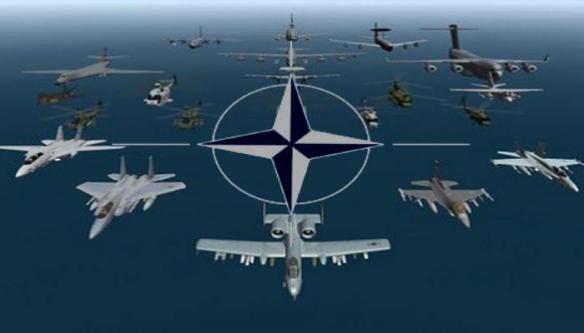
Learning from Gandhi

By Robert J. Burrowes

Mohandas Karamchand Gandhi was born on 2 October 1869: 150 years ago this year.

There will be many tributes to Gandhi published in 2019 so I would like to add one of my own.

This reflects not just my belief that he gave the world inspiration, ideas and powerful strategies for tackling violence in a wide range of contexts but because my own experience in applying his ideas has proven their worth. This included his awareness that led him to declare that ‘If we are to make progress, we must not repeat history but make new history. We must add to the inheritance left by our ancestors.’ and his encouragement to reflect deeply and listen to one’s ‘inner voice’: ‘you should follow your inner voice whatever the consequences’ and ‘even at the risk of being misunderstood’.

In essence, we can productively learn from history but we can build on it too. And, vitally, this includes dealing more effectively with violence.

So how did Gandhi influence me?

Shortly after midnight on 1 July 1942, my Uncle Bob was killed when the USS Sturgeon, a U.S. submarine, fired torpedoes into the Japanese prisoner of war (POW) ship Montevideo Maru. The ship sank immediately and, along with 1,052 other POWs, Bob was killed.

Apart from his older brother, my father’s twin brother was also killed in World War II. In Tom’s case, he was shot down over Rabaul on his first (and final) mission. He was a wireless air gunner on a Beaufort Bomber. See ‘The Last Coastwatcher: My Brothers’.

My childhood is dotted with memories of Bob and Tom. The occasional remembrance service, war medals and the rare story shared by my father.

In 1966, the year I turned 14, I decided to devote my life to finding out why human beings kill each other and to work out how such killing could be ended. The good news about this ‘decision’ is that, at 14, it all felt manageable! But I wasn’t much older before my preliminary investigations proved that even understanding why humans are violent was going to be a profound challenge. And I intuitively understood that I needed this understanding if any strategy to end violence was to be effective.

In any case, as one might expect, my research into violence and strategies for addressing it led me to nonviolence. I came across virtually nothing about nonviolence during my own studies at school and university but was regularly presented with news reports of people participating in activities – such as demonstrations and strikes – that I later learned to label ‘nonviolent action’.

In 1981 I decided to seek out materials on nonviolence and nonviolent action so that I could learn more about it. I had not been reading for long when the routine reference to Mohandas K. (or Mahatma) Gandhi, about whom I had heard a little and knew of his role in leading the Indian independence struggle, forced me to pay more attention to his life and work. So I sought out his writing and started to read some of his published work. An Autobiography: The Story of My Experiments with Truth was an obvious and early book but there were many others besides. I also read many books about Gandhi, to get a clearer sense of his life as a whole, as reported by his coworkers and contemporaries, as well as documented by scholars since his death. And I spent a great many hours in a library basement poring over The Collected Works of Mahatma Gandhi.

The thing that struck me immediately about Gandhi was that his own interest in tackling violence had a comprehensive ‘feel’ about it. That is, he was not just interested in the violence that occurs when nations fight wars or one person kills or injures another. He was interested in addressing the violence that occurs when individuals and nations exploit other individuals/nations (such as when British imperialism exploited India and Indians) and the violence that occurs when a structure (such as capitalism or socialism) exploits the individuals within it. In his words: ‘exploitation is the essence of violence’. He was interested in the violence that occurs when members of one social group (say, Hindus) ‘hate’ the members of another social group (such as Muslims). He was interested in the violence that occurs when men oppress women or caste Hindus oppress ‘untouchables’. He was interested in the violence that occurs when humans destroy the environment. And he was interested in the violence that one inflicts on oneself.

This comprehensive interest resonated deeply with me because, apart from war, my own childhood and adolescence had revealed many manifestations of violence ranging from the starvation of people in developing countries to the racism in the United States (highlighted by Rev. Martin Luther King Jr. during the 1960s) to the destruction of the environment, each of which had gradually but deeply embedded itself in my consciousness. Tackling violence was a far bigger task than the large one I had originally imagined. Violence is everywhere. Most importantly, it seemed to me, there was enormous violence directed against children in the family home but little was spoken or written about this.

So how did Gandhi explain violence and what was his strategy for addressing it?

Gandhi on Conflict and Violence

For Gandhi, conflict was a perennial condition. He also viewed it positively and considered it desirable. For him, it is an important means to greater human unity precisely because their shared conflict could remind antagonists of the deeper, perhaps transcendental, unity of life, which is far more profound than the bond of their social relationship.

He viewed violence differently, however. And, as might be gleaned from the many configurations of violence that concerned him, as noted above, he considered that violence was built into social structures and not into people.

Fundamentally, as Leroy Pelton characterized it, Gandhi understood that the truth cannot be achieved through violence (‘which violates human needs and destroys life’), because violence itself is a form of injustice. In any case, violence cannot resolve conflict because it does not address the issues at stake.

To reiterate then, for Gandhi there was nothing undesirable about conflict. However, Gandhi’s preoccupation was working out how to manage conflict without violence and how to create new social arrangements free of structural violence. The essence, then, of Gandhi’s approach was to identify approaches to conflict that preserved the people while systematically demolishing the evil structure. Nevertheless, he firmly believed that structural purification alone is not enough; self-purification is also essential.

In other words, in Gandhi’s view, resolving the conflict (without violence) is only one aspect of the desired outcome. For Gandhi, success also implies the creation of a superior social structure, higher degrees of fearlessness and self-reliance on the part of both satyagrahis (nonviolent activists) and their opponents, and a greater degree of human unity at the level of social relationships.

Two Key Questions

Despite the enormous influence that Gandhi had in shaping my own conception of conflict and the precise conception of nonviolence that should be used in dealing with it, I nevertheless remained convinced that two questions remained unanswered: What is the psychological origin of the violent behavior of the individual who perpetrates it? And what theory or framework should guide the application of nonviolent action so that campaigns of all kinds are strategically effective?

The first question is important because even if someone is trapped within a social structure (such as the class system) that is violent, the individual must still choose, consciously or unconsciously, to participate (as perpetrator, collaborator or victim) in the violence perpetrated by that structure or one must choose, consciously, to resist it. Why do so many individuals perform one of the first three roles and so few, like Gandhi himself, choose the role of resister?

The second question is important because while Gandhi himself was an astonishingly intuitive strategic thinker (whose 30-year nonviolent strategy liberated India from British occupation), no one before him or since his death has demonstrated anything remotely resembling his capacity in this regard.

Hence, while nonviolence, which is inherently powerful, has chalked up some remarkable successes, vital struggles for peace (and to end war); to halt assaults on Earth’s biosphere; to secure social justice for oppressed and exploited populations; to liberate national groups from dictatorship, occupation or genocidal assault; and struggles in relation to many other just causes limp along devoid of strategy (or use one that is ill-conceived). So badly are we failing, in fact, that humans now teeter on the brink of precipitating our own extinction. See ‘Human Extinction by 2026? A Last Ditch Strategy to Fight for Human Survival’.

Anyway, having studied Gandhi extensively and learned from his strategic approach to nonviolence (elements of which I was progressively including in nonviolent campaigns in which I was involved myself), I resumed my original research to understand the fundamental origin of human violence and also decided to develop a strategic theory and framework for addressing violence in the campaign context so that Gandhi’s strategic thinking could be readily copied by other nonviolent activists.

It turned out that developing this strategic theory and strategy was simpler than the original aim (understanding violence) and I have presented this strategic thinking on two websites: Nonviolent Campaign Strategy and Nonviolent Defense/Liberation Strategy.

Despite my preliminary efforts in the 1990s to encourage fellow activists to use this framework, it soon became clear that only the rarest of activists has the capacity to think strategically about an issue, even when presented with a framework for doing so.

The Origin of Human Violence

Consequently, the vital importance of understanding the origin of human violence was starkly demonstrated to me yet again because I knew it would answer key supplementary questions such as these: Why to do so many people live in denial/delusion utterly incapable of perceiving structural violence or grappling powerfully with (military, social, political, economic and ecological) violence? Why is it that so many people, even activists, are powerless to think strategically? How can activists even believe that success can be achieved, particularly on the major issues of our time (such as the threats of nuclear war, ecological devastation and climate cataclysm), without a focused and comprehensive strategy, particularly given elite resistance to such campaigns? See ‘The Global Elite is Insane Revisited’.

Hence, in an attempt to answer questions such as these, Anita McKone and I went into seclusion in an endeavor to understand how our own minds functioned so that we might better understand the minds of others. I hoped it would take a few months. It took 14 years.

So what is the cause of violence in all contexts and which, depending on its precise configuration in each case, creates perpetrators of violence, people who collaborate with perpetrators of violence, people who are passive victims of violence, people who live in denial/delusion, people who are sexist or racist, and activists who cannot think strategically (among many other adverse outcomes)?

Each of these manifestations of human behaviour is an outcome of the adult war on children. That is, adult violence against children is the fundamental cause of all other violence.

How does this happen? It happens because each child, from birth, is socialized – more accurately, terrorized – so that they fit into their society. That is, each child is subjected to an unrelenting regime of ‘visible’, ‘invisible’ and ‘utterly invisible’ violence until they offer the obedience that every adult – parent, teacher, religious figure… – demands.

So what constitutes ‘visible’, ‘invisible’ and ‘utterly invisible’ violence?

‘Visible’ violence includes hitting, screaming at and sexually abusing a child which, sadly enough, is very common.

But the largest component of damage arises from the ‘invisible’ and ‘utterly invisible’ violence that we adults unconsciously inflict on children during the ordinary course of the day. Tragically, the bulk of this violence occurs in the family home and at school. For a full explanation, see ‘Why Violence?’ and Fearless Psychology and Fearful Psychology: Principles and Practice.

‘Invisible’ violence is the ‘little things’ we do every day, partly because we are just ‘too busy’. For example, when we do not allow time to listen to, and value, a child’s thoughts and feelings, the child learns to not listen to themSelf thus destroying their internal communication system. When we do not let a child say what they want (or ignore them when they do), the child develops communication and behavioral dysfunctionalities as they keep trying to meet their own needs (which, as a basic survival strategy, they are genetically programmed to do).

When we blame, condemn, insult, mock, embarrass, shame, humiliate, taunt, goad, guilt-trip, deceive, lie to, bribe, blackmail, moralize with and/or judge a child, we both undermine their sense of Self-worth and teach them to blame, condemn, insult, mock, embarrass, shame, humiliate, taunt, goad, guilt-trip, deceive, lie, bribe, blackmail, moralize and/or judge.

The fundamental outcome of being bombarded throughout their childhood by this ‘invisible’ violence is that the child is utterly overwhelmed by feelings of fear, pain, anger and sadness (among many others). However, mothers, fathers, teachers, religious figures and other adults also actively interfere with the expression of these feelings and the behavioral responses that are naturally generated by them and it is this ‘utterly invisible’ violence that explains why the dysfunctional behavioral outcomes actually occur.

For example, by ignoring a child when they express their feelings, by comforting, reassuring or distracting a child when they express their feelings, by laughing at or ridiculing their feelings, by terrorizing a child into not expressing their feelings (for instance, by screaming at them when they cry or get angry), and/or by violently controlling a behavior that is generated by their feelings (for example, by hitting them, restraining them or locking them into a room), the child has no choice but to unconsciously suppress their awareness of these feelings.

However, once a child has been terrorized into suppressing their awareness of their feelings (rather than being allowed to have their feelings and to act on them) the child has also unconsciously suppressed their awareness of the reality that caused these feelings. This has many outcomes that are disastrous for the individual, for society and for the biosphere because the individual will now easily suppress their awareness of the feelings that would tell them how to act most functionally in any given circumstance and they will progressively acquire a phenomenal variety of dysfunctional behaviors, including some that are violent towards themself, others and/or the Earth.

So what do we do?

Well, if you want to make an enormous contribution to our effort to end violence, you can make the commitment outlined in ‘My Promise to Children’. If you need to do some healing of your own to be able to nurture children in this way, then consider the information provided in the article ‘Putting Feelings First’.

If you want to systematically tackle violence against the biosphere, consider (accelerated) participation in the fifteen-year strategy, inspired by Gandhi, outlined in ‘The Flame Tree Project to Save Life on Earth’. This project outlines a simple plan for people to systematically reduce their consumption, by at least 80%, involving both energy and resources of every kind – water, household energy, transport fuels, metals, meat, paper and plastic – while dramatically expanding their individual and community self-reliance in 16 areas, so that all environmental concerns are effectively addressed. As Gandhi observed 100 years ago: ‘Earth provides enough for every person’s need but not for every person’s greed.’

But, critically important though he believed personal action to be, Gandhi was also an extraordinary political strategist and he knew that we needed to do more than transform our own personal lives. We need to provide opportunities that compel others to consider doing the same.

So if your passion is campaigning for change, consider doing it strategically, as Gandhi did. See Nonviolent Campaign Strategy.

And if you want to join the worldwide movement to end all violence against humans and the biosphere, you can do so by signing the online pledge of The Peoples Charter to Create a Nonviolent World.

Gandhi was assassinated on 30 January 1948. But his legacy lives on. You can learn from it too, if you wish.


Biodata: Robert J. Burrowes has a lifetime commitment to understanding and ending human violence. He has done extensive research since 1966 in an effort to understand why human beings are violent and has been a nonviolent activist since 1981. He is the author of Why Violence? His email address is flametree@riseup.net and his website is here.

Robert J. Burrowes
P.O. Box 68
Daylesford, Victoria 3460
Australia

Email: flametree@riseup.net

Websites:
Nonviolence Charter
Flame Tree Project to Save Life on Earth
‘Why Violence?’
Feelings First
Nonviolent Campaign Strategy
Nonviolent Defense/Liberation Strategy
Anita: Songs of Nonviolence
Robert Burrowes
Global Nonviolence Network

Human Beings are Destroying Life on Earth but Deluding Ourselves that We are Not

By Robert J. Burrowes

It is easy to identify the ongoing and endless violence being inflicted on life on Earth. This ranges from the vast multiplicity of assaults inflicted on our children and the biosphere to the endless wars and other military violence as well as the grotesque exploitation of many peoples living in Africa, Asia and Central/South America. But for a (very incomplete) list of 40 points see ‘Reflections on 2018, Forecasting 2019’.

However, despite the obvious fact that it is human beings who are inflicting all of this violence, it is virtually impossible to get people to pay attention to this simple and incontrovertible fact and to ask why, precisely, are human beings behaving in such violent and destructive ways? And can we effectively address this cause?

Of course, one part of this problem is the existence of many competing ideas about what causes violence. For example, some ideologies attribute the cause to a particular structural manifestation of violence, such as patriarchy (which generates a gendered system of violence and exploitation) or capitalism (which generates a class system of violence and exploitation). However, none of these ideologies explains why humans participate in structures of violence and exploitation in the first place. Surely a person who was not violent and exploitative to begin with would reject such violent and exploitative structures out of hand and work to create nonviolent and egalitarian structures instead.

But most people really just accept the elite-promulgated delusion that humans are innately dysfunctional and violent and this must be contained and controlled by socialization processes, laws, legal systems, police forces and prisons or, in the international arena, by such measures as economic sanctions and military violence. It is a rare individual who perceives the blatant dysfunctionality and violence of socialization, laws, legal systems, police forces, prisons, economic sanctions and military violence, and how these institutions and their violence serve elite interests.

Hence, humans are trapped in a cycle of attempting to address the vast range of manifestations of violent human behaviour – the wars, the climate catastrophe, destruction of the environment, the economic exploitation of vast sectors of the human population (women, indigenous peoples, working peoples…), the military dictatorships and occupations – without knowing what, fundamentally, causes dysfunctional and violent human behaviours and draws many people to participate in (and benefit from) violence in whatever form it takes.

Well I, for one, find it boring to see the same manifestations of violence repeated endlessly because we do not understand or address the fundamental cause (and so even well-meaning efforts to address it in a variety of contexts are doomed to fail). How about you?

Moreover, I find it boring to listen to (or read about) people endlessly deluding themselves about the violence; that is, deluding themselves that it isn’t happening, ‘it was always like that’, ‘it isn’t as bad as it seems’, ‘nothing can be done’, ‘there is another explanation’, that I am ‘doing enough already’, and so on.

To illustrate the above let me write some more frequent examples of people deluding themselves about the cause. You may have heard delusions like these expressed yourself; you may know some of the many others.

  1. ‘The child deserved the punishment.’
  2. ‘She asked for it.’
  3. Violence is innate: it is ‘in our nature’.
  4. ‘War is inevitable.’
  5. The people in Africa/Asia/Central/South America ‘have always been poor’.
  6. ‘The weather hasn’t changed; it was like that when I was a child.’
  7. ‘We can’t control Mother Nature.’
  8. ‘Nature is abundant.’

Of course, the most common delusional state is the one in which most people are trapped: they are just not paying significant attention to critical issues and have no knowledge (and informed opinion) about them but allow themselves to be distracted from reality by the various elite channels used for doing so, such as the corporate media.

So why do most people delude themselves rather than carefully observe reality, seek out and analyze the evidence in relation to it, and then behave appropriately and powerfully in response?

Because they are (unconsciously) terrified.

‘Is that all?’ you might say. ‘Surely the explanation for dysfunctional (and violent) human behaviour is more complex than that! Besides, when people I observe doing the sorts of dysfunctional and violent behaviours you mention above, they don’t look frightened, let alone terrified.’

So let me explain why the explanation above – that most human beings live in delusion, behave dysfunctionally and violently, fail to observe and analyze reality and then behave powerfully in response to it, because they are terrified – is the complete explanation and why people who are utterly terrified don’t ‘look frightened’.

At the moment of birth, the human individual has a genetically-embedded potential to seek out and powerfully pursue their own unique destiny by progressively developing a complex set of capacities to observe and listen, to think and feel, to analyze and evaluate, to plan and strategize, and to behave with awareness and power in response to their own astute insight into reality and the guidance provided by their conscience.

However, rather than nurture this potential so that the child grows up deeply in touch with their conscience, sensing capacities, thoughts, feelings and other faculties necessary to seek out and powerfully travel their own unique path, the significant adults in the child’s life immediately start to ‘socialize’ (that is, terrorize) the child into conforming with culturally and socially-acceptable norms of thought and behaviour on the basis that one human is more-or-less identical with another (give or take some minor variations among races, languages….).

The idea that each human mind might be unique in the way that each body is unique (while conforming to a general pattern in relation to shape, height and other physical characteristics) never even occurs to anyone. The idea that their child could have the potential to be as creative, powerful and unique as Leonardo Da Vinci, Mary Wollstonecraft, Sojourner Truth, Albert Einstein, Mohandas K. Gandhi or Rosalind Franklin never enters the mind of the typical parent.

Instead, we parent and teach children to conform to an endless sequence of beliefs and behavioural norms on the basis that ‘one size fits all’ because we are literally (but unconsciously) terrified that our child might be ‘different’ or, horror of horrors, unique! And we reward most highly those individuals who do conform and can demonstrate their conformity by passing, often literally, the endless series of socially-approved tests, formal and otherwise, that we set. See, for example, ‘Do We Want School or Education?’

The last thing we want is an individual who fearlessly thinks, feels and behaves as they personally decide is best for themself, perhaps even because their conscience dictates. But when they do act out of their own volition, we punish them to ensure that behaviour that is generated by their unique ‘Self’ is, if possible, terrorized out of them.

Of course, there are ‘good reasons’ for doing this. If we want obedient students, soldiers, employees and citizens, it is the perfect formula. Terrorize the child when they are young and obedience to a set of parentally/socially-approved beliefs and behaviours is virtually guaranteed.

Equally importantly, by starting this onslaught against the child from the moment of birth, they will grow up utterly unaware of the fact that they were terrorized out of becoming their ‘True Self’ and seeking their own unique destiny so that they could be the slave of their society, performing some function, menial or even ‘professional’, after they have submitted to sufficient training. The slave who never questions their role is truly a slave. And that is what we want!

Equally importantly, the person who has fearfully surrendered their Self at the alter of physical survival cannot observe or listen to the fear expressed by anyone else, including their own children. So they simply ‘fail to notice’ it.

So what, exactly, do we do so that each human being’s individual Self is crushed and they are rendered too terrified, self-hating and powerless to pursue their own life path, to honestly observe and listen to their own children and to mindfully consider the state of our world and act powerfully in response?

We inflict enormous, ongoing violence on the child, starting immediately after their birth.

‘How?’ you might ask. ‘I don’t scream at or hit my child. And I never punish them.’

Well, if that is true, it is a good start.

But, unfortunately, it is far more complex than these obvious types of violence and, strange though it may seem, it is not just the ‘visible’ violence (such as hitting, screaming at and sexually abusing) that we normally label ‘violence’ that causes the main damage, although this is extremely damaging. The largest component of damage arises from the ‘invisible’ and ‘utterly invisible’ violence that we adults unconsciously inflict on children during the ordinary course of the day. Tragically, the bulk of this violence occurs in the family home and at school. See ‘Why Violence?’ and Fearless Psychology and Fearful Psychology: Principles and Practice.

So what is ‘invisible’ violence? It is the ‘little things’ we do every day, partly because we are just ‘too busy’. For example, when we do not allow time to listen to, and value, a child’s thoughts and feelings, the child learns to not listen to themSelf thus destroying their internal communication system. When we do not let a child say what they want (or ignore them when they do), the child develops communication and behavioral dysfunctionalities as they keep trying to meet their own needs (which, as a basic survival strategy, they are genetically programmed to do).

When we blame, condemn, insult, mock, embarrass, shame, humiliate, taunt, goad, guilt-trip, deceive, lie to, bribe, blackmail, moralize with and/or judge a child, we both undermine their sense of Self-worth and teach them to blame, condemn, insult, mock, embarrass, shame, humiliate, taunt, goad, guilt-trip, deceive, lie, bribe, blackmail, moralize and/or judge.

The fundamental outcome of being bombarded throughout their childhood by this ‘invisible’ violence is that the child is utterly overwhelmed by feelings of fear, pain, anger and sadness (among many others). However, mothers, fathers, teachers and other adults also actively interfere with the expression of these feelings and the behavioral responses that are naturally generated by them and it is this ‘utterly invisible’ violence that explains why the dysfunctional behavioral outcomes actually occur.

For example, by ignoring a child when they express their feelings, by comforting, reassuring or distracting a child when they express their feelings, by laughing at or ridiculing their feelings, by terrorizing a child into not expressing their feelings (e.g. by screaming at them when they cry or get angry), and/or by violently controlling a behavior that is generated by their feelings (e.g. by hitting them, restraining them or locking them into a room), the child has no choice but to unconsciously suppress their awareness of these feelings.

However, once a child has been terrorized into suppressing their awareness of their feelings (rather than being allowed to have their feelings and to act on them) the child has also unconsciously suppressed their awareness of the reality that caused these feelings. This has many outcomes that are disastrous for the individual, for society and for nature because the individual will now easily suppress their awareness of the feelings that would tell them how to act most functionally in any given circumstance and they will progressively acquire a phenomenal variety of dysfunctional behaviors, including some that are violent towards themself, others and/or the Earth.

From the above, it should also now be apparent that punishment should never be used. ‘Punishment’, of course, is one of the words we use to obscure our awareness of the fact that we are using violence. Violence, even when we label it ‘punishment’, scares children and adults alike and cannot elicit a functional behavioural response. See ‘Punishment is Violent and Counterproductive’.

If someone behaves dysfunctionally, they need to be listened to, deeply, so that they can start to become consciously aware of the feelings (which will always include fear and, often, terror) that drove the dysfunctional behaviour in the first place. They then need to feel and express these feelings (including any anger) in a safe way. Only then will behavioural change in the direction of functionality be possible. See ‘Nisteling: The Art of Deep Listening’.

‘But these adult behaviors you have described don’t seem that bad. Can the outcome be as disastrous as you claim?’ you might ask. The problem is that there are hundreds of these ‘ordinary’, everyday behaviors that destroy the Selfhood of the child. It is ‘death by a thousand cuts’ and most children simply do not survive as Self-aware individuals. And why do we do this? As noted above, we do it so that each child will fit into our model of ‘the perfect citizen’: that is, obedient and hardworking student, reliable and pliant employee/soldier, and submissive law-abiding citizen.

Moreover, once we destroy the Selfhood of a child, it has many flow-on effects. For example, once you terrorize a child into accepting certain information about themself, other people or the state of the world, the child becomes unconsciously fearful of dealing with new information, especially if this information is contradictory to what they have been terrorized into believing. As a result, the child will unconsciously dismiss new information out of hand.

In short, the child has been terrorized in such a way that they are no longer capable of learning (or their learning capacity is seriously diminished by excluding any information that is not a simple extension of what they already ‘know’).

Fundamentally, the child is now incapable of carefully observing reality, analyzing the evidence in relation to that reality and responding strategically so that conflicts and problems are moved closer to resolution. That is, the child is now unconsciously trapped, believing and behaving precisely within the spectrum of socially-approved beliefs and behaviours that society terrorized them into accepting, no matter how dysfunctional and violent these beliefs and behaviours might be.

In industrialized countries, for example, this will invariably include overconsuming, which is standard (but highly dysfunctional and violent) behaviour, particularly given the current state of the biosphere. See ‘Love Denied: The Psychology of Materialism, Violence and War’.


Responding Powerfully to Reality

So how do we nurture children to become the unique and powerful individual that is their birthright? Someone who is able to clearly identify what they need and what outcomes work for them, and who does not learn to progressively compromise themselves until there is nothing left of their unique identity. Someone, in short, who is so powerless, that they are incapable of considering themself, others and the state of the biosphere. Someone who lives in delusion.

Well, if you want a powerful child, you can read what is required in ‘My Promise to Children’.

If, after reading this ‘Promise’, you feel unable to nurture children properly, you might consider doing the healing necessary so that you can do so. See Putting Feelings First’.

If you already feel free of the delusions that afflict most people and able to respond powerfully to the state of our world, then consider joining those participating in the fifteen-year strategy outlined in The Flame Tree Project to Save Life on Earth and signing the online pledge of The Peoples Charter to Create a Nonviolent World.

If you are powerful enough to campaign for change against one or more of the ongoing manifestations of violence in the world, consider doing so strategically so that you have maximum impact. See Nonviolent Campaign Strategy.

And if none of the options I have offered immediately above appeals, ask yourself if you are serious about helping to end the violence or just deluding yourself like all of those people I described above.


Biodata: Robert J. Burrowes has a lifetime commitment to understanding and ending human violence. He has done extensive research since 1966 in an effort to understand why human beings are violent and has been a nonviolent activist since 1981. He is the author of Why Violence? His email address is flametree@riseup.net and his website is here.

Robert J. Burrowes
P.O. Box 68
Daylesford, Victoria 3460
Australia

Email: flametree@riseup.net

Websites:
Nonviolence Charter
Flame Tree Project to Save Life on Earth
‘Why Violence?’
Feelings First
Nonviolent Campaign Strategy
Nonviolent Defense/Liberation Strategy
Anita: Songs of Nonviolence
Robert Burrowes
Global Nonviolence Network