As Millions Face Eviction, Senate Proposes Nearly $700 Billion for Pentagon

By John Vibes

Source: Activist Post

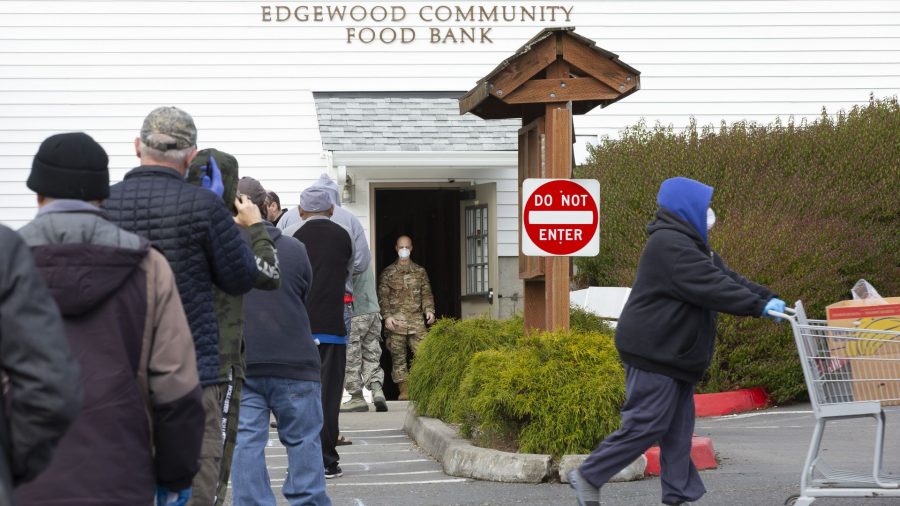
As millions face eviction and line up at food banks throughout the country, waiting for another stimulus payment that will seemingly never come, the Senate Appropriations Committee is proposing a $696 billion Pentagon spending bill for the upcoming fiscal year.

According to The Hill, The Senate’s version of the fiscal 2021 Pentagon spending bill was released Tuesday along with 11 other annual appropriations bills.

Both Senate Majority Leader Mitch McConnell and House Speaker Nancy Pelosi have said they want to pass an omnibus spending bill, and they will likely agree on the military budget, as Democrats overwhelmingly vote in favor of military spending when they have the opportunity, just as Republicans do.

In July, the House passed a $694.6 billion bill for Pentagon spending in July. The Senate version released this week includes $627.2 billion for the base defense budget and $68.7 billion for a war fund known as the Overseas Contingency Operations account, and also includes a 3% pay raise for troops.

However, the final Senate version of the bill left out a few causes that were championed by progressive Democrats, including the renaming of military bases that are named after Confederate leaders, and measures that were intended to block defense funds from being used on the border wall.

The Senate’s bill would also fund 96 F-35 fighter jets, which is an increase over the original bill and over the administration’s initial request. In addition to the fighter jets, the bill also gives the Pentagon $21.35 billion to build nine new battle force ships.

Meanwhile, millions of Americans are unemployed and many are now starting to get evicted. According to the most recent numbers there are 6.8 million, and this only accounts for the people officially collecting unemployment, this does not include the number of people who are not qualified for unemployment, or people who have been out of the work force for an extended length of time. The unemployment rate dropped slightly over the past two months, but is still at record highs.

According to estimates by the Princeton University Eviction Lab, 3.6 million people face eviction cases in a typical year. This year, up to 8 million people could be facing eviction, according to a tracking tool developed by the global advisory firm Stout Risius and Ross, which works with the nonprofit National Coalition for a Civil Right to Counsel.

It is also estimated that up to $32 billion in back rent will be due for tenants across the US once bans on evictions are lifted. Despite bans on evictions, many landlords in the US are still kicking people out of their homes, and in some cases, they have even challenged the eviction bans in court.

The people who are struggling financially in the US can’t count on much help from the government. Even the prospects of a new stimulus check are uncertain, and a payment will not be coming until next year at the very earliest, if it comes at all. Yet, the Pentagon is still able to claim nearly $700 billion in taxpayer money.


The Economy Continues To Unravel Despite All Stimulus Measures

By Brandon Smith

Source: Alt-Market.com

Since the pandemic lockdowns were first implemented in the US I have been more concerned with the government and central bank response than the virus itself. As I have noted in past articles, the pandemic restrictions and subsequent economic and social crisis events they help to create will cause far more deaths than Covid-19 ever will. Not only that, but the actions of the Federal Reserve continue to con the American public into believing that there is some kind of “plan” to stop the crash that THEY engineered.

The only agenda of the Fed is to increase the pain in the long term; they have no intention of actually preventing any disaster.

This is evidenced in comments by voting members of the Fed, including Neel Kashkari who recently argued for the enforcement of hard lockdowns for at least six weeks in the US, all because the US savings rate was going up. Meaning, because Americans are saving more in order to protect themselves from economic fallout, Kashkari thinks we should be punished with an economic shutdown that would force us to spend whatever we have been able to save.

Do you see how that works?

Fed members and government officials demand hard lockdowns, depleting public savings and destroying small businesses. Then, the public has to beg the Fed and the government for more and more stimulus measures so that they can survive. The people and the system become dependent on a single point of support – fiat money creation and welfare. Yet, the evidence suggests that this strategy is failing to do much of anything except stall the inevitable for a very short time.

If the goal was really to reduce the pain of the pandemic as much as possible, then the strategy should be to keep the economy as open as possible and let the virus run its course.  By initiating lockdowns, all we are doing is extending the economic damage over the span of years instead of months.  We can deal with the comparatively minimal deaths associated with the virus; we cannot handle the disaster that is about to befall the financial system.

The small business sector appears to be the most fragile element of the economy right now. The PPP loans that were supposed to shore up small businesses failed miserably, with data showing only 13% to 19% of applicants getting a loan of any kind. Over 64% of small businesses that received a loan are also worried about being approved for loan forgiveness. In other words, of the few small business owners that got a PPP loan more than half do not have the ability to pay the loan back if they end up not qualifying for exemption.

This problem does not seem to be affecting the corporate sector, however. International companies are enjoying incredible cash infusions from the Fed through overnight loans as well as Fed stimulus propping up stock markets (at least for now). Tech companies in particular are enjoying a rush of investment as the assumption in the daytrading world is that the central bank will not allow these companies to fail.

Maybe they are right, but stock markets today DO NOT reflect the health of our system in any way. Stock tickers are a placebo, a Pavlovian trigger for the public, a tool to make people believe that the situation is improving merely because share values are going up. This is not the case.

Small businesses in the US account for around 50% of all employment and job creation. They are a vital part of the economy. Yet, government and central bank measures seem to have left them out in the cold to die.

To be sure, the $600 weekly unemployment enhancement created through the CARES Act passed in March did boost consumer spending, primarily on durable goods such as computers, TVs, cellphones, etc. Spending on services declined though, which is where the majority of small businesses make their money. And, considering the fact that most durable goods are manufactured overseas, this means that the majority of stimulus dollars that went to consumers did not go into the US economy, but foreign exporters like China.

Now, the unemployment enhancement has ended and its return is in question. It will be interesting to see if the boost to purchases of goods will continue without that extra $600 weekly stimulus. Consumer spending rose in July by 1.9%, but this was already a weak print compared to the increases during the previous two months.

Unemployment numbers have declined due to soft reopenings in numerous states, and at the very least some part time jobs appear to be returning, but nowhere near the level needed to erase the millions of jobs lost since February after the initial lockdowns began. If you count U-6 measurements and unemployed people who have been removed from the rolls for being jobless for too long, the REAL unemployment rate is closer to 30% of working age Americans. This is essentially Great Depression levels of joblessness.

US GDP has continued to decline by 32% according to the Bureau of Economic Analysis (despite statistical rigging by the Fed and government agencies), and while it’s possible that stimulus slowed the effects of GDP loss, there is no indication what the trillions of dollars created by the Fed have actually bought other than a few months of time and a massive bubble in the stock market.

The economy cannot survive extreme lockdown conditions for any length of time, let alone almost two more months. And, if you want to know what it means when elites in government and central banking call for a “hard lockdowns”, just look at Level 4 restrictions in places like Australia and New Zealand, where only one person can leave home at any given time, can only travel 3 miles from home and only for food and supplies, and anyone caught not wearing a mask is subject to arrest or a $10,000 fine.

This mother in Melbourne, Australia was arrested because of a Facebook post calling for protests over the lockdown restrictions.  She later had to take the post down and offered an apology, saying she did not know it was illegal to post such statements on social media:

Yeah, this kind of Orwellian response will do wonders for any economic recovery, and this is what Kashkari is calling for in the US.  It’s almost as if the Fed and certain politicians WANT a financial collapse in America…

The REAL solution is to stop the lockdown restrictions altogether. If the goal is truly to protect as many American lives as possible for the “greater good”, then the pandemic response must stop. Luckily, it seems that more and more people are beginning to see through the facade and are rejecting the restrictions. Even in Europe and Australia there have been some signs of protest and rebellion. The problem is that, at least in terms of the economy, it may be too late.

We have to consider the fact that once a large portion of the business sector (like small businesses) takes a massive hit like the one they have suffered over the past several months, many such businesses and jobs will simply not come back. There are many reasons for this, but primarily it’s a matter of debt. The average small business owner carries almost $200,000 in debt for 3-5 years before he reaches profitability or breaks even. This is assuming that there are no major economic catastrophes in that time.

With the pandemic, the riots, the restrictions, etc., businesses will have to take on much more debt with little guarantee of recovery in the next few years let alone the next few months.  Chapter 11 business bankruptcies in the US rose over 26% in the first half of 2020 alone.

Even if lockdown restrictions were completely eradicated tomorrow, a large number of businesses would go bankrupt anyway.  The “Retail Apocalypse” has been growing over the past decade, LONG before the coronavirus was on issue.  Thousands of businesses shut down last year and tens of thousands more are slated to close this year.   The virus and lockdowns simply accelerated the existing decline.

This is why large banks are cutting off loans to business owners and consumers right now; they know exactly where all this is headed.

Banks act as middlemen for the PPP loans financed by the Fed, yet those loans are not getting to most businesses. Banks have also cut credit card lending in the past few months, and general lending has crashed. All of this despite low interest rates for banks receiving stimulus injections from the Fed. Where is all of the money going? They are keeping it for themselves, buying up hard assets as well as propping up the stock market. As noted above, the elites have NO INTENTION of saving the economy, only themselves.

If the stimulus is not getting to the main-street economy then the only purpose it serves is to give the public a false sense of comfort.  The people who gain the most from the ongoing pandemic chaos are establishment elites that want severe restrictions on personal liberty.  Not to mention, the virus and lockdowns offer a convenient scapegoat for the financial crisis that was already brewing due to central bank mismanagement of stimulus, inflation and interest rates. The bottom line is, the banks do not want the crisis to end.  Why would they?  The longer the panic continues, the more they benefit.

Global billionaire wealth tops $10 trillion as COVID-19 deaths mount

By Jacob Crosse

Source: WSWS.org

The collective wealth of the world’s 2,189 billionaires has risen to $10.2 trillion, an increase of nearly $1.3 trillion in the past three years, according to a new report by the Swiss bank UBS and PricewaterhouseCoopers. The unprecedented surge in wealth takes place amidst a global pandemic that has killed more than one million people worldwide, including more than 215,000 in the United States alone.

The report, “Riding the Storm,” is based on data from 43 markets, including interviews with 60 billionaires, accounting for around 98 percent of global billionaire wealth. It sums up the results: “Most of the decade was a time of exceptional prosperity for billionaires regardless of sector…”

The US continues to have the largest concentration of billionaire wealth, accounting for 36 percent of the world’s total, or $3.6 trillion. China ranked second with $1.6 trillion and saw the largest growth over the decade, by 1,146 percent.

Third was Germany, where billionaire wealth totaled $594.9 billion, an increase of 175 percent from 2009’s $216.1 billion. While fourth in terms of billionaire wealth at $467.6 billion, Russia saw the smallest growth by percentage, 80 percent, from $260.2 billion in 2009 to $467.6 billion in 2020.

The $10.2 trillion amassed by less than .0003 percent of the global population is more than the estimated 2020 Gross Domestic Product of every country on the planet except for the US and China. The staggering total hoarded by less than 2,200 people, or about the number of COVID-19 deaths in the US within the last 72 hours, surpasses the previous high of $8.9 trillion recorded in 2017.

For a household earning the average US median income, it would take over 16 million years to accumulate $1 trillion, not even enough to cover what has been collectively usurped from global society in less than three years. Joel Berg, CEO of Hunger Free America, has calculated the cost of ending hunger in the US at $25 billion, which could be done 400 times over with $1 trillion.

The billionaires who have increased their wealth the most, according to the authors, are in the “technology, healthcare and industrial sectors,” including Amazon CEO Jeff Bezos, Tesla CEO Elon Musk, and Facebook CEO Mark Zuckerberg. The report states: “During 2018, 2019 and the first seven months of 2020, technology billionaires’ total wealth rose by 42.5% to USD 1.8 trillion, supported by the surge in tech shares.”

The surge in technology and medical shares was buoyed by unlimited cash from the Federal Reserve, included as part of the $2.2 trillion CARES Act passed at the end of March in a near-unanimous vote by both Democrats and Republicans.

This financial bailout made a “big difference” in the fortunes of billionaires, with the authors writing: “Billionaire wealth is loosely correlated with equity markets, due to holdings in listed companies, and a few weeks makes a big difference. From the end of March, governments’ huge fiscal and quantitative easing packages drove a recovery in financial markets. By the end of July 2020, billionaire wealth was back above its 2019 level.”

Particularly obscene is the surge in wealth of billionaires in the health care industry, in the midst of a deadly global pandemic. The authors write, “Healthcare billionaires’ total wealth increased by 50.3% to $658.6 billion, boosted by a new age of drug discovery and innovations in diagnostics and medical technology, as well as latterly COVID-19 treatments and equipment.”

The report adds: “The number of tech billionaires grew from 68 in 2009 to 234 in 2020, while the number of healthcare billionaires grew from 48 to 167. Tech and healthcare billionaires’ total wealth both multiplied by four times – from $321.3 billion to $1.3 trillion for tech and from $120.8 billion to $482.9 billion for healthcare.”

And what are these “pandemic profiteers” spending their fortunes on? To get some idea, Christie’s auction house in New York held its latest online auction, “20th Century Evening Sale” live-streamed from the Rockefeller Center in New York on October 6. In one night, the world’s wealthiest spent over $340 million on 59 different 20th and 21st century art pieces. The auction also featured the most expensive dinosaur skeleton ever sold, a fossilized Tyrannosaurus rex, for $27.5 million.

The massive concentration of wealth is a decades’ long and bipartisan policy of redistribution to the rich. The Institute for Policy Studies measured the tax obligations of America’s billionaires as a percentage of their wealth between 1980 and 2018 and found that it had decreased 79 percent. Over the last 20 years, the growth in US billionaire wealth has been 200 times greater than the growth in median wealth.

While the billionaires are richer than ever, the response of the ruling class to the pandemic has produced a massive social catastrophe for the working class. In the United States, tens of millions are unemployed and being cut off of all benefits, facing poverty, homelessness and hunger.

Earlier reports found that the 643 wealthiest Americans increased their wealth by a staggering $845 billion between March 18 and September 15. During that same time, over 62 million people in the US applied for unemployment benefits. An estimated 10.5 million jobs were eliminated, with major companies such as Disney, United Airlines, and Cineworld announcing tens of thousands additional layoffs in the last week.

The Pandemic Is Accelerating Trends That Are Disrupting the Foundations of the Economy

By Charles Hugh Smith

Source: Of Two Minds

The problem is the economy that’s left has no means of creating tens of millions of jobs to replace those lost as the 1959 economic model collapses.

Fundamentally, the economy of 2019 was not very different from the economy of 1959: people went shopping at retail stores, were educated at sprawling college campuses, went to work downtown, drove to the doctor’s office or hospital, caught a flight at the airport, and so on.

The daily routine of the vast majority of the workforce was no different from 1959. In 2019, the commutes were longer, white-collar workers stared at screens rather than typewriters, factory workers tended robots and so on, but the fundamentals of everyday life and the nature of work were pretty much the same.

Beneath the surface, the fundamental change in the economy was financialization, the commodification of everything into a financial asset or income stream that could then be leveraged, bundled and sold globally at an immense profit by Wall Street financiers.

This layer of speculative asset-income mining had no relation to the actual work being done; it existed in its own derealized realm.

For decades, these two realmsthe structure of everyday life (to borrow Braudel’s apt term) and the abstract, derealized but oh so profitable realm of financialization–co-existed in an uneasy state of loosely bound systems.

If you squinted hard enough and repeated the mantras often enough, you could persuade yourself there was still some connection between the everyday-life economy and the realm of financialization.

The two realms have now disconnected, and the real-world economy has been ripped from its moorings, as patterns of work and every-day life that stretch back 70 years to the emergence of the postwar era unravel and dissolve.

The trends that are currently fatally disrupting retail, education, office work and healthcare have been in place for years. When I wrote my 2013 book about the digitized future of higher education in a low-cost union of high-touch and low-touch learning, The Nearly Free University, all these trends were already clearly visible to those willing to look beyond the models embedded in the economy for decades or even centuries.

Visionaries like Peter Drucker foresaw the complete disruption of the education and healthcare sectors as far back as 1994. Post-Capitalist Society.

The problem with this disruption is it eliminates tens of millions of jobs–not just the low-paying jobs in retail and dining-out, but high-paying jobs in university administration, healthcare, and other core service sectors.

The last real-world connection between everyday life and financialization was the over-supply of everything that could be financialized: the way to reap the big profits was expand whatever could be leveraged and sold. So retail and commercial space ballooned, colleges proliferated, cafes sprang up on every corner, etc.

Meanwhile, financialization’s unquenchable thirst for higher profits stripped everything of the redundancy and buffers required to stabilize the system in times of crisis. So hospitals no longer kept inventory because by the logic of financialization, all that mattered was maximizing the return on capital–nothing else could possibly matter in the derealized realm of speculative profiteering.

Now healthcare finds itself trapped between the pincers of financialization’s stripmining and the collapse of retail in-person demand–the financial foundation of the entire system. Under the relentless pressure of financialization’s stripmining and profteering, healthcare only survives if it can bill somebody somewhere a staggering amount for everything from office visits to procedures to hospital stays to medications.

Once that avalanche of billing dries up, the entire sector implodes: a sector that accounts for almost 20% of the U.S. economy.

Higher education is also imploding, and for the same reason: its output no longer justified its enormous cost structure. The same can be said of overbuilt retail and commercial space: the financial justification for sky-high rents have imploded and will never come back. The over-supply is so monumental and the collapse of demand so permanent, the gigantic pyramid of debt and speculative excess piled on all these excesses is collapsing.

A bailout by the Federal Reserve won’t change the fundamentals of the collapse of financialization; all the Fed can do is reserve scarce lifeboat seats for its billionaire banker-financier pals. (Warren, you know Bill, have you met Jamie, Jeff, Tim and the rest of the Zillionaire Rat-Pack?)

Despite the record highs in the stock market–the ultimate expression of financialization disconnected from the real-world economy–financialization is also imploding. Financialization still claimed a connection to the real world of income streams and the value of the collateral underlying all the speculative profiteering: the high rents paid by the restaurants on the ground floor and the businesses for office space above justified the high value of the collateral, the commercial building.

Foundational swaths of the real-world economy have been swept away, and so the collateral is largely worthless. Lots of people want their employer to start paying for business-class airline seats again so they can jet around the country on somebody else’s dime, staying in pricey hotels and attending conferences, but these activities no longer have any financial justification.

The economy of 1959 is finally expiring. The enormous time and money sinks of transporting humans hither and yon no longer have any financial justification.

The problem is the economy that’s left has no means of creating tens of millions of jobs to replace those lost as the 1959 economic model collapses. We all know that automation is replacing human labor, but the real change is the collapse of the financial justification for the enormously costly systems we now depend on to generate jobs: healthcare, retail, tourism, dining out, education, working downtown, and all the professions dependent on managing all this complexity.

While the elimination of low-skill jobs–a longstanding trend–is attracting attention, the implosion of the 1959 economic model and financialization will soon sweep away millions of high-paying professional jobs that no longer have any financial justification.

As the 1959 economy implodes, so does the tax system based on payroll taxes and property taxes. This article sketches out the perverse incentives for employers to invest in automation rather than hire workers: Covid-19 Is Dividing the American Worker (WSJ.com)

There are alternatives, but they require accepting the implosion of both the 1959 economic model and its evil offspring, financialization.

I sketched out an alternative way of organizing work, everyday life and finance in my book A Radically Beneficial World. There are alternative ways of organizing civilization other than the insanely wasteful and exploitive system we now inhabit.

Stories Of Economic Despair From America’s Worst Economic Downturn Since The Great Depression Of The 1930s

By Michael Snyder

Source: End of the American Dream

The economic pain that we are witnessing right now is far greater than anything that we witnessed during the last recession.  U.S. GDP declined by 32.9 percent on an annualized basis last quarter, more than 100,000 businesses have permanently shut down since the COVID-19 pandemic first hit the United States, and more than 54 million Americans have filed new claims for unemployment benefits over the last 19 weeks.  Up until just recently, a $600 weekly unemployment “supplement” and a federal moratorium that prevented many evictions had helped to ease the suffering for millions of American families, but both of those measures have now expired.  As a result, a tremendous amount of economic pain which had previously been deferred will now come rushing back with a vengeance.  Millions of American families are no longer going to be able to pay their bills, and experts are warning that we could soon see an “eviction crisis” that is absolutely unprecedented in American history.

48-year-old Thomas Darnell of West Point, Mississippi never thought that he would be in this position.  He had been a factory worker for over 20 years until he lost his job in May, and since then he hasn’t been able to find another.  And then on top of everything else, everyone in his house caught COVID-19…

First, he was furloughed for three weeks in April and then laid off in May. Then things got worse: His entire household of seven, including himself, his wife, three kids and daughter-in-law, along with his baby grandson, contracted coronavirus after they saw their immediate family over the Independence Day weekend.

“I’m tired and shaky. Even after a few weeks, I’m still trying to recover,” Darnell says, who has since been cleared of the virus but still has lingering symptoms.

He is concerned that employers will be scared away by his recent illness, and he is becoming desperate because he is running out of money.

With no health insurance and no paychecks coming in, Darnell and his wife have gotten to the point where they have to make a choice between buying insulin or buying groceries

He can’t afford health insurance, which has added to his anxiety because he and his wife are both diabetic, he says. Like Bolei, Darnell and his wife have been forced to make a grueling decision between either paying for their medications or keeping food on the table.

“Do we buy insulin or groceries? It’s a hard juggle,” Darnell says. “I’m willing to make less money and start working again to get health insurance, but no one is hiring.”

The weekly $600 unemployment supplements from the federal government had helped to keep them going for a while, but now those payments have ended, and the immediate future is looking quite bleak.

In Richmond, Virginia, a mother of eight named Shamika Rollins wasn’t sure how she was going to make it when her hours as a home health aid were reduced.  Unpaid bills started piling up, and then she got an eviction notice a few weeks ago.  The following comes from CBS News

Shamika Rollins’ eight children share two bedrooms in Richmond, Virginia. But she’s worried about losing their home after she says she received an eviction notice in June.

“First thing, I panic, and then next thing, I look, and I’m like, I got my kids. And it’s like, okay, now you gotta figure this out,” she told CBS News correspondent Adriana Diaz.

If a miracle does not happen, Rollins and her eight children will soon be out in the street, and this is causing her to have “a lot of sleepless nights”

“I have a lot of sleepless nights,” Rollins said. “My mind is constantly racing, you know, what’s your next move?”

Sadly, there are millions of other Americans in the exact same position.

In fact, experts are projecting that up to 40 million Americans could be evicted from their homes during this pandemic.

Many small business owners are also facing heartbreaking choices during this downturn.  A restaurant owner in Delaware named Alex Heidenberger “hasn’t paid the mortgage on his home the past four months” as he desperately tries to keep his once profitable restaurants alive…

Heidenberger, who typically draws about $20,000 a month in profit from the restaurant, now receives nothing. He says he hasn’t paid the mortgage on his home the past four months. He served lifeguard duty for a couple of weeks, mostly to help a beach crew depleted by COVID-19 quarantines but also to make some cash.

“I’m working harder than I have ever worked in my life,” he says, adding that he puts in about 80 hours a week at the two restaurants. Yet, “I have no money… This is all I think about. I don’t sleep.”

The COVID-19 pandemic has hit the restaurant industry particularly hard.  Americans are not eating out as regularly as they once did because of the virus, and it is probably going to remain that way for the foreseeable future.

In Massachusetts, a restaurant owner named John Pepper once had eight thriving locations, but at this point only two of them remain open

John Pepper used a PPP loan to pay employees and reopen four of his eight Boloco restaurants when Massachusetts lifted its shutdown order in early May. But with the money spent and business at the restaurants down as much as 70%, Pepper had to again close two locations. The staff of 125 he had before the virus outbreak is down to 50.

“A lot of this is out of our hands at this point,” Pepper says. “At this moment, I don’t see getting my full payroll back.”

Overall, we are facing a “restaurant apocalypse” in the U.S. that is unprecedented in size and scope.

According to one estimate, we could lose more than a third of all of our restaurants by the end of this calendar year

As many as 231,000 of the nation’s roughly 660,000 eateries will likely shut down this year, according to an estimate from restaurant consultancy Aaron Allen & Associates provided to Bloomberg News. This will bring the industry’s steady growth to a halt and mark the first time in two decades that U.S. restaurant counts don’t climb. Restaurants have already shed millions of jobs this year, economic data show.

What we are watching is truly horrifying.  So many hopes and dreams went into each one of those restaurants that are shutting down, and countless restaurant owners are going to be completely financially ruined by all of this.

For other Americans, this economic downturn has put their very lives at risk.  In Colorado, 70-year-old Catherine Azar was already dealing with heart problems and diabetes, and now she is in danger of being thrown out into the street

“It’s hard for me to conceive of someone being willing to put another person out in the street in the middle of a deadly pandemic, and I’m high risk. I’m 70. I have heart issues and I’m diabetic,” Azar said.

Rollins and Azar are just two of the 43 million Americans at risk of eviction in the coming months. For context, about 1 million Americans were evicted in 2010, the year after the Great Recession.

How long do you think that a 70-year-old woman with heart problems and diabetes would last on the street or in a shelter?

And as millions upon millions of Americans get evicted during the months ahead, the shelters are all going to fill up really fast.

America simply was not prepared for an economic downturn of this nature, and the truth is that much bigger challenges are still ahead.

So please do not look down on anyone that needs help right now, because soon you may find yourself in the exact same position.

This Is a Financial Extinction Event

By Charles Hugh Smith

Source: Of Two Minds

The lower reaches of the financial food chain are already dying, and every entity that depended on that layer is doomed.

Though under pressure from climate change, the dinosaurs were still dominant 65 million year ago–until the meteor struck, creating a global “nuclear winter” that darkened the atmosphere for months, killing off most of the food chain that the dinosaurs depended on. (See chart below.)

The ancestors of modern birds were one of the few dinosaur species to survive the extinction event, which took months to play out.

It wasn’t the impact and shock wave that killed off dinosaurs globally–it was the “nuclear winter” that doomed them to extinction. As plants withered, the plant-eating dinosaurs expired, depriving the predator dinosaurs of their food supply.

This is a precise analogy for the global economy, which is entering a financial “nuclear winter” extinction event. As I’ve been discussing for the past few months, costs are sticky but revenues and profits are on a slippery slope.

Businesses still have all the high fixed costs of 2019 but their revenues are sliding as the “nuclear winter” weakens consumer spending, investment in new capacity, etc.

Despite all the hoopla about a potential vaccine, no vaccine can change four realities: one, consumer sentiment has shifted from confidence to caution and from spending freely to saving. This is the financial equivalent of “nuclear winter”: there is no way to return to the pre-impact environment.

Two, uncertainty cannot be dissipated, either. There are no guarantees a vaccine will be 99% effective, that it will last more than a few months, that it won’t have side-effects, etc. There are also no guarantees that consumers will resume their care-free spending ways as credit tightens, incomes decline, risks emerge and the need for savings becomes more compelling.

Three, consumer behavior and uncertainty have already changed, and so businesses that cannot survive on much lower revenues won’t last long enough to emerge from the “nuclear winter” of uncertainty and a shift in sentiment.

Four, assets based on 2019 revenues, profits and demand are now horrendously overvalued, and the repricing of all assets will bring down the predators, i.e. the banks.

As I’ve noted here before, the top 10% of households account for almost 50% of consumer spending. These households are older, and own the majority of assets –between 80% and 90% of stocks, bonds, business equity, rental real estate, etc. This is the demographic with the most to lose in returning to care-free air travel, jamming into crowded venues and cafes, etc.

This demographic has “been there, done that” and foregoing fine dining, sports events, concerts, cruises, etc. is not much a burden and may actually be a relief.

Meanwhile, the entire food chain of landlords, banks, local government, employees, etc. depends on enterprises returning to 100% of 2019 revenues. As tenants stop paying rent, landlords default on mortgages, sending banks into insolvency, leaving local government with less tax revenues and employees with fewer job prospects.

To a degree few appreciate, the “recovery” since 2009 has been dependent on over-spending, over-borrowing and over-speculating: as spending, borrowing and speculation all pull back to what would have been “normal” levels two generations ago, the economy collapses because it’s become completely dependent on over-spending, over-borrowing and over-speculating.

As consumers and businesses retrench, borrowing declines while defaults and bankruptcies eviscerate bank profits and balance sheets. As spending declines, businesses with high fixed costs and pre-pandemic business models (crowding people together in close quarters, etc.) cannot generate enough revenues to survive. As the collateral of commercial real estate and profit streams collapse, assets are repriced all down the food chain, reversing the wealth effect: as people feel poorer, they borrow and spend less, creating a feedback loop of lower valuations, lower spending, lower profits, lower borrowing all of which feed back into each other, pushing everything lower.

The lower reaches of the financial food chain are already dying, and every entity that depended on that layer is doomed: the small business die-off will bring down distributors, banks, landlords, and employment, and as the this layer collapses then the top predators will starve to death as well: Big Tech, healthcare, higher education, tourism, local tax revenues, etc.

The clouds are spreading and thickening, and the dawn sky is tinted an ominous red. This is a financial extinction event, and the Fed’s pathetic shamans can’t reverse history.

The Free Market Is A Failure

By TheHipcrimeVocab

Sorry for the deliberately click-bait-y headline, but I think this message is important to get out there.

In my discussions few months back on What is Neoliberalism, I noted that a core element of neoliberal philosophy is that markets are the only efficient, effective and rational way to distribute goods and services.

Neoliberals profess the idea that only competitive markets can allocate “scarce” resources efficiently, and that it is only such “free” markets that can lift people out of poverty and deliver broad prosperity. They pound it into our heads constantly.

Yet the Covid-19 crisis has illustrated spectacular and pervasive failures of such “free” markets all over the globe, and especially in the U.S. Instead of fairness or efficiency, we see systemic failure in every market we look: the food industry, the medical industry, the retail industry, the employment market. Resources are being destroyed and misallocated on a massive scale

Let’s start with the food industry, because food is the most important thing (nine means from anarchy, and all that). Thousands and thousands of pigs are being slaughtered, their meat left to rot, eaten by no-one, regardless of the forces of supply and demand:

The United States faces a major meat shortage due to virus infections at processing plants. It means millions of pigs could be put down without ever making it to table…

Boerboom, a third-generation hog farmer, is just one of the tens of thousands of US pork producers who are facing a stark reality: although demand for their products is high in the nation’s grocery stores, they may have to euthanise and dispose of millions of pigs due to a breakdown in the American food supply chain.

Meat shortage leaves US farmers with ‘mind-blowing’ choice (BBC)

Potatoes are sitting in Belgian warehouses and left to rot, only two short years after a drought threatened to produce a severe shortage:

Belgium: Lighthearted campaign to ‘eat more fries’ aims to lift heavy load (DW)

Meanwhile, dairy farmers in the U.S. heartland are dumping milk into the ground, to be drunk by no one.

Cows don’t shut off: Why this farmer had to dump 30,000 gallons of milk (USA Today)

In fact, the whole food situation is rather ugly, as this piece from The Guardian summarizes:

This March and April, even as an astounding 30 million Americans plunged into unemployment and food bank needs soared, farmers across the US destroyed heartbreaking amounts of food to stem mounting financial losses.

In scenes reminiscent of the Great Depression, dairy farmers dumped lakes of fresh cow’s milk (3.7m gallons a day in early April, now about 1.5 million per day), hog and chicken farmers aborted piglets and euthanized hens by the thousands, and crop growers plowed acres of vegetables into the ground as the nation’s brittle and anarchic food supply chain began to snap and crumble.

After delays and reports of concealing worker complaints, meatpacking plants that slaughter and process hundreds of thousands of animals a day ground to a halt as coronavirus cases spread like wildfire among workers packed tightly together on dizzyingly fast assembly lines.

Meanwhile, immigrant farmworkers toiled in the eye of the coronavirus storm, working and living in crowded dangerous conditions at poverty wages; at one Washington state orchard, half the workers tested positive for Covid-19. Yet many of these hardest working of Americans were deprived of economic relief, as they are undocumented. Advocates report more farmworkers showing up at food banks – and some unable to access food aid because they can’t afford the gas to get there.

None of this is acceptable or necessary and it’s not just about Covid-19, it’s also illustrative of a deeply deregulated corporate capitalism. America’s food system meltdown amid the pandemic has been long-developing, and a primary cause is decades of corporate centralization and a chaotic array of policies designed to prop up agribusiness profits at any cost.

Farmers are destroying mountains of food. Here’s what to do about it (Guardian)

That doesn’t sound very “efficient” to me, does it? How about you? Free market fundamentalists, care to weigh in?

Meanwhile, hospitals in the United States, which one would think are the most important thing to keep open during a pandemic, are actually closing across the country. These are the very things you want most to be open! Why is this happening? Because health care in the U.S. is a profit-driven enterprise that “competes” in the free market. Because elective procedures—their cash cow—have either been suspended or postponed. U.S. hospitals are closing because they are dependent upon these elective procedures to shore up their profits, and markets rely on profits.

As the deadly virus has spread beyond urban hotspots, many more small hospitals across the country are on the verge of financial ruin as they’ve been forced to cancel elective procedures, one of the few dependable sources of revenue. Williamson Memorial and similar facilities have been struggling since long before the pandemic — at least 170 rural hospitals have shut down since 2005, according to University of North Carolina research on rural hospital closures.

But even as hospitals in cities like New York City and Detroit have been deluged with coronavirus patients, many rural facilities now have the opposite problem: their beds are near-empty, their operating rooms are silent, and they’re bleeding cash.

More than 100 hospitals and hospital systems around the country have already furloughed tens of thousands of employees, according to a tally by industry news outlet Becker’s Hospital Review. They’ve sent home nurses and support staffers who would be deemed essential under state stay-home orders.

Rural hospitals are facing financial ruin and furloughing staff during the coronavirus pandemic (CNN)

And how about allocating labor via impersonal markets? How’s that going? Well, not so well. The workers with the skills most desperately needed on the front lines during the crisis are taking pay cuts and getting laid off left and right. Instead of contributing, they are sitting at home, unable to work even if they wanted to:

At a time when medical professionals are putting their lives at risk, tens of thousands of doctors in the United States are taking large pay cuts. And even as some parts of the US are talking of desperate shortages in nursing staff, elsewhere in the country many nurses are being told to stay at home without pay.

That is because American healthcare companies are looking to cut costs as they struggle to generate revenue during the coronavirus crisis.

“Nurses are being called heroes,” Mariya Buxton says, clearly upset. “But I just really don’t feel like a hero right now because I’m not doing my part.”

Ms Buxton is a paediatric nurse in St Paul, Minnesota, but has been asked to stay at home.

At the unit at which Ms Buxton worked, and at hospitals across most of the country, medical procedures that are not deemed to be urgent have been stopped. That has meant a massive loss of income.

Coronavirus: Why so many US nurses are out of work (BBC)

It’s an ironic twist as the coronavirus pandemic sweeps the nation: The very workers tasked with treating those afflicted with the virus are losing work in droves.

Emergency room visits are down. Non-urgent surgical procedures have largely been put on hold. Health care spending fell 18% in the first three months of the year. And 1.4 million health care workers lost their jobs in April, a sharp increase from the 42,000 reported in March, according to the Labor Department. Nearly 135,000 of the April losses were in hospitals.

As Hospitals Lose Revenue, More Than A Million Health Care Workers Lose Jobs (NPR)

So it doesn’t seem like “free and open” markets are doing so well with either health care or labor.

Meanwhile, U.S. states are competing against each other for desperately needed PPE equipment, bidding up the price and preventing scarce resources from going to where they are most badly needed, which would naturally be where Covid-19 has struck the hardest:

As coronavirus testing expands and more cases of infection are being identified, doctors, nurses and other healthcare workers are scrambling to find enough medical supplies to replenish their dwindling supply.

But state and local governments across the United States are vying to purchase the same equipment, creating a competitive market for those materials that drives up prices for everyone.

“A system that’s based on state and local governments looking out for themselves and competing with other state and local governments across the nation isn’t sustainable,” said John Cohen, an ABC News contributor and former acting Undersecretary of the Department of Homeland Security, “and if left to continue, we’ll certainly exacerbate the public health crisis we’re facing.”

“There’s a very real possibility,” he added, “that those state and local governments that have the most critical need won’t get the equipment they need.”

Competition among state, local governments creates bidding war for medical equipment (ABC News)

Yet neoliberals always tell us how important “competition” is in every arena of life.

Failure, failure, failure! Everywhere we look, we see failure. Pervasive, systematic failure. Resources going unused. Surpluses of food being dumped even while people go hungry and line up at food banks. Workers with necessary skills sitting at home, twiddling their thumbs. Other workers unable to even earn a living to support themselves and their families, no matter how badly they want to work. Masks and protective equipment NOT going to where they are most needed, their costs inflating, befitting no one except profiteers even as people die.

Tell me again about how the market is “efficient” at distributing resources. Tell me again about how central planning inevitably results in wasted resources, surfeits and shortages.

And here is the big, bold, underscored point:

The free-marketeers want to trumpet the market’s successes, but they don’t want to own its failures.

Free-market boosters always want to talk about the wonderful benefits of markets. How they allow multiple people to coordinate their activities across wide variations of space and time. How they allow knowledge to be distributed among many different actors. How they favor tacit knowledge that a single entity could not possess. Libraries of encomiums have been written celebrating the virtues of the “free” market. You know their names: The Provisioning of ParisEconomics in One LessonFree to ChooseI Pencil, and all of that. Much of what passes for economic “science” is simply cheerleading for markets– the bigger, freer and less-regulated the better.

Okay, fair enough.

But how about market failures? Why don’t they ever talk about that? Because if you read the economics books I cited above, you would come away with the idea that there are no market failures! That, in fact, there is no such thing. That markets, in effect, cannot fail!

If you want to own the successes, you need to own the failures.

Oh, they love, love, love to talk about central planning’s “failures”. They can’t get enough of that. They love to talk about empty shelves in the Soviet Union, long lines at supermarkets, the lack of toilet paper in Venezuela (amusingly, now a problem throughout the capitalist world), and the allegedly long waiting times in “socialized medicine” countries. We are constantly subjected to that drumbeat day after day after day. It’s part of every economics 101 course. Central planning doesn’t work. Central planning is inefficient. Central planning is “tyranny.”

But what about all that stuff I cited above?

Where are all the free-market fundamentalists now?

What is their excuse?

They’ll use special pleading. They’ll argue that it’s exceptional circumstances. That no one could have foreseen a “black swan” event like the global Covid-19 pandemic (despite numerous experts warning about it for years). They’ll tell us that markets work just fine under “normal” circumstances. They’ll say we cannot pass any kind of judgement on the failings of markets during such an unusual event.

Here’s why that argument is bullshit:

Pandemics are a real, and recurring phenomenon in human history. We’ve been incredibly fortunate that we’ve been in rare and atypical hundred-year period from 1918-1919 to today without a global pandemic or novel disease we couldn’t quickly contain and/or eradicate.

But pandemics are always—and always have always been—a societal threat, even if we’ve forgotten that fact. And the experts tell us that there will be a lot more of them in our future, with population overshoot, environmental destruction, encroachment on formerly unoccupied lands and climate change proceeding apace. What that means is this:

If your economic system can’t function properly during a pandemic, then your economic system is shit.

If your economic system only works when conditions are ideal, in fact depends upon conditions being ideal, then, your economic system doesn’t really work at all. If something like a pandemic causes it to seize up and fail, then your economic system is poorly designed and doesn’t work very well. Not only do the free markets graphed on economists’ chalkboards not exist in anywhere the real world, they apparently rely on a blissful Eden-like Arcadia to function as intended—a situation any causal glance at human history tells us is highly unusual. Any disruption and they fall like dominoes. They are about as resilient as tissue paper.

And the stresses are only going to get worse in the years ahead, with climate change making some areas uninhabitably hot, while other places are submerged under rising sea levels. And that’s before we get to the typical natural disasters like volcanic eruptions, tsunamis and earthquakes. And there will be new novel plant diseases as well, unfolding against the increasing resistance of germs to antibiotics.

Will the free market fundamentalists and libertarian market cheerleaders acknowledge this???

Don’t hold your breath.

No, they will continue to lionize “private initiative” at every opportunity, while completely ignoring the stuff I opened this post with. They’ll sweep it under the rug or, more likely, simply handwave it away. They’ll continue to say that we need to scale back government regulation and interference and let the invisible hand sort it all out.

Because discipline of modern economics as practiced today is not a science. It may not even rise to the level of a pseudoscience. It’s PR for laissez-faire capitalism.

Of course, we’ve had market failures before. They occurred all throughout the nineteenth century and during Great Depression, for example. These are well-documented. But many of the things that came out of those bygone market failures to prevent or mitigate them have been systematically and deliberately dismantled over the past generation due to rise of neoliberalism.

And now we’re paying the price.

Karl Polanyi made an important distinction between markets and Market Society. Markets are where people come together to buy, sell, and exchange surplus goods. These have existed throughout history. They are tangential to society; embedded in something larger than it. Such markets can be shut down without causing an existential threat to civilization.

But Market Society is dependent upon impersonal forces of supply and demand and functioning markets for absolutely everything in the society, from jobs to food to health care. Everything is oriented around maximizing private profits, and not human needs. Markets failing to function adequately lead to unemployment, sickness, starvation and death. Shutting them down is an existential threat to civilization.

As Dmitry Orlov wrote in his best-known work, the Russians survived the collapse of the Soviet Union precisely because they didn’t rely on the Market.

Naturalizing markets in this way is an abdication of both causal and moral responsibility for famines, a way to avoid reality and the ethical consequences for people in a position to change things. Markets are not given; they are predicated on a host of laws and social conventions that can, if the need arises, be changed. It makes no sense for American farmers to destroy produce they can’t sell while food banks are struggling to keep up with demand. This kind of thinking is a way for powerful people to outsource ethical choices to the market, but the market has no conscience.

Famine Is a Choice (Slate)

Now, to be clear I’m not necessarily making an argument for or against central planning as opposed to markets. That’s a different discussion.

But my core point is simply this: you cannot discuss market successes without discussing market failures. To do so is intellectually dishonest, disingenuous, and not to mention incredibly dangerous and irresponsible. If economics were a real science, instead of just PR for capitalism, it would take a look at the things I described above, and figure out ways they could have been avoided, regardless of any preconceived ideology or assumptions about the “right” way to arrange a society, or assumptions about how things “should” work. It would seek out ways for society to become, in Nassim Taleb’s terminology, “antifragile.”

But don’t hold your breath for that, either.

Americans Have Already Skipped Payments On More Than 100 Million Loans, And Job Losses Continue To Escalate

By Michael Snyder

Source: Economic Collapse Blog

Those that have been hoping for some sort of a “V-shaped recovery” have had their hopes completely dashed.  U.S. workers continue to lose jobs at a staggering rate, and economic activity continues to remain at deeply suppressed levels all over the nation.  Of course this wasn’t supposed to happen now that states have been “reopening” their economies.  We were told that things would soon be getting back to normal and that the economic numbers would rebound dramatically.  But that is not happening.  In fact, the number of Americans that filed new claims for unemployment benefits last week was much higher than expected

Weekly jobless claims stayed above 1 million for the 13th consecutive week as the coronavirus pandemic continued to hammer the U.S. economy.

First-time claims totaled 1.5 million last week, higher than the 1.3 million that economists surveyed by Dow Jones had been expecting. The government report’s total was 58,000 lower than the previous week’s 1.566 million, which was revised up by 24,000.

To put this in perspective, let me once again remind my readers that prior to this year the all-time record for a single week was just 695,000.  So even though more than 44 million Americans had already filed initial claims for unemployment benefits before this latest report, there were still enough new people losing jobs to more than double that old record from 1982.

That is just astounding.  We were told that the economy would be regaining huge amounts of jobs by now, but instead job losses remain at a catastrophic level that is unlike anything that we have ever seen before in all of U.S. history.

With the addition of this latest number, a grand total of nearly 46 million Americans have now filed initial claims for unemployment benefits since the COVID-19 pandemic began.

If you can read that statement and still believe that the U.S. economy is not imploding, I would like to know what you are smoking, because it must be pretty powerful.

Some of the things that we are seeing happen around the country right now are absolutely nuts.  For example, earlier this week in Kentucky it was being reported that people were waiting in line for up to 8 hours to talk with a state official face to face about their unprocessed unemployment claims…

This wasn’t supposed to happen.

By now, the U.S. economy was supposed to be roaring back to life and we were supposed to be entering a new golden age of American prosperity.

Unfortunately, the truth is that more bad economic news is hitting us on a continual basis, and that isn’t going to change any time soon.

Over the past few days, we have learned that Hilton is laying off 22 percent of its corporate staff, and AT&T has announced that it will be eliminating 3,400 jobs and closing 250 stores…

The wireless carrier AT&T is cutting 3,400 jobs and shutting down 250 stores over the next few weeks, according to a statement from the Communications Workers of America, a union representing AT&T workers.

The AT&T Mobility and Cricket Wireless retail closures will affect 1,300 jobs, while the other layoffs are said to be affecting technical and clerical workers.

Needless to say, all of these job losses are having a tremendous ripple effect throughout the economy.

Without paychecks coming in, a lot of Americans are having a really tough time paying their bills, and the Wall Street Journal is reporting that payments have already been skipped on more than 100 million loans…

Americans have skipped payments on more than 100 million student loans, auto loans and other forms of debt since the coronavirus hit the U.S., the latest sign of the toll the pandemic is taking on people’s finances.

The number of accounts that enrolled in deferment, forbearance or some other type of relief since March 1 and remain in such a state rose to 106 million at the end of May, triple the number at the end of April, according to credit-reporting firm TransUnion.

Wow.

To me, that is an almost unimaginable number, and it has become clear that a tremendous amount of pain is ahead for the financial institutions that are holding these loans.

A lot of people out there are going to keep hoping that there will be some sort of an economic rebound, but the cold, hard reality of the matter is that fear of COVID-19 is going to keep a large segment of the population from resuming normal economic activities for the foreseeable future.  And it certainly doesn’t help that the number of confirmed cases in the U.S. has been steadily rising over the past couple of weeks and that the mainstream media has been endlessly warning that a “second wave” is coming.

If you doubt what I am saying, just look at what is happening to the restaurant industry.  We had started to see a small bit of improvement in the numbers, but now fear of a “second wave” has caused restaurant traffic to start cratering again

After three months of slow but consistent improvement in restaurant dining data in the US and across the globe, in its latest update on “the state of the restaurant industry”, OpenTable today reported the biggest drop in seated restaurant diners (from online, phone and walk-in reservations) since the depth of the global shutdown in March.

As shown in the OpenTable graphic below, on Sunday, June 14, restaurant traffic suddenly tumbled, sliding from a -66.5% y/y decline as of June 13 to -78.8% globally.

This was mostly due to a sharp drop in US restaurant diners, which plunged by 13% – from -65% to -78% – the biggest one day drop since the start of the shutdown in the US, and the second biggest one day drop on record.

Business travel is another area where we are seeing signs of big trouble ahead.  The following comes from Yves Smith

Business travel is not coming back any time soon. People are getting accustomed to Zoom. And word may also get out that domestic flying is much worse than it used to be, which will be a deterrent to those who might be so bold as to want to get on a plane. That is a fundamental blow to airlines, airport vendors, hotels, restaurants, and convention centers. Hotel occupancy in April was 24.5% which if anything seems high based on my personal datapoints. The pricings I see say that hotel operators are not expecting much if any improvement through the summer.

Like many of you, I wish that economic conditions would go back to the way they used to be, but that simply is not going to happen.

Yes, we will see economic numbers go up and down over the coming months, but a return to “the good times” is not in the cards.

And what hardly anyone realizes is that this is just the beginning of our problems, and I am working on a new project right now which will explain why this is true in great detail.

So stay tuned, because things are about to get really, really “interesting”.