
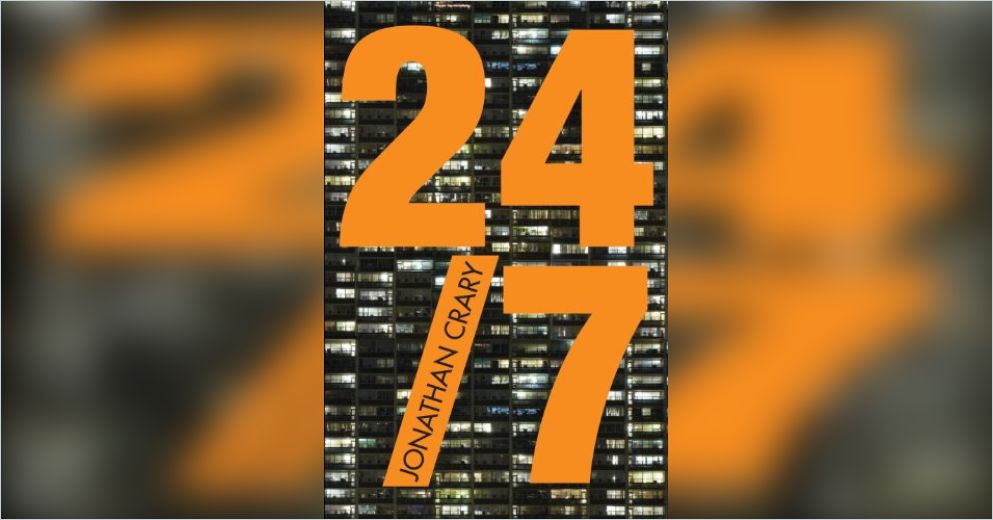
Daydreaming While Reading Jonathan Crary’s 24/7: Late Capitalism and the Ends of Sleep

By Edward Curtin

Source: Behind the Curtain

“Sleep that knits up the raveled sleave of care, The death of each day’s life, sore labor’s bath, Balm of hurt minds, great nature’s second course, Chief nourisher in life’s feast.”   – Shakespeare, Macbeth

People often laugh when I tell them that I go to sleep at 8:15 P.M.  They laugh harder when I say it’s been a lifetime habit, with unavoidable exceptions of course.  And that I wake up long before dawn.  Not because I am a dairy farmer or a baker, but because I love to sleep and all the best things I have written have been written in my dreams and refined during reveries while walking or in the early morning when all is silent still and I am alone with my musings.  I have always felt that sleeping and being awake were a seamless whole, contrary to the go-getters’ attitude that sleep and dreams are a waste of time, and I have been blessed with the ability to fall asleep as soon as I crawl into my crib and usually to remember my dreams in detail when I wake.

Jonathan Crary, the Meyer Schapiro Professor of Modern Art and Theory at Columbia University, agrees that sleep is profoundly important and under assault today.  To enter his book, 24/7, Late Capitalism and the Ends of Sleep, (which was first published in 2014) is for me to discover a kindred spirit, but also to enter a mind so capacious and profound that I wish to share his insights while I dream in words.

If what William Wordsworth (what a name!) wrote in 1802 was true then,

The world is too much with us; late and soon,
Getting and spending, we lay waste our powers;—
Little we see in Nature that is ours;
We have given our hearts away, a sordid boon!

what possibly could one say about today?  That shopping or thinking about shopping – things or propaganda or the latest useless buzz – is all we know?  That we have become completely insane, bamboozled by a capitalist techno-electronic madness that has not only seized our hearts but convinced our minds that it is good to spend our lives – our sleep and dreams and time and praxis – in tending to machines that destroy our souls night and day without interruption.

When fifty plus years ago the monk Thomas Merton wrote that “someday they will sell us the rain,” he could today add that the hard rain that Dylan sung of then has already fallen and they now need not sell us anything because we have eaten the bitter fruit of our own corruption.  People say they want peace while they fill their nights and days with digital dreams, eliminating what Crary calls “fugitive anonymity” for the bait of 24/7 capitalist drug addiction and being “with it.”  All the clichés have it that peace begins with “you,” yet you has become them or it, the tech-life 24/7.  I hear Sinatra singing Cole Porter’s lyrics today as

Night and day, you are the one
Only you ‘neath the moon or under the sun
Whether near to me or far
It’s no matter, cell phone, where you are
I think of you day and night

And such love is reciprocated, of course, as the electronic machines help so many distracted and restless souls make it through the night.  Sort of.  Not the kind of help Kris Kristofferson sang about, but a fleshless flashing gizmo colder than a frozen heart.

It is well known that sleep disorders are widespread today with technologically produced sleep drugs (and now marijuana) used by vast numbers of people. Such drug-induced sleep, the flip side of the frenetic passivity that precedes and follows it, occurs within a larger 24/7 sleepless framework that Crary accurately notes happens “ . . . within the globalist neoliberal paradigm, [for] sleeping is for losers.”   Yet what’s to be won is never enunciated because the winners’ faces are always well-hidden as they execute the prodigious capitalist machine of control that creates docility and separation in people who find the machine life irresistible – even as it drains them of easy-going vitality and the joy of dawdling, even for an idle while.  Doing nothing has become a crime.

Last night I stepped outside an hour after sunset and was startled by a massive full moon eyeing me as it rose over the eastern hills.  Here where I dwell there are no city or factory lights to block the moon and stars as they illuminate our nights.  But most people are not so lucky, for what our ancestors once took for granted – that we are part of nature, part of the Tao – has been lost for so many as artificial lights, urbanization, and a 24/7 linguistic mind-control ideology block the thrill of being transfixed by the moon’s loving gaze, an invitation to taste the sweetness of the north wind’s cookie.  Maybe the sight of her face might rattle the televised images lodged in people’s “memories” of mechanical misbegotten men in ghost suits trampling her peaceful countenance.

The 24/7 digital life, essential to neo-liberal financialized capitalism with its day and night markets and infrastructure that allow for continuous consumption and work – total availability – is the culmination of a long process that began with the invention of artificial lighting that allowed the English cotton mills to run 24/7.  Crary brilliantly illustrates this point through the 1782 painting, Arkwright’s Cotton Mills by Night, by the British artist James Derby.  This painting shows the windows of the massive mills lit like pin-points in the rural night, watched over by a full moon that illuminates the sky.  Incongruous time indeed!  He writes, “The artificial lighting of the factories announces the rationalized deployment of an abstract relation between time and work, severed from the cyclical temporalities of lunar and solar movements.”  This radical break from the traditional relation between time and work and the earth was later noted by Karl Marx as essential to the advance of capitalism since it disconnected the laboring individual from all interdependent connections to family, community, etc. while reorienting people’s feelings for time.  The English art critic John Berger, who knew that time with its corollary to place was a key to understanding so much history, put it this way: “Every ruling minority needs to numb and, if possible, to kill the time-sense of those it exploits.  This is the authoritarian secret of all methods of imprisonment.”

Dreaming of imprisonment, I just remembered that although it seems like a delusion from so far away and long ago, I once worked in a factory by day with its huge blast furnaces, in a NYC Police precinct jail on the 4-12 P.M. shift, and all-night as a nightwatchman.   All good lessons in how American society works, although I hated them all and labored simply for the pay.  But each in its own way taught me about imprisonment, especially the watchman’s job, since it involved a jolting sense of time and staying awake all night and sleeping by day.  I was always exhausted and felt I was violating my deepest nature.

Sleep deprivation is a central component of the torturers’ methods, as so many victims of the U.S. war machine have learned.  And the Pentagon (DARPA) has spent vast sums trying to create a sleepless soldier who can go at least seven days without sleep.  As Crary notes: “ . . . scientists in various labs are conducting experimental trials of sleeplessness techniques, including neurochemicals, gene therapy, and transcranial magnetic stimulation.”   The war against sleep is being waged on many fronts by well-armed maniacs intent on controlling human beings for nefarious ends.  To control sleep is to control time is to confound minds, which is the goal.

Ovid, the most sensual of Roman poets, would be shocked, I imagine, to learn that Morpheus, the god of sleep and dreams from his Metamorphoses, would be attacked so relentlessly by today’s madmen who never heard of his poetry.  My mind drifts to my college days translating Ovid under a weeping willow.  “My cause is better: no-one can claim that I ever took up arms against you,” he wrote and I read.  These words come back to me as I muse on the arms taken today against sleep, but I’m not sure if it’s Ovid or Bob Dylan’s lyrics in his song Workingman’s Blues #2 (from the album Modern Times) that fly to mind, for Dylan also sings “No-one can ever claim/ That I took up arms against you.”

Poor Morpheus, so many people in these modern times yearn for your arms but instead of that balm, they toss and turn in a time out of mind and out of sleep.

Crary tells us that the amount of sleep the average North American adult gets has gone from ten hours in the early twentieth century to eight hours a generation ago to six-and-a-half today.  And although people will always have to sleep, I think we can expect further reductions.  To say it is a form of torture is probably an exaggeration, but not by much.  He writes:

Behind the vacuity of the catchphrase, 24/7 is a static redundancy that disavows its relation to the rhythmic and periodic textures of human life. . . . A 24/7 environment has the semblance of a social world, but it is actually a non-social model of machinic performance and a suspension of living that does not disclose the human cost required to sustain its effectiveness. . . . 24/7 is a time of indifference, against which the fragility of human life is increasingly inadequate and within which sleep has no necessity or inevitability.  In relation to labor, it renders plausible, even normal, the idea of working without pause, without limits.  It is aligned with what is inanimate, inert, or unageing.  As an advertising exhortation it decrees the absoluteness of availability, and hence the ceaselessness of needs and their incitement, but also their perpetual non-fulfillment.

In other words, 24/7 is a form of linguistic mind control tied to cell phones, computers, and the digital life of the Internet whose purpose is to convince people that sleep and the human body is somehow unnatural and the future lies with people accepting their marriage to machines in a disenchanted and transhuman world.  It is a lie, of course, for if that is a future people accept, there will be no future, just a desert.  “Deleuze and Guattari went to the point of comparing the order-word [24/7] to a ‘death sentence,’” writes Crary. Such an order-word or imperative is similar in this respect to the term “9/11” which was coined to send an instant message that emergencies will now be endless so we will have to monitor you forevermore.  Keep your cell phone ready.  Be on your toes, stay alert, the terrorists come at all hours – keep awake!

Crary makes a profoundly important point at a time when there is much justifiable focus on propaganda and the lies of governments and the media.  This is the power of habit involved in the acceptance of the naturalness of various devices – today, electronic screens that are omnipresent – that we semi-automatically accept as normal.  He says, “In this sense, they are part of larger strategies of power in which the aim is not mass-deception, but rather states of neutralization and inactivation, in which one is dispossessed of time.  But even within habitual repetitions there remains a thread of hope – a knowingly false hope – that one more click or touch might open onto something to redeem the overwhelming monotony in which one is immersed.  One of the forms of disempowerment within 24/7 environments is the incapacitation of daydream or any mode of absent-minded introspection that would otherwise occur in intervals of slow or vacant time.”

This is part of a modern process of psychological reductionism and a changed understanding of the nature of wishes that have excluded dreaming and daydreaming from any connection to a traditional magico-theological framework.  Science and especially the neuro-sciences have reduced all life to what is empirically provable, attenuating life and the creation of art in the service of human life.  Crary uses Jean Paul Satre’s inelegant but insightful neologism, “practico-inert,” to explain people’s inability to see the nature of the social worlds they are part of with any clarity.  “The practico-inert was thus Sartre’s way [in Critique of Dialectical Reason] of designating the sedimented, institutional everyday world constituted out of human energy but manifested as the immense accumulation of routine passive activity.”

To repeat, this frenetic passivity serves to obscure the negative historical reality of life in a 24/7 electronic spectacle that is advertised as amazingly empowering but is the reverse.

For direct experience has fallen on hard times as life today has come to be mediated through electronic gadgets.  Surprises must be googled in advance or photographed to prove their reality.  Living is never easy, not in the summertime or any other season. Tension, inattention, exhaustion, and constant busyness are the order of the day.  This should be self-evident but isn’t.  People feel it but can’t see it.

Commenting on the dying art of storytelling, Walter Benjamin, in an essay called “The Storyteller,” said the following about people’s ability to listen and remember stories that they can integrate into their own experience so they can pass them on:

This process of assimilation, which takes place in depth, requires a state of relaxation, which is becoming rarer and rarer [written in 1936].  If sleep is the apogee of physical relaxation, boredom is the apogee of mental relaxation.  Boredom is the dream bird that hatches the egg of experience.  A rustling in the leaves drives him away.  His nesting places – the activities that are intimately associated with boredom – are already extinct in the cities and are declining in the country as well.  With this the gift of listening is lost and the community of listeners disappears.  [my emphasis]

We have gone beyond rustling in the bushes to a cacophonous electronic world that makes one deaf to all else.  That it will come crashing down around our ears is hard to imagine, but it will.  It already has in the damage that it’s done.

Once upon a time . . . well, I will spare you.  It might just seem like the dream of a ridiculous man, or something Dostoevsky would write, not your normal story or even daydream.

So read Jonathan Crary’s brilliant, 24/7: Late Capitalism and the Ends of Sleep and its sequel, Scorched Earth: Beyond the Digital Age to a Post-Capitalist World.  They will get you to think about your sleep habits and whether or not you are ever turned off and tuned out but just sometimes only in “sleep mode.”

Anxiety Dream

By Miya Tokumitsu

A 1636 Dutch print depicts a tender domestic scene: a father in his nightdress walks to and fro, soothing a wakeful baby while mom gets some well-deserved sleep. The accompanying verse is equally sweet, assuring us that God, like this kindly father, will comfort us when we become gripped with anxiety and cry out in the night.

But when we wake today, heart pounding at the recollection that we have a big presentation in six hours, many of us might find a last-minute cancellation more conducive to recovering sleep than the idea of a loving God who cradles and sings to us. Adding to our anxiety is the knowledge that the loss of every minute is setting us back. There seems hardly to be sleep enough to go around, much less to share with our loved ones. We know the stats: most Americans sleep a paltry 6.8 hours per night, less than the recommended eight hours. The litany of sleep deprivation consequences is also familiar: obesity, depression, anxiety, loss of libido, and heart disease, among others.

We also instinctively understand that we have a stake in each other’s sleep. In addition to immediate hazards, like overtired drivers taking the wheel or bleary-eyed colleagues gumming up our beautiful spreadsheets, we know that widespread depression and worn-out immune systems affect society broadly, and over the long term. And yet we often understand our sleep in terms of pure individual choice.

For that reason, wilful sleep deprivation remains a cultural ideal. This you-snooze-you-lose mindset was recently captured by internet-marketplace Fiverr’s advertisement poster, which, alarm-like, blared “SLEEP DEPRIVATION IS YOUR DRUG OF CHOICE . . . YOU MIGHT BE A DOER.” After all, what is the condition of sleep, if not an absence of motivation to chase the $5 gigs the company peddles? In this same vein, a 2012 Business Insider slideshow fawned over “19 Successful People Who Barely Sleep.” Marissa Mayer, Yahoo! CEO, got pride of place as slide number one. Slide number three was Donald Trump.

An equally individualistic pro-sleep discourse does exist, primarily in click-bait articles nestled within chum boxes, which limply scold us for watching Netflix in bed. Entering this soporific terrain, sleep-evangelist Arianna Huffington urges readers of her book, The Sleep Revolution, to sleep more, prescribing rituals to maximize its quality, including pre-bedtime soaks with Epsom salts, and counting one’s blessings.

As with our wakefulness, our slumber too is motivated and shaped by anxiety. Those who do protect their eight hours often do so because it helps them perform better at work. It’s no wonder that Huffington, a boss, approves of this motivation for sleep, writing, “It would actually be better for business if employees called in tired, got a little more sleep, and then came in a bit late, rather than call in sick a few days later or, worse, show up sick, dragging themselves through the day while infecting others.”

It may appear that as a society we have conflicting sleep ideals, but really, we’re not so much of two minds as we are fumbling around, trying to work out the role that sleep plays in a prosperous life. We want to get sleep right because we know that doing so is essential to thriving individually—indeed, Thrive is the name Huffington chose for her wellness company—but we fret over the quantity, preparatory rites, and timing of our sleep because sleep lies at the juncture between the private and the social, the biological, and the cultural.

Sleep is intensely private: where, when, with (and without) whom, and how we dress and prepare for sleep are intimate and emotional decisions. But sleep is also social: we modify our behavior and expectations on the assumption that those beyond our immediate domiciles—neighbors, colleagues both local and time zones away—are slumbering at certain hours. And although sleep is private, we do want social reassurance that we are sleeping the right way and look down upon those who choose other arrangements. Just mosey over to the comment section of any website discussing infant sleep, and you’ll find accusations of “baby torture,” and remarks like, “You may think you are fine, but no. You did hurt your baby.” Just as eating habits often come with a moral or ethical motivations that imply—or outright state—the absence of such morals and ethics of those who eat differently, sleep helps constitute our identity, something we generally like to have affirmed.

Enter the market. There are seemingly endless ways to buy yourself some sleep—books like Huffington’s, herbal teas, white noise machines, Ambien, melatonin, ear plugs tucked into earplug cases, therapy. And if you want to put sleep off—stimulants from espresso to cocaine, late night TV, alarms, gyms that open at 5 am.

Contrary to Huffington’s claim to revolutionary momentousness, it seems someone’s always been around to sell sleep optimization. Historian Sasha Handley writes in her book Sleep in Early Modern England that in the seventeenth and eighteenth centuries the panoply of goods deemed ideal for proper sleep by Brits counted breathable bed linens, thermometers to help maintain ideal room temperatures, bedclothes including nightcaps and nightcap liners, even ventilators. “No other daily activity was so heavily governed by principles of good health,” Handley writes, “nor consumed as much time, money, and labour as did sleep.” Yesterday’s silver-gilt ventilator has today become a whole range of electronic devices to track your sleep and analyze which components of your psyche and environment need correction.

We may scream at each other over the “correct” way to sleep, but the truth is that where we come down on these questions—and, indeed, whether we even have a choice at all—is largely a matter of our financial resources and anxieties. As with parenting, there are multitudinous dictums competing over how to do sleep right, but few resources to actually achieve our cultural ideals. For well-to-do families, whether to co-sleep with babies may be a considered choice. No such luck for households that cannot afford a bassinet or crib. Coffee-fuelled all-nighters are technically a choice, but usually one coerced by negative economic consequences for missing a deadline. And what can Huffington say to readers who don’t have a bathtub or even a private bedroom from which to banish their phone?


SMARTPHONES, SOCIAL MEDIA AND SLEEP: THE INVISIBLE DANGERS OF OUR 24/7 CULTURE

cell-phone-addiction

By Martijn Schirp

Source: High Existence

If there is one book to read about our addictions to work, phones, consumption, and the current state of capitalism, it’s 24/7: Late Capitalism and the Ends of Sleep by Jonathan Crary, a professor of Modern Art & Theory at Columbia University. Crary argues that sleep is a standing affront to capitalism and while that seems grim, it highlights the very real dark sides of always having glowing LED screens clutched in our hands.

Technology has ushered us into a 24/7 state: we live in a world that never stops producing and is infinitely connected. We have digital worlds in our pockets, and we carry our phones and screens everywhere, feeding our dopamine addictions when we’re bored or lonely, cradling us before bed with endless scrolls of news and waking us up with notifications and emails.

The barrier between work and home life has disappeared, and most professionals are able to and choose to continue working all hours of the day in an increasingly competitive, winner-take-all environment.

Most of our time then, is either spent working or consuming (the upside of working so much is money, which is then used to consume): food, drugs, shopping, films, Youtube videos, Instagram feeds, news articles, updates from friends — even socializing-time has been reduced to a passive “Netflix & Chill”.

There are now very few significant interludes of human existence (with the colossal expectation of sleep) that have not been penetrated and taken over as work time, consumption time, or marketing time.

The social-world and the work-world are both digitized, which makes it increasingly difficult to distinguish between the two, and beyond the pop-ups and video ads, individuals have become their own marketers. Building a “personal brand” as a living is not uncommon.

It is only recently that the elaboration, the modeling of one’s personal and social identity, has been reorganized to conform to the uninterrupted operation of markets, information networks, and other systems. A 24/7 environment has the semblance of a social world, but it is actually a non-social model of machinic performance and a suspension of living that does not disclose the human cost required to sustain its effectiveness.

The average North American adult “now sleeps approximately six and a half hours a night, an erosion from eight hours a generation ago, and down from ten hours in the early twentieth century,” and what suffers most from this lack of sleep is our innate ability to dream. Most people tend to forget or don’t even think about their dreams, much less their extraordinary ability to control them. What is frightening about this is the prevalent attitude of accepting the current state of reality as it is:

The idea of technological change as quasi-autonomous, driven by some process of autopoiesis or self-organization, allows many aspects of contemporary social reality to be accepted as necessary, unalterable circumstances, akin to facts of nature. In the false placement of today’s most visible products and devices within an explanatory lineage that includes the wheel, the pointed arch, moveable type, and so forth, there is a concealment of the most important techniques invented in the last 150 years: the various systems for the management and control of human beings.

What may be the most important fact to remember: Nothing must be as it is. Here are a three ways to escape the never-ending 24/7 state:

Unplug Your Phone & Plug Into Your Imagination

Break your cell phone habit. The dopamine addiction is real. I keep my phone in a Faraday pouch, which blocks signals to my phone and keeps me to my rule of no cell phone or screen use one hour prior to sleeping and one hour after waking.

As “visual and auditory ‘content’ is most often ephemeral, interchangeable material that in addition to its commodity status, circulates to habituate and validate one’s immersion in the exigences of twenty-first-century capitalism,” it is important to focus on the power of our own imagination. The hierarchal and algorithm-driven fields of social media and newsfeeds tend to serve us things we already know or like, and keep us wanting.

Instead, we can explore the limitless field of our imagination. Write down your dreams in the morning and use them as a vehicle for self-exploration, or venture into lucid dreaming to manifest your own desires or to explore creative pursuits. And yet for most of us, when walking, during our daily commute, even sitting on the toilet or in any moment where it’s just us and our thoughts, we turn to our cell phones for comfort, to fill the silence:

One of the forms of disempowerment within 24/7 environments is the incapacitation of daydream or of any mode of absent-minded introspection that would otherwise occur in intervals of slow or vacant time.

Even when socializing with friends, it’s a common habit to check our phones again and again. I’ve found that when one person does this, it enables others:if I see someone sitting across from me at a dinner checking their Instagram feed, I’ll feel less guilty about doing the same. Make it can stop with you — turn off your phone.

Reevaluate Your Drug Habits & Addictions

Beyond digital dopamine, are you addicted to caffeine, sugar, alcohol, adderall, cocaine, Ambien, Lexapro, vicodin, etc., etc.? We live in a self-selecting society, where some drugs are perfectly acceptable as long as they are prescribed by a doctor and other drugs are deemed dangerous. I used to babysit for an eight-year-old who was fed Ritalin daily for his ADHD, and then at night, had to take a tranquilizer to help him fall asleep. He was speedballing throughout his childhood, and I’ve met others who had the same experience only to question the impact of these drugs on their personality and life-path.

There is a multiplication of the physical or psychological states for which new drugs are developed and then promoted as effective and obligatory treatments. As with digital devices and services, there is a fabrication of pseudo-necessities, or deficiencies for which new commodities are essential solutions… Over the last two decades, a growing range of emotional states have been increasingly pathologized in order to create vast new markets for previously unneeded products. The fluctuating textures of human affect and emotion that are only imprecisely suggested by the notions of shyness, anxiety, variable sexual desire, distraction, or sadness have been falsely converted into medical disorders to be targeted by hugely profitable drugs. Of the many links between the use of psychotropic drugs and communication devices, one is their parallel products of forms of social compliance.

Ritalin, adderall (and cocaine) not only make the takers compliant but fueled to tackle the 24/7 lifestyle, deadening empathy, increasing competitiveness and perhaps is linked to “destructive delusions about performance and self-aggrandizement”.

While methamphetamines are regularly fed to children, psychedelic drugs tend to be demonized as extreme and dangerous. Yet, refreshingly, there are organizations now like the Multidisciplinary Association of Psychedelic Studies (MAPS) and other studies looking into how psychedelics can not only treat addictions, anxiety, and disorders, but also how psychedelics can expand consciousness and leave lasting personality changes for the better.

Find Your Passion & Connect With Real Life Communities

Crary argues that “whatever remaining pockets of everyday life are not directed toward quantitative or acquisitive ends, or cannot be adapted to telematic participation, tend to deteriorate in esteem and desirability.” Our tendency to tie our social worth to digital networks takes the saying “if a tree falls in a forest and nobody is around to hear it, does it make a sound?” and turns it into “if you do something fun and meaningful and don’t post it to social media, does it matter?”

But those meaningful moments in real life do matter, as does having a strong community to participate in. After all, addictions are a result mostly of isolation and bad environments:

As stated earlier: it is much easier to fold to the insidious trap of looking at your cell phone or constantly working if the person across from you does so first. Find your passion beyond the screen. Find your source of dopamine, what drives you, what engages you and makes you want to get up every day.

Finding a real community centered around a meaningful activity can help tremendously. For me, rock climbing is a meditative activity that requires focus and attention, and is anchored in a community of people who are invested in your success as much as they are in their own. The nature of the sport is so individual because each person is unique; climbing is a niche that carves out time for people to participate in life without any social rules and concepts of winning over another. Climbing outdoors is a way to be connected to nature and to just hang out with friends.

I just returned from a week in New York City, the city that never sleeps, the capitol of the 24/7 world, and it took me two weeks just to be able to find the time to sit down and write this. It is not easy to accept the bleak claims in Crary’s book because it would be admitting our own addictions and how we play into this non-stop state. It’s just as hard to look away from our screens, but you can. Tonight, don’t put your phone or laptop into “sleep mode” — turn them off, and pay attention to your own dreams.

Further Study:


24/7: Late Capitalism and the Ends of Sleep
 by Jonathan Crary

24/7: Late Capitalism and the Ends of Sleep explores some of the ruinous consequences of the expanding non-stop processes of twenty-first-century capitalism. The marketplace now operates through every hour of the clock, pushing us into constant activity and eroding forms of community and political expression, damaging the fabric of everyday life.

The Clock Inside Us

time-travel_2

By Eman Shahata

Source: The New Inquiry

Once a weapon to combat idleness, the clock has become a prosthesis, augmenting the human body to override its need for rest

IF time is money, then sleep is theft. Today’s cult of busyness regards sleep as a defect that threatens to render people competitively unfit. In a recent article for the Guardian, Lucy Rock wrote about CEOs’ “competitive sleep deprivation,” with top executives sleeping for a mere three to four hours, mimicking Margaret Thatcher’s four-hour sleep cycle when she was in office. Similarly, Angela Ahrendts, head of retail at Apple and former CEO of Burberry, has claimed she “gets a headache when she sleeps for more than six hours.”

Such enthusiasm for sleeplessness seems to make an executive virtue out of a capitalistic necessity. But it has deep epistemological roots. In the wake of Enlightenment and in tandem with the emergence of capitalism, humans began to view nature as a pool of resources to be tamed, mastered, owned, and directed toward fulfilling human desires. It wasn’t long before this conquest of nature was redirected toward the intransigencies of human nature. Despite all the technological advances that positivistic science yielded, humans were still faced with their own physical limitations. They could build skyscrapers of glass and steel that defied gravity in the name of human reason, yet they could not tame the unreasonable demands of their own body for rest.

The attempt to tame the body of its unprofitable tendency to tire began as an effort to make “saving time” a moral issue. Sixteenth-century moralist and mercantilist discourses already regarded punctuality as a prerequisite for the conception of a modern man, the pinnacle of social development in an imagined context of linear progress. British historian E.P. Thompson points out in “Time, Work-Discipline and Industrial Capitalism” that toward the end of the 17th century, as wage labor relations began to become more prevalent, time began to be conceived as a precious commodity to be spent rather than merely passed. “Those who are employed experience a distinction between their employer’s time and their ‘own’ time,” Thompson notes. “And the employer must use the time of his labor, and see that it is not wasted.” Tolling bells and fines levied by employers taught students and workers that their time was being counted, that it was a regulated and regimented currency.

Moralists urged “time thrift,” and framed the waste of time as summoning divine punishment. As British nonconformist minister Oliver Heywood put it in the 17th century tract Meetness for Heaven, “This is our working day, our market time … O Sirs, sleep now, and awake in hell, whence there is no redemption.” Paternalist and colonialist discourses, whether in addressing the English poor or indigenous people from developing countries, represented idleness as a trait of those who are “naturally inferior.” For instance, as Thompson notes, clergyman John Clayton’s pamphlet “Friendly Advice to the Poor” urges the factory worker, whom he refers to as a “sluggard,” to use his time efficiently and refrain from “dulling his spirit by Indolence.” Similarly, where theories of social evolutionism gained prominence, time discipline was seen as essential for the transition to “mature societies.” Thompson notes how economic-growth theorists viewed Mexican mineworkers as “indolent and childlike people” because of their deficient time discipline.

Parallel to the rise of “time thrift” comes the monumental role of the clock. In 17th century Britain, clocks restructured work habits by materializing the ethic of time thrift, setting a clear demarcation between “work” and “life” and reminding workers of their tasks. The omnipresence of clocks was a guarantor of regulation, it ensured the institution of order in the workspace. The clock’s ubiquity legitimized time discipline and naturalized it, making it banal and commonsensical. It made sure that no one escaped the tempo.

One might say that the clock becomes a subject, with agency in its own right, shaping social customs and subjecting people to its rhythms. As anthropologist Bruno Latour has argued, technology and things are not simply animated by humans but also mediate human action. And as anthropologist Benjamin Snyder argues, clocks served the purpose of training and manipulating the body to accomplish set tasks, thereby “turning it into an inexhaustible source of energy.” The incessant sound of the ticking clock, the mounting anxiety it almost automatically evokes, has come to regulate the body and embed it within the culture of busyness.

If clocks are agents that shape human actions, is it valid to assume that clocks are an “other”? By making sure everyone maximizes their efficiency, clocks address the physical limitations of the human body, becoming a kind of prosthesis that pushes humans closer to reaching an “optimal” state of activity.

This is reflected in the late 19th century emergence of the idea of an “internal clock,” which exemplifies how biological processes can be redefined in terms of prominent material objects. By this means, the ideology of time discipline— inseparable from the clock—becomes seen as a natural imperative. In the wake of the clock’s ubiquity, positivist and scientific rhetoric began to depict the biological clock as an “endogenous” factor that operates according to “innate” biological rhythms, leading to medical advice shaped by the metaphors it employs: “how to reset your internal clock” and so on. Such advice points to the mechanization of the body, which now requires “daily maintenance.”

It may seem as if the presence of a master clock in our brains, which synchronizes and sets sleeping patterns on its own, means we no longer need an outside force to tame our bodies. Our bodies have internalized this systemic regulation, becoming in this sense, machinic. However, what implications arise from this? This mechanization of the body—a precursor and template for the ongoing reconceptualization of the self in terms of quantities alone—reflects how our bodies have become products, rather than agents, of a culture of busyness and rationality that glorifies productivity. Scientific discourses have succeeded in masking the way we’ve been clocked in and can no longer clock out. 

The Science (and Mystery) of Sleep

dream-web-270x204

Given the widespread use of technology and stresses caused by economic instability, it’s no surprise that more than one out of three adults in America today get less than seven hours of sleep a night and 38% reported unintentionally falling asleep during the day at least once in the past month according to a Centers for Disease Control’s Morbidity and Mortality Report. What may come as more of a surprise are results of studies which indicate just how important getting a healthy amount of sleep really is for our physical and mental well-being. According to a recent article by Dr. Joseph Mercola, risks associated with sleep deprivation include:

  1. Reaction Time Slows: When you’re sleep-deprived, you’re not going to react as quickly as you normally would, making driving or other potentially dangerous activities, like using power tools, risky. One study even found that sleepiness behind the wheel was nearly as dangerous as drinking and driving.2
  2. Your Cognition Suffers: Your ability to think clearly is also dampened by lack of sleep. If you’re sleep-deprived, you will have trouble retaining memories, processing information, and making decisions. This is why it’s so important to get a good night’s sleep prior to important events at work or home.
  3. Emotions Are Heightened: As your reaction time and cognition slows, your emotions will be kicked into high gear. This means that arguments with co-workers or your spouse are likely and you’re probably going to be at fault for blowing things out of proportion.

Meanwhile, previous research has found that sleep deprivation has the same effect on your immune system as physical stress or illness,3 which may help explain why lack of sleep is tied to an increased risk of numerous chronic diseases.

In addition, getting less than seven hours of sleep or having regular interrupted and/or impaired sleep can affect hormone levels and expression of genes which can:

  • Increase your risk of heart disease and cancer

  • Harm your brain by halting new neuron production. Sleep deprivation can increase levels of corticosterone (a stress hormone), resulting in fewer new brain cells being created in your hippocampus

  • Contribute to a pre-diabetic, insulin-resistant state, making you feel hungry even if you’ve already eaten, which can lead to weight gain

  • Contribute to premature aging by interfering with your growth hormone production, normally released by your pituitary gland during deep sleep (and during certain types of exercise, such as high-intensity interval training)

  • Increase your risk of dying from any cause

Read the full article here: http://articles.mercola.com/sites/articles/archive/2014/03/27/sleep-deprivation-risks.aspx

A recent post at Thought Infection also highlights the importance of sleep, speculating on how it could serve as a biological compression algorithm. From the article’s conclusion:

One might think about it like a similar process that happens when a computer is put to sleep. The energetically costly RAM is compressed and dumped to the much more efficient, but also much slower hard disk. Perhaps the brain might operate in a similar way, finding the most energetically efficient means to store new memories in synaptic circuits by connecting new memories to old ones.

Taking this a little further, I think this idea has given me a little bit of insight into how biological brains function. Unlike a computer which fills up the hard drive with new information stored with (more or less) perfect fidelity, organic brains have to have some pre-existing map to connect a novel sensation both in order to make sense of it and to store the memory of it.

An apple is only an apple after you know what an apple is.

The brain does not have an unlimited tape of memory onto which to record, or an infinite supply of energy to build synapses. The brain must make due with what resources it has, and that is the genius of it. Because brains must find ways that new ideas and memories connect to old ones, we are energetically required to find new ways of thinking about the world every night. Sleep reinvents us one night at a time.

Read the full article here: http://thoughtinfection.com/2014/04/12/is-sleep-a-biological-compression-algorithm/

While this theory may possibly explain an important neurological function of sleep, the subjective experience of the dream state remains as shrouded in mystery as ever.

Anecdotal evidence suggests that during sleep it sometimes is not just one’s direct experiences being processed but also future experiences and experiences of loved ones, ancestors, and those of people going through traumatic events as well. In other words, in rare cases it may also be an an interconnected and non-local state of consciousness.

The following two examples were recently featured in an article reposted at Red Ice Creations:

Scene 1. Mark Twain was famous for mocking every orthodoxy and convention, including, it turns out, the conventions of space and time. As he relates the events in his diaries, Twain and his brother Henry were working on the riverboat Pennsylvania in June 1858. While they were in port in St. Louis, the writer had a dream:


In the morning, when I awoke I had been dreaming, and the dream was so vivid, so like reality, that it deceived me, and I thought it was real. In the dream I had seen Henry a corpse. He lay in a metallic burial case. He was dressed in a suit of my clothing, and on his breast lay a great bouquet of flowers, mainly white roses, with a red rose in the centre.

Twain awoke, got dressed, and prepared to go view the casket. He was walking to the house where he thought the casket lay before he realized “that there was nothing real about this—it was only a dream.”

Alas, it was not. A few weeks later, Henry was badly burned in a boiler explosion and then accidentally killed when some young doctors gave him an overdose of opium for the pain. Normally the dead were buried in a simple pine coffin, but some women had raised $60 to put Henry in a metal one. Twain explains what happened next:

When I came back and entered the dead-room Henry lay in that open case, and he was dressed in a suit of my clothing. He had borrowed it without my knowledge during our last sojourn in St. Louis; and I recognized instantly that my dream of several weeks before was here exactly reproduced, so far as these details went—and I think I missed one detail; but that one was immediately supplied, for just then an elderly lady entered the place with a large bouquet consisting mainly of white roses, and in the center of it was a red rose, and she laid it on his breast.

Who would not be permanently marked, at once inspired and haunted, by such a series of events? Who of us, if this were our dream and our brother, could honestly dismiss it as a series of coincidences? Twain could not. He was obsessed with such moments in his life, of which there were many. In 1878 he described some of them in an essay and even theorized how they worked. But he could not bring himself to publish it, as he feared “the public would treat the thing as a joke whereas I was in earnest.” He offered the essay to the North American Review on the condition that it be published anonymously. The magazine refused to do so. Finally, Twain published the article in Harper’s, in two installments: “Mental Telegraphy: A Manuscript With a History” (1891) and “Mental Telegraphy Again” (1895).

Mental telegraphy. The technological metaphor points to Twain’s conviction that such events were connected to the acts of reading and writing. Indeed, he suspected that whatever processes this mental telegraphy involved had some relationship to the sources of his literary powers. The “manuscript with a history” of the first essay’s title refers to a detailed plotline for a story about some Nevada silver mines that one day came blazing into his mind. Twain came to believe that he had received this idea from a friend 3,000 miles away through mental telegraphy.

Scene 2. The American forensic pathologist Janis Amatuzio’s book Beyond Knowing is filled with extraordinary stories of impossible things that routinely happen around death. Here is one such tale.

It began one night when Amatuzio encountered a very troubled hospital chaplain, who asked her if she knew how they had found the body of a young man recently killed in a car accident. Amatuzio replied that her records showed that the Coon Rapids Police Department had recovered the body in a frozen creek bed at 4:45 a.m.

“No,” the man replied. “Do you know how they really found him?” The chaplain then explained how he had spoken with the dead man’s wife, who related a vivid dream she’d had that night of her husband standing next to her bed, apologizing and explaining that he had been in a car accident, and that his car was in a ditch where it could not be seen from the road. She awoke immediately, at 4:20, and called the police to tell them that her husband had been in a car accident not far from their home, and that his car was in a ravine that could not be seen from the road. They recovered the body 20 minutes later.

Read the full article here: http://chronicle.com/article/Embrace-the-Unexplained/145557


10 Most Awe-Inspiring Neuroscience Studies

By Jeremy Dean

Originally posted at PsyBlog

Post image for 10 Most Awe-Inspiring Neuroscience Studies

New studies demonstrate the deep power of human empathy, debunk right-brain and left-brain personalities, explore neural structures during sleep and way more…

It’s been an awe-inspiring few years for neuroscience.

By peering inside the living brain, neuroscientists have made all kinds of incredible discoveries.

Here are ten of my favourite–click the title to get the full story.

1Connectivity: The Difference Between Men’s and Women’s Brains 

A new study on the brains of 949 young people found striking gender differences in the brain’s connectivity between males and females. These may help explain some of the classic psychological differences between men and women.

2Hidden Caves in the Brain Open Up During Sleep to Wash Away Toxins

A new study published in the prestigious journal, Science, found that the brain may wash away toxins built up over the day during sleep.

The research discovered “hidden caves” inside the brain, which open up during sleep, allowing cerebrospinal fluid (CSF) to flush out potential neurotoxins, like β-amyloid, which has been associated with Alzheimer’s disease.

3Debunked: ‘Right-Brain’ and ‘Left-Brain’ Personalities

Evidence from over 1,000 fMRI brain scans finds no evidence people are ‘right-brained’ or ‘left-brained’.

4Like to Stay Up Late? Different Neural Structures Found in the Brains of Night Owls

Those who were confirmed night owls (preferring late to bed and late to rise) were found to have lower integrity of the white matter in various areas of the brain.

Lower integrity in these areas has been linked to depression and cognitive instability.

5Remote Control of the Mind – Over the Internet

Imagine if it were possible for one person to control another person’s movements over the internet, purely using their thoughts.

Well, researchers at the University of Washington have managed to set up the first ever noninvasive human-to-human brain interface.

6Brain Ultrasound: How Sound Waves Can Boost Mood

Pilot study finds mood of chronic pain patients is boosted by left-field use of ultrasound machine. Could it work for all of us?

7Social Rejection Triggers Release of Natural Painkillers in the Brain

Contrary to the old ‘sticks and stones’ saying, it seems words can and do hurt, and the brain responds accordingly.

A new study has found that the body produces natural painkillers in response to social rejection, just as if it had suffered a physical injury.

8The Brain “Sees” Objects That You Don’t Perceive

Every day, when you open your eyes in the morning, there is a huge flood of visual information from the external world into your mind.

Your brain edits this flood down to a trickle of things that are highly relevant: Where is the dressing-gown? Where is the curtain? Where is the door?

9Childhood Poverty and Stress Harms Adult Brain Function

Childhood stress and poverty linked to problems regulating the emotions in adulthood, according to a recent study.

10Neuroscience Reveals The Deep Power of Human Empathy

Without empathy, human beings are lonely, disconnected creatures.

And recent neuroscientific studies now demonstrate the enormous human capacity for empathy in the living mind.

Image credit: Saad Faruque

Jeremy Dean is a psychologist and the author of PsyBlog. His latest book is “Making Habits, Breaking Habits: How to Make Changes That Stick“. You can follow PsyBlog on Facebook, Twitter and Google+.