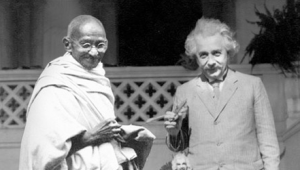
Comparative Political Leadership: Gandhi vs. Contemporary Leaders

By Robert J. Burrowes

On 2 October 2019, it will be the 150th anniversary of the birth of Mohandas K. Gandhi in Gujarat, India. I would like to reflect on the visionary leadership that Gandhi offered the world, briefly comparing it with some national leaders of today, and to invite you to emulate Gandhi’s leadership.

While Gandhi is best remembered for being the mastermind and leader of the decades-long nonviolent struggle to liberate colonial India from British occupation, his extraordinary political, economic, social, ecological, religious and moral leadership are virtually unknown, despite the enormous legacy he left subsequent generations who choose to learn from what he taught. This legacy is available online in the 98-volume Collected Works of Mahatma Gandhi.

While touching on Gandhi’s legacy in each of these regards, I would particularly like to highlight Gandhi’s staggering legacy in four of these fields by briefly comparing his approach to politics, economics, society and the environment with the approach of contemporary political leaders such as Jair Bolsonaro (Brazil), Xi Jinping (China), Emmanuel Macron (France), Viktor Orbán (Hungary), Narendra Modi (India), Binjamin Netanyahu (Israel), Shinzo Abe (Japan), Vladimir Putin (Russia), Mohammad bin Salman (Saudi Arabia), Boris Johnson (UK) and Donald Trump (USA).

Before doing so, let me offer a little basic background on Gandhi so that the foundational framework he was using to guide his thinking and behaviour is clear.

Gandhi in Brief

In order to develop his understanding of the human individual and human society, as well as his approach to conflict, Gandhi engaged in ongoing research throughout his life. He read avidly and widely, as well as keenly observing the behaviour of those around him in many social contexts in three different countries (India, England and South Africa). Shaped also by the influence of his mother and his Hindu religion, this led to Gandhi’s unique understanding of the human individual and his approach to the world at large.

For a fuller elaboration of the points about Gandhi discussed below and the precise references, see relevant chapters and sections on Gandhi in The Strategy of Nonviolent Defense: A Gandhian Approach.

Gandhi’s conception of the human individual and human nature

In order to understand Gandhi generally, it is imperative to comprehend his conceptions of the human individual and human nature simply because these are the foundation of his entire philosophy.

Gandhi attached enormous importance to individual responsibility. He also had a very positive view of human nature. Gandhi believed that humans could respond to ‘the call of the spirit’ and rise above selfishness and violence. Moreover, this was necessary in their quest for self-realization. Self-realization, as the Gandhian scholar Professor Arne Naess explains it, ‘involves realizing oneself as an autonomous, fully responsible person’.

In Gandhi’s view, this quest is an individual one that relies on nonviolence, self-reliance, and the search for truth. ‘To find Truth completely is to realize oneself and one’s destiny.’ But what should guide this search? According to Gandhi, it can only be the individual conscience: The ‘inner voice’ must always be ‘the final arbiter when there is a conflict of duty’. And in his view, ‘the voice of God, of Conscience, of Truth or the Inner Voice or “the still small Voice” mean one and the same thing.’

This point is centrally important, because the usual descriptions of Gandhian nonviolence stress its morality, humility and sacrifice while neglecting the fundamental norm ‘that you should follow your inner voice whatever the consequences’ and ‘even at the risk of being misunderstood’.

The point, of course, is that creation of the nonviolent society which Gandhi envisioned required the reconstruction of the personal, social, economic and political life of each individual. ‘We shall get nothing by asking; we shall have to take what we want, and we need the requisite strength for the effort.’ Consequently, the individual required increased power-from-within through the development of personal identity, self-reliance and fearlessness.

So what is fearlessness? For Gandhi, it means freedom from all external fear, including the fear of dispossession, ridicule, disease, bodily injury and death. In his view, progress toward the goal of fearlessness requires ‘determined and constant endeavour’. But why is fearlessness so important? Because a person who is fearless is unbowed by the punitive power of others and that makes them powerful agents of change.

Gandhi’s approach to society and political economy

Gandhi’s conception of society is based on a rejection of both capitalism and socialism.

In relation to capitalism, he rejected the competitive market and private property, with their emphasis on individual competitiveness and material progress and their consequent greed and exploitation of the weak. He also rejected the major institutions of capitalism, including its parliamentary system of democracy (which denied sovereignty to the people), its judicial system (which exacerbated conflict and perpetuated elite power), and its educational system (which divorced education from life and work).

In relation to socialism, he rejected its conception of conflict in terms of class war, its claim that state ownership and centralization are conducive to the common welfare, its emphasis on material progress, and its reliance on violent means.

The Gandhian vision of future society is based on a decentralized network of self-reliant and self-governing communities using property held in trust, with a weak central apparatus to perform residual functions. His vision stresses the importance of individuals being able to satisfy their personal needs through their own efforts – including ‘bread labor’ – in cooperation with others and in harmony with nature.

For Gandhi, this horizontal framework is necessary in order to liberate the exploiter and exploited alike from the shackles of exploitative structures. This is vitally important because, in his view, ‘exploitation is the essence of violence.’ Self-reliance and interdependence must be built into the structure in order to enhance the capacity for self-regeneration and self defense and to eliminate the potential for structural violence inherent in any dependency relationship.

This social vision was clearly evident in Gandhi’s ‘constructive program’, which was intended to restructure the moral, political, social and economic life of those participating in it. The constructive program was designed to satisfy the needs of each individual member of society and was centrally concerned with the needs for self-esteem, security, and justice. The program entailed many elements, some of which are outlined below in order to illustrate this point.

A crucial feature of the constructive program was the campaign for communal unity. This was intended to encourage reciprocal recognition of the identity of Hindus, Muslims, Christians, Jews and those of other religions. According to Gandhi, all people should have the same regard for other faiths as they have for their own.

The campaign to liberate women was intended to secure self esteem, security, and justice for those most systematically oppressed by India’s patriarchal society. ‘Woman has been suppressed under custom and law for which man was responsible… In a plan of life based on nonviolence, woman has as much right to shape her own destiny as man.’

The campaign for the removal of untouchability was meant to restore self-esteem, dignity, and justice to the Harijans (Gandhi’s term for those without caste) in Hindu society. Similarly, the constructive program was concerned with recognizing the needs of indigenous peoples and lepers throughout India. ‘Our country is so vast… one realizes how difficult it is to make good our claim to be one nation, unless every unit has a living consciousness of being one with every other.’

The khadi (handspun/handwoven cloth) and village industries programs were intended to make the villages largely self-reliant and Indians proud of their identity after centuries of oppression and exploitation under British imperial rule. Khadi, Gandhi argued, ‘is the symbol of unity of Indian humanity, of its economic freedom and equality.’ The struggle for economic equality was aimed at securing distributive justice for all. It meant ‘leveling down’ the rich, who owned the bulk of the nation’s wealth, while raising the living standards of ‘the semi-starved’ peasant millions.

Thus, Gandhi stressed the centrality of the individual and the importance of creating a society that satisfied individual human needs. ‘The individual is the one supreme consideration’; individuals are superior to the system they propound. In fact: ‘If the individual ceases to count, what is left of society?… No society can possibly be built on a denial of individual freedom.’

According to Gandhi then, the foundation of this nonviolent society can only be the nonviolent individual: No one need wait for anyone else before adopting the nonviolent way of life. Hesitating to act because the whole vision might not be achieved, or because others do not yet share it, is an attitude that only hinders progress.

So how is this nonviolent society to come into being? For Gandhi, the aim is not to destroy the old society now with the hope of building the new one later. In his view, it requires a complete and ongoing restructuring of the existing social order using nonviolent means. And while it might not be possible to achieve it, ‘we must bear it in mind and work unceasingly to near it’.

The political means for achieving this societal outcome entailed three essential elements: personal nonviolence as a way of life, constructive work to create new sets of political, social, economic and ecological relationships, and nonviolent resistance to direct and structural violence.

Gandhi the nonviolent conflict strategist

So what did nonviolence mean to Gandhi?

According to Gandhi: ‘Ahimsa [nonviolence] means not to hurt any living creature by thought, word or deed.’ The individual, humanity, and other life forms are one: ‘I believe in the essential unity of [humanity] and for that matter of all that lives.’

Given Gandhi’s understanding that conflict is built into structures and not into people, and that violence could not resolve conflict (although it could destroy the people in conflict and/or the issues at stake) his religious/moral belief in the sanctity of all life compelled him to seek a way to address conflict without the use of violence. Moreover, despite his original training as a lawyer in England and his subsequent practice as a lawyer in South Africa, Gandhi soon rejected the law as a means of dealing with conflict too, preferring to mediate between conflicting parties in search of a mutually acceptable outcome.

According to Gandhi, British imperialism and the Indian caste system were both examples of structures that were perpetuated, in large part, as a result of people performing particular roles within them. The essence of Gandhi’s approach was to identify approaches to conflict that preserved the people while systematically demolishing the evil structure. Moreover, because he saw conflict as a perennial condition, his discussions about future society are particularly concerned with how to manage conflict and how to create new social arrangements free of structural violence.

More importantly, according to Gandhi conflict is both positive and desirable. It is an important means to greater human unity. Professor Johan Galtung explains this point: ‘far from separating two parties, a conflict should unite them, precisely because they have their incompatibility in common.’ More fundamentally, Gandhi believed that conflict should remind antagonists of the deeper, perhaps transcendental, unity of life, because in his view humans are related by a bond that is deeper and more profound than the bonds of social relationship.

So how is conflict to be resolved? In essence, the Gandhian approach to conflict recognizes the importance of resolving all three corners of what Galtung calls the ‘conflict triangle’: the attitude, the behavior, and the goal incompatibility itself. The Gandhian method of conflict resolution is called ‘satyagraha’, which means ‘a relentless search for truth and a determination to reach truth’, it is somewhat simplistically but more widely known (and practiced) in English as ‘nonviolent action’ (or equivalent names). While the perpetrator of violence assumes knowledge of the truth and makes a life-or-death judgment on that basis, satyagraha, according to Gandhi, excludes the use of violence precisely because no one is capable of knowing the absolute truth. Satyagraha, then, was Gandhi’s attempt to evolve a theory of politics and conflict resolution that could accommodate his moral system.

It is for this reason then that ‘Satyagraha is not a set of techniques’. This is because the actions cannot be detached from the norms of nonviolence that govern attitudes and behavior. Therefore, an action or campaign that avoids the use of physical violence but that ignores the attitudinal and behavioral norms characteristic of satyagraha cannot be classified as Gandhian nonviolence. Moreover, the lack of success of many actions and campaigns is often directly attributable to a failure to apply these fundamental norms to their practice of ‘nonviolent action’ (by whatever name it is given locally). To reiterate: ‘Satyagraha is not a set of techniques’.

But Gandhi was not just committed to nonviolence; he was committed to strategy as well. Because he was a shrewd political analyst and not naive enough to believe that such qualities as truth, conviction and courage, nor factors such as numbers mobilized, would yield the necessary outcomes in conflict, he knew that strategy, too, was imperative.

Consequently, for example, he set out to develop a framework for applying nonviolence in such a way that desirable outcomes were built into the means of struggle. ‘They say “Means are after all means”. I would say “means are after all everything”. As the means so the end.’

Gandhi the ecologist

According to Karl Marx, the crisis of civilization was created by the production relations of capitalism; for Gandhi, it was created by the process of industrialization itself. This process both stimulated and was fueled by the unrestrained growth of individual wants. The remedy, according to Gandhi, lay in individuals transforming themselves and, through this transformation, founding a just social order.

He argued that social transformation, no matter how profound, would be neither adequate nor lasting if individuals themselves were not transformed. A part of this strategy was ‘the deliberate and voluntary reduction of wants’. Gandhi did not begrudge people a reasonable degree of physical well-being, but he made a clear distinction between needs and wants. ‘Earth provides enough to satisfy every [person’s] need but not for every [person’s] greed.’

But, as with everything else in Gandhi’s worldview, he did not just advocate this simple material lifestyle; he lived it, making and wearing his own khadi, and progressively reducing his personal possessions.

Contemporary Political Leaders

While contemporary national leaders obviously display a wide variety of styles, it is immediately evident that individuals such as Jair Bolsonaro (Brazil), Xi Jinping (China), Emmanuel Macron (France), Viktor Orbán (Hungary), Narendra Modi (India), Binjamin Netanyahu (Israel), Shinzo Abe (Japan), Vladimir Putin (Russia), Mohammad bin Salman (Saudi Arabia), Boris Johnson (UK) and Donald Trump (USA) might be readily identified as representative of virtually all of them.

And whatever one might say about each of these leaders, it is clear from both their words and behaviour that none of them regards the human individual and their conscience as the foundation on which their national societies or even global society should be built. On the contrary, individuals are destroyed, one way or another, so that society is not inconvenienced more than minimally by any semblance of ‘individuality’ or individual conscience.

Moreover, while in some countries there are clearly articulated doctrines about reducing inequality and, in a few cases, some effort to achieve this, there is little or no concerted effort to restructure their national societies and economies so that inequality is eliminated; on the contrary, the wealth of the few is celebrated and defended by law. None of these leaders wears a local equivalent of khadi to express their solidarity with those less privileged and model a lifestyle that all can (sustainably) share.

The oppression of certain social groups, such as women, indigenous peoples, racial and religious minorities, particular castes or classes, those of particular sexual and identity orientations or with disabilities, remains widespread, if not endemic, in each of these societies with considerably less than full effort put into redressing these forms of discrimination.

Not one of these leaders could profess an ecological worldview (and national policies that reflected a deep commitment to environmental sustainability) or the simplicity of material lifestyle that Gandhi lived (and invited others to emulate).

And not one of them could pretend that killing fellow human beings was abhorrent to them with each of these countries and their leaders content to spend vast national resources on military violence rather than even explore the possibility of adopting the strategically superior (when properly understood and implemented) strategy of nonviolent defense that Gandhi advocated. ‘I have always advised and insisted on nonviolent defence. But I recognize that it has to be learnt like violent defence. It requires a different training.’ See The Strategy of Nonviolent Defense: A Gandhian Approach or, more simply, Nonviolent Defense/Liberation Strategy.

For just a taste of the discriminatory, destructive and violent policies of contemporary political leaders, see ‘Equality Reserved: Saudi Arabia and the Convention to End All Discrimination against Women’, ‘156 Fourth World Nations suffered Genocide since 1945: The Indigenous Uyghurs Case’, ‘Weaponizing Space Is the New Bad Idea Coming From Washington D.C.’ and ‘Report Shows Corporations and Bolsonaro Teaming Up to Destroy the Amazon’. But for further evidence of the support of contemporary political leaders for violence and exploitation in all of their forms, just consult any progressive news outlet.

As an aside, it is important to acknowledge that the world has had or still does have some national leaders with at least some of Gandhi’s credentials. It also has many community leaders who display at least some of these credentials too, which is why there are so many social movements working to end violence, inequality, exploitation and ecological destruction in their many forms.

Was Gandhi realistic? Was he right?

But even if you concede that Gandhi was a visionary, you might still ask ‘Was Gandhi realistic?’ Surely it is asking too much for modern political leaders to live simply and nurture ecological sustainability, to work energetically against all forms of inequality and discrimination, and to deal with conflicts without violence, for example. Especially in a world where corporations are so powerful and drive so much of the inequality, violence and ecological destruction that takes place.

Of course, ‘Was Gandhi realistic?’ is the wrong question. With human beings now on the brink of precipitating our own extinction – see ‘Human Extinction by 2026? A Last Ditch Strategy to Fight for Human Survival’ – the more appropriate question is ‘Was Gandhi right?’

And if he was, then we should be attempting to emulate him, however imperfect our attempts may be. Moreover, we should be endeavouring to improve on his efforts because no-one could credibly suggest that Gandhi’s legacy has had the impact that India, or the world, needs.

Can we improve on Gandhi?

Of course we can. As Gandhi himself would want us to do: ‘If we are to make progress, we must not repeat history but make new history. We must add to the inheritance left by our ancestors.’

One key area in which I would improve on Gandhi is an outcome of doing decades of research to understand the fundamental cause of violence in human society: the dysfunctional parenting and teaching models we are using which inflict virtually endless ‘visible’, ‘invisible’ and ‘utterly invisible’ violence on children and adolescents. See Why Violence?’, Fearless Psychology and Fearful Psychology: Principles and Practice and ‘Do We Want School or Education?’

This cause must be addressed if we are to have any chance of eliminating the staggering and unending violence, in all of its forms, from our families, communities and societies while empowering all individuals to deal fearlessly and nonviolently with conflict.

Hence, I would encourage people to consider making ‘My Promise to Children’ which will require them to learn the art of nisteling. See ‘Nisteling: The Art of Deep Listening’.

For those who need to heal emotionally themselves in order to be able to engage with children in this way, see ‘Putting Feelings First’.

There are several vitally important reasons why a radical reorientation of our parenting and teaching models is necessary as part of any strategy to end human violence. One reason is that the emotional damage inflicted on children leaves them unconsciously terrified and virtually powerless to deal with reality; that is, to respond powerfully to (rather than retreat into delusion about) political, military, economic, social and ecological circumstances. As casual observation confirms, most individuals in industrialized societies become little more than mindlessly obedient consumers under the existing parenting and teaching models. See ‘Love Denied: The Psychology of Materialism, Violence and War’. This is as far as it can get from Gandhi’s aspiration to generate individuals who are fearless.

Moreover, at their worst, these parenting and teaching models generate vast numbers of people who are literally insane: an accurate description of most of the political leaders mentioned earlier but particularly those who pull the strings of these leaders. See ‘The Global Elite is Insane Revisited’.

Another reason that a radical reorientation of our parenting and teaching models is necessary is so that we produce a far greater number of people of conscience who can think, plan and act strategically in response to our interrelated existential crises. Too few people have these capacities. See, for example, ‘Why Activists Fail’ and ‘Nonviolent Action: Why and How it Works’. Consequently, most activism, and certainly that activism on issues vital to human survival, lacks the necessary strategic orientation, which is explained in Nonviolent Campaign Strategy.

A fourth reason that transformed parenting and teaching approaches are necessary is that it will open up a corner of the ‘conflict square’ that Gandhi (and Galtung) do not discuss: the feelings, particularly fear, that shape all conflicts (that is, the other three corners of the ‘conflict square’: attitude, behaviour and goal incompatibility) and then hold them in place. Fear and other suppressed feelings are central to any conflict and these must be heard if conflict is to be resolved completely. But, more fundamentally, conflict is much less likely to emerge (and then become ‘frozen’) if fear and other feelings are not present at the beginning. Imagine how much easier it would be to deal with any situation or conflict if the various parties involved just weren’t scared (whether of the process and/or certain possible outcomes). See ‘Challenges for Resolving Complex Conflicts’.

Anyway, separately from the above, if you share Gandhi’s understanding that the Earth cannot sustain the massive overconsumption that is now destroying our biosphere, consider participating in a project that he inspired: The Flame Tree Project to Save Life on Earth.

And consider signing the online pledge of The Peoples Charter to Create a Nonviolent World.

Or, if none of the above options appeal or they seem too complicated, consider committing to:

The Earth Pledge

Out of love for the Earth and all of its creatures, and my respect for their needs, from this day onwards I pledge that:

  1. I will listen deeply to children (see explanation above)
  2. I will not travel by plane
  3. I will not travel by car
  4. I will not eat meat and fish
  5. I will only eat organically/biodynamically grown food
  6. I will minimize the amount of fresh water I use, including by minimizing my ownership and use of electronic devices
  7. I will not buy rainforest timber
  8. I will not buy or use single-use plastic, such as bags, bottles, containers, cups and straws
  9. I will not use banks, superannuation (pension) funds or insurance companies that provide any service to corporations involved in fossil fuels, nuclear power and/or weapons
  10. I will not accept employment from, or invest in, any organization that supports or participates in the exploitation of fellow human beings or profits from killing and/or destruction of the biosphere
  11. I will not get news from the corporate media (mainstream newspapers, television, radio, Google, Facebook, Twitter…)
  12. I will make the effort to learn a skill, such as food gardening or sewing, that makes me more self-reliant
  13. I will gently encourage my family and friends to consider signing this pledge.

Despite the now overwhelming odds against human survival, can we get humanity back on track? Gandhi would still be optimistic: ‘A small body of determined spirits fired by an unquenchable faith in their mission can alter the course of history.’

Are you one of those ‘determined spirits’?


Biodata: Robert J. Burrowes has a lifetime commitment to understanding and ending human violence. He has done extensive research since 1966 in an effort to understand why human beings are violent and has been a nonviolent activist since 1981. He is the author of Why Violence? His email address is flametree@riseup.net and his website is here.

Learning from Gandhi

By Robert J. Burrowes

Mohandas Karamchand Gandhi was born on 2 October 1869: 150 years ago this year.

There will be many tributes to Gandhi published in 2019 so I would like to add one of my own.

This reflects not just my belief that he gave the world inspiration, ideas and powerful strategies for tackling violence in a wide range of contexts but because my own experience in applying his ideas has proven their worth. This included his awareness that led him to declare that ‘If we are to make progress, we must not repeat history but make new history. We must add to the inheritance left by our ancestors.’ and his encouragement to reflect deeply and listen to one’s ‘inner voice’: ‘you should follow your inner voice whatever the consequences’ and ‘even at the risk of being misunderstood’.

In essence, we can productively learn from history but we can build on it too. And, vitally, this includes dealing more effectively with violence.

So how did Gandhi influence me?

Shortly after midnight on 1 July 1942, my Uncle Bob was killed when the USS Sturgeon, a U.S. submarine, fired torpedoes into the Japanese prisoner of war (POW) ship Montevideo Maru. The ship sank immediately and, along with 1,052 other POWs, Bob was killed.

Apart from his older brother, my father’s twin brother was also killed in World War II. In Tom’s case, he was shot down over Rabaul on his first (and final) mission. He was a wireless air gunner on a Beaufort Bomber. See ‘The Last Coastwatcher: My Brothers’.

My childhood is dotted with memories of Bob and Tom. The occasional remembrance service, war medals and the rare story shared by my father.

In 1966, the year I turned 14, I decided to devote my life to finding out why human beings kill each other and to work out how such killing could be ended. The good news about this ‘decision’ is that, at 14, it all felt manageable! But I wasn’t much older before my preliminary investigations proved that even understanding why humans are violent was going to be a profound challenge. And I intuitively understood that I needed this understanding if any strategy to end violence was to be effective.

In any case, as one might expect, my research into violence and strategies for addressing it led me to nonviolence. I came across virtually nothing about nonviolence during my own studies at school and university but was regularly presented with news reports of people participating in activities – such as demonstrations and strikes – that I later learned to label ‘nonviolent action’.

In 1981 I decided to seek out materials on nonviolence and nonviolent action so that I could learn more about it. I had not been reading for long when the routine reference to Mohandas K. (or Mahatma) Gandhi, about whom I had heard a little and knew of his role in leading the Indian independence struggle, forced me to pay more attention to his life and work. So I sought out his writing and started to read some of his published work. An Autobiography: The Story of My Experiments with Truth was an obvious and early book but there were many others besides. I also read many books about Gandhi, to get a clearer sense of his life as a whole, as reported by his coworkers and contemporaries, as well as documented by scholars since his death. And I spent a great many hours in a library basement poring over The Collected Works of Mahatma Gandhi.

The thing that struck me immediately about Gandhi was that his own interest in tackling violence had a comprehensive ‘feel’ about it. That is, he was not just interested in the violence that occurs when nations fight wars or one person kills or injures another. He was interested in addressing the violence that occurs when individuals and nations exploit other individuals/nations (such as when British imperialism exploited India and Indians) and the violence that occurs when a structure (such as capitalism or socialism) exploits the individuals within it. In his words: ‘exploitation is the essence of violence’. He was interested in the violence that occurs when members of one social group (say, Hindus) ‘hate’ the members of another social group (such as Muslims). He was interested in the violence that occurs when men oppress women or caste Hindus oppress ‘untouchables’. He was interested in the violence that occurs when humans destroy the environment. And he was interested in the violence that one inflicts on oneself.

This comprehensive interest resonated deeply with me because, apart from war, my own childhood and adolescence had revealed many manifestations of violence ranging from the starvation of people in developing countries to the racism in the United States (highlighted by Rev. Martin Luther King Jr. during the 1960s) to the destruction of the environment, each of which had gradually but deeply embedded itself in my consciousness. Tackling violence was a far bigger task than the large one I had originally imagined. Violence is everywhere. Most importantly, it seemed to me, there was enormous violence directed against children in the family home but little was spoken or written about this.

So how did Gandhi explain violence and what was his strategy for addressing it?

Gandhi on Conflict and Violence

For Gandhi, conflict was a perennial condition. He also viewed it positively and considered it desirable. For him, it is an important means to greater human unity precisely because their shared conflict could remind antagonists of the deeper, perhaps transcendental, unity of life, which is far more profound than the bond of their social relationship.

He viewed violence differently, however. And, as might be gleaned from the many configurations of violence that concerned him, as noted above, he considered that violence was built into social structures and not into people.

Fundamentally, as Leroy Pelton characterized it, Gandhi understood that the truth cannot be achieved through violence (‘which violates human needs and destroys life’), because violence itself is a form of injustice. In any case, violence cannot resolve conflict because it does not address the issues at stake.

To reiterate then, for Gandhi there was nothing undesirable about conflict. However, Gandhi’s preoccupation was working out how to manage conflict without violence and how to create new social arrangements free of structural violence. The essence, then, of Gandhi’s approach was to identify approaches to conflict that preserved the people while systematically demolishing the evil structure. Nevertheless, he firmly believed that structural purification alone is not enough; self-purification is also essential.

In other words, in Gandhi’s view, resolving the conflict (without violence) is only one aspect of the desired outcome. For Gandhi, success also implies the creation of a superior social structure, higher degrees of fearlessness and self-reliance on the part of both satyagrahis (nonviolent activists) and their opponents, and a greater degree of human unity at the level of social relationships.

Two Key Questions

Despite the enormous influence that Gandhi had in shaping my own conception of conflict and the precise conception of nonviolence that should be used in dealing with it, I nevertheless remained convinced that two questions remained unanswered: What is the psychological origin of the violent behavior of the individual who perpetrates it? And what theory or framework should guide the application of nonviolent action so that campaigns of all kinds are strategically effective?

The first question is important because even if someone is trapped within a social structure (such as the class system) that is violent, the individual must still choose, consciously or unconsciously, to participate (as perpetrator, collaborator or victim) in the violence perpetrated by that structure or one must choose, consciously, to resist it. Why do so many individuals perform one of the first three roles and so few, like Gandhi himself, choose the role of resister?

The second question is important because while Gandhi himself was an astonishingly intuitive strategic thinker (whose 30-year nonviolent strategy liberated India from British occupation), no one before him or since his death has demonstrated anything remotely resembling his capacity in this regard.

Hence, while nonviolence, which is inherently powerful, has chalked up some remarkable successes, vital struggles for peace (and to end war); to halt assaults on Earth’s biosphere; to secure social justice for oppressed and exploited populations; to liberate national groups from dictatorship, occupation or genocidal assault; and struggles in relation to many other just causes limp along devoid of strategy (or use one that is ill-conceived). So badly are we failing, in fact, that humans now teeter on the brink of precipitating our own extinction. See ‘Human Extinction by 2026? A Last Ditch Strategy to Fight for Human Survival’.

Anyway, having studied Gandhi extensively and learned from his strategic approach to nonviolence (elements of which I was progressively including in nonviolent campaigns in which I was involved myself), I resumed my original research to understand the fundamental origin of human violence and also decided to develop a strategic theory and framework for addressing violence in the campaign context so that Gandhi’s strategic thinking could be readily copied by other nonviolent activists.

It turned out that developing this strategic theory and strategy was simpler than the original aim (understanding violence) and I have presented this strategic thinking on two websites: Nonviolent Campaign Strategy and Nonviolent Defense/Liberation Strategy.

Despite my preliminary efforts in the 1990s to encourage fellow activists to use this framework, it soon became clear that only the rarest of activists has the capacity to think strategically about an issue, even when presented with a framework for doing so.

The Origin of Human Violence

Consequently, the vital importance of understanding the origin of human violence was starkly demonstrated to me yet again because I knew it would answer key supplementary questions such as these: Why to do so many people live in denial/delusion utterly incapable of perceiving structural violence or grappling powerfully with (military, social, political, economic and ecological) violence? Why is it that so many people, even activists, are powerless to think strategically? How can activists even believe that success can be achieved, particularly on the major issues of our time (such as the threats of nuclear war, ecological devastation and climate cataclysm), without a focused and comprehensive strategy, particularly given elite resistance to such campaigns? See ‘The Global Elite is Insane Revisited’.

Hence, in an attempt to answer questions such as these, Anita McKone and I went into seclusion in an endeavor to understand how our own minds functioned so that we might better understand the minds of others. I hoped it would take a few months. It took 14 years.

So what is the cause of violence in all contexts and which, depending on its precise configuration in each case, creates perpetrators of violence, people who collaborate with perpetrators of violence, people who are passive victims of violence, people who live in denial/delusion, people who are sexist or racist, and activists who cannot think strategically (among many other adverse outcomes)?

Each of these manifestations of human behaviour is an outcome of the adult war on children. That is, adult violence against children is the fundamental cause of all other violence.

How does this happen? It happens because each child, from birth, is socialized – more accurately, terrorized – so that they fit into their society. That is, each child is subjected to an unrelenting regime of ‘visible’, ‘invisible’ and ‘utterly invisible’ violence until they offer the obedience that every adult – parent, teacher, religious figure… – demands.

So what constitutes ‘visible’, ‘invisible’ and ‘utterly invisible’ violence?

‘Visible’ violence includes hitting, screaming at and sexually abusing a child which, sadly enough, is very common.

But the largest component of damage arises from the ‘invisible’ and ‘utterly invisible’ violence that we adults unconsciously inflict on children during the ordinary course of the day. Tragically, the bulk of this violence occurs in the family home and at school. For a full explanation, see ‘Why Violence?’ and Fearless Psychology and Fearful Psychology: Principles and Practice.

‘Invisible’ violence is the ‘little things’ we do every day, partly because we are just ‘too busy’. For example, when we do not allow time to listen to, and value, a child’s thoughts and feelings, the child learns to not listen to themSelf thus destroying their internal communication system. When we do not let a child say what they want (or ignore them when they do), the child develops communication and behavioral dysfunctionalities as they keep trying to meet their own needs (which, as a basic survival strategy, they are genetically programmed to do).

When we blame, condemn, insult, mock, embarrass, shame, humiliate, taunt, goad, guilt-trip, deceive, lie to, bribe, blackmail, moralize with and/or judge a child, we both undermine their sense of Self-worth and teach them to blame, condemn, insult, mock, embarrass, shame, humiliate, taunt, goad, guilt-trip, deceive, lie, bribe, blackmail, moralize and/or judge.

The fundamental outcome of being bombarded throughout their childhood by this ‘invisible’ violence is that the child is utterly overwhelmed by feelings of fear, pain, anger and sadness (among many others). However, mothers, fathers, teachers, religious figures and other adults also actively interfere with the expression of these feelings and the behavioral responses that are naturally generated by them and it is this ‘utterly invisible’ violence that explains why the dysfunctional behavioral outcomes actually occur.

For example, by ignoring a child when they express their feelings, by comforting, reassuring or distracting a child when they express their feelings, by laughing at or ridiculing their feelings, by terrorizing a child into not expressing their feelings (for instance, by screaming at them when they cry or get angry), and/or by violently controlling a behavior that is generated by their feelings (for example, by hitting them, restraining them or locking them into a room), the child has no choice but to unconsciously suppress their awareness of these feelings.

However, once a child has been terrorized into suppressing their awareness of their feelings (rather than being allowed to have their feelings and to act on them) the child has also unconsciously suppressed their awareness of the reality that caused these feelings. This has many outcomes that are disastrous for the individual, for society and for the biosphere because the individual will now easily suppress their awareness of the feelings that would tell them how to act most functionally in any given circumstance and they will progressively acquire a phenomenal variety of dysfunctional behaviors, including some that are violent towards themself, others and/or the Earth.

So what do we do?

Well, if you want to make an enormous contribution to our effort to end violence, you can make the commitment outlined in ‘My Promise to Children’. If you need to do some healing of your own to be able to nurture children in this way, then consider the information provided in the article ‘Putting Feelings First’.

If you want to systematically tackle violence against the biosphere, consider (accelerated) participation in the fifteen-year strategy, inspired by Gandhi, outlined in ‘The Flame Tree Project to Save Life on Earth’. This project outlines a simple plan for people to systematically reduce their consumption, by at least 80%, involving both energy and resources of every kind – water, household energy, transport fuels, metals, meat, paper and plastic – while dramatically expanding their individual and community self-reliance in 16 areas, so that all environmental concerns are effectively addressed. As Gandhi observed 100 years ago: ‘Earth provides enough for every person’s need but not for every person’s greed.’

But, critically important though he believed personal action to be, Gandhi was also an extraordinary political strategist and he knew that we needed to do more than transform our own personal lives. We need to provide opportunities that compel others to consider doing the same.

So if your passion is campaigning for change, consider doing it strategically, as Gandhi did. See Nonviolent Campaign Strategy.

And if you want to join the worldwide movement to end all violence against humans and the biosphere, you can do so by signing the online pledge of The Peoples Charter to Create a Nonviolent World.

Gandhi was assassinated on 30 January 1948. But his legacy lives on. You can learn from it too, if you wish.


Biodata: Robert J. Burrowes has a lifetime commitment to understanding and ending human violence. He has done extensive research since 1966 in an effort to understand why human beings are violent and has been a nonviolent activist since 1981. He is the author of Why Violence? His email address is flametree@riseup.net and his website is here.

Robert J. Burrowes
P.O. Box 68
Daylesford, Victoria 3460
Australia

Email: flametree@riseup.net

Websites:
Nonviolence Charter
Flame Tree Project to Save Life on Earth
‘Why Violence?’
Feelings First
Nonviolent Campaign Strategy
Nonviolent Defense/Liberation Strategy
Anita: Songs of Nonviolence
Robert Burrowes
Global Nonviolence Network

Beyond Violence and Nonviolence

By Ben Case

Source: ROAR Magazine

The argument over violence and nonviolence — one of the oldest and most divisive on the left — is back. Broken windows, mass arrests and one well-timed punch marked Donald Trump’s inauguration alongside massive nonviolent marches. In the weeks since, demonstrators converged on international airports, adding weight to a heated judicial fight over a sweeping ban on refugees and immigrants from seven countries, and fiery protests outside a famed hate-monger’s talk at Berkeley cancelled the event and forced the speaker to flee under police escort.

Against the backdrop of a renascent fascist menace, the mix of tactical approaches has brought renewed fervor to the violence-vs-nonviolence debate. The dispute has been calcified into fixed positions, where it becomes less about persuading others to a strategic position and more about winning a point for one’s team.

Despite claims to the contrary, the current arguments over violence and nonviolence are based more in personal belief than in strategy. It is perfectly reasonable for an individual to dislike, be frightened of, or not want to participate in violent actions. To others, violent resistance on the part of the oppressed is inherently virtuous — and given social realities, the desire to break and burn things is understandable. But these personal positions should not be confused with strategic logic. In this debate, it does immense harm to the movement to represent personal sentiments as empirical fact.

Lucid strategic thinking is crucial in the present moment, and this type of quarrel is extremely destructive. It is time for movements to update frameworks for understanding disruptive actions, and that means thinking beyond the archaic violence-nonviolence dichotomy.

Nonviolence and Civil Resistance

The violence-nonviolence framework as we know it emerged from a twentieth-century context in which the paradigm for political revolution was armed struggle. Whether drawing inspiration from ideologically Maoist and Guevarist guerrilla strategies or theories of decolonization, revolutionaries took up arms and went to war with the state.

Original adherents to the doctrine of nonviolence, mostly pacifists, objected to acts of violence on a moral and historically religious basis. Gandhi’s philosophy of satyagraha, often translated as “adherence to Truth” or “truth force,” which means social change through and as the practice of nonviolence, was deeply influential for pacifists as an alternative to the dominant model of guerrilla warfare. In this view, nonviolence is valued over political victory, since enacting violence in order to achieve a material goal would not be victory at all.

The field of civil resistance studies changed the approach of “nonviolentism.” Gene Sharp, the founder of the field, separated Gandhi’s theory of nonviolent organizing from his theory of nonviolent spirituality. This new approach of “strategic nonviolence” argues for the use of nonviolent action as a political tool based on its superior strategic efficacy. Strategic nonviolentists distinguish themselves from “moral” or “principled” nonviolentists, who argue for nonviolence based on its inherent virtue. Here the value is placed on political victory, with nonviolent action understood to be the most effective method of achieving it.

Civil resistance studies has identified social and political dynamics that mass movements use to create material leverage in wildly lopsided power struggles with authoritarian regimes. The idea is to locate the “pillars of support” — the systemically loadbearing institutions — for a regime and to strategically dismantle them, focusing on the importance of mass noncooperation, polarizing populations through dramatic actions, and the backfiring effect of police repression.

In a moment when strategic thinking is desperately needed, the civil resistance framework is a powerful one. But the strategic nonviolent approach lags behind contemporary realities. The twentieth-century image of a revolutionary was the guerrilla unit facing off against the army; today it is the crowd facing off against lines of riot police. Of course, leftist armed struggle still exists, but it is increasingly framed as armed self-defense rather than armed conquest of the state, as in the Rojava Revolution and the Zapatista movement.

When guerrilla war was the prevailing method of revolutionary struggle, broadly distinguishing between violent and nonviolent strategy made more sense, because the strategic orientation of street protests was so dissimilar from that of warfare. In the emerging paradigm of revolutionary mass protest movements, whether or not any property is destroyed in a specific action is an entirely different issue, and far less consequential.

By Any Means Necessary

The use of low-level violent actions such as rioting and property destruction is often termed “diversity of tactics.” Like nonviolence, the defense of violent tactics can have both strategic and moral sides to it, and they can be equally difficult to separate.

Despite the objection that nonviolence depends on morality, arguments for the use of diversity of tactics frequently center on moral claims as well. For example, a common refrain is that the violence of breaking windows pales in comparison to the violence perpetrated by the state. While this is manifestly true, it does not constitute a strategic argument. A violent action being morally justifiable as a reaction to or defense from institutional violence does not mean that that type of action most effectively counters the institutional violence.

Malcolm X’s famous statement that “we want freedom by any means necessary” is frequently referenced to defend the use of diversity of tactics, classically juxtaposed to King’s nonviolence. However, the last word in Malcolm X’s sentence receives less attention than it should. The word “necessary” implies a strategic logic — by whichever means are required to achieve a particular goal — but in and of itself this approach does not point to a strategy. (It is worth noting that Malcolm X did not engage in any political violence himself.) Arguments for diversity of tactics might convince an activist that violence can be necessary, but questions of how and when those actions are strategically applied remain.

On the other hand, the study of civil resistance has focused on how and when certain tactics are most effective, but the field’s vestigial attachment to a totalizing concept of nonviolence limits its usefulness. Nonviolence is marketed as not only the most effective but the only viable method of political struggle. This position demands strict adherence to nonviolent discipline, as any act that can be reasonably perceived as violent is understood to help the enemy. Since violent actions nearly always occur at some point in large-scale social movements, a great deal of energy is wasted on hand-wringing over how these actions are hurting nonviolent efforts.

Focusing on What Works

The single most important study in civil resistance is published in Erica Chenoweth and Maria Stephan’s 2011 book Why Civil Resistance Works: The Strategic Logic of Nonviolent Conflict. Their claim is striking: nonviolent movements are almost twice as likely as violent ones to achieve “maximalist” political goals (overthrowing a leader, ousting a foreign occupation or seceding from a territory). This work has become the centerpiece of the assertion that nonviolence is more effective than violence.

Chenoweth and Stephan’s argument is based on a global dataset, Nonviolent and Violent Conflicts and Outcomes (NAVCO), which catalogues and compares uprisings between 1900 and 2006 based on whether or not the primary method was violent or nonviolent. The problem is that this study ignores riots and property destruction.

In fact, Chenoweth and Stephan’s study does not compare violence with nonviolence in the way those terms are used in movements today — it compares warfare to mass protests. According to the authors, NAVCO’s “violent” category comprises civil wars, while the nonviolent category is composed of campaigns that do not harm or threaten to harm opponents. Movements are ultimately categorized based on a campaign’s primary method of struggle, and the data contains no variables for any type of violent action that falls below the threshold for war.

NAVCO does include a variable for the “radical flank effect,” which in this case means an armed struggle being waged in the same country as a civilian protest movement. For example, during the civilian anti-Marcos protests in the Philippines in the 1980s, there was a separate armed insurgency going on at the same time elsewhere in the country — that is a radical flank in NAVCO data. This has nothing to do with the effect of protesters breaking windows or scuffling with police.

Indeed, campaigns in NAVCO’s nonviolent category contain prominent acts of violence. For example, the First Palestinian Intifada, iconically associated with people throwing rocks at soldiers, is listed as nonviolent because the movement was primarily nonviolent. The “Bulldozer Revolution” in Serbia, so named because activists used a bulldozer to break through police barricades at a crucial moment during climactic protests, allowing crowds to storm and burn government buildings, is also classified as nonviolent.

For the most part, activists today do not seriously discuss taking up arms and going to the mountains to wage guerrilla warfare. Instead, contemporary arguments over nonviolent discipline center around activities like smashing windows, throwing projectiles at police and punching neo-Nazis. To date, Chenoweth’s research does not address these actions whatsoever. Unfortunately, it is misrepresented as being directly relevant to the diversity of tactics debate, including by the researchers themselves, and has become the go-to reference for advocates of strict nonviolent discipline.

The gap between Chenoweth and Stephan’s findings and how they are presented is symptomatic of structural problems in the civil resistance field at large. The prevailing trend has been to ignore the types of actions that do not fit the theory. When violent actions occur, they are not investigated with the balanced, systematic analysis given to nonviolent actions, but are brushed off as random or unfortunate breaks from nonviolent discipline.

Between “Strategic” and “Nonviolence”

Though civil resistance studies claims to investigate which strategies are most effective for achieving a movement’s objectives, its conceptual framework ultimately emerged from a Gandhian view of political struggle. Sharp explained Gandhi’s movement in terms of its strategic approach and eventually abandoned the moral pacifism, but the foundational core of the field is still based on a theory of change constructed around the practice of spiritual nonviolence.

The term “strategic nonviolence” contains the contradiction within itself. A strategy that begins by assuming that a certain approach is correct is not actually a strategy but a belief. Civil resistance theorists claim to be motivated purely by the effectiveness of their approach, but if effectiveness is truly the goal, then one must be open to all possibilities that might prove to be effective in a given circumstance. If one rejects a priori all possibilities that are not nonviolence, then what is called strategy is actually selective evidence to support a preexisting conclusion.

While pacifism was never fully purged from strategic nonviolence, the attempt to abandon the moral foundation of nonviolence has had troubling consequences. Without a guiding ideology, that which is deemed to be most strategic can come to stand in for that which is just and correct. In other words, focusing exclusively on how movements win the next battle can obscure the meaning of the war. Ironically, moral nonviolentists like Gandhi and King were far more sympathetic to violent actions that were understood to be on the side of justice than strategic nonviolentists are to a broken bank window.

Rather than taking cues from Gandhi and King, who humanized and allied themselves with all resistance to oppression even when they disagreed with the methods, today’s strategic nonviolentists are quick to deride, abandon and even incriminate activists engaging in property destruction or self-defense. The loss of principle may have allowed strategic nonviolentists to pursue valuable research on effective tactics, but it has also led to a callous attitude towards fellow activists — one that is distinctly un-strategic in its approach to polarizing public opinion around systemic oppression.

Strategic Thinking Beyond Violence and Nonviolence

Like Chenoweth’s research, the field of civil resistance claims to do a lot more than it does — but what it does do is significant. The articulation of simple, user-friendly approaches for dismantling institutional targets using creative nonviolent disruption is important and needed. Research that illuminates how social movements effectively create widespread social and political change is one of the best uses of academic resources.

Unsurprisingly, there is evidence that violent actions generate greater police repression. At least one study suggests that mainstream tolerance for police repression of protests, especially violent ones, is quite high. These are important factors for activists to anticipate and strategize around, but this type of backlash does not necessarily undermine movements. In fact, state repression and polarizing public opinions are part of the cycle of disruption that is required for radical social change.

There are also many reasons to believe that use of limited violence, especially property destruction and community self-defense, might enhance a movement’s power. In addition to sometimes being strategic tools, acts of violence as collective resistance can be important components of consciousness-building and radicalization for many people, an effect that is sometimes overlooked by more clinical studies based on political outcomes. And far from being insulated from one another, there are often fluid interactions between more and less violent elements of movements — and those who participate in them.

Any tactic, whether or not it involves violence, has potential benefits and costs. Just as a riot might damage some people’s perception of a movement, it might galvanize others. A permitted demonstration led by liberal figureheads could play well on TV, but might also suck resources without challenging power. And of course there are differences in tactical impact between shorter term and broader strategic goals. The point is, violence is not necessarily the deciding factor in whether or not an action is strategic.

It is not about which team wins symbolic points in the violence-nonviolence debate; it is about how different groups’ tactical approaches can work in harmony to build power. In the context of today’s movements, the broad argument over violence and nonviolence is at best a distraction. At worst, it promotes a good protester/bad protester narrative that helps the state divide and conquer movements. We need a fresh approach.

Key principles of civil resistance such as noncooperation, mass participation, polarization and the backfiring effect are important and useful. If the blanket exclusion of all violent action is left aside, these principles are theoretically open to a much broader range of strategies and tactics than strict nonviolence currently admits.

Movement strategist Frances Fox Piven sees riots as a form of noncooperation in the routines of civic life. Riots can also dramatize and bring mass attention to serious issues in precisely the way civil resistance advocates. And it might turn out that the backfiring effect has more to do with disproportionate repression than the complete lack of violence on the part of protesters. For example, riots in Ferguson brought police militarization into national focus.

Importantly, these possibilities do not imply an inversion of nonviolent discipline, like some kind of violent discipline. Certainly there are many circumstances in which nonviolent actions are appropriate and effective. Contrary to what some diversity of tactics advocates claim, more violence does not necessarily indicate a more successful movement. But neither necessarily does less violence. We need dynamic strategic models — rooted in principles of solidarity, autonomy and equity — that can accommodate a spectrum of disruptive and prefigurative action.

The rhetoric and meanings of violence can and should be debated, but those meanings are no longer attached to distinct forms of political struggle. It does not make analytical sense to categorize movements or actions into two artificial, opposing categories based on whether or not activists do anything that can be called violence. The civil resistance playbook says that when there is protester violence, nonviolent groups should try to enforce nonviolent discipline or distance themselves. But this response is based less in strategic logic than in a stubborn and unfounded belief that any violence at all is necessarily a movement-stopper.

The moment is urgent. In terms of strategy, the violence-nonviolence dichotomy has outlived its usefulness. Organizers should not evaluate actions based on whether or not there is anything that could be interpreted as violence, but rather based on the potential of those actions to disrupt oppressive systems, build power and win short-term goals that can lead to long-term victory.

Why War? Building on the legacy of Einstein, Freud and Gandhi

By Robert J. Burrowes

In 1932, Sigmund Freud and Albert Einstein conducted a correspondence subsequently published under the title ‘Why War?’ See ‘Why War: Einstein and Freud’s Little-Known Correspondence on Violence, Peace, and Human Nature’. In many ways, this dialogue between two giants of the 20th century is symbolic of the effort made by many humans to understand that perplexing and incredibly damaging feature of human experience: the institution of war.

In a recent article, the founder of peace research, Professor Johan Galtung, reminded us of the legacy of Freud and Einstein in this regard and reflected on their dialogue, noting some shortcomings including their failure to ‘unpack conflict’. See ‘Freud-Einstein on Peace’.

Of course, Freud and Einstein weren’t the first to consider the question ‘Why War?’ and their dialogue was preceded by a long sequence of individuals and even some organizations, such as the Women’s International League for Peace and Freedom and War Resisters’ International, who sought to understand, prevent and/or halt particular wars, or even to understand and end the institution itself, as exemplified by the Kellogg-Briand Pact in 1928 outlawing war. Moreover, given the failure of earlier initiatives, many individuals and organizations since Freud and Einstein have set out to understand, prevent and/or halt wars and these efforts have taken divergent forms.

Notable among these, Mohandas K. Gandhi was concerned to develop a mode of action to deal with many manifestations of violence and he dramatically developed, and shared, an understanding of how to apply nonviolence, which he labeled satyagraha (holding firmly to the truth), in overcoming large-scale violence and exploitation. He successfully applied his strategic understanding of nonviolence to the Indian independence struggle against British colonial rule. But while Gandhi was happy to acknowledge his debt to those who had gone before, he was not shy in proclaiming the importance of finding new ways forward: ‘If we are to make progress, we must not repeat history but make new history. We must add to the inheritance left by our ancestors.’

My own journey to understand human violence was caused by the death of my two uncles, Bob and Tom, in World War II, ten years before I was born. My childhood in the 1950s and 1960s is dotted with memories of my uncles, stimulated through such events as attending memorial services at the Shrine of Remembrance where their war service was outlined. See ‘My Brothers’ on my father’s website.

But by the early 1960s, courtesy of newspaper articles and photos, I had become aware of exploitation and starvation in Africa and elsewhere, and as a young university student in the early 1970s I was reading literature about environmental destruction. It wasn’t just war that was problematic; violence took many other forms too.

‘Why are human beings violent?’ I kept asking. Because I thought that this question must have been answered somewhere, I kept reading, including the work of Freud and Karl Marx as an undergraduate, but also the thoughts of many other scholars, such as Frantz Fanon, as well as anarchists, feminists and those writing from other perspectives which offered explanations of violence, whether direct, structural or otherwise.

By the early 1980s I had started to read Gandhi and I had begun to understand nonviolence, as Gandhi practised and explained it, with a depth that seemed to elude the activists I knew and even the scholars in the field that I read.

Separately from this, I was starting to gain a sense that the human mind was not something that could be understood well by viewing it primarily as an organ of thinking and that much of the literature and certainly most of the practitioners in the field of psychology and related fields, especially psychiatry, had failed to understand the emotional depth and complexity of the human mind and the implications of this for dealing with conflict and violence. In this sense, it was clear to me, few had understood, let alone been able to develop, Freud’s legacy. This is because the fundamental problem is about feeling (and, in relation to violence, particularly suppressed fear and anger). Let me explain why.

Violence is something that is usually identified as physical: it involves actions like hitting, punching and using weapons such as a gun. This is one of the types of violence, and probably the one now most often lamented, that is inflicted on indigenous peoples, women and people of colour, among others.

Separately from this, Gandhi also identified exploitation as violence and Galtung elaborated this concept with his notion of ‘structural violence’. Other forms of violence have been identified and they take many forms such as financial violence, cultural violence and ecological violence. But violence can be more subtle than any of these and, hence, much less visible. I have given two of these forms of violence the labels ‘invisible violence’ and ‘utterly invisible violence’. Tragically, ‘invisible violence’ and ‘utterly invisible violence’ are inflicted on us mercilessly from the day we are born. And, as a result, we are all terrorized.

So what are ‘invisible’ and ‘utterly invisible’ violence?

In essence, ‘invisible’ violence is the ‘little things’ we do every day, partly because we are just ‘too busy’. For example, when we do not allow time to listen to, and value, a child’s thoughts and feelings, the child learns to not listen to themSelf thus destroying their internal communication system.

When we do not let a child say what they want (or ignore them when they do), the child develops communication and behavioural dysfunctionalities as they keep trying to meet their own needs (which, as a basic survival strategy, they are genetically programmed to do). When we blame, condemn, insult, mock, embarrass, shame, humiliate, taunt, goad, guilt-trip, deceive, lie to, bribe, blackmail, moralize with and/or judge a child, we both undermine their sense of Self-worth and teach them to blame, condemn, insult, mock, embarrass, shame, humiliate, taunt, goad, guilt-trip, deceive, lie, bribe, blackmail, moralize and/or judge.

The fundamental outcome of being bombarded throughout their childhood by this ‘invisible’ violence is that the child is utterly overwhelmed by feelings of fear, pain, anger and sadness (among many others). However, parents, teachers and other adults also actively interfere with the expression of these feelings and the behavioural responses that are naturally generated by them and it is this ‘utterly invisible’ violence that explains why the dysfunctional behavioural outcomes actually occur.

For example, by ignoring a child when they express their feelings, by comforting, reassuring or distracting a child when they express their feelings, by laughing at or ridiculing their feelings, by terrorizing a child into not expressing their feelings (e.g. by screaming at them when they cry or get angry), and/or by violently controlling a behaviour that is generated by their feelings (e.g. by hitting them, restraining them or locking them into a room), the child has no choice but to unconsciously suppress their awareness of these feelings.

However, once a child has been terrorized into suppressing their awareness of their feelings (rather than being allowed to have their feelings and to act on them) the child has also unconsciously suppressed their awareness of the reality that caused these feelings. This has many outcomes that are disastrous for the individual, for society and for nature because the individual will now easily suppress their awareness of the feelings that would tell them how to act most functionally in any given circumstance and they will progressively acquire a phenomenal variety of dysfunctional behaviours, including many that are violent towards themselves, others and/or the Earth.

Moreover, this emotional (or psychological) damage will lead to a unique combination of violent behaviours in each case. And some of these individuals will gravitate to working in one of the social roles that specifically requires, or justifies, the use of ‘legitimized violence’, such as the violence carried out by police, prosecuting lawyers, magistrates and judges, as well as that inflicted by the military. Others, of course, will operate outside the realm of legitimized violence and be labelled as ‘criminals’.

But, you might be wondering, what is the link between what happens in childhood and war?

The answer is simply that perpetrators of violence, and those who collaborate with them, are created during childhood. And these perpetrators and collaborators are all terrified, self-hating and powerless – for much greater detail of the precise psychological characteristics of perpetrators of violence and their collaborators, see ‘Why Violence?’  and ‘Fearless Psychology and Fearful Psychology: Principles and Practice’ – and they go on to perform all of the key roles in creating, maintaining, equipping, staffing and legitimizing the institutions of war and in conducting it.

If it weren’t for the violence to which we are all mercilessly subjected throughout childhood, there would be no interest in violence or war of any kind. If we were raised without violence, we would be naturally peaceful and cooperative, content to spend our time seeking to achieve our own unique evolutionary potential and to nurture the journey of others as well as life itself, rather than just become another cog in someone else’s military (or other bureaucratic or corporate) machine.

If any of the above resonates with you, then I invite you to make ‘My Promise to Children’.

In addition, if further reducing the violence in our world appeals to you, then you are also welcome to consider participating in ‘The Flame Tree Project to Save Life on Earth’,  signing the online pledge of ‘The People’s Charter to Create a Nonviolent World’ and/or considering using the strategic framework on one or the other of these two websites for your campaign to end violence or war in one context or another: Nonviolent Campaign Strategy and Nonviolent Defense/Liberation Strategy.

A child is not born to make war. But if you inflict enough violence on a child, and destroy their capacity to become their own unique and powerful self, they will be terrorised into perceiving violence and war as their society wants them to be perceived. And violence and war, and the institutions that maintain them, will flourish.

If we want to end war, we must halt the adult war against children as a priority.


Biodata: Robert J. Burrowes has a lifetime commitment to understanding
and ending human violence. He has done extensive research since 1966 in
an effort to understand why human beings are violent and has been a
nonviolent activist since 1981. He is the author of ‘Why Violence?
His email address is flametree@riseup.net
and his website is at http://robertjburrowes.wordpress.com


Robert J. Burrowes
P.O. Box 68
Daylesford
Victoria 3460
Australia
Email: flametree@riseup.net

Websites:
Nonviolence Charter
Flame Tree Project to Save Life on Earth
‘Why Violence?’
Nonviolent Campaign Strategy
Nonviolent Defense/Liberation Strategy
Anita: Songs of Nonviolence
Robert Burrowes
Global Nonviolence Network

Gandhi the Anarchist

5e0fc8e70e7f794d27662ed00910928f

Editor’s note: Tomorrow marks the 67th anniversary of the assassination of Mohandas Gandhi. Society often celebrates such influential rebels while forgetting what made them great. Articles such as this help us avoid that trap.

By Jason Farrell

Source: Center for a Stateless Society

A complex man with a controversial legacy, Mohandas Gandhi remains one of the pioneers of civil disobedience as a political weapon and a giant in 20th century anti-colonialism. An individualist anarchist who motivated millions to fight to liberate themselves from British rule, his success showed a potentially powerful application of libertarian ideas during a major political crisis and the ability of those values to inspire positive, peaceful outcomes.

Gandhi’s principles of radical liberation existed within a moral framework that abhorred violence but empowered ordinary people, intellectually and spiritually, to prevail against oppressors and shatter a miserable status quo. According to the research of Erica Chenoweth, Gandhi’s template of non-violent resistance has been immensely successful for later generations around the world in creating lasting improvements in civil rights.

Modern activists and political thinkers shouldn’t discount the essential libertarian qualities of Gandhi’s philosophy, as they were among its most powerful and effective attributes. A commitment to natural law, self-determination, individualism and an abhorrence of government were core to his thinking and largely responsible for his success as an activist.

Gandhi’s Philosophy

Satyagraha, Gandhi’s philosophy of non-violence, which translates to “truth force” or “love force” carries with it some distinctly libertarian ideas. It incorporates elements of both the “knowledge problem” (applied in a moral sense) and the non-aggression axiom, although taken a step further into moral obligation to others — which is more than libertarianism demands. According to Gandhi:

In the application of Satyagraha, I discovered in the earliest stages that pursuit of truth did not admit of violence being inflicted on one’s opponent but that he must be weaned from error by patience and compassion. For what appears to be truth to the one may appear to be error to the other. And patience means self-suffering. So the doctrine came to mean vindication of truth, not by infliction of suffering on the opponent, but on oneself.

Gandhi noted the purpose of Satyagraha was to “convert, not to coerce, the wrong-doer.” Success is thus defined as cooperation towards a just end, rather than a political “win.” He also spoke of means and ends as inseparable, rejecting the use of violence or the “victory, by any means necessary,” mentality of some who have practiced passive resistance in the West. Gandhi knew using violent means would embed injustice in whatever ends are attained, exacerbating the cycle of violence that plagues so many societies. In this way, the practitioner’s authority is rooted in moral force instead of violence, and has the potential to reduce antagonisms within a society without harming the antagonists.

Gandhi developed a set of very particular rules and mores for Satyagrahis to follow, including mandatory spinning, chastity and abstinence from alcohol. With these we are unconcerned, since different disobedience movements employed different particulars in their belief systems. What is interesting and relevant is the commonality among them, and the parallels to libertarian beliefs: The notion of the moral abhorrence of coercion, and the acknowledgement of coercion’s role in perpetuating injustice; the belief in natural rights that oblige disobedience to unjust laws; finally, and most pertinently, the almost mystical ability of this approach to inspire entire populations to mass action is an historical fact.

Foundations of Indian Liberty: Satyagraha in Action

The Jallianwala Bagh massacre of April 13, 1919 (also known as the Amritsar massacre) has been characterized as the turning point in the history of British India, the event that lost Britain her ‘jewel in the crown’ and eventually her empire. The event, condemned by Winston Churchill, nevertheless produced an escalation of tension and insults against Indian subjects and shattered the notion that Indians were British subjects with the same rights as the British themselves, much in the way the Easter Rising created that same clarity for the Irish.

The Tribune of India described the massacre as a

[M]ilestone in the struggle for freedom which brought Mahatma Gandhi on the scene in his capacity as a leader of the masses whose presence inspired millions of people for three decades.

In the annals of our freedom struggle the Jallianwala Bagh massacre occupies an unforgettable place. Overnight, men and women resolved to defy the British might. For Gandhiji, the incident was a turning point. He became a ‘rebel’ and realised the futility of achieving freedom through British cooperation. The seeds of his ‘do or die’ movement were thus sown then and there.

Noted the Tribune:

History bears ample testimony to the fact that the ill-conceived and unwarranted 1919 military operation proved to be a catalyst for bringing the doom of the British Raj as it created an unbridgeable gulf between the British Government and the Indian people, leaving the British with no other option but to transfer power to the Indians.

Gandhi capitalized on the anger against British rule with the first concerted civil disobedience campaigns, the non-cooperation movement that began in the 1920’s. The Salt March of 1930 was among his most famous successes. The march began with a mere 78 people, swelling to throngs of 30,000-50,000 as they marched through four provinces to protest the salt tax. Gandhi went to sea to make illegal salt, a highly symbolic and dangerous act that challenged British authority. The result was widespread support and media attention, and the building of a broad-based movement. That movement contributed to Indian independence from the British in 1947.

Gandhi’s Libertarian Ideology

Though Gandhi the monolithic figure is widely revered, his actual political philosophy is seldom discussed, perhaps because he was an anarchist who believed in a cooperative agrarian economic model that prevented stratification of classes and political power.

It is well known that Gandhi was motivated by a desire to see India gain independence from the British Empire. Beyond that, his experience with governments seemed to have led him to a deep abhorrence of the institution, and an embracing of individualism, self-reliance and spontaneous order, part of a moral system he called the Swaraj, which translates literally to “self-rule.”

According to Swaraj.org:

The call for Swaraj represents a genuine attempt to regain control of the ‘self’ — our self-respect, self-responsibility, and capacities for self-realization — from institutions of dehumanization. As Gandhi states, “It is Swaraj when we learn to rule ourselves.” The real goal of the freedom struggle was not only to secure political azadi (independence) from Britain, but rather to gain true Swaraj (liberation and self-rule).

Gandhi scorned the representative democracy due to its conflict with his deeply held reverence for the rights of the individual, noting “Swaraj will be an absurdity if individuals have to surrender their judgment to a majority.”

Gandhi recognized inequalities would persist. He was, however, deeply skeptical of government as a tool of social improvement:

I look upon an increase of the power of the State with the greatest fear, because although while apparently doing good by minimizing exploitation, it does the greatest harm to mankind by destroying individuality, which lies at the root of all progress. We know of so many cases where men have adopted trusteeship, but none where the State has really lived for the poor.

It is my firm conviction that if the State suppressed capitalism by violence, it will be caught in the coils of violence itself, and will fail to develop non-violence at any time. The State represents violence in a concentrated and organized form. The individual has a soul, but as the State is a soulless machine, it can never be weaned from violence to which it owes its very existence.

Gandhi was a believer in spontaneous order as well: “We find the general work of mankind is being carried on from day to day be the mass of people acting as if by instinct.”

Influenced by Western traditions in part due to the time he spent in Britain in his youth, Gandhi was also a believer in individualism, and the use of reason to underwrite a person’s morality. According to Professor T.N. Madan, Honorary Professor of Sociology at New Delhi University:

One of Gandhi’s outstanding contributions to social and political thought, I suggest, was the conception of altruistic individualism within a cultural setting that was generally considered group-centred … In regarding reason and moral sense as the primary sources of good conduct, Gandhi asserted the right of the individual to arrive at judgments and, if necessary, to defend them against collective opinion, whether traditional or contemporary. His excoriation of the practice of untouchability was not merely an assertion of his own individual right to make moral judgments — indeed he considered this an obligation  but more importantly the assertion of the moral worth of every single human being, irrespective of his or her ascribed social status. Such moral worth is the basic premise of good society; whether it is enhanced or eroded depends on the dialectic of social pressures and individual agency.

Gandhi not only believed in asserting individual rights against the coercion of the state, he evidently believed market processes and private property would best meet man’s needs and scorned the use of parliamentary systems in attempting to achieve social ends. He was hostile to centralized authority of any kind and believed strongly in individualism and self-rule. “If we become free,” he said, “India becomes free and in this thought you have a definition of Swaraj. It is Swaraj when we learn to rule ourselves.”

It is worthwhile to note the relevance of natural law in radical liberation. Like with most governments, the British claim that their colonies enjoyed rights as British subjects was farcical. Whenever conflict arose, those rights seemed to dissolve quickly into coercion and bloodshed as the British fought to maintain unquestioned supremacy. Gandhi, like the Sinn Fein and the American founders before him, used the notion of a higher “natural” law and an emphasis on self-rule to motivate the oppressed to seize their own freedom.

Gandhi angered some by extending his notion of power and Swaraj to the history of colonization. While acknowledging the British Empire’s cynical intentions in India, he placesthe responsibility for the disaster of colonization on the Indian people. “It is truer to say that we gave India to the English than that India was lost … to blame them for this is to perpetuate their power.” Because power resides in the people and they can only lose it by relinquishing it (often through coercion by others), petitions to the government get a new meaning with Gandhi. “A petition of an equal is a sign of courtesy; a petition from a slave is a symbol of his slavery.”

Here again is a similarity with Sinn Fein’s embrace of natural rights — rights don’t come from government, but from within. Therefore, rights continue to exist when they cannot be openly expressed due to coercion. This is a crucial intersection for libertarians. Radical ideologies succeed in part by inculcating oppressed and apathetic populations with a sense of self-worth. The concept of natural rights was important during the colonial period, when colonized people believed rights were rare morsels tossed to them on the whim of their superiors. Gandhi’s philosophy sought to rob Britain of their power to determine the law as a sort of demystification of white rule.

Anarchic India of course, was not to be. Gandhi, not being able to realize his “oceanic villages” system with Indian liberation in 1947, settled on minarchism:

Gandhi recognized that there would be a national government, and his anarchic, oceanic circle would not yet be possible. Nevertheless, he used the terms of nationalism to move towards the ideal of Anarchy. He advocated for a minimal level of State organization to fund some education programs and to promote his economic concept of trusteeship. Hence, Gandhi was a compromising Anarchist.

Gandhi had to compromise his principles in some cases. But of greater import is the fact that his individualist principles caught fire and exploded in popularity in the face of severe oppression. Indian independence was a complicated endeavor, but in the end, Gandhi proved to be on the right side of history. The radical anarchist who had been repeatedly imprisoned, classified as a terrorist by the British parliament and derided as a threat to law and order, was described by former U.S. Secretary of Defense George C. Marshall as “a spokesman for the conscience of all mankind.” With the positive impact non-violent resistance movements have had in the last seven decades, he might also be considered a true political visionary.