Pouring Poison and Planting Seeds of Dependency

By Colin Todhunter

Source: Off-Guardian

Do you remember the iconic Union Carbide image from the 1950s or early 1960s? The one with the giant hand coming from the sky, pouring pesticides onto Indian soil.

The blurb below the image includes the following:

Science helps build a new India – India has developed bold new plans to build its economy and bring the promise of a bright future to its more than 400 million people. But India needs the technical knowledge of the western world. For example working with Indian engineers and technicians, Union Carbide recently made available its fast scientific resource to help build a chemicals and plastics plant near Bombay. Throughout the free world, Union Carbide has been actively engaged in building plants for the manufacture of chemicals, plastics, carbons, gases and metals.”

In the bottom corner is the Union Carbide logo and the statement ‘A HAND IN THINGS TO COME’.

This ‘hand of god’ image has become infamous. Union Carbide’s ‘hand in things to come’ includes the gas leak at its pesticides plant in Bhopal in 1984. It resulted in around 560,000 injured (respiratory problems, eye irritation, etc), 4,000 severely disabled and 20,000 dead.

As for the chemical-intensive agriculture it promoted, we can now see the impacts: degraded soils, polluted water, illness, farmer debt and suicides (by drinking pesticides!), nutrient-dense crops/varieties being side-lined, a narrower range of crops, no increase in food production per capita (in India at least), the corporate commodification of knowledge and seeds, the erosion of farmers’ environmental learning, the undermining of traditional knowledge systems and farmers’ dependency on corporations.

Whether it involves the type of ecological devastation activist-farmer Bhaskar Save outlined for policy makers in his 2006 open letter or the social upheaval documented by Vandana Shiva in the book The Violence of the Green Revolution, the consequences have been far-reaching.

And yet – whether it involves new genetic engineering techniques or more pesticides –  there is a relentless drive by the agritech conglomerates to further entrench their model of agriculture by destroying traditional farming practices with the aim of placing more farmers on corporate seed and chemical treadmills.

These corporations have been pushing for the European Commission to remove any labelling and safety checks for new genomic techniques. The European Court of Justice ruled in 2018 that organisms obtained with new genetic modification techniques must be regulated under the EU’s existing GMO laws. However, there has been intense lobbying from the agriculture biotech industry to weaken the legislation, aided financially by the Gates Foundation.

Since 2018, top agribusiness and biotech corporations have spent almost €37 million lobbying the European Union. They have had 182 meetings with European Commissioners, their cabinets and director generals. More than one meeting a week.

In recent weeks, Syngenta (a subsidiary of ChemChina) CEO Erik Fyrwald has come to the fore to cynically lobby for these techniques.

But before discussing Fyrwald, let us turn to another key agribusiness figure who has been in the news. Former Monsanto chairman and CEO Hugh Grant recently appeared in court to be questioned by lawyers on behalf of a cancer patient in the case of Allan Shelton v Monsanto.

Shelton has non-Hodgkin lymphoma and is one of the 100,000-plus people in the US claiming in lawsuits that exposure to Monsanto’s Roundup weedkiller and its other brands containing the chemical glyphosate caused their cancer.

His lawyers argued that Grant was an active participant and decision-maker in the company’s Roundup business and should be made to testify at the trial.

Why not? After all, he did make a financial killing from peddling poison.

Bayer acquired Monsanto in 2018 and Grant received an estimated $77 million post-sale payoff. Bloomberg reported in 2017 that Monsanto had increased Grant’s salary to $19.5 million.

By 2009, Roundup-related products, which include genetically modified seeds developed to withstand glyphosate-based applications, represented about half of Monsanto’s gross margin.

Roundup was integral to Monsanto’s business model and Grant’s enormous income and final payoff.

Consider the following quote from a piece that appeared on the Bloomberg website in 2014:

Chairman and Chief Executive Officer Hugh Grant is focused on selling more genetically modified seeds in Latin America to drive earnings growth outside the core US market. Sales of soybean seeds and genetic licenses climbed 16%, and revenue in the unit that makes glyphosate weed killer, sold as Roundup, rose 24%.”

In the same piece, Chris Shaw, a New York-based analyst at Monness Crespi Hardt & Co, is reported as saying “Glyphosate really crushed it” – meaning the sales of glyphosate were a major boost.

All fine for Grant and Monsanto. But this has had devastating effects on human health. ‘The Human Cost of Agrotoxins. How Glyphosate is killing Argentina’, which appeared on the Lifegate website in November 2015, serves as a damning indictment of the drive for “earnings growth” by Monsanto. Moreover, in the same year, some 30,000 doctors in that country demanded a ban on glyphosate.

The bottom line for Grant was sales and profit maximisation and the unflinching defence of glyphosate, no matter how carcinogenic to humans it is and, more to the point, how much Monsanto knew it was.

Noam Chomsky underlines the commercial imperative:

… the CEO of a corporation has actually a legal obligation to maximize profit and market share. Beyond that legal obligation, if the CEO doesn’t do it, and, let’s say, decides to do something that will, say, benefit the population and not increase profit, he or she is not going to be CEO much longer –  they’ll be replaced by somebody who does do it.”

Syngenta’s CEO is cut from the same cloth as Grant. While Monsanto’s crimes are well documented, Syngenta’s transgressions are less well publicised.

In 2006, writer and campaigner Dr Brian John claimed:

GM Free Cymru has discovered that Syngenta, in its promotion of GM crops and foods, has been involved in a web of lies, deceptions and obstructive corporate behaviour that would have done credit to its competitor Monsanto.”

Some weeks ago, Fyrwald called for organic farming to be abandoned. In view of the food crisis, brought on by the war in Ukraine, he claimed rich countries had to increase their crop production – but organic farming led to lower yields. Fyrwald also called for gene editing to be at the heart of the food agenda in order to increase food production.

He stated:

“The indirect consequence is that people are starving in Africa because we are eating more and more organic products.”

In response, Kilian Baumann, a Bernese organic farmer and president of the Swiss Small Farmers’ Association, called Fyrwald’s arguments “grotesque”. He claimed Fyrwald was “fighting for sales”.

Writing on the GMWatch website, Jonathan Matthews says the Russian invasion of Ukraine seems to have emboldened Fyrwald’s scaremongering.

Matthews states:

Fyrwald’s comments reflect the industry’s determination to undermine the European Union’s Farm to Fork strategy, which aims by 2030 not just to slash pesticide use by 50% and fertilizer use by 20% but to more than triple the percentage of EU farmland under organic management (from 8.1% to 25%), as part of the transition towards a ‘more sustainable food system’ within the EU’s Green Deal.”

He adds:

Syngenta view[s] these goals as an almost existential threat. This has led to a carefully orchestrated attack on the EU strategy.”

The details of this PR offensive have been laid out in a report by the Brussels-based lobby watchdog Corporate Europe Observatory (CEO): A loud lobby for a silent spring: The pesticide industry’s toxic lobbying tactics against Farm to Fork.

Mathews quotes research that shows GM crops have no yield benefit. He also refers to a newly published report that draws together research clearly showing GM crops have driven substantial increases – not decreases – in pesticide use. The newer and much-hyped gene-edited crops look set to do the same.

Syngenta is among the corporations criticised by a report from the UN for “systematic denial of harms” and “unethical marketing tactics”. Matthews notes that selling highly hazardous pesticides is actually at the core of Syngenta’s business model.

According to Matthews, even with the logistical disruptions to maize and wheat crops caused by the war in Ukraine, there is still enough grain available to the world market to meet existing needs. He says the current price crisis (not food crisis) is a product of fear and speculation.

Matthews concludes:

If Erik Fyrwald is really so concerned about hunger, why isn’t he attacking the boondoggle that is biofuels, rather than going after organic farming? The obvious answer is that the farmers being subsidised to grow biofuels are big consumers of agrichemicals and, in the US case, GMO seeds – unlike organic farmers, who buy neither.”

Fyrwald has a financial imperative to lobby for particular strategies and technologies. He is far from an objective observer. And he is far from honest in his appraisal – using fear of a food crisis to push his agenda.

Meanwhile, the sustained attacks on organic agriculture have become an industry mainstay, despite numerous high-level reports and projects indicating it could feed the world, mitigate climate change, improve farmers’ situations, lead to better soil, create employment and provide healthier and more diverse diets.

There is a food crisis but not the one alluded to by Fyrwald –  denutrified food and unhealthy diets that are at the centre of a major public health crisis, a loss of biodiversity which threatens food security, degraded soils, polluted and depleted water sources and smallholder farmers, so vital to global food production (especially in the Global South), squeezed off their land and out of farming.

Transnational agribusiness has lobbied for, directed and profited from policies that have caused much of the above. And what we now see is these corporations and their lobbyists espousing (fake) concern (a cynical lobbying tactic) for the plight of the poor and hungry while attempting to purchase EU democracy to the tune of €37 million. Cheap at the price considering the financial bonanza that its new patented genetic engineering technologies and seeds could reap.

Various scientific publications show these new techniques allow developers to make significant genetic changes, which can be very different from those that happen in nature. These new GMOs pose similar or greater risks than older-style GMOs.

By attempting to dodge regulation as well as avoid economic, social, environmental and health impact assessments, it is clear were the industry’s priorities lie.

Unfortunately, Fyrwald, Bill Gates, Hugh Grant and their ilk are unwilling and too often incapable of viewing the world beyond their reductionist mindsets that merely regard seed/chemical sales, output-yield and corporate profit as the measuring stick of success.

What is required is an approach that sustains indigenous knowledge, local food security, better nutrition per acre, clean and stable water tables and good soil structure. An approach that places food sovereignty, local ownership, rural communities and rural economies at the centre of policy and which nurtures biodiversity, boosts human health and works with nature rather than destroying these.

Fyrwald’s scaremongering is par for the course – the world will starve without corporate chemicals and (GM) seeds, especially if organics takes hold. This type of stuff has been standard fare from the industry and its lobbyists and bought career scientists for many years.

It flies in the face of reality, not least how certain agribusiness concerns have been part of a US geopolitical strategy that undermines food security in regions across the world. These concerns have thrived on the creation of dependency and profited from conflict. Moreover, there is the success of agroecological approaches to farming that have no need for what Fyrwald is hawking.

Instead, the industry continues to promote itself as the saviour of humanity – a hand of god powered by a brave new techno-utopian world of corporate science, pouring poison and planting seeds of corporate dependency with the missionary zeal of Western saviourism.
How GMO Seeds and Monsanto/Bayer’s “RoundUp” are Driving US Policy in Venezuela

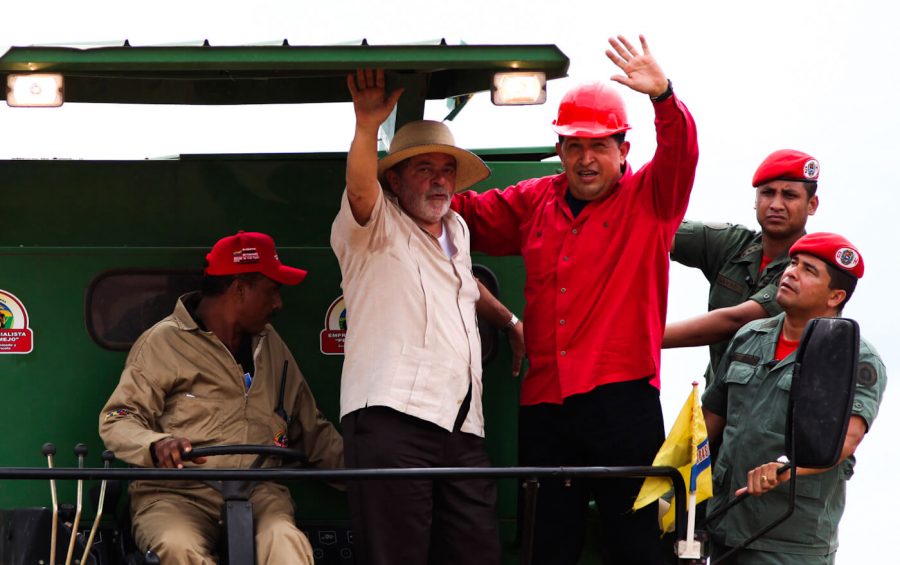
Hugo Chavez and Luiz Inacio Lula da Silva visit a soy farm in El Tigre in Venezuela’s Anzoategui state, Oct. 30, 2009. Ariana Cubillos | AP

With Juan Guaidó’s parallel government attempting to take power with the backing of the U.S., it is telling that the top political donors of those in the U.S. most fervently pushing regime change in Venezuela have close ties to Monsanto and major financial stakes in Bayer.

By Whitney Webb

Source: MintPress News

As the political crisis in Venezuela has unfolded, much has been said about the Trump administration’s clear interest in the privatization and exploitation of Venezuela’s oil reserves, the largest in the world, by American oil giants like Chevron and ExxonMobil.

Yet the influence of another notorious American company, Monsanto — now a subsidiary of Bayer — has gone largely unmentioned.

While numerous other Latin American nations have become a “free for all” for the biotech company and its affiliates, Venezuela has been one of the few countries to fight Monsanto and other international agrochemical giants and win. However, since that victory — which was won under Chavista rule — the U.S.-backed Venezuelan opposition has been working to undo it.

Now, with Juan Guaidó’s parallel government attempting to take power with the backing of the U.S., it is telling that the top political donors of those in the U.S. most fervently pushing regime change in Venezuela have close ties to Monsanto and major financial stakes in Bayer.

In recent months, Monsanto’s most controversial and notorious product — the pesticide glyphosate, branded as Roundup, and linked to cancer in recent U.S. court rulings — has threatened Bayer’s financial future as never before, with a litany of new court cases barking at Bayer’s door. It appears that many of the forces in the U.S. now seeking to overthrow the Venezuelan government are hoping that a new Guaidó-led government will provide Bayer with a fresh, much-needed market for its agrochemicals and transgenic seeds, particularly those products that now face bans in countries all over the world, including once-defoliated and still-poisoned Vietnam.


U.S.-Backed Venezuelan opposition seeks to reverse Chavista seed law and GMO ban

In 2004, then-president of Venezuela, Hugo Chávez, surprised many when he announced the cancellation of Monsanto’s plans to plant 500,000 acres of Venezuelan agricultural land in genetically modified (GM) soybeans. The cancellation of Monsanto’s Venezuela contract led to what became an ad hoc ban on all GM seeds in the entire country, a move that was praised by local farmer groups and environmental activists. In contrast to anti-GM movements that have sprung up in other countries, Venezuela’s resistance to GM crops was based more on concerns about the country’s food sovereignty and protecting the livelihoods of farmers.

Although the ban has failed to keep GM products out of Venezuela — as Venezuela has long imported a majority of its food, much of it originating in countries that are among the world’s largest producers of genetically modified foods — one clear effect has been preventing companies like Monsanto and other major agrochemical and seed companies from gaining any significant foothold in the Venezuelan market.

In 2013, a new seed law was nearly passed that would have allowed GM seeds to be sold in Venezuela through a legal loophole. That law, which was authored by a member of the Chavista United Socialist Party of Venezuela (PSUV), was widely protested by farmers, indigenous activists, environmentalists, and eco-socialist groups, which led to the law’s transformation into what has been nicknamed the “People’s Seed Law.” That law, passed in 2015, went even farther than the original 2004 ban by banning not just GM seeds but several toxic agrochemicals, while also strengthening heirloom seed varieties through the creation of the National Seed Institute.

Soon after the new seed law was passed in 2015, the U.S.-backed Venezuelan opposition led by the Roundtable of Democratic Unity (MUD) — a group comprised of numerous U.S.-funded political parties, including Guaidó’s Popular Will — took control of the country’s National Assembly. Until Venezuela’s Supreme Court dissolved the assembly in 2017, the MUD-legislature attempted to repeal the seed law on several occasions. Those in favor of the repeal called the seed bill “anti-scientific” and damaging to the economy.

Despite the 2017 Supreme Court decision, the National Assembly has continued to meet, but the body holds no real power in the current Venezuelan government. However, if the current government is overthrown and Guaidó  — the “interim president” who is also president of the dissolved National Assembly — comes to power, it seems almost certain that the “People’s Seed Law” will be one of the first pieces of legislation on the chopping block.


The AEI axis

Some of the key figures and loudest voices supporting the efforts of the Trump administration to overthrow the Venezuelan government in the United States are well-connected to one particular think-tank, the American Enterprise Institute (AEI). For instance, John Bolton — now Trump’s national security advisor and a major player in the administration’s aggressive Venezuela policy — was a senior fellow at AEI until he became Trump’s top national security official. As national security adviser, Bolton advises the president on foreign policy and issues of national security while also advising both the Secretary of State and the Secretary of Defense. As of late, he has been pushing for military action in Venezuela, according to media reports.

Another key figure in Trump’s Venezuela policy — Elliott Abrams, the State Department’s Special Representative for Venezuela — has been regularly featured at AEI summits and as a guest on its panels and podcasts. According to Secretary of State Mike Pompeo, Abrams’ current role gives him the “responsibility for all things related to our efforts to restore democracy” in Venezuela. Other top figures in the administration, including Vice President Mike Pence and Secretary of State Mike Pompeo, were featured guests at the AEI’s “secretive” gathering in early March. As MintPress and other outlets have reported, Guaidó declared himself “interim president” of Venezuela at Pence’s behest. Pompeo is also intimately involved in directing Trump’s Venezuela policy as the president’s main adviser on foreign affairs.

Other connections to the Trump administration include Secretary of Education Betsy DeVos who was previously on AEI’s board of trustees.

AEI has long been a key part of the “neoconservative” establishment and employs well-known neoconservatives such as Fred Kagan — the architect of the Iraq “troop surge” — and Paul Wolfowitz, the architect of the Iraq War. Its connections to the George W. Bush administration were particularly notable and controversial, as more than 20 AEI employees were given top positions under Bush. Several of them, such as Bolton, have enjoyed new prominence in Trump’s administration.

Other key Bush officials joined the AEI soon after leaving their posts in the administration. One such was Roger Noriega, who was the U.S. representative to the Organization of American States (OAS) during the failed, U.S.-backed 2002 coup and went on to be assistant secretary of state for Western Hemisphere affairs from 2003 to 2005, where he was extremely influential in the administration’s policies towards Venezuela and Cuba.

Since leaving the Bush administration and promptly joining the AEI, Noriega has been instrumental in pushing claims that lack evidence but aim to paint Venezuela’s current President Nicolas Maduro-led government as a national security threat, such as claiming that Venezuela is helping Iran acquire nuclear weapons and hosts soldiers from Lebanon’s Hezbollah. He also lobbied Congress to support Venezuelan opposition leader Leopoldo López, Guaidó’s political mentor and leader of his political party, Popular Will.

Not only that, but Noreiga teamed up with Martin Rodil, a Venezuelan exile formerly employed by the IMF, and José Cardenas, who served in the Bush administration, to found Visión Américas, a private risk-assessment and lobbying firm that was hired to “support the efforts of the Honduran private sector to help consolidate the democratic transition in their country” after the U.S.-backed Honduran coup in 2009. In recent months, Noriega and his associates have been very focused on Venezuela, with Cardenas offering Trump public advice about how “to hasten Maduro’s exit,” while Rodil has publicly offered “to get you a deal” if you have dirt on Venezuela’s government.

While the AEI is best known for its hawkishness, it is also a promoter of big agricultural interests. Since 2000, It has hosted several conferences on the promise of “biotechnology” and genetically modified seeds and has heavily promoted the work of former Monsanto lobbyist Jon Entine, who was an AEI visiting fellow for several years. The AEI also has long-time connections to Dow Chemical.

The most likely reason for the AEI’s interest in promoting biotech, however, can be found in its links to Monsanto. In 2013, The Nation acquired a 2009 AEI document, obtained through a filing error and not intended for public disclosure, that revealed the think tank’s top donors. The form, known as the “schedule of contributors,” revealed that the AEI’s top two donors at the time were the Donors Capital Fund and billionaire Paul Singer.

The Donors Capital Fund, which remains a major contributor to the AEI, is linked to Monsanto interests through the vice chairman of its board, Kimberly O. Dennis, who is also currently a member of the AEI’s National Council. According to AEI, the National Council is composed of “business and community leaders from across the country who are committed to AEI’s success and serve as ambassadors for AEI, providing us with advice, insight, and guidance.”

Dennis is the long-time executive chairwoman of the Searle Freedom Trust, which was founded in 1988 by Daniel Searle after he oversaw the sale of his family pharmaceutical company — G.D. Searle and Company — to Monsanto in 1985 for $2.7 billion. The money Searle had made from that merger was used to fund the trust that now funds the AEI and other right-wing think tanks. Searle was also close to Donald Rumsfeld, who led G.D. Searle and Co. for years and was Secretary of Defense under Gerald Ford and George W. Bush. Searle was also a trustee of the Hudson Institute, which once employed Elliott Abrams.

After the family company — which gained notoriety for faking research about the safety of its sweetener, aspartame or NutraSweet — was sold to Monsanto, G.D. Searle executives close to Daniel Searle rose to prominence within the company. Robert Shapiro, who was G.D. Searle’s long-time attorney and head of its NutraSweet division, would go on to become Monsanto’s vice president, president and later CEO. Notably, Daniel Searle’s grandson, D. Gideon Searle, was an AEI trustee until relatively recently.


Why is a top to Marco Rubio increasing his stake in Bayer while others flee?

Yet, it is AEI’s top individual donor noted in the accidental “schedule of contributors” disclosure who is most telling about the private biotech interests guiding the Trump administration’s Venezuela policy. Paul Singer, the controversial billionaire hedge fund manager, has long been a major donor to neoconservative and Zionist causes — helping fund the Foreign Policy Initiative (FPI), the successor to the Project for a New American Century (PNAC); and the neoconservative and islamophobic Foundation for the Defense of Democracies (FDD), in addition to the AEI.

Singer is notably one of the top political donors to Senator Marco Rubio (R-FL) and has been intimately involved in the recent chaos in Venezuela. He has been called one of the architects of the administration’s current regime-change policy, and was the top donor to Rubio’s presidential campaign, as well as a key figure behind the controversial “dossier” on Donald Trump that was compiled by Fusion GPS. Indeed, Singer had been the first person to hire Fusion GPS to do “opposition research” on Trump. However, Singer has largely since evaded much scrutiny for his role in the dossier’s creation, likely because he became a key donor to Trump following his election win in 2016, giving $1 million to Trump’s inauguration fund.

Singer has a storied history in South America, though he has been relatively quiet about Venezuela. However, a long-time manager of Singer’s hedge fund, Jay Newman, recently told Bloomberg that a Guaidó-led government would recognize that foreign creditors “aren’t the enemy,” and hinted that Newman himself was weighing whether to join a growing “list of bond veterans [that have] already begun staking out positions, anticipating a $60 billion debt restructuring once the U.S.-backed Guaidó manages to oust President Nicolas Maduro and take control.” In addition, the Washington Free Beacon, which is largely funded by Singer, has been a vocal advocate for the Trump administration’s regime-change policy in Venezuela.

Beyond that, Singer’s Elliott Management Corporation gave Roger Noriega, the former assistant secretary of state for Western Hemisphere affairs under Bush, $60,000 in 2007 to lobby on the issue of sovereign debt and for “federal advocacy on behalf of U.S. investors in Latin America.” During the time Noriega was on Singer’s payroll, he wrote articles linking Argentina and Venezuela to Iran’s nonexistent nuclear program. At the time, Singer was aggressively pursuing the government of Argentina in an effort to obtain more money from the country’s prior default on its sovereign debt.

While Singer has been mum himself on Venezuela, he has been making business decisions that have raised eyebrows, such as significantly increasing his stake in Bayer. This move seems at odds with Bayer’s financial troubles, a direct result of the slew of court cases regarding the link between Monsanto’s glyphosate and cancer. The first ruling that signaled trouble for Monsanto and its new parent company Bayer took place last August, but Singer increased his stake in the company starting last December, even though it was already clear by then that Bayer’s financial troubles in relation to the glyphosate court cases were only beginning.

Since the year began, Bayer’s problems with the Monsanto merger have only worsened, with Bayer’s CEO recently stating that the lawsuits had “massively affected” the company’s stock prices and financial performance.


Forcing open a new market for RoundUp

Part of Singer’s interest in Bayer may relate to Venezuela, given that Juan Guaido’s “Plan País” to “rescue” the Venezuelan economy includes a focus on the country’s agricultural sector. Notably, prior to and under Chavismo, agricultural productivity and investment in the agricultural sector took a backseat to oil production, resulting in under 25 percent of Venezuelan land being used for agricultural purposes despite the fact that the nation has a wealth of arable land. The result has been that Venezuela needs to import much of its food from abroad, most of which originate in Colombia or the United States.

Under Chávez and his successor, Maduro, there has been a renewed focus on small-scale farming, food sovereignty and organic agriculture. However, if Maduro is ousted and Guaidó moves to implement his “Plan País,” the opposition’s coziness with foreign corporations, the interests of U.S. coup architects in Bayer/Monsanto, and the opposition’s past efforts to overturn the GM seed ban all suggest that a new market for Bayer/Monsanto products — particularly glyphosate — will open up.

South America has long been a key market for Monsanto and — as the company’s problems began to mount prior to the merger with Bayer — it became a lifeline for the company due to less stringent environmental and consumer regulations that many Western countries. In recent years, when South American governments have opened their countries to more “market-friendly” policies in their agricultural sectors, Monsanto has made millions.

For instance, when Brazil sought to expand biotechnology (i.e. GM seed) investment in 2012, Monsanto saw a 21% increase in its sales of GM corn seed alone, generating an additional $1 billion in profits for the company. A similar comeback scenario is needed more than every by Bayer/Monsanto, as Monsanto’s legal troubles saw the company’s profits plunge late last year.

With countries around the world now weighing glyphosate bans as a result of increased litigation over the chemical’s links to cancer, Bayer needs a new market for the chemical to avoid financial ruin. As Singer now has a significant stake in the company, he — along with the politicians and think tanks he funds — may see promise in the end of the anti-GM seed ban that a Guaidó-led government would bring.

Furthermore, given that Guaidó’s top adviser wants the Trump administration to have a direct role in governing Venezuela if Maduro is ousted, it seems likely that Singer would leverage his connections to keep Bayer/Monsanto afloat amid the growing controversy surrounding glyphosate. Such behavior on the part of Singer would hardly be surprising in light of the fact that international financial media have characterized him as a “ruthless opportunist” and “overly aggressive.”

Such an outcome would be in keeping with the increased profit margins for Monsanto and related companies that have followed its expansion into countries following U.S.-backed coups. For instance, after the U.S.-backed coup in Ukraine in 2014, the loans given to Ukraine by the International Monetary Fund and the World Bank forced the country to open up and expand the use of “biotechnology” and GM crops in its agricultural sector, and Monsanto, in particular, made millions as the prior government’s ban on GM seeds and their associated agrochemicals was reversed. If Maduro is ousted, a similar scenario is likely to play out in Venezuela, given that the Guaidó-led government made known its intention to borrow heavily from these institutions just days after Guaidó declared himself “interim president.”


Whitney Webb is a MintPress News journalist based in Chile. She has contributed to several independent media outlets including Global Research, EcoWatch, the Ron Paul Institute and 21st Century Wire, among others. She has made several radio and television appearances and is the 2019 winner of the Serena Shim Award for Uncompromised Integrity in Journalism.

Kieran Barr contributed to the research used in this report.

Harvest of Greed – the Merger of Bayer and Monsanto

By Dr. Mercola

Source: Waking Times

The featured documentary, “Harvest of Greed,” investigates a number of the many issues brought about by the merger of Monsanto and Bayer AG. The merger was initially announced in May 2016, when Monsanto accepted Bayer’s $66 billion takeover offer — the largest all-cash buyout on record.1,2,3

The U.S. Department of Justice (DOJ) approved the merger in April this year,following the European Union’s (EU) approval in March. As a condition of the DOJ’s approval, Bayer will sell some of its assets to BASF — its German competitor — before the finalization of the merger.

This includes its soybean, cottonseed and glufosinate weed killer businesses, which overlap with Monsanto’s and were antitrust sticking points. Combined, Bayer and Monsanto used to control nearly 60 percent of the American cottonseed market. Monsanto also owns the rights to 80 percent of corn and 90 percent of soybeans grown in the U.S.5 The EU also demanded Bayer eliminate about $7.4 billion-worth of its various firms “to ensure fair competition.”6

Mega-Entity Now Controls Large Portion of Global Seed Supply

This new entity is now the largest seed and pesticide company in the world, controlling more than 25 percent of the global seed and pesticide supply. In all, just three companies now dominate the global seed and pesticide market.7 (In addition to the Bayer-Monsanto merger, the DOJ has also given the Dow-DuPont merger the green light, and the Federal Trade Commission recently approved ChemChina’s acquisition of Syngenta.)

The Bayer-Monsanto merger generated deep concerns right from the start, and anti-competition regulators were urged to investigate the takeover. Bernie Sanders went on record saying the takeover poses “a threat to all Americans” and needed to be blocked.8 He also urged the DOJ to “reopen its investigation of Monsanto’s monopoly over the seed and chemical market.” Farmers have also expressed concern over what the merger might do to prices, as less competition inevitably tends to lead to price hikes.

As just one example, the price of a bag of seed corn has risen from $80 to $300 over the past decade alone — a price hike attributed to the consolidation of seed companies and reduced competition. The merger of Bayer and Monsanto is predicted to make matters worse. Farmers also worry that consolidation will result in lower quality products by reducing incentive for innovation. Organic farmers have their concerns as well. As noted by Food and Power:9

“For Kristina Hubbard, director of advocacy and communications for the Organic Seed Alliance, the merger presents a particular threat to organic farmers. She notes that the National Organic Program’s regulations on organic seeds generally dictate that growers must use organic seeds to grow their crops. But there is an exception granted for non-organic seed when ‘an equivalent organically produced variety is not commercially available.’

Acceptable non-organic seeds are generally owned by the giant seed companies. ‘That exemption is important because currently the supply [of organic seeds] isn’t sufficient to meet the diverse and regional needs of all organic farmers,’ she says. With continued consolidation in the seed industry, she says farmers that rely on those non-organic seed options may find themselves faced with even fewer options as the merged companies cut down on research and development.”

Bayer-Monsanto Merger Unlikely to Benefit Anyone but Its Shareholders

Bayer AG’s CEO, Werner Baumann, has stated that “it is not our plan or our ambition or our intent to prevent farmers from having choice.”10 But the history of Monsanto and Bayer both suggest it would be naïve to believe him. As noted by Mark Connelly, an agriculture analyst at the investment group CLSA Americas, “These companies want to make more money, they want to raise prices. No company in this industry needs these deals in order to innovate.”11

Indeed, there can be little doubt that the Bayer-Monsanto merger will give the subsequent entity even more power to bully farmers into paying more and pressuring and manipulating governments into accepting the unacceptable risks posed by genetically engineered (GE) crops and mounting use of ever more toxic pesticides.

One example of Monsanto’s strong-arm tactics included in the film is that of India, where more than 300,000 farmers have committed suicide due to farm-related debt. When the government attempted to regulate the price of seed — the main cause leading to these debts — Monsanto sued the Indian government.

Between 1997 and 2014, Monsanto also sued 147 farmers for “improperly reusing patented seeds.”12 They never lost a single case, even in cases where organic fields were contaminated or cross-pollinated with unwanted GE seeds.

Billions Against Bayer

In response to the announcement of the merger in 2016, the Organic Consumers Association (OCA) launched a boycott against Bayer. The “Billions Against Bayer” campaign is essentially a continuation of the successful “Millions Against Monsanto” campaign. Following the DOJ’s April approval of the merger, OCA renewed its call for consumers around the world to join the boycott. You can follow the campaign and get the latest news updates on Facebook.13 As noted in a September 2016 press release:14

“Two of the world’s most foul corporate criminals will be one. Monsanto will pack up its headquarters and head overseas. The much-maligned Monsanto name will be retired. But a corporate criminal by any other name — or size — is still a corporate criminal.

This merger only heightens the urgency, and strengthens our resolve, to hunt down the corporations that are poisoning everything in sight. We will follow them to the ends of the earth, if need be. We will expose their crimes. We will end the toxic tyranny. We will become the Billions Against Bayer. And we will need your help …

Even many Bayer employees are leery of the merger. While both companies have checkered pasts, Bayer has managed to escape the brunt of the kind of criticism, if not hatred, leveled at Monsanto over the years.

According to the featured documentary, Bayer claims the merger has widespread support among its staff, yet when Bayer employees were approached under the promise of anonymity, the general consensus was one of dismay at inheriting Monsanto’s tarnished reputation. Such fears are likely to come true sooner rather than later. Activists in Argentina, for example, promise Monsanto’s ill reputation cannot be washed clean but will now transfer over to Bayer.

Glyphosate — A Toxic Legacy

Both Bayer and Monsanto insist that glyphosate, the active ingredient in Monsanto’s weed killer Roundup and other herbicide formulations, is “a very safe product when used properly.” In the video, Bayer CEO Werner Baumann stresses that more than 3,000 studies support the chemical’s safety. Yet numerous studies have reached the converse conclusion, showing it poses toxic risks to soil, animals and humans.

“The things you hear in the public debate are ultimately based on misinformation about the risks of this product,” Baumann says. “So, we think glyphosate, even if it does belong to our company, is a good product, and its license should be renewed.”

At the end of 2017, the EU did indeed renew its approval of glyphosate for the next five years,15 but the process was not without its critics, such as Martin Häusling, member of the Green Party and the European Parliament, who noted that many of the studies exonerating glyphosate were funded by Monsanto itself, while independent research keeps finding problems.

Indeed, scientists have discovered it not only may be carcinogenic,16 but may also affect your body’s ability to produce fully functioning proteins, inhibit the shikimate pathway (found in gut bacteria) and interfere with the function of cytochrome P450 enzymes (required for activation of vitamin D and the creation of nitric oxide and cholesterol sulfate).

Glyphosate also chelates important minerals, disrupts sulfate synthesis and transport, interferes with the synthesis of aromatic amino acids and methionine, resulting in folate and neurotransmitter shortages, disrupts your microbiome by acting as an antibiotic, impairs methylation pathways, and inhibits pituitary release of thyroid stimulating hormone, which can lead to hypothyroidism.

Recent Government Tests Show Roundup Is More Toxic Than Glyphosate in Isolation

Most recently, toxicology testing17 by the U.S. National Toxicology Program (NTP) concluded the Roundup formula is actually far more toxic than glyphosate alone.18 The NTP testing was done by request from the U.S. Environmental Protection Agency (EPA) following the International Agency for Research on Cancer (IARC) reclassification of glyphosate as a Class 2A probable carcinogen three years ago.19

At the time, the IARC noted concerns about glyphosate formulations possibly having increased toxicity due to synergistic interactions. As it turns out, that’s exactly what the NTP testing found. According to the NTP’s summary of the results, glyphosate formulations “significantly altered” the viability of human cells by disrupting the functionality of cell membranes.

Mike DeVito, acting chief of the NTP Laboratory commented on the results saying, “We see the formulations are much more toxic. The formulations were killing the cells. The glyphosate really didn’t do it.”

Internal documents from Monsanto, obtained through previous Freedom of Information Act (FOIA) requests, reveal Monsanto’s own employees have not been convinced the product is harmless either. For example, in a 2002 email, Monsanto executive William Heydens said, “Glyphosate is OK but the formulated product … does the damage.”20

Monsanto Charged With Crimes Against Humanity

October 16, 2016 (on World Food Day), Monsanto was put on trial for “crimes against nature and humanity” at a tribunal in The Hague, Netherlands. The steering committee21 included Vandana Shiva, Corinne Lepage (former environment minister of France), Giles-Eric Séralini (toxicologist researching toxicities of GMOs and glyphosate), and Olivier De Schutter (former U.N. Special Rapporteur on the Right to Food), among others. The legal opinion on the evidence presented at the tribunal was delivered April 18, 2017. As reported by Corporate Europe Observatory:22 “The tribunal concluded that:

  • Monsanto has violated human rights to food, health, a healthy environment and the freedom indispensable for independent scientific research
  • ‘Ecocide’ should be recognized as a crime in international law
  • Human rights and environmental laws are undermined by corporate-friendly trade and investment regulation”

When asked if Bayer will continue Monsanto’s underhanded business practices, Baumann said the new entity will be managed “according to our standards,” adding that “Bayer stands for transparency, reliability and a different style of debate.”

Monsanto — A Destroyer of the Natural World

In addition to GE seeds and its flagship product, Roundup, Monsanto has also been a leading producer of Agent Orange, PCBs, DDT, recombinant bovine growth hormone and aspartame — the history of which is summarized in “The Complete History of Monsanto, ‘The World’s Most Evil Corporation,’”23 originally published by Waking Times in 2014.24

Monsanto also made its mark on history by participating in the Manhattan Project to build the first atomic bomb, thereby becoming a “war horse” ally to the United States government — an alliance that still holds today. As noted in “The Complete History,” article:

“To add insult to world injury, Monsanto and their partners in crime Archer Daniels Midland, Sodexo and Tyson Foods write and sponsor The Food Safety Modernization Act of 2009: HR 875.25 This ‘act’ gives the corporate factory farms a virtual monopoly to police and control all foods grown anywhere, including one’s own backyard, and provides harsh penalties and jail sentences for those who do not use chemicals and fertilizers. President Obama … gave his approval.

With this Act, Monsanto claims that only GM [genetically modified] foods are safe and organic or homegrown foods potentially spread disease, therefore must be regulated out of existence for the safety of the world … As further revelations have broken open regarding this evil giant’s true intentions, Monsanto crafted the ridiculous HR 933 Continuing Resolution,26aka Monsanto Protection Act, which Obama robo-signed into law as well.

This law states that no matter how harmful Monsanto’s GMO crops are and no matter how much devastation they wreak upon the country, U.S. federal courts cannot stop them from continuing to plant them anywhere they choose. Yes, Obama signed a provision that makes Monsanto above any laws and makes them more powerful than the government itself.”

Bayer Also Has a Long, Dark, Destructive History of Genocide

Despite having a far “cleaner” public reputation than Monsanto, Bayer is really just more of the same. Founded in Germany in 1863 by Friedrich Bayer and Johann Wescott, it too has a long, sordid history of creating poisons and mass destruction.27 During World War II, Bayer (then I.G. Farben) produced Zyklon B gas, used in the Nazi gas chambers to eradicate 11 million people whose only crime was to be born a Jew.

According to Alliance for Human Research Protection, the company was also “intimately involved with the human experimental atrocities committed by Mengele at Auschwitz.”28 In one case, Bayer purchased 150 healthy female prisoners from the camp commander of Auschwitz for use as test subjects for a new sleep drug. All the test subjects died, and another order for prisoners was placed.

While some of its board members ended up being arrested and tried for their crimes against humanity, others escaped and helped create the Federal Reserve.29 If you think the passing of time might have made this corporate entity kinder, safer and gentler, think again.

In 2003, it was revealed Bayer sold blood-clotting medicine tainted with the HIV virus to Asian, Latin American and Europe in the mid-1980s.30 The drug, Factor VIII concentrate, was worth millions of dollars, and the company continued to sell the tainted drug for a year after the contamination was discovered. In Hong Kong and Taiwan alone, more than 100 hemophiliacs contracted HIV and died after using the medicine.

Bayer’s drug Trasylol — used to control bleeding during surgery — was also eventually found to be responsible for at least 1,000 deaths each month for the 14 years it was on the market.31 In 2006, documents proved Bayer hid evidence showing unfavorable results from the drug in order to continue selling it.  Lawsuits have also been filed against Bayer for the untimely death of 190 young women taking their birth control pill Yaz, which raises your risk of blood clots by 300 percent.

Bayer Unlikely to Shift Public Perception of GMOs and Toxic Agriculture

Between 2006 and 2007, Bayer was also responsible for contaminating U.S. rice imports with three unapproved varieties of GE rice under development by Bayer CropScience. Bayer also makes neonicotinoid pesticides, suspected of being responsible for mass die-offs of bees around the world, thereby threatening the global food supply, and made the plastic chemical bisphenol-A, now known to have a dangerous impact on the human endocrine system.

In short, Bayer’s history is just as dark and unethical as Monsanto’s, if not more, and some have rightfully referred to the merger of these two destructive behemoths as a “marriage made in hell.”32 While change is possible, it seems improbable that this new Bayer-Monsanto mega-entity will radically change, and based on their combined histories, the world better get ready for a monumental fight.

Biotech Companies Are Gaining Power by Taking Over the Government

Monsanto and their industry allies will not willingly surrender their stranglehold on the food supply. They must be resisted and rolled back at every turn. There is no doubt in my mind that GMOs and the chemical-intensive agricultural model of which they are part and parcel, pose a serious threat to the environment and our health. Yet, government agencies not only turn a blind eye to the damage they are inflicting on the planet, but actively work to further the interests of the biotech giants.

This is not surprising. It is well-known that there is a revolving door between regulatory agencies and private corporations. This has allowed companies such as Monsanto to manipulate science, defang regulations and even control the free press, all from their commanding position within the halls of government.

Consider for a moment that on paper, the U.S. may have the strictest safety regulations in the world governing new food additives, but has repeatedly allowed GMOs and their accompanying pesticides such as Roundup to circumvent these laws.

In fact, the only legal basis for allowing GE foods to be marketed in the U.S. is the FDA’s tenuous claim that these foods are inherently safe, a claim which is demonstrably false. Documents released as a result of a lawsuit against the FDA reveal that the agency’s own scientists warned their superiors about the detrimental risks of GE foods. But their warnings fell on deaf ears.

Don’t Be Duped by Industry Shills!

In a further effort to deceive the public, Monsanto and its cohorts spoon-feed scientists, academics and journalists a diet of questionable studies that depict them in a positive light. By hiring “third-party experts,” biotech companies are able to take information of dubious validity, and present it as independent and authoritative.

Industry front groups also abound. The Genetic Literacy Project and the American Council for Science and Health are both Monsanto-funded. Even WebMD, a website that is often presented as a trustworthy source of “independent and objective” health information, is heavily reliant on advertising dollars. It is no coincidence that they promote corporate-backed health strategies and products.

There’s No Better Time to Act Than NOW — Here’s What You Can Do

The biotech giants have deep pocketbooks and political influence, and are fighting to maintain their position of dominance. It is only because of educated consumers and groups like the Organic Consumers Association (OCA) that their failed GMO experiment is on the ropes. We thank all of the donors who helped OCA achieve their fundraising goal. I made a commitment to triple match all donations to OCA during awareness week. It is with great pleasure to present a check to this fantastic organization for $250,000.

At the end of the day, we must shatter Monsanto’s grip on the agricultural sector. There is no way to recall GMOs once they have been released into the environment. The stakes could not be higher. Will you continue supporting the corrupt, toxic and unsustainable food system that Monsanto and its industry allies are working so hard to protect?

For more and more people, the answer is no. Consumers are rejecting genetically engineered and pesticide laden foods. Another positive trend is that there has been strong growth in the global organic and grass fed sectors. This just proves one thing: We can make a difference if we steadily work toward the same goal.

One of the best things you can do is to buy your foods from a local farmer who runs a small business and uses diverse methods that promote regenerative agriculture. You can also join a community-supported agriculture (CSA) program, where you can buy a “share” of the vegetables produced by the farm, so that you get a regular supply of fresh food. I believe that joining a CSA is a powerful investment not only in your own health, but in that of your local community and economy as well.

In addition, you should also adopt preventive strategies that can help reduce the toxic chemical pollution that assaults your body. I recommend visiting these trustworthy sites for non-GMO food resources in your country as well:

Organic Food Directory (Australia) Eat Wild (Canada)
Organic Explorer (New Zealand) Eat Well Guide (United States and Canada)
Farm Match (United States) Local Harvest (United States)
Weston A. Price Foundation (United States) The Cornucopia Institute

Monsanto and its allies want you to think that they control everything, but they are on the wrong side of history. It’s you, the informed and empowered, who hold the future in your hands. Let’s all work together to topple the biotech industry’s house of cards. Remember — it all starts with shopping smart and making the best food purchases for you and your family.

Agrochemicals and Institutional Corruption: Pleading with the Slave Master Will Not Set You Free

By Colin Todhunter

Source: CounterPunch

Environmental campaigner Dr Rosemary Mason has just written to President of the European Commission Jean-Claude Juncker, Vice President of the European Commission Frans Timmermans and Health Commissioner Vytenis Andruikaitis. As set out below, she asks these top officials some very pertinent questions about the EU’s collusion with the agrochemical corporations.

1) In authorising glyphosate on behalf of the Glyphosate Task Force led by Monsanto, why did President Juncker fail to state the European Chemicals Agency’ (ECHA) risk assessment in full?

2) Why did the EU collude with corporations that made nerve gases in WW2 for chemical warfare and for use in the Nazi concentration camps? These firms continued to use similar chemicals in agriculture to poison ‘pests’, beneficial insects, birds and people.

3) Could it be that is it is because biocides regulations in the EU are merely designed to make corporations money and are ultimately controlled by the agrochemical industry?

4) Why did Monsanto, the European Food Safety Authority (EFSA), the ECHA and the industry-funded UK Science Media Centre suppress the paper by Gilles-Eric Seralini of the two-year rat feeding study of GM crops and Roundup that produced organ damage and tumours at four months?

5) Do the commissioners know that Cancer Research UK was hijacked by the Agrochemical Industry in 2010 with the full knowledge of the UK government? Michael Pragnell, former Chairman of Cancer Research UK (CRUK), was founder of Syngenta and former chairman of industry lobby group CropLife International. The CRUK website says that there is no convincing evidence that pesticides cause cancer. Instead, CRUK links cancer to life style choices and individual behaviour and blames alcohol use, obesity and smoking.

6) Why did the EU regulators and David Cameron, on behalf of the British government, ignore the Letter from America in 2014 from nearly 60 million citizens, warning you not to authorise GM crops and Roundup because of their toxicity to human health and the environment?

7) Where have all the insects and birds gone as a result of intensive chemical agriculture? The UK, Germany, France, Denmark and Canada are rapidly losing biodiversity. US farmland growing GM Roundup Ready crops has become a biological desert.

8) Did Monsanto and President Juncker conceal the ECHA harmonised classification of glyphosate as “toxic to aquatic life with long-lasting effects” because it would explain the accelerating deterioration of coral in the Great Barrier Reef?

Mason concludes her letter by reiterating the damning advisory opinion of the International Monsanto Tribunal delivered in 2017. She also sent the commissioners a recent letter signed by 23 prominent organisations criticising the EU’s decision to renew the license for glyphosate and outlining Monsanto’s undue influence over decision making.

Along with her letter, Mason sent a 22-page document containing detailed information on:

* The European Commission’s flawed renewal of the license for glyphosate

* The causes of decline in coral cover on the Great Barrier Reef

* European legislation existing for the benefit of the agrochemical industry

* Contamination by glyphosate and neonicotinoid insecticides causing dramatic declines in insects and birds

* Glyphosate being present everywhere

* The International Monsanto Tribunal and various alarming reports on pesticides, their use and impacts

To date, there has been no response from the commissioners to Mason.

In 2003, the World Wide Fund for Nature (UK) concluded that every person it tested across the UK was contaminated by a cocktail of highly toxic chemicals, which were banned from use during the 1970s. Over the years, Mason has cited a range of sources to show the harmful impact of pesticides and that the amount and range of pesticide residues on British food is increasing annually. She also notes a massive rise in the use of glyphosate between 2012 and 2014 alone.

In her many detailed documents and letters (which contains her own views on all the questions she poses above to the commissioners) she has sent to officials over the years, Mason offers sufficient evidence to show that the financial and political clout of a group of powerful agrochemical/agribusiness corporations ensure that its interests are privileged ahead of public health and the environment to the detriment of both. Mason has gone to great lengths to describe the political links between industry and various government departments, regulatory agencies and key committees that have effectively ensured that ‘business as usual’ prevails.

The corporations which promote industrial agriculture and the agrochemicals Mason campaigns against have embedded themselves deeply within the policy-making machinery at both national and international levels. From the flawed narrative that industrial agriculture is necessary to feed the world to providing lavish research grants and the capture of important policy-making institutions, global agribusiness has secured a bogus ‘thick legitimacy’ within policymakers’ mindsets and mainstream discourse.

By referring to the Monsanto Tribunal, Mason implies that governments, individuals and civil groups that collude with corporations to facilitate ecocide and human rights abuses resulting from the actions of global agribusiness corporations should be hauled into court. Perhaps it is only when officials and company executives are given lengthy jail sentences for destroying health and the environment that some change will begin to happen.

From Rachel Carson onward, the attempt to roll back the power of these corporations and their massively funded lobby groups has had limited success. Some 34,000 agrochemicals remain on the market in the US, many of which are there due to weak regulatory standards or outright fraud, and from Argentina to Indonesia, the devastating impact of the industrial chemical-dependent model of food and agriculture on health and the environment has been documented by various reports and writers at length.

What is worrying is that these corporations are being facilitated by the World Bank’s ‘enabling the business of agriculture’, duplicitous trade deals like the US-India Knowledge Initiative on Agriculture, the Gates Foundation’s ‘opening up’ of African agriculture and the bypassing of democratic procedures at sovereign state levels to impose seed monopolies and proprietary inputs on farmers and to incorporate them into a global supply chain dominated by these powerful companies.

For the reasons set out in my previous piece, pleading with public officials to roll back the actions and influence of agrochemical/agribusiness corporations may have no more impact than appealing to a slave master to set you free.

Ultimately, the solution relies on people coming together to challenge a system of neoliberal capitalism that by design facilitates the institutionalised corruption that we see along with the destruction of self-sufficiency and traditional food systems. At the same time, alternatives must be promoted based on localisation, the principles of a politically-oriented model of agroecology (outlined here, here and here) and a food system that serves the public good not private greed.


Colin Todhunter is an extensively published independent writer and former social policy researcher based in the UK and India.

Killing the Biosphere to Fast-track Human Extinction

By Robert J. Burrowes

Several years ago in Cameroon, a country in West Africa, a Western Black Rhinoceros was killed. It was the last of its kind on Earth.

Hence, the Western Black Rhinoceros, the largest subspecies of rhinoceros which had lived for millions of years and was the second largest land mammal on Earth, no longer exists.

But while you have probably heard of the Western Black Rhinoceros, and may even have known of its extinction, did you know that on the same day that it became extinct, another 200 species of life on Earth also became extinct?

This is because the sixth mass extinction event in Earth’s history is now accelerating at an unprecedented rate with 200 species of plants, birds, animals, fish, amphibians, insects and reptiles being driven to extinction on a daily basis. And the odds are high that you have never even heard of any of them. For example, have you heard of the Christmas Island Pipistrelle, recently declared extinct? See ‘Christmas Island Pipistrelle declared extinct by IUCN’.

Apart from the 200 species extinctions each day however, and just to emphasize the catastrophic extent of this crisis, myriad local populations of many species are driven to extinction daily and millions of individual lifeforms are also killed. See ‘Biological annihilation via the ongoing sixth mass extinction signaled by vertebrate population losses and declines’.

For a taste of the vast literature on this subject touching only on impacts in relation to insects, see ‘Death and Extinction of the Bees’, ‘Insectageddon: farming is more catastrophic than climate breakdown’ and ‘“Decimated”: Germany’s birds disappear as insect abundance plummets 76%’.

Is anything being done to end this omnicide (the destruction of all life)?

Not really, although there is plenty of rhetoric and limited action in some contexts as all bar a few committed individuals and organizations ignore this onslaught while even fewer take action that addresses the underlying cause and/or fundamental drivers of this killing. Unfortunately, most effort is still wasted on lobbying elites.

For example, in the latest example of the foolishness of lobbying elites to take action in our struggle to defend Earth’s biosphere, the European Union has again just renewed Monsanto’s licence to keep poisoning (and otherwise destroying) our world – see ‘German vote swings EU decision on 5-year glyphosate renewal’ – despite the already overwhelming evidence of the catastrophic consequences of doing so. See, for example, ‘Killing Us Softly – Glyphosate Herbicide or Genocide?’ and GM Food Crops Illegally Growing in India: The Criminal Plan to Change the Genetic Core of the Nation’s Food System’.

Of course, massive poisoning of the biosphere is only one way to destroy it and while elites and their agents drive most of this destruction they nevertheless often rely on our complicity. To itemize just a few of these many techniques for destroying our biosphere in most of which we are complicit, consider the following. We destroy rainforests – see Cycles of Wealth in Brazil’s Amazon: Gold, Lumber, Cattle and Now, Energy’ – we contaminate and privatize the fresh water – see Groundwater drunk by BILLIONS of people may be contaminated by radioactive material spread across the world by nuclear testing in the 1950s’ and ‘Nestlé CEO Denies That Water is an Essential Human Right’ – we overfish and pollute the oceans – see New UN report finds marine debris harming more than 800 species, costing countries millions’ – we eat meat despite the devastating impact of animal agriculture on Earth’s biosphere – see ‘The True Environmental Cost of Eating Meat’ – we destroy the soil – see ‘Only 60 Years of Farming Left If Soil Degradation Continues’ – and we use our cars and air travel (along with our meat-eating) as key weapons in our destruction of Earth’s atmosphere and climate with atmospheric carbon dioxide, methane and nitrous oxide levels all breaking new records in 2016. See ‘Greenhouse Gas Bulletin’.

But if you think that is bad enough, did you know about the out-of-control methane releases into the atmosphere that we have triggered – see ‘7,000 underground gas bubbles poised to “explode” in Arctic’ and ‘Release of Arctic Methane “May Be Apocalyptic,” Study Warns’ – and did you know that scientists at the University of Leicester warn that we are destroying the Earth’s oxygen? See ‘Global warming disaster could suffocate life on planet Earth, research shows’ and ‘The Extinction Event Gains Momentum’.

In addition, relying on our ignorance and our complicity, elites kill vast areas of Earth’s biosphere through war and other military violence (without even considering the unique, and possibly life-ending, devastation if the recently and repeatedly threatened nuclear war eventuates) – see, for example, the Toxic Remnants of War Project and the film ‘Scarred Lands & Wounded Lives’ – subject it to uncontrolled releases of radioactive contamination – see Fukushima Radiation Has Contaminated The Entire Pacific Ocean And It’s Going To Get Worse’ – and use geoengineering to wage war on its climate, environment and ultimately ourselves. See, for example, ‘Engineered Climate Cataclysm: Hurricane Harvey’, ‘Planetary Weapons and Military Weather Modification: Chemtrails, Atmospheric Geoengineering and Environmental Warfare’, ‘Chemtrails: Aerosol and Electromagnetic Weapons in the Age of Nuclear War’ and ‘The Ultimate Weapon of Mass Destruction: “Owning the Weather” for Military Use’.

Of course, all of this is done at immediate cost to human beings, particularly indigenous peoples – see, for example, Five ways climate change harms indigenous people’ –  and those who are in the worst position to resist – see Global Poverty: How the Rich Eat the Poor and the World: The Big Lies’ – but elites know they can ignore our lobbying and occasional, tokenistic and disorganized protests while relying on the fear and powerlessness of most of us to ensure that we do nothing strategic to fight back.

And given the unrelenting criminal onslaught of the insane global elite – see ‘The Global Elite is Insane’  – directed against Earth’s biosphere, together with the elite’s many sycophantic academic, bureaucratic, business, legal, media, military, political and scientific servants who deny science and threaten human survival in the interests of short-term personal privilege, corporate profit and social control, it is long past time when those of us who are genuinely concerned should be developing and implementing a strategy that recognises the elite and its many agents as opponents to be resisted with a careful and powerful strategy.

So, in essence, the problem is this: Human beings are destroying the biosphere and driving countless lifeforms, including ourselves, to extinction. And there is little strategic resistance to this onslaught.

There is, of course, an explanation for this and this explanation needs to be understood if we are to implement a strategy to successfully halt our omnicidal assault on Earth’s biosphere in time to save ourselves and as many other species as possible in a viable ecological setting.

This is because if you want to solve a problem or resolve a conflict, then it is imperative to know and act on the truth. Otherwise you are simply acting on a delusion and whatever you do can have no desirable outcome for yourself, others, the Earth or its multitude of creatures. Of course, most people are content to live in delusion: it averts the need to courageously, intelligently and conscientiously analyse what is truly happening and respond to it powerfully. In short: it makes life ‘easier’ (that is, less frightening) even if problems keep recurring and conflicts are suppressed, to flare up periodically, rather than resolved.

And, of course, this is how elites want it. They do not want powerful individuals or organizations interfering with their scheme to (now rapidly) consolidate their militarized control over the world’s populations and resources.

This is why, for example, elites love ‘democracy’: it ensures disempowerment of the population. How so? you might ask. The fundamental flaw of democracy is that people have been deceived into surrendering their personal power to act responsibly – in relation to the important social, political, economic, environment and climate issues of the day – to elected ‘representatives’ in government who then fearfully represent the elites who actually control them (whether through financial incentives, electoral support or other means), assuming they aren’t members of the elite themselves and simply represent elite priorities out of shared interest (as does Donald Trump).

And because we delegate responsibility to those powerless politicians who fearfully (or out of shared interest) act in response to elite bidding, the best scientific information in relation to the state of the Earth is simply ignored or rejected while conservative ‘scientific warnings’ advocating ‘strategies’ that must fail are widely circulated. See, for example, ‘World Scientists’ Warning to Humanity: A Second Notice’.

So this widespread failure to respond thoughtfully and powerfully is a fundamental reason that we are killing the biosphere and destroying life on Earth. Too few humans are willing to accept personal responsibility to understand why the violence is occurring and to participate in a carefully designed strategy to avert our own extinction, let alone save countless other species from premature entry into the fossil record. It is easier to leave responsibility to others. See ‘The Delusion “I Am Not Responsible”’.

And, clearly, time is running out, unless you are gullible enough to believe the elite-sponsored delusion that promotes inaction, and maximizes corporate profits in the meantime, because we are supposed to have until ‘the end of the century’. Far from it, however. As some courageous scientists, invariably denied access to mainstream news outlets, explain it: near-term human extinction is now the most likely outcome.

One of these scientists is Professor Guy McPherson who offers compelling evidence that human beings will be extinct by 2030. For a summary of the evidence of this, which emphasizes the usually neglected synergistic impacts of many of these destructive trends (some of which are noted above) and cites many references, listen to the lecture by Professor McPherson on ‘Climate Collapse and Near Term Human Extinction’.

Why 2030? Because, according to McPherson, the ‘perfect storm’ of environmental assaults that we are now inflicting on the Earth, including the 28 self-reinforcing climate feedback loops that have already been triggered, is so far beyond the Earth’s capacity to absorb, that there will be an ongoing succession of terminal breakdowns of key ecological systems and processes – that is, habitat loss – over the next decade that it will precipitate the demise of homo sapiens sapiens.

In relation to the climate alone, another scientist, Professor Kevin Anderson, who is Deputy Director of the UK’s premier climate modelling institution, the Tyndall Centre for Climate Change Research, has warned that emissions are now out of control and we are heading for a world that is 6 degrees hotter; he pointed out that even the International Energy Agency, and conservative organisations like it, are warning that we are on track for a 4 degree increase (on the pre-industrial level) by 2040. He also accused too many climate scientists of keeping quiet about the unrealistic assessments put out by governments. See ‘What They Won’t Tell You About Climate Catastrophe’.

So be wary of putting any credence on ‘official’ explanations, targets and ‘action-plans’ in relation to the climate that are approved by large gatherings, whether governmental or scientific. Few people have the courage to tell the truth when it guarantees unpopularity and can readily manifest as career-extinction and social and scientific marginalization.

As an aside, it is perhaps worth mentioning that most people have long forgotten that a decade ago (when the global temperature was .8 degrees above the pre-industrial level) it had been suggested that a decrease in global temperature to not more than .5 degrees above the pre-industrial level was actually necessary to achieve a safe climate, with the Arctic intact (although there was no clear feasible method for humans to reduce the global temperature to this level with any speed). Sadly we have made little progress in the past decade apart from to keep raising the ‘acceptable’ limit (whether to 2 degrees or ‘only’ 1.5). Most humans love to delude themselves to avoid dealing with the truth.

Hence, for those of us committed to responding powerfully to this crisis, the fundamental question is this: Why, precisely, are human beings destroying life on Earth? Without an accurate answer to this question, any strategy to address this crisis must be based on either guesswork or ideology.

So let us briefly consider some possible answers to this question.

Some people argue that it is genetic: human beings are innately violent and, hence, destructive behaviors towards themselves, others and the Earth are ‘built-in’ to the human organism; for that reason, violence cannot be prevented or controlled and humans must endlessly destroy.

However, any argument that human beings are genetically-predisposed to inflict violence is easily refuted by the overwhelming evidence of human cooperation throughout the millennia and there are endless examples, ranging from the interpersonal to the international, of humans cooperating to resolve conflict without violence, even when these conflicts involve complex issues and powerful vested interests. There are also plentiful examples of humans, particularly indigenous communities, living in harmony with, rather than destroying, nature.

Other analysts argue that human violence and destructiveness are manifestations of political, economic and/or social structures – such as patriarchy, capitalism and the state, depending on the perspective – and while I agree that (massive) structural violence actually occurs, I do not believe that these structures, by themselves, constitute an adequate explanation of the cause of violence.

This is simply because any structural explanation cannot account for violence in all contexts (including the violence that led to creation of the structure in the first place) or explain why it doesn’t happen in some contexts where a particular perspective indicates that it should.

So is there another plausible explanation for human violence? And can we do anything about it? Let me offer an explanation and a way forward that also takes advantage of the insights of those traditions that have critiqued structural violence in its many forms.

I have been researching why human beings are violent since 1966 and the evidence has convinced me that the origin of all human violence is the violence inflicted by adults on children under the guise of what sociologists call ‘socialization’. This violence takes many forms – what I call ‘visible’, ‘invisible’ and ‘utterly invisible’ violence – and it creates enormously damaged individuals who then personally inflict violence on themselves, those around them (including their own children) and the Earth, while creating, participating in, defending and/or benefiting from structures of violence and exploitation. For a full explanation of this point, see Why Violence?’ and Fearless Psychology and Fearful Psychology: Principles and Practice.

Hence, in my view, the evidence is overwhelming that if we want to end human violence, whether inflicted on ourselves, others or the Earth, then the central feature of our strategy must be to end adult violence against children. See ‘My Promise to Children’. I claim that this must be ‘the central feature of our strategy’ for the simple reason that each damaged child grows up to become a willing and active perpetrator of violence when, if they were not so damaged, they would be powerful agents of peace, justice and sustainability committed to resisting violence and exploitation in all contexts until it is eliminated.

This profound evolutionary inheritance – to be an individual of integrity who consciously chooses and lives out their own unique, powerful and nonviolent life path – has been denied to virtually all of us because humans endlessly terrorize their children into mindless obedience and social conformity, leaving them powerless to access and live out their conscience.

And this makes it very easy for elites: By then using a combination of our existing fear, indoctrination (via the education system, corporate media and religion) and intimidation (via the police, legal and prison systems), sometimes sweetened with a few toys and trinkets, national elites maintain social control and maximize corporate profits by coercing the rest of us to waste our lives doing meaningless work, in denial of our Selfhood, in the corporate-controlled economy.

As I implied above, however, we need not be content with just working to end violence against children. We can also work to end all other manifestations of violence – including violence against women, indigenous peoples, people of color, Islamic and working class people, and violence against the Earth – but recognize that if we tackle this violence without simultaneously tackling violence at its source, we fundamentally undermine our effort to tackle these other manifestations of violence too.

Moreover, tackling structural violence (such as capitalism) by using direct violence cannot work either. Because violence always feeds off fear it will always proliferate and remanifest, whether as direct, structural, cultural or ecological violence, however beneficial any short-term outcome may appear.

Importantly then, apart from understanding and addressing the fundamental cause of this crisis, we must implement a comprehensive strategy that takes into account and addresses each and every component of it. There is no point working to achieve a single objective that might address one problem no matter how important that particular problem might be. The crisis is too far advanced to settle for piecemeal action.

Hence, if you wish to tackle all of this violence simultaneously, you might consider joining those participating in the comprehensive strategy simply explained in The Flame Tree Project to Save Life on Earth. If you wish to tackle violence in a particular context, direct, structural or otherwise, consider using the strategic approach outlined in Nonviolent Campaign Strategy or Nonviolent Defense/Liberation Strategy.

And if you would like to publicly commit yourself to participate in the effort to end all human violence, you can do so by signing the online pledge of The Peoples Charter to Create a Nonviolent World.

Killing the biosphere is the most effective way to destroy life on Earth because it destroys the ecological foundation – the vast array of incredibly diverse and interrelated habitats – on which organisms depend for their survival. And we are now very good at this killing which is why averting human extinction is already going to be extraordinarily difficult.

Hence, unless and until you make a conscious personal decision to participate strategically in the struggle to save life on Earth, you will be one of those individuals who kills the biosphere as a byproduct of living without awareness and commitment: A person who simply over-consumes their way to extinction.

So next time you ponder the fate of humanity, which is inextricably tied to the fate of the Earth, it might be worth considering the unparalleled beauty of what Earth has generated. See, for example, Two White Giraffes Seen in Kenyan Conservation Area’.

And as you do this, ask yourself how hard you are willing to fight to save life on Earth.


Biodata: Robert J. Burrowes has a lifetime commitment to understanding and ending human violence. He has done extensive research since 1966 in an effort to understand why human beings are violent and has been a nonviolent activist since 1981. He is the author of Why Violence? His email address is flametree@riseup.net and his website is here.


Robert J. Burrowes
P.O. Box 68
Daylesford
Victoria 3460
Australia

Email: flametree@riseup.net

Websites:

https://thepeoplesnonviolencecharter.wordpress.com/ (Nonviolence Charter) https://tinyurl.com/flametree (Flame Tree Project to Save Life on Earth) https://tinyurl.com/whyviolence (‘Why Violence?’) https://feelingsfirstblog.wordpress.com/ (Feelings First) https://nonviolentstrategy.wordpress.com/ (Nonviolent Campaign Strategy) https://nonviolentliberationstrategy.wordpress.com/ (Nonviolent Defense/Liberation Strategy) https://anitamckone.wordpress.com (Anita: Songs of Nonviolence) https://robertjburrowes.wordpress.com/ (Robert) https://globalnonviolencenetwork.wordpress.com/ (Global Nonviolence Network)

Long Buried Texas Fertilizer Plant Explosion Conspiracy Re-Emerges From Shadows Of Boston Bombing

The remains of a fertilizer plant after explosion in West, Texas

By Bernie Suarez

Source: Truth and Art TV

Sometimes conspiracies are truly forgotten when there are so many other state crimes and conspiracies to choose from. Such is the case with the Waco Texas fertilizer plant “explosion” of April 17, 2013. I’m talking about the Texas fertilizer plant explosion which was conveniently buried in the immediate aftermath of the April 15, 2013 Boston bombing. I’m sure many have forgotten about this event in the same way they don’t remember or have completely forgotten that two days earlier, on the very same day of the Boston bombing “event” a wave of bombings and shootings took place in Iraq just before their elections leaving at least 75 people dead and hundreds injured. The mainstream media conveniently gave little to no attention to this story as the Boston bombing event was selected as the featured story we were supposed to be thinking about at the time.

Meanwhile in Waco Texas 2 days later, on the evening of April 17th a fertilizer plant caught fire and was being consumed in flames when some 22 minutes later a mighty suspicious massive explosion took place; an explosion captured nicely on camera by nearby residents that was so loud and so bright that many have suspected it was some sort of missile strike. Sounds crazy? You decide:

Now let’s listen in to what Nevada Governor candidate at the time David Lory VanDerBeek had to say about this. The Governor candidate breaks down some of the features of this evidence very nicely showing you the trajectory of the energy being provided by the missile. After seeing this video no one should wonder why he had no chance at winning the governor race.

The plant was owned by Adair Grain Inc a family owned food plant which also goes by or is closely associated with “Texas Grain Inc” a competitor of Monsanto who had filed a lawsuit against Monsanto accusing Monsanto of artificially inflating the price of their Roundup herbicide. This additional explosion to this day is highly suspicious and now that the mainstream media is briefly covering this story it’s a good time to examine this event a bit more closely.

According to mainstream media sources the federal government “investigators” claim the factory was an explosion waiting to happen:

The source of the explosion was ammonium nitrate stored in a wooden container at the plant, investigators have said.

The ammonium nitrate detonated with the force of approximately 15,000 pounds to 20,000 pounds (6,800 kg to 9,100 kg) of TNT, according to federal officials.

But if we examine the explosion claim we must take into consideration that the Adair Grain fertilizer plant reported to the EPA a very different picture:

The fertilizer plant that exploded Wednesday night in West, Texas, reported to the Environmental Protection Agency and local public safety officials that it presented no risk of fire or explosion, documents show.

West Fertilizer Co. reported having as much as 54,000 pounds of anhydrous ammonia on hand in an emergency planning report required of facilities that use toxic or hazardous chemicals.

But the report, reviewed Wednesday night by The Dallas Morning News, stated “no” under fire or explosive risks. The worst possible scenario, the report said, would be a 10-minute release of ammonia gas that would kill or injure no one.

The second worst possibility projected was a leak from a broken hose used to transfer the product, again causing no injuries.

The plan says the facility did not have any other dangerous chemicals on hand. It says that the plan was on file with the local fire department and that the company had implemented proper safety rules.

ATF Chief investigator Rob Elder recently announced:

“the fire has been ruled as an incendiary. This means this fire was a criminal act”.

Elder then says that numerous evidences were taken into account including, witnesses, images and video footage. But was the video evidence really taken into account? Even more intriguing, Mr Elder has announced a $50,000 award for information leading to the capture of the arsonist so if anyone wants to take him on please do. I can’t help but to be reminded of the 1933 Reichstag fire false flag in Germany and how a patsy of choice was afterward chosen and executed in the period that followed.

Let’s consider some additional ironies and peculiar accounts surrounding this explosion. According to the reported investigation conclusions:

The explosion damaged an area measuring roughly the size of 37 city blocks, Elder said, and left a crater 93 feet (28 metres) wide by 12 feet (3.7 metres) deep.

The ammonium nitrate detonated with the force of approximately 15,000 pounds to 20,000 pounds (6,800 kg to 9,100 kg) of TNT, according to federal officials.

This conjures up memories of the government claims that on 9/11 WTC 7 was packed with “diesel fuel tanks” which they would then use in an attempt to sell the theory that office fires alone could destroy the building in the controlled demolition manner in which it was destroyed.

The problem with looking at the entire story, looking at all the evidence and then listening to the government “investigation” statements (or lack thereof) is that the whole story doesn’t fit like it should, and that alone should lead us to wonder, was the fertilizer plant purposely struck with a sophisticated military missile to send Texas Grain Inc a message? Can Ammonium Nitrate alone cause such a wide and deep crater in the damaged area? And is the quality, direction and trajectory of the explosion consistent with an explosion originating from the plant as the government would have you believe?

Suspicions run high that this was not only a classic military style (think 9/11 Pentagon style) attack on the plant but specifically this may have involved a new “Advanced Hypersonic Weapon” (AHW) developed by the Army in 2011 seen here. The video below explains this possibility more in-depth. Again, you decide.

When analyzing this let’s keep in mind that conspiracies are now the norm and today it is well within reason for any critical thinker to suspect government conspiracy as a reasonable possible explanation. It is also incumbent upon us to consider all evidence including the irony of this story being buried in the height of the Boston bombing event. That they are just now briefly talking about this explosion after 3 years of hiding the story is suspicious in itself. The multiple video analysis above demonstrating reasonable probability of a sophisticated military style missile strike should matter to everyone. If true, this constitutes another blatant murderous act of violence of our government against its own people potentially on behalf of its global organized crime cartel partner Monsanto who is known to work with Blackwater/XE.

Now that investigators are officially ruling this event as a “criminal act” it will be very interesting to see if they produce a patsy of their choice in the future (Reichstag fire style) to throw off anyone suspicious of government activity in this crime.

It sure does seem like a criminal act to my eyes, and as usual no one in the mainstream media or the usual pre-selected government “investigative” body is looking for or even suspecting that the plant was ultimately pulverized by a missile strike. We all know that government investigative bodies never even look for possibilities that imply that the State is involved in the crime. So this phony search including their phony $50,000 reward will never lead to any real justice.

Don’t think for a moment the ruling class wouldn’t commit a crime like this to protect their interest and send a message. These are ultimately the same people who funded the attacks in Iraq on April 15, 2013 and organized the Boston bombing “event” on the same day. In order for truth seekers to remain vigilant and to stay on top of government crimes and conspiracies they need to take events like this serious and do their own research. It’s not about being paranoid it’s about believing your own eyes and ears, looking for patterns, exercising critical thinking, and maintaining a clear overall awareness of the big picture.


Bayer and Monsanto: A Marriage Made in Hell

146122_600

By Steven MacMillan

Source: New Eastern Outlook

In a world infected with a plethora of immoral multinational corporations, it is hard to think of two corporations who have more nefarious histories than Bayer AG and Monsanto. Considering this, it is a harrowing prospect that the two corporations could potentially strike a deal in the near future.

As Bloomberg reported earlier this month, Bayer AG – the German pharmaceutical and chemical corporation – is reportedly considering a bid for the agrochemical and biotechnology corporation, Monsanto. This comes two months after Monsanto showed some interest in acquiring Bayer Crop Sciences, a branch of Bayer AG.

Founded in 1863, Bayer may be familiar to many readers as the first company to widely sell and trademark Aspirin in the late nineteenth century. But there is a far more sinister history to this company that is often omitted. 

The Inception of Chemical Warfare

April 22nd, 1915 is widely considered to be the first successful large-scale use of poison gas in warfare, when the Germany army deployed chlorine gas against the French lines at the start of the Second Battle of Ypres. In January of that year, German forces had released gas against Russian forces, yet the cold conditions inhibited the main agents in the weapon from having the desired impact.

Even as far back as the First World War, Bayer was playing a major role in the development of Germany’s chemical weapons apparatus. Along with other German chemical giants at the time, Bayer was a key player in producing and supplying the German army with chemical weapons during WWI (it should be noted that other powers were developing and deploying chemical weapons during the Great War, not just Germany). 

Bayer and the Nazi War Machine

Fast-forward a decade or so, and Bayer was playing an integral part in amalgamating numerous chemical companies into one. The merger resulted in the creation of the most infamous chemical company in modern history – I.G. Farben. As the late Anthony C. Sutton – a former Economics Professor at California State University and Research Fellow at Stanford University’s Hoover Institution – wrote in his book, Wall Street and the Rise of Hitler:

“The Farben cartel dated from 1925, when organizing genius Hermann Schmitz (with Wall Street financial assistance) created the super-giant chemical enterprise out of six already giant German chemical companies – Badische Anilin, Bayer, Agfa, Hoechst, Weiler-ter-Meer and Griesheim-Elektron. There companies were merged to become I.G. Farben. Twenty years later the same Hermann Schmitz was put on trial at Nuremburg for war crimes committed by the I.G. cartel. Other I.G. Farben directors were placed on trial but the American affiliates of I.G. Farben and the American directors of I.G. itself were quietly forgotten; the truth was buried in the archives… Without the capital supplied by Wall Street, there would have been no I.G. Farben in the first place and almost certainly no Adolf Hitler and World War II.”

In more modern times, a division of Bayer was accused of ‘knowingly’ selling HIV-contaminated blood products to haemophiliacs, and has paid millions in damages in legal settlements.

Brothers in Death

During the Vietnam War, Monsanto was contracted to produce and supply the US government with a malevolent chemical for military application. Along with other chemical corporations at the time such as Dow Chemical, Monsanto produced the military herbicide Agent Orange which contained high quantities of the deadly chemical Dioxin. Between 1961 and 1971, the US Army sprayed between 50 and 80 million litres of Agent Orange across Vietnamese jungles, forests and strategically advantageous positions.

It was deployed in order to destroy forests and fertile lands which provided cover and food for the opposing troops. The fallout was devastating, with Vietnam estimating that 400,000 people died or were maimed due to Agent Orange, as well as 500,000 children born with birth defects and up to two million people suffered from cancer and other diseases. Millions of US veterans were also exposed and many have developed similar illnesses. The consequences are still felt today, and will continue to be felt for decades to come; with cancer rates, birth defects and other diseases still causing devastation to the victims and their families.

And today, Monsanto is still involved in producing chemical poison. Last year, the World Health Organisations (WHO) cancer agency – the International Agency for Research on Cancer (IARC) – conducted a study on glyphosate, the main ingredient in the most widely used weedkiller in the world, Monsanto’s Roundup – which is heavily sprayed on GMO crops. The IARC study revealed that glyphosate was “classified as probablycarcinogenic to humans”.

Given the history of these corporations and the atrocities they have been complicit in, the last sector they should be involved in is the agricultural industry.

Related Podcast: Radio WhoWhatWhy – Monsanto’s 50 Years of Death From Above and Below Is About to End

68 Monsanto-Owned Companies To Boycott

9hamburg_germany

(Editor’s Note:  Tomorrow marks the 4th annual international March Against Monsanto. Whether or not you participate, you can take action in solidarity all year round by refusing to buy products from the companies listed below.)

Monsanto Company Inc. is a well-known, American-owned, multinational agrochemical and agricultural biotechnology corporation. It has been a leading force behind the widespread use of genetically modified seeds, the production of GM food products, and the development and application of associated chemicals.

Specifically, Monsanto’s infamous contribution has been Roundup, a glyphosate-based herbicide that is promoted as safe and harmless to humans, but is believed by a multitude of experts to be quite the opposite. While the company’s GMO seeds are advertised as requiring a reduced use of pesticides, this has been exposed as a false claim. The company also previously produced such evils as the insecticide DDT, PCBs, Agent Orange, aspartame and bovine growth hormone.

All of these chemicals are considered by many to be a threat to global ecosystems, water safety and biodiversity. The residues of Roundup, which remain in genetically modified foods, are believed to cause many dangerous effects to human health, including the death of embryonic cells and extreme damage to the intestinal microbiome.

These foods are ubiquitous, with soy, maize, corn, sorghum, canola, alfalfa and cotton being largely contaminated with Roundup. In a world of modern processed foods, a surprising majority of ingredient lists contain at least one of these items. Many forward-thinking companies and restaurants are now excluding GMOs from their product offerings.

Even more upsetting is that the processed foods containing GMOs are often targeted toward children. Check out this link for a video of Daniel Bissonnette, a nine-year-old Canadian boy who asks why children in particular are subjected to the most toxic food by our society.

Tami Monroe Canal, founder of the worldwide March Against Monsanto movement, sums up the issue by saying, “Monsanto’s predatory business and corporate agricultural practices threatens [this] generation’s health, fertility and longevity.”

Here is the list of companies and brands that are either owned by Monsanto, or are known to use genetically modified seeds sold by Monsanto:

  • Aunt Jemima
  • Aurora Foods
  • Banquet
  • Best Foods
  • Betty Crocker
  • Bisquick
  • Cadbury
  • Campbell’s
  • Capri Sun
  • Carnation
  • Chef Boyardee
  • Coca-Cola
  • ConAgra Foods
  • Delicious Brands cookies
  • Duncan Hines
  • Famous Amos
  • Flowers Industries
  • Frito Lay
  • General Mills
  • Green Giant
  • Healthy Choice
  • Heinz
  • Hellmann’s
  • Hershey
  • Holsum
  • Hormel
  • Hungry Jack
  • Hunt’s
  • Interstate Bakeries
  • Jiffy
  • KC Masterpiece
  • Keebler
  • Kellogg’s
  • Kid Cuisine
  • Knorr
  • Kool-Aid
  • Kraft
  • Lean Cuisine
  • Lipton
  • Loma Linda Foods
  • Marie Callender’s
  • Minute Maid
  • MorningStar Farms
  • Mrs. Butterworth’s
  • Nabisco
  • Nature Valley
  • Nestlé
  • Ocean Spray
  • Ore-Ida
  • Orville Redenbacher’s
  • Pepperidge Farm
  • Pepsi
  • Philip Morris
  • Pillsbury
  • Pop Secret
  • Post cereals
  • PowerBar brand
  • Prego
  • Pringles
  • Procter & Gamble
  • Quaker
  • Ragú
  • Rice-A-Roni & Pasta Roni
  • Schweppes
  • Weight Watchers Smart Ones
  • Stouffer’s
  • Tombstone frozen pizza
  • Totino’s
  • Uncle Ben’s
  • Unilever
  • V8

So what is a concerned consumer to do? We recommend getting on the organic train, and staying there. Certified USDA organic products do not contain GMOs and are therefore safe for consumption. However, certain processed organic foods may still be owned by Monsanto. That’s why it’s even more important to buy local, seasonal organic produce and free-range, pastured animal products from small brands that you know and trust. Anything that comes in a box, bag, can or package is better left alone.

If you do choose to buy packaged foods, try using an app such as Buycott, which is able to determine the “family tree” of a company and let you know if it is associated with Monsanto. Then you can pop that product back on the shelf and choose a different one. Boycotting these companies and brands will strengthen the force against the dangerous agricultural practices they are promoting.

We encourage you to join the movement against Monsanto and say “NO!” to everything it represents by boycotting these products. Learn more about anti-GMO efforts here.