After the Crash

Dispatches From a Long Recovery (Est. 10/2024)

After the Crash

Nationwide Uprising Against Failed State Triggered By Police Killings

By Kevin Zeese and Margaret Flowers

Source: CounterCurrents.org

The nationwide uprising sparked by the murder of George Floyd and other recent racially-motivated events is a response to the bi-partisan failed state in which we live. It comes in the midst of the COVID19 pandemic and the largest economic collapse in the US in more than a century. These three crises have disproportionately impacted people of color and added to longterm racial inequality and injustice.

Black Lives Matter erupted six years ago when a police officer shot and killed Mike Brown in Ferguson, MO. Since that time, police have murdered approximately 1,100 people every year. The response of the government at all levels to the crisis of police killings has been virtually nonexistent. While people seek to avenge the death of George Floyd, the problems are much deeper and the changes needed are much broader.

The Root Of The Problem Is A Failed State

During the COVID19 pandemic, millionaires and billionaires have been bailed out by the government with trillions of dollars while working people were given a pittance of $1,200 per person and a short term increase in unemployment benefits for the more than 40 million people who have lost their jobs. Many workers who provide essential services have had to continue to work putting themselves and their communities at risk.

Urgently needed healthcare is out of reach for millions with no or skimpy health insurance resulting in people dying at home or not going to the hospital until their illness became serious. For this and other reasons, COVID19 is disproportionately impacting communities of color.

Glen Ford of Black Agenda Report puts the mass revolt in the context of the long history of white supremacy that has existed since Africans were brought to the United States. Chattel slavery was enforced by the earliest form of policing, with the first formal slave patrol created in the Carolina colonies in 1704. After the Civil War and a brief period of Reconstruction where African people could participate in civic life, Jim Crow followed with white racists, often allied with Southern police, inflicting terrorism against the Black population through lynchings and other means. Black people were arrested for laws like vagrancy and then punished by being forced to work picking cotton or other jobs. This new form of slavery continues as inmates are forced to work for virtually no pay in prisons, are leased out to dangerous jobs like meat processing, or are used as scabs.

George Floyd’s murder enraged people who have seen too many deaths as a result of police violence. The murder in broad daylight with cameras filming and scores of witnesses showed the impunity of police who are used to not being held accountable for their violence. During the uprising, police have used extreme violence and targeted people with cameras and the media even saying they were the problem.

The root of the problem is a failed state that does not represent the people and has a deep history of racism and inequality that are being magnified by the current crises. The failure to respond to these crises is resulting in an ungovernable country as the social contract has been broken.

Lawlessness among the wealth class, corruption of politicians by campaigns financed by the wealthiest with payoffs to their children and relatives has set the stage for no respect for the law. As one protester exclaimed, “Don’t talk to us about looting, you are the looters. You have been looting from black people. You looted from the Native Americans. Don’t talk to us about violence, you taught us violence.”

The Failed State Cannot Reform Itself

George Floyd’s final words, “I can’t breathe,” echoed the same words of Eric Garner, who was killed six years ago by a New York police officer. Although there were protests then, not much has changed. The system failed to respond.

Failure starts at the top. There have been years of inaction at all levels of government. The New York Times reports “The administration has largely dismantled police oversight efforts, curbing the use of federal consent decrees to overhaul local police departments. Mr. Barr has said that communities that criticize law enforcement may not deserve police protection, and Mr. Trump has encouraged officers not to be ‘too nice’ in handling suspects.”

Trump poured gasoline on the current fire with incendiary rhetoric promising ‘looting leads to shooting’ echoing racists of the past and promising to send in the US military if Democrats can’t stop the uprising. Trump has put the military on alert to deploy to civilian protests. He maintains power by dividing people praising armed protesters who demanded reopening the economy despite the pandemic and calling unarmed protesters against police violence “thugs”.

On Friday, the White House locked down on security alert because of protests. Trump responded by calling for MAGA protesters to come to the White House. They did not come but protests at the White House have continued to increase.

Both Republicans and Democrats are responsible for the current rebellion. Joe Biden has described himself as a ‘law and order’ Democrat from the beginning of his career. He was the primary architect of the federal mass incarceration of Black people and helped add hundreds of thousands of police with militarized equipment to urban communities. He courts police unions that defend killer cops. And Biden opposed the integration of schools.

The failure of leadership continues at the state and local levels with politicians closely tied to the Fraternal Order of Police, which aggressively defends police who kill civilians. Every city can point to a series of police killings with no prosecutions or acquittals and few convictions. Minneapolis is a city with a long history of race-based police violence. Indeed, violence against Indigenous peoples led to the formation of the American Indian Movement.  Tne Intercept summarizes some of the cases:

  • In 2015, the police killed Jamar Clark a  24-year-old black man. Protests lasted two weeks but led to no prosecution.
  • In 2016, Philando Castile, a 32-year-old black motorist, was killed in a Minneapolis suburb. More than two weeks of protest followed and two years later the officer was acquitted.
  • In 2017, Justine Ruszczyk, a 40-year-old white woman, approached a Minneapolis police car to report a sexual assault. The police officer, Mohamed Noor, who shot and killed her was sentenced to 12 years in prison, and her family was awarded a record $20 million settlement.
  • In 2018, body camera footage showed Minneapolis police chasing Thurman Blevins, a 31-year-old black man, and shooting him to death. Prosecutors refused to file charges against the officers who killed Blevins.

Protests have led to some changes but they haven’t solved the problem. Money has been spent on body cameras, which have rarely had any impact. Similarly, training on de-escalation and racial sensitivity has made little difference.

Over the last six years, cities have increased funding for police departments at the expense of health, education, and other underfunded urban programs. Rather than providing people with necessities, the government has relied on controlling neglected communities with an occupying police force. Some of the police are even trained by the Israeli occupiers.

Even in the midst of a pandemic and economic collapse, the government cannot give people access to healthcare, protect their jobs, suspend their rents or control food prices. As Rosa Miriam Elizalde writes in her comparison of the United States to Cuba, the difference is a matter of values. The United States government spends more than 60 percent of the discretionary budget on weapons and war. It should be no surprise that the government acted more quickly to suppress people with militarized police, thousands of National Guard troops, and curfews than it did to protect their lives when the pandemic and recession started.

Reform Is Not Enough: Defund The Police, Give Communities Control, Build Alternatives To Police

The country must look more deeply at policing. Retired police major, Neill Franklin, the executive director of the Law Enforcement Action Partnership told the Intercept, “We need a new paradigm of policing in the United States. It needs to be completely dismantled and reconstructed, not changing a policy here or there.”

The Minneapolis group, Reclaim the Block, wrote a statement calling on the city council to defund the police department. Last week, they made four demands of their city council:

  1. Never again vote to increase police funding.
  2. Propose and vote for a $45 million cut from MPD’s budget as the city responds to projected COVID19 shortfalls.
  3. Protect and expand current investment in community-led health and safety strategies.
  4. Do everything in their power to compel MPD and all law enforcement agencies to immediately cease enacting violence on community members.

This is an agenda that makes sense for cities across the country. A growing movement demands the defunding of police departments. It is evident that the way to reduce police violence is to fund alternative non-law enforcement approaches to conflict resolution, safety strategies, and mental health as well as investing in neglected communities.

Another growing movement calls for democratic community control of the police where communities elect a Civilian Police Accountability Council (CPAC). The critical difference between this and Civilian Police Boards is that the Accountability Council is democratically elected not appointed by the police chief or politicians who are allied with the police. Neill Franklin urges a national database of officers terminated for misconduct so they will not be hired by other police departments.

The New York Times reports that “in 2012, the civilian board in Minneapolis was replaced by an agency called the Office of Police Conduct Review. Since then, more than 2,600 misconduct complaints have been filed by members of the public, but only 12 have resulted in an officer being disciplined.”  The most severe censure was only a 40-hour suspension. Derek Chauvin, who killed George Floyd, has at least 17 misconduct complaints, none of which derailed his career, in nearly two decades with the Minneapolis Police Department.

Chauvin was involved in the fatal shooting in October 2006 when Senator Klobuchar was Minneapolis’ district attorney. Rather than prosecuting Chauvin, she sent the case to a grand jury that declined to indict Chauvin. In 2011, Chauvin was involved in a high-profile shooting of a Native American. He was placed on administrative leave but was reinstated to the force when no charges were brought. If democratic community control of the police were in place, it is highly likely Chauvin would have been removed as a police officer and George Floyd would still be alive.

Support for change is growing. Bus drivers refused to transport arrested protesters for the police in Minneapolis and New York. Payday Report wrote transit union leaders nationwide are instructing members not to cooperate with police in arresting protesters. And Universities are dropping their contracts with the Minneapolis Police Department.

Protests continue nationwide. Thus far escalating police violence and the use of the National Guard has failed to stop them. The government may use the military, although by law there are restrictions on that. There will be efforts to pacify the protests by political leaders and non-profits who will try to take over the leadership. These must be rejected.

To achieve the changes we need, people must stay in the streets and connect the problems we face to the demand for systemic changes. We will need to support each other as many are doing by distributing food and providing medical care, jail support and legal representation. We urge people to meet in assemblies to discuss what their goals are, their vision of how communities could be organized differently and what actions they can take.  We need to build confidence in each other that we can work together for the future we want. That is how we will get there.


Kevin Zeese and Margaret Flowers are directors of Popular Resistance

From Soft to Hard Fascism: “Get In Your House Right Now!”

By Kurt Nimmo

Source: Another Day in the Empire

There can no longer be any doubt—America is now a full-blown fascist state. In the past, authoritarian fascism was kept reserved in the shadows, largely out of the public eye, but in a remarkably short period of time it has emerged from the darkness to show its fangs and snarl menacingly at the people, many of them cowed and dutifully following irrational orders from on high.

As the following video demonstrates, state violence is not directed exclusively at rioters and Antifa goons pretending to be anarchists (most would be unable to define the term) as they loot, burn, and attack the media and innocent bystanders. Violence is used to frighten and intimidate the real enemies of the state—the American people, or those who casually and defy the COVID lockdown and others peacefully protesting murder at the hand of a psychopathic cop.

Fortunately, the woman in the video was not seriously injured. She wasn’t looting Target or burning down Walmart. The woman made the mistake of venturing out on the porch of her home, her private property, and for this crime, she was shot with a paintball by a member of a “state militia” (now federalized).

The social fabric is coming apart at the seams. First mandatory lockdowns, state-imposed impoverishment, followed by an unfolding Greatest Depression as a result of a shutdown economy, and now social unrest, violence, theft, and arson in two dozen large cities across the country.

If this degree of violence and destruction is possible centered around the death of a single man, imagine what will happen when millions of people are in desperate straits, unemployed, many evicted, and homeless. It will not be simply police stations that go up in flames. It will be statehouses.   

However, the American people have demonstrated repeatedly they are gullible and easily steered into dead-end diversions pumped up and hyped 24/7 by a corporate propaganda media. The Trump hatefest and political polarization—worse than any in recent memory—will no doubt go by the wayside as millions of Americans face the “new normal” envisioned by their masters—a standard of living in rapid freefall, soon to crash on the rocks. None of this is happenstance or coincidental.

Most Americans may not have protested the endless wars and criminal economic scams of the ruling elite (mostly due to decades of incessant propaganda), but they will raise their voices and fists when they are unemployed for months on end, evicted from homes and apartments, have their cars repossessed, and are confronted with hunger, want, and homelessness.

In order to enforce the latest manifestation of psychopathic neoliberalism and predatory crony capitalism, the state will depend on steroid-headed soldiers and cops to frighten and intimidate the people.

It may be paintballs today, but tomorrow it might be live ammo.

When the state is unjust, citizens may use justifiable violence

By Jason Brennan

Source: aeon

If you see police choking someone to death – such as Eric Garner, the 43-year-old black horticulturalist wrestled down on the streets of New York City in 2014 – you might choose to pepper-spray them and flee. You might even save an innocent life. But what ethical considerations justify such dangerous heroics? (After all, the cops might arrest or kill you.) More important: do we have the right to defend ourselves and others from government injustice when government agents are following an unjust law? I think the answer is yes. But that view needs defending. Under what circumstances might active self-defense, including possible violence, be justified, as opposed to the passive resistance of civil disobedience that Americans generally applaud?

Civil disobedience is a public act that aims to create social or legal change. Think of Henry David Thoreau’s arrest in 1846 for refusing to pay taxes to fund the colonial exploits of the United States, or Martin Luther King Jr courting the ire of the authorities in 1963 to shame white America into respecting black civil rights. In such cases, disobedient citizens visibly break the law and accept punishment, so as to draw attention to a cause. But justifiable resistance need not have a civic character. It need not aim at changing the law, reforming dysfunctional institutions or replacing bad leaders. Sometimes, it is simply about stopping an immediate injustice­. If you stop a mugging, you are trying to stop that mugging in that moment, not trying to end muggings everywhere. Indeed, had you pepper-sprayed the police officer Daniel Pantaleo while he choked Eric Garner, you’d have been trying to save Garner, not reform US policing.

Generally, we agree that it’s wrong to lie, cheat, steal, deceive, manipulate, destroy property or attack people. But few of us think that the prohibitions against such actions are absolute. Commonsense morality holds that such actions are permissible in self-defense or in defense of others (even if the law doesn’t always agree). You may lie to the murderer at the door. You may smash the windows of the would-be kidnapper’s car. You may kill the would-be rapist.

Here’s a philosophical exercise. Imagine a situation in which a civilian commits an injustice, the kind against which you believe it is permissible to use deception, subterfuge or violence to defend yourself or others. For instance, imagine your friend makes an improper stop at a red light, and his dad, in anger, yanks him out of the car, beats the hell out of him, and continues to strike the back of his skull even after your friend lies subdued and prostrate. May you use violence, if it’s necessary to stop the father? Now imagine the same scene, except this time the attacker is a police officer in Ohio, and the victim is Richard Hubbard III, who in 2017 experienced just such an attack as described. Does that change things? Must you let the police officer possibly kill Hubbard rather than intervene?

Most people answer yes, believing that we are forbidden from stopping government agents who violate our rights. I find this puzzling. On this view, my neighbours can eliminate our right of self-defense and our rights to defend others by granting someone an office or passing a bad law. On this view, our rights to life, liberty, due process and security of person can disappear by political fiat – or even when a cop has a bad day. In When All Else Fails: The Ethics of Resistance to State Injustice (2019), I argue instead that we may act defensively against government agents under the same conditions in which we may act defensively against civilians. In my view, civilian and government agents are on a par, and we have identical rights of self-defense (and defense of others) against both. We should presume, by default, that government agents have no special immunity against self-defense, unless we can discover good reason to think otherwise. But it turns out that the leading arguments for special immunity are weak.

Some people say we may not defend ourselves against government injustice because governments and their agents have ‘authority’. (By definition, a government has authority over you if, and only if, it can oblige you to obey by fiat: you have to do what it says because it says so.) But the authority argument doesn’t work. It’s one thing to say that you have a duty to pay your taxes, show up for jury duty, or follow the speed limit. It is quite another to show that you are specifically bound to allow a government and its agents to use excessive violence and ignore your rights to due process. A central idea in liberalism is that whatever authority governments have is limited.

Others say that we should resist government injustice, but only through peaceful methods. Indeed, we should, but that doesn’t differentiate between self-defense against civilians or government. The common-law doctrine of self-defense is always governed by a necessity proviso: you may lie or use violence only if necessary, that is, only if peaceful actions are not as effective. But peaceful methods often fail to stop wrongdoing. Eric Garner peacefully complained: ‘I can’t breathe,’ until he drew his last breath.

Another argument is that we shouldn’t act as vigilantes. But invoking this point here misunderstands the antivigilante principle, which says that when there exists a workable public system of justice, you should defer to public agents trying, in good faith, to administer justice. So if cops attempt to stop a mugging, you shouldn’t insert yourself. But if they ignore or can’t stop a mugging, you may intervene. If the police themselves are the muggers – as in unjust civil forfeiture – the antivigilante principle does not forbid you from defending yourself. It insists you defer to more competent government agents when they administer justice, not that you must let them commit injustice.

Some people find my thesis too dangerous. They claim that it’s hard to know exactly when self-defense is justified; that people make mistakes, resisting when they should not. Perhaps. But that’s true of self-defense against civilians, too. No one says we lack a right of self-defense against each other because applying the principle is hard. Rather, some moral principles are hard to apply.

However, this objection gets the problem exactly backwards. In real life, people are too deferential and conformist in the face of government authority. They are all-too-willing to electrocute experimental subjects, gas Jews or bomb civilians when ordered to, and reluctant to stand up to political injustice. If anything, the dangerous thesis – the thesis that most people will mistakenly misapply – is that we should defer to government agents when they seem to act unjustly. Remember, self-defense against the state is about stopping an immediate injustice, not fixing broken rules.

Of course, strategic nonviolence is usually the most effective way to induce lasting social change. But we should not assume that strategic nonviolence of the sort that King practiced always works alone. Two recent books – Charles Cobb Jr’s This Nonviolent Stuff’ll Get You Killed (2014) and Akinyele Omowale Umoja’s We Will Shoot Back (2013) – show that the later ‘nonviolent’ phase of US civil rights activism succeeded (in so far as it has) only because, in earlier phases, black people armed themselves and shot back in self-defense. Once murderous mobs and white police learned that black people would fight back, they turned to less violent forms of oppression, and black people in turn began using nonviolent tactics. Defensive subterfuge, deceit and violence are rarely first resorts, but that doesn’t mean they are never justified.


Jason Brennan is associate professor of strategy, economics, ethics and public policy at Georgetown University. He is the author, together with Peter Jaworski, of Markets Without Limits (2015), and his latest book is When All Else Fails: The Ethics of Resistance to State Injustice (2019).

America Is on the Brink of a Nervous Breakdown

By John W. Whitehead

Source: The Rutherford Institute

“As nightfall does not come at once, neither does oppression. In both instances, there is a twilight when everything remains seemingly unchanged. And it is in such twilight that we all must be most aware of change in the air – however slight – lest we become unwitting victims of the darkness.” ― Supreme Court Justice William O. Douglas

Yet another shooting.

Yet another smear of ugliness, hatred and violence.

Yet another ratcheting up of the calls for the government to clamp down on the citizenry by imposing more costly security measures without any real benefit, more militarized police, more surveillance, more widespread mental health screening of the general population, more threat assessments and behavioral sensing warnings, more gun control measures, more surveillance cameras with facial recognition capabilities, more “See Something, Say Something” programs aimed at turning Americans into snitches and spies, more metal detectors and whole-body imaging devices at so-called soft targets, more roaming squads of militarized police empowered to do more stop-and-frisk searches, more fusion centers to centralize and disseminate information to law enforcement agencies, and more government monitoring of what Americans say and do, where they go, what they buy and how they spend their time.

All of these measures play into the government’s hands.

All of these measures add up to more government power, less real security and far less freedom.

As we have learned the hard way, the phantom promise of safety in exchange for restricted or regulated liberty is a false, misguided doctrine that has no basis in the truth.

Things are falling apart.

When things start to fall apart or implode, ask yourself: who stands to benefit?

In most cases, it’s the government that stands to benefit by amassing greater powers at the citizenry’s expense.

Unfortunately, the government’s answer to civil unrest and societal violence, as always, will lead us further down the road we’ve travelled since 9/11 towards totalitarianism and away from freedom.

With alarming regularity, the nation is being subjected to a spate of violence that not only terrorizes the public but also destabilizes the country’s fragile ecosystem, and gives the government greater justifications to crack down, lock down, and institute even more authoritarian policies for the so-called sake of national security without many objections from the citizenry.

Clearly, America is being pushed to the brink of a national nervous breakdown.

This breakdown—triggered by polarizing circus politics, media-fed mass hysteria, racism, classism, xenophobia, militarization and militainment (the selling of war and violence as entertainment), a sense of hopelessness and powerlessness in the face of growing government corruption and brutality, and a growing economic divide that has much of the population struggling to get by—is manifesting itself in madness, mayhem and an utter disregard for the very principles and liberties that have kept us out of the clutches of totalitarianism for so long.

Yet there is a method to this madness.

Remember, authoritarian regimes begin with incremental steps. Overcriminalization, surveillance of innocent citizens, imprisonment for nonviolent—victimless—crimes, etc. Bit by bit, the citizenry finds its freedoms being curtailed and undermined for the sake of national security. And slowly the populace begins to submit.

No one speaks up for those being targeted.

No one resists these minor acts of oppression.

No one recognizes the indoctrination into tyranny for what it is.

Historically this failure to speak truth to power has resulted in whole populations being conditioned to tolerate unspoken cruelty toward their fellow human beings, a bystander syndrome in which people remain silent and disengaged—mere onlookers—in the face of abject horrors and injustice.

Time has insulated us from the violence perpetrated by past regimes in their pursuit of power: the crucifixion and slaughter of innocents by the Romans, the torture of the Inquisition, the atrocities of the Nazis, the butchery of the Fascists, the bloodshed by the Communists, and the cold-blooded war machines run by the military industrial complex.

We can disassociate from such violence.

We can convince ourselves that we are somehow different from the victims of government abuse.

We can continue to spout empty campaign rhetoric about how great America is, despite the evidence to the contrary.

We can avoid responsibility for holding the government accountable.

We can zip our lips and bind our hands and shut our eyes.

In other words, we can continue to exist in a state of denial.

Whatever we do or don’t do, it won’t change the facts: the nation is imploding, and our republic is being pushed ever closer to martial law.

As Vann R. Newkirk II writes for the Atlantic:

Trumpism demands that violence be solved by local militarization: increased security at schools, the arming of teachers, and now, the adoption of guns in places intended quite literally to be sanctuaries from the scourges of the world. Taken altogether, what Trumpism seems to intend is the creation—or perhaps the expansion—of the machinery of a police state

In facing what appears to be a rising tide of violence—a tide that Trump himself elevates and encourages—the prescription of arms merely capitulates to the demands of that bloodshed. The purpose of political violence and terrorism is not necessarily to eliminate or even always to create body counts, but to disempower people, to spread the contagion of fear, to splinter communities into self-preserving bunkers, and to invalidate the very idea that a common destiny is even possible. Mandates to arm people accelerate this process. They inherently promote the idea that society cannot reduce the global level of harm, and promote the authoritarian impulses of people seeking order.

Where Newkirk misses the point is by placing the blame squarely on the Trump Administration.

This shift towards totalitarianism and martial law started long before Trump, set in motion by powers-that-be that see the government as a means to an end: power and profit.

As Paul Craig Roberts, former Assistant Secretary of the Treasury, recognized years ago, “Adolf Hitler is alive and well in the United States, and he is fast rising to power.”

Roberts was not comparing Trump to Hitler, as so many today are wont to do.

Rather, he was comparing the American Police State to the Nazi Third Reich, which is a far more apt comparison.

After all, U.S. government agencies—the FBI, CIA and the military—have fully embraced many of the Nazi’s well-honed policing tactics and have used them repeatedly against American citizens for years now.

Indeed, with every passing day, the United States government borrows yet another leaf from Nazi Germany’s playbook: Secret police. Secret courts. Secret government agencies. Surveillance. Censorship. Intimidation. Harassment. Torture. Brutality. Widespread corruption. Entrapment. Indoctrination. Indefinite detention.

These are not tactics used by constitutional republics, where the rule of law and the rights of the citizenry reign supreme. Rather, they are the hallmarks of authoritarian regimes, where the only law that counts comes in the form of heavy-handed, unilateral dictates from a supreme ruler who uses a secret police to control the populace.

The empowerment of the Gestapo, Germany’s secret police, tracked with the rise of the Nazi regime in much the same way that the rise of the American police state corresponds to the decline of freedom in America.

How did the Gestapo become the terror of the Third Reich?

It did so by creating a sophisticated surveillance and law enforcement system that relied for its success on the cooperation of the military, the police, the intelligence community, neighborhood watchdogs, government workers for the post office and railroads, ordinary civil servants, and a nation of snitches inclined to report “rumors, deviant behavior, or even just loose talk.”

In other words, ordinary citizens working with government agents helped create the monster that became Nazi Germany. Writing for the New York Times, Barry Ewen paints a particularly chilling portrait of how an entire nation becomes complicit in its own downfall by looking the other way:

In what may be his most provocative statement, [author Eric A.] Johnson says that ‘‘most Germans may not even have realized until very late in the war, if ever, that they were living in a vile dictatorship.’’ This is not to say that they were unaware of the Holocaust; Johnson demonstrates that millions of Germans must have known at least some of the truth. But, he concludes, ‘‘a tacit Faustian bargain was struck between the regime and the citizenry.’’ The government looked the other way when petty crimes were being committed. Ordinary Germans looked the other way when Jews were being rounded up and murdered; they abetted one of the greatest crimes of the 20th century not through active collaboration but through passivity, denial and indifference.

Much like the German people, “we the people” have become passive, polarized, gullible, easily manipulated, and lacking in critical thinking skills.  Distracted by entertainment spectacles, politics and screen devices, we too are complicit, silent partners in creating a police state similar to the terror practiced by former regimes.

Can the Fourth Reich happen here?

It’s already happening right under our noses. Much like the German people, “we the people” are all too inclined to “look the other way.”

In our state of passivity, denial and indifference, here are some of the looming problems we’re ignoring:

Our government is massively in debt. Currently, the national debt is somewhere in the vicinity of $21 trillion. Approximately half of our debt is owned by foreign countries, namely China, Japan and Saudi Arabia.

Our education system is abysmal. Despite the fact that we spend more than most of the world on education, we rank 36th in the world when it comes to math, reading and science, far below most of our Asian counterparts. Even so, we continue to insist on standardized programs such as Common Core, which teach students to be test-takers rather than thinkers.

Our homes provide little protection against government intrusions. Police agencies, already empowered to crash through your door if they suspect you’re up to no good, now have radar devices that allow them to “see” through the walls of our homes.

Our prisons, housing the largest number of inmates in the world and still growing, have become money-making enterprises for private corporations that rely on the inmates for cheap labor.

We are no longer a representative republic. The U.S. has become a corporate oligarchy. As a recent academic survey indicates, our elected officials, especially those in the nation’s capital, represent the interests of the rich and powerful rather than the average citizen.

We’ve got the most expensive, least effective health care system in the world compared to other western, industrialized nations.

The air pollution levels are dangerously high for almost half of the U.S. population, putting Americans at greater risk of premature death, aggravated asthma, difficulty breathing and future cardiovascular problems.

Despite outlandish amounts of money being spent on the nation’s “infrastructure,” there are more than 63,000 bridges—one out of every 10 bridges in the country—in urgent need of repair. Some of these bridges are used 250 million times a day by trucks, school buses, passenger cars and other vehicles.

Americans know little to nothing about their rights or how the government is supposed to operate. This includes educators and politicians. For example, 27 percent of elected officials cannot name even one right or freedom guaranteed by the First Amendment, while 54 percent do not know the Constitution gives Congress the power to declare war.

Nearly one out of every three American children live in poverty, ranking us among the worst in the developed world.

Patrolled by police, our schools have become little more than quasi-prisons in which kids as young as age 4 are being handcuffed for “acting up,” subjected to body searches and lockdowns, and suspended for childish behavior.

We’re no longer innocent until proven guilty.  In our present surveillance state, that burden of proof has now been shifted so that we are all suspects to be spied on, searched, scanned, frisked, monitored, tracked and treated as if we’re potentially guilty of some wrongdoing.

Parents, no longer viewed as having an inherent right to raise their children as they see fit, are increasingly being arrested for letting their kids walk to the playground alone, or play outside alone. Similarly, parents who challenge a doctor’s finding or request a second opinion regarding their children’s health care needs are being charged with medical child abuse and, in a growing number of cases, losing custody of their children to the government.

Private property means little at a time when SWAT teams and other government agents can invade your home, break down your doors, kill your dog, wound or kill you, damage your furnishings and terrorize your family. Likewise, if government officials can fine and arrest you for growing vegetables in your front yard, praying with friends in your living room, installing solar panels on your roof, and raising chickens in your backyard, you’re no longer the owner of your property.

Court rulings undermining the Fourth Amendment and justifying invasive strip searches have left us powerless against police empowered to forcefully draw our blood, forcibly take our DNA, strip search us, and probe us intimately. Accounts are on the rise of individuals—men and women alike—being subjected to what is essentially government-sanctioned rape by police in the course of “routine” traffic stops.

Americans can no longer rely on the courts to mete out justice. The courts were established to intervene and protect the people against the government and its agents when they overstep their bounds. Yet the courts increasingly march in lockstep with the police state, while concerning themselves primarily with advancing the government’s agenda, no matter how unjust or unconstitutional.

Americans have no protection against police abuse. It is no longer unusual to hear about incidents in which police shoot unarmed individuals first and ask questions later. What is increasingly common, however, is the news that the officers involved in these incidents get off with little more than a slap on the hands.

If there is any absolute maxim by which the federal government seems to operate, it is that the American taxpayer always gets ripped off. This is true, whether you’re talking about taxpayers being forced to fund high-priced weaponry that will be used against us, endless wars that do little for our safety or our freedoms, or bloated government agencies such as the National Security Agency with its secret budgets, covert agendas and clandestine activities. Rubbing salt in the wound, even monetary awards in lawsuits against government officials who are found guilty of wrongdoing are paid with taxpayer funds.

Americans are powerless in the face of militarized police. In early America, government agents were not permitted to enter one’s home without permission or in a deceitful manner. And citizens could resist arrest when a police officer tried to restrain them without proper justification or a warrant. Daring to dispute a warrant with a police official today who is armed with high-tech military weapons would be nothing short of suicidal. Moreover, as police forces across the country continue to be transformed into extensions of the military, Americans are finding their once-peaceful communities transformed into military outposts, complete with tanks, weaponry, and other equipment designed for the battlefield.

Now these are not problems that you can just throw money at, as most politicians are inclined to do.

These are problems that will continue to plague our nation—and be conveniently ignored by politicians—unless and until Americans wake up to the fact that we’re the only ones who can change things.

We’re caught in a vicious cycle right now between terror and fear and distraction and hate and partisan politics and an inescapable longing for a time when life was simpler and people were kinder and the government was less of a monster.

Our prolonged exposure to the American police state is not helping.

As always, the solution to most problems must start locally, in our homes, in our neighborhoods, and in our communities.

We’ve got to refrain from the toxic us vs. them rhetoric that is consuming the nation.

We’ve got to work harder to build bridges, instead of burning them to the ground.

We’ve got to learn to stop bottling up dissent and disagreeable ideas and learn how to work through our disagreements without violence.

We’ve got to de-militarize our police and lower the levels of violence here and abroad, whether it’s violence we export to other countries, violence we glorify in entertainment, or violence we revel in when it’s leveled at our so-called enemies, politically or otherwise.

For starters, we’ll need to actually pay attention to what’s going on around us, and I don’t mean by turning on the TV news. That will get you nowhere. It’s a mere distraction from what is really going on. In other words, if you’re watching, that means you’re not doing. It’s time to get active.

Pay attention to what your local city councils are enacting.

Pay attention to what your school officials are teaching and not teaching.

Pay attention to whom your elected officials are giving access and currying favor.

Most of all, stop acting like it really matters whether you vote for a Republican or Democrat, because in the grand scheme of things, it really doesn’t.

While you’re at it, start acting like citizens who expect the government to work for them, rather than the other way around. While that bloated beast called the federal government may not listen to you without a great deal of activism and effort brought to bear, you can have a great—and more immediate—impact on your local governing bodies.

This will mean gathering together with your friends and neighbors and, for example, forcing your local city council to start opposing state and federal programs that are ripping you off. And if need be, your local city council can refuse to abide by the dictates that continue to flow from Washington, DC. In other words, nullify everything the government does that is illegitimate, egregious or blatantly unconstitutional.

Finally, remember that when you strip away all of the things that serve to divide us, we’re no different underneath: we all bleed red, and we all suffer when violence becomes the government’s calling card.

As I make clear in my book Battlefield America: The War on the American People, the oppression and injustice—be it in the form of shootings, surveillance, fines, asset forfeiture, prison terms, roadside searches, and so on—will come to all of us eventually unless we do something to stop it now.

Unless we can learn to live together as brothers and sisters and fellow citizens, we will perish as tools and prisoners of the American police state.

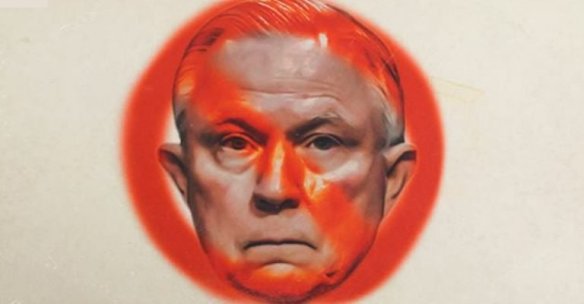
Jeff Sessions Reminds Everyone Why He’s the Worst Attorney General in Modern History

“He was a racist when appointed, a racist while serving, and a racist to the very end.”

By Jessica Corbett

Source: CommonDreams

In his last “evil” act as head of the Justice Department under President Donald Trump, Jeff Sessions reminded “everyone yet again why he’s been the worst attorney general in modern history” and drastically limited the ability of federal officials to use court-enforced deals to require reforms at police departments that are found systematically violating people’s civil rights.

Shortly before Trump forced Sessions to resign on Wednesday—and appointed a temporary replacement who is hostile toward Special Counsel Robert Mueller’s investigation—Sessions signed a memorandum (pdf), as the New York Times reports, “sharply curtailing the use of so-called consent decrees, court-approved deals between the Justice Department and local governments that create a road map of changes for law enforcement and other institutions,” by imposing “three stringent requirements for the agreements.”

The decrees were, as the Times noted, “used aggressively by Obama-era Justice Department officials to fight police abuses,” but soon after Sessions took office, he had signaled he would scale back their use and “ordered a review of the existing agreements, including with police departments in Baltimore, Chicago, and Ferguson, Mo., enacted amid a national outcry over the deaths of black men at the hands of officers.”

Sessions’ last-minute final act was met with widespread outrage, but not surprise—rather, as many critics quickly pointed out, it fit with the patterns of Sessions’ moves throughout his tenure as attorney general.

“From day one, former Attorney General Jeff Sessions expressed open and naked hostility to the use of consent decrees, especially in the civil rights context,” said Kristen Clarke of the Lawyers’ Committee for Civil Rights Under Law. “This action by Sessions, on his way out the door, seals his legacy as an obstructionist when it comes to advancing justice and protecting rights in our country.”

I would never expect Sessions to be anything other than an unrepentant civil rights foe until the very last minute,” tweeted Sherrilyn Ifill, president and director-counsel of the NAACP Legal Defense Fund.

“He was a racist when appointed, a racist while serving, and a racist to the very end,” Josh Moon of the Alabama Reporter said of his state’s former senator. “There is no redeeming quality to Jeff Sessions. He’s a horrible racist at his core.”

The New Republic‘s Matt Ford concluded simply, “He is who we thought he was.”

Although Sessions, much to Trump’s frustration, recused himself from the Mueller probe, while serving as attorney general, he made several moves—including canceling Deferred Action for Childhood Arrivals (DACA) and implementing the “zero-tolerance” policy that tore migrant children away from their parents—that had civil and human rights advocates constantly raising alarm about “the Trump/Sessions white supremacist agenda.”

Even before news broke about his memo to curb the use of consent decrees, social justice advocates began to document Sessions’ record as he departed.

“Jeff Sessions was the worst attorney general in modern American history. Period,” the ACLU charged in a series of tweets on Wednesday that, among other things, noted his discrimination against trans people, enthusiastic enforcement of racist drug laws, and use of religion to attack women’s reproductive rights.

One of the most prominent parts of Sessions’ legacy is the immigration crisis he leaves behind, as Julia Preston outlined for The Marshall Project on Wednesday. Acknowledging Preston’s report, the Lawyers’ Committee for Civil Rights Under Law summarized on Twitter, “On President Trump’s favorite issue, the departing attorney general leaves behind record-breaking backlogs of cases, onerous constraints on judges, and a bulwark of punitive attitudes toward families seeking asylum.”


Uncle Sam, the Human Rights Hypocrite

By Paul Street

Source: TruthDig

This year marks the 70th anniversary of the Universal Declaration of Human Rights. Signed by the United States and adopted by the United Nations General Assembly on Dec. 10, 1948, the document was a great and shining step forward in the articulation of how human beings might organize their social and political systems in accord with democratic and civilized ideals.

The U.S. has long wielded the Universal Declaration (UD) as a weapon to brandish selectively against officially designated enemies. But seven decades after its signing (and trumpeting) the document, American society stands in rarely noted gross violation of the declaration’s key principles.

Take the UD’s first’s article: “All human beings are born free and equal in dignity and rights. They are endowed with reason and conscience and should act towards one another in a spirit of brotherhood.”

The United States falls far short here. Someone born into one of the 57 percent of U.S. households with less than $1,000 in savings will not enjoy remotely the same amount of “dignity and rights” as those enjoyed by someone born into the top 1 percent of households, which together possess as much wealth as the bottom 90 percent of U.S. citizens. Access to basic means of comfort, dignity and freedom—like quality housing, quality education, strong legal representation, leisure, travel, health care, quality food and recreation—is filtered by the militantly disparate distribution of wealth and income in the U.S., the most savagely unequal nation among all Western “capitalist democracies.” Like the polarized and nasty political culture to which it is merged, the nation’s extreme socioeconomic imbalance is inconsistent with calls for conscience and brotherhood.

Article 2 of the UD proclaims, among other things, that everyone is entitled to human rights and freedoms without distinctions of “race, color” and “national or social origin.” Here again, the U.S. stands in stark contravention.

Median white wealth is 12 times higher than median black wealth in the U.S.—a reflection of persistent anti-black discrimination and segregation built into the nation’s social structures and institutions. Reflecting stark racial disparities in arrest, prosecution, legal representation and sentencing, black and Latinos make up 56 percent of the nation’s 2.2 million incarcerated people though they comprise roughly 32 percent of the U.S. population. One in three adult black males is saddled with the crippling lifelong mark of a felony record—a critical barrier to opportunity and full citizenship (even the right to vote in many U.S. states) on numerous levels. Thanks to the racially disparate waging of the so-called war on drugs, one of every 10 U.S. black men in their 30s is in jail or prison on any given day. African-Americans and whites use drugs at similar rates, but the imprisonment rate of African-Americans for drug charges is almost six times that of whites.

Millions of undocumented immigrant workers and residents are unwilling to fight for their “universal human rights” in the U.S. because they reasonably fear arrest and deportation.

The UD’s fourth article declares, “No one shall be held in slavery or servitude.” Hundreds of thousands of U.S. prisoners—the modern-day and very disproportionately nonwhite human chattel that provides the essential raw material for the self-declared “Land of Freedom’s” curiously gigantic prison-industrial complex—perform labor tasks for tiny levels of compensation and often for no payment at all. The Global Slavery Index estimates that 57,000 people are victims of human trafficking, the modern form of slavery, with illegal smuggling and trading of people, for forced labor or sexual exploitation, in the United States.

Hundreds of millions of nominally free Americans are de facto slaves and servants to employers (upon whom a shocking number of Americans absurdly depend for health coverage), financial institutions, insurance corporations, retail corporations, credit agencies, property associations, government tax collectors, gambling agencies (including state lottery systems), health care providers, lawyers and drug dealers.

The UD’s fifth article says, “No one shall be subjected to torture or to cruel, inhuman or degrading treatment or punishment.” Torture and such treatment is endemic across the United States’ vast prison system, the largest in world history. One particularly widespread and egregious form of cruel and inhuman treatment inside that system is solitary confinement—a punishment well known to cause grave damage to its victims’ mental and physical health. The American Civil Liberties Union reports that:

Over the last two decades, the use of solitary confinement in U.S. correctional facilities has surged … 44 states and the federal government have supermax units, where prisoners are held in extreme isolation, often for years or even decades. On any given day in this country, it’s estimated that over 80,000 prisoners are held in isolated confinement. This massive increase in the use of solitary has happened despite criticism from legal and medical professionals, who have deemed the practice unconstitutional and inhumane.

Other forms of torture and cruel and inhumane treatment that are common in the nation’s vast archipelago of racially disparate mass incarceration include widespread beatings, rape, ignoring cries for help, overcrowding, underfunding, forcing inmates to fight, dehydration, starvation, denial of medical care, executions (including botched executions) and forced scalding showers.

Article 7 of the UD proclaims, “All are equal before the law and are entitled without any discrimination to equal protection of the law.”

This principle, too, is brazenly violated in the purported homeland and headquarters of global freedom and democracy. Many Americans are familiar with the old working-class aphorism that “money talks and bullshit walks”—meaning that the wealthy few hire high-priced lawyers to enhance their chances and power in the courts while everyday people do far less well with fewer resources to pay for legal representation. It’s no joke. As the Georgia gubernatorial candidate and former Georgia House Minority Leader Stacey Abrams noted last February, people with money “artfully navigate the criminal justice system and maybe even avoid it altogether,” but those who are poor are overwhelmed.

Wall Street chieftains who threw millions of Americans out of work and destroyed billions of dollars in lost savings through their reckless and often criminal practices have escaped prosecution while the nation’s jails and prisons are loaded with disproportionately black, Latino and poor people serving long terms for comparative small-time drug offenses. Hundreds of thousands of Americans rot in jail prior to conviction for the simple reason that they lack the financial resources to “make bail.” Abrams reports, “The majority of Georgians incarcerated in local jails have never been convicted of crime. They are simply too poor to pay their bail.”

The UD’s ninth and 10th articles say that “[n]o one shall be subjected to arbitrary arrest, detention or exile” and “Everyone is entitled in full equality to a fair and public hearing by an independent and impartial tribunal, in the determination of his rights and obligations and of any criminal charge against him.”

The 11th article says, “Everyone charged with a penal offence has the right to be presumed innocent until proved guilty according to law in a public trial at which he has had all the guarantees necessary for his defence.”

The “land of freedom” contravenes these core civil-libertarian principles without the slightest hint of embarrassment. The U.S. National Defense Authorization Act (NDAA) authorizes the indefinite military detention, without charge or trial, of any person labeled a “belligerent”—including an American citizen. The legislation overrides habeas corpus, the critical legal procedure that prevents the government from detaining you indefinitely without showing just cause.

In addition, the federal government has used the post 9/11 Authorization to Use Military Force (AUMF) law to justify the direct killing (without a trial or verdict) of anyone proclaimed an “enemy combatant” in the global war on terrorism. The AUMF is unbound by geographic or time limitations. U.S. citizens are not exempted, nor is U.S. territory.

Meanwhile, The Washington Post reported last January, “For the third year in a row, [U.S. local and state] police nationwide shot and killed nearly 1,000 people. …” Police killings, disproportionately inflicted against poor people and people of color, amount to executions, without trial or verdict.

The presumption of innocence does not prevent hundreds of thousands of American from experiencing the torture of incarceration simply because they cannot pay bail while awaiting trial.

The UD’s 12th article proclaims, “No one shall be subjected to arbitrary interference with his privacy, family, home or correspondence.” So what? Americans are subject to a vast private and public surveillance apparatus that has essentially abolished privacy in the name of “national security.” As the ACLU reports:

Numerous government agencies—including the National Security Agency, the Federal Bureau of Investigation, the Department of Homeland Security, and state and local law enforcement agencies—intrude upon the private communications of innocent citizens, amass vast databases of who we call and when, and catalog “suspicious activities” based on the vaguest standards. … Innocuous data is fed into bloated watchlists, with severe consequences—innocent individuals have found themselves unable to board planes, barred from certain types of jobs, shut out of their bank accounts, and repeatedly questioned by authorities. Once information is in the government’s hands, it can be shared widely and retained for years, and the rules about access and use can be changed entirely in secret without the public ever knowing.

Article 15 of the UD says, “Everyone has the right to a nationality” and “No one shall be deprived of the right to change his nationality.” Millions of “illegal” immigrants in flight from impoverished and repressive regimes supported by the United States are stateless people, too afraid of deportation to declare their foreign citizenship or to fight for decent conditions inside the U.S. They are not free to change their nationality by becoming U.S. citizens.

The UD’s 19th article declares, “Everyone has the right to freedom of opinion and expression; this right includes freedom to hold opinions without interference.” That’s nice. Millions of U.S. citizen-subjects know very well that they cannot write or say (or sing or post or march on behalf of) what they believe without putting their livelihoods at risk by offending or otherwise concerning their employers and other authorities. And in the United States, where health insurance is strongly and absurdly tied to place of employment, putting one’s job at risk also endangers a person’s and his or her family’s access to health care.

Freedom of expression is strictly qualified, to say the least, in the hidden and despotic abode of the capitalist workplace, where most working-age Americans spend most of their waking hours under managerial supervision.

Even tenured academics can be fired for expressing their opinions. The University of Illinois at Urbana-Champaign fired tenured professor Steven Salaita over his personal tweets criticizing Israel’s mass-murderous 2014 assault on Gaza. The prolific radical Native American author Ward Churchill was stripped of his tenured professorship on trumped-up grounds because of political comments he made on the 9/11 terror attacks.

Article 20 of the UD says, “Everyone has the right to freedom of peaceful assembly and association.”

These rights are strictly qualified in the U.S., where public assembly is controlled by onerous permitting processes and fees and peaceful protest gatherings commonly face militarized police forces that make random arrests, infiltrate marches and meetings, target organizers, give protesters petty charges (and deadly criminal records) and rough-up protesters. Numerous Republican-controlled states have passed bills that increase penalties for public protest in the wake of the many protests that accompanied Donald Trump’s election and inauguration.

Workers are fired for trying to organize unions in the U.S., where once union-friendly labor laws have been eviscerated.

The UD’s 21st article proclaims that “Everyone has the right to take part in the government of his country, directly or through freely chosen representatives. The will of the people shall be the basis of the authority of government; this shall be expressed in periodic and genuine elections which shall be by universal and equal suffrage and shall be held by secret vote or by equivalent free voting procedures.”

The reality of U.S. politics and policy stands in brazen defiance of this universal human right. As the distinguished liberal political scientists Benjamin Page (Northwestern) and Marin Gilens (Princeton) showed in their expertly researched book, “Democracy in America?” last year:

[T]he best evidence indicates that the wishes of ordinary Americans actually have little or no impact on the making of federal government policy. Wealthy individuals and organized interest groups—especially business corporations—have had much more political clout. When they are taken into account, it becomes apparent that the general public has been virtually powerless. … The will of majorities is often thwarted by the affluent and the well-organized, who block popular policy proposals and enact special favors for themselves. … Majorities of Americans favor … programs to help provide jobs, increase wages, help the unemployed, provide universal medical insurance, ensure decent retirement pensions, and pay for such programs with progressive taxes. Most Americans also want to cut “corporate welfare.” Yet the wealthy, business groups, and structural gridlock have mostly blocked such new policies [and programs].

“Elections alone,” Page and Gilens note, “do not guarantee democracy.” Majority U.S. opinion is regularly trumped by a deadly complex of forces in the nation’s politics, including:

    • The campaign finance, candidate-selection, lobbying and policy agenda-setting power of wealthy individuals, corporations and interest groups
    • The special primary election influence of full-time party activists
    • The disproportionately affluent, white and older composition of the active (voting) electorate
    • The manipulation and restriction of voter turnout
    • The widespread dissemination of distracting, confusing, misleading and just plain false information
    • Absurdly and explicitly unrepresentative political institutions like the Electoral College, the unelected Supreme Court, the over-representation of the predominantly white rural population in the U.S. Senate and the one-party rule in the House of “Representatives”
    • The fragmentation of authority in government
    • Corporate ownership of the reigning media, which frames current events in accord with the wishes and world view of the nation’s real owners—its “unelected dictatorship or money”
    • Americans get to vote but mammon reigns nonetheless in the United States, where, Page and Gilens find, “government policy … reflects the wishes of those with money, not the wishes of the millions of ordinary citizens who turn out every two years to choose among the preapproved, money-vetted candidates for federal office.

You wouldn’t know a thing about these and other brazen violations of the UD (you can find supplemental text on U.S. “homeland” violations of UD articles 22, 23, 24, 25, 27 and 28 on my website) by reading the U.S. State Department’s recently released annual “Country Reports on Human Rights Abuses.” Beyond two disturbing novelties—the deletion of most prior reporting on women’s rights and reproductive rights and the redaction of the term “Occupied Territories” from the report’s description of Israel and its, well, occupied territories—the Trump-era rendering of the annual State Department document (this year’s is the first put together entirely by the Trump State Department) runs in four familiar grooves. Consistent with previous versions, it fails to acknowledge the United States’ longstanding political, economic and military backing of governments whose human rights abuses it mentions—as if Washington had nothing to do with them.

We learn, for example, that Saudi Arabia kills civilians in Yemen and carries out “unlawful killings, including execution for other than the most serious offenses and without requisite due process; torture; arbitrary arrest and detention, including of lawyers” in its own territory. The report says nothing about how Washington considers the Saudi regime one of its most prized allies. Or that it equips the absolutist Saudi state (whose crown prince was recently hosted by Donald Trump, who boasted during the royal’s visit of U.S. arms sales to Saudi Arabia) with tens of billions worth of lethal military equipment. Nor does it say anything about the United States’ own direct egregious abrogation of human rights through things like its horrific torture camp at Guantanamo Bay and its ongoing arch-criminal drone war program of “targeted assassination” (execution without trial) Noam Chomsky has called “the most extensive global terrorism campaign the world has yet seen.”

The world has every reason to respond to the State Department’s report with another old maxim: “Don’t piss on my boots and tell me it’s raining.”

The Country Reports document continues the United States’ longstanding practice of selective criticism, playing up violations in rival and enemy nations over those in allied nations. Relying on just the document’s country-level write-ups, one would think that human rights are no better in Iran and Cuba than they are in Saudi Arabia and Honduras. You’d never know that the Saudis make Iran look like a bastion of civil liberties, women’s rights and democracy by comparison. Or that ordinary Cubans enjoy remarkable guaranteed incomes and access to educational resources and health care services that are unrivaled across Latin America and especially in right-wing Latin American states like Honduras, where a vicious right-wing regime was installed with no small help from the U.S. nine years ago.

The State Department report vastly understates the scale of the Saudis’ U.S.-backed and U.S.-equipped crimes in Yemen. It gives no sense that the U.S.-Saudi war on that small nation has created there one of the worst humanitarian catastrophes (replete with a mass outbreak of deadly cholera) in recent history.

In rolling out the report, John Sullivan, Trump’s then-acting secretary of state, singled out Russia and China as leading “threats to global stability,” claiming that their poor human rights records put them in the same dastardly club as evil Iran and North Korea. Where, one might well ask, should we rank U.S. allies like Saudi Arabia, Honduras, Egypt and Israel? The last country has recently and openly slaughtered unarmed Palestinians who were peacefully protesting along its border with Gaza, which is essentially an open-air Palestinian prison subjected to a vicious blockade by Israel and Egypt since 2007. What about other U.S.-allied states like the Philippines, whose strongman president Rodrigo Duterte has ordered the death-squad killings of drug dealers and drug users and been praised by Trump for doing “an unbelievable job on the drug problem”?

It has not been lost on properly critical observers that that the Trump administration has curiously designated the American Empire’s top strategic rivals—China, Russia, Iran and North Korea—as the world’s worst human rights violators.

As per usual, the latest State Department global human rights report ignores positive human rights accomplishments of states on the wrong side of Uncle Sam’s division of the world into friend and enemy. It has nothing to say, for example, about Cuba’s remarkable achievements in reducing poverty, providing health care, educating its citizens and developing its economy and society with a low-carbon footprint that reduces its contribution to the greatest problem of our times, one whose advance is being led by the United States: anthropogenic climate change.

Last, but not least, this year’s version of the report has, as usual, absolutely nothing to say against or about egregious and endemic human rights abuses carried out by (both at home and abroad) and inside the United States—the supposed “beacon to the world of the way life should be,” to quote former U.S. Sen. Kay Bailey Hutchinson (currently Trump’s permanent representative to NATO) in a fall 2002 speech in support of Congress authorizing George W. Bush to criminally invade Iraq if he wanted to (he did). The State Department’s “Country Reports on Human Rights Abuses” covers every country on the planet but one: The most powerful nation on earth, the headquarters of a historically unparalleled global empire that most of the world’s politically cognizant populace has long and with good reason identified as the leading threat to peace and stability on earth. Fully 194 countries are covered in the reports, just not the world’s only superpower, itself home to 4.4 percent of the world’s population but 22 percent of the world’s prisoners—quite an accomplishment for the self-declared homeland and headquarters of global freedom and democracy.

As far as the State Department, Washington and the nation’s reigning corporate, financial, and imperial power elite is concerned, the violations of the UD outlined at the outset of this article (and in my linked supplemental text) belong down George Orwell’s memory hole, consistent with the principle that history is written by and for the winners and Big Bother’s maxim: “He who controls the past controls the future. He who controls the present controls the past.”

It’s nothing remotely new or distinctive to the Trump era. The United States sees itself as an inherently splendid and humanitarian City on a Hill, fit to judge other nations, particularly those it deems as rivals and enemies, while giving itself an “exceptionalist” free pass because, as Bill Clinton’s Secretary State Madeleine Albright once explained, “The United States is good.” That’s no way to get its human rights reports taken seriously by world citizens familiar with the timeworn adage that “people who live in glass houses shouldn’t throw stones.”

Enough Is Enough: If You Really Want to Save Lives, Take Aim at Government Violence

By John W. Whitehead

Source: The Rutherford Institute

“It is often the case that police shootings, incidents where law enforcement officers pull the trigger on civilians, are left out of the conversation on gun violence. But a police officer shooting a civilian counts as gun violence. Every time an officer uses a gun against an innocent or an unarmed person contributes to the culture of gun violence in this country.”—Journalist Celisa Calacal

Enough is enough.

That was the refrain chanted over and over by the thousands of demonstrators who gathered to protest gun violence in America.

Enough is enough.

We need to do something about the violence that is plaguing our nation and our world.

Enough is enough.

The world would be a better place if there were fewer weapons that could kill, maim, destroy and debilitate.

Enough is enough.

On March 24, 2018, more than 200,000 young people took the time to march on Washington DC and other cities across the country to demand that their concerns about gun violence be heard.

More power to them.

I’m all for activism, especially if it motivates people who have been sitting silently on the sidelines for too long to get up and try to reclaim control over a runaway government.

Curiously, however, although these young activists were vocal in calling for gun control legislation that requires stricter background checks and limits the kinds of weapons being bought and sold by members of the public, they were remarkably silent about the gun violence perpetrated by their own government.

Enough is enough.

Why is no one taking aim at the U.S. government as the greatest purveyor of violence in American society and around the world?

The systemic violence being perpetrated by agents of the government has done more collective harm to the American people and our liberties than any single act of terror or mass shooting.

Violence has become our government’s calling card, starting at the top and trickling down, from the more than 80,000 SWAT team raids carried out every year on unsuspecting Americans by heavily armed, black-garbed commandos and the increasingly rapid militarization of local police forces across the country to the drone killings used to target insurgents.

Enough is enough.

The government even exports violence worldwide, with weapons being America’s most profitable export.

Indeed, the day before thousands of demonstrators descended on Washington DC to protest mass shootings such as the one that took place at Stoneman Douglas High School, President Trump signed into law a colossal $1.3 trillion spending bill that gives the military the biggest boost in spending in more than a decade.

Ironic, isn’t it?

Here we have thousands of passionate protesters raging, crying and shouting about the need to restrict average Americans from being able to purchase and own military-style weapons, all the while the U.S. government—the same government under Trump, Obama, Bush, Clinton and beyond that continues to act as a shill and a shield for the military industrial complex—embarks on a taxpayer-funded death march that will put even more guns into circulation, and no one says a thing about it.

Why is that?

Why does the government get a free pass?

With more than $700 billion earmarked for the military, including $144.3 billion for new military equipment, you can expect a whole lot more endless wars, drone strikes, bombing campaigns, civilian deaths, costly military installations, and fat paychecks for private military contractors who know exactly how to inflate invoices and take the American taxpayers for a ride.

Enough is enough.

You can be sure this financial windfall for America’s military empire will be used to expand the police state here at home, putting more militarized guns and weapons into the hands of local police and government bureaucrats who have been trained to shoot first and ask questions later.

There are now reportedly more bureaucratic (non-military) government civilians armed with high-tech, deadly weapons than U.S. Marines.

While Americans have to jump through an increasing number of hoops in order to own a gun, the government is arming its own civilian employees to the hilt with guns, ammunition and military-style equipment, authorizing them to make arrests, and training them in military tactics.

Among the agencies being supplied with night-vision equipment, body armor, hollow-point bullets, shotguns, drones, assault rifles and LP gas cannons are the Smithsonian, U.S. Mint, Health and Human Services, IRS, FDA, Small Business Administration, Social Security Administration, National Oceanic and Atmospheric Administration, Education Department, Energy Department, Bureau of Engraving and Printing and an assortment of public universities.

Seriously, why do IRS agents need AR-15 rifles?

Enough is enough.

Remember, it was just a few months ago that President Trump, aided and abetted by his trusty Department of Justice henchman Jeff Sessions, rolled back restrictions on the government’s military recycling program to the delight of the nation’s powerful police unions.

Under the auspices of this military “recycling” program, which was instituted decades ago and allows local police agencies to acquire military-grade weaponry and equipment, more than $4.2 billion worth of equipment has been transferred from the Defense Department to domestic police agencies since 1990.

Ironically, while gun critics continue to clamor for bans on military-style assault weapons, high-capacity magazines and armor-piercing bullets, expanded background checks, and tougher gun-trafficking laws, the U.S. military boasts all of these and more, including some weapons the rest of the world doesn’t have.

In the hands of government agents, whether they are members of the military, law enforcement or some other government agency, these weapons have become routine parts of America’s day-to-day life, a byproduct of the rapid militarization of law enforcement over the past several decades.

Over the course of 30 years, police officers in jack boots holding assault rifles have become fairly common in small town communities across the country. As investigative journalists Andrew Becker and G.W. Schulz reveal, “Many police, including beat cops, now routinely carry assault rifles. Combined with body armor and other apparel, many officers look more and more like combat troops serving in Iraq and Afghanistan.”

Although these federal programs that allow the military to “gift” battlefield-appropriate weapons, vehicles and equipment to domestic police departments at taxpayer expense are being sold to communities as a benefit, the real purpose is to keep the defense industry churning out profits, bring police departments in line with the military, and establish a standing army.

It’s a militarized approach to make-work programs, except in this case, instead of unnecessary busy work to keep people employed, communities across America are being inundated with unnecessary drones, tanks, grenade launchers and other military equipment better suited to the battlefield in order to fatten the bank accounts of the military industrial complex.

Thanks to Trump, this transformation of America into a battlefield is only going to get worse.

Get ready for more militarized police.

More police shootings.

More SWAT team raids.

More violence in a culture already drenched with violence.

Enough is enough.

You want to talk about gun violence?

According to the Washington Post, “1 in 13 people killed by guns are killed by police.”

While it still technically remains legal for the average citizen to own a firearm in America, possessing one can now get you pulled over, searched, arrested, subjected to all manner of surveillance, treated as a suspect without ever having committed a crime, shot at and killed by police.

You don’t even have to have a gun or a look-alike gun, such as a BB gun, in your possession to be singled out and killed by police.

There are countless incidents that happen every day in which Americans are shot, stripped, searched, choked, beaten and tasered by police for little more than daring to frown, smile, question, or challenge an order.

Growing numbers of unarmed people are being shot and killed for just standing a certain way, or moving a certain way, or holding something—anything—that police could misinterpret to be a gun, or igniting some trigger-centric fear in a police officer’s mind that has nothing to do with an actual threat to their safety.

Enough is enough.

With alarming regularity, unarmed men, women, children and even pets are being gunned down by twitchy, hyper-sensitive, easily-spooked police officers who shoot first and ask questions later, and all the government does is shrug and promise to do better.

Killed for standing in a “shooting stance.” In California, police opened fire on and killed a mentally challenged—unarmed—black man within minutes of arriving on the scene, allegedly because he removed a vape smoking device from his pocket and took a “shooting stance.”

Killed for holding a cell phone. Police in Arizona shot a man who was running away from U.S. Marshals after he refused to drop an object that turned out to be a cellphone. Similarly, police in Sacramento fired 20 shots at an unarmed, 22-year-old black man who was standing in his grandparents’ backyard after mistaking his cellphone for a gun.

Killed for carrying a baseball bat. Responding to a domestic disturbance call, Chicago police shot and killed 19-year-old college student Quintonio LeGrier who had reportedly been experiencing mental health problems and was carrying a baseball bat around the apartment where he and his father lived.

Killed for opening the front door. Bettie Jones, who lived on the floor below LeGrier, was also fatally shot—this time, accidentally—when she attempted to open the front door for police.

Killed for running towards police with a metal spoon. In Alabama, police shot and killed a 50-year-old man who reportedly charged a police officer while holding “a large metal spoon in a threatening manner.”

Killed for running while holding a tree branch. Georgia police shot and killed a 47-year-old man wearing only shorts and tennis shoes who, when first encountered, was sitting in the woods against a tree, only to start running towards police holding a stick in an “aggressive manner.

Killed for crawling around naked. Atlanta police shot and killed an unarmed man who was reported to have been “acting deranged, knocking on doors, crawling around on the ground naked.” Police fired two shots at the man after he reportedly started running towards them.

Killed for wearing dark pants and a basketball jersey. Donnell Thompson, a mentally disabled 27-year-old described as gentle and shy, was shot and killed after police—searching for a carjacking suspect reportedly wearing similar clothing—encountered him lying motionless in a neighborhood yard. Police “only” opened fire with an M4 rifle after Thompson first failed to respond to their flash bang grenades and then started running after being hit by foam bullets.

Killed for driving while deaf. In North Carolina, a state trooper shot and killed 29-year-old Daniel K. Harris—who was deaf—after Harris initially failed to pull over during a traffic stop.

Killed for being homeless. Los Angeles police shot an unarmed homeless man after he failed to stop riding his bicycle and then proceeded to run from police.

Killed for brandishing a shoehorn. John Wrana, a 95-year-old World War II veteran, lived in an assisted living center, used a walker to get around, and was shot and killed by police who mistook the shoehorn in his hand for a 2-foot-long machete and fired multiple beanbag rounds from a shotgun at close range.

Killed for having your car break down on the road. Terence Crutcher, unarmed and black, was shot and killed by Oklahoma police after his car broke down on the side of the road. Crutcher was shot in the back while walking towards his car with his hands up.

Killed for holding a garden hose. California police were ordered to pay $6.5 million after they opened fire on a man holding a garden hose, believing it to be a gun. Douglas Zerby was shot 12 times and pronounced dead on the scene.

Killed for calling 911. Justine Damond, a 40-year-old yoga instructor, was shot and killed by Minneapolis police, allegedly because they were startled by a loud noise in the vicinity just as she approached their patrol car. Damond, clad in pajamas, had called 911 to report a possible assault in her neighborhood.

Killed for looking for a parking spot. Richard Ferretti, a 52-year-old chef, was shot and killed by Philadelphia police who had been alerted to investigate a purple Dodge Caravan that was driving “suspiciously” through the neighborhood.

Shot seven times for peeing outdoors. Eighteen-year- old Keivon Young was shot seven times by police from behind while urinating outdoors. Young was just zipping up his pants when he heard a commotion behind him and then found himself struck by a hail of bullets from two undercover cops. Allegedly officers mistook Young—5’4,” 135 lbs., and guilty of nothing more than taking a leak outdoors—for a 6’ tall, 200 lb. murder suspect whom they later apprehended. Young was charged with felony resisting arrest and two counts of assaulting a peace officer.

This is what passes for policing in America today, folks, and it’s only getting worse.

In every one of these scenarios, police could have resorted to less lethal tactics.

They could have acted with reason and calculation instead of reacting with a killer instinct.

They could have attempted to de-escalate and defuse whatever perceived “threat” caused them to fear for their lives enough to react with lethal force.

That police instead chose to fatally resolve these encounters by using their guns on fellow citizens speaks volumes about what is wrong with policing in America today, where police officers are being dressed in the trappings of war, drilled in the deadly art of combat, and trained to look upon “every individual they interact with as an armed threat and every situation as a deadly force encounter in the making.”

Remember, to a hammer, all the world looks like a nail.

We’re not just getting hammered, however.

We’re getting killed, execution-style.

Enough is enough.

When you train police to shoot first and ask questions later—whether it’s a family pet, a child with a toy gun, or an old man with a cane—they’re going to shoot to kill.

This is the fallout from teaching police to assume the worst-case scenario and react with fear to anything that poses the slightest threat (imagined or real).

This is what comes from teaching police to view themselves as soldiers on a battlefield and those they’re supposed to serve as enemy combatants.

This is the end result of a lopsided criminal justice system that fails to hold the government and its agents accountable for misconduct.

You want to save lives?

Start by doing something to save the lives of your fellow citizens who are being gunned down every day by police who are trained to shoot first and ask questions later.

You want to cry about the lives lost during mass shootings?

Cry about the lives lost as a result of the violence being perpetrated by the U.S. government here at home and abroad.

If gun control activists really want the country to reconsider its relationship with guns and violence, then it needs to start with a serious discussion about the role our government has played and continues to play in contributing to the culture of violence.

If the American people are being called on to scale back on their weapons, then as I make clear in my book Battlefield America: The War on the American People, the government and its cohorts—the police, the various government agencies that are now armed to the hilt, the military, the defense contractors, etc.—need to do the same.

It’s time to put an end to the government’s reign of terror.

Enough is enough.

Why are Police in the USA so Terrified?

(AP Photo/Jeff Roberson, File)

Robert J. Burrowes

In a recent incident in the United States, yet another unarmed man was shot dead by police after opening his front door in response to their knock. The police were going to serve an arrest warrant on a domestic violence suspect – the man’s neighbour – but went to the wrong address. See ‘Police kill innocent man while serving warrant at wrong address’.

For those who follow news in the United States, the routine killing of innocent civilians by the police has become a national crisis despite concerted attempts by political and legal authorities and the corporate media to obscure what is happening. See ‘Killed by Police’ and ‘The Counted: People killed by police in the US’.

So far this year, US police have killed 1,044 people. In contrast, from 1990 to 2016, police in England and Wales killed just 62 people. See ‘Fatal police shootings’.

Of course, these murders by the police are just the tip of the iceberg of police violence as police continue to demonstrate that the freedoms ‘guaranteed’ by the Fourth Amendment have been eviscerated. See ‘What Country Is This? Forced Blood Draws, Cavity Searches and Colonoscopies’.

So why are the police so violent? you might ask. Well, several scholars have offered answers to this question and you can read a little about what they say in these articles reviewing recent books on the subject. See ‘The Fraternal Order of Police Must Go’ and ‘Our Ever-Deadlier Police State’.

While there is much in these works with which I agree – such as the racism in US policing and the corruption of the legal system which is used to violently manage oppressed peoples in the name of ‘justice’ while leaving the individuals, banks and corporations on Wall Street unaccountable for their endless, ongoing and grotesque crimes against society, the economy and the environment – I would like to pose a deeper question: Why are police in the USA so terrified? This is the important question because only people who are terrified resort to violence, even in the context of policing. Let me explain why this is the case and how it has occurred in the police context in the USA.

Violence does not arise ‘out of nowhere’. And, sadly, its origin can be traced to what is euphemistically called the ‘socialization’ of children but which is more accurately labeled ‘terrorization’. You might think that this sounds extreme but if you spend some time considering the phenomenal violence – ‘visible’, ‘invisible’ and ‘utterly invisible’ – that we adults inflict on children during the ordinary course of the day – see Why Violence? and Fearless Psychology and Fearful Psychology: Principles and Practice – while deluding ourselves that we are preparing them to become just, decent and powerful citizens, then you might be willing to reconsider your concept of what it means to nurture children. Tragically, we are so far from any meaningful understanding of this notion, that it is not even possible to generate a widespread social discussion about how we might go about it.

So, having terrorized children into submission so that they unthinkingly and passively accept their preordained role in life – to act as a cog in a giant and destructive enterprise which they are terrorized into not questioning and over which they have no control – each of them takes their place in the global ‘economy’ wherever they can find a set of tasks that feels least painful. The idea of seeking their true path in order to search out their own unique destiny never even occurs to most of them and so they lead ‘shadow lives’ endlessly suppressing their awareness of the life that might have been.

Some of these individuals end up as recruits at a police training facility, where they are further terrorized into believing an elite-sponsored ideology that precludes genuine appreciation of the diversity of people in the community they will later police (that is, terrorize) in the name of ‘law and order’. After all, elite social control is more readily maintained when people, including the police, live in fear.

Police training further terrorizes the individuals involved and militarizes policing by encouraging recruits ‘to adopt a “warrior” mentality and think of the people they are supposed to serve as enemies’; the equipment they use, such as battering rams, flashbang grenades and Armoured Personnel Carriers, evoke a sense of war. See ‘War Comes Home: The Excessive Militarization of American Policing’.

But it doesn’t end with terrorization during childhood and then police training. Police practice functions within a long-standing cultural framework which has both wider social dimensions and narrower, localized ones. And this cultural framework has been changing, more quickly in recent years too. Unfortunately, more than ever before, this framework is increasingly driven by fear and older, delusional social expectations that police are there to maintain public safety or defend the community from criminal violence have given way to militarized assumptions, language and procedures that regard virtually everyone (and certainly indigenous people and people of color) as both dangerous and guilty until proven otherwise and treat the family home and car as targets to be ‘neutralized’ with military-style tactics and weapons. And this trend has been accelerated under Donald Trump. See ‘Trump to lift military gear ban for local police’.

By triggering fear and using military-style tactics and weapons, however, the very essence of the relationship between police and civilians is more rapidly, completely and detrimentally transformed in accord with elite interests. It equates law-enforcement with counter-terrorism and community safety with social control.

Fundamentally, of course, this plays its part in ensuring minimal effective resistance to the broader elite agenda to secure militarized control of the world’s populations and resources for elite benefit.

This transformation in the relationship between police and civilians has been accelerated by training US police in the use of military tactics that the Israeli military employs against the occupied Palestinians. See ‘Israel trains US law-enforcement in counter-terrorism’.

But consider the implications of this.

As Rashid Khalidi, the Edward Said professor of modern Arab studies at Columbia University, has noted in discussing this phenomenon: US police are learning paramilitary and counterinsurgency tactics from the Israeli military, border patrol and intelligence services, which enforce military law.

‘If American police and sheriffs consider they’re in occupation of neighborhoods like Ferguson and East Harlem, this training is extremely appropriate – they’re learning how to suppress a people, deny their rights and use force to hold down a subject population’. See ‘US Police Get Antiterror Training In Israel’.

Moreover, the most tangible evidence that the militarized training is having an impact on US policing is that both Israel and the US are using identical equipment against demonstrators, according to a 2013 report by the Israeli human rights organization B’Tselem and photographs of such equipment taken at three demonstrations in the USA. ‘Tear gas grenades, “triple chaser” gas canisters and stun grenades made by the American companies Combined Systems Inc. and Defense Technology Corp. were used in all three U.S. incidents, as well as by Israeli security forces and military units.’ See ‘US Police Get Antiterror Training In Israel’.

Given the sheer terror that drives Israeli military policy towards occupied and militarily undefended Palestine, it is little wonder that this fear is transmitted as part of any training of US police. All knowledge and technology is embedded with emotion, and fear is utterly pervasive in any military activity. Especially when it is directed in pursuit of unjust ends.

So what can we do?

If you are interested in working to reduce police fear and violence, you will get plenty of ideas in the document ‘A Toolkit for Promoting Justice In Policing’ which is summarized here: ‘15 Things Your City Can Do Right Now to End Police Brutality’.

If you want to organize a nonviolent action while reducing police fear to minimize the risk of police violence, there is a comprehensive list of guidelines here: ‘Nonviolent Action: Minimizing the Risk of Violent Repression’.

If you want to work towards ending the underlying fear that drives police (and other) violence, consider making ‘My Promise to Children’. In essence, if you want powerful individuals who are capable of resisting elite social control, including that implemented through police violence, then don’t expect children terrorized into obedience by parents, teachers and religious figures to later magically have this power.

And if you are inclined to resist violence in other contexts, consider participating in The Flame Tree Project to Save Life on Earth, signing the online pledge of The Peoples Charter to Create a Nonviolent World and/or using the strategic framework explained in Nonviolent Campaign Strategy for your peace, environmental or social justice campaign.

Why are the police so terrified? Essentially because they were terrorized as children and then terrorized during police training to violently defend elite interests against the rest of us. Elite control depends on us being too terrified to defend ourselves against their violence.

If humans are to survive this elite-driven onslaught, we need people courageous enough to resist police violence and other elite-driven violence strategically. Can we count on you?


Biodata: Robert J. Burrowes has a lifetime commitment to understanding and ending human violence. He has done extensive research since 1966 in an effort to understand why human beings are violent and has been a nonviolent activist since 1981. He is the author of Why Violence? His email address is flametree@riseup.net and his website is here.


Robert J. Burrowes
P.O. Box 68
Daylesford
Victoria 3460
Australia
Email: flametree@riseup.net

Websites:
Nonviolence Charter
Flame Tree Project to Save Life on Earth
‘Why Violence?’
Nonviolent Campaign Strategy
Nonviolent Defense/Liberation Strategy
Anita: Songs of Nonviolence
Robert Burrowes
Global Nonviolence Network


Lara Trace Hentz

INDIAN COUNTRY NEWS

In Saner Thought

"It is the duty of every man, as far as his ability extends, to detect and expose delusion and error"..Thomas Paine

ZEDJournAI

Human in Algorithms

Rooster Crows

From the Roof Top

Aisle C

I See This

The Free

blog of the post capitalist transition.. Read or download the novel here + latest relevant posts

अध्ययन-अनुसन्धान(Essential Knowledge of the Overall Subject)

अध्ययन-अनुसन्धानको सार