Manufactured Reality: Two Steps Forward, One Step Back

(Editor’s note: though this article was originally published in 2008 it remains sadly relevant. We’ve appended it with a more recent video from Truthstream Media which needs to be seen and shared.)

Source: Global Research

In order to force a new reality upon any targeted populace, the masters of the universe follow a simple strategy – they immediately make things twice as bad as they intend to keep them, only to take one step back after a short while, so that the new manufactured reality will be easier to accept.  This strategy holds constant from the manipulation of oil prices to the military strategy to rule the world by force.

In the terror war, nuclear terrorism has become the weapon of both first choice and last resort for American war planners.  It was more important to create the impression that nuclear war was imminent than it was to convince the world that we intended to use nuclear weapons as our ace in the hole.  The world had to be terrorized into believing that our insane cowboy president was about to unleash nuclear war upon the world, so that it could be held over the people’s heads.  The world had to be shocked and awed by American military supremacy into submitting to Bush’s demands.

America took two giant steps forward militarily, intending in the end to take one step back from the precipice of actual global thermonuclear war, to a more limited approach that only called for a limited use of “tactical” nukes.  A two-track approach to the war was undertaken; one path leading to immediate global nuclear war and another “democratic” approach, which put-off the use of nuclear weapons until some future action, in order to create unlimited opportunities for subversion where America’s full military might could be brought to bear upon more specific targets.  (Have they already been used?)  http://webwarper.net/ww/~av/www.redress.cc/global/dhalpin20080517

The threat that full-scale nuclear war in the center of the world’s primary energy basket was imminent created a global atmosphere of mortal fear and dread, while covert limited wars were simultaneously pursued.  This was intended to cow both the American people and the people in the targeted countries into submission to presidential dictates. The threat of general nuclear war was used to intimidate the targeted governments into “playing nice” diplomatically, while America interfered in their national affairs, introducing its revolutionary “democratic” form of politics, which included backing extremist groups.

Fear of US nuclear forces provided cover to American agitation in the Middle East region along the lines of “Operation Gladio,” which was used against our own allies in Europe.   In both operations, sympathetic right-wing leaders were found who could be bought, to be groomed by the CIA, to cultivate and organize local opposition groups.  From these agitated groups more violent radicals were found and hired to stage terrorist (“false flag”) attacks upon civilians and the governments, to be blamed upon their local opposition, which were usually actual patriot groups.

The second leg of the neoconservative war doctrine is the spreading of subversion under the cover of implanting democracy by force, and its companion, the spreading of force through democratic means.  Divisive political campaigns in targeted nations (including staged attacks by extremists) were engineered, to split the tribal societies into heavily-armed polarized factions waiting for retribution.

We have this apt description of this divisive American strategy from former Pakistani  ISI agent, turned human rights activist, Khalid Khawaja:

“Many of us call it a battle between East and West, between the Islamic and Judeo-Christian world, but it is neither of these. It is in fact the ruling regimes that want to dictate their will…

Ninety percent of people accept to be ruled, but there always remain some elements who refuse to succumb. They fight for freedom and resist till their last. However, in this conflict of two minorities – those who impose their will and those who resist it – the majority remains the sole victim. Yet people talk about Islam versus Christianity or Judaism. The basic theme remains the same. There is a group of people who want to impose their will, whether they happen to be Christian or Muslim, and there is a group of people who want to resist, and there is a silent majority which is trampled in between.”

http://www.atimes.com/atimes/South_Asia/GF22Df04.html

Mr. Khawaja continues to delve into the under-discussed cause of the whole war on terror:

“In Afghanistan’s case, a similar game was carried out on a massive scale when Muslim youths from all over the world were brought in by Pakistan and the US [to fight against the Soviets in the 1980s]. They were tools for the empires’ proxy war. The name of jihad was used…it is a question of a state imposing its will. The message is clear: if you are against us, we will kill you and your sympathizers. In this state terrorism, there is no exception, be it Christianity, Judaism, Islam, Pakistan, India, the US or Israel. All are the same.

When two elephants fight, it is the grass that gets crushed. When two elephants make love, it is again the grass that gets crushed. Whether states fight with each other or make friendships, it is only the tools who became victims.”

The same deception has been practiced in both Iraq and Afghanistan, to prolong both of those wars until the doctrine could be spread beyond them.  Both countries had been targeted for regime change, but nonetheless, even after the first regime was replaced, the doctrine of creating surrogate militias to promote democratic revolution was still developed in each one, targeting the new regimes.  In each country violent extremist groups, usually identified as “al Qaida related,” were put on the American payroll to fight against US troops and US installed governments.  The hiring and training of these “militia” mercenary groups falls within the recognized definition of treason, “levying war against [the United States].”

That destabilizing doctrine is now being exported into Iran from Iraq, Afghanistan and Pakistan, where beachheads have been established for a planned assault upon the entire neighborhood. These training centers are terrorist camps, plain and simple.  These are the American trained terrorists who will carry the limited warfare scenario into Iran under cover of the greater threat of nuclear terrorism.  The United States of America is the world’s number one supporter and exporter of terrorism; it always has been.

In order to carry out the Israeli-centric PNAC (Project for a New American Century) terror war plan that they have committed to, Bush and Cheney have doggedly undermined America’s national interests at home and all over the world.  America’s national interest has always been based on advancing liberty and human rights to the whole world, but now, under the neocon plan, these are rights that must be earned.  Bush was sent unto the world to turn reality upon its head.

On a rotating basis, America and Israel took turns slinging threats of nuclear annihilation and libelous invective at Iran and Syria, hyping the threats to intensify the notion that a nuclear attack was becoming imminent.  As Israel and America ramp-up the war-mongering against Iran and Syria, Israel sings out the threats first, then America will provide the chorus and hopefully the highly desired “money shot” afterwards.

As a final machination, to seal America and Israel’s position, the neocon doctrine unlocked the prohibition of the offensive use of nuclear weapons, even in civilian areas.  It is this new free use of nuclear weapon doctrine that is the icing on the cake for those who are plotting to seize the world under the threat of American nuclear terrorism.  Because it is now possible, it is easy to convince us all that our cowboy administration of religious zealots is about to commit an insane act, i.e., unleashing nuclear war to eliminate the possibility of a nuclear war.

Patriotic anti-government voices in this country and in the targeted countries, helped to create a strong public perception that nuclear war was imminent.  Antiwar voices of protest like mine sound a warning to alert the people to the crimes being planned that must be heard, but in so doing, we play into the government scheme by helping to hype the threat.  It is both necessary and natural that patriots arise to defend their nations in the face of American invasion or aggression.  We play a vital role in the planned drama, as it unfolds.  We have convinced the world that Bush and Cheney were insane enough to radiate the Middle Eastern oil fields, in order to steal the world’s oil.  We now may have to convince the world that the crazies themselves are the source of most of the terrorism which we fight.

It is pretty obvious that they really are that insane, but it should be even more obvious that their greedy masters don’t want their world destroyed, they only want to control it.  Why should they actually nuke Iran, if they can persuade the locals to overthrow the regime for us, causing less collateral damage (it would be difficult to operate the Middle East oil facilities, if they were all radioactive).  We have to convince the American people that Bush even though the little dictator is both stupid and insane, the real deciders are neither of those things.  It is their wills which will prevail, meaning that there are other less final, less costly ways to takeover the oil reserves and the pipeline routes.

We have to concentrate on stopping the secret war, without being blinded by the glare of nuclear terrorism.  Exposure of American sponsorship of world terrorism (some of the very “terrorism” we are fighting) must become our top priority.  Legal actions must be taken to stop the illegal support of terrorism upon civilians by our government.  Further legal actions must be taken to separate American foreign policy from Israel, in order to bring the terror war to an end.

Israel has been the primary source for most of the “intelligence” that launched the war on Iraq, the Iranian reactors and hypothetical nuclear weapons, as well as the alleged Syrian reactors.  America turned Israel’s evidence into grounds for waging war, even nuclear war.  They are behind the new push to find other Syrian nuclear facilities as well as the alleged Iranian warhead blueprint.

Israel is behind every military move against Iran that is being brought-up in the press.  It was the first to suggest taking out Iranian reactors, the first to recommend a naval blockade of Iran and an embargo on air flights between Iran and Syria and Lebanon.  American Zionist Congressional leaders gladly took up the torches lit by Israel, to create Israeli security at America’s expense.  A Congressional resolution is awaiting passage in the Senate, which demands that our government carry-out these acts of war, both the naval blockade and the air embargo, House Resolution 1194.

The American people must rise-up in outrage to the terrorists who rule over us and stop the planned escalation, as a first step to de-escalating the war.  It is time for us to take our own two steps forward, to force the aggressors to take one step back and begin to tear-down their manufactured reality.


Contact author: peter.chamberlin@yahoo.com

Related Video:

Forbidden Questions? 24 Key Issues That Neither the Washington Elite Nor the Media Consider Worth Their Bother

By Andrew J. Bacevich

Source: TomDispatch.com

Donald Trump’s election has elicited impassioned affirmations of a renewed commitment to unvarnished truth-telling from the prestige media.  The common theme:  you know you can’t trust him, but trust us to keep dogging him on your behalf.  The New York Times has even unveiled a portentous new promotional slogan: “The truth is now more important than ever.” For its part, the Washington Post grimly warns that “democracy dies in darkness,” and is offering itself as a source of illumination now that the rotund figure of the 45th president has produced the political equivalent of a total eclipse of the sun. Meanwhile, National Public Radio fundraising campaigns are sounding an increasingly panicky note: give, listener, lest you be personally responsible for the demise of the Republic that we are bravely fighting to save from extinction.

If only it were so.  How wonderful it would be if President Trump’s ascendancy had coincided with a revival of hard-hitting, deep-dive, no-holds-barred American journalism.  Alas, that’s hardly the case.  True, the big media outlets are demonstrating both energy and enterprise in exposing the ineptitude, inconsistency, and dubious ethical standards, as well as outright lies and fake news, that are already emerging as Trump era signatures.  That said, pointing out that the president has (again) uttered a falsehood, claimed credit for a nonexistent achievement, or abandoned some position to which he had previously sworn fealty requires something less than the sleuthing talents of a Sherlock Holmes.  As for beating up on poor Sean Spicer for his latest sequence of gaffes — well, that’s more akin to sadism than reporting.

Apart from a commendable determination to discomfit Trump and members of his inner circle (select military figures excepted, at least for now), journalism remains pretty much what it was prior to November 8th of last year: personalities built up only to be torn down; fads and novelties discovered, celebrated, then mocked; “extraordinary” stories of ordinary people granted 15 seconds of fame only to once again be consigned to oblivion — all served with a side dish of that day’s quota of suffering, devastation, and carnage.  These remain journalism’s stock-in-trade.  As practiced in the United States, with certain honorable (and hence unprofitable) exceptions, journalism remains superficial, voyeuristic, and governed by the attention span of a two year old.

As a result, all those editors, reporters, columnists, and talking heads who characterize their labors as “now more important than ever” ill-serve the public they profess to inform and enlighten.  Rather than clearing the air, they befog it further.  If anything, the media’s current obsession with Donald Trump — his every utterance or tweet treated as “breaking news!” — just provides one additional excuse for highlighting trivia, while slighting issues that deserve far more attention than they currently receive.

To illustrate the point, let me cite some examples of national security issues that presently receive short shrift or are ignored altogether by those parts of the Fourth Estate said to help set the nation’s political agenda. To put it another way: Hey, Big Media, here are two dozen matters to which you’re not giving faintly adequate thought and attention.

1. Accomplishing the “mission”: Since the immediate aftermath of World War II, the United States has been committed to defending key allies in Europe and East Asia.  Not long thereafter, U.S. security guarantees were extended to the Middle East as well.  Under what circumstances can Americans expect nations in these regions to assume responsibility for managing their own affairs?  To put it another way, when (if ever) might U.S. forces actually come home?  And if it is incumbent upon the United States to police vast swaths of the planet in perpetuity, how should momentous changes in the international order — the rise of China, for example, or accelerating climate change — affect the U.S. approach to doing so?

2. American military supremacy: The United States military is undoubtedly the world’s finest.  It’s also far and away the most generously funded, with policymakers offering U.S. troops no shortage of opportunities to practice their craft.  So why doesn’t this great military ever win anything?  Or put another way, why in recent decades have those forces been unable to accomplish Washington’s stated wartime objectives?  Why has the now 15-year-old war on terror failed to result in even a single real success anywhere in the Greater Middle East?  Could it be that we’ve taken the wrong approach?  What should we be doing differently?

3. America’s empire of bases: The U.S. military today garrisons the planet in a fashion without historical precedent.  Successive administrations, regardless of party, justify and perpetuate this policy by insisting that positioning U.S. forces in distant lands fosters peace, stability, and security.  In the present century, however, perpetuating this practice has visibly had the opposite effect.  In the eyes of many of those called upon to “host” American bases, the permanent presence of such forces smacks of occupation.  They resist.  Why should U.S. policymakers expect otherwise?

4. Supporting the troops: In present-day America, expressing reverence for those who serve in uniform is something akin to a religious obligation.  Everyone professes to cherish America’s “warriors.”  Yet such bountiful, if superficial, expressions of regard camouflage a growing gap between those who serve and those who applaud from the sidelines. Our present-day military system, based on the misnamed All-Volunteer Force, is neither democratic nor effective.  Why has discussion and debate about its deficiencies not found a place among the nation’s political priorities? 

5. Prerogatives of the commander-in-chief: Are there any military actions that the president of the United States may not order on his own authority?  If so, what are they?  Bit by bit, decade by decade, Congress has abdicated its assigned role in authorizing war. Today, it merely rubberstamps what presidents decide to do (or simply stays mum).  Who does this deference to an imperial presidency benefit?  Have U.S. policies thereby become more prudent, enlightened, and successful?

6. Assassin-in-chief: A policy of assassination, secretly implemented under the aegis of the CIA during the early Cold War, yielded few substantive successes.  When the secrets were revealed, however, the U.S. government suffered considerable embarrassment, so much so that presidents foreswore politically motivated murder. After 9/11, however, Washington returned to the assassination business in a big way and on a global scale, using drones.  Today, the only secret is the sequence of names on the current presidential hit list, euphemistically known as the White House “disposition matrix.” But does assassination actually advance U.S. interests (or does it merely recruit replacements for the terrorists it liquidates)?  How can we measure its costs, whether direct or indirect?  What dangers and vulnerabilities does this practice invite?

7. The war formerly known as the “Global War on Terrorism”: What precisely is Washington’s present strategy for defeating violent jihadism?  What sequence of planned actions or steps is expected to yield success? If no such strategy exists, why is that the case?  How is it that the absence of strategy — not to mention an agreed upon definition of “success” — doesn’t even qualify for discussion here?

8. The campaign formerly known as Operation Enduring Freedom: The conflict commonly referred to as the Afghanistan War is now the longest in U.S. history — having lasted longer than the Civil War, World War I, and World War II combined. What is the Pentagon’s plan for concluding that conflict?  When might Americans expect it to end?  On what terms?

9. The Gulf: Americans once believed that their prosperity and way of life depended on having assured access to Persian Gulf oil.  Today, that is no longer the case.  The United States is once more an oil exporter. Available and accessible reserves of oil and natural gas in North America are far greater than was once believed. Yet the assumption that the Persian Gulf still qualifies as crucial to American national security persists in Washington. Why?

10. Hyping terrorism: Each year terrorist attacks kill far fewer Americans than do auto accidents, drug overdoses, or even lightning strikes.  Yet in the allocation of government resources, preventing terrorist attacks takes precedence over preventing all three of the others combined. Why is that?

11. Deaths that matter and deaths that don’t: Why do terrorist attacks that kill a handful of Europeans command infinitely more American attention than do terrorist attacks that kill far larger numbers of Arabs? A terrorist attack that kills citizens of France or Belgium elicits from the United States heartfelt expressions of sympathy and solidarity.  A terrorist attack that kills Egyptians or Iraqis elicits shrugs.  Why the difference?  To what extent does race provide the answer to that question?

12. Israeli nukes: What purpose is served by indulging the pretense that Israel does not have nuclear weapons?

13. Peace in the Holy Land: What purpose is served by indulging illusions that a “two-state solution” offers a plausible resolution to the Israeli-Palestinian conflict?  As remorselessly as white settlers once encroached upon territory inhabited by Native American tribes, Israeli settlers expand their presence in the occupied territories year by year.  As they do, the likelihood of creating a viable Palestinian state becomes ever more improbable. To pretend otherwise is the equivalent of thinking that one day President Trump might prefer the rusticity of Camp David to the glitz of Mar-a-Lago.

14. Merchandizing death: When it comes to arms sales, there is no need to Make America Great Again.  The U.S. ranks number one by a comfortable margin, with long-time allies Saudi Arabia and Israel leading recipients of those arms.  Each year, the Saudis (per capita gross domestic product $20,000) purchase hundreds of millions of dollars of U.S. weapons.  Israel (per capita gross domestic product $38,000) gets several billion dollars worth of such weaponry annually courtesy of the American taxpayer.  If the Saudis pay for U.S. arms, why shouldn’t the Israelis? They can certainly afford to do so.

15. Our friends the Saudis (I): Fifteen of the 19 hijackers on September 11, 2001, were Saudis.  What does that fact signify?

16. Our friends the Saudis (II): If indeed Saudi Arabia and Iran are competing to determine which nation will enjoy the upper hand in the Persian Gulf, why should the United States favor Saudi Arabia?  In what sense do Saudi values align more closely with American values than do Iranian ones?

17. Our friends the Pakistanis: Pakistan behaves like a rogue state.  It is a nuclear weapons proliferator.  It supports the Taliban.  For years, it provided sanctuary to Osama bin Laden.  Yet U.S. policymakers treat Pakistan as if it were an ally.  Why?  In what ways do U.S. and Pakistani interests or values coincide?  If there are none, why not say so?

18. Free-loading Europeans: Why can’t Europe, “whole and free,” its population and economy considerably larger than Russia’s, defend itself?  It’s altogether commendable that U.S. policymakers should express support for Polish independence and root for the Baltic republics.  But how does it make sense for the United States to care more about the wellbeing of people living in Eastern Europe than do people living in Western Europe?

19. The mother of all “special relationships”: The United States and the United Kingdom have a “special relationship” dating from the days of Franklin Roosevelt and Winston Churchill.  Apart from keeping the Public Broadcasting Service supplied with costume dramas and stories featuring eccentric detectives, what is the rationale for that partnership today?  Why should U.S. relations with Great Britain, a fading power, be any more “special” than its relations with a rising power like India?  Why should the bonds connecting Americans and Britons be any more intimate than those connecting Americans and Mexicans?  Why does a republic now approaching the 241st anniversary of its independence still need a “mother country”?

20. The old nuclear disarmament razzmatazz: American presidents routinely cite their hope for the worldwide elimination of nuclear weapons.  Yet the U.S. maintains nuclear strike forces on full alert, has embarked on a costly and comprehensive trillion-dollar modernization of its nuclear arsenal, and even refuses to adopt a no-first-use posture when it comes to nuclear war.  The truth is that the United States will consider surrendering its nukes only after every other nation on the planet has done so first.  How does American nuclear hypocrisy affect the prospects for global nuclear disarmament or even simply for the non-proliferation of such weaponry?

21. Double standards (I): American policymakers take it for granted that their country’s sphere of influence is global, which, in turn, provides the rationale for the deployment of U.S. military forces to scores of countries.  Yet when it comes to nations like China, Russia, or Iran, Washington takes the position that spheres of influence are obsolete and a concept that should no longer be applicable to the practice of statecraft.  So Chinese, Russian, and Iranian forces should remain where they belong — in China, Russia, and Iran.  To stray beyond that constitutes a provocation, as well as a threat to global peace and order.  Why should these other nations play by American rules?  Why shouldn’t similar rules apply to the United States?

22. Double standards (II): Washington claims that it supports and upholds international law.  Yet when international law gets in the way of what American policymakers want to do, they disregard it.  They start wars, violate the sovereignty of other nations, and authorize agents of the United States to kidnap, imprison, torture, and kill.  They do these things with impunity, only forced to reverse their actions on the rare occasions when U.S. courts find them illegal.  Why should other powers treat international norms as sacrosanct since the United States does so only when convenient? 

23. Double standards (III): The United States condemns the indiscriminate killing of civilians in wartime.  Yet over the last three-quarters of a century, it killed civilians regularly and often on a massive scale.  By what logic, since the 1940s, has the killing of Germans, Japanese, Koreans, Vietnamese, Laotians, Cambodians, Afghans, and others by U.S. air power been any less reprehensible than the Syrian government’s use of “barrel bombs” to kill Syrians today?  On what basis should Americans accept Pentagon claims that, when civilians are killed these days by U.S. forces, the acts are invariably accidental, whereas Syrian forces kill civilians intentionally and out of malice?  Why exclude incompetence or the fog of war as explanations?  And why, for instance, does the United States regularly gloss over or ignore altogether the noncombatants that Saudi forces (with U.S. assistance) are routinely killing in Yemen?

24. Moral obligations: When confronted with some egregious violation of human rights, members of the chattering classes frequently express an urge for the United States to “do something.”  Holocaust analogies sprout like dandelions.  Newspaper columnists recycle copy first used when Cambodians were slaughtering other Cambodians en masse or whenever Hutus and Tutsis went at it.  Proponents of action — typically advocating military intervention — argue that the United States has a moral obligation to aid those victimized by injustice or cruelty anywhere on Earth.  But what determines the pecking order of such moral obligations?  Which comes first, a responsibility to redress the crimes of others or a responsibility to redress crimes committed by Americans?  Who has a greater claim to U.S. assistance, Syrians suffering today under the boot of Bashar al-Assad or Iraqis, their country shattered by the U.S. invasion of 2003?  Where do the Vietnamese fit into the queue?  How about the Filipinos, brutally denied independence and forcibly incorporated into an American empire as the nineteenth century ended?  Or African-Americans, whose ancestors were imported as slaves?  Or, for that matter, dispossessed and disinherited Native Americans?  Is there a statute of limitations that applies to moral obligations?  And if not, shouldn’t those who have waited longest for justice or reparations receive priority attention?

Let me suggest that any one of these two dozen issues — none seriously covered, discussed, or debated in the American media or in the political mainstream — bears more directly on the wellbeing of the United States and our prospects for avoiding global conflict than anything Donald Trump may have said or done during his first 100 days as president.  Collectively, they define the core of the national security challenges that presently confront this country, even as they languish on the periphery of American politics.

How much damage Donald Trump’s presidency wreaks before it ends remains to be seen.  Yet he himself is a transient phenomenon.  To allow his pratfalls and shenanigans to divert attention from matters sure to persist when he finally departs the stage is to make a grievous error.  It may well be that, as the Times insists, the truth is now more important than ever.  If so, finding the truth requires looking in the right places and asking the right questions.


Andrew J. Bacevich, a TomDispatch regular, is the author of America’s War for the Greater Middle East: A Military History, now out in paperback. His next book will be an interpretive history of the United States from the end of the Cold War to the election of Donald Trump.

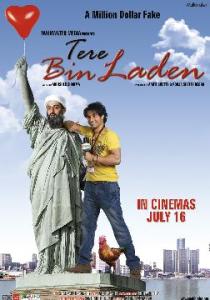
Saturday Matinee: Tere Bin Laden

Statu_With_Ali_Poster_With_Date

“Tere Bin Laden” (2010) is a Bollywood comedy written and directed by Abhishek Sharma. Pakistani pop star Ali Zafar stars as Ali Hassan, a TV reporter for a low budget news station in Karachi. Determined to find success in America despite previously being deported after being mistaken for a terrorist, he hatches a plan to raise funds for a fake ID with a sensational video using Noora (Pradhuman Singh), a dimwitted chicken farmer who happens to be a convincing Bin Laden lookalike. The plan rapidly spins out of control when it gets the attention of US government officials and the Pakistani intelligence agency. Though some gags dependent on regional references and wordplay may be lost on western audiences, much of it is broad enough to transcend cultures (especially bits mocking the paranoid and xenophobic post 9/11 milieu). Not surprisingly, the film was banned upon release in the US and several countries in the Middle East including Pakistan. The sequel Tere Bin Laden: Dead or Alive was released last February.

Don’t forget Malala Yousafzai’s appeal to Obama: end the drone war

M_Id_429009_Malala_Yousafzai

By Zack Beauchamp

Source: Vox.com

On Friday morning, 17 year-old Pakistani activist Malala Yousafzai won the Nobel Peace Prize. Yousafzai’s prize is well-deserved: she’s been a prominent campaigner for girls’ education for years, and survived a Taliban assassination attempt for her efforts.

But women’s education isn’t Malala’s only cause. She’s also waged a prominent campaign on a topic Americans aren’t talking much about nowadays: the drone war in Pakistan.

In characteristically bold fashion, Yousafzai brought these concerns up in a meeting with President Obama back in October 2013 — one that had originally been held to celebrate her commitment to education.

“I thanked President Obama for the United States’ work in supporting education in Pakistan and Afghanistan and for Syrian refugees,” Yousafzai said in a statement after the meeting — before turning to drones. “I also expressed my concerns that drone attacks are fueling terrorism. Innocent victims are killed in these acts, and they lead to resentment among the Pakistani people. If we refocus efforts on education it will make a big impact.”

The White House statement on its meeting with Yousafzai left that bit out.

The US drone campaign in Pakistan peaked back in 2010, but that hardly justifies forgetting about it in 2014. We should remember it because we still have no idea if the targeted killings are actually reducing militant violence in Pakistan. We should remember it because it may not actually weaken al-Qaeda in the long run. And, most of all, we should remember it because it’s killed hundreds, if not thousands, of Pakistani civilians:

Screen_Shot_2014-10-10_at_11.02.13_AM.0

Drone war casualties, civilian and militant. (New America Foundation)

In other words: Yousafzai was pointing to exactly the right issues. We don’t know if drone strikes are weakening al-Qaeda, but we definitely know that they’re killing people — including innocents.

Nowadays, the American public is more focused on the US military campaign against ISIS than they are on the campaign in Pakistan. Part of that is that the ISIS war is newer and more intense. Another part is that, for the first half of 2014, the US wasn’t hitting any targets in Pakistan. In fact, Peter Bergen, an expert on the drone war at the New America Foundation, said that “the program [in Pakistan] appears to have ended.”

Yet on June 11, the US began bombing Pakistan again. According to New America data, there have been five strikes in October 2014 alone.

So as Yousafzai gets her deserved accolades for her peace work, it’s worth remembering her concerns about one of America’s quieter wars. That’s especially true as the US government is ramping up another air campaign against an jihadi group that’s expected to last for years.


Posterity Will Hate Us: Building a Lasting Legacy of Death

index

By Chris Floyd

Source: Empire Burlesque

What do we aim at? Houses! Who do we kill? Everyone inside the houses! What are their names? We don’t know! What did they do? We don’t know! Are they civilians? We don’t care!

This could be the catechism of the America’s drone death squads that rain death and destruction on defenceless people from the skies of Pakistan, month in, month out, year after year. As the Bureau of Investigative Journalism reports:

Domestic buildings have been hit by drone strikes more than any other type of target in the CIA’s 10-year campaign in the tribal regions of northern Pakistan, new research reveals. … The project examines, for the first time, the types of target attacked in each drone strike – be they houses, vehicles or madrassas (religious schools) – and the time of day the attack took place.

It reveals:

Over three-fifths (61%) of all drone strikes in Pakistan targeted domestic buildings, with at least 132 houses destroyed, in more than 380 strikes.

•At least 222 civilians are estimated to be among the 1,500 or more people killed in attacks on such buildings. In the past 18 months, reports of civilian casualties in attacks on any targets have almost completely vanished, but historically almost one civilian was killed, on average, in attacks on houses.

•The CIA has consistently attacked houses have throughout the 10-year campaign in Pakistan.

•The time of an attack affects how many people – and how many civilians – are likely to die. Houses are twice as likely to be attacked at night compared with in the afternoon. Strikes that took place in the evening, when families likely to be at home and gathered together, were particularly deadly.

Some of these operations are carried out at the direct order of the president of the United States, who meets with his advisors every Tuesday to draw up death lists of victims to be killed. Others are slaughtered by the innumerable officers and agents upon whom the White House has bestowed a license to kill as they see fit.

But as the Bureau points out, even when the name of the target is known — although of course there is no need for any proof to be offered as to the target’s ostensible death-deserving guilt — they are most often blown to pieces in domestic homes, along with family members, friends and, often, neighbors who live nearby.

— Sometimes when I write paragraphs like the one above — setting out undisputed facts; indeed, facts that are often celebrated in the highest reaches of the political and media elites — I find myself slack-jawed, drop-jawed to the floor with amazement. The bare, banal, widely accepted, shrugged-off realities of life in the American Imperium today would have been regarded, just a few years ago, as the wildest, most unbelievable fantasies of political paranoids. The president sits in the White House and draws up death lists. Robot-controlled missiles blow up people’s houses, killing hundreds of civilians each year. Not an eyelid is batted, scarcely a voice is raised in protest, except on the far-flung disregarded margins. This is the way the world is, and one must acknowledge that — but sometimes, the cognitive dissonance hits you like a two-by-four upside the head.

But this is where we are now. This is what we are now. Future generations will look back on us in horror. They won’t notice or care about the pointless, finely-meshed gradations of minute policy differences between the two parties, or between the two factions called “left” and “right”; they won’t care if Barack Obama was or wasn’t “two percent less evil” than George W. Bush, or any of the pitiful political molehills that entirely preoccupy our chattering classes. No; all they will see in a seamless record of murder, terror, tyranny and corruption inflicted by a militarist state on the world outside and on its own people within. They will look at us just as we look at the people in Nazi Germany or Stalinist Russia and wonder, with revulsion and incomprehension, how such things happened, how whole societies could give themselves over to brutality and hate, how such vicious, vacuous, pathetic elites — and their wretched little followers and sycophants — were allowed to hold such sway for so long.

They will be sickened by us. They will hate us for what we let happen. And they will be right to do so.