Hunger Profiteers, Granny Killers, and Skin-Deep Morality

By Colin Todhunter

Source: Dissident Voice

Today, a fifth (278 million) of the African population are undernourished, and 55 million of that continent’s children under the age of five are stunted due to severe malnutrition.  

In 2021, an Oxfam review of IMF COVID-19 loans showed that 33 African countries were encouraged to pursue austerity policies. Oxfam and Development Finance International also revealed that 43 out of 55 African Union member states face public expenditure cuts totalling $183 billion over the next few years. 

As a result, almost three-quarters of Africa’s governments have reduced their agricultural budgets since 2019, and more than 20 million people have been pushed into severe hunger. In addition, the world’s poorest countries were due to pay $43 billion in debt repayments in 2022, which could otherwise cover the costs of their food imports. 

Last year, Oxfam International Executive Director Gabriela Bucher stated that there was a terrifying prospect that in excess of a quarter of a billion more people would fall into extreme levels of poverty in 2022 alone. That year, food inflation rose by double digits in most African countries.  

By September 2022, some 345 million people across the world were experiencing acute hunger, a number that has more than doubled since 2019. Moreover, one person is dying of hunger every four seconds. From 2019 to 2022, the number of undernourished people grew by 150 million

Billions of dollars’ worth of arms continue to pour into Ukraine from the NATO countries as US neocons pursue their goal of regime change in Russia and balkanisation of that country. 

Yet people in those NATO countries are experiencing increasing levels of hardship. The US has sent almost 80 billion dollars to Ukraine, while 30 million low-income people across the US are on the edge of a ‘hunger cliff’ as a portion of their federal food assistance is taken away. In 2021, it was estimated that one in eight children were going hungry in the US. In England, 100,000 children have been frozen out of free school meals.  

Due to the disruptive supply chain effects of the conflict in Ukraine, speculative trading that drives up food prices, the impact of closing down the global economy under the guise of COVID and the inflationary impacts of pumping trillions of dollars into the financial system between September 2019 and March 2020, people are being driven into poverty and denied access to sufficient food. 

Matters are not helped by issues that have long plagued the global food system: cutbacks in public subsidies to agriculture, WTO rules that facilitate cheap, subsidised imports which undermine or wipe out indigenous agriculture in poorer countries and loan conditionalities, resulting in countries ‘structurally adjusting’ their agri sectors thereby eradicating food security and self-sufficiency – consider that Africa has been transformed from a net food exporter in the 1960s to a net food importer today.  

Great game food geopolitics continue and result in elite interests playing with the lives of hundreds of millions who are regarded as collateral damage. Policies, underpinned by neoliberal dogma masquerading as economic science and necessity, which are designed to create dependency and benefit a handful of multi-billionaires and global agribusiness corporations who, ably assisted by the World Bank, IMF and WTO, now preside over an increasingly centralised food regime. 

Many of these corporations have engaged in rampant profiteering at a time when people across the world are experiencing rising food inflation. For instance, 20 corporations in the grain, fertiliser, meat and dairy sectors delivered $53.5 billion to shareholders in the fiscal years 2020 and 2021. At the same time, the UN estimates that $51.5 billion would be enough to provide food, shelter and lifesaving support for the world’s 230 million most vulnerable people. 

As a paper in the journal Frontiers noted in 2021, these corporations form part of a powerful alliance of multinational corporations, philanthropies and export-oriented countries who are subverting multilateral institutions of food governance. Many who are involved in this alliance are co-opting the narrative of ‘food systems transformation’ as they anticipate new investment opportunities and seek total control of the global food system. 

This type of ‘transformation’ is more of the same wrapped in a climate emergency narrative in an attempt to move food and farming further towards an ecomodernist techno-dystopia controlled by big agribusiness and big tech, as described in the article “The Netherlands: Template for Ecomodernism’s Brave New World.” 

A ‘brave new world’ where a concoction of genetically engineered items, synthetic food and ultra-processed products will do more harm than good – but will certainly boost the bottom line of the pharmaceutical corporations.  

While securing further dominance over the global food system and undermining food security in the process, global agribusiness frames this as ‘feeding the world’. 

The model these corporations promote not only creates food insecurity but also produces death and illness.   

Former Professor of Medicine Dr Paul Marik recently stated

If you believe the narrative, Type 2 diabetes is a progressive metabolic disease that’ll result in cardiac complications. You’re going to lose your legs. You’re going to have kidney disease, and the only treatment is expensive pharma drugs. That is completely false. It’s a lie.

It is projected that by the end of this decade half of the world’s population are going to be obese and over 20% to 25% will have Type 2 diabetes.   

According to Marik, the bottom line is Type 2 diabetes is a metabolic disease due to bad lifestyle and really bad eating habits: 

“We eat all the time. We snack all the time. This is part of the food industry’s goal. Processed food, starch, becomes an addiction. Most of us are glucose addicted and it’s, in fact, more addictive than cocaine. It creates this vicious cycle of insulin resistance.” 

He adds that if you’re insulin resistant, this prevents leptin and the other hormones acting on your brain, so you’re continually hungry: 

“If you are continually hungry, you eat more, which causes more insulin resistance. It causes this vicious cycle of overeating carbohydrates…” 

This is the nature of the modern food system. Cheap processed ingredients, low-nutrient value, highly addictive and maximum profits. A system that is being imposed or has already been imposed on countries whose populations once had healthy, unadulterated diets (see Obesity, malnutrition and the globalisation of bad food – theecologist.org). 

Over the past 60 years in Western nations, there have been fundamental changes in the quality of food. In 2007, nutritional therapist David Thomas in “A Review of the 6th Edition of McCance and Widdowson’s the Mineral Depletion of Foods Available to Us as a Nation” noted a precipitous change towards convenience and pre-prepared foods containing saturated fats, highly processed meats and refined carbohydrates, often devoid of vital micronutrients yet packed with a cocktail of chemical additives including colourings, flavourings and preservatives. 

Aside from the negative impacts of Green Revolution cropping systems and practices, Thomas proposed that these changes are significant contributors to rising levels of diet-induced ill health. He added that ongoing research clearly demonstrates a significant relationship between deficiencies in micronutrients and physical and mental ill health. 

Increasing prevalence of diabetes, childhood leukaemia, childhood obesity, cardiovascular disorders, infertility, osteoporosis and rheumatoid arthritis, mental illnesses and so on have all been shown to have some direct relationship to diet, specifically micronutrient deficiency, and pesticide use

It is clear that we have a deeply unjust and unsustainable food system that causes environmental devastation, illness and malnutrition, among other things. People often ask: So, what’s the solution? The solutions have been made clear time and again and involve a genuine food transition towards agroecology.  

Unlike the co-opted version of ‘food transition’ being promoted, agroecology offers concrete, practical solutions to many of the world’s problems that move beyond (but which are linked to) agriculture. Agroecology challenges the prevailing moribund doctrinaire economics of a neoliberalism that drives a failing system. Well-known academics like Raj Patel and Eric Holtz-Gimenez have written extensively on the potential of agroecology. And its benefits are clear

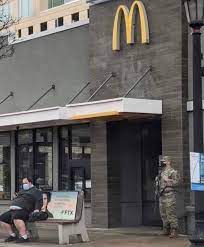
In finishing, let us consider the skin-deep morality pedalled throughout the COVID period. During COVID, the official narrative was underpinned by emotive slogans like ‘protect lives’ and ‘keep safe’. Those who refused the COVID jab were labelled ‘granny killers’ and ‘irresponsible’. All presided over by government politicians who too often failed to obey their own COVID rules.  

Meanwhile, while having terrorised the public with a health crisis narrative, they continue to collude with powerful agrifood corporations that destroy health courtesy of their practices. They continue to facilitate a system that serves the needs of global agricapital and ruthless investors like BlackRock’s Larry Fink who secure massive profits from a monopolistic food system (Fink also invests in the pharma sector – one of the biggest beneficiaries of a sickening global food regime) that by its very nature creates illness, malnutrition and hunger.    

The COVID narrative was imbued with the notion of moral responsibility. The people who sold it to the masses have no morality. Like the UK’s former health minister and COVID rule breaker Matt Hancock (see Matt Hancock’s Car Crash Interview), they are willing to sell their soul (or influence) to the highest bidder – in Hancock’s case, a £10,000 wage demand for a day’s ‘consultancy’ as a sitting politician or a few hundred thousand to bolster his ego, bank balance and image on a celebrity TV programme.  

In a corrupted and corrupting society, the rewards could be even higher for the likes of Hancock when he leaves office (a health minister who helped traumatise the population while doing nothing to hold the health-damaging agribusiness corporations to account). But with a long line of well-rewarded fraudsters to choose from, we already know that.
The Fear Pandemic and the Crisis of Capitalism. Sleepwalking Towards A Global Economic Crisis?

By Colin Todhunter

Source: Global Research

In October 2019, in a speech at an International Monetary Fund conference, former Bank of England governor Mervyn King warned that the world was sleepwalking towards a fresh economic and financial crisis that would have devastating consequences for what he called the “democratic market system”.

According to King, the global economy was stuck in a low growth trap and recovery from the crisis of 2008 was weaker than that after the Great Depression. He concluded that it was time for the Federal Reserve and other central banks to begin talks behind closed doors with politicians.

In the repurchase agreement (repo) market, interest rates soared on 16 September. The Federal Reserve stepped in by intervening to the tune of $75 billion per day over four days, a sum not seen since the 2008 crisis.

At that time, according to Fabio Vighi, professor of critical theory at Cardiff University, the Fed began an emergency monetary programme that saw hundreds of billions of dollars per week pumped into Wall Street.

Over the last 18 months or so, under the guise of a ‘pandemic’, we have seen economies closed down, small businesses being crushed, workers being made unemployed and people’s rights being destroyed. Lockdowns and restrictions have facilitated this process. The purpose of these so-called ‘public health measures’ has little to do with public health and much to do with managing a crisis of capitalism and ultimately the restructuring of the economy.

Neoliberalism has squeezed workers income and benefits, offshored key sectors of economies and has used every tool at its disposal to maintain demand and create financial Ponzi schemes in which the rich can still invest in and profit from. The bailouts to the banking sector following the 2008 crash provided only temporary respite. The crash returned with a much bigger bang pre-Covid along with multi-billion-dollar bailouts.

The dystopian ‘great reset’ that we are currently witnessing is a response to this crisis. This reset envisages a transformation of capitalism.

Fabio Vighi sheds light on the role of the ‘pandemic’ in all of this:

“… some may have started wondering why the usually unscrupulous ruling elites decided to freeze the global profit-making machine in the face of a pathogen that targets almost exclusively the unproductive (over 80s).”

Vighi describes how, in pre-Covid times, the world economy was on the verge of another colossal meltdown and chronicles how the Swiss Bank of International Settlements, BlackRock (the world’s most powerful investment fund), G7 central bankers and others worked to avert a massive impending financial meltdown.

The world economy was suffocating under an unsustainable mountain of debt. Many companies could not generate enough profit to cover interest payments on their own debts and were staying afloat only by taking on new loans. Falling turnover, squeezed margins, limited cashflows and highly leveraged balance sheets were rising everywhere.

Lockdowns and the global suspension of economic transactions were intended to allow the Fed to flood the ailing financial markets (under the guise of COVID) with freshly printed money while shutting down the real economy to avoid hyperinflation.

Vighi says:

“… the stock market did not collapse (in March 2020) because lockdowns had to be imposed; rather, lockdowns had to be imposed because financial markets were collapsing. With lockdowns came the suspension of business transactions, which drained the demand for credit and stopped the contagion. In other words, restructuring the financial architecture through extraordinary monetary policy was contingent on the economy’s engine being turned off.”

It all amounted to a multi-trillion bailout for Wall Street under the guise of COVID ‘relief’ followed by an ongoing plan to fundamentally restructure capitalism that involves smaller enterprises being driven to bankruptcy or bought up by monopolies and global chains, thereby ensuring continued viable profits for these predatory corporations, and the eradication of millions of jobs resulting from lockdowns and accelerated automation.

Author and journalist Matt Taibbi noted in 2020:

“It retains all the cruelties of the free market for those who live and work in the real world, but turns the paper economy into a state protectorate, surrounded by a kind of Trumpian Money Wall that is designed to keep the investor class safe from fear of loss. This financial economy is a fantasy casino, where the winnings are real but free chips cover the losses. For a rarefied segment of society, failure is being written out of the capitalist bargain.”

The World Economic Forum says that by 2030 the public will ‘rent’ everything they require. This means undermining the right of ownership (or possibly seizing personal assets) and restricting consumer choice underpinned by the rhetoric of reducing public debt or ‘sustainable consumption’, which will be used to legitimise impending austerity as a result of the economic meltdown. Ordinary people will foot the bill for the ‘COVID relief’ packages.

If the financial bailouts do not go according to plan, we could see further lockdowns imposed, perhaps justified under the pretext of  ‘the virus’ but also ‘climate emergency’.

It is not only Big Finance that has been saved. A previously ailing pharmaceuticals industry has also received a massive bailout (public funds to develop and purchase the vaccines) and lifeline thanks to the money-making COVID jabs.

The lockdowns and restrictions we have seen since March 2020 have helped boost the bottom line of global chains and the e-commerce giants as well and have cemented their dominance. At the same time, fundamental rights have been eradicated under COVID government measures.

Capitalism and labour

Essential to this ‘new normal’ is the compulsion to remove individual liberties and personal freedoms. A significant part of the working class has long been deemed ‘surplus to requirements’ – such people were sacrificed on the altar of neo-liberalism. They lost their jobs due to automation and offshoring. Since then, this section of the population has had to rely on meagre state welfare and run-down public services or, if ‘lucky’, insecure low-paid service sector jobs.

What we saw following the 2008 crash was ordinary people being pushed further to the edge. After a decade of ‘austerity’ in the UK – a neoliberal assault on the living conditions of ordinary people carried out under the guise of reining in public debt following the bank bail outs – a leading UN poverty expert compared Conservative welfare policies to the creation of 19th-century workhouses and warned that, unless austerity is ended, the UK’s poorest people face lives that are “solitary, poor, nasty, brutish, and short”.

Philip Alston, the UN rapporteur on extreme poverty, accused ministers of being in a state of denial about the impact of policies. He accused them of the “systematic immiseration of a significant part of the British population”.

In another 2019 report, the Institute for Public Policy Research think tank laid the blame for more than 130,000 deaths in the UK since 2012 at the door of government policies. It claimed that these deaths could have been prevented if improvements in public health policy had not stalled as a direct result of austerity cuts.

Over the past 10 years in the UK, according to the Trussell Group, there has been rising food poverty and increasing reliance on food banks.

And in a damning report on poverty in the UK by Professor David Gordon of the University of Bristol, it was found that almost 18 million cannot afford adequate housing conditions, 12 million are too poor to engage in common social activities, one in three cannot afford to heat their homes adequately in winter and four million children and adults are not properly fed (Britain’s population is estimated at around 66 million).

Moreover, a 2015 report by the New Policy Institute noted that the total number of people in poverty in the UK had increased by 800,000, from 13.2 to 14.0 million in just two to three years.

Meanwhile, The Equality Trust in 2018 reported that the ‘austerity’ years were anything but austere for the richest 1,000 people in the UK. They had increased their wealth by £66 billion in one year alone (2017-2018), by £274 billion in five years (2013-2018) and had increased their total wealth to £724 billion – significantly more than the poorest 40% of households combined (£567 billion).

Just some of the cruelties of the ‘free market’ for those who live and work in the real world. And all of this hardship prior to lockdowns that have subsequently devastated lives, livelihoods and health, with cancer diagnoses and treatments and other conditions having been neglected due to the shutdown of health services.

During the current economic crisis, what we are seeing is many millions around the world being robbed of their livelihoods. With AI and advanced automation of production, distribution and service provision on the immediate horizon, a mass labour force will no longer be required.

It raises fundamental questions about the need for and the future of mass education, welfare and healthcare provision and systems that have traditionally served to reproduce and maintain labour that capitalist economic activity has required.

As the economic is restructured, labour’s relationship to capital is being transformed. If work is a condition of the existence of the labouring classes, then, in the eyes of capitalists, why maintain a pool of (surplus) labour that is no longer needed?

A concentration of wealth power and ownership is taking place as a result of COVID-related policies: according to research by Oxfam, the world’s billionaires gained $3.9 trillion while working people lost $3.7 trillion in 2020. At the same time, as large sections of the population head into a state of permanent unemployment, the rulers are weary of mass dissent and resistance. We are witnessing an emerging biosecurity surveillance state designed to curtail liberties ranging from freedom of movement and assembly to political protest and free speech.

The global implications are immense too. Barely a month into the COVID agenda, the IMF and World Bank were already facing a deluge of aid requests from developing countries that were asking for bailouts and loans. Ideal cover for rebooting the global economy via a massive debt crisis and the subsequent privatisation of national assets.

In 2020, World Bank Group President David Malpass stated that poorer countries will be ‘helped’ to get back on their feet after the various lockdowns but such ‘help’ would be on condition that neoliberal reforms become further embedded. In other words, the de facto privatisation of states (affecting all nations, rich and poor alike), the (complete) erosion of national sovereignty and dollar-denominated debt leading to a further strengthening of US leverage and power.

In a system of top-down surveillance capitalism with an increasing section of the population deemed ‘unproductive’ and ‘useless eaters’, notions of individualism, liberal democracy and the ideology of free choice and consumerism are regarded by the elite as ‘unnecessary luxuries’ along with political and civil rights and freedoms.

We need only look at the ongoing tyranny in Australia to see where other countries could be heading. How quickly Australia was transformed from a ‘liberal democracy’ to a brutal totalitarian police state of endless lockdowns where gathering and protests are not to be tolerated.

Being beaten and thrown to the ground and fired at with rubber bullets in the name of protecting health makes as much sense as devastating entire societies through socially and economically destructive lockdowns to ‘save lives’.

It makes as much sense as mask-wearing and social-distancing mandates unsupported by science, misused and flawed PCR tests, perfectly healthy people being labelled as ‘cases’, deliberately inflated COVID death figures, pushing dangerous experimental vaccines in the name of health, ramping up fear, relying on Neil Ferguson’s bogus modelling, censoring debate about any of this and the WHO declaring a worldwide ‘pandemic’ based on a very low number of global ‘cases’ back in early 2020 (44,279 ‘cases’ and 1,440 supposed COVID deaths outside China out of a population of 6.4 billion).

There is little if any logic to this. But of course, If we view what is happening in terms of a crisis of capitalism, it might begin to make a lot more sense.

The austerity measures that followed the 2008 crash were bad enough for ordinary people who were still reeling from the impacts when the first lockdown was imposed.

The authorities are aware that deeper, harsher impacts as well as much more wide-ranging changes will be experienced this time around and seem adamant that the masses must become more tightly controlled and conditioned to their coming servitude.

Inequality Social Dysfunction and Misery

By Graham Peebles

Source: Dissident Voice

Year on year the economic divisions and sub-divisions in the world deepen, the associated social ills increase: The rich, comfortable, and the very extremely rich keep getting richer, and the rest, well, whilst some may be raised up out of crippling poverty into relative poverty, the majority of people continue to live under a blanket of economic insecurity and largely remain where they are.

Straddling the global ladder of economic and social division sit the Multi-Billionaires (there are now 2,208 billionaires), 42 of whom (down from 61 in 2016), according to a recent report by Oxfam, own the same amount of wealth as the poorest half of humanity combined. Together with their lesser cohorts this coterie of Trillionaires sucked up “eighty-two percent of the wealth generated [in the world] last year…while the 3.7 billion people who make up the poorest half of the world saw no increase in their wealth.”

The defining challenge of our time

Income and wealth inequality is not simply a monetary issue, it is a complex social crisis that supports and strengthens notions of superiority and inferiority, and was described by President Barak Obama in 2013 as “the defining challenge of our time.”

Today’s obscene levels of inequality are the result of the Neo-Liberal economic system. This extreme form of capitalism took hold first in America and Britain in the early 1980s when Reagan and Thatcher ruled, workers’ rights were trampled on, ‘society’ was a dirty word and community responsibility was abandoned to selfishness and greed. With the aid of the World Bank and the IMF, Neoliberalism swiftly spread throughout the world, polluting life in every city, town and village with its divisive, cruel ideology. Commercialization and competition are key principles and have infiltrated every area of contemporary life; everything and everyone is seen as a commodity, and the size of ones bank account determines the level of health care, education and housing available, as well as one’s access to culture and freedom to travel.

Social injustice is inherent in the system, as is inequality, which is itself a major form of injustice. Inequality strengthens deep-seated social imbalances based on class and social standing, and in a world where everything is classified, commercialized and priced; i.e., attributed value, external wealth and position have become the common criteria for determining the internal worth of a human being. Comparison and imitation follow, individuality is perverted and fear fostered; fear of inadequacy, fear of failure, fear of not being loved, because not ‘deserving’ love, not being able to ‘afford’ love. Resentment, anger and self-loathing are fed, leading to a range of mental health issues, including anxiety, depression and drug and alcohol addiction.

Happiness and inequality

The impact of financial inequality on the health and well being of society has been extensively studied by Richard Wilkinson; British co-author of Spirit Level, Professor Emeritus of Social Epidemiology at the University of Nottingham. In order to establish national levels of inequality Wilkinson and his team used a benchmark based on how much richer the top 20% is to the bottom 20%: Japan and Scandinavia (Finland, Norway, Sweden, Denmark) came out most equal, and now, Slovenia and the Czech Republic have moved towards this group. Israel, New Zealand, Australia, Britain, Portugal and USA were found to have the greatest levels of inequality, and by some margin. Recent data suggests that Russia, South Africa and Turkey should now be added to the most unequal pile. Germany, Spain and Switzerland sit somewhere in the middle.

Data relating to a range of social issues was examined: The most unequal countries were found to have lower life expectancy than more equal societies, higher infant mortality, many more homicides, larger prison populations (by 10-15 times), applied longer sentences; had higher teenage pregnancies, lower mathematic/literacy levels, more obesity, less social mobility, and, according to The World Value Survey, a great deal less trust. In more equal countries, like Sweden and Norway, around 65% of people trust others, whereas in unequal societies like America a mere 15% admitted to trusting their fellow citizens.

In all areas, countries with high levels of inequality did worse, in many cases much worse, than more equal nations. Mental health, for example, (figures from the World Health Organization): In Japan around 8% of the population suffers from some form of mental health issue, compared to 30% in America. Children are considerably healthier in more equal countries – based on UNICEF’s Index of Child Well-Being – and feel a good deal happier. Wilkinson concludes, “What we’re looking at is general social dysfunction related to inequality. It’s not just one or two things that go wrong, it’s most things.”

Look to Scandinavia

If one of the primary purposes of any socio-economic system is to create environments in which human beings can grow and live happily together, then the nations suffering under the shadow of inequality need to learn from Sweden, Norway, Denmark and Finland, which are not just the least unequal, they are also the happiest countries in the world. Throughout Scandinavia public services – education (which is probably the best in the world), health care and housing, are valued, and taxes levied in order to fund them properly; there are greater levels of social justice, this allows for trust to develop, and where there is trust relationships flower. The extremes of staggering wealth and stifling poverty don’t exist as they do in the more unequal parts of the world; social mobility is greater and the dream of betterment more realistic, as Richard Wilkinson says, “if Americans want to live the ‘American dream’ they should go and live in Denmark.”

The first duty of government is to protect the people; this involves not only dealing with terrorism and the like, but requires the development of socio-economic policies that contribute to the creation of a healthy harmonious environment. By supporting extreme inequality (which has been shown to fuel a range of social issues) governments in the more unequal countries are totally failing in this fundamental duty. Politicians, who in many cases rely on big business and wealthy benefactors for their funding, are either blind to, or negligent of, the inherent faults of the current system, and the unhealthy, negative way of life it supports.

The case for fundamental change in the economic order, and a shift away from the destructive values it promotes is becoming irrefutable; however, change occurs only gradually and resistance is great. In the meantime, governments (particularly in the most unequal states) need to acknowledge the connection between the dysfunction and disease within society and their socio-economic methodology, which is literally making people ill, as well and poisoning the natural world. They need to invest properly in public services, address wage differences, ban bonuses, introduce progressive tax reform, and, unlike America and France which are taking retrograde steps by designing tax codes which will fuel inequality, look to the Scandinavian countries and learn from their example.

For too long socio-economic systems have been designed and maintained to cater to the desires and interests of a privileged few, while the majority live inhibited lives under the shadow of financial uncertainty. For harmonious societies to evolve this long-standing injustice needs to be addressed and a degree of balance found. This requires that those whose table is full to overflowing share some of their bounty, so that all may have enough, not excess, enough.

As a wise man has said, “The rich must give up what they want, so that the poor can have what they need.” What the rich and comfortable must give up is greed (another car, another house, more designer clothes, etc.), what the rest need is freedom from economic insecurity and the fear of destitution, freedom from exploitation and dependency; secure, comfortable, and well-designed accommodation, and access to good education, health care and culture. Such essential needs are the rights of all; when made manifest they go a long way towards establishing social justice, and where there is social justice, functional, compassionate communities do evolve, conflict is reduced and collective harmony is cultivated.

$1,400,000,000,000: Oxfam Exposes the Great Offshore Tax Scam of US Companies

Screen-Shot-2016-04-01-at-3.34.42-PM

By Andrea Germanos

Source: AntiMedia

Using an “opaque and secretive network” of subsidiaries in tax havens, top American corporations have stashed $1.4 trillion offshore, a new report from Oxfam shows.

With “a range of tricks, tools, and loopholes,” for tax avoidance, the 50 largest U.S. companies, including well-known names like Goldman Sachs, Verizon Communications, Apple, Coca-Cola, IBM, and Chevron, raked in $4 trillion in profits globally between 2008 and 2014, are contributing to inequality, the anti-poverty group said.

The report, Broken at the Top (pdf), states that such tax dodging is one of the “profit-making strategies of many multinational corporations.”

As noted in the report,

  • From 2008 – 2014 the 50 largest U.S. companies collectively received $27 in federal loans, loan guarantees and bailouts for every $1 they paid in federal taxes.
  • From 2008 – 2014 these 50 companies spent approximately $2.6 billion on lobbying while receiving nearly $11.2 trillion in federal loans, loan guarantees and bailouts.

Explaining part of their strategy to lower their overall tax rate, the report states: “As a group, U.S. multinationals report that 43 % of their foreign earnings come from five tax haven jurisdictions, yet these countries accounted for only 4 % of the companies’ foreign workforces and just 7 % of their foreign investment.”

Take Bermuda, for example. The report states that U.S. companies reported $80 billion of profits in 2012 in the archipelago—but that’s more than the companies’ reported profits in Japan, China, Germany, and France combined. In other words, it “clearly does not reflect the real economic activity taking place in Bermuda.”

A point highlighted by the report: “We should not lose sight of why tax dodging matters to average people.”

It notes: “Fair tax systems are vital to finance well-functioning and efficient states and to enable governments to fulfill their obligations to uphold citizens’ rights to essential services such as healthcare, education, and social protection for low income families.”

Look no farther than Flint, Michigan—a city facing “falling tax revenues and budget cuts” that took the purported cost-reducing strategies of installing an emergency manager and switching the water system to the Flint River from the Detroit water system, which lead to thousands of children being exposed to lead contamination.

As the report was released in the wake of the Panama Papers, a massive leak that exposed how the world’s rich and powerful use tax havens to hide their wealth, Robbie Silverman, Senior Tax Advisor at Oxfam, said, “Yet again we have evidence of a massive systematic abuse of the global tax system.”

“When corporations don’t pay their fair share of taxes governments are forced to cut back on essential services or levy higher taxes on the rest of us. It’s time governments stopped pandering to big business and started working for the good of their citizens.

“We can’t go on with a situation where the rich and powerful are not paying their fair share of tax, leaving the rest of us to foot the bill. Governments across the globe must come together now to end the era of tax havens,” Silverman said.

85 Richest People as Wealthy as Poorest Half of the World

As World Economic Forum starts in Davos, development charity claims growing inequality has been driven by ‘power grab’

By Graeme Wearden

Originally posted at theguardian.com

The InterContinental Davos luxury hotel in the Swiss mountain resort of Davos

The InterContinental Davos luxury hotel in the Swiss mountain resort of Davos. Oxfam report found people in countries around the world believe that the rich have too much influence over the direction their country is heading. Photograph: Arnd Wiegmann/REUTERS

The world’s wealthiest people aren’t known for traveling by bus, but if they fancied a change of scene then the richest 85 people on the globe – who between them control as much wealth as the poorest half of the global population put together – could squeeze onto a single double-decker.

The extent to which so much global wealth has become corralled by a virtual handful of the so-called ‘global elite’ is exposed in a new report from Oxfam on Monday. It warned that those richest 85 people across the globe share a combined wealth of £1tn, as much as the poorest 3.5 billion of the world’s population.

Working for the Few - Oxfam report

Source: F. Alvaredo, A. B. Atkinson, T. Piketty and E. Saez, (2013) ‘The World Top Incomes Database’, http://topincomes.g-mond.parisschoolofeconomics.eu/Only includes countries with data in 1980 and later than 2008. Photograph: Oxfam

The wealth of the 1% richest people in the world amounts to $110tn (£60.88tn), or 65 times as much as the poorest half of the world, added the development charity, which fears this concentration of economic resources is threatening political stability and driving up social tensions.

It’s a chilling reminder of the depths of wealth inequality as political leaders and top business people head to the snowy peaks of Davos for this week’s World Economic Forum. Few, if any, will be arriving on anything as common as a bus, with private jets and helicopters pressed into service as many of the world’s most powerful people convene to discuss the state of the global economy over four hectic days of meetings, seminars and parties in the exclusive ski resort.

Winnie Byanyima, the Oxfam executive director who will attend the Davos meetings, said: “It is staggering that in the 21st Century, half of the world’s population – that’s three and a half billion people – own no more than a tiny elite whose numbers could all fit comfortably on a double-decker bus.”

Oxfam also argues that this is no accident either, saying growing inequality has been driven by a “power grab” by wealthy elites, who have co-opted the political process to rig the rules of the economic system in their favour.

In the report, entitled Working For The Few (summary here), Oxfam warned that the fight against poverty cannot be won until wealth inequality has been tackled.

“Widening inequality is creating a vicious circle where wealth and power are increasingly concentrated in the hands of a few, leaving the rest of us to fight over crumbs from the top table,” Byanyima said.

Oxfam called on attendees at this week’s World Economic Forum to take a personal pledge to tackle the problem by refraining from dodging taxes or using their wealth to seek political favours.

As well as being morally dubious, economic inequality can also exacerbate other social problems such as gender inequality, Oxfam warned. Davos itself is also struggling in this area, with the number of female delegates actually dropping from 17% in 2013 to 15% this year.

How richest use their wealth to capture opportunities

Polling for Oxfam’s report found people in countries around the world – including two-thirds of those questioned in Britain – believe that the rich have too much influence over the direction their country is heading.

Byanyima explained:

“In developed and developing countries alike we are increasingly living in a world where the lowest tax rates, the best health and education and the opportunity to influence are being given not just to the rich but also to their children.

“Without a concerted effort to tackle inequality, the cascade of privilege and of disadvantage will continue down the generations. We will soon live in a world where equality of opportunity is just a dream. In too many countries economic growth already amounts to little more than a ‘winner takes all’ windfall for the richest.”

Working for the Few - Oxfam report

The Oxfam report found that over the past few decades, the rich have successfully wielded political influence to skew policies in their favour on issues ranging from financial deregulation, tax havens, anti-competitive business practices to lower tax rates on high incomes and cuts in public services for the majority. Since the late 1970s, tax rates for the richest have fallen in 29 out of 30 countries for which data are available, said the report.

This “capture of opportunities” by the rich at the expense of the poor and middle classes has led to a situation where 70% of the world’s population live in countries where inequality has increased since the 1980s and 1% of families own 46% of global wealth – almost £70tn.

Opinion polls in Spain, Brazil, India, South Africa, the US, UK and Netherlands found that a majority in each country believe that wealthy people exert too much influence. Concern was strongest in Spain, followed by Brazil and India and least marked in the Netherlands.

In the UK, some 67% agreed that “the rich have too much influence over where this country is headed” – 37% saying that they agreed “strongly” with the statement – against just 10% who disagreed, 2% of them strongly.

The WEF’s own Global Risks report recently identified widening income disparities as one of the biggest threats to the world community.

Oxfam is calling on those gathered at WEF to pledge: to support progressive taxation and not dodge their own taxes; refrain from using their wealth to seek political favours that undermine the democratic will of their fellow citizens; make public all investments in companies and trusts for which they are the ultimate beneficial owners; challenge governments to use tax revenue to provide universal healthcare, education and social protection; demand a living wage in all companies they own or control; and challenge other members of the economic elite to join them in these pledges.

• Research Now questioned 1,166 adults in the UK for Oxfam between October 1 and 14 2013.