

Reality Tunnels: How to Control & Re-Program Your Mind

By Jack Fox-Williams

Source: Waking Times

When I was in secondary school, a teacher showed me an animated optical illusion in which a dancer appears to be spinning in one direction. I was adamant that the dancer was spinning clockwise, while my teacher insisted it was spinning counterclockwise. She then told me that you could change the direction of the dancer by focusing on the feet. I gazed with meditative fixation, and suddenly, to my amazement, the dancer started spinning counterclockwise! My teacher explained that since there are no visual cues for three-dimensional depth, your mind can determine what direction the dancer spins.

At that moment, I realised that reality is a construct of the mind, and we all potentially see the same world differently. I may have put it in less eloquent terms than that (considering I was only a teenager), but there was a fundamental shift in my understanding. The illusion made me realise that the notion of ‘objective truth’ was essentially arbitrary since our subjective beliefs mediate sensory experience.

My teacher and I could have argued for hours, days or weeks as to which direction the dancer was spinning; science couldn’t have proven either of us correct since it was a matter of perception rather than ‘truth’. In ‘reality’, the dancer was spinning in both directions, but since the brain has a natural tendency to classify, categorise and catalogue information in binary terms (up/down, left/right, black/white, clockwise/counterclockwise), the animated optical illusion appears monodirectional.

There are numerous examples of this in our day-to-day lives, like when we fail to appreciate other people’s viewpoints because we perceive the world differently. We believe we are right despite the multiple (if not infinite) interpretations about the nature of reality.

What are Reality Tunnels?

The countercultural guru Timothy Leary coined the term ‘reality-tunnel’ to describe our filtered perceptions of the world. Robert Anton Wilson later developed the concept to describe “pre-composed patterns of thinking which limit and distort the perception of reality by reducing complexity and options.”1 According to Wilson, reality-tunnels shape our phenomenological sense of self, editing out experiences that do not support our beliefs while focusing on those which do.2

An advocate for capitalism, for example, will gather facts to support the view that capitalism is the most effective socioeconomic model, discarding any information that runs contrary to this viewpoint. Similarly, a Marxist will construct arguments based on select information to support the view that communism is the best system, often neglecting evidence that contradicts their position.

As the psychedelic scholar Ido Hartogsohn states, “all of us harbour established ideas about minorities, religions, nationalities, the sexes, the right ways to think, act, feel govern, eat, drink, and what not. Reality tunnels act to help us fortify these ideas against challenging information.”3 In this sense, there is a crossover between the concept of reality-tunnels and confirmation bias, the latter described as the “human tendency to notice and assign significance to observations that confirm existing beliefs while filtering out or rationalising away observations that do not fit with prior beliefs and expectations.”4 The phenomenon of confirmation bias helps explain why people who ascribe to a reality-tunnel are oblivious. Most people believe their worldview corresponds to the “one true objective reality,” however, Wilson emphasises that many reality tunnels are artistic creations, a culmination of biological, cultural and environmental inputs.5

The notion that reality is shaped by the conditions of the human mind is not new. The 18th-century German philosopher Immanuel Kant proposed in his Critique of Pure Reason that experience is based “on the perception of external objects and a priori knowledge.”6 We receive information about the external world through our five senses, which is then processed by the brain, allowing us to conceptualise its contents. When I look at an object, such as a chair or a table, I have no understanding of its external nature. The qualities that enable me to denote the meaning of the object, such as shape, colour, size etc., have no objective existence; they are merely by-products of the brain.

The French psychoanalyst and psychiatrist Jacques Lacan proposed his theory distinguishing between ‘The Real’ and the ‘Symbolic’. Lacan argued that ‘The Real’ is the “imminent unified reality which is mediated through symbols that allow it to be parsed into intelligible and differentiated segments.”7 However, the ‘Symbolic’, which is primarily subconscious, is “further abstracted into the imaginary (our actual beliefs and understandings of reality). These two orders ultimately shape how we come to understand reality.”8

The Harvard sociologist, Talcott Parsons, uses the word gloss to describe how our minds come to perceive reality. According to Parsons, we are taught how to “put the world” together by others who subscribe to a consensus reality based on shared beliefs, norms and associations.9 A gloss constitutes a total system of language and/or perception. For example, the word ‘house’ is a gloss since we lump together a series of isolated phenomena – floor, ceiling, window, lights, rugs, etc. – and turn it into a totality of meaning.

The author and anthropologist Carlos Castaneda commented on this notion, stating, “we have to be taught to put the world together in this way. A child reconnoitres the world with few preconceptions until he is taught to see things in a way that corresponds to the descriptions everybody agrees on. The world is an agreement. The system of glossing seems to be somewhat like walking… we learn we are subject to the syntax of language and the mode of perception it contains.”10

The French philosopher Jacques Derrida stated that our understanding of objects (and the words which denote them) are only understood in relation to how they are contextually related to other objects (and denotive words).11

We can break free from prescribed reality-tunnels by using objects and language in unusual or disjointed ways, thereby creating new discursive meanings, associations and connotations. This was the aim and outcome of certain art movements such as Dadaism and Surrealism, as well as Brion Gysin and William Burroughs’ cut-up method.12

The famous ethnobotanist and psychonaut, Terence McKenna, argued that ideology and culture are tools “which give other people control over one’s experience and identity since they lead individuals to shape their identity according to pre-conceived forms. If a person identifies with commercial brands or with popular ideas of what is beautiful, true or important, they give away their power to other people.”13 McKenna once said that you should not see “culture and ideology as your friends,” implying that you should understand reality on your own terms rather than buying into “pre-packaged ideological and cultural ideals” such as communism, capitalism, democracy or some form of totalitarianism.14 Belief in itself, argued McKenna, was “limiting to the individual, because every time you believe in something you are automatically precluded from believing its opposite. By believing something, you are virtually shutting yourself from all contradictory information, thus once again performing the sin of imposing a rigid simplified structure upon an infinitely complex reality.”15

Much like McKenna, Wilson recommends that a “fully functioning human ought to be aware of their reality tunnel and be able to keep it flexible enough to accommodate and, to some degree, empathise with different ‘game rules’, different cultures.”16 According to Wilson, constructivist thinking, which considers how social and cultural processes determine our perception of the world, constitutes an exercise in metacognition, enabling us to become aware of how reality tunnels are never truly objective, thereby decreasing the “chance that we will confuse our map of the world with the actual world.”17

How Your Reality Tunnel Is Formed

The constraints of human biology partially limit our models of reality. As Wilson states, our DNA “evolved from standard primate DNA and still has a 98% similarity to chimpanzee (and 85% similarity to the DNA of the South American Spider Monkey). We have the same gross anatomy as other primates, the same nervous system and the same sense organs. While our highly developed pre-frontal cortex enables us to perform ‘higher’, more complex mental tasks than other primates, our perceptions remain largely within the primate norm.”18

The neural apparatus produced by our genetic coding helps create what ethologists call the umwelt, or “world-field.” Birds, reptiles and insects occupy a separate umwelt or reality-tunnel to primates (ourselves, included). For example, bees are able to perceive floral patterns in ultraviolet light, which we cannot (unless certain technologies are utilised). Canine, feline and primate reality-tunnels remain similar enough that friendship and communication can occur between these different species, however, a snake (for example) occupies such a different reality tunnel that their behaviour appears entirely alien.

As Wilson argues, the belief that human umwelt reveals “reality” or “deep-reality” is as “naïve as the notion that a yardstick shows more reality than a voltmeter or that ‘my religion is better than your religion’. Neurogenetic chauvinism has no more scientific justification than national or sexual chauvinisms.”19 He goes so far as to suggest that “no animal, including the domesticated primate, can smugly assume the world created by its senses and brain equal in all respects the ‘real world’ or the ‘only real world’.”20

Reality-tunnels are also influenced by “imprint vulnerability,” periods in our lives when early childhood/adolescent experiences “bond neurons into reflex networks which remain for life.”21 The psychological researchers, Lorenz and Tinbergen, won a Nobel Prize in 1973 for their research into imprinting, which demonstrated that “the statistically normal snow-goose imprints its mother, as distinct from any other goose, shortly after birth. This imprint creates a ‘bond’ and the gosling attaches itself to the mother in every possible way.”22 These imprints can be imposed onto literally anything. Lorenz observed a case in which a gosling, in the absence of its mother, imprinted a ping-pong ball. It followed the ping-pong ball around and, on reaching adulthood, “attempted to mount the ball sexually.”23

Wilson estimates that the age at which we are imprinted with language determines lifelong programs of “cleverness” (verbal intelligence) and “dumbness” (verbal unintelligence), since linguistic models enable us to articulate mental processing, evaluate complex ideas and communicate with those around us.24 Furthermore, how and when our first sexual experiences are imprinted can “determine lifelong programs of heterosexuality, brash promiscuity or monogamy etc.”25 In more obscure imprints, such as celibacy, foot-fetishism and sadomasochism, the “bounded brain circuitry seems quite as mechanical as the imprint which bounded the gosling to the ping-pong ball.”26

These examples suggest that experiences during childhood, when the brain exhibits optimal ‘neuroplasticity’ (a term used to refer to malleability of neural networks in the brain), can shape our reality tunnels far into adulthood. As Sigmund Freud proposed, many “rational” thoughts and behaviours are typically the result of “repressed” memories, impulses and desires, which dwell in the murky depths of the unconscious mind.27

Furthermore, reality-tunnels are shaped by social conditioning, the “sociological process of training in a society to respond in a manner generally approved by the society in general and peer groups within society.”28 Manifestations of social conditioning are multifarious but include nationalism, education, employment, entertainment, popular culture, spirituality and family life. Unlike imprinting, which usually requires only one powerful experience to set permanently into the neural networks of the brain, conditioning requires “many repetitions of the same experience and does not set permanently.”29

The processes of social conditioning vary greatly, depending on the cultural environment to which one is exposed. For example, an individual born in a Muslim country (such as Saudi Arabia) will likely believe in the teachings of the Quran and adhere to certain religious norms, customs and traditions. However, individuals born in a Western capitalist/consumerist country, or an Eastern country with Hindu or Buddhist traditions, will adhere to different cultural and behavioural codes.

Reality-tunnels are also formed through the process of learning. Much like conditioning, learning requires repetition, but it also requires motivation. Therefore, it plays “less of a role in human perception and belief than genetics and imprinting and even less than conditioning does.”30 Learning marks a major difference between how mammals, reptiles, insects and birds perceive the world. For example, snakes share the same reality tunnel since they merely act on biologically determined reflexes, with only minor imprinted differences. Mammals show “more conditioned and learned differences in their reality tunnels.”31

Humans demonstrate a higher aptitude for learning due to our highly developed cortex and frontal lobes as well as our prolonged infancy. This variability functions as “the greatest evolutionary strength of the human race” since it enables us to pass down knowledge from one generation to the next. But it also means that we can become brainwashed and label other people who do not share our beliefs as “mad,” “anti-social,” or “blasphemous.” In fact, it could be said that the majority of all wars are the result of two (or more) opposing reality tunnels fighting for supremacy. This is particularly evident in the case of religious conflict, where people kill each other in the name of “God.”

Tunnel Vision: The Politicisation of Reality

The rise of “identity politics” in the 21st century perfectly demonstrates how reality-tunnels prevent us from considering alternative perspectives and viewpoints. During the last decade, the political domain has become increasingly polarised as the left and right engage in a battle for cultural supremacy. Such polarisation was apparent in the Brexit referendum of 2016, in which 51.9% of the British public voted to leave the European Union while 48.1% voted to remain.32 The marginal success of the ‘leave’ campaign highlighted the strong division between both sides of the political spectrum. The former stressed the importance of the Union in promoting social and economic stability, while the latter emphasised the importance of national identity, sovereignty and independence.

The rhetoric employed by both the ‘leave’ and ‘remain’ campaign was so binary in its articulation that neither side engaged in meaningful dialogue; instead, the referendum became a series of baseless slogans, mottos and catchphrases – an advertising campaign designed to appeal to target demographics. The referendum was more about two separate reality-tunnels competing for ideological supremacy than a balanced analysis of benefits and risks.

The US presidential election of 2016 was a similar drama of competing reality-tunnels, shaped by masterful spin doctors and hidden persuaders who exploited modern advertising techniques to capture specific demographics based on class, age, sex, religion, geographical location and other criteria.

Donald Trump was well-known for his campaign slogan ‘Make America Great Again’ and other catchphrases that employed a lexicon of patriotism, populism and protectionism to appeal to those on the right. On the other hand, Hillary Clinton used the slogan ‘Stronger Together’ to evoke feelings of unity, compassion, and solidarity. The election became a battle between two contrasting reality-tunnels, grounded in meaningless rhetoric and hyperbole.

Another example of politicisation is the Covid-19 crisis, with the public divided into two camps – those who supported measures such as lockdowns versus the other side that rejected many of these same measures. Political polarisation demolished a sane balanced approach to the crisis, exacerbated and intensified by the ongoing political divide across the media landscape.

‘Echo Chambers’ & Identity Politics

Social media has fuelled identity politics by enabling groups and movements to generate an online presence and have real-world impacts. According to independent scholar and author Ilaria Bifarini, this results in the emergence of ‘echo chambers’ in which internet users “find information that validates their pre-existing opinions and activates confirmation bias.”33 This mechanism, says Bifarini, “strengthens one’s beliefs and radicalises them, without adding anything to information and knowledge. The result is the ideological extremism that we are observing today and in which we are taking part, where political debates have been replaced by supporters and verbal violence.”34

Another way this happens, for example, is how Google’s online video sharing and social media platform YouTube utilises algorithmic data to show users similar content to their prior engagements – content they are likely to engage with in the future, thus creating a feedback loop in which they are exposed to media reinforcing their political preferences.35 As media scholars Brooke E. Auxier and Jessica Vitak state, “many social media platforms structure their content-feeds based on what an algorithm determines to be the ‘top’ or most ‘relevant’ stories. While these tools may help users control their information and news environments – making consumption more manageable and mitigating information overload – it is possible that these tailoring tools will expose users to redundant information and singular viewpoints.”36

Both sides of the political spectrum fail to engage in meaningful discussion when they are entrapped in a single reality-tunnel, the stability of which is threatened by competing narratives. Instead, political dialogue becomes characterised by inflammatory insults, name-calling and defamation.

Loaded language – such as ‘virtue signallers’, ‘snowflakes’, ‘racist’, ‘transphobic’, ‘Islamophobic’, ‘hetero-normative’, ‘privileged’ – enables identity groups to protect the integrity of their reality-tunnel by excluding those who hold a different opinion. In the same way that religious cult leaders isolate their members from the outside world, so too do identity groups orientate themselves around a closed belief system, which is immune to criticism, contention or challenge.

In order to facilitate a more meaningful discussion, it is important that both sides learn to break free from the constraints of their reality-tunnel.

Rising Above the Fray

In his book Prometheus Rising, Robert Anton Wilson provides various techniques for challenging dominant reality tunnels. Writing in the early 1980s, Wilson suggested that “if you are a liberal, subscribe to the [conservative magazine] National Review… Each month try to enter their reality-tunnel for a few hours while reading their articles. If you are a conservative, subscribe to New York Review of Books for a year and try to get into their headspace for a few hours a month. If you are a rationalist, subscribe to Fate Magazine for a year. If you are an occultist, join the Committee for the Scientific Investigation of Claims of the Paranormal and read their journal, The Sceptical Inquirer, for a year.”37

To put a modern ‘spin’ on this exercise, if you follow conservative thinkers online such as Jordan Peterson or Ben Shapiro, expose yourself to leftist thinkers such as Slavoj Zizek or Noam Chomsky, and do the opposite if you are on the left. Subscribe to internet channels that do not align with your reality-tunnel. By performing this exercise, you will find that you can think about political issues in a more balanced, neutral and multidimensional way, free from the constraints of ideological dogma.

You can use the same technique with religion. In one exercise, Wilson says, “become a pious Roman Catholic. Explain in three pages why the Church is still infallible and holy despite Popes like Alexander VI (the Borgia Pope), Pious XII (ally of Hitler), etc.”38 Then explain why the Church is an immoral and outdated institution; also write three pages detailing why you believe this to be the case. If you have the time, you can perform the same exercise with other religions such as Hinduism, Buddhism, and even Satanism. Explain why these religions hold the key to the ‘true’ nature of ‘reality’ and then refute yourself by providing a counterargument.

You can use the same technique to become more conspiratorial in your thinking. In one exercise, Wilson says, “start collecting evidence that your phone is bugged. Everyone gets a letter occasionally that is slightly damaged. Assume that somebody is opening your mail and clumsily revealing it. Look around for evidence that your co-workers or neighbours think you’re a bit queer and are planning to have you committed to a mental hospital.”39 Observe how these assumptions influence your perception of other people and their behaviour – it won’t be long before you find evidence to support your paranoid thinking!

Once you have sufficiently experimented with this reality-tunnel, “try living a whole week with the program, ‘Everybody likes me and tries to help me achieve all of my goals’.”40 Then try living a whole month with the program, “I have chosen to be aware of this particular reality.”41 Then try living a day with the program, “I am God playing at being a human being. I created every reality I notice.”42 Then try living forever with the metaprogram, “Everything works out more perfectly than I plan it.”43 By adopting these different reality-tunnels, you will notice how malleable your perceptual faculties really are – the world can become a place of conspiracy and collusion or a place of benevolence and positivity, depending on how you view it.

Wilson provides another interesting exercise to expand the boundaries of consciousness, in which you “list at least 15 similarities between New York (or any large city) and an insect colony, such as a bee-hive or termite hill. Contemplate the information in the DNA loop, which created both of these enclaves of high coherence and organisation, in primate and insect societies.”44 Then, “Read the Upanishads and every time you see the word ‘Atman’ or ‘World Soul’, translate it as DNA blueprint. See if it makes sense to you that way.”45 According to Wilson, “Contemplating these issues usually triggers Jungian synchronicities. See how long after reading this chapter you encounter an amazing coincidence – e.g., seeing DNA on a license plate, having a copy of the Upanishads given to you unexpectedly…”46

Experimenting with different reality tunnels is a necessary practice if one wishes to challenge dominant narratives, perspectives and viewpoints and expand the boundaries of human consciousness. As we find ourselves in a post-modern ‘information age’, where an increasing number of political factions compete for informational authority, we are exposed to the hidden forces of propaganda more than ever before.

Every time we log into Facebook, Twitter, Instagram and YouTube, we allow ourselves to be manipulated by a complex system of algorithms that generates content based on our likes, dislikes, and even our differences. In order to escape the trappings of ideological dogma, we must become conscious of our biological, social and environmental conditioning and adopt a more multidimensional way of thinking.

Understanding about ‘reality-tunnels’ becomes instrumental in achieving true inner liberation since it enables us to think about the mind as a form of technological software that can be continually updated and reorganised. We achieve a state of metacognition, an awareness of one’s thought processes and an understanding of the patterns behind them. It is what the pioneering mind explorer John Lilly called our capacity for “metaprogramming,” the creation, revision, and reorganisation of mental programs.47

Although we are constrained by the limitations of biological programming (to a certain extent), the creativity of human consciousness is infinite, a maze of endless possibilities and potentialities waiting to be explored. As the Buddha said, “All that we are is the result of all that we have thought. It is founded on thought. It is based on thought.”48
Footnotes

1. Hartogsohn, I. (2015). The Psychedelic Society Revisited: On Reducing Valves, Reality Tunnels and the Question of Psychedelic Culture, Psychedelic Press, 3
2. ultrafeel.tv/reality-tunnel-how-beliefs-and-expectations-create-what-you-experience-in-life
3. Op cit., Hartogsohn, I. (2015), 4
4. en.wikipedia.org/wiki/Confirmation_bias 
5. Anton Wilson, R. (1983). Prometheus Rising, Tempe, Arizona: New Falcon
6. en.wikipedia.org/wiki/Immanuel_Kant
7. en.wikipedia.org/wiki/Reality_tunnel
8. Ibid
9. Parsons, T. (1951). The Social System, Glencoe, Illinois: The Free Press, 1951
10. Sam Keen, Castaneda interview, Psychology Today, December 1972
11. Derrida, J. (1978). ‘Genesis’ and ‘Structure’ and Phenomenology, in Writing and Difference, Routledge.
12. en.wikipedia.org/wiki/Dada
13. Op cit., Hartogsohn, I. (2015), 1
14. Ibid, 2
15. Anton Wilson, R. (1990). Quantum Psychology: How Brain Software Programs You & Your World, New Falcon Publications
16. en.wikipedia.org/wiki/Reality_tunnel 
17. Quantum Psychology, 74
18. Ibid, 74
19. Ibid, 75
20-24. Ibid, 76
25-26. Ibid, 76-77
27. Wollheim, R. (1971). Freud, Fontana Press
28. en.wikipedia.org/wiki/Social_conditioning 
29. Quantum Psychology, 77
30. Ibid
32. Ibid
33. Bifarini, I. Cognitive bias and echo chambers: The social media trap, www.academia.edu/40650380/Cognitive_bias_and_echo_chambers_The_social_media_trap
34. Ibid
35. Nguyen, C. Echo Chamber and Epistemic Bubbles, www.academia.edu/36634677/Echo_Chambers_and_Epistemic_Bubbles 
36. Auxier, B. and Vitak (2019). Factors Motivating Customization and Echo Chamber Creation Within Digital News Environments. Social Media and Society, April-June 2019
37. Prometheus Rising, 83
38. Ibid, 159
39. Ibid, 241
40-43. Ibid, 242
44-46. Ibid, 190
47. Lilly, John C. Programming & Metaprogramming in the Human Biocomputer, New York: The Julian Press, Inc., 1967
48. The Dhammapada

HOW TO REPROGRAM YOUR MIND TO TAKE AN ACTIVE ROLE IN YOUR PERSONAL EVOLUTION

By Jonathan Davis

Source: Waking Times

For a long time we’ve been taught that evolution is a process that is happening to us. Thankfully we’re living in times where the human race is finally getting a grasp on the fact that we’re actually actively involved in how we evolve as a species.

As humans, our bodies are constantly changing in response to the environment around us. Our muscles change according to whether we choose to use them or not. The enzymes in our digestive system change in response to the foods we choose to eat. Our endocrine system is in a constant feedback loop with our emotions which can change dramatically according to what’s happening in the world around us. As Dr Bruce Lipton put it, “the cell is a carbon-based ‘computer chip’ that reads the environment”, and the field of epigenetics teaches us that our DNA changes in quality – again, according to our environment.

When science talks about ‘environmental influence’ it seems to imply ‘all that which is outside ourselves’. It’s easy to overlook the fact that that our conscious choices about which environmental factors we engage with are part of what shapes the way our bodies restructure. We are part of the environment that influences our own development; our free will lets us choose and change the environment. We participate in our own evolution during our lifetime and what we do in our own lives can also affect future generations. In this way, personal evolution is collective evolution, and nowhere is personal evolution more apparent than how we are capable of rewiring our own brain.

How Reprogramming the Mind Is Helpful To Us

Humans work really well with routines. We repeat the same pattern over and over, and through neuroplasticity our brain wires itself so that it doesn’t have to think too much about that task anymore, it just runs that established electrical pathway. To riff off Noel Burch, it’s like when we learn to drive a car: we move from unconscious incompetence ‘I don’t know how bad at this I’m going to be’; to conscious competence ‘I now know how bad I am at this’; to conscious competence ‘OK, I can do this but I have to keep my mind on the job’; to unconscious competence ‘I can wind the window down, change the radio, turn a corner and change gears all at the same time, without even thinking about it’.

We program ourselves all the time with repetition, so we don’t have to waste energy engaging isolated focus on every task. The question is whether these are routines we are choosing for ourselves or that have been imposed on us? If they are imposed, are they helpful to us both personally and as a species?

When Are We Most Easily Able To Wire And Re-wire Our Mind?

During early childhood our brains are wiring themselves for the first time. While this process slows after the intense surge of development in first few years, our brains are still establishing the wiring we will largely use for the rest of our life throughout childhood. When we hit our teenage years we experience the second surge of new wiring and there is an opportunity for patterns to be created during this time that can setup behaviours for years to come. After this period, neuroplasticity still occurs but it just isn’t as fluid as it was before. So you can teach an old dog new tricks, it’s just a slower process.

The problem here is that our subconscious is overhearing everything our conscious mind is hearing, and is therefore to a being programmed by whatever influence we’re being exposed to. The Jesuits knew this 400 years ago. They would boast:

“Give me a child until it’s seven, it will belong to the church for the rest of its life.’” – Dr Bruce Lipton, paraphrasing Jesuit priests.

We Are Always Programming Ourselves

I like to imagine the subconscious mind is like an autopilot system. It is overhearing everything we ever think or say, and it’s mission (in the background and whenever possible) is to guide us towards whatever we want… or at least whatever it thinks we want according to what it overhears. An extra level of challenge is introduced when we imagine that the conscious mind has the capacity for judgment its higher expression – discernment. The subconscious, however, doesn’t have that ability. When it is overhearing everything you think and every word you say it simply hears the topic, not the context. ‘I don’t want to be fat’ with the judgment of ‘I don’t want’ removed becomes the topic only: ‘be fat’. The subconscious ‘overhears’ the topic of what is active in your conscious mind and it is listening for repetition. This is how it figures out for how ready we need to be for that particular thought process.

Repetition Is The Key. Repetition Is The Key.

If we lift weights we are using repetition to say to the muscles, ‘be ready for this, we may need to do this at any moment, so restructure yourself’. Scientists have found the fastest way to get fit is to do interval sprints, which is basically a physical way of saying to the body through repetition ‘you need to restructure yourself so we can sprint at top speed at any time, at the drop of a hat’. Rest, get your breath back and sprint again, over and over. This repetition tells the body that it’s a high priority to restructure and be ready for this at all times. My observation is that the same appears to be true for our brain. When our subconscious overhears our thoughts and words and there is repetition, there is an increased likelihood of neural rewiring. After all – neurons that fire together wire together.

The path of least resistance

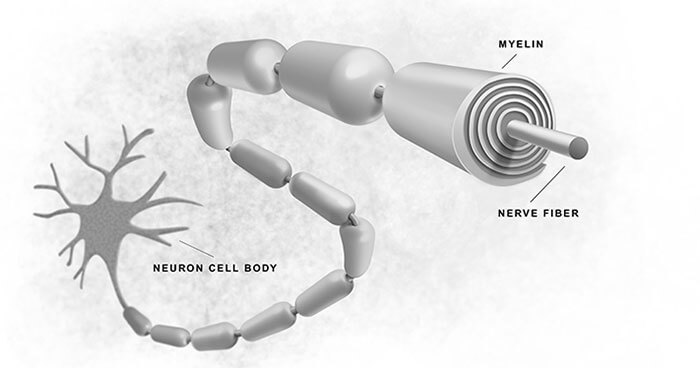
When attempting to re-wire an old habit or behaviour pattern, it is useful to remember the old adage from high school science: electricity follows the path of least resistance. Imagine the old pattern as a well-established electrical pathway in your brain. As you put conscious focus into creating a new electrical pathway to replace the old pattern, you make that new electrical pathway fatter. As soon as you stop putting conscious focus into running the new behaviour pattern the electricity will revert to the old cable for as long as it is the fatter of the two cables, as that is the path of least resistance. As soon as the day comes when the new electrical pathway is thicker than the old one you have a new program in your autopilot system, that will now run on it’s own without you needing to focus conscious intention on it. You have reached a level of conscious competence. According to Dan Coyle a key to making the consciously chosen wiring stick is holding the intention that ‘I want to know this for the rest of my life’. Coyle suggests this causes the brain to coat the new electrical pathway in the brain with myelin insulation, making it much more permanent.

Taking care with the programs we allow our subconscious to overhear

As stated earlier, our autopilot system is taking direction from everything you’re experiencing – which includes the media we watch, the people we surround ourselves with and more. For this reason, one of the most powerful things we can do is exercise discernment around the kind of experiences we expose ourselves to, and their level of intensity and repetition.

“It is easier to build strong children than to repair broken men.” – Frederick Douglass

More importantly is the need for extra care in exercising this discernment on behalf of the children in our care and teaching this discernment to teenagers as, in both cases they are in a heightened state of neuroplasticity and are more susceptible to influence. To be clear, I am by no means advocating prudishness or avoidance of the truth, just a higher level of awareness of how we are either consciously or inadvertently being programmed all the time.

In the video below Bruce Lipton speaks passionately on this very subject, citing this discernment on behalf of our children as a clear solution to war and conflict.

Five Ways to Boost Intelligence

original

I’ve never subscribed to the notion that intelligence is fixed and unchanging. Intelligence (and its opposite) can be taught and reinforced though there may be varying ranges determined by factors such as diet, habits, genetics, personality, environment, time, resources and relationships. There’s also different categories of intelligences that aren’t equally valued by society, but the type of intelligence involved in critical thinking and creative problem solving is what our society seems to need most. On the latest episode of The Bulletproof Executive podcast, host Dave Asprey and researcher/science writer Andrea Kuszewski discuss methods to improve this type of intelligence among other topics including the relationship between extreme altruism and sociopathy.

Listen to the full interview here:

Kuszewski previously expanded on 5 ways to maximize cognitive potential as a guest blogger for Scientific American. Even if one has no need or desire to boost intelligence, they can also be used for sustaining intelligence and preventing cognitive decline associated with aging. Here are the five recommendations and her conclusion:

1. Seek Novelty

It is no coincidence that geniuses like Einstein were skilled in multiple areas, or polymaths, as we like to refer to them. Geniuses are constantly seeking out novel activities, learning a new domain. It’s their personality.

There is only one trait out of the “Big Five” from the Five Factor Model of personality (Acronym: OCEAN, or Openness, Conscientiousness, Extroversion, Agreeableness, and Neuroticism) that correlates with IQ, and it is the trait of Openness to new experience. People who rate high on Openness are constantly seeking new information, new activities to engage in, new things to learn—new experiences in general [2].

When you seek novelty, several things are going on. First of all, you are creating new synaptic connections with every new activity you engage in. These connections build on each other, increasing your neural activity, creating more connections to build on other connections—learning is taking place.

An area of interest in recent research [pdf] is neural plasticity as a factor in individual differences in intelligence. Plasticity is referring to the number of connections made between neurons, how that affects subsequent connections, and how long-lasting those connections are. Basically, it means how much new information you are able to take in, and if you are able to retain it, making lasting changes to your brain. Constantly exposing yourself to new things helps puts your brain in a primed state for learning.

Novelty also triggers dopamine (I have mentioned this before in other posts), which not only kicks motivation into high gear, but it stimulates neurogenesis—the creation of new neurons—and prepares your brain for learning. All you need to do is feed the hunger.

Excellent learning condition = Novel Activity—>triggers dopamine—>creates a higher motivational state—>which fuels engagement and primes neurons—>neurogenesis can take place + increase in synaptic plasticity (increase in new neural connections, or learning).

As a follow-up of the Jaeggi study, researchers in Sweden [pdf] found that after 14 hours of training working memory over 5 weeks’ time, there was an increase of dopamine D1 binding potential in the prefrontal and parietal areas of the brain. This particular dopamine receptor, the D1 type, is associated with neural growth and development, among other things. This increase in plasticity, allowing greater binding of this receptor, is a very good thing for maximizing cognitive functioning.

Take home point: Be an “Einstein”. Always look to new activities to engage your mind—expand your cognitive horizons. Learn an instrument. Take an art class. Go to a museum. Read about a new area of science. Be a knowledge junkie.

2. Challenge Yourself

There are absolutely oodles of terrible things written and promoted on how to “train your brain” to “get smarter”. When I speak of “brain training games”, I’m referring to the memorization and fluency-type games, intended to increase your speed of processing, etc, such as Sudoku, that they tell you to do in your “idle time” (complete oxymoron, regarding increasing cognition). I’m going to shatter some of that stuff you’ve previously heard about brain training games. Here goes: They don’t work. Individual brain training games don’t make you smarter—they make you more proficient at the brain training games.

Now, they do serve a purpose, but it is short-lived. The key to getting something out of those types of cognitive activities sort of relates to the first principle of seeking novelty. Once you master one of those cognitive activities in the brain-training game, you need to move on to the next challenging activity. Figure out how to play Sudoku? Great! Now move along to the next type of challenging game. There is research that supports this logic.

A few years ago, scientist Richard Haier wanted to see if you could increase your cognitive ability by intensely training on novel mental activities for a period of several weeks. They used the video game Tetris as the novel activity, and used people who had never played the game before as subjects (I know—can you believe they exist?!). What they found, was that after training for several weeks on the game Tetris, the subjects experienced an increase in cortical thickness, as well as an increase in cortical activity, as evidenced by the increase in how much glucose was used in that area of the brain. Basically, the brain used more energy during those training times, and bulked up in thickness—which means more neural connections, or new learned expertise—after this intense training. And they became experts at Tetris. Cool, right?

Here’s the thing: After that initial explosion of cognitive growth, they noticed a decline in both cortical thickness, as well as the amount of glucose used during that task. However, they remained just as good at Tetris; their skill did not decrease. The brain scans showed less brain activity during the game-playing, instead of more, as in the previous days. Why the drop? Their brains got more efficient. Once their brain figured out how to play Tetris, and got really good at it, it got lazy. It didn’t need to work as hard in order to play the game well, so the cognitive energy and the glucose went somewhere else instead.

Efficiency is not your friend when it comes to cognitive growth. In order to keep your brain making new connections and keeping them active, you need to keep moving on to another challenging activity as soon as you reach the point of mastery in the one you are engaging in. You want to be in a constant state of slight discomfort, struggling to barely achieve whatever it is you are trying to do, as Einstein alluded to in his quote. This keeps your brain on its toes, so to speak. We’ll come back to this point later on.

3. Think Creatively

When I say thinking creatively will help you achieve neural growth, I am not talking about painting a picture, or doing something artsy, like we discussed in the first principle, Seeking Novelty. When I speak of creative thinking, I am talking about creative cognition itself, and what that means as far as the process going on in your brain.

Contrary to popular belief, creative thinking does not equal “thinking with the right side of your brain”. It involves recruitment from both halves of your brain, not just the right. Creative cognition involves divergent thinking (a wide range of topics/subjects), making remote associations between ideas, switching back and forth between conventional and unconventional thinking (cognitive flexibility), and generating original, novel ideas that are also appropriate to the activity you are doing. In order to do this well, you need both right and left hemispheres working in conjunction with each other.

Several years ago, Dr Robert Sternberg, former Dean at Tufts University, opened the PACE (Psychology of Abilities, Competencies, and Expertise) Center, in Boston. Sternberg has been on a quest to not only understand the fundamental concept of intelligence, but also to find ways in which any one person can maximize his or her intelligence through training, and especially, through teaching in schools.

Here Sternberg describes the goals of the PACE Center, which was started at Yale:

“The basic idea of the center is that abilities are not fixed but rather flexible, that they’re modifiable, and that anyone can transform their abilities into competencies, and their competencies into expertise,” Sternberg explains. “We’re especially interested in how we can help people essentially modify their abilities so that they can be better able to face the tasks and situations they’re going to confront in life.”

As part of a research study, The Rainbow Project [pdf], he created not only innovative methods of creative teaching in the classroom, but generated assessment procedures that tested the students in ways that got them to think about the problems in creative and practical ways, as well as analytical, instead of just memorizing facts.

Sternberg explains,

“In the Rainbow Project we created assessments of creative and practical as well as analytical abilities. A creative test might be: ‘Here’s a cartoon. Caption it.’ A practical problem might be a movie of a student going into a party, looking around, not knowing anyone, and obviously feeling uncomfortable. What should the student do?”

He wanted to find out if by teaching students to think creatively (and practically) about a problem, as well as for memory, he could get them to (i) Learn more about the topic, (ii) Have more fun learning, and (iii) Transfer that knowledge gained to other areas of academic performance. He wanted to see if by varying the teaching and assessment methods, he could prevent “teaching to the test” and get the students to actually learn more in general. He collected data on this, and boy, did he get great results.

In a nutshell? On average, the students in the test group (the ones taught using creative methods) received higher final grades in the college course than the control group (taught with traditional methods and assessments). But—just to make things fair— he also gave the test group the very same analytical-type exam that the regular students got (a multiple choice test), and they scored higher on that test as well. That means they were able to transfer the knowledge they gained using creative, multimodal teaching methods, and score higher on a completely different cognitive test of achievement on that same material. Sound familiar?

4. Do Things the Hard Way

I mentioned earlier that efficiency is not your friend if you are trying to increase your intelligence. Unfortunately, many things in life are centered on trying to make everything more efficient. This is so we can do more things, in a shorter amount of time, expending the least amount of physical and mental energy possible. However, this isn’t doing your brain any favors.

Take one object of modern convenience, GPS. GPS is an amazing invention. I am one of those people GPS was invented for. My sense of direction is terrible. I get lost all the time. So when GPS came along, I was thanking my lucky stars. But you know what? After using GPS for a short time, I found that my sense of direction was worse. If I failed to have it with me, I was even more lost than before. So when I moved to Boston—the city that horror movies and nightmares about getting lost are modeled after—I stopped using GPS.

I won’t lie—it was painful as hell. I had a new job which involved traveling all over the burbs of Boston, and I got lost every single day for at least 4 weeks. I got lost so much, I thought I was going to lose my job due to chronic lateness (I even got written up for it). But—in time, I started learning my way around, due to the sheer amount of practice I was getting at navigation using only my brain and a map. I began to actually get a sense of where things in Boston were, using logic and memory, not GPS. I can still remember how proud I was the day a friend was in town visiting, and I was able to effectively find his hotel downtown with only a name and a location description to go on—not even an address. It was like I had graduated from navigational awareness school.

Technology does a lot to make things in life easier, faster, more efficient, but sometimes our cognitive skills can suffer as a result of these shortcuts, and hurt us in the long run. Now, before everyone starts screaming and emailing my transhumanist friends to say that I’ve sinned by trashing tech—that’s not what I’m doing.

Look at it this way: Driving to work takes less physical energy, saves time, and it’s probably more convenient and pleasant than walking. Not a big deal. But if you drove everywhere you went, or spent your life on a Segway, even to go very short distances, you aren’t going to be expending any physical energy. Over time, your muscles will atrophy, your physical state will weaken, and you’ll probably gain weight. Your overall health will probably decline as a result.

Your brain needs exercise as well. If you stop using your problem-solving skills, your spatial skills, your logical skills, your cognitive skills—how do you expect your brain to stay in top shape—never mind improve? Think about modern conveniences that are helpful, but when relied on too much, can hurt your skill in that domain. Translation software: amazing, but my multilingual skills have declined since I started using it more. I’ve now forced myself to struggle through translations before I look up the correct format. Same goes for spell-check and autocorrect. In fact, I think autocorrect was one of the worst things ever invented for the advancement of cognition. You know the computer will catch your mistakes, so you plug along, not even thinking about how to spell any more. As a result of years of relying on autocorrect and spell-check, as a nation, are we worse spellers? (I would love someone to do a study on this.)

There are times when using technology is warranted and necessary. But there are times when it’s better to say no to shortcuts and use your brain, as long as you can afford the luxury of time and energy. Walking to work every so often or taking the stairs instead of the elevator a few times a week is recommended to stay in good physical shape. Don’t you want your brain to be fit as well? Lay off the GPS once in a while, and do your spatial and problem-solving skills a favor. Keep it handy, but try navigating naked first. Your brain will thank you.

5. Network

And that brings us to the last element to maximize your cognitive potential: Networking. What’s great about this last objective is that if you are doing the other four things, you are probably already doing this as well. If not, start. Immediately.

By networking with other people—either through social media such as Facebook or Twitter, or in face-to-face interactions—you are exposing yourself to the kinds of situations that are going to make objectives 1-4 much easier to achieve. By exposing yourself to new people, ideas, and environments, you are opening yourself up to new opportunities for cognitive growth. Being in the presence of other people who may be outside of your immediate field gives you opportunities to see problems from a new perspective, or offer insight in ways that you had never thought of before. Learning is all about exposing yourself to new things and taking in that information in ways that are meaningful and unique—networking with other people is a great way to make that happen. I’m not even going to get into the social benefits and emotional well-being that is derived from networking as a factor here, but that is just an added perk.

Steven Johnson, author who wrote the book “Where Good Ideas Come From”, discusses the importance of groups and networks for the advancement of ideas. If you are looking for ways to seek out novel situations, ideas, environments, and perspectives, then networking is the answer. It would be pretty tough to implement this “Get Smarter” regiment without making networking a primary component. Greatest thing about networking: Everyone involved benefits. Collective intelligence for the win!

…And I have a departing question for you to ponder as well: If we have all of this supporting data, showing that these teaching methods and ways of approaching learning can have such a profound positive effect on cognitive growth, why aren’t more therapy programs or school systems adopting some of these techniques? I’d love to see this as the standard in teaching, not the exception. Let’s try something novel and shake up the education system a little bit, shall we? We’d raise the collective IQ something fierce.

Intelligence isn’t just about how many levels of math courses you’ve taken, how fast you can solve an algorithm, or how many vocabulary words you know that are over 6 characters. It’s about being able to approach a new problem, recognize its important components, and solve it—then take that knowledge gained and put it towards solving the next, more complex problem. It’s about innovation and imagination, and about being able to put that to use to make the world a better place. This is the kind of intelligence that is valuable, and this is the type of intelligence we should be striving for and encouraging.