The Drums of War Beat Louder

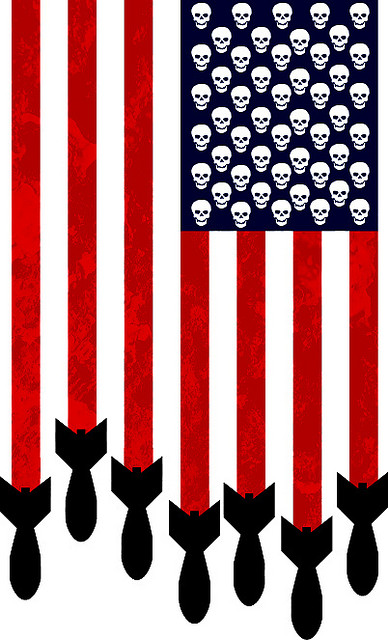
Illustration by Shutterstock – edited by Büşra Öztürk.

By Paul Craig Roberts

Source: PaulCraigRoberts.org

My forebodings/predictions about the Kremlin’s limited go-slow war in Ukraine are proving correct.  Putin and Russia are demonized.  Unprecedented sanctions amounting to piracy and theft have been imposed on Russia. The US and Europe are joining the war as de facto combatants. More countries are joining NATO with the result being the prospect of more US missile bases on Russia’s borders. The Western media controls the narrative, which is Russia is losing and can be defeated with more many billions of dollars from the US and more weapons that enrich the US military/security complex.  Why any Russian government would expose itself to this and so many chances for miscalculation that ends in WW III is a mystery.  What did the Kremlin imagine it was achieving by creating a situation that exposed Rusaia to many months of war propaganda, punishment, and Western preparations for wider war?

What peace needed was a quick decisive Russian victory that demonstrated extraordinary military power that completely stopped any further Western provocations of Russia.  But the Kremlin was too liberal-minded to do what was neccessary. Consequently the Kremlin made a strategic error, dropped the ball and has failed to protect Russia from provocations that are leading to WW III.

Instead, the Kremlin filled with liberal delusions long discarded in the West decided to show a good side by limiting itself to the rescue of the Donbass Russians.  This gave the West all it needed to present Russia as a military incompetent upstart.  Among the Kremlin’s errors, the Kremlin overlooked that Ukraine’s distress from the limited Russian intervention created an opportunity for Poland to claim former Polish territories in western Ukraine where there are no Russian troops engaged. It is possible that the Polish government, disinformed by Western media’s picture of Russian military failure in Ukraine, will occupy western Ukraine as preparation to reclaiming it as Russia did Crimea and now Donbass.  As Russia will have eastern and southern Ukraine, the country could simply disappear as Poland resurrects greater Poland. In its history, Ukraine has either been part of Poland’s empire or part of Russia.

If Poland moves into western Ukraine as it is tempted to do, opportunities for Polish-Russian conflict arise.  As Poland is a NATO member, Washington has given Poland, as the British government did with World War II’s “Polish Guarantee,” the power to start a world war.

The Polish government has a penchant for emotional decisons, not responsible decisions. Just as the Polish military dictatorship thought the “British Guarantee” protected them, causing them to spurn Hitler’s demand for the return of German territory stripped from Germany in the Versailles Treaty despite President Wilson’s “guarantee” of no territorial losses, the Polish government thinks today that NATO membership protects Poland from Russian retaliation.

The government in Warsaw does not comprehand that the “NATO Guarantee” is worth no more than the British Government’s guarantee that launched WW II.

The governments that comprise the Western World have given Poland, once again, the decision whether there is to be a World War.

This deplorable and unsettling fact stares us in the face, but no Western media, not even online media, acknowledges it.

The situation that exists today is that either Russia and China must accept US hegemony or the neoconservaties will push Russia and China into war with the West. The hegemonic ambition of the neoconservatives is inconsistent with a peaceful world.

Hedges: The Pimps of War

Whores of War, original illustration by Mr. Fish.

The coterie of neocons and liberal interventionists who orchestrated two decades of military fiascos in the Middle East and who have never been held to account are now stoking a suicidal war with Russia.

By Chris Hedges

Source: ScheerPost.com

The same cabal of warmongering pundits, foreign policy specialists and government officials, year after year, debacle after debacle, smugly dodge responsibility for the military fiascos they orchestrate. They are protean, shifting adroitly with the political winds, moving from the Republican Party to the Democratic Party and then back again, mutating from cold warriors to neocons to liberal interventionists. Pseudo intellectuals, they exude a cloying Ivy League snobbery as they sell perpetual fear, perpetual war, and a racist worldview, where the lesser breeds of the earth only understand violence. 

They are pimps of war, puppets of the Pentagon, a state within a state, and the defense contractors who lavishly fund their think tanks — Project for the New American Century, American Enterprise Institute, Foreign Policy Initiative, Institute for the Study of War, Atlantic Council and Brookings Institution. Like some mutant strain of an antibiotic-resistant bacteria, they cannot be vanquished. It does not matter how wrong they are, how absurd their theories, how many times they lie or denigrate other cultures and societies as uncivilized or how many murderous military interventions go bad. They are immovable props, the parasitic mandarins of power that are vomited up in the dying days of any empire, including ours, leaping from one self-defeating catastrophe to the next.

I spent  20 years as a foreign correspondent reporting on the suffering, misery, and murderous rampages these shills for war engineered and funded. My first encounter with them was in Central America. Elliot Abrams — convicted of providing misleading testimony to Congress on the Iran-Contra Affair and later  pardoned by President George H.W. Bush so he could return to government to sell us the Iraq War — and Robert Kagan, director of the State Department’s public diplomacy office for Latin America — were propagandists for the brutal military regimes in El Salvador and Guatemala, as well as the rapists and homicidal thugs that made up the rogue Contra forces fighting the Sandinista government in Nicaragua, which they illegally funded. Their job was to discredit our reporting.

They, and their coterie of fellow war lovers, went on to push for the expansion of NATO in Central and Eastern Europe after the fall of the Berlin Wall, violating an agreement not to extend NATO beyond the borders of a unified Germany and recklessly antagonizing Russia. They were and are cheerleaders for the apartheid state of Israel, justifying its war crimes against Palestinians and myopically conflating Israel’s interests with our own. They advocated for air strikes in Serbia, calling for the US to “take out” Slobodan Milosevic. They were the authors of the policy to invade Afghanistan, Iraq, Syria and Libya. Robert Kagan and William Kristol, with their typical cluelessness, wrote in April 2002 that “the road that leads to real security and peace” is “the road that runs through Baghdad.”

We saw how that worked out. That road led to the dissolution of Iraq, the destruction of its civilian infrastructure, including the obliteration of 18 of 20 electricity-generating plants and nearly all the water-pumping and sanitation systems during a 43-day period when 90,000 tons of bombs were rained down on the country, the rise of radical jihadist groups throughout the region, and failed states. The war in Iraq, along with the humiliating defeat in Afghanistan, shredded the illusion of US military and global hegemony. It also inflicted on Iraqis, who had nothing to do with the attacks of 9/11, the widespread killing of civilians, the torture and sexual humiliation of Iraqi prisoners, and the ascendancy of Iran as the preeminent power in the region. They continue to call for a war with Iran, with Fred Kagan stating that “there is nothing we can do short of attacking to force Iran to give up its nuclear weapons.” They pushed for the overthrow of President Nicholas Maduro, after trying to do the same to Hugo Chavez, in Venezuela. They have targeted Daniel Ortega, their old nemesis in Nicaragua.

They embrace a purblind nationalism that prohibits them from seeing the world from any perspective other than their own. They know nothing about the machinery of war, its consequences, or its inevitable blowback. They know nothing about the peoples and cultures they target for violent regeneration. They believe in their divine right to impose their “values” on others by force. Fiasco after fiasco. Now they are stoking a war with Russia.

“The nationalist is by definition an ignoramus,” Yugoslav writer Danilo Kiš observed. “Nationalism is the line of least resistance, the easy way. The nationalist is untroubled, he knows or thinks he knows what his values are, his, that’s to say national, that’s to say the values of the nation he belongs to, ethical and political; he is not interested in others, they are no concern of his, hell — it’s other people (other nations, another tribe). They don’t even need investigating. The nationalist sees other people in his own images — as nationalists.”

The Biden administration is filled with these ignoramuses, including Joe Biden. Victoria Nuland, the wife of Robert Kagan, serves as Biden’s undersecretary of state for political affairs. Antony Blinken is secretary of state. Jake Sullivan is national security advisor. They come from this cabal of moral and intellectual trolls that includes Kimberly Kagan, the wife of Fred Kagan, who founded The Institute for the Study of War, William Kristol, Max Boot, John Podhoretz, Gary Schmitt, Richard Perle, Douglas Feith, David Frum, and others. Many were once staunch Republicans or, like Nuland, served in Republican and Democratic administrations. Nuland was the principal deputy foreign policy adviser to Vice President Dick Cheney. 

They are united by the demand for larger and larger defense budgets and an ever expanding military. Julian Benda called these courtiers to power “the self-made barbarians of the intelligentsia.”

They once railed against liberal weakness and appeasement. But they swiftly migrated to the Democratic Party rather than support Donald Trump, who showed no desire to start a conflict with Russia and who called the invasion of Iraq a “big, fat mistake.” Besides, as they correctly pointed out, Hillary Clinton was a fellow neocon. And liberals wonder why nearly half the electorate, who revile these arrogant unelected power brokers, as they should, voted for Trump.

These ideologues did not see the corpses of their victims. I did. Including children. Every dead body I stood over in Guatemala, El Salvador, Nicaragua, Gaza, Iraq, Sudan, Yemen or Kosovo, month after month, year after year, exposed their moral bankruptcy, their intellectual dishonesty, and their sick bloodlust.  They did not serve in the military. Their children do not serve in the military. But they eagerly ship young American men and women off to fight and die for their self-delusional dreams of empire and American hegemony. Or, as in Ukraine, they provide hundreds of millions of dollars in weaponry and logistical support to sustain long and bloody proxy wars.

Historical time stopped for them with the end of World War II. The overthrow of democratically elected governments by the US during the Cold War in Indonesia, Guatemala, the Congo, Iran and Chile (where the CIA oversaw the assassination of the commander-in-chief of the army, General René Schneider, and President Salvador Allende), the Bay of Pigs, the atrocities and war crimes that defined the wars in Vietnam, Cambodia, and Laos, even the disasters they manufactured in the Middle East, have disappeared into the black hole of their collective historical amnesia. American global domination, they claim, is benign, a force for good, “benevolent hegemony.” The world, Charles Krauthammer insisted, welcomes “our power.” All enemies, from Saddam Hussein to Vladimir Putin, are the new Hitler. All US interventions are a fight for freedom that make the world a safer place. All refusals to bomb and occupy another country are a 1938 Munich moment, a pathetic retreat from confronting evil by the new Neville Chamberlain. We do have enemies abroad. But our most dangerous enemy is within.

The warmongers build a campaign against a country such as Iraq or Russia and then wait for a crisis — they call it the next Pearl Harbor — to justify the unjustifiable. In 1998, William Kristol and Robert Kagan, along with a dozen other prominent neoconservatives, wrote an open letter to President Bill Clinton denouncing his policy of containment of Iraq as a failure and demanding that he go to war to overthrow Saddam Hussein. To continue the “course of weakness and drift,” they warned, was to “put our interests and our future at risk.” Huge majorities in Congress, Republican and Democrat, rushed to pass the Iraq Liberation Act. Few Democrats or Republicans dared be seen as soft on national security. The act stated that the United States government would work to “remove the regime headed by Saddam Hussein” and authorized $99 million towards that goal, some of it being used to fund Ahmed Chalabi’s Iraqi National Congress that would become instrumental in disseminating the fabrications and lies used to justify the Iraq war during the administration of George W. Bush.

The attacks of 9/11 gave the war party its opening, first with Afghanistan, then Iraq. Krauthammer, who knows nothing about the Muslim world, wrote that “the way to tame the Arab street is not with appeasement and sweet sensitivity but with raw power and victory…The elementary truth that seems to elude the experts again and again…is that power is its own reward. Victory changes everything, psychologically above all. The psychology in the [Middle East] is now one of fear and deep respect for American power. Now is the time to use it.” Removing Saddam Hussein from power, Kristol crowed, would “transform the political landscape of the Middle East.”  

It did, of course, but not in ways that benefited the US.

They lust for apocalyptic global war. Fred Kagan, the brother of Robert, a military historian, wrote in 1999 that “America must be able to fight Iraq and North Korea, and also be able to fight genocide in the Balkans and elsewhere without compromising its ability to fight two major regional conflicts. And it must be able to contemplate war with China or Russia some considerable (but not infinite) time from now [author’s emphasis].”

They believe violence magically solves all disputes, even the Israeli-Palestinian morass. In a bizarre interview immediately after 9/11, Donald Kagan, the Yale classicist and rightwing ideologue who was the father of Robert and Fred, called, along with his son Fred, for the deployment of US troops in Gaza so we could “take the war to these people.” They have long demanded the stationing of NATO troops in Ukraine, with Robert Kagan saying that “we need to not worry that the problem is our encirclement rather than Russian ambitions.”  His wife, Victoria Nuland, was outed in a leaked phone conversation in 2014 with the US Ambassador to Ukraine, Geoffrey Pyatt, disparaging the EU and plotting to remove the lawfully elected President Viktor Yanukovych and install compliant Ukrainian politicians in power, most of whom did eventually take power. They lobbied for US troops to be sent to Syria to assist “moderate” rebels seeking to overthrow Basha al-Assad. Instead, the intervention spawned the Caliphate. The US ended up bombing the very forces they had armed, becoming Assad’s de facto air force.

The Russian invasion of Ukraine, like the attacks of 9/11, is a self-fulfilling prophecy. Putin, like everyone else they target, only understands force. We can, they assure us, militarily bend Russia to our will.

“It is true that acting firmly in 2008 or 2014 would have meant risking conflict,” Robert Kagan wrote in the latest issue of Foreign Affairs of Ukraine, lamenting our refusal to militarily confront Russia earlier. “But Washington is risking conflict now; Russia’s ambitions have created an inherently dangerous situation. It is better for the United States to risk confrontation with belligerent powers when they are in the early stages of ambition and expansion, not after they have already consolidated substantial gains. Russia may possess a fearful nuclear arsenal, but the risk of Moscow using it is not higher now than it would have been in 2008 or 2014, if the West had intervened then. And it has always been extraordinarily small: Putin was never going to obtain his objectives by destroying himself and his country, along with much of the rest of the world.”

In short, don’t worry about going to war with Russia, Putin won’t use the bomb.

I do not know if these people are stupid or cynical or both. They are lavishly funded by the war industry. They are never dropped from the networks for their repeated idiocy. They rotate in and out of power, parked in places like The Council on Foreign Relations or The Brookings Institution, before being called back into government. They are as welcome in the Obama or Biden White House as the Bush White House. The Cold War, for them, never ended. The world remains binary, us and them, good and evil. They are never held accountable. When one military intervention goes up in flames, they are ready to promote the next. These Dr. Strangeloves, if we don’t stop them, will terminate life as we know it on the planet.

AS WAR DRUMS BEAT FOR UKRAINE, REMEMBER, LIES AND PROPAGANDA STARTED NEARLY EVERY WAR IN US HISTORY

By Don Via Jr,

Source: Waking Times

War is one of the most primitive and senseless manifestations of the human experience, so naturally, most sane people with families, ambitions and kind hearts want nothing to do with such things. Unfortunately, as we are seeing with the Ukraine / Russia escalation, governments thrive on war, as it gives them a pressing excuse to grab more power and take extrajudicial measures—both at home and abroad.

To get around the obstacle of public opinion, governments have an extensive history of lying their way into war. This is hard to believe for people who think that government has their best interest in mind, but it is something that rulers have been doing since the beginning of time. In the modern United States, people are led to believe that the establishment accidentally flounders its way into war with the good intentions of protecting the country from harm or liberating an ally in distress.

This strategy of deception was illustrated by the Nazi propagandist Herman Goering, who famously said:

“Of course the people don’t want war. Why should some poor slob on a farm want to risk his life in a war when the best he can get out of it is to come back to his farm in one piece? Naturally, the common people don’t want war neither in Russia, nor in England, nor for that matter in Germany. That is understood. But, after all, it is the leaders of the country who determine the policy and it is always a simple matter to drag the people along, whether it is a democracy, or a fascist dictatorship, or a parliament, or a communist dictatorship. Voice or no voice, the people can always be brought to the bidding of the leaders. That is easy. All you have to do is tell them they are being attacked, and denounce the peacemakers for lack of patriotism and exposing the country to danger. It works the same in any country.

Of course, the Nazi regime is notorious for their brutality and deceit, so this admission is not as stunning as it would be from an American general, but make no mistake that these are the types of thoughts that American generals and politicians have—they are just not brazen enough to say it out loud.

Believe it or not, using deceptive tactics to sway public opinion in favor of war is actually an official part of the US military’s playbook. According to Wikileaks, the U.S. Army’s publication “Special Forces Foreign Internal Defense Tactics Techniques and Procedures for Special Forces” recommends funding terrorists for regime change operations and using false flag attacks to destabilize regimes that were unfriendly to western interests.

This is nothing new though, this is a part of American history, as nearly every war that the U.S. has ever been involved in was built upon lies. Below are some of the most well-documented examples of wars that were started because of lies and government propaganda.

Spanish-American War – 1898

In January 1898, President William McKinley ordered the USS Maine to port in Havana, Cuba, despite years of conflict between Cuban rebels and the Spanish government. The move was intended to be a show of force against the Spanish government, in line with the Monroe doctrine, to establish U.S. dominance in the Western hemisphere.

At 9:40 p.m., on February 15, 1898, The USS Maine exploded with a crew of 354 men on board, killing 266. While the Spanish government insisted the explosion was caused by a fire in a coal bunker that ignited the forward magazines, politicians in the U.S. were quick to blame Spain because they wanted an excuse to wage a war of conquest for territory in Mexico, the Caribbean, and the Pacific.

Although President McKinley had previously voiced his opposition to a military conflict, on April 25, the U.S. declared war on Spain.

The “Ten-Week War” resulted in not only the defeat of the last remnants of the Spanish empire but in a new era of U.S. “expansionism” as the United States took control of Puerto Rico, Guam, and the Philippine islands.

In 1976, a team of naval explosive experts examined the evidence and corroborated Spanish claims that the USS Maine’s sinking was caused by an internal explosion from ammunition being stored on board.

World War 1 – 1915

The first world war was opposed by most Americans from the start, as they rightly saw it as a power struggle between European aristocrats that they had no business in. This was a problem for the British military, led by Winston Churchill, as they were desperate to get the United States behind them in the war.

The U.S. did finally enter the war in 1915, when a U.S. ship called the Lusitania was sent through hostile waters as bait, filled with more than a thousand civilians and an unusually large amount of ammunition. The ship was hit by a German torpedo and exploded instantly due to all of the ammunition onboard, killing more than half of the passengers and crew.

A week before the sinking of Lusitania, Churchill wrote to Walter Runciman, the President of the Board of Trade, stating that it is “most important to attract neutral shipping to our shores, in the hope especially of embroiling the United States with Germany.”

After investigating the tragedy, former British naval intelligence officer Patrick Beesly said, “unless and until fresh information comes to light, I am reluctantly driven to the conclusion that there was a conspiracy deliberately to put Lusitania at risk in the hope that even an abortive attack on her would bring the United States into the war. Such a conspiracy could not have been put into effect without Winston Churchill’s express permission and approval.”

In addition to this treacherous military maneuver, there was a relentless campaign in the U.S. to dehumanize Germans and to paint them as monsters. In some propaganda that was peddled to U.S. citizens, German soldiers were depicted killing babies and sometimes eating them. There were even false reports of crucifixions.

World War 2 – 1941

The history books suggest that Pearl Harbor was an unprovoked attack, killing thousands of Americans and “forcing” the government to enter a war that was extremely unpopular at the time. However, the U.S. government was enacting strict sanctions on both Japan and Germany, hoping that either country would make the first move and give them an excuse to enter the war. Not only was the attack provoked, but President Roosevelt and the U.S. military knew the attack was coming and moved their most expensive aircraft to other locations while leaving thousands of people as sacrificial pawns.

The history books also sell the war against the Nazis as a humanitarian war to save people from the Holocaust, but the U.S. denied safe passage to Jewish refugees, and UK intelligence even planned to blow up refugee ships, in a plot called Operation Embarrass.

Many American businesses and politicians worked very closely with the Nazis even after the two countries were at war with each other. The Holocaust had already claimed the lives of millions of German people by that point, and a police state had long since been established, so whoever was doing business with the Nazis knew exactly who they were getting involved with.

Prior to the Americans getting involved in the war, there were corners of the political arena that were actually big supporters of the Nazi party—both for business purposes and common interests such as eugenics.

The most prominent American politician to work with the Nazis was actually George W. Bush’s grandfather, Prescott Bush. There is no doubt that he was funding and working with the Nazis because his company’s assets were seized in 1942 by the United States government under the “trading with the enemy” act. He worked at the head of a financial firm called Brown Brothers Harriman, which acted as a U.S. base for the Nazi business interests.

Brown Brothers Harriman was one of the biggest international investment firms in the 1930s and they sent millions of dollars in gold overseas to rebuild the German army and fund the Nazi party. This racket was finally exposed on July 30, 1942, when the New York Herald Tribune posted an article titled, “Hitler’s Angel Has three million dollars in US Bank.” This article raised suspicion about the bank being a “secret nest” for Nazi elites and eventually sparked the investigation that took down the operation.

Korean War – 1950

The propaganda of war has led many to believe that the North Korean government launched an unprovoked attack on South Korea, on behalf of the larger communist powers of Russia and China. Yet, once again, this was another case where the U.S. was propping up one dictator to fight another, in an attempt to gain control of an entire continent—all the while, lying to the people back home about the true motivations for war.

As historian Mark E. Caprio, professor of history at Rikkyo University in Tokyo points out:

“On February 8, 1949, the South Korean president met with Ambassador John Muccio and Secretary of the Army Kenneth C. Royall in Seoul. Here the Korean president listed the following as justifications for initiating a war with the North: the South Korean military could easily be increased by 100,000 if it drew from the 150,000 to 200,000 Koreans who had recently fought with the Japanese or the Nationalist Chinese. Moreover, the morale of the South Korean military was greater than that of the North Koreans. If war broke out he expected mass defections from the enemy. Finally, the United Nations’ recognition of South Korea legitimized its rule over the entire peninsula (as stipulated in its constitution). Thus, he concluded, there was “nothing [to be] gained by waiting.”

Vietnam War – 1964

Information released in 2005 by the National Security Agency showed that the Gulf of Tonkin incident on August 1964 was deliberately falsified to make it appear that North Vietnamese gunboats attacked an American destroyer patrolling in international waters when in reality, they did not. This was the event that the U.S. military used as an excuse to go to war in Vietnam and it was surrounded by mystery and controversy until decades later when the official facts were released.

It has now been 49 years since the U.S. withdrew the last of its combat troops from Vietnam and the last prisoners of war that were held in North Vietnam returned to U.S. soil. According to estimates, more than 2 million civilians, 1.1 million North Vietnamese and Viet Cong fighters, 250,000 South Vietnamese fighters, and nearly 58,000 U.S. military members were killed in Vietnam during the war—all because of lies that were used to create propaganda that made American fear for their safety.

Libya – 1984 (then 2015)

Former Mossad agent Victor Ostrovsky admitted that the Mossad planted a radio transmitter in Libyan Prime Minister Muammar Gaddafi’s compound in Tripoli, which broadcast fake terrorist transmissions that were recorded by Mossad and used to frame Gaddafi as a terrorist supporter. President Reagan bombed Libya immediately after the false reports, but this was not the first or last time the U.S. would involve itself in Libya.

As The Free Thought Project has reported, 3,000 emails from former Secretary of State Hillary Clinton released by the State Department contained damning evidence of Western nations using NATO as a tool to overthrow Gaddafi.

The NATO overthrow was not for the protection of the people, but instead, it was to thwart Gaddafi’s attempt to create a gold-backed African currency to compete with the Western central banking monopoly. As per usual, the U.S. and its Western counterparts left the country to its own devices after slashing the once-thriving nation to the ground.

“Today there is no government of Libya. It’s simply mobs that patrol the streets and kill one another,” Virginia State Senator Richard Black told RT of the mess left behind.

Despite certain issues in Libya before the coup, “Libyans had an incredibly high standard of living, the highest in Africa,” international lawyer Francis Boyle told RT. “When I first went to Libya in 1986, I was amazed by the empowerment of women. What I saw in Libya was that women could do anything they wanted to do.”

Iraq – 1990

At the onset of Operation Desert Storm in 1990, a public relations firm by the name of Hill and Knowlton spent millions of dollars on the U.S. government’s behalf, constructing news pieces that would sell the war to the American public. One of the most moving hoaxes to come from this push to war was the testimony of a 15-year-old Kuwaiti girl, known only by her first name of Nayirah.

In a videotaped testimony that was later distributed to the media, she claimed that Iraqi soldiers killed babies in incubators at a hospital.

I volunteered at the al-Addan hospital, While I was there, I saw the Iraqi soldiers come into the hospital with guns, and go into the room where… babies were in incubators,” Nayirah said. “They took the babies out of the incubators, took the incubators, and left the babies on the cold floor to die.”

Sounds horrible, right? Well, luckily it never happened. This was a fabricated event designed to dehumanize the Iraqi people in the eyes of the American public. The whole thing was exposed when journalists discovered that the witness, Nayirah was actually the daughter of a U.S. ambassador, who was being coaxed by military psychological operations specialists.

In addition to this false testimony, the U.S. government also showed Saudi Arabia fake satellite images that depicted Iraqi troops massing on their border.

Iraq – 2003-Present

Emails that were declassified in 2015 paint a much different picture of the Bush administration’s invasion of Iraq than they led the public to believe. A memo drafted by the U.S. embassy in London revealed how the Bush administration used “spies” in the British Labor Party to help shape British public opinion in favor of the war, prior to U.S. invasion.

In the weeks leading up to the invasion of Iraq, the Bush administration inundated American airwaves with assertions ranging from Saddam Hussein’s connections to Al-Qaeda, to Colin Powell’s ‘badly flawed’ claims that Iraq had weapons of mass destruction.

After invading a sovereign foreign nation, President George W. Bush blatantly lied to the American public and when news came to light that there were, in fact, no weapons of mass destruction, he simply accused anyone who criticized him of attempting to “revise history.” 

During his presidency, while giving a speech about that very issue, Bush saidThis nation acted to a threat from the dictator of Iraq. Now there are some who would like to rewrite history—revisionist historians is what I like to call them.

War on Terror – 2001-Present

Now the United States military and its allies are exporting their wars of terror across the globe, in the name of fighting terrorism, and most of these wars are also justified with propaganda and lies.

In the early days of the “War on Terror,” the Macedonian government was caught staging a fake terror attack in an attempt to get funding from western forces. Six innocent Pakistani immigrants were accused of being terrorists and killed in the incident.

In 2001, U.S. media spent weeks circulating the idea that anthrax attacks were being carried out by Arabs connected with Afghanistan, when in reality it was a government scientist behind the attacks.

In 2005, former Department of Justice lawyer John Yoo suggested that the U.S. should create a false terrorist organization to give the military an excuse to attack places where they believed real terrorists might be hiding:

“Our intelligence agencies create a false terrorist organization,” Yoo said. “It could have its own websites, recruitment centers, training camps, and fundraising operations. It could launch fake terrorist operations and claim credit for real terrorist strikes, helping to sow confusion within al-Qaeda’s ranks, causing operatives to doubt others’ identities and to question the validity of communications.”

In 2005, Israeli soldiers admitted to throwing stones at other Israeli soldiers so they could blame it on Palestinians to justify using violent force against protesters. Israel also has a deep history of using lies and false attacks to justify military action.

In an incident that came to be known as The Lavon Affair in 1954, undercover Israeli agents set off bombs against U.S. and Brittish targets, hoping that the attack would be blamed on local rebels. Luckily, they were caught and the plot was exposed.

This long track record of deception is important to consider as the U.S. military is beating the war drum again, this time in Iran, where there has also been a long list of false attacks at the hands of western powers.

Starting all the way back in 1957, politicians in the U.S. and UK developed a plot to train Islamic extremists to carry out false flag attacks to push for regime change in Iran. Now, decades later, history is repeating itself in the same part of the world, as regime change in Iran is back on the agenda, and the western powers are following the same playbook.

Current Push For A Proxy War Against Russia In Ukraine — 2022

As this report has demonstrated, the use of falsified evidence, propaganda, disinformation, and even outright false flag attacks, has been common practice within the military industrial complex handbook of expanding US imperialism and the neo-liberal world order.

This latest push to essentially turn the Ukraine into Syria 2.0, a convoluted dirty war among proxy States/ groups to maintain American hegemony — and potentially bring the world to the brink of annihilation in the process — is no different.

While it is of course pertinent to recognize that the reality for the Ukrainian people on the ground is a complex one rooted in nearly a century of culture and history weaving its own tensions among the local populations;  A number of facts clearly demonstrate the reality of the driving forces behind today’s conflict.

In 2010, diplomatic cables released by WikiLeaks show correspondence between American and French officials that paint plainly the intentions of Western policymakers to absorb Ukraine into NATO. Being in direct violation of the agreements made between the United States and former Soviet leader Mikhail Gorbachev in 1990.

Fast forward four years and we see the beginning stages US/ NATO’s aggressive expansionism eastward come to fruition.

Following Ukrainian President Viktor Yanukovych’s rejection of joining NATO, small anti-corruption protests that had already been ongoing were co-opted by Western agent provocateurs and shifted into a regime change color revolution.

What was touted in the western media as an organic people’s uprising to overthrow their communist leader, was really a carefully crafted coup d’état.

We know this due to a leaked phone call from then US Assistant Secretary of State Victoria Nuland. In it, she can be heard discussing with U.S. Ambassador to Ukraine Geoffrey Pyatt the key figures which should be installed in a post-Yanukovych government.

Showing that not only were the protests not organic, but the US was directly involved in the government overthrow.

In 2022, Victoria Nuland is now acting as the Under Secretary of State. The call also acknowledged the cooperation of then-and-current National Security Advisor Jake Sullivan, and Vice President at the time now President Joe Biden. It’s no wonder things are developing the way they are when these figures have been maneuvered into such crucial positions.

But to make matters worse, in 2014 as the coup was in full swing, the United States took to facilitating the most repugnant of individuals to install their new puppet regime. Providing armaments, funding, and training to openly admitted Neo-Nazi paramilitary forces.

Years later, it seems maintaining a fascist state in Ukraine has essentially become an openly accepted part of America’s policy in the region. In December of 2021, the United Nations brought forth its annual resolution to condemn Nazism, urging nations to work together to prevent the spread of ultra-nationalist and racist ideologies. It should have been a common sense resolution for everyone to agree on.

Yet out of all members of the United Nations, the United States and Ukraine were the only two to vote against it. Sadly, this has become tradition. Both Nations have regularly voted against the resolution since 2014.

In line with this, Western media is still permeated with propaganda distorting the facts driving the conflict. As elaborated in this brilliant piece by Mintpress News’ Alan Macleod, the US has spent upwards of 22 million dollars sowing the seeds of discontent to favor an anti-russian, pro-US and NATO expansionist agenda.

No one here is claiming that Vladimir Putin or Russia is a saint. As is the case with all governments they are surely just as vile and corrupt in their own ways. But the facts contradict the narrative. The idea that Russia is acting as the aggressor “threatening freedom and democracy” and “endangering the innocent” is a farce.

Even on international corporate media, the true attitudes and intentions for the crisis are openly admitted.

On the February 20th, 2022, episode of Al jazeera’s Inside Story hosting a panel of three experts regarding the Minsk agreements; Ukrainian Associate Professor of Sociology, National University of Kyiv-Mohyla Academy, Mychailo Wynnyckyj, while first claiming that Ukrainians are interested in de-escalation, closed the segment by stating brazenly —

“Looking at peaceful solutions, of course. But at the end of the day I think Ukrainians understand today that the existential threat that Russia presents to Ukraine is long-term, and we will have to deal with that long-term. It’s not something that’s going to go away tomorrow, or as long as the Putin regime remains in the Kremlin.

Openly admitting the desire for regime change. This is the prevailing attitude of elitist powers. And as mentioned earlier while it may also in part be fostered by generations of uneasy ongoings, it is also certainly augmented and exacerbated by the west’s geostrategic activities.

If the Russians were to have an organization similar to NATO, aligning themselves with China, North Korea, Iran, Venezuela, and any of the other nations America considers its adversaries; and proceeded to push its military up to our borders of Canada and Mexico. Bullying, threatening, and cajoling other nations into compliance. Openly demanding a chamge in our government. You can be damn certain we wouldn’t stand for it.

Why should any less be expected when the shoe is on the other foot, and the globalist power that is the American Empire and its allies — having a demonstrable history of flagrant war crimes and abuse — saunter its way up to Russian borders after expressing it’s desire for regime-change?

Saturday Matinee: Ukraine on Fire – The Real Story

[Originally posted on 2/24/18]

https://vimeo.com/332524840

A Documentary You’ll Likely Never See

By James DiEugenio

Source: Consortium News

It is not very often that a documentary film can set a new paradigm about a recent event, let alone, one that is still in progress. But the new film Ukraine on Fire has the potential to do so – assuming that many people get to see it.

Usually, documentaries — even good ones — repackage familiar information in a different aesthetic form. If that form is skillfully done, then the information can move us in a different way than just reading about it.

A good example of this would be Peter Davis’s powerful documentary about U.S. involvement in Vietnam, Hearts and Minds. By 1974, most Americans understood just how bad the Vietnam War was, but through the combination of sounds and images, which could only have been done through film, that documentary created a sensation, which removed the last obstacles to America leaving Indochina.

Ukraine on Fire has the same potential and could make a contribution that even goes beyond what the Davis film did because there was very little new information in Hearts and Minds. Especially for American and Western European audiences, Ukraine on Fire could be revelatory in that it offers a historical explanation for the deep divisions within Ukraine and presents information about the current crisis that challenges the mainstream media’s paradigm, which blames the conflict almost exclusively on Russia.

Key people in the film’s production are director Igor Lopatonok, editor Alex Chavez, and writer Vanessa Dean, whose screenplay contains a large amount of historical as well as current material exploring how Ukraine became such a cauldron of violence and hate. Oliver Stone served as executive producer and conducted some high-profile interviews with Russian President Vladimir Putin and ousted Ukrainian President Viktor Yanukovych.

The film begins with gripping images of the violence that ripped through the capital city of Kiev during both the 2004 Orange Revolution and the 2014 removal of Yanukovich. It then travels back in time to provide a perspective that has been missing from mainstream versions of these events and even in many alternative media renditions.

A Longtime Pawn

Historically, Ukraine has been treated as a pawn since the late Seventeenth Century. In 1918, Ukraine was made a German protectorate by the Treaty of Brest Litovsk. Ukraine was also a part of the Molotov-Ribbentrop Pact of 1939 signed between Germany and Russia, but violated by Adolf Hitler when the Nazis invaded the Soviet Union in the summer of 1941.

The reaction of many in Ukraine to Hitler’s aggression was not the same as it was in the rest of the Soviet Union. Some Ukrainians welcomed the Nazis. The most significant Ukrainian nationalist group, Organization of Ukrainian Nationalists (OUN), had been established in 1929. Many of its members cooperated with the Nazis, some even enlisted in the Waffen SS and Ukrainian nationalists participated in the massacre of more than 33,000 Jews at Babi Yar ravine in Kiev in September 1941. According to scholar Pers Anders Rudling, the number of Ukrainian nationalists involved in the slaughter outnumbered the Germans by a factor of 4 to 1.

But it wasn’t just the Jews that the Ukrainian nationalists slaughtered. They also participated in massacres of Poles in the western Ukrainian region of Galicia from March 1943 until the end of 1944. Again, the main perpetrators were not Germans, but Ukrainians.

According to author Ryazard Szawlowksi, the Ukrainian nationalists first lulled the Poles into thinking they were their friends, then turned on them with a barbarity and ferocity that not even the Nazis could match, torturing their victims with saws and axes. The documentary places the number of dead at 36,750, but Szawlowski estimates it may be two or three times higher.

OUN members participated in these slaughters for the purpose of ethnic cleansing, wanting Ukraine to be preserved for what OUN regarded as native Ukrainians. They also expected Ukraine to be independent by the end of the war, free from both German and Russian domination. The two main leaders in OUN who participated in the Nazi collaboration were Stepan Bandera and Mykola Lebed. Bandera was a virulent anti-Semite, and Lebed was rabidly against the Poles, participating in their slaughter.

After the war, both Bandera and Lebed were protected by American intelligence, which spared them from the Nuremburg tribunals. The immediate antecedent of the CIA, Central Intelligence Group, wanted to use both men for information gathering and operations against the Soviet Union. England’s MI6 used Bandera even more than the CIA did, but the KGB eventually hunted down Bandera and assassinated him in Munich in 1959. Lebed was brought to America and addressed anti-communist Ukrainian organizations in the U.S. and Canada. The CIA protected him from immigration authorities who might otherwise have deported him as a war criminal.

The history of the Cold War was never too far in the background of Ukrainian politics, including within the diaspora that fled to the West after the Red Army defeated the Nazis and many of their Ukrainian collaborators emigrated to the United States and Canada. In the West, they formed a fierce anti-communist lobby that gained greater influence after Ronald Reagan was elected in 1980.

Important History

This history is an important part of Dean’s prologue to the main body of Ukraine on Fire and is essential for anyone trying to understand what has happened there since the collapse of the Soviet Union in 1991. For instance, the U.S.-backed candidate for president of Ukraine in 2004 — Viktor Yushchenko — decreed both Bandera and his military assistant Roman Shukhevych, who was also involved in atrocitites, were both named national heroes by Yushchenko.

Bandera, in particular, has become an icon for post-World War II Ukrainian nationalists. One of his followers was Dmytro Dontsov, who called for the birth of a “new man” who would mercilessly destroy Ukraine’s ethnic enemies.

Bandera’s movement was also kept alive by Yaroslav Stetsko, Bandera’s premier in exile. Stetsko fully endorsed Bandera’s anti-Semitism and also the Nazi attempt to exterminate the Jews of Europe. Stetsko, too, was used by the CIA during the Cold War and was honored by Yushchenko, who placed a plaque in his honor at the home where he died in Munich in 1986. Stetsko’s wife, Slava, returned to Ukraine in 1991 and ran for parliament in 2002 on the slate of Yushchenko’s Our Ukraine party.

Stetsko’s book, entitled Two Revolutions, has become the ideological cornerstone for the modern Ukrainian political party Svoboda, founded by Oleh Tyahnybok, who is pictured in the film calling Jews “kikes” in public, which is one reason the Simon Wiesenthal Center has ranked him as one of the most dangerous anti-Semites in the world.

Another follower of Bandera is Dymytro Yarosh, who reputedly leads the paramilitary arm of an even more powerful political organization in Ukraine called Right Sektor. Yarosh once said he controls a paramilitary force of about 7,000 men who were reportedly used in both the overthrow of Yanukovych in Kiev in February 2014 and the suppression of the rebellion in Odessa a few months later, which are both fully depicted in the film.

This historical prelude and its merging with the current civil war is eye-opening background that has been largely hidden by the mainstream Western media, which has downplayed or ignored the troubling links between these racist Ukrainian nationalists and the U.S.-backed political forces that vied for power after Ukraine became independent in 1991.

The Rise of a Violent Right

That same year, Tyahnybok formed Svoboda. Three years later, Yarosh founded Trident, an offshoot of Svoboda that eventually evolved into Right Sektor. In other words, the followers of Bandera and Lebed began organizing themselves immediately after the Soviet collapse.

In this time period, Ukraine had two Russian-oriented leaders who were elected in 1991 and 1994, Leonid Kravchuk, and Leonid Kuchma. But the hasty transition to a “free-market” economy didn’t go well for most Ukrainians or Russians as well-connected oligarchs seized much of the wealth and came to dominate the political process through massive corruption and purchase of news media outlets. However, for average citizens, living standards went down drastically, opening the door for the far-right parties and for foreign meddling.

In 2004, Viktor Yanukovych, whose political base was strongest among ethnic Russians in the east and south, won the presidential election by three percentage points over the U.S.-favored Viktor Yushchenko, whose base was asmostly in the country’s west where the Ukrainian nationalists are strongest.

Immediately, Yushchenko’s backers claimed fraud citing exit polls that had been organized by a group of eight Western nations and four non-governmental organizations or NGOs, including the Renaissance Foundation founded by billionaire financial speculator George Soros. Dick Morris, former President Bill Clinton’s political adviser, clandestinely met with Yushchenko’s team and advised them that the exit polls would not just help in accusations of fraud, but would bring protesters out into the streets. (Cambridge Review of International Affairs, Vol. 19, Number 1, p. 26)

Freedom House, another prominent NGO that receives substantial financing from the U.S.-government-funded National Endowment for Democracy (NED), provided training to young activists who then rallied protesters in what became known as the Orange Revolution, one of the so-called “color revolutions” that the West’s mainstream media fell in love with. It forced an election rerun that Yushchenko won.

But Yushchenko’s presidency failed to do much to improve the lot of the Ukrainian people and he grew increasingly unpopular. In 2010, Yushchenko failed to make it out of the first round of balloting and his rival Yanukovych was elected president in balloting that outside observers judged free and fair.

Big-Power Games

If this all had occurred due to indigenous factors within Ukraine, it could have been glossed over as a young nation going through some painful growing pains. But as the film points out, this was not the case. Ukraine continued to be a pawn in big-power games with many Western officials hoping to draw the country away from Russian influence and into the orbit of NATO and the European Union.

In one of the interviews in Ukraine on Fire, journalist and author Robert Parry explains how the National Endowment for Democracy and many subsidized political NGOs emerged in the 1980s to replace or supplement what the CIA had traditionally done in terms of influencing the direction of targeted countries.

During the investigations of the Church Committee in the 1970s, the CIA’s “political action” apparatus for removing foreign leaders was exposed. So, to disguise these efforts, CIA Director William Casey, Reagan’s White House and allies in Congress created the NED to finance an array of political and media NGOs.

As Parry noted in the documentary, many traditional NGOs do valuable work in helping impoverished and developing countries, but this activist/propaganda breed of NGOs promoted U.S. geopolitical objectives abroad – and NED funded scores of such projects inside Ukraine in the run-up to the 2014 crisis.

Ukraine on Fire goes into high gear when it chronicles the events that occurred in 2014, resulting in the violent overthrow of President Yanukovych and sparking the civil war that still rages. In the 2010 election, when Yushchenko couldn’t even tally in the double-digits, Yanukovych faced off against and defeated Yulia Tymoshenko, a wealthy oligarch who had served as Yushchenko’s prime minister.

After his election, Yanukovych repealed Bandera’s title as a national hero. However, because of festering economic problems, the new president began to search for an economic partner who could provide a large loan. He first negotiated with the European Union, but these negotiations bogged down due to the usual draconian demands made by the International Monetary Fund.

So, in November 2013, Yanukovych began to negotiate with Russian President Putin who offered more generous terms. But Yanukovych’s decision to delay the association agreement with the E.U. provoked street protests in Kiev especially from the people of western Ukraine.

As Ukraine on Fire points out, other unusual occurrences also occurred, including the emergence of three new TV channels – Spilno TV, Espreso TV, and Hromadske TV – going on the air between Nov. 21 and 24, with partial funding from the U.S. Embassy and George Soros.

Pro-E.U. protests in the Maidan square in central Kiev also grew more violent as ultra-nationalist street fighters from Lviv and other western areas began to pour in and engage in provocations, many of which were sponsored by Yarosh’s Right Sektor. The attacks escalated from torch marches similar to Nazi days to hurling Molotov cocktails at police to driving large tractors into police lines – all visually depicted in the film. As Yanukovich tells Stone, when this escalation happened, it made it impossible for him to negotiate with the Maidan crowd.

One of the film’s most interesting interviews is with Vitaliy Zakharchenko, who was Minister of the Interior at the time responsible for law enforcement and the conduct of the police. He traces the escalation of the attacks from Nov. 24 to 30, culminating with a clash between police and protesters over the transport of a giant Christmas tree into the Maidan. Zakharchenko said he now believes this confrontation was secretly approved by Serhiy Lyovochkin, a close friend of U.S. Ambassador Geoffrey Pyatt, as a pretext to escalate the violence.

At this point, the film addresses the direct involvement of U.S. politicians and diplomats. Throughout the crisis, American politicians visited Maidan, as both Republicans and Democrats, such as Senators John McCain, R-Arizona, and Chris Murphy, D-Connecticut. stirred up the crowds. Yanukovych also said he was in phone contact with Vice President Joe Biden, who he claims was misleading him about how to handle the crisis.

The film points out that the real center of American influence in the Kiev demonstrations was with Ambassador Pyatt and Assistant Secretary of State for European Affairs Victoria Nuland. As Parry points out, although Nuland was serving under President Obama, her allegiances were really with the neoconservative movement, most associated with the Republican Party.

Her husband is Robert Kagan, who worked as a State Department propagandist on the Central American wars in the 1980s and was the co-founder of the Project for the New American Century in the 1990s, the group that organized political and media pressure for the U.S. invasion of Iraq in 2003. Kagan also was McCain’s foreign policy adviser in the 2008 presidential election (although he threw his support behind Hillary Clinton in the 2016 race).

Adept Manipulators

As Parry explained, the neoconservatives have become quite adept at disguising their true aims and have powerful allies in the mainstream press. This combination has allowed them to push the foreign policy debate to such extremes that, when anyone objects, they can be branded a Putin or Yanukovych “apologist.”

Thus, Pyatt’s frequent meetings with the demonstrators in the embassy and Nuland’s handing out cookies to protesters in the Maidan were not criticized as American interference in a sovereign state, but were praised as “promoting democracy” abroad. However, as the Maidan crisis escalated, Ukrainian ultra-nationalists moved to the front, intensifying their attacks on police. Many of these extremists were disciples of Bandera and Lebed. By February 2014, they were armed with shotguns and rapid-fire handguns.

On Feb. 20, 2014, a mysterious sniper, apparently firing from a building controlled by the Right Sektor, shot both police and protesters, touching off a day of violence that left about 14 police and some 70 protesters dead.

With Kiev slipping out of control, Yanukovich was forced to negotiate with representatives from France, Poland and Germany. On Feb. 21, he agreed to schedule early elections and to accept reduced powers. At the urging of Vice President Biden, Yanukovych also pulled back the police.

But the agreement – though guaranteed by the European nations – was quickly negated by renewed attacks from the Right Sektor and its street fighters who seized government buildings. Russian intelligence services got word that an assassination plot was in the works against Yanukovych, who fled for his life.

On Feb. 24, Yanukovych asked permission to enter Russia for his safety and the Ukrainian parliament (or Rada), effectively under the control of the armed extremists, voted to remove Yanukovych from office in an unconstitutional manner because the courts were not involved and the vote to impeach him did not reach the mandatory threshold. Despite these irregularities, the U.S. and its European allies quickly recognized the new government as “legitimate.”

Calling a Coup a Coup

But the ouster of Yanukovych had all the earmarks of a coup. An intercepted phone call, apparently in early February, between Nuland and Pyatt revealed that they were directly involved in displacing Yanukovych and choosing his successor. The pair reviewed the field of candidates with Nuland favoring Arseniy Yatsenyuk, declaring “Yats is the guy” and discussing with Pyatt how to “glue this thing.” Pyatt wondered about how to “midwife this thing.” They sounded like Gilded Age millionaires in New York deciding who should become the next U.S. president. On Feb. 27, Yatsenyuk became Prime Minister of Ukraine.

Not everyone in Ukraine agreed with the new regime, however. Crimea, which had voted heavily for Yanukovych, decided to hold a referendum on whether to split from Ukraine and become a part of Russia. The results of the referendum were overwhelming. Some 96 percent of Crimeans voted to unite with Russia. Russian troops – previously stationed in Crimea under the Sevastopol naval base agreement – provided security against Right Sektor and other Ukrainian forces moving against the Crimean secession, but there was no evidence of Russian troops intimidating voters or controlling the elections. The Russian government then accepted the reunification with Crimea, which had historically been part of Russia dating back hundreds of years.

Two eastern provinces, Donetsk and Lugansk, also wanted to split off from Ukraine and also conducted a referendum in support of that move. But Putin would not agree to the request from the two provinces, which instead declared their own independence, a move that the new government in Kiev denounced as illegal. The Kiev regime also deemed the insurgents “terrorists” and launched an “anti-terrorism operation” to crush the resistance. Ultra-nationalist and even neo-Nazi militias, such as the Azov Battalion, took the lead in the bloody fighting.

Anti-coup demonstrations also broke out in the city of Odessa to the south. Ukrainian nationalist leader Andrei Parubiy went to Odessa, and two days later, on May 2, 2014, his street fighters attacked the demonstrators, driving them into the Trade Union building, which was then set on fire. Forty-two people were killed, some of whom jumped to their deaths.

‘Other Side of the Story’

If the film just got across this “other side of the story,” it would provide a valuable contribution since most of this information has been ignored or distorted by the West’s mainstream media, which simply blames the Ukraine crisis on Vladimir Putin. But in addition to the fine work by scenarist Vanessa Dean, the direction by Igor Lopatonok and the editing by Alexis Chavez are extraordinarily skillful and supple.

The 15-minute prologue, where the information about the Nazi collaboration by Bandera and Lebed is introduced, is an exceptional piece of filmmaking. It moves at a quick pace, utilizing rapid cutting and also split screens to depict photographs and statistics simultaneously. Lopatonok also uses interactive graphics throughout to transmit information in a visual and demonstrative manner.

Stone’s interviews with Putin and Yanukovych are also quite newsworthy, presenting a side of these demonized foreign leaders that has been absent in the propagandistic Western media.

Though about two hours long, the picture has a headlong tempo to it. If anything, it needed to slow down at points since such a large amount of information is being communicated. On the other hand, it’s a pleasure to watch a documentary that is so intelligently written, and yet so remarkably well made.

When the film ends, the enduring message is similar to those posed by the American interventions in Vietnam and Iraq. How could the State Department know so little about what it was about to unleash, given Ukraine’s deep historical divisions and the risk of an escalating conflict with nuclear-armed Russia?

In Vietnam, Americans knew little about the country’s decades-long struggle of the peasantry to be free from French and Japanese colonialism. Somehow, America was going to win their hearts and minds and create a Western-style “democracy” when many Vietnamese simply saw the extension of foreign imperialism.

In Iraq, President George W. Bush and his coterie of neocons was going to oust Saddam Hussein and create a Western-style democracy in the Middle East, except that Bush didn’t know the difference between Sunni and Shiite Moslems and how Iraq was likely to split over sectarian rivalries and screw up his expectations.

Similarly, the message of Ukraine on Fire is that short-sighted, ambitious and ideological officials – unchecked by their superiors – created something even worse than what existed. While high-level corruption persists today in Ukraine and may be even worse than before, the conditions of average Ukrainians have deteriorated.

And, the Ukraine conflict has reignited the Cold War by moving Western geopolitical forces onto Russia’s most sensitive frontier, which, as scholar Joshua Shifrinson has noted, violates a pledge made by Secretary of State James Baker in February 1990 as the Soviet Union peacefully accepted the collapse of its military influence in East Germany and eastern Europe. (Los Angeles Times, 5/30/ 2016)

This film also reminds us that what happened in Ukraine was a bipartisan effort. It was begun under George W. Bush and completed under Barack Obama. As Oliver Stone noted in the discussion that followed the film’s premiere in Los Angeles, the U.S. painfully needs some new leadership reminiscent of Franklin Roosevelt and John Kennedy, people who understand how America’s geopolitical ambitions must be tempered by on-the-ground realities and the broader needs of humanity to be freed from the dangers of all-out war.

James DiEugenio is a researcher and writer on the assassination of President John F. Kennedy and other mysteries of that era. His most recent book is Reclaiming Parkland.

Generation of Vipers: The Original Sin and Continuous Crimes of America’s Involvement in Afghanistan

By Chris Floyd

Source: Empire Burlesque

O generation of vipers, how can ye, being evil, speak good things? – Matthew 12:34

I.
People need to understand something about Afghanistan, and the debacle we’re witnessing there. America’s involvement in Afghanistan didn’t begin in 2001, after the 9/11 attacks. It began in the last years of the Carter Administration, when he and his advisor Zbigniew Brzezinski set out to “give the Soviets their own Vietnam.” They did this by funding and arming an international cohort of violent fundamentalist extremists and training them in terror tactics. (Osama bin Laden was one of those who joined this jihad army supported by the US, Saudia Arabia and Pakistan.)

At that time, there was a modern, secular regime in Afghanistan. It wasn’t a paradise. It was ridden by internal factionalism, sometimes violent. It was supported by the Soviet Union. It was beset by fundamentalist extremists. It had repressive features. But it was a secular regime. Women were emancipated; many held high positions. Children, including girls, were educated. Science was honored and promoted. Religion was tolerated, albeit uneasily.

Carter and Brzezinski decided to empower the extremist militias attacking the regime, hoping to induce so much chaos that the Soviets would intervene militarily to help their client state. Again, as Brzezinski himself put it, they wanted to give the USSR “its own Vietnam.”

Think about this for a moment. What Carter and Brzezinski wanted was to subject the Afghan people to the years of suffering and death that the Vietnamese had experienced. They WANTED Afghanistan to suffer this fate, and they ACTED to make sure it happened. And it did. If you like, it was one of the great successes of US foreign policy in the post-war period. They deliberately plunged Afghanistan into blood-soaked chaos; and the Soviets – after fierce debate in the Politburo – did send in troops to try to stabilize the country. What followed was year after year after year of horror and death. Again, please note: this was the stated INTENTION of US policy: mass death, terrorism and suffering.

When Carter lost in 1980, Reagan took up his policy in Afghanistan and magnified it. More arms and money to religious extremists. More terrorist training, with CIA manuals. The US even produced textbooks for Afghan children lauding fundamentalist extremism and jihad terror. (All of this was reported in the Washington Post and other mainstream outlets.) Reagan invited the precursors of the Taliban to the White House, where he called them the “moral equivalent of our Founding Fathers” and “freedom fighters.” These men were dedicated to undoing the emancipation of women, destroying all vestiges of secular society and imposing the most harsh and hidebound fundamentalist strictures imaginable.

These were the people who were armed, trained, funded, lauded and supported by the United States government for years on end. The Taliban would not exist if not for these long-running, bipartisan policies of the United States.

II.
At last, the Soviets were bled dry, as Carter and Reagan intended, and pulled out of Afghanistan, leaving ruin and chaos behind. There followed years of civil war between atrocious warlords who tortured and looted the Afghan people. The Taliban arose from the midst of the extremists backed by the United States. They managed to take over the country in the early 1990s. They were then supported by the United States once again. Taliban members came to Texas seeking business deals under then-Governor George W. Bush. They sent representatives to Washington, meeting mostly with Republican leaders. When Bush was president, he hooked up with the Taliban in drug eradication efforts.

As noted, Osama bin Laden had been part of the US-backed extremist jihad against the secular regime. However, when the US stationed troops in his homeland of Saudi Arabia during the first Iraq War, he and other fundamentalists regarded this as a profanation of the holy land and vowed to drive American troops from Saudi Arabia. This was the main purpose behind al-Qaeda’s terror attacks, which culminated on 9/11: an attack carried out almost entirely by Saudi nationals, with no involvement of the Taliban or any Afghan citizens.

Bin Laden, a hero of the extremists’ triumph over the USSR, was by now back in Afghanistan. After the 9/11 attacks – which the US itself has said occurred without any foreknowledge by the Taliban – the Taliban offered several times to turn Bin Laden over to international justice in some accredited forum. Bush adamantly refused to even entertain the offer, and launched a full-scale military invasion and occupation of Afghanistan.

As is well known, just after the attack, the Bush Administration launched a frantic, extraordinary effort to spirit many top Saudi figures out of the United States. It could be noted here that the Bush family had long-standing business ties with the Saudis, including the Bin Laden family. (Indeed, Osama bin Laden’s father died in a plane crash in Texas while doing business there.)

In any case, the war was on. Although bin Laden and his forces were seemingly trapped in their mountain fortress early on, somehow they managed to escape to Pakistan, where bin Laden lived untroubled for many years.

By 2002, the Taliban regime had fallen. But the “nation-building” efforts of the United States very soon took a backseat to the goal that Dick Cheney and Donald Rumsfeld (and Jeb Bush, among others) had publicly announced before Dubya’s election: war on Iraq. A Cheney-Rumsfeld group called “Project for the New American Century” laid out its plans before the 2000 election, calling for massive new military expenditures, extensive new military operations overseas and war on Iraq. The PNAC document clearly stated that they realized it would be very difficult to achieve this wholesale militarization of US society and policy, unless – their words, in 2000 – the American people were “catalyzed” by a “new Pearl Harbor.”

In 2003, massive military resources and political attention were shifted from Afghanistan to the real war that Bush, Cheney and Rumsfeld wanted: Iraq. It would be tedious to recite all the deceptions they practiced to perpetrate their deliberate, knowing lie about “Iraqi WMDs” or the collusion of Democrats like Biden in furthering the war fever. The war came and we all know what happened. Hundreds of thousands of innocent people died, the whole region became destablized, thousands became radicalized by the death and torture visited upon their lands, and vast, almost incomprehensible levels of corruption attended every aspect of the long, bloody American occupation.

Meanwhile, the “backwater” of Afghanistan became little more than a long exercise in war profiteering. The “government” installed by the Americans looted the country on an almost incomprehensible scale. American and Afghan officials colluded with the Taliban to ship drugs and money out of the country. At one point, US and NATO officials were actually paying the Taliban to allow shipments of supplies through their checkpoints. Bombings went on, drone strikes went on, civilians were slaughtered by both the occupiers and the Taliban: a long, pointless hell that so radicalized the populace that in the end, as we saw this week, there was no longer any resistance to the Taliban and the order they promised – however harsh and brutal it will be.

The “Afghanistan Papers” of official US documents leaked a few years ago showed that the top US military and political officials had no idea what they were doing in Afghanistan. There was no real mission, no focus, no goal; it was essentially just a perpetual motion machine of death, suffering, procurement, profiteering and corruption. The Taliban had long since regained control of most of the country. The Afghans, which down through the centuries had defeated Alexander the Great, the British Empire and the Soviet Union has now defeated the United States as well.

III.
But again we must go back to the beginning of the current situation. It started when the United States and its allies created an army of Islamic extremists in order to impose years of Vietnam-style hell on the Afghan people – as part of the “Great Game” of geopolitics, which uses innocent lives, and whole nations, as dispensable pieces on a chessboard. Jimmy Carter and Ronald Reagan WANTED to create vast, hellish civil war in Afghanistan to ensnare the Soviets; that was their stated goal, and they spent vast amounts of US taxpayer to money to make it happen. They WANTED thousands of people to die in horrific conditions – Afghan civilians, Soviet conscripts, anyone, they didn’t care – as long as the Soviets “got their own Vietnam.” To me, this is a monstrous crime of near-demonic proportions: to deliberately work to create such an outcome. But they did work at it. And they succeeded.

Later, George W. Bush decided to throw the lives of US soldiers into the mix by invading a country that nothing to do with the 9/11 attacks, as he well knew. Obama, with the eternal anxiety of Democrats not to look “weak” in the eyes of the morally depraved “foreign policy establishment,” then launched a pointless “surge” in Afghanistan that killed many more thousands of people (including US and allied soldiers). Again, as the “Afghanistan Papers” showed, all this was done with no real plan or aim, and with rampant corruption at every turn.

After this, the US largely stepped back from direct actions on the ground, and let the Afghan army do the dying, while the US concentrated on bombing and droning. Yet still the war went on, year after year, as tens of thousands were radicalized by their suffering and joined or supported the Taliban, which controlled most of the country outside the major cities. Finally Trump decided to cut a hasty and ill-thought out deal with the Taliban that ensured they would take over the country the moment the Americans pulled out – which immediately leeched away any remaining support for the corrupt and inept American-installed government. (Of course, if that government had promised to build a big Trump hotel in Baghdad, he probably would’ve sent in 30 divisions to keep it in power until he got his loot.)

This was the deal Biden inherited. But instead of treating it as what it really was – the inevitable handover of Afghanistan to the only local force capable of forming a government – Biden pretended that the Potemkin state installed by the Americans could somehow survive after the American withdrawal … at least long enough to save some face. Instead of spending six months in a negotiated, orderly transfer of power, the US simply kept up the 20-year farce for a time then bugged out, literally in the dead of night, in most cases without even telling the Afghan forces what was happening.

The Afghan forces knew the jig was up last year when Trump freed the co-founder of the Taliban, who then duly appeared with Mike Pompeo for a cozy photo-op. The Afghan soldiers knew it was only a matter of time before the Taliban was in power again. So when the Americans bugged out, the Afghan army began negotiating with the Taliban to avoid needless destruction and bloodshed. Thus city after city was surrendered without a pointless fight: a grim but humane course taken by Afghan soldiers in these dire circumstances.

But Joe Biden, seeking to avoid blame for his vastly inept mishandling of the inevitable takeover by the Taliban, is now blaming the Afghan people themselves, and the Afghan military forces in particular, for not wanting to “fight for their country.” This is a moral obscenity. Although he, like Trump, was absolutely correct in saying that the woebegone US occupation of Afghanistan had to end, he would not acknowledge the truth of how we got to this point, or why the Taliban even exists in the first place: because of deliberate US policy choices going back more than 40 years, all the way to the “original sin” by Carter and Brzezinski of empowering a global network of religious extremists that has given rise to the Taliban, al Qaeda, ISIS and others.

In none of these policies – from Carter, Reagan, Bush I, Clinton, Bush II, Obama, Trump and Biden – has concern for the lives and welfare of the Afghan people played the slightest part. The good Southern Baptist Jimmy Carter WANTED to create hell on earth like Vietnam in Afghanistan. He WANTED thousands upon thousands of innocent people to die, so that the Soviet Union could be “bled dry” in a geopolitical game. I know it’s hard to get one’s head around this, that this gentle, soft-spoken old man, who lives frugally, built houses for the poor and fought for free elections in other countrie ,etc., made the deliberate choice to inflict unimaginable grief, pain and suffering on multitudes of innocent people. But he did. This is what actually happened in our history.

Ronald Reagan extended this policy (which he also practiced in Central America, aiding the mass slaughter of tens of thousands of innocent people by the repressive regimes he supported and armed.) George W. Bush then plunged American forces directly into the fray, stupidly, callously and corruptly replicating “Russia’s own Vietnam” of endless warfare against an extremist insurgency, while tens of thousands innocent civilians died at the hands of all the forces involved.

Now this 40-year chapter of American involvement has come to an end. But unless we actually know how we got here – and the absolutely fundamental role the US has played in these decades of death, destruction and radicalization – we will simply be waiting for the next monstrous, long-running atrocity to arise, with the same horseshit rationalizations (“Liberty! Freedom! Emancipation!”) that our leaders – all of them, every one – have used to cover up their deliberate policies of mass murder, war profiteering and corruption.

Who’s to Blame for Losing Afghanistan?

By Peter Van Buren

Source: We Meant Well

Who should we blame for losing Afghanistan? Why blame anyone?

Did anyone expect the U.S. war in Afghanistan to end cleanly? If so, you bought the lies all along and the cold water now is hitting sharp. While the actual ending is particularly harsh and clearly spliced together from old clips of Saigon 1975, those are simply details.

Why blame Biden? He played his part as a Senator and VP keeping the war going, but his role today is just being the last guy in a long line of people to blame, a pawn in the game. That Biden is willing to be the “president who lost Afghanistan” is all the proof you need he does not intend to run again for anything. Kind of an ironic version of a young John Kerry’s take on Vietnam “how do you ask the last man to die for a mistake?” Turns out, it’s easy: call Joe.

Blame Trump for the deal? One of the saddest things about the brutal ending of the U.S.-Afghan war is we would have gotten the same deal — just leave it to the Taliban and go home — at basically any point during the last 20 years. That makes every death and every dollar a waste. Afghanistan is simply reverting, quickly, to more or less status quo 9/10/01 and everything between then and now, including lost opportunities, will have been wasted.

Blame the NeoCons? No one in Washington who supported this war was ever called out, with the possible exception of Donald Rumsfeld who, if there is a hell, now cleans truck stop toilets there. Dick Cheney walks free. The generals and diplomats who ran the war have nice think tank or university jobs, if they are not still in government making equally bad decisions. No one has been legally, financially, or professionally disadvantaged by the blood on their hands. Some of the era’s senior leaders — Blinken, Rice, Power, Nuland — are now working in better jobs for Biden. I’d like to hope they have trouble sleeping at night, but I doubt it.

George Bush is a cuddly grandpa today, not the man who drove the United States into building a global prison archipelago to torture people. Barack Obama, who kept much of that system in place and added the drone killing of American citizens to his resume, remains a Democratic rock god. Neither man nor any of his significant underlings has expressed any regret or remorse.

For example, I just listened to Ryan Crocker, our former ambassador to Iraq and Afghanistan, on CNN. Making myself listen to him was about as fun as sticking my tongue in a wood chipper. Same for former general David Petraeus and the usual gang of idiots. None of them, the ones who made the decisions, accept any blame. Instead. they seem settled on blaming Trump because, well, everything bad is Trump’s fault even if he came into all this in the middle of the movie.

In the end the only people punished were the whistleblowers.

No one in the who is to blame community seems willing to take the story back to its beginning, at least the beginning for America’s latest round in the Graveyard of Empires (talk about missing an early clue.) This is what makes Blame Trump and Blame Biden so absurd. America’s modern involvement in this war began in 1979 when Jimmy Carter, overreacting to the Soviet invasion of Afghanistan to prop up what was already a pro-Soviet puppet government, began arming and organizing Islamic warriors we now collectively know as “The Taliban.”

People who want to only see trees they can chop down and purposely want to miss the vastness of the forest ahead at this point try to sideline things by claiming there never was a single entity called “The Taliban” and the young Saudis who flocked to jihad to kill Russians technically weren’t funded by the U.S. (it was indirectly through Pakistan) or that the turning point was the 1991 Gulf War, etc. Quibbles and distractions.

If Carter’s baby steps to pay for Islamic warriors to fight the Red Army was playing with matches, Ronald Reagan poured gas, then jet fuel, on the fire. Under the Reagan administration the U.S. funded the warriors (called mujaheddin if not freedom fighters back then), armed them, invited their ilk to the White House, helped lead them, worked with the Saudis to send in even more money, and fanned the flames of jihad to ensure a steady stream of new recruits.

When we “won” it was hailed as the beginning of the real end of the Evil Empire. The U.S. defeated the mighty Red Army by sending over some covert operators to fight alongside stooge Islam warriors for whom a washing machine was high technology. Pundits saw it as a new low-cost model for executing American imperial will.

We paid little attention to events as we broke up the band and cut off the warriors post-Soviet withdrawal (soon enough some bozo at the State Department declared “the end of history.” He teaches at Stanford now) until the blowback from this all nipped us in the largely unsuccessful World Trade Center bombing of 1993, followed by the very successful World Trade Center bombing on September 11, 2001. Seems like there was still some history left to go.

How did U.S. intelligence know who the 9/11 culprits were so quickly? Several of them had been on our payroll, or received financing via proxies in Pakistan and Saudi Arabia, or were inspired by what had happened in Afghanistan, the defeat of the infidels (again; check Alexander the Great, Genghis Khan, the Mughal Empire, various Persian Empires, the Sikhs, the British, et al.)

If post-9/11 the U.S. had limited itself to a vengeful hissy fit in Afghanistan, ending with Bush’s 2003 declaration of “Mission Accomplished,” things would have been different. If the U.S. had used the assassination of Osama bin Laden, living “undiscovered” in the shadow of Pakistan’s military academy, as an excuse of sorts to call it a day in Afghanistan, things would have been different.

Instead Afghanistan became a petri dish to try out the worst NeoCon wet dream, nation-building across the Middle East. Our best and brightest would not just bomb Afghanistan into the stone age, they would then phoenix-it from the rubble as a functioning democracy. There was something for everyone: a military task to displace post-Cold War budget cuts, a pork-laden reconstruction program for contractors and diplomats, even a plan to empower Afghan women to placate the left.

Though many claim Bush pulling resources away from Afghanistan for Iraq doomed the big plans, it was never just a matter of not enough resources. Afghanistan was never a country in any modern sense to begin with, just an association of tribal entities who hated each other almost as much as they hated the west. The underpinnings of the society were a virulent strain of Islam, about as far away from any western political and social ideas as possible. Absent a few turbaned Uncle Toms, nobody in Afghanistan was asking to be freed by the United States anyway.

Pakistan, America’s “ally” in all this, was a principal funder and friend of the Taliban, always more focused on the perceived threat from India, seeing a failed state in Afghanistan as a buffer zone. Afghanistan was a narco-state with its only real export heroin. Not only did this mean the U.S. wanted to build a modern economy on a base of crime, the U.S. in different periods actually encouraged/ignored the drug trade into American cities in favor of the cash flow.

The Afghan puppet government and military the U.S. formed were uniformly corrupt, and encouraged by the endless inflow of American money to get more corrupt all the time. They had no support from the people and could care less. The Afghans in general and the Afghan military in particular did not fail to hold up their end of the fighting; they never signed up for the fight in the first place. No Afghan wanted to be the last man to die in service to American foreign policy.

There was no way to win. The “turning point” was starting the war at all. Afghanistan had to fail. There was no other path for it, other than being propped up at ever-higher costs. That was American policy for two decades: prop up things and hope something might change. It was like sending more money to a Nigerian cyber-scammer hoping to recoup your original loss.

Everything significant our government, the military, and the MSM told us about Afghanistan was a lie. They filled and refilled the bag with bullhockey and Americans bought it every time expecting candy canes. Keep that in mind when you decide who to listen to next time, because of course there will be a next time. Who has not by now realized that? We just passively watched 20 years of Vietnam all over again, including the sad ending. So really, who’s to blame?

With Bezos at the Helm, Democracy Dies at the Washington Post Editorial Board

In the Soviet Union, everybody was aware that the media was controlled by the state. But in a corporate state like the U.S., a veneer of independence is still maintained, although trust in the media has been plummeting for years.

By Alan Macleod

Source: Mint Press News

The Washington Post’s glaring conflicts of interest have of late once again been the subject of scrutiny online, thanks to a new article denouncing a supposed attempt to “soak” billionaires in taxes. Written by star columnist Megan McArdle — who previously argued that Walmart’s wages are too high, that there is nothing wrong with Google’s monopoly, and that the Grenfell Fire was a price worth paying for cheaper buildings — the article claimed that Americans have such class envy that the government would “destroy [billionaires’] fortunes so that the rest of us don’t have to look at them.” Notably, the Post chose to illustrate it with a picture of its owner, Jeff Bezos, making it seem as if it was directly defending his power and wealth, something they have been accused of on more than one occasion.

There was considerable speculation online as to whether Bezos himself wrote the piece, so blatantly in his interest it was. Unfortunately, this sort of speculation has raged ever since the Amazon CEO bought the newspaper in 2013 for $250 million.

Undue influence

Being owned by the world’s richest individual does not mean that The Washington Post and its employees are rolling in dough themselves. Far from it: Bezos’ revolution at the newspaper, which has led to both increased pageviews and company value, has been largely based on simply squeezing workers harder than before. In an interview with the Columbia Journalism Review, management acknowledged that Post reporters are pushed to produce almost four times as many stories as their peers at The New York Times. Furthermore, the Post writes and rewrites the same story but from slightly different angles and with different headlines in order to generate more clicks, and thus more revenue. Thanks to new technology, reporters’ every keystroke is monitored and they are under constant pressure from management not to fall behind. The technique of constant surveillance is not unlike what hyper-exploited Amazon warehouse workers who wear GPS devices or Fitbit watches have to endure.

Bezos is currently worth a shade under $200 billion, with his wealth nearly doubling since the beginning of the coronavirus pandemic in 2020. With such a fortune to protect, the obvious solution is to acquire media outlets to control the narrative in the face of rising public disenchantment with rampaging inequality. Omar Ocampo, a researcher for the Program on Inequality and the Common Good at the Institute for Policy Studies, said that this is a common tactic among the super wealthy. “Billionaire ownership of major news outlets is but another tool the billionaire class deploys for the purpose of wealth defense. It gives them the power to set the terms of the agenda and influence public opinion in their favor,” Ocampo told MintPress.

But Bezos is far from the only senior figure with questionable connections. The company’s CEO, Frederick Ryan, was a senior member of the Reagan White House, rising to become the 40th president’s assistant and later the chairman of the Ronald Reagan Presidential Foundation. He later became CEO of Politico. In the Post’s announcement of the hiring move, they themselves noted that among Ryan’s biggest achievements at their rival outlet was “helping the news organization win a lucrative advertising deal with Goldman Sachs and host presidential debates before the 2008 and 2012 Republican primaries.”

Another neoconservative in a key position is Editorial Page Editor Fred Hiatt. Under Hiatt’s tenure, anti-establishment columnists like Dan Froomkin were let go and warmongers like the late Charles Krauthammer, Paul Wolfowitz, and David Ignatius moved in. “After being so wrong on such a huge story as the invasion of Iraq, hawkish ideologue Fred Hiatt should have been terminated as editorial page editor,” Jeff Cohen, former Professor of Journalism at Ithaca College and founder of media watchdog group Fairness and Accuracy in Reporting, told MintPress, adding:

In a decent media system, someone who has been so inaccurate on so many issues as Hiatt would not be in a powerful media position two decades later. Powerful voices in U.S. media often argue that society should be a ‘meritocracy’ — with advancement based on ability or achievement. Hiatt proves that the U.S. corporate media system is just the opposite — a ‘kakistocracy’ — where the unqualified and unprincipled rise to the top.”

Other highly questionable hires include Jerusalem correspondent Ruth Eglash, who spent seven years putting out content that was often indistinguishable from Israeli government propaganda. At the time of her hire, activists highlighted the conflicts of interest she had, given her husband’s job as a PR rep for the country. In November 2020, Eglash quit the Post to become chief of communications for the Israeli ambassador to the United States and United Nations. “My experiences as a journalist have afforded me a great instinct of how to better tell Israel’s unique story,” she said, adding “a strong U.S.-Israel relationship and showcasing Israel’s successes to the world has [sic] always been a passion of mine.”

At the center of the news cosmos

The Washington Post is among the most powerful, influential, and widely-read media outlets in the United States. Its position as the dominant newspaper in the nation’s capital reinforces its place as a thought-leading, agenda-setting publication. Whatever appears in the Post will likely be in the rest of the nation’s media, so authoritative is its reputation.

There are no more important pages than its editorial section, where its board comes together to lay out the collective wisdom of its most senior journalists and editors. Through its editorial page, the senior staff lay out the newspaper’s line to others and broadcast what they see as the correct position on the most pressing issues of the day. Hence, editorials are essentially instructions to their well-heeled and influential readers in D.C. and around the country on what to think about any given subject.

This is particularly troublesome as, despite the fact the newspaper presents itself as a defender of liberty and a champion of the people (its tagline is “Democracy Dies in Darkness”), the editorial board has represented the interests of the powerful over ordinary Americans on issue after issue. The following editorials are examples of this in action.

Could we be any more pro-war?

The Post’s editorial board has generally been extremely supportive of whatever conflicts the U.S. has started, and has consistently warned against ending the violence. In a 2015 editorial entitled “Drone strikes are bad; no drone strikes would be worse,” it balked at the idea of stopping the highly controversial bombing campaigns throughout the Middle East and North Africa. By that time, President Barack Obama was bombing seven countries simultaneously. Nevertheless, the Post argued that drones had successfully defeated Al-Qaeda and that the use of drone strikes “shouldn’t be up for review.”

In recent times, the rising newspaper of record has also been a driver of increased hostilities with China, describing Beijing’s military’s moves in the South China Sea as “provocations” against the U.S., spreading rumors about the COVID-19 virus’s origin, and demanding American companies like Apple “resist China’s tyranny” and begin to relocate their production facilities elsewhere to punish the Chinese government.

On Latin America too, the editorial board has proven to be extremely hawkish. It immediately endorsed a U.S.-backed far-right coup in Bolivia in 2019, insisting that “there could be little doubt who was ultimately responsible for the chaos: newly resigned President Evo Morales.” The Post condemned him for refusing to “cooperate” with “Bolivia’s more responsible leaders,” who were organizing his overthrow, and chastised him for using the word “coup” for what was going on. Morales, they concluded, was a victim of his own “insatiable appetite for power” and his inability to “accept that a majority of Bolivians wanted him to leave office.”

In 2002, the paper also supported a coup against Hugo Chavez, falsely claiming the Venezuelan president had ordered the shooting of thousands of demonstrators and absurdly asserting that “there’s been no suggestion that the United States had anything to do with [it].

The WaPo editorial board’s less than subtle take on drone warfare

In more recent times, it has demanded more action to unseat Chavez’s successor, Nicolas Maduro, including supporting U.S. sanctions that have now killed over 100,000 people, according to a United Nations rapporteur. The Post’s justification in 2017 was that Maduro was on the verge of carrying out his own “coup,” “abolish[ing] the opposition-controlled legislature, cancel[ing] future elections and establish[ing] a regime resembling that of Cuba’s” — none of which has happened. In its efforts to oust the democratically-elected leader, the Post even aligned itself with Donald Trump and endorsed far-right coup leader Juan Guaidó as “Venezuela’s legitimate president,” a position some polls have suggested as little as 3% of Venezuelans hold.

The editorial board has expressed its desire to see regime change in leftist-controlled Nicaragua, too. President Daniel Ortega, it claims, is “taking a sledgehammer” to opposition against him, while it also demands that the U.S., which has done nothing but offer “mild verbal opposition” to his rule, do more. What happened to the U.S. of the 1980s, “which spent so much money and political capital to promote democracy in Nicaragua?” they ask sadly.

In reality, of course, the U.S. is currently trying to strangle Nicaragua’s economy through sanctions. And in the 1980s, Washington’s “democracy promotion” agenda included the funding, training and arming of fascist death squads who wrought havoc across Central America, killing hundreds of thousands in genocides from which the area may never recover. The architects of the violence were found guilty in U.S. courts, while the Reagan administration was tried and convicted by the International Court of Justice on 15 counts that amount to international terrorism. That the Post’s editorial board remembers that history as “promoting democracy” is particularly worrisome.

Fake news, fake newspapers

The Washington Post was the key supporter of fake news detection system “PropOrNot,” which was almost immediately exposed as a fake operation itself, forcing the newspaper to publicly distance itself from its own reporting. Yet it was the Post itself that perpetuated the most notorious and damaging fake news story of the 21st century: the Iraqi weapons of mass destruction hoax and Saddam Hussein’s fictional links to al-Qaeda.

In a highly influential editorial entitled “Irrefutable” the Post wrote that, after watching Secretary of State Colin Powell’s speech at the United Nations, “it is hard to imagine how anyone could doubt that Iraq possesses weapons of mass destruction… And [Powell] offered a powerful new case that Saddam Hussein’s regime is cooperating with a branch of the al-Qaeda organization that is trying to acquire chemical weapons and stage attacks in Europe.”

“No page was more crucial in propelling the disastrous U.S. invasion of Iraq than the Post‘s editorial page — which beat the drums for war in a couple dozen editorials in the six months leading up to the invasion,” Cohen told MintPress, adding:

The Post’s op-ed page was almost as cartoonishly wrong on Iraq, offering little dissent or corrective to the editorial page’s jingoism — especially in that pivotal media moment following Colin Powell’s error-filled U.N. speech. While the editorial page offered up its ‘Irrefutable’ verdict, the op-ed page’s liberal voice offered an embarrassing column, headlined ‘I’m Persuaded’.”

The Post played a major role in manufacturing consent for the deadliest war since Vietnam, publishing 27 editorials in support of an invasion. As with PropOrNot, it backtracked long after the dust had settled, apologizing for its role in amping the public up to accept that war. Yet to this day it continues to push for others.

Surveillance state champion

Despite telling its readers that “Democracy Dies in Darkness,” The Washington Post certainly has a negative opinion about those individuals who work to shine a light on illegal government activities. In 2016, its editorial board demanded “no pardon for Edward Snowden,” condemning his backers like filmmaker Oliver Stone and expressing outrage that Snowden had revealed that the U.S. was spying on Russia and carrying out cyberattacks against China. In its long denunciation, it insisted that the NSA’s massive surveillance operation against the American public resulted in “no specific harm, actual or attempted.” As such, the editorial board made history by becoming the first newspaper ever to call for the imprisonment of its own source, on whose back and information it won a Pulitzer Prize.

If Snowden was not worthy of defending, then it is no surprise that the Post’s editorial team expressed their delight when Julian Assange was dragged out of the Ecuadorian Embassy in London, declaring it a “victory for the rule of law.” “Julian Assange is not a free-press hero. And he is long overdue for personal accountability,” they wrote, spreading baseless conspiracy theories that the Australian publisher worked with Russia to hack American democracy.

The Ecuadorian government of Rafael Correa, which offered asylum to the Western dissidents, also came under fire. In 2013, the Post (falsely) labeled Correa an “autocrat” and “the hemisphere’s preeminent anti-U.S. demagogue.” They also directly threatened him, writing that, “If Mr. Correa welcomes Mr. Snowden, there will be an easy way to demonstrate that Yanqui-baiting has its price.”

Of course, the Post is now intimately linked with the national security state after Amazon signed a number of deals to provide intelligence and computing services to several three-letter agencies. In 2020, the Bezos-owned Amazon Web Services signed a new deal with the CIA worth tens of billions of dollars.

The editorial board has also gone up to bat for Immigration and Customs Enforcement (ICE) multiple times, insisting that it is “the wrong target for outrage,” presenting the agency as key in the battle against art theft and nuclear proliferation. “Abolishing ICE is not a serious policy proposal,” the board wrote in 2018, despite the fact that the U.S. survived without the agency perfectly well until its creation in 2003.

Attacking any pro-people policy

The Washington Post has aggressively attempted to beat back any new political movements challenging the establishment. Chief among them has been the one around Bernie Sanders, for whom the newspaper has reserved a special ire. In 2016, it famously ran 16 negative stories on Sanders in the space of 16 hours and has used its fact-checking page to relentlessly undermine him, sometimes to bizarre effect.

“Bernie Sanders keeps saying his average donation is $27, but his own numbers contradict that,” read the headline of one article, which detailed how his average donation was actually $27.89, not $27. It also gave his statement that six men (one of whom is Bezos) hold as much wealth as the bottom half of the world’s population “three Pinocchios” — the designation just below the most egregious lie. This was because, they argued, billionaires’ wealth is tied up in stocks, not money itself, and most people own essentially nothing. Why this disproved his assertion they did not explain. Going undisclosed is that both Bezos and the Post’s chief fact-checker Glen Kessler, who is the scion of a fossil fuel baron, would stand to lose a fortune if Sanders were elected.

Likewise, the Post’s editorial board did all it could to ensure Sanders was not elected in 2016, publishing editorials such as “Bernie Sanders’s fiction-filled campaign,” which defended big banks from Sanders’s attacks; “Mr. Sanders’s shocking ignorance on his core issue,” which presented Hillary Clinton as a more credible Wall Street reformer; and “Mr. Sanders peddles fiction on free trade,” which championed the long-discredited North American Free Trade Agreement as a jobs creator. Unsurprisingly, the editorial board was also a vociferous supporter of the Trans Pacific Partnership.

In 2020, the Post was no less hostile to Sanders, publishing an editorial headlined “We should pay more attention to the Democrats who pay attention to reality,” which stated that “Mr. Sanders promises unlimited free stuff to everyone; other candidates propose smarter, more targeted approaches.”

The Post’s higher-ups have been careful to oppose virtually every piece of progressive or pro-people policy proposals. Chief among them has been healthcare. The United States is alone in the developed world in not offering some kind of universal healthcare to its population. Its privatized system is multiple times more expensive than that of comparable countries and has the worst outcomes in the West. Yet the board has consistently scare-mongered its readers, claiming “Single-payer health care would have an astonishingly high price tag,” and attacking Medicare-For-All proponents running for office. “Why go to the trouble of running for president to promote ideas that can’t work?” it asked rhetorically, before going on to insist that moving towards a healthcare system like that of Canada, Japan or Western Europe does not meet a “baseline degree of factual plausibility.”

On education, it has been just as regressive. “There are consequences to making college free,” it warned readers. Chief among these would be that private universities would make less money, which, apparently should be a major concern. “Forgiving student loans the wrong way will only worsen inequality,” ran the headline of another editorial, in which the board pretended to be ultra-left elite-hating radicals, arguing that we should not make college free because Ivy League graduates would benefit the most (around one-third of the Post’s editorial team attended an Ivy League school). It also feigned a far-left position on charter schools, pretending that essentially privatizing schools and handing them over to businesses to run would solve racial inequality in America, and that anyone who opposed them (like teachers’ unions) was no progressive.

Perhaps the most blatant conflict of interest the Post has displayed is in their committed opposition to a wealth tax. “Elizabeth Warren wants a ‘wealth tax.’ It might backfire,” they wrote, making a series of bizarre and illogical arguments against the plan, such as immigrants will stop wanting to come to the U.S. if such a tax is imposed (the threshold for paying a wealth tax is $50 million). Five months later, the board reaffirmed their position: “A wealth tax isn’t the best way to tax the rich,” they wrote, claiming that rich people “can afford the best accountants and lawyers,” and so taxing them is presumably impossible.

Of course, the Post’s owner, Jeff Bezos, has every reason to go all out to prevent a wealth tax gaining traction. A CNBC study calculated that Bezos would be forced to pay $5.7 billion annually if Warren’s tax plans came to fruition.

The Post has also taken a firm stand against serious regulation of monopolies, decrying a supposed “antitrust onslaught” against Google, spearheaded by simplistic “break-them-up” rhetoric from dishonest actors. In 2016, it also lambasted Sanders for his “oversimplified,” “crowd-pleasing” demagoguery on Wall Street regulation, insisting that there has actually been widespread reform of the financial sector since 2008, making another crash unlikely.

Unsurprisingly for an outlet owned by a poverty-wage employer, the Post has also consistently opposed a national $15 minimum wage. In March, it categorically stated that “[a] $15 minimum wage won’t happen” and Democrats should stop trying to make it happen. Instead, they advised, they should “practice the art of the possible.” This, the board explained, meant falling in line behind Arkansas arch-Republican Senator Tom Cotton to support his proposals for a creeping state-by-state rise to $10.

On the climate, too, the Post has pushed extremely regressive positions, opposing a Green New Deal outright and suggesting the atmosphere be turned into a giant free market where polluters can trade credits and speculate. “The left’s opposition to a carbon tax shows there’s something deeply wrong with the left,” they wrote. They also endorsed the highly controversial process of fracking. Seeing as the Post’s editorial board is littered with former employees of the notorious climate-change denying Wall Street Journal, its stance is perhaps not surprising.

On COVID, the Post has consistently opposed teachers’ unions calls to keep schools closed, as well as standing against $2,000 checks. A universal payout is a “bad idea” they stated, but one “whose time has come because of politics, not economics.” So committed was the editorial team’s opposition to the idea of helping the poor that it presented Republican Majority Leader Mitch McConnell as a voice of sanity in Washington.

This does not mean that the Post was against direct payments to all people. In fact, all Post employees received a $2,021 bonus from management in January as a gesture of appreciation for their work during the pandemic. Two grand for me, not for thee.

Junk-food news

The point of a fourth estate is that it is supposed to shine a light on the powerful and hold them to account. But when corporate media are largely owned and sponsored by the super wealthy themselves, the claim that this is what they do is increasingly hard to maintain. In the Soviet Union, everybody was aware that the media was controlled by the state. But in a corporate state like the U.S., a veneer of independence is still maintained, although trust in the media has been plummeting for years.

While The Washington Post presents itself as an adversarial publication standing up to power, the fact that its senior staff constantly comes to such a hardline neoliberal elitist consensus on so many issues shows how little ideological diversity there is among its staff. Democracy dies at The Washington Post editorial board.

US Foreign Policy: War Is Peace

By Stephen Lendman

Source: StephenLendman.org

A permanent state of war on invented enemies is longstanding US policy.

It’s been this way throughout most of the post-WW II period.

Terror-bombing Syria last Thursday was one of many examples — escalating US aggression against the nation and people by Biden.

The Syrian Arab Republic threatens no one. President Assad is supported by most Syrians.

Yet Obama/Biden launched preemptive war on the country in March 2011.

US forces illegally occupy northern and southern areas.

The Pentagon and CIA use ISIS and likeminded jihadists as proxy forces to advance US imperial aims in Syria and elsewhere.

Washington under both right wings of its war party intends permanent occupation of the country.

Sergey Lavrov noted the diabolical scheme, saying:

Washington is “making the decision to never leave Syria, even to the point of destroying this country” — more than already he should have added.

Lavrov also stressed the US forces occupy “Syrian territory illegally, in violation of all norms of international law, including Security Council Resolutions on reconciliation in the Syrian Arab Republic.” 

“They continue to play the separatism card.” 

“They continue to block, using their levers of pressure on other states, any supply even of humanitarian aid, not to mention equipment and materials necessary to restoring the economy in the territories controlled by the government, and in every way possible force their allies to invest in territories outside Damascus’s control.” 

“At the same time, they illegally exploit Syria’s hydrocarbon resources” by stealing them.

Longstanding US plans call for partitioning Syria and other regional countries for easier control.

According to former Global Policy Forum director James Paul, partitioning Syria “is the Israeli solution,” adding:

The Jewish state’s “overarching goal is to weaken every Arab state by bringing religion and ethnicity into the equation.”

The plan for Syria is partitioning it into Kurdish, Alawite and Sunni states.

Balkanization of Middle East countries is also longstanding US policy.

Regional expert Mahdi Nazemroaya earlier explained that “(r)egime change and balkanization in Syria is very closely tied to the objective of dismantling the ‘resistance bloc’ formed by Iran, Syria, Hezbollah, the Palestinians, and various Iraqi groups opposed to the US and Israel.”

US/NATO/Israeli regional aggression aims to achieve this objective — what failed so far and won’t likely fare better ahead, but continues anyway.

In cahoots with Israeli interests, Obama/Biden launched preemptive war on Syria in 2011.

For hardliners in both countries, the road to Tehran runs through Damascus.

Control over the Syrian Arab Republic is seen as a way to weaken and isolate Iran and Lebanon’s Hezbollah.

According to Algerian academic Abdelkrim Dekhakhena, Bush/Cheney’s 2003 aggression against Iraq “metamorphosed into an apocalypse that swept the core nations of the region.” 

“Chaos and destruction” followed with no end of it in prospect.

Washington’s notion of democracy building is suppressing its emergence everywhere and eliminating it wherever it exists.

Endless US Middle East wars created instability and human misery.

US regional aggression is aided by ISIS and other terrorist groups — created by the CIA to advance Washington’s control over regional countries, their resources and populations.

According to Biden’s doublespeak through his press secretary Psaki — paid to lie for her boss — he OK’d escalated US aggression in Syria to “protect Americans (sic),” adding:

Further aggression will aim to “deescalate tensions.”

The above doublespeak mumbo jumbo defines Washington’s war is peace policy.

Endless US wars by hot and/or other means have nothing to do with democracy building, pursuing peace, or protecting Americans.

They have everything to do with advancing Washington’s diabolical imperial agenda that prioritizes unchallenged global dominance.

Psaki also defied reality by claiming that preemptive terror-bombing of Syria on Thursday underwent a “thorough legal process (sic).”

There’s nothing remotely legal about naked aggression in Syria or anywhere else.

A decade of US war against the Syrian Arab Republic and its long-suffering people perhaps will continue in perpetuity.

The same diabolical agenda continues in Afghanistan, Yemen, and Libya, along with war by other means against numerous invented US enemies — notably China, Russia and Iran.

Washington’s rage to dominate other countries by brute force defines what the scourge of imperialism is all about.

There’s no end of it in prospect.

Biden’s longstanding support for wars on invented enemies suggests further escalation of hostilities on his watch.

Confrontation by belligerence and other means will likely be prioritized over pursuing peace and cooperative relations with other countries.

It’s the diabolical American way — addicted to warmaking, abhorring peace and stability.


VISIT MY WEBSITE: stephenlendman.org (Home – Stephen Lendman). Contact at lendmanstephen@sbcglobal.net.