By Michael Nevradakis
Source: MintPress News
ATHENS — So-called “fake news” has been in the news in recent months, and this debate over what is and what isn’t legitimate news reflects the political divisiveness that is increasingly prevalent in the United States and in Europe.
Like MintPress News, another website which was accused of purveying “fake news” is The Duran, a recently-launched website which offers perspectives and analysis on geopolitical issues which are frequently not found in mainstream U.S. and European media.
As the news cycle moved at lightning speed in recent months, MintPress had the opportunity to conduct a series of interviews with Alex Christoforou, one of the co-founders and writers for The Duran. In this wide-ranging interview, Christoforou discusses Trump’s election, foreign policy rhetoric and maneuvers thus far, the Russian reaction to the NATO buildup along its border, the anti-Russian sentiment in the U.S. political arena and mass media, developments in Syria and the Ukraine, the recent Cyprus reunification talks which were held in Geneva, the role of Turkey in the region and Turkish relations with the U.S. and Russia, the Trump administration’s support for “Brexit” and the possibility of a “Grexit,” the accusations of “fake news,” and more. These interviews first aired on Dialogos Radio in January and February.
MintPress News (MPN): President Trump has spoken out in favor of improved U.S. relations with Russia and with Vladimir Putin. Do you believe that Trump will make good on this pledge, in light of the challenges he is facing?
Alex Christoforou (AC): That’s an interesting question, and I think that’s something that everyone’s debating right now, how sincere he is in creating an atmosphere of detente between the U.S. and Russia. The first thing is that Obama was absolutely terrible for U.S.-Russia relations. He pretty much threw the whole relationship back into the Cold War era. Trump has got a lot of ground to cover, and there’s a lot of forces at work right now which are adamant about not having Trump create an atmosphere of detente with Russia. So Trump is really in a tough position here, especially given the initiatives that the Obama administration took up, which was really an effort by the outgoing administration to box Trump in.
They’ve created a hysteria of Russian hacking which has no evidence whatsoever, no evidence has been presented to the public at all. You have various media outlets really publishing a lot of fake news about Trump’s relationship with Putin and Russia. The fact is that Trump has never even met Vladimir Putin. So you have this interesting dynamic; if Trump does approach Russia with a much friendlier foreign policy and a much more workable foreign policy, right away Trump is going to be labeled by the mainstream media, the establishment media as a Putin stooge, as a Kremlin stooge, as a Russian “useful idiot,” and they’re going to point fingers and say, “Look, we told you so, Trump is the Manchurian candidate of the Kremlin.” It’s all absolutely ridiculous, to be honest.
My opinion is, sure the Kremlin was relieved to have Trump win the presidency, but not for the reasons that people think. Putin has made no secret of the fact that he wants a good partner in the United States and that the last eight years, especially the second term of Obama, have been very tense between Russia and the U.S. So Putin is probably looking forward to having a world leader that he can speak with on equal terms. Obama definitely was not that world leader. Without a doubt, Obama and Putin did not get along.
I think from that standpoint, Russia understands that in Trump they may have a leader that they can speak with. On the other hand, there’s this misconception that Russia was happy to see Hillary Clinton lose. This is false. Yes, Hillary Clinton was a dangerous prospect for a U.S. president. She was very bullish, very much a war hawk on Russia, especially with regard to Syria and the Ukraine, which are two geopolitical regions that are extremely important to Russia. But saying that, Putin definitely got the best of Obama on just about every single foreign policy initiative that the two countries faced in the last eight years. So the Kremlin pretty much knew that it if was going to be four years of Hillary Clinton, it would be a very easy go as to dealing with the U.S. on various challenges that the two countries faced.
On the one hand, I think they’re looking forward to Trump, and speaking with a world leader that they could work with. On the other hand, I think there’s a big part of Russia and a big part of the Kremlin that says, “We really ran over Obama pretty easily,” as far as geopolitics is concerned, and Hillary Clinton likely would have been a lot easier of an opponent to deal with. Will Trump stand by his word? I think he will. He’s a negotiator and I think he’s going to want to do deals.
MPN: The Trump administration’s foreign policy could be characterized as contradictory thus far, with this opening toward warmer relations with Russia on the one hand and an increased rhetoric against Iran on the other hand. Where do you believe these foreign policy contradictions can lead?
AC: I don’t think anybody knows yet where it could lead. Certainly we are seeing a change. On the one hand, we see that Trump would like better relations with Russia, which is what he was saying during his campaign as well. However, the mass media and most politicians from both sides of the aisle are quite hostile toward Russia. Trump has continued to maintain, however, that he desires good relations with Putin’s government. On the other hand, we see that Iran has taken over the “bogeyman” role which Russia held during the Obama administration, and it is evident that the Trump administration wants to do something about Iran. What this something will be, we don’t know just yet. The Trump administration is acting in a hostile manner toward Iran, including President Trump himself and [Secretary of Defense James] Mattis. Until now, we haven’t seen any concrete actions, other than a reinstatement of certain sanctions. But I do fear what action the Trump administration might decide to take against Iran. We will just have to see.
I do think that Trump, so far, is testing the waters, and it is clear that he does want better relations with Russia, while with Iran he is not following the same path as Obama. What these changes will be though and what policies will be adopted is not yet certain. It is still early, though, and much can change.
I think you definitely have a Cabinet that’s got mixed feelings about Russia, a Cabinet that’s very deep in its military experience. That could be seen as a good thing or a bad thing. One thing that military people seem to understand is the price of war and the risks of war, and that’s a good thing. They’re just not flippant about going into war because they understand what’s at stake and the human tragedy of war. On the other hand, military Cabinet picks tend to be a lot more hawkish and a lot more eager to project America’s military superiority.
I don’t agree with all of Trump’s Cabinet selections, but I think the most significant selection of all is that of Secretary of State Rex Tillerson. The Obama administration and Hillary Clinton and John Kerry left behind so much chaos, so many problems that Tillerson really has his work cut out for him. It’s not just Russia, but Syria, the Ukraine, Libya, ISIS, China, and Iran. For the first time, though, a successful businessperson will be in charge of the State Department, and it will be interesting to see which policies he will enforce.
I think at the end of the day, Trump will await people’s opinions, but I think the buck will stop with him. At least that’s the impression that I get as to what type of leader he will be. I think all the decisions will begin and end with his final word. It’s going to be a wait-and-see, but all signs show that he’s going to take a very CEO type of approach to running the country.
MPN: Do you believe that the fierce backlash that the Trump administration has faced is precisely a result of this desire for developing better relations with Russia?
AC: Yes, of course. That’s part of it. This panic over Russia began with Obama, continued with Hillary Clinton, and it seems that all of Washington, all of the advisers and certainly all of the media, are trying to undermine any efforts toward achieving detente between the two countries. My opinion is that this is an effort to smear Trump and to claim that he is unfit for the presidency.
For the time being, I don’t think we will see a significant shift in U.S.-Russia relations. I think we’ll be in a better position to judge things after six months or a year of the new administration. For now, the Russia hysteria has been thrust to the forefront to cast a negative cloud over Trump. However, the average American does not care about what’s happening with Russia. They are concerned with jobs, jobs, jobs. That is how they will evaluate the Trump administration and the new president. I think that this tactic of blaming Russia for everything and casting Putin as the bogeyman has failed, as proven by the election result itself, and I think it will continue to fail. The American people don’t care about what’s happening with Russia. They care about what’s happening at home.
MPN: Where do you believe all of the anti-Russian fearmongering can ultimately lead?
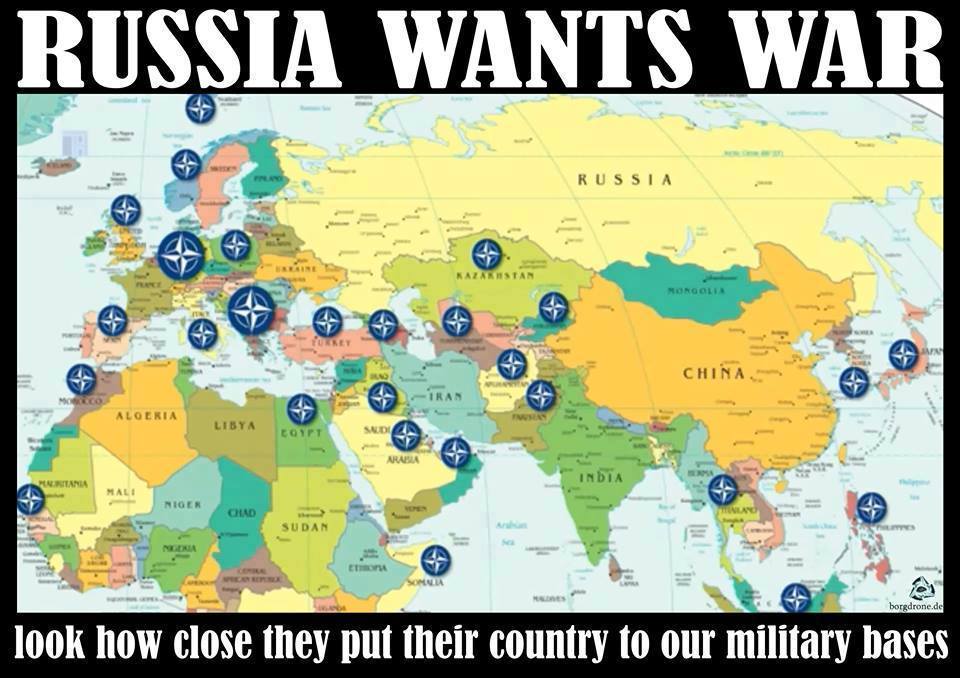
AC: It can lead to a hot war. It definitely has led to a cold war. The last thing we want is a hot war. You have two nuclear powers who are inching closer to each other in conflict, and I think that needs to be scaled back, and scaled back right away. I think we’ve already seen various proxy wars between the U.S. and Russia take place. We saw it in the Ukraine, we saw it in Syria. We already see the two sides engaging with each other, though they’re not engaging directly with each other. NATO troops moving up to Russia’s border is very provocative. We should never forget that the last time forces amassed on Russia’s border was during World War II, and during that war we cannot forget that Russia lost 28 million people. They paid a very, very heavy price for defeating Nazi Germany on the Eastern Front. So if there’s one thing that there’s any red lines that Russia is very firm about, it’s about having troops amassed on their border, and the other red line was about having any countries that are bordering them, for example the Ukraine, be integrated into NATO. These are red lines that Russia has been very firm in saying may not be crossed.
Saying that, Trump has really got to scale back the aggressive posturing of Obama. The media has helped to portray Russia as the aggressor, but when you take a step back and see who has provoked all the conflict in the various hot spots of the world, Russia has been very reactionary. The Ukraine was a coup d’etat. The U.S. and the European Union overthrew a democratically-elected government. That’s a fact. It’s indisputable, and that coup d’etat was initiated by [Assistant Secretary of State] Victoria Nuland and Ambassador [Geoffrey] Pyatt in Athens. This coup d’etat was instigated by a neoconservative faction in Washington. They put in place a far-right government, and some factions of that far-right party are openly fascist and neo-Nazi, and Russia reacted. Syria is the same thing. In Syria, you see a situation where the United States, with the help of Turkey, Saudi Arabia, and Qatar, went to overthrow a secular sovereign leader, once again, internationally recognized by the United Nations. They went to overthrow that leader, and they created chaos. Russia, once again, reacted to that, to the facts on the ground, and you have what’s been a complete disaster in Syria.
You have a very deep state and neocon faction in the U.S. that’s combined forces with this Hillary Clinton-neoliberal faction to create a lot of tension between U.S.-Russia relations. You have the mainstream media, which was in the tank with the neoliberal Hillary cabal from the get-go, fueling the fires of Russian hysteria, but the situation is anything but Russia being the aggressor. Russia has actually reacted to the facts being created by these neoconservatives and neoliberals that have really just run roughshod over the world disastrously, in Syria, in Libya, in Somalia, in Iraq, in Afghanistan, in the Ukraine. It’s been one disaster after another, and Putin has been very correct in really castigating the United States and saying, during his U.N. speech, “Do you realize what you’ve done?” That’s a profound statement, in telling the world this cannot continue, this regime change policy, this constant war-like attitude toward the Middle East has to stop, otherwise we’re going to turn a cold war and various proxy wars into hot war. The mainstream media is not helping, that’s for sure.
MPN: Recently, NATO forces have been mobilized in Germany and in Eastern Europe, the Russian ambassador to Turkey was murdered and the Russian ambassador to Greece lost his life under unclear circumstances. We had the Russian diplomats that were expelled from Washington in the final days of the Obama administration, and of course the accusations of Russian hacking and meddling in the U.S. elections. How has Vladimir Putin responded to all of this, in your view?
AC: Brilliantly, I think. Vladimir Putin’s response to all of this has really been wait-and-see. He was well within his diplomatic range and his diplomatic standing to retaliate against Obama’s kicking out of the 35 diplomats and the closing down of the two Russian locations in the U.S., but he didn’t. He took a very smart attitude of “Obama is gone in two or three weeks, let’s wait and see what Trump says and what Trump does when he comes into office.”
It was, in my opinion, such childish behavior from Obama toward Trump and toward the transition. Obama should not have been doing these things. It was very childish of him, and I think he lost a lot of respect from a lot of people on the world stage, as just being a very spiteful and childish world leader. He should not have taken these actions against Russia with only two, three weeks left in office. He should not have tried to sabotage Trump’s transition, and he should have really worked with the Trump administration to create a smooth transition.
The diplomat that died in Greece was actually a very underreported news story. Very, very few mainstream media outlets even picked up on that story, and it was, from what I’m seeing in the Greek media that’s reporting on it, under very unclear, very suspicious circumstances. No one really knows much about it. So that was an interesting story that was not picked up.
MPN: On the part of Russia, we have not seen much of a response to new Ukrainian attacks against the Donbass. What is the Ukraine trying to achieve, and why has Russia seemingly not responded?
AC: It’s very simple. The Ukraine is one of the problems that was created by Obama, Hillary Clinton, John Kerry, Victoria Nuland, and the EU. Let’s not forget that they overthrew the Ukrainian government. This was an illegal and provocative action, and in any event, the Ukraine was scheduled to hold elections the following year. There was no need for the U.S. and the EU to undertake this action against the Ukraine, the Ukrainian people, and against Russia, but they did so.
Now, I believe that the Ukraine is trying to start a new conflict and to once again draw attention to itself, because Kiev fears that Trump does not care much about the Ukrainian issue. I think Trump has shown this thus far. Trump recently spoke with Ukrainian President [Petro] Poroshenko, and it was the first time that the U.S. president did not use the phrase “Russian aggression toward the Ukraine,” which Obama would repeatedly state. Trump said that a solution has to be found for the Ukraine, that the two sides need to sit at the same table. This rhetoric was much different from that which was employed by Obama all these years, and I think the Ukrainian authorities are in shock. I detect some panic on their part, but instead of trying to find a solution to this problem, they are going in the opposite direction and trying to provoke a new conflict, hoping that the U.S. will intervene and side with them and that this will undermine the positive relations that Trump is seeking to develop with Putin. This is an incorrect strategy and it will not succeed. Europe cannot handle a war in the Ukraine. I think German Chancellor Angela Merkel understands this and Putin clearly stated this to her, that the Ukrainian government must halt these actions and sit at the negotiating table again and enforce the Minsk Protocol.
For the time being, I think Russia is holding steady with regard to the Ukraine and won’t make a move, because Russia knows, as does the EU, Merkel, and Trump, that the Ukraine is in a difficult situation. It’s a failed state. The efforts of the Obama administration and the EU in the Ukraine have failed, the Ukraine can’t handle any more. It is a corrupt state, its people are suffering, their current government is facing tremendous difficulties, and I think it’s a matter of time before we see major changes in the Ukraine.
MPN: What is the situation on the ground in Syria presently, how is Russia currently involved, and what might we expect to see from the Trump administration with regard to its policy toward Syria?
AC: In Syria you had a situation where Russia came in and they pounded the hell out of ISIS and al-Qaida. Al-Qaida, a.k.a. al-Nusra [Jabhat al-Nusra, the former name of the group now known as Jabhat Fateh al-Sham], a.k.a. the “moderate rebels” that the mainstream media seems to love, were lumped in along with ISIS as terrorist groups, which they are. Russia did not separate the two, and they took over military operations within that country along with Iran and the Syrian army. They defeated these terrorist organizations in Aleppo, and they liberated and gained control of the city. The people in Aleppo were extremely happy, they were celebrating. These are things that were not reported in the establishment media. All the reports were saying that [Syrian President Bashar] Assad was going to Aleppo and burning people. These reports have been proven to be 100 percent false. Aleppo is now under the sovereign, internationally-recognized control of the Syrian government, and now that they have control of the major cities in Syria, you’re going to see a campaign to push ISIS, al-Qaida, and al-Nusra out of the country.
Russia has now worked with Turkey to hammer out a ceasefire plan and a plan toward peace. Interestingly enough, the United States was left out of this deal. This was a huge blotch on Obama’s foreign policy record. Here, you have for the first time other powers in the region — Russia, Turkey, Iran — actually hammering out a peace deal without the United States. For Obama and John Kerry, this was probably the lowest point in their foreign policy record over the past eight years. Not only did they destroy a secular, internationally-recognized country, a secular nation that gave women rights, that gave freedom of religion to the all the people, that had health care, that had university education for all, they destroyed that country by trying to move it into the hands of al-Qaida/al-Nusra. But they also were pushed out of the peace plan for that country.
After Aleppo was liberated, I don’t see many people talking about Syria any longer. This was followed by Russia, Iran, and Syria working together to draft a new constitution, without American input, and to try to achieve a solution for Syria, again without U.S. involvement. This is significant. Now, with Trump, we just have to wait and see what his stance toward Syria will be. One thing is certain, though: Trump does not view Assad as the problem. He views ISIS as the problem, and I believe he will be able to collaborate with Russia to fight ISIS wherever it exists. For the time being, I wouldn’t say that the situation in Syria has calmed, it is still an ugly situation there, but there are efforts being made to find a solution. I think this solution will come from the defeat of ISIS and from Assad staying in power. This is clear. Assad is going nowhere.
I just want to make one more note, as far as the way that the press and the media has been covering this war. It was not a civil war. What happened in Syria was an invasion. It was an invasion of foreign jihadist, Wahhabi, ISIS, al-Qaida, al-Nusra forces, and they destabilized the nation and destroyed what was one of the few secular, stable nations in the region. This is a huge point. It’s very, very good that Syria did not go the way of Libya. Hopefully, the Syrian people can get rid of ISIS, can get rid of al-Qaida’s foreign invaders, and can get back to being the secular and peaceful nation that they were. It’s been a disastrous six years for the Syrian people.
MPN: In the closing days of the Obama administration, outgoing Assistant Secretary of State Victoria Nuland was dispatched to broker a solution regarding the divided island of Cyprus. Who is Victoria Nuland and what was her role in the Ukraine?
AC: She overthrew the government, plain and simple. I mean, we have it on tape. Do we not have her calling the ambassador to the Ukraine at that time, Geoffrey Pyatt, pretty much telling him who’s going to be in government? They were going over all the government appointees, they said the famous words about the EU, and the people that they talked about being placed into government were the people, in fact, that were placed into government. Victoria Nuland overthrew a democratically-elected government.
The previous government, as corrupt as it may have been or as unpopular as it may have been by 50 percent of the population that saw it in unfavorable terms, was still a democratically-elected government. Ukraine was going to have elections in a years’ time anyway, so what happened in the Ukraine was extremely regretful. It was the most blatant and obvious coup d’etat that has happened in probably the last 100 years.
[Author’s Note: The husband of Victoria Nuland, Robert Kagan, is a senior fellow with the Project on International Order and Strategy in the Foreign Policy program at the Brookings Institution, and the self-described “liberal interventionist” is widely regarded as a leading neoconservative.]
MPN: Victoria Nuland was one of the major players in these talks, which were held in Geneva in January, regarding the potential reunification in Cyprus. What was the outcome of these talks?
AC: If there’s one person that has taken the Cyprus reunification talks very seriously from the U.S. side, it has been Joe Biden. He’s shown a very big interest in solving the Cyprus problem. Joe Biden, as a politician, has always historically been very warm with the Greek-American population, and he seems to take Greek foreign policy issues very much to heart. Victoria Nuland has shown an interest in solving the Cyprus problem, though I would caution that Victoria Nuland does not seek a solution because she wants to create peace within the island of Cyprus. She sees things more from a geopolitical standpoint, of making sure that Cyprus is aligned with Western Europe, with NATO, and used as very much a geopolitical tool against Russian influence within the region.
The players involved in solving the Cyprus issue are, of course, the Greek Cypriots and the Turkish Cypriots, and along with them are the three guarantor states, which are the United Kingdom, Greece, and Turkey. For this solution to crystallize, it’s my belief that the framework of having a “guarantor nation,” in other words, to guarantee the peace on the island between the two communities, those guarantor nations have to be removed. That means that the 40,000 Turkish soldiers stationed on the island obviously have to leave, the Greek soldiers that are stationed on the island have to leave, and Cyprus has to find its path toward being a unified nation.
The negotiations right now are taking place between the two communities, the U.N. is very actively involved, and we’re very close to hammering out a deal between the two communities. The guarantor nations — Turkey, Greece, and the United Kingdom — will most likely be called in to oversee and to weigh in on whatever deal is finalized between the two sides. I believe that the concept of having “guarantor states” of a sovereign nation is going to be a thing of the past, and I think Cyprus will be a sovereign nation, not a divided island anymore. Victoria Nuland is out, so whatever influence she had in the negotiation process is all but over. Rex Tillerson, as the new Secretary of State, will take over from here on out, and we’ll see how engaged [the U.S. is] or how disengaged it is. We’re very close, and we’ll see how things play out. There’s a few issues at hand that they have to hammer out, very sticky issues, very tough issues, but we’re very, very close to seeing a unified Cyprus.
Saying that, what you’re looking at is a bi-zonal, bi-communal federal state, so you’ll have one country, but you’ll have a two-state solution. Each state will have its laws and certain powers to govern their side of the island, but you will also have one executive branch, which will also govern the island as a whole; a whole member of the international community, of the EU, of the U.N. You’re really looking at a “United States of Cyprus,” and that’s the solution that will most likely be brought to the table.
Regarding the talks, I think that Turkey got what it was looking for — namely, for nothing significant to happen with the Cyprus issue until the Turkish constitutional reforms have been passed. Until then, I believe talks will proceed slowly, step by step, but we won’t see any significant developments until Turkey is ready. Until then, we will only see minor developments. I foresee we will see more developments toward the summer, beginning in May and June and thereafter. Everything, however, will depend on Turkey, and I think that Turkey is not yet ready to express a clear position on the Cyprus issue.
MPN: Where do things stand at the present time with regard to Russian-Turkish relations? Is Turkish president Recep Tayyip Erdogan once again turning away from the U.S./NATO/EU sphere and moving toward Russia?
AC: That’s a good question. Erdogan, he’s something else. I think Erdogan is a survivor, he’s extremely controversial, he’s a very tough person to deal with both for the Russians and for the Americans. There’s no doubt that Erdogan has been hot and cold with Russia. They’ve had huge moments of disparity and very tense moments in recent months, but they’ve also found ways to bridge those gaps and to move past those tense moments. The same holds true with the United States. Erdogan has been playing the U.S. hot and cold as well for the past six months to a year.
I would say, two or three years ago, Erdogan had a vision of a “grand Ottoman resurgence,” a grand Ottoman empire in which Turkey would have influence over Syria, over Iraq, etc. I think now Erdogan has been forced to scale that vision down, and I would say that now Erdogan’s number one concern is the Kurds in the north of Syria. His number one foreign policy initiative is that he cannot allow a Kurdish state to form in the north of Syria and the north of Iraq. That would be disastrous for Turkey and would probably lead to the breakup of Turkey, given that Turkey has, I believe, an estimated 15 million Kurds who reside in the borders of the Turkish state. Having any type of autonomous Kurdish region in the north of Syria and the north of Iraq would be a red line that Erdogan would caution both the United States and Russia cannot be crossed.
Erdogan has scaled back his grand Ottoman vision and is now looking more to consolidating his power in Turkey and making sure that the Turkish state remains intact, without any Kurdish interference. Russia, with regard to Turkey, it’s been hot and cold in recent months, but they keep the channels of communication open. The relations are not the same as they were five to ten years ago, but they are steady, and Russia and Turkey are collaborating on Syria and have found some common ground on this issue. The same holds true for the United States. Erdogan is not an easy world leader to deal with. That’s just a fact.
I believe that Turkey is waiting for the constitutional reforms to pass, so that Erdogan attains absolute power. Until then I don’t believe we’ll see significant developments coming out of Turkey, and I think everyone is waiting to see what policy Trump and Rex Tillerson will adopt toward Turkey. I think we’ll see Turkey take an active role again in about six months. It will not make any moves until Erdogan attains absolute power. We will likely see some adverse developments, perhaps even some positive ones, but we will just have to wait and see.
MPN: Recently, we have seen an increase in Turkish belligerence toward Greece. Do you believe that Erdogan is angling toward fueling a conflict with Greece?
AC: No. There is no chance of such a development. I don’t believe we’ll see anything happen with Turkey. Erdogan, of course, will remain Erdogan. He’ll do what he does, he’ll be provocative toward Greece, Syria, NATO, and Cyprus. But I do not think we’ll see anything major happen until Erdogan attains full control. Turkey is slated to hold a referendum on constitutional reform in April, and in the new system the president will hold absolute power. In other words, we’ll be talking about “Sultan Erdogan” in a couple months’ time. Until this happens, nothing of significance will come out of Turkey. Erdogan will continue to be provocative, that’s his style, but we won’t see anything more until the constitution is changed and power is concentrated in his hands.
MPN: The Trump administration seems to have adopted a positive stance toward Brexit, while Trump’s nominee for the U.S. ambassadorship to the EU, Ted Malloch, has made a series of interesting statements recently, stating that the eurozone is headed toward collapse and predicting that Greece will unilaterally depart from the eurozone. What position do you believe we will see from the Trump administration going forward with regard to the EU, the euro, and issues like Brexit and Grexit?
AC: I think that Malloch and the Trump administration view Brexit positively. I believe that following Brexit, Trump will draw Britain closer to the U.S. sphere and put them against EU interests. Let’s not forget that Trump is a businessman and he is looking for certain things from Europe and from NATO members. He’s been clear about this, and I think he will use the United Kingdom, post-Brexit, to get what he wants from Europe, and in a manner which favors the interests of the United States. That’s how Trump operates; he’s a businessman above all.
Regarding Europe, the EU is doing a fine job destroying itself without the assistance of the United States, Trump, or Brexit. The EU, on its own, has managed to be a dysfunctional institution and European officials are performing a “miracle” in managing to destroy the EU from within. It’s nonsense for Brussels to blame Trump and Brexit for the EU’s problems, when Brussels is managing quite nicely on its own to destroy the EU. The EU has no one to blame but itself.
MPN: It’s been two years since the Syriza government took over power in Greece. How do you evaluate the current situation in the country and the first two years of Syriza’s reign in office?
AC: I think that it’s been terrible. Greece has been in an eight or nine year period of slow suffering. We’ve seen the country hollowed out economically and socially. It’s been just an economic crisis that seems to be never-ending, and you see it on the ground when you’re in Athens. The shops are closing, the people really have very, very few options as far as employment and earning an income. The Syriza government, in my opinion, has done everything in its power to make sure that the public sector is okay but the private sector is just marginalized and, I would say, almost demolished. The taxes have just become so sky high that it’s just destroyed any form of entrepreneurship, any form of desire within the people to start businesses, to run a business, because you just can’t pay the high taxes to keep that business open.
It’s not looking good for Greece, and they definitely need to figure out a way to either remove themselves from the euro and find a way to get back to some sort of economic sustainability, or they need to find a way to get that €350 billion debt wiped off the books, and that’s not going to happen. Germany has been very firm on their stance over the debt. But as long as that debt is hanging over the Greeks’ heads, that situation will never improve. It just cannot, it’s fiscally impossible.
MPN: Let’s talk about the site you write for, The Duran. This is a new online news initiative and you are one of its co-founders. Share with us a few words about it.
AC: The Duran is a publication that we started about eight or nine months ago. Myself, Peter Lavelle, Alexander Mercouris and Vladimir Rodzianko are the co-founders of The Duran, and we take an approach to geopolitics and news from a realpolitik standpoint. In other words, we try to see things from a very logical standpoint. The site is not about feel-good values and what should be right and what should be wrong. It takes a look at news from a perspective of how the world is and from the perspective that nation-states have interests, nation-states approach each other with those interests in mind, some states are big and powerful, some states are not big and powerful. The way the world works is not so much through what I would say has been, the last eight years, a value-based kind of outlook, that our values are morally superior to your values. We take an approach that each nation-state has certain interests and they’re going to deal with each other with those interests in mind and create a realpolitik type of an approach to world order.
The Duran is definitely not looking at things from the left, but we’re also not looking at things from the right. We try to take a much more balanced approach and just look at things from a very logical standpoint in terms of how we cover the news. We’re 100 percent independent. We’ve been accused of being Kremlin or Russia stooges. That’s not the case. We’re very transparent and open with our readers, we have live events with our readers where they can ask us questions via Facebook Live. We don’t try to hide our positions as to how we see geopolitics and the news that’s coming out of the U.S., Europe, etc., and we challenge people and leaders to give us their leaders and to engage in debate. That’s the only way we’re going to understand what has become a very complicated world, and it’s not going to get easier. There’s a lot of moving parts, and we’re moving away from U.S. hegemony to a more multipolar type of world order, where China has become a world power, where Russia has become a world power, where the EU is in a bit of disarray, where the United States with Trump and the election [are going through] a very divisive period, so it’s a very challenging time to cover news, but it’s also a very interesting time to cover news.




 After the Crash