
The Corporate Liberal in America

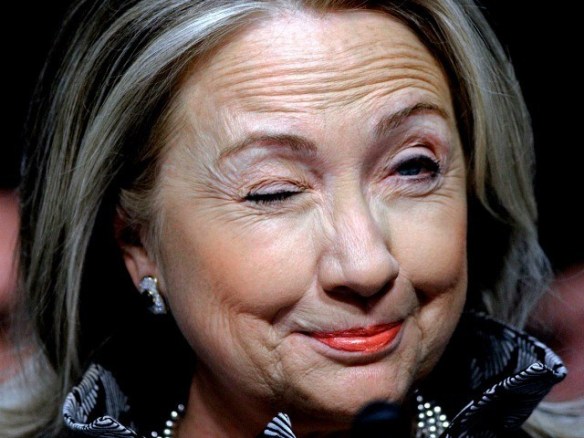
hillary-clinton-winking-AP-640x480

By Jason Hirthler

Source: CounterPunch

“I have almost reached the regrettable conclusion that the Negro’s greatest stumbling block in his stride toward freedom is not the White Citizen’s Counciler or the Ku Klux Klanner, but the white moderate, who is more devoted to ‘order’ than to justice.”

— Martin Luther King, Jr., Letter from a Birmingham Jail

Whether seated in Congress or exiting a voting booth, a corporate liberal is someone who supports anything progressive that does not challenge corporate power. In practice, this means corporate liberals will fight for progressive identity politics. If it has to do with race, sexual orientation, and gender, it generally doesn’t challenge corporate power. Major corporations support progressive positions on those issues, too. Corporate liberals march for gay rights and the larger LGBTQ community itself. They support feminism. They support reproductive rights. They support African-American protests against police brutality—up to the point where they become threatening to the establishment. (Bill Clinton did initiate the prison industrial complex that unduly incarcerates huge numbers of minorities.)

This support is all to the good. Tremendous progress has been made by popular protest of the devastating prejudices that have for years denied individual rights. But when their elected Democrats undermine economic justice, promote imperial warfare, and refuse to seriously address climate change, corporate liberals just look the other way. As Joe Clifford noted in his piece on Bernie Sanders, being a corporate liberal also means rejecting, “…a ban on fracking, a proposal to oppose TPP, the $15 per hour minimum wage proposal, a call for single-payer health care, and a statement of opposition to the illegal Israeli occupation.” These proposals, courageously put forward by James Zogby, Bill Mckibben, Cornell West and the rest of the Sanders contingent at the recent Democratic Platform Committee meeting in Washington, were all struck down. In a beautiful expression of moral courage, West refused to back the platform in its final iteration, saying,

“[If] we can’t say a word about [Trans-Pacific Partnership], if we can’t talk about Medicare for all explicitly, if the greatest prophetic voice dealing with impending ecological catastrophe can hardly win a vote and if we can’t even acknowledge occupation as something that’s real in the lives of a slice of humanity … it just seems to me there’s no way in good conscience I can say take it to the next stage.”

Yada Yada Yada

Words like these have no effect on the corporate liberal. If there’s a centimeter’s difference between their Democratic platform and the diseased corpus of Republican anarchism, the corporate conscience is salved. A corporate liberal is the one that puts “occupation” in quotes. A corporate liberal never makes the perfect the enemy of the good. A corporate liberal believes in reform, in humanitarian warfare, in the responsibility to protect, and in The New York Times front page. A corporate liberal supports all of this, though reform may be glacial, though good wars may slay millions, though interventions may undermine sovereignty, and though The Times may be rife with half-truth. It makes no difference, so long as reform is better than rollback, Barack’s slaughter is numerically less than Dubya’s, and The Washington Post is marginally more truthful than FOX News. As long as you can trust Erin Burnett more than Bill O’Reilly, it makes no difference that we will move further and further to the right, picking up steam until we barrel straight into corporate fascism. So long as the corporate liberal sits to the left of the patrician publican, he has some claim on the progressive mandate. Or so he says. Yet the best way to repel fascism, and realize that progressive mandate, is by joining a movement headed left, rather than a party moving right.

Nothing Forbidden

As Alan Nasser elucidates, there is nothing intolerable in the lesser evilism of the corporate liberal. He will endure—or more likely, watch others endure—intolerable realities while maintaining the unblinking rectitude of the blind ideologue. Author Chris Hedges writes that capitalism is “plunging us into a state of neo-feudalism, perpetual war, ecological disaster, and a dystopian nightmare.” But this, too, is not intolerable. We must accept it in order to ensure that the real nightmare—whomever happens to be running on the Republican ticket—is barred from the White House forever.

We must tolerate whatever Democrats do because they are better than Republicans. Even if that means, as it surely has and surely will, for all the identity groups corporate liberals support, a deteriorating quality of life. Lower incomes, higher unemployment. Bigger debts, bullshit jobs. Higher infant mortality, higher heart disease. More inequality, less social support. Less social support, more incarceration. More suicide, more alcoholism, more drug abuse, more debt, more stress, more unhappiness. And, if one is aware enough, the consciousness of having—perhaps unwittingly at the time—for more slaughter of brown people abroad, and the deliberate aggression against nuclear powers that will raise the prospect of nuclear extermination for millions. The Democrats have no such mandate, but the corporate liberal gives them the power to pretend they do. These are the wages of neoliberalism and imperialism, enabled by the logic of the lesser evil.

Like Dr. King, Karl Marx understood the major threat was not the fanatic on the fringe, but the moderate in the middle. The real threat is not the extremist, who will burn out by necessity if not already burned down by the moderate herd. It is the moderate herd that threatens to permit the intolerable through gradualism. Incremental genocide. Slow-motion regime change. The soft coup. The generational heist of millions of working class jobs. The decade-long liquidation of working class home equity. The century-long evisceration of labor rights. The hidden decades of disinformation campaigns that conflate freedom with free markets. Marx said, “Our task is that of ruthless criticism, and much more against ostensible friends than against open enemies.” He understood what King did, which is part of the reason why they are two of the most revolutionary figures of the last couple of centuries of Western civilization.

Too Much to Lose

Corporate liberals rehearse Manichean pieties about good and evil locked in a dualistic embrace, fighting to the death. There are no third parties in this vision. It is a necessary dualism. Hence the occasional need to undermine democracy to save it, as Hillary’s campaign demonstrated through repeated voting irregularities and financial chicanery engineered through her DNC front. It’s just simpler that way. For a political party of millionaires backed by billionaires, it just doesn’t do to disturb the status quo, rock the boat, upset the apple cart, shake the foundations, incite protest, disturb our creature comforts, move us out of our comfort zone, spark rebellion, overthrow the system, or change the world.

Is lesser evilism an elaborate rationale for preserving the status quo? Lenin said you can’t make a revolution in white gloves, and there are plenty of corporate liberals paying lip service to progress while glad-handing its well-heeled antagonists. That is why, in the end, corporate liberals are anti-revolutionaries. They would rather save capitalism than endure a potentially messy transition to socialism. Leave the revolution to Universal Studios and stubble-cheeked Third World rebels in hand-knitted berets. Social reforms in capitalist countries seem to happen like they did in South Africa, where identity politics achieve astounding successes, and calls for economic justice are swallowed up in the celebratory din. This is because corporate power cares deeply about economic power, but couldn’t care less about your sexual identity. For corporations—even if the executive board morally supports it—the gay community is ultimately another target market, a rich source of disposable income to be mined.

The least oppressed in any electorate always seem to be the greatest obstacle to change. Always willing to put justice on layaway. Always arguing for incrementalism, which strikes me as a luxury of the leisure class. Social progress will have little impact on them anyway, but paying lip service to its values will burnish their reputation. The discomfiting appearance of Bernie Sanders disturbed the polished script rehearsed by the Hillary camp for years. It was her turn, the first female president, upholding the rights of the vulnerable and achieving hard-won incremental gains through patience, hard work, and political acumen. For a moment, the Hillary faithful looked harried, wrong-footed, and exposed to the will of the mob. But now that the dodgy primaries are done, and Bernie has scampered back to the warmth of the herd, we can return to the language of compromise and the lesser evil. Had Bernie broke with the party he refused to technically join for 40 years, joined Jill Stein on the Green ticket, garnered support from voices like Kshama Sawant and movements like Socialist Alternative and Black Lives Matter, he could have founded a serious alternative to the mercenary duopoly. But he fell for the ruse of internal reform. But not everyone does. King continued in his Birmingham letter to discuss the white moderate, saying he was the one,

“… who prefers a negative peace which is the absence of tension to a positive peace which is the presence of justice; who constantly says: “I agree with you in the goal you seek, but I cannot agree with your methods of direct action”; who paternalistically believes he can set the timetable for another man’s freedom; who lives by a mythical concept of time and who constantly advises the Negro to wait for a “more convenient season.” Shallow understanding from people of good will is more frustrating than absolute misunderstanding from people of ill will. Lukewarm acceptance is much more bewildering than outright rejection.”

Sound familiar? King’s white moderate and Marx’s ostensible friend is our corporate liberal. Same spin, different decade. The corporate liberal is an embodiment of the idea that political parties are the graveyards of movements. Hedges himself wrote a book called, “Death of the Liberal Class” five years ago. It should’ve been the elegy before the interment of the Democratic Party as a serious option in electoral politics. Yet here we are, about to anoint another corporate liberal to the highest seat in the land. In that case, consider this article yet another epitaph awaiting its headstone. Let’s hope it’s not a long wait. Voices like Sawant’s and the momentum of movements like BLM give us reason to think it won’t be.

Jason Hirthler is a veteran of the communications industry and author of The Sins of Empire: Unmasking American Imperialism. He lives in New York City and can be reached at jasonhirthler@gmail.com.

A Universal Basic Income Is The Bipartisan Solution To Poverty We’ve Been Waiting For

 Molly Crabapple Basic Income Banner

What if the government simply paid everyone enough so that no one was poor? It’s an insane idea that’s gaining an unlikely alliance of supporters.

By Ben Schiller

Source: FastCoexist.com

There’s a simple way to end poverty: the government just gives everyone enough money, so nobody is poor. No ifs, buts, conditions, or tests. Everyone gets the minimum they need to survive, even if they already have plenty.

This, in essence, is “universal minimum income” or “guaranteed basic income”—where, instead of multiple income assistance programs, we have just one: a single payment to all citizens, regardless of background, gender, or race. It’s a policy idea that sounds crazy at first, but actually begins to make sense when you consider some recent trends.

The first is that work isn’t what it used to be. Many people now struggle through a 50-hour week and still don’t have enough to live on. There are many reasons for this—including the heartlessness of employers and the weakness of unions—but it’s a fact. Work no longer pays. The wages of most American workers have stagnated or declined since the 1970s. About 25% of workers (including 40% of those in restaurants and food service) now need public assistance to top up what they earn.

The second: it’s likely to get worse. Robots already do many menial tasks. In the future, they’ll do more sophisticated jobs as well. A study last year from Carl Frey and Michael Osborne at Oxford University found that 47% of jobs are at risk of computerization over the next two decades. That includes positions in transport and logistics, office and administration, sales and construction, and even law, financial services and medicine. Of course, it’s possible that people who lose their jobs will find others. But it’s also feasible we’re approaching an era when there will simply be less to do.

The third is that traditional welfare is both not what it used to be and not very efficient. The value of welfare for families with children is now well below what it was in the 1990s, for example. The move towards means-testing, workfare—which was signed into law by Bill Clinton in 1996—and other forms of conditionality have killed the universal benefit. And not just in the U.S. It’s now rare anywhere in the world that people get a check without having to do something in return. Whatever the rights and wrongs of this, that makes the income assistance system more complicated and expensive to manage. Up to up to 10% of the income assistance budget now goes to administrating its distribution.

For these reasons and others, the idea of a basic income for everyone is becoming increasingly popular. There has been a flurry of reports and papers about it recently, and, unusually, the idea has advocates across the political spectrum.

The libertarian right likes basic income because it hates bureaucracy and thinks people should be responsible for themselves. Rather than giving out food stamps and health care (which are in-kind services), it thinks people should get cash, because cash is fungible and you do what you like with it.

The left likes basic income because it thinks society is unequal and basic income is redistributive. It evens up the playing field for people who haven’t had good opportunities in life by establishing a floor under the poorest. The “precariat” goes from being perpetually insecure to knowing it has something to live on. That, in turn, should raise well-being and produce more productive citizens.

The technology elite, like Netscape’s Marc Andreessen, also likes the idea. “As a VC, I like the fact that a lot of the political establishment is ignoring or dismissing this idea,” Albert Wenger, of Union Square Ventures, told a TED audience recently, “because what we see in startups is that the most powerful innovative ideas are ones truly dismissed by the incumbents.” A minimum income would allow us to “embrace automation rather than be afraid of it” and let more of us participate in the era of “digital abundance,” he says.

The exact details of basic income still need to be worked out, but it might work something like this: Instead of welfare payments, subsidies for health care, and tax credits for the working poor, we would take that money and use it to cover a single payment that would give someone the chance to live reasonably. Switzerland recently held an (unsuccessful) is planning to hold a referendum on a basic income this year, though no date is set. The proposed amount is $2,800 per month.

But would it actually work? The evidence from actual experiments is limited, though it’s more positive than not. A pilot in the 1970s in Manitoba, Canada, showed that a “Mincome” not only ended poverty but also reduced hospital visits and raised high-school completion rates. There seemed to be a community-affirming effect, which showed itself in people making use of free public services more responsibly.

Meanwhile, there were eight “negative income tax” trials in the U.S. in the ’70s, where people received payments and the government clawed back most of it in taxes based on your other income. The results for those trials was more mixed. They reduced poverty, but people also worked slightly less than normal. To some, this is the major drawback of basic income: it could make people lazier than they would otherwise be. That would certainly be a problem, though it’s questionable whether, in the future, there will be as much employment anyway. The age of robots and artificial intelligence seems likely to hollow out many jobs, perhaps changing how we view notions of laziness and productivity altogether.

Experiments outside the U.S. have been more encouraging. One in Namibia cut poverty from 76% to 37%, increased non-subsidized incomes, raised education and health standards, and cut crime levels. Another involving 6,000 people in India paid people $7 month—about a third of subsistence levels. It, too, proved successful.

“The important thing is to create a floor on which people can start building some security. If the economic situation allows, you can gradually increase the income to where it meets subsistence,” says Guy Standing, a professor of development studies at the School of Oriental and African Studies, in London, who was involved with the pilot. “Even that modest amount had incredible effects on people’s savings, economic status, health, in children going to school, in the acquisition of items like school shoes, so people felt in control of their lives. The amount of work people were doing increased as well.”

Given the gridlock in Congress, it’s unlikely we’ll see basic income here for a while. Though the idea has supporters in both left and right-leaning think-tanks, it’s doubtful actual politicians could agree to redesign much of the federal government if they can’t agree on much else. But the idea could take off in poorer countries that have more of a blank slate and suffer from less polarization. Perhaps we’ll re-import the concept one day once the developing world has perfected it?

Dead, White, and Blue

Supporters hold signs as Republican US presidential candidate Donald Trump speaks at a campaign rally in Norcross, Georgia, USA, 10 October 2015. The visit, attended by thousands, is Trump's first rally in metro Atlanta since he joined the race. (EPA/ERIK S. LESSER)

The Great Die-Off of America’s Blue Collar Whites 

By Barbara Ehrenreich

Source: TomDispatch.com

The white working class, which usually inspires liberal concern only for its paradoxical, Republican-leaning voting habits, has recently become newsworthy for something else: according to economist Anne Case and Angus Deaton, the winner of the latest Nobel Prize in economics, its members in the 45- to 54-year-old age group are dying at an immoderate rate. While the lifespan of affluent whites continues to lengthen, the lifespan of poor whites has been shrinking. As a result, in just the last four years, the gap between poor white men and wealthier ones has widened by up to four years. The New York Times summed up the Deaton and Case study with this headline: “Income Gap, Meet the Longevity Gap.”

This was not supposed to happen. For almost a century, the comforting American narrative was that better nutrition and medical care would guarantee longer lives for all. So the great blue-collar die-off has come out of the blue and is, as the Wall Street Journal says, “startling.”

It was especially not supposed to happen to whites who, in relation to people of color, have long had the advantage of higher earnings, better access to health care, safer neighborhoods, and of course freedom from the daily insults and harms inflicted on the darker-skinned. There has also been a major racial gap in longevity — 5.3 years between white and black men and 3.8 years between white and black women — though, hardly noticed, it has been narrowing for the last two decades. Only whites, however, are now dying off in unexpectedly large numbers in middle age, their excess deaths accounted for by suicide, alcoholism, and drug (usually opiate) addiction.

There are some practical reasons why whites are likely to be more efficient than blacks at killing themselves. For one thing, they are more likely to be gun-owners, and white men favor gunshots as a means of suicide. For another, doctors, undoubtedly acting in part on stereotypes of non-whites as drug addicts, are more likely to prescribe powerful opiate painkillers to whites than to people of color. (I’ve been offered enough oxycodone prescriptions over the years to stock a small illegal business.)

Manual labor — from waitressing to construction work — tends to wear the body down quickly, from knees to back and rotator cuffs, and when Tylenol fails, the doctor may opt for an opiate just to get you through the day.

The Wages of Despair

But something more profound is going on here, too. As New York Times columnist Paul Krugman puts it, the “diseases” leading to excess white working class deaths are those of “despair,” and some of the obvious causes are economic. In the last few decades, things have not been going well for working class people of any color.

I grew up in an America where a man with a strong back — and better yet, a strong union — could reasonably expect to support a family on his own without a college degree. In 2015, those jobs are long gone, leaving only the kind of work once relegated to women and people of color available in areas like retail, landscaping, and delivery-truck driving. This means that those in the bottom 20% of white income distribution face material circumstances like those long familiar to poor blacks, including erratic employment and crowded, hazardous living spaces.

White privilege was never, however, simply a matter of economic advantage. As the great African-American scholar W.E.B. Du Bois wrote in 1935, “It must be remembered that the white group of laborers, while they received a low wage, were compensated in part by a sort of public and psychological wage.”

Some of the elements of this invisible wage sound almost quaint today, like Du Bois’s assertion that white working class people were “admitted freely with all classes of white people to public functions, public parks, and the best schools.” Today, there are few public spaces that are not open, at least legally speaking, to blacks, while the “best” schools are reserved for the affluent — mostly white and Asian American along with a sprinkling of other people of color to provide the fairy dust of “diversity.” While whites have lost ground economically, blacks have made gains, at least in the de jure sense. As a result, the “psychological wage” awarded to white people has been shrinking.

For most of American history, government could be counted on to maintain white power and privilege by enforcing slavery and later segregation. When the federal government finally weighed in on the side of desegregation, working class whites were left to defend their own diminishing privilege by moving rightward toward the likes of Alabama Governor (and later presidential candidate) George Wallace and his many white pseudo-populist successors down to Donald Trump.

At the same time, the day-to-day task of upholding white power devolved from the federal government to the state and then local level, specifically to local police forces, which, as we know, have taken it up with such enthusiasm as to become both a national and international scandal. The Guardian, for instance, now keeps a running tally of the number of Americans (mostly black) killed by cops (as of this moment, 1,209 for 2015), while black protest, in the form of the Black Lives Matter movement and a wave of on-campus demonstrations, has largely recaptured the moral high ground formerly occupied by the civil rights movement.

The culture, too, has been inching bit by bit toward racial equality, if not, in some limited areas, black ascendency. If the stock image of the early twentieth century “Negro” was the minstrel, the role of rural simpleton in popular culture has been taken over in this century by the characters in Duck Dynasty and Here Comes Honey Boo Boo. At least in the entertainment world, working class whites are now regularly portrayed as moronic, while blacks are often hyper-articulate, street-smart, and sometimes as wealthy as Kanye West. It’s not easy to maintain the usual sense of white superiority when parts of the media are squeezing laughs from the contrast between savvy blacks and rural white bumpkins, as in the Tina Fey comedy Unbreakable Kimmy Schmidt. White, presumably upper-middle class people generally conceive of these characters and plot lines, which, to a child of white working class parents like myself, sting with condescension.

Of course, there was also the election of the first black president. White, native-born Americans began to talk of “taking our country back.” The more affluent ones formed the Tea Party; less affluent ones often contented themselves with affixing Confederate flag decals to their trucks.

On the American Downward Slope

All of this means that the maintenance of white privilege, especially among the least privileged whites, has become more difficult and so, for some, more urgent than ever. Poor whites always had the comfort of knowing that someone was worse off and more despised than they were; racial subjugation was the ground under their feet, the rock they stood upon, even when their own situation was deteriorating.

If the government, especially at the federal level, is no longer as reliable an enforcer of white privilege, then it’s grassroots initiatives by individuals and small groups that are helping to fill the gap — perpetrating the micro-aggressions that roil college campuses, the racial slurs yelled from pickup trucks, or, at a deadly extreme, the shooting up of a black church renowned for its efforts in the Civil Rights era. Dylann Roof, the Charleston killer who did just that, was a jobless high school dropout and reportedly a heavy user of alcohol and opiates. Even without a death sentence hanging over him, Roof was surely headed toward an early demise.

Acts of racial aggression may provide their white perpetrators with a fleeting sense of triumph, but they also take a special kind of effort. It takes effort, for instance, to target a black runner and swerve over to insult her from your truck; it takes such effort — and a strong stomach — to paint a racial slur in excrement on a dormitory bathroom wall. College students may do such things in part out of a sense of economic vulnerability, the knowledge that as soon as school is over their college-debt payments will come due. No matter the effort expended, however, it is especially hard to maintain a feeling of racial superiority while struggling to hold onto one’s own place near the bottom of an undependable economy.

While there is no medical evidence that racism is toxic to those who express it — after all, generations of wealthy slave owners survived quite nicely — the combination of downward mobility and racial resentment may be a potent invitation to the kind of despair that leads to suicide in one form or another, whether by gunshots or drugs. You can’t break a glass ceiling if you’re standing on ice.

It’s easy for the liberal intelligentsia to feel righteous in their disgust for lower-class white racism, but the college-educated elite that produces the intelligentsia is in trouble, too, with diminishing prospects and an ever-slipperier slope for the young. Whole professions have fallen on hard times, from college teaching to journalism and the law. One of the worst mistakes this relative elite could make is to try to pump up its own pride by hating on those — of any color or ethnicity — who are falling even faster.

Barbara Ehrenreich, a TomDispatch regular and founding editor of the Economic Hardship Reporting Project, is the author of Nickel and Dimed: On (Not) Getting By in America (now in a 10th anniversary edition with a new afterword) and most recently the autobiographical Living with a Wild God: A Nonbeliever’s Search for the Truth about Everything.