The West’s duplicitous stance and hypocrisy draw condemnation in the world

By Viktor Mikhin

Source: New Eastern Outlook

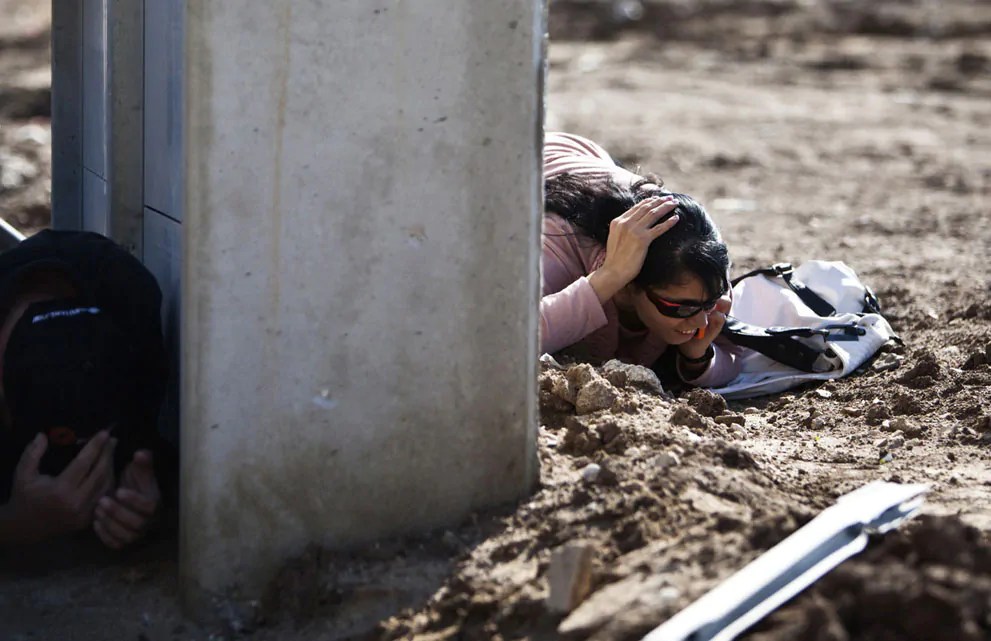
Many politicians around the world strongly condemn not only Israel’s inhumane policy in the Gaza Strip, when peaceful Palestinians are being slaughtered, but also the hypocrisy, duplicity, pharisaism and arrogance of the West. In one case, the current worthless rulers of Europe condemn the defence of their citizens in Donbass by Russia, which is complying with all international rules of engagement. On the other, when Israel started to destroy civilians in the Gaza Strip (which according to international laws is considered a policy of genocide), the West welcomes and applauds, defending its protégé in the Middle East in every possible way.

For example, Turkish Foreign Minister Hakan Fidan called the West’s position on Gaza, which differs from its position on Ukraine, “the height of hypocrisy.” “What happened in Gaza, has caused the West and the Europeans to lose all their reputation, all their accumulated credits (of trust). They have squandered all their political capital in the eyes of humanity, especially in the eyes of our generations,” Turkish daily Hürriyet quoted Hakan Fidan as saying. According to him, it will not be easy for the West to regain the lost trust. “It will not be easy for them to regain it. Unlike their stance on Ukraine and Russia, their stance on Gaza is the height of hypocrisy. They cannot talk about principles, virtue and morality. They ignore them completely. I see that all this is preparing the ground for a huge geostrategic rupture,” the minister said.

A huge swath of the Global South sees and criticises the double standards that guide the West’s actions in the Gaza Strip and Ukraine, as the New York Times (NYT) reluctantly reported through gritted teeth. The publication notes that for the past 20 months, US authorities have actively criticised Moscow for its special military operation in Ukraine, but now that the IDF has carried out a bloodbath in Gaza, full American support for Israel risks creating new and complex obstacles in Washington’s efforts to win over world public opinion.

The war in the Middle East, the piece says, is driving a wedge between the West and leading nations of the Global South such as Brazil and Indonesia. In addition, the West’s unconscionable double standard in defence of Israelis has been sharply criticised by leaders of the Arab world.   The fact that the West treats Ukraine as a special case because it is in Europe, against the backdrop of Middle East escalation, has only increased discontent in Africa, Asia and Latin America. There, the impression is that the West is more concerned about refugees from Ukraine than about those affected by the conflicts in Arab countries. The publication has to admit that the West has failed to convince countries such as India and Turkey to support sanctions against Russia. Given the bloody events in the Gaza Strip, “Western efforts to widen the front against Russia are unlikely to be successful in the near future“.

Earlier, American businessman Vivek Ramaswamy, who was seeking the nomination as the country’s presidential candidate from the Republican Party (he ended his campaign and supported Donald Trump’s candidacy in the presidential election), said that the United States should seek an early settlement of the conflict in Ukraine, which would provide for the transition of Russian-speaking regions into Russia. And he is not alone in the US, where questions are increasingly being asked as to why it is the Americans who should bear the brunt of the financial burden and supply vast quantities of weapons to the neo-Nazi regime in Kiev.

Irish MEP Mick Wallace has rightly stated that the Ukrainian conflict is still going on because of the unwillingness of the United States to end it. He expressed the same opinion with regard to the situation in the Gaza Strip. The world media also noted that the International Criminal Court, at the behest of the United States, has ignored many years of genocide in Palestine, Syria, Iraq and Afghanistan, and therefore the ICC is “unfair in its choice of topics to explore” and has turned into “an unscrupulous legal body of the West.”

Russia’s Permanent Representative to the United Nations Vasily Nebenzya has accused the United States of its position preventing the Security Council from adopting resolutions aimed at stopping the violence in the Gaza Strip, RIA Novosti reported. “It is regrettable that under these circumstances the UN Security Council has so far failed to adopt a single resolution demanding a halt to the violence because of the position of one delegation, the United States, which is blocking all efforts and initiatives to stop the bloodshed,” the diplomat said. He noted that this gave Israel carte blanche to further destroy the Palestinians.

The huge difference in the West’s attitude to the Palestinian-Israeli and Ukrainian conflicts points to hypocritical double standards, one of the goals of which is to interpret international law exactly as it suits the US. In this case, the fate of the Palestinian population is much less interesting to the hardened Western officials in terms of “domestic political points.” How many times have Western delegations requested UN Security Council meetings on Ukraine? The answer is at least twice a month, while how many times the said delegations have requested Security Council meetings on the Middle East issue – zero. Apparently, in this case comments are unnecessary, the conclusion is already on the surface. The West’s double standards “in all their glory” were also observed in the situation with the migration crisis in the EU. While Ukrainian refugees have been given all sorts of benefits, refugees from Africa and the Middle East are being “kept in camps in inhumane conditions”.

The State Department has after all decided to explain the difference in its approaches to the situation in Gaza and Ukraine in the way that yesterday’s hegemon considers, rather than in accordance with the generally accepted laws of international law. Thus, the deputy head of the State Department’s press service, Vedant Patel, responded to a journalist’s question about the difference in the approaches of the US authorities to the situation in the Gaza Strip and the Russian-Ukrainian conflict. The official said that Washington sees no grounds to accuse Israel of genocide of Palestinians, and “one should be very careful when making such statements.” At the same time, when Patel was asked why US President Joe Biden “very quickly” called the events in Ukraine “genocide” in 2022, the State Department official could not give more specific explanations. He only noted that “such definitions must be made with a careful consideration of the law and the facts”, without specifying which facts he had in mind. He simply did not have a reasonable answer, and in the current circumstances he did not dare to say that this was Washington’s wish and favourable.

Incidentally, NATO Secretary General Jens Stoltenberg said earlier that international law must be respected in all conflicts. This is a correct observation, but according to the Secretary General’s personal interpretation, the conflicts in the Gaza Strip and Ukraine have differences. And he personally believes that Israel, which destroys peaceful Palestinians, strictly observes international law, while Russia, which fights against the neo-Nazi regime in Kiev only on the battlefields, violates this law. Apparently, in Stoltenberg’s “enlightened” opinion, Russia will respect international law only when it, like Israel, destroys the peaceful population of our brother nation. A strange opinion worthy of a schizophrenic from a psychiatric hospital. On this occasion, Russian Foreign Ministry spokeswoman Maria Zakharova called the statement by the head of European diplomacy, Josep Borrell, about the “senselessness of humanitarian aid supplies to the Gaza Strip” if hostilities continue there an apologetic of transhumanism. She asked her colleague whether he also considered it pointless to provide medical assistance and love “someone who will die tomorrow”. There was, of course, no reply.

The accusations against the Russian side on the subject of “indiscriminate strikes” against Ukrainian cities can best be assessed by comparing “two realities” – the situation in Ukraine and in the Gaza Strip. In this regard, we can recommend that opponents go to the Internet and familiarise themselves with Ukrainian news or watch local TV channels. On Ukrainian websites one can easily find a large number of reports on club and restaurant life in such cities as Kiev, Kharkov, Odessa, Dnepropetrovsk and others. Ukrainian state institutions and other municipal buildings are functioning normally almost everywhere, transport continues to operate, schools and hospitals are open. This situation can be observed almost two years after Russia launched a special operation aimed at protecting the population of Donbas from the neo-Nazi regime in Kyiv. All of this shows, as has been repeatedly confirmed by independent observers, that the Russian Armed Forces are conducting exclusively precision strikes against military facilities and infrastructure related to military capabilities. This policy is in sharp contrast to the crimes against humanity committed by the neo-Nazi regime in Kyiv, which is deliberately firing Western-made missiles at civilians in Donbas. And there are numerous facts and evidence to this effect, which at the very least would make for a new Nuremberg process.

The current leaders of the West should look at what their lackey Israel is doing in the Gaza Strip, which for three months now has sought to raze the territory and destroy the Palestinians living there. Not only have hospitals and schools been burned to the ground, but entire towns have been destroyed, and the death toll, including a large number of children, is appalling. And all this is happening before the eyes of the world in the 21st century, to the hooting and applause of the Biden administration and the current rulers of Europe, who have finally lost shame, conscience and simple human compassion. “Comparing these two realities, ask yourself a question: how many times have you condemned the methodical annihilation of peaceful Palestinians?” – noted Russia’s UN representative Nebenzya, when asked by Western representatives whether they had ever supported calls for a ceasefire in the Middle East conflict, whether they had condemned Israel’s anti-human crimes. The answer would be only negative. Not only has the West done nothing to stop Israel’s current massacre of Palestinian civilians, it has encouraged them even more by supplying the latest lethal weapons, financially pumping in huge sums of money and defending them on the international stage. Suffice it to say that the US representative at the UN has twice vetoed Security Council resolutions to stop the deadly slaughter in the Gaza Strip, unleashing the Israeli military for even more atrocious crimes, rightly assessed by the International Criminal Court in The Hague.

In the current circumstances, when the former hegemon has lost its power and authority, it has to resort more and more to hypocrisy and double standards to somehow camouflage its bankrupt policy. But no matter how hard the West, led by the U.S., tries, they will no longer be able to fundamentally influence events in the world. And the events in Ukraine, where Russia is successfully conducting a special military operation to protect the Russian population, and the bloody events in the Gaza Strip are the best evidence of this.
NATO Now Acknowledges that Western Media Lie About Ukraine’s War

By Eric Zuesse

Source: The Duran

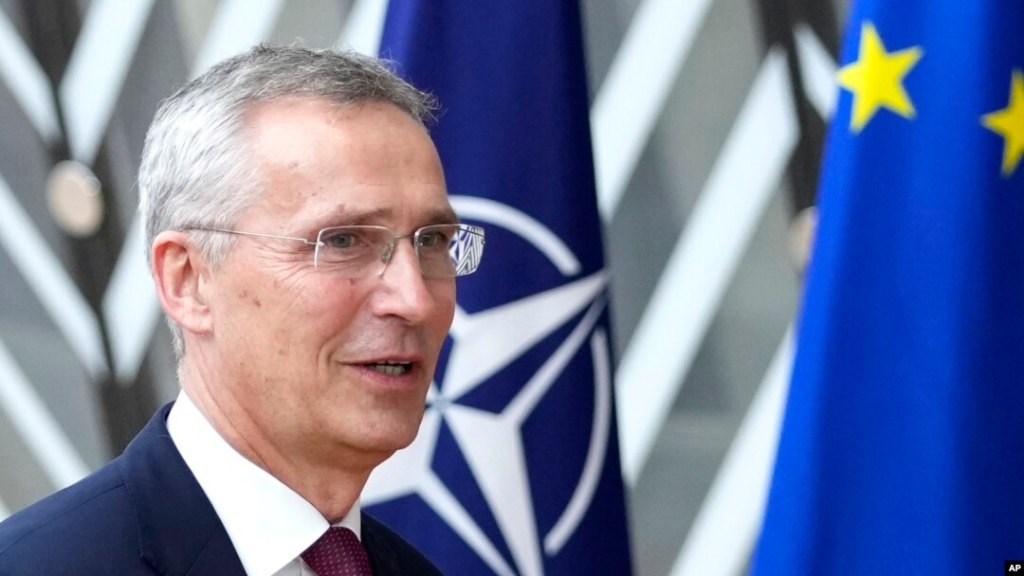
On September 7th, NATO’s Secretary General, Jens Stoltenberg, acknowledged that the war in Ukraine did not start on 24 February 2022 when Russia invaded Ukraine, like Western ‘news’-media say, but much earlier, in 2014, and that Russia’s invasion in 2022 resulted from NATO’s efforts to bring Ukraine into NATO and to bring NATO’s military forces closer to Russia’s borders: “He [Putin] went to war to prevent NATO, more NATO, close to his borders.” In other words: Russia’s invasion actually was defensive, not aggressive, on Russia’s side. And Stoltenberg proudly proclaimed that Russia has been defeated in that defensive objective, because instead both Sweden and especially Finland (one of the nearest nations to The Kremlin, other than the nearest of all, which is Ukraine) rushed to join NATO as a direct result of Russia’s invasion of Ukraine. Stoltenberg was so proud of having turned to dust Putin’s goal of making Russia safer, that Stoltenberg repeated many times NATO having done the exact opposite of what Putin was urging. Stoltenberg was clearly proud to have overseen the frustration of Russia’s need for a defense against a possible blitz-nuclear attack by NATO.

Furthermore: Stoltenberg acknowledged that this war is and has been good for NATO because it’s forcing NATO member countries to increase their expenditures on military weapons, and is thereby forcing down these countries’ expenditures on other matters that voters usually care more about.

Here are excerpts from what he said:

https://archive.ph/HKPPW

“Opening remarks by NATO Secretary General Jens Stoltenberg at the joint meeting of the European Parliament’s Committee on Foreign Affairs (AFET) and the Subcommittee on Security and Defence (SEDE) followed by an exchange of views with Members of the European Parliament”

07 September 2023

The war didn’t start in February last year. It started in 2014. The full-fledged invasion happened last year, but the war, the illegal annexation of Crimea, Russia went into eastern Donbas in 2014.

Since then, NATO has implemented the biggest adaptation on this Alliance in modern history, in decades. And part of that is to invest more in defence. I think I’ve told you before that I know it’s hard to allocate money for defence, because most politicians want to spend money on health, on education, on infrastructure instead of defence. …

The background was that President Putin declared in the autumn of 2021, and actually sent a draft treaty, that they wanted NATO to sign, to promise no more NATO enlargement. That was what he sent us. And was a pre-condition for not invade Ukraine. Of course we didn’t sign that.

The opposite happened. He wanted us to sign that promise, never to enlarge NATO. He wanted us to remove our military infrastructure in all Allies that have joined NATO since 1997, meaning half of NATO, all the Central and Eastern Europe, we should remove NATO from that part of our Alliance, introducing some kind of B, or second class membership. We rejected that.

So he went to war to prevent NATO, more NATO, close to his borders. He has got the exact opposite. He has got more NATO presence in eastern part of the Alliance and he has also seen that Finland has already joined the Alliance and Sweden will soon be a full member.

Earlier, Stoltenberg had said on 9 May 2023, “The war started in 2014.” He even was explicit that “You have to remember that the war didn’t start in 2022” (referring to Russia’s response on 24 February 2022 by invading Ukraine). Here is the best short video (only ten minutes long) accurately showing in the original historic video clips how Ukraine’s war started, and it is very clear there that the U.S. Government, U.S. President Obama, started it in February 2014, by means of a coup, which the Obama Administration had had in the planning stages for quite some time. The founder and head of the ‘private CIA’ firm Stratfor even called it “the most blatant coup in history”. The smoking-gun piece of evidence proving that it had been a coup by the U.S. Government is this recording of Obama’s mastermind of the coup, Victoria Nuland, telling Obama’s Ambassador in Ukraine Geoffrey Pyatt, a month before the coup became climaxed, whom to get appointed to lead the post-coup Ukraine. And, then, the smoking-gun piece of evidence proving that even the top officials of the EU didn’t know that it had been a coup instead of the ‘democratic revolution’ that the U.S. regime claimed, is this recording of the EU’s minister of foreign affairs being told in a phone call from Kiev, by her investigator there, immediately after the coup was over, that it had been a coup. On 4 November 2019, after enough verified evidence had become known about it and about how the war in Ukraine had actually been started by the U.S. Government, I headlined “The Obama Regime’s Plan to Seize the Russian Naval Base in Crimea”, which was the only part of Obama’s plan that failed; and that article documented also how the war had been started by that coup.

Stoltenberg’s speech on September 7th ignored America’s coup, and he even ignored that the coup was quickly followed by the breakaway of Crimea because a plebiscite was held there on 16 March 2014, which produced a 90%+ vote for Crimea to again be a part of Russia, of which Crimea had been a part from 1783 to 1954. And he ignored that the breakaway of Donbass resulted after the Obama-installed Ukrainian government started in April 2014 an ethic-cleansing invasion of Donbass because over 90% of the voters there had voted for the Ukrainian President whom Obama’s coup had replaced, and Obama didn’t want those voters ever again to vote in a Ukrainian election.

So, although what Stoltenberg said there was true, it was very incomplete, because it failed to mention the coup, and the coup-regime’s ethnic-cleansing campaign, though those American initiatives were actually the things that started the war in Ukraine.

Zelensky, media lackeys caught in most dangerous lie yet

By Alexander Rubinstein

Source: The Grayzone

With Kiev exposed for a lie that could have triggered a third world war, it is time to examine past deceptions that Western media promoted.

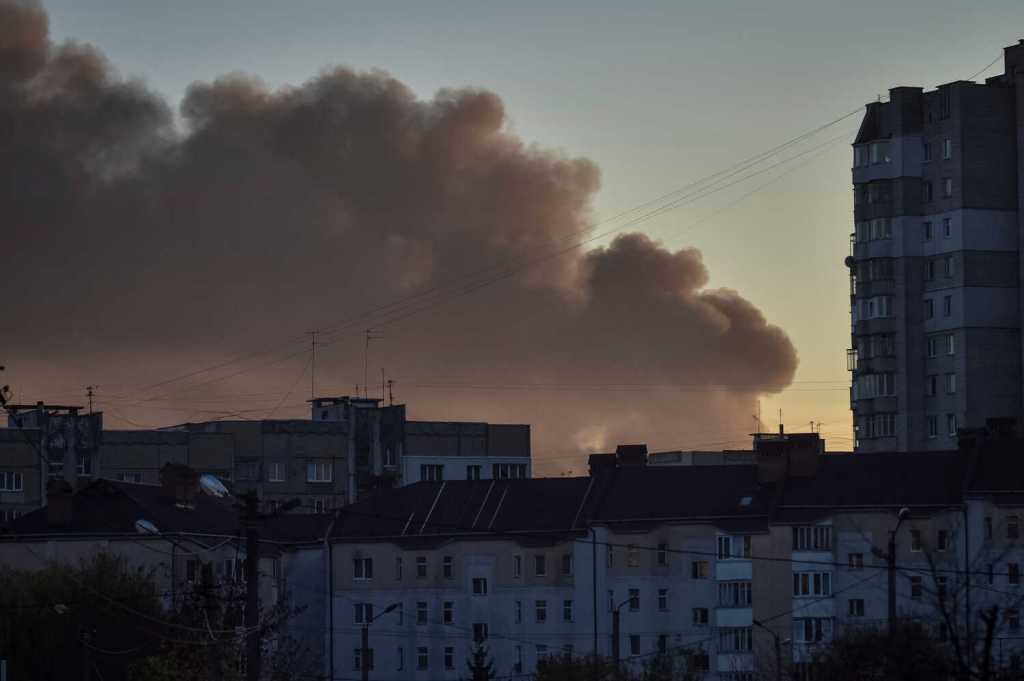
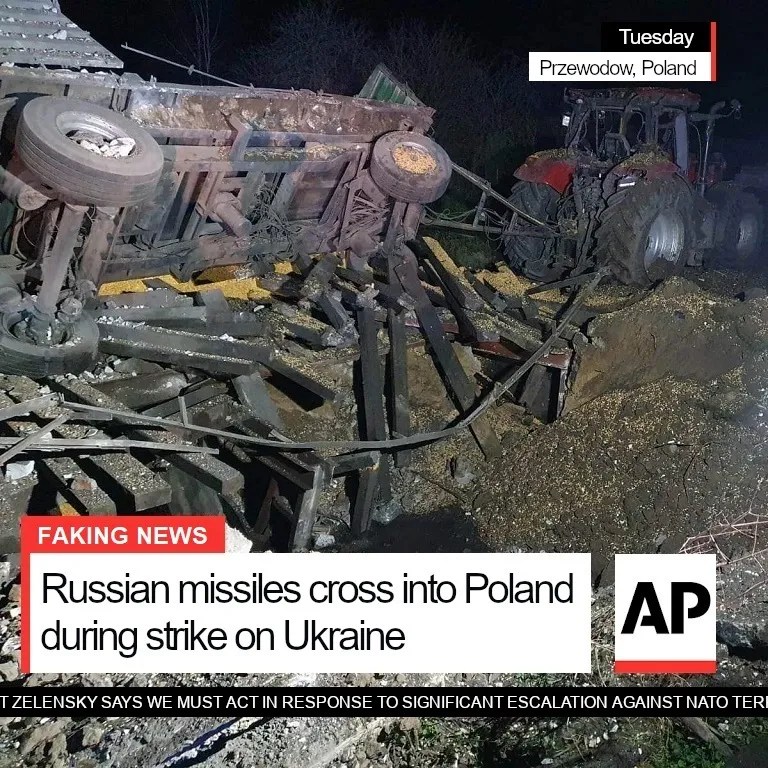
A missile that exploded on Polish soil on November 15 killed two civilians and destroyed farm equipment. Ukrainian President Volodymyr Zelensky and Western corporate media rushed to blame the explosion on Russia in apparent hopes of triggering NATO’s Article 5, which requires NATO states to defend one another militarily when attacked by a hostile force.

Polish and NATO members including US President Joseph Biden have since confirmed the missile that struck Poland was, in fact, a Ukrainian S-300 anti-aircraft missile. Yet Zelensky is sticking to his line, blaming Russia for the strike, while NATO Secretary-General Jens Stoltenberg still insists that “Russia bears ultimate responsibility.” Meanwhile, the media outlets that reflexively pointed the finger at Russia have been forced to take a step back from their initial reporting.

“Russian missiles hit Poland, the territory of our friendly country. People died,” Zelensky insisted on November 15, the night of the attack. “The longer Russia feels impunity, the more threats there will be to anyone within reach of Russian missiles. To fire missiles at NATO territory! This is a Russian missile attack on collective security! This is a very significant escalation. We must act.”

Zelensky held firm the following day, despite mounting evidence that his own country’s air defenses were responsible, declaring “I have no doubt that this is not our missile… I believe that this was a Russian missile, based on our military reports.” By this time, most analysts rejected the Ukrainian president’s assessment, including the founder of the US government-sponsored intelligence cutout Bellingcat, who wrote “At this point I think it’s fair anyone saying that a Russian missile hit Poland based on the current evidence is being irresponsible.”

A Russian attack on NATO member Poland could have triggered Article 5 of the North Atlantic Treaty Organization which compels its member states to consider “an attack against one Ally” to be “an attack against all Allies.” Such a mobilization would have amounted to World War III.

Despite the clear risk of such a catastrophic escalation – or perhaps because of it – Western corporate media immediately blamed Russia for the strike, never even posing the question of why Russia would consider Polish farmland such an important military target that it would be willing to risk a full-scale war with the 30-member NATO alliance. 

Initially, the Associated Press ran with the headline “Russian missiles cross into Poland during strike on Ukraine.” The article cited a “senior US intelligence official,” and later, “a second person.” 

On November 16, AP began redirecting the link to its original article to a correction that stated, “The Associated Press reported erroneously, based on information from a senior American intelligence official who spoke on condition of anonymity, that Russian missiles had crossed into Poland and killed two people. Subsequent reporting showed that the missiles were Russian-made and most likely fired by Ukraine in defense against a Russian attack.”

Time Magazine ran with the headline, “Russian Missiles Cross Into Poland During Strike, Killing Two,” and cited the AP report.

Fox News similarly announced, “Russian missiles cross into NATO member Poland, kill 2: senior US intelligence official, citing the Associated Press. MSNBC also blamed a “Russian missile” for the strike in its headline.

Then there was CNN, which reported, “Poland says Russian-made missile killed two, will consider invoking NATO Article 4.” NATO Article 4 deals with the meetings between NATO states that are to take place in the event one of them is “threatened” and would theoretically precede any invocation of Article 5. Like CNN, Reuters cited the Polish Foreign Ministry and ran the headline, “Poland says Russian rocket hit its territory as NATO weighs response.”

The New York Times stated in the second sentence of its report on the missile strike that “the blast came as Russia fired roughly 90 missiles into Ukraine.” Two lines later, the Times stated “local media suggests a Russian missile strike.” Readers of the paper of record would have to scroll down several times to even read that Russian officials denied responsibility.

Earlier in the war, in an article on “Ukraine’s online propaganda,” the New York Times sought to downplay the Ukrainian government’s penchant for pushing fake news, arguing that Kiev’s information war merely “dramatize[s] tales of Ukrainian fortitude and Russian aggression.” The article quoted an unnamed Twitter user, who wrote, “Why can’t we just let people believe some things? … If the Russians believe it, it brings fear. If the Ukrainians believe it, it gives them hope.”

The US media’s support for Ukraine’s propaganda efforts meant that it covered some of the most suspicious events without a hint of skepticism, and thereby encouraged more. 

These questionable incidents included the following:

  • On March 8, Western media reported that a Mariupol maternity hospital was attacked by Russian aircraft. Zelensky claimed the attack was evidence of Russian “genocide” against Ukraine. However, a key witness – a pregnant woman in the hospital photographed by AP – stated that no such airstrike occurred, and that nearby explosions were caused by Ukrainian artillery shells.

On March 16, the Ukrainian government blamed a targeted Russian airstrike for destroying the Mariupol Dramatic Theater and causing anywhere from 300 to 600 deaths. Western corporate media promoted the Ukrainian narrative of the event despite a total absence of footage showing a missile strike, no images or evidence of large numbers of dead civilians inside, no images or evidence of any attempted rescue, and testimony by Mariupol locals asserting the Azov Battalion fighters that controlled the theater’s grounds staged the explosion to provoke NATO military intervention. Photographic evidence showed that Azov fighters removed all vehicles from the theater’s parking lot one day before the explosion.

The Kramatorsk train station bombing that was blamed on Russia despite the fact the Tochka-U missile responsible for the blast contained a serial number matching others in Ukraine’s arsenal and originated from Ukrainian-controlled territory.

As the war grinds on, elements in the Biden administration appear to be growing impatient with the tall tales of their Ukrainian clients. “This is getting ridiculous,” an unnamed NATO official told the Financial Times on November 16. “The Ukrainians are destroying our confidence and they are openly lying. This is more destructive than the missile.”

Poland, NATO Agree Deadly Polish Border ‘Russian Attack’ Was Errant Ukrainian Missile

By Tyler Durden

Source: Zero Hedge

A mere less than 24 hours ago, before the dust had settled from the explosion and before investigators could come to any definitive conclusions after the deadly incident on the Polish border village of Przewodów, the Western public was already being harangued and forewarned to stay away from ‘conspiracy theories’ as the early mainstream headlines – pushed especially based on an anonymous US official in an Associated Press report – were fast out the gate with “Russian missiles hit Poland, killing two”

“Article 5” – the NATO collective defense treaty which many had long worried would be the first invoked act leading to WWIII, began trending on Twitter, as Western officials issued confident statements of ‘solidarity’.  Almost immediately and without evidence, Ukraine’s President Volodymyr Zelensky demanded “action” from the West over the supposed brazen aggression against a NATO member. “Hitting NATO territory with missiles… This is a Russian missile attack on collective security! This is a really significant escalation. Action is needed,” Zelensky said his Tuesday night video address.

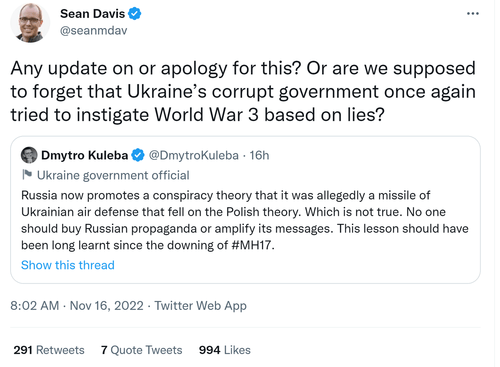
And then as missile crash site images widely circulated on the internet, leading even Western sources to express doubt that the projectile was launched by Russia, enter no less than the foreign minister of Ukraine, who attempted to preempt what he slammed as a developing Russia-promoted “conspiracy theory”. Like with many other aspects to this war, some of the most obvious common sense questions were quickly declared “off limits” before they could even be asked. 

Warsaw then stopped just short of any talk of Article 5, but then floated Article 4 as the basis of an emergency NATO security meeting for Wednesday, which calls for “consultations” in the event a NATO country is under threat. 

But what a difference a few hours, and a skeptical refusal to blindly jump on the war! bandwagon, makes. First, as we reported overnight, President Joe Biden explicitly said that based on preliminary information, it is “unlikely” that the rocket strike in Poland originated in Russia. Oops. This as based on the available emerging evidence it seemed clear the culprit was more likely an errant Ukrainian anti-air missile. “It’s unlikely in the minds of [sic] the trajectory that it was fired from Russia. But we’ll see,” Biden had said. But this admission conveniently came well after the US president seized the ‘fog of war’ moment to unveil another massive $37 billion emergency aid package for Ukraine almost simultaneous to the border incident.

Now on Wednesday, Poland and NATO officials have also done a reversal of the initial kneejerk ‘blame Russia’ reporting which momentarily sent the world into a frenzy of anxiety over the prospect of WWIII. Polish President Andrzej Duda has said the explosion that killed two people now appears to be an “unfortunate accident” and not an “intentional attack.”

What is left to say after all of this? Here are the facts

Recall that the initial reaction out of Moscow was that either Ukraine or Poland was staging a “deliberate provocation” in so quickly hurling blame on Russia for an aggressive act. Warsaw officials had even in the hours after demanded that Russia make an apology if it was an accident.

But President Duda alongside NATO HQ is quickly reversing the entire narrative, according to more from Axios

  • Duda added that the projectile that caused the blast was “most likely” Russian-made, but officials have “no proof at the moment that it was a missile fired by the Russian side.”
  • Ukraine has previously denied it was to blame for the blast and accused Moscow of a “serious escalation.” Russia also denied responsibility.

Of course, it’s always been the case that Ukraine’s anti-air missile arsenal is entirely “Russian-made” – particularly its S-300s.

NATO Secretary General Jens Stoltenberg issued a similar assessment, saying it was most likely an errant Ukrainian missile:

“Our preliminary analysis suggests that the incident was likely caused by a Ukrainian air defence missile fired to defend Ukrainian territory against Russian cruise missile attacks,” the NATO Secretary General told reporters after an emergency meeting of the alliance’s Security Council. 

He stressed that the investigation into the explosion is still ongoing but that there is “no indication that this was the result of a deliberate attack. And we have no indication that Russia is preparing offensive military actions against NATO.”

To be expected, he quickly followed by still laying blame on Russia for the overall war and series of events which led to the deadly border explosion. “But let me be clear. This is not Ukraine’s fault. Russia bears ultimate responsibility, as it continues its illegal war against Ukraine,” the NATO chief said.

Without addressing Zelensky’s prior day shrill rush to get NATO to declare military action based on collective security, Stoltenberg stressed, “this is not Ukraine’s fault.” As NATO defense officials continue to meet to determine a way forward, and as the whole drama has clearly fizzled out (again, only after it emerged it was Ukraine’s rocket), likely the alliance will quietly move on in a “nothing to see here” manner.

But what about the next time a similar border tragedy or incident on NATO-land plays out? Will the same “Russia is attacking NATO!” narrative prevail before anyone is allowed to ask simple questions? Will the war drums beat before there’s so much as a forensic investigation? Will there be a mushroom cloud before pesky rational skepticism disrupts the “consensus”? As the past ten years of war in Syria and Western intervention there have demonstrated, this is the likely inevitable scenario of how NATO and Russia will stumble into direct conflict at this rate.

In the meantime, as for the below still lingering question, we won’t hold our breath…

NATO prolongs the Ukraine proxy war, and global havoc

With diplomacy thwarted, the US and its allies plan for “open-ended” military and economic warfare against Russia, no matter the costs at home and abroad.

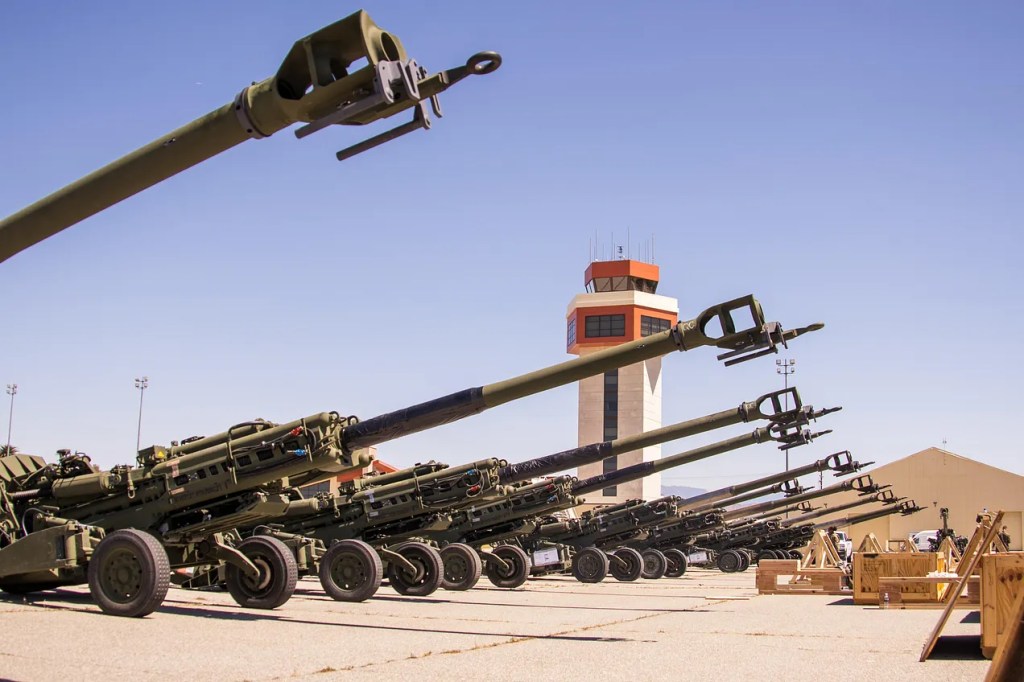
(US Dept. of Defense)

By Aaron Maté

Source: Aaron Mate Substack

Russia has announced plans to mobilize an additional 300,000 troops for the war in Ukraine. In his speech unveiling the expanded war effort, Vladimir Putin vowed to achieve his main goal of the “liberation of Donbas,” and issued a thinly veiled nuclear threat in the process. The move comes days ahead of planned referendums in breakaway Ukrainian areas to formalize Russian annexation.

Russia’s escalation ensures that the fighting is entering an even more dangerous phase. While Russia bears legal and moral responsibility for its invasion, recent developments underscore that NATO leaders have shunned opportunities to prevent further catastrophe and chosen instead to fuel it.

Putin’s announcement comes just after the Ukrainian military’s routing of Russian forces from Kharkiv, which relied extensively on US planning, weaponry and intelligence, sparked triumphant declarations that the tide has turned.

According to The Atlantic’s Anne Applebaum, “Americans and Europeans need to prepare for a Ukrainian victory,” one so overwhelming that it may well bring “about the end of Putin’s regime.”

Beyond the chorus of emboldened neoconservatives, Western officials are less sanguine.

“Certainly it’s a military setback” for Russia, a US official said of the Kharkiv retreat to the Washington Post. “I don’t know if I could call it a major strategic loss at this point.” Germany’s defense chief, General Eberhard Zorn, said that while Ukraine “can win back places or individual areas of the frontlines,” overall, its forces can “not push Russia back over a broad front.”

Whether or not it marked a major strategic loss for Russia, the battle in Kharkiv is already a major victory for NATO leaders seeking to prolong their proxy war in Ukraine and economic warfare next door.

Ukraine’s expulsion of Russian forces in the northeast, the New York Times reports, has “amplified voices in the West demanding that more weapons be sent to Ukraine so that it could win.”

“Despite Ukrainian forces’ startling gains in the war against Russia,” the Washington Post adds, “the Biden administration anticipates months of intense fighting with wins and losses for each side, spurring U.S. plans for an open-ended campaign with no prospect for a negotiated end in sight.”

As has been apparent since the Ukraine crisis erupted, US planning for open-ended proxy warfare against Russia has led it to sabotage any prospect of a negotiated end.

The US rejection of diplomacy around Ukraine has been newly substantiated by former White House Russia expert Fiona Hill. Citing “multiple former senior U.S. officials,” Hill reports that in April of this year “Russian and Ukrainian negotiators appeared to have tentatively agreed on the outlines of a negotiated interim settlement.” Under this framework, Russia would withdraw to its pre-invasion position, while Ukraine would pledge not to join NATO “and instead receive security guarantees from a number of countries.”

In confirming that US officials were aware of this tentative agreement, Hill bolsters previous news that Washington’s junior partner in London was enlisted to thwart it. As Ukrainian media reported, citing sources close to Ukrainian President Volodymyr Zelensky, UK Prime Minister Boris Johnson traveled to Kiev in April and relayed the message that Russia “should be pressured, not negotiated with.” Johnson also informed Zelensky that “even if Ukraine is ready to sign some agreements on [security] guarantees with Putin,” his Western patrons “are not.” The talks promptly collapsed.

In his speech announcing the expanded war effort, Putin invoked this episode. After the invasion began, he said, Ukrainian officials “reacted very positively to our proposals… After certain compromises were reached, Kyiv was actually given a direct order to disrupt all agreements.”

Having undermined the prospect of a negotiated peace in the war’s early weeks, proxy warriors in Washington are openly celebrating their success.

“I like the structural path we’re on here,” Republican Senator Lindsey Graham recently declared. “As long as we help Ukraine with the weapons they need and the economic support, they will fight to the last person.”

Graham’s avowed willingness to expend every “last person” in Ukraine to fight Russia is in line with a broader US strategy that views the entire world as subordinate to its war aims. As the Washington Post reported in June, the White House is willing to “countenance even a global recession and mounting hunger” in order to hand Russia a costly defeat. In Ukraine, this now means also countenancing the threat of nuclear disaster, as the crisis surrounding the Zaporizhzhia nuclear power plant has laid bare.

The prevailing willingness to sacrifice civilian well-being extends to the US public, as National Security Advisor Jake Sullivan has newly made clear. Appearing at the Aspen Security Conference, Sullivan was asked if he is worried about the “American people’s staying power” on the Ukraine proxy war, amid “criticism that we’re spending billions and billions to support Ukraine, and not spending it here.”

 “Fundamentally not,” Sullivan responded. “It’s very important for Putin to understand what exactly he’s up against from the point of view of the United States’ staying power.” That staying power, Sullivan explained, was cemented in the $40 billion war funding measure overwhelmingly approved by Congress (including every self-identified progressive Democrat) in May.

“That can go on, just on the basis of what we have already had allocated to us and resources for a considerable period of time,” Sullivan vowed. “And then, I strongly believe that there will be bipartisan support in the Congress to re-up those resources should it become necessary.”

To policymakers like Sullivan, there is not only an endless pool of money to “re-up” the war, but a “fundamentally” indifferent posture toward the taxpayers footing the bill.

Despite Biden’s reported scolding of Defense Secretary Lloyd Austin for admitting that the US goal in Ukraine is to leave Russia “weakened,” Sullivan – speaking before a friendly Beltway crowd — also forgot to stick to the script.

The US “strategic objective” in Ukraine, Sullivan explained, is to “ensure that Russia’s invasion of Ukraine… is a strategic failure for Putin,” and that “Russia pay a longer-term price in terms of the elements of its national power.” This would teach a “lesson,” he added, “to would-be aggressors elsewhere.”

By “would-be aggressors elsewhere”, Sullivan naturally precludes the US and its allies, whose aggression is not only permitted but promoted under the US-led “rules-based international order.”

President Biden has made that clear by abandoning his pledge to make Saudi Arabia a “pariah” state, notwithstanding its murderous (US-backed) aggression in Yemen. The regular aggression by US ally Israel against Gaza and Syria also continues unabated. The United Nations just reported that an Israeli strike on the Damascus international airport in June – one of hundreds of Israeli bombings on Syria that go largely ignored — “led to considerable damage to infrastructure” and “meant the suspension of U.N. deliveries of humanitarian assistance” to Syrians in need for nearly two weeks. As of this writing, the latest Israeli strike killed five Syrian soldiers, eliciting no Western media and political protest. It is more accurate to describe Israeli aggression on Syria as a joint Israeli-US effort, given that the US reviews and approves the strikes.

Allied NATO leaders are also vocally countenancing the Ukraine proxy war’s costs on their domestic populations. In response to the European sanctions, Russia has now halted gas deliveries to the EU via the key Nord Stream 1 pipeline. Having previously relied on Russia for close to 40 percent of its gas needs, European industries are facing layoffs, factory closures, and higher energy bills that “are pushing consumers to near poverty,” the Financial Times reports.

“People want to end the war because they cannot bear the consequences, the costs,” the EU’s Josep Borell observed this month. While ending the war might appeal to some, it does not interest the EU’s top diplomat. “This mentality must be overcome,” Borell declared. “The offensive on the northeastern front helps with that.”

Europe, NATO chief Jens Stoltenberg recently wrote, may even face “civil unrest,” as economies contract and temperatures drop, but “for Ukraine’s future and for ours, we must prepare for the winter war and stay the course.”

“No matter what my German voters think, I want to deliver to the people of Ukraine,” Germany’s Foreign Minister Annalena Baerbock told a conference in Prague last month. During the upcoming winter, Baerbock acknowledged, “we will be challenged as democratic politicians. People will go in the street and say ‘We cannot pay our energy prices’.” While pledging to help people “with social measures,” Baerbock insisted that the European Union’s sanctions on Russia will remain. “The sanctions will stay also in wintertime, even if it gets really tough for politicians,” she said.

Whereas Western leaders appear confident they can manage civil unrest at home, they face additional resistance abroad. In Africa, a leaked report from the European Union’s envoy to the continent warns that African nations are blaming the EU’s Russia sanctions for food shortages. The report also cautions that “the EU is seen as fueling the conflict,” in Ukraine, “not as a peace facilitator.”

Rather than address these African concerns, the envoy’s office proposes a “more transactional… approach” in which the EU makes “clear” that its “willingness” to “maintain higher levels” of foreign aid “will depend on working based on common values and a joint vision,” – in short, on Africa falling in line.

That is undoubtedly the US policy, as UN Ambassador Linda Thomas-Greenfield made clear last month. After promising a “listening tour,” Thomas-Greenfield instead came to Africa with a dictate and an outright threat. “Countries can buy Russian agricultural products, including fertilizer and wheat,” she decreed. But “if a country decides to engage with Russia” and break US sanctions, “they stand the chance of having actions taken against them.” That Africa faces a food security crisis, with hundreds of millions going hungry, is apparently of lower importance.

While Western sanctions on Russia wreak havoc worldwide, the architects in Washington seem only perturbed by their failure, so far, to inflict the intended levels of suffering on Russian civilians. “We were expecting” that US sanctions “would totally crater the Russian economy” by now, a disappointed senior US official told CNN.

Other US officials are leaving room for hope. “There’s going to be long-term damage done to the Russian economy and to generations of Russians as a result of this,” CIA Director William Burns told a cybersecurity conference this month. Burns’ long-term forecast of harming “generations of Russians” is based on extensive planning. As one US official explained it to CNN, when the sanctions were designed, Biden officials not only “wanted to keep pressure on Russia over the long term as it waged war on Ukraine,” but also “wanted to degrade Russia’s economic and industrial capabilities.” Accordingly, “we’ve always seen this as a long-term game.”

The “long-term game” of trying to destroy Russia’s economy and immiserate “generations” of its citizens is accompanied by increasing plans for a long-term fight. The Biden administration plans to formally name the US military mission in Ukraine – such as in prior campaigns like Operation Desert Storm — while also appointing a general to oversee the effort. The naming, the Wall Street Journal observes, is “significant bureaucratically, as it typically entails long-term, dedicated funding.”

The US plan for a long-term military and economic campaign against Russia is being implemented despite the awareness that Ukraine could face far worse.

“Some American officials express concern that the most dangerous moments are yet to come,” the New York Times reports. To date, “Putin has avoided escalating the war in ways that have, at times, baffled Western officials.” Unlike US military campaigns in Iraq, Russia “has made only limited attempts to destroy critical infrastructure or to target Ukrainian government buildings.”

“The current moment draws attention to a tension that underlies America’s strategy for the war,” the Washington Post observes, “as officials channel massive military support to Ukraine, fueling a war with global consequences, while attempting to remain agnostic about when and how Kyiv might strike a deal to end it.”

These rare admissions not only contradict the typical portrayal of a genocidal Russia that is used to justify the proxy war, but capture the underlying policy driving it. More than six months in, US officials are aware that Russia has “avoided escalating the war” and targeting “critical infrastructure,” – to the point where these same officials are “baffled” by Russian restraint. Despite this, their policy centers on “fueling” this same war, while remaining “agnostic” about ending it.

War being fluid – and US-led military support for Ukraine ever-expanding – it is of course possible that Ukraine will continue to defy expectations and drive out the invading Russian forces.

What the latest developments on and off the battlefield make undoubtedly clear is that NATO states are willing to use Ukraine for as long as it takes to achieve the stated aim of leaving Russia “weakened” or even achieving regime change, no matter the damage knowingly inflicted on Ukrainians, Russians, the Global South, and their own citizens.

Joe Biden’s Secret War in Ukraine

American soldiers are already “boots on the ground”

By Philip Giraldi

Source: The Unz Review

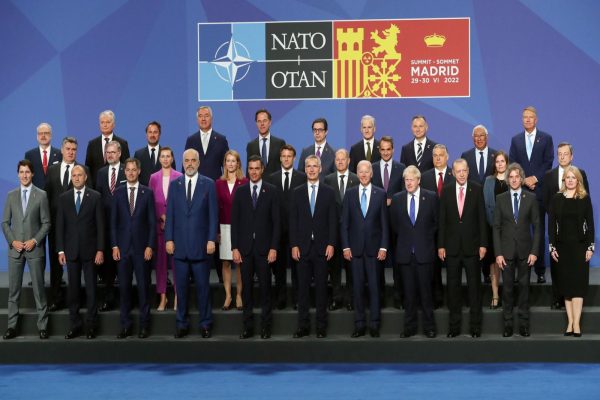
The White House keeps insisting that it will not directly involve American soldiers in the war in Ukraine, but it keeps taking steps that will inevitably lead to a large-scale open combat role for the US against Russia. Among the most recent moves to increase the pressure on the Kremlin, Biden revealed at a NATO summit meeting in Madrid on June 29th that the US will establish a permanent headquarters in Poland for the Fifth Army Corps, maintain an additional rotational brigade of thousands of troops in Romania and bolster other deployments in the Baltic states. Also, the number of US troops in Europe, currently approaching 100,000, will be increased. Biden also was pleased to learn that Turkey had been enticed to drop its objection to Finland and Sweden joining NATO.

On the way to the NATO summit aboard Air Force One, Biden’s National Security Adviser Jake Sullivan advised that “By the end of the summit what you will see is a more robust, more effective, more combat credible, more capable and more determined force posture to take account of a more acute and aggravated Russian threat.” Presumably Sullivan was reading from a prepared script, but the objective surely seemed to be to heighten tension with Moscow rather than attempt to reduce it and come to some kind of diplomatic settlement.

NATO Secretary General Jens Stoltenberg also did his bit. In an astonishing display of derriere kissing, he responded that the new US force posture commitments were demonstrative of Biden’s strong leadership. What Stoltenberg did not mention was that Biden has been lying for some time about the presence of US military personnel in Ukraine. He let the cat out of the bag back in March, when he told troops belonging to the 82nd Airborne division in Poland that they would soon be going to Ukraine, observing that “You’re going to see when you’re there, and some of you have been there, you’re gonna see —” It was an admission that US forces are already in place inside Ukraine even though the White House quickly did damage control, asserting that the president continues to be opposed to American soldiers being directly engaged in the fighting. Biden also claimed that the US was working to “keep the massacre [of Ukrainians] from continuing.” Again, the language was hardly designed to make some room for a possible accommodation with Russia to negotiate an end to the fighting.

And now there is a New York Times report entitled “Commando Network Coordinates Flow of Weapons in Ukraine, Officials Say: A secretive operation involving US Special Operations forces hints at the scale of the effort to assist Ukraine’s still outgunned military.”

The article describes a more active US role in Ukraine than the Biden Administration has been willing to admit publicly. Back in February, before intervened in Ukraine, the US reportedly withdrew its own 150 military instructors, many of whom were training Ukrainian soldiers on newly acquired American produced weapons. However, some Central Intelligence Agency (CIA) paramilitary operatives and special ops troops continued their service in the country secretly, directing most of the intelligence flow the US is sharing with Ukrainian forces. In addition to that, special ops soldiers from Washington’s NATO allies have been managing the movement of weapons and equipment into Ukraine and providing some specialized training. It has also been reported that British SAS commandos are actually guarding President Volodymyr Zelensky. The NYT specifies, citing American and other Western officials, that the soldiers and CIA officers are currently not on the front lines with Ukrainian troops. Also according to the Times, even though the US and NATO member states have not acknowledged the presence of their paramilitaries soldiers in operational roles in Ukraine, Russia and other intelligence services around the world are aware of this.

The New York Times report appears to be generally correct, though it does omit some details, some of which I have been hearing from former colleagues in the intelligence services. There has been considerable overt training at the Grafenwoehr German army base as well as at the Ramstein US Air Base to familiarize the Ukrainians with the new weapons arriving. Other NATO countries are also participating in the training. Meanwhile, the cadres of special operations soldiers and intelligence personnel operating primarily in western Ukraine are not in uniform and many of them are working under various contrived cover designations, including sometimes loose affiliations with foreign embassies and NGOs. There are also a conventional CIA Station, a group from the National Security Agency and a Military Attache’s office in the recently reopened US Embassy in Kiev.

All of the above means that Biden and other western leaders have been dissimulating regarding their active participation in the Russia-Ukraine conflict. Apart from his possible gaffe, Biden will not admit that there are American boots already on the ground, but they are there and are playing a major role in both logistics and intelligence sharing. The potential downside for the president could come when some of these soldiers in mufti get killed or, worse, captured and start to talk about their role.

Retired US Air Force Lt. Col. Karen Kwiatkowski, a former analyst for the US Department of Defense, observes that deploying plausibly deniable non-uniformed personnel “is completely typical of the initial stages of a US-backed long war, and for long-term political manipulation of the target country. This is the future that neoconservative ‘strategists’ in DC and their British and European allies imagine for Ukraine. Rather than a negotiated conclusion, with a new Ukrainian role as a neutral and productive country, independent of both Russian and US political influences, the US government and CIA see Ukraine as an expendable yet useful satrap in its competition with the Russian Federation.”

Former CIA analyst Larry Johnson sees the activity in stark terms, while also commenting that the CIA has not won a semi-clandestine insurgent war in forty years. He observes that “Ukraine is a proxy; the West is trying to destroy Russia, it’s that simple. It would be one thing if Russia was the most evil, oppressive, authoritarian regime in the world. It’s nowhere even close. Even though the West keeps trying to portray Russia as such. The fact of the matter is, the West wants the resources that Russia has and it wants to control Russia. [But] Russia is not about to be controlled.”

In other words, Washington might be seeking an unending war entangling Russia and limiting its options globally. The Biden Administration has staked its reputation and possible political future on enabling Ukraine to survive without succumbing to Russian territorial demands. It is a risky and even dangerous policy, both in practical terms and politically. The persistence of the Ukrainians in their defense is largely a product of US and Western Europe guarantees that they will do all that is necessary to support Zelensky and his regime, which is already seeking $750 billion in aid for “reconstruction.” If western military casualties begin to surface, the political support for the Ukraine war will begin to fade in Washington and elsewhere and there will be consequences in the upcoming midterm US elections in November.

A final comment on the Times piece is in response to the question why it has appeared at all at the present time. The mainstream media has been a cheerleader for aggressive US support of Ukraine and Zelensky, but now it is beginning to step back from that position, as have also the Washington Post and other media outlets. Perhaps they are becoming convinced that the game plan being promoted by Washington and its European allies is unlikely to succeed at great cost to the respective economies. Larry Johnson puts it this way: “I think the purpose of this article coming out now is just to lay the groundwork for why we can’t put or shouldn’t put any more US military personnel or even CIA personnel inside Ukraine because continuing to put US personnel…inside Ukraine to train is becoming too risky because of Russia’s success on the battlefield.” One might also add that it is exceptionally dangerous. A misstep or even a deliberate false flag coming from either side could easily make the war go nuclear.