
By Robert Bohm
Source: The Hampton Institute
“What sphinx of cement and aluminum bashed open their skulls and ate up their brains and imagination?”
– Allen Ginsberg from his poem “ Howl “
Identity theft, at least the most familiar type, is possible because today the individual exists not merely as flesh and blood, but as flesh and blood spliced with bank account numbers, user names, passwords, credit card chips, etc. These added parts aren’t secondary to the individual’s overall identity, they’re central to it. Sometimes they’re all there is of it, as in many banking and purchasing transactions. In such instances, the data we’ve supplied to the relevant institutions doesn’t merely represent us, it is us. Our bodies alone can’t complete transactions without the account numbers, user names, passwords, credit card numbers, and ID cards which have become our identity’s essence. Without them, in many ways, we don’t exist.
In a worst case scenario, if someone gets hold of this private data, they can become us by possessing the data that is us. Following this, who or what we are is no longer a question. We don’t exist, except in the form of a stolen dataset now under someone else’s control.
In such a case, an unknown proxy has eliminated us and become who we once were.
Although problematic, the above form of identity theft is relatively minor. A worse form is one we all know about, yet chronically underestimate because we think of ourselves as too canny to be conned. Nonetheless, this other form of identity theft frames and limits everything we do. In the process, it fleeces us of the fullness of our identities and subjects our lives to a type of remote control. This remote control consists of the combined influence on us, from childhood onward, of society’s major institutions and dominant activities, which seed us with a variety of parameters for how to acceptably navigate society and and its particular challenges.
This process is usually called “socialization.” However, it’s better seen as a sorting procedure in which society sifts us through a citizenship sieve in order to eliminate supposed defects, thereby guaranteeing that, despite each of us possessing unique characteristics, we share an underlying uniformity. Ultimately, this process is a kind of identity eugenics which strives to purify the population by eliminating or weakening troublesome qualities – e.g., an overly questioning attitude, chronic boundary-testing, a confrontational stance toward authority, a fierce protectiveness toward whatever space the body inhabits, etc. Such traits are frowned upon because they’re seen by the status quo as a likely threat to society’s stability.
Such indoctrination is much subtler yet, in many ways, more pervasive than outright propaganda. Its theater of operations is everywhere, taking place on many fronts. Public and private education, advertising, mass culture, government institutions, the prevailing ideas of how to correct socioeconomic wrongs (this is a “good” form of protest, this a “bad” one), the methods by which various slangs are robbed of their transgressive nature through absorption into the mainstream, the social production of substitute behaviors for nonconformity and rebellion – each of these phenomena and others play a role in generating the so-called “acceptable citizen,” a trimmed down (i.e., possesses reduced potential) version of her or his original personality.
Make no doubt about it, this trimming of the personality is a form of identity theft. It is, in fact, the ultimate form. Take as an example the African slave in the U.S.: abducted from her or his homeland, forbidden from learning to read or write, denied legal standing in the courts, given no say over whether offspring would be sold to another owner or remain with them. The slave was robbed of her/his most essential identity, their status as a human being.
In his book, The Souls of Black Folk , W.E.B. Du Bois described this theft in terms of how slavery reduces the slave to a person with “no true self-consciousness” – that is, with no stable knowledge of self, no clear sense of who she or he is in terms of culture, preceding generations, rituals for bringing to fruition one’s potential to create her or his own fate. As Du Bois correctly argued, this left the slave, and afterwards the freed Black, with a “longing to attain self-conscious manhood,” to know who she or he was, to see oneself through one’s own eyes and not through the eyes of one’s denigrators – e.g., white supremacists, confederate diehards, “good” people who nonetheless regarded Blacks as “lesser,” etc. Du Bois understood that from such people’s perspectives, Blacks possessed only one identity: the identity of being owned, of possessing no value other than what its owner could extract from them. Without an owner to extract this value, the slave was either identity-less or possessed an identity so slimmed and emaciated as to be a nothing.
The point here isn’t that today socialization enslaves the population in the same way as U.S. slavery once enslaved Blacks, but rather that identity theft is, psychologically and culturally speaking, a key aspect of disempowering people and has been for centuries. Today, because of mass culture and new technologies, the methods of accomplishing it are far more sophisticated than during other eras.
How disempowerment/identity theft occurs in contemporary society is inseparable from capitalism’s current state of development. We long ago passed the moment (after the introduction of assembly line production in the early 20th century) when modern advertising started its trek toward becoming one of the most powerful socialization forces in the U.S. As such, it convinces consumers not only to purchase individual products but, even more importantly, sells us on the idea that buying in general and all the time, no matter what we purchase, is proof of one’s value as a person.
To accomplish this end, modern advertising was molded by its creators into a type of PSYOP designed for destabilizing individuals’ adherence to old saws like “a penny saved is a penny earned” and “without frugality none can be rich, and with it very few would be poor.” Once this happened, the United States’ days of puritan buying restraint were over. However, modern advertising was never solely about undermining personal fiscal restraint. It was also about manipulating feelings of personal failure – e.g., dissatisfaction with lifestyle and income, a sense of being trapped, fear of being physically unappealing, etc. – and turning them not into motives for self-scrutiny or social critiques, but into a spur for commodity obsession. This wasn’t simply about owning the product or products, but an obsessive hope that buying one or more commodities would trigger relief from momentary or long-term anxiety and frustration related to one’s life-woes: job, marriage, lack of money, illness, etc.
Helen Woodward, a leading advertising copywriter of the early decades of the 20th century, described how this was done in her book, Through Many Windows , published in 1926. One example she used focused on women as consumers:
The restless desire for a change in fashions is a healthy outlet. It is normal to want something different, something new, even if many women spend too much time and too much money that way. Change is the most beneficent medicine in the world to most people. And to those who cannot change their whole lives or occupations, even a new line in a dress is often a relief. The woman who is tired of her husband or her home or a job feels some lifting of the weight of life from seeing a straight line change into a bouffant, or a gray pass into a beige. Most people do not have the courage or understanding to make deeper changes.
Woodward’s statement reveals not only the advertising industry’s PSYOP characteristic of manipulating people’s frustrations in order to lure them into making purchases, but also the industry’s view of the people to whom it speaks through its ads. As indicated by Woodward’s words, this view is one of condescension, of viewing most consumers as unable to bring about real socioeconomic change because they lack the abilities – “the courage or understanding” – necessary to do so. Consequently, their main purpose in life, it is implied, is to exist as a consumer mass constantly gorging on capitalism’s products in order to keep the system running smoothly. In doing this, Woodward writes, buyers find in the act of making purchases “a healthy outlet” for troubled emotions spawned in other parts of their lives.
Such advertising philosophies in the early 20th century opened a door for the industry, one that would never again be closed. Through that door (or window), one could glimpse the future: a world with an ever greater supply of commodities to sell and an advertising industry ready to make sure people bought them. To guarantee this, advertisers set about creating additional techniques for reshaping public consciousness into one persuaded that owning as many of those commodities as possible was an existential exercise of defining who an individual was.
In his book The Consumer Society , philosopher Jean Baudrillard deals with precisely this process. He writes that such a society is driven by:
the contradiction between a virtually unlimited productivity and the need to dispose of the product. It becomes vital for the system at this stage to control not only the mechanism of production, but also consumer demand.
“To control … consumer demand.” This is the key phrase here. Capitalist forces not only wanted to own and control the means of production in factories, it also wanted to control consumers in such a way that they had no choice but to buy, then buy more. In other words, capitalism was in quest of a strategy engineered to make us synch our minds to a capitalism operating in overdrive (“virtually unlimited” production).
The way this occurs, Baudrillard argues, is by capitalism transforming (through advertising) the process of buying an individual product from merely being a response to a “this looks good” or “that would be useful around the house” attitude to something more in line with what psychologists call “ego integration.” It refers to that part of human development in which an individual’s various personality characteristics (viewpoints, goals, physical desires, etc.) are organized into a balanced whole. At that point, what advertising basically did for capitalism was develop a reconfigured ego integration process in which the personality is reorganized to view its stability as dependent on its life as a consumer.
Advertisers pulled this off because the commodity, in an age of commodity profusion, isn’t simply a commodity but is also an indicator or sign referring to a particular set of values or behavior, i.e. a particular type of person. It is this which is purchased: the meaning, or constellation of meanings, which the commodity indicates.
In this way, the commodity, once bought, becomes a signal to others that “I, the owner, am this type of person.” Buy an Old Hickory J143 baseball bat and those in the know grasp that you’re headed for the pros. Sling on some Pandora bling and all the guys’ eyes are on you as you hip-swing into the Groove Lounge. Even the NY Times is hip to what’s up. If you want to be a true Antifa activist, the newspaper informed its readers on Nov. 29, 2017, this is the attire you must wear:
Black work or military boots, pants, balaclavas or ski masks, gloves and jackets, North Face brand or otherwise. Gas masks, goggles and shields may be added as accessories, but the basics have stayed the same since the look’s inception.
After you dress up, it’s not even necessary to attend a protest and fight fascists to be full-blown Antifa. You’re a walking billboard (or signification) proclaiming your values everywhere. Dress the part and you are the part.
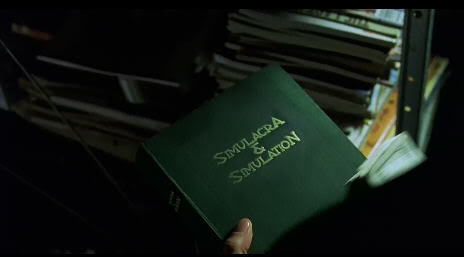
Let’s return to Baudrillard, though. In The System of Objects , another of his books, he writes about how the issue of signification, and the method by which individuals purchase particular commodities in order to refine their identity for public consumption, becomes the universal mass experience:
To become an object of consumption, an object must first become a sign. That is to say: it must become external, in a sense, to a relationship that it now merely signifies … Only in this context can it be ‘personalized’, can it become part of a series, and so on; only thus can it be consumed, never in its materiality, but in its difference.
This “difference” is what the product signifies. That is, the product isn’t just a product anymore. It isn’t only its function. It has transitioned into an indicator of a unique personality trait, or of being a member of a certain lifestyle grouping or social class, or of subscribing to a particular political persuasion, Republican, anarchist, whatever. In this way, choosing the commodities to purchase is essential to one’s self-construction, one’s effort to make sure the world knows exactly who they are.
The individual produced by this citizen-forming process is a reduced one, the weight of her/his full personality pared down by cutting off the unnecessary weight of potentials and inclinations perceived as “not a good fit” for a citizen at this stage of capitalism. Such a citizen, however, isn’t an automaton. She or he makes choices, indulges her or his unique appetites, even periodically rebels against bureaucratic inefficiency or a social inequity perceived to be particularly stupid or unfair. Yet after a few days or few months of this activity, this momentary rebel fades back into the woodwork, satisfied by their sincere but token challenge to the mainstream. The woodwork into which they fade is, of course, their home or another favorite location (a lover’s apartment, a bar, a ski resort cabin, a pool hall, etc.).
From this point on, or at least for the foreseeable future, such a person isn’t inclined to look at the world with a sharp political eye, except possibly within the confines of their private life. In this way, they turn whatever criticism of the mainstream they may have into a petty gripe endowed with no intention of joining with others in order to fight for any specific change(s) regarding that political, socioeconomic or cultural phenomenon against which the complaint has been lodged. Instead, all the complainer wants is congratulations from her or his listener(s) about how passionate, on-target, and right the complaint was.
This is the sieve process, identity eugenics, in action. Far more subtle and elastic than previous methods of social control, it narrows what we believe to be our options and successfully maneuvers us into a world where advertising shapes us more than schools do. In this mode, it teaches us that life’s choices aren’t so much about justice or morality, but more about what choosing between commodities is like: which is more useful to me in my private life, which one better defines me as a person, which one makes me look cooler, chicer, brainier, hunkier, more activist to those I know.
It is in this context that a young, new, “acceptable” citizen enters society as a walking irony. Raised to be a cog in a machine in a time of capitalistic excess, the individual arrives on the scene as a player of no consequence in a game in which she or he has been deluded that they’re the game’s star. But far from being a star, this person, weakened beyond repair by the surrender of too much potential, is so without ability that she or he has no impact whatsoever on the game. Consequently, this individual is, for all practical purposes, an absence. The ultimate invisible person, a nothing in the midst of players who don’t take note of this absence at all. And why should they? The full-of-potential individual who eventually morphed into this absence is long gone, remembered by no one, except as a fading image of what once was.
This process of reducing a potentially creative person into a virtual non-presence is a form of ideological anorexia. Once afflicted, an individual refuses nourishment until they’re nothing but skin and bones. However, the “weight” they’ve lost doesn’t consist of actual pounds. Instead, it involves a loss of the psychological heftiness and mental bulk necessary to be a full human being.
One can’t lose more weight than that.
Human life as we once knew it is gone, replaced by the ritual of endless purchasing. This is existence in what used to be called “the belly of the beast.” Our role in life has become to nourish capitalism by being at its disposal, by giving of ourselves. Such giving frequently entails self-mutilation: the debt, credit card and otherwise, that bludgeons to death the dreams of many individuals and families.
This quasi-religious self-sacrifice replicates in another form: the Dark Ages practice employed by fanatical monks and other flagellants who lashed themselves with whips made from copper wires, thereby ripping their flesh and bleeding until they descended into a state of religious hysteria. The more we give of ourselves in this way, the thinner and more weightless we become. Meanwhile, the god whom Allen Ginsberg called Moloch grows more obese day after day, its belly is filled with:
Robot apartments! invisible suburbs! skeleton treasuries! blind capitals! demonic industries! spectral nations! invincible madhouses! granite cocks! monstrous bombs!…
Dreams! adorations! illuminations! religions! the whole boatload of sensitive bullshit!
What capitalism wants from us, of course, isn’t merely self-sacrifice, it’s surrender. Hunger for life is viewed negatively by the status quo because it nourishes the self, making it stronger and more alert and, therefore, better prepared to assert itself. The fact that such an empowered self is more there (possesses more of a presence) than its undersized counterpart makes the healthier self unacceptable to the powers that be. This is because there-ness is no longer an option in our national life. Only non-there-ness is. If you’re not a political anorexic, you’re on the wrong side.
Wherever we look, we see it. Invisibility, or at least as much of it as possible, is the individual’s goal. It’s the new real. Fashion reveals this as well as anything. It does so by disseminating an ideal of beauty that fetishizes the body’s anorexic wilting away. Not the body’s presence but its fade to disappearance is the source of its allure. The ultimate fashion model hovers fragilely on the brink of absence in order not to distract from the only thing which counts in capitalism: the commodity to be sold – e.g., the boutique bomber jacket, the shirt, the pantsuit, the earrings, the shawl, the stilettos, the iPhone, the Ferrari, and, possibly most of all, the political passivity intrinsic to spending your life acquiring things in order to prove to others and ourselves that we’ve discovered in these things something more useful than Socrates’ goal of knowing thyself or Emma Goldman’s warning , “The most unpardonable sin in society is independence of thought.”
What is true on the fashion runway is also true in politics. Just as the best model is one thin enough to fade into non-presence, so our democracy, supposedly ruled “by and for the people,” has thinned down so much that “the people” can’t even be seen (except as stage props), let alone get their hands on democracy except in token ways. No matter how often we the people are praised rhetorically by politicians, we aren’t allowed as a group to get in the way of the capitalist system’s freedom to do whatever it wants in order to sustain commodity worship and guarantee capital’s right to permanent rule. If the military-industrial complex needs another war in order to pump out more profits, then so be it. We have no say in the matter. The identity theft built into society’s structure makes sure of this. It’s stripped us of our “weight” – our creativity, our willingness to take political risks, our capacity to choose action over posturing. After this forced weight loss, what’s left of us is a mess. Too philosophically and psychologically anemic to successfully challenge our leaders’ decisions, we, for all practical purposes, disappear.
As a reward for our passivity, we’re permitted a certain range of freedom – as long as “a certain range” is defined as “varieties of buying” and doesn’t include behavior that might result in the population’s attainment of greater political power.
So, it continues, the only good citizen is the absent citizen. Which is to say, a citizen who has dieted him or herself into a state of political anorexia – i.e., that level of mental weightlessness necessary for guaranteeing a person’s permanent self-exclusion from the machinery of power.
***
Our flesh no longer exists in the way it once did. A new evolutionary stage has arrived.
In this new stage, the flesh isn’t merely what it seems to be: flesh, pure and simple. Instead, it’s a hybrid. It’s what exists after the mind oversees its passage through the sieve of mass culture.
After this passage, what the flesh is now are the poses it adopts from studying movies, rappers, punk rockers, fashionistas of all kinds, reality TV stars, football hunks, whomever. It’s also what it wears, skinny jeans or loose-fitting chinos, short skirt or spandex, Hawaiian shirt or muscle tank top, pierced bellybutton, dope hiking boots, burgundy eyeliner. Here we come, marching, strolling, demon-eyed, innocent as Johnny Appleseed. Everybody’s snapping pics with their phones, selfies and shots of others (friends, strangers, the maimed, the hilarious, the so-called idiotic). The flesh’s pictures are everywhere. In movie ads, cosmetic ads, suppository ads, Viagra ads. This is the wave of the already-here but still-coming future. The actual flesh’s replacement by televised, printed, digitalized and Photoshopped images of it produces the ultimate self-bifurcation.
Increasingly cut off from any unmediated life of its own, the flesh now exists mostly as a natural resource for those (including ourselves) who need it for a project; to photograph it, dress it up, pose it in a certain way, put it on a diet, commodify/objectify it in any style ranging from traditional commodification to the latest avant-garde objectification.
All these stylings/makeovers, although advertised as a form of liberation for the flesh (a “freeing” of your flesh so you can be what you want to be), are in fact not that. Instead, they are part of the process of distancing ourselves from the flesh by always doing something to it rather than simply being it.
When we are it, we feel what the flesh feels, the pain, the joy, the satisfaction, the terror, the disgust, the hints of hope, a sense of irreparable loss, whatever.
When we objectify it, it is a mannequin, emotionless, a thing that uses up a certain amount of space. As such we can do what we want with it: decorate it, pull it apart, vent our frustrations on it, starve it, practice surgical cuts on it, put it to whatever use we like. It isn’t a person. It is separate from our personhood and we own it.
In fact we own all the world’s flesh.
We live, after all, in the American Empire, and the Empire owns everything. As the Empire’s citizens, we own everything it owns. Except for one thing: ourselves.
***
The flesh is both here and not here. Increasingly, it is more an object that we do things to – e.g., bulk it up, change its hair color, mass-kill it from a hotel window on the 32nd floor, view in a porno flick – than a presence in its own right (i.e., self-contained, a force to be reckoned with). In this sense, it is a growing absence, each day losing more of its self-determination and becoming more a thing lost than something that exists fully, on its own, in the here and now. Given this, the proper attitude to have toward the flesh is one of nostalgia.
Of course, the flesh hasn’t really disappeared. What has disappeared is what it once was, a meat-and-bones reality, a site of pleasure and injury. Now, however, it’s not so valuable in itself as it is in its in its role as a starting-off point for endless makeovers.
These makeover options are arrayed before the consumer everywhere: online, in big box stores, in niche markets and so on. Today, it is in these places, not at birth, that the flesh starts its trek toward maturation. It does this by offering itself up as a sacrifice to be used as they see fit by the fashion industry, the gym industry, the addiction-cure industry, the diet industry, the pharmaceutical industry, the education industry, etc. Each body in the nation reaches its fullest potential only when it becomes a testing site to be used by these industries as they explore more and better ways to establish themselves as indispensable to capitalism’s endless reproduction.
In the end, the flesh, the target of all this competition for its attention, has less of a life on its own than it does as the object of advertisers’ opinions about what can be done to improve it or to reconstruct it. Only to the extent that the flesh can transcend or reconstitute itself can it be said to be truly alive.
This last fact – about aliveness – represents the culmination of a process. This process pertains to the visualization and digitalization of everything and the consequent disappearance of everything behind a wall of signification.
A televised or computerized image, discussion, commentary, conjecture, etc., becomes the thing it meditates on, depicts or interprets. This happens by virtue of the fact that the thing itself (the real flesh behind the televised or computerized image, discussion, commentary, conjecture, etc.) has disappeared into the discussion or into the image of it presented on the computer or TV screen.
In the same way, an anorexic model (her/his flesh and blood presence) disappears into the fashions she or he displays for the public.
In each instance the thing (the flesh) now no longer exists except in other people’s meditations on it; it has become those other people’s meditations. The ultimate anorexic, it (the thing) has lost so much weight it’s no longer physically there except as an idea in someone else’s mind or in a series of binary codings inside computers.
This is the final victory of absence over there-ness, of the anorexic ideal over the idea of being fully human (i.e., “bulging with existence,” “fat with life”). The self has been successfully starved to the point of such a radical thinness that it can no longer stand up to a blade of grass, let alone make itself felt by the powers that be.


 After the Crash