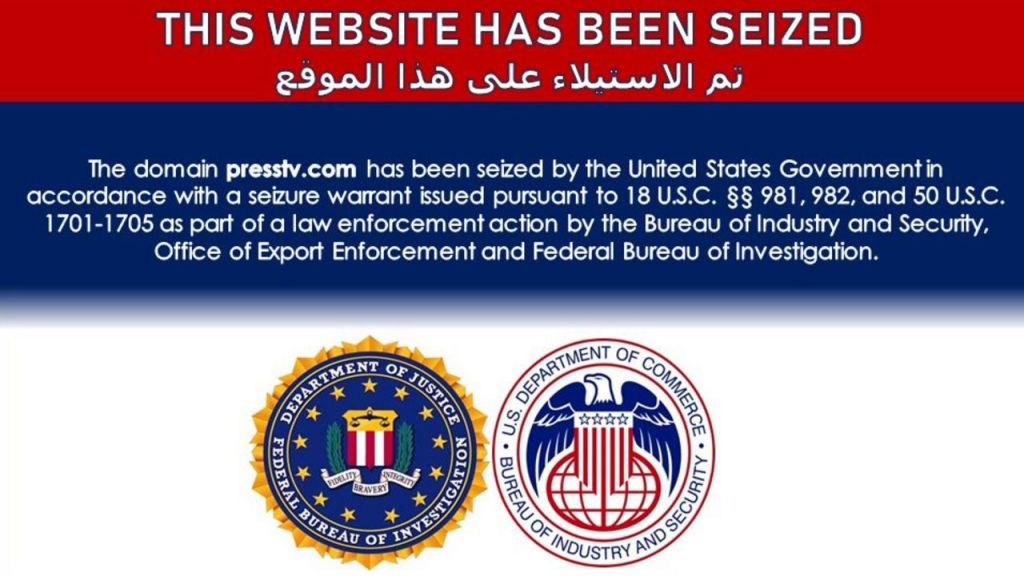
Not Letting a Good Tragedy Go to Waste, Banking Elite Use FTX Fraud, Crypto Crash to Push CBDCs

CBDCs mean the total death of any economic freedom the public has left…

By Tyler Durden

Source: The Free Thought Project

Central bankers and international corporate financiers have long been pretending to hate the very concept of cryptocurrencies like Bitcoin and Etherium while at the same time investing heavily in blockchain technologies and infrastructure. The purpose of the ruse is not clear, but more than likely it was an attempt at mass reverse psychology – “We don’t like crypto and digital currencies because we supposedly have no control over them; free market proponents should embrace them blindly because that is how you will beat us.”

In the meantime, while major banking firms are investing billions into various blockchain products, central banks and global institutions like the BIS and IMF have been developing their own systems. In fact, the BIS notes with enthusiasm that around 90% of central banks around the world are already in the process of adopting CBDCs.

But why would anyone want to use government and establishment bank controlled cryptocurrencies when they have access to Bitcoin and dozens of other coins that are supposedly independent? Why trade freedom for more centralization?

First, existing cryptocurrencies are not as free as many people believe, with ample government tracking of blockchain transactions in place for years, the notion of the completely anonymous crypto user is a bit of a fantasy, and the idea that a product such as Bitcoin is going to “bring down” the central banks is becoming less realistic by the year.

Second, the crypto market is highly unstable in part because it is still very limited. While crypto use in America is higher than most other countries with around 12% of people using it as an investment (not as a currency), the rest of the world is mostly uninterested with an estimated global footprint of around 4%. Of that 4% only a handful of people actually own the majority of the market; these people are known as “whales” and they have the ability to tip the market up or down with little effort.

This happens in many other trade commodities and paper currencies also. The point is, crypto is not immune to manipulation.

Third, crypto is enticing to people because of the quick profits that can be had, but massive losses are also a danger. The overall crypto market has plunged by $2 trillion in the past year alone – Over 60% of its value. The implosion of huge trading companies like FTX also undermines the stability of the market and usually it’s the average investor that ends up suffering the consequences.

All of these factors and more can be used by banking elites as a rationale for the implementation of CBDCs and global regulation of crypto trading. And, if the bloodbath in existing coins continues, people may even welcome CBDCs as a “safe” investment or currency system.

The investment losses in blockchain products along with the scandals in exchanges is a rather convenient opportunity for the banking establishment to promote their own currencies as a replacement. In the wake of the FTX event, multiple international banks including JP Morgan and Goldman Sachs have called for government regulation and a shift over to CBDCs.

The US House has scheduled hearings on FTX with an emphasis on regulation. In Europe, globalist Christine Lagarde and the ECB are calling for global cooperation on monitoring and controlling cryptocurrencies. Lagarde wants a “digital Euro” to take the place of existing coins and blames FTX and the larger market losses on lack of oversight.

Numerous crypto analysts are also demanding regulation, calling crypto “broken and useless” until governments step in to mediate (control) trade. This is the exact opposite of what crypto activists originally intended over a decade ago when Bitcoin was in its infancy, and digital trade back then was sold as some kind of revolution against the banking oligarchy. However, it’s easy to see where this is all going.

It means even more pervasive centralization. With paper currencies at least there is true anonymity, but with CBDCs the existence of the blockchain ledger precludes any and all privacy in trade. Not only that, but the institutional ability to cut off people from their wealth and economic access is going to be profound. If you think corporate and government led cancel culture is bad now, just wait until they can freeze your digital accounts at a moment’s notice because of something you said on social media. And, in a cashless society there are few alternatives beyond some kind of black market.

CBDCs mean the total death of any economic freedom the public has left, and central banks are exploiting disasters like FTX to make that death happen even faster.

Punching Down: How the “anti-disinformation” movement worked with Big Tech to protect Big Pharma

By Paul D. Thacker

Source: The Disinformation Chonicle

The COVID-19 pandemic saw the greatest acceleration of online censorship in the short history of the internet. In response, the field dedicated to upholding human rights online—the digital rights movement—remained near silent to this massive government and corporate over-reach. Worse, digital rights activists sometimes even collaborated with censors in the name of protecting the public from “disinformation.”

I’ve spent more than 20 years in digital rights, freedom of expression and open technology communities, and co-founded an organisation dedicated to these ideas: EngageMedia. Over the 17 years I ran Engage Media, we built a team that stretched across 10 countries, from India to Australia—one of the biggest digital rights organisations in the Asia-Pacific, hosting hundreds of workshops and large events, and leading multiple international networks. In short, I’m not a newbie or outsider in this field.

But during the pandemic, I watched the digital rights movement lose its voice as champions of online freedom of expression. Instead, they began to echo the positions of governments and companies with far from stellar records on human rights and corporate integrity. This recasting of governments and corporations as allies, rather than institutions to be held to account, has perverted the mission of digital rights and harmed public health.

The Digital Rights Movement

Digital Rights is an umbrella term that captures multiple concepts from “internet freedom” to “open technology” to “digital public policy.” Over the past several decades, it has become a major force in advocating for online rights and freedoms. Hundreds of universities, institutes, and non-profit organizations work in this arena on every corner of the planet. Whilst I know of no exact calculations, funding for the field is surely in the hundreds of millions of dollars annually—sourced from a mix of liberal foundations, governments, and Big Tech itself.

Core to this fundamentally left-leaning field was anti-censorship and a libertarian ethos. If the movement has a founding document, it is the 1996 Declaration of the Independence of Cyberspace, which begins:

Governments of the Industrial World, you weary giants of flesh and steel, I come from Cyberspace, the new home of Mind. On behalf of the future, I ask you of the past to leave us alone. You are not welcome among us. You have no sovereignty where we gather.

We have no elected government, nor are we likely to have one, so I address you with no greater authority than that with which liberty itself always speaks. I declare the global social space we are building to be naturally independent of the tyrannies you seek to impose on us. You have no moral right to rule us nor do you possess any methods of enforcement we have true reason to fear.

Left-libertarianism and techno-utopianism dominated Internet culture in the 90s and 2000s, yet withered rapidly in the Trump era, as it was unable to move quickly enough to address issues of online discrimination and harassment. In response, a new wing took root that was less hippy, more helicopter parent.

Internet parentalism, with its emphasis on safety over freedom, addressed concerns about the dark side of the Internet, but it did so with top-down regulation and control. And just as the former left-libertarianism created an imperfect system, so has the current left-parentalism. This became quite clear during the pandemic. During COVID, general skepticism of authority was replaced by respect for authority. Once suspect governments and businesses were now to be shielded from critique.

Content moderation is key to the new left-parentalism, and the pandemic radically accelerated and solidified a new digital authoritarianism. It is worth revisiting Hillary Clinton’s seminal 2010 “internet freedom” speech, to see how far thinking has shifted:

Now, all societies recognise that free expression has its limits. We do not tolerate those who incite others to violence… And hate speech that targets individuals on the basis of their race, religion, ethnicity, gender, or sexual orientation is reprehensible… But these challenges must not become an excuse for governments to systematically violate the rights and privacy of those who use the internet for peaceful political purposes.

How different content moderation is today, where comments deemed “offensive” might be censored. In those days liberals even thought about balancing safety and freedom when dealing with terrorists, yet this was not the case with COVID. With Musk now taking over Twitter, the Internet-parentalism wing may be on its back-foot but it has made headway in altering culture, so much so that supporting the left-libertarian approach (or the 2010 Clintonian position) is now considered “right-wing.”

New Zealand Prime minister Jacinda Arden personifies the progressive authoritarian shift. In her recent UN speech she compared “disinformation” to “weapons of war,” expressing a deep frustration with those who stray from the “consensus” and emphasising strong government control for “disinformation.” The Arden approach is now the default setting in the digital rights field where government and corporate censorship have replaced debate and persuasion as the answer to “wrong” ideas. For example, Ardern gave the opening speech at the 2022 RightsCon, the biggest digital rights conference on the calendar (EngageMedia co-hosted the 2015 edition).

That government determines truth to protect citizens is a boom to authoritarians everywhere – from the Philippines, to Ethiopia, to Russia—while also limiting government and corporate accountability. To be clear, both Clinton’s and Ardern’s policy served the needs of power. The difference is that Clinton was largely in step with the previous 200 years of liberal theory, while Arden returns society to levels of government authority and control that people have struggled to overcome for centuries.

Growth and change of “anti-disinformation”

Disinformation was already an established sector prior to the pandemic. But it focused on top level malfeasance: for example, Myanmar military social media accounts promoting violence against the Rohingya or former Philippine President Duterte’s use of bots to attack dissidents. Advocacy took a mostly Clintonian approach to counter such state power—minimising overt censorship, while educating the public and notifying Big Tech of egregious incidents of disinformation (mostly by government).

The Trump election and Cambridge Analytica scandal changed these rules as many blamed social media greed and wilful ignorance for the election loss. Claims of Russian disinformation compounded these problems. Big Tech’s alleged lack of action put it at odds with its core, liberal constituencies. Anger and disillusionment allowed the speech control wing of the digital rights movement to ascend, shifting the movement’s mission from watching the powerful to policing the fringe.

Newer disinformation initiatives also sought to rebuild trust in Big Media, legacy organisations whose legitimacy crumbled for a variety of reasons: from supporting the Iraq war, to failing to predict Trump and Brexit. To recapture authority, elites made themselves the adults who discern the truth, as the rest of society cannot be trusted make competent decisions.

Anti-disinformation amid the pandemic

I went into the pandemic with a wide variety of doubts, but was among the majority in supporting government restrictions, though never on access to information. Banning discussion of a possible lab accident at the pandemic’s beginning triggered me to reevaluate. My own Australian government and the former CDC Director Robert Redfield both considered the lab-leak a plausible reason for how the pandemic started. Meanwhile, leading anti-disinformation organisations labelled it a conspiracy theory, and suggested that journalists not amplify it.

After the lab leak theory became mainstream, I saw no reconsideration of facts among the anti-disinformation and digital rights sectors, as any straying meant being called far-right. Unfortunately, silence only shields the powerful, and civil liberties and human rights groups went AWOL on their duties, or even swapped sides. Witness the ACLU advocating for the violation of bodily autonomy and in favour of widespread vaccine mandates.

The digital rights field seem oblivious to how much information is now controlled. Despite all the changes during COVID, the 2022 iteration of RightsCon had no sessions on the pandemic and disinformation. The digital rights community has also ignored news of the White House directing Twitter to deplatform journalists, and of Harvard and Stanford Professors suing the White House for social media related free speech violations.

Other few key examples of how pandemic censorship protected the powerful:

Questioning of lockdowns was once banned, yet it is now widely acknowledged that lockdowns resulted in serious harm including delays in childhood learning, lack of early treatment for serious illness, a rise in domestic abuse, as well as inflation and a massive transfer of wealth to the rich.

Across the board social media sought to disallow information that is “inconsistent with health authorities’ guidance”. But authorities are not all-knowing and this policy blew away previously held norms around open scientific debate and went against the crowd-sourcing ethos of progressives.


Why the conformity?

Some level of conformity is to be expected; however, it reached uncanny levels during the pandemic. Public relations campaigns hid how information controls have worked, as many aren’t even aware of policies and repeated “fact check” failures. PR campaigns also succeeded in associating those seeking to limit pandemic controls as being right-wing and therefore selfish, or worse, racist and misogynist—even as vaccine hesitancy was highest among communities of colour.

Second, the “anti-disinformation” and digital rights field maintains rigorous class solidarity and is overwhelmingly upper-middle and middle class. The upper and middle classes have a higher trust in institutions because they run those institutions and those institutions have worked for them. The field is also the ultimate laptop class, along with others working in tech. Work from home and other lockdown policies benefited them, even as it harmed others.

Third, digital rights melted into the “follow the science” movement. Populism dented the prestige of the expert and professional managerial class, while COVID energized their authority with “science” and gave them back power. Questioning “the science” and acknowledging mistakes means re-diminishing that power.

Finally, Big Tech has compromised the field with tens of millions of dollars (possibly hundreds) annually, yet this funding bias is rarely discussed. Imagine if Shell, BP, and ExxonMobil were core funders of the climate change movement. Added to this financial influence is a revolving door between Big Tech and those meant to hold it to account

Moving forward

Allegations of “disinformation” have become a tool to delegitimize opposition to orthodoxy and power, and have been weaponised to shield government and Big Pharma from scrutiny. Just as criticism of the automobile industry in the 60s and 70s led to improved car safety, today’s public fora must hold the powerful to account.

By aligning with Big Tech and Big Pharma, the “anti-disinformation” and digital rights sectors have neglected their responsibilities, and have come to serve power rather than people, contributing to a broader chilling effect.

To improve digital rights, we must:

  • Ensure funders, non-profits, journalists, and media organisations more clearly stand up for free speech and invite dissenting views;
  • Remain courageous while suffering the slings and arrows of nasty online criticism. And support those who speak out;
  • Highlight bullying that closes down conversation and benefits institutional interests;
  • Generate greater public awareness of government and corporate manipulation on social media;
  • Refuse Big Tech and Big Pharma funding for work that is meant to keep these same industries accountable;
  • Create more watchers to watch the “anti-disinformation” watchers;
  • Develop alternative media platforms so the conversation can’t be so easily controlled;
  • ·Ensure regulation that protects free speech;
  • Break up Big Tech and Big Media to limit government and corporate control of public discourse and increase diversity of opinion.

Pandemic information controls and restrictions on free speech had real world consequences that contributed to poorer, not better, public health outcomes. By neglecting to address corporate and government pandemic censorship, the digital rights movement failed in its core mission of securing online freedom of expression.

The Military Industrial Complex Wants You To Be More Media (l)literate!

By Nolan Higdon

Source: Project Censored

A September 2022 report from Tessa Jolls, president of the Center for Media Literacy, titled “Building Resiliency: Media Literacy as a Strategic Defense Strategy for the Transatlantic,” read like a blueprint for how to indoctrinate students in corporatism and militarism under the auspices of  media literacy education. Jolls received a Fulbright-NATO Security Studies Award to study “aspects of the current information ecosystem and the state of media literacy in NATO countries.”

For historical context, the North Atlantic Treaty Organization (NATO) was created after World War II during the Cold War and has long since outlived its stated purpose of stopping the spread of communism. Indeed, as political sociologists such as Peter Phillips have noted, NATO has morphed into a global army that engages in questionable conflicts and other human rights abuses in an effort to serve the “transnational capitalist class.” 

Just like the crisis of “fake news,” media literacy can and is being weaponized by organizations and individuals seeking to increase their power by influencing the public’s perception of reality. For example, Steve Bannon, former White House Chief Strategist for President Donald Trump has a long history of spreading false information. Form 2012-18, he was the executive chairman of Breitbart’s website which has been caught manipulating videosmanufacturing stories, and spreading baseless conspiracies. Starting with Bannon’s tenure, Breitbart published articles lauding media literacy as a way to combat “fake news,” while touting that its founder, Andrew Breitbart, integrated media literacy into the platform. However, their consistent spreading of false information seems to run counter to traditional definitions of media literacy. 

The standard U.S. definition of media literacy is “the ability to access, analyze, evaluate, create, and act using all forms of communication.” In response to the post-2016 moral panic over fake news, there was a demand for more media literacy education in schools. This provided a window of opportunity for media companies – which had long sought to enter the classroom to advertise products and collect student data- to move at rapid speed to indoctrinate students with their corporate propaganda. 

Jolls’ report aids these efforts by arguing that corporations’ “allocations for media literacy education are few and far between.” Jolls’ report speaks to the military industrial complex when it calls for “funding and programming from all corners: government, foundations, and the private sector (tech and media companies, other corporations).” The military industrial complex refers to the relationship between the military and related defense and national security industries. In fact, Big-Tech emerged from and continues to serve the same military industrial complex. 

Rather than advocate for a critical media literacy education that would account for the power dynamics invested in NATO and its long history of working against democracy and social justice, Jolls’ lauds the “values that NATO states” arguing that they represent an “excellent foundation” for “media literacy initiatives.” To normalize NATO values in the educational process, Jolls suggests what amounts to a psychological operations campaign (PSYOP) to spread NATO’s version of media literacy to the public through “mass media, media aggregators such as AP, Reuters and LexisNexis, social media and influencers.” The report calls on NATO to “nurture grassroots efforts,” which sounds more like astroturfing.

Jolls’ report ignores that members of the very same military and intelligence community that she lauds have been producing and spreading fake news to U.S. citizens from Operation Mockingbird in the 20th century up through the present on various social media platforms. It dismisses the public’s rejection of empowering the military industrial complex to determine truth for the citizenry. For example, in 2022, critics from the left and the right successfully lobbied to have the Department of Homeland Security scrap its Disinformation Governance Board because it was reminiscent of the Ministry of Truth in George Orwell’s 1984

Instead, Jolls is following the lead of similar media literacy projects from the military industrial complex such as the NewsGuard browser extension. Known as an “Internet Trust Tool,” NewsGuard’s Advisory Board includes numerous people who served in the military and intelligence community as well as bureaucrats known for opposing the interests of educators. Yet, NewsGuard positions itself as an objective tool for educators while its rating system is ideologically driven. It touts the legitimacy of establishment and legacy media sources that echo the status quo – even when they have been proven to spread false information – and downgrades independent and alternative media outlets that challenge powerful institutions of government, industry, and the military. Jolls’ mirrors NewsGuard’s top-down approach to media literacy education calling on NATO leaders to determine “the intent and purposes for media literacy interventions” by choosing the “social problem or behavior or ideology” or issue for educators to focus on.   

It is clear that we do need a critical media literacy curriculum in the U.S., but that is not what Jolls and her ilk are promoting. A true media literacy education empowers students to be autonomous and sophisticated media users, who ask their own questions about who controls media messaging and interrogate the power structures behind them. When a student is left dependent on the military industrial complex to analyze content for them, it is not education, it is indoctrination. 

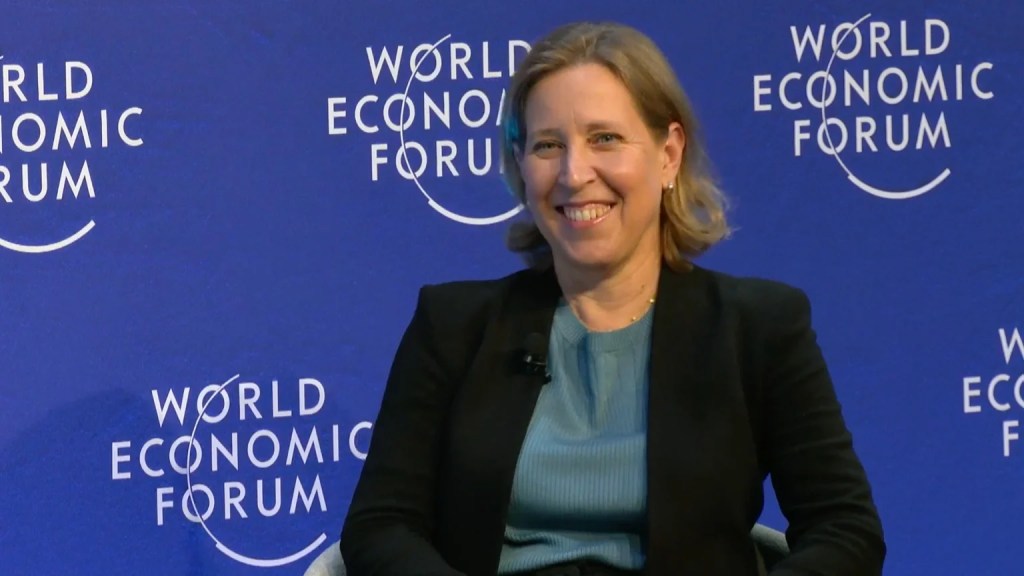
YouTube CEO at World Economic Forum: “There’ll always be work that we have to do” to censor “misinformation”

A commitment to constant censorship.

By Tom Parker

Source: Reclaim the Net

At the World Economic Forum Annual Meeting for 2022, an event where powerful CEOs and world leaders meet to “find solutions to the world’s most urgent challenges,” YouTube CEO Susan Wojcicki committed to persistent censorship of “misinformation” and praised YouTube’s existing censorship efforts.

Wojcicki made the comments after Alyson Shontell Lombardi, the Editor-in-Chief of Fortune Magazine, asked her whether YouTube’s efforts to censor misinformation will always be a “work in progress.”

“I think there’ll always be work that we have to do because there will always be incentives for people to be creating misinformation,” Wojcicki said. “The challenge will be to keep staying ahead of that and make sure that we are understanding what they are and the different ways that people may use to try to trick our systems and make sure that our systems are staying ahead of what’s necessary to make sure that we are managing that.”

Wojcicki continued by praising YouTube’s 5-6 year initiative of cracking down on content that’s deemed to be misinformation and said that users who look at YouTube search results or the homepage will see content from “authoritative sources” (mainstream media outlets that YouTube designates as authoritative) for “sensitive topics.”

Earlier in the conversation, Wojcicki said YouTube is “investing a huge amount to make sure that we’re fighting misinformation” and discussed the various ways YouTube is cracking down on misinformation. She pointed to YouTube introducing 10 COVID censorship policies, YouTube’s policy of not recommending “borderline content” which doesn’t break YouTube’s rules but is deemed to be “lower quality,” and YouTube’s policy of demonetizing content that’s deemed to be “propagating something that is generally understood as not accurate information.”

Wojcicki also talked about YouTube’s violative view rate (VVR) – a metric that shows how many views come from content that violates YouTube’s rules. The metric indicates how swiftly YouTube is censoring content. A low VVR signals that most of the content YouTube removes is being taken down before viewers have a chance to watch it.

Wojcicki noted that just 10-12 views of every 10,000 come from violative content and that this number has “come down significantly” over time.

“Our plan is to continue to work on it and make sure that we continue to reduce that,” Wojcicki added.

Wojcicki’s commitment to always crackdown on misinformation echoes her and the platform’s previous vows to censor misinformation. Days ago, Wojcicki promised to tackle “misinformation” to win over corporate cash. And earlier this year, she said: “Tackling misinformation and other harmful content is a top priority.”

YouTube has already deleted more than a million videos for “COVID misinformation,” plans to preemptively censor “new misinformation,” and has considered hiding the share button to prevent misinformation spread.

Related Videos

On Censorship and Disinformation

By W.J. Astore

Source: Bracing Views

The best way to combat disinformation is with more and better information.  Censorship isn’t the answer.

The Biden administration has reached a different conclusion, creating a “Disinformation Governance Board” under the Department of Homeland Security. This “board” is headed by Nina Jankowicz, an unelected official and an apparent partisan hack. One example: she dismissed the infamous Hunter Biden laptop story as a “fairy tale” involving a “laptop repair shop”; it’s now been confirmed that Hunter’s laptop was real, and so too was that repair shop.

Democrats, of course, don’t have exclusive rights to censorship. Republicans always seem to be calling for books to be banned or education to be policed. But the real problem is much larger than partisan hackery and bickering. Efforts at censorship are all around us, couched as a way of protecting us from harmful lies and other forms of disinformation. Yet, as the comedian Jimmy Dore points out, the government isn’t that concerned about protecting you from lies; it is, however, deeply concerned with denying you access to certain truths, truths that undermine governmental authority and the dominant narrative.

As a retired U.S. military officer and as a historian, the most insidious lies and disinformation I’ve encountered have come from the government. Consider the lies revealed by Daniel Ellsberg and his leak of the Pentagon Papers. Consider the war crimes revealed by Chelsea Manning, aided by Julian Assange and Wikileaks. Consider the lies revealed in the recent Afghan War Papers. Consider the lies about the presence of WMD in Iraq, lies that were used to justify the disastrous Iraq War. The government, in short, is a center of lies and disinformation, which is precisely why we need an adversarial media, one that is willing to ferret out truth. Instead, we’re being offered a governmental Ministry of Truth in the form of a “Disinformation Governance Board.”

All things being equal, a democratic society thrives best when speech is as free as possible, trusting in the people to sort fact from fiction, and sound theories from blatant propaganda. And there’s the rub: trusting in the people. Because the government doesn’t trust us (remember Hillary Clinton’s comment about all those irredeemable deplorables), even as the government is often at pains to mislead and misinform us. As maverick journalist I.F. “Izzy” Stone said, all governments lie. It’s truly nonsensical, then, to allow the government to police what is true and what is “disinformation.”

But don’t we need some censorship in the name of safety or security or mental health or whatever? Sorry: censorship is rarely about safety, and it most certainly doesn’t serve the needs of the vulnerable. Instead, it serves the needs of the powerful, those who already possess the loudest megaphones in the public square.

But doesn’t someone like Donald Trump deserve to be censored because he spreads disinformation? Which is the bigger problem: Trump or censorship? I happen to think Trump is a divisive con man, but it was a bad precedent for Twitter to have banned him from tweeting. The bigger problem wasn’t Trump’s tweets but the media’s obsessive coverage of them in pursuit of ratings. The way to combat a blowhard like Trump is to ignore him, and to correct him when needed. To combat his lies with the truth. We don’t need a governmental Ministry of Truth to police the tweets of a former president. Not when the government is often the biggest liar.

The solution isn’t censorship but an active, engaged, and informed citizenry, assisted by a fourth estate, the press, that is truly independent and adversarial to power. But the weakening of education in America, combined with a fourth estate that is deeply compromised by the powerful and often in bed with the government, means that these democratic checks on power are less and less effective. Hence calls for quick yet dangerous “solutions” like censorship, where the censors (governmental boards, private corporations) are opaque and almost completely unaccountable to the people.

Unless your goal is to give the already powerful a monopoly on speech, censorship is not the answer.

The Facebook Team that Tried to Swing Nicaragua’s Election is Full of U.S. Spies

A tacit agreement between the government and Facebook appears to have been made: you can keep the profits, but we control the message. As such, a cynic might wonder what functional difference there is between Facebook and the national security state.

By Alan Macleod

Source: Mint Press News

MANAGUA, NICARAGUA — Less than a week before Nicaragua’s presidential election, social media giant Facebook deleted the accounts of hundreds of the country’s top news outlets, journalists and activists, all of whom supported the ruling left-wing Sandinista government, a top Washington target for regime change.

Facebook claims that these accounts were bots engaged in “inauthentic behavior.” Considering that around half of the country uses the platform for news and entertainment, the decision could barely have been more heavy-handed and intrusive. However, early reports show that if their goal was to swing the result, it has failed badly and the Sandinistas have achieved an overwhelming victory.

“This is appalling interference by Facebook in particular (which is the most popular social media outlet in Nicaragua). They allege that they’ve stopped a government-deployed troll farm but what they have actually done is to close accounts of ordinary Sandinista activists, particularly young people, often with many followers,” John Perry, a journalist living in the city of Masaya, told MintPress.

Worse still, after dozens of Sandinistas took to Twitter to record video messages proving they were real people being censored, their accounts were systematically deleted as well, in what Managua-based journalist Ben Norton described as a Silicon Valley “double-tap strike.”

“These are accounts that average Nicaraguans have come to count on for news and communicating with each other about current events and, in this case, about the election. So it is very troubling that it was obviously targeted against one political group: the Sandinistas,” said Daniel Kovalik, a human-rights lawyer and an observer of this weekend’s elections.

Both Perry and Kovalik were of the opinion that it was no coincidence that Facebook had taken action against precisely the group the U.S. government is trying to overthrow.

Facebook as security-state beard

Perhaps even more worrying from a freedom-of-speech viewpoint is who made the decision at Facebook. The 11-page report detailing the company’s supposed evidence of inauthentic behavior has just two contributors: Luis Fernando Alonso and Ben Nimmo, individuals with deep and long-lasting ties to Western military intelligence. According to his biography on LinkedIn, Alonso was, until last year, working for Booz Allen Hamilton, a shadowy corporation situated in the area around Washington, D.C. colloquially known as “Raytheon Acres.” The national security state farms out much of its most controversial work to the firm, which is technically a private company (and therefore not subject to the same oversight and scrutiny as public agencies). Edward Snowden, for instance, actually worked for Booz Allen Hamilton, not the NSA. Before that, Alonso directly worked for the government at the William J. Perry Center for Hemispheric Defense Studies, a Department of Defense-controlled institution that trains top military and intelligence leaders.

Nimmo’s background is equally spooky. Between 2011 and 2014, he served as NATO’s press officer, moving the next year to the Institute for Statecraft, a U.K. government-funded propaganda operation aimed at spreading misleading information about enemies of the British state. The Institute for Statecraft established a secret network of journalists across Europe who were used to push anti-Russia and pro-establishment talking points, all in coordination.

In 2019, Nimmo played a key role in downplaying the bombshell news that the Conservative government was quietly negotiating to sell off key parts of Great Britain’s National Health Service (NHS) to foreign plutocrats. When the Labour Party publicized this information just days before the election, Nimmo jumped into action, immediately announcing, without evidence, that the documents in question “closely resemble … a known Russian operation.” His supposedly expert conjecture — together with help from allied journalists in the Integrity Initiative — allowed the story to become “Labour’s links to Russia” rather than “Tories privatizing the NHS in secret,” helping the Conservatives make huge electoral gains.

Nimmo also became a senior fellow at the Atlantic Council, NATO’s semi-official think tank.

Facebook — now officially called “Meta” — is extremely secretive about who actually works at their intelligence department. Nowhere can one find a list of names of key figures. However, going back through months of reports and blog posts for names reveals a veritable revolving door between big tech and big government. In short, Facebook is strewn with spies.

For example, a document published in May, entitled “The State of Influence Operations, 2017-2020,” lists five author names in addition to Nimmo’s, at least four of whom have long histories as senior agents in the national security state.

In order, they are:

  • Nathaniel Gleicher, Head of Security Policy: Gleicher spent two and a half years at the White House as the National Security Council’s Director of Cyber Security Policy. Before that he also spent five years at the Department of Justice.
  • David Agranovich, Head of Security Communications: Agranovich worked for more than six years in a senior role at the Department of Defense, before, in 2017, moving on to become the Director for Intelligence for the National Security Council at the White House.
  • Olga Belogolova, Influence Operations Product Policy Manager: The most academic of the authors, Belogolova teaches cybersecurity and influence operations to students at Georgetown University, an institution notorious as America’s spy school. Before that, she worked at the State Department’s Bureau of European and Eurasian Affairs and on Russian, Ukrainian and Eurasian policy at the Office of the Secretary of Defense. She has also served on several working groups at government- and military-funded think tanks like The Center for New American Security, The Center for Strategic and International Studies, and The Atlantic Council.
  • Mike Torrey, Threat Intelligence Analyst: From 2010 until 2018, Torrey was a high-level CIA agent, specializing in cyberwarfare against China. Before that, he worked as a global network intelligence analyst for the NSA.

Of the six authors listed, only one, Margarita Franklin, comes from a non-governmental background.

Looking further into Facebook’s official blog, Mike Dvilyanski is described as the company’s Head of Cyber Espionage Investigations. From 2005 until 2018, Dvilyanski was an FBI agent in Washington and New York City, rising to the rank of Supervisory Special Agent, leading teams investigating cyberwafare.

Another official Facebook report from April was authored by the company’s Technical Threat Investigator, Michael Flossman, who spent nearly six years in the Australian Department of Defense.

In 2018, Facebook announced a partnership with The Atlantic Council, whereby it gave an undisclosed amount of control over users’ news feeds to the group, allowing it to help them decide what posts users saw and which ones were suppressed. Given that the council’s board features a plethora of military generals, former cabinet members, and no fewer than seven former CIA directors, this is tantamount to state censorship on a global level. A tacit agreement between the government and Facebook appears to have been made: you can keep the profits, but we control the message. As such, a cynic might wonder what functional difference there is between Facebook and the national security state.

Silicon Valley: tip of US imperial spear

It might be unfair, however, to single Facebook out. Other large platforms are similarly stocked with government plants. Reddit’s Director of Policy, for instance, was formerly a Deputy Director of The Atlantic Council’s Middle East Task Force. Meanwhile, a senior Twitter executive is also an active duty officer in the British Army’s psychological warfare and online propaganda brigade.

Silicon Valley has not only made their peace with this relationship; they actively court it. “What Lockheed Martin was to the twentieth century, technology and cyber-security companies will be to the twenty-first,” wrote Google executives Eric Schmidt and Larry Cohen in their book, “The New Digital Age,” laying out how they saw Silicon Valley becoming the tip of the American empire’s spear.

Washington has already used social media as a weapon aimed at its enemies. In July, Americans in Miami used Facebook to organize an attempted color revolution in Cuba, while Twitter ignored blatantly obvious bots boosting the anti-government message, even choosing to put it at the top of its “what’s happening” sidebar for 36 hours, meaning every user in the world was alerted to the news. Individuals inside Cuba complained to MintPress that the endless supply of fake news citizens receive from the U.S. via Facebook and WhatsApp is spreading disinformation and rotting Cubans’ brains.

Meanwhile, in 2009, the U.S. government persuaded Twitter to delay scheduled maintenance of its app because of widespread protests it was fomenting in Iran, knowing the platform was being used to coordinate anti-government forces. Last year, Facebook banned all positive references to Iranian general Qassem Soleimani in the wake of his assassination by the Trump administration. “We operate under U.S. sanctions laws, including those related to the U.S. government’s designation of the Iranian Revolutionary Guard Corps and its leadership,” the company said in a statement. Despite the fact that over 80% of the country held positive views towards the general (even before his killing), this meant that even Iranians speaking Farsi with other Iranians online in Iran could not share an overwhelmingly held view. This is but one example of the extraordinary power the U.S. national security state now holds over the means of communication worldwide.

Ineffective interference

The United States has a long history of interfering in Nicaragua, from invasions to propping up the 40-year Somoza family dictatorship. When Sandinista rebels ran them out of town in 1979, Washington began a long campaign of terror against the Sandinistas, including funding, training and arming the infamous Contra death squads. After more than a decade of interference, U.S.-backed candidate Violeta Chamorro won the 1990 election. However, after Daniel Ortega and the Sandinistas returned to power in 2006, the U.S. once again began trying to undermine their rule through sanctions and by supporting a 2018 coup attempt. Washington has also unleashed an army of NGOs into the country, each attempting to foment discontent with the ruling government.

In September, Secretary of State Anthony Blinken met in New York with the foreign ministers of Mexico and every other Central American country in an attempt to organize a united front against Nicaragua. Last week, the U.S. also announced new sanctions on the country. Kovalik told MintPress:

This is clearly punishment for the fact that they’re going to vote [the wrong way]. And meanwhile, of course the U.S. is putting millions into the country in terms of supporting opposition groups and different propaganda sources. So that continues. Again, what passes for alleged foreign interference in the U.S. …. is nothing compared to what the U.S. is doing here.

Western journalists and election observers whose opinions the U.S. government would rather not be shared have also been targeted. British journalist Steve Sweeney was detained in Mexico en route to Nicaragua. “It is no coincidence that it came just weeks after my ban from the U.S. I fully believe my detention is political and an attack on press freedom,” he wrote, after being released. Meanwhile, Canadian observer Dr. Timothy Bood was barred from sharing his experiences on Facebook, the platform blocking him immediately after he made a comment about U.S. interference in the election.

Perry suggested, however, that if Washington thinks that sanctions sanctions or other new measures will dislodge the government and break the people’s will, they are mistaken, and that the plan could backfire:

We had the approval in the U.S. Congress of the RENACER Act a few days ago, which is another threat of U.S. interference during and after the election process. I think opinion polls show that most people reject U.S. interference very strongly. I think in most cases it will strengthen people’s desire to vote and probably to vote for the Sandinista government. So it could have the opposite effect to the one that the U.S. wants to achieve.

Judging by the jubilant Sandinista parades in Managua and other cities today, coupled with the announcement that Ortega won an estimated three-quarters of the vote on a 65% turnout rate, Perry might have been proved right.

‘Rules-Based International Order’ Means Washington-Based International Order

By Caitlin Johnstone

Source: CaitlinJohnstone.com

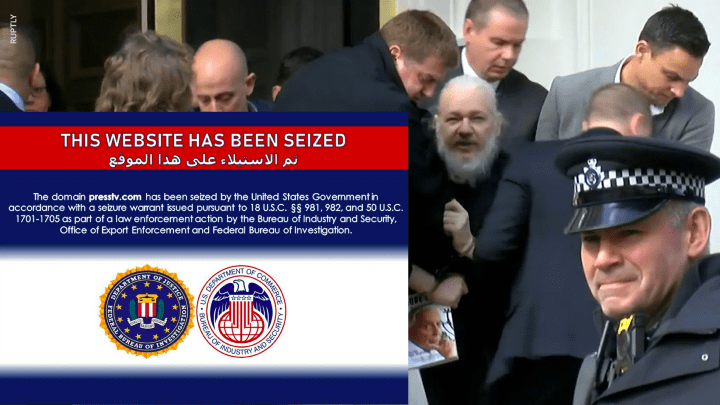
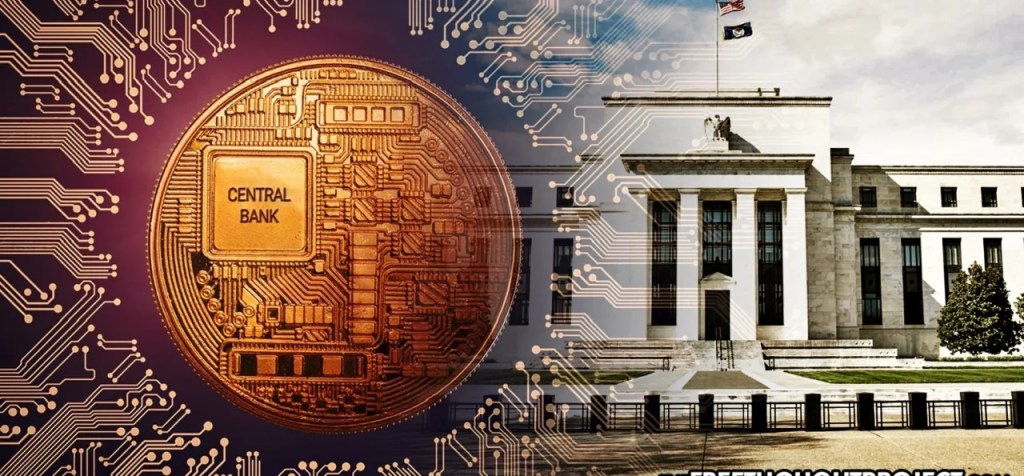
The US government has shut down multiple news media websites based in the Middle East, including Iran’s state-owned Press TV, and al-Masirah TV which is owned by the Houthi group Ansarullah in Yemen. The Department of Justice said on Tuesday it had seized 36 Iranian-linked websites, claiming without evidence that they were associated with “either disinformation activities or violent organizations” and were shut down for a violation of US sanctions.

This would be the same US government that is imprisoning Julian Assange for journalism which exposed US war crimes, the same US government which paid for the weapons used to destroy more than 20 Palestinian media outlets in Gaza last month, the same US government whose unipolar domination of the planet is made possible by the journalism-destroying propaganda of the media-owning plutocratic class in alliance with sociopathic government agencies.

This would also be the same US government which constantly pays lip service to the need to protect the freedom of the press, as part of the “rules-based international order” it purports to uphold in the world.

The Biden administration has been bleating “rules-based order” so frequently and with such obvious meaninglessness that even The New York Times voiced some criticism of the way that vapid, idiotic phrase is being used instead of the well-defined term “international law”. As Medea Benjamin and Nicolas JS Davies wrote for Salon last month:

For Blinken, the concept of a “rules-based order” seems to serve mainly as a cudgel with which to attack China and Russia. At a May 7 UN Security Council meeting, Russian Foreign Minister Sergey Lavrov suggested that instead of accepting the already existing rules of international law, the United States and its allies are trying to come up with “other rules developed in closed, non-inclusive formats, and then imposed on everyone else.”

Today, far from being a leader of the international rules-based system, the United States is an outlier. It has failed to sign or ratify about 50 important and widely accepted multilateral treaties on everything from children’s rights to arms control. Its unilateral sanctions against Cuba, Iran, Venezuela and other countries are themselves violations of international law, and the new Biden administration has shamefully failed to lift these illegal sanctions, ignoring UN Secretary-General António Guterres’ request to suspend such unilateral coercive measures during the pandemic.

Indeed, US government officials babble endlessly about “rules”, and the “rules” are literally always tools used for the benefit of the US government, and the US government literally always flouts those “rules” exponentially worse than any other government on earth.

What the phrase “rules-based order” actually means is Washington-based order. It means a world order imposed by the US government and its lackey states on pain of devastation and death, which exists solely to keep the US at the head of a unipolar empire. It means do as I say, not as I do. It means rules for thee but not for me. It means we decide what happens based on what suits our interests.

If you peel away all the narrative spin and outward politeness, the US empire just looks like any other tyrannical force that has ever existed throughout human history, except it kills a lot more people than most of the others. In the old days the thugs with the most effective killing force would dominate everyone else using terror, wearing frightening battle costumes adorned with the body parts of their enemies. Nowadays they still dominate everyone else using terror, except they do it while wearing suits, and while waxing self-righteously about the “rules-based international order”. And they are much better at killing.

There is no other government on earth that is less qualified to impose any “order” upon the world. This is the only government on earth which has killed millions of people and displaced tens of millions just since the turn of this century, the only government on earth that is circling the planet with hundreds of military bases and working to destroy any nation which disobeys its dictates. Yemen alone completely delegitimizes any claim the US may have had to be the arbiter of “order” in the world, to say nothing of Iraq, Vietnam, Libya and all the other innumerable atrocities that this monstrous regime has inflicted upon our species.

The sooner humanity can extract the parasite that is the US empire from its skin, the better off the whole world will be.

US seizes PressTV.com and 32 other Iranian media website domains

By Kevin Reed

Source: WSWS.org

The Biden administration’s Department of Justice (DoJ) confirmed on Tuesday that the US had seized 33 websites affiliated with the Iranian Islamic Radio and Television Union (IRTVU) and three others operated by Kata’ib Hizballah (Hezbollah Brigades), an Iraqi Shia group supported by Iran.

In a press statement, the DoJ stated that the website domains—including the English and French language PressTV.com based in Teheran—were “in violation of US sanctions.” The statement said that the US Office of Foreign Assets and Control (OFAC) had “designated IRTVU as a Specially Designated National (SDN)” during the Trump administration in October 2020 for “being owned or controlled by the Islamic Revolutionary Guard Corps Quds Force (IRGC).”

The DoJ also said that organizations labeled as SDNs are “prohibited from obtaining services, including website and domain services, in the United States without an OFAC license” and that IRTVU “and others like it” are not news organizations but are used to launch “disinformation campaigns and malign influence operations.” It also claimed that the 33 website addresses were owned in the US by IRTVU which “did not obtain a license from OFAC prior to utilizing the domain names.”

In the case of Kata’ib Hizballah (KH), the DoJ says that it was both designated an SDN by OFAC and as a Foreign Terrorist Organization by the Department of State in July 2009. It claims that KH has “committed, directed, supported or posed a significant risk of committing acts of violence against Coalition and Iraqi Security Forces” and also did not obtain an OFAC license prior to acquiring the domain names.

Whatever the public justifications provided for its aggressive act, the transparent political purpose of the Biden administration’s website seizures is the effort to ratchet up pressure on Iran amid ongoing negotiations in Vienna over the 2015 nuclear agreement and following the June 18 selection of the hardline conservative Ebrahim Raisi as the next Iranian president.

Iran’s foreign ministry on Wednesday called the seizure an example of a “systematic effort to distort freedom of speech on a global level and silence independent voices in media.”

One of the seized sites, Al-Masirah, is not owned by Iran, but by Ansarullah, the movement of the Houthis in Yemen, a faction the US has claimed to be “proxies” of Iran. The news outlet is headquartered in Beirut, Lebanon.

In a statement reported by RT, Al Masirah said it was “not surprised” by the seizure, as it “comes from those that have supervised the most heinous crimes against our people.” The website shutdown , “reveals, once again, the falsehood of the slogans of freedom of expression and all the other headlines promoted by the United States of America, including its inability to confront the truth,” the statement said.

Indicating the broader political aims of the website seizures, the Associated Press (AP) reported that the US took over the domain name of the news website Palestine Today, which publishes the views of Gaza-based Islamic militant groups Hamas and Islamic Jihad, redirecting the site to the same takedown notice.

Visits to the seized websites bring up a graphic with the headline, “This website has been seized” and a message that says the domain has been taken offline due to a “seizure warrant” issued under the authority of US code involving civil and criminal forfeiture and special powers given to the president during “unusual and extraordinary threat; declaration of national emergency.”

Some of the websites have been operating for many years, such as PressTV.com which was launched in 2007. The Wikipedia entry for the Iranian news and documentary network says that the annual budget of PressTV was $8.3 million and it had 400 employees worldwide as of 2009.

AP reported that most of the seized domains are .net, .com and .tv domains. The .net and .com domains are considered generic “top level domains” (TLDs) and they are controlled by the global provider of the domain name registry, Verisign, based in Reston, Virginia. The contract with Verisign is managed jointly by the US-based non-profit Internet Corporation for Assigned Names and Numbers (ICANN) and the US Department of Commerce.

The domain .tv is “owned by the Pacific Island nation of Tuvalu but administered by the US company Verisign,” according to AP. Other news and media domains which are owned by Iran, such as the website PressTV.ir which also publishes in English, have not been affected by the seizures.

similar action was taken by the DoJ under the Trump administration in November 2020, when the FBI seized 27 domain names it claimed were used by Iran’s IRGC to spread a “global covert influence campaign.” Coming from the number one worldwide purveyor of “influence campaigns” involving money, murder and military occupation, the unsubstantiated accusations against the Iran-based media outlets must be completely rejected as part of the preparations for further wars of aggression in the Middle East and Central Asia.

Meanwhile, the use by Biden of designations made by both the Obama and Trump administrations makes clear the fundamental agreement over foreign policy between the two parties of Wall Street and the US military-intelligence apparatus regardless of whether it is the Democrats or Republicans that control the executive or legislative branches of government.