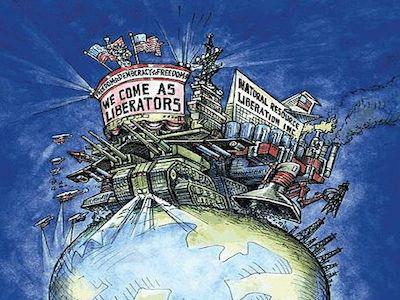
Distract, Divide and Conquer: The Painful Truth About the State of Our Union

By John & Nisha Whitehead

Source: The Rutherford Institute

Step away from the blinders that partisan politics uses to distract, divide and conquer, and you will find that we are drowning in a cesspool of problems that individually and collectively threaten our lives, liberties, prosperity and happiness.

These are not problems the politicians want to talk about, let alone address, yet we cannot afford to ignore them much longer.

Foreign interests are buying up our farmland and holding our national debt. As of 2021, foreign persons and entities owned 40.8 million acres of U.S. agricultural land, 47% of which was forestland, 29% in cropland, and 22% in pastureland. Foreign land holdings have increased by an average of 2.2 million acres per year since 2015. Foreign countries also own $7.4 trillion worth of U.S. national debt, with Japan and China ranked as our two largest foreign holders of our debt.

Corporate and governmental censorship have created digital dictators. While the “Twitter files” revealed the lengths to which the FBI has gone to monitor and censor social media content, the government has been colluding with the tech sector for some time now in order to silence its critics and target “dangerous” speech in the name of fighting so-called disinformation. The threat of being labelled “disinformation” is being used to undermine anyone who asks questions, challenges the status quo, and engages in critical thinking.

Middle- and lower-income Americans are barely keeping up. Rising costs of housing, food, gas and other necessities are presenting nearly insurmountable hurdles towards financial independence for the majority of households who are scrambling to make ends meet. Meanwhile, mounting layoffs in the tens of thousands are adding to the fiscal pain.

The government is attempting to weaponize mental health care. Increasingly, in communities across the nation, police are being empowered to forcibly detain individuals they believe might be mentally ill, even if they pose no danger to others. While these programs are ostensibly aimed at getting the homeless off the streets, when combined with the government’s ongoing efforts to predict who might pose a threat to public safety based on mental health sensor data (tracked by wearable data and monitored by government agencies such as HARPA), the specter of mental health round-ups begins to sound less far-fetched.

The military’s global occupation is spreading our resources thin and endangering us at home. America’s war spending and commitment to policing the rest of the world are bankrupting the nation and spreading our troops dangerously thin. In 2022 alone, the U.S. approved more than $50 billion in aid for Ukraine, half of which went towards military spending, with more on the way. The U.S. also maintains some 750 military bases in 80 countries around the world.

Deepfakes, AI and virtual reality are blurring the line between reality and a computer-generated illusion. Powered by AI software, deepfake audio and video move us into an age where it is almost impossible to discern what is real, especially as it relates to truth and disinformation. At the same time, the technology sector continues to use virtual reality to develop a digital universe—the metaverse—that is envisioned as being the next step in our evolutionary transformation from a human-driven society to a technological one.

Advances in technology are outstripping our ability to protect ourselves from its menacing side, both in times of rights, humanity and workforce. In the absence of constitutional protections in place to guard against encroachments on our rights in the electronic realm, we desperately need an Electronic Bill of Rights that protects “we the people” from predatory surveillance and data-mining business practices.

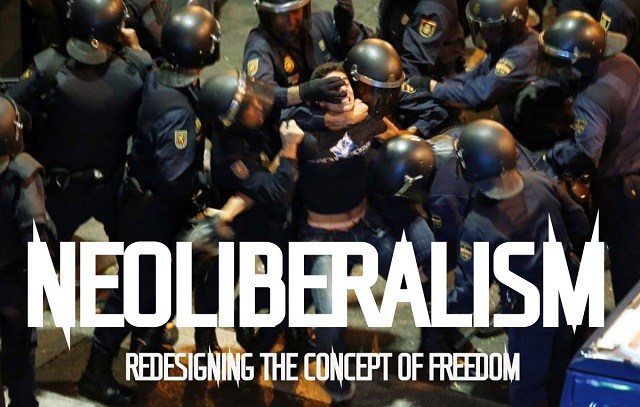
The courts have aligned themselves with the police state. In one ruling after another, the courts have used the doctrine of qualified immunity to shield police officers from accountability for misconduct, tacitly giving them a green light to act as judge, jury and executioner on the populace. All the while, police violence, the result of training that emphasizes brute force over constitutional restraints, continues to endanger the public.

The nation’s dependence on foreign imports has fueled a $1 trillion trade deficit. While analysts have pointed to the burgeoning trade deficit as a sign that the U.S. economy is growing, it underscores the extent to which very little is actually made in America anymore.

World governments, including the U.S., continue to use national crises such as COVID-19 to expand their emergency powers. None are willing to relinquish these powers when the crisis passes. According to the Brennan Center for Justice, the U.S. government still has 42 declared national emergencies in effect, allowing it to sidestep constitutional protocols that maintain a system of checks and balances. For instance, the emergency declared after the 9/11 has yet to be withdrawn.

The nation’s infrastructure is rapidly falling apart. Many of the country’s roads, bridges, airports, dams, levees and water systems are woefully outdated and in dire need of overhauling, and have fallen behind that of other developed countries in recent years. The American Society of Civil Engineers estimates that crumbling infrastructure costs every American household $3,300 in hidden costs a year due to lost time, increased fuel consumption while sitting in traffic jams, and extra car repairs due to poor road conditions.

The nation is about to hit a healthcare crisis. Despite the fact that the U.S. spends more on health care than any other high-income country, it has the worst health outcomes than its peer nations. Experts are also predicting a collapse in the U.S. health care system as the medical community deals with growing staff shortages and shuttered facilities.

These are just a small sampling of the many looming problems that threaten to overwhelm us in the near future.

Thus far, Americans seem inclined to just switch the channel, tune out what they don’t want to hear, and tune into their own personal echo chambers.

Yet as I make clear in my book Battlefield America: The War on the American People and in its fictional counterpart The Erik Blair Diaries, no amount of escapism can shield us from the harsh reality that the danger in our midst is posed by an entrenched government bureaucracy that has no regard for the Constitution, Congress, the courts or the citizenry.

Re-Opening the Economy Won’t Fix What’s Broken


By Charles Hugh Smith

Source: Of Two Minds

Re-opening a fragile, brittle, bankrupt, hopelessly perverse and corrupt “normal” won’t fix what’s broken.

The stock market is in a frenzy of euphoria at the re-opening of the economy. Too bad the re-opening won’t fix what’s broken. As I’ve been noting recently, the real problem is the systemic fragility of the U.S. economy, which has lurched from one new extreme to the next to maintain a thin, brittle veneer of normalcy.

Fragile economies cannot survive any impact with reality that disrupts the distortions that are keeping the illusion of “growth” from shattering. For the past two decades, every collision with reality cracked the illusion, and the “fix” was to duct-tape the pieces together with new extremes of money-creation, debt, risk and speculative excess.

While the stock market has soared, the real world falls apart. If your region needs a new bridge built, count on about 20 years to get all the “stakeholders” to agree and get the thing actually built. Count on the cost quintupling from $500 million to $2.5 billion. Count on corners being cut as costs skyrocket, so those cheap steel bolts from China that are already rusting before the bridge is even finished? Oops. Replacing them will add millions to the already bloated budget.

Want to add a passenger stop on an existing railroad line? Count on 20 years to get it done. The complexity thicket of every regulatory agency with the power to say “no” basically guarantees the project will never get approved, because every one of these bureaucracies justifies its existence by saying “no.” Sorry, you need another study, another environmental review, and so on.

Need a new landfill? I hope you started the process 15 years ago, so you’ll get approval in only five more years. Every agency with the power to say “no” will stretch out the approval, so they have guaranteed “work” for another decade or two.

Did your subway fares double? Was the excuse repairing a crumbling system? Did the work get done on budget and on time? You must be joking, right? All the fare increase did was cover the costs of skyrocketing salaries, pensions and administrative costs. Repairs to the tracks and cars– that’s extra. Let’s float a $1 billion bond so nobody have to tighten their belts, and have riders pay for it indirectly, through higher taxes to pay the exorbitant costs of 20 years of interest on the bond.

Have you been thrown off your bicycle by the giant potholes in the city’s “bike lanes”? The city reluctantly admits that these streets that haven’t been maintained for decades–yes, decades. The city once paid for street maintenance out of its general budget, but alas, that’s been eaten up by skyrocketing salaries, pensions and administrative costs, so now we need to float $100 million bond to fund filling potholes. If all goes according to plan (ha-ha), we should be able to re-pave the streets that have been crumbling for 20 years in… the next 20 years.

These real-world examples are just four of thousands of manifestations of a broken system. Rather than make tough choices that drain power and wealth from vested interests, we simply borrow more money, in ever increasing amounts, to keep the entrenched interests and elites happy.

There are two “solutions” in the status quo: dump the debt on taxpayers or on powerless debt-serfs–for example, college students. (See chart below of the $1.6 trillion that’s stripmining student debt-serfs.) Who benefits from selling all the municipal bonds, bundled student loans, etc. to investors starving for a yield above 0.1%? Wall Street, of course.

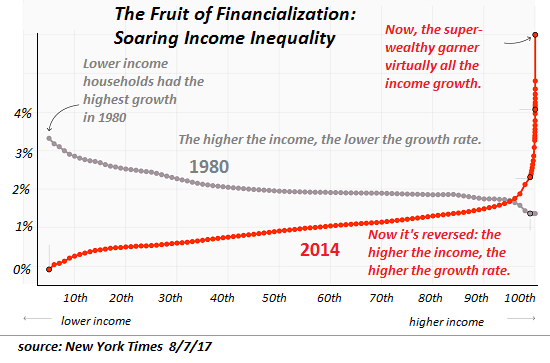
The problem is that while debt has soared, productivity and earned income have stagnated. The statistical narrative has been ruthlessly gamed to hide the erosion of living standards, but even with the bogus “low inflation” of official statistics, wages for the bottom 95% have stagnated for decades.

Measures of productivity have also been gamed to mask the ugly reality that the vast majority of the U.S. economy is stagnating under the weight of interest payments on debt, mal-investments in speculative gambles, higher junk fees and taxes, crushing regulatory compliance, high costs imposed by monopolies and cartels and a well-cloaked decline in the quality of just about everything the bottom 95% uses or owns.

What little productivity gains have been made have been skimmed by the top 5%. Coupled with the Federal Reserve’s single-minded goosing of the one signaling device it controls, the stock market, the top 0.1% in America own more wealth than the bottom 80%.

If productivity stagnates and winners take all, the wages of the bottom 95% cannot rise. Real wealth is only created by increases in the productivity of labor and capital; everything else is phantom wealth.

The only way stagnant incomes can support more debt is if interest rates decline. Presto, the Fed dropped interest rates to near-zero a decade ago. Of course you and I can’t actually borrow millions for 0.1%; that privilege is reserved for financiers and other financial parasites and predators.

Debt-serfs were able to refinance their crushing mortgages to save a few bucks, and so they can afford to 1) take on more debt and 2) pay higher taxes to fund the ballooning public debt.

Every one of these extremes has increased the systemic fragility of the American economy. This fragility is reflected in the impoverishment of the bottom 95%, the thin line between solvency and bankruptcy, the decay of public trust in institutions run for the benefit of entrenched interests, and the quickening erosion of America’s social contract.

Re-opening a fragile, brittle, bankrupt, hopelessly perverse and corrupt “normal” won’t fix what’s broken.


America Is on the Brink of a Nervous Breakdown

By John W. Whitehead

Source: The Rutherford Institute

“As nightfall does not come at once, neither does oppression. In both instances, there is a twilight when everything remains seemingly unchanged. And it is in such twilight that we all must be most aware of change in the air – however slight – lest we become unwitting victims of the darkness.” ― Supreme Court Justice William O. Douglas

Yet another shooting.

Yet another smear of ugliness, hatred and violence.

Yet another ratcheting up of the calls for the government to clamp down on the citizenry by imposing more costly security measures without any real benefit, more militarized police, more surveillance, more widespread mental health screening of the general population, more threat assessments and behavioral sensing warnings, more gun control measures, more surveillance cameras with facial recognition capabilities, more “See Something, Say Something” programs aimed at turning Americans into snitches and spies, more metal detectors and whole-body imaging devices at so-called soft targets, more roaming squads of militarized police empowered to do more stop-and-frisk searches, more fusion centers to centralize and disseminate information to law enforcement agencies, and more government monitoring of what Americans say and do, where they go, what they buy and how they spend their time.

All of these measures play into the government’s hands.

All of these measures add up to more government power, less real security and far less freedom.

As we have learned the hard way, the phantom promise of safety in exchange for restricted or regulated liberty is a false, misguided doctrine that has no basis in the truth.

Things are falling apart.

When things start to fall apart or implode, ask yourself: who stands to benefit?

In most cases, it’s the government that stands to benefit by amassing greater powers at the citizenry’s expense.

Unfortunately, the government’s answer to civil unrest and societal violence, as always, will lead us further down the road we’ve travelled since 9/11 towards totalitarianism and away from freedom.

With alarming regularity, the nation is being subjected to a spate of violence that not only terrorizes the public but also destabilizes the country’s fragile ecosystem, and gives the government greater justifications to crack down, lock down, and institute even more authoritarian policies for the so-called sake of national security without many objections from the citizenry.

Clearly, America is being pushed to the brink of a national nervous breakdown.

This breakdown—triggered by polarizing circus politics, media-fed mass hysteria, racism, classism, xenophobia, militarization and militainment (the selling of war and violence as entertainment), a sense of hopelessness and powerlessness in the face of growing government corruption and brutality, and a growing economic divide that has much of the population struggling to get by—is manifesting itself in madness, mayhem and an utter disregard for the very principles and liberties that have kept us out of the clutches of totalitarianism for so long.

Yet there is a method to this madness.

Remember, authoritarian regimes begin with incremental steps. Overcriminalization, surveillance of innocent citizens, imprisonment for nonviolent—victimless—crimes, etc. Bit by bit, the citizenry finds its freedoms being curtailed and undermined for the sake of national security. And slowly the populace begins to submit.

No one speaks up for those being targeted.

No one resists these minor acts of oppression.

No one recognizes the indoctrination into tyranny for what it is.

Historically this failure to speak truth to power has resulted in whole populations being conditioned to tolerate unspoken cruelty toward their fellow human beings, a bystander syndrome in which people remain silent and disengaged—mere onlookers—in the face of abject horrors and injustice.

Time has insulated us from the violence perpetrated by past regimes in their pursuit of power: the crucifixion and slaughter of innocents by the Romans, the torture of the Inquisition, the atrocities of the Nazis, the butchery of the Fascists, the bloodshed by the Communists, and the cold-blooded war machines run by the military industrial complex.

We can disassociate from such violence.

We can convince ourselves that we are somehow different from the victims of government abuse.

We can continue to spout empty campaign rhetoric about how great America is, despite the evidence to the contrary.

We can avoid responsibility for holding the government accountable.

We can zip our lips and bind our hands and shut our eyes.

In other words, we can continue to exist in a state of denial.

Whatever we do or don’t do, it won’t change the facts: the nation is imploding, and our republic is being pushed ever closer to martial law.

As Vann R. Newkirk II writes for the Atlantic:

Trumpism demands that violence be solved by local militarization: increased security at schools, the arming of teachers, and now, the adoption of guns in places intended quite literally to be sanctuaries from the scourges of the world. Taken altogether, what Trumpism seems to intend is the creation—or perhaps the expansion—of the machinery of a police state

In facing what appears to be a rising tide of violence—a tide that Trump himself elevates and encourages—the prescription of arms merely capitulates to the demands of that bloodshed. The purpose of political violence and terrorism is not necessarily to eliminate or even always to create body counts, but to disempower people, to spread the contagion of fear, to splinter communities into self-preserving bunkers, and to invalidate the very idea that a common destiny is even possible. Mandates to arm people accelerate this process. They inherently promote the idea that society cannot reduce the global level of harm, and promote the authoritarian impulses of people seeking order.

Where Newkirk misses the point is by placing the blame squarely on the Trump Administration.

This shift towards totalitarianism and martial law started long before Trump, set in motion by powers-that-be that see the government as a means to an end: power and profit.

As Paul Craig Roberts, former Assistant Secretary of the Treasury, recognized years ago, “Adolf Hitler is alive and well in the United States, and he is fast rising to power.”

Roberts was not comparing Trump to Hitler, as so many today are wont to do.

Rather, he was comparing the American Police State to the Nazi Third Reich, which is a far more apt comparison.

After all, U.S. government agencies—the FBI, CIA and the military—have fully embraced many of the Nazi’s well-honed policing tactics and have used them repeatedly against American citizens for years now.

Indeed, with every passing day, the United States government borrows yet another leaf from Nazi Germany’s playbook: Secret police. Secret courts. Secret government agencies. Surveillance. Censorship. Intimidation. Harassment. Torture. Brutality. Widespread corruption. Entrapment. Indoctrination. Indefinite detention.

These are not tactics used by constitutional republics, where the rule of law and the rights of the citizenry reign supreme. Rather, they are the hallmarks of authoritarian regimes, where the only law that counts comes in the form of heavy-handed, unilateral dictates from a supreme ruler who uses a secret police to control the populace.

The empowerment of the Gestapo, Germany’s secret police, tracked with the rise of the Nazi regime in much the same way that the rise of the American police state corresponds to the decline of freedom in America.

How did the Gestapo become the terror of the Third Reich?

It did so by creating a sophisticated surveillance and law enforcement system that relied for its success on the cooperation of the military, the police, the intelligence community, neighborhood watchdogs, government workers for the post office and railroads, ordinary civil servants, and a nation of snitches inclined to report “rumors, deviant behavior, or even just loose talk.”

In other words, ordinary citizens working with government agents helped create the monster that became Nazi Germany. Writing for the New York Times, Barry Ewen paints a particularly chilling portrait of how an entire nation becomes complicit in its own downfall by looking the other way:

In what may be his most provocative statement, [author Eric A.] Johnson says that ‘‘most Germans may not even have realized until very late in the war, if ever, that they were living in a vile dictatorship.’’ This is not to say that they were unaware of the Holocaust; Johnson demonstrates that millions of Germans must have known at least some of the truth. But, he concludes, ‘‘a tacit Faustian bargain was struck between the regime and the citizenry.’’ The government looked the other way when petty crimes were being committed. Ordinary Germans looked the other way when Jews were being rounded up and murdered; they abetted one of the greatest crimes of the 20th century not through active collaboration but through passivity, denial and indifference.

Much like the German people, “we the people” have become passive, polarized, gullible, easily manipulated, and lacking in critical thinking skills.  Distracted by entertainment spectacles, politics and screen devices, we too are complicit, silent partners in creating a police state similar to the terror practiced by former regimes.

Can the Fourth Reich happen here?

It’s already happening right under our noses. Much like the German people, “we the people” are all too inclined to “look the other way.”

In our state of passivity, denial and indifference, here are some of the looming problems we’re ignoring:

Our government is massively in debt. Currently, the national debt is somewhere in the vicinity of $21 trillion. Approximately half of our debt is owned by foreign countries, namely China, Japan and Saudi Arabia.

Our education system is abysmal. Despite the fact that we spend more than most of the world on education, we rank 36th in the world when it comes to math, reading and science, far below most of our Asian counterparts. Even so, we continue to insist on standardized programs such as Common Core, which teach students to be test-takers rather than thinkers.

Our homes provide little protection against government intrusions. Police agencies, already empowered to crash through your door if they suspect you’re up to no good, now have radar devices that allow them to “see” through the walls of our homes.

Our prisons, housing the largest number of inmates in the world and still growing, have become money-making enterprises for private corporations that rely on the inmates for cheap labor.

We are no longer a representative republic. The U.S. has become a corporate oligarchy. As a recent academic survey indicates, our elected officials, especially those in the nation’s capital, represent the interests of the rich and powerful rather than the average citizen.

We’ve got the most expensive, least effective health care system in the world compared to other western, industrialized nations.

The air pollution levels are dangerously high for almost half of the U.S. population, putting Americans at greater risk of premature death, aggravated asthma, difficulty breathing and future cardiovascular problems.

Despite outlandish amounts of money being spent on the nation’s “infrastructure,” there are more than 63,000 bridges—one out of every 10 bridges in the country—in urgent need of repair. Some of these bridges are used 250 million times a day by trucks, school buses, passenger cars and other vehicles.

Americans know little to nothing about their rights or how the government is supposed to operate. This includes educators and politicians. For example, 27 percent of elected officials cannot name even one right or freedom guaranteed by the First Amendment, while 54 percent do not know the Constitution gives Congress the power to declare war.

Nearly one out of every three American children live in poverty, ranking us among the worst in the developed world.

Patrolled by police, our schools have become little more than quasi-prisons in which kids as young as age 4 are being handcuffed for “acting up,” subjected to body searches and lockdowns, and suspended for childish behavior.

We’re no longer innocent until proven guilty.  In our present surveillance state, that burden of proof has now been shifted so that we are all suspects to be spied on, searched, scanned, frisked, monitored, tracked and treated as if we’re potentially guilty of some wrongdoing.

Parents, no longer viewed as having an inherent right to raise their children as they see fit, are increasingly being arrested for letting their kids walk to the playground alone, or play outside alone. Similarly, parents who challenge a doctor’s finding or request a second opinion regarding their children’s health care needs are being charged with medical child abuse and, in a growing number of cases, losing custody of their children to the government.

Private property means little at a time when SWAT teams and other government agents can invade your home, break down your doors, kill your dog, wound or kill you, damage your furnishings and terrorize your family. Likewise, if government officials can fine and arrest you for growing vegetables in your front yard, praying with friends in your living room, installing solar panels on your roof, and raising chickens in your backyard, you’re no longer the owner of your property.

Court rulings undermining the Fourth Amendment and justifying invasive strip searches have left us powerless against police empowered to forcefully draw our blood, forcibly take our DNA, strip search us, and probe us intimately. Accounts are on the rise of individuals—men and women alike—being subjected to what is essentially government-sanctioned rape by police in the course of “routine” traffic stops.

Americans can no longer rely on the courts to mete out justice. The courts were established to intervene and protect the people against the government and its agents when they overstep their bounds. Yet the courts increasingly march in lockstep with the police state, while concerning themselves primarily with advancing the government’s agenda, no matter how unjust or unconstitutional.

Americans have no protection against police abuse. It is no longer unusual to hear about incidents in which police shoot unarmed individuals first and ask questions later. What is increasingly common, however, is the news that the officers involved in these incidents get off with little more than a slap on the hands.

If there is any absolute maxim by which the federal government seems to operate, it is that the American taxpayer always gets ripped off. This is true, whether you’re talking about taxpayers being forced to fund high-priced weaponry that will be used against us, endless wars that do little for our safety or our freedoms, or bloated government agencies such as the National Security Agency with its secret budgets, covert agendas and clandestine activities. Rubbing salt in the wound, even monetary awards in lawsuits against government officials who are found guilty of wrongdoing are paid with taxpayer funds.

Americans are powerless in the face of militarized police. In early America, government agents were not permitted to enter one’s home without permission or in a deceitful manner. And citizens could resist arrest when a police officer tried to restrain them without proper justification or a warrant. Daring to dispute a warrant with a police official today who is armed with high-tech military weapons would be nothing short of suicidal. Moreover, as police forces across the country continue to be transformed into extensions of the military, Americans are finding their once-peaceful communities transformed into military outposts, complete with tanks, weaponry, and other equipment designed for the battlefield.

Now these are not problems that you can just throw money at, as most politicians are inclined to do.

These are problems that will continue to plague our nation—and be conveniently ignored by politicians—unless and until Americans wake up to the fact that we’re the only ones who can change things.

We’re caught in a vicious cycle right now between terror and fear and distraction and hate and partisan politics and an inescapable longing for a time when life was simpler and people were kinder and the government was less of a monster.

Our prolonged exposure to the American police state is not helping.

As always, the solution to most problems must start locally, in our homes, in our neighborhoods, and in our communities.

We’ve got to refrain from the toxic us vs. them rhetoric that is consuming the nation.

We’ve got to work harder to build bridges, instead of burning them to the ground.

We’ve got to learn to stop bottling up dissent and disagreeable ideas and learn how to work through our disagreements without violence.

We’ve got to de-militarize our police and lower the levels of violence here and abroad, whether it’s violence we export to other countries, violence we glorify in entertainment, or violence we revel in when it’s leveled at our so-called enemies, politically or otherwise.

For starters, we’ll need to actually pay attention to what’s going on around us, and I don’t mean by turning on the TV news. That will get you nowhere. It’s a mere distraction from what is really going on. In other words, if you’re watching, that means you’re not doing. It’s time to get active.

Pay attention to what your local city councils are enacting.

Pay attention to what your school officials are teaching and not teaching.

Pay attention to whom your elected officials are giving access and currying favor.

Most of all, stop acting like it really matters whether you vote for a Republican or Democrat, because in the grand scheme of things, it really doesn’t.

While you’re at it, start acting like citizens who expect the government to work for them, rather than the other way around. While that bloated beast called the federal government may not listen to you without a great deal of activism and effort brought to bear, you can have a great—and more immediate—impact on your local governing bodies.

This will mean gathering together with your friends and neighbors and, for example, forcing your local city council to start opposing state and federal programs that are ripping you off. And if need be, your local city council can refuse to abide by the dictates that continue to flow from Washington, DC. In other words, nullify everything the government does that is illegitimate, egregious or blatantly unconstitutional.

Finally, remember that when you strip away all of the things that serve to divide us, we’re no different underneath: we all bleed red, and we all suffer when violence becomes the government’s calling card.

As I make clear in my book Battlefield America: The War on the American People, the oppression and injustice—be it in the form of shootings, surveillance, fines, asset forfeiture, prison terms, roadside searches, and so on—will come to all of us eventually unless we do something to stop it now.

Unless we can learn to live together as brothers and sisters and fellow citizens, we will perish as tools and prisoners of the American police state.

Time to Wake Up: the Neoliberal Order is Dying

By Jonathan Cook

Source: CounterPunch

In my recent essay, I argued that power in our societies resides in structure, ideology and narratives – supporting what we might loosely term our current “neoliberal order” – rather than in individuals. Significantly, our political and media classes, who are of course deeply embedded in this neoliberal structure, are key promoters of the very opposite idea: that individuals or like-minded groups of people hold power; that they should, at least in theory, be held accountable for the use and misuse of that power; and that meaningful change involves replacing these individuals rather than fundamentally altering the power-structure they operate within.

In other words, our political and media debates reduce to who should be held to account for problems in the economy, the health and education systems, or the conduct of a war. What is never discussed is whether flawed policies are the fleeting responsibility of individuals and political parties or symptoms of the current neoliberal malaise – manifestations of an ideology that necessarily has goals, such as the pursuit of maximised profit and endless economic growth, that are indifferent to other considerations, such as the damage being done to life on our planet.

The focus on individuals happens for a reason. It is designed to ensure that the structure and ideological foundations of our societies remain invisible to us, the public. The neoliberal order goes unquestioned – presumed, against the evidence of history, to be permanent, fixed, unchallengeable.

So deep is this misdirection that even efforts to talk about real power become treacherous. My words above and below might suggest that power is rather like a person, that it has intention and will, that maybe it likes to deceive or play tricks. But none of that is true either.

Big and little power

My difficulty conveying precisely what I mean, my need to resort to metaphor, reveals the limitations of language and the necessarily narrow ideological horizons it imposes on anyone who uses it. Intelligible language is not designed adequately to describe structure or power. It prefers to particularise, to humanise, to specify, to individualise in ways that make thinking in bigger, more critical ways near-impossible.

Language is on the side of those, like politicians and corporate journalists, who conceal structure, who deal in narratives of the small-power of individuals rather than of the big-power of structure and ideology. In what passes for news, the media offer a large stage for powerful individuals to fight elections, pass legislation, take over businesses, start wars, and a small stage for these same individuals to get their come-uppance, caught committing crimes, lying, having affairs, getting drunk, and more generally embarrassing themselves.

These minor narratives conceal the fact that such individuals are groomed before they ever gain access to power. Business leaders, senior politicians and agenda-setting journalists reach their positions after proving themselves over and over again – not consciously but through their unthinking compliance to the power-structure of our societies. They are selected through their performances in exams at school and university, through training programmes and indentures. They rise to the top because they are the most talented examples of those who are blind or submissive to power, those who can think most cleverly without thinking critically. Those who reliably deploy their skills where they are directed to do so.

Their large and small dramas constitute what we call public life, whether politics, world affairs or entertainment. To suggest that there are deeper processes at work, that the largest of these dramas is not really large enough for us to gain insight into how power operates, is to instantly be dismissed as paranoid, a fantasist, and – most damningly of all – a conspiracy theorist.

These terms also serve the deception. They are intended to stop all thought about real power. They are scare words used to prevent us, in a metaphor used in my previous post, from stepping back from the screen. They are there to force us to stand so close we see only the pixels, not the bigger picture.

Media makeover

The story of Britain’s Labour party is a case in point, and was illustrated even before Jeremy Corbyn became leader. Back in the 1990s Tony Blair reinvented the party as New Labour, jettisoning ideas of socialism and class war, and inventing instead a “Third Way”.

The idea that gained him access to power – personified in the media narrative of the time as his meeting with Rupert Murdoch on the mogul’s Hayman Island – was that New Labour would triangulate, find a middle way between the 1 per cent and the 99 per cent. The fact that the meeting took place with Murdoch rather than anyone else signalled something significant: that the power-structure needed a media makeover. It needed to be dressed in new garb.

In reality, Blair made Labour useful to power by re-styling the turbo-charged neoliberalism Margaret Thatcher’s Conservative party of the rich had unleashed. He made it look compatible with social democracy. Blair put a gentler, kinder mask on neoliberalism’s aggressive pursuit of planet-destroying power – much as Barack Obama would do in the United States a decade later, after the horrors of the Iraq invasion. Neither Blair nor Obama changed the substance of our economic and political systems, but they did make them look deceptively attractive by tinkering with social policy.

Were the neoliberal order laid bare – were the emperor to allow himself to be stripped of his clothes – no one apart from a small psychopathic elite would vote for neoliberalism’s maintenance. So power is forced to repeatedly reinvent itself. It is like the shape-shifting Mystique of the X-Men films, constantly altering its appearance to lull us into a false sense of security. Power’s goal is to keep looking like it has become something new, something innovative. Because the power-structure does not want change, it has to find front-men and women who can personify a transformation that is, in truth, entirely hollow.

Power can perform this stunt, as Blair did, by repackaging the same product – neoliberalism – in prettier ideological wrapping. Or it can, as has happened in the US of late, try a baser approach by adding a dash of identity politics. A black presidential candidate (Obama) can offer hope, and a woman candidate (Hillary Clinton) can cast herself as mother-saviour.

With this model in place, elections become an illusory contest between more transparent and more opaque iterations of neoliberal power. In failing the 99 per cent, Obama so woefully voided this strategy that large sections of voters turned their back on his intended successor, the new makeover candidate Hillary Clinton. They saw through the role-playing. They preferred, even if only reluctantly, the honest vulgarity of naked power represented by Trump over the pretensions of Clinton’s fakely compassionate politics.

Unstable politics

Despite its best efforts, neoliberalism is increasingly discredited in the eyes of large sections of the electorate in the US and UK. Its attempts at concealment have grown jaded, its strategy exhausted. It has reached the end-game, and that is why politics now looks so unstable. “Insurgency” candidates in different guises are prospering.

Neoliberal power is distinctive because it seeks absolute power, and can achieve that end only through global domination. Globalisation, the world as a plaything for a tiny elite to asset-strip, is both its means and its end. Insurgents are therefore those who seek to reverse the trend towards globalisation – or at least claim to. There are insurgents on both the left and right.

If neoliberalism has to choose, it typically prefers an insurgent on the right to the left. A Trump figure can usefully serve power too, because he dons the clothes of an insurgent while doing little to actually change the structure.

Nonetheless, Trump is a potential problem for the neoliberal order for two reasons.

First, unlike an Obama or a Clinton, he too clearly illuminates what is really at stake for power – wealth maximisation at any cost – and thereby risks unmasking the deception. And second, he is a retrograde step for the globalising power-structure.

Neoliberalism has dragged capitalism out its nineteenth-century dependency on nation-states into a twenty-first ideology that demands a global reach. Trump and other nativist leaders seek a return to a supposed golden era of state-based capitalism, one that prefers to send our children up chimneys if it prevents children from far-off lands arriving on our shores to do the same.

The neoliberal order prefers a Trump to a Bernie Sanders because the nativist insurgents are so much easier to tame. A Trump can be allowed to strut on his Twitter stage while the global power-structure constrains and undermines any promised moves that might threaten it. Trump the candidate was indifferent to Israel and wanted the US out of Syria. Trump the president has become Israel’s biggest cheerleader and has launched US missiles at Syria.

Faustian pacts

The current power-structure is much more frightened of a left insurgency of the kind represented by Corbyn in the UK. He and his supporters are trying to reverse the accommodations with power made by Blair. And that is why he finds himself relentlessly assaulted from every direction – from his political opponents; from his supposed political allies, including most of his own parliamentary party; and most especially from the state-corporate media, including its bogus left-liberal elements like the Guardian and the BBC.

The past three years of attacks on Corbyn are how power manifests itself, shows its hand, when it is losing. It is a strategy of last resort. A Blair or an Obama arrive in power having already made so many compromises behind the scenes that their original policies are largely toothless. They have made Faustian pacts as a condition for being granted access to power. This is variously described as pragmatism, moderation, realism. More accurately, it should be characterised as betrayal.

It does not stop when they reach high office. Obama made a series of early errors, thinking he would have room to manoeuvre in the Middle East. He made a speech in Cairo about a “New Beginning” for the region. A short time later he would help to snuff out the Egyptian Arab Spring that erupted close by, in Tahrir Square. Egypt’s military, long subsidised by Washington, were allowed to take back power.

Obama won the 2009 Nobel peace prize, before he had time to do anything, for his international diplomacy. And yet he stepped up the war on terror, oversaw the rapid expansion of a policy of extrajudicial assassinations by drone, and presided over the extension of the Iraq regime-change operation to Libya and Syria.

And he threatened penalties for Israel over its illegal settlements policy – a five-decade war crime that has gone completely unpunished by the international community. But in practice his inaction allowed Israel to entrench its settlements to the point where annexation of parts of the West Bank is now imminent.

Tame or destroy

Neoliberalism is now so entrenched, so rapacious that even a moderate socialist like Corbyn is seen as a major threat. And unlike a Blair, Obama or Trump, Corbyn is much harder to tame because he has a grassroots movement behind him and to which he is ultimately accountable.

In the US, the neoliberal wing of the Democratic party prevented the left-insurgent candidate, Bernie Sanders, from contesting the presidency by rigging the system to keep him off the ballot paper. In the UK, Corbyn got past those structural defences by accident. He scraped into the leadership race as the token “loony-left” candidate, indulged by the Labour party bureaucracy as a way to demonstrate that the election was inclusive and fair. He was never expected to win.

Once he was installed as leader, the power-structure had two choices: to tame him like Blair, or destroy him before he stood a chance of reaching high office. For those with short memories, it is worth recalling how those alternatives were weighed in Corbyn’s first months.

On the one hand, he was derided across the media for being shabbily dressed, for being unpatriotic, for threatening national security, for being sexist. This was the campaign to tame him. On the other, the Murdoch-owned Times newspaper, the house journal of the neoliberal elite, gave a platform to an anonymous army general to warn that the British military would never allow Corbyn to reach office. There would be an army-led coup before he ever got near 10 Downing Street.

In a sign of how ineffectual these power-structures now are, none of this made much difference to Corbyn’s fortunes with the public. A truly insurgent candidate cannot be damaged by attacks from the power-elite. That’s why he is where he is, after all.

So those wedded to the power-structure among his own MPs tried to wage a second leadership contest to unseat him. As a wave of new members signed up to bolster his ranks of supporters, and thereby turned the party into the largest in Europe, Labour party bureaucrats stripped as many as possible of their right to vote in the hope Corbyn could be made to lose. They failed again. He won with an even bigger majority.

Redefining words

It was in this context that the neoliberal order has had to play its most high-stakes card of all. It has accused Corbyn, a lifelong anti-racism activist, of being an anti-semite for supporting the Palestinian cause, for preferring Palestinian rights over brutal Israeli occupation. To make this charge plausible, words have had to be redefined: “anti-semitism” no longer means simply a hatred of Jews, but includes criticism of Israel; “Zionist” no longer refers to a political movement that prioritises the rights of Jews over the native Palestinian population, but supposedly stands as sinister code for all Jews. Corbyn’s own party has been forced under relentless pressure to adopt these malicious reformulations of meaning.

How anti-semitism is being weaponised, not to protect Jews but to protect the neoliberal order, was made starkly clear this week when Corbyn criticised the financial elite that brought the west to the brink of economic ruin a decade ago, and will soon do so again unless stringent new regulations are introduced. Useful idiots like Stephen Pollard, editor of the rightwing Jewish Chronicle, saw a chance to revive the anti-semitism canard once again, accusing Corbyn of secretly meaning “Jews” when he actually spoke of bankers. It is a logic intended to make the neoliberal elite untouchable, cloaking them in a security blanket relying on the anti-semitism taboo.

Almost the entire Westminister political class and the entire corporate media class, including the most prominent journalists in the left-liberal media, have reached the same preposterous conclusion about Corbyn. Whatever the evidence in front of their and our eyes, he is now roundly declared an anti-semite. Up is now down, and day is night.

High-stakes strategy

This strategy is high stakes and dangerous for two reasons.

First, it risks creating the very problem it claims to be defending against. By crying wolf continuously about Corbyn’s supposed anti-semitism without any tangible evidence for it, and by making an unfounded charge of anti-semitism the yardstick for judging Corbyn’s competence for office rather than any of his stated policies, the real anti-semite’s argument begins to sound more plausible.

In what could become self-fulfilling prophecy, the anti-semitic right’s long-standing ideas about Jewish cabals controlling the media and pulling levers behind the scenes could start to resonate with an increasingly disillusioned and frustrated public. The weaponising of anti-semitism by the neoliberal order to protect its power risks turning Jews into collateral damage. It makes them another small or bigger drama in the increasingly desperate attempt to create a narrative that deflects attention from the real power-structure.

And second, the effort to stitch together a narrative of Corbyn’s anti-semitism out of non-existent cloth is likely to encourage more and more people to take a step back from the screen so that those unintelligible pixels can more easily be discerned as a smoking gun. The very preposterousness of the allegations, and the fact that they are taken so seriously by a political and media class selected for their submissiveness to the neoliberal order, accelerates the process by which these opinion-formers discredit themselves. Their authority wanes by the day, and as a result their usefulness to the power-structure rapidly diminishes.

This is where we are now: in the final stages of a busted system that is clinging on to credibility by its fingernails. Sooner or later, its grip will be lost and it will plunge into the abyss. We will wonder how we ever fell for any of its deceptions.

In the meantime, we must get on with the urgent task of liberating our minds, of undoing the toxic mental and emotional training we were subjected to, of critiquing and deriding those whose job is to enforce the corrupt orthodoxy, and of replotting a course towards a future that saves the human species from impending extinction.

The USA Is Now a 3rd World Nation

By Charles Hugh Smith

Source: Of Two Minds

I know it hurts, but the reality is painfully obvious: the USA is now a 3rd World nation.

Dividing the Earth’s nations into 1st, 2nd and 3rd world has fallen out of favor; apparently it offended sensibilities. It has been replaced by the politically correctdeveloped and developing nations, a terminology which suggests all developing nations are on the pathway to developed-nation status.

What’s been lost in jettisoning the 1st, 2nd and 3rd world categories is the distinction between developing (2nd world) and dysfunctional states (3rd world), states we now label “failed states.”

But 3rd World implied something quite different from “failed state”: failed state refers to a failed government of a nation-state, i.e. a government which no longer fulfills the minimum duties of a functional state: basic security, rule of law, etc.

3rd World referred to a nation-state which was dysfunctional and parasitic for the vast majority of its residents but that worked extremely well for entrenched elites who controlled most of the wealth and political power. Unlike failed states, which by definition are unstable, 3rd World nations are stable, for the reason that they work just fine for the elites who dominate the wealth, power and machinery of governance.

Here are the core characteristics of dysfunctional but stable states that benefit the entrenched few at the expense of the many, i.e. 3rd Worldnations:

1. Ownership of stocks and other assets is highly concentrated in entrenched elites. The average household is disconnected from the stock market and other measures of wealth; only a thin sliver of households own enough financial/speculative wealth to make an actual difference in their lives.

2. The infrastructure of the nation used by the many is poorly maintained and costly to operate as entrenched elites plunder the funding to pad their payrolls, pensions and sweetheart/insider contracts.

3. The financial/political elites have exclusive access to parallel systems of transport, healthcare, education, etc. The elites avoid trains, subways, lenders, coach-class air transport, standard healthcare and the rest of the decaying, dysfunctional systems they own that extract wealth from the debt-serfs.

They fly on private aircraft, have their own healthcare and legal services, use their privileges to get their offspring into elite universities and institutions and have access to elite banking and lending services that are unavailable to their technocrat lackeys and enforcers.

4. The elites fund lavish monuments to their own glory disguised as “civic or national pride.” These monuments take the form of stadiums, palatial art museums, immense government buildings, etc. Meanwhile the rest of the day-to-day infrastructure decays in various states of dysfunction.

5. There are two classes that only interact in strictly controlled ways: the wealthy, who live in gated, guarded communities and who rule all the institutions, public and private, and the debt-serfs, who are divided into well-paid factotums, technocrat lackeys and enforcers who serve the interests of the entrenched elites and rest of the populace who own virtually nothing and have zero power.

The elites make a PR show of being a commoner only to burnish the absurd illusion that debt-serf votes actually matter. (They don’t.)

6. Cartels and quasi-monopolies are parasitically extracting the wealth of the nation for their elite owners and managers. Google: quasi-monopoly. Facebook: quasi-monopoly. Healthcare: cartel. Banking: cartel. National defense: cartel. National Security: cartel. Corporate mainstream media: cartel. Higher education: cartel. Student loans: cartel. I think you get the point: every key institution or function is controlled by cartels or quasi-monopolies that serve the interests of the few via parasitic exploitation of the powerless.

7. The elites use the extreme violence and repressive powers of the government to suppress, marginalize and/or destroy any dissent. There are two systems of “law”: one for the elites ($10 million penalties for ripping off the public for $10 billion, no personal liability for outright fraud) and one for the unprotected-unprivileged: “tenners” (10-year prison sentences) for minor drug infractions, renditions or assassinations (all “legal,” of course) and institutional forces of violence (bust down your door on the rumor you’ve got drugs, confiscate your car because we caught you with cash, so you must be a drug dealer, and so on, in sickening profusion).

8. Dysfunctional institutions with unlimited power to extract money via junk fees, licensing fees, parking tickets, penalties, late fees, etc., all without recourse. Mess with the extractive, parasitic bureaucracy and you’ll regret it: there’s no recourse other than another layer of well-paid self-serving functionaries that would make Kafka weep.

9. The well-paid factotums, bureaucrats, technocrat lackeys and enforcers who fatten their own skims and pensions at the expense of the public and slavishly serve the interests of the entrenched elites embrace the delusion that they’re “wealthy” and “the system is working great.” These deluded servants of the elites will defend the dysfunctional system because it serves their interests to do so.

The more dysfunctional the institution, the greater their power, so they actively increase the dysfunction at every opportunity.

The USA is definitively a 3rd World nation. Read the list above and then try to argue the USA is not a 3rd World nation. Try arguing against the facts displayed in this chart:

I know it hurts, but the reality is painfully obvious: the USA is now a 3rd World nation.


The US Middle Class is Shrinking and Moving Towards a “Dual Economy”

MIT Economist Peter Temin, the author of “The Vanishing Middle Class,” explains how the US is moving towards two economies, one for the lower 80% and one for the upper 20%

By Gregory Wilpert and Peter Temin

Source: Real News Network

GREGORY WILPERT: Welcome to The Real News Network. I’m Gregory Wilpert, coming to you from Quito, Ecuador. Inequality in the world, and specifically in the United States, has been gaining more and more attention recently. Last week, the Pew Research Center, released a new study on the size of the middle class in the U.S. and in ten European countries. The study found that the middle class shrank significantly in the U.S. in the last two decades from 1991 to 2010. While it also shrank in several other Western European countries, it shrank far more in the U.S. than anywhere else. Meanwhile, another study also released last week, and published in the journal “Science”, shows that class mobility in the U.S. declined dramatically in the 1980s, relative to the generation before that. Finally, a book released last March by MIT economist Peter Temin argues that the U.S. is increasingly becoming what economists call a “dual economy”; that is, where there are two economies in effect, and one of the populations lives in an economy that is prosperous and secure, and the other part of the population lives in an economy that resembles those of some third world countries. Joining us to talk about all of this from Cambridge, Massachusetts, is Professor Temin, the author of the book, “The Vanishing Middle Class: Prejudice and Power in a Dual Economy”. He is Professor Emeritus of Economics at the Massachusetts Institute of Technology. Thanks, Professor Temin, for making the time to talk about your book today.

PETER TEMIN: Okay. Thank you. Glad to be here.

GREGORY WILPERT: You begin your book with an analysis of the middle class, kind of like what the Pew study does that I mentioned in my introduction. You show that the middle class’s income, as a percentage of all incomes, has been shrinking between 1970 and 2014. At the same time, the upper class income grew significantly. I want to ask first, how do you define the middle class, and what conclusions did you draw from the shrinking income of the middle class?

PETER TEMIN: Okay. I’ve taken my definition from the Pew Research Service. In a slightly earlier episode, they showed that the middle class was losing out. That’s the first figure in my book. And it’s defined to be from two-thirds of the median earning to twice the median earning. The median earning are the earnings of a person who is mid-way among all the incomes received by people in the United States. And so that’s kind of the middle person there, and that’s why this is called the middle class, deviating up and down around that middle person. And then… okay. The new study uses after-tax disposable income, whereas the previous study that I did used before-tax income; and so that that makes a little difference in the numbers, but the effects are exactly the same. The middle class is shrinking in the United States; and I argue in my book that this is an effect of both the advance of technology, and American policies. That is shown dramatically in the new study, because the United States is compared with many European countries; and in some of them, the middle class is expanding in the last two decades, and in others it’s decreasing. And while technology crosses national borders, national policies affect things within the country. I argue that, in the United States, our policies have divided us into two groups. Above the median income – above the middle class – is what I call the FTE sector, Finance, Technology and Electronics sector, of people who are doing well, and whose incomes are rising as our national product is growing. The middle class and below are losing shares of income, and their incomes are shrinking as the Pew studies, both of them, show. And I argue… Oh, okay. Go ahead.

GREGORY WILPERT: Yeah. No, I was just going to say, before we go into the issue of the dual economy, I just wanted to look at some of the explanations for what has been happening. That is, you show another interesting graph which shows the relationship between the average wages and productivity between 1945 and I think it was 2014; and it clearly shows that while the two lines – productivity and average wages – grew in parallel from 1945 to the 1970s, after the 1970s they began to diverge very strongly; and wages remained stagnant while productivity continued to increase at the same rate as before. What is the significance of this divergence and why do you… why would you say that these two lines have begun to diverge?

PETER TEMIN: Okay. They diverged in the 1970s by policies that were the result of a backlash against the civil rights revolution of the 1960s. And so the policies were against unions; were a reorganization of industry and a variety of things on that side. They were also the result of decontrol of the national economy. It started under President Nixon, and then were expanded greatly under President Reagan in the early 1980s. But the wage divergence from the overall productivity began almost immediately. And the progress that came was partly electronics and the things that we know about communication, that allowed businesses to control the activities of people, and allowed, then, large firms to spin off a variety of their activities; So that instead of making a wage decision about their ordinary, less-skilled workers, they made a purchasing decision to hire a company that supervised these people. And that was good for the company, because it emphasized their core value, and was reflected in their share price and in the stock market. But it was bad for consumers, because… or workers, because there was an ethical… an equity consideration on wage decision, where wages of the less-skilled workers were to keep up with the wages of the highly-skilled ones; but a purchasing decision, or a sub-contracting decision; and none of these equities avail.

GREGORY WILPERT: I just wanted to turn to now the question about the dual economy. I mean, it was established… or you’ve established that the middle class is definitely shrinking across… according to these other studies. But how do you reach the conclusion that there are two economies in the U.S., that is, a dual economy? I mean, after all, why not talk about perhaps a triple economy: one for the poor, one for the middle class, and one for the upper class? Why a dual economy?

PETER TEMIN: Well, I used that model because the model – which is an old model from the 1950s – shows that the FTE sector makes policy for itself, and really does not consider how well the low wage sector is doing. In fact, it wants to keep wages and earnings low in the low wage sector, to provide cheap labour for the industrial employment. But the people in the United States, in the FTE sector, are largely ignorant of what’s going on in the low wage sector. For example, about this time also started an increase in criminal employment, resulting now in the United States having more people in prison, relative to its population, than any other advanced country in the world. And most people in the FTE sector are not aware of this. Prisons are located in rural areas; the judicial processes take place there; and people are not conscious of this at all. But having a lot of people in prison then rebounds badly on public education in the neighborhoods that the people come from. And the discussion of urban education never refers to mass incarceration. It doesn’t really provide any extra resources to compensate the kids who are involved – who are affected by having so many adults in prison. And so the dual economy helps to take these disparate things about mass incarceration, and education, and see the connections between them.And the connections, I argue, are because the dual economy – they are in their own dual economy – and they make rules, and laws, and so on, for their own benefit, and are punitive or neglectful of things going on in the low wage sector.

GREGORY WILPERT: Well, unfortunately, we need to stop here for the end of the first part of our interview with Professor Temin, the author of the book, “The Vanishing Middle Class: Prejudice and Power in the Dual Economy”. We will return for the second part. We’ll also explore some of the reasons for how this was possible; also particularly that this 20% – or the upper part of the dual economy – is able control the economy to such a large extent, and the politics. So make sure you watch the second part of our interview here on The Real News. Thanks, Professor Temin, and we’ll connect again in a couple of minutes for the second part.

PETER TEMIN: Okay. Thank you.

GREGORY WILPERT: And thank you for watching The Real News Network.

GREGORY WILPERT: Welcome to The Real News Network. I’m Gregory Wilpert, coming to you from Quito, Ecuador. This is Part 2 of our interview with Professor Temin, the author of the book, “The Vanishing Middle Class: Prejudice and Power in a Dual Economy”. Thanks again for being here, Professor. P

ETER TEMIN: Okay. Thank you.

GREGORY WILPERT: You developed the rather provocative thesis that we started talking about in the first part of this interview; about that the bottom 80%, more or less, are beginning to live in very separate and different conditions from the other, the top 20%; and that this bottom 80% lives in conditions that begin to resemble more those of a third world country, than those of a first world country. Explain that a little bit more. How is it that… I mean, what makes this lower 80%’s living conditions resemble those of a developing country more than a developed country, such as we usually think of?

PETER TEMIN: Okay. I thank you. Well, I mentioned in the first part that urban public education was in crisis. And so that’s one way you can see this; that where the rich people live in the suburbs around public schools are fine – you know, they have their problems, but they’re good schools – but in the inner cities, they are starved of funds and having problems. This results, in part, from the great migration, where African-Americans moved out of the South – and the New Jim Crow that they were subject to in there – into the North. And court decisions, Supreme Court decisions in the 1970s, deprived the inner cities of funds. Now, in addition to education, if we take infrastructure, and think about public transportation in the cities; that the rail systems that served the larger cities – you know, the ones … Boston, New York, Washington – are aging, and they are beginning to break down. And yet nothing is being done to really help them. The American Society of Civil Engineers gave the United States a D-minus – that is, almost failing – grade for its infrastructure. Going up from subways and things; if we think of rail tunnels, Governor Christie, some years back, halted a program to build another tunnel under the Hudson River from New Jersey to New York, to enable cars and trains to go from where people could afford to live with where they were working; and so that results in much congestion and delays and problems in getting there. On the roads, also in urban roads, there are lots of potholes and so you have to drive carefully. Very much, I had better roads in Guatemala when I was there some years ago, it seems to me. Although there were some problems there, so I don’t want to say they were great roads. But of course there wasn’t as much traffic on the roads, so it was easy to avoid…

GREGORY WILPERT: Sorry. One thing that I’m wondering about, though, is… I mean, you kind of mentioned this, or alluded to it, in the first part; which is this kind of strange phenomenon where… I mean, 80% make up a vast majority of the population, yet they’re suffering from the policies that are determined by the top 20%. Supposedly — or presumably — the United States is a democracy. How is it possible, then, that we live in such a dual economy, in which the 80% don’t get a chance to change the policies that are contributing to this, so to speak, the dualization, if you will, of the economy?

PETER TEMIN: Yes. That is the big question. But another Supreme Court decision decided that money was speech; and therefore the constitutional grant that there should be freedom of speech, meant that there should be freedom of people to spend money to support political candidates. And that has resulted in a tremendous increase in the amount of money going into politics. And so the influence of this money has pushed the representatives who make the decisions toward being responsive to the upper… the FTE sector, rather than the desires of the voters. And many political scientists have found that congressional decisions — the policies that come out of congressional action — are in fact responsive more toward the moneyed group of people than they are toward the majority. And so this is coupled with another Supreme Court decision that gutted the part of the Voting Rights Act from the 1960s – that’s in the civil rights revolution – that allowed the federal government to suspend state actions, mainly in the South where the Confederacy was, but some in the North too. That was eliminated, and so voter suppression has increased. And the way… after the civil rights movement, we can’t talk about whites versus blacks as they did earlier; but you have code words that you say; for example, that several states are flirting at the moment with requiring a photo ID in order to vote. And I heard on the radio, when this was being discussed, that one of the commentators said, “Oh, yes, well, that’s no problem. Everybody has a photo ID.” Everybody in the upper sector has a photo ID, because that person has a driver’s license, or a passport, or something else related to their employment. But in the lower sector, a lot of poor people do not have photo ID; because they don’t have cars; because they use the subways, that I say are now in trouble; or they’re rural; or all kinds of reasons why poor people don’t have photo ID. But that’s a coded word for keeping African-Americans from voting. And the policies are directed towards all poor people, so they keep Latinos from voting, and they keep poor whites from voting.

GREGORY WILPERT: Sorry – just before we finish up – I just want to quickly touch on the issue of the policy recommendations that you develop in your book. In order to get the U.S. out of the dual economy, what kinds of measures could be taken – just very briefly?

PETER TEMIN: Well, the most important one, and the one I listed first, was to improve public education.That is to say, in the model that I’m using, the transition – which you say is getting harder in the United States because of the growing inequality of income –- the primary way of getting from the low wage sector into the higher sector is through education. But education requires a lot of commitment on the part of the families being educated, and a lot of support from the government, which it is not getting at this point. Support should start really with early education — the mayor of New York is trying to have early education start at three years old, and that is a very good measure; I don’t know how successful he will be; but it’s a move in the right direction – to compensate for the fact that in the upper sector children grow up with books all around them. In the lower sector, children have often not even seen books until they get to school. And so there is a whole question of acculturation to academic study for these poorer people. That is to say, that urban public schools need to have more resources than suburban schools – which serve the higher people in the higher sector – but in fact now they get fewer resources per student. And this education needs to be continued through schools; through primary school, secondary school; and then to get into the higher sector, you really need to go on to college. And college, a generation ago, let’s say before the 1970s, was open, because every state had a state university with essentially free tuition. Now, the states have withdrawn from supporting the state university, and so most of the revenue of the state universities comes from private sources; and they need to raise tuition on the student to keep the college operating. Now, when poor people try to go to college, they don’t have the money, and there are none of these free colleges available for them. They need to borrow money. And the amount of educational loans has skyrocketed in the last several decades; and so the problem of student debt is second only to the problem of mortgage debt in the United States.And the oppression of having large student debts keeps people – youngsters – from trying this effort… well, they keep trying, and that’s why they get into debt. But it keeps more of them from getting… well, more of them from trying to get into the higher sector; and those who try often find themselves so burdened by debt that they can’t get there at all.

GREGORY WILPERT: Right. Well, unfortunately we’ve run out of time. But thanks so much, Professor Temin, for having joined us today to talk about your book, “The Vanishing Middle Class”.

PETER TEMIN: Okay. Thank you very much for having me.

GREGORY WILPERT: And thank you for watching The Real News Network.

“The Richest Nation On Earth” Why Are Many Americans Broke?

By Timothy Gatto

Source: OpEdNews.com

I’m going to talk about some things that many people take for granted and that most writers not will write about. I’m going to throw a lot of information and figures out in this article and I really hope that people start to think about what these facts and figures really mean.

I want to preface this that I am not a mathematician nor am I an economist. I am however, someone who can read and the figures on going to give you come directly from the government. I didn’t make these numbers up.

Many people have read some of my articles know that I detest the fact that 55% of our national budget is comprised of our so-called “defense budget”. Many Americans have written and talked about the fact that this nation is involved “in endless war”. What most people don’t realize is how much of our national treasure is devoted to our military.

Let me start by telling how much this nation spends on our so-called “defense budget”. This money that we spend isn’t to defend people of the United States, these funds go to enrich the defense contractors and the people who fund our politicians in Congress.

This is the part where I throw the amounts that fund our so-called “defense budget”:

$2,988,083.00 is the total amount for the US budget. Out of this almost $3 trillion, $582 billion dollars go to the Department of Defense. This doesn’t include all the money that goes to the defense investigative agency the DIA, or to the CIA, or to the NSA, or to the FBI or any other intelligence agencies.

The number of people in the United States in 2017 is 326,474,083. If Congress cut the defense budget for 25% by closing overseas bases and cutting the number military that serve in our endless war machine, we would save $145 billion dollars. If you divide that number by the number of people living in the United States, every man woman and child, it would come out to almost $485,260,952. If Congress only returned 5% of that money “as a dividend” to the American people that would mean a windfall of almost $25,000. A family of four would receive hundred thousand dollars.

I’m not supposing that the government would do anything of the sort, I’m just throwing some numbers around to make people think. We always hear the United States is the richest nation on earth, and this just illustrates where all our wealth is going. Many people explain that the defense industry and shore up our economy and we stop producing arms and having a large military it would hurt the United States economically. What I’m saying is that if we cut the military spending by 25% we would not only give a windfall to the American people, but we could also rebuild our infrastructure and pay down our national debt.

If people honestly looked at those numbers, it should make them angry. How many aircraft carriers do we need to defend the people of the United States? How many cruise missiles do we need to protect the people of the United States? How many spy agencies do we need to protect us from our so-called enemies? We have an ocean on each side of the United States. We have enemies across the world that we ourselves have created. One only must look at the demonization of Russia to understand how United States makes an enemy. The United States needs an enemy to justify the amount of money spent on the military. We are all being sold a giant bill of goods that is unjustifiable and really is criminal when you look at how much money we spend.

I am not isolationist nor my pacifist, I’m just someone who holds citizenship in a country that has lost its perspective.

I would also like to point out that the recent fires in California should be looked at by every citizen in the United States. There are anomalies about these fires vaporizing brick, melting glass and vaporizing steel. There also anomalies where houses were demolished by this fire, yet trees next to these houses were not touched by fire. There also videos on YouTube that showed a tree burning from the inside out. What disturbs me is that many of the videos I looked at looked much like the anomalies that happened at the World Trade Center. I’m not explaining the fires, but I would like people to look at these videos and judge for yourself. I wasn’t going to write about this, but I felt an obligation to at least mention it.

Instead of just accepting the way America puts its money into our war Department, we should demand accountability and justification for all that they do. As a retired servicemember with over 20 years in the United States Army I feel that the military is out of control. Never in my lifetime have I seen military spending on the scale with no discernible enemy creeping up on our shores. As citizens I believe that every American should hold count Congress accountable for this wasteful military spending that should really go to rebuilding United States infrastructure and creating an economy that consumes things instead of just treading water to stay alive. “As the richest nation on earth” we should be helping our citizens instead of interfering in the affairs of other nations. As an American citizen I am angry as hell and I believe that every citizen should feel the same anger that I feel.


Tim Gatto is Ret. US Army and has been writing against the Duopoly for the last decade. He has two books on Amazon, “Kimchee Days, or Stoned-Cold Warriors” and “Complicity to Contempt”.

And empires die

Source: Intrepid Report

Nothing ever seems to last, everybody changes oh so fast,
promises made promises lost and pride is kept at any cost,
And flowers die, and children cry, and lonely people carry on.
—Palermo & Farruggio 1970

That was from the song And Flowers Die, by prolific composer Michael Palermo and this writer as lyricist. How appropriate to compare this song with the ‘death song’ of our Military-Industrial Amerikan Empire, now in only its 72nd year of prominence. How great and powerful our empire was for so long. We controlled the economies and governments of so many countries, even continents. Now it is the autumn of our status as Number One. The Asian rim, as many refer to it, being led by China and all those other nations in that region, will become the future economic powerhouse of this planet.

This writer will leave it to the many progressive scholars out there for the explanation of the how and why of this equation. Let me just say that we all, from grade school on, have been fed the pabulum of America as a democracy, benevolent to the entire world. Many sadly still believe that lie, and that strengthens the reason why this empire is in freefall.

Since we became the preeminent world empire at the end of WW2, two things held the greedy ones who run things in we’ll say half check: The progressive federal tax rate and the union movement. The top tax rate from 1953 to 1963 was 91%. Now, we know that the super rich did not pay at that rate, but even after their accountants sharpened a few pencils, many still had to pay at least 50%, for argument sake. Today’s top rate is 39.6%, meaning that folks like mega millionaire Mitt Romney pay at around 15%-20%. Do the math and see how much more went into the treasury then as opposed to now. The second factor that held this empire in half check was the stronger union movement in the ‘50s, ‘60s and ‘70s. In the 1950s, about 35% of American workers belonged to unions. In 1983, it went down to around 20%. Now, the percentage is around 12%. So, that means that three times more working stiffs in the recent past had the protection of a union, however weak or compliant that union may have been. Today, this empire can breathe easily as fewer and fewer working stiffs even have a union!

To this writer, with all the many factors that have contributed to the demise of our nation via this Military-Industrial Empire, the number one factor is our foreign policy. When over half of your spending goes for military reasons, how can a nation sustain itself at home? When you have over 1,000 military bases in over 100 countries, and you consistently are involved in these phony wars, the home front must feel the strain. Our myriad of domestic bleeding is so obvious . . . yet so few here will acknowledge it. Our infrastructure is crumbling, our health care is a mess, too many mediocre paying jobs (with too many being part time with NO benefits), our political system is controlled by Big Money, our media is controlled by the same Big Money . . . and the fools still fight amongst each other over the Two Party/One Party con job.

Let’s face it: All the major industrialized nations are controlled by their super rich. There are really few exceptions. Sadly, with over 99+ % of the populace in all these countries being just simple working stiffs, it is time for a change of mindset. The mindset must be simple: The super rich need to go back to paying their fair share, and government needs to become what Mark Twain prescribed: ‘To protect us from the crooks and scoundrels.’