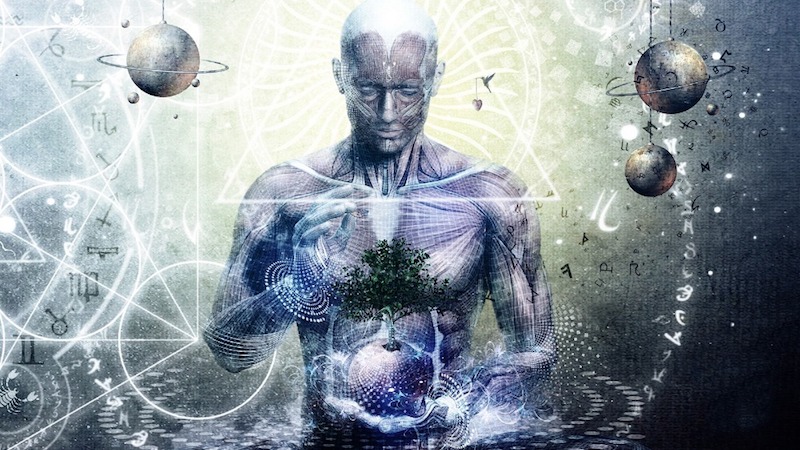
How to Transform Lambs into Lions

By Gary Z McGee

Source: The New Agora

“Rise and rise again, until lambs become lions.”

Step 1.) Realize that imagination is superior to reason:

“Necessary illusions enable us to live.” ~Ingmar Bergman

Before transformation, before self-empowerment, even before courage, there must be imagination. If you cannot even think outside your tiny lamb’s box, how will you ever be able to transform yourself into a lion powerful enough to trample it?

Thus, imagination is foremost. It is even more important than reason. Because reason is telling you that you’re just a little lamb stuck in a little lamb world with mighty wolf laws keeping you in check, docile, and immure. So, you will have to sacrifice reason to imagination in order to gain the wherewithal to challenge the system. Most of which is religious smoke and mirrors, a political song and dance, and merely a cultural cartoon playing itself out in your brain.

You must be able to transcend the box that has you thinking like a lamb before you can gain the courage to crush it. Mind must come before matter in this matter. It’s a delicate epistemological balancing act, a precarious existential highwire show, an intellectually Herculean task requiring Promethean audacity. And it is one that you will probably fail at.

This is because cognitive dissonance itself will be your greatest enemy. Which means you will be your greatest enemy. Therefore, the most important part of realizing that imagination is superior to reason is understanding the importance of staying ahead of the curve of your own human conditioning. In short: it means getting out of—and then staying out of—your own way.

This will require putting your Ego on a leash. Which will require resurrecting the only thing that can keep it on a leash: your Soul.

Step 2.) Take a leap of courage out of faith:

“It is the certainty that they possess the truth that makes men cruel.” ~Anatole France

After you’ve managed to think outside your tiny lamb’s box through the power of imagination, it’s time to crawl out of it. But how do you do that? The simple answer is courage. In particular: a leap of courage. In more particular: a leap of courage out of faith (rigid certainty) and into fortitude (flexible curiosity).

But first, we need some context. What exactly is it that’s buttressing your lamb’s faith? What is it in particular that’s propping up your lamb’s rigid certainty? What is it precisely that is keeping you conditioned, indoctrinated, and/or brainwashed into believing a certain way?

Put simply: it’s the pettiness of your ego. Put a bit more complexly: it’s the culturally conditioned aspect of yourself projected onto the world. Put concisely: It’s the socially constructed part of you that you have subconsciously used as an identity to engage with reality.

But what happens when—having used the power of imagination over reason—you finally realize that this culturally conditioned aspect of you is limiting you and keeping you inside the box? What happens when you finally see how it is the culturally constructed ego that is keeping you meek, weak, and courage-less in your lamb-hood? What happens when you finally understand what’s preventing you from becoming a lion?

Now enter Ego Death. Most people falsely assume that Ego Death means killing off the ego. This is not what it means. Ego Death means annihilation. The ego is annihilated in the “cocoon” of “death” in order to emerge as the “butterfly” of the soul. Ego Death is more of a rebirth than it is a destruction.

The metaphor of the cocoon is trite but important. The invulnerable ego must die in order for the vulnerable soul to be born. Certainty must die for curiosity to be born. Attachment must die for detachment to be born. Rigidity must die for flexibility to be born.

Taking a leap of courage out of your tiny lamb’s box (faith) must take place in order to cure the disease of certainty with the medicine of curiosity. Without curiosity there is no openness to new knowledge, there is no flexibility of thought, there is no plasticity of spirit. Without curiosity there is no way you will be able to integrate your shadow. Which is the next vital step in how to transform a lamb into a lion.

3.) Integrate the shadow:

“My devil had long been caged; he came out roaring.” ~Dr. Jekyll

With your curiosity in front of you and your certainty behind you, you now have the existential plasticity to face the Underdark of Yourself. Your certainty is shattered glass behind you as you walk “barefoot” into yourself. Your curiosity is a blazing light inside you, shining into the darkness, making the darkest parts of yourself light up into glorious conscious awareness.

Having been hidden, hushed, and repressed for so long, the shadows come alive. They dance with fierce revivification. They laugh with thirsty desire. They sing with jovial howls. They are finally seen, felt, heard. And they are hungry. Their appetite slams together inside you, a soul-quaking shockwave, shaking you to the core. They join forces to become the shadow aspect, the inner beast reborn, primal darkness incarnate.

It rises up inside you, an alien demon taking over, seemingly separate at first, but finally coalescent. In the end, you realize that it is more you than your previous self could have ever hoped to be. More real. More primal. More vital to becoming the best version of yourself than anything that could have come before. It transforms your delicate sheepishness into fierce lionheartedness.

You feel more alive than ever. A sacred alignment manifests. The pieces of your puzzled self-paradoxically click together. You feel whole, actualized, aware. Most of all, you feel hungry, thirsty, ravenous, voracious. Your lion appetite swallows your tiny sheep stomach whole. It’s finally time to eat—and eat well.

4.) Grow your teeth; sharpen your claws:

“We should go to heaven for form and to hell for energy and marry the two.” ~William Blake

Now that your shadow has been aligned with your light, it’s time to transform fear into fuel for the fire to come. It’s time to grow those teeth and sharpen those claws. It’s time for fierceness over pettiness, absolute vulnerability over resolute invulnerability, and courage over cowardice. In short: it’s time to start living a courage-based lifestyle rather than a fear-based one.

You do this by first honoring what came before. Honor the death of your Ego and its painful transformation into Soul. Honor the death of your naivete and its painful transformation into shadow alignment. Honor the death of your sheepishness and its painful transformation into lionheartedness.

Second, you must transform your roots into a crown. You must force your mortal coil into a vital halo. You must dig deep into the humus of your humanity and strike the primal lodestone. From the spark will come an energy that will sharpen your teeth, claws, and soul. It will propel you into animal greatness. It will teach you honor, humility, and humor. But it will also teach you fierceness, courage, and audaciousness.

It’s finally time to crush that outdated sheep’s box with your mighty lion’s paw.

5.) Draw a line in the sand; challenge all comers:

The increasing dependence on the State is anything but a healthy symptom, it means that the whole nation is in a fair way to becoming a herd of sheep, constantly relying on a shepherd to drive them into good pastures. The shepherd’s staff soon becomes a rod of iron, and the shepherds turn into wolves.” ~Carl Jung

How does a lamb transform fear into courage and become the brave lion who is capable of keeping wolves in check? The lamb must first put itself in check by questioning why it believes what it believes about the way the world works.

The lamb must ask itself: Are my beliefs culturally conditioned by a sick society? Have I been brainwashed into believing a certain way by a religious or political party? Do I just blindly obey out of fear of losing my comfort, safety and security? And, most importantly of all, once I realize I’ve been mistaken, will I cease being mistaken or will I cease being honest?

It’s a tricky tightrope between fear and courage. The way toward freedom is not for the faint of heart. Which is probably why there are so few lions among men.

A lamb that can manage to question its fear-based lifestyle—a lifestyle built upon blind obedience, addiction to comfort, and reliance on wolves to keep them “safe”—is a lamb that has the potential to become a courageous lion.

If a lamb can manage to become a courageous lion, then the next step is to reveal its courage to the world. This requires a complex recipe of trust, vulnerability, adaptability, and risk-taking.

Lions realize that life is a risk. They embrace that risk with honor and courage. Where sheep fear making waves, lions relish in it. For they realize that sometimes you must rock the boat to keep it afloat.

Life is too short to be a bystander. Lions take a stand. They draw a line in the sand. They bare their teeth. They show their claws. They crush ultimatums through the power of their own moral autonomy. They ruthlessly reveal why the buck must stop here.

Lions are all too willing to cause trouble when the culture itself is troubled. They must. Trouble be damned! When society fails to regulate itself, the lionhearted must regulate society. This has always been the task of lions.

Alex Schlegel on Imagination, the Brain and ‘the Mental Workspace’

By Rob Hopkins

Source: Resilience

What happens in the brain when we’re being imaginative?  Neuroscientists are moving away from the idea of what’s called ‘localisationism’ (the idea that each capacity of the brain is linked to a particular ‘area’ of the brain) towards the idea that what’s more important is to identify the networks that fire in order to enable particular activities or insights.  Alex Schlegel is a cognitive neuroscientist, which he describes as being about “trying to understand how the structure and function of the brain creates the mind and the consciousness we experience and everything that makes us human, like imagination”.

He recently co-published fascinating research entitled “Network structure and dynamics of the mental workspace” which appeared in Proceedings of the National Academy of Sciences, which identified what the authors called “the mental workspace”, the network that fires in the brain when we are being imaginative.  I spoke to Alex via Skype, and started by asking him to explain what the mental workspace is [here is the podcast of our full conversation, an edited transcript appears below].

This is maybe just a product of the historical moment we’re in with cognitive neuroscience researching, that most of neuroscience research, I think I would say even now, is still focused on finding where is the neuro correlate of some function?  Where does language happen?  Where does vision happen?  Where does memory happen?  Those kinds of things.

It was very easy to ask those questions when fRMI came around, because we could stick someone in the scanner and have them do one task, and do a control test, and then do the real test, and see what part of the brain lights up, in one case rather than the other.  Those very well controlled reductionist kinds of paradigms behind these very clean blobs where something happens in one case versus the other.  I think that led a lot to the story of one place in the brain for every function and we just have to map out those places.

But in reality, the brain is a complex system.  It works in a real world which is a complex environment, and in any kind of real behaviour that we engage in, the entire brain is going to be involved in one way or the other.  Especially when you start to get into these more complex abilities that are very hard to reduce to this highly controlled A versus B kind of thing.

To really understand the behaviour itself, like imagination, it’s not that surprising that it’s going to be a complex, multi-network kind of phenomenon. I think why we were able to show that is maybe primarily because the techniques are advancing in the field and we’re starting to figure out how to look at these behaviours in a more realistic way. One of the big limitations of cognitive neuroscience research right now, because of fMRI, because of the techniques we’ve had, is that we tend of think of behaviour as activating, or not activating the brain.

When we’re doing analyses of brain activity, we’re looking for areas that become more active than another. This is changing a lot in the last few years, but at least for the first fifteen, twenty years, that was one of the only ways we would look at brain activity. So it simplistically thinks of the brain as of some other organ where it’s either buzzing, or it’s not buzzing, or it’s buzzing, or it’s not buzzing, or if it buzzes, the language happens. But really the brain is a complex computational system.

It’s doing complex computations and information processing and that’s not something you’re really going to see if you’re just looking for, in a large area, increased versus decreased activity. When we start to be able to look at the brain more in terms of the information that is processing, and where we can see information, how we can see communication between different areas, then you can start to look at things like imagination, or mental workspace, in a more complex light.

So how does that idea sit alongside the ideas firstly of the ‘Default Network’, which is often linked to creativity and imagination as well, and also to the idea that the hippocampus is the area that is essential to a healthy, functioning imagination?  Do those three ideas just fit seamlessly together, or are they heading off in different directions?

I can give you my opinion, that’s not very well founded in any kind of data, but this is something that we’ve talked about a lot in the lab.  I have a suspicion that actually we had been thinking about how to test for a while.  So the Default Mode Network was first seen as this network that would become more active in between tasks.  So when we’re doing an fRMI experiment what we’ll usually do is you’ll have some period where you’re doing the task, and then there’s a period where you’re just resting, so you can get the baseline brain activity when you’re not doing anything.  And this was a surprising result, is that actually during rest periods, some areas of the brain become more active.  And, you know, “Oh wow, it’s a surprise, the person’s not just sitting there blankly doing nothing.”  The brain doesn’t just totally deactivate.  They’re doing other stuff during those blank periods where there’s no stimulus on the screen.

From my personal experience, what you do in those rest periods is you daydream.  Your mind wanders.  You think about what you’re going to do afterwards, or stuff that’s happened during the day.  There’s a lot of research since then to back that up.  It seems to be this kind of network that’s highly involved in daydreaming like behaviour, or social imagination, those kinds of things.

My opinion, or my suspicion, is that this is illustrating how our term ‘imagination’ really encompasses a lot of different things.  When you try to lump it under this one term, this one mega term, you’re going to be missing out on a lot of the complexity, or subtlety.  So what I suspect is going on is that there’s this more like daydreaming mode of control over your inner space, where you’re not really consciously, volitionally, directing yourself to have certain experiences.  There’s a default control network that’s more taking over the daydreaming.

When I daydream I’m not trying to think about anything, it’s just letting the thoughts come.  That’s maybe part of what imagination is, but a very important part of imagination is you trying to imagine things, trying to direct yourself, thinking, “Well, what is the relationship between these two things?  Or “how can I build community?””  Or something like that.  In that case you’re taking active volitional control over these systems.  So that would be my suspicion of what’s going on.

How the results we found would differ from default mode network is that in our study we would show people some stimulus (see below) and we would say, “Rotate this 90 degrees clockwise”, so they had this fairly difficult task that they had to do and it was effortful.  This more frontal parietal network probably took over then.  And you see that a lot in other studies.  Our frontal parietal, I think they sometimes call it like an Executive Attention Network, that directs when you’re consciously trying to engage in some tests, that takes over, and if you’re not doing anything, the default mode network takes over.

So they’re both different manifestations of the imagination?  Like an active and a more passive, less conscious version?  They’re two versions of the same thing, in a sense?

Yeah, I would think that.  It fits well with what I’ve seen.  There have been studies that show that they’re in some ways antagonistic or mutually inhibiting, the default mode network and this executive attention network…

It’s like oil or water, it’s one or the other?  Or Ying and Yang, as I’ve read in some papers?

Right, but a simple way of describing these that people often resort to is that the Executive Attention Network is designed for attention to the outside world, and the Default Mode Network is attention to the inner space.  Where I would disagree with that, or suggest that that’s not the case, is that I think a better way to classify it would be that executive attention is more of this volitionally driven attention, which is usually associated with attention to the outside world.  And default mode network is more – I don’t know how to describe it exactly, but it’s more of this daydreaming network.  But the point is that your executive volitional attention can be driven to the inner space just as much as it can be driven to the outside world.

Is the mental space network the same kind of network that would be firing in people as when they’re thinking about the future and trying to be imaginative about how the future could be?

Yeah, I would think so.  I think an important difference, or an important additional part that you might start to see if you’re thinking about imagining the future, is that practically most of the time when you’re imagining the future, you’re thinking about people, and social groups, and how to navigate those kinds of dynamics.

So I would guess that then you would get added into the mix all the social processing networks that we have.  That’s actually another thing that we’re thinking about how to look at, is that practically a big chunk of human cognition is spent thinking about your relationship with other people, and how to navigate that.  There’s a good argument to be made that that kind of complex processing space was one of the main drivers of us becoming who we are.  Because social cognition is some of the most complex cognition we do, trying to imagine what somebody’s thinking by looking at their facial expression, or imagine how do I resolve a conflict between these two people who are fighting.  Things like that.

We do have very specialised regions and networks in the brain that have evolved to do that kind of processing.  So yeah, it’s a very interesting question.  That how would these other mental workspace areas, at least that we looked at, that had nothing to do with it, you know, it’s like, “Here’s this abstract shape.  What does it look like if you flip it horizontally here”, things like that.  How would they interact with these socially evolved areas?  It’s a very interesting question.

A lot of the research that I’ve been looking at is about how when people are in states of trauma, or when people grow up in states of fear, that the hippocampus visibly shrinks and that cells are burnt out in the hippocampus, and that people become less able to imagine the future.  People get stuck in the present, and it’s one of the indicators, particularly with post-traumatic stress, is that inability to look forward, and inability to imagine a future.  Do you have any knowledge of, or any speculation about, what happens to the mental workspace when people are in states of trauma or when people are in states of fear?

Definitely no data, only speculation.  As with anything real and interesting involving humans, it’s going to be incredibly complex.  So it would be very difficult, and may be impossible to distil it down to simple understandable things that are happening in the brain, but what I would guess is that, in people that are in stressful situations, and experiencing trauma, you tend to focus – like you were hinting at – you tend to focus on present.  What’s there immediately?  How do I survive this day?

You don’t tend to think much about planning for the future.  Synthesising everything that’s happened to you in the past, you just react in the moment because you don’t know what the next moments are going to be like.  It’s no more cognitive load that you can deal with because of all the stress you have.  So I would guess that for one you’re not really synthesising or processing your experiences into something brought to bear on decisions in the future as much.

And you’re not exercising those muscles of planning far into the future.  So just like any other muscle in the body, if you don’t practice the skills, and you don’t use various parts of your brain, they’re going to atrophy.  They’re not going to develop in the way that they would if you did use them.  In that sense it seems perfectly understandable and not that surprising that these areas and these networks that we found associated with these kinds of activities of projecting oneself in the future, or imaging that things don’t exist, in people for whatever reason aren’t doing that kind of thing regularly in their lives, they’re not going to be developed as much as they would from people that were happy and healthy and imaginative.

The paper that Kyung Hee Kim published in 2010, ‘The Creativity Crisis’ suggested that we might be seeing a decline in our collective imagination.  Do you have any thoughts on why that might be, or what might be some of the processes at work here?

I could speculate a couple of things.  The first thing that pops to mind obviously is education.  How we think about the educational system, how we train children.  And I don’t know about 1990 in particular but definitely starting in 1999 when we became test-crazed, that would be a very obvious culprit.

One thing to think about with the Torrance test and pretty much all tests, these standardised tests of creativity that we use, is that one of the major components that determines the outcome on the test is this divergent thinking idea.  How many ideas can you come up with?  So this has, I think, fairly detrimentally become one of the working definitions we have in psychology research of creativity, is “how much?”  And not really focusing on quality so much, and just using how many ideas you can think of as a stand in for how creative someone is.

The Torrance Test is better because it does get into other dimensions as well, but still some of the major dimensions determining the score are fluency, when you’re doing these drawings, how many components are there in the drawing?  That kind of thing.  So for instance if there were educational trends starting in the 1990s and continuing to now that were leading people to try to converge rather than diverge – you know, “What’s the one right answer?” versus, “What are lots of possible answers?” – then that could definitely lead to these changes we’ve been seeing in the tests.

Even if that were the case though, is that really a problem? Obviously we want people to be able to think of lots of possibilities but if it’s just, for instance, people who have been brought up in an educational system where they’ve been taking standardised tests all the time, and they’re trying to figure out which of the four bubbles is the right one to fill in, then that could just be a habit they’ve developed that carries over to these tests.  I don’t know exactly.

Another idea that maybe would be related to this is we’re definitely much less idle than we were in the past.  I guess we lament all the time how overscheduled kids are.  They go from soccer practice to band practice to art class, to blah, blah, blah, blah, trying to fill up their resume for college or whatever.  So if somebody is just constantly buzzing, busy, not really just stopping and daydreaming, and throwing rocks in creeks or whatever, then that’s again, it’s a habit they’re not going to have developed and they’re not going to be able to use as well.

This idleness, or giving up control to the Default Mode Network maybe, if you will, letting those ideas come in, exploring possibilities, those are things that I think often come out of boredom. And if you’re never bored, you’re never really letting those processes happen.  So that would be another thing to think about.

So if somebody is less imaginative, is that because that when the mental workspace fires, it’s including less places, or that it’s joining them up less vigorously? I don’t have all the terminology.  It all fires, but it fires to less places?  Or it fires less strongly to all those different places?

I think it would be basically everything, to give you a terrible answer.  For instance, this is where we’re really getting at how imagination is a very, very complex process that we’re distilling to a single word, and it’s really thousands of parts to come together.

For instance, if you can imagine visual experiences more or less vividly, then that’s going to play a role.  Somebody who can have very vivid mental images of things is going to probably have an easier time recombining things than somebody who really struggles to form a visual image.  Or on the flip side, there’s a lot of circumstantial evidence that people tend to go to one end or another of being very visual people, and I consider myself on those…  When I think, I tend to think a lot in terms of visual representations.  So it’s very easy for me to do the kinds of tasks that I ask subjects to do, where you know, “Here’s this weird random shape, what would it look like if it was rotated 90 degrees?”

Some people have a really hard time doing that kind of stuff though.  They’ve very smart people, but they’re just terrible at mentally manipulating images.  But if you have them think about other things, like more verbal kinds of verbal logical representations, they’re really good at that.  So even trying to talk about the mental workspace network as one static network of areas in the brain is probably not true, or probably not accurate because different people will have different connections, or different parts of it will be more active than others.

When I’m trying to mentally imagine things, for some people like me, that might involve mental or visual images, and that’s the way I think about it, but for other people it might involve much more the language areas of the brain, exercising that language network in a more mental way.  And that might lead to strengths for some people versus others, and vice versa, depending on what kinds of tests you’re trying to do, or whether you’re a verbal person that’s being forced to try to do something visual, or vice versa.

So given that these networks are involved are these complex information processing systems, there’s any number of ways where they can differ or fail, or become strengthened or become atrophied.

One of the questions I’ve asked everybody that I’ve interviewed has been if you had been elected last year as the President on a platform of ‘Make America Imaginative Again’, if you had thought actually one of the most important things we need is to have young people have a society that really cherishes the imagination, an education system where people come out really fired up and passionate, what might be some of the things you would do in your first 100 days in office?

First 100 days?  Well I think the real solutions are things that are more like 20 year solutions.  So you can start at a 100 days I guess but you definitely won’t solve it in 100 days.  For me it all comes down to how we choose to educate people.  I come at this all from a perspective of the US education system, so one thing is that we don’t view a teacher as a profession really, in the same way that we do as a medical doctor, or a lawyer.

I would say we need the equivalent training and residencies and professional degrees for teachers that we would have with anything else that’s as important a profession as teaching is.  Obviously we shouldn’t be focused on tests in the way that we are.  If you teach tests, and you teach to the kind of competencies a child should achieve by fifth grade, you’re going to be ignoring all the things that are hard to measure, for one thing, like imagination, creativity, curiosity.  How do you evaluate whether a kid’s curious?  I don’t know.

One of the changes I would want to see is that we trust more that the outcomes that we want will come rather than need to see them happen, because if you need to see a result, then you’ll only focus the things that you can see.   And for a lot of what education really does, it’s very hard to measure it in any reliable way.  If your goal is create a society of people that are civically engaged, that are curious, that are creative, compassionate, that’s all stuff that you just have to set up a system to do that, and hope that the outcome you measure will be the society you create, basically.  So that it frees you to focus on those things, and not focus on maths skills, reading skills, that kind of thing.

So in the first 100 days, what do you do? I don’t know. One concrete thing you could do is try to reorganise the teacher training system to make it more professionally aligned.

Like they have in Finland, where teachers are basically trained to Masters level, and then there’s no testing in schools of teachers.  They are then just empowered to teach, and they have the most amount of play and the shortest school hours of any country in Europe, and they constantly gain the best results and the brightest students.

Maybe that would be the first thing we could do, just copy Scandinavia.

The Search for Meaning in Modern Life

By Kingsley L. Dennis

Source: Waking Times

Every good story about a search begins with a tale. So, here’s one; it’s a tale about a magician who gave a dinner for his neighbours.

There was once a Magician who built a house near a large and prosperous village. One day he invited all the people of the village to dinner. ‘Before we eat,’ he said, ‘we have some entertainments.’

Everyone was pleased, and the Magician provided a first-class conjuring show, with rabbits coming out of hats, flags appearing from nowhere, and one thing turning into another. The people were delighted. Then the Magician asked: ‘Would you like dinner now, or more entertainments?’

Everyone called for entertainments, for they had never seen anything like it before; at home there was food, but never such excitement as this. So, the Magician changed himself into a pigeon, then into a hawk, and finally into a dragon. The people went wild with excitement.

He asked them again, and they wanted more. And they got it. Then he asked them if they wanted to eat, and they said that they did. So the Magician made them feel that they were eating, diverting their attention with a number of tricks, through his magical powers.

The imaginary eating and entertainments went on all night. When it was dawn, some of the people said, ‘We must go to work.’ So the Magician made those people imagine that they went home, got ready for work, and actually did a day’s work

In short, whenever anyone said that he had to do something, the Magician made him think first that he was going to do it, then, that he had done it and finally that he had come back to the Magician’s house.

Finally, the Magician had woven such spells over the people of the village that they worked only for him while they thought that they were carrying on with their ordinary lives. Whenever they felt a little restless he made them think that they were back at dinner at his house, and this gave them pleasure and made them forget.

And what happened to the Magician and the people, in the end? Do you know, I cannot tell you, because he is still busily doing it, and the people are still largely under his spell.

Modern life is much like this tale – we live under a magician’s spell – and the magician is called Modernity. Modernity, especially as it emerged in western, industrialized cultures, created a system that put a spell on us. And this spell is principally promoted through our mainstream medias. Whether rationally, instinctively, or deep in our hearts, most of us know that something is not right about how human societies are managed. Human life is not yet in balance. And too many people still live in fear.

We are manipulated by our mainstream medias at unprecedented levels, and constantly fed with a controlled flow of information. This process is the old mind of humanity, still operating through control, censorship, and consumerism. In this way our contemporary societies are increasingly centered around emotion to a degree that allows people to be entertained as well as manipulated like never before. What we may be less aware of is that the human being is driven by an evolutionary energy that manifests through mental, emotional, and physical/sexual processes. This energy can be used to develop and drive us forward, or it can be hampered, blocked, and manipulated into slowing down our development. Mental, emotional, and physical/sexual energies are all necessary components of the social human being. If we take just a casual look at our mainstream media, entertainment, and social attractions/distractions we will readily see that these are the very areas which are targeted by the ‘culture of spectacle’ that is modern society.

Ancient religious-spiritual traditions have long talked about such ‘energy predators’ that are said to feed off from unstable human mental and emotional states. The early gnostic Christians referred to some of these as the Archons; various North American Indian tribes refer to Wetiko/Wendigo; Don Juan in the Carlos Castenada books refers to the Predators; and South American shamans have long talked of spirits that feed off from and fragment the vulnerable human inner state/soul.

We must wonder why it is that our modern cultures promote entertainments that manipulate and play upon excessively distorted images of mental and emotional anguish as well as exaggerated portrayals of sexuality. Furthermore, we are bombarded daily with images of death. In fact, a recent study into western media announced that the most repeated word in media is ‘death.’ Further, it revealed that in the first twelve years of a child’s life they would have been subjected to around 20,000 murders through television news and programs, films, online content, and video games. These forms of stimulation directly target a person’s mental, emotional, and physical states, which in turn hampers the operation of harmonious, developmental energies.

Modern life is increasingly a life addicted to high stimulation. Yet by its very nature it also creates anxiety. Many people are forced, or seduced, into lives that are continually stressful and busy. There is no room for the spaces, the intervals, of internal reflection. Yet similar to how music is not music without the intervals, so is life not a life without those internal spaces.

We spend our days trying to grasp at life, trying to understand it, often with ways that are not adequate. It is like trying to capture the ocean with a bucket. The ocean stands magnificently before us, and yet so many of us in modern societies are running around anxiously with empty buckets in our hands. We’ve been told that only full buckets are of any use – full buckets represent usefulness and progress.

Here is another story:

A man had two large pots, each hung on an end of a pole which he carried across his neck. One of the pots had a crack in it, and while the other pot was perfect and always delivered a full portion of water at the end of the long walk from the stream to his house, the cracked pot arrived only half full.

For a full two years this went on daily, with the man delivering only one and a half pots full of water to his house. Of course, the perfect pot was proud of its accomplishments, feeling accepted and appreciated. But the poor cracked pot was ashamed of its own imperfection, and miserable that it was able to accomplish only half of what it had been made to do. After two years of what it perceived to be a bitter failure, it spoke to the man one day by the stream.

“I am ashamed of myself, and I want to apologize to you.”

“Why?” asked the man. “What are you ashamed of?”

“I have been able, for these past two years, to deliver only half my load because this crack in my side causes water to leak out all the way back to your house. Because of my flaws, you have to do all of this work, and you don’t get full value from your efforts.” the pot said.

The man felt sorry for the old cracked pot, and in his compassion, he said, “As we return to my house, I want you to look at the beautiful flowers along the path. It will make you feel better.”

Indeed, as they went up the hill, the old cracked pot took notice of the sun warming the beautiful wild flowers on the side of the path, and this made it feel a little happier. But at the end of the path, it still felt bad because it had leaked out half its load, and so again the Pot apologized to the man for its failure.

The man said to the pot, “Did you notice that there were flowers only on your side of your path, but not on the other pot’s side? That’s because I have always known about your flaw, and I took advantage of it. I planted flower seeds on your side of the path, and every day while we walk back from the stream, you’ve been watering them. For two years I have been able to pick these beautiful flowers to take home to my wife. With you being just the way you are, you have given beauty and meaning to me every day.”

The way we are can give us beauty and meaning every day, and yet it seems we are living in a world of decreasing meaning. Our modern systems strive for perfection – for progress and efficiency – yet there is less and less happiness.

And the situation is worse in modern western cultures where so many people are seemingly dissatisfied even when they have acquired most things to keep them happy. Perhaps a society that provides superficial comfort produces conditions that do not develop people or cause them to turn an inward gaze or to question notions of their meaning and existence. It is important that other cultures do not follow this western model of superficial consumerism.

It is unfortunate that the meaning of life is often a meaningless question to so many people. Seeking the ‘unnamable’ might sound like madness to many people, and certainly there is little place for it in modern societies that prize themselves on progress. And yet a life that seeks meaning is its own adventure. The ‘unnamable’ does not need to be named – only recognized internally. The external world is not the only reality that exists for us.

The attitude of the modern-day person to the ‘world outside’ has largely been one of hostility – we have been conquering the external world for the most part of human history, instead of mastering our own inner nature. This hostile attitude ignores the reality that all life is interdependent and that our lives are a projection of our inner realities – that is, our fears, anxieties, and insecurities become projected into the world the same as our hopes, visions, and dreams. Whatever we project externally eventually becomes our sense of reality.

We all share a collective reality, despite our cultural differences. Although it alters depending upon where we were born and in which cultures we live, the methods each modern system uses are basically the same – we are provided with beliefs, cultural references, and norms and attitudes. The writer Doris Lessing referred to this as ‘The prisons we choose to live inside.’ And within these psychological prisons many people, as well as the institutions of the modern world, have rejected the wisdom of sages, mystics, philosophers, and even the voices of creative artists. They prefer instead the superficial trappings, entertainments, and technological distractions of the consumerist marketplace. Now, I wish to be clear here – I am not anti-technology. In fact, I am a great supporter of it; but not at the expense of the human vision. Despite the technological progress of the external world, there must always be a developed interior world to observe, reflect, and to question it. Without this, the exterior life is unleashed without values. Without an interior life to seek for significance, what gives meaning to our lives?

So, what is the ‘interior life’? There are no instruction sets for how to live a human life – and we live in a world where more and more people are at a loss to know either why they live or why they die. In life we must strive to examine the human condition.

Modernity has attempted to reinterpret the human condition – to see it as an external drive for progress – and this has resulted in a separation from our need to seek an essential inner self. This modern project has sought to divorce the human being from their imperative to find meaning in existence. The human project, if we wish to call it that, can never be ‘completed’ – it is an eternal quest to always be becoming. Here is a quote I would like to share:

‘When you have found yourself you can have knowledge. Until then you can only have opinions. Opinions are based on habit and what you conceive to be convenient to you. The study of the Interior Life requires self-encounter along the way. You have not met yourself yet. The only advantage of meeting others in the meantime is that one of them may present you to yourself. Before you do that, you will possibly imagine that you have met yourself many times. But the truth is that when you do meet yourself, you come into a permanent endowment and bequest of knowledge that is like no other experience on earth.’ ~TARIQAVI

What we are truly seeking for – and what the interior life can show us – is power over ourselves: not for power over others.

The world is in need of soulful healing, not power-seeking through corruption and manipulation. The world requires healed, integrated, and balanced people; for that which we lack in ourselves we shall always find lacking in the world outside. Also, there are many external forces in the world that are trying to make us live not according to our own sense but according to dominant social narratives. We are told that we must live according to certain social narratives that generally benefit those systems that have no interest in the human soul. And when we deny ourselves such essential nutrients we find that we have a discomfort within us. People are taking increasing amounts of antidepressants, or stimulants; as well as relaxants – we take drugs to bring us up and other drugs to take us down. We are open and vulnerable to the energies of discouragement. Here is a tale about the price of discouragement:

Once the word spread that the devil was pulling out of his business and was arranging to sell-off all his tools of the trade to the highest bidder. The night of the sale all the tools were arranged for the bidders to view. What a motley crew it was! There were sinister tools of hatred, jealousy, envy, malice, treachery, plus all the other elements of evil. Yet besides these there also was an instrument that seemed harmless, a wedge-shaped instrument that appeared worn out, shabby, and yet was priced so much higher than all others. Someone asked the devil what was the name of such a poor-looking instrument.

‘Discouragement,’ answered the Devil.

‘And why is the price so high for such a non-malicious sounding instrument? asked the bidder.

‘Because,’ spoke the Devil, ‘this instrument is more useful to me than any other. I can enter the consciousness of a human being when all other ways fail me and once inside through the discouragement of that person I can do whatever I please. The instrument is worn out because I use it almost everywhere and as very few people know about this I can continue to successfully achieve my goals.’

And as the price of discouragement was so very, very high even today it remains a tool in the property of the Devil.

The price of discouragement is a price too many people are paying – and it is a high price (as the devil knows!)

It is a common situation that we tell people at work we are happy when for much of the time we are not. We buy more and more items to feel happiness within ourselves or to buy happiness in others. People in modern cultures continue to accumulate goods and possessions whilst feeling empty within. Such consumerism empties our pockets and fails to fill our souls. And not only our physical lives become crowded with belongings but our psychological spaces too. We are crowded with those belongings that have accumulated as psychological attachments: the beliefs, ideologies, nationalisms, opinions, likes, dislikes, and all the rest. We are often cluttered in our minds by belonging to this and that and all the other things that we cling to or that cling to us. And this is where some of the disruptions are, and will continue to come from, because our belongings are now breaking apart. As our social, cultural, economic, and work lives go through change and transformation – as they are currently doing – then the clinging to old ‘belongings’ will only serve to cause greater confusion and disorientation. Already it seems as if we are living in a world that is displaying increasing outward signs of craziness and psychopathic tendencies. We must ensure that the world never has more critics than visionaries, or more complainers than positive doers. We must ensure that we do not lose sight of our frameworks for meaning.

Pre-modern societies, for example, lived within their own frameworks of meaning. Not all questions had their answers, yet mysteries and the mysterious at least had a home in which they could exist. We often live today within an atmosphere of meaningless questions and contradictory answers. The pursuit of meaning is being replaced by the pursuit of progress. Progress may alleviate some of our suffering and pains, yet it shall never compensate for the lack of fulfillment we feel inside, for this requires metaphysical or transcendental nourishment. Any notion of the spiritual, or the metaphysical, is often considered not essential to our daily life, and we are taught to dismiss it. Modernity’s task was thus seen as freeing us from the illusions of transcendence. And yet the desire, or the need, for some Absolute remains deep within us and can never be totally eradicated. Perhaps it is this contradiction that lies at the heart of our contemporary distress.

Modern life also tries to eradicate, or at least hide, all sense of enigma. Yet it is precisely these enigmas that make our lives rich in wonder and awe. To attempt to abolish them is an act of great ignorance and hubris. Unanswerable questions must be embraced and not rejected. Mystery and the mysterious must be allowed a space to thrive and enthrall us. It is this sense of mystery that keeps us curious, and curiosity is one of our driving, motivating forces.

Modern societies may well praise their sophisticated intellectual culture, yet it comes at the cost of having a deteriorated spiritual culture. That which belongs to the experience of the human soul is considered not only incommunicable, but rather dangerous to communicate. In the end, life’s mysteries are kept out of sight because they cannot be fully known and thus controlled. There is a spell upon us, and we are being distracted from the essential. Here is another tale:

A lion was captured and imprisoned in a reserve where, to his surprise, he found other lions that had been there for many years, some even their whole life having been born in captivity. The newcomer soon became familiar with the activities of the other lions, and observed how they were arranged in different groups.

One group was dedicated to socializing, another to show business, whilst yet another group was focused on preserving the customs, culture and history from the time the lions were free. There were church groups and others that had attracted the literary or artistic talent. There were also revolutionaries who devoted themselves to plot against their captors and against other revolutionary groups. Occasionally, a riot broke out and one group was removed or killed all the camp guards and so that they had to be replaced by another set of guards. However, the newcomer also noticed the presence of a lion that always seemed to be asleep. He did not belong to any group and was oblivious to them all. This lion appeared to arouse both admiration and hostility from the others. One day the newcomer approached this solitary lion and asked him which group he belonged to.

‘Do not join any group,’ said the lion. ‘Those poor ones deal with everything but the essential.’

‘And what is essential?’ asked the newcomer.

‘It is essential to study the nature of the fence’

A whole society can be distracted. There is a pertinent analogy here to how, in 256AD, the Persian army took Antioch from the Roman Empire. Many of the inhabitants were attending the roman theatre and were oblivious to the enemy archers who had climbed up behind them into the stands. The actors down below had seen the enemy archers and were desperately trying to warn them with hand signals…but the audience did not understand, thinking it part of the entertainment – until it was too late. They were amused up to the point of death. Perhaps we too, in the words of social critic Neil Postman, are ‘Amusing ourselves to Death.’

Understanding Our Place In The World

The only genuine freedom is to be found by turning within ourselves. The human being is naturally an imaginative and creative creature. Reality may be harsh and painful, yet it is also the realm of so much wonder and awe. We may live our lives playing in the mud, yet our minds can reach the stars. Our science can reach into the molecule as well as penetrate into the formation of the universe. Our mystics and sages can reach into the pulsating heart of the cosmos. The human being has an inner dimension that needs to be investigated and which, in turn, is timeless.

It is my view that the role of imagination – the interpenetration of the interior world – is crucial. It is what fuses together that which is above to that which is below. It is also a channel for intuition; and it is through intuition that we get closer to the essential. The inward gaze forever attempts to reveal the role of the human being, and what makes us human. It is about trying to understand our place in the world and our shifting views of the world. And right now, we find ourselves at a crucial point in human history.

Life on this planet is undergoing a great change. There is a revolution coming as people, especially the young people, develop their ways of communication, collaboration, and a new consciousness. We are seeing examples of empathy and compassion from young people around the world, as well as innovation, creativity, and inspired motivation. I have stated before that we are shifting into an epoch where new value sets will emerge as the dominant traits.

[1] And some of these values are already being expressed within our younger generations. I refer to these as the ‘C’ values of Connection – Communication – Collaboration – Consciousness – Compassion. Such changes will come into our lives, yet not overnight. It is not like flicking on a light switch. I expect it will be a process where much soul-searching and the questioning of our meanings and values will have to occur beforehand. However, it is not all about violence and thuggery, despite what our mainstream news may be showing us. There is a change emerging across the planet, and this change shall arise from within, through a new understanding of the human spirit, and of our place not only in our local cultures but also within a shared, planetary home. These are critical times of transition – and of momentous importance to us.It is important to recognize that we are undergoing a shift from localized cultures into a period of becoming planetary citizens. Nationalisms will need to become secondary, or put aside altogether, as we come closer together as a global species. And this significant transition is dissolving our securities, our belief systems, and our models of reality. Everything around us is beginning to shake – and so is the earth, literally. We can no longer remain within the old narratives. We are in need of new worldviews, both as individuals as well as within our communities and societies. What we now need is genuine and sincere far-reaching vision. And in our mainstream cultures we are also lacking hope and trust, especially in our socio-political systems. What is now essential is hope and trust in humanity, and in the richness and resilience of the human spirit. We are on the cusp of a different world coming into being, and at its centre shall be the human heart and soul. There can be no genuine, lasting future if it is based solely on the exterior life – it must be driven by the values that come from the interior of the human being.

To be prepared for the future world that is now emerging before us we must adapt our thinking and our consciousness to all possibilities. What we first need is a genuine change of mind:

God decided to come down to Earth for a quick look at how creation was coming along.

God approached Earth and happened to look at a big tree full of howling monkeys. As God looked down, one of the monkeys happened to look up and saw God.

The monkey became excited and started to shout: ‘I see God…..I see God!’

None of the other monkeys paid any attention. Some thought the monkey was crazy or perhaps just a religious fanatic. They went on about their daily lives of collecting food, taking care of their young, fighting with each other, etc., etc. Not getting any attention, our monkey decided to try to get attention from God, and said:

‘God, Almighty, You are the Beneficent, the Merciful, please help me!’

In an instant, the monkey was transformed into a man living in his own human community. Everything changed, except for one thing: the monkey’s mind. The monkey immediately realized that could be a problem.

‘Well, thank you God, but what about my mind?’

‘That,’ said God, ‘you will have to change yourself.’ 

As in this story, we have the human form. The next step is for us to assume the responsibility for the correct level of consciousness. It is as simple and as difficult as that.

We have to accept the responsibility for our own choices and actions; and also, how we choose to respond to events. Everything begins and ends with ourselves, and anything other than this is an excuse, no matter how plausible it may seem to us. As creative, imaginative beings we invent and innovate. At the same time, we are masters at inventing our own false stories and imaginings that self-deceive. In this regard we must choose carefully where we wish to put our attention, time, and efforts. After all, when we visit a beautiful garden do we choose to sit by the roses and savour their sweet smell, or to sit amidst the weeds that prick us? It is important to gift ourselves moments of joy, for joy is an infectious energy – and it shares easily too.

It is up to us to choose those moments, events, and circumstances to engrave upon our memories and heart. It is also about choosing what things to forget. Most of the things we encounter or accumulate we would be best to give up, or give away. We should only keep the few, thus ensuring the quality and integrity of those things we keep close to us. Here is another tale:

An Arabian legend tells of two friends who were travelling through the desert and at one point they fell into disagreement about the trip whereby one of the friends slaps the other across the face.

The friend who had been slapped said nothing, only wrote in the sand: ‘Today my best friend slapped me in the face.’

Both friends continued on their journey and eventually arrived at an oasis where there were baths to refresh themselves. The friend who had been slapped jumped into the large baths yet soon found himself starting to drown. The other friend immediately jumped in after him and saved him. After recovering the first man took a pen and wrote on a stone: ‘Today my best friend saved my life.’

Intrigued, the friend asked: ‘Why is it that after I hurt you, you wrote in the sand and now after saving you, you write on a stone?

Smiling, the other friend replied: ‘When a good friend offends us, we write in the sand where the wind of forgetfulness and forgiveness will be responsible for clearing it off; on the other hand, when something great happens to us, we burn it into stone in memory of the heart where no wind in the world can erase it.’

We build up and develop our own interior world by all the small things and moments we choose to engrave upon our heart, spirit, and soul. We can choose those things we wish to line our forward path with.

Choosing Our Path

We should not be afraid to talk about things of the spirit – to be present with spirit and to live with it in our everyday moments. As Bob Dylan says, those who are not busy being born are busy dying. We are representatives of the spirit, and so should seek to be present to this, without the urge for external showing-off. There is no need for acting weird or strange; to wear odd clothes or follow customs antagonistic to the culture in which we are living. We may think and feel differently, and have experiences that are beyond the accepted, normal ken. Yet to revert to odd external behavior only shows that we are unable to internalize and stabilize these experiences and energies. To all purposes, there is nothing wrong in appearing normal to the outside world. To engage with the spirit, we may have to first learn how to be still, without being bored. There are already enough active distractions in the world as it is – why add more?

It is a normal request to ask for ‘practical things.’ People want to find activities, acts, exercises, and rituals to help them along their own path of development. And the world offers many of these things, in varying degrees of genuineness, sincerity, and effectiveness. Yet sometimes being given an action to attend to belittles the process of the initial search. For me personally, I am unable to give specific remedies for the search for meaning, other than to say that a person must first experience what this longing, this need, feels like. We are catalysts for our own search for meaning, and each path is walked differently. To begin with, we must learn how to articulate this need. This will then begin the course of one’s life that will forever alter what comes after. We are compelled to trust our instincts, our intuition, and to take the appropriate response. We are not here in this life to live like ghosts amongst the phantasms of the world. We always have an internal choice, and this should not force us to surrender into the abyss of mass insanity. As the story goes,

There was once a wise and powerful king who ruled in a remote city of a far kingdom. And the king was feared for both his might and his love of wisdom. At the heart of the city was a well whose water was cool and crystalline, and all the inhabitants drank from this well, even the king and his courtiers, because there was no other well in the city. One night, while everyone was asleep, a witch entered the city and poured seven drops of a strange liquid into the well, and said:

‘From now on, anyone who drinks this water will go crazy.’

The next morning all the inhabitants drank the water from the well, except the king and his lord chamberlain, and very soon everyone went mad, as the witch had foretold. During that day, all people went through the narrow streets and public places whispering to each other:
‘The king is mad. Our king and his lord chamberlain have lost their reason. Naturally, we cannot be ruled by a mad king. We must dethrone him!’

That night, the king ordered a golden cup of water from the well to be brought to him. And when they brought the cup the king and his lord chamberlain drank heavily from it. Soon after that there was great rejoicing in that distant city of a far kingdom because the king and his lord chamberlain had regained their reason.

We must be fearless in committing to the inner path we have chosen, so long as we harm no other. The genuine inner path is a subtle one. At times it can seem as if nothing is happening – as if we are going nowhere. Perhaps the path itself is a search for no-place and no-where. And yet we can rest assured that the inner path is active in each moment, in all times. And the search for this can bring meaning to us as we engage with the modern world. Amidst the distractions and entertainments on offer it is possible to remain focused with our own internal meaningful enjoyment. And this inner joy brings with it its own sacred moments.

It will do us good to remember that life lies beyond reason, and is a sacred thing. And we should allow this sacred presence into our lives, with joy, respect, and even a little humour. After all, just a little bit of joy, respect, and humour can go a long, long way – and we have far to travel.


References:

[1] See The Phoenix Generation: A New Era of Connection, Compassion & Consciousness

3 Ways to Overcome the System and Start Your Own Revolution

F9uXOjIj4WQq6disjprvezl72eJkfbmt4t8yenImKBVvK0kTmF0xjctABnaLJIm9

By Gary ‘Z’ McGee

Source: ZenGardner.com

How does it become a man to behave toward the American government today? I answer, that he cannot without disgrace be associated with it. I cannot for an instant recognize that political organization as my government which is the slave’s government also.” ~Henry David Thoreau

Here’s the thing: starting a revolution is a daunting task. Being a revolution, really living it, is still challenging, but it’s considerably less daunting. Raging against the machine has its place, and it can be fun as hell pissing in the Cocoa Puffs of the powers-that-be, but when it comes down to it, rebellious antics against the murderous man-machine are a flash in the pan compared to living the revolution day-in and day-out.

Don’t get me wrong, defending ourselves against machine-men with machine-hearts is a vital aspect of living the revolution, but it isn’t primary. What is primary is being the change we seek, and not allowing ourselves the easy path toward becoming machines ourselves. Whether it’s downsizing our carbon footprint or rebuilding our community blueprint, living the revolution is less about directly fighting the system and more about building a healthier one. Like Buckminster Fuller advised, “You never change things by fighting the existing reality. To change something, build a new model that makes the existing model obsolete.”

Which I only half agree with. Truly living the revolution is doing both: fighting the existing system while also building a new one. With this in mind, the following three tactics are primary actions we all must take in order to overcome the unhealthy, unsustainable, and violent man-machine of the all-too-cliché Matrix.

1. Overcome the Appropriation of Your Freedom

“To put it still more plainly: the desire for security and the feeling of insecurity are the same thing. To hold your breath is to lose your breath. A society based on the quest for security is nothing but a breath-retention contest in which everyone is as taut as a drum and as purple as a beet.” ~Alan Watts

Don’t give into the hype of state-driven human governance. The hype is diabolically hyperreal, an abstraction of an abstraction, and it’s preventing you from being authentically free. Stop drinking the Kool-Aid the system has been trying to pour down your throat your entire life. Flip over the punchbowl instead. It’s distracting you from the following three truths: everything is connected; you are the world and the world is you; and you are independent because you are interdependent upon a healthy environment. Otherwise your independence is nothing more than a tool of your ego and your ego is nothing more than a pawn for the unhealthy system.

Overcoming the appropriation of your freedom is first realizing that everything is connected. The system doesn’t want you to understand this, because then the jig is up. The system wants you to believe that you need it in order to survive. But all you actually need is food, water, shelter, and healthy human companionship in a clean environment. As it stands, the system locks up your food, it unsustainably bottles your water, it brainwashes you into believing that’s all okay, while devastating entire ecosystems behind the scenes and calling it “progress.” Exactly the opposite of what we need as a healthy species.

If, as Albert Camus said, “In order to understand the world, one has to turn away from it on occasion,” then it behooves us to turn away from the Matrix and face the Desert of the Real so that we can get the horse of progressive, sustainable evolution back in front of the cart of outdated, unsustainable “progress.” In order to understand the world as it really is, we must be able to turn away from anyone or any system that undermines the health of the world as an interconnected organism. It begins by looking into the mirror and changing your worldview from “you versus the world” to “you are the world.”

2. Overcome the Hijacking of Your Imagination

“The best use of imagination is creativity. The worst use of imagination is anxiety.” ~Deepak Chopra

Choose acceptance over anxiety. Use your imagination to flip the script. There’s more ways to be in this world than the way you’ve been spoon-fed into believing. Understand that the system is designed to keep you indebted to it, then turn the tables by realizing that debt is ultimately an illusion, a cartoon in your head, a hyperreal abstraction that has your brain tied up in knots. Accept that you’ve been swallowing the blue pill of deceit your entire life, and then have the courage to swallow the red pill of truth instead.

As Chuck Palanuik warns, “Big Brother is making sure your imagination withers. Until it’s as useful as your appendix. He’s making sure your attention is always filled. With the system always filling you, no one has to worry about what’s in your mind. With everyone’s imagination atrophied, no one will ever be a threat to the system.”

As it stands, inside the system, you’ve been tranquilized by the trivial. Your creativity has been syphoned into mindless jobs and fed back to you as colorful placation. Devoid of imagination, you live in a sea of hyper-realities that have dulled your senses to what it truly means to be free. Break the cycle. Don’t allow the conquer-control-consume-destroy-repeat, knee-jerk reaction of culture to destroy your imagination. Don’t allow your life to be turned into a commodity. Be creative despite the crippling status anxiety of the system.

Take back the airplane of your imagination. You are the pilot, not them. So the system hijacked your imagination? Hijack it right back. The only “war” you need to worry about is going on in your head. As Diane Di Prima said, “The only war that matters is the war against imagination. All other wars are subsumed by it.” Indeed, seek that sacred space where imagination reimagines itself.

3. Overcome the Suppressing of Your Spirituality

“Which is more likely — that the whole natural order is to be suspended, or that a Jewish minx should tell a lie?” ~David Hume

You have to choke on the finite God that’s been shoved down your throat before you can digest the infinite God that wakes you up. The finite God is religion. The infinite God is spirituality. The suppression of our spirituality by both the church and the state is a tough one to overcome. After all, it is human nature to cling to beliefs, no matter how absurd. But overcome it we must if we are to evolve as a healthy species, let alone to thrive despite the unhealthy system surrounding us.
Religion is rigid, dogmatic, and divisive, and when taken too seriously, it’s violent. Spirituality is flexible, open-minded, harmonious, holistic, and antithetical to violence. Religion is based upon politics and belief. Spirituality is based upon mystery and awe. Spirituality is everything religion claims to be, but isn’t. Religion assumes. Spirituality subsumes. The system (church and state) wants you to assume that it has your best interest at heart, when really it relies upon you being ignorant and apathetic. Spirituality is antithetical to the system precisely because it encourages awareness and empathy. Spirituality attempts to rejuvenate sacred and moral traditions that have disintegrated because of the divisiveness of the church and state; a divisiveness that has caused worldwide disorientation and dissociation.

At the end of the day, being the revolution isn’t a fad, it’s a lifestyle. This isn’t a diet that you go on for a week and then go back to your old, rigid, destructive, consumerist ways devoid of any deep, spiritual meaning. No. This is a life-link. This is interdependent freedom. This is reimagining imagination. This is reconnecting the spiritual disconnect between nature and the human soul. It will be the brave and audacious minority –who dare to live the revolution despite the cow-eyed majority that are codependent on an unhealthy system –who will change the world.

As Henri Bergson profoundly articulated:

“Fortunately, some are born with spiritual immune systems that sooner or later give rejection to the illusory worldview grafted upon them from birth through social conditioning. They begin sensing that something is amiss, and start looking for answers. Inner knowledge and anomalous outer experiences show them a side of reality others are oblivious to, and so begins their journey of awakening. Each step of the journey is made by following the heart instead of following the crowd and by choosing knowledge over the veils of ignorance.”


About the Author

Gary ‘Z’ McGeea former Navy Intelligence Specialist turned philosopher, is the author of Birthday Suit of God and The Looking Glass Man. His works are inspired by the great philosophers of the ages and his wide awake view of the modern world.

This article (3 Ways to Overcome the System and Start Your Own Revolution) was originally created and published by Waking Times and is printed here under a Creative Commons license with attribution to Gary ‘Z’ McGee and WakingTimes.com. It may be re-posted freely with proper attribution, author bio, and this statement of copyright.