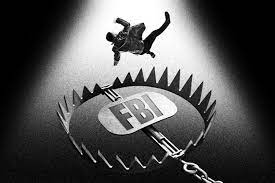
FBI Make-Work Entrapment Schemes: Creating Criminals in Order to Arrest Them

By John & Nisha Whitehead

Source: The Rutherford Institute

“Whoever fights monsters should see to it that in the process he does not become a monster.”— Friedrich Nietzsche

We’re not dealing with a government that exists to serve its people, protect their liberties and ensure their happiness.

Rather, we are the unfortunate victims of the diabolical machinations of a make-works program carried out on an epic scale whose only purpose is to keep the powers-that-be permanently (and profitably) employed.

Case in point: the FBI.

The government’s henchmen have become the embodiment of how power, once acquired, can be so easily corrupted and abused. Indeed, far from being tough on crime, FBI agents are also among the nation’s most notorious lawbreakers.

Whether the FBI is planting undercover agents in churches, synagogues and mosques; issuing fake emergency letters to gain access to Americans’ phone records; using intimidation tactics to silence Americans who are critical of the government, or persuading impressionable individuals to plot acts of terror and then entrapping them, the overall impression of the nation’s secret police force is that of a well-dressed thug, flexing its muscles and doing the boss’ dirty work.

Clearly, this is not a government agency that appears to understand, let alone respect, the limits of the Constitution.

Indeed, this same government agency has a pattern and practice of entrapment that involves targeting vulnerable individuals, feeding them with the propaganda, know-how and weapons intended to turn them into terrorists, and then arresting them as part of an elaborately orchestrated counterterrorism sting.

Basically, it works like this: in order to justify their crime-fighting superpowers, the FBI manufactures criminals by targeting vulnerable individuals and feeding them anti-government propaganda; then, undercover agents and informants equip the targeted individuals with the training and resources to challenge what they’ve been indoctrinated into believing is government corruption; and finally, the FBI arrests the targeted individuals for engaging in anti-government, terrorist activities.

This is what passes for the government’s perverse idea of being tough on crime.

For example, undercover FBI agents pretending to be associated with ISIS have been accused of seeking out online and befriending a 16-year-old with brain development issues, persuading him to secretly send them small cash donations in the form of gift cards, and then the moment Mateo Ventura, turned 18, arresting him for providing financial support to an Islamic terrorist group.

If convicted, the teenager could spend up to 10 years in prison.

Yet as The Intercept explains, “the only ‘terrorist’ he is accused of ever being in contact with was an undercover FBI agent who befriended him online as a 16-year-old… This law enforcement tactic has been criticized by national security researchers who have scrutinized the FBI’s role in manufacturing terrorism cases using vulnerable people who would have been unable to commit crimes without prolonged government assistance and encouragement… the Ventura case may indicate that authorities are still open to conjuring terrorists where none existed.”

In another incident, the FBI used an undercover agent/informant to seek out and groom an impressionable young man, cultivating his friendship, gaining his sympathy, stoking his outrage over injustices perpetrated by the U.S. government, then enlisting his help to blow up the Herald Square subway station. Despite the fact that Shahawar Matin Siraj ultimately refused to plant a bomb at the train station, he was arrested for conspiring to do so at the urging of his FBI informant and used to bolster the government’s track record in foiling terrorist plots. Of course, no mention was made of the part the government played in fabricating the plot, recruiting a would-be bomber, and setting him up to take the fall.

These are Machiavellian tactics with far-reaching consequences for every segment of the population, no matter what one’s political leanings, but it is especially dangerous for anyone whose views could in any way be characterized as anti-government.

As Rozina Ali writes for The New York Times Magazine, “The government’s approach to counterterrorism erodes constitutional protections for everyone, by blurring the lines between speech and action and by broadening the scope of who is classified as a threat.”

For instance, it was reported that the FBI had been secretly carrying out an entrapment scheme in which it used a front company, ANOM, to sell purportedly hack-proof phones to organized crime syndicates and then used those phones to spy on them as they planned illegal drug shipments, plotted robberies and put out contracts for killings using those boobytrapped phones.

All told, the FBI intercepted 27 million messages over the course of 18 months.

What this means is that the FBI was also illegally spying on individuals using those encrypted phones who may not have been involved in any criminal activity whatsoever.

Even reading a newspaper article is now enough to get you flagged for surveillance by the FBI. The agency served a subpoena on USA Today / Gannett to provide the internet addresses and mobile phone information for everyone who read a news story online on a particular day and time about the deadly shooting of FBI agents.

This is the danger of allowing the government to carry out widespread surveillance, sting and entrapment operations using dubious tactics that sidestep the rule of law: “we the people” become suspects and potential criminals, while government agents, empowered to fight crime using all means at their disposal, become indistinguishable from the corrupt forces they seek to vanquish.  

To go after terrorists, they become terrorists.

To go after drug smugglers, they become drug smugglers.

To go after thieves, they become thieves.

For instance, when the FBI raided a California business that was suspected of letting drug dealers anonymously stash guns, drugs and cash in its private vaults, agents seized the contents of all the  safety deposit boxes and filed forfeiture motions to keep the contents, which include millions of dollars’ worth of valuables owned by individuals not accused of any crime whatsoever.

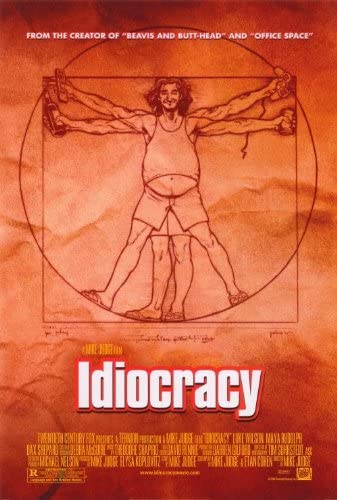
It’s hard to say whether we’re dealing with a kleptocracy (a government ruled by thieves), a kakistocracy (a government run by unprincipled career politicians, corporations and thieves that panders to the worst vices in our nature and has little regard for the rights of American citizens), or if we’ve gone straight to an idiocracy

This certainly isn’t a constitutional democracy, however.

Some days, it feels like the FBI is running its own crime syndicate complete with mob rule and mafia-style justice.

In addition to creating certain crimes in order to then “solve” them, the FBI also gives certain informants permission to break the law, “including everything from buying and selling illegal drugs to bribing government officials and plotting robberies,” in exchange for their cooperation on other fronts.

USA Today estimates that agents have authorized criminals to engage in as many as 15 crimes a day (5600 crimes a year). Some of these informants are getting paid astronomical sums: one particularly unsavory fellow, later arrested for attempting to run over a police officer, was actually paid $85,000 for his help laying the trap for an entrapment scheme.

In a stunning development reported by The Washington Post, a probe into misconduct by an FBI agent resulted in the release of at least a dozen convicted drug dealers from prison.

In addition to procedural misconduct, trespassing, enabling criminal activity, and damaging private property, the FBI’s laundry list of crimes against the American people includes surveillance, disinformation, blackmail, entrapment, intimidation tactics, and harassment.

For example, the Associated Press lodged a complaint with the Dept. of Justice after learning that FBI agents created a fake AP news story and emailed it, along with a clickable link, to a bomb threat suspect in order to implant tracking technology onto his computer and identify his location. Lambasting the agency, AP attorney Karen Kaiser railed, “The FBI may have intended this false story as a trap for only one person. However, the individual could easily have reposted this story to social networks, distributing to thousands of people, under our name, what was essentially a piece of government disinformation.”

Then again, to those familiar with COINTELPRO, an FBI program created to “disrupt, misdirect, discredit, and neutralize” groups and individuals the government considers politically objectionable, it should come as no surprise that the agency has mastered the art of government disinformation.

The FBI has been particularly criticized in the wake of the 9/11 terrorist attacks for targeting vulnerable individuals and not only luring them into fake terror plots but actually equipping them with the organization, money, weapons and motivation to carry out the plots—entrapment—and then jailing them for their so-called terrorist plotting. This is what the FBI characterizes as “forward leaning—preventative—prosecutions.”

The FBI has also repeatedly sought to expand its invasive hacking powers to allow agents to hack into any computer, anywhere in the world.

Suffice it to say that when and if a true history of the FBI is ever written, it will not only track the rise of the American police state but it will also chart the decline of freedom in America: how a nation that once abided by the rule of law and held the government accountable for its actions has steadily devolved into a police state where justice is one-sided, a corporate elite runs the show, representative government is a mockery, police are extensions of the military, surveillance is rampant, privacy is extinct, and the law is little more than a tool for the government to browbeat the people into compliance.

This is how tyranny rises and freedom falls.

The powers-that-be are not acting in our best interests.

Almost every tyranny being perpetrated by the U.S. government against the citizenry—purportedly to keep us safe and the nation secure—has come about as a result of some threat manufactured in one way or another by our own government.

Think about it.

Cyberwarfare. Terrorism. Bio-chemical attacks. The nuclear arms race. Surveillance. The drug wars. Domestic extremism. The COVID-19 pandemic.

In almost every instance, the U.S. government (often spearheaded by the FBI) has in its typical Machiavellian fashion sown the seeds of terror domestically and internationally in order to expand its own totalitarian powers.

Consider that this very same government has taken every bit of technology sold to us as being in our best interests—GPS devices, surveillance, nonlethal weapons, etc.—and used it against us, to track, control and trap us.

Are you getting the picture yet?

The U.S. government isn’t protecting us from threats to our freedoms.

The U.S. government is creating the threats to our freedoms. It is, as I make clear in my book Battlefield America: The War on the American People and in its fictional counterpart The Erik Blair Diaries, the source of the threats to our freedoms.

A Nanny State Idiocracy: When the Government Thinks It Knows Best

By John & Nisha Whitehead

Source: The Rutherford Institute

“Whether the mask is labeled fascism, democracy, or dictatorship of the proletariat, our great adversary remains the apparatus—the bureaucracy, the police, the military.”—Simone Weil, French philosopher

It’s hard to say whether we’re dealing with a kleptocracy (a government ruled by thieves), a kakistocracy (a government run by unprincipled career politicians, corporations and thieves that panders to the worst vices in our nature and has little regard for the rights of American citizens), or if we’ve gone straight to an idiocracy

For instance, an animal welfare bill introduced in the Florida state legislature would ban the sale of rabbits in March and April, prohibit cat owners from declawing their pets, make it illegal for dogs to stick their heads out of car windows, force owners to place dogs in a harness or in a pet seatbelt when traveling in a car, and require police to create a public list of convicted animal abusers.

A Massachusetts law prohibits drivers from letting their cars idle for more than five minutes on penalty of a $100 fine ($500 for repeat offenders), even in the winter. You can also be fined $20 or a month in jail for scaring pigeons.

This overbearing Nanny State despotism is what happens when government representatives (those elected and appointed to work for us) adopt the authoritarian notion that the government knows best and therefore must control, regulate and dictate almost everything about the citizenry’s public, private and professional lives.

The government’s bureaucratic attempts at muscle-flexing by way of overregulation and overcriminalization have reached such outrageous limits that federal and state governments now require on penalty of a fine that individuals apply for permission before they can grow exotic orchids, host elaborate dinner parties, gather friends in one’s home for Bible studies, give coffee to the homeless, let their kids manage a lemonade stand, keep chickens as pets, or braid someone’s hair, as ludicrous as that may seem.

Consider, for example, that businesses in California were ordered to designate an area of the children’s toy aisle “gender-neutral” or face a fine, whether or not the toys sold are traditionally marketed to girls or boys such as Barbies and Hot Wheels. California schools are prohibited from allowing students to access websites, novels or religious works that reflect negatively on gays. And while Californians are free to have sex with whomever they choose (because that’s none of the government’s business), removing a condom during sex without consent could make you liable for general, special and punitive damages.

It’s getting worse.

Almost every aspect of American life today—especially if it is work-related—is subject to this kind of heightened scrutiny and ham-fisted control, whether you’re talking about aspiring “bakers, braiders, casket makers, florists, veterinary masseuses, tour guides, taxi drivers, eyebrow threaders, teeth whiteners, and more.”

For instance, whereas 70 years ago, one out of every 20 U.S. jobs required a state license, today, almost 1 in 3 American occupations requires a license.

The problem of overregulation has become so bad that, as one analyst notes, “getting a license to style hair in Washington takes more instructional time than becoming an emergency medical technician or a firefighter.”

This is what happens when bureaucrats run the show, and the rule of law becomes little more than a cattle prod for forcing the citizenry to march in lockstep with the government.

Overregulation is just the other side of the coin to overcriminalization, that phenomenon in which everything is rendered illegal and everyone becomes a lawbreaker.

As policy analyst Michael Van Beek warns, the problem with overcriminalization is that there are so many laws at the federal, state and local levels—that we can’t possibly know them all.

“It’s also impossible to enforce all these laws. Instead, law enforcement officials must choose which ones are important and which are not. The result is that they pick the laws Americans really must follow, because they’re the ones deciding which laws really matter,” concludes Van Beek. “Federal, state and local regulations — rules created by unelected government bureaucrats — carry the same force of law and can turn you into a criminal if you violate any one of them… if we violate these rules, we could be prosecuted as criminals. No matter how antiquated or ridiculous, they still carry the full force of the law. By letting so many of these sit around, just waiting to be used against us, we increase the power of law enforcement, which has lots of options to charge people with legal and regulatory violations.”

This is the police state’s superpower: it has been vested with the authority to make our lives a bureaucratic hell.

That explains how a fisherman can be saddled with 20 years’ jail time for throwing fish that were too small back into the water. Or why police arrested a 90-year-old man for violating an ordinance that prohibits feeding the homeless in public unless portable toilets are also made available.

The laws can get downright silly. For instance, you could also find yourself passing time in a Florida slammer for such inane activities as singing in a public place while wearing a swimsuit, breaking more than three dishes per day, farting in a public place after 6 pm on a Thursday, and skateboarding without a license.

However, the consequences are all too serious for those whose lives become grist for the police state’s mill. A few years back, police raided barber shops in minority communities, resulting in barbers being handcuffed in front of customers, and their shops searched without warrants. All of this was purportedly done in an effort to make sure that the barbers’ licensing paperwork was up to snuff.

In this way, America has gone from being a beacon of freedom to a locked down nation. And “we the people,” sold on the idea that safety, security and material comforts are preferable to freedom, have allowed the government to pave over the Constitution in order to erect a concentration camp.

We labor today under the weight of countless tyrannies, large and small, carried out in the so-called name of the national good by an elite class of governmental and corporate officials who are largely insulated from the ill effects of their actions.

We increasingly find ourselves badgered, bullied and browbeaten into bearing the brunt of their arrogance, paying the price for their greed, suffering the backlash for their militarism, agonizing as a result of their inaction, feigning ignorance about their backroom dealings, overlooking their incompetence, turning a blind eye to their misdeeds, cowering from their heavy-handed tactics, and blindly hoping for change that never comes. 

The overt signs of the despotism exercised by the increasingly authoritarian regime that passes itself off as the United States government (and its corporate partners in crime) are all around us: censorship, criminalizing, shadow banning and de-platforming of individuals who express ideas that are politically incorrect or unpopular; warrantless surveillance of Americans’ movements and communications; SWAT team raids of Americans’ homes; shootings of unarmed citizens by police; harsh punishments meted out to schoolchildren in the name of zero tolerance; community-wide lockdowns and health mandates that strip Americans of their freedom of movement and bodily integrity; armed drones taking to the skies domestically; endless wars; out-of-control spending; militarized police; roadside strip searches; privatized prisons with a profit incentive for jailing Americans; fusion centers that spy on, collect and disseminate data on Americans’ private transactions; and militarized agencies with stockpiles of ammunition, to name some of the most appalling.

Yet as egregious as these incursions on our rights may be, it’s the endless, petty tyrannies—the heavy-handed, punitive-laden dictates inflicted by a self-righteous, Big-Brother-Knows-Best bureaucracy on an overtaxed, overregulated, and underrepresented populace—that illustrate so clearly the degree to which “we the people” are viewed as incapable of common sense, moral judgment, fairness, and intelligence, not to mention lacking a basic understanding of how to stay alive, raise a family, or be part of a functioning community.

In exchange for the promise of an end to global pandemics, lower taxes, lower crime rates, safe streets, safe schools, blight-free neighborhoods, and readily accessible technology, health care, water, food and power, we’ve opened the door to lockdowns, militarized police, government surveillance, asset forfeiture, school zero tolerance policies, license plate readers, red light cameras, SWAT team raids, health care mandates, overcriminalization, overregulation and government corruption.

In the end, such bargains always turn sour.

We relied on the government to help us safely navigate national emergencies (terrorism, natural disasters, global pandemics, etc.) only to find ourselves forced to relinquish our freedoms on the altar of national security, yet we’re no safer (or healthier) than before.

We asked our lawmakers to be tough on crime, and we’ve been saddled with an abundance of laws that criminalize almost every aspect of our lives. So far, we’re up to 4500 criminal laws and 300,000 criminal regulations that result in average Americans unknowingly engaging in criminal acts at least three times a day. For instance, the family of an 11-year-old girl was issued a $535 fine for violating the Federal Migratory Bird Act after the young girl rescued a baby woodpecker from predatory cats.

We wanted criminals taken off the streets, and we didn’t want to have to pay for their incarceration. What we’ve gotten is a nation that boasts the highest incarceration rate in the world, with more than 2.3 million people locked up, many of them doing time for relatively minor, nonviolent crimes, and a private prison industry fueling the drive for more inmates, who are forced to provide corporations with cheap labor.

A special report by CNBC breaks down the national numbers:

One out of 100 American adults is behind bars — while a stunning one out of 32 is on probation, parole or in prison. This reliance on mass incarceration has created a thriving prison economy. The states and the federal government spend about $74 billion a year on corrections, and nearly 800,000 people work in the industry.

We wanted law enforcement agencies to have the necessary resources to fight the nation’s wars on terror, crime and drugs. What we got instead were militarized police decked out with M-16 rifles, grenade launchers, silencers, battle tanks and hollow point bullets—gear designed for the battlefield, more than 80,000 SWAT team raids carried out every year (many for routine police tasks, resulting in losses of life and property), and profit-driven schemes that add to the government’s largesse such as asset forfeiture, where police seize property from “suspected criminals.”

According to the Washington Post, these funds have been used to buy guns, armored cars, electronic surveillance gear, “luxury vehicles, travel and a clown named Sparkles.” Police seminars advise officers to use their “department wish list when deciding which assets to seize” and, in particular, go after flat screen TVs, cash and nice cars.

In Florida, where police are no strangers to asset forfeiture, Florida police have been carrying out “reverse” sting operations, where they pose as drug dealers to lure buyers with promises of cheap cocaine, then bust them, and seize their cash and cars. Over the course of a year, police in one small Florida town seized close to $6 million using these entrapment schemes.

We fell for the government’s promise of safer roads, only to find ourselves caught in a tangle of profit-driven red light cameras, which ticket unsuspecting drivers in the so-called name of road safety while ostensibly fattening the coffers of local and state governments. Despite widespread public opposition, corruption and systemic malfunctions, these cameras—used in 24 states and Washington, DC—are particularly popular with municipalities, which look to them as an easy means of extra cash.

One small Florida town, population 8,000, generates a million dollars a year in fines from these cameras. Building on the profit-incentive schemes, the cameras’ manufacturers are also pushing speed cameras and school bus cameras, both of which result in heft fines for violators who speed or try to go around school buses.

As I make clear in my book Battlefield America: The War on the American People and in its fictional counterpart The Erik Blair Diaries, this is what happens when the American people get duped, deceived, double-crossed, cheated, lied to, swindled and conned into believing that the government and its army of bureaucrats—the people we appointed to safeguard our freedoms—actually have our best interests at heart.

The problem with these devil’s bargains is that there is always a catch, always a price to pay for whatever it is we valued so highly as to barter away our most precious possessions.

We’ve bartered away our right to self-governance, self-defense, privacy, autonomy and that most important right of all: the right to tell the government to “leave me the hell alone.”

Saturday Matinee: Idiocracy

Review by Fernando F. Croce

Source: Slant

By refusing to distance itself from its targets, Mike Judge’s brand of satire risks being mistaken for what it’s satirizing. The Beavis and Butthead cartoons were erroneously dismissed as a mindless extension (rather than a complicit critique) of misdirected suburban youth, a fate that can similarly befall Idiocracy, Judge’s sophomore live-action comedy—or could have, that is, if the picture had ever been actually released. Brusquely dumped by its studio without even the courtesy of a trailer, this orphaned project has, as a result, acquired such an aura of lacerating subversion—the movie 20th Century Fox was too chickenshit to distribute!—that it is more than slightly disappointing to find, upon actual viewing, not much beyond a solid episode of Futurama. Give it props for nerve, however: A world where Starbucks has become synonymous with handjobs is surely beyond the reach of Fox’s other unceremoniously-axed vision of the future.

Joe Bowers (Luke Wilson) is an ordinary Army schmoe picked as guinea pig in a government experiment. Along with mouthy streetwalker Rita (Maya Rudolph), he’s supposed to be cryogenically frozen for one year to test a hibernation program, but it isn’t until 2505 that the two are thawed out and released into a radically mutated world: The sheer proliferation of stupid people has gradually reversed the Darwinian process in the 500 years since, and the planet has become overrun with slack-jawed numbskulls barely able to string together the slangy insults the language has degenerated into. The President (Terry Alan Crews) is an ex-wrestler and former porn star, water has been replaced everywhere by sports drinks, and people are only too happy to accept, consume, and vegetate. Judge’s dystopia is a pop wasteland triggered by rampant ignorance (the very act of thinking is dubbed “faggy”) and then held down by corporate greed, a daring concept visualized in the picture’s most evocative shot, of Costco merchandise piled high toward the skies to suggest gargantuan towers ready to topple over.

As evident in the cubicle zombies of Office Space, Judge recognizes quotidian frustration and the small ways through which people revolt against it; working on a larger, broader scale in Idiocracy, however, his control quickly dissolves into a freefall of ideas and jokes, some hitting the bullseye and others landing on the floor with a thud. Judge is indifferent to anything resembling space or rhythm, yet the low-tech chintz of his approach ultimately enhances the caustic themes by making the futuristic atmosphere absurdly transparent; as with Godard’s Alphaville, we are already living in the future, for how wide a gap really separates Date Movie and Failure to Launch from Ass, the single, unchanging shot of a gassy, naked butt topping box-office charts in 2025? (The hero recalls a past when moviegoers “cared about whose ass it was, and why it was farting.”) Idiocracy is too scattershot and compromised to push the conceptual bleakness beyond the realm of lowbrow comedy, though Judge’s cultural ire remains bracing throughout: For all the characters’ slapsticky imbecility, Judge makes it clear that it’s their docile acceptance (read: political inactivity) that makes them true dumbasses.

Automatons – Life Inside the Unreal Machine

By Kingsley L. Dennis

Source: Waking Times

ɔːˈtɒmət(ə)n/

noun

a moving mechanical device made in imitation of a human being.

a machine which performs a range of functions according to a predetermined set of coded instructions.

used in similes and comparisons to refer to a person who seems to act in a mechanical or unemotional way.

“Don’t you wish you were free, Lenina?”

“I don’t know what you mean. I am free. Free to have the most wonderful time. Everybody’s happy nowadays.”

He laughed. “Yes, ‘Everybody’s happy nowadays.’ We have been giving the children that at five. But wouldn’t you like to be free to be happy in some other way, Lenina? In your own way, for example; not in everybody else’s way.”

“I don’t know what you mean,” she repeated.

Aldous Huxley, Brave New World

Are we turning into a mass of unaware sleepwalkers? Our eyes are seemingly open and yet we are living as if asleep and the dream becomes our waking lives. It seems that more and more people, in the highly technologized nations at least, are in danger of succumbing to the epidemic of uniformity. People follow cycles of fashions and wear stupid clothes when they think it is the ‘in thing;’ and hyper-budget films take marketing to a whole new level forcing parents to rush out to buy the merchandise because their kids are screaming for it. And if one child in the class doesn’t have the latest toy like all their classmates then they are ostracized for this lack. Which means that poor mummy and daddy have to make sure they get their hands on these gadgets. Put the two items together – zombies and uniformity – and what do you get? Welcome to the phenomenon of Black Fridays, which have become the latest manifestation of national Zombie Days.

Unless you’ve been living in a cave somewhere (or living a normal, peaceful existence) then you will know what this event is – but let me remind you anyway of what a Black Friday is. It is a day when members of the public are infected with the ‘must buy’ and ‘act like an idiot’ virus that turns them into screaming, raging hordes banging on the doors of hyper-market retailers hours before they open. Many of these hordes sleep outside all night to get early entry. Then when the doors are finally opened they go rushing in fighting and screaming as if re-enacting a scene from Games of Thrones. Those that do survive the fisticuffs come away with trolleys full of boxes too big to carry. This display of cultural psychosis, generally named as idiocracy, is also a condition nurtured by societies based on high-consumption with even higher inequalities of wealth distribution. In other words, a culture conditioned to commodity accumulation will buy with fervour when things are cheap. This is because although conditioned to buy, they lack the financial means to satiate this desire. Many people suffer from a condition which psychologists have named as ‘miswanting,’ which means that we desire things we don’t like and like things we don’t desire. What this is really saying is that we tend to ‘want badly’ rather than having genuine need. What we are witnessing in these years is an epidemic of idiocracy and its propagating faster than post-war pregnancies. And yet we are programmed by our democratic societies to not think differently. In this respect, many people also suffer from a condition known as ‘confirmation bias.’

Confirmation bias is our conditioned tendency to pick and choose that information which confirms our pre-existing beliefs or ideas. Two people may be able to look at the same evidence and yet they will interpret it according to how it fits into and validates their own thinking. That’s why so many debates go nowhere as people generally don’t wish to be deviated away from those ideas they have invested so much time and effort in upholding. It’s too much of a shock to realize that what we thought was true, or valid, is not the case. To lose the safety and security of our ideas would be too much for many people. It is now well understood in psychology that we like to confirm our existing beliefs; after all, it makes us feel right!

Many of our online social media platforms are adhering to this principle by picking and choosing those items of news, events, etc that their algorithms have deemed we are most likely to want to see. As convenient as it may seem, it is unlikely to be in our best interests in the long term. The increasing automation of the world around us is set to establish a new ecology in our hyperreality. We will be forced to acknowledge that algorithms and intelligent software will soon, if it isn’t already, be running nearly everything in our daily lives. Historian Yuval Harari believes that ‘the twenty-first century will be dominated by algorithms. “Algorithm” is arguably the single most important concept in our world. If we want to understand our life and our future, we should make every effort to understand what an algorithm is.’1 Algorithms already follow our shopping habits, recommend products for us, pattern recognize our online behavior, help us drive our cars, fly our planes, trade our economies, coordinate our public transport, organize our energy distribution, and a lot, lot more that we are just not really aware of. One of the signs of living in a hyperreality is that we are surrounded by an invisible coded environment, written in languages we don’t understand, making our lives more abstracted from reality.

Modern societies are adapting to universal computing infrastructures that will usher in new arrangements and relations. Of course, these are only the early years, although there is already a lot of uncertainty and unpredictability. As it is said, industrialization didn’t turn us into machines and automation isn’t going to turn us into automatons. Which is more or less correct; after all, being human is not that simple. Yet there will be new dependencies and relations forming as algorithms continue to create and establish what can be called ‘pervasive assistance.’ Again, it is a question of being alert so that we don’t feel compelled just to give ourselves over to our algorithms. The last thing we want is for a bunch of psychologists trying to earn yet more money from a new disease of ‘algorithmic dependency syndrome’ or something similar.

It needs stating that by automating the world we also run the risk of being distanced from our own responsibilities. And this also implies, importantly, the responsibility we have to ourselves – to transcend our own limitations and to develop our human societies for the better. We should not forget that we are here to mature as a species and we should not allow the world of automation to distract us from this. Already literature and film have portrayed such possibilities. Examples are David Brin’s science-fiction novel Kiln People (2002 – also adapted into the film Surrogates, 2009), which clearly showed how automation may provide a smokescreen for people to disappear behind their surrogate substitutes.

Algorithms are the new signals that code an unseen territory all around us. In a world of rapidly increasing automation and digital identities we’ll have to keep our wits about us in order to retain what little of our identities we have left. We want to make sure that we don’t get lost in our emoji messages, our smilies of flirtation; or, even worse, loose our life in the ‘death cult’ of the selfies. Identities by their very nature are constructs; in fact, we can go so far as to call them fake. They are constructed from layers of ongoing conditioning which a person identifies with. This identity functions as a filter to interpret incoming perceptions. The limited degree of perceptions available to us almost guarantees that identities fall into a knowable range of archetypes. We would be wise to remember that who we are is not always the same as what we project. And yet some people on social media are unable to distinguish their public image from their personal identity, which starts to sound a bit scary. Philosopher Jean Baudrillard, not opposed to saying what he thought, stated it in another way:

We are in a social trance: vacant, withdrawn, lacking meaning in our own eyes. Abstracted, irresponsible, enervated. They have left us the optic nerve, but all the others have been disabled…All that is left is the mental screen of indifference, which matches the technical in-difference of the images.2

Baudrillard would probably be the first to agree that breathing is often a disguise to make us think that someone is alive. After all, don’t we breathe automatically without thinking about it?

We must not make the human spirit obsolete just because our technological elites are dreaming of a trans-human future. Speaking of such futures, inventor and futurist Ray Kurzweil predicts that in the 2030s human brains will be able to connect to the cloud and to use it just like we use cloud computing today. That is, we will be able to transfer emails and photos directly from the cloud to our brain as well as backing up our thoughts and memories. How will this futuristic scenario be possible? Well, Kurzweil says that nanobots – tiny robots constructed from DNA strands – will be swimming around in our brains. And the result? According to Kurzweil we’re going to be funnier, sexier, and better at expressing our loving sentiments. Well, that’s okay then – nanobot my brain up! Not only will being connected to the computing cloud make us sexier and funnier humans, it will even take us closer to our gods says Kurzweil – ‘So as we evolve, we become closer to God. Evolution is a spiritual process. There is beauty and love and creativity and intelligence in the world – it all comes from the neocortex. So we’re going to expand the brain’s neocortex and become more godlike.’It’s hard to argue with such a bargain – a few nanobots in our brain to become godlike? I can imagine a lot of people will be signing up for this. There may even be a hefty monthly charge for those wanting more than 15GB of back-up headspace. Personally, I prefer the headspace that’s ad infinitum and priceless. I hope I’m not in the minority.

Looking at the choices on offer so far it seems that there is the zombie option, which comes with add-on idiocracy (basic model), and the trans-human nanobot sexy-god upgrade (pricy). But then let’s not forget that in an automated world it may be the sentient robots that come out on top. Now, that would be an almost perfect demonstration of a simulation reality.

Life in Imitation

There are those who believe that self-awareness is going to be the end game of artificial intelligence – the explosive ‘wow factor’ that really throws everything into high gear. The new trend now is deep machine-learning to the point where machines will program not only themselves but also other machines. Cognitive computer scientists are attempting to recapture the essence of human consciousness in the hope of back-engineering this complexity into machine code. It’s a noble endeavor, if not at least for their persistence. The concern here is that if machines do finally achieve sentience then the next thing that we’ll need to roll out will be machine psychologists. Consciousness, after all, comes at a price. There is no free lunch when it comes to possessing a wide-awake brain. With conscious awareness comes responsibilities, such as values, ethics, morality, compassion, forgiveness, empathy, goodness, and good old-fashioned love. And I personally like the love part (gives me a squishy feeling every time).

It may not actually be the sentient robots we need to worry about; it’s the mindless ones we need to be cautious of (of course, we could say the same thing about ourselves). One of the methods used in training such robots is, in the words of their trainers, to provide them with enough ‘intrinsic motivation.’ Not only will this help the robots to learn their environments, it is also hoped that it will foster attention in them to acquire sufficient situational awareness. If I were to write a science-fiction scenario on this I would make it so that the sentient robots end up being more human than we are, and humans turn into their automated counterparts. Funny, maybe – but more so in the funny-bone hurting sort of way rather than the laugh-out-loud variety. Or perhaps it’s already been done. It appears that we are attempting to imbue our devices with qualities we are also striving to possess for ourselves. Humans are naturally vulnerable; it is part of our organic make-up. Whatever we create may inherit those vulnerabilities. However, this here is not a discussion on the pros and cons of smart machines and artificial intelligence (there are many more qualified discussions on that huge topic).

While we are creating, testing, worrying, or arguing over machines and their like we are taking our attention away from the center – ourselves. The trick of surviving in the ‘unreal machine’ of life is by becoming more human, the very antithesis of the robotic. Technology can assist us in interacting and participating to a better degree with our environments. The question, as always, is the uses to which such tools are put – and by whom. Such tools can help us realize our dreams, or they can entrap us in theirs. Algorithms, smart machines, intelligent infrastructure, and automated processes: these are all going to come about and be a part of our transforming world. And in many respects, they will make life more comfortable for us. Yet within this comfort zone we still need to strive and seek for our betterment. We should not allow an automated environment to deprive us of our responsibility, and need, to find meaning and significance in our world. Our technologies should force us to acknowledge our human qualities and to uplift them, and not to turn us into an imitation of them.

Another metaphor for the simulated ‘robotic’ creature is the golem. The golem legend speaks of a creature fashioned from clay, a Cabbalistic motif which has appeared frequently in literary and cinematic form (such as Frankenstein). The Cabbalistic automaton that is the golem, which means ‘unformed,’ has often been used to show the struggle between mechanical limitation and human feelings. This struggle depicts the tension that combines cogs and consciousness; the entrapment in matter and the spirit of redemption and liberation. This is a myth that speaks of the hubris in humanity fashioning its own creatures and ‘magically’ bestowing life upon them. It is the act of creating a ‘sacred machine’ from the parts and pieces of a material world and then to imbue them with human traits. And through this human likeness they are required to fulfil human chores and work as slaves. Sounds familiar? The Cabbalistic humanoid – the sentient robot – is forever doomed, almost like the divine nature of Man trapped within the confines and limitations of a material reality. They represent the conflict of being torn between a fixed fate and freedom.

Our material reality may be the ultimate unreal machine. We are the cogs, the clay golem, the imperfect creature fashioned by another. Our fears of automation may only be a reflection of our own automation. We struggle to express some form of release whilst unaware that the binds that mechanize us are forever tightening.

We have now shifted through the zombie-idiocracy model (basic), the trans-human nanobot sexy-god model (pricy), to arrive at the realization that it is us – and not our sentient robots – that are likely to be the automaton (tragic). And this is the biblical fall from grace; the disconnection from our god(s). We have come loose from Central Source and we have lost our way.

We are now living in the hyperreal realm where zombies, cyborgs, and golem robots all reside – but it is not the place for the genuine human. Things are going to have to change. Not only do we have to retain our humanity, we also must remain sane. With our continuing modern technologies, our augmented reality and bioengineering, the difference between fiction and reality will blur even further. And this blurring is likely to become more prominent as people increasingly try to reshape reality to fit around their own imaginative fictions. Staying sane, grounded, and balanced is going to be a very, very good option for the days to come.

We are going to be sharing our planetary space with the new smart machines. I am reminded of the Dr. Seuss book Horton Hears a Who! that has the refrain, ‘a person’s a person no matter how small.’ Size doesn’t count – but being human does. And staying human in these years will be the hard task allotted to us.