Pandemic? Great Reset? How about… a beginner’s mind?

By Mickey Z.

Source: Dissident Voice

“In the beginner’s mind there are many possibilities. In the expert’s, there are few.” 1

Has there ever been a more urgent time to embrace many possibilities? This age of pervasive uncertainty and division may well be very fertile ground for questioning our assumptions and interrogating our beliefs. In fact, we just might be living in the ideal time to accept that there are limitless ways to perceive even the most contentious issues.

Expert vs. Beginner

The expert’s mind is over-secure in its prowess. Such a mentality may promote shortsighted habits like confirmation bias. Many “authorities” will only seek out (read: cherry-pick) information that validates and justifies their behavior because expertise — real or imagined — causes us to grow less curious.

If we already feel well-versed in a topic, we tend to pay less attention to it. We ask fewer questions. This is a stifling choice even if we know 95 percent of what there is to know about a particular subject. Ideally, this is when we should be paying more attention to it in order to discern the nuances that remain to be learned.

Conversely, the beginner’s mind is ever-hungry for input — regardless of its source or its tendency to reinforce existing beliefs. In the beginner’s mind, there are fewer limits and fewer expectations. There is much more room for revelation and awe. Nothing is taken for granted and even the tiniest detail has the potential to inspire reverence.

The beginner’s mind is basically the polar opposite of today’s social media algorithms, mainstream news headlines, and popular political discourse.

3 (of the many) Benefits of a Beginner’s Mind

Creativity

Habits and structure can be incredibly useful. They can also become an obstacle to innovation. A beginner’s mind encourages us to approach familiar problems with a fresh perspective. This mindset often results in the exploration of avenues that an expert would casually dismiss as “been there, done that.”

Gratitude

A beginner’s mind awakens each morning, ready to wipe the slate clean and start anew. From this fresh perspective, it feels more natural to identify and appreciate your blessings.

Mindfulness

Seeing the world like a beginner prevents you from “going through the motions.” There is a clearer understanding that the present is all you have. The past is where guilt and regret dwell. In the future may lie apprehension and anxiety. Right here, right now, the moment is enough.

How to Rediscover a Beginner’s Mind

By its very definition, there are an infinite number of ways to occupy a beginner’s mind. To follow are some basic guidelines but think of them like Bruce Lee’s finger pointing a way to the moon. As Lee urged, “Don’t concentrate on the finger or you’ll miss all that heavenly glory.”2

1. Reject your ego’s need to be an expert

Eavesdrop on a conversation at the local supermarket. Even better, scroll (without reacting) through most threads on social media. You’ll see and hear so many people pretending they know“what’s really happening” and “what’s gonna happen.” Your ego craves the status of being right. The beginner in you would rather open-mindedly look for reality than be deemed an expert at anything.

2. Slow down

As touched on above, we must avoid going through the motions. Whenever possible, slow down to question and explore. Take your time to learn — even from the most unlikely of sources.

3. Channel your inner child

Re-introduce yourself to some of your closest childhood friends: wonder, mischief, and playfulness. Reject the cynical adult premise of “same shit, different day.”

4. See with new eyes

In the words of Marcel Proust: “The real voyage of discovery consists not in seeking new landscapes, but in having new eyes.”3 Practically speaking, your quest for new eyes can begin with simple exercises like treating your hometown as if you were a tourist and seeing what you can discover.

5. Embrace nonsense 

As Gary Zukav, author of Dancing Wu Li Masters: An Overview of the New Physics, (1979)posits: “Nonsense is nonsense only when we have not yet found that point of view from which it makes sense.”

6. Meditation

Perhaps the most time-worn path to a beginner’s mind is the practice of mindful meditation. Whether you choose a spiritual or secular approach, even ten minutes a day of meditation will expand your consciousness.

The child is in me still and sometimes not so still.4

There is no one right way to inhabit a beginner’s mind. After all, it is not a destination. It’s all about the process, the learning, and those moments of epiphany made possible by not closing off your options… so re-activate your inner child.

Keep re-evaluating what you believe before your perceptions can grow ossified. Don’t limit your explorations by choosing in advance what it is you wish to find. Turn your truth over and over, again and again. Avoid accumulating old answers. Instead, dedicate far more of your time to conjuring up new questions. Through it all, let compassion serve as your compass.

The experts [sic] have gotten us into this mess.

It’s time to give beginners their opportunity to shine.

  1. Shunryu Suzuki, Prologue Zen Mind, Beginner’s Mind, (1973). []
  2. Bruce Lee, Enter the Dragon, 1973. []
  3. The Captive. (La Prisonnière, the fifth volume of Remembrance of Things Past), 1923. []
  4. Fred Rogers, (2003). The World According to Mister Rogers: Important Things to Remember, p. 45, Hachette UK. []

Five Keys to Inner Strength From Five Years in Prison

By Ross Ulbricht

Source: Bitcoin Magazine

October 1, 2018, marked five years since I was imprisoned. My physical surroundings today are ironically similar to what they were after my arrest back in 2013. I’m in the SHU again (Special Housing Unit, aka “the hole”). It means permanent lockdown, separated from the general prison population, in a small cell. There is a slot in the heavy metal door for food trays, a small steel toilet, a concrete bunk with thick rings at four points (I guess that’s how I’ll get strapped down if I go crazy), chipped paint on the walls and floor with gang names and desperate Bible quotes etched in, and everywhere thick marks counting the days spent here by former inhabitants (some collections are terrifyingly large).

The initial shock of entering the cell — and all it meant for my immediate future — gave way after a few days to a helpless, restless dread and a burning need to get out. This feeling had to be stuffed down to avoid madness, and eventually a numb acceptance took over, but it was a precarious arrangement. Desperate frustration simmered constantly beneath the surface.

When I was first arrested, I was put in the hole against my will at three different prisons as they bounced me across the country from San Francisco where I was arrested to New York where I was prosecuted. The only reason I was given for this was that I was “high profile.” After six weeks, I was let out and never returned … until now. This time, I’m actually glad to be here because the alternative is life-threatening.

I was forced by some other inmates to make a choice: assault someone or be assaulted. Morally I knew I couldn’t initiate violence against another, but if I refused, I would be seriously hurt and would face an uncertain future, not knowing how long I’d be in the hole under protective custody or whether I’d be sent to another prison where I’d meet the same fate.

When the dreadful situation arose, I managed to ask for protective custody before anything happened to me. I was immediately cuffed and escorted to this cell where I’m writing from. I chose the hole rather than hurt another man.

When they dropped me in the SHU after my arrest, I did my best, but it was a tough six weeks, going from a life of freedom straight in. I broke down when I got my first phone call, and, after one week, I completely lost track of time and grounding. It makes me anxious just remembering it.

Maybe after five-plus years I’m used to doing time, but I think it’s how I’ve done my time that has made me mentally tough, that has made the difference between how I handled the hole back then and how I’m handling it now. I want to share this hard-won wisdom with you. Here are the five keys to inner strength I’ve learned from five years in prison.

Patience

My first night locked up was in a San Francisco holding cell: just painted concrete, toilet and sink. There was blood splatter staining the wall. I was so impatient for that night to be over. I almost felt I couldn’t survive it, as if it would never end. Of course it did, but I’ve never felt time move so slowly.

Prison has its own pace. One time, getting two pages of medical records printed took three months. I once had a faucet running day and night for five weeks before it was fixed. A clogged toilet took two months and a complaint to the Office of the Inspector General. Another time, I spotted a letter addressed to me in the corner of a guard’s office. It had been there for four months.

I’ve learned that patience means doing what you can today then letting go. It means settling in to this moment and letting things come in their own time. Impatience and boredom do not bring results faster, but they do rob you of your happiness here and now.

Will to Fight

After a long day of working in the lab as an undergraduate research assistant back in 2005, my mentor asked me if I had ever boxed. I told him no, nor had I been in a real fight. Compared to many, I had a sheltered upbringing in safe schools and neighborhoods. I had no need to fight. He pulled out some 14-ounce gloves and we went a few rounds in the hall outside our office, blowing off steam and having fun. From then on, whenever the stress of work got high, we’d get the gloves out at night before heading home.

When I was arrested and thrown in jail, I faced an opponent in a real fight for the first time in my life. The prosecution wanted to take my life as I knew it. They wanted — and still want to — keep me in a cage forever. I found myself on an alien battlefield and my opponent had every advantage. Being initially locked up in a detention center was like fighting while under water, most of my energy going to day-to-day survival and dealing with prison bureaucracy.

At trial, I stepped into the ring hoping for a chance, for a fair fight. When my lawyer wasn’t allowed to cross-examine the prosecution’s witnesses and I wasn’t allowed to call my own, my hands were tied behind my back. And when the prosecution was allowed to hide corrupt agents from my jury and present unreliable and tainted digital evidence, they were handed a metal bat. It wasn’t a fight. It was a massacre. The defeats kept coming, first at the appellate court, then at the Supreme Court.

I remember one time when I decided to stay out late on the prison yard. The sun was setting, and it was just me and a few others out there. I walked over to a metal picnic table where a man I’ll call Big Mike sat alone. Big Mike was the biggest person I’ve ever met. He weighs twice as much as I do, and his arms are as thick as my legs. He once told me that he doesn’t work out because he gets too big and scares people. We chatted for a while and he told me about the arguments he was preparing for his next motion to the court.

“I need to keep working on my case every single day until I go free,” I said, inspired by his efforts.

His expression became stern. He stared me down then went into a half hour rant that only ended because we were called off the yard for the night. “Yes you do,” he said. “No one is going to fight for your freedom like you. These people got you tied in a knot and you’ll never get out if you don’t struggle and fight. You’re fighting for your life. They took your life from you. Only you can get it back.” He was still going as we walked into the cell block.

Big Mike had fought his entire life. He grew up on the streets of Philly. He fought to survive, and now he was fighting the last shreds of doubt and defeat still left in my heart. He won that night and lit a fire in me that’s been burning ever since.

The will to fight is primal. It’s in all of us. Like me, many of us have never needed it and it lays dormant. Yet you don’t need to wait until you are under attack and your life is in danger to learn to fight. You can fight for who you love, for what matters, for what you believe in, like your life depends on it. And truly it does because a life worth living is worth fighting for.

Forgiveness

A few months after I was sentenced, I lay down on my bunk after the cell door had been locked for the night. As my conscious mind slowed down and sleep approached, the faces of those who put me away for life bubbled up and captured my attention: the judges, prosecutors, politicians and agents, and they were looking down on me with mocking smiles. A cocktail of emotions accompanied these images, including anger, frustration, helplessness, even the beginnings of hate. My heart beat fast and my mind raced until I snapped fully awake and lay there trying to drift off again. After a few cycles of this, I sat up in bed. This wasn’t the first time I couldn’t stop these negative feelings. I had to get a grip.

While I was tossing and turning, those people were probably sleeping, comfortable and sound, in big comfy beds in big comfy houses. Or were they? Maybe they were also sitting up at night tormented by the thought of all the people like me they had condemned. Or maybe they didn’t care and rationalized the pain away. The truth, I realized, was that I had no idea. And further, all my anger wasn’t hurting them one bit. It was all right there with me in that cell. I wasn’t getting back at them by holding a grudge, but I was poisoning my mind.

As revolting as it felt at first, I had to forgive them. I purposely cultivated thoughts like “It wasn’t personal, they don’t even know me” and “Their hearts must be so calloused by what they do, I feel sorry for them.” I focused on feelings of love and kindness and imagined them radiating out and healing those who had hurt me. I don’t know if that had an effect on any of them, but I certainly started sleeping better.

As time went on, I became ruthless with these hateful thoughts whenever they entered my mind and would rewire them immediately as I had that night. I could not indulge in them because I had come to learn this simple truth: hate does not hurt the hated, it hurts the hater. It’s been years since I wasted my energy hating those people and I’m so much better off for having forgiven them.

Faith

Being condemned to grow old and die in prison with two life sentences plus 40 years is like staring into an abyss. My future as I knew it disappeared, replaced by darkness and uncertainty. In the face of this nightmare, faith became a matter of survival.

The day I was sentenced I returned to the detention center and was given hugs, condolences and a hot meal from my fellow prisoners. When I found some time alone that night, I saw two roads before me. One was a downward spiral. I could see that the further I went down, the harder it would be to claw my way back. At the bottom, the demons of despair, hatred and crushing sadness were waiting to devour me. The other path soared upward, but I couldn’t find the steps. There weren’t any. There was no reason to hope that I could hold onto.

In the following months, I had to leap, stumble and scramble toward that upward path. With all evidence to the contrary, I had to have faith that God would see me through whatever was to come. I realized I’m not strong enough on my own to keep from falling into that ever-present abyss. It may be irrational to believe without proof, to have faith, but it’s also irrational to forsake the hope, love and joy that faith brings, because it gives you the strength to fight and ultimately win. In a situation as desperate as mine, keeping faith alive is the difference between freedom and a slow, caged death.

Acceptance and Gratitude

There are endless opportunities for suffering in prison. You can suffer when they lock you in the cell and you feel like you’ll explode if you can’t get out; when your back spasms from the hard bunk; when you’re sick and feel isolated; when you notice the filth; when the door slams and locks behind your loved ones after a visit; when you feel like you’re drowning and just need one last day of freedom to breathe; when you wish you could keep sleeping but you have to get your boots on because what if a riot pops off; when you imagine the shank you saw pierce the last man is piercing your flesh; when you realize you haven’t had a moment of privacy in years and everything around you is cold and hard; when someone dies and you never got to say goodbye to.

I’ve had countless occasions for suffering. In each case the pain is unavoidable. It hits without warning and you feel it, whether you like it or not. And of course, the nature of pain is to not like it. Our natural reaction is to resist it, to fight it, to push it away or down. This aversion to pain is suffering.

To resist what is so and long for something better is to suffer. Pain and suffering seem hopelessly entangled in prison, but I’ve learned that suffering is not the unavoidable consequence of pain.

While pain is inevitable in my circumstances, suffering is entirely optional. Pain, even emotional pain, is just a physical sensation: the knot in my stomach, the ache in my heart and head. It is neither positive nor negative on its own. It just is. Suffering is our negative response to pain which compounds and amplifies it and drags it on and on.

I’ve come to believe that the antidote to suffering, the path out of it, is acceptance and gratitude. Acceptance turns “I can’t take another day in this hell” into “I am where I am, and yes, it hurts.” Gratitude goes a step further: “At least I have clean water and enough food. At least I’m alive and surviving. Thank you.” Suffering always arises in the context of inadequacy because you want what you don’t have. Acceptance and gratitude flip your context to one of abundance because you are focused on what you do have and are thankful for it. It’s the difference between misery and joy and it’s available to each of us every moment of the day.

So here I am in the hole, counting my many blessings and refusing to indulge in suffering. Hopefully, you can benefit from these five keys to inner strength without having to go through what I have. That would be a nice silver lining, to know what’s happened to me can make a difference for you. That is one more thing to be grateful for.

A belief in meritocracy is not only false: it’s bad for you

By Clifton Mark

Source: Aeon

‘We are true to our creed when a little girl born into the bleakest poverty knows that she has the same chance to succeed as anybody else …’ Barack Obama, inaugural address, 2013

‘We must create a level playing field for American companies and workers.’ Donald Trump, inaugural address, 2017

Meritocracy has become a leading social ideal. Politicians across the ideological spectrum continually return to the theme that the rewards of life – money, power, jobs, university admission – should be distributed according to skill and effort. The most common metaphor is the ‘even playing field’ upon which players can rise to the position that fits their merit. Conceptually and morally, meritocracy is presented as the opposite of systems such as hereditary aristocracy, in which one’s social position is determined by the lottery of birth. Under meritocracy, wealth and advantage are merit’s rightful compensation, not the fortuitous windfall of external events.

Most people don’t just think the world should be run meritocratically, they think it is meritocratic. In the UK, 84 per cent of respondents to the 2009 British Social Attitudes survey stated that hard work is either ‘essential’ or ‘very important’ when it comes to getting ahead, and in 2016 the Brookings Institute found that 69 per cent of Americans believe that people are rewarded for intelligence and skill. Respondents in both countries believe that external factors, such as luck and coming from a wealthy family, are much less important. While these ideas are most pronounced in these two countries, they are popular across the globe.

Although widely held, the belief that merit rather than luck determines success or failure in the world is demonstrably false. This is not least because merit itself is, in large part, the result of luck. Talent and the capacity for determined effort, sometimes called ‘grit’, depend a great deal on one’s genetic endowments and upbringing.

This is to say nothing of the fortuitous circumstances that figure into every success story. In his book Success and Luck (2016), the US economist Robert Frank recounts the long-shots and coincidences that led to Bill Gates’s stellar rise as Microsoft’s founder, as well as to Frank’s own success as an academic. Luck intervenes by granting people merit, and again by furnishing circumstances in which merit can translate into success. This is not to deny the industry and talent of successful people. However, it does demonstrate that the link between merit and outcome is tenuous and indirect at best.

According to Frank, this is especially true where the success in question is great, and where the context in which it is achieved is competitive. There are certainly programmers nearly as skilful as Gates who nonetheless failed to become the richest person on Earth. In competitive contexts, many have merit, but few succeed. What separates the two is luck.

In addition to being false, a growing body of research in psychology and neuroscience suggests that believing in meritocracy makes people more selfish, less self-critical and even more prone to acting in discriminatory ways. Meritocracy is not only wrong; it’s bad.

The ‘ultimatum game’ is an experiment, common in psychological labs, in which one player (the proposer) is given a sum of money and told to propose a division between him and another player (the responder), who may accept the offer or reject it. If the responder rejects the offer, neither player gets anything. The experiment has been replicated thousands of times, and usually the proposer offers a relatively even split. If the amount to be shared is $100, most offers fall between $40-$50.

One variation on this game shows that believing one is more skilled leads to more selfish behaviour. In research at Beijing Normal University, participants played a fake game of skill before making offers in the ultimatum game. Players who were (falsely) led to believe they had ‘won’ claimed more for themselves than those who did not play the skill game. Other studies confirm this finding. The economists Aldo Rustichini at the University of Minnesota and Alexander Vostroknutov at Maastricht University in the Netherlands found that subjects who first engaged in a game of skill were much less likely to support the redistribution of prizes than those who engaged in games of chance. Just having the idea of skill in mind makes people more tolerant of unequal outcomes. While this was found to be true of all participants, the effect was much more pronounced among the ‘winners’.

By contrast, research on gratitude indicates that remembering the role of luck increases generosity. Frank cites a study in which simply asking subjects to recall the external factors (luck, help from others) that had contributed to their successes in life made them much more likely to give to charity than those who were asked to remember the internal factors (effort, skill).

Perhaps more disturbing, simply holding meritocracy as a value seems to promote discriminatory behaviour. The management scholar Emilio Castilla at the Massachusetts Institute of Technology and the sociologist Stephen Benard at Indiana University studied attempts to implement meritocratic practices, such as performance-based compensation in private companies. They found that, in companies that explicitly held meritocracy as a core value, managers assigned greater rewards to male employees over female employees with identical performance evaluations. This preference disappeared where meritocracy was not explicitly adopted as a value.

This is surprising because impartiality is the core of meritocracy’s moral appeal. The ‘even playing field’ is intended to avoid unfair inequalities based on gender, race and the like. Yet Castilla and Benard found that, ironically, attempts to implement meritocracy leads to just the kinds of inequalities that it aims to eliminate. They suggest that this ‘paradox of meritocracy’ occurs because explicitly adopting meritocracy as a value convinces subjects of their own moral bona fides. Satisfied that they are just, they become less inclined to examine their own behaviour for signs of prejudice.

Meritocracy is a false and not very salutary belief. As with any ideology, part of its draw is that it justifies the status quo, explaining why people belong where they happen to be in the social order. It is a well-established psychological principle that people prefer to believe that the world is just.

However, in addition to legitimation, meritocracy also offers flattery. Where success is determined by merit, each win can be viewed as a reflection of one’s own virtue and worth. Meritocracy is the most self-congratulatory of distribution principles. Its ideological alchemy transmutes property into praise, material inequality into personal superiority. It licenses the rich and powerful to view themselves as productive geniuses. While this effect is most spectacular among the elite, nearly any accomplishment can be viewed through meritocratic eyes. Graduating from high school, artistic success or simply having money can all be seen as evidence of talent and effort. By the same token, worldly failures becomes signs of personal defects, providing a reason why those at the bottom of the social hierarchy deserve to remain there.

This is why debates over the extent to which particular individuals are ‘self-made’ and over the effects of various forms of ‘privilege’ can get so hot-tempered. These arguments are not just about who gets to have what; it’s about how much ‘credit’ people can take for what they have, about what their successes allow them to believe about their inner qualities. That is why, under the assumption of meritocracy, the very notion that personal success is the result of ‘luck’ can be insulting. To acknowledge the influence of external factors seems to downplay or deny the existence of individual merit.

Despite the moral assurance and personal flattery that meritocracy offers to the successful, it ought to be abandoned both as a belief about how the world works and as a general social ideal. It’s false, and believing in it encourages selfishness, discrimination and indifference to the plight of the unfortunate.

A Zen Master Explains the Art of ‘Letting Go’, And It Isn’t What You Think

By Christina Sarich

Source: Waking Times

Thich Naht Hanh, the Zen Buddhist master, has some interesting advice about what it means to truly let go. Many people mistake detachment or non-clinging to be a form of aloofness, or emotional disconnect from others, but as Hanh explains, truly letting go often means loving someone more than you have ever loved them before.

The Buddha taught that detachment, one of the disciplines on the Noble Path, also called ariyasaavaka, is not a physical act of withdrawal or even a form of austerity. Though the Buddha teaches of a “non-action which is an integral part of the Right Way,” if it is taken out of context it can give the impression that we should develop a lack of concern for others, and that we should live without truly feeling or expressing our emotions – cutting ourselves off from life.

These type of misinterpretations are sadly common, since there are not always direct translations from the Paali language into English.

This form of “detachment” is an erroneous understanding of the Buddha’s message. Master Hanh states that to truly let go we must learn to love more completely. Non-attachment only happens when our love for another extends beyond our own personal expectations of gain, or our anticipation of a specific, desired outcome.

Hanh describes four forms of complete detachment, which surprisingly, aren’t about holing yourself up in a cave and ignoring everyone who has broken your heart, or ignoring your lust or desire for a romantic interest. This is not detachment. Letting go, means diving in. For example:

Maitri (Not the Love You Know)

Hanh describes the importance of Maitri, not love as we normally understand in a Westernized use of the word. He states,

“The first aspect of true love is maitri (metta, in Pali), the intention and capacity to offer joy and happiness. To develop that capacity, we have to practice looking and listening deeply so that we know what to do and what not to do to make others happy. If you offer your beloved something she does not need, that is not maitri. You have to see her real situation or what you offer might bring her unhappiness.”

In other words, your detachment may come in accepting that certain things you would normally do to make another person feel loved and appreciated may not be what the person you are actively loving now, needs. Instead of forcing that behavior on another person, with an egoic intent to “please” them, you simply detach from that need in yourself, and truly observe what makes another person feel comfortable, safe, and happy.

Hanh further explains,

We have to use language more carefully. “Love” is a beautiful word; we have to restore its meaning. The word “maitri” has roots in the word mitra which means friend. In Buddhism, the primary meaning of love is friendship.”

Karuna (Compassion)

The next form of true detachment is compassion. When we let go, we don’t stop offering a compassionate touch, word, or deed to help someone who is in pain. We also don’t expect to take their hurt or pain away. Compassion contains deep concern, though. It is not aloofness It is not isolation from others.

The Buddha smiles because he understands why pain and suffering exist, and because he also knows how to transform it. You become more deeply involved in life when you become detached form the outcome, but this does not mean you don’t participate fully – even in others’ pain.

Gratitude and Joy

In truly letting go you practice gratitude. Mudita, or joy arises when we are overcome with gratitude for all that we have, such that we no longer cling to some other longed-for result. The Buddha’s definition of joy is more like “Unselfish joy.” It means that we don’t only find happiness when something good happens to us, but when others find happiness.

If you’ve ever had to say goodbye to a love or friend so that they could continue on their life’s path – one that may not have continued to intertwine with your own – you may have felt pain when they found someone new to love, or made a new friend that seemed to take your place. This is not true detachment. Joy arises when you find happiness even when others find joy – and it has little or nothing to do with you.

Upeksha (Equanimity)

Master Hanh describes the final quality of true love which sheds inordinate light on the true process of letting go.

He states,

The fourth element of true love is upeksha, which means equanimity, non-attachment, nondiscrimination, even-mindedness, or letting go. Upa means “over,” and iksha means “to look.” You climb the mountain to be able to look over the whole situation, not bound by one side or the other. If your love has attachment, discrimination, prejudice, or clinging in it, it is not true love.


People who do not understand Buddhism sometimes think upeksha means indifference, but true equanimity is neither cold nor indifferent. If you have more than one child, they are all your children. Upeksha does not mean that you don’t love. You love in a way that all your children receive your love, without discrimination.”

Hanh explains that without this quality our love tends to become possessive – a stomping ground of the ego. We try to put our beloved in our pocket and carry them with us, when they are more like the wind, or a butterfly, or a stream, needing to move and flow, or risk dying. This is not love, this is destruction.

For love to be true love, it must have elements of compassion, joy, and equanimity – and this is truly letting go.

The Art of Letting Go is Artless

The real secret is that letting go is not an art, it is an allowing, a being. A non-attached relationship is healthy, strong and filled with effortless love, kindness and compassion. It is completely selfless because your sense of ‘self’ is no longer asserted in every situation. If you want to truly let go, you’ve got to love more, not less. This is the most common misunderstanding about this priceless teaching of the Buddha.

Fuck Happiness! Forget Feeling Good and Focus on Being Better

By Gary Z McGee

Source: The Mind Unleashed

“The difference between a good life and a bad life is how well you walk through the fire.” ~Carl Jung

Fuck positivity. Fuck feelings. Fuck trying to make yourself feel good all the time. Focus instead on becoming a better version of yourself. Focus on action. Better yet, be proactive. It’s less about feeling positive and more about positive action. Even then, it’s less about being great and more about being better. Indeed. There’s more happiness in a spoonful of hard-earned self-improvement than in an ocean-full of self-affirmations.

Positivity is the opposite of motivation:

“May your trails be crooked, winding, lonesome, dangerous, leading to the most amazing view. May your mountains rise into and above the clouds.” ~Edward Abbey

Here’s the thing: there’s nothing wrong with being happy. When you’re happy, be grateful. Soak it up. Absorb it. Balls to bones. Ovaries to marrow. But then let that shit go. Don’t remain in that state for too long or you’ll atrophy. You’ll stagnate. You’ll lose your focus. Other feelings and emotions have just as much to teach you (even more so, some might argue) as happiness does.

Everyone talks a big game about stretching their comfort zones, but when it really comes down to it most people remain in their comfortable, positive, warm, and happy comfort zones. We cling to them without even realizing it. We get so caught up in them that we lose sight of one of the most vital secrets of living finite lives in a seemingly infinite universe: take all things in moderation.

This includes, especially, positive emotions. Because positive emotions are more likely to hold you hostage than negative ones are. Whereas negative emotions are more likely to motivate you. I’m not saying be negative all the time. For negativity too should be taken in moderation. I’m saying use negative emotions to motivate you into positive action. Ask yourself: what’s more motivating “you’ve made it,” or “there’s no way you’ll make it.”

With “you’ve made it” there nothing more to do. There’s nowhere else to go. You’re done. You’re content. You’re comfort zone has reached its capacity. You’re stuck. You’ve succumbed to the Master’s Complex and forsaken Beginner’s Mind. With “there’s no way you’ll make it,”on the other hand, there’s a challenge. There’s an obstacle to overcome. There’s adventure to be had. You’re comfort zone has something to grow into and ultimately overcome. And then on to the next obstacle. As Shunryu Suzuki said, “In the beginner’s mind there are many possibilities, but in the expert’s there are few.”

Besides, when it really comes down to it, there is no such thing as “you’ve made it.” As long as you’re alive there is still more life to live. As Richard Bach said, “Here is a test to find whether your mission on earth is finished: If you’re alive, it isn’t.”

Forget feel-good platitudes, focus on “what can I learn from this?” instead:

“To those human beings who are of any concern to me I wish suffering, desolation, sickness, ill-treatment, indignities — I wish that they should not remain unfamiliar with profound self-contempt, the torture of self-mistrust, the wretchedness of the vanquished: I have no pity for them, because I wish them the only thing that can prove today whether one is worth anything or not —that one endures.” ~Friedrich Nietzsche

Ever heard the common cliché, “everything happens for a reason”? Well, fuck that shit! That’s just some sentimental placating bullshit people say to make them feel better about things happening.

Better to be honest with yourself. Better to get rid of the pacifying middleman with his pitiful reach-arounds and mawkish petting. Better to simply own up to the simple fact that shit happens. Good shit happens. Bad shit happens. Good shit happens to bad people. Bad shit happens to good people. Life is just one big shit show and some people get more shit than others.

Sometimes it really is just as simple as good/bad luck. Sometimes fate is out of our hands. And that’s okay. There’s more to being human than choice, there’s vicissitudes. There are unexpected changes that shit all over our choices. Things don’t happen for a reason. Things happen and then we give them a reason to ease our burden.

Which is fine if you wish to remain stuck in the safety of your comfort zone. But it’s disastrous if you wish to become a better, healthier version of yourself. Challenge all feel-good banalities with the self-empowering question: “What can I learn from this?” instead, and then watch as your comfort zone melts into your own progressive evolution.

Self-importance is a trap:

“Self-importance is a trap, because the moment we start to think that we actually matter is the moment when things start to go wrong. The truth is that you are supremely unimportant, and nothing matters. All of man’s striving is for nothing; all effort is wasted. To realize that everything is meaningless is tremendously liberating, since it then leaves us completely free to create our own lives and ignore the plans that others have for us.” ~Tom Hodgkinson

If self-importance is a trap, then self-improvement is the key to that trap. This is because the former is based on emotion and the latter is based on action. The former is lodged in positive emotion while the latter is engaged in positive action. Again, the action is the thing.

Feel-good emotions, positive affirmations, and idea’s like The Secret, only get you so far. They are akin to having a life jacket in turbulent water. Sure, your safe and secure from drowning. But without action, without swimming, that life jacket means fuck-all. If you don’t swim toward health and survival, you’re dead anyway. Appreciate the life jacket for what it is, but don’t just sit there glowing in your self-importance. Swim! Act! The positive act of swimming toward health, vitality, and survival, trumps the positive emotion of merely having a life jacket so that you don’t drown.

Same thing with happiness. It only gets you so far. Sometimes you just have to say fuck happiness. Fuck just floating here in a contented state. Fuck clinging to this safe and secure comfort zone that everyday constricts my becoming a better version of myself. This is the way comfort zones have been stretched since time immemorial. So swim! Courageously stretch your too-small comfort zone. Transform your life jacket into a life well lived.

The irony is that, in the long run, you’ll reap more happiness out of sowing a little painful and uncomfortable self-improvement than by remaining content in a state of “happy” and comfortable self-importance. And even if you don’t, at least you gave it a shot. At least you had the courage and the wherewithal to make your life better.

Transform negative emotions into positive action:

“Turn those negative emotions into action that will make you better instead of just feeling better about who you already are.” ~Elan Gale

It all comes down to this moment. Who are you right now? Sincerely ask yourself: do I want to improve myself or do I want to remain the same. There’s nothing inherently “wrong” with choosing either way. But there is something wrong with expecting self-improvement when you choose to remain the same. There is something wrong with expecting your comfort zone to miraculously stretch when you do absolutely nothing to encourage it to stretch. There issomething wrong with expecting your health to improve when you do fuck-all to help it improve.

This is where the rich minerals of negative emotion can be mined and harnessed to encourage the positive action needed to knock down the walls of reinforced positive emotions. If you honestly wish to remain the same, then, by all means, continue to bask in your contentedness and shower in your sentimental positive affirmations and armored happiness. There’s nobody to stop you. But if you really want to get down to brass tacks and utilize the positive action necessary to stretch your comfort zone and live life to the fullest, then tell yourself, “Fuck happiness (for now). It’s time to learn from my other emotions for a time.”

There is immense wisdom in sadness, anger, jealousy, and pain. Nearly all art was created by harnessing the vital power inherent in these sacred yet “negative” emotions. As Anais Nin surmised, “Great art was born of great terrors, great loneliness, great inhibitions, instabilities, and it always balances them.” And so it is also with the art of life. So it goes with attempting to bring balance and harmony to life. True happiness, Eudaimonia-type happiness, is more about transforming bad shit into fodder for good shit, than it is about relishing in mediocre shit and suppressing the bad shit.

Suppressing the bad shit just creates shitty demons that haunt us in our comfort zones anyway. Better not to create the demons in the first place. Or, if they’re already there (which they probably are), embrace them. Engage them. Go full-frontal, vulnerable beast-mode on them. Meet them on their turf, and then dare to transform them into your ally. Now that’stransforming demons into diamonds. That’s the epitome of transforming negative emotion into positive action.

So yeah, fuck happiness! Especially if it’s handicapping you from striving toward Eudaimonia. And especially-especially if you are using it as a sentimental placation or an excuse to remain stuck. A life well-lived cannot be lived inside a safe and secure, yet tiny and ignorant, comfort zone. No matter how happy you are there. It can only be lived by daring yourself to stretch it, again and again. Even if that means Pain, Sadness, and Grief have to drag you through the brambles. There’s adventure at hand. There are new horizons to stretch into. So fuck your positive emotions. Focus instead on transforming your negative emotions into positive action.

Don’t Just Give Thanks. Pay It Forward One Act of Kindness at a Time

By John W. Whitehead

Source: The Rutherford Institute

“As we express our gratitude, we must never forget that the highest appreciation is not to utter words, but to live by them.”—John F. Kennedy

It’s been a hard, heart-wrenching, stomach-churning kind of year filled with violence and ill will.

It’s been a year of hotheads and blowhards and killing sprees and bloodshed and takedowns.

It’s been a year in which tyranny took a step forward and freedom got knocked down a few notches.

It’s been a year with an abundance of bad news and a shortage of good news.

It’s been a year of too much hate and too little kindness.

Now we find ourselves approaching that time of year when, as George Washington and Abraham Lincoln proclaimed, we’re supposed to give thanks as a nation and as individuals for our safety and our freedoms.

It’s not an easy undertaking.

How do you give thanks for freedoms that are constantly being eroded? How do you express gratitude for one’s safety when the perils posed by the American police state grow more treacherous by the day? How do you come together as a nation in thanksgiving when the powers-that-be continue to polarize and divide us into warring factions?

It’s not going to happen overnight. Or with one turkey dinner. Or with one day of thanksgiving.

Thinking good thoughts, being grateful, counting your blessings and adopting a glass-half-full mindset are fine and good, but don’t stop there.

This world requires doers, men and women (and children) who will put those good thoughts into action.

It says a lot (and nothing good) about the state of our world and the meanness that seems to have taken center stage that we now have a day (World Kindness Day) devoted to making the world more collectively human in thoughts and actions. The idea for the day started after a college president in Japan was mugged in a public place and nobody helped him.

Unfortunately, you hear about these kinds of incidents too often.

A 15-year-old girl was gang raped in a schoolyard during a homecoming dance. As many as 20 people witnessed the assault over the course of two and a half hours. No one intervened to stop it.

A 28-year-old woman was stabbed, raped and murdered outside her apartment early in the morning. Thirty-eight bystanders witnessed the attack and failed to intervene. The woman, Kitty Genovese, died from her wounds at the locked doorway to her apartment building.

A 58-year-old man waded into chest-deep water in the San Francisco Bay in an apparent suicide attempt. For an hour, Raymond Zack stood in the shallow water while 75 onlookers watched. Police and firefighters were called in but failed to intervene, citing budget cuts, a lack of training in water rescue, fear for their safety and a lack of proper equipment. The man eventually passed out and later died of hypothermia. Eventually, an onlooker volunteered to bring the body back to the beach.

A homeless man intervened to save a woman from a knife-wielding attacker. He saved the woman but was stabbed repeatedly in the process. As The Guardian reports, “For more than an hour he lay dying in a pool of his own blood as dozens walked by. Some paused to stare, others leaned in close. One even shook his body and then left, while someone else recorded a video of the entire proceeding.”

This is how evil prevails: when good men and women do nothing.

By doing nothing, the onlookers become as guilty as the perpetrator.

“If I were to remain silent, I’d be guilty of complicity,” declared Albert Einstein.

It works the same whether you’re talking about kids watching bullies torment a fellow student on a playground, bystanders watching someone dying on a sidewalk, or citizens remaining silent in the face of government atrocities.

There’s a term for this phenomenon where people stand by, watch and do nothing—even when there is no risk to their safety—while some horrific act takes place (someone is mugged or raped or bullied or left to die): it’s called the bystander effect.

Psychological researchers John Darley and Bibb Latane mounted a series of experiments to discover why people respond with apathy or indifference instead of intervening.

Their findings speak volumes about the state of our nation and why “we the people” continue to suffer such blatant abuses by the police state.

According to Darley and Latane, there are two critical factors that contribute to this moral lassitude.

First, there’s the problem of pluralistic ignorance in which individuals in a group look to others to determine how to respond. As Melissa Burkley explains in Psychology Today, “Pluralistic ignorance describes a situation where a majority of group members privately believe one thing, but assume (incorrectly) that most others believe the opposite.”

Second, there’s the problem of “diffusion of responsibility,” which is compounded by pluralistic ignorance. Basically, this means that the more people who witness a catastrophic event, the less likely any one person will do anything because each thinks someone else will take responsibility. In other words, no one acts to intervene or help because each person is waiting for someone else to do so.

Now the temptation is to label the bystanders as terrible people, monsters even.

Yet as Mahzarin Banaji, professor of psychology at Harvard University points out, “These are not monsters. These are us. This is all of us. This is not about a few monsters. This is about everybody. It says something very difficult to us. It says that perhaps had we been standing there, we ourselves, if we were not better educated about this particular effect and what it does to us, we may fall prey to it ourselves.”

Historically, this bystander syndrome in which people remain silent and disengaged—mere onlookers—in the face of abject horrors and injustice has resulted in whole populations being conditioned to tolerate unspoken cruelty toward their fellow human beings: the crucifixion and slaughter of innocents by the Romans, the torture of the Inquisition, the atrocities of the Nazis, the butchery of the Fascists, the bloodshed by the Communists, and the cold-blooded war machines run by the military industrial complex.

So what can you do about this bystander effect?

Be a hero, suggests psychologist Philip Zimbardo.

Each of us has an inner hero we can draw upon in an emergency,” Zimbardo concluded. “If you think there is even a possibility that someone needs help, act on it. You may save a life. You are the modern version of the Good Samaritan that makes the world a better place for all of us.”

Zimbardo is the psychologist who carried out the Stanford Prison Experiment which studied the impact of perceived power and authority on middleclass students who were assigned to act as prisoners and prison guards. The experiment revealed that power does indeed corrupt (the appointed guards became increasingly abusive), and those who were relegated to being prisoners acted increasingly “submissive and depersonalized, taking the abuse and saying little in protest.”

What is the antidote to group think and the bystander effect?

Be an individual. Listen to your inner voice. Take responsibility.

“If you find yourself in an ambiguous situation, resist the urge to look to others and go with your gut instinct,” says Burkley. “If you think there is even a possibility that someone is in need, act on it. At worst, you will embarrass yourself for a few minutes, but at best, you will save a life.”

“Even if people recognize that they are witnessing a crime, they may still fail to intervene if they do not take personal responsibility for helping the victim,” writes Burkley. “The problem is that the more bystanders there are, the less responsible each individual feels.”

In other words, recognize injustice. Don’t turn away from suffering.

Refuse to remain silent. Take a stand. Speak up. Speak out.

This is what Zimbardo refers to as “the power of one.” All it takes is one person breaking away from the fold to change the dynamics of a situation. “Once any one helps, then in seconds others will join in because a new social norm emerges: Do Something Helpful.”

“I swore never to be silent whenever and wherever human beings endure suffering and humiliation,” stated Holocaust Elie Wiesel in his Nobel Peace Prize acceptance speech in 1986. “We must always take sides. Neutrality helps the oppressor, never the victim. Silence encourages the tormentor, never the tormented. Sometimes we must interfere. When human lives are endangered, when human dignity is in jeopardy, national borders and sensitivities become irrelevant. Wherever men or women are persecuted because of their race, religion, or political views, that place must – at that moment – become the center of the universe.”

Unfortunately, as I make clear in my book Battlefield America: The War on the American People, too many Americans have opted to remain silent when it really matters while instead taking a stand over politics rather than human suffering.

That needs to change.

I don’t believe we’re inherently monsters. We just need to be more conscientious and engaged and helpful.

The Good Samaritans of this world don’t always get recognized, but they’re doing their part to push back against the darkness.

For instance, earlier this year in Florida, a family of six—four adults and two young boys—were swept out to sea by a powerful rip current in Panama City Beach. There was no lifeguard on duty. The police were standing by, waiting for a rescue boat. And the few people who had tried to help ended up stranded, as well.

Those on shore grouped together and formed a human chain. What started with five volunteers grew to 15, then 80 people, some of whom couldn’t swim.

One by one, they linked hands and stretched as far as their chain would go. The strongest of the volunteers swam out beyond the chain and began passing the stranded victims of the rip current down the chain.

One by one, they rescued those in trouble and pulled each other in.

There’s a moral here for what needs to happen in this country if we only can band together and prevail against the riptides that threaten to overwhelm us.

Here’s what I suggest.

Instead of just giving thanks this holiday season with words that are too soon forgotten, why not put your gratitude into action with deeds that spread a little kindness, lighten someone’s burden, and brighten some dark corner?

I’m not just talking about volunteering at a soup kitchen or making a donation to a charity that does good work, although those are fine things, too.

What I’m suggesting is something that everyone can do no matter how tight our budgets or how crowded our schedules.

Pay your blessings forward.

Engage in acts of kindness. Smile more. Fight less.

Focus on the things that unite instead of that which divides. Be a hero, whether or not anyone ever notices.

Do your part to push back against the meanness of our culture with conscious compassion and humanity. Moods are contagious, the good and the bad. They can be passed from person to person. So can the actions associated with those moods, the good and the bad.

Even holding the door for someone or giving up your seat on a crowded train are acts of benevolence that, magnified by other such acts, can spark a movement.

Imagine a world in which we all lived in peace.

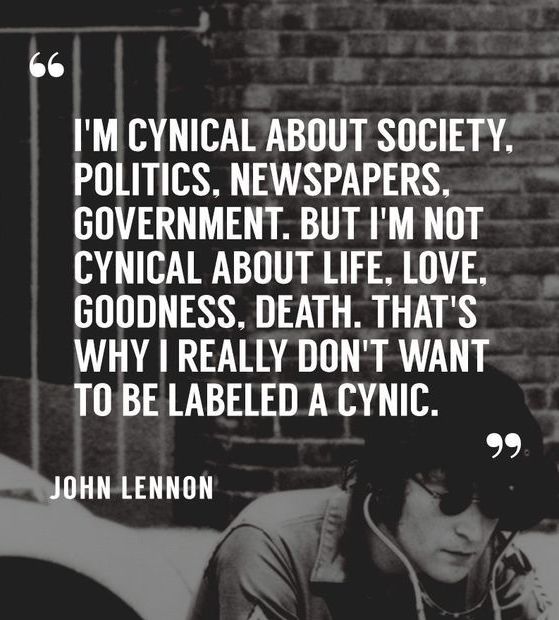
John Lennon tried to imagine such a world in which there was nothing to kill or die for, no greed or hunger. He was a beautiful dreamer whose life ended with an assassin’s bullet on December 8, 1980.

Still, that doesn’t mean the dream has to die, too.

There’s something to be said for working to make that dream a reality. As Lennon reminded his listeners, “War is over, if you want it.”

The choice is ours, if we want it.

8 Simple Steps to Forgive Even the Unforgivable


Cats And Dogs Hugging

By Christina Sarich

Source: Yoga for the New World

Are you feeling resentment? Pain? Anguish? Perhaps even fury? It doesn’t matter if your emotions are directed at the general idiocy of a government that seems bought-out by an elitist class, or a close friend or family member. It doesn’t matter if you are raging at a complete stranger on the road, in a moment that dissipates fairly quickly, or if you are dealing with years of abuse or emotional torment. Forgiveness is a spiritual act that requires us to see things differently than we do now.

It doesn’t seem to be so when we are thinking of the wrong another has done to us, or the hurt they’ve so carelessly lavished, but forgiveness can free us from even the most unforgivable acts. Many of us hold onto our anger in hopes that this emotion will somehow anchor in some Universal Justice – as if our teeth gritting, and brow furrowing can somehow balance the teetering scales of righteousness in the world.

Sadly, the act or words of another that we keep running in our minds is like emotional cement, keeping us stuck and unable to move into peace. Our unforgiveness often doesn’t even affect the ‘other’ as much as it does us. There is a Tibetan Buddhist story about two monks who encounter each other many years after being released from prison where they had been horribly tortured by their captors. “Have you forgiven them?” asks the first. “I will never forgive them! Never!” replies the second. “Well, I guess they still have you in prison, don’t they?” the first says.

Many mistakenly believe that forgiveness somehow absolves another from their wrong-doing. That in forgiving, we helplessly accept, give up, surrender to defeat – that we are helpless. The exact opposite is true. When we face a terrible wrong, and look within to see how we can prevent the same incident from happening again, then we are truly on the correct spiritual path.

Dr. Fred Luskin is the Director of the Stanford University Forgiveness Projects. He has led the largest research project to date to study the effects of forgiveness on hurt individuals. He has dealt with people suffering from a huge range of things needing to be forgiven – from a romantic break up to the murder of a child. He believes that there are specific steps one can take to reduce the stress that comes with holding onto hurt, and make the progress of forgiveness as easy as possible. I tend to agree. Forgiveness usually takes a little time, but it needn’t consume your life for years. You can start with these eight steps to move your heart into the right place, and begin to forgive:

  1. We are often afraid to truly articulate just how much we have been wronged, but we must. In cases that are more obvious – such as losing a family member in a war-torn country to the hands of an unfeeling mercenary – it is easier to explain how angry and sad we are, but in other cases, such as with long-term familial abuse, we may have even come to think the behaviors we were subjected to were ‘normal,’ and only later do we realize how much pain and hurt we stuffed down over the years in order to function within our family unit. When that pain is realized, it is helpful to articulate it to a counselor or a few close friends. Keeping those emotions locked inside does not permit the process of forgiveness to begin.
  1. Forgiveness is a personal journey. You do it for yourself, not for the person you think needs to be forgiven, or anyone else. Once you make a commitment to do whatever it takes to let go of the pain and feel better – and do it for you, then forgiveness starts to become an easier endeavor. When you feel better about yourself, after all, you will find it more difficult to hold grudges against others. When needed practice self-care and self-love. If you are still involved with the person or people who you are trying to forgive, you can simply explain to them that you need time to care for yourself. If this is not appropriate due to the ongoing behavior of another, then simply practice uncompromising self-love and distance yourself from the other person until your feelings of anger and hatred dissipate. Reconciliation may be possible in the future.
  1. While reconciliation is at times possible, sometimes it just isn’t. If someone is emotionally unstable, and will likely continue to act in hurtful or harmful ways, we don’t need to be physically or emotionally near them to forgive them. What you’re after is internal peace. Forgiveness can be defined as the peace and understanding that comes from dropping the blame for whoever has hurt you – changing your never-ending story of grievance, and realizing that they were possibly playing a role in the grand play of life – called maya – to help you learn more about yourself. It doesn’t mean that murdering your child is right, or that stealing, cheating, emotional abuse, or other ‘wrongs’ are ‘right.’ It simply means that you choose to see that person’s pain as the impetus for their own actions, and not as a personal affront to you. Maya Angelou once said, “You can’t forgive without loving. And I don’t mean sentimentality. I don’t mean mush. I mean having enough courage to stand up and say, ‘I forgive, I’m done with it.’” If someone has been narcissistic, selfish, hateful, or jealous, you can forgive them for your own peace of mind, and allow them to learn from the Universal lessons, which are surely coming their way, to help them forgive those who hurt them also. While you don’t have to reconcile with others who are not ready to do this spiritual work for themselves, you do have to reconcile your own emotions.
  1. Believe it or not your hurt is coming from what you feel now, not what happened ten minutes ago, an hour ago, days ago, or even ten years ago. That old adage about time healing all wounds is true, but this is because we tend to get caught in karmic cycles that cause us to mentally recycle pain instead of letting it go. In the book Karma and Reincarnation Transcending Your Past, Transforming Your Future, Elizabeth Clare Prophet and Patricia R. Spadaro explain that while “karma means accountability and payback, reincarnation is simply another word for opportunity.” Karmic retribution is not punishment, but the benevolent Universe’s way of allowing us free will. It does mean, however, that what we do unto others, will be done unto us, somehow, at some time, in some way. The Sioux holy man, Black Elk, has explained that even nature comes full circle, and Voltaire espoused the fact that “it is not more surprising to be born twice, than once; everything in nature is resurrection. The cycles of karma and reincarnation can help us to understand family patterns, community patterns, and even wider societal patterns that need undoing. When we stay stuck in thoughts of the pain another has caused us, we miss the opportunity of this incarnation. After talking about a hurt with another person, and expressing it fully, it is time to start letting it go, and looking at the patterns which we created it. This is the true gift of being ‘hurt’ be another – it is really a chance to see how we have hurt ourselves.

I had the feeling that I was a historical fragment, an excerpt for which the preceding and succeeding text was missing . . . I could well imagine that I might have lived in former centuries and there encountered questions I was not yet able to answer; that I had to be born again because I had not fulfilled the task that was given to me. ~ Carl Jung

  1. Stop your fight or flight response. When we start to ruminate about what another has done to us, our hypothalamus gets in gear, engaging both the sympathetic nervous system and the adrenal-cortical system. When the effect of these two systems goes ‘online’ the fight or flight response begins – this means we are in moderate to full-blown fear mode. We are afraid this will happen to us again. We are feeling the incident as if it were happening right now, no matter now long ago it occurred. Our heart rates and blood pressure rise. We might even sweat a little. Our bodies are flooded with 30 different stress hormones and it can make ‘forgiving’ very difficult. By instead practicing a simple, calming mantra meditation, a few yoga asanas, yoga nidra, nadi shodhana, or going for a short walk outdoors, we can reverse this fight-or-flight response, and deal with the fear behind our pain from a more level emotional state.
  1. Give up your expectations of others – Dr. Luskin calls this ‘recognizing the unenforceable rules.’ In other words, you can’t expect to get from others, what they have no ability or desire to give you. While we can practice love without expectation, we also should be aware that others aren’t always capable of loving back. If your inner child is still bemoaning the inability of an emotionally shutdown father to be affectionate and caring, or you expect a selfish boss to behave differently, then you are setting yourself up for more pain, and often. Realize that what you seek from others – kindness, love, affection, support – will come from those willing and able to give it, and the more you offer it to yourself, the more likely these individuals will come into your orbit. Just let the others, who are not ready to act as evolved, be. No resentment – that’s just where they are at in their cycle or karma and reincarnation.
  1. Know that a life well lived is your best revenge – as long as you stay hurt and angry, you are feeding the ego of the person who felt the need to hurt you. You give that person power over you – you are still in ‘prison’ like the two monks said. Find personal power in the good things in your life. Robert Emmons and Michael McCullough are two of the leading American investigators of gratitude. They describe gratitude as personality strength—the ability to be keenly aware of the good things that happen to you and never take them for granted. Grateful individuals express their thanks and appreciation to others in a heartfelt way, not just to be polite. If you possess a high level of gratitude, you often feel an emotional sense of wonder, thankfulness and appreciation for life itself. Start a gratitude journal, or simply practice a few moments of quiet contemplation realizing all you do have now, instead of getting stuck on your hurt feelings. Counting your blessings is not only good for your health, but it helps to dissipate sadness, anger, and frustration.
  1. Change your ‘story’ – Instead of telling a story to yourself and others about how you were done wrong, decide to rewrite the script. You can, instead of being a victim, decide to use the experience as a way to heal others, and practice one of the most profound spiritual practices ever taught. Imagine the ripples that the pebbles of forgiveness could send out into the world. I give the example of a man named Robert Rule to explain exactly how profound changing your story can be:

“Gary Leon Ridgway is better known as the infamous Green River Killer. In 2003, he confessed to the murders of 48 women. In 2011, Ridgway was convicted of the murder of Rebecca Marrero, bringing the victim count up to 49. By his own confession, he may have murdered as many as 60 women. Ridgway especially despised prostitutes and targeted them for his killings. At Ridgway’s 2003 sentencing, the families of the victims had the opportunity to speak out and address Ridgway directly. Understandably, many were angry and lashed out at Ridgway for the unimaginable grief he had put them through. As Ridgway stonily listened to the family members express their grief and anger, one person came up and said something unexpected. When the time came for Robert Rule, the father of teenage victim Linda Jane Rule, to speak, Ridgway finally showed a glimpse of remorse. Rule’s words to Ridgway were: “Mr. Ridgway . . . there are people here that hate you. I’m not one of them. You’ve made it difficult to live up to what I believe, and that is what God says to do, and that’s to forgive. You are forgiven, sir.” These words brought Ridgway to tears.”

About the Author

Christina Sarich is a musician, yogi, humanitarian and freelance writer who channels many hours of studying Lao Tzu, Paramahansa Yogananda, Rob Brezny, Miles Davis, and Tom Robbins into interesting tidbits to help you Wake up Your Sleepy Little Head, and *See the Big Picture*. Her blog is Yoga for the New World . Her latest book is Pharma Sutra: Healing The Body And Mind Through The Art Of Yoga. Please reprint this article with attribution bio and all links in tact.