Washington’s Global Economic Wars

bf82233ae78cbffa718c3c7768ed31afc418d015

By James Petras

Source: Axis of Logic

Introduction
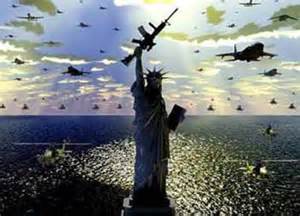
During most of the past two decades Washington has aggressively launched military and economic wars against at least nine countries, either directly or through its military aid to regional allies and proxies.  US air and ground troops have bombed or invaded Afghanistan, Iraq, Pakistan, Libya, Somalia, Syria, Yemen and Lebanon.

More recently Washington has escalated its global economic war against major economic rivals as well as against weaker countries.  The US no longer confines its aggressive impulses to peripheral economic countries in the Middle East, Latin America and Southern Asia:  It has declared trade wars against world powers in Asia, Eastern and Central Europe and the Gulf states.

The targets of the US economic aggression include economic powerhouses like Russia, China, Germany, Iran and Saudi Arabia, as well as Syria, Yemen, Venezuela, Cuba and the Donbas region of Ukraine.

There is an increasingly thinner distinction between military and economic warfare, as the US has frequently moved from one to the other, particularly when economic aggression has not resulted in ‘regime change’ – as in the case of the sanctions campaign against Iraq leading up to the devastating invasion and destruction.

In this essay, we propose to examine the strategies and tactics underlying Washington’s economic warfare, their successes and failures, and the political and economic consequences to target nations and to world stability.

Washington’s Economic Warfare and Global Power
The US has used different tactical weapons as it pursues its economic campaigns against targeted adversaries and even against its long-time allies.

Two supposed allies, Germany and Saudi Arabia, have been attacked by the Obama Administration and US Congress via ‘legal’ manipulations aimed at their financial systems and overseas holdings.  This level of aggression against sovereign powers is remarkable and reckless.  In 2016 the US Justice Department slapped a $14 billion dollar penalty on Germany’s leading international bank, Deutsche Bank, throwing the German stock market into chaos, driving the bank’s shares down 40% and destabilizing  Germany’s financial system.  This unprecedented attack on an ally’s major bank was in direct retaliation for Germany’s support of the European Commission’s $13 billion tax levy against the US-tax evading Apple Corporation for its notorious financial shenanigans in Ireland.  German political and business leaders immediately dismissed Washington’s legalistic rhetoric for what it was: the Obama Administration’s retaliation in order to protect America’s tax evading and money laundering multinationals.

The chairman of the German parliament’s economic committee stated that the gross US attempt to extort Deutsche Bank had  all the elements of an economic war.   He noted that Washington had a “long tradition of using every available opportunity to wage what amounted to a  trade war if it benefits their own economy” and the “extortionate damages claim” against Deutsche Bank were a punitive example.  US economic sanctions against some of Germany’s major trade partners, like Russia, China and Iran, constitute another tactic to undermine Germany’s huge export economy.  Ironically, Germany is still considered “a valued ally” when it comes to the US wars against Syria, Afghanistan and Iraq, which have driven millions of refugees to Europe creating havoc with Germany’s political, economic and social system and threatening to overthrow the government of ‘ally’ Angela Merkel.

The US Congress launched an economic-judicial war against its closest ally in the Gulf region when it approved legislation granting US victims of Islamist terrorism, especially related to the attacks on September 11, 2001, the right  to sue the government of Saudi Arabia and seize its overseas assets.  This included the Kingdom’s immense ‘sovereign funds’ and constitutes an arbitrary and blatant violation of Saudi sovereignty.  This opens the Pandora’s Box of economic warfare by allowing victims to sue any government for sponsoring terrorism, including the United States!   Saudi leaders immediately reacted by threatening to withdraw billions of dollars of assets in US Treasuries and investments.

The US economic sanctions against Russia are designed to strengthen its stranglehold on the economies of Europe which rely on trade with Russia.  These have especially weakened German and Polish trade relations with Russia, a major market for German industrial exports and Polish agriculture products.   Originally, the US-imposed economic sanctions against Moscow were supposed to harm Russian consumers, provoke political unrest and lead to ‘regime change’.   In reality, the unrest it provoked has been mainly among European exporters, whose contracts with Russia were shredded and billions of Euros were lost.  Furthermore, the political and diplomatic climate between Europe and Russia has deteriorated while Washington has ‘pivoted’ toward a more militaristic approach.

Results in Asia have been even more questionable:  Washington’s economic campaign against China has moved awkwardly in two directions:  Prejudicial trade deals with Asian-Pacific countries and a growing US military encirclement of China’s maritime trade routes.

The Obama regime dispatched Treasury Secretary Jack Lew to promote the Trans- Pacific Partnership (TPP) among a dozen regional governments, which would blatantly exclude China, Asia’s largest economic power.   In a slap to the outgoing Obama Administration, the US Congress rejected his showpiece economic weapon against China, the TPP.

Meanwhile, Obama ‘encouraged’ his erstwhile ‘allies’ in the Philippines and Vietnam to sue China for maritime violations over the disputed ‘Spratly Islands’ before the Permanent Court of Arbitration.   Japan and Australia signed military pacts and base agreements with the Pentagon aimed at disrupting China’s trade routes.  Obama’s so-called ‘Pivot to Asia’ is a transparent campaign to block China from its markets and trading partners in Southeast Asia and Pacific countries of Latin American.  Washington’s flagrant economic warfare resulted in slapping harsh import tariffs on Chinese industrial exports, especially steel and tires.  The US also sent a ‘beefed up’ air and sea armada for ‘joint exercises’ along China’s regional trade routes and its access to critical Persian Gulf oil, setting off a ‘war of tension’.

In response to Washington’s ham-fisted aggression, the Chinese government deftly rolled out the Asian Infrastructure Investment Bank (AIIB) with over fifty countries eagerly signing on for lucrative trade and investment deals with Beijing.  The AIIB’s startling success does not bode well for Obama’s ‘Pivot to Pacific Hegemony’.

The so-called US-EU-Iran accord did not end Washington’s trade war against Teheran.  Despite Iran’s agreement to dismantle its peaceful uranium enrichment and nuclear research programs, Washington has blocked  investors and tried to undermine trade relations, while still holding billions of dollars of Iranian state assets, frozen since the overthrow of the Shah in  1979.  Nevertheless, a German trade mission signed on a three billion trade agreement with Iran in early October 2016 and called on the US to fulfill its side of the agreement with Teheran – so far to no avail.

The US stands alone in sending its nuclear naval armada to the Persian Gulf and threatens commercial relations. Even the Kingdom of Saudi Arabia, the longstanding enemy of the Iranian Islamic Republic, has agreed to a cooperative oil production arrangement at a recent OPEC meeting.

Washington’s declaration of economic warfare against two of its most strategic powerful allies, Germany and Saudi Arabia and three rising competitor world powers, has eroded US economic competitiveness, undermined its access to lucrative markets and increased its reliance on aggressive military strategies over diplomacy.

What is striking and perplexing about Washington’s style of economic warfare is how costly this has been for the US economy and for US allies, with so little concrete benefit.

US oil companies have lost billions in joint exploitation deals with Russia because of Obama’s sanctions.  US bankers, agro-exporters, high-tech companies are missing out on lucrative sales just to ‘punish’ Russia over the incredibly corrupt and bankrupt US coup regime in Ukraine.

US multi-national corporations, especially those involved in Pacific Coast transport and shipyards, Silicon Valley high tech industry and Washington State’s agro-export producers are threatened by the US trade agreements that exclude China.

Iran’s billion dollar market is looking for everything from commercial airplanes to mining machinery.  Huge trade deals have has been lost to US companies because Obama continues to impose de facto sanctions.  Meanwhile, European and Asian competitors are signing contracts.

Despite Washington’s dependence on German technical knowhow and Saudi petro-dollar investments as key to its global ambitions, Obama’s irrational policies continue to undermine US trade.

Washington has engaged in economic warfare against ‘lesser economic powers’ that nevertheless play significant political roles in their regions.  The US retains the economic boycott of Cuba; it wages economic aggression against Venezuela and imposes economic sanctions against Syria, Yemen and the Donbas region in eastern Ukraine.  While these countries are not costly in terms of economic loss to US business interests, they exercise significant political and ideological influence in their regions, which undermine US ambitions.

Conclusion
Washington’s resort to economic warfare complements its military fueled empire building.

But economic and military warfare are losing propositions.  While the US may extract a few billion dollars from Deutsch Bank, it will have lost much more in long-term, large-scale relations with German industrialists, politicians and financiers.  This is critical because Germany plays the key role in shaping economic policy in the European Union.  The practice of US multi-national corporations seeking off-shore tax havens in the EU may come to a grinding halt when the European Commission finishes its current investigations.  The Germans may not be too sympathetic to their American competitors.

Obama’s Trans-Pacific Partnership (TPP) has not only collapse, it has compelled China to open new avenues for trade and cooperation with Asian-Pacific nations – exactly the opposite of its original goal of isolating Beijing.  China’s Asia Infrastructure and Investment Bank (AIIB) has attracted 4 time more participants than Washington’s TPP and massive infrastructure projects are being financed to further bind ASEAN countries to China.  China’s economic growth at 6.7% more than three times that of the US at 2%.  Worse, for the Obama Administration, Washington has alienated its historically most reliable allies, as China, deepens economic ties and cooperation agreements with Thailand, Philippines, Pakistan, Cambodia and Laos.

Iran, despite US sanctions, is gaining markets and trade with Germany, Russia, China and the EU.

The Saudi-US conflict has yet to play-out but any escalation of law suits against the kingdom will result in the flight of hundreds of billions of investment dollars from the US.

In effect, Obama’s campaign of economic warfare may lead to the infinitely more costly military warfare and the massive loss of jobs and profits for the US economy.   Washington is increasingly isolated. The only allies supporting its campaign of economic sanctions are second and third rate powers, like Poland and current corrupt parasites in Ukraine.  As long as the Poles and Ukrainians can ‘mooch’ off of the IMF and grab EU and US ‘loans’, they will cheerlead Obama’s charge against Russia.  Israel, as long as it can gobble up an additional $38 billion dollars in ‘aid’ from Washington, remains  the biggest advocate for war against Iran.

Washington spends billions of US tax-payer dollars on its military bases in Japan, Philippines and Australia to maintain its hegemony in the Asia-Pacific region.   Its allies, though, are salivating at the prospect for greater trade and infrastructure investment  deals with China.

Economic warfare doesn’t work for the Washington because the US economy cannot compete, especially when it attacks its own allies and traditional partners.  Its regional allies are keen to join the ‘forbidden’ markets and share in major investment projects funded by China.  Asian leaders increasingly view Washington, with its ‘pivot to militarism’ as politically unreliable, unstable and dangerous.  After the Philippine government economic mission to China, expect more to ‘jump ship’.

Economic warfare against declared adversaries can only succeed if the US is committed to free trade with its allies, ends punitive sanctions and stops pushing for exclusive trade treaties that undermine its allies’ economies.   Furthermore, Washington should stop catering to the whims of special domestic interests.  Absent these changes, its losing campaign of economic warfare can only turn into military warfare – a prospect devastating to the US economy and to world peace.


Please note James Petras’s new collection of essays with Clarity Press:
THE END OF THE REPUBLIC AND THE DELUSION OF EMPIRE

ISBN: 978-0-9972870-5-9
$24.95 / 252 pp. / 2016

The Secret Global Court – Why Corporate Criminals and Corrupt Politicians Desperately Want the TPP

profits-over-people

By Michael Krieger

Source: Liberty Blitzkrieg

Obama needs to ensure he gets well compensated after leaving office for a job well done protecting, defending and further enriching the global oligarch class. This is precisely why he’s so adamant about passing the TPP during the upcoming lame duck session of Congress, when he knows “representatives” who no longer face reelection can be coerced or bribed into voting for this monumental public betrayal.

The Trans-Pacific Partnership (TPP) ins’t really a free trade deal, it’s a way for global oligarchs to consolidate, grow and protect their enormous wealth. The investor-state dispute settlement system (ISDS) is perhaps the most nefarious and objectionable aspect of the deal, with this shadowy court system being used to accomplish the following for the super rich and powerful:

1) Eliminate sovereign risk from their investments.

2) Earn money by scouring the world for potential ISDS “opportunities” and then speculating on them.

3) Escape prosecution from criminality on a global basis.

The whole thing is absolutely disgusting and epitomizes all that is wrong and unethical about the world today. As such, stopping the TPP from passage is probably the most important near-term challenge ahead for all of us who want to make the world a better place (or at least prevent it from getting much, much worse).

Before getting into today’s article, I want to commend Chris Hamby and BuzzFeed for publishing this extremely timely and important work. We can only hope that it will inform millions of Americans sufficiently to create the needed pushback to prevent the TPP from ever becoming law.

So without further ado, let’s get on with it. What follows are excerpts from Part 1 of a four part investigative series. My snippets don’t do this work the justice it deserves; as such, I strongly encourage you to read the entire piece and share it with everyone you know.

Now, from the blockbuster piece, The Court That Rules the World:

Imagine a private, global super court that empowers corporations to bend countries to their will.

Say a nation tries to prosecute a corrupt CEO or ban dangerous pollution. Imagine that a company could turn to this super court and sue the whole country for daring to interfere with its profits, demanding hundreds of millions or even billions of dollars as retribution.

Imagine that this court is so powerful that nations often must heed its rulings as if they came from their own supreme courts, with no meaningful way to appeal. That it operates unconstrained by precedent or any significant public oversight, often keeping its proceedings and sometimes even its decisions secret. That the people who decide its cases are largely elite Western corporate attorneys who have a vested interest in expanding the court’s authority because they profit from it directly, arguing cases one day and then sitting in judgment another. That some of them half-jokingly refer to themselves as “The Club” or “The Mafia.”

And imagine that the penalties this court has imposed have been so crushing — and its decisions so unpredictable — that some nations dare not risk a trial, responding to the mere threat of a lawsuit by offering vast concessions, such as rolling back their own laws or even wiping away the punishments of convicted criminals.

This system is already in place, operating behind closed doors in office buildings and conference rooms in cities around the world. Known as investor-state dispute settlement, or ISDS, it is written into a vast network of treaties that govern international trade and investment, including NAFTA and the Trans-Pacific Partnership, which Congress must soon decide whether to ratify.

The BuzzFeed News investigation explores four different aspects of ISDS. In coming days, it will show how the mere threat of an ISDS case can intimidate a nation into gutting its own laws, how some financial firms have transformed what was intended to be a system of justice into an engine of profit, and how America is surprisingly vulnerable to suits from foreign companies.

The series starts today with perhaps the least known and most jarring revelation: Companies and executives accused or even convicted of crimes have escaped punishment by turning to this special forum. Based on exclusive reporting from the Middle East, Central America, and Asia, BuzzFeed News has found the following:

  • A Dubai real estate mogul and former business partner of Donald Trump was sentenced to prison for collaborating on a deal that would swindle the Egyptian people out of millions of dollars — but then he turned to ISDS and got his prison sentence wiped away.
  • In El Salvador, a court found that a factory had poisoned a village — including dozens of children — with lead, failing for years to take government-ordered steps to prevent the toxic metal from seeping out. But the factory owners’ lawyers used ISDS to help the company dodge a criminal conviction and the responsibility for cleaning up the area and providing needed medical care.
  • Two financiers convicted of embezzling more than $300 million from an Indonesian bank used an ISDS finding to fend off Interpol, shield their assets, and effectively nullify their punishment.

When the US Congress votes on whether to give final approval to the sprawling Trans-Pacific Partnership, which President Barack Obama staunchly supports, it will be deciding on a massive expansion of ISDS. Donald Trump and Hillary Clinton oppose the overall treaty, but they have focused mainly on what they say would be the loss of American jobs. Clinton’s running mate, Tim Kaine, has voiced concern about ISDS in particular, and Sen. Elizabeth Warren has lambasted it. Last year, members of both houses of Congress tried to keep it out of the Pacific trade deal. They failed.

I wonder why they failed. Perhaps the following will provide some insight: New Report from Princeton and Northwestern Proves It: The U.S. is an Oligarchy 

ISDS is basically binding arbitration on a global scale, designed to settle disputes between countries and foreign companies that do business within their borders. Different treaties can mandate slightly different rules, but the system is broadly the same. When companies sue, their cases are usually heard in front of a tribunal of three arbitrators, often private attorneys. The business appoints one arbitrator and the country another, then both sides usually decide on the third together.

“It works,” said Charles Brower, a longtime ISDS arbitrator. “Like any system of law, there will be disappointments; you’re dealing with human systems. But this system fundamentally produces as good justice as the federal courts of the United States.”

I mean, it takes some nerve to make a statement like that.

But over the last two decades, ISDS has morphed from a rarely used last resort, designed for egregious cases of state theft or blatant discrimination, into a powerful tool that corporations brandish ever more frequently, often against broad public policies that they claim crimp profits.

Because the system is so secretive, it is not possible to know the total number of ISDS cases, but lawyers in the field say it is skyrocketing. Indeed, of the almost 700 publicly known cases across the last half century, more than a tenth were filed just last year.

Bull market in oligarch thievery continues unabated:

Driving this expansion are the lawyers themselves. They have devised new and creative ways to deploy ISDS, and in the process bill millions to both the businesses and the governments they represent. At posh locales around the globe, members of The Club meet to swap strategies and drum up potential clients, some of which are household names, such as ExxonMobil or Eli Lilly, but many more of which are much lower profile. In specialty publications, the lawyers suggest novel ways to use ISDS as leverage against governments. It’s a sort of sophisticated, international version of the plaintiff’s attorney TV ad or billboard: Has your business been harmed by an increase in mining royalties in Mali? Our experienced team of lawyers may be able to help.

In a little-noticed 2014 dissent, US Chief Justice John Roberts warned that ISDS arbitration panels hold the alarming power to review a nation’s laws and “effectively annul the authoritative acts of its legislature, executive, and judiciary.” ISDS arbitrators, he continued, “can meet literally anywhere in the world” and “sit in judgment” on a nation’s “sovereign acts.”

Some entrepreneurial lawyers scout for ways to make money from ISDS. Selvyn Seidel, an attorney who represented clients in ISDS suits, now runs a specialty firm, one that finds investors willing to fund promising suits for a cut of the eventual award. Some lawyers, he said, monitor governments around the world in search of proposed laws and regulations that might spark objections from foreign companies. “You know it’s coming down the road,” he said, “so, in that year before it’s actually changed, you can line up the right claimants and the right law firms to bring a number of cases.”

Can you believe this? Outside of technology, pretty much all the big money being made these days is from purely parasitic, extractive activities.

Opposition to ISDS is spreading across the political spectrum, with groups on the left and right attacking the system. Around the world, a growing number of countries are pushing for reforms or pulling out entirely. But most of the alarm has been focused on the potential use of ISDS by corporations to roll back public-interest laws, such as those banning the use of hazardous chemicals or raising the minimum wage. The system’s usefulness as a shield for the criminal and the corrupt has remained virtually unknown.

This is why Obama will try to pass it when the fewest members of government can be held accountable.

Most of the 35-plus cases are still ongoing. But in at least eight of the cases, bringing an ISDS claim got results for the accused wrongdoers, including a multimillion-dollar award, a dropped criminal investigation, and dropped criminal charges. In another, the tribunal has directed the government to halt a criminal case while the arbitration is pending.

One lawyer who regularly represents governments said he’s seen evidence of corporate criminality that he “couldn’t believe.” Speaking on the condition that he not be named because he’s currently handling ISDS cases, he said, “You have a lot of scuzzy sort-of thieves for whom this is a way to hit the jackpot.

Now here’s an example of ISDS abuse from Egypt.

But, though Mubarak was gone, he had left behind a gift for investors like Sajwani: one of the world’s largest networks of investment treaties — twice the size of the United States’ — that allowed foreign businesses to file ISDS claims against Egypt. Within a week of Sajwani’s conviction over the Red Sea deal, Damac invoked one of these treaties and sued Egypt before the international arbitration arm of the World Bank.

This argument — that the government at the time gave its blessing, so the sweetheart deal couldn’t be criminal — became the template for other businesses facing similar accusations.

By filing an ISDS claim, Sajwani took his case out of the Egyptian court system and placed it in the hands of three private lawyers convening in Paris. For the arbitrator he was entitled to choose, Sajwani appointed a prominent American lawyer who had often represented businesses in ISDS cases. And to press his case, Sajwani hired some of the world’s best ISDS attorneys.

For Egypt, the potential losses were big and would come as the country struggled to revive its floundering economy.

It decided to settle.

But the key benefit for Sajwani, according to all three: In exchange for dropping his ISDS case, Egypt would wipe away his five-year prison sentence and close out the probes of the other deals. The man who had been convicted of collaborating on a deal that would bilk the Egyptian people out of millions of dollars was now free and clear.

“Damac, followed by multiple other cases filed, made them say, ‘You know what, no; there should be another way,’” said Girgis Abd el-Shahid, a lawyer who represents corporate clients and assisted with Sajwani’s arbitration claim. “I believe that, after Damac, Egypt learned its lesson.”

Virtually across the board, the government began trying to settle.

In one case, an Egyptian court had declared a foreign company’s purchase of a factory corrupt and nullified the deal, court records show. But after the company filed an ISDS claim, the government agreed to pay $54 million in a settlement — roughly twice the price the company had paid for the factory just a few years earlier, according to news reports and documents reviewed by BuzzFeed News. A lawyer for the company said that his client had not been found guilty of a crime and that the company had made “significant investments” in the factory after acquiring it.

In another case, a second Dubai developer was under investigation — until he threatened an ISDS claim, according to the Cairo lawyer Hani Sarie-Eldin, who has represented the company. Instead of a criminal trial, the government opted for a settlement, and the mogul’s company went forward with its project, Sarie-Eldin said.

Meanwhile, the government has changed its laws, stripping public-interest lawyers and average citizens of the right to file court challenges to dubious public contracts, such as the sale of public land to a developer like Sajwani.

Heba Khalil, a researcher at an Egyptian human rights organization, recently recalled the chaotic but hopeful days after the fall of Mubarak. “No one knew what Egypt would be like,” she said. “International investors were kind of scared that the kind of deals that they did with the Mubarak regime wouldn’t be possible anymore.”

Then came the ISDS claims. “I think the impact of international arbitration,” Khalil said, was that Egyptians “started knowing that, ‘Oops, if we try to expose corruption, then those investors will take us to court internationally, and we will lose the case. Which means we had better just shut up and let the wrongs of Mubarak continue the way they are.’”

Here’s an example from El Salvador.

Not long after the battery factory set up shop on the edge of Sitio del Niño in 1998, people began noticing clouds of ash floating over from their new neighbor, descending on fields where children played soccer and seeping into their homes at night. It burned people’s throats and sent them into coughing fits.

Eventually, people started connecting the ash with the persistent headaches, dizziness, extreme fatigue, and constant bone and joint pain that children in particular were suffering. In 2004, a committee of local citizens began petitioning leaders for help, writing the town’s mayor, national government ministries, and eventually even other nations’ embassies and international aid organizations. For years, their efforts came to naught.

Then lead started showing up at potentially dangerous levels in the blood of the town’s children. Testing in 2006 and 2007 found that dozens of children, some as young as 3, had been contaminated.

In the midst of the trial, the prosecution agreed to settle. Prosecutors declined to comment on the role ISDS played, but the settlement document lays out the terms. The company agreed to pay for a limited cleanup of only the factory site, far short of the much more expansive cleanup the government has said is needed, and to establish a medical clinic in the village, albeit one that would provide only basic care and be funded for only three years. The company would also pay for some of the costs associated with the prosecution and make small donations to the community. And it agreed to drop its threat and not pursue an ISDS case.

Ultimately, the court concluded that the factory had contaminated the village. But that same court acquitted the three lower-level managers, so, it reasoned, it had no choice but to exonerate the company, too.

A force that helped persuade the judges, said Girón, the company’s lawyer, was the ISDS threat and its potential to slam the government with huge compensatory damages.

The failure to hold the factory accountable is an open wound for the impoverished residents of Sitio del Niño — a village whose very name, “Place of the Child,” is now a cruel joke. For six years, their community has been designated an “environmental emergency” by the government, which has warned them not to eat anything grown in the town’s contaminated soil. But many of them have no other option.

When NAFTA, the North American Free Trade Agreement, took effect in 1994, some lawyers at top firms took notice of ISDS for the first time. One heralded “a new territory” where some pioneering attorneys had ventured and “prepared maps showing a vast continent beyond.” What they saw was the opportunity to expand and reshape ISDS to their benefit, and the previously dormant system changed forever.

“A whole industry grew up,” said Muthucumaraswamy Sornarajah, an international lawyer and ISDS arbitrator who argued that the system is now being misused. Large law firms, he said, see ISDS “as a lucrative area of practice, so what happens is they think up new ways of bringing cases before the arbitration tribunals.”

A key service offered by the ISDS legal industry goes by various euphemisms: “corporate structuring,” “re-domiciling,” “nationality planning.” Critics have a different term: “treaty shopping.” It amounts to helping businesses figure out which countries’ treaties afford the most leeway for bringing ISDS claims, then setting up a holding company there — sometimes little more than some space in an office building — from which to launch attacks.

ISDS lawyers also grow the market for their services by advocating for new treaties, and some of the most outspoken are beneficiaries of the revolving door between the US government and top law firms.

Now meet a particularly nefarious cretin, Daniel Price.

Daniel M. Price negotiated the section of NAFTA containing ISDS when he was a lawyer at the Office of the US Trade Representative. He later served as a top international trade official in the George W. Bush White House.

In between these government stints, he worked as a private lawyer helping clients in ISDS cases. Twice he used the treaty he himself had helped negotiate to help US-based businesses pursue claims against Mexico.

He founded and chaired the unit handling ISDS claims at Sidley Austin, a leading global law firm. Today, he promotes his services as an arbitrator and, along with a powerhouse team that includes other former government lawyers, sells international expertise on ISDS and related matters.

Price, who at first agreed to an interview but later stopped responding to messages, is only one of a number of private lawyers who have exerted outsize influence on American policy on ISDS.

Yes, America. This is your government.

Finally, companies can gain advantages by bringing an ISDS suit, even if they don’t expect to win the case. Krzysztof Pelc, an associate professor at McGill University, found that there has been a proliferation of frivolous cases primarily intended not to win compensation but rather to bully the government — and other nations that want to avoid a similar suit — into dropping public-interest regulations. These new cases, Pelc found, represent a fundamental transformation of ISDS: The system was designed to deal primarily with theft by autocrats, but, in the majority of cases today, businesses are suing democracies for enacting regulations.

Finally, here’s the third example of how ISDS allows powerful people convicted of crimes to escape justice.

The British financial guru Rafat Ali Rizvi had a big problem: In Indonesia, where he’d plied his trade, he and a business partner had been convicted of embezzling more than $300 million from one of the country’s banks. The government there had to bail out the bank — sparking enraged protests that police tried to quell with tear gas and water cannons — and Indonesian authorities were pursuing him and the money they said he’d stashed in accounts around the world.

Ensconced overseas, Rizvi was beyond the reach of the Indonesian authorities. But the conviction came with an Interpol “red notice,” meaning he risked extradition if he traveled abroad. Some of his bank accounts were frozen. And with this stain on his record, he was largely cut off from the world of global finance he’d played in for years.

Rizvi’s topflight criminal lawyer had threatened to sue Interpol if the agency didn’t delete the alert, but so far it hadn’t worked. What Rizvi needed was an entirely different type of lawyer. Someone like George Burn.

Burn had spent years representing businesses in corporate disputes, but, like many of his colleagues, he was drawn to ISDS as the system began to flourish in the 1990s. Now, he said, ISDS cases make up the majority of his work as a London-based partner at the U.S. firm Vinson & Elkins.

The strategy he crafted for Rizvi epitomizes the ingenuity of elite ISDS lawyers and the willingness of arbitrators — many of whom are also attorneys who argue ISDS cases — to expand their own authority. It is a stark example of how canny and audacious lawyers can work the system, crafting a win even when they technically lose. The only real losers: a nation of taxpayers.

As usual.

First, Burn needed to find a treaty that would apply to this case. His team discovered an obscure agreement among predominantly Islamic nations, including Indonesia, where the case was unfolding, and Saudi Arabia, where al-Warraq was a citizen. There was no record of anyone using that pact to file an ISDS claim before, but Burn audaciously forged ahead.

In fact, an official present at the creation of that treaty 30 years earlier told the tribunal that the agreement was not supposed to allow ISDS cases at all. The arbitrators waved off this objection as “irrelevant.”

The key argument that Burn planned to make was that the criminal trial in Jakarta had violated al-Warraq’s right to fair treatment as a foreign investor. This protection is now commonplace in investment treaties and trade deals, and it has become one of the most controversial aspects of ISDS.

Guaranteeing foreign businesses “fair and equitable treatment” sounds like common sense. But many treaties don’t say what exactly that means, so arbitrators have found that governments have acted unfairly even when they regulated the price of water or merely complied with European Union law. Critics argue that such judgments have transformed a system that was supposed to uphold the rule of law into one that places foreign businesses above the law, able to get out of obeying almost any statute or regulation, no matter how worthwhile, that cuts into profits.

Many scholars and activists say the “fair and equitable treatment” provision, which is included in the Trans-Pacific Partnership now being considered by Congress, is the most widely abused element of treaties containing ISDS. Numbers from the UN’s trade and development body show that arbitrators find violations of this controversial provision far more than any other.

As it happened, though, the treaty Burn had invoked didn’t include that clause. But the agreement did have another common and often controversial clause, which requires a government to treat foreign businesses covered under one treaty at least as well as businesses covered under any of its other treaties.

So Burn plucked the fair-treatment provision from another agreement and applied it to the Islamic nations pact. In effect, he constructed his own super-treaty.

And the ISDS arbitrators allowed it, giving themselves the authority to rule on the actual merits of the case.

Martha took that crucial finding and presented it to his former employer. He argued that, unless Interpol dropped its red alerts against Rizvi and al-Warraq, the international cops themselves would be violating international law. Interpol obliged, deleting the red notices.

“Unprecedented Concessions by Interpol,” trumpeted a press release put out on behalf of Martha’s firm. The international cops also had agreed to delete information about the two convicts from its files and to send letters to certain risk profiling and due diligence agencies, as well as the roughly 190 Interpol member countries, according to the release.

“As a result, Mr. Rizvi and Mr. Al-Warraq will be able to travel and conduct business without restriction,” the release boasted. “Such results have never been obtained before from INTERPOL.” Reached by BuzzFeed News, Martha at first agreed to an interview but didn’t respond to subsequent messages.

So gross.

Now the legal team is trying to use the ISDS decision to block Indonesia from seizing the men’s foreign bank accounts. Initially, Indonesian authorities had won a small victory when a Hong Kong court granted them access to a $4 million account. But that’s been put in doubt…

If all of this enraged you as much as it did me, please share this post as widely as possible and consider sending a message to Chris (chris.hamby@buzzfeed.com) thanking him for his work. Also, do whatever you possibly can to push back against Obama’s plan to pass this monstrosity after the election.

Finally, if all that wasn’t enough for you, I suggest reading the following article written by David Dayen a few days ago titled: The Big Problem With The Trans-Pacific Partnership’s Super Court That We’re Not Talking About.

Related Article: The Most Brazen Corporate Power Grab in American History by Chris Hedges


America the Epicenter of Pure Evil

aa-American-Empire-statue-of-liberty-and-military

By Stephen Lendman

Source: SteveLendmanBlog

No nation in world history harmed more people grievously over a longer duration than America – never beautiful, no bastion of democratic values, no advocate of world peace and stability.

Bipartisan lunatics run things, a criminal cabal, humanity’s greatest threat. The domestic and geopolitical agendas of each new administration is worse than its predecessors.

Elections when held are farcical. Duopoly power always wins, monied interests alone served, ordinary people increasingly harmed – full-blown tyranny and nuclear war perhaps following the next major state-sponsored false flag.

Americans have no say on how they’re governed, democracy a mirage. None whatever exists. Scoundrel media and self-serving politicians pretend otherwise – most people either unaware of how they’re ill-served or too indifferent to try changing things, going along with what harms them.

Intelligent people I know are too preoccupied in their daily lives to realize and get involved against the grave danger facing humanity.

The likelihood of a Hillary presidency should terrify everyone – a war goddess, the greatest threat to world peace of any leader in US history if she succeeds Obama.

Yet media scoundrels serve as her press agents. Polls show her ahead. US voters are so out-of-touch, uninformed and indifferent, they support what demands opposition.

I tremble at what’s coming with her in charge. Things may never be the same again. How many more wars will be waged?

How many victims will die or be gravely harmed with her as president? Will the remnants of social justice be entirely discarded? Will police state ruthlessness be harsher than ever? Is unthinkable nuclear war likely?

Is Orwell’s dystopian nightmare on steroids our future? Will Americans ever awaken to the clear and present danger they face? Will they revolt or remain dismissive?


Stephen Lendman lives in Chicago. He can be reached at lendmanstephen@sbcglobal.net.

His new book as editor and contributor is titled “Flashpoint in Ukraine: How the US Drive for Hegemony Risks WW III.” http://www.claritypress.com/LendmanIII.html

Visit his blog site at sjlendman.blogspot.com. 

Washington’s Military Addiction

bloody_us_flag_sized__large

And The Ruins Still to Come

By Tom Engelhardt

Source: TomDispatch.com

There are the news stories that genuinely surprise you, and then there are the ones that you could write in your sleep before they happen. Let me concoct an example for you:

“Top American and European military leaders are weighing options to step up the fight against the Islamic State in the Mideast, including possibly sending more U.S. forces into Iraq, Syria, and Libya, just as Washington confirmed the second American combat casualty in Iraq in as many months.”

Oh wait, that was actually the lead sentence in a May 3rd Washington Times piece by Carlo Muñoz.  Honestly, though, it could have been written anytime in the last few months by just about anyone paying any attention whatsoever, and it surely will prove reusable in the months to come (with casualty figures altered, of course).  The sad truth is that across the Greater Middle East and expanding parts of Africa, a similar set of lines could be written ahead of time about the use of Special Operations forces, drones, advisers, whatever, as could the sorry results of making such moves in [add the name of your country of choice here].

Put another way, in a Washington that seems incapable of doing anything but worshiping at the temple of the U.S. military, global policymaking has become a remarkably mindless military-first process of repetition.  It’s as if, as problems built up in your life, you looked in the closet marked “solutions” and the only thing you could ever see was one hulking, over-armed soldier, whom you obsessively let loose, causing yet more damage.

How Much, How Many, How Often, and How Destructively 

In Iraq and Syria, it’s been mission creep all the way.  The B-52s barely made it to the battle zone for the first time and were almost instantaneously in the air, attacking Islamic State militants.  U.S. firebases are built ever closer to the front lines.  The number of special ops forces continues to edge up.  American weapons flow in (ending up in god knows whose hands).  American trainers and advisers follow in ever increasing numbers, and those numbers are repeatedly fiddled with to deemphasize how many of them are actually there.  The private contractors begin to arrive in numbers never to be counted.  The local forces being trained or retrained have their usual problems in battle.  American troops and advisers who were never, never going to be “in combat” or “boots on the ground” themselves now have their boots distinctly on the ground in combat situations.  The first American casualties are dribbling in.  Meanwhile, conditions in tottering Iraq and the former nation of Syria grow ever murkier, more chaotic, and less amenable by the week to any solution American officials might care for.

And the response to all this in present-day Washington?

You know perfectly well what the sole imaginable response can be: sending in yet more weapons, boots, air power, special ops types, trainers, advisers, private contractors, drones, and funds to increasingly chaotic conflict zones across significant swaths of the planet.  Above all, there can be no serious thought, discussion, or debate about how such a militarized approach to our world might have contributed to, and continues to contribute to, the very problems it was meant to solve. Not in our nation’s capital, anyway.

The only questions to be argued about are how much, how many, how often, and how destructively.  In other words, the only “antiwar” position imaginable in Washington, where accusations of weakness or wimpishness are a dime a dozen and considered lethal to a political career, is how much less of more we can afford, militarily speaking, or how much more of somewhat less we can settle for when it comes to militarized death and destruction.  Never, of course, is a genuine version of less or a none-at-all option really on that “table” where, it’s said, all policy options are kept.

Think of this as Washington’s military addiction in action.  We’ve been watching it for almost 15 years without drawing any of the obvious conclusions.  And lest you imagine that “addiction” is just a figure of speech, it isn’t.  Washington’s attachment — financial, tactical, and strategic — to the U.S. military and its supposed solutions to more or less all problems in what used to be called “foreign policy” should by now be categorized as addictive.  Otherwise, how can you explain the last decade and a half in which no military action from Afghanistan to Iraq, Yemen to Libya worked out half-well in the long run (or even, often enough, in the short run), and yet the U.S. military remains the option of first, not last, resort in just about any imaginable situation?  All this in a vast region in which failed states are piling up, nations are disintegrating, terror insurgencies are spreading, humongous population upheavals are becoming the norm, and there are refugee flows of a sort not seen since significant parts of the planet were destroyed during World War II.

Either we’re talking addictive behavior or failure is the new success.

Keep in mind, for instance, that the president who came into office swearing he would end a disastrous war and occupation in Iraq is now overseeing a new war in an even wider region that includes Iraq, a country that is no longer quite a country, and Syria, a country that is now officially kaput.  Meanwhile, in the other war he inherited, Barack Obama almost immediately launched a military-backed “surge” of U.S. forces, the only real argument being over whether 40,000 (or even as many as 80,000) new U.S. troops would be sent into Afghanistan or, as the “antiwar” president finally decided, a mere 30,000 (which made him an absolute wimp to his opponents).  That was 2009.  Part of that surge involved an announcement that the withdrawal of American combat forces would begin in 2011.  Seven years later, that withdrawal has once again been halted in favor of what the military has taken to privately calling a “generational approach” — that is, U.S. forces remaining in Afghanistan into at least the 2020s.

The military term “withdrawal” may, however, still be appropriate even if the troops are staying in place.  After all, as with addicts of any sort, the military ones in Washington can’t go cold turkey without experiencing painful symptoms of withdrawal.  In American political culture, these manifest themselves in charges of “weakness” when it comes to “national security” that could prove devastating in the next election.  That’s why those running for office compete with one another in over-the-top descriptions of what they will do to enemies and terrorists (from acts of torture to carpet-bombing) and in even more over-the-top promises of “rebuilding” or “strengthening” what’s already the largest, most expensive military on the planet, a force better funded at present than those of at least the next seven nations combined.

Such promises, the bigger the better, are now a necessity if you happen to be a Republican candidate for president.  The Democrats have a lesser but similar set of options available, which is why even Bernie Sanders only calls for holding the Pentagon budget at its present staggering level or for the most modest of cuts, not for reducing it significantly.  And even when, for instance, the urge to rein in military expenses did sweep Washington as part of an overall urge to cut back government expenses, it only resulted in a half-secret slush fund or “war budget” that kept the goodies flowing in.

These should all be taken as symptoms of Washington’s military addiction and of what happens when the slightest signs of withdrawal set in.  The U.S. military is visibly the drug of choice in the American political arena and, as is only appropriate for the force that has, since 2002, funded, armed, and propped up the planet’s largest supplier of opium, once you’re hooked, there’s no shaking it.

Hawkish Washington

Recently, in the New York Times Magazine, journalist Mark Landler offered a political portrait entitled “How Hillary Clinton Became a Hawk.”  He laid out just how the senator and later secretary of state remade herself as, essentially, a military groupie, fawning over commanders or former commanders ranging from then-General David Petraeus to Fox analyst and retired general Jack Keane; how, that is, she became a figure, even on the present political landscape, notable for her “appetite for military engagement abroad” (and as a consequence, well-defended against Republican charges of “weakness”).

There’s no reason, however, to pin the war-lover or “last true hawk” label on her alone, not in present-day Washington.  After all, just about everyone there wants a piece of the action.  During their primary season debates, for instance, a number of the Republican candidates spoke repeatedly about building up the U.S. Sixth Fleet in the Mediterranean, while making that already growing force sound like a set of decrepit barges.

To offer another example, no presidential candidate these days could afford to reject the White House-run drone assassination program.  To be assassin-in-chief is now considered as much a part of the presidential job description as commander-in-chief, even though the drone program, like so many other militarized foreign policy operations these days, shows little sign of reining in terrorism despite the number of “bad guys” and terror “leaders” it kills (along with significant numbers of civilian bystanders).  To take Bernie Sanders as an example — because he’s as close to an antiwar candidate as you’ll find in the present election season — he recently put something like his stamp of approval on the White House drone assassination project and the “kill list” that goes with it.

Mind you, there is simply no compelling evidence that the usual military solutions have worked or are likely to work in any imaginable sense in the present conflicts across the Greater Middle East and Africa.  They have clearly, in fact, played a major role in the creation of the present disaster, and yet there is no place at all in our political system for genuinely antiwar figures (as there was in the Vietnam era, when a massive antiwar movement created space for such politics).  Antiwar opinions and activities have now been driven to the peripheries of the political system along with a word like, say, “peace,” which you will be hard-pressed to find, even rhetorically, in the language of “wartime” Washington.

The Look of “Victory”

If a history were to be written of how the U.S. military became Washington’s drug of choice, it would undoubtedly have to begin in the Cold War era.  It was, however, in the prolonged moment of triumphalism that followed the Soviet Union’s implosion in 1991 that the military gained its present position of unquestioned dominance.

In those days, people were still speculating about whether the country would reap a “peace dividend” from the end of the Cold War. If there was ever a moment when the diversion of money from the U.S. military and the national security state to domestic concerns might have seemed like a no-brainer, that was it.  After all, except for a couple of rickety “rogue states” like North Korea or Saddam Hussein’s Iraq, where exactly were this country’s enemies to be found?  And why should such a muscle-bound military continue to gobble up tax dollars at such a staggering rate in a reasonably peaceable world?

In the decade or so that followed, however, Washington’s dreams turned out to run in a very different direction — toward a “war dividend” at a moment when the U.S. had, by more or less universal agreement, become the planet’s “sole superpower.”  The crew who entered the White House with George W. Bush in a deeply contested election in 2000 had already been mainlining the military drug for years.  To them, this seemed a planet ripe for the taking.  When 9/11 hit, it loosed their dreams of conquest and control, and their faith in a military that they believed to be unstoppable.  Of course, given the previous century of successful anti-imperial and national independence movements, anyone should have known that, no matter the armaments at hand, resistance was an inescapable reality on Planet Earth.

Thanks to such predictable resistance, the drug-induced imperial dreamscape of the Busheviks would prove a fantasy of the first order, even if, in that post-9/11 moment, it passed for bedrock (neo)realism.  If you remember, the U.S. was to “take the gloves off” and release a military machine so beyond compare that nothing would be capable of standing in its path.  So the dream went, so the drug spoke.  Don’t forget that the greatest military blunder (and crime) of this century, the invasion of Iraq, wasn’t supposed to be the end of something, but merely its beginning.  With Iraq in hand and garrisoned, Washington was to take down Iran and sweep up what Russian property from the Cold War era still remained in the Middle East.  (Think: Syria.)

A decade and a half later, those dreams have been shattered, and yet the drug still courses through the bloodstream, the military bands play on, and the march to… well, who knows where… continues.  In a way, of course, we do know where (to the extent that we humans, with our limited sense of the future, can know anything).  In a way, we’ve already been shown a spectacle of what “victory” might look like once the Greater Middle East is finally “liberated” from the Islamic State.

The descriptions of one widely hailed victory over that brutal crew in Iraq — the liberation of the city of Ramadi by a U.S.-trained elite Iraqi counterterrorism force backed by artillery and American air power — are devastating.  Aided and abetted by Islamic State militants igniting or demolishing whole neighborhoods of that city, the look of Ramadi retaken should give us a grim sense of where the region is heading. Here’s how the Associated Press recently described the scene, four months after the city fell:

“This is what victory looks like…: in the once thriving Haji Ziad Square, not a single structure still stands. Turning in every direction yields a picture of devastation. A building that housed a pool hall and ice cream shops — reduced to rubble. A row of money changers and motorcycle repair garages — obliterated, a giant bomb crater in its place. The square’s Haji Ziad Restaurant, beloved for years by Ramadi residents for its grilled meats — flattened. The restaurant was so popular its owner built a larger, fancier branch across the street three years ago. That, too, is now a pile of concrete and twisted iron rods.

“The destruction extends to nearly every part of Ramadi, once home to 1 million people and now virtually empty.”

Keep in mind that, with oil prices still deeply depressed, Iraq essentially has no money to rebuild Ramadi or anyplace else. Now imagine, as such “victories” multiply, versions of similar devastation spreading across the region.

In other words, one likely end result of the thoroughly militarized process that began with the invasion of Iraq (if not of Afghanistan) is already visible: a region shattered and in ruins, filled with uprooted and impoverished people.  In such circumstances, it may not even matter if the Islamic State is defeated.  Just imagine what Mosul, Iraq’s second largest city and still in the Islamic State’s hands, will be like if, someday, the long-promised offensive to liberate it is ever truly launched.  Now, try to imagine that movement itself destroyed, with its “capital,” Raqqa, turned into another set of ruins, and remind me: What exactly is likely to emerge from such a future nightmare?  Nothing, I suspect, that is likely to cheer up anyone in Washington.

And what should be done about all this?  You already know Washington’s solution — more of the same — and breaking such a cycle of addiction is difficult even under the best of circumstances.  Unfortunately, at the moment there is no force, no movement on the American scene that could open up space for such a possibility.  No matter who is elected president, you already know more or less what American “policy” is going to be.

But don’t bother to blame the politicians and national security nabobs in Washington for this.  They’re addicts.  They can’t help themselves.  What they need is rehab.  Instead, they continue to run our world.  Be suitably scared for the ruins still to come.


Tom Engelhardt is a co-founder of the American Empire Project and the author of The United States of Fear as well as a history of the Cold War, The End of Victory Culture. He is a fellow of the Nation Institute and runs TomDispatch.com. His latest book is Shadow Government: Surveillance, Secret Wars, and a Global Security State in a Single-Superpower World.

It’s a $cam! The American Way of War in the Twenty-First Century

war-is-money

By Tom Engelhardt

Source: TomDispatch.com

Let’s begin with the $12 billion in shrink-wrapped $100 bills, Iraqi oil money held in the U.S.  The Bush administration began flying it into Baghdad on C-130s soon after U.S. troops entered that city in April 2003.  Essentially dumped into the void that had once been the Iraqi state, at least $1.2 to $1.6 billion of it was stolen and ended up years later in a mysterious bunker in Lebanon.  And that’s just what happened as the starting gun went off.

It’s never ended.  In 2011, the final report of the congressionally mandated Commission on Wartime Contracting estimated that somewhere between $31 billion and $60 billion taxpayer dollars had been lost to fraud and waste in the American “reconstruction” of Iraq and Afghanistan.  In Iraq, for instance, there was that $75 million police academy, initially hailed “as crucial to U.S. efforts to prepare Iraqis to take control of the country’s security.”  It was, however, so poorly constructed that it proved a health hazard.  In 2006, “feces and urine rained from the ceilings in [its] student barracks” and that was only the beginning of its problems.

When the bad press started, Parsons Corporation, the private contractor that built it, agreed to fix it for nothing more than the princely sum already paid.  A year later, a New York Timesreporter visited and found that “the ceilings are still stained with excrement, parts of the structures are crumbling, and sections of the buildings are unusable because the toilets are filthy and nonfunctioning.”  This seems to have been par for the course.  Typically enough, the Khan Bani Saad Correctional Facility, a $40 million prison Parsons also contracted to build, was never even finished.

And these were hardly isolated cases or problems specific to Iraq.  Consider, for instance, those police stations in Afghanistan believed to be crucial to “standing up” a new security force in that country.  Despite the money poured into them and endless cost overruns, many were either never completed or never built, leaving new Afghan police recruits camping out.  And the police were hardly alone.  Take the $3.4 million unfinished teacher-training center in Sheberghan, Afghanistan, that an Iraqi company was contracted to build (using, of course, American dollars) and from which it walked away, money in hand.

And why stick to buildings, when there were those Iraqi roads to nowhere paid for by American dollars? At least one of them did at least prove useful to insurgent groups moving their guerrillas around (like the $37 million bridge the U.S. Army Corps of Engineers built between Afghanistan and Tajikistan that helped facilitate the region’s booming drug trade in opium and heroin).  In Afghanistan, Highway 1 between the capital Kabul and the southern city of Kandahar, unofficially dubbed the “highway to nowhere,” was so poorly constructed that it began crumbling in its first Afghan winter.

And don’t think that this was an aberration.  The U.S. Agency for International Development (USAID) hired an American nonprofit, International Relief and Development (IRD), to oversee an ambitious road-building program meant to gain the support of rural villagers.  Almost $300 million later, it could point to “less than 100 miles of gravel road completed.” Each mile of road had, by then, cost U.S. taxpayers $2.8 million, instead of the expected $290,000, while a quarter of the road-building funds reportedly went directly to IRD for administrative and staff costs.  Needless to say, as the road program failed, USAID hired IRD to oversee other non-transportation projects.

In these years, the cost of reconstruction never stopped growing.  In 2011, McClatchy Newsreported that “U.S. government funding for at least 15 large-scale programs and projects grew from just over $1 billion to nearly $3 billion despite the government’s questions about their effectiveness or cost.”

The Gas Station to Nowhere

So much construction and reconstruction — and so many failures.  There was the chicken-processing plant built in Iraq for $2.58 million that, except in a few Potemkin-Village-like moments, never plucked a chicken and sent it to market.  There was the sparkling new, 64,000-square-foot, state-of-the-art, $25 million headquarters for the U.S. military in Helmand Province, Afghanistan, that doubled in cost as it was being built and that three generals tried to stop.  They were overruled because Congress had already allotted the money for it, so why not spend it, even though it would never be used?  And don’t forget the $20 million that went into constructing roads and utilities for the base that was to hold it, or the$8.4 billion that went into Afghan opium-poppy-suppression and anti-drug programs and resulted in… bumper poppy crops and record opium yields, or the aid funds that somehow made their way directly into the hands of the Taliban (reputedly its second-largest funding source after those poppies).

There were the billions of dollars in aid that no one could account for, and a significant percentage of the 465,000 small arms (rifles, machine guns, grenade launchers, and the like) that the U.S. shipped to Afghanistan and simply lost track of.  Most recently, there was the Task Force for Business Stability Operations, an $800-million Pentagon project to help jump-start the Afghan economy.  It was shut down only six months ago and yet, in response to requests from the Special Inspector General for Afghanistan Reconstruction, the Pentagon swears that there are “no Defense Department personnel who can answer questions about” what the task force did with its money.  As ProPublica’s Megan McCloskey writes, “The Pentagon’s claims are particularly surprising since Joseph Catalino, the former acting director of the task force who was with the program for two years, is still employed by the Pentagon as Senior Advisor for Special Operations and Combating Terrorism.”

Still, from that pile of unaccountable taxpayer dollars, one nearly $43 million chunk did prove traceable to a single project: the building of a compressed natural gas station.  (The cost of constructing a similar gas station in neighboring Pakistan: $300,000.)  Located in an area that seems to have had no infrastructure for delivering natural gas and no cars converted for the use of such fuel, it represented the only example on record in those years of a gas station to nowhere.

All of this just scratches the surface when it comes to the piles of money that were poured into an increasingly privatized version of the American way of war and, in the form ofovercharges and abuses of every sort, often simply disappeared into the pockets of the warrior corporations that entered America’s war zones.  In a sense, a surprising amount of the money that the Pentagon and U.S. civilian agencies “invested” in Iraq and Afghanistan never left the United States, since it went directly into the coffers of those companies.

Clearly, Washington had gone to war like a drunk on a bender, while the domestic infrastructure began to fray.  At $109 billion by 2014, the American reconstruction program in Afghanistan was already, in today’s dollars, larger than the Marshall Plan (which helped put all of devastated Western Europe back on its feet after World War II) and still the country was a shambles. In Iraq, a mere $60 billion was squandered on the failed rebuilding of the country.  Keep in mind that none of this takes into account the staggering billions spent by the Pentagon in both countries to build strings of bases, ranging in size from American towns (with all the amenities of home) to tiny outposts.  There would be 505 of them in Iraq and at least 550 in Afghanistan.  Most were, in the end, abandoned, dismantled, or sometimes simply looted.  And don’t forget the vast quantities of fuel imported into Afghanistan to run the U.S. military machine in those years, some of which was siphoned off by American soldiers, to the tune of at least $15 million, and sold to local Afghans on the sly.

In other words, in the post-9/11 years, “reconstruction” and “war” have really been euphemisms for what, in other countries, we would recognize as a massive system of corruption.

And let’s not forget another kind of “reconstruction” then underway. In both countries, the U.S. was creating enormous militaries and police forces essentially from scratch to the tune of at least $25 billion in Iraq and $65 billion in Afghanistan.  What’s striking about both of these security forces, once constructed, is how similar they turned out to be to those police academies, the unfinished schools, and that natural gas station.  It can’t be purely coincidental that both of the forces Americans proudly “stood up” have turned out to be the definition of corrupt: that is, they were filled not just with genuine recruits but with serried ranks of “ghost personnel.”

In June 2014, after whole divisions of the Iraqi army collapsed and fled before modest numbers of Islamic State militants, abandoning much of their weaponry and equipment, it became clear that they had been significantly smaller in reality than on paper.  And no wonder, as that army had enlisted 50,000 “ghost soldiers” (who existed only on paper and whose salaries were lining the pockets of commanders and others).  In Afghanistan, the U.S. is still evidently helping to pay for similarly stunning numbers of phantom personnel, though no specific figures are available.  (In 2009, an estimated more than 25% of the police force consisted of such ghosts.)  As John Sopko, the U.S. inspector general for Afghanistan,warned last June: “We are paying a lot of money for ghosts in Afghanistan… whether they are ghost teachers, ghost doctors or ghost policeman or ghost soldiers.”

And lest you imagine that the U.S. military has learned its lesson, rest assured that it’s still quite capable of producing nonexistent proxy forces.  Take the Pentagon-CIA program to train thousands of carefully vetted “moderate” Syrian rebels, equip them, arm them, and put them in the field to fight the Islamic State.  Congress ponied up $500 million for it, $384 million of which was spent before that project was shut down as an abject failure.  By then, less than 200 American-backed rebels had been trained and even less put into the field in Syria — and they were almost instantly kidnapped or killed, or they simply handed over their equipment to the al-Qaeda-linked al-Nusra Front.  At one point, according to the congressional testimony of the top American commander in the Middle East, only four or five American-produced rebels were left “in the field.”  The cost-per-rebel sent into Syria, by the way, is now estimated at approximately $2 million.

A final footnote: the general who oversaw this program is, according to the New York Times, still a “rising star” in the Pentagon and in line for a promotion.

Profli-gate

You’ve just revisited the privatized, twenty-first-century version of the American way of war, which proved to be a smorgasbord of scandal, mismanagement, and corruption as far as the eye could see.  In the tradition of Watergate, perhaps the whole system could be dubbed Profli-gate, since American war making across the Greater Middle East has represented perhaps the most profligate and least effective use of funds in the history of modern warfare.  In fact, here’s a word not usually associated with the U.S. military: the war system of this era seems to function remarkably like a monumental scam, a swindle, a fraud.

The evidence is in: the U.S. military can win battles, but not a war, not even against minimally armed minority insurgencies; it can “stand up” foreign militaries, but only if they are filled with phantom feet and if the forces themselves are as hollow as tombs; it can pour funds into the reconstruction of countries, a process guaranteed to leave them more prostrate than before; it can bomb, missile, and drone-kill significant numbers of terrorists and other enemies, even as their terror outfits and insurgent movements continue to grow stronger under the shadow of American air power.  Fourteen years and five failed states later in the Greater Middle East, all of that seems irrefutable.

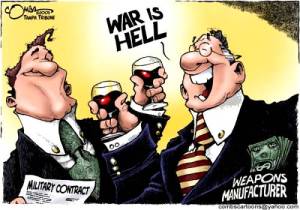
And here’s something else irrefutable: amid the defeats, corruption, and disappointments, there lurks a kind of success.  After all, every disaster in which the U.S. military takes part only brings more bounty to the Pentagon.  Domestically, every failure results in calls for yet more military interventions around the world.  As a result, the military is so much bigger and better funded than it was on September 10, 2001.  The commanders who led our forces into such failures have repeatedly been rewarded and much of the top brass, civilian and military, though they should have retired in shame, have taken ever more golden parachutes into the lucrative worlds of defense contractors, lobbyists, and consultancies.

All of this couldn’t be more obvious, though it’s seldom said.  In short, there turns out to be much good fortune in the disaster business, a fact which gives the whole process the look of a classic swindle in which the patsies lose their shirts but the scam artists make out like bandits.

Add in one more thing: these days, the only part of the state held in great esteem by conservatives and the present batch of Republican presidential candidates is the U.S. military.  All of them, with the exception of Rand Paul, swear that on entering the Oval Office they will let that military loose, sending in more troops, or special ops forces, or air power, and funding the various services even more lavishly; all of this despite overwhelming evidence that the U.S. military is incapable of spending a dollar responsibly or effectively monitoring what it’s done with the taxpayer funds in its possession.  (If you don’t believe me, forget everything in this piece and just check out the finances of the most expensive weapons system in history, the F-35 Lightning II, which should really be redubbed the F-35 Overrun for its madly spiraling costs.)

But no matter. If a system works (particularly for those in it), why change it?  And by the way, in case you’re looking for a genuine steal, I have a fabulous gas station in Afghanistan to sell you…


Tom Engelhardt is a co-founder of the American Empire Project and the author of The United States of Fear as well as a history of the Cold War, The End of Victory Culture. He is a fellow of the Nation Institute and runs TomDispatch.com. His latest book is Shadow Government: Surveillance, Secret Wars, and a Global Security State in a Single-Superpower World.

Time Is Running Out For Pax Americana’s Apologists

aa-American-Empire-statue-of-liberty-and-military

By Rostisla Ischenko

Source: Dissident Voice

The paradox of the current global crisis is that for the last five years, all relatively responsible and independent nations have made tremendous efforts to save the United States from the financial, economic, military, and political disaster that looms ahead. And this is all despite Washington’s equally systematic moves to destabilize the world order, rightly known as the Pax Americana (“American peace”).

Since policy is not a zero-sum game; i.e., one participant’s loss does not necessarily entail a gain for another, this paradox has a logical explanation. A crisis erupts within any system when there is a discrepancy between its internal structure and the sum total of available resources (that is, those resources will eventually prove inadequate for the system to function normally and in the usual way).

There are at least three basic options for addressing this situation:

  1. Through reform, in which the system’s internal structure evolves in such a way as to better correspond to the available resources.
  2. Through the system’s collapse, in which the same result is achieved via revolution.
  3. Through preservation, in which the inputs threatening the system are eliminated by force, and the relationships within the system are carefully preserved on an inequitable relationship basis (whether between classes, social strata, castes, or nations).

The preservation method was attempted by the Ming and Qing dynasties in China, as well as the Tokugawa Shogunate in Japan. It was utilized successfully (in the 19th century) prior to the era of capitalist globalization. But neither of those Eastern civilizations (although fairly robust internally) survived their collision with the technologically more advanced (and hence more militarily and politically powerful) European civilization. Japan found its answer on the path of modernization (reform) back in the second half of the 19th century, China spent a century immersed in the quagmire of semi-colonial dependence and bloody civil wars, until the new leadership of Deng Xiaoping was able to articulate its own vision of modernizing reforms.

This point leads us to the conclusion that a system can be preserved only if it is safeguarded from any unwanted external influences; i.e., if it controls the globalized world.

The contradiction between the concept of escaping the crisis, which has been adopted by the US elite, and the alternative concept – proposed by Russia and backed by China, then by the BRICS nations and now a large part of the world – lay in the fact that the politicians in Washington were working from the premise that they are able to fully control the globalized world and guide its development in the direction they wish. Therefore, faced with dwindling resources to sustain the mechanisms that perpetuate their global hegemony, they tried to resolve the problem by forcefully suppressing potential opponents in order to reallocate global resources in their favor.

If successful, the United States would be able to re-enact the events of the late 1980s – early 1990s, when the collapse of the Soviet Union and the global socialist system under its control allowed the West to escape its crisis. At this new stage, it has become a question of no longer simply reallocating resources in favor of the West as a collective whole, but solely in favor of the United States. This move offered the system a respite that could be used to create a regime for preserving inequitable relationships, during which the American elite’s definitive control over the resources of power, raw materials, finance, and industrial resources safeguarded them from the danger of the system’s internal implosion, while the elimination of alternative power centers shielded the system from external breaches, rendering it eternal (at least for a historically foreseeable period of time).

The alternative approach postulated that the system’s total resources might be depleted before the United States can manage to generate the mechanisms to perpetuate its global hegemony. In turn, this will lead to strain (and overstrain) on the forces that ensure the imperial suppression of those nations existing on the global periphery, all in the interests of the Washington-based center, which will later bring about the inevitable collapse of the system.

Two hundred, or even one hundred years ago, politicians would have acted on the principle of “what is falling, that one should also push” and prepared to divvy up the legacy of yet another crumbling empire. However, the globalization of not only the world’s industry and trade (that was achieved by the end of the 19th century), but also global finance, caused the collapse of the American empire through a policy that was extremely dangerous and costly for the whole world. To put it bluntly, the United States could bury civilization under its own wreckage.

Consequently, the Russian-Chinese approach has made a point of offering Washington a compromise option that endorses the gradual, evolutionary erosion of American hegemony, plus the incremental reform of international financial, economic, military, and political relations on the basis of the existing system of international law.

America’s elite have been offered a “soft landing” that would preserve much of their influence and assets, while gradually adapting the system to better correspond to the present facts of life (bringing it into line with the available reserve of resources), taking into account the interests of humanity, and not only of its “top echelon” as exemplified by the “300 families” who are actually dwindling to no more than thirty.

In the end, it is always better to negotiate than to build a new world upon the ashes of the old. Especially since there has been a global precedent for similar agreements.

Up until 2015, America’s elite (or at least the ones who determine US policy) had been assured that they possessed sufficient financial, economic, military, and political strength to cripple the rest of the world, while still preserving Washington’s hegemony by depriving everyone, including (at the final stage) even the American people of any real political sovereignty or economic rights. European bureaucrats were important allies for that elite; i.e., the cosmopolitan, comprador-bourgeoisie sector of the EU elite, whose welfare hinged on the further integration of transatlantic (i.e., under US control) EU entities (in which the premise of Atlantic solidarity has become geopolitical dogma) and NATO, although this is in conflict with the interests of the EU member states.

However, the crisis in Ukraine, which has dragged on much longer than originally planned, Russia’s impressive surge of military and political energy as it moved to resolve the Syrian crisis (something for which the US did not have an appropriate response) and, most important, the progressive creation of alternative financial and economic entities that call into question the dollar’s position as the de facto world currency, have forced a sector of America’s elite that is amenable to compromise to rouse itself (over the last 15 years that elite has been effectively excluded from participation in any strategic decisions).

The latest statements by Kerry and Obama which seesaw from a willingness to consider a mutually acceptable compromise on all contentious issues (even Kiev was given instructions “to implement Minsk“) to a determination to continue the policy of confrontation – are evidence of the escalating battle being fought within the Washington establishment.

It is impossible to predict the outcome of this struggle – too many high-status politicians and influential families have tied their futures to an agenda that preserves imperial domination for that to be renounced painlessly. In reality, multibillion-dollar positions and entire political dynasties are at stake.

However, we can say with absolute certainty that there is a certain window of opportunity during which any decision can be made. And a window of opportunity is closing that would allow the US to make a soft landing with a few trade-offs. The Washington elite cannot escape the fact that they are up against far more serious problems than those of 10-15 years ago. Right now the big question is about how they are going to land, and although that landing will already be harder than it would have been and will come with costs, the situation is not yet a disaster.

But the US needs to think fast. Their resources are shrinking much faster than the authors of the plan for imperial preservation had expected. To their loss of control over the BRICS countries can be added the incipient, but still fairly rapid loss of control over EU policy as well as the onset of geopolitical maneuvering among the monarchies of the Middle East. The financial and economic entities created and set in motion by the BRICS nations are developing in accordance with their own logic, and Moscow and Beijing are not able to delay their development overlong while waiting for the US to suddenly discover a capacity to negotiate.

The point of no return will pass once and for all sometime in 2016, and America’s elite will no longer be able to choose between the provisions of compromise and collapse. The only thing that they will then be able to do is to slam the door loudly, trying to drag the rest of the world after them into the abyss.

Rostislav Ischenko is the President of Centre for System Analysis and Forecasting (Kiev) currently living in Moscow. Read other articles by Rostisla.

US War on Iran Takes Bizarre Turn

mek

By Tony Cartalucci

Source: Land Destroyer Report

It is not merely hyperbole when it is said the US created terrorist organizations like Al Qaeda or the so-called “Islamic State.” It is documented fact. The current conflict in the Middle East may appear to be a chaotic conflagration beyond the control of the United States and its many eager allies, but in reality it is the intentional, engineered creation of regional fronts in a war against Iran and its powerful arc of influence.

It is not Western policy that indirectly spurs the creation and perpetuation of terrorist organizations, but in fact, direct, intentional, unmistakable support.

This support would manifest itself in perhaps the most overt and bizarre declaration of allegiance to terrorism to date, US Army General Hugh Shelton on stage before terrorists of the Mujahedeen-e-Khalq (MEK) and their Wahabist counterparts fighting in Syria, hysterically pledging American material, political, and strategic backing. MEK was listed for years by the US State Department as a foreign terrorist organization, but has received funding, arms, and safe haven by the United States for almost as long.

General Hugh’s speech titled, “Making Iranian mullahs fear, the MEK, come true,” was most likely never meant to be seen or fully understood by Americans. In titled alone, it is clear that US foreign policy intends to use the tool of terrorism to exact concessions from Tehran. If the true nature of America’s support for terrorist organizations like MEK were more widely known, the current narrative driving US intervention in Iraq and Syria would crumble.

MEK Has Killed US Servicemen, Contractors, and Iranian Civilians For Decades

MEK has carried out decades of brutal terrorist attacks, assassinations, and espionage against the Iranian government and its people, as well as targeting Americans including the attempted kidnapping of US Ambassador Douglas MacArthur II, the attempted assassination of USAF Brigadier General Harold Price, the successful assassination of Lieutenant Colonel Louis Lee Hawkins, the double assassinations of Colonel Paul Shaffer and Lieutenant Colonel Jack Turner, and the successful ambush and killing of American Rockwell International employees William Cottrell, Donald Smith, and Robert Krongard.

Admissions to the deaths of the Rockwell International employees can be found within a report written by former US State Department and Department of Defense official Lincoln Bloomfield Jr. on behalf of the lobbying firm Akin Gump in an attempt to dismiss concerns over MEK’s violent past and how it connects to its current campaign of armed terror – a testament to the depths of depravity from which Washington and London lobbyists operate.

To this day MEK terrorists have been carrying out attacks inside of Iran killing political opponents, attacking civilian targets, as well as carrying out the US-Israeli program of targeting and assassinating Iranian scientists. MEK terrorists are also suspected of handling patsies in recent false flag operations carried out in India, Georgia, and Thailand, which have been ham-handedly blamed on the Iranian government by the United States and Israel.

MEK is described by Council on Foreign Relations Senior Fellow Ray Takeyh as a “cult-like organization” with “totalitarian tendencies.” While Takeyh fails to expand on what he meant by “cult-like” and “totalitarian,” an interview with US State Department-run Radio Free Europe-Radio Liberty reported that a MEK Camp Ashraf escapee claimed the terrorist organization bans marriage, using radios, the Internet, and holds many members against their will with the threat of death if ever they are caught attempting to escape.

US Has Been Eagerly Supporting MEK Terrorists For Years

Besides providing MEK terrorists with now two former US military bases in Iraq as safe havens, the US has conspired to arm, fund, and back MEK for years in a proxy war against Iran.

Covert support for the US-listed terrorist group Mujahedeen e-Khalq (MEK) has been ongoing since at least 2008 under the Bush administration, when Seymour Hersh’s 2008 New Yorker article “Preparing the Battlefield,” reported that not only had MEK been considered for their role as a possible proxy, but that the US had already begun arming and financing them to wage war inside Iran:

The M.E.K. has been on the State Department’s terrorist list for more than a decade, yet in recent years the group has received arms and intelligence, directly or indirectly, from the United States. Some of the newly authorized covert funds, the Pentagon consultant told me, may well end up in M.E.K. coffers. “The new task force will work with the M.E.K. The Administration is desperate for results.” He added, “The M.E.K. has no C.P.A. auditing the books, and its leaders are thought to have been lining their pockets for years. If people only knew what the M.E.K. is getting, and how much is going to its bank accounts—and yet it is almost useless for the purposes the Administration intends.

Seymore Hersh in an NPR interview, also claims that select MEK members have already received trainingin the US.

More recently, the British Daily Mail published a stunning admission by “US officials” that Israel is currently funding, training, arming, and working directly with MEK. The Daily Mail article states:

U.S. officials confirmed today that Israel has been funding and training Iranian dissidents to assassinate nuclear scientists involved in Iran’s nuclear program. Washington insiders confirmed there is a close relationship between Mossad and MEK.

In 2009, an extensive conspiracy was formulated within US policy think-tank Brookings Institution’s 2009 “Which Path to Persia?” report, proposing to fully arm, train, and back MEK as it waged a campaign of armed terror against the Iranian people. In their report, they openly conspire to use what is an admitted terrorist organization as a “US proxy” (emphasis added):

“Perhaps the most prominent (and certainly the most controversial) opposition group that has attracted attention as a potential U.S. proxy is the NCRI (National Council of Resistance of Iran), the political movement established by the MEK (Mujahedin-e Khalq). Critics believe the group to be undemocratic and unpopular, and indeed anti-American.

In contrast, the group’s champions contend that the movement’s long-standing opposition to the Iranian regime and record of successful attacks on and intelligence-gathering operations against the regime make it worthy of U.S. support. They also argue that the group is no longer anti-American and question the merit of earlier accusations. Raymond Tanter, one of the group’s supporters in the United States, contends that the MEK and the NCRI are allies for regime change in Tehran and also act as a useful proxy for gathering intelligence. The MEK’s greatest intelligence coup was the provision of intelligence in 2002 that led to the discovery of a secret site in Iran for enriching uranium.

Despite its defenders’ claims, the MEK remains on the U.S. government list of foreign terrorist organizations. In the 1970s, the group killed three U.S. officers and three civilian contractors in Iran. During the 1979-1980 hostage crisis, the group praised the decision to take America hostages and Elaine Sciolino reported that while group leaders publicly condemned the 9/11 attacks, within the group celebrations were widespread.

Undeniably, the group has conducted terrorist attacks—often excused by the MEK’s advocates because they are directed against the Iranian government. For example, in 1981, the group bombed the headquarters of the Islamic Republic Party, which was then the clerical leadership’s main political organization, killing an estimated 70 senior officials. More recently, the group has claimed credit for over a dozen mortar attacks, assassinations, and other assaults on Iranian civilian and military targets between 1998 and 2001. At the very least, to work more closely with the group (at least in an overt manner), Washington would need to remove it from the list of foreign terrorist organizations.”

Besides US Army General Hugh Shelton, other prominent US politicians to literally stand before crowds of baying MEK terrorists and their supporters include former New York City Mayor Rudy Giuliani, Howard Dean, Tom Ridge, John Lewis, Ed Rendell, former ambassador John Bolton, former FBI Director Louis Freeh, retired General Wesley Clark, Lee Hamilton, former US Marine Corps Commandant General James Jones, and Alan Dershowitz. US Congresswoman Nancy Pelosi would also stand in front of MEK terrorists to deliver to them an Iranian New Year “greeting.”

Blind Lust for Global Hegemony is Leading America Over a Cliff 

What it says about American foreign policy, to trick US servicemen and women into dying in far off lands to “fight terrorism” when US politicians in the highest positions of power openly pledge support to terrorism – using it as a battering ram against its enemies abroad, and failing to topple them by proxy, using their own terrorist hordes as a pretext for direct military intervention to do so – is that such policy is underpinned by nothing more than blind lust for power, wealth, and influence in senseless pursuit of global hegemony. There is no guiding principles of peace, stability, democracy, freedom, or any confining principles of humanity that prohibit US foreign policy from exercising the most abhorrent practices in order to achieve its goals.

For America and the Western aligned nations and interests caught in its orbit, there is no future. Chasing hegemony for the sake of hegemony alone leaves no room for actual progress. When anything and everything obstructing the path to hegemony is seen as an “enemy” to be destroyed by any means necessary, that includes setting aside resources and attention to solving some of the most pressing issues of our time – health care, infrastructure, education, better jobs, peace, and prosperity. All of these are seen as obstacles toward hegemony, and the very same interests standing before MEK terrorists pledging America’s resources to their campaign of terrorism against Iran, are the same interests calling for and implementing austerity upon the American people to continuously fuel its foreign adventures.

Failure to identify these interests blindly chasing hegemony at the cost of global peace and prosperity leads not only America over a cliff into a ravine of madness, but the entire world as well. That a US general can stand before terrorists even as the US bombs two nations in the name of fighting terrorism, is but a glimpse into this madness.

Tony Cartalucci, Bangkok-based geopolitical researcher and writer, especially for the online magazine New Eastern Outlook”.