
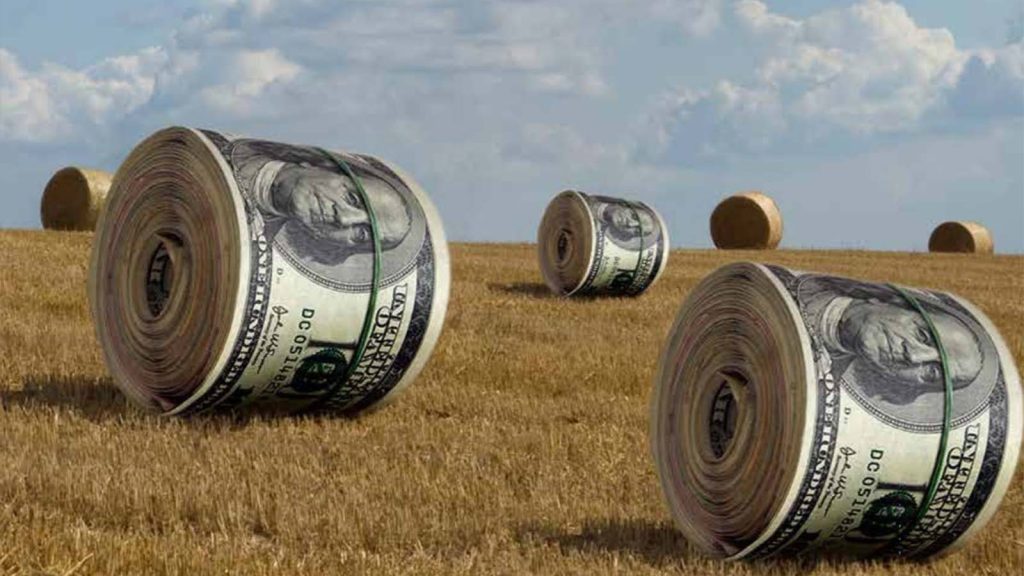
Toxic Contagion – Funds, Food and Pharma

By Colin Todhunter

Source: Off-Guardian

In 2014, the organisation GRAIN revealed that small farms produce most of the world’s food in its report Hungry for land: small farmers feed the world with less than a quarter of all farmland.

The report Small-scale Farmers and Peasants Still Feed the World (ETC Group, 2022) confirmed this.

Small farmers produce up to 80% of the food in the non-industrialised countries. However, they are currently squeezed onto less than a quarter of the world’s farmland. The period 1974-2014 saw 140 million hectares – more than all the farmland in China – being taken over for soybean, oil palm, rapeseed and sugar cane plantations.

GRAIN noted that the concentration of fertile agricultural land in fewer and fewer hands is directly related to the increasing number of people going hungry every day. While industrial farms have enormous power, influence and resources, GRAIN’s data showed that small farms almost everywhere outperform big farms in terms of productivity.

In the same year, policy think tank the Oakland Institute released a report stating that the first years of the 21 century will be remembered for a global land rush of nearly unprecedented scale. An estimated 500 million acres, an area eight times the size of Britain, were reported bought or leased across the developing world between 2000 and 2011, often at the expense of local food security and land rights.

Institutional investors, including hedge funds, private equity, pension funds and university endowments, were eager to capitalise on global farmland as a new and highly desirable asset class.

This trend was not confined to buying up agricultural land in low-income countries. Oakland Institute’s Anuradha Mittal argued that there was a new rush for US farmland. One industry leader estimated that $10 billion in institutional capital was looking for access to this land in the US.

Although investors believed that there is roughly $1.8 trillion worth of farmland across the US, of this between $300 billion and $500 billion (2014 figures) is considered to be of “institutional quality” – a combination of factors relating to size, water access, soil quality and location that determine the investment appeal of a property.

In 2014, Mittal said that if action is not taken, then a perfect storm of global and national trends could converge to permanently shift farm ownership from family businesses to institutional investors and other consolidated corporate operations.

WHY THIS MATTERS

Peasant/smallholder agriculture prioritises food production for local and national markets as well as for farmers’ own families, whereas corporations take over fertile land and prioritise commodities or export crops for profit and markets far away that tend to cater for the needs of more affluent sections of the global population.

In 2013, a UN report stated that farming in rich and poor nations alike should shift from monocultures towards greater varieties of crops, reduced use of fertilisers and other inputs, increased support for small-scale farmers and more locally focused production and consumption of food. The report stated that monoculture and industrial farming methods were not providing sufficient affordable food where it is needed.

In September 2020, however, GRAIN showed an acceleration of the trend that it had warned of six years earlier: institutional investments via private equity funds being used to lease or buy up farms on the cheap and aggregate them into industrial-scale concerns. One of the firms spearheading this is the investment asset management firm BlackRock, which exists to put its funds to work to make money for its clients.

BlackRock holds shares in a number of the world’s largest food companies, including Nestlé, Coca-Cola, PepsiCo, Walmart, Danone and Kraft Heinz and also has significant shares in most of the top publicly traded food and agriculture firms: those which focus on providing inputs (seeds, chemicals, fertilisers) and farm equipment as well as agricultural trading companies, such as Deere, Bunge, ADM and Tyson (based on BlackRock’s own data from 2018).

Together, the world’s top five asset managers – BlackRock, Vanguard, State Street, Fidelity and Capital Group – own around 10–30% of the shares of the top firms in the agrifood sector.

The article Who is Driving the Destructive Industrial Agriculture Model? (2022) by Frederic Mousseau of the Oakland Institute showed that BlackRock and Vanguard are by far the biggest shareholders in eight of the largest pesticides and fertiliser companies: Yara, CF Industries Holdings K+S Aktiengesellschaft, Nutrien, The Mosaic Company, Corteva and Bayer.

These companies’ profits were projected to double, from US$19 billion in 2021 to $38 billion in 2022, and will continue to grow as long as the industrial agriculture production model on which they rely keeps expanding. Other major shareholders include investment firms, banks and pension funds from Europe and North America.

Through their capital injections, BlackRock et al fuel and make huge profits from a globalised food system that has been responsible for eradicating indigenous systems of production, expropriating seeds, land and knowledge, impoverishing, displacing or proletarianizing farmers and destroying rural communities and cultures. This has resulted in poor-quality food and illness, human rights abuses and ecological destruction.

SYSTEMIC COMPULSION

Post-1945, the Rockefeller Chase Manhattan bank with the World Bank helped roll out what has become the prevailing modern-day agrifood system under the guise of a supposedly ‘miraculous’ corporate-controlled, chemical-intensive Green Revolution (its much-heralded but seldom challenged ‘miracles’ of increased food production are nothing of the sort; for instance, see the What the Green Revolution Did for India and New Histories of the Green Revolution).

Ever since, the IMF, the World Bank and the WTO have helped consolidate an export-oriented industrial agriculture based on Green Revolution thinking and practices. A model that uses loan conditionalities to compel nations to ‘structurally adjust’ their economies and sacrifice food self-sufficiency.

Countries are placed on commodity crop production treadmills to earn foreign currency (US dollars) to buy oil and food on the global market (benefitting global commodity traders like Cargill, which helped write the WTO trade regime – the Agreement on Agriculture), entrenching the need to increase cash crop cultivation for exports.

Today, investment financing is helping to drive and further embed this system of corporate dependency worldwide. BlackRock is ideally positioned to create the political and legislative framework to maintain this system and increase the returns from its investments in the agrifood sector.

The firm has around $10 trillion in assets under its management and has, according to William Engdahl, positioned itself to effectively control the US Federal Reserve, many Wall Street mega-banks and the Biden administration: a number of former top people at BlackRock are in key government positions, shaping economic policy.

So, it is no surprise that we are seeing an intensification of the lop-sided battle being waged against local markets, local communities and indigenous systems of production for the benefit of global private equity and big agribusiness.

For example, while ordinary Ukrainians are currently defending their land, financial institutions are supporting the consolidation of farmland by rich individuals and Western financial interests. It is similar in India (see the article The Kisans Are Right: Their Land Is at Stake) where a land market is being prepared and global investors are no doubt poised to swoop.

In both countries, debt and loan conditionalities on the back of economic crises are helping to push such policies through. For instance, there has been a 30+ year plan to restructure India’s economy and agriculture. This stems from the country’s 1991 foreign exchange crisis, which was used to impose IMF-World Bank debt-related ‘structural adjustment’ conditionalities. The Mumbai-based Research Unit for Political Economy locates agricultural ‘reforms’ within a broader process of Western imperialism’s increasing capture of the Indian economy.

Yet ‘imperialism’ is a dirty word never to be used in ‘polite’ circles. Such a notion is to be brushed aside as ideological by the corporations that benefit from it. Instead, what we constantly hear from these conglomerates is that countries are choosing to embrace their entry and proprietary inputs into the domestic market as well as ‘neoliberal reforms’ because these are essential if we are to feed a growing global population. The reality is that these firms and their investors are attempting to deliver a knockout blow to smallholder farmers and local enterprises in places like India.

But the claim that these corporations, their inputs and their model of agriculture is vital for ensuring global food security is a proven falsehood. However, in an age of censorship and doublespeak, truth has become the lie and the lie is truth. Dispossession is growth, dependency is market integration, population displacement is land mobility, serving the needs of agrifood corporations is modern agriculture and the availability of adulterated, toxic food as part of a monoculture diet is feeding the world.

And when a ‘pandemic’ was announced and those who appeared to be dying in greater numbers were the elderly and people with obesity, diabetes and cardio-vascular disease, few were willing to point the finger at the food system and its powerful corporations,   practices and products that are responsible for the increasing prevalence of these conditions (see campaigner Rosemary Mason’s numerous papers documenting this on Academia.edu). Because this is the real public health crisis that has been building for decades.

But who cares? BlackRock, Vanguard and other institutional investors? Highly debatable because if we turn to the pharmaceuticals industry, we see similar patterns of ownership involving the same players.

A December 2020 paper on ownership of the major pharmaceuticals companies, by researchers Albert Banal-Estanol, Melissa Newham and Jo Seldeslachts, found the following (reported on the website of TRT World, a Turkish news media outlet):

Public companies are increasingly owned by a handful of large institutional investors, so we expected to see many ownership links between companies — what was more surprising was the magnitude of common ownership… We frequently find that more than 50 per cent of a company is owned by ‘common’ shareholders who also own stakes in rival pharma companies.”

The three largest shareholders of Pfizer, J&J and Merck are Vanguard, SSGA and BlackRock.

In 2019, the Centre for Research on Multinational Corporations reported that payouts to shareholders had increased by almost 400 per cent — from $30 billion in 2000 to $146 billion in 2018. Shareholders made $1.54 trillion in profits over that 18-year period.

So, for institutional investors, the link between poor food and bad health is good for profit. While investing in the food system rakes in enormous returns, you can perhaps double your gains if you invest in pharma too.

These findings predate the 2021 documentary Monopoly: An Overview of the Great Reset, which also shows that the stock of the world’s largest corporations are owned by the same institutional investors. ‘Competing’ brands, like Coke and Pepsi, are not really competitors, since their stock is owned by the same investment companies, investment funds, insurance companies and banks.

Smaller investors are owned by larger investors. Those are owned by even bigger investors. The visible top of this pyramid shows only Vanguard and Black Rock.

A 2017 Bloomberg report states that both these companies in the year 2028 together will have investments amounting to $20 trillion.

While individual corporations – like Pfizer and Monsanto/Bayer, for instance – should be (and at times have been) held to account for some of their many wrongdoings, their actions are symptomatic of a system that increasingly leads back to the boardrooms of the likes of BlackRock and Vanguard.

Prof Fabio Vighi of Cardiff University says:

Today, capitalist power can be summed up with the names of the three biggest investment funds in the world: BlackRock, Vanguard and State Street Global Advisor. These giants, sitting at the centre of a huge galaxy of financial entities, manage a mass of value close to half the global GDP, and are major shareholders in around 90% of listed companies.”

These firms help shape and fuel the dynamics of the economic system and the globalised food regime, ably assisted by the World Bank, the IMF, the WTO and other supranational institutions. A system that leverages debt, uses coercion and employs militarism to secure continued expansion.


How “Food Shortages” & Economic Collapse Protects the Status Quo

Engineered Food & Poverty Crises Secure Continued US Dominance

By Colin Todhunter

Source: Off-Guardian

In March 2022, UN Secretary-General Antonio Guterres warned of a “hurricane of hunger and a meltdown of the global food system” in the wake of the crisis in Ukraine.

Guterres said food, fuel and fertiliser prices were skyrocketing with supply chains being disrupted and added this is hitting the poorest the hardest and planting the seeds for political instability and unrest around the globe.

According to the International Panel of Experts on Sustainable Food Systems, there is currently sufficient food and no risk of global food supply shortages.

We see an abundance of food but skyrocketing prices. The issue is not food shortage but speculation on food commodities and the manipulation of an inherently flawed global food system that serves the interests of corporate agribusiness traders and suppliers of inputs at the expense of people’s needs and genuine food security.

The war in Ukraine is a geopolitical trade and energy conflict. It is largely about the US engaging in a proxy war against Russia and Europe by attempting to separate Europe from Russia and imposing sanctions on Russia to harm Europe and make it further dependent on the US.

Economist Professor Michael Hudson recently stated that ultimately the war is against Europe and Germany. The purpose of the sanctions is to prevent Europe and other allies from increasing their trade and investment with Russia and China.

Neoliberal policies since the 1980s have hollowed out the US economy. With its productive base severely weakened, the only way for the US to maintain hegemony is to undermine China and Russia and weaken Europe.

Hudson says that, beginning a year ago, Biden and the US neocons attempted to block Nord Stream 2 and all (energy) trade with Russia so that the US could monopolise it itself.

Despite the ‘green agenda’ currently being pushed, the US still relies on fossil fuel-based energy to project its power abroad. Even as Russia and China move away from the dollar, the control and pricing of oil and gas (and resulting debt) in dollars remains key to US attempts to retain hegemony.

The US knew beforehand how sanctions on Russia would play out. They would serve to divide the world into two blocks and fuel a new cold war with the US and Europe on one side with China and Russia being the two main countries on the other.

US policymakers knew Europe would be devastated by higher energy and food prices and food importing countries in the Global South would suffer due to rising costs.

It is not the first time the US has engineered a major crisis to maintain global hegemony and a spike in key commodity prices that effectively trap countries into dependency and debt.

In 2009, Andrew Gavin Marshall described how in 1973 – not long after coming off the gold standard – Henry Kissinger was integral to manipulating events in the Middle East (the Arab-Israeli war and the ‘energy crisis’). This served to continue global hegemony for the US, which had virtually bankrupted itself due to its war in Vietnam and had been threatened by the economic rise of Germany and Japan.

Kissinger helped secure huge OPEC oil price rises and thus sufficient profits for Anglo-American oil companies that had over-leveraged themselves in North Sea oil. He also cemented the petrodollar system with the Saudis and subsequently placed African nations, which had embarked on a path of (oil-based) industrialisation, on a treadmill of dependency and debt due to the spike in oil prices.

It is widely believed that the high-priced oil policy was aimed at hurting Europe, Japan and the developing world.

Today, the US is again waging a war on vast swathes of humanity, whose impoverishment is intended to ensure they remain dependent on the US and the financial institutions it uses to create dependency and indebtedness – the World Bank and IMF.

Hundreds of millions will experience (are experiencing) poverty and hunger due to US policy. These people (the ones that the US and Pfizer et al supposedly cared so much about and wanted to get a jab into each of their arms) are regarded with contempt and collateral damage in the great geopolitical game.

Contrary to what many believe, the US has not miscalculated the outcome of the sanctions placed on Russia. Michael Hudson notes energy prices are increasing, benefiting US oil companies and US balance of payments as an energy exporter. Moreover, by sanctioning Russia, the aim is to curtail Russian exports (of wheat and gas used for fertiliser production) and for agricultural commodity prices to therefore increase. This too will also benefit the US as an agricultural exporter.

This is how the US seeks to maintain dominance over other countries.

Current policies are designed to create a food and debt crisis for poorer nations especially. The US can use this debt crisis to force countries to continue privatising and selling off their public assets in order to service the debts to pay for the higher oil and food imports.

This imperialist strategy comes on the back of ‘COVID relief’ loans which have served a similar purpose. In 2021, an Oxfam review of IMF COVID-19 loans showed that 33 African countries were encouraged to pursue austerity policies. The world’s poorest countries are due to pay $43 billion in debt repayments in 2022, which could otherwise cover the costs of their food imports.

Oxfam and Development Finance International have also revealed that 43 out of 55 African Union member states face public expenditure cuts totalling $183 billion over the next five years.

The closure of the world economy in March 2020 (‘lockdown’) served to trigger an unprecedented process of global indebtedness.

Conditionalities mean national governments will have to capitulate to the demands of Western financial institutions. These debts are largely dollar-denominated, helping to strengthen the US dollar and US leverage over countries.

The US is creating a new world order and needs to ensure much of the Global South remains in its orbit of influence rather than ending up in the Russian and especially Chinese camp and its belt road initiative for economic prosperity.

Post-COVID, this is what the war in Ukraine, sanctions on Russia and the engineered food and energy crisis are really about.

Back in 2014, Michael Hudson stated that the US has been able to dominate most of the Global South through agriculture and control of the food supply. The World Bank’s geopolitical lending strategy has transformed countries into food deficit areas by convincing them to grow cash crops – plantation export crops – not to feed themselves with their own food crops.

The oil sector and agribusiness have been joined at the hip as part of US geopolitical strategy.

The dominant notion of ‘food security’ promoted by global agribusiness players like Cargill, Archer Daniel Midland, Bunge and Louis Dreyfus and supported by the World Bank is based on the ability of people and nations to purchase food. It has nothing to do with self-sufficiency and everything to do with global markets and supply chains controlled by giant agribusiness players.

Along with oil, the control of global agriculture has been a linchpin of US geopolitical strategy for many decades. The Green Revolution was exported courtesy of oil-rich interests and poorer nations adopted agri-capital’s chemical- and oil-dependent model of agriculture that required loans for inputs and related infrastructure development.

It entailed trapping nations into a globalised food system that relies on export commodity mono-cropping to earn foreign exchange linked to sovereign dollar-denominated debt repayment and World Bank/IMF ‘structural adjustment’ directives. What we have seen has been the transformation of many countries from food self-sufficiency into food deficit areas.

And what we have also seen is countries being placed on commodity crop production treadmills. The need for foreign currency (US dollars) to buy oil and food entrenches the need to increase cash crop production for exports.

The World Trade Organization’s Agreement on Agriculture (AoA) set out the trade regime necessary for this type of corporate dependency that masquerades as ‘global food security’.

This is explained in a July 2022 report by Navdanya International – Sowing Hunger, Reaping Profits – A Food Crisis by Design – which notes international trade laws and trade liberalisation has benefited large agribusiness and continue to piggyback off the implementation of the Green Revolution.

The report states that US lobby and trade negotiations were headed by former Cargill Investors Service CEO and Goldman Sachs executive – Dan Amstutz – who in 1988 was appointed chief negotiator for the Uruguay round of GATT by Ronald Reagan. This helped to enshrine the interests of US agribusiness into the new rules that would govern the global trade of commodities and subsequent waves of industrial agriculture expansion.

The AoA removed protection of farmers from global market prices and fluctuations. At the same time, exceptions were made for the US and the EU to continue subsidising their agriculture to the advantage of large agribusiness.

Navdanya notes:

“With the removal of state tariff protections and subsidies, small farmers were left destitute. The result has been a disparity in what farmers earn for what they produce, versus what consumers pay, with farmers earning less and consumers paying more as agribusiness middlemen take the biggest cut.”

‘Food security’ has led to the dismantling of food sovereignty and food self-sufficiency for the sake of global market integration and corporate power.

We need look no further than India to see this in action. The now repealed recent farm legislation in India was aimed at giving the country the ‘shock therapy’ of neoliberalism that other countries have experienced.

The ‘liberalising’ legislation was in part aimed at benefiting US agribusiness interests and trapping India into food insecurity by compelling the country to eradicate its food buffer stocks – so vital to the nation’s food security – and then bid for food on a volatile global market from agribusiness traders with its foreign reserves.

The Indian government was only prevented from following this route by the massive, year-long farmer protest that occurred.

The current crisis is also being fuelled by speculation. Navdanya cites an investigation by Lighthouse Reports and The Wire to show how speculation by investment firms, banks and hedge funds on agricultural commodities are profiting off rising food prices. Commodity future prices are no longer linked to actual supply and demand in the market but are based purely on speculation.

Archer Daniels Midland, Bunge, Cargill and Louis Dreyfus and investment funds like Black Rock and Vanguard continue to make huge financial killings, resulting in the price of bread almost doubling in some poorer countries.

The cynical ‘solution’ promoted by global agribusiness to the current food crisis is to urge farmers to produce more and seek better yields as if the crisis is that of underproduction. It means more chemical inputs, more genetic engineering techniques and suchlike, placing more farmers in debt and trapped in dependency.

It is the same old industry lie that the world will starve without its products and requires more of them. The reality is that the world is facing hunger and rising food prices because of the system big agribusiness has instituted.

And it is the same old story – pushing out new technologies in search of a problem and then using crises as justification for their rollout while ignoring the underlying reasons for such crises.

Navdanya sets out possible solutions to the current situation based on principles of agroecology, short supply lines, food sovereignty and economic democracy – policies that have been described at length in many articles and official reports over the years.

As for fighting back against the onslaught on ordinary people’s living standards, support is gathering among the labour movement in places like the UK. Rail union leader Mick Lynch is calling for a working class movement based on solidarity and class consciousness to fight back against a billionaire class that is acutely aware of its own class interests.

For too long, ‘class’ has been absent from mainstream political discourse. It is only through organised, united protest that ordinary people will have any chance of meaningful impact against the new world order of tyrannical authoritarianism and the devastating attacks on ordinary people’s rights, livelihoods and standards of living that we are witnessing.

Gates Unhinged: Dystopian Vision for the Future of Food

By Colin Todhunter

Source: Off-Guardian

We are currently seeing an acceleration of the corporate consolidation of the entire global agrifood chain. The high-tech/data conglomerates, including Amazon, Microsoft, Facebook and Google, have joined traditional agribusiness giants, such as Corteva, Bayer, Cargill and Syngenta, in a quest to impose a certain type of agriculture and food production on the world.

The Bill and Melinda Gates Foundation is also involved (documented in the recent report ‘Gates to a Global Empire‘ by Navdanya International), whether through buying up huge tracts of farmland, promoting a much-heralded (but failed) ‘green revolution’ for Africa, pushing biosynthetic food and new genetic engineering technologies or more generally facilitating the aims of the mega agrifood corporations.

Of course, those involved in this portray what they are doing as some kind of humanitarian endeavour – saving the planet with ‘climate-friendly solutions’, helping farmers or feeding the world. This is how many of them probably do genuinely regard their role inside their corporate echo chamber. But what they are really doing is repackaging the dispossessive strategies of imperialism as ‘feeding the world’.

FAILED GREEN REVOLUTION

Since the Green Revolution, US agribusiness and financial institutions like the World Bank and the International Monetary Fund have sought to hook farmers and nation states on corporate seeds and proprietary inputs as well as loans to construct the type of agri infrastructure that chemical-intensive farming requires.

Monsanto-Bayer and other agribusiness concerns have since the 1990s been attempting to further consolidate their grip on global agriculture and farmers’ corporate dependency with the rollout of genetically engineered seeds, commonly known as GMOs (genetically modified organisms).

In her latest report, ‘Reclaim the Seed’, Vandana Shiva says:

In the 1980s, the chemical corporations started to look at genetic engineering and patenting of seed as new sources of super profits. They took farmers varieties from the public gene banks, tinkered with the seed through conventional breeding or genetic engineering, and took patents.”

Shiva talks about the Green Revolution and seed colonialism and the pirating of farmers seeds and knowledge. She says that 768,576 accessions of seeds were taken from farmers in Mexico alone:

…taking the farmers seeds that embodies their creativity and knowledge of breeding. The ‘civilising mission’ of Seed Colonisation is the declaration that farmers are ‘primitive’ and the varieties they have bred are ‘primitive’, ‘inferior’, ‘low yielding’ and have to be ‘substituted’ and ‘replaced’ with superior seeds from a superior race of breeders, so called ‘modern varieties’ and ‘improved varieties’ bred for chemicals.”

It is now clear that the Green Revolution has been a failure in terms of its devastating environmental impacts, the undermining of highly productive traditional low-input agriculture and its sound ecological footing, the displacement of rural populations and the adverse impacts on village communities, nutrition, health and regional food security.

Aside from various studies that have reported on the health impacts of chemical-dependent crops (Dr Rosemary Mason’s many reports on this can be accessed on the academia.edu website), ‘New Histories of the Green Revolution’ (2019) debunks the claim that the Green Revolution boosted productivity; ‘The Violence of the Green Revolution’ (1991) details (among other things) the impact on rural communities; Bhaskar Save’s open letter to Indian officials in 2006 discusses the ecological devastation of the Green Revolution and in a 2019 paper in the Journal of Experimental Biology and Agricultural Sciences, Parvez et al note that native wheat varieties in India have higher nutrition content than the Green Revolution varieties (many such crop varieties were side-lined in favour of corporate seeds that were of lower nutritional value).

These are just a brief selection of peer-reviewed and ‘grey’ literature which detail the adverse impacts of the Green Revolution.

GMO VALUE CAPTURE

As for GM crops, often described as Green Revolution 2.0, these too have failed to deliver on the promises made and, like the 1.0 version, have often had devastating consequences.

The arguments for and against GMOs are well documented, but one paper worth noting appeared in the journal Current Science in 2018. Along with PC Kesavan, MS Swaminathan – regarded as the father of the Green Revolution in India – argued against introducing GM crops to India and cited various studies about the failings of the GMO project.

Regardless, the industry and its well-funded lobbyists and bought career scientists continue to spin the line that GM crops are a marvellous success and that the world needs even more of them to avoid a global food shortage. GM crops are required to feed the world is a well-worn industry slogan trotted out at every available opportunity. Just like the claim of GM crops being a tremendous success, this too is based on a myth.

There is no global shortage of food. Even under any plausible future population scenario, there will be no shortage as evidenced by scientist Dr Jonathan Latham in his recent paper ‘The Myth of a Food Crisis’.

However, new gene drive and gene editing techniques have now been developed and the industry is seeking the unregulated commercial release of products that are based on these methods.

It does not want plants, animals and micro-organisms created with gene-editing to be subject to safety checks, monitoring or consumer labelling. This is concerning given the real dangers that these techniques pose.

Many peer-reviewed research papers now call into question industry claims about the ‘precision’, safety and benefits of gene-edited organisms and can be accessed on the GMWatch.org website.

It really is a case of old wine in new bottles.

And this is not lost on a coalition of 162 civil society, farmers and business organisations which has called on Vice-President of the European Commission Frans Timmermans to ensure that new genetic engineering techniques continue to be regulated in accordance with existing EU GMO standards.

The coalition argues that these new techniques can cause a range of unwanted genetic modifications that can result in the production of novel toxins or allergens or in the transfer of antibiotic resistance genes. The open letter adds that even intended modifications can result in traits which could raise food safety, environmental or animal welfare concerns.

The European Court of Justice ruled in 2018 that organisms obtained with new genetic modification techniques must be regulated under the EU’s existing GMO laws. However, there has been intense lobbying from the agriculture biotech industry to weaken the legislation, aided by the Gates Foundation.

The coalition states that various scientific publications show that new techniques of genetic modification allow developers to make significant genetic changes, which can be very different from those that happen in nature.

In addition to these concerns, a new paper from Chinese scientists, ‘Herbicide Resistance: Another Hot Agronomic Trait for Plant Genome Editing’, says that, in spite of claims from GMO promoters that gene editing will be climate-friendly and reduce pesticide use, what we can expect is just more of the same – GM herbicide-tolerant crops and increased herbicide use.

The industry wants its new techniques to be unregulated, thereby making gene-edited GMOs faster to develop, more profitable and hidden from consumers when purchasing items in stores. At the same time, the costly herbicide treadmill will be reinforced for farmers.

None of this is meant to imply that new technology is bad in itself. The issue is who owns and controls the technology and what are the underlying intentions. By dodging regulation as well as avoiding economic, social, environmental and health impact assessments, it is clear that the industry is first and foremost motivated by value capture and profit and contempt for democratic accountability.

This is patently clear if we look at the rollout of Bt cotton in India which served the bottom line of Monsanto but brought dependency, distress and no durable agronomic benefits for many of India’s small and marginal farmers. Prof A P Gutierrez argues that Bt cotton has effectively placed these farmers in a corporate noose.

Monsanto sucked hundreds of millions of dollars in profit from these cotton farmers, while industry-funded scientists are always keen to push the mantra that rolling out Bt cotton in India uplifted their conditions.

Those who promote this narrative remain wilfully ignorant of the challenges (documented in the 2019 book by Andrew Flachs – ‘Cultivating Knowledge: Biotechnology, Sustainability and the Human Cost of Cotton Capitalism in India‘) these farmers face in terms of financial distress, increasing pest resistance, dependency on unregulated seed markets, the eradication of environmental learning, the loss of control over their productive means and the biotech-chemical treadmill they are trapped on (this last point is precisely what the industry intended).

When assessing the possible impacts of GMO agriculture, it was with good reason that, in their 2018 paper, Swaminathan and Kesavan called for:

able economists who are familiar with and will prioritise rural livelihoods and the interests of resource-poor small and marginal farmers rather than serve corporate interests and their profits”.

WHAT CAN BE DONE?

Whether through all aspects of data control (soil quality, consumer preferences, weather, etc), e-commerce monopolies, corporate land ownership, seed biopiracy and patenting, synthetic food or the eradication of the public sector’s role in ensuring food security and national food sovereignty (as we could see in India with new farm legislation), Bill Gates and his corporate cronies seek to gain full control over the global food system.

Smallholder peasant farming is to be eradicated as the big-tech giants and agribusiness impose lab-grown food, GM seeds, genetically engineered soil microbes, data harvesting tools and drones and other ‘disruptive’ technologies.

We could see farmerless industrial-scale farms being manned by driverless machines, monitored by drones and doused with chemicals to produce commodity crops from patented GM seeds for industrial ‘biomatter’ to be processed and constituted into something resembling food.

The displacement of a food-producing peasantry (and the subsequent destruction of rural communities and local food security) was something the Gates Foundation once called for and cynically termed “land mobility”.

Technocratic meddling has already destroyed or undermined agrarian ecosystems that draw on centuries of traditional knowledge and are increasingly recognised as valid approaches to secure food security, as outlined in Food Security and Traditional Knowledge in India in the Journal of South Asian Studies, for instance.

But is all of this inevitable?

Not according to the International Panel of Experts on Sustainable Food Systems, which has just released a report in collaboration with the ETC Group: ‘A Long Food Movement: Transforming Food Systems by 2045‘.

The report outlines two different futures. If Gates and the global mega-corporations have their way, we will see the entire food system being controlled by data platforms, private equity firms and e-commerce giants, putting the food security (and livelihoods) of billions at the mercy of AI-controlled farming systems.

The other scenario involves civil society and social movements – grassroots organisations, international NGOs, farmers’ and fishers’ groups, cooperatives and unions – collaborating more closely to transform financial flows, governance structures and food systems from the ground up.

The report’s lead author, Pat Mooney, says that agribusiness has a very simple message: the cascading environmental crisis can be resolved by powerful new genomic and information technologies that can only be developed if governments unleash the entrepreneurial genius, deep pockets and risk-taking spirit of the most powerful corporations.

Mooney notes that we have had similar messages based on emerging technology for decades but the technologies either did not show up or fell flat and the only thing that grew were the corporations.

He says:

In return for trillions of dollars in direct and indirect subsidies, the agribusiness model would centralise food production around a handful of untested technologies that would lead to the forced exodus of at least a billion people from hundreds of millions of farms. Agribusiness is gambling on other people’s food security.”

Although Mooney argues that new genuinely successful alternatives like agroecology are frequently suppressed by the industries they imperil, he states that civil society has a remarkable track record in fighting back, not least in developing healthy and equitable agroecological production systems, building short (community-based) supply chains and restructuring and democratising governance systems.

As stated in the report, the thrust of any ’Long Food Movement’ strategy is that short-termism is not an option: civil society groups need to place multiple objectives and actions on a 25-year roadmap and not make trade-offs along the way – especially when faced with the neoliberal-totalitarianism of Gates et al who will seek to derail anything or anyone regarded as a threat to their aims.

The report ‘A Long Food Movement: Transforming Food Systems by 2045’ can be accessed here.

The Free Market Is A Failure

By TheHipcrimeVocab

Sorry for the deliberately click-bait-y headline, but I think this message is important to get out there.

In my discussions few months back on What is Neoliberalism, I noted that a core element of neoliberal philosophy is that markets are the only efficient, effective and rational way to distribute goods and services.

Neoliberals profess the idea that only competitive markets can allocate “scarce” resources efficiently, and that it is only such “free” markets that can lift people out of poverty and deliver broad prosperity. They pound it into our heads constantly.

Yet the Covid-19 crisis has illustrated spectacular and pervasive failures of such “free” markets all over the globe, and especially in the U.S. Instead of fairness or efficiency, we see systemic failure in every market we look: the food industry, the medical industry, the retail industry, the employment market. Resources are being destroyed and misallocated on a massive scale

Let’s start with the food industry, because food is the most important thing (nine means from anarchy, and all that). Thousands and thousands of pigs are being slaughtered, their meat left to rot, eaten by no-one, regardless of the forces of supply and demand:

The United States faces a major meat shortage due to virus infections at processing plants. It means millions of pigs could be put down without ever making it to table…

Boerboom, a third-generation hog farmer, is just one of the tens of thousands of US pork producers who are facing a stark reality: although demand for their products is high in the nation’s grocery stores, they may have to euthanise and dispose of millions of pigs due to a breakdown in the American food supply chain.

Meat shortage leaves US farmers with ‘mind-blowing’ choice (BBC)

Potatoes are sitting in Belgian warehouses and left to rot, only two short years after a drought threatened to produce a severe shortage:

Belgium: Lighthearted campaign to ‘eat more fries’ aims to lift heavy load (DW)

Meanwhile, dairy farmers in the U.S. heartland are dumping milk into the ground, to be drunk by no one.

Cows don’t shut off: Why this farmer had to dump 30,000 gallons of milk (USA Today)

In fact, the whole food situation is rather ugly, as this piece from The Guardian summarizes:

This March and April, even as an astounding 30 million Americans plunged into unemployment and food bank needs soared, farmers across the US destroyed heartbreaking amounts of food to stem mounting financial losses.

In scenes reminiscent of the Great Depression, dairy farmers dumped lakes of fresh cow’s milk (3.7m gallons a day in early April, now about 1.5 million per day), hog and chicken farmers aborted piglets and euthanized hens by the thousands, and crop growers plowed acres of vegetables into the ground as the nation’s brittle and anarchic food supply chain began to snap and crumble.

After delays and reports of concealing worker complaints, meatpacking plants that slaughter and process hundreds of thousands of animals a day ground to a halt as coronavirus cases spread like wildfire among workers packed tightly together on dizzyingly fast assembly lines.

Meanwhile, immigrant farmworkers toiled in the eye of the coronavirus storm, working and living in crowded dangerous conditions at poverty wages; at one Washington state orchard, half the workers tested positive for Covid-19. Yet many of these hardest working of Americans were deprived of economic relief, as they are undocumented. Advocates report more farmworkers showing up at food banks – and some unable to access food aid because they can’t afford the gas to get there.

None of this is acceptable or necessary and it’s not just about Covid-19, it’s also illustrative of a deeply deregulated corporate capitalism. America’s food system meltdown amid the pandemic has been long-developing, and a primary cause is decades of corporate centralization and a chaotic array of policies designed to prop up agribusiness profits at any cost.

Farmers are destroying mountains of food. Here’s what to do about it (Guardian)

That doesn’t sound very “efficient” to me, does it? How about you? Free market fundamentalists, care to weigh in?

Meanwhile, hospitals in the United States, which one would think are the most important thing to keep open during a pandemic, are actually closing across the country. These are the very things you want most to be open! Why is this happening? Because health care in the U.S. is a profit-driven enterprise that “competes” in the free market. Because elective procedures—their cash cow—have either been suspended or postponed. U.S. hospitals are closing because they are dependent upon these elective procedures to shore up their profits, and markets rely on profits.

As the deadly virus has spread beyond urban hotspots, many more small hospitals across the country are on the verge of financial ruin as they’ve been forced to cancel elective procedures, one of the few dependable sources of revenue. Williamson Memorial and similar facilities have been struggling since long before the pandemic — at least 170 rural hospitals have shut down since 2005, according to University of North Carolina research on rural hospital closures.

But even as hospitals in cities like New York City and Detroit have been deluged with coronavirus patients, many rural facilities now have the opposite problem: their beds are near-empty, their operating rooms are silent, and they’re bleeding cash.

More than 100 hospitals and hospital systems around the country have already furloughed tens of thousands of employees, according to a tally by industry news outlet Becker’s Hospital Review. They’ve sent home nurses and support staffers who would be deemed essential under state stay-home orders.

Rural hospitals are facing financial ruin and furloughing staff during the coronavirus pandemic (CNN)

And how about allocating labor via impersonal markets? How’s that going? Well, not so well. The workers with the skills most desperately needed on the front lines during the crisis are taking pay cuts and getting laid off left and right. Instead of contributing, they are sitting at home, unable to work even if they wanted to:

At a time when medical professionals are putting their lives at risk, tens of thousands of doctors in the United States are taking large pay cuts. And even as some parts of the US are talking of desperate shortages in nursing staff, elsewhere in the country many nurses are being told to stay at home without pay.

That is because American healthcare companies are looking to cut costs as they struggle to generate revenue during the coronavirus crisis.

“Nurses are being called heroes,” Mariya Buxton says, clearly upset. “But I just really don’t feel like a hero right now because I’m not doing my part.”

Ms Buxton is a paediatric nurse in St Paul, Minnesota, but has been asked to stay at home.

At the unit at which Ms Buxton worked, and at hospitals across most of the country, medical procedures that are not deemed to be urgent have been stopped. That has meant a massive loss of income.

Coronavirus: Why so many US nurses are out of work (BBC)

It’s an ironic twist as the coronavirus pandemic sweeps the nation: The very workers tasked with treating those afflicted with the virus are losing work in droves.

Emergency room visits are down. Non-urgent surgical procedures have largely been put on hold. Health care spending fell 18% in the first three months of the year. And 1.4 million health care workers lost their jobs in April, a sharp increase from the 42,000 reported in March, according to the Labor Department. Nearly 135,000 of the April losses were in hospitals.

As Hospitals Lose Revenue, More Than A Million Health Care Workers Lose Jobs (NPR)

So it doesn’t seem like “free and open” markets are doing so well with either health care or labor.

Meanwhile, U.S. states are competing against each other for desperately needed PPE equipment, bidding up the price and preventing scarce resources from going to where they are most badly needed, which would naturally be where Covid-19 has struck the hardest:

As coronavirus testing expands and more cases of infection are being identified, doctors, nurses and other healthcare workers are scrambling to find enough medical supplies to replenish their dwindling supply.

But state and local governments across the United States are vying to purchase the same equipment, creating a competitive market for those materials that drives up prices for everyone.

“A system that’s based on state and local governments looking out for themselves and competing with other state and local governments across the nation isn’t sustainable,” said John Cohen, an ABC News contributor and former acting Undersecretary of the Department of Homeland Security, “and if left to continue, we’ll certainly exacerbate the public health crisis we’re facing.”

“There’s a very real possibility,” he added, “that those state and local governments that have the most critical need won’t get the equipment they need.”

Competition among state, local governments creates bidding war for medical equipment (ABC News)

Yet neoliberals always tell us how important “competition” is in every arena of life.

Failure, failure, failure! Everywhere we look, we see failure. Pervasive, systematic failure. Resources going unused. Surpluses of food being dumped even while people go hungry and line up at food banks. Workers with necessary skills sitting at home, twiddling their thumbs. Other workers unable to even earn a living to support themselves and their families, no matter how badly they want to work. Masks and protective equipment NOT going to where they are most needed, their costs inflating, befitting no one except profiteers even as people die.

Tell me again about how the market is “efficient” at distributing resources. Tell me again about how central planning inevitably results in wasted resources, surfeits and shortages.

And here is the big, bold, underscored point:

The free-marketeers want to trumpet the market’s successes, but they don’t want to own its failures.

Free-market boosters always want to talk about the wonderful benefits of markets. How they allow multiple people to coordinate their activities across wide variations of space and time. How they allow knowledge to be distributed among many different actors. How they favor tacit knowledge that a single entity could not possess. Libraries of encomiums have been written celebrating the virtues of the “free” market. You know their names: The Provisioning of ParisEconomics in One LessonFree to ChooseI Pencil, and all of that. Much of what passes for economic “science” is simply cheerleading for markets– the bigger, freer and less-regulated the better.

Okay, fair enough.

But how about market failures? Why don’t they ever talk about that? Because if you read the economics books I cited above, you would come away with the idea that there are no market failures! That, in fact, there is no such thing. That markets, in effect, cannot fail!

If you want to own the successes, you need to own the failures.

Oh, they love, love, love to talk about central planning’s “failures”. They can’t get enough of that. They love to talk about empty shelves in the Soviet Union, long lines at supermarkets, the lack of toilet paper in Venezuela (amusingly, now a problem throughout the capitalist world), and the allegedly long waiting times in “socialized medicine” countries. We are constantly subjected to that drumbeat day after day after day. It’s part of every economics 101 course. Central planning doesn’t work. Central planning is inefficient. Central planning is “tyranny.”

But what about all that stuff I cited above?

Where are all the free-market fundamentalists now?

What is their excuse?

They’ll use special pleading. They’ll argue that it’s exceptional circumstances. That no one could have foreseen a “black swan” event like the global Covid-19 pandemic (despite numerous experts warning about it for years). They’ll tell us that markets work just fine under “normal” circumstances. They’ll say we cannot pass any kind of judgement on the failings of markets during such an unusual event.

Here’s why that argument is bullshit:

Pandemics are a real, and recurring phenomenon in human history. We’ve been incredibly fortunate that we’ve been in rare and atypical hundred-year period from 1918-1919 to today without a global pandemic or novel disease we couldn’t quickly contain and/or eradicate.

But pandemics are always—and always have always been—a societal threat, even if we’ve forgotten that fact. And the experts tell us that there will be a lot more of them in our future, with population overshoot, environmental destruction, encroachment on formerly unoccupied lands and climate change proceeding apace. What that means is this:

If your economic system can’t function properly during a pandemic, then your economic system is shit.

If your economic system only works when conditions are ideal, in fact depends upon conditions being ideal, then, your economic system doesn’t really work at all. If something like a pandemic causes it to seize up and fail, then your economic system is poorly designed and doesn’t work very well. Not only do the free markets graphed on economists’ chalkboards not exist in anywhere the real world, they apparently rely on a blissful Eden-like Arcadia to function as intended—a situation any causal glance at human history tells us is highly unusual. Any disruption and they fall like dominoes. They are about as resilient as tissue paper.

And the stresses are only going to get worse in the years ahead, with climate change making some areas uninhabitably hot, while other places are submerged under rising sea levels. And that’s before we get to the typical natural disasters like volcanic eruptions, tsunamis and earthquakes. And there will be new novel plant diseases as well, unfolding against the increasing resistance of germs to antibiotics.

Will the free market fundamentalists and libertarian market cheerleaders acknowledge this???

Don’t hold your breath.

No, they will continue to lionize “private initiative” at every opportunity, while completely ignoring the stuff I opened this post with. They’ll sweep it under the rug or, more likely, simply handwave it away. They’ll continue to say that we need to scale back government regulation and interference and let the invisible hand sort it all out.

Because discipline of modern economics as practiced today is not a science. It may not even rise to the level of a pseudoscience. It’s PR for laissez-faire capitalism.

Of course, we’ve had market failures before. They occurred all throughout the nineteenth century and during Great Depression, for example. These are well-documented. But many of the things that came out of those bygone market failures to prevent or mitigate them have been systematically and deliberately dismantled over the past generation due to rise of neoliberalism.

And now we’re paying the price.

Karl Polanyi made an important distinction between markets and Market Society. Markets are where people come together to buy, sell, and exchange surplus goods. These have existed throughout history. They are tangential to society; embedded in something larger than it. Such markets can be shut down without causing an existential threat to civilization.

But Market Society is dependent upon impersonal forces of supply and demand and functioning markets for absolutely everything in the society, from jobs to food to health care. Everything is oriented around maximizing private profits, and not human needs. Markets failing to function adequately lead to unemployment, sickness, starvation and death. Shutting them down is an existential threat to civilization.

As Dmitry Orlov wrote in his best-known work, the Russians survived the collapse of the Soviet Union precisely because they didn’t rely on the Market.

Naturalizing markets in this way is an abdication of both causal and moral responsibility for famines, a way to avoid reality and the ethical consequences for people in a position to change things. Markets are not given; they are predicated on a host of laws and social conventions that can, if the need arises, be changed. It makes no sense for American farmers to destroy produce they can’t sell while food banks are struggling to keep up with demand. This kind of thinking is a way for powerful people to outsource ethical choices to the market, but the market has no conscience.

Famine Is a Choice (Slate)

Now, to be clear I’m not necessarily making an argument for or against central planning as opposed to markets. That’s a different discussion.

But my core point is simply this: you cannot discuss market successes without discussing market failures. To do so is intellectually dishonest, disingenuous, and not to mention incredibly dangerous and irresponsible. If economics were a real science, instead of just PR for capitalism, it would take a look at the things I described above, and figure out ways they could have been avoided, regardless of any preconceived ideology or assumptions about the “right” way to arrange a society, or assumptions about how things “should” work. It would seek out ways for society to become, in Nassim Taleb’s terminology, “antifragile.”

But don’t hold your breath for that, either.

Offering Choice but Delivering Tyranny: The Corporate Capture of Agriculture

By Colin Todhunter

Source: Off-Guardian

Many lobbyists talk a lot about critics of genetic engineering technology denying choice to farmers. They say that farmers should have access to a range of tools and technologies to maximise choice and options.

At the same time, somewhat ironically, they decry organic agriculture and proven agroecological approaches, presumably because these practices have no need for the proprietary inputs of the global agrochemical/agritech corporations they are in bed with.

And presumably because agroecology represents liberation from the tyranny of these profiteering, environment-damaging global conglomerates.

It is fine to talk about ‘choice’ but we do not want to end up offering a false choice (rolling out technologies that have little value and only serve to benefit those who control the technology), to unleash an innovation that has an adverse impact on others or to manipulate a situation whereby only one option is available because other options have been deliberately removed. And we would certainly not wish to roll out a technology that traps farmers on a treadmill that they find difficult to get off.

Surely, a responsible approach for rolling out important (potentially transformative) technologies would have to consider associated risks, including social, economic and health impacts.

Take the impact of the Green Revolution in India, for instance. Sold on the promise that hybrid seeds and associated chemical inputs would enhance food security on the basis of higher productivity, agriculture was transformed, especially in Punjab. But to gain access to seeds and chemicals many farmers had to take out loans and debt became (and remains) a constant worry.

Many became impoverished and social relations within rural communities were radically altered: previously, farmers would save and exchange seeds but now they became dependent on unscrupulous money lenders, banks and seed manufacturers and suppliers. Vandana Shiva in The Violence of the Green Revolution (1989) describes the social marginalisation and violence that accompanied the process.

On a macro level, the Green Revolution conveniently became tied to an international (neo-colonial) system of trade based on chemical-dependent agro-export mono-cropping linked to loans, sovereign debt repayment and World Bank/IMF structural adjustment (privatisation/deregulation) directives.

Many countries in the Global South were deliberately turned into food deficit regions, dependent on (US) agricultural imports and strings-attached aid.

The process led to the massive displacement of the peasantry and, according to the academics Eric Holt-Giménez et al, (Food rebellions: Crisis and the hunger for Justice, 2009), the consolidation of the global agri-food oligopolies and a shift in the global flow of food: developing countries produced a billion-dollar yearly surplus in the 1970s; they were importing $11 billion a year by 2004.

And it’s not as though the Green Revolution delivered on its promises.

In India, it merely led to more wheat in the diet, while food productivity per capita showed no increased or even actually decreased (see New Histories of the Green Revolution by Glenn Stone). And, as described by Bhaskar Save in his open letter (2006) to officials, it had dire consequences for diets, the environment, farming, health and rural communities.

The ethics of the Green Revolution – at least it was rolled out with little consideration for these impacts – leave much to be desired.

As the push to drive GM crops into India’s fields continues (the second coming of the green revolution – the gene revolution), we should therefore take heed. To date, the track record of GMOs is unimpressive, but the adverse effects on many smallholder farmers are already apparent (see Hybrid Bt cotton: a stranglehold on subsistence farmers in India by A P Gutierrez).

Aside from looking at the consequences of technology roll outs, we should, when discussing choice, also account for the procedures and decisions that were made which resulted in technologies coming to market in the first place.

Steven Druker, in his book Altered Genes, Twisted Truth, argues that the decision to commercialise GM seeds and food in the US amounted to a subversion of processes put in place to serve the public interest.

The result has been a technology roll out which could result (is resulting) in fundamental changes to the genetic core of the world’s food. This decision ultimately benefited Monsanto’s bottom line and helped the US gain further leverage over global agriculture.

We must therefore put glib talk of the denial of technology by critics to one side if we are to engage in a proper discussion of choice. Any such discussion would account for the nature of the global food system and the dynamics and policies that shape it. This would include looking at how global corporations have captured the policy agenda for agriculture, including key national and international policy-making bodies, and the role of the WTO and World Bank.

Choice is also about the options that could be made available, but which have been closed off or are not even considered. In Ethiopia, for example, agroecology has been scaled up across the entire Tigray region, partly due to enlightened political leaders and the commitment of key institutions.

However, in places where global agribusiness/agritech corporations have leveraged themselves into strategic positions, their interests prevail. From the false narrative that industrial agriculture is necessary to feed the world to providing lavish research grants and the capture of important policy-making institutions, these firms have secured a thick legitimacy within policymakers’ mindsets and mainstream discourse.

As a result, agroecological approaches are marginalised and receive scant attention and support.

Monsanto had a leading role in drafting the WTO Agreement on Trade-Related Aspects of Intellectual Property Rights to create seed monopolies. The global food processing industry wrote the WTO Agreement on the Application of Sanitary and Phytosanitary Measures.

Whether it involves Codex or the US-India Knowledge Initiative on Agriculture aimed at restructuring (destroying) Indian agriculture, the powerful agribusiness/food lobby has secured privileged access to policy makers and sets the policy agenda.

From the World Bank’s ‘enabling the business of agriculture’ to the Gates Foundation’s role in opening up African agriculture to global food and agribusiness oligopolies, democratic procedures at sovereign state levels are being bypassed to impose seed monopolies and proprietary inputs on farmers and to incorporate them into a global supply chain dominated by powerful corporations.

We have the destruction of indigenous farming in Africa as well as the ongoing dismantling of Indian agriculture and the deliberate impoverishment of Indian farmers at the behest of transnational agribusiness. Where is the democratic ‘choice’?

It has been usurped by corporate-driven Word Bank bondage (India is its biggest debtor in the bank’s history) and by a trade deal with the US that sacrificed Indian farmers for the sake of developing its nuclear sector.

Similarly, ‘aid’ packages for Ukraine – on the back of a US-supported coup – are contingent on Western corporations taking over strategic aspects of the economy. And agribusiness interests are at the forefront. Something which neoliberal apologists are silent on as they propagandise about choice, and democracy.

Ukraine’s agriculture sector is being opened up to Monsanto/Bayer. Iraq’s seed laws were changed to facilitate the entry of Monsanto.

India’s edible oils sector was undermined to facilitate the entry of Cargill. And Bayer’s hand is possibly behind the ongoing strategy to commercialise GM mustard in India. Whether on the back of militarism, secretive trade deals or strings-attached loans, global food and agribusiness conglomerates secure their interests and have scant regard for choice or democracy.

The ongoing aim is to displace localised, indigenous methods of food production and allow transnational companies to take over, tying farmers and regions to a system of globalised production and supply chains dominated by large agribusiness and retail interests. Global corporations with the backing of their host states, are taking over food and agriculture nation by nation.

Many government officials, the media and opinion leaders take this process as a given. They also accept that (corrupt) profit-driven transnational corporations have a legitimate claim to be owners and custodians of natural assets (the ‘commons’).

There is the premise that water, seeds, food, soil and agriculture should be handed over to these conglomerates to milk for profit, under the pretence these entities are somehow serving the needs of humanity.

Ripping land from peasants and displacing highly diverse and productive smallholder agriculture, rolling out very profitable but damaging technologies, externalising the huge social, environmental and health costs of the prevailing neoliberal food system and entire nations being subjected to the policies outlined above: how is any of it serving the needs of humanity?

It is not. Food is becoming denutrified, unhealthy and poisoned with chemicals and diets are becoming less diverse. There is a loss of plant and insect diversity, which threatens food security, soils are being degraded, water tables polluted and depleted and millions of smallholder farmers, so vital to global food production, are being pushed into debt in places like India and squeezed off their land and out of farming.

It is time to place natural assets under local ownership and to develop them in the public interest according to agroecological principles. This involves looking beyond the industrial yield-output paradigm and adopting a systems approach to food and agriculture that accounts for local food security and sovereignty, cropping patterns to ensure diverse nutrition production per acre, water table stability and good soil structure. It also involves pushing back against the large corporations that hold sway over the global food system and more generally challenging the leverage that private capital has over all our lives.

That’s how you ensure liberation from tyranny and support genuine choice.


Colin Todhunter is an independent journalist who writes on development, environmental issues, politics, food and agriculture. He was named in August 2018 by Transcend Media Services as one of 400 Living Peace and Justice Leaders and Models in recognition of his journalism. 

The Globalisation of Bad Food and Poor Health: Sustainable Development or Sustainable Profits?

gmo_crops_genfood_735_350-400x190

By Colin Todhunter

Source: RINF

The proportion of deaths due to cancer around the world increased from 12 percent in 1990 to 15 percent in 2013. Globally, cancer is already the second-leading cause of death after cardiovascular diseases.

In India, government data indicates that cancer showed a 5 percent increase in prevalence between 2012 and 2014 with the number of new cases doubling between 1990 and 2013. The incidence of cancer for some major organs in India is the highest in the world. Reports have also drawn attention to rising rates of breast cancer in urban areas, and, in 2009, there was a reported increase in cancer rates in Tamil Nadu’s textile belt, possibly due to chemically contaminated water.

The increase in prevalence of diabetes is also worrying. By 2030, the number of diabetes patients in India is likely to rise to 101 million (World Health Organisation estimate). The number doubled to 63 million in 2013 from 32 million in 2000. Almost 8.2 percent of the adult male population in India has diabetes. The figure is 6.8 percent for women.

In India, almost 76,000 men and 52,000 women in the 30-69 age group died due to diabetes in 2015, according to the WHO. The organisation reports South-East Asia had a diabetic population of around 47 million, which is expected to reach 119 million by 2030.

new study in The Lancet has found that India and China continue to have the largest number of underweight people in the world; however, both countries have broken into the top five in terms of obesity.

India leads the world in terms of underweight people. Some 102 million men and 101 million women are underweight, which makes the country home to over 40 percent of the global underweight population.

Contrast this with India’s surge in obesity. In 1975, the country had 0.4 million obese men or 1.3 percent of the global obese men’s population. In 2014, it was in fifth position globally with 9.8 million obese men or 3.7 percent of the global obese men’s population. Among women, India is globally ranked third, with 20 million obese women or 5.3 percent of global population.

Although almost half the nation’s under-5s are underweight, the prevalence of underweight children in India is among the highest in the world; at the same time, the country is fast becoming the diabetes and heart disease capital of the world.

Many social and economic factors, including environmental pollution, poor working and living conditions, tobacco smoking, lack of income and economic distress, lack of access to healthcare and poverty, contribute to ill health and disease. However, conditions like cardiovascular disease and obesity have among other things been linked to sedentary lifestyles and/or certain types of diet, not least modern Western-style convenience food (discussed later).

Western junk food aside, it will be shown that even when we have access to sufficient calorific intake or seemingly nutritious and wholesome traditional diets, there is little doubt that due to the processes involved in growing and processing the food we eat, diet can be a (major) contributory factor in causing certain conditions and illnesses.

The junk food revolution, ‘free’ trade and poor health

The impact of the North American Free Trade Agreement on Mexico and the subsequent flood of cheap US processed food into the country has adversely affected the health of ordinary people. Western ‘convenience’ (junk) food has displaced more traditional-based diets and is now readily available in every neighbourhood. Increasing rates of diabetes, obesity and other health issues have followed. This report by GRAIN describes how US agribusiness and retailers have captured the market south of the border and outlines the subsequent impact on the health of Mexican people.

In Europe, due to the ‘harmonisation’ of food regulatory standards, the Transatlantic Trade and Investment Partnership (TTIP) could seriously impact the health of Europeans. Washington wants Europe to eliminate all restrictions on imports of food from the US and to adopt a US-style food supply regulatory regime, stripped of the precautionary principle. US corporations want to make it difficult for European consumers to identify whether what they’re eating is food that was produced using health-damaging practices that EU consumers are against, like GMOs, chlorine-washed chicken and meat from animals treated with growth hormone.

These types of trade agreements represent little more than economic plunder by transnational corporations. They use their massive political clout to author the texts of these agreements with the aim of eradicating all restrictions and regulations that would impede greater profits.

Western agribusiness, food processing companies and retail concerns are gaining wider entry into India and through various strategic trade deals are looking to gain a more significant footprint within the country. The Knowledge Initiative on Agriculture and the ongoing India-EU free trade agreement (like TTIP, both are secretive and largely authored by powerful corporations above the heads of ordinary people) talks have raised serious concerns about the stranglehold that transnational corporations could have on the agriculture and food sectors, including the subsequent impact on the livelihoods of hundreds of millions and not least the health of the public.

Western style fast-food outlets have already been soaring in number throughout the country. Pizza Hut now operates in 46 Indian cities with 181 restaurants and 132 home delivery locations, a 67 percent increase in the last five years). KFC is now in 73 cities with 296 restaurants, a 770 percent increase. McDonalds is in 61 Indian cities with 242 restaurants as compared to 126 restaurants five years back, a 92 percent increase). According to a study published in the Indian Journal of Applied Research, the Indian fast food market is growing at the rate of 30-35 percent per annum (see this).

Heart disease, liver damage, stroke, obesity and diabetes are just some of the diseases linked to diets revolving around fast-food. Frequent consumption of fast food has been associated with increased body mass index as well as higher intakes of fat, sodium, added sugars and sugar-sweetened beverages and lower intakes of fruits, vegetables, fibre and milk in children, adolescents and adults. Fast food also tends to have higher energy densities and poorer nutritional quality than foods prepared at home and in comparison with dietary recommendations (see this).

To further appreciate just how unhealthy even seemingly healthy food can be in well-stocked supermarkets, this report in The Guardian reveals the cocktails of additives, colourants and preservatives that the modern food industry adds to our food.

Moreover, in many regions across the globe industrialised factory farming has replaced traditional livestock agriculture. Animals are thrown together in cramped conditions to scale up production and maximise output at minimum cost. For example, just 40 years ago the Philippines’ entire population was fed on native eggs and chickens produced by family farmers. Now, most of those farmers are out of business. And because world trade rules encourage nations from imposing tariffs on subsidised imported products, they are forced to allow cheap, factory-farmed US meat into the country. These products are then sold at lower prices than domestic meat. There is therefore pressure for local producers to scale up and industrialise to compete.

Factory farms increase the risk of pathogens like E coli and salmonella that cause food-borne illness in people. Overuse of antibiotics can fuel the growth of antibiotic-resistant bacteria, the use of arsenic and growth hormones can increase the risk of cancer in people and crowded conditions can be a breeding ground for disease. And genetically modified animal feed is also a serious issue, leading to concerns about the impact on both animal and human health.

The green revolution, micronutrient deficient soil and human health

We often hear unsubstantiated claims about the green revolution having saved hundreds of millions of lives, but any short-term gains have been offset. This high-input petro-chemical paradigm helped the drive towards greater monocropping and has resulted in less diverse diets and less nutritious foods. Its long-term impact has led to soil degradation and mineral imbalances, which in turn have adversely affected human health (see this report on India by botanist Stuart Newton – p 9 onward).

Adding weight to this argument, the authors of this paper from the International Journal of Environmental and Rural Development state:

“Cropping systems promoted by the green revolution have increased the food production but also resulted in reduced food-crop diversity and decreased availability of micronutrients (Welch, 2002; Stein et al., 2007). Micronutrient malnutrition is causing increased rates of chronic diseases (cancer, heart diseases, stroke, diabetes and osteoporosis) in many developing nations; more than 3 billion people are directly affected by the micronutrient deficiencies (Cakmak et al., 1999; Welch, 2002; WHO, 2002; Welch and Graham, 2004). Unbalanced use of mineral fertilizers and a decrease in the use of organic manure are the main causes of the nutrient deficiency in the regions where the cropping intensity is high (Prasad, 1984; Welch, 1993, 2005).”

The authors imply that the link between micronutrient deficiency in soil and human nutrition is now regarded as crucial:

“Moreover, agricultural intensification requires an increased nutrient flow towards and greater uptake of nutrients by crops. Until now, micronutrient deficiency has mostly been addressed as a soil and, to a smaller extent, plant problem. Currently, it is being addressed as a human nutrition problem as well. Increasingly, soils and food systems are affected by micronutrients disorders, leading to reduced crop production and malnutrition and diseases in humans and plants (Welch et al., 1982; Welch and Graham, 2004). Conventionally, agriculture is taken as a food-production discipline and was considered a source of human nutrition; hence, in recent years many efforts (Rengel and Graham, 1995a, b; Cakmak et al., 1999; Frossard et al., 2000; Welch and Graham, 2005; Stein et al., 2007) have been made to improve the quality of food for the growing world population, particularly in the developing nations.”

Pesticides, the environment, food and health

Hand in hand with the practices outlined above has been the growth of the intensive use of chemical pesticides. There are currently 34,000 pesticides registered for use in the US. Drinking water is often contaminated by pesticides and more babies are being born with preventable birth defects due to pesticide exposure. Illnesses are on the rise too, including asthma, autism and learning disabilities, birth defects and reproductive dysfunction, diabetes, Parkinson’s and Alzheimer’s diseases and several types of cancer. The association with pesticide exposure is becoming stronger with each new study.

In Punjab, pesticide run-offs into water sources have turned the state into a ‘cancer epicentre‘, and Indian soils are being depleted as a result of the application of green revolution ideology and chemical inputs. India is losing 5,334 million tonnes of soil every year due to soil erosion because of the indiscreet and excessive use of fertilisers, insecticides and pesticides. The Indian Council of Agricultural Research reports that soil is become deficient in nutrients and fertility.

India is one of the world’s largest users of pesticides and a profitable market for the corporations that manufacture them. Ladyfinger, cabbage, tomato and cauliflower in particular may contain dangerously high levels because farmers tend to harvest them almost immediately after spraying. Fruit and vegetables are sprayed and tampered with to make them more colourful, and harmful fungicides are sprayed on fruit to ripen them in order to rush them off to market.

Consider that if you live in India, the next time you serve up a good old ‘wholesome’ meal of rice and various vegetables, you could be taking in half a milligram of pesticide also. That would be much more than what an average North American person would consume.

Research by the School of Natural Sciences and Engineering (SNSE) at the National Institute of Advanced Studies in Bangalore has indicated disturbing trends in the increased use of pesticide. In 2008, it reported that many crops for export had been rejected internationally due to high pesticide residues. Moreover, India is one of the largest users of World Health Organization (WHO) class 1A pesticides, including phorate, phosphorus, phosphamidon and fenthion that are extremely hazardous.

Kasargod in Kerala is notorious for the indiscriminate spraying of endosulfan. The government-owned Plantation Corporation of Kerala aerially sprayed the harmful pesticide on cashews for a period of over 20 years. Consequently, it got into rivers, streams and drinking water. Families and their children have been living with physical deformities, cancers and disorders of the central nervous system ever since.

Officials and the pesticide companies benefited from the spraying. At the time, cashew was grown without pesticides throughout Kerala, but the government-run plantation invested millions of rupees of public money in spraying the deadly pesticide. Endosulfen poisoning cases also emerged elsewhere, including Karnataka.

The SNSE notes that pesticide use across India has greatly increased over the years. This not only impacts the health of consumers but also the health of agricultural workers who are subject to pesticide drift and spaying, especially as they tend to wear little or no protection. Research by SNSE shows farmers use a cocktail of pesticides and often use three to four times the recommended amounts (see this).

Forced-fed development: who benefits?

If there are any beneficiaries in all of this, it is the pesticide manufacturers, the healthcare sector, especially private clinics and drug companies, and the transnational food and agribusiness companies, which now see their main growth markets in Asia, Africa and South America, where traditionally people have tended to eat food from their own farms or markets that sell locally-produced foods.

Of course, the commodification and privatisation of seeds by corporate entities, the manufacturing and selling of more and more chemicals to spray on them, the opening up fast food outlets and the selling of pharmaceuticals or the expansion of private hospitals to address the health impacts of the modern junk food system (in India, the healthcare sector is projected to grow by 16 percent a year) all amounts to the holy grail of neoliberal capitalism, GDP growth; which increasingly means a system defined by jobless growth, greater personal and public debt and massive profits for large corporations and banks.

While there are calls for taxes on unhealthy food and emphasis is placed on encouraging individual ‘lifestyle changes’ and ‘healthy eating’, it would be better to call to account the corporations which profit from the growing and production of health-damaging food in the first place and to get agriculture off the chemical treadmill.

Part of the solution entails restoring degraded soils. It also includes moving towards healthier and more nutritious organic agriculture, encouraging localised rural and urban food economies that are shielded from the effects of rigged trade and international markets and shying away from the need for unhealthy food-processing practices, unnatural preservatives and harmful additives.

In India, it also involves calling a halt to the programmed dismantling of local rural economies and indigenous agriculture under the guise of ‘globalisation’ for the benefit of transnational agribusiness and food retail corporations. And it entails placing less emphasis on a headlong rush towards urbanisation (and the subsequent distortion of agricultural production), while putting greater emphasis on localisation.


Related Article:

8 Critical Factors Behind Every Food Crisis