Poisoned Agriculture: Depopulation and Human Extinction

gmo_crops_genfood_735_350-400x190

By Colin Todhunter

Source: RINF

There is a global depopulation agenda. The plan is to remove the ‘undesirables’, ‘the poor’ and others deemed to be ‘unworthy’ and a drain on finite resources. However, according to Rosemary Mason, the plan isn’t going to work because an anthropogenic mass extinction is already underway that will affect all life on the planet and both rich and poor alike. Humans will struggle to survive the phenomenon.

A new paper by Rosemary A Mason in the ‘Journal of Biological Physics and Chemistry’, indicates that a ‘sixth extinction’ is under way (the Holocene extinction, sometimes called the Sixth Extinction, is a name describing the ongoing extinction of species during the present Holocene epoch – since around 10,000 BCE). In her paper, ‘The sixth mass extinction and chemicals in the environment: our environmental deficit is now beyond nature’s ability to regenerate’, she argues that loss of biodiversity is the most urgent of the environmental problems, as biodiversity is critical to ecosystem services and human health. And the main culprit is the modern chemical-intensive industrialised system of food and agriculture.

Mason asserts there is a growing threat from the release of hormone-disrupting chemicals that could even be shifting the human sex ratio and reducing sperm counts. An industrial agricultural revolution has created a technology-dependent global food system, but it has also created serious long-run vulnerabilities, especially in its dependence on stable climates, crop monocultures and industrially produced chemical inputs. In effect, farming is a principal source of global toxification and soil degradation.

Without significant pressure from the public demanding action, Mason argues there could little chance of changing course fast enough to forestall disaster. The ‘free’ market is driving the impending disaster and blind faith in corporate-backed technology will not save us. Indeed, such faith in this technology is actually killing us.

Since the late 1990s, US scientists have written in increasingly desperate tones regarding an unprecedented number of fungal and fungal-like diseases, which have recently caused some of the most severe die-offs and extinctions ever witnessed in wild species and which are jeopardizing food security. Only one paper dared to mention pesticides as being a primary cause, however.

Mason cites a good deal of evidence to show how the widespread use on agricultural crops of the systemic neonicotinoid insecticides and the herbicide glyphosate, both of which cause immune suppression, make species vulnerable to emerging infectious pathogens, driving large-scale wildlife extinctions, including essential pollinators.

Providing evidence to show how human disease patterns correlate remarkably well with the rate of glyphosate usage on corn, soy and wheat crops, which has increased due to ‘Roundup Ready’ crops, Mason goes on to present more sources to show how our over-reliance on chemicals in agriculture is causing irreparable harm to all beings on this planet. Most of these chemicals are known to cause illness, and they have likely been causing illnesses for many years. But until recently, the herbicides have never been sprayed directly on food crops and never in this massive quantity.

The depopulation agenda

Mason discusses how agriculture and genetically modified organisms (GMOs) fit into a wider agenda for depopulating the planet. She notes that on the initiative of Gates, in May 2009 some of the richest people in the US met at the home of Nurse, a British Nobel prize-winning biochemist and President (2003–10) of Rockefeller University in Manhattan, to discuss ways of tackling a ‘disastrous’ environmental, social and industrial threat of overpopulation. The meeting was hosted by David Rockefeller Jr. These same individuals have met several times since to develop a strategy in which population growth would be tackled.

The Rockefeller Foundation (RF) was involved in extensive financing of eugenics research by the National Socialists (Nazis) during and after World War and was in league with some of the US’s most respected scientists from such prestigious universities as Stanford, Yale, Harvard and Princeton. The explicit aim of the eugenics lobby funded by wealthy élite families, such as Rockefeller, Carnegie, Harriman and others since the 1920s, has embodied what they termed ‘negative eugenics’, the systematic killing off of ‘undesired bloodlines’.

RF funded the earliest research on GMOs, which Mason regards as part of the depopulation agenda (of course, apart from the adverse health impacts of GMOs, Monsanto owns the ‘epicyte gene’ which causes sterility in males). The RF funded the earliest research on GMOs in the 1940s and effectively founded the science of molecular biology.

Mason cites Steven Druker to show the fraud behind GMOs and how governments and leading scientific institutions have systematically misrepresented the facts about GMOs and the scientific research that casts doubt on their safety. Druker has shown that GMOs can have severe health impacts, which have been covered up.

The Royal Society is the preeminent scientific body within the UK that advises the government. It has misrepresented the facts about GMOs and has engaged in various highly dubious and deceptive tactics to promote the technology.

Druker wrote an open letter to RS as it has an obligation to the British public to provide a public response and ‘put the record straight’ on GMOs. Although Sir Paul Nurse’s presidency of Rockefeller University terminated in 2010, after he assumed the Royal Society presidency, Mason notes that Nurse is said to have maintained a laboratory on the Rockefeller campus and has an ongoing relationship with the university.

She asks: is that why Sir Paul was unable (or unwilling) even to discuss GMOs with Steven Druker? Was he sent to London by the Rockefeller Foundation to support the UK Government in their attempt to bring in GM crops? The UK Government and the GM industry have after all been shown to be working together to promote GM crops and foods, undermine consumer choice and ignore environmental harm.

Mason then goes on to discuss the impact of glyphosate residues (herbicide-tolerant GM crops are designed to work with glyphosate), which are found in the organs of animals, human urine and human breast milk as well as in the air and rivers. She documents its widespread use and contamination of soil and water and notes that the WHO International Agency for Research on Cancer’s assessment of glyphosate being a 2A carcinogen (probably carcinogenic in humans) is unwelcome news for the agrochemical industry. She also notes that Roundup usage has led to a depletion of biodiversity and that loss of biodiversity is also correlated with neonicotinoids. However, despite the evidence, the blatant disregard concerning the use of these substances by regulatory agencies around the world is apparent.

To provide some insight into the impact on health of the chemical-intensive model of agriculture, Mason shows that in the US increases in Alzheimer’s disease, obesity, breast cancer, oesophageal cancer, congenital anomalies and a growing burden of disability, particularly from mental disorders are all acknowledged.

She claims that plans are under way to depopulate the planet’s seven million plus people to a more manageable level of between 500–2000 million by a combination of means, including the poisoning and contamination of the planet’s food and water supplies via chemical-intensive industrialised agriculture. Mason also notes that health-damaging GMOs are being made available to the masses (under the guise of ‘feeding the poor’), while elites are more prone to eat organic food.

We may be gone before planned depopulation takes hold

Although Mason cites evidence to show that a section of the US elite has a depopulation agenda, given the amount of poisons being pumped into the environment and into humans, the thrust of her argument is that we could all be extinct before this comes to fruition – both rich and poor alike.

In concluding, she states that the global pesticides industry has been allowed to dominate the regulatory agencies and have created chemicals of mass destruction that can no longer be controlled. She has some faith in systems biology coming to the fore and being able to understand the complexity of the whole organism as a system, rather than just studying its parts in a reductionist manner. But Mason believes that ultimately the public must place pressure on governments and hold agribusiness to account.

However, that in itself may not be enough.

It is correct to highlight the poisonous impacts of the Rockefeller-sponsored petrochemical ‘green revolution’. It has uprooted indigenous/traditional agriculture and local economies and has recast them in a model that suits global agribusiness. It is poisoning life and the environment, threatening food security across the globe and is unsustainable. The ‘green revolution’ was ultimately a tool of US foreign policy that has been used in conjunction with various institutions like the IMF, World Bank and World Trade Organisation. GMOs represent more of the same.

In this respect, Mason follows the line of argument in William F Engdahl’s book ‘Seeds of Destruction: The Hidden Agenda of Genetic Manipulation’, which locates the GM issue and the ‘green revolution’ firmly within the context of empire. Engdahl also sees the Rockefeller-Gates hand behind the great GMO project to a sinister eugenicist strategy of depopulation.

Mason’s concerns about depopulation therefore should not be dismissed, particularly given the record of the likes of the Gates and Rockefeller clans, the various covert sterility programmes that have been instituted by the US over the decades and the way agriculture has and continues to be used as a geopolitical tool to further the agendas of rich interests in the US.

To understand the processes that have led to modern farming and the role of entities like Monsanto, we must appreciate the geopolitics of food and agriculture, which benefits an increasingly integrated global cartel of finance, oil, military and agribusiness concerns. This cartel seeks to gain from war, debt bondage and the control of resources, regardless of any notions relating to food security, good health and nutrition, biodiversity, food democracy, etc.

Food and trade policy analyst Devinder Sharma notes the impacts in India:

“India is on fast track to bring agriculture under corporate control… Amending the existing laws on land acquisition, water resources, seed, fertilizer, pesticides and food processing, the government is in overdrive to usher in contract farming and encourage organized retail. This is exactly as per the advice of the World Bank and the International Monetary Fund as well as the international financial institutes.”

In Punjab, India, pesticides have turned the state into a ‘cancer epicentre‘. Moreover, Indian soils are being depleted as a result of the application of ‘green revolution’ ideology and chemical inputs. India is losing 5,334 million tonnes of soil every year due to soil erosion because of the indiscreet and excessive use of fertilisers, insecticides and pesticides. The Indian Council of Agricultural Research reports that soil is become deficient in nutrients and fertility.

And now, there is an attempt to push GM food crops into India in a secretive, non-transparent manner that smacks of regulatory delinquency underpinned by corrupt practices, which suggests officials are working hand in glove with US agribusiness.

As smallholders the world over are being driven from their land and the GMO/chemical-industrial farming model takes over, the problems continue to mount.

The environment, the quality of our food and our health are being sacrificed on the altar of corporate profit and a type of looting based on something we can loosely regard as ‘capitalism’. The solution involves a shift to organic farming and investment in and reaffirmation of indigenous models of agriculture. But ultimately it entails what Daniel Maingi of Growth Partners for Africa says what we must do: “… take capitalism and business out of farming.”

It must also entail, according to Maingi, investing in  “… indigenous knowledge and agroecology, education and infrastructure and stand(ing) in solidarity with the food sovereignty movement.”

In other words, both farmers and consumers must organise to challenge governments, corrupt regulatory bodies and big agribusiness at every available opportunity. If we don’t do this, what Mason outlines may come to pass.


Colin Todhunter is an independent writer : you can support his writing here.

Having Their Cake and Eating Ours Too

bill-gates

By Chris Lehmann

Source: The Baffler

What are billionaires for? It’s time we sussed out a plausible answer to this question, as their numbers ratchet upward across the globe, impervious to the economic setbacks suffered by mere mortals, and their “good works” ooze across the fair land. The most recent count from Forbes reports a record 1,826 of these ten-figure, market-cornering Croesuses, with familiar North American brands holding down the top three spots: Bill Gates, Carlos Slim, and Warren Buffett. Esteemed newcomers to the list include Uber kingpin Travis Kalanick, boasting $5.3 billion in net worth; gay-baiting, evangelical artery-hardeners Dan and Bubba Cathy, of Chick-fil-A fame ($3.2 billion); and Russ Weiner, impresario of the antifreeze-by-another-name energy drink Rockstar ($2.1 billion). For the first time, too, Mark Zuckerberg has cracked the elite Top 20 of global wealth; in fact, fellow Californians, most following Zuckerberg’s savvy footsteps into digital rentiership, account for 23 of the planet’s new billionaires and 131 of the total number—more than supplied by any nation apart from China and the Golden State’s host country, a quaint former republic known as the United States.

What becomes of the not-inconsiderable surplus that your average mogul kicks up in his rush to market conquest? In most cases, he (and in the vast majority of cases, it is still a “he”) parks his boodle in inflation-boosted goods like art and real estate, which neatly double as venerable monuments to his own vanity or taste.

But what happens when the super-rich turn their clever minds toward challenges beyond getting up on the right side of their well-feathered beds? Specifically, what are the likely dividends of their decisions to “give back to the community,” as the charitable mantra of the moment has it? Once upon a time, the Old World ideal of noblesse oblige might have directed their natural stirrings of conscience toward the principles of mutuality and reciprocity. But this is precisely where the new millennial model of capital-hoarding falls apart. The notion that the most materially fortunate among us actually owe the rest of us anything from their storehouses of pelf is now as unlikely as a communard plot twist in an Ayn Rand novel.

Look around at the charitable causes favored among today’s info-elite, and you’ll see the public good packaged as one continual study in billionaire self-portraiture. The Bill and Melinda Gates Foundation, endowed by a celebrated prep-school graduate and Harvard dropout, devotes the bulk of its endowment and nearly all of its intellectual firepower to laying waste to the nation’s teachers’ unions. The Eli and Edythe Broad Foundation is but the Gates operation on steroids, unleashing a shakedown syndicate of overcapitalized and chronically underperforming charter schools in the beleaguered urban centers where the democratic ideal of the common school once flourished. The Clinton Global Initiative, when it’s not furnishing vaguely agreeable alibis for Bill Clinton’s louche traveling companions, is consumed by neoliberal delusions of revolutionary moral self-improvement via the most unlikely of means—the proliferation of the very same sort of dubious financial instruments that touched off the 2008 economic meltdown. In this best of all possible investors’ worlds, swashbuckling info-moralists will teach international sex workers about the folly of their life choices by setting them up with a laptop and an extended tutorial on the genius of microloans.

This recent spike in elite self-infatuation, in other words, bespeaks a distressing new impulse among the fabulously well-to-do. While past campaigns of top-down charity focused on inculcating habits of bourgeois self-control among the lesser-born, today’s philanthro-capitalist seigneurs are seeking to replicate the conditions of their own success amid the singularly unpromising social world of the propertyless, unskilled, less educated denizens of the Global South. It’s less a matter of philanthro-capitalism than one of philanthro-imperialism. Where once the gospel of industrial success held sway among the donor class, we are witnessing the gospel of the just-in-time app, the crowdsourced startup, and the crisply leveraged microloan. This means, among other things, that the objects of mogul charity are regarded less and less as moral agents in their own right and more and more as obliging bit players in a passion play exclusively devoted to dramatizing the all-powerful, disruptive genius of our info-elite. They aren’t “giving back” so much as peering into the lower depths of the global social order and demanding, in the ever-righteous voice of privilege, “Who’s the fairest of them all?”

Noblesse Sans Oblige

There was plenty to deride in the Old World model of noblesse oblige; it dates back to the bad old days of feudal monarchy, when legacy-royal layabouts not only abjured productive labor entirely, but felt justified in the notion that they owned the souls of the peasants tethered to their sprawling estates. It’s no accident, therefore, that the idea of the rich being in receipt of any reciprocal obligation to the main body of the social order failed to make it onto the American scene. The sturdy mythology of the American self-made man didn’t really permit an arriviste material adventurer to look back to his roots at all, save to assure those within earshot that he’d definitively risen above them by the sheer force of an indomitable will-to-succeed.

But the relevant defining trait is the oblige part: the notion that the wealthy not only could elect to “give back” when it might suit their fancy, but that they had to positively let certain social goods alone—and assertively fund others—by virtue of their privileged station. Traditions such as the English commons stemmed from the idea that certain public institutions were inviolate, so far as the enfeoffing prerogatives of the landowning class went. The state church is another, altogether more problematic, legacy of this ancien régime; in addition to owning feudal souls outright, the higher orders of old had to evince some institutional concern for their ultimate destiny. There was exploitation and corruption galore woven into this social contract, of course, but for the more incendiary figures who dared to take its spiritual precepts seriously, there were also strong speculative grounds for envisioning another sort of world entirely, one in which the radical notion of spiritual equality took hold. As the Puritan Leveller John Lilburne—a noble by birth—put it in 1646, in the midst of the English Civil War:

All and every particular and individual man and woman, that ever breathed in the world . . . are by nature all equal and alike in their power, dignity, authority, and majesty, none of them having (by nature) any authority, dominion, or magisterial power, one over or above another.

Of course, the Levellers clearly were not on the winning side of British history, but this militant Puritan spirit migrated to the American colonies to supply the seedbed of our own communitarian ideal, expounded most famously in John Winthrop’s social-gospel oration “A Model of Christian Charity” aboard the Arbella in 1630. Throughout his sermon, Winthrop repeatedly exhorted his immigrant parishioners to practice extreme liberality in charity. “He that gives to the poor, lends to the Lord,” Winthrop declared in an appeal to philanthropic mutuality far less widely quoted than his fabled simile of the colonial settlement of New England as a city on a hill. “And he will repay him even in this life an hundredfold to him or his.” Citing a litany of biblical precedent, Winthrop went on to remind his mostly well-to-do Puritan flock that “the Scripture gives no caution to restrain any from being over liberal this way.” Indeed, he drove home the point much more forcefully as he highlighted the all-too-urgent imperative for these colonial adventurers to hand over the entirety of their substance for fellow settlers in material distress. “The care of the public must oversway all private respects,” Winthrop thundered—and then, sounding every bit the proto-socialist that his countryman Lilburne was: “It is a true rule that particular estates cannot subsist in the ruin of the public.”

The Accumulator As Paragon

The story of how Winthrop’s model of Christian charity degenerated into the neoliberal shibboleths of the Gates and Zuckerberg age is largely the saga of American monopoly capitalism, and far too epic to dally with here. But there is a key transitional figure in this shift: the enormously wealthy, self-made, and terminally self-serious steel-titan-cum-social reformer Andrew Carnegie. Born in rural Scotland in 1835 to an erratically employed artisan weaver, Carnegie grew up on the Chartist slogans that, amid the more secular social unrest of the industrial revolution, came to supplant the Levellers’ democratic visions of a world turned upside down. When he rose from an apprenticeship in a Pittsburgh telegraph office to true mogul status in the railroad, iron, and steel industries, Carnegie continued to cleave to the pleasing reverie that he was a worker’s kind of robber baron. Thanks to his own class background, he intoned, he had unique insight into the plight of the workmen seeking to hew their livings out of the harsh conditions of a new industrial capitalist social order. “Labor is all that the working man has to sell,” Carnegie pronounced just ahead of a series of wage cuts at his Pittsburgh works in 1883. “And he cannot be expected to take kindly to reductions of wages. . . . I think the wages paid at the seaboard of the United States are about as low as men can be expected to take.”

It was vital to Carnegie’s moral vanity to keep maintaining this self-image as the benevolent industrial noble, and he did so well past the point where his actually existing business interests dictated (as he saw it) the systematic beggaring of his workers. When the managers of Carnegie-owned firms would sell their workers short, lock them out, or bust their unions, Carnegie would typically blame the workers for not obtaining better contracts at rival iron, steel, and railroad concerns. While he might sympathize with their generally weak bargaining position, Carnegie well understood that he couldn’t have his competitors undercutting his own bottom line with cheaper labor costs—and with cheaper goods to market to Carnegie’s customers.

Carnegie’s patrician moral sentiments were genuine; throughout his career, he erected an elaborate philosophical defense of philanthropy as the only proper path for the disposition of riches, and famously spent his last years furiously trying to disperse as much of his fortune as possible to pay for charitable foundations, libraries, church organs, and the like. As he saw it, the mogul receives a sacred charge from the larger historical forces that conspire in the creation of his wealth: the rich man must act as a “trustee” for the needier members of the community.

Because the millionaire had proved his mettle as an accumulator of material rewards in the battle for business dominion, it followed that he had also been selected to be the most beneficent, and judicious, dispenser of charitable support for the lower orders as well. In Carnegie’s irenic vision of ever-advancing moral progress, all social forces were tending toward “an ideal state, in which the surplus wealth of the few will become, in the best sense, the property of the many, because administered for the common good,” as he preached in his famous 1889 essay “The Gospel of Wealth.” “And this wealth, passing through the hands of the few, can be made a much more potent force for the elevation of our race than if it had been distributed in small sums to the people themselves.” The accomplished mogul was, in Carnegie’s fanciful telling, nothing less than a dispassionate expert in the optimal disbursal of resources downward: “The man of wealth,” he wrote, became “the mere agent and trustee for his poorer brethren, bringing to their service his superior wisdom, experience, and ability to administer, doing for them better than they would or could do for themselves.”

Such blissfully un-self-aware flourishes of elite condescension—and the intolerable contradictions that called them into being—point at the tensions lurking just beneath Carnegie’s placid, controlling social muse. For as his own career as a market-cornering industrialist made painfully clear, precisely none of Carnegie’s fortune stemmed from serving out a benevolent trusteeship in the interests of the poor and working masses. Indeed, something far more perverse and unsightly impelled the business model for Carnegie’s commercial and charitable pursuits, as his biographer David Nasaw notes: Carnegie used the alibi of his own enlightened, philanthropic genius as the primary justification for denying collective bargaining rights to his workers.

Since he was clearly foreordained to serve the best interests of these workers better than they could, it was ultimately to everyone’s benefit to transform Carnegie’s business holdings into the most profitable enterprises on the planet—all the better to sluice more of the mogul’s ruthlessly extracted wealth back into the hands of a grateful hoi polloi, once it was rationalized and sanctified by the great man’s “superior wisdom, experience, and ability to administer.” In the sanctum of his New York study, where he spent the bulk of his days once his wealth disencumbered him of direct managerial duties at his Pittsburgh holdings, Carnegie found thrilling confirmation of his enlightened moral standing in the writings of social Darwinist Herbert Spencer. Yes, the wholesale of workers, widows, and orphans might seem “harsh,” Spencer preached to his ardent business readership. But when viewed from the proper vantage—the end point toward which all of humanity’s evolutionary struggles were ineluctably trending—this remorseless process of deskilling, displacement, and death was actually a sacred mandate, not to be tampered with: “When regarded not separately, but in connection with the interests of universal humanity, these harsh fatalities are seen to be of the highest beneficence.”

And so, indeed, it came to pass, albeit a bit too vividly for Carnegie’s own moral preference. At the center of the Carnegie firms’ labor-bleeding business model was a landmark tragedy in American labor relations: the 1892 strike at Carnegie’s Homestead works. Carnegie’s lieutenant, Henry Clay Frick, locked out the facility’s workforce after the Amalgamated Association of Iron and Steel Workers pressed management to suspend threatened wage cuts and pare back punishing twelve-hour shifts for steel workers. Frick clumsily tried to ferry in Pinkerton forces on the Monongahela River to take control of the plant; Homestead workers, backed by their families and local business owners, fought to repel the Pinkerton thugs. Gunfire was exchanged on both sides, killing two Pinkertons and nine workers. Eventually, Frick got the state militia to disperse the crowds of workers and their supporters; with his field of action cleared, the plant’s manager proceeded to starve out the strikers, breaking the strike five months after it began. The Amalgamated Union collapsed into oblivion the following year. No union would ever again darken the door of a Carnegie-owned business, no matter what sort of lip service he continued to pay to the dignity of the workingman in public.

Homestead was a bitter rebuke to Carnegie’s self-image as the workers’ expert missionizing advocate—but tellingly, it didn’t do any lasting damage to the larger edifice of his charitable pretension. Partly, this was a function of Carnegie’s genuine generosity. More fundamentally, though, the steel mogul’s outsized moral self-regard endured in its prim, unmolested state thanks to the larger American public consensus on the proper Olympian status of men of wealth, especially when gauged against the demoralizing spectacle of industrial conflict.

Strings, Attached

The desperate intellectual acrobatics of the self-made Carnegie were never viewed as pathological, for the simple reason that they mirrored the logic by which American business interests at large pursued public favor. In this scheme of things, the lords of commerce were always to be the unquestioned possessors of a magisterial historical prerogative, and the base, petty interests of a self-organized labor movement were always the retrograde obstacle to true progress. What else could it mean, after all, for the owners of capital to always and forever be acting “in connection with the interests of universal humanity”? Following the broad contours of Carnegie’s founding efforts in this sphere, a long succession of American business leaders would proceed to claim for themselves the mantle of enlightened market despotism, from GM CEO Charlie “Engine” Wilson’s breezy midcentury conflation of his corporation’s grand good fortune with that of its host nation to the confident prognostications of today’s tech lords that we are about to efface global poverty in the swipe of a few well-designed apps.

So how does the philanthropic debauching of the public sphere unfold today, now that Carnegie’s bifurcated model of exploitation for charity’s sake has receded into the dimly remembered newsreel footage of the industrial age? Well, for one thing, it’s become a lot less genteel. Trusteeship isn’t the model any longer; it’s annexation.

Take one especially revealing case involving our own age’s pet mogul crusade of school reform. Just five years ago, Mark Zuckerberg made a splashy, Oprah-choreographed gift of $100 million to the chronically low-performing Newark public school district—an announcement also timed to coincide with the national release of the union-baiting school reform documentary Waiting for “Superman.” The idea was to enlist the Facebook wizard’s fellow philanthro-capitalists in a matching donor drive, so that the city’s schools, already staked to a $1 billion state-administered budget, would also pick up $200 million of private-sector foundation dosh, to be spent on charter schools and other totems of managerial faux-excellence. With this dramatic infusion of money from our lead innovation industries, it would be largely a formality to “turn Newark into a symbol of educational excellence for the whole nation,” as Zuckerberg told a cheerleading Oprah.

And sure enough, all the usual deep-pocketed benefactors turned out in force to meet the Zuckerberg challenge: Eli Broad, the Gates Foundation, the Walton Foundation, and even Zuckerberg’s chief operation officer, Sheryl “Lean In” Sandberg, all kicked into the kitty. At the public forums rolling out the initiative—organized for a cool $1.3 million by Tusk Strategies, a consultancy concern affiliated with erstwhile New York mayor Michael Bloomberg’s own school-privatizing fiefdom—Newark parents more concerned with securing basic protections for their kids in local schools, such as freedom from gang violence and drug trafficking, exhorted the newly parachuted reform class to focus on the mundane prerequisites of infrastructure support and student safety. But try as they might, they found their voices continually drowned out by a rising chorus of vacuous reform-speak. “It’s destiny that we become the first city in America that makes its whole district a system of excellence,” then-mayor Cory Booker burbled at one such gathering. “We want to go from islands of excellence to a hemisphere of hope.”

But for all these stirring reprises of the Spencerian catechism on “the interests of universal humanity,” the actual state of schooling in Newark was not measurably improving. The leaders of the reform effort (which was, of course, entitled “Startup:Education”) couldn’t answer the most basic questions about how the rapidly deployed battery of excellence-incubating Newark charter schools would coexist beside the shambolic wrecks of the city’s merely public schools, where a majority of Newark kids would still be enrolled—or even how parents of charter kids would get their kids to and from school, since these wise, reforming souls neglected to allot due funding for bus transportation. Not surprisingly, the new plan’s leaders were also cagey about explaining how all the individual school budgets, charter and public alike, were to be brought into line.

So in short order, the magic Zuckerberg seed money, together with the additional $100 million in matching grants, had all vanished. More than $20 million of that went to pay PR and consultancy outfits like Tusk Strategies, according to New Yorker writer Dale Russakoff, who notes that “the going rate for individual consultants in Newark was a thousand dollars a day.” Another $30 million went to pad teachers’ salaries with back pay to buy off workers’ good will—and far more important, to gain the necessary leverage to dismiss or reassign union-protected teachers who didn’t project as the privatizing Superman type. The most enduring legacy of Startup:Education appears to be a wholly unintended political one: disenchanted Newark citizens rallied behind the mayoral candidacy of Ras Baraka, former principal of Newark’s Central High School and son of the late radical poet Amiri Baraka, who was elected last year on a platform of returning Newark educational policy to the control of the community.

With all due allowances for the dramatically disparate character of the underlying social order, and the shift from an Industrial Age economy to a service-driven information one, it’s nonetheless striking to note just how little about the purblind conduct of overclass charity has changed since Carnegie’s time. Just as Carnegie’s own sentimental and imaginary identification with the workers in his employ supplied him with the indispensable rhetorical cover for beggaring said workers of their livelihoods and rights to self-determination in the workplace, so did the leaders of Startup:Education evince just enough peremptory interest in the actual living conditions of Newark school families to net optimal Oprah coverage. And once the Klieg lights dimmed, the real business plan kicked into gear: a sustained feeding frenzy for the neoliberal symbolic analysts professionally devoted to stage-managing the appearance of far-seeing school reform. These high-priced hirelings were of course less brutal and bloodthirsty than the Pinkertons Frick had unleashed on the Homestead workers, but their realpolitik charge was, at bottom, equally stark: to discredit teachers’ unions and community activists while delivering control of a vital social good into the hands of a remote investing and owning class. If the parents and kids grew restive in their appointed role as stage props for the pleasing display of patrician largess, why, they could just hire Uber drivers to dispatch themselves to the new model charter schools, or maybe scare off local gang members by assembling an artillery of firearms generated via their 3-D printers.

In truth, no magic-bullet privatization plan could begin to address the core conditions that sent the Newark schools spiraling into systemic decay: rampant white flight after the 1967 riots, which in turn drained the city of the property-tax revenues needed to sustain a quality educational system, combined with corruption within the city’s political establishment and (yes) among the leadership of its teachers’ unions. To make local education districts respond meaningfully to the needs of the communities they serve, reformers would have to begin at the very opposite end of the class divide from where Startup:Education set up shop—by giving power to the members of said communities, not their self-appointed neoliberal overseers. In other words, common schools should rightly be understood as a commons, not as playthings for bored digital barons or as little success engines, managed like startups in the pejorative sense, left to stall out indefinitely in beta-testing mode until all the money’s gone.

Andrew Carnegie, at least, had the depth of character to recognize when his vision of his world-conquering destiny had gone badly off the rails. In the last years of his life, his infatuation with the stolid charms of mere libraries and church organs seemed to fade, so he adopted a quixotic quest to recalibrate human character entirely. Starting with an ardent—and quite worthy—campaign to stem the worst excesses of American imperialism in the wake of the Spanish-American War, Carnegie then turned to the seemingly insoluble challenge of stamping out altogether the human propensity to make war. When this latter crusade ran afoul of the colossal carnage unleashed in the Great War, he became an uncharacteristically depressed, isolated, and retiring figure, barely reemerging in public life before his death in 1919.

In today’s America, however, no one learns from our mogul class’s leadership mistakes and moral disasters—we just proceed to copy them faster. So when New York’s neoliberal governor Andrew Cuomo tore a page from the Zuckerberg playbook and launched a system of lavish tax breaks for tech firms affiliated with colleges and universities—surely these educational outposts would be model incubators of just-in-time prosperity—nemesis once again beckoned. Indeed, when Cuomo’s economic savants unleashed tech money to do its own bidding in the notional public sphere, the end results proved to be no different than they had been in the Zuckerberg-funded mogul playground of Newark charter schools. Cuomo’s ballyhooed, billion-dollar, five-year plan for way-new digital job creation—called, you guessed it, “Startup New York”—yielded just seventy-six jobs in 2014, according to a report from the state’s Committee on Economic Development. This isn’t a multiplier effect so much as a subtraction one; it’s hard to see how Cuomo could have netted a less impressive return on investment if he had simply left a billion dollars lying out on the street.

Just as Newark vouchsafed us a vision of educational excellence without the messy parents, neighborhood social ills, and union-backed teachers who louse the works up, so has Cuomo choreographed a seamless model of tax breaks operating in a near-complete economic vacuum. Say what you will about the abuses of Old World wealth; a little noblesse oblige might go a long way in these absurdly predatory times.

 

Feds Panic on Mass Common Core Test Refusals, Threaten Reprisals

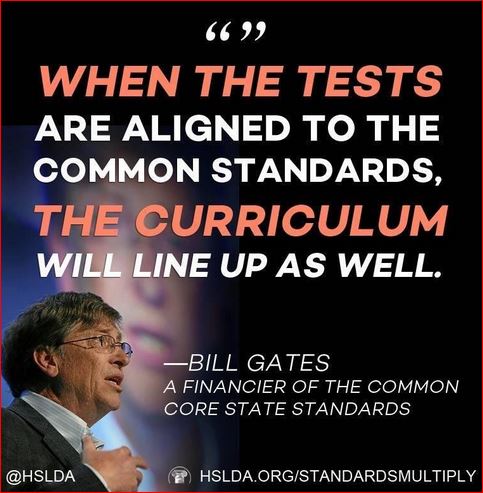
Gates-HSLDA-Curriculum-aligned

By Alex Newman

Source: The New American

Public resistance to Common Core is exploding across America, and officials are not happy about it. The Obama administration’s Department of Education, along with pro-Common Core government officials across the country under pressure from the feds, appear to be in panic mode. Facing a growing nationwide “opt out” movement to refuse participation in the unconstitutional federally funded testing regime aligned with the Obama-backed national school standards, senior bureaucrats, including Education Secretary Arne Duncan, have actually started resorting to lawless threats against parents, teachers, students, and entire state governments. Some parents were threatened by officials with jail time. Even small children are being punished by the state for “opting out” of the deeply controversial tests, with one California mother telling The New American that her daughter was publicly denied ice cream in retaliation.

But so far, the threats are only emboldening the opposition.

Perhaps the most outrageous threat so far came from Obama’s education chief, Duncan, who boasted in recent years of using government schools to create “green citizens” with UNESCO (United Nations Educational, Scientific, and Cultural Organization) as a “global partner.” Late last month, Duncan, who was greeted by protesters urging him to “stop test bullying,” threatened federal intervention to force Americans to take the Common Core tests if states would not do the job. “We think most states will do that,” Duncan proclaimed at an Education Writers Association conference in Chicago. “If states don’t do that, then we [the federal government] have an obligation to step in.” In reality, of course, the federal government has an obligation under the U.S. Constitution to butt out. But despite swearing an oath to uphold and defend the Constitution, including the 10th Amendment, Duncan has led the charge in recent years to finish federalizing the government school system — and to use it as what he called a “weapon” to “change to world.”

Sounding oblivious to America’s federalist system of constitutional government, Duncan proclaimed that he expected state governments to hold “districts’ and schools’ feet to the fire on this,” as if state governments were mere administrative units to enforce decrees from the all-powerful federal executive branch. Hundreds of thousands of students in New York recently opted out. Almost nobody took the tests in some districts amid a full-scale uprising by teachers, students, and parents. In Chicago, where even the teachers’ union has blasted the federal takeover, school officials were threatened with the loss of more than $1 billion in state and federal “education aid” if not enough students were successfully coerced into taking the Common Core-aligned tests. Still, few details were provided on what it might look like to have the Obama administration “step in” and force students to take the controversial tests — an outrageous threat he also made in a discussion with Motoko Rich of the New York Times.

Critics, however, ridiculed the threat, daring the administration to try it. “Assuming that Duncan is not planning to call in the National Guard to haul off opt-outing 8 year olds, the only possible ‘sanction’ would be withholding funds,” observed Carol Burris, an award-winning New York principal who recently stepped down to fight back against what she sees as problems with the public education system. “That would surely lead to court challenges forcing the Education Department to justify penalizing schools when parents exercise their legitimate right to refuse the test — an impossible position to defend.” Noting that students of all races and backgrounds were opting out of the testing scheme, Burris pointed out that the rates “defy the stereotype that the movement is a rebellion of petulant ‘white suburban moms.’”

In a recent statement published by the Washington Post, the New York “2013 High School Principal of the Year” also highlighted a number of troubling government abuses targeting parents. Among other concerns, she said, citing activists and teachers, that administrators in some districts took advantage of non-English speaking parents by lying to them about the tests, saying they were mandatory or that children would be held back for refusal to take them. One critic called it “blatant discrimination at best.” Burris also lambasted the Common Core tests and noted that Duncan’s own children go to a non-Common Core school — as do the children of Common Core financier Bill Gates, and Common Core strongman Obama. She concluded the scathing commentary by noting that the movement to refuse the tests puts the entire “education reform” agenda in serious trouble.

Beyond targeting states and schools, education officials in some areas, responding to federal pressure, have strayed into the realm of potential criminal activity in seeking to boost participation in the tests. In one especially extreme case from Georgia, school officials, citing supposed “federal and state mandates” on the tests, said parents could not refuse to allow their children to take the tests. A meeting was scheduled for the parents to meet with the principal. However, when they arrived, they were met by a police officer, who reportedly warned them that they may be “trespassing” on school property due to their opposition to the testing regime. In the end, it was apparently sorted out without arrest, but the incident was deeply troubling to parents.

In South Carolina, education bureaucrats went even further. The officials reportedly warned parents that they could be imprisoned for 30 days for refusing to allow their children to participate in the national testing regime, which was mandated under the unconstitutional Bush-era No Child Left Behind scheme. According to news reports citing the group South Carolina Parents Involved in Education, South Carolina Education Department Chief Operating Officer Elizabeth Carpentier also threatened groups or organizations that encourage testing refusals with potential criminal charges of “aiding and abetting a crime.” School officials cited in media reports downplayed the threats, saying that parents and groups were merely threatened with existing statutes on “truancy” for not sending children to school for the testing.

In California, mother Amy Watson and her husband decided that their 10-year-old daughter would not be taking the unconstitutional federally funded Smarter Balanced Assessment Consortium (SBAC) test. She was placed in an alternate classroom each testing day with other “opt out” students. In response to the refusal, though, on the day after testing was finished, “the three girls who opted out again were identified, ‘called out,’ and given instructions to go to the same classrooms as during SBAC testing,” Watson told The New American. “The girls were sent out so the ‘test takers’ could have an ice cream party. My daughter returned to her classroom with the trashcan full of empty ice cream containers. There were three ‘left over’ containers. The three opt-out students were not permitted to have them. These three containers were given to teachers instead.” The same thing happened to opt-out students in other grades, she added, calling it an “egregious act.”

Now, Watson has filed a privacy law-violation complaint with the U.S. Department of Education after her daughter and other opt-out students were “intentionally targeted.” The 10-year old is now fearful of additional retaliation from school officials, and Watson is seeking counseling for her daughter due to the emotional and psychological impact the targeting had on her. “I described the situation to the representative at the federal Department of Education,” Watson said. “He verified that ‘yes, this is a violation of FERPA [federal privacy law to protect students].’” The outraged mother is also in contact with attorneys and vowed to continue pursuing the case. Since the scandal, school officials have tried to downplay the incident as a “misunderstanding,” Watson said. But she is not buying it.

As the rebellion against the unconstitutional Common Core testing regime continues to sweep across America like wildfire, the Obama administration is certain to continue doing everything possible to stop it — including lawlessly threatening the American people. But despite those threats, as awareness of Common Core spreads, opposition will keep spreading as well. The testing regime is crucial for enforcing Common Core, and for gathering vast amounts of private data on students for the federal government. Without it, the widely criticized standards regime foisted on America by taxpayer-funded bribes from the Obama administration may well crumble.

The education establishment is now in a serious bind. On one hand, it can rip off the mask and resort to more outright lawlessness and tyranny in an effort to enforce compliance with its deeply unpopular machinations. Such a reaction would almost certainly backfire and produce even more public outrage and resistance. Alternatively, the Obama administration and its backers can risk having the entire Common Core scheme come crashing down around them by ignoring the mushrooming national movement to refuse the tests. Either way, the American people can still win the battle for education in the long run, if the pressure stays on.

The Pro-GMO Lobby: Anti-science and a Politically Motivated Agenda

gmo_crops_genfood_735_350-400x190

By Colin Todhunter

Source: RINF

The pro-GMO lobby claims that there is a scientific consensus on the safety of GM food and therefore the GMO debate is over. It claims that GMOs guarantee higher yields and less pesticide/herbicide use. The claim is also made that GM agriculture has no adverse impact on soil, the nutritional value and health of crops or biodiversity. The industry and its supporters claim that the ‘scientific community’ believes GMOs can only have positive effects and point to research to back this up.

These claims are bogus. Many analyses have highlighted the inadequacies of the research cited by the pro-GMO lobby, not least in terms of methodology, the glossing over of the significance of certain findings and conclusions that do not necessarily fit the evidence provided [1-3]. Moreover, numerous studies demonstrate the often worrying physiological abnormalities derived from ingesting GMOs as well as poor/falling yields, increased pesticide use, lower nutritional values and degraded soil and plant health (etc) associated with GM agriculture [4].

When certain pro-GMO figures proclaim that the debate over GMOs is over, their proclamations are based on propaganda, not science. They say that people who challenge their views are anti-science, politically motivated and are mounting a ‘campaign’ against the industry. Like all good propagandists, this is doublespeak.

Given the existing scientific evidence that challenges the claims of the pro-GMO lobby, a rational and reasonable response would involve applying a precautionary approach to GMOs [5] because there is clearly no scientific consensus. Yet public safety concerns are regarded by the GMO lobby as a barrier to bringing its products to the commercial market and are to be sidelined by all means possible [6-9]. To justify this, it promotes the falsehood that GMOs are ‘substantially equivalent’ to non-GMO products, which is certainly not the case [10].

It is therefore with good reason that concerned people have organised to ensure the precautionary principle is adopted or strengthened and to challenge the industry and officials that are driving the GMO agenda.

It is the GMO sector itself that is politically motivated, anti-science and mounting a campaign in favour of its products. Its faulty science has been challenged, and as a result it is unable to produce the evidence that would convince us that GMOs are safe and provide the benefits claimed. Little wonder the industry hides behind the notion of ‘commercial confidentiality’ to maintain a veil of secrecy over its own research that regulators too often accept at face value [11].

Having failed to win the day with science, it resorts to placing restrictions on independent research into its products, censors findings, intimidates, smears, bribes, uses fakery and has successfully used its wealth and power to hijack regulatory bodies and co-opt bodies and officials who propagate lies on its behalf [12-15]. Yet it is those who highlight and challenge such tactics who are attacked for attempting to derail an industry which likes to portray itself as working for the public interest.

One of the main PR weapons used by the sector is that anti-GMO campaigners are taking food from the mouths of the hungry [16]. Let’s get one thing clear: GMOs are not the answer to feeding the world [17-22] and that type of emotional blackmail will only ever work on the ignorant, misinformed and those who believe the industry’s propaganda.

There is enough scientific evidence to warrant serious concern over GMOs. After all, evidence is mounting that some of these companies may have already been poisoning us for decades with their cocktail of agricultural inputs [23,24].

However, it is easy for the layperson to become confused by an endless parade of studies claiming to back up one or other side of the debate. For that reason, sometimes they have to look beyond science to sharpen their focus. They have to look at motives. They must ask who is controlling the GMO agenda? For what purpose? What is the track record of those involved? Should we ever in a million years trust certain players given their criminal record [25]?

Commercial concerns are driven by profit. Capitalism compels companies to capture and maintain market shares. However, cartels, price rigging, threats, cronyism and having politicians in your back pocket are a much better guarantee to seize and dominate markets than any economic model taught in textbooks and based on the ‘free’ market being determined by supply and demand. Such economic theory is the smokescreen that modern day neoliberalism tries (but fails) to hide behind [26]. As far as the GMO issue is concerned, however, there is much more to it than the need to make a fast buck.

There is a reason why well-known proponents (Rockefeller, Gates) of depopulation and eugenics are involved with the GMO sector; there is a reason why these very people have funded a giant seed bank on an island in the Arctic [27,28]. There is a sinister side to this industry, which points to a heady mix of US geopolitical hegemony based on the global control of agriculture, the hijack of the world’s seeds and food supply and depopulation [29].

If the science around GMOs is confusing to some, then ambiguity is what powerful corporations want: the tobacco industry was happy for the waters to be muddied for decades over the link to lung cancer. But if ambiguity over the efficacy of GMOs does indeed reign, the underlying politics is much clearer to grasp.

colintodhunter.com 

Notes

1] http://gmwatch.org/index.php/news/archive/2014/15669-why-jon-entine-s-trillion-meal-study-won-t-save-us-from-gmo-dangers

2] http://gmwatch.org/index.php/news/archive/2014/15618-biology-fortified-misleads-the-public-on-gmo-safety

3] http://rightbiotech.tumblr.com/post/103665842150/correlation-is-not-causation

4] http://gmomythsandtruths.earthopensource.org/

5] http://www.theguardian.com/science/political-science/2013/jul/08/precautionary-principle-science-policy

6] http://corporateeurope.org/pressreleases/2014/07/agribusiness-biggest-lobbyist-eu-us-trade-deal-new-research-reveals

7] http://corporateeurope.org/trade/2013/05/open-door-gmos-take-action-eu-us-free-trade-agreement

8] http://www.gmfreeze.org/actions/42/

9] http://corporateeurope.org/food-and-agriculture/2014/05/biotech-lobbys-fingerprints-over-new-eu-proposal-allow-national-gmo

10] http://www.i-sis.org.uk/Substantial_Non-Equivalence.php

11] http://gmwatch.org/index.php/news/archive/2014/15519-the-glyphosate-toxicity-studies-you-re-not-allowed-to-see

12]http://indiatoday.intoday.in/story/Monsanto+’faked’+data+for+approvals+claims+its+ex-chief/1/83093.html

13] http://www.globalresearch.ca/gmo-scandal-the-long-term-effects-of-genetically-modified-food-on-humans/14570

14] http://www.gmwatch.org/latest-listing/1-news-items/12715-seralini-vs-fellous-a-gmo-libel-case-over-independent-expertise-and-science

15] http://www.globalresearch.ca/gmo-researchers-attacked-evidence-denied-and-a-population-at-risk/5305324

16] http://www.globalresearch.ca/the-gmo-biotech-lobbys-emotional-blackmail-and-bogus-claims-monsantos-genetically-modified-crops-will-not-feed-the-world/5407080

17] http://www.cban.ca/Resources/Topics/Feeding-the-World

18]http://www.srfood.org/images/stories/pdf/officialreports/20110308_a-hrc-16-49_agroecology_en.pdf

19] http://vivakermani.blogspot.in/2014/07/gm-food-crops-why-india-must-say-no.html

20] http://www.globalresearch.ca/india-genetically-modified-seeds-agricultural-productivity-and-political-fraud/5328227

21] http://unctad.org/en/PublicationsLibrary/tdr2013_en.pdf

22]http://www.unep.org/dewa/agassessment/reports/IAASTD/EN/Agriculture%20at%20a%20Crossroads_Global%20Report%20(English).pdf

23] http://naturalsociety.com/americans-suffering-chronic-disease-due-glyphosate-herbicides-new-study/

24] http://www.tonu.org/2013/12/03/shivchopra_squamish/

25] http://www.wakingtimes.com/2014/06/20/complete-history-monsanto-worlds-evil-corporation/

26] http://www.washingtonsblog.com/2013/05/is-every-market-rigged.html

27] http://www.naturalnews.com/034468_doomsday_seed_vault_secrets.html#

28]http://www.naturalnews.com/035105_bill_gates_monsanto_eugenics.html

29] http://www.globalresearch.ca/menace-on-the-menu-development-and-the-globalization-of-servitude/5416488

Grooming Students for A Lifetime of Surveillance

index

The same technologists who protest against the NSA’s metadata collection programs are the ones profiting the most from the widespread surveillance of students.

By Jessy Irwin

Source: Model View Culture

Since 2011, billions of dollars of venture capital investment have poured into public education through private, for-profit technologies that promise to revolutionize education. Designed for the “21st century” classroom, these tools promise to remedy the many, many societal ills facing public education with artificial intelligence, machine learning, data mining, and other technological advancements.

They are also being used to track and record every move students make in the classroom, grooming students for a lifetime of surveillance and turning education into one of the most data-intensive industries on the face of the earth. The NSA has nothing on the monitoring tools that education technologists have developed in to “personalize” and “adapt” learning for students in public school districts across the United States.

(Mega)data Collection + Analysis

“Adaptive”, “personalized” learning platforms are one of the most heavily-funded verticals in education technology. By breaking down learning into a series of tasks, and further distilling those tasks down to a series of clicks that can be measured and analyzed, companies like Knewton (which has raised $105 million in venture capital), or the recently shuttered inBloom (which raised over $100 million from the Gates Foundation) gather immense amounts of information about students into a lengthy profile containing personal information, socioeconomic status and other data that is mined for patterns and insights to improve performance. For students, these clickstreams and data trails begin when they are 5 years old, barely able to read much less type in usernames and passwords required to access their online learning portals.

Data collection and number crunching aren’t the only technologies being explored to revolutionize education– technology billionaire and philanthropist Bill Gates funded a $1.1 million project to fit middle-school students with biometric sensors to monitor their response and engagement levels during lessons, and advocated a $5 billion program to install video cameras in every classroom to record teachers for evaluation.

The Family Educational Rights and Privacy Act, a law put in place in 1974 to protect student academic records, does nothing to protect student data when it is in the hands of education technology companies. Instead, FERPA threatens to take federal funding away from schools who are found to have breached student privacy while it fails to mandate bare minimum security standards for the storage and transmission of student data. In fact, a recent revision of FERPA increased the power that companies have to collect and mine student data.  Though lawmakers and privacy advocates are regularly outraged at the immense volume of student data freely floating through the web, the repeated failure to create legislation that protects student data from being used for profit is astounding.

One thing is clear: those who have the power to protect student privacy will not do so as long as they can continue to subsidize the cost of public education with student data.

Internet Censorship in Schools

In most educational institutions, the vast majority of IT operations are focused on monitoring, filtering and blocking web traffic instead of building secure networks that safeguard student records and sensitive behavioral data. Nowhere is this more apparent than in the widespread adoption of web filtering software tools in K-12 schools. Usage of these technologies is required for compliance with programs like E-Rate, which grant federal money to schools to fund internet access for their students.

To be eligible for funding from the E-Rate program, schools are required to comply with federal regulations that ban access to websites displaying pornography, graphic material, or any other that could otherwise be judged as immoral, improper or lewd. More often than not, this subjective criteria is determined by the opinions and belief systems of school administrators under political pressure to deny students access to content on controversial issues about topics like evolution, birth control and sex education. These decisions disproportionately affect young girls and LGBTQ students by denying them access to sites that provide important information about their rights, their developing bodies, their sexuality and their access to contraceptives. In the case of Securly, the first filtering tool designed for schools, the controls set by IT and administration for web access can extend far beyond the walls of the school and determine what content students can access while using school- issued machines from their home internet connections.

Despite the many positive contributions of the internet in the distribution and dissemination of knowledge across the planet, students are regularly denied access to valuable information that could positively impact their learning… all to safeguard a small percentage of federal budget money granted to their schools. The implications of this are particularly severe for low-income students who do not have access to the Internet at home; without the ability to freely access the web on their own terms, their digital literacy skills lag behind those of their affluent peers. Though teachers request better and broader internet access for students in their classrooms, administrator-imposed blocks and filters on school internet leave most students woefully unprepared to navigate the realities of the web. When students do find a way around the tools used to limit their access to the outside world (this happened with a group of students who were given iPads in the Los Angeles United School district last year), they’re labelled as “hackers” or miscreants, and disciplined for using Tor, a tool popular among students for anonymous web browsing and circumventing blacklists that ban websites from school networks.

Social Media Surveillance

Schools are adopting many other surveillance technologies with unprecedented reach into the private communications and lives of students and their families. In Lower Merion, PA, a suburb outside of Philadelphia, educators engaged remote administration tools on students’ laptops to regularly spy on their activities while at home. In a case that made its way into federal courts, one student was punished by administrators who mistook candy pictured through his laptop’s camera for drugs. While the full extent of the spying was never exposed, parents and students have expressed concern about educators having the ability to watch young girls undress in the privacy of their homes, unaware that they were being watched through their school-issued computers.

In 2013, the Glendale Unified School District in Glendale, CA took a move straight from the NSA surveillance handbook by seeking out a $40,000 contract with Geo Listening, a social media monitoring company that charges schools to eavesdrop on student social media chatter. While the company claims to only access posts that are public in the school districts they work with, and says it works closely with school districts to tailor their monitoring programs to prevent cyberbullying, suicide and active shooter incidents, it is very easy— too easy, in fact— to use such technologies to identify and target students who have been labeled deviant or delinquent within their communities, or who are otherwise outspoken and critical of their teachers and schools.

Schools are also demanding access to students’ social media communications in ways that severely harm their constitutionally protected rights to free speech. In Minnewaska, MN, a female student who complained about a hall monitor’s behavior in a Facebook post was questioned and given in-school suspension. Later, when a parent reported the student for “sexting” over Facebook with a classmate, she was removed from class again as a group of educators and a police officer armed with a taser demanded that the student hand over her password. They then read private communications that took place outside of school through her Facebook account. After being pulled from class multiple times, suspended from school, and barred from attending a school field trip (the same punishment was not doled out to the male student involved in the messaging), the ACLU stepped in to defend the student’s right to privacy and free speech in communications outside of school property. Though the ruling in the case upheld students’ protection under the 1st and 4th amendments, school districts around the country continue to demand access to students’ social media accounts and threaten to mark students’ academic records to make it difficult to get into a desired university or to seek other avenues for continued education.

Physical Surveillance

In addition to the online monitoring taking place in schools, there are many surveillance mechanisms in place to enforce physical security in public schools. Since the shootings that took place at Virginia Tech in 2007, and again after those that took place in Sandy Hook, CT in 2012, technology companies have launched myriad tools designed to minimize the potential loss of life in the next active shooting incident at a school. Some of these technologies include:

By preying on the absolute worst fears of administrators and parents across the country, technology companies are earning millions of dollars selling security “solutions” that do not accurately address the threat model these tools claim to dispel. School districts that purchase these systems further perpetuate the farce of security theater and infringe on students’ rights to privacy and individual freedom.

A Lifetime of Surveillance

When we develop and use educational technologies that monitor a student’s every moment in school and online, we groom that student for a lifetime of surveillance from the NSA, from data brokers, from advertisers, marketers, and even CCTV cameras. By watching every move that students make while learning, we model to students that we do not trust them– that ultimately, their every move will be under scrutiny from others. When students recognize that they are being watched, they begin to act differently– and from that very moment they begin to cede one small bit of freedom at a time.

Though the education technology revolution continually promises a silver bullet that will be a great democratizing force for all of society’s ills, it categorically disregards the patriarchal power structures and biases that both legitimate and perpetuate discrimination against minorities and marginalized groups. Despite it being well within the scope of educational technology tools to track, identify and expose biases towards groups of students, technologists avoid implementing small changes that monitor educator performance and correct for unconscious biases that negatively affect student learning. Because the surveillance taking place in schools is typically based on qualitative criteria like morality, appropriateness and good behavior, these technologies extend current practices and prejudices that perpetuate injustices against marginalized groups.

There are few to no safeguards built into the online and offline monitoring systems to protect students from the abuse of these tools. Young female students who are active on social media can be unfairly targeted, slut-shamed and disciplined for suggestive language that takes place outside of school, while their male counterparts are not held equally accountable for participating in sexually charged online conversations. Youth of color, a group that is disproportionately stereotyped as angry, aggressive, and unpredictable by educators, can easily be monitored, disciplined, and entered into the juvenile justice system for any outburst that could vaguely be misinterpreted as a threat to a homogeneous caucasian school culture. Any student grappling with issues of abuse, depression, disability, gender identity or sexuality could easily be discovered by online surveillance tools, stigmatized and outed to their teachers, parents and wider community.

Education technologists also continue to widen the digital divide between affluent and economically oppressed. Despite an industry-wide insistence that technology is not being developed to replace educators in the classroom, many poor school districts faced with massive budget cuts are implementing experimental blended learning programs reliant on “adaptive” and “personalized” software as a way to mitigate the effect of large class sizes on student learning. This means that students who attend costly private schools or live within rich school districts that can afford to employ more educators and maintain smaller class sizes receive much more personalized instruction from their teachers. Instead of receiving much-needed interaction and personalized learning directly from educators, poor students living in disadvantaged communities receive instruction from educational software that collects their data (which is likely to be sold), and have less individual instruction time from teachers than their affluent counterparts.

By developing technologies that collect, track, record, analyze every move a student makes both online and off, technologists and investors and educators are ensuring that today’s students will have less privacy than any other generation that came before them, threatening to make privacy and anonymity unattainable for future generations. Though the surveillance mechanisms at play in education technologies affect the privacy of millions of students who pass through the education system each year, this system is a profound, persistent threat to the privacy and individual liberty of LGBTQ students, low-income students, and students of color who have already been so severely failed by the status quo.

Ironically, the same technologists and investors who protest against the NSA’s metadata collection programs are the ones profiting the most from the widespread surveillance of students across the country, by building educational tools with the same function.

Privatized Ebola

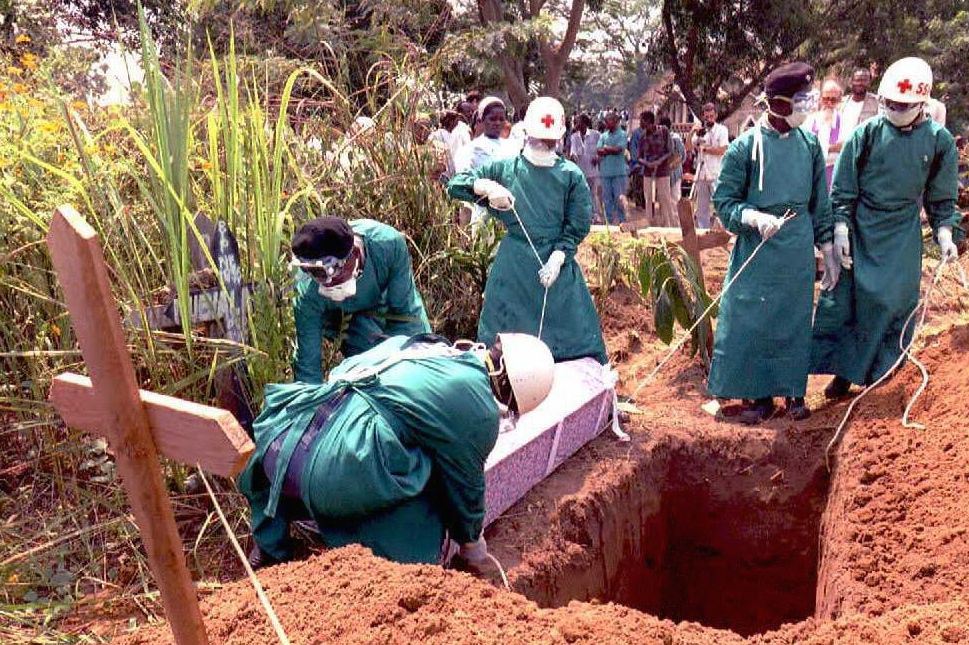
Red Cross workers burry 14 May Italian nun Dinaros

By Margaret Kimberly

Source: Black Agenda Report

“The world of private dollars played a role in consigning thousands of people to death.”

Sierra Leone has waved the white flag in the face of Ebola Virus Disease (EVD). Its meager infrastructure has buckled under the onslaught of a disease which could have been curtailed. The announcement that infected patients will be treated at home because there is no longer the capacity to treat them in hospitals is a surrender which did not have to happen. Not only did Europe and the United States turn a blind eye to sick and dying Africans but they did so with the help of an unlikely perpetrator.

The World Health Organization is “the directing and coordinating authority for health within the United Nations system.” Its very name implies that it takes direction from and serves the needs of people all over the world but the truth is quite different. The largest contributor to the WHO budget is not a government. It is the Bill and Melinda Gates Foundation which provides more funding than either the United States or the United Kingdom. WHO actions and priorities are no longer the result of the consensus of the world’s people but top down decision making from wealthy philanthropists.

The Bill and Melinda Gates Foundation may appear to be a savior when it provides $300 million to the WHO budget, but those dollars come with strings attached. WHO director general Dr. Margaret Chan admitted as much when she said, “My budget [is] highly earmarked, so it is driven by what I call donor interests.” Instead of being on the front line when a communicable disease crisis appears, it spends its time administering what Gates and his team have determined is best.

The Ebola horror continues as it has for the last ten months in Guinea, Liberia and Sierra Leone. The cruelty of the world’s lack of concern for Africa and all Africans in the diaspora was evident by the inaction of nations and organizations that are supposed to respond in times of emergencies. While African governments and aid organizations sounded the alarm the WHO did little because its donor driven process militates against it. The world of private dollars played a role in consigning thousands of people to death.

Critics of the Gates Foundation appeared long before this current Ebola outbreak. In 2008 the WHO’s malaria chief, Dr. Arata Kochi, complained about the conflicts of interest created by the foundation. In an internal memo leaked to the New York Times he complained that the world’s top malaria researchers were “locked up in a ‘cartel’ with their own research funding being linked to those of others within the group.” In other words, the standards of independent peer reviewed research were cast aside in order to please the funder.

Private philanthropy is inherently undemocratic. It is a top down driven process in which the wealthy individual tells the recipient what they will and will not do. This is a problematic system for charities of all kinds and is disastrous where the health of world’s people is concerned. Health care should be a human right, not a charity, and the world’s governments should determine how funds to protect that right are spent. One critic put it very pointedly. “…the Gates Foundation, Bill & Melinda Gates, do not believe in the public sector, they do not believe in a democratic, publically owned, publically accountable system.”

There is little wonder why the Ebola outbreak caught the WHO so flat footed as they spent months making mealy mouthed statements but never coordinating an effective response. The Gates foundation is the WHO boss, not governments, and if they weren’t demanding action, then the desperate people affected by Ebola weren’t going to get any.

Privatization of public resources is a worldwide scourge. Education, pensions, water, and transportation are being taken out of the hands of the public and given to rich people and corporations. The Ebola crisis is symptomatic of so many others which go unaddressed or improperly addressed because no one wants to bite the hands that do the feeding.

The Bill and Melinda Gates Foundation has pledged an additional $50 million to fight the current Ebola epidemic but that too is problematic, as Director General Chan describes. “When there’s an event, we have money. Then after that, the money stops coming in, then all the staff you recruited to do the response, you have to terminate their contracts.” The WHO should not be lurching from crisis to crisis, SARS, MERS, or H1N1 influenza based on the whims of philanthropy. The principles of public health should be carried out by knowledgeable medical professionals who are not dependent upon rich people for their jobs.

The Gates are not alone in using their deep pockets to confound what should be publicly held responsibilities. Facebook founder Mark Zuckerberg announced that he was contributing $25 million to fight Ebola. His donation will go to the Centers for Disease Control Foundation. Most Americans are probably unaware that such a foundation even exists. Yet there it is, run by a mostly corporate board which will inevitably interfere with the public good. The WHO and its inability to coordinate the fight against Ebola tells us that public health is just that, public. If the CDC response to Ebola in the United States fails it may be because it falls prey to the false siren song of giving private interests control of the people’s resources and responsibilities.


Margaret Kimberley’s Freedom Rider column appears weekly in BAR, and is widely reprinted elsewhere. She maintains a frequently updated blog as well as at http://freedomrider.blogspot.com. Ms. Kimberley lives in New York City, and can be reached via e-Mail at Margaret.Kimberley(at)BlackAgendaReport.com.