
18 SIGNS OF HIGH EMOTIONAL INTELLIGENCE

By Travis Bradberry

Source: Waking Times

“Emotional intelligence is the “something” in each of us that is a bit intangible. It affects how we manage behavior, navigate social complexities, and make personal decisions to achieve positive results.”

When emotional intelligence (EQ) first appeared to the masses, it served as the missing link in a peculiar finding: people with average IQs outperform those with the highest IQs 70 per cent of the time. This anomaly threw a massive wrench into the broadly held assumption that IQ was the sole source of success.

Decades of research now point to emotional intelligence as being the critical factor that sets star performers apart from the rest of the pack. The connection is so strong that 90 per cent of top performers have high emotional intelligence.

Emotional intelligence is the “something” in each of us that is a bit intangible. It affects how we manage behavior, navigate social complexities, and make personal decisions to achieve positive results.

Despite the significance of EQ, its intangible nature makes it very difficult to know how much you have and what you can do to improve if you’re lacking. You can always take a scientifically validated test, such as the one that comes with the Emotional Intelligence 2.0 book.

Unfortunately, quality (scientifically valid) EQ tests aren’t free. So, I’ve analyzed the data from the million-plus people TalentSmart has tested in order to identify the behaviors that are the hallmarks of a high EQ. What follows are sure signs that you have a high EQ.

1. You have a robust emotional vocabulary

All people experience emotions, but it is a select few who can accurately identify them as they occur. Our research shows that only 36 per cent of people can do this, which is problematic because unlabeled emotions often go misunderstood, which leads to irrational choices and counterproductive actions.

People with high EQs master their emotions because they understand them, and they use an extensive vocabulary of feelings to do so. While many people might describe themselves as simply feeling “bad,” emotionally intelligent people can pinpoint whether they feel “irritable,” “frustrated,” “downtrodden,” or “anxious.” The more specific your word choice, the better insight you have into exactly how you are feeling, what caused it, and what you should do about it.

2. You’re curious about people

It doesn’t matter if they’re introverted or extroverted, emotionally intelligent people are curious about everyone around them. This curiosity is the product of empathy, one of the most significant gateways to a high EQ. The more you care about other people and what they’re going through, the more curiosity you’re going to have about them.

3. You embrace change

Emotionally intelligent people are flexible and are constantly adapting. They know that fear of change is paralyzing and a major threat to their success and happiness. They look for change that is lurking just around the corner, and they form a plan of action should these changes occur.

4. You know your strengths and weaknesses

Emotionally intelligent people don’t just understand emotions; they know what they’re good at and what they’re terrible at. They also know who pushes their buttons and the environments (both situations and people) that enable them to succeed. Having a high EQ means you know your strengths and you know how to lean into them and use them to your full advantage while keeping your weaknesses from holding you back.

5. You’re a good judge of character

Much of emotional intelligence comes down to social awareness; the ability to read other people, know what they’re about, and understand what they’re going through. Over time, this skill makes you an exceptional judge of character. People are no mystery to you. You know what they’re all about and understand their motivations, even those that lie hidden beneath the surface.

6. You are difficult to offend

If you have a firm grasp of whom you are, it’s difficult for someone to say or do something that gets your goat. Emotionally intelligent people are self-confident and open-minded, which creates a pretty thick skin. You may even poke fun at yourself or let other people make jokes about you because you are able to mentally draw the line between humor and degradation.

7. You know how to say no (to yourself and others)

Emotional intelligence means knowing how to exert self-control. You delay gratification, and you avoid impulsive action. Research conducted at the University of California, San Francisco, shows that the more difficulty that you have saying no, the more likely you are to experience stress, burnout, and even depression. Saying no is indeed a major self-control challenge for many people. “No” is a powerful word that you should not be afraid to wield. When it’s time to say no, emotionally intelligent people avoid phrases such as “I don’t think I can” or “I’m not certain.” Saying no to a new commitment honors your existing commitments and gives you the opportunity to successfully fulfill them.

8. You let go of mistakes

Emotionally intelligent people distance themselves from their mistakes, but do so without forgetting them. By keeping their mistakes at a safe distance, yet still handy enough to refer to, they are able to adapt and adjust for future success. It takes refined self-awareness to walk this tightrope between dwelling and remembering. Dwelling too long on your mistakes makes you anxious and gun shy, while forgetting about them completely makes you bound to repeat them. The key to balance lies in your ability to transform failures into nuggets of improvement. This creates the tendency to get right back up every time you fall down.

9. You give and expect nothing in return

When someone gives you something spontaneously, without expecting anything in return, this leaves a powerful impression. For example, you might have an interesting conversation with someone about a book, and when you see them again a month later, you show up with the book in hand. Emotionally intelligent people build strong relationships because they are constantly thinking about others.

10. You don’t hold grudges

The negative emotions that come with holding onto a grudge are actually a stress response. Just thinking about the event sends your body into fight-or-flight mode, a survival mechanism that forces you to stand up and fight or run for the hills when faced with a threat. When the threat is imminent, this reaction is essential to your survival, but when the threat is ancient history, holding onto that stress wreaks havoc on your body and can have devastating health consequences over time. In fact, researchers at Emory University have shown that holding onto stress contributes to high blood pressure and heart disease. Holding onto a grudge means you’re holding onto stress, and emotionally intelligent people know to avoid this at all costs. Letting go of a grudge not only makes you feel better now but can also improve your health.

11. You neutralize toxic people

Dealing with difficult people is frustrating and exhausting for most. High EQ individuals control their interactions with toxic people by keeping their feelings in check. When they need to confront a toxic person, they approach the situation rationally. They identify their own emotions and don’t allow anger or frustration to fuel the chaos. They also consider the difficult person’s standpoint and are able to find solutions and common ground. Even when things completely derail, emotionally intelligent people are able to take the toxic person with a grain of salt to avoid letting him or her bring them down.

12. You don’t seek perfection

Emotionally intelligent people won’t set perfection as their target because they know that it doesn’t exist. Human beings, by our very nature, are fallible. When perfection is your goal, you’re always left with a nagging sense of failure that makes you want to give up or reduce your effort. You end up spending your time lamenting what you failed to accomplish and what you should have done differently instead of moving forward, excited about what you’ve achieved and what you will accomplish in the future.

13. You appreciate what you have

Taking time to contemplate what you’re grateful for isn’t merely the right thing to do; it also improves your mood because it reduces the stress hormone cortisol by 23 per cent. Research conducted at the University of California, Davis, found that people who worked daily to cultivate an attitude of gratitude experienced improved mood, energy, and physical well-being. It’s likely that lower levels of cortisol played a major role in this.

14. You disconnect

Taking regular time off the grid is a sign of a high EQ because it helps you to keep your stress under control and to live in the moment. When you make yourself available to your work 24/7, you expose yourself to a constant barrage of stressors. Forcing yourself offline and even–gulp!–turning off your phone gives your body and mind a break. Studies have shown that something as simple as an e-mail break can lower stress levels. Technology enables constant communication and the expectation that you should be available 24/7. It is extremely difficult to enjoy a stress-free moment outside of work when an e-mail that will change your train of thought and get you thinking (read: stressing) about work can drop onto your phone at any moment.

15. You limit your caffeine intake

Drinking excessive amounts of caffeine triggers the release of adrenaline, and adrenaline is the source of the fight-or-flight response. The fight-or-flight mechanism sidesteps rational thinking in favor of a faster response to ensure survival. This is great when a bear is chasing you, but not so great when you’re responding to a curt e-mail. When caffeine puts your brain and body into this hyper-aroused state of stress, your emotions overrun your behavior. Caffeine’s long half-life ensures you stay this way as it takes its sweet time working its way out of your body. High-EQ individuals know that caffeine is trouble, and they don’t let it get the better of them.

16. You get enough sleep

It’s difficult to overstate the importance of sleep to increasing your emotional intelligence and managing your stress levels. When you sleep, your brain literally recharges, shuffling through the day’s memories and storing or discarding them (which causes dreams) so that you wake up alert and clearheaded. High-EQ individuals know that their self-control, attention, and memory are all reduced when they don’t get enough–or the right kind–of sleep. So, they make sleep a top priority.

17. You stop negative self-talk in its tracks

The more you ruminate on negative thoughts, the more power you give them. Most of our negative thoughts are just that–thoughts, not facts. When it feels like something always or never happens, this is just your brain’s natural tendency to perceive threats (inflating the frequency or severity of an event). Emotionally intelligent people separate their thoughts from the facts in order to escape the cycle of negativity and move toward a positive, new outlook.

18. You won’t let anyone limit your joy

When your sense of pleasure and satisfaction are derived from the opinions of other people, you are no longer the master of your own happiness. When emotionally intelligent people feel good about something that they’ve done, they won’t let anyone’s opinions or snide remarks take that away from them. While it’s impossible to turn off your reactions to what others think of you, you don’t have to compare yourself to others, and you can always take people’s opinions with a grain of salt. That way, no matter what other people are thinking or doing, your self-worth comes from within.

Five Keys to Inner Strength From Five Years in Prison

By Ross Ulbricht

Source: Bitcoin Magazine

October 1, 2018, marked five years since I was imprisoned. My physical surroundings today are ironically similar to what they were after my arrest back in 2013. I’m in the SHU again (Special Housing Unit, aka “the hole”). It means permanent lockdown, separated from the general prison population, in a small cell. There is a slot in the heavy metal door for food trays, a small steel toilet, a concrete bunk with thick rings at four points (I guess that’s how I’ll get strapped down if I go crazy), chipped paint on the walls and floor with gang names and desperate Bible quotes etched in, and everywhere thick marks counting the days spent here by former inhabitants (some collections are terrifyingly large).

The initial shock of entering the cell — and all it meant for my immediate future — gave way after a few days to a helpless, restless dread and a burning need to get out. This feeling had to be stuffed down to avoid madness, and eventually a numb acceptance took over, but it was a precarious arrangement. Desperate frustration simmered constantly beneath the surface.

When I was first arrested, I was put in the hole against my will at three different prisons as they bounced me across the country from San Francisco where I was arrested to New York where I was prosecuted. The only reason I was given for this was that I was “high profile.” After six weeks, I was let out and never returned … until now. This time, I’m actually glad to be here because the alternative is life-threatening.

I was forced by some other inmates to make a choice: assault someone or be assaulted. Morally I knew I couldn’t initiate violence against another, but if I refused, I would be seriously hurt and would face an uncertain future, not knowing how long I’d be in the hole under protective custody or whether I’d be sent to another prison where I’d meet the same fate.

When the dreadful situation arose, I managed to ask for protective custody before anything happened to me. I was immediately cuffed and escorted to this cell where I’m writing from. I chose the hole rather than hurt another man.

When they dropped me in the SHU after my arrest, I did my best, but it was a tough six weeks, going from a life of freedom straight in. I broke down when I got my first phone call, and, after one week, I completely lost track of time and grounding. It makes me anxious just remembering it.

Maybe after five-plus years I’m used to doing time, but I think it’s how I’ve done my time that has made me mentally tough, that has made the difference between how I handled the hole back then and how I’m handling it now. I want to share this hard-won wisdom with you. Here are the five keys to inner strength I’ve learned from five years in prison.

Patience

My first night locked up was in a San Francisco holding cell: just painted concrete, toilet and sink. There was blood splatter staining the wall. I was so impatient for that night to be over. I almost felt I couldn’t survive it, as if it would never end. Of course it did, but I’ve never felt time move so slowly.

Prison has its own pace. One time, getting two pages of medical records printed took three months. I once had a faucet running day and night for five weeks before it was fixed. A clogged toilet took two months and a complaint to the Office of the Inspector General. Another time, I spotted a letter addressed to me in the corner of a guard’s office. It had been there for four months.

I’ve learned that patience means doing what you can today then letting go. It means settling in to this moment and letting things come in their own time. Impatience and boredom do not bring results faster, but they do rob you of your happiness here and now.

Will to Fight

After a long day of working in the lab as an undergraduate research assistant back in 2005, my mentor asked me if I had ever boxed. I told him no, nor had I been in a real fight. Compared to many, I had a sheltered upbringing in safe schools and neighborhoods. I had no need to fight. He pulled out some 14-ounce gloves and we went a few rounds in the hall outside our office, blowing off steam and having fun. From then on, whenever the stress of work got high, we’d get the gloves out at night before heading home.

When I was arrested and thrown in jail, I faced an opponent in a real fight for the first time in my life. The prosecution wanted to take my life as I knew it. They wanted — and still want to — keep me in a cage forever. I found myself on an alien battlefield and my opponent had every advantage. Being initially locked up in a detention center was like fighting while under water, most of my energy going to day-to-day survival and dealing with prison bureaucracy.

At trial, I stepped into the ring hoping for a chance, for a fair fight. When my lawyer wasn’t allowed to cross-examine the prosecution’s witnesses and I wasn’t allowed to call my own, my hands were tied behind my back. And when the prosecution was allowed to hide corrupt agents from my jury and present unreliable and tainted digital evidence, they were handed a metal bat. It wasn’t a fight. It was a massacre. The defeats kept coming, first at the appellate court, then at the Supreme Court.

I remember one time when I decided to stay out late on the prison yard. The sun was setting, and it was just me and a few others out there. I walked over to a metal picnic table where a man I’ll call Big Mike sat alone. Big Mike was the biggest person I’ve ever met. He weighs twice as much as I do, and his arms are as thick as my legs. He once told me that he doesn’t work out because he gets too big and scares people. We chatted for a while and he told me about the arguments he was preparing for his next motion to the court.

“I need to keep working on my case every single day until I go free,” I said, inspired by his efforts.

His expression became stern. He stared me down then went into a half hour rant that only ended because we were called off the yard for the night. “Yes you do,” he said. “No one is going to fight for your freedom like you. These people got you tied in a knot and you’ll never get out if you don’t struggle and fight. You’re fighting for your life. They took your life from you. Only you can get it back.” He was still going as we walked into the cell block.

Big Mike had fought his entire life. He grew up on the streets of Philly. He fought to survive, and now he was fighting the last shreds of doubt and defeat still left in my heart. He won that night and lit a fire in me that’s been burning ever since.

The will to fight is primal. It’s in all of us. Like me, many of us have never needed it and it lays dormant. Yet you don’t need to wait until you are under attack and your life is in danger to learn to fight. You can fight for who you love, for what matters, for what you believe in, like your life depends on it. And truly it does because a life worth living is worth fighting for.

Forgiveness

A few months after I was sentenced, I lay down on my bunk after the cell door had been locked for the night. As my conscious mind slowed down and sleep approached, the faces of those who put me away for life bubbled up and captured my attention: the judges, prosecutors, politicians and agents, and they were looking down on me with mocking smiles. A cocktail of emotions accompanied these images, including anger, frustration, helplessness, even the beginnings of hate. My heart beat fast and my mind raced until I snapped fully awake and lay there trying to drift off again. After a few cycles of this, I sat up in bed. This wasn’t the first time I couldn’t stop these negative feelings. I had to get a grip.

While I was tossing and turning, those people were probably sleeping, comfortable and sound, in big comfy beds in big comfy houses. Or were they? Maybe they were also sitting up at night tormented by the thought of all the people like me they had condemned. Or maybe they didn’t care and rationalized the pain away. The truth, I realized, was that I had no idea. And further, all my anger wasn’t hurting them one bit. It was all right there with me in that cell. I wasn’t getting back at them by holding a grudge, but I was poisoning my mind.

As revolting as it felt at first, I had to forgive them. I purposely cultivated thoughts like “It wasn’t personal, they don’t even know me” and “Their hearts must be so calloused by what they do, I feel sorry for them.” I focused on feelings of love and kindness and imagined them radiating out and healing those who had hurt me. I don’t know if that had an effect on any of them, but I certainly started sleeping better.

As time went on, I became ruthless with these hateful thoughts whenever they entered my mind and would rewire them immediately as I had that night. I could not indulge in them because I had come to learn this simple truth: hate does not hurt the hated, it hurts the hater. It’s been years since I wasted my energy hating those people and I’m so much better off for having forgiven them.

Faith

Being condemned to grow old and die in prison with two life sentences plus 40 years is like staring into an abyss. My future as I knew it disappeared, replaced by darkness and uncertainty. In the face of this nightmare, faith became a matter of survival.

The day I was sentenced I returned to the detention center and was given hugs, condolences and a hot meal from my fellow prisoners. When I found some time alone that night, I saw two roads before me. One was a downward spiral. I could see that the further I went down, the harder it would be to claw my way back. At the bottom, the demons of despair, hatred and crushing sadness were waiting to devour me. The other path soared upward, but I couldn’t find the steps. There weren’t any. There was no reason to hope that I could hold onto.

In the following months, I had to leap, stumble and scramble toward that upward path. With all evidence to the contrary, I had to have faith that God would see me through whatever was to come. I realized I’m not strong enough on my own to keep from falling into that ever-present abyss. It may be irrational to believe without proof, to have faith, but it’s also irrational to forsake the hope, love and joy that faith brings, because it gives you the strength to fight and ultimately win. In a situation as desperate as mine, keeping faith alive is the difference between freedom and a slow, caged death.

Acceptance and Gratitude

There are endless opportunities for suffering in prison. You can suffer when they lock you in the cell and you feel like you’ll explode if you can’t get out; when your back spasms from the hard bunk; when you’re sick and feel isolated; when you notice the filth; when the door slams and locks behind your loved ones after a visit; when you feel like you’re drowning and just need one last day of freedom to breathe; when you wish you could keep sleeping but you have to get your boots on because what if a riot pops off; when you imagine the shank you saw pierce the last man is piercing your flesh; when you realize you haven’t had a moment of privacy in years and everything around you is cold and hard; when someone dies and you never got to say goodbye to.

I’ve had countless occasions for suffering. In each case the pain is unavoidable. It hits without warning and you feel it, whether you like it or not. And of course, the nature of pain is to not like it. Our natural reaction is to resist it, to fight it, to push it away or down. This aversion to pain is suffering.

To resist what is so and long for something better is to suffer. Pain and suffering seem hopelessly entangled in prison, but I’ve learned that suffering is not the unavoidable consequence of pain.

While pain is inevitable in my circumstances, suffering is entirely optional. Pain, even emotional pain, is just a physical sensation: the knot in my stomach, the ache in my heart and head. It is neither positive nor negative on its own. It just is. Suffering is our negative response to pain which compounds and amplifies it and drags it on and on.

I’ve come to believe that the antidote to suffering, the path out of it, is acceptance and gratitude. Acceptance turns “I can’t take another day in this hell” into “I am where I am, and yes, it hurts.” Gratitude goes a step further: “At least I have clean water and enough food. At least I’m alive and surviving. Thank you.” Suffering always arises in the context of inadequacy because you want what you don’t have. Acceptance and gratitude flip your context to one of abundance because you are focused on what you do have and are thankful for it. It’s the difference between misery and joy and it’s available to each of us every moment of the day.

So here I am in the hole, counting my many blessings and refusing to indulge in suffering. Hopefully, you can benefit from these five keys to inner strength without having to go through what I have. That would be a nice silver lining, to know what’s happened to me can make a difference for you. That is one more thing to be grateful for.

Forgiveness Is Overrated

REUTERS/Tony Gentile

By Caitlin Johnstone

Source: CaitlinJohnstone.com

Journalist David Sirota has just published an excellent op-ed titled “America’s new aristocracy lives in an accountability-free zone”, which begins with the observation that “Enron executives were among the last politically connected criminals to face any serious consequences for institutionalized fraud.” Sirota goes on to remind readers how there was never any attempt by either mainstream political party to bring accountability to anyone responsible for monstrous offenses ranging from the disastrous invasion of Iraq to the ecocidal manipulations of fossil fuel plutocrats to the Wall Street plundering which led to the 2008 global financial crisis.

Sirota’s argument is solid: there is an aristocratic class which has successfully neutered all the institutional mechanisms which were meant to protect the powerless from the powerful. The government is bought and owned by the plutocrats and so is the media, as the continued forgiveness of unforgivable transgressions which those institutions have been bestowing upon the aristocracy clearly reflects. This means that the only thing left protecting the populace from the powerful is the populace itself.

https://twitter.com/davidsirota/status/1048202031159103488

A couple of years back I read a Shaun King article titled “Stop asking black victims of white violence if they forgive their victimizers”, about a bizarre trend in which the black survivors of police shootings and racially motivated terrorism were consistently finding themselves barraged with questions about forgiveness. King wrote about how “before her son, Philando, had even been buried, his body riddled with bullets from a Minnesota police officer, Valerie Castile was asked live on CNN if she forgave the man who shot him,” which is a truly demented thing to ask someone in such a situation. Why would a newscaster bring up forgiveness when a horrific injustice has just been inflicted and no measures of any kind have even been taken to rectify it?

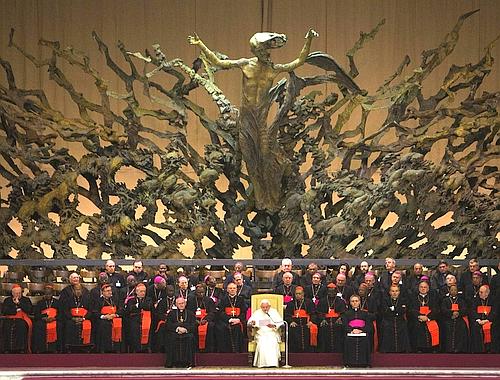
In response to the latest wave of sex scandals in the Roman Catholic Church, “masses of forgiveness” were held in August as a way to help the faithful in “healing” their distrust of the institution which has upheld itself as the highest moral authority in the world for two thousand years. “I beg forgiveness for these sins and for the scandal and betrayal felt by so many others in God’s family,” said Pope Francis at a Marian shrine in Ireland in response to the degradation and abuse inflicted upon the people of that nation by trusted Church officials.

The concept of forgiveness is a recurring theme in any abusive relationship, and necessarily so, because without extensive value being placed upon that concept there wouldn’t be a relationship. You wouldn’t have a battered wife, you’d have a story about how a woman’s boyfriend hit her one time and she grabbed all her stuff and split. You wouldn’t have a brainwashed and exploited cult member, you’d have a story about how someone met a group of people and left when things got weird. You wouldn’t have a major world religion consistently embroiled in horrifying scandals, you’d have people dismissing that religion and placing their energy and attention elsewhere. You wouldn’t have a society that constantly allows itself to be manipulated into consenting to abuse and exploitation by an aristocratic class, you’d have a people’s uprising in which the vastly outnumbered elites are shrugged off and replaced with a system which benefits humanity.

https://twitter.com/AbhinavAgarwal/status/1034500454066077697

Forgiveness is overrated. There are only two types of people who consistently promulgate the importance of forgiveness: abusers and their codependents. The abuse can range from pedophilia and battery to war and ecocide, and the codependency can range from a wife saying she fell down the stairs again to a newscaster demanding to know when the mother of a son just gunned down by police will forgive his murderer, but the formula remains the same in each instance.

Anyone who goes around around telling everyone else how important it is to forgive is either an abuser or one of their brainwashed Stockholm syndrome victims. Forgiveness is something you do for yourself, for your own benefit, when you are ready and only for freeing yourself from energetic entanglements. Those who have truly learned the value of authentic forgiveness don’t run around telling other people to forgive those who have wronged them, because they understand that you don’t need anyone else’s help or permission to forgive somebody, and you don’t even need anyone to change necessarily. If you really want to forgive someone so that you can move on and stop thinking about it, you can do so as long as they’re not doing the bad thing to you anymore. They don’t have to repent or admit to their wrongdoing or whatever; you can forgive them for being the thing they are just like you can forgive a man-eating bear for being a man-eating bear. If it would really benefit your inner peace and undo some mental chatter, you can zoom out and see that a human being’s behavior is patterned like the veins in a leaf, and that patterning rarely changes. You unknowingly walked into that person’s path as innocently as if you’d accidentally walked in front of a bus. Forgiving someone can just be letting go of the idea that they will change, or that they would’ve done anything different or would do anything different given the chance.

Once you’ve seen that though, you don’t let them back in your life, and you certainly don’t let them go on running the world. Man-eating bear be man-eating bear, man. You don’t let a man-eating bear hang around long enough to eat another one of your children, and you don’t let a neocon hang around long enough to destroy another middle-eastern country. You know what they do, you’ve seen what they are, and you don’t let them do it anymore. Being lulled into a state of inertia with hypnotic entreaties about forgiveness and how we’re all kinda fucked up and we all make mistakes and we’re all the same is just another psychologically abusive manipulation performed by the abusers and their codependents. Some people in the highest echelons of power right now have facilitated the most extraordinary barbaric crimes on a scale that even the worst serial killer in his most horrifying fantasies could barely bring himself to imagine. Our greatest mistake as a species right now is forgiving them.

One major way that sociopaths differ from normal people is that they don’t think about things in terms of feeling bad or feeling good about doing something, they just think about the consequences. If you don’t feel guilt, you don’t worry about feeling guilty. It literally doesn’t factor into your decision-making process. “Oh, I won’t do that again because I sure do feel bad about that million people I helped kill” is not a thought that ever goes through their head. If the consequences of Iraq were a buttload of profit and a regular spot on CNN with absolutely no downside whatsoever, no uncomfortable trip to the Hague, no endless prison sentence, no stripping of wealth, status and power, then of course they want to do it again and again and again and again and again. They will do it until they are stopped.

So America’s new aristocracy must be stopped, and the only way they can be stopped is to be held to account, right here, on earth, as soon as humanly possible. Allowing them to go on for even one more day is acknowledging that there are no consequences for evil, and when there are no consequences for evil, evil will reign.

And that’s where we are right now. Evil reigns, but it’s a simple matter of restoring justice to the earth by the people taking their power back and standing in judgement of these pricks and making sure they do not do this again. Passing judgement on someone is an idea that makes good people feel uneasy, and that’s deliberate. From the Pope down, we’ve been anesthetized with this mind-virus that in order to be good people we just put our head down, work hard, die poor, and let God do the judging. How convenient for power is that story? A little too convenient. Sold to us by the same people who rape children and sit on a throne of stolen riches.

I don’t buy it anymore, and neither should you.


Love and Let Love: Overcoming Egocentric Love

By Gary Z. McGee

Source: The Mind Unleashed

“Love could be labeled poison and we’d drink it anyway.” ~Atticus

Love is a tricky subject. It’s multifaceted, both subjectively and objectively. It’s both lost and found within the complex folds of our unique mind-body-spirit dynamic. It’s both a spiraling in and a spiral out. We all know the “feeling” of love, but we can’t seem to describe it to each other. But boy do we try: in poetry, in song, in dance, in bed. Even in art.

Unfortunately, the predominant love paradigm in our culture is egocentric, ownership-based love. We live in a world where relationships are mostly based upon materialism, ownership and immediate gratification. It’s almost like we’re conditioned to consume to the point that we “consume” each other. Even the words we use toward each other imply ownership.

It’s sad. But no condition is insurmountable. We can recondition ourselves to form healthy relationships based upon respect, honesty, and trust. We can update the love paradigm into one of soul-centric, relationship-based love. But first we need to recognize each other as opposite sides of the same being. Our yin-yang dynamic is more dynamic than we tend to allow it to be.

The thing is, our language is dreadfully inadequate to do the concept of love any justice. There are over seven-billion people on the planet and we each have a different psycho-physiological reaction to any given stimuli, however minute that difference. And with abstract stimuli such as Love, Consciousness, and God, that difference is magnified.

The fact is: we each have our own definition for the concept of love (ego), but that definition is written in a language older than words (soul). So how do we understand this language? Simply put: mindfulness. More complexly put: we must become aware of what our mind-body-spirit is telling us, and then be honest about that information regarding our relationships. And poetically put: “You only have to let the soft animal of your body love what it loves.” ~Mary Oliver

The ability to love (vulnerability):

“Vulnerability is not knowing victory or defeat, it’s understanding the necessity of both; it’s engaging. It’s being all in.” ~Brene Brown

Our ability to love another person is predetermined by our ability to love ourselves. Similar to the airplane-crash-landing analogy, “Always put the mask on yourself before assisting someone who may be less capable,” we must put the Mask of Love on ourselves before loving someone who may or may not be capable of authentic love.

The irony is that we must first learn self-love to understand that egocentric love isn’t the healthiest way to love. We must first love our ego in order to transform it into an ego that isn’t just in love with itself. An ego that isn’t loved tends to become self-serving and egocentric (codependent or merely independent), but an ego that is loved tends to become self-actualized and soul-centric (interdependent).

An ego that has learned interdependence through self-love is more likely to love authentically. It is more likely to be vulnerable with another ego. And vulnerability is the key to loving greatly. It’s the secret of deep authenticity. A crucial aspect of self-actualized love, as opposed to egocentric love, is to allow ourselves to be vulnerable so that we may be astonished by love, taken aback by it, in awe of it. As the great Rumi once said, “Close your eyes. Fall in love. Stay there.”

The ability to let others love (freedom):

“The only way of loving a person is to love them without hope.” ~Walter Benjamin

Have you ever caught yourself saying this, regarding love and relationships? “I just don’t want to get hurt.” Or heard someone else say it? We hear people say this, and we nod in empathy, followed by an understanding pat on the back, or a sympathetic hug.

But, wait a minute! Who ever said getting hurt wasn’t a part of love? Are not pain and love two sides of the same coin? If we love something deeply enough, does it not hurt when we lose it? The thing is, the ability to love another person takes an enormous act of courage. And if we are genuinely allowing ourselves to love another person, then we must open ourselves up to the possibility of being hurt. This is what it means to be vulnerable. If we’re not “all in,” then what’s the point of trying?

Pain should not be avoided at the expense of love. Love should be embraced at the risk of pain. Indeed.

If we’ve already learned to love ourselves, which we should have taken care of before attempting to love another person anyway, then insecurities be damned! It’s time to go for it. It’s time to move all in. Rejection happens. But if we don’t at least give it a shot, and that means getting vulnerable and laying our insecurities out on the table like a bad hand of poker, then we’ll never know if it could have been something magical or not.

A relationship is actually two uniquely different people who have gone from being independent dancers to becoming an interdependent dance. This is the beauty of romantic, soul-centric love. It becomes a dance. But, and here’s the rub, the dance can only be enjoyable if both parties are free to dance… or not.

This is where it gets difficult: allowing our partner to love the way they need to love. This sounds simple enough, but it is deceivingly simple. Because we might not like the way they love. It requires good communication skills, brutal honesty, and an exemplary trust in the other dancer.

One of the biggest assumptions we make about love is imagining that the other person loves the same way that we do. In other words, we assume that what the other person means by love means the same thing that we mean by it. But this simply cannot be true if we are genuinely allowing the other person to be an individual with their own unique tastes and opinions.

Letting our lover love the way they need to love is just as much a part of the dance as our unique way of loving is. But we must be honest, first with ourselves and then with our partners. Sometimes this honesty will hurt, but pain is necessary for growth. And if a relationship is what we’re trying to grow, then pain is par for the course.

If the way another person loves doesn’t jive with the way that you love, then the dance either needs to end or it needs to take on a new form. If this sounds counter-intuitive, that’s because it is. As the great Victor Hugo cryptically stated, “Love is never stronger than when it is completely unreasonable.”

The ability to let love go (compersion):

Everything we love is well-arranged dust.” ~Atticus

The ability to let love go is our ability to let go of our ego’s attachment to it.

Falling in love is both very easy and very difficult. It is easy when we are coming from a place of non-attachment and interdependence; when we’re allowing all things to mysteriously and majestically flow. But it is difficult when we are coming from a place of attachment and codependence, and we’re rigidly trying to control everything. It’s the difference between being Love, and vainly trying to pigeonhole love into the box of our expectation.

As Stephen Levine profoundly stated, “True love has no object. Many speak of their unconditional love for another. Unconditional love is the experience of being. You cannot unconditionally love someone. You can only be unconditional love. It is not a dualistic emotion. It is a sense of oneness with all that is. The experience of love arises when we surrender our separateness into the universal. It is a feeling of unity. You don’t love another, you are another.”

When we let love go, we’re not letting go of Love itself –not at all. We are letting go of the ego aspect of love. We’re letting go of the attachment, the need to cling. It’s not like we let go of love and then forget about it. No, it’s more like we are saying goodbye. Like proud parents who are sad that their child has left home, but are happy for their growth and open to the possibility of their return.

Love itself is never abandoned, nor is it forgotten. Only the needy, codependent, ego side of love that’s filled with unhealthy expectations and cultural predispositions about the way love should be is abandoned. Authentic love lasts forever, despite us, and even in spite of our egos. The more we let love go, the more we realize that we never owned it in the first place. It was never a thing that could be owned. It could only ever have been free, or it was never really love at all.

So, let’s learn to be Love in the face of expectation. Let’s be Love despite the love that thinks it needs validation. Let’s be Love even when others cannot. That is the heart of both compersion and forgiveness… Love, let others love, and then let go of your ego’s attachment to love. Do this, again and again, in a kind of loving life-death-rebirth process, and the ability of soul-centric, self-actualized love will not elude you.

8 Simple Steps to Forgive Even the Unforgivable


Cats And Dogs Hugging

By Christina Sarich

Source: Yoga for the New World

Are you feeling resentment? Pain? Anguish? Perhaps even fury? It doesn’t matter if your emotions are directed at the general idiocy of a government that seems bought-out by an elitist class, or a close friend or family member. It doesn’t matter if you are raging at a complete stranger on the road, in a moment that dissipates fairly quickly, or if you are dealing with years of abuse or emotional torment. Forgiveness is a spiritual act that requires us to see things differently than we do now.

It doesn’t seem to be so when we are thinking of the wrong another has done to us, or the hurt they’ve so carelessly lavished, but forgiveness can free us from even the most unforgivable acts. Many of us hold onto our anger in hopes that this emotion will somehow anchor in some Universal Justice – as if our teeth gritting, and brow furrowing can somehow balance the teetering scales of righteousness in the world.

Sadly, the act or words of another that we keep running in our minds is like emotional cement, keeping us stuck and unable to move into peace. Our unforgiveness often doesn’t even affect the ‘other’ as much as it does us. There is a Tibetan Buddhist story about two monks who encounter each other many years after being released from prison where they had been horribly tortured by their captors. “Have you forgiven them?” asks the first. “I will never forgive them! Never!” replies the second. “Well, I guess they still have you in prison, don’t they?” the first says.

Many mistakenly believe that forgiveness somehow absolves another from their wrong-doing. That in forgiving, we helplessly accept, give up, surrender to defeat – that we are helpless. The exact opposite is true. When we face a terrible wrong, and look within to see how we can prevent the same incident from happening again, then we are truly on the correct spiritual path.

Dr. Fred Luskin is the Director of the Stanford University Forgiveness Projects. He has led the largest research project to date to study the effects of forgiveness on hurt individuals. He has dealt with people suffering from a huge range of things needing to be forgiven – from a romantic break up to the murder of a child. He believes that there are specific steps one can take to reduce the stress that comes with holding onto hurt, and make the progress of forgiveness as easy as possible. I tend to agree. Forgiveness usually takes a little time, but it needn’t consume your life for years. You can start with these eight steps to move your heart into the right place, and begin to forgive:

  1. We are often afraid to truly articulate just how much we have been wronged, but we must. In cases that are more obvious – such as losing a family member in a war-torn country to the hands of an unfeeling mercenary – it is easier to explain how angry and sad we are, but in other cases, such as with long-term familial abuse, we may have even come to think the behaviors we were subjected to were ‘normal,’ and only later do we realize how much pain and hurt we stuffed down over the years in order to function within our family unit. When that pain is realized, it is helpful to articulate it to a counselor or a few close friends. Keeping those emotions locked inside does not permit the process of forgiveness to begin.
  1. Forgiveness is a personal journey. You do it for yourself, not for the person you think needs to be forgiven, or anyone else. Once you make a commitment to do whatever it takes to let go of the pain and feel better – and do it for you, then forgiveness starts to become an easier endeavor. When you feel better about yourself, after all, you will find it more difficult to hold grudges against others. When needed practice self-care and self-love. If you are still involved with the person or people who you are trying to forgive, you can simply explain to them that you need time to care for yourself. If this is not appropriate due to the ongoing behavior of another, then simply practice uncompromising self-love and distance yourself from the other person until your feelings of anger and hatred dissipate. Reconciliation may be possible in the future.
  1. While reconciliation is at times possible, sometimes it just isn’t. If someone is emotionally unstable, and will likely continue to act in hurtful or harmful ways, we don’t need to be physically or emotionally near them to forgive them. What you’re after is internal peace. Forgiveness can be defined as the peace and understanding that comes from dropping the blame for whoever has hurt you – changing your never-ending story of grievance, and realizing that they were possibly playing a role in the grand play of life – called maya – to help you learn more about yourself. It doesn’t mean that murdering your child is right, or that stealing, cheating, emotional abuse, or other ‘wrongs’ are ‘right.’ It simply means that you choose to see that person’s pain as the impetus for their own actions, and not as a personal affront to you. Maya Angelou once said, “You can’t forgive without loving. And I don’t mean sentimentality. I don’t mean mush. I mean having enough courage to stand up and say, ‘I forgive, I’m done with it.’” If someone has been narcissistic, selfish, hateful, or jealous, you can forgive them for your own peace of mind, and allow them to learn from the Universal lessons, which are surely coming their way, to help them forgive those who hurt them also. While you don’t have to reconcile with others who are not ready to do this spiritual work for themselves, you do have to reconcile your own emotions.
  1. Believe it or not your hurt is coming from what you feel now, not what happened ten minutes ago, an hour ago, days ago, or even ten years ago. That old adage about time healing all wounds is true, but this is because we tend to get caught in karmic cycles that cause us to mentally recycle pain instead of letting it go. In the book Karma and Reincarnation Transcending Your Past, Transforming Your Future, Elizabeth Clare Prophet and Patricia R. Spadaro explain that while “karma means accountability and payback, reincarnation is simply another word for opportunity.” Karmic retribution is not punishment, but the benevolent Universe’s way of allowing us free will. It does mean, however, that what we do unto others, will be done unto us, somehow, at some time, in some way. The Sioux holy man, Black Elk, has explained that even nature comes full circle, and Voltaire espoused the fact that “it is not more surprising to be born twice, than once; everything in nature is resurrection. The cycles of karma and reincarnation can help us to understand family patterns, community patterns, and even wider societal patterns that need undoing. When we stay stuck in thoughts of the pain another has caused us, we miss the opportunity of this incarnation. After talking about a hurt with another person, and expressing it fully, it is time to start letting it go, and looking at the patterns which we created it. This is the true gift of being ‘hurt’ be another – it is really a chance to see how we have hurt ourselves.

I had the feeling that I was a historical fragment, an excerpt for which the preceding and succeeding text was missing . . . I could well imagine that I might have lived in former centuries and there encountered questions I was not yet able to answer; that I had to be born again because I had not fulfilled the task that was given to me. ~ Carl Jung

  1. Stop your fight or flight response. When we start to ruminate about what another has done to us, our hypothalamus gets in gear, engaging both the sympathetic nervous system and the adrenal-cortical system. When the effect of these two systems goes ‘online’ the fight or flight response begins – this means we are in moderate to full-blown fear mode. We are afraid this will happen to us again. We are feeling the incident as if it were happening right now, no matter now long ago it occurred. Our heart rates and blood pressure rise. We might even sweat a little. Our bodies are flooded with 30 different stress hormones and it can make ‘forgiving’ very difficult. By instead practicing a simple, calming mantra meditation, a few yoga asanas, yoga nidra, nadi shodhana, or going for a short walk outdoors, we can reverse this fight-or-flight response, and deal with the fear behind our pain from a more level emotional state.
  1. Give up your expectations of others – Dr. Luskin calls this ‘recognizing the unenforceable rules.’ In other words, you can’t expect to get from others, what they have no ability or desire to give you. While we can practice love without expectation, we also should be aware that others aren’t always capable of loving back. If your inner child is still bemoaning the inability of an emotionally shutdown father to be affectionate and caring, or you expect a selfish boss to behave differently, then you are setting yourself up for more pain, and often. Realize that what you seek from others – kindness, love, affection, support – will come from those willing and able to give it, and the more you offer it to yourself, the more likely these individuals will come into your orbit. Just let the others, who are not ready to act as evolved, be. No resentment – that’s just where they are at in their cycle or karma and reincarnation.
  1. Know that a life well lived is your best revenge – as long as you stay hurt and angry, you are feeding the ego of the person who felt the need to hurt you. You give that person power over you – you are still in ‘prison’ like the two monks said. Find personal power in the good things in your life. Robert Emmons and Michael McCullough are two of the leading American investigators of gratitude. They describe gratitude as personality strength—the ability to be keenly aware of the good things that happen to you and never take them for granted. Grateful individuals express their thanks and appreciation to others in a heartfelt way, not just to be polite. If you possess a high level of gratitude, you often feel an emotional sense of wonder, thankfulness and appreciation for life itself. Start a gratitude journal, or simply practice a few moments of quiet contemplation realizing all you do have now, instead of getting stuck on your hurt feelings. Counting your blessings is not only good for your health, but it helps to dissipate sadness, anger, and frustration.
  1. Change your ‘story’ – Instead of telling a story to yourself and others about how you were done wrong, decide to rewrite the script. You can, instead of being a victim, decide to use the experience as a way to heal others, and practice one of the most profound spiritual practices ever taught. Imagine the ripples that the pebbles of forgiveness could send out into the world. I give the example of a man named Robert Rule to explain exactly how profound changing your story can be:

“Gary Leon Ridgway is better known as the infamous Green River Killer. In 2003, he confessed to the murders of 48 women. In 2011, Ridgway was convicted of the murder of Rebecca Marrero, bringing the victim count up to 49. By his own confession, he may have murdered as many as 60 women. Ridgway especially despised prostitutes and targeted them for his killings. At Ridgway’s 2003 sentencing, the families of the victims had the opportunity to speak out and address Ridgway directly. Understandably, many were angry and lashed out at Ridgway for the unimaginable grief he had put them through. As Ridgway stonily listened to the family members express their grief and anger, one person came up and said something unexpected. When the time came for Robert Rule, the father of teenage victim Linda Jane Rule, to speak, Ridgway finally showed a glimpse of remorse. Rule’s words to Ridgway were: “Mr. Ridgway . . . there are people here that hate you. I’m not one of them. You’ve made it difficult to live up to what I believe, and that is what God says to do, and that’s to forgive. You are forgiven, sir.” These words brought Ridgway to tears.”

About the Author

Christina Sarich is a musician, yogi, humanitarian and freelance writer who channels many hours of studying Lao Tzu, Paramahansa Yogananda, Rob Brezny, Miles Davis, and Tom Robbins into interesting tidbits to help you Wake up Your Sleepy Little Head, and *See the Big Picture*. Her blog is Yoga for the New World . Her latest book is Pharma Sutra: Healing The Body And Mind Through The Art Of Yoga. Please reprint this article with attribution bio and all links in tact.