According to the best available estimates, the U.S. Government has been spending, in total, for over a decade now, around $1.3T to $1.5T annually on ‘defense’, and this is around half of all military spending worldwide by all 200-or-so nations, and is more than half (around 53%) of all of the U.S. federal Government’s ‘discretionary’ (or congressionally voted for) annual expenditures.
Unlike regular manufacturers, which sell entirely or mainly to consumers and to businesses, not to their Government, armament-firms need to control their Government in order to control their markets (which are their Government and its ‘allied’ Governments — including NATO), and so they (in purely capitalist countries such as the U.S.) do control their Government. This is why the armaments-business (except in countries whose armaments-sector is socialized) is infamously corrupt. In order to hide the extent of that corruption (and to promote ever-higher military spending), the ‘news’-media need — in those countries — to be likewise effectively controlled by the investors in those firms.
Consequently, America, which has no national-security threat from any country (so, these astronomical ‘defense’-expenditures are blatantly inappropriate), spends annually around half of all of the money that the entire world spends on the military. And most of that money gets paid to its armaments-firms. Or, as Stephen Semler, an expert on these matters, put it regarding last year’s numbers, “How much of the $858 billion authorized by the FY2023 NDAA will be transferred to military contractors? I estimate $452 billion.” That is 52% of the 53% of the federal Government’s discretionary spending that is being allocated to ‘Defense’. Thus, 26% of the money that Congress authorizes the U.S. federal Government to pay each year, goes to military contractors. Thus: if $452B is going to armaments-firms, and if $1.356T is going to ‘defense’ (both of which are reasonable estimates), then one-third of ‘defense’ spending goes to armaments-firms, and that is around 17% of the money that the U.S. Government pays each year for everything (including non-discretionary).
If this had not been happening each year after the end of the Soviet Union in 1991, then the current U.S. federal debt would be far less, if any at all — but, in any case, that expense (which went, and is going, to exceptionally rich individuals) will be paid by future generations of Americans, by means of both increased taxes and reduced services from the U.S. Government. What pays for bombs (and funds the purchase of yachts) today will be taken from everyone’s infants tomorrow. And it is taking millions of lives in the targeted lands, and has been doing so for decades now. A psychopathic U.S. Government is producing these results.
America’s ‘Defense’ Department is so corrupt that when I happened recently to be re-reading my 14 January 2020 article about its corruptness, “US Military Spending: TRILLIONS of Dollars Unaccounted For”, yet a new detail of this corruptness, which I had not previously noticed, struck me. It happened in this passage:
He presented a representative of America’s Military-Industrial Complex (MIC) asserting, to US House members, that “this is not a new story, it dates back to 2001 and before,”.
And, West noted:
“All these things are accounting things that, as Norquist says ‘occur after the money is spent’. They are things that you want to get right in your accounting, but if you get the values wrong then it does not mean you’ve lost the money. It means you’ve got some estimate wrong, and you’ll put to little or to much [West meant “too much or too little”] in one fund or another.”
Referring, then, to the $21 trillion, he wrote:
“This is just more of the same though, still not missing money, still just unsupported accounting information transfers.”
However, only a sucker would take that casual attitude to the enormous amount of money in the ‘defense’ budget that is “unsupported” as to who received it, and whether or not those payments were in accord with what Congress had actually authorized.
Furthermore, such a casual attitude toward US ‘defense’-expenditures — the expenditures which constitute actually over half of the US federal Government’s discretionary expenditures, and even around half of the total world’s military expenditures — is an invitation to corruption in over half of this Government’s annually authorized spending; and any intelligent person would expect that such an invitation would be taken advantage of by insiders who are in a position to benefit from it.
West quotes from only one alleged authority, the “Defense Department Comptroller, David L. Norquist,” a person who is largely responsible for the problem, who said “it’s an accounting problem that does need to be solved because it can help hide other underlying issues,” but (at 1:43 in the accompanying video) “it’s not the same thing as not being able to account for money that Congress has given you to spend, but it’s still a problem that needs to be fixed.”
Mick West simply trusted this statement, by Norquist — though Norquist is one of the officials responsible for the problem — but Norquist failed to prove (and wasn’t even asked to prove) it, by the Representatives whom he was there addressing, who didn’t seem to be alarmed about where that $21T actually went) his key assertion, that “it’s not the same thing as not being able to account for money that Congress has given you to spend.”
Even if that assertion is true (which should not be assumed, and which even seems ludicrous on its very face), the problem is unquestionably an invitation to corruption in ‘defense’-expenditures, and those are precisely the type of federal expenditures that overwhelmingly dominate the income to the federal Government’s contractors, the corporations that make all or most of their profits from sales to the federal Government and to its allied governments (such as to the Saud family).
Therefore, casually allowing — and not even investigating as being possibly treasonous — these expenditures, is, itself, enormously scandalous, but the Representatives there were treating it so casually.
In fact, at the very opening of the hearing, which was held on 10 January 2018 (at 02:12 in the video of the 1:41:33-long hearing, above) the Chairman of the Committee emphasized the “We must spend more” on the military, even though we already spend around half of the entire world’s military expenditures. Manifestly, this hearing was a charade.
In the full video, the passage that Mick West quoted from is at 18:00-22:00, and the Representatives were clearly on the side of the charade, not on the side of the American people. Clearly, all members of that Committee, the House Armed Services Committee, behave as if they are in the pockets of firms such as Lockheed Martin.
On 15 November 2018, Reuters headlined “Pentagon fails its first-ever audit, official says”, and reported that: “‘We failed the audit, but we never expected to pass it,’ Deputy Secretary of Defense Patrick Shanahan told reporters.”
“On November 15, Ernst & Young and other private firms that were hired to audit the Pentagon announced that they could not complete the job. Congress had ordered an independent audit of the Department of Defense, the government’s largest discretionary cost center — the Pentagon receives 54 cents out of every dollar in federal appropriations — after the Pentagon failed for decades to audit itself. The firms concluded, however, that the DoD’s financial records were riddled with so many bookkeeping deficiencies, irregularities, and errors that a reliable audit was simply impossible.”
So, that was the result of the latest version of this charade, which is virtual treason by the Federal Government.
In short: Congress is satisfied for this situation to continue, and the members of Congress evidently have no fear that the voters back home will vote against them if a challenger makes this issue a major issue in that Senator’s or Representative’s next Party primary.
The presumption is that the voters don’t care, and that the ‘news’-media won’t enlighten the voters about this matter, and about how it impacts, for example, which nations the US will categorize as being an “ally,” to sell weapons to, and which nations it will categorize as being an “enemy,” to target for conquest.
——
So, what now struck me now was the name there, “David Norquist.” Maybe you remember the famous libertarian phrase about spending by the U.S. federal Government, that the libertarian goal is to “shrink it down to the size where we can drown it in the bathtub.” Here is one of the many articles that were published about that:
GROVER NORQUIST’S NO-TAX CALL A WEDGE FOR REPUBLICANS
By Dr Nicole Hemmer, Honorary Associate, United States Studies Centre
“Who the hell is Grover Norquist, anyway?”
The question came from former US president George HW Bush this northern summer, but in the past few weeks many Americans have been asking the same thing.
Norquist, an anti-tax activist, now dominates discussion of the fiscal cliff. His “no-new-taxes” pledge has been signed by nearly every Republican in congress. The problem? To avoid going off that fiscal cliff, congress must make a “grand bargain” by January 1. If it doesn’t include tax rate increases, President Barack Obama won’t sign it into law.
Republicans are in a bind. They could agree to tax-rate increases on Americans making more than $US250,000 a year in return for cuts to programs such as Medicare. That, however, would mean breaking Norquist’s pledge. And Norquist has made it clear that any Republican who does so will face a primary challenge in the next election.
So, to echo Bush: “Who the hell is Grover Norquist, anyway?”
Norquist runs Americans for Tax Reform, an anti-tax organisation he founded in 1986.
His opposition to taxation is an expression of his deep disdain for government. “I don’t want to abolish government,” he famously quipped. “I just want to shrink it down to the size where we can drown it in the bathtub.”
This “starve the beast” mentality has long been a conservative strategy for reducing the size of government. A strict diet of diminishing revenues, anti-tax advocates argue, will naturally lead to a smaller federal state.
——
As it turns out, David Norquist and Grover Norquist are brothers. So: while David Norquist makes money by fronting for the billionaires who control firms such as Lockheed Martin Corporation, Grover Norquist makes money by fronting for the billionaires who control firms such as Lockheed Martin Corporation. David does it by rationalizing away those peoples’ corruptness as being a concern for U.S. taxpayers; and Grover does it by leading the Republican argument against the Government’s non-‘defense’ spending. (While Republicans want to reduce non-‘defense’-spending, they want to increase ‘defense’-spending. Democrats want to increase all federal spending, but ESPECIALLY for ‘defense’.)
The standard libertarian claim that “shrinking the government” is at all an issue or what motivates their wealthiest donors whom they are actually fronting for, is a lie. The only real issue that is involved here is: Who is, and who isn’t, getting the Government’s money.
All of federal politicians’ talk about the need to eliminate “waste, fraud and abuse” is also lies, because they themselves — those federal office-holders — got there and stay there by participating in it. If they’re not corrupt, they’re not in office, because this system is built upon corruption.
Whereas Republican billionaires demand that all federal expenditures except for ‘defense’ get slashed, Democratic billionaires demand that all federal expenditures get slashed but that ‘defense’ spending must never be reduced. So: what’s the real difference (except for the hypocritical rhetoric on the Democratic or “liberal” side)? The billionaires who control those arms-contracting companies control also which contenders for federal offices will become elected.
The only way for an authentic progressive political candidate to deal with this is to declare publicly (and to document it by means of linked-to-evidence news-reports online, like the present one) that ‘our’ Government and media are controlled by the organized mega-crooks, who are this nation’s wealthiest individuals — the only group of individuals who benefit from it — who are this nation’s actual enemies: its corrupters. But, of course, no billionaire will fund such a campaign, and any news-medium that reports on it (except by lying against it) will likewise get no investors.
That is how bad that the situation really is. People need to be discussing this, in public, here and elsewhere. Because that is the problem. It is the problem that needs to be fixed. But how can it be done? And THAT is the question.
PS: Preliminary reports suggest that on account of this Government’s dual World War III against both Russia and China, the ‘Defense’ budget for next year will probably soar perhaps more than by 10%. The Congress now is well over 95% neoconservatives, in both houses. They’ve virtually all been bought.
What do zombies have to do with the U.S. government’s plans for dealing with a coronavirus outbreak?
Read on, and I’ll tell you.
The zombie narrative was popularized by the hit television series The Walking Dead, in which a small group of Americans attempt to survive in a zombie-ridden, post-apocalyptic world where they’re not only fighting off flesh-eating ghouls but cannibalistic humans.
Understandably, zombie fiction plays to our fears and paranoia, while allowing us to “envision how we and our own would thrive if everything went to hell and we lost all our societal supports.” Yet as journalist Syreeta McFadden points out, while dystopian stories used to reflect our anxieties, now they reflect our reality, mirroring how we as a nation view the world around us, how we as citizens view each other, and most of all how our government views us.
Indeed, the U.S. government has spent a lot of time and energy in recent years using zombies as the models for a variety of crisis scenarios not too dissimilar from what we are currently experiencing.
For instance, back in 2015, the Centers for Disease Control and Prevention put together a zombie apocalypse preparation kit “that details everything you would need to have on hand in the event the living dead showed up at your front door.” The CDC, in conjunction with the Dept. of Defense, even used zombies to put government agents through their paces in mock military drills.
Fear the Walking Dead—AMC’s spinoff of its popular Walking Dead series—drove this point home by dialing back the clock to when the zombie outbreak first appears and setting viewers down in the midst of societal unrest not unlike our own experiences of recent years (“a bunch of weird incidents, police protests, riots, and … rapid social entropy”). Then, as Forbes reports, “the military showed up and we fast-forwarded into an ad hoc police state with no glimpse at what was happening in the world around our main cast of hapless survivors.”
Forbes found Fear’s quick shift into a police state to be far-fetched, but anyone who has been paying attention in recent years knows that the groundwork was laid long ago for the government—i.e., the military—to intervene and lock down the nation in the event of a national disaster.
We’re seeing this play out now as the coronavirus contagion spreads.
What we have yet to experience (although it may only be a matter of time) is that the government through the imposition of martial law could pose a greater threat to our safety (and our freedoms) than any virus.
As the Atlantic noted about Fear the Walking Dead: “The villains aren’t the zombies, who rarely appear, but the U.S. military, who sweep into an L.A. suburb to quarantine the survivors. Zombies are, after all, a recognizable threat—but Fear plumbs drama and horror from the betrayal by institutions designed to keep people safe.”
Indeed, zombie fiction perfectly embodies the government’s paranoia about the citizenry as potential threats that need to be monitored, tracked, surveilled, sequestered, deterred, vanquished and rendered impotent.
Why else would the government feel the need to monitor our communications, track our movements, criminalize our every action, treat us like suspects, and strip us of any means of defense while equipping its own personnel with an amazing arsenal of weapons?
Coinciding with Halloween 2012, a five-day national conference was put on by the HALO Corp. in San Diego for more than 1,000 first responders, military personnel and law enforcement types. It included workshops produced by a Hollywood-affiliated firm in…overcoming a zombie invasion. Actors were made up to look like flesh-chomping monsters. The Department of Homeland Security even paid the $1,000 entry fees for an unknown number of participants…
“Zombie disaster” drills were held in October 2012 and ’13 at California’s Sutter Roseville Medical Center. The exercises allowed medical center staff “to test response to a deadly infectious disease, a mass-casualty event, terrorism event and security procedures”…
[In October 2014], REI outdoor-gear stores in Soho and around the country are to hold free classes in zombie preparedness, which the stores have been providing for about three years.
The zombie exercises appeared to be kitschy and fun—government agents running around trying to put down a zombie rebellion—but what if the zombies in the exercises were us, the citizenry, viewed by those in power as mindless, voracious, zombie hordes?
Consider this: the government started playing around with the idea of using zombies as stand-ins for enemy combatants in its training drills right around the time the Army War College issued its 2008 report, warning that an economic crisis in the U.S. could lead to massive civil unrest that would require the military to intervene and restore order.
That same year, it was revealed that the government had amassed more than 8 million names of Americans considered a threat to national security, to be used “by the military in the event of a national catastrophe, a suspension of the Constitution or the imposition of martial law.” The program’s name, Main Core, refers to the fact that it contains “copies of the ‘main core’ or essence of each item of intelligence information on Americans produced by the FBI and the other agencies of the U.S. intelligence community.”
In 2009, the Dept. of Homeland Security issued its reports on Rightwing and Leftwing Extremism, in which the terms “extremist” and “terrorist” were used interchangeably to describe citizens they perceived to be disgruntled or anti-government.
Meanwhile, a government campaign was underway to spy on Americans’ mail, email and cell phone communications. News reports indicate that the U.S. Postal Service has handled more than 150,000 requests by federal and state law enforcement agencies to monitor Americans’ mail, in addition to photographing every piece of mail sent through the postal system.
Fast forward a few years more and local police were being transformed into extensions of the military, taught to view members of their community as suspects, trained to shoot first and ask questions later, and equipped with all of the technology and weaponry of a soldier on a battlefield.
The Obama administration then hired a domestic terrorism czar whose job is to focus on anti-government American “extremists” who have been designated a greater threat to America than ISIS or al Qaeda. As part of the government’s so-called war on right-wing extremism, the Obama administration agreed to partner with the United Nations to take part in its Strong Cities Network program, which is training local police agencies across America in how to identify, fight and prevent extremism.
Nothing has changed for the better under the Trump Administration.
Those who believe in and exercise their rights under the Constitution (namely, the right to speak freely, worship freely, associate with like-minded individuals who share their political views, criticize the government, own a weapon, demand a warrant before being questioned or searched, or any other activity viewed as potentially anti-government, racist, bigoted, anarchic or sovereign), continue to be promoted to the top of the government’s terrorism watch list.
“We the people” or, more appropriately, “we the zombies” are the enemy in the eyes of the government. This coronavirus merely ups the ante.
So when presented with the Defense Department’s battle plan for defeating an army of the walking dead, you might find yourself tempted to giggle over the fact that a taxpayer-funded government bureaucrat actually took the time to research and write about vegetarian zombies, evil magic zombies, chicken zombies, space zombies, bio-engineered weaponized zombies, radiation zombies, symbiant-induced zombies, and pathogenic zombies.
However, in an age of extreme government paranoia, this is no laughing matter.
The DOD’s strategy for dealing with a zombie uprising, outlined in “CONOP 8888,” is for all intents and purposes a training manual for the government in how to put down a citizen uprising or at least an uprising of individuals “infected” with a dangerous disease or dangerous ideas about freedom.
Rest assured that the tactics and difficulties outlined in the “fictional training scenario” are all too real, beginning with martial law.
As the DOD training manual states: “zombies [stand-ins for “we the people”] are horribly dangerous to all human life and zombie infections have the potential to seriously undermine national security and economic activities that sustain our way of life. Therefore having a population that is not composed of zombies or at risk from their malign influence is vital to U.S. and Allied national interests.”
So how does the military plan to put down a zombie (a.k.a. citizen) uprising?
The strategy manual outlines five phases necessary for a counter-offensive: shape, deter, seize initiative, dominate, stabilize and restore civil authority. Here are a few details:
Phase 0 (Shape): Conduct general zombie awareness training. Monitor increased threats (i.e., surveillance). Carry out military drills. Synchronize contingency plans between federal and state agencies. Anticipate and prepare for a breakdown in law and order.
Phase 1 (Deter): Recognize that zombies cannot be deterred or reasoned with. Carry out training drills to discourage other countries from developing or deploying attack zombies and publicly reinforce the government’s ability to combat a zombie threat. Initiate intelligence sharing between federal and state agencies. Assist the Dept. of Homeland Security in identifying or discouraging immigrants from areas where zombie-related diseases originate.
Phase 2 (Seize initiative): Recall all military personal to their duty stations. Fortify all military outposts. Deploy air and ground forces for at least 35 days. Carry out confidence-building measures with nuclear-armed peers such as Russia and China to ensure they do not misinterpret the government’s zombie countermeasures as preparations for war. Establish quarantine zones. Distribute explosion-resistant protective equipment. Place the military on red alert. Begin limited scale military operations to combat zombie threats. Carry out combat operations against zombie populations within the United States that were “previously” U.S. citizens.
Phase 3 (Dominate): Lock down all military bases for 30 days. Shelter all essential government personnel for at least 40 days. Equip all government agents with military protective gear. Issue orders for military to kill all non-human life on sight. Initiate bomber and missile strikes against targeted sources of zombie infection, including the infrastructure. Burn all zombie corpses. Deploy military to lock down the beaches and waterways.
Phase 4 (Stabilize): Send out recon teams to check for remaining threats and survey the status of basic services (water, power, sewage infrastructure, air, and lines of communication). Execute a counter-zombie ISR plan to ID holdout pockets of zombie resistance. Use all military resources to target any remaining regions of zombie holdouts and influence. Continue all actions from the Dominate phase.
Phase 5 (Restore civil authority): Deploy military personnel to assist any surviving civil authorities in disaster zones. Reconstitute combat capabilities at various military bases. Prepare to redeploy military forces to attack surviving zombie holdouts. Restore basic services in disaster areas.
Notice the similarities?
Surveillance. Military drills. Awareness training. Militarized police forces. Martial law.
As I point out in my book, Battlefield America: The War on the American People, if there is any lesson to be learned, it is simply this: whether the threat to national security comes in the form of imaginary zombies, actual terrorists, American citizens infected with the coronavirus, or disgruntled American citizens infected with dangerous ideas about freedom, the government’s response to such threats remains the same: detect, deter and annihilate.
I’m constantly amazed at the information that people email to me, but this one is a whopper doozie spotted by V.S. I’ve already blogged about the arrest of Dr. Charles Lieber of Harvard, and about this strange tie to the Wuhan University of Technology. But there’s more lurking in the background of that Harvard connection than meets the eye, and I just have to share this one:
There you have it. So it’s important to review what this article is saying: Dr. Lieber worked at the same university as Drs Church and Nowak, both known associates of Jeffrey Epstein and recipients of his largesse. Given the nature of their work, it strains credibility to assume that Lieber was unaware of their work or they of his. They are, after all, all faculty members working in more or less the same broad discipline. As they article makes clear, all were working in aspects of modifying biology and doing genetic engineering, all areas of obvious biowarfare implications. All of this raises some intriguing high octane speculations and questions:
1) Why would professors, who are recipients of government funds for research, also take private funding in the millions from Epstein? Did they need it? And was Epstein in fact laundering money for other interests in sponsoring this research? And does that mean that their are private interests trying to obtain a biowarfare capability? Their taking of Epstein money on an individual basis was quite probably entirely innocent. But it’s the overall pattern of a Harvard connection that I find highly odd.
2) Do these questions in their turn indicate that all of China is being turned into a biowarfare, economic warfare, and social engineering experiment?
In respect to these questions, the article itself asks a highly pertinent question regarding Dr. Lieber toward the end of the piece:
Why would someone (Lieber) getting $10 million plus from the U.S. funding agencies go through the hassle of setting up a secret lab in another country and risk his entire life’s work for less money. What was he doing there exactly?
Indeed, and for whom was he really doing it? China? Harvard? Some private international interest?
Like the author of the article, I eagerly await for more details to come out. In the connection to the idea of some private international interest however, I’m reminded of a detail that occurred prior to 9/11, when Russian economist Dr. Tatiana Koryagina mentioned in Pravda, prior to the events of 9/11, that the US would shortly be attacked on its own soil by a private group with assets in the trillions of dollars. Recently, Harvard took its funding entirely black, and I have to wonder, in the light of this article, if it is one of the crucial “fronts” or “nodes” for some sort of private network. Would it be involved in such activities as a massive social engineering experiment?
Well, as I detailed with co-author Gary Lawrence in our book Rotten to the (Common) Core, another Harvard chemist – indeed, a former president of the institution – comes to mind: Dr. James Conant Bryant, and with him, the answer to that question is a resounding yes.
FILE – In this May 6, 2019, file photo Microsoft CEO Satya Nadella delivers the keynote address at Build, the company’s annual conference for software developers in Seattle. Microsoft says it has detected more than 740 infiltration attempts by nation-state actors in the past year targeting U.S.-based political parties, campaigns and other democracy-focused organizations including think tanks and other non-profits. (AP Photo/Elaine Thompson, File)
Russia, China and Iran are already being blamed for using tech to undermine the 2020 election. Yet, the very technologies they are allegedly using were created by a web of companies with deep ties to Israeli intelligence.
As World War II drew to a close in Europe, British philosopher Bertrand Russell wrote that “neither a man nor a crowd nor a nation can be trusted to act humanely or to think sanely under the influence of a great fear.”
Though numerous examples in the post-World War II era have proven Russell’s point, perhaps one of the best examples was the U.S. public’s willingness to swallow lie after lie about Saddam Hussein’s Iraq due to the climate of fear that followed the September 11 attacks. Those lies, propagated by dubious intelligence, government officials and a compliant media, resulted in catastrophes – large and small, both abroad and at home.
Today, an analogous narrative is being crafted by many of the same players – both in media and government – yet it has avoided scrutiny, even from independent media.
Over the past several months and with a renewed zeal in just the last few weeks, anonymous intelligence officials, dubious “experts” and establishment media outlets have crafted a narrative about the coming “chaos” of the 2020 election, months before it takes place. Per that narrative, certain state actors will use specific technologies to target the “American mind” in order to undermine the coming presidential election. The narrative holds that those efforts will be so successful that the U.S. will never recover as a democracy.
Though these anonymous government sources and their stenographers have already named the countries who will be responsible and the technologies they will use, they also admit that no evidence yet exists to back up these claims, meaning they are — at best — pure speculation.
Historically, the goal of such fear-inducing narratives has been the trading of civil liberties for increased security, or rather, the appearance of increased security. Yet, when the need for security is felt due to a fear that is based on government-driven speculation and not on evidence, the goal of that narrative is not about protecting the public from a real, tangible threat but instead about the consolidation of power by the very groups responsible for crafting it — in this case, the intelligence community and other key players in the national security state.
However, what is particularly odd about this narrative surrounding imminent “chaos” and meddling in the upcoming 2020 election is the fact that, not only have the instruments of said meddling been named and described in detail, but their use in the election was recently simulated by a company with deep ties to both U.S. and Israeli intelligence. That simulation, organized and run by the Israeli-American company Cybereason, ended with scores of Americans dead, the cancellation of the 2020 election, the imposition of martial law and a spike in fear among the American populace.
Many of the technologies used to create that chaotic and horrific scenario in the Cybereason simulation are the very same technologies that U.S. federal officials and corporate media outlets have promoted as the core of the very toolkit that they claim will be used to undermine the coming election, such as deep fakes and hacks of critical infrastructure, consumer devices and even vehicles.
While the narrative in place has already laid the blame at the feet of U.S. rival states China, Russia and Iran, these very technologies are instead dominated by companies that are tied to the very same intelligence agencies as Cybereason, specifically Israeli military intelligence.
With intelligence agencies in the U.S. and Israel not only crafting the narrative about 2020 foreign meddling, but also dominating these technologies and simulating their use to upend the coming election, it becomes crucial to consider the motivations behind this narrative and if these intelligence agencies have ulterior motives in promoting and simulating such outcomes that would effectively end American democracy and hand almost total power to the national security state.
Media, intelligence foreshadow tech-powered doom for 2020
Even though the 2020 U.S. election is still months away, a plethora of media reports over the past six months (and even before then) have been raising concern after concern about how the U.S. election is still so vulnerable to foreign meddling that such meddling is essentially an inevitability.
Part of the reason for the recent pick-up in fear mongering appears to have been the release of a joint statement issued by key members of the Trump administration last November. That statement, authored by Attorney General Bill Barr, Defense Secretary Mark Esper, acting DHS Secretary Kevin McAleenan, acting Director of National Intelligence Joseph Maguire, FBI Director Christopher Wray, NSA Director Gen. Paul Nakasone, and Cybersecurity and Infrastructure Security Agency (CISA) Director Christopher Krebs, claimed that foreign interference in 2020 was imminent despite admitting that there is no evidence of interference having taken place:
Our adversaries want to undermine our democratic institutions, influence public sentiment and affect government policies. Russia, China, Iran, and other foreign malicious actorsall will seek to interfere in the voting process or influence voter perceptions. Adversaries may try to accomplish their goals through a variety of means, including social media campaigns, directing disinformation operations or conducting disruptive or destructive cyber-attacks on state and local infrastructure.
While at this time we have no evidence of a compromise or disruption to election infrastructure that would enable adversaries to prevent voting, change vote counts or disrupt the ability to tally votes, we continue to vigilantly monitor any threats to U.S. elections (emphasis added).”
Despite the key caveat of there being no evidence at the time the statement was issued, media reports used the statement to claim that foreign interference in 2020 was imminent, such as in these reports fromBuzzFeed, ABC News, and Newsweek.
In addition to the reports that have cast the involvement of state actors — namely Russia, Iran and China — as assured despite no evidence, other reports have made the claim that this allegedly imminent interference will inevitably be successful, largely due to claims that the tactics used will rely heavily on technology that the U.S. can’t hope to successfully counter. CSO Online, an online news outlets that provides news, analysis and research on security and risk management, recently warned that “fixing America’s voting and election infrastructure problems is a long-term proposition, one that won’t be fixed in time for the election in November” while the New York Times warned of imminent chaos and that “stealthier” malevolent foreign actors had already created the foundation for “an ugly campaign season marred by hacking and disinformation.” Wired claimed last year that U.S. election security “is still hurting at every level.”
In another example, Rolling Stone published an article earlier this month with the headline “Hackers Are Coming for the 2020 Election — And We’re Not Ready,” which claims that “the reality is that: “We’ve made progress since the last election — but we’re much less secure than we should be.” The article goes on to say that claim that the goal isn’t necessarily to hack voting machines or change results, but “to merely create the impression of an attack as a way to undermine our faith in the electoral process.”
It continues:
The target is the minds of the American people,” says Joshua Geltzer, a former counterterrorism director on the National Security Council. “In some ways, we’re less vulnerable than we were in 2016. In other ways, it’s more.” Nearly every expert agrees on this: The worst-case scenario, the one we need to prepare for, is a situation that causes Americans to question the bedrock of our democracy — free and fair elections.”
Well before this type of rhetoric made its way into the U.S. media, Israeli intelligence-linked tech firm Cybereason claiming in a release on its website that “messing with a voter’s mind” would have a bigger impact than changing vote totals, even before the 2016 election. That release, published by Cybereason prior to the last presidential election, was authored by the company’s CEO, Lior Div, who used to lead offensive hacking operations against nation-states for Israeli military intelligence.
Notably, of all of these media reports, there is a clear consensus that one of the main tactics that will soon be used to meddle in the coming U.S. election will be the use of so-called “deep fakes.” Deriving its name from a combination of “deep learning” and “fake,” deep fakes involve video and audio that has been manipulated using artificial intelligence (AI) to create media that appears to be authentic, but is not. Concern about its use in the upcoming election has spurred not only a wealth of media reports on the matter but has prompted both the U.S. military and Congress to take action to limit its potential misuse.
One thing that stands out about the media narrative regarding election meddling and deep fakes is that several news organizations have published articles that state that deep fakes will be used to undermine the 2020 election, as opposed to stating that they could be used or that they are a phenomenon worthy of attention (though some reportshave taken this more measured approach).
The reason for this level of confidence may owe to statements made by prominent U.S. intelligence officials last year, including those made by Dan Coats, the former Director of National Intelligence (DNI), who claimed in the 2019 Worldwide Threat Assessment for the U.S. Intelligence Community that deep fakes and other hi-tech forms of fake media would be used to disrupt the 2020 election. Coats specifically stated:
Adversaries and strategic competitors probably will attempt to use deep fakes or similar machine-learning technologies to create convincing—but false—image, audio, and video files to augment influence campaigns directed against the United States and our allies and partners.”
Since Coats made the warning, numerous media reports have promoted the concern with little scrutiny, representing just one of the numerous times in U.S. history where narratives first authored by U.S. intelligence are subsequently promoted heavily by U.S. media, even when the claim made by intelligence officials is speculative, as it is in this case. Indeed, the narratives being promoted with respect to the 2020 election involve many of the same intelligence agencies (American and Israeli) and media outlets who promoted claims that were later proven false about “weapons of mass destruction” in Iraq prior to the 2003 invasion, among other pertinent examples.
Notably, deep fakes figured prominently and was the tool most used by malevolent hackers in Cybereason’s 2020 election simulation, which saw both video and audio-only deep fakes used to spread misinformation on national and local TV channels in order to impersonate police officers and election officials and to create fake bomb threats by posing as the terror group Daesh (ISIS). Cybereason also happens to be a partner of the organization funding the most well-known creator and producer of deep fakes in the world, an organization that — much like Cybereason itself — is openly tied to Israeli intelligence.
Aside from deep fakes, other technologies weaponized in Cybereason’s election simulation have also been the subject of several media reports, such as the hacking of Internet of Things (IoT) devices and appliances and even the hacking of vehicles that have some form of internet connectivity. In the Cybereason simulation, IoT hacks were used to cut power to polling stations and disseminate disinformation while vehicles were hacked to conduct terror attacks against civilians waiting in line to vote, killing several and injuring hundreds.
Most media reports have claimed that these technologies will be part of the coming “explosion” in cyber warfare in 2020 and do not specifically link them to imminent election meddling. Others, however, have made the link to the election explicit.
Naming the culprits in advance
In addition to the apparent consensus on how foreign meddling will occur during the 2020 election, there is also agreement regarding which countries will be responsible. Again, this is largely based on statements made by U.S. national security officials. For instance, the joint statement issued last November by the DOJ, DOD, DHS, DNI, FBI, NSA, and CISA regarding 2020 election security, states that “Russia, China, Iran, and other foreign malicious actors all will seek to interfere in the voting process or influence voter perceptions” before adding “at this time we have no evidence.”
Similarly, the 2019 Worldwide Threat Assessment for the U.S. Intelligence Community, written by then-Director of National Intelligence Dan Coats, names these same three countries in relation to imminent 2020 election interference and states that their interference in the 2020 election is “almost certain.” The assessment adds the following about each nation:
Russia: “Russia’s social media efforts will continue to focus on aggravating social and racial tensions, undermining trust in authorities, and criticizing perceived anti-Russia politicians.”
China: “China will continue to use legal, political, and economic levers—such as the lure of Chinese markets—to shape the information environment. It is also capable of using cyber attacks against systems in the United States to censor or suppress viewpoints it deems politically sensitive.”
Iran: “Iran, which has used social media campaigns to target audiences in both the United States and allied nations with messages aligned with Iranian interests, will continue to use online influence operations to try to advance its interests.”
The vast majority of warnings regarding future election interference have come from U.S. intelligence officials with a dubious record of trustworthiness and a history of using the media to spread propaganda and disinformation, most famously through Operation Mockingbird. Most — if not all — of the recent and numerous articles on imminent interference rely heavily on claims made by the two aforementioned government documents, documents crafted by U.S. intelligence agencies for public consumption, as well as claims made by anonymous U.S. officials.
A recent New York Times article, for example, titled “Chaos Is the Point’: Russian Hackers and Trolls Grow Stealthier in 2020,” is based almost entirely on “interviews with dozens of officials and experts,” though the only government official named in the article is Shelby Pierson, the intelligence community’s election threats executive. The most quoted experts named in the article are Ben Nimmo, formerly of the hawkish, NATO-funded Atlantic Council and now with Graphika, and Laura Rosenberger, director of the neoconservative-created Alliance for Securing Democracy. The article nonetheless cites “American officials” and “current and former officials” several times to make claims about imminent election interference that paint a bleak picture of the current election season.
A recent article from The Hill relies on the acting head of DHS, Chad Wolf, as its only source, citing Wolf’s claim that “we fully expect Russia to attempt to interfere in the 2020 elections to sow public discord and undermine our democratic institutions” amid other warnings that Wolf gave about Chinese and Iranian cyber threats to U.S. elections. Other articles, including one titled “Russia, China plan to adjust their tactics to hack, influence 2020 elections” cite only Shelby Pierson of the U.S. intelligence community as its source for that headline’s claim. Another titled “Russia isn’t the only threat to 2020 elections, says U.S. intel” cites only anonymous U.S. intelligence officials, as the headline suggests.
Though Russia and China have consistently been named as the most likely election meddlers, reports have also been drumming up the likelihood that Iran will emerge as 2020’s foreign meddler of choice, especially in the months prior to and weeks after the killing of Iranian General Qassem Soleimani by the Trump administration. A recent “informal poll” conducted by the Washington Post asked hawkish think tank fellows, employees at companies like Raytheon and current and former federal officials if Iran would likely retaliate against the U.S. via cyberattack. The Post ran the results of the poll under the headline “Get ready for serious cyberattacks from Iran, experts say.”
Despite the media’s numerous warnings of imminent and “serious” cyber-retaliation from Iran, the only cyberattack attributed to the country after Soleimani’s death was the vandalism of the Federal Depository Library Program website, a rather benign act that was nevertheless blasted across headlines such as “US government website hacked with pro-Iranian messages, image of bloodied Trump.” The U.S. government is quoted in that article as saying that “At this time, there is no confirmation that this was the action of Iranian state-sponsored actors.”
Also notably absent from media reports is the fact that WikiLeaks revealed in 2017 that the CIA had stockpiled a library of “stolen” cyberattack techniques produced in other nations, including Russia and Iran. Those revelations, part of the Vault 7 release, revealed that the CIA’s UMBRAGE group was capable of “misdirect[ing] attribution [for cyberattacks actually done by the CIA] by leaving behind the ‘fingerprints’ of the groups that the attack techniques were stolen from.” In other words, the CIA was more than capable of conducting “false flag” cyber attacks and blaming them on foreign actors.
Conflict of interest-ridden Microsoft “defends democracy”
Last year saw the tech behemoth Microsoft join the effort to blame foreign state actors, specifically Iran, for cyberattacks against the U.S. This helped to bolster assertions that had largely originated with a handful of U.S. intelligence officials and hawkish, neoconservative-aligned think tanks as media reports on Microsoft’s related claims treated the company as an independent private sector observer.
Yet, as MintPress investigations have revealed, Microsoft has clear conflicts of interest with respect to election interference. Its “Defending Democracy” program has spawned tools like “NewsGuard” and “ElectionGuard” that it claims will help protect U.S. democracy, but — upon closer examination — instead have the opposite effect.
Last January, MintPress exposed NewsGuard’s neoconservative backers and how special interest groups were backing the program in an effort to censor independent journalism under the guise of the fight against “fake news.” Subsequent investigations revealed the risk that Microsoft’s ElectionGuard poses to U.S. voting machines, which it claims to make more secure and how the platform was developed by companies closely tied to the Pentagon’s infamous research branch DARPA and Israeli military intelligence Unit 8200.
ElecionGuard software has since been adopted by numerous voting machine manufacturers and is slated to be used in some Democratic Primary votes. Notably, the push for the adoption of ElectionGuard software has been spearheaded by the recently created Cybersecurity and Infrastructure Security Agency (CISA), which is the federal agency tasked with overseeing election security and is headed by Christopher Krebs, a former high level Microsoft executive.
In recent months, Microsoft has also been at the center of claims that Iran attempted to hack U.S. presidential campaigns ahead of 2020 as well as claims that Iran plans to target the U.S. power grid and other critical infrastructure with cyberattacks.
Last October, Microsoft penned a blog post discussing a “threat group” it named Phosphorus that they “believe originates from Iran and is linked to the Iranian government.” The post went on to claim that Phosphorus attempted to target a U.S. presidential campaign, which later media reports claimed was President Trump’s re-election campaign. Microsoft concluded that the attempt was “not technically sophisticated” and ultimately unsuccessful, but felt compelled to disclose it and link it to Iran’s government.
Media reports also left out the fact that Microsoft is a major government contractor for the U.S. intelligence community and the Pentagon. Notably, the Trump campaign, which Microsoft said was the target of this attack, was later identified as the only major presidential campaign using Microsoft’s “AccountGuard” software, part of its dubious “Defending Democracy” program that also spawned NewsGuard and ElectionGuard. AccountGuard claims to protect campaign-linked emails and data from hackers.
Microsoft surfaced not long after, again claiming that Iran was maliciously targeting the United States’ civilian infrastructure. This subsequent claim was first published by Wired and later covered by other outlets. Those reports cite a single person, Microsoft security researcher Ned Moran, who claimed that an Iran-backed hacking group called APT33 was targeting the U.S. “physical control systems used in electric utilities, manufacturing, and oil refineries.”
“They’re trying to deliver messages to their adversaries and trying to compel and change their adversaries’ behavior,” Moran told Wired. Moran also stated that “Microsoft hasn’t seen direct evidence of APT33 carrying out a disruptive cyberattack rather than mere espionage or reconnaissance, it’s seen incidents where the group has at least laid the groundwork for those attacks (emphasis added).”
Cybereason helps craft the narrative
While U.S. intelligence officials and media outlets alike have been largely responsible for setting the narrative that imminent meddling will be conducted by Russia, China and Iran, key components of that narrative, particularly with respect to China and Iran, have been laid by Cybereason, a company that recently ran 2020 doomsday election simulations and that has close ties to the intelligence communities of both the U.S. and Israel.
We’re three days into 2020, and the world is already on high alert from last night’s airstrike in #Baghdad. Read our latest blog to learn more about their history of #cyber retaliation and what could be in store. https://t.co/GktqUa4iaf
Shortly after the killing of Iranian General Qassem Soleimani earlier this month, an operation conducted in concert with Israeli intelligence, Cybereason warned that Iran could imminently retaliate with a cyber threat and quoted its own employees who explained what and how Iran would likely target in retaliation. Cybereason’s CSO Sam Curry, who actively participated in the firm’s 2020 doomsday election simulations, stated:
This means that Iran’s “forceful revenge” response is likely to be less about the flash and all about the bang. If you have connected systems that are responsible for kinetic world effects, like ICS systems and critical infrastructure around water, energy or vital services, it’s time to pay attention. Iran and the US are engaged in Cyber brinksmanship, which means that the gloves are off as Iran picks it’s targets (emphasis added).”
Cybereason also quoted visiting fellow for the National Security Institute and former advisor to the U.S. Secret Service (which participated in Cyberaeson’s election simulations), Anne Marie Zettlemoyer, who claimed that Iran could soon target Wall Street and critical U.S. infrastructure like the power grid:
An attack against the financial systems can be devastating economically and weaken the confidence and viability of markets. However, we cannot ignore the physical consequences and manifestations that can come from a cyberattack, particularly against critical infrastructure like energy and industry control systems.”
Cybereason’s claims regarding Iran’s interest in “critical infrastructure” systems likely originated with Microsoft, the claims were then parroted by the media in several reports, many of which quoted Cybereason’s Sam Curry. Curry is also a contributor to major news outlets like Forbes where he writes about Iran’s cyber warfare capabilities.
The Iranian hacking group, APT33, has been targeting industrial control systems used by power grids, manufacturing and oil refineries. Read CSO, @samjcurry's take on the group's focus in @ForbesTech. https://t.co/gAl3abUvlg
Notably, in Cybereason’s recent allegations against Iran, it states that “it’s clear that Iran has been preparing for future geopolitical conflict by gaining access to critical infrastructure and other important operations in the United States.” It backs these claims by citing an article authored by Curry for Forbes. Following Soleimani’s death, numerous media reports, including in the UK’s The Independent and ABC News, have cited Curry as an “expert” source in claiming that Iran would retaliate with cyberattacks.
Microsoft’s claims about foreign hackers and meddling — the evidence for which have never been made public but has been parroted as fact nonetheless — are frequently supported by Cybereason.
Last August, Microsoft claimed to have foiled Russian attempts at hacking two Republican-affiliated think tanks and, despite providing no evidence, Cybereason’s then-senior director of intelligence services Ross Rustici was quoted as an expert in several media reports as saying that such behavior was to be expected from Russia. In one such report, Rustici stated:
We’re very good at fighting the last war, but the Russians are very good at evolving their game. I suspect if they’re going to do a psychological operation around the elections, the way they do it will be different than what they did in 2016. How effective the defenses we’ve built for what they did in 2016 will be for those attacks is yet to be seen.”
None of the media reports quoting Rustici mentioned Cybereason’s ties to Israeli intelligence, referring to tech firms only a “Boston-based cybersecurity company” and similar variants. Cybereason’s Intelligence Group is stuffed with former and active members of U.S. and Israeli intelligence services and has released several reports about nation-state hacking with a focus on Russia and China.
Cybereason has also been at the forefront of claims that China has been engaged in aggressive cyberattacks against multinational companies that have also seen widespread coverage in U.S. media, despite the untransparent nature of the evidence for Cybereason’s claims.
In a story that received major coverage from outlets such as Fox News, Reuters, CNBC and others, Cybereason unveiled what it called “Operation Soft Cell,” an operation that stole mass troves of data from several global telecommunications companies. In each story, Cybereason is the sole source of the claim and declined to provide the name or location of any of the affected companies. The firm also claimed to have determined that the attack was likely perpetrated by someone “backed by a nation state, and is affiliated with China.” It further claimed to have debriefed and coordinated responses with U.S. intelligence.
In an article for Reuters, Cybereason stated that “this time as opposed to in the past we are sure enough to say that the attack originated in China” while Cybereason separately told CyberScoop that it had “found hacking tools such as a modified web shell and a remote access trojan that are commonly associated with, but not unique to, Chinese hackers.” Despite the incongruity, media reports laid the blame squarely on China, as seen in headlines such as “Chinese spies have been sucking up call records at multinational telecoms, researchers say.”
Prior to uncovering Operation Soft Cell, Cybereason had warned on its blogs in the months and years prior that China would imminently targetU.S. companies. The revelation of Operation Soft Cell — which originated exclusively with Cybereason — has been used to build the case that China is openly engaged in cyberwarfare against its rival states, like the United States, and targeting “democracy itself.”
Best Known Deep Fake Creator is Funded by Israeli Intelligence
While the media, and even Cybereason itself, have helped lay the foundation to blame specific state actors for 2020 election meddling well ahead of the fact, it is worth revisiting Cybereason’s “Operation Blackout” election simulation and the tactics used by the “bad actors” in that scenario.
That simulation, discussed in detail in the first installment of this series, saw the weaponization of specific technologies, namely deep fakes, hacks of Internet of Things (IoT) devices and hacks of vehicles, in order to target the 2020 U.S. election, resulting in the cancellation of the election and the imposition of martial law.
Given the current narrative regarding what state actors are likely to meddle in the 2020 election — namely Russia, China and Iran — and the tactics they will allegedly use, it is important to explore the sources of the technologies weaponized per that narrative as well as in “Operation Blackout.”
Indeed, if there is any clear overlap between the creators of those technologies and the state actors being blamed in advance for their imminent use, it would certainly lend credibility to the claims promoted by U.S. intelligence, the media and companies like Microsoft and Cybereason.
Yet, upon closer examination, it becomes clear that the companies and state actors most involved in developing these technologies are the very ones claiming that Russia, China and Iran will use them to undermine the 2020 election.
Take for instance the use of deep fakes. Not only have numerous media reports focused on how deep fakeswill be used to meddle in the 2020 elections, but Cybereason’s doomsday election simulation saw “bad actors” rely heavily on their use to spread disinformation and even make fake bomb threats. While much has been said of the coming election and deep fakes, remarkably few reports have bothered to look at the company best known for creating viral deep fakes.
Canny AI has garnered considerable media attention over the past few years for its persuasive deep fake videos that have frequently gone viral. In the last year alone, the tech firm’s viral deep fakes have included a controversial video of Mark Zuckerberg where the Facebook co-founder appears to be saying “Imagine this for a second: One man, with total control of billions of people’s stolen data, all their secrets, their lives, their futures,” as well as a video showing Richard Nixon giving a speech he never actually gave. More recently, Canny AI was behind the viral videos immediately prior to the 2019 U.K. general election that appeared to show Jeremy Corbyn and his rival Boris Johnson endorsing each other and another video that showed world leaders singing John Lennon’s “Imagine”:
Oddly, many of the media reports that discuss these viral videos fail to mention the role of Canny AI in creating these viral deep fakes and instead only mention the organization or artists with whom Canny AI partnered to create them. For instance, the Corbyn-Johnson videos were reported to have been producedby the group Future Advocacy and artist Bill Posters, but it was actually Canny AI that created those videos for that group. Similarly, the Nixon Speech deep fake was reported by several outlets as having been solely created by MIT’s Center for Advanced Virtuality. However, the Boston Globe noted that “the [MIT] team worked with Canny AI, an Israeli company that does Video Dialogue Replacement, and Respeecher, a Ukrainian startup specializing in speech-to-speech synthetic voice production” to create the video.
The Zuckerberg deep fake that Canny AI created led to lots of positive press for the company, with several media reports dubbing them as the company using “deep fakes for good” and that uses the controversial technology “responsibly.” The Zuckerberg deep fake has been cited as one of the main drivers behind Facebook’s new “deep fake” policy, which only bans some deep fake videos and has been criticized by U.S. lawmakers as insufficient. Notably, neither Facebook nor Facebook-owned Instagram ever took down Canny AI’s deep fake of Zuckerburg.
Given the concern over deep fakes in relation to the coming election and Canny AI standing out as the main producer of deep fakes that have gone viral over the past year, it is important to point out that Canny AI has ties to a state actor with a history of election meddling: the state of Israel.
Indeed, Canny AI is 100 percent funded by an Israeli start-up accelerator called Xcelerator, a joint venture between Tel Aviv University and Israeli intelligence agency Shin Bet (sometimes called Shabak). According to Start Up Nation Central, the Paul Singer-created organization that promotes Israeli technology start ups, Xcelerator-funded “start-ups participating in the program benefit from close mentoring from content and technology experts from the Shabak, experts from Tel Aviv University, and industry leaders. The connection to the Shabak also provides the entrepreneurs with ways to test the capabilities of their technologies and cooperation opportunities (emphasis added).”
It is also worth noting that Xcelerator also backs an “anti-fake news” start-up called Cyabra, which has direct ties to Israel’s Mossad and offers its AI-driven “disinformation protection” to government agencies as well as politicians, particularly during election seasons. Two of Cyabra’s co-founders previously co-founded Psy-Group, which attempted to interfere in the 2016 U.S. election by weaponizing “fake news” and social media and later closed down its operations after U.S. government scrutiny into its activities began as part of the Mueller investigation.
Psy-Group also engaged in doxxing campaigns targeting Palesintian rights activists in the U.S. which were planned in conjunction with Ram Ben-Barak, the former deputy director of the Mossad who now advises Cyabra. Given that much of the concern ahead of the next election is related not only to deep fakes but also “fake news,” Cyabra’s rise and its clear ties to Mossad and the now defunct Psy-Group are important to note.
Furthermore, in examining the other technologies weaponized during Cybereason’s 2020 election simulation and cited in the aforementioned media narrative regarding 2020 meddling, a pattern similar to that of Canny AI emerges.
Indeed, the other technologies linked to these “bad actors” and foreign meddlers — namely hacking IoT devices and hacking vehicles — are also pioneered by companies with deep ties to Israeli military intelligence, specifically Unit 8200, and Israeli tech companies that have aggressively spied on U.S. government institutions in collusion with Israeli intelligence in the past, namely Comverse (now Verint) and Amdocs.
Hacking the Internet of Things
In Cybereason’s doomsday election simulation, another of the tactics used was the hacking of devices and appliances connected to the internet, often referred to as the Internet of Things (IoT) and which includes everything from smartphones to power grid infrastructure to city traffic lights.
While most reports on IoT hacks to date have focused on “lone wolf” or non-state-aligned actors, one company has stood out for its efforts to create a tool that would allow governments and intelligence agencies to hack these devices with ease. That company, called Toka, announced in 2018 that it planned to offer “a one-stop hacking shop for governments that require extra capability to fight terrorists and other threats to national security in the digital domain,” with “a special focus on [hacking] the so-called Internet of Things (IoT), covering tech like Amazon Echo, Nest connected home products, as well as connected fridges, thermostats and alarms.”
The Israel-based company, which raised $12.5 million within months of launching, has since been busy marketing its services to governments around the world, most recently France where it described its product portfolio as “empower[ing] governments, Intelligence, and law enforcement agencies to enhance Homeland Security with groundbreaking cyber-intelligence and operational capabilities” during an exposition in Paris last November.
Even though Toka openly markets the ability to hack private consumer devices to governments and law enforcement agencies around the world, the clear threat to privacy has gone ignored by media outlets as the company has garnered nearly no media attention since it launched nearly two years ago.
Yet, Toka is not only notable for what it offers but also for its founders and investors. Indeed, the co-founders of Toka have been described as an “all-star” team, largely because of the role of former Israeli Prime Minister and former head of Israeli military intelligence, Ehud Barak. Barak, in addition to co-founding the company, serves as its director and is also the chairman of the board of the controversial Israeli company Carbyne911, which markets software to emergency call centers in the United States. Interestingly, Cybereason’s 2020 doomsday election simulation also dealt with the hacking and weaponization of 911 call centers. Also of note is the fact that another of Carbyne911’s leadership team, former Unit 8200 commander Pinchas Buchris, is an adviser to Cybereason.
Toka’s top brass is a who’s who of former Israeli military and intelligence officials
In addition to Barak, Toka was co-founded by retired Brigadier General Yaron Rosen, former Chief of the IDF’s cyber staff, where he was “the lead architect of all [IDF] cyber activities” including those executed by Israeli military intelligence Unit 8200. Rosen, who now serves as Toka’s CEO, has stated that Toka’s technology will only be sold to countries allied with the U.S. and Israel, telling Forbes that “Russia, China and ‘other enemy countries’ would never be customers.”
Toka’s leadership and software architects are similarly tied into Israel’s national security state. Several — including the “architect” of its hacking software — previously worked for Israel’s Prime Minister’s Office and developed “offensive technologies” for Israel’s head of state and other top Toka employees and executives share numerous connections to Unit 8200, other divisions of Israeli military intelligence and Unit 8200-connected tech companies like Check Point Technologies.
Though Toka’s leadership team makes its ties to Israeli military intelligence abundantly clear, important connections also appear in examining Toka’s investors. One of the major investors in Toka is Dell technologies, one of the world’s largest technology companies that was founded by Michael Dell, a well-known pro-Israel partisan who has donated millions of dollars to the Friends of the IDF and one of the top supporters of the so-called “anti-BDS” bills that prevent publicly employed individuals or public institutions from supporting non-violent boycotts of Israel, even on humanitarian grounds. It goes without saying that a major technology company investing in a company that markets the hacking of that very technology (computers, IoT, smartphones, etc.) should be a red flag.
With a major foot in the door through its connections to Dell, whose products are used by the private and public sectors around the world, other investors in Toka again reveal its ties to Israel’s military intelligence and the same controversial Israeli tech companies that have aggressively spied on the U.S. government in the past — Amdocs and Comverse. For instance, Entrèe Capital, a venture capital fund that is one of Toka’s main investors, is managed by Aviad Eyal and Ran Achituv. The latter, who manages Entrée’s investment in Toka and sits on Toka’s board of directors, is the founder of the IDF’s satellite-based signals intelligence unit and also a former senior Vice President at both Amdocs and Comverse Infosys (Verint).
Another notable investor in Toka is the venture capital firm Andreesen Horowitz, which is advised by former Secretary of the Treasury Larry Summers, a close friend of the infamous pedophile Jeffery Epstein, whose own ties to Israeli military intelligence have been discussed in several MintPress reports. Epstein was also a close friend of Ehud Barak, co-founder and director of Toka, and invested at least $1 million in another company with close ties to Barak, Carbyne911. The remaining investors in Toka are Launch Capital, which is deeply tied to the Pritzker family — one of the wealthiest families in the U.S. with close ties to the Clintons and Obamas as well as the U.S.’ pro-Israel lobby, and Ray Rothrock, a venture capitalist who spent nearly three decades at VenRock, the Rockefeller family venture capital fund.
Unit 8200 – From Hacking Cars to Protecting Them?
Arguably the most disturbing aspect of Cybereason’s “Operation Blackout” election simulation was the hacking of vehicles that were then rammed into civilians waiting in line to vote at polling stations. In the simulation, this led to scores of dead Americans and hundreds of injuries.
As was the case with other technologies used to undermine the 2020 election in the simulation, this technology — the hacking of vehicles — is the bread and butter of an Israeli cybersecurity firm called Upstream Security that specializes in automobiles and boasts deep ties to the country’s military intelligence service.
Though vehicle hacking seemed out of left field when the 2020 election simulation took place last November, media reports about the imminent dangers of “car hacking” began to emerge just a month after the exercise took place, most of which cited a December 2019 report created by Upstream. Some of those reports have warned that car hacking could be used to undermine the coming U.S. election.
One report titled “Car Hacking Hits the Streets,” cites only Upstream’s report to claim that “In 2020, the connected-car market will reach a tipping point, with the majority of vehicles already connected to the Internet when sold in the United States, representing a large base of potential targets for attacks.” Another report, titled “New study shows just how bad vehicle hacking has gotten,” uses Upstream’s report (i.e. study) to claim that hacks of regular vehicles have exploded since 2016 and that most of the cars on U.S. roads today are vulnerable to hackers and that over 80 percent of those hacks occur remotely.
Neither report noted Upstream’s ties to Israeli military intelligence. Equally notable is the fact that both reports that covered the Upstream-written study say that only manufacturers can address the problem by partnering with a company like Upstream.
Lucky for Upstream, they have already partnered with a slew of auto manufacturers, including Hyundai, Volvo, Renault and even U.S. auto insurance giants like Nationwide, who now number among Upstream’s most important investors. The company’s original investors are Charles River Ventures, one of Cybereason’s first investors, and Israeli venture capital firm Glilot Capital.
Glilot Capital’s interest in Upstream is telling given the firm’s deep ties to Israel’s Unit 8200. Glilot was founded by two former Israeli military intelligence officers and has “a heavy focus on the cyber sector and the entrepreneurs who emerge from the elite Unit 8200,” according to the Jerusalem Post. Even the name of the firm is an homage to Unit 8200, as the unit’s main base is located in Glilot, near Herzliya.
“It’s as if Americans called a VC Fort Meade Capital [the US Army base in Maryland where the National Security Agency and the United States Cyber Command are headquartered], some VC names are meant to be symbolic, as in our case. Glilot is the home of several of the best intelligence and technology units in the IDF, it’s where we came from and it is where we find our best entrepreneurs,” Glilot Capital co-founder Arik Kleinstein told the Jerusalem Post in 2016.
Upstream is certainly the type of company that Glilot Capital is used to investing in. It was founded by two Israelis who both served in the IDF, with one of them serving in an elite intelligence unit. Upstream’s co-founders, Yoav Levy and Yonathan Appel, met while working at Check Point Technologies, the Unit 8200 alumni-founded company with deep ties to Israel’s military intelligence and military-industrial complex as well as the IoT hacking company Toka. Notably, Upstream recently partnered with the Japanese company Fujitsu, a longtime partnerwith Softbank — Cybereason’s main investor.
Softbank has also invested heavily in another Unit 8200-founded vehicle security start-up called Argus Cyber Security, a firm known for its numerous demonstrations showing how easy it is to hack vehicles. Argus is also backed by Nadav Zafrir, the former Unit 8200 commander who now runs Team8. Argus’ CEO Ofer Ben-Noon, a former captain in Unit 8200, told Forbes in 2014 that “Everything will be hacked in every single [car] brand. It will take time, it might be weeks, months, or a couple of years, but eventually it will happen.”
Since then, Unit 8200 alumni from Argus, Upstream and other Israeli automobile cybersecurity firms have shown media outlets around the world how much easier hacking vehicles has become in the years since Ben-Noon first made the claim. One such report from VICE includes a vehicle hacking demonstration, courtesy of a Unit 8200 alumni, and notes that “most cars today are susceptible to hacker attacks.”
Of course, Unit 8200 isn’t the only intelligence agency known to be experts at hacking vehicles. Indeed, in 2017, WikiLeaks revealed that the CIA was capable of hacking vehicles and exploring their use in committing “undetectable assassinations.”
“Bring down nations to their knees”
At the Tel Aviv Cybertech Conference in 2017, Israeli Prime Minister Benjamin Netanyahu stated the following:
Today warfare has changed dramatically…With a click of a button, you can bring down nations to their knees very rapidly if you so desire and if you’re willing to take the risks, because every system can be hacked. Our hospitals, our airplanes, our cars, our banks. The most important word here is our data banks, they can be hacked.”
Media reports and even members of the Israeli public and private sector have openly acknowledged that Israel’s intelligence apparatus — from Unit 8200 to the Mossad — remains directly linked to many of the private technology companies founded by its former members, especially in the field of cybersecurity. Though reports on the matter often praise this merging of Israel’s public and private spheres, they rarely acknowledge the documented corruption within Unit 8200, the unit’s dark past in recruiting felons and even pedophiles to join its ranks, or the danger posed by having companies directly linked to foreign intelligence being given access to the U.S. government’s most classified and sensitive systems and data.
As was mentioned in the first installment of this series, Cybereason’s CEO Lior Div offers a clear example of this worrisome bridge between Israel’s public and private sector, as Div has openly stated that he views his work at Cybereason as a “continuation” of his service to Israeli military intelligence, where he led offensive cyberattacks against other nations.
Given Div’s past statements and his company’s clear ties to both Israeli and U.S. intelligence, Cybereason’s simulation of the 2020 U.S. election — which involved terrorist attacks and led to the election’s cancellation and the imposition of martial law — is highly concerning. This is particularly so considering that Cybereason’s investors have direct ties to individuals who would benefit from the election’s cancellation and also considering the clear narrative that has emerged in recent months regarding how the coming election will inevitably fall victim to tech-driven “chaos” in coming months.
The clear overlap between Cybereason’s simulation and the intelligence-driven media narrative is clear cause for concern, especially considering that the technologies that they highlight as ultimately upending the election are dominated by the very same intelligence agencies simulating and crafting that narrative.
The keyword that has been used to describe the end result of both Cybereason’s simulation and the prevailing media narrative regarding the 2020 election is “chaos,” chaos so imminent, widespread and unruly that it will shake American democracy to its core.
What has been left unsaid, however, is that a government’s solution to “chaos” is always the imposition of “order.” This means that — whatever “chaos” ultimately ensues prior to or on election day — will result in a government response that will do much more to crush freedom and undermine democracy than any act of foreign meddling has, be it real or imagined.
On November 15, Ernst & Young and other private firms that were hired to audit the Pentagon announced that they could not complete the job. Congress had ordered an independent audit of the Department of Defense, the government’s largest discretionary cost center—the Pentagon receives 54 cents out of every dollar in federal appropriations—after the Pentagon failed for decades to audit itself. The firms concluded, however, that the DoD’s financial records were riddled with so many bookkeeping deficiencies, irregularities, and errors that a reliable audit was simply impossible.
Deputy Secretary of Defense Patrick Shanahan tried to put the best face on things, telling reporters, “We failed the audit, but we never expected to pass it.” Shanahan suggested that the DoD should get credit for attempting an audit, saying, “It was an audit on a $2.7 trillion organization, so the fact that we did the audit is substantial.” The truth, though, is that the DoD was dragged kicking and screaming to this audit by bipartisan frustration in Congress, and the result, had this been a major corporation, likely would have been a crashed stock.
As Republican Senator Charles Grassley of Iowa, a frequent critic of the DoD’s financial practices, said on the Senate floor in September 2017, the Pentagon’s long-standing failure to conduct a proper audit reflects “twenty-six years of hard-core foot-dragging” on the part of the DoD, where “internal resistance to auditing the books runs deep.” In 1990, Congress passed the Chief Financial Officers Act, which required all departments and agencies of the federal government to develop auditable accounting systems and submit to annual audits. Since then, every department and agency has come into compliance—except the Pentagon.
Now, a Nation investigation has uncovered an explanation for the Pentagon’s foot-dragging: For decades, the DoD’s leaders and accountants have been perpetrating a gigantic, unconstitutional accounting fraud, deliberately cooking the books to mislead the Congress and drive the DoD’s budgets ever higher, regardless of military necessity. DoD has literally been making up numbers in its annual financial reports to Congress—representing trillions of dollars’ worth of seemingly nonexistent transactions—knowing that Congress would rely on those misleading reports when deciding how much money to give the DoD the following year, according to government records and interviews with current and former DoD officials, congressional sources, and independent experts.
“If the DOD were being honest, they would go to Congress and say, ‘All these proposed budgets we’ve been presenting to you are a bunch of garbage,’ ” said Jack Armstrong, who spent more than five years in the Defense Department’s Office of Inspector General as a supervisory director of audits before retiring in 2011.
The fraud works like this. When the DoD submits its annual budget requests to Congress, it sends along the prior year’s financial reports, which contain fabricated numbers. The fabricated numbers disguise the fact that the DoD does not always spend all of the money Congress allocates in a given year. However, instead of returning such unspent funds to the US Treasury, as the law requires, the Pentagon sometimes launders and shifts such moneys to other parts of the DoD’s budget.
Veteran Pentagon staffers say that this practice violates Article I Section 9 of the US Constitution, which stipulates that
No Money shall be drawn from the Treasury, but in Consequence of Appropriations made by Law; and a regular Statement and Account of the Receipts and Expenditures of all public Money shall be published from time to time.
Among the laundering tactics the Pentagon uses: So-called “one-year money”—funds that Congress intends to be spent in a single fiscal year—gets shifted into a pool of five-year money. This maneuver exploits the fact that federal law does not require the return of unspent “five-year money” during that five-year allocation period.
The phony numbers are referred to inside the Pentagon as “plugs,” as in plugging a hole, said current and former officials. “Nippering,” a reference to a sharp-nosed tool used to snip off bits of wire or metal, is Pentagon slang for shifting money from its congressionally authorized purpose to a different purpose. Such nippering can be repeated multiple times “until the funds become virtually untraceable,” says one Pentagon-budgeting veteran who insisted on anonymity in order to keep his job as a lobbyist at the Pentagon.
The plugs can be staggering in size. In fiscal year 2015, for example, Congress appropriated $122 billion for the US Army. Yet DoD financial records for the Army’s 2015 budget included a whopping $6.5 trillion (yes, trillion) in plugs. Most of these plugs “lack[ed] supporting documentation,” in the bland phrasing of the department’s internal watchdog, the Office of Inspector General. In other words, there were no ledger entries or receipts to back up how that $6.5 trillion supposedly was spent. Indeed, more than 16,000 records that might reveal either the source or the destination of some of that $6.5 trillion had been “removed,” the inspector general’s office reported.
In this way, the DoD propels US military spending higher year after year, even when the country is not fighting any major wars, says Franklin “Chuck” Spinney, a former Pentagon whistle-blower. Spinney’s revelations to Congress and the news media about wildly inflated Pentagon spending helped spark public outrage in the 1980s. “They’re making up the numbers and then just asking for more money each year,” Spinney told The Nation. The funds the Pentagon has been amassing over the years through its bogus bookkeeping maneuvers “could easily be as much as $100 billion,” Spinney estimated.
Indeed, Congress appropriated a record amount—$716 billion—for the DoD in the current fiscal year of 2019. That was up $24 billion from fiscal year 2018’s $692 billion, which itself was up $6 billion from fiscal year 2017’s $686 billion. Such largesse is what drives US military spending higher than the next ten highest-spending countries combined, added Spinney. Meanwhile, the closest thing to a full-scale war the United States is currently fighting is in Afghanistan, where approximately 15,000 US troops are deployed—only 2.8 percent as many as were in Vietnam at the height of that war.
The DoD’s accounting practices appear to be an intentional effort to avoid accountability, says Armstrong. “A lot of the plugs—not all, but a substantial portion—are used to force general-ledger receipts to agree with the general budget reports, so what’s in the budget reports is basically left up to people’s imagination,” Armstrong says, adding, “Did the DoD improperly spend funds from one appropriated purpose on another? Who can tell?”
“The United States government collects trillions of dollars each year for the purpose of funding essential functions, including national-security efforts at the Defense Department,” Senator Grassley told The Nation. “When unelected bureaucrats misuse, mismanage and misallocate taxpayer funds, it not only takes resources away from vital government functions, it weakens citizens’ faith and trust in their government.”
This Pentagon accounting fraud is déjà vu all over again for Spinney. Back in the 1980s, he and a handful of other reform-minded colleagues exposed how the DoD used a similar accounting trick to inflate Pentagon spending—and to accumulate money for “off-the-books” programs. “DoD routinely over-estimated inflation rates for weapons systems,” Spinney recalled. “When actual inflation turned out to be lower than the estimates, they did not return the excess funds to the Treasury, as required by law, but slipped them into something called a ‘Merged Surplus Account,’” he said.
“In that way, the Pentagon was able to build up a slush fund of almost $50 billion” (about $120 billion in today’s money), Spinney added. He believes that similar tricks are being used today to fund secret programs, possibly including US Special Forces activity in Niger. That program appears to have been undertaken without Congress’s knowledge of its true nature, which only came to light when a Special Forces unit was ambushed there last year, resulting in the deaths of four US soldiers.
“Because of the plugs, there is no auditable way to track Pentagon funding and spending,” explains Asif Khan of the Government Accountability Office, the Congress’s watchdog on the federal bureaucracy. “It’s crucial in auditing to have a reliable financial record for prior years in order to audit the books for a current year,” notes Khan, the head of the National Security Asset Management unit at GAO. Plugs and other irregularities help explain why the Pentagon has long been at or near the top of the GAO’s list of “high risk” agencies prone to significant fraud, waste, and abuse, he adds.
The Nation submitted detailed written questions and requested interviews with senior officials in the Defense Department before publishing this article. Only public-affairs staff would speak on the record. In an e-mailed response, Christopher Sherwood of the DoD’s Public Affairs office denied any accounting impropriety. Any transfer of funds between one budgetary account and another “requires a reprogramming action” by Congress, Sherwood wrote, adding that any such transfers amounting to more than 1 percent of the official DoD budget would require approval by “all four defense congressional committees.”
The scale and workings of the Pentagon’s accounting fraud began to be ferreted out last year by a dogged research team led by Mark Skidmore, a professor of economics specializing in state and local government finance at Michigan State University. Skidmore and two graduate students spent months poring over DoD financial statement reviews done by the department’s Office of Inspector General. Digging deep into the OIG’s report on the Army’s 2015 financial statement, the researchers found some peculiar information. Appendix C, page 27, reported that Congress had appropriated $122 billion for the US Army that year. But the appendix also seems to report that the Army had received a cash deposit from the US Treasury of $794.8 billion. That sum was more than six times larger than Congress had appropriated—indeed, it was larger than the entire Pentagon budget for the year. The same appendix showed that the Army had accounts payable (accounting lingo for bills due) totaling $929.3 billion.
“I wondered how you could possibly get those kinds of adjustments out of a $122 billion budget,” Skidmore recalled. “I thought, initially, ‘This is absurd!’ And yet all the [Office of Inspector General] seemed to do was say, ‘Here are these plugs.’ Then, nothing. Even though this kind of thing should be a red flag, it just died. So we decided to look further into it.”
To make sure that fiscal year 2015 was not an anomaly, Skidmore and his graduate students expanded their inquiry, examining OIG reports on Pentagon financial records stretching back to 1998. Time and again, they found that the amounts of money reported as having flowed into and out of the Defense Department were gargantuan, often dwarfing the amounts Congress had appropriated: $1.7 trillion in 1998, $2.3 trillion in 1999, $1.1 trillion in 2000, $1.1 trillion in 2007, $875 billion in 2010, and $1.7 trillion in 2012, plus amounts in the hundreds of billions in other years.
In all, at least a mind-boggling $21 trillion of Pentagon financial transactions between 1998 and 2015 could not be traced, documented, or explained, concluded Skidmore. To convey the vastness of that sum, $21 trillion is roughly five times more than the entire federal government spends in a year. It is greater than the US Gross National Product, the world’s largest at an estimated $18.8 trillion. And that $21 trillion includes only plugs that were disclosed in reports by the Office of Inspector General, which does not review all of the Pentagon’s spending.
To be clear, Skidmore, in a report coauthored with Catherine Austin Fitts, a former assistant secretary of the Department of Housing and Urban Development who complained about similar plugs in HUD financial statements, does not contend that all of this $21 trillion was secret or misused funding. And indeed, the plugs are found on both the positive and the negative sides of the ledger, thus potentially netting each other out. But the Pentagon’s bookkeeping is so obtuse, Skidmore and Fitts added, that it is impossible to trace the actual sources and destinations of the $21 trillion. The disappearance of thousands of records adds further uncertainty. The upshot is that no one can know for sure how much of that $21 trillion was, or was not, being spent legitimately.
That may even apply to the Pentagon’s senior leadership. A good example of this was Donald Rumsfeld, the notorious micromanaging secretary of defense during the Bush/Cheney administration. On September 10, 2001 Rumsfeld called a dramatic press conference at the Pentagon to make a startling announcement. Referring to the huge military budget that was his official responsibility, he said, “According to some estimates we cannot track $2.3 trillion in transactions.” This shocking news that an amount more than five times as large as the Pentagon’s FY 2001 budget of an estimated $313 billion was lost or even just “untrackable” was—at least for one 24-hour news cycle—a big national story, as was Secretary Rumsfeld’s comment that America’s adversary was not China or Russia, but rather was “closer to home: It’s the Pentagon bureaucracy.” Equally stunning was Rumsfeld’s warning that the tracking down of those missing transactions “could be…a matter of life and death.” No Pentagon leader had ever before said such a thing, nor has anyone done so since then. But Rumsfeld’s exposé died quickly as, the following morning on September 11, four hijacked commercial jet planes plowed full speed into the two World Trade Center towers, the Pentagon, and a field in Pennsylvania. Since that time, there has been no follow-up and no effort made to find the missing money, either.
Recalling his decades inside the Pentagon, Spinney emphasized that the slippery bookkeeping and resulting fraudulent financial statements are not a result of lazy DoD accountants. “You can’t look at this as an aberration,” he said. “It’s business as usual. The goal is to paralyze Congress.”
That has certainly been the effect. As one congressional staffer with long experience investigating Pentagon budgets, speaking on background because of the need to continue working with DoD officials, told The Nation, “We don’t know how the Pentagon’s money is being spent. We know what the total appropriated funding is for each year, but we don’t know how much of that funding gets spent on the intended programs, what things actually cost, whether payments are going to the proper accounts. If this kind of stuff were happening in the private sector, people would be fired and prosecuted.”
DoD officials have long insisted that their accounting and financial practices are proper. For example, the Office of Inspector General has attempted to explain away the absurdly huge plugs in DoD’s financial statements as being a common, widely accepted accounting practice in the private sector.
When this reporter asked Bridget Serchak, at the time a press spokesperson for the inspector general’s office, about the Army’s $6.5 trillion in plugs for fiscal year 2015, she replied, “Adjustments are made to the Army General Fund financial statement data…for various reasons such as correcting errors, reclassifying amounts and reconciling balances between systems…. For example, there was a net unsupported adjustment of $99.8 billion made to the $0.2 billion balance reported for Accounts Receivable.”
There is a grain of truth in Serchak’s explanation, but only a grain.
As an expert in government budgeting, Skidmore confirmed that it is accepted practice to insert adjustments into budget reports to make both sides of a ledger agree. Such adjustments can be deployed in cases where receipts have been lost—in a fire, for example—or where funds were incorrectly classified as belonging to one division within a company rather than another. “But those kinds of adjustments should be the exception, not the rule, and should amount to only a small percentage of the overall budget,” Skidmore said.
For its part, the inspector general’s office has blamed the fake numbers found in many DoD financial statements on the Defense Finance and Accounting Service (DFAS), a huge DoD accounting operation based in Indianapolis, Indiana. In review after review, the inspector general’s office has charged that DFAS has been making up “unsupported” figures to plug into DoD’s financial statements, inventing ledger entries to back up those invented numbers, and sometimes even “removing” transaction records that could document such entries. Nevertheless, the inspector general has never advocated punitive steps against DFAS officials—a failure that suggests DoD higher-ups tacitly approve of the deceptions.
Skidmore repeatedly requested explanations for these bookkeeping practices, he says, but the Pentagon response was stonewalling and concealment. Even the inspector general’s office, whose publicly available reports had been criticizing these practices for years, refused to answer the professor’s questions. Instead, that office began removing archived reports from its website. (Skidmore and his grad students, anticipating that possibility, had already downloaded the documents, which were eventually were restored to public access under different URLs.)
Nation inquiries have met with similar resistance. Case in point: A recent DoD OIG report on a US Navy financial statement for FY 2017. Although OIG audit reports in previous years were always made available online without restriction or censorship, this particular report suddenly appeared in heavily redacted form—not just the numbers it contained, but even its title! Only bureaucratic sloppiness enabled one to see that the report concerned Navy finances: Censors missed some of the references to the Navy in the body of the report, as shown in the passages reproduced here.
A request to the Office of Inspector General to have the document uncensored was met with the response: “It was the Navy’s decision to censor it, and we can’t do anything about that.” At The Nation’s request, Senator Grassley’s office also asked the OIG to uncensor the report. Again, the OIG refused. A Freedom Of Information Act request by The Nation to obtain the uncensored document awaits a response.
The GAO’s Khan was not surprised by the failure of this year’s independent audit of the Pentagon. Success, he points out, would have required “a good-faith effort from DoD officials, but to date that has not been forthcoming.” He added, “As a result of partial audits that were done in 2016, the Army, Navy, Air Force, and Marines have over 1,000 findings from auditors about things requiring remediation. The partial audits of the 2017 budget were pretty much a repeat. So far, hardly anything has been fixed.”
Let that sink in for a moment: As things stand, no one knows for sure how the biggest single-line item in the US federal budget is actually being spent. What’s more, Congress as a whole has shown little interest in investigating this epic scandal. The absurdly huge plugs never even get asked about at Armed Services and Budget Committee hearings.
One interested party has taken action—but it is action that’s likely to perpetuate the fraud. The normally obscure Federal Accounting Standards Advisory Board sets the accounting standards for all federal agencies. Earlier this year, the board proposed a new guideline saying that agencies that operate classified programs should be permitted to falsify figures in financial statements and shift the accounting of funds to conceal the agency’s classified operations. (No government agency operates more classified programs than the Department of Defense, which includes the National Security Agency.) The new guideline became effective on October 4, just in time for this year’s end-of-year financial statements.
So here’s the situation: We have a Pentagon budget that a former DOD internal-audit supervisor, Jack Armstrong, bluntly labels “garbage.” We have a Congress unable to evaluate each new fiscal year’s proposed Pentagon budget because it cannot know how much money was actually spent during prior years. And we have a Department of Defense that gives only lip service to fixing any of this. Why should it? The status quo has been generating ever-higher DoD budgets for decades, not to mention bigger profits for Boeing, Lockheed, and other military contractors.
The losers in this situation are everyone else. The Pentagon’s accounting fraud diverts many billions of dollars that could be devoted to other national needs: health care, education, job creation, climate action, infrastructure modernization, and more. Indeed, the Pentagon’s accounting fraud amounts to theft on a grand scale—theft not only from America’s taxpayers, but also from the nation’s well-being and its future.
As President Dwight D. Eisenhower, who retired from the military as a five-star general after leading Allied forces to victory in World War II, said in a 1953 speech, “Every gun that is made, every warship launched, every rocket fired signifies, in the final sense, a theft from those who hunger and are not fed, those who are cold and are not clothed.” What would Eisenhower say today about a Pentagon that deliberately misleads the people’s representatives in Congress in order to grab more money for itself while hunger, want, climate breakdown, and other ills increasingly afflict the nation?
This is part of our series on the unaccounted for $21 Trillion in taxpayer money. As unbelievable and absurd as that sounds, the actual total of unaccounted for money at the Pentagon is most likely significantly more than $21 trillion. The First ever “full-scope audit” of the Pentagon is presently underway. Read the first report from this series here.
*
According to the Department of Defense Inspector General and the Defense Finance and Accounting Service, $21 Trillion in Taxpayer Funding Is Unaccounted For.
To help people comprehend the scale of this, $1 Trillion is $1000 Billion. This means that $21,000 Billion in taxpayer money has gone missing.
How can this be possible?
We outlined the “Unaccountable System of Global War Profiteers” in detail here.
For further understanding, we are featuring another mind-blowing Department of Defense Inspector General (DOD IG) report.
The following are highlights from the DOD IG “Summary of DOD Office of the Inspector General Audits of Financial Management”:
The financial management systems DOD has put in place to control and monitor the money flow don’t facilitate but actually “prevent DOD from collecting and reporting financial information… that is accurate, reliable, and timely.” (p. 4)
DOD frequently enters “unsupported” (i.e. imaginary) amounts in its books (p. 13) and uses those figures to make the books balance. (p. 14)
Inventory records are not reviewed and adjusted; unreliable and inaccurate data are used to report inventories, and purchases are made based on those distorted inventory reports. (p. 7)
DOD managers do not know how much money is in their accounts at the Treasury, or when they spend more than Congress appropriates to them. (p. 5)18
Nor does DOD “record, report, collect, and reconcile” funds received from other agencies or the public (p. 6),
DOD tracks neither buyer nor seller amounts when conducting transactions with other agencies. (p. 12)
“The cost and depreciation of the DOD general property, plant, and equipment are not reliably reported….” (p. 8);
“… the value of DOD property and material in the possession of contractors is not reliably reported.” (p. 9)
DOD does not know who owes it money, nor how much. (p. 10.)
“audit trails” are not kept “in sufficient detail,” which means no one can track the money;
DOD’s “Internal Controls,” intended to track the money, are inoperative. Thus, DOD cost reports and financial statements are inaccurate, and the size, even the direction (in plus or minus values), of the errors cannot be identified, and
DOD does not observe many of the laws that govern all this.
It is as if the accountability and appropriations clauses of the U.S. Constitution were just window dressing, behind which this mind-numbing malfeasance thrives.
Technically, this is a violation of the Anti-Deficiency Act, a statute carrying felony sanctions of fines and imprisonment.
Congress and the Pentagon annually report and hold hearings on DOD’s lack of financial accountability and sometimes enact new laws, but many of the new laws simply permit the Pentagon to ignore the previous ones; others are eyewash.
If you have a system that does not accurately know what its spending history is, and does not know what it is now (and does not care to redress the matter), how can you expect it to make a competent, honest estimate of future costs?
It is self-evident that an operation that tolerates inaccurate, unverifiable data cannot be soundly managed; it exempts itself from any reasonable standard of efficiency.
Recall, also that the errors in cost, schedule and performance that result are not random: actual costs always turn out to be much higher than, sometimes even multiples of, early estimates; the schedule is always optimistic, and the performance is always inflated.
The Pentagon, defense industry and their congressional operatives want – need – to increase the money flow into the system to pretend to improve it.
Supported by a psychology of excessive secrecy, generated fear and the ideological belief that there is no alternative to high cost, high complexity weapons, higher budgets are easier to justify, especially if no one can sort out how the Pentagon actually spends its money.
The key to the DOD spending problem is to initiate financial accountability. No failed system can be understood or fixed if it cannot be accurately measured.
And yet, there is no sense of urgency in the Pentagon to do anything about it.
Indeed, in the 1990s, we were promised the accountability problem would be solved by 1997. In the early 2000s, we were promised it would be solved by 2007; then by 2016; then by 2017….
The question must be asked: if nothing has been done by the Pentagon to end the accountability problem after more than 20 years of promises, is top management simply incompetent, or is this the intended result of obfuscation to avert accountability?
A spending system that effectively audits its weapon programs and offices would also be one that systemically uncovers incompetent and crooked managers, false promises and those who made them.
It would also necessarily reveal reasons to dramatically alter, if not cease, funding for some programs, which of course would make lots of people in industry, Congress, and the executive branch unhappy.
The current system and its out of control finances mortally harm our defenses, defraud taxpayers, and bloat the Pentagon and federal budgets.
Any reform that fails to address this most fundamental problem is merely another doomed attempt that will only serve to perpetuate a system that thrives on falsehoods and deception.
William Hartung, Director of the Arms and Security Project at the Center for International Policy, summed up the accountability crisis at the Pentagon by saying:
“Call it irony or call it symptomatic of the department’s way of life, but an analysis by the Project on Government Oversight notes the Pentagon has so far spent roughly $6 billion on ‘fixing’ the audit problem — with no solution in sight.
If anything, the Defense Department’s accounting practices have been getting worse.”
The above post was an excerpt from The Pentagon Labyrinth, 10 Short Essays to Help You Through It. It was written by, “10 Pentagon Insiders, Retired Military Officers and Specialists With Over 400 Years of Defense Experience.” The section we featured is from Essay #8, Decoding the Defense Budget: The Ultimate in Cooked Numbers, by Winslow T. Wheeler. * Report Full PDF Here *
he US government may have misspent $21 trillion, a professor at Michigan State University has found. Papers supporting the study briefly went missing just as an audit was announced.
Two departments of the US federal government may have spent as much as $21 trillion on things they can’t account for between 1998 and 2015. At least that’s what Mark Skidmore, a Professor of Economics at MSU specializing in public finance, and his team have found.
They came up with the figure after digging the websites of departments of Defense (DoD) and Housing and Urban Development (HUD) as well as repots of the Office of the Inspector General (OIG) over summer.
The research was triggered by Skidmore hearing Catherine Austin Fitts, a former Assistant Secretary in the HUD in the first Bush administration, saying the Inspector General found $6.5 trillion worth of military spending that the DoD couldn’t account for. She was referring to a July 2016 report by the OIG, but Skidmore thought she must be mistaking billion for trillion. Based on his previous experience with public finances, he thought the figure was too big even for an organization as large as the US military.
“Sometimes you have an adjustment just because you don’t have adequate transactions… so an auditor would just recede. Usually it’s just a small portion of authorized spending, maybe one percent at most. So for the Army one percent would be $1.2 billion of transactions that you just can’t account for,” he explained in an interview with USAWatchdog.com earlier this month.
After discovering that the figure was accurate, he and Fitts collaborated with a pair of graduate students to comb through thousands of reports of the OIG dating back to 1998, when new rules of public accountability for the federal government were set and all the way to 2015, the time of the latest reports available at the time. The research was only for the DoD and the HUD.
“This is incomplete, but we have found $21 trillion in adjustments over that period. The biggest chunk is for the Army. We were able to find 13 of the 17 years and we found about $11.5 trillion just for the Army,” Skidmore said.
The professor would not suggest whether the missing trillions went to some legitimate undisclosed projects, wasted or misappropriated, but believes his find indicates that there is something profoundly wrong with the budgeting process in the US federal government. Such lack of transparency goes against the due process of authorizing federal spending through the US Congress, he said.
Skidmore also co-authored a column on Forbes, explaining his research.
The same week the interview took place the DoD announced that it will conduct its first-ever audit. “It is important that the Congress and the American people have confidence in DoD’s management of every taxpayer dollar,” Comptroller David Norquist told reporters as he explained that the OIG has hired independent auditors to dig through the military finances.
“While we can’t know for sure what role our efforts to compile original government documents and share them with the public has played, we believe it may have made a difference,” Skidmore commented.
Interestingly, in early December the authors of the research discovered that the links to key document they used, including the 2016 report, had been disabled. Days later the documents were reposted under different addresses, they say.
This is probably where the Deep State government called CIA and State Department took their extra fund to topple uncooperative governments around the world. The bulk, of course, may have gone to the military industrial complex.
The United States has double the military budget of the combined military spending of Russia, China and G7 countries. Said military spending remains unauditable due to “widespread material internal control weaknesses, significant uncertainties, and other limitations” according to a GAO report in 2010.
So, how can a government spread its wings beyond its own borders, and demand democratic ideals elsewhere when it is not practicing the same values at home?
The Federal Prison Industries (FPI) under the brand UNICOR operates approximately 52 factories (prisons) across the United States. Prisoners manufacture or assemble a number of products for the US military, homeland security, and federal agencies according to the UNICOR/FPI website. They produce furniture, clothing and circuit boards in addition to providing computer aided design services and call center support for private companies.
UNICOR/FPI makes its pitch for employing call center support personnel to firms thinking about off-shoring their call center functions. The logic is that, hey!, they may be prisoners, but it’s keeping the jobs in the USA that matters. Fair enough. That approach cuts out the middleman though, those Americans desperate for any kind of work but, through no fault of their own, are not behind prison bars and employable by UNICOR/FPI.
Sure, it seems a heartless statement and there are any number of angles to take on why the USA is the world’s number one incarcerator: Capitalism, racism, social and political injustice, a pay-as-you-go legal system, bone-headed policy makers, prison lobbyists, the death penalty, employment/unemployment, drugs, gangs, costs/prices and a host of behavioral, psychological and environmental issues that I have missed.
Inevitably the black hole that is money eventually sucks in and corrupts everyone from those in local communities desperate for the work a prison facility provides to those investors who profit from the prison industry. They earn their livelihoods and take their profits from the misery and labor squeezed from their human property — those prisoners who self-destructed and others who are serving terms way too long for the crime committed.
For the Love of Money
From October 2016 through March 2017, UNICOR/FPI sold $252,414,987 million worth of goods and services.
The prison labor industry is very keen on promoting its role in assembling the US military’s widely used Single Channel Ground and Airborne Radio System (SINCGARS). In January defense contractor Harris Corp. was awarded a $403 million contract by the US Defense Logistics Agency for spare parts supporting tactical radio systems, which includes SINCGARS.
UNICOR/FPI is a major supplier of SINCGARS radios, mounts, antennas, and installation and repair kits and when hard-mounted, our SINCGARS equipment meets rigorous military standards for shock and vibration in aircraft and tactical vehicles, such as Bradley’s and Humvees. Through our nationwide network of factories and trained technicians, we have successfully met aggressive production and distribution needs for this crucial communication equipment in Middle East military operations.
Some of the purchases by the US Department of Defense include $14.8 million for electronic components, $887 thousand for communications equipment, $26.7 million for office furniture, $27.1 million for special purpose clothing and $7.5 million for body armor. The Department of Homeland Security spent $372,255 on administrative support. The Executive Office of the US President spent $389 for signs and identification plates.
Fight Fire with Inmates
According to a Mother Jones article in 2015 somewhere between 30 and 40 percent of California’s forest firefighters are state prison inmates with some 4,000 working at any one time on fire lines. So dependent on the inmates was California that prison reforms that would see the release of some of the incarcerated firefighters were put on hold for fear of losing the manpower to fight California blazes. Then California attorney general Kamala Harris, now a US Senator, was behind the effort to keep the “cheap” firefighters behind bars,
Prison reform advocates have raised concerns that the state is so reliant on the cheap labor of inmate firefighters that policymakers may be slow to adopt prison reforms as a result. The concern was magnified last fall, when lawyers for state Attorney General Kamala Harris argued that extending an early prison-release program to “all minimum custody inmates at this time would severely impact fire camp participation—a dangerous outcome while California is in the middle of a difficult fire season and severe drought.” Harris has since said she was “troubled” by the argument, and the state has ruled that minimum custody inmates, including firefighters, are eligible for the program so long as it proves not to deplete the numbers of inmate firefighters.
US Immigration and Customs Enforcement detains women, men, children, and LGBTQI individuals in over 200 county jails and for-profit prisons, according to the grass roots group CIVIC. Some of these individuals include legal permanent residents with longstanding family and community ties, asylum-seekers, and victims of human trafficking.
It was former President Bill Clinton (Democrat) who started to load up detention centers and jails with immigrants, CIVIC noted.
In 1996, President Bill Clinton signed the Antiterrorism and Effective Death Penalty Act (AEDPA) and the Illegal Immigration Reform and Immigrant Responsibility Act (IIRIRA), which doubled the number of people in immigration detention from 8,500 each day in 1996 to 16,000 in 1998. Today, the detention population has increased fourfold to approximately 34,000 individuals each day, due in part to a congressionally mandated lock-up quota.
President Donald Trump’s (Republican) animosity to immigrants is well known. He and his aptly named attorney general Jefferson Beauregard Sessions will make sure detention centers and prisons are overfilled with men, women and children from Mexico, Central and South America. Trump and Session’s maniacal quest wage war on crime, drugs and terrorism will likely ensure that many thousands more will find themselves locked away and working for UNICOR/FPI or lining the pockets of private prison company owners.
Immigrants Too
The non-profit group Towards Justice reported that a lawsuit is moving forward pitting private prison corporation against immigrants who were forced into labor while in detention.
For the first time in history, a federal court allowed a class of immigrant detainees to jointly proceed with forced labor claims against the country’s second-largest private prison provider. Judge Kane in the District of Colorado certified a class of between 50,000 and 60,000 current and former immigrant detainees held at GEO’s Aurora, Colorado detention facility since 2004. These individuals, some of whom were found to legally reside in this country after months in detention, allege that they were forced to clean the detention center without pay and under threat of solitary confinement. This practice allowed GEO to reduce labor costs at the Aurora facility, where it employs just one custodian to maintain a detention center that houses up to 1,500 people at a time.
Everyone Has Their Hands in the Pie
In January 2017, the Prison Policy Initiative (prisonpolicy.org) worked up a study titled Following the Money of Mass Incarceration. It shines the light on some of the unsettling reasons why the USA will never be able to reduce its reliance on mass incarceration. Those who depend on money that the prison industry provides will never give it up. It’s not just private companies but local communities, bondsmen, unions all the way up to the US Department of Defense who collect fees or purchase UNICOR/FPI products and services at dirt cheap prices.
Bail bond companies that collect $1.4 billion in nonrefundable fees from defendants and their families actively work to block reforms that threaten its profits, even if reforms could prevent people from being detained in jail because of their poverty. Specialized phone companies win monopoly contracts and charge families up to $24.95 for a 15-minute phone call. Commissary vendors that sell goods to incarcerated people — who rely largely on money sent by loved ones — is an even larger industry that brings in $1.6 billion a year. 38 towns and cities in the U.S., more than 10% of all revenue is collected from court fines and fees. In St. Louis County, five towns generated more than 40% of their annual revenue from court fines and fees in 2013.
The over-incarceration of Americans is just one more vexing issue, piled on many—Afghanistan, Syria, education, Trump/Clinton’s health care, taxes–in which US citizens find themselves trapped and unable to reach across the pro/con divide and cause change.

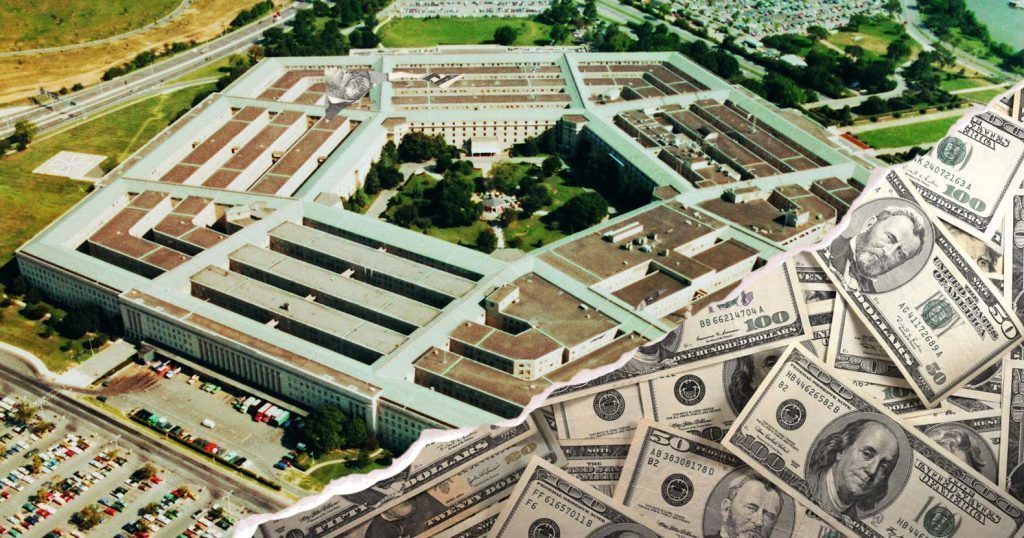



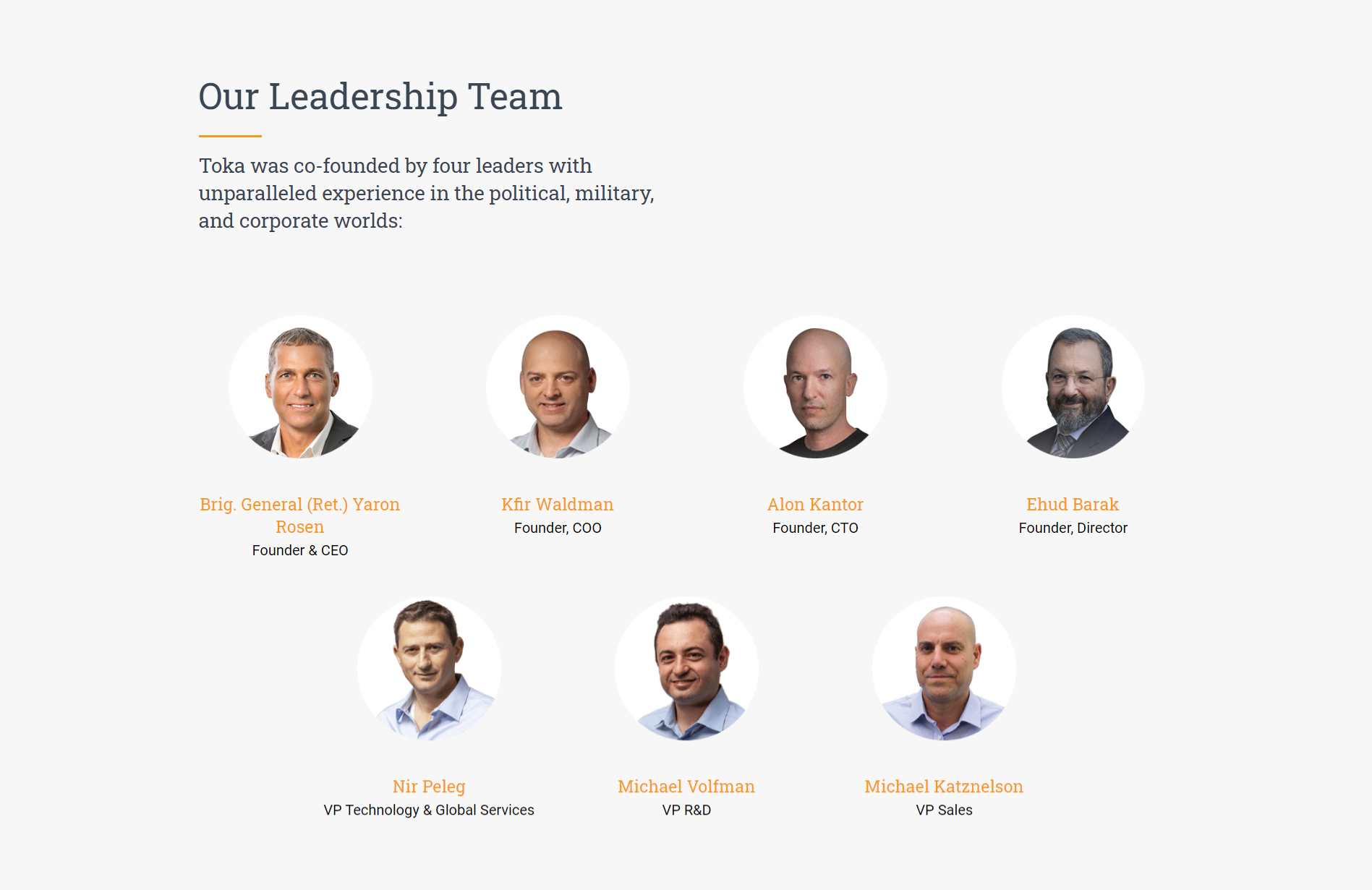
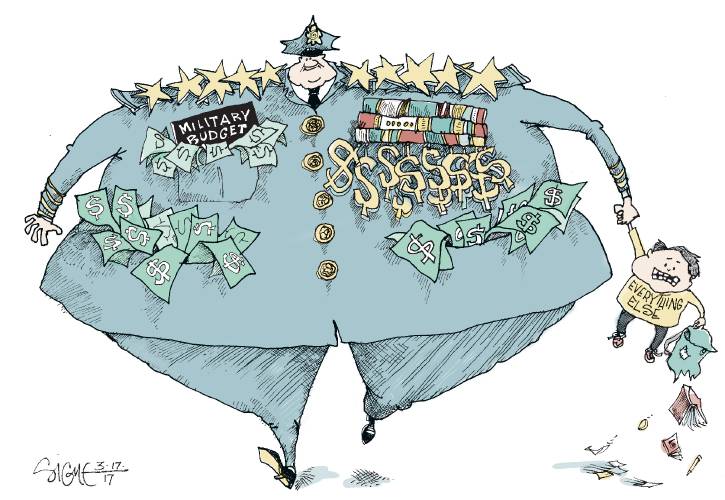


 After the Crash