Saturday Matinee: Prescription Thugs

By Zach Hollwedel

Source: Under the Radar

In 2008, Chris Bell’s Bigger, Stronger, Faster* plunged into the (un)surprisingly rampant reality of athletic doping. Never a fly-on-the-wall documentarian, Bell organically infuses himself into his films, rendering them particularly potent. In the case of his fascinating 2008 exposé, Bell turned his lens on American bodybuilders’ use of steroids, with a particular focus on his own brother, Mike. Mike “Mad Dog” Bell was an aspiring WWE wrestler who, while struggling to achieve the stardom he so fully desired, took to using performance and muscle enhancers.

Now, seven years later, Chris Bell returns with a natural follow-up. Prescription Thugs examines the fallout of another substance abuse problem all too common in, though far from exclusive to professional sports. Perpetually banged and bruised in the ring, Mike Bell took to prescription drugs as a means of curing—or at least numbing—his ailing body. He was by no means alone. Chris Bell and his co-directors, Josh Alexander and Greg Young, interview a number of athletes whose dependency upon over the counter medications got the better of them.

Immensely relatable and genuine as the face of the film, Bell sheds tremendous light on America’s dependence on prescription medication, an addiction which he indicates was largely born in the Reagan years. Given his brother’s history—and, it turns out, his own—Bell approaches the problem from an extremely personal angle, and the honesty pays off in spades. We feel for Bell and his friends and family, as they break down—or defend—their perilous reliance upon pill popping. One of the most extreme cases is Matt “Horshu” Wiese, who at the acme of his addiction, was taking upwards of 90 pills a day. Horshu admits that part of his regimen included two Viagra each morning, “just in case.” Through interviews with his burly subjects—and also with homemakers and students, who inadvertently and unintentionally got hooked—Bell reveals how easily one pill can lead to two, can lead to ten or more. The genesis of the addiction often comes in the form of the “just ask your doctor” Rx ads that inundate television these days. Big pharma colludes to sell medication for virtually any and every imaginable symptom (some of which they basically fabricate), and when side effects present previously unfelt problems, they develop a secondary drug for those. So on and so forth, until consumers are hooked to a habit Bell reveals to be little different from a legalized form of heroin in some cases.

With Prescription Thugs, Bell again proves a consistent, affable filmmaker well versed in investigative filmmaking with a penchant for the personal.

www.prescriptionthugs.com

Watch Prescription Thugs on Kanopy here: https://www.kanopy.com/en/product/582224

Saturday Matinee: Dark Clouds Over Elberton

Source: Vimeo

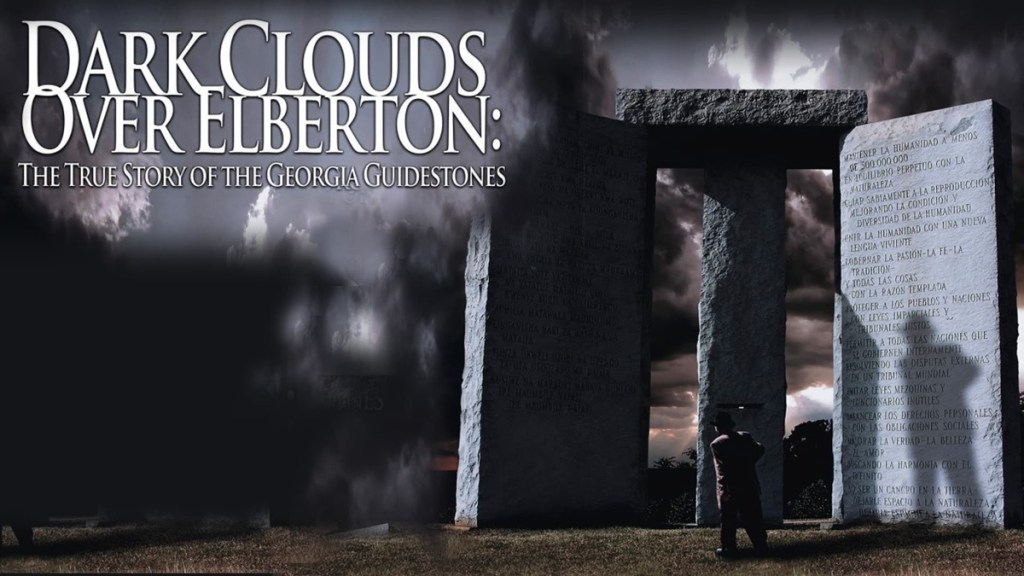
In 1979, a mysterious stranger appeared in the remote town of Elberton, Georgia. The man introduced himself as R.C. Christian, but admitted this was not his real name. He claimed to represent a small group of loyal Americans who wanted to erect a monument they hoped would inspire “the Age of Reason.”

The monument was named the Georgia Guidestones, and since its completion has spawned a host of conspiracy theories about who or what was behind it. Written on the great granite stones are ten commands or “guides” that were intended to provide wisdom for mankind. But the first of them calls for a reduction of the world population to a mere 500 million. In order to achieve this, billions of people would have to die. Many have wondered: is the monument designed to inspire wisdom? Or to launch a global genocide?

Researchers have wondered for decades about the identity of R.C. Christian and the purpose of his mysterious structure. Was he part of a globalist group? Was he working with the United Nations? After a five year investigation, this powerful documentary presents groundbreaking information, and dares to solve the mystery of who R.C. Christian really was.

This film is a must see for those who wish to learn more about the globalist use of environmentalism towards the cause of population control.

An ADULLAM FILMS Production
Written & Directed by Christian J. Pinto
Produced by Christian J. Pinto, Dr. Mike Bennett
ADULLAMFILMS.com

Bonus Short

Saturday Matinee: Lo and Behold

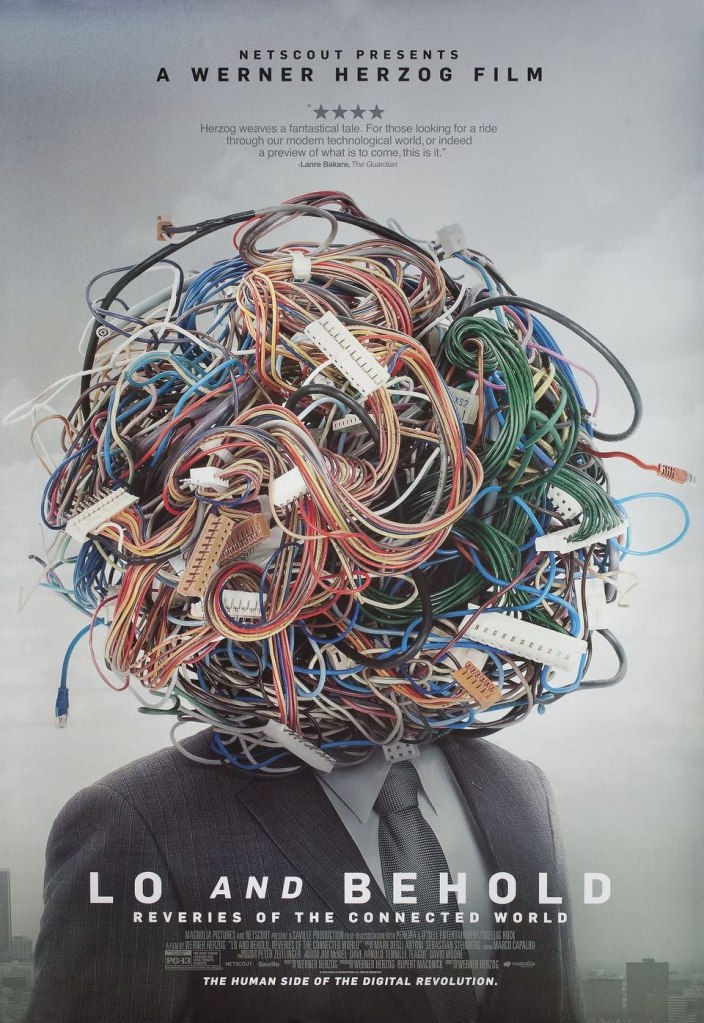
Lo and Behold, Reveries of the Connected World

A bold and multidimensional documentary about the glories and the drawbacks of the Internet.

By Frederic and Mary Ann Brussat

Source: Spirituality & Practice

Werner Herzog is an inimitable documentary filmmaker whose curiosity, wonder and awe for the mysteries and eccentricities of our world is unbounded. One of the hallmarks of his work is his unmistakable voice-overs (with a distinctive German accent) which serve as the narrative threads holding the materials together. Here are five of his most recent documentaries which illustrate the diversity of themes that interest him:

  • Cave of Forgotten Dreams: A 3-D tour of the Chauvet Cave which houses art that is 30,000 years old.
  • Encounters at the End of the World: A visually stunning documentary about the scientists, dreamers, adventurers, philosophers, and creatures of Antarctica.
  • Grizzly Man: A mesmerizing documentary about a young man obsessed with grizzly bears in the Alaskan wilderness.
  • Into the Abyss: A daring examination of capital punishment filled with small and humble human touches.
  • Wheel of Time: An exotic look at a Buddhist ritual held in Bodh Gay, India, and Graz, Austria in 2002 that attracted thousands of pilgrims.

In Lo and Behold, Reveries of the Connected World, Herzog tackles the complex, controversial, and mysterious Internet. He refers to this technological tool as “one of the greatest revolutions” in human history. This bold and multidimensional film is divided into 10 chapters:

  • The Early Days
  • The Glory of the Net
  • The Dark Side
  • Life without the Net
  • The End of the Net
  • Earthly Invaders
  • Internet on Mars
  • Artificial Intelligence
  • The Internet of Me
  • The Future

Here you will discover a breadth of material that ranges from the very serious to the extremely quirky and odd. Herzog begins with a terse history of the Internet’s beginnings at U.C.L.A. during the 1960s. Leonard Kleinrock, a professor of computer science, takes us into the “holy room” where the first Internet computer remains. He recalls his feelings when a message was transmitted from this computer to the Stanford Research Institute on October 29, 1969. Programmers were on the phone confirming that the login was happening. Stanford replied that they had received the “L” and the “o.” Then its computer crashed. So the first Internet message was “Lo.” This documentary chronicles what happened beyond that.

Danny Hillis, another scientist, reminisces about a time when all the users of this technology could be identified in one directory. Now, he states, the global directory would be 72 miles thick. Another statistic which stands out is: “Today, about 3.2 billion people use the internet around the world.” Herzog chimes in that CDs containing a single day’s worth of global data would stretch “to Mars and back.”

Here are some observations made in interviews with computer and robot specialists, hackers, technicians, programmers, gamers, and professors.

  • Elon Musk, the entrepreneur behind Telsa, is now interested in colonizing Mars; he also reflects on cyberwarfare or other earth catastrophes.
  • Kevin Mitnick, a legendary hacker, reveals the mayhem and the mischief that can take place by those who can get into large computer systems; cyberwarfare now puts smaller states on the same level as larger ones.
  • Joydeep Biswas, an engineer who has put together a robotic soccer team, shows how they work together and even reveals his favorite robot player.
  • Sebastian Thrun, an online-learning pioneer, notes that self-driving cars can all learn from the collective experiences of other cars and their mistakes, unlike human drivers.

Also included is an account of abusive cyber behavior ending with a mother calling the Internet “a work of the Devil” after pictures of her dead child were widely circulated online. Herzog talks with several persons who are sensitive to electromagnetic waves and get radiation sickness; they now live in an isolated area totally off the grid. A segment on video-game addicts reveals that many of them have completely stopped being present to the real world; some have developed blood clots in their legs after sitting so long at their computers. Astronomers explain that a large solar flare, which has not happened in many years, could disrupt Internet communication worldwide, affecting all the food supply, water and other systems supporting modern life.

In a telling scene, we see a group of Buddhist monks standing in front of a city skyline and the question is posed, “Have the monks stopped meditating?” We see that they are not bowing their heads in prayer or meditation. All of them are totally focused on their cell phones. Herzog quotes a startling statistic: There will be 31 billion devices connected to the Internet by 2020.

A famous New Yorker cartoon by Peter Steiner shows two dogs by a computer. The caption reads: “On the Internet, nobody knows you’re a dog.” It’s good for a laugh, and it’s also a reminder that Internet technology is raising many spiritual questions. Who are you? Where do you really live? And who are your companions? Don’t miss this thought-provoking documentary!

Saturday Matinee: All Light, Everywhere

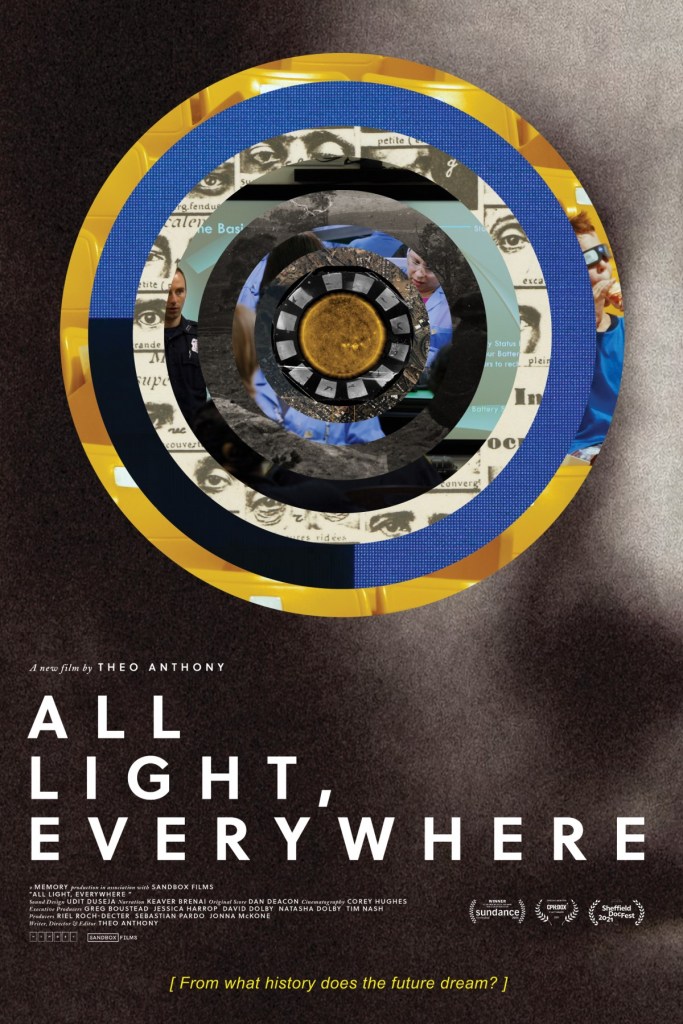
Film Review: “All Light, Everywhere” — Darkness Visible

By Neil Giordano

Source: Arts Fuse

Do you trust what you see? How can you? Our eyes are no longer the primary way that we see; they have been swapped out for the filters of screens and technology. The suspicious mediation between cameras and our perception of ‘reality” has never been more ubiquitous — or more insidious. Perhaps what we don’t see, however, is at least as important as what we do see. But how can we become aware of what we don’t see?

These questions lie at the heart of the fascinating new documentary All Light, Everywhere, an entrancing blend of neuroscience, metaphysics, and technological history that has the smarts to apply some sly, subtle social commentary to its elusive subjects.

At first, the film seems to flitter among semi-connected topics: A marketing campaign that is testing its volunteers’ reactions to visual images; a tour of Axon Industries, the #1 maker of police body cameras, with its corporate spin doctor as our guide; an aerial composite-imaging system that was used secretly by Baltimore police to surveil the city. Interspersed into these “storylines” are narrated forays into the history of early photography along with B-roll of ordinary people preparing to view the 2017 solar eclipse with their own cameras (and eyes). This unrelenting focus on the production and consumption of visual imagery transforms the film into an almost fractal experience. It becomes a bit too much: the sheer ubiquity of people looking, eyes looking, images to be seen and consumed and interpreted, examinations of the various technologies serving up new pictures to be mediated. The unsettling point of this unconventional documentary seems to be to distort rather than clarify the subject at hand — and that may be just what director Theo Anthony wants.

The underlying political relevance of the film is transparent. We live in a surveillance society, consenting (though not always consciously) to being filmed, watched, and recorded by corporations hoping to sell us products based on the data they gather. The government snoops in the name of crime prevention and law enforcement. The value of the latter has been hotly debated in the last few years: George Floyd’s murder being a prime example. Here the police body cameras showed us what we believe to be an “objective” record of events, footage of police brutality and murder. But body camera images have been weaponized by both sides, each seeking to prove something that will help their case. What Axon Industries sells to police forces (and to the general public) is that they are confident their cameras will tell the “truth” about any police action. Accountability is promoted as their product’s best feature. But it is more than that — “behavior will change ” because of the presence of cameras, that they will inhibit bad behavior.

But what do body cameras actually show us? Are these videos an authentic record of reality? The documentary examines, abstractly at first and then far more concretely, how there is always bias. Where is the camera located on the body? Does its wide-angle lens distort our understanding of action? How is this data interpreted and by whom? There are so many levels of interpretation that “objectivity” has turned into a myth.

The film’s looks back into the past are also illuminating, unsettling illustrations of how camera technology has almost always been co-opted for violent and authoritarian uses, whether it be the American military tracking the enemy on the battlefield or in the early experiments in composite imaging used by police to profile criminals. The latter presages the now rampant use of facial recognition technology, its marketed value undercut by its practical limitations as well as ethical muddiness.

The irony is not lost that what we’re looking at is itself a film, another visual entity that requires us to watch and to mediate. The film’s meta-commentary confesses that its stochastic manipulation is by design. Highly kinetic editing leads our brains to make connections in ways that excited Eisenstein at the dawn of film a century ago: the whole is greater than the sum of the parts. The mind demands order, so the juxtaposition and collision of images generates meanings that did not exist in individual images.

Anthony draws on history to help us make sense of a visual world that is increasingly fleeting and fragmented. The film is reminiscent, in style and subject matter, of the works of Errol Morris. This goes for its sometimes desultory exposition, as well as its approach to epistemology. (Morris explores these issues in all of his films, as well as in his essays in his books Believing Is Seeing and The Ashtray.) In the third act of All Light, Everywhere, a well-placed quotation from Frederick Douglass summaries the central issue: “We all feel that there is something more. That the curtain has not yet been lifted. There is a prophet with us forever whispering that behind the seen lies the immeasurable unseen.” The “immeasurable unseen” may not be possible to capture on cameras, no matter how many we use or how hard we strive for an elusive objectivity. Perhaps it is more important for us to understand that urge for “something more” should lead to examining how, why, and for whom the image was made.

Watch All Light, Everywhere at Kanopy here: https://www.kanopy.com/en/product/12333392

Saturday Matinee: Gloria’s Call

Source: GloriasCall.com

From the cafés of Paris to the mountaintops of Samiland, a scholar’s life is foreverchanged through her friendships with the women artists of Surrealism.

In 1971, graduate student Gloria Orenstein received a call from Surrealist artist Leonora Carrington that sparked a lifelong journey into art, ecofeminism and shamanism. The short film, Gloria’s Call, uses art, animation and storytelling to celebrate this wild adventure from the cafes of Paris to the mountaintops of Samiland. The film is produced by artists Cheri Gaulke (director), Cheryl BookoutAnne GauldinSue Maberry and Christine Papalexis .

Gloria’s Call was born in October of 2016 during a presentation by renowned scholar Dr. Gloria Feman Orenstein at the Southern California Women’s Caucus for Art (SCWCA) Surrealist Tea in celebration of their 40th Anniversary.

ABOUT GLORIA

While my life has had its challenging moments and I have traversed many a dark woods in my quest for knowledge, I am fulfilled by the wondrous journeys I have made to the realms of the Marvelous, the Magical, the Great Goddess and the Shamanic Mysteries, and I will be forever grateful to the teachers who inspired me and to the feminist activists on whose strong shoulders we now stand as we welcome new generations of visionaries expanding our feminist legacy into the new millennium.   -Gloria Feman Orenstein

Gloria F. Orenstein is Professor Emerita in Comparative Literature and Gender Studies from the University of Southern California. Her areas of research have ranged from Surrealism, contemporary feminist literature and the arts to Ecofeminism and Shamanism.

Her first book The Theater Of The Marvelous: Surrealism And The Contemporary Stage paved the way for her pioneering work on The Women of Surrealism. Leonora Carrington had been a friend and remained a major source of her inspiration in research and scholarship since 1971. Her book The Reflowering Of The Goddess offers a feminist analysis of the movement in the contemporary arts that reclaimed the Goddess as the symbol of a paradigm shift toward a more gynocentric mythos and ethos as women artists forged a link to the pre-patriarchal civilization of the ancient Goddess cultures, referencing them as their source of spiritual inspiration.

Orenstein is also co-editor of Reweaving The World: The Emergence Of Ecofeminism, a collection of essays that grew out of the conference she created at USC in 1987, Ecofeminist Perspectives: Culture, Nature, Theory. During the 80s she was invited by the Shaman of Samiland (Lapland, N. Norway) to be a student with her in Alta, Norway, an experience that continued intermittently for almost five years. She also created The Woman’s Salon in NYC that lasted for ten years beginning in 1975. More recently, her work in Surrealism, in particular, led to her inclusion of an essay in the book In Wonderland that accompanied the important exhibition of the same name that focused on the Women artists of Surrealism in the Americas, both those who were native to the Americas and those who migrated there during or after WWII. Orenstein was a pioneer in introducing the art of Frida Kahlo to North American feminists early in the 70s. Today, she continues her journey investigating the visionary worlds of revelation and the Marvelous, and will continue this pursuit in her research well into the future.

Saturday Matinee: Z Channel: A Magnificent Obsession

By JPRoscoe

Source: Basement Rejects

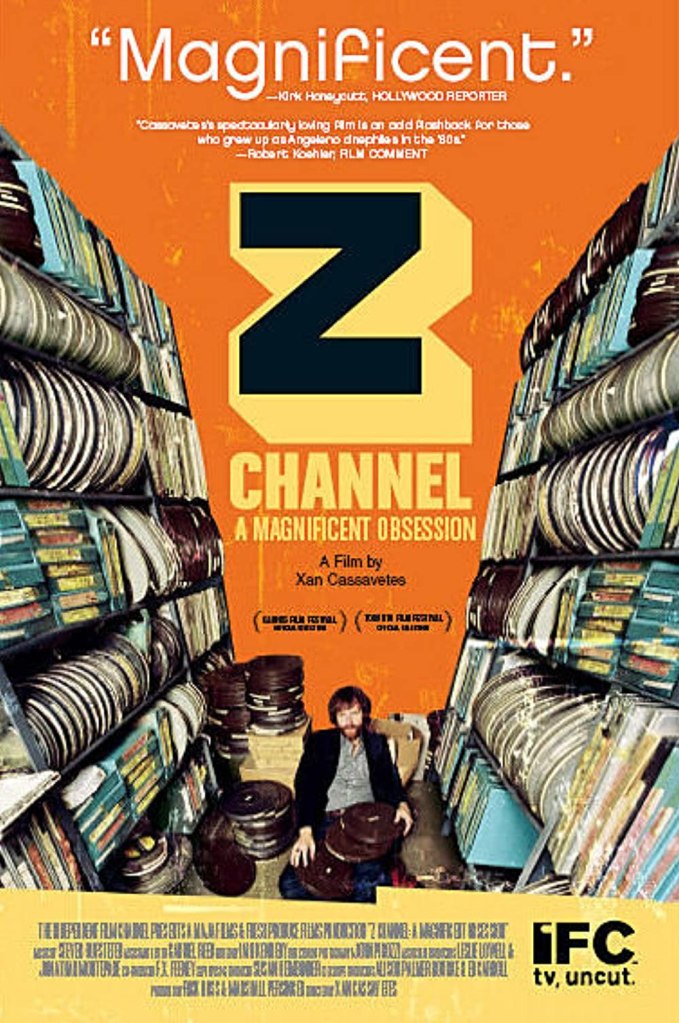
Launching in 1974, the Z Channel became one of the first pay cable channels.  The channel eventually morphed into a movie channel highlighting directors, art films, and championing original visions portrayed on the screen.  One of the people behind this transformation and the decisions made on the channel was the program director Jerry Harvey.  Harvey (with his team) brought many films to the Z Channel that were never seen anywhere in America and created a world for film lovers…but Harvey had his own demons.

Directed by Xan Cassavetes, Z Channel:  A Magnificent Obsession is a documentary about the rise and fall of the California based Z Channel which broadcast from 1974 to 1989.  The documentary premiered at Cannes in 2004 and was released to positive reviews.

I grew up without cable so dreams of HBO were just dreams.  At the time, I wouldn’t have appreciated Z Channel and would have much rather stayed with something like HBO or Cinemax.  Watching the Z Channel:  A Magnificent Obsession, I dream about the Z Channel still being around.

There are a lot of viewing options now.  The difference between something like FilmStruck and the Z Channel is that idea of chance.  You don’t know what you are going to get and you don’t know when you’ll get to see it again.  That is something that current TV watchers (or streamers) forget…you had to wait to see the movies you wanted and a video store might not have them.  The idea of someone so diligently trying to seek out and collect these films for viewers is admirable.

The documentary of course takes a dark turn in that Jerry Harvey really was someone who seemed lost.  The documentary does struggle with the ideas of its three themes at points in trying to decide if it is about Z Channel, Jerry Harvey, or the films…and it is understandable because it is hard to separate the three because they were so bound together.  Like a lot of documentaries, I wish there was a better way to establish more of a timeline of events through the course of the movie.

The documentary features a lot of great performers and great film clips.  Robert Altman, Quentin Tarantino, Jim Jarmusch, James Wood, and Jacqueline Bisset are among some of the people interviewed, but it is the immense outpouring of these people for what Z Channel did for them that shows its importance on modern film.  Harvey’s personal acquaintances provide the most insight to him and what was going on at Z Channel and really help round out the documentary…plus, it becomes a film watcher’s guide for movies that should be sought out.

Z Channel:  A Magnificent Obsession is an interesting documentary, but it also is a documentary that feels like it needed a little tweaking to become a great documentary.  It is a film for film lovers and a specific kind of film lover.  The movies highlighted appeal to a certain viewer and the true crime aspect of the story probably isn’t intense enough for people interested in the true crime genre.  Still, Z Channel:  A Magnificent Obsession is a worthy documentary that should be sought out.

Watch Z Channel: A Magnificent Obsession on Hoopla here: https://www.hoopladigital.com/title/14980839

Saturday Matinee: From JFK To 911 Everything Is A Rich Man’s Trick

Source: Top Documentary Films

The assassination of President John F. Kennedy lingers as one of the most traumatic events of the twentieth century. The open and shut nature of the investigation which ensued left many global citizens unsettled and dissatisfied, and nagging questions concerning the truth behind the events of that fateful day remain to this day. Evidence of this can be found in the endless volumes of conspiracy-based materials which have attempted to unravel and capitalize on the greatest murder mystery in American history.

Now, a hugely ambitious documentary titled Everything is a Rich Man’s Trick adds fuel to those embers of uncertainty, and points to many potential culprits whose possible involvement in the assassination has long been obscured by official historical record.

Authoritatively written and narrated by Francis Richard Conolly, the film begins its labyrinthine tale during the era of World War I, when the wealthiest and most powerful figures of industry discovered the immense profits to be had from a landscape of ongoing military conflict. The film presents a persuasive and exhaustively researched argument that these towering figures formed a secret society by which they could orchestrate or manipulate war-mongering policies to their advantage on a global scale, and maintain complete anonymity in their actions from an unsuspecting public. Conolly contends that these sinister puppet masters have functioned and thrived throughout history – from the formation of Nazism to the build-up and aftermath of September 11.

The election of President Kennedy in 1960 represented a formidable threat to these shadowy structures of power, including high-profile figures within the Mafia, crooked politicians, and the world’s most influential and notorious war profiteers. Thus, a plot was hatched which would end Kennedy’s reign prior to any chance of re-election, thereby restoring the order and freedoms of these secret societies.

At nearly three and a half hours, Everything is a Rich Man’s Trick examines a defining event of our times from a perspective not often explored. While it may or may not win over viewers who remain skeptical of mass-scale conspiracy, it presents its findings in a measured and meticulous manner which demands attention and consideration.

Saturday Matinee: Punk: Attitude

“Punk: Attitude” (2005) is a documentary tracing the roots, meaning and enduring influence of the punk movement of the late 70s and early 80s. Directed by Don Letts, the film offers an insider’s perspective because Letts was a catalyzing agent for the developing London punk scene, having run a clothing store called Acme Attractions and hosted parties as a reggae DJ, both often frequented by band members of groups such as The Sex Pistols, The Clash and The Pretenders. Letts later managed The Slits and began his film career as a director of Clash music videos.

Punk: Attitude also features interviews with artists directly and indirectly involved with the early punk scene including Wayne Kramer (The MC5), Mick Jones (The Clash), Jello Biafra (The Dead Kennedys), Chrissie Hynde (The Pretenders), and David Johansen (The New York Dolls) among many others. Though some punk fans may dispute the relevance of certain featured musicians or feel others were overlooked, the film provide a candid, fairly comprehensive and at times contradictory overview of punk rock as iconoclastic, raw and diverse as the music itself.