

THE ELEVENTH HOUR

By Kingsley L. Dennis

Source: Waking Times

In the Age of Materialism, it is said that people have their orientation outwards and towards the boundary that separates humanity from the lower orders – the animals and plants – rather than the inner orientation towards Source. And it is within the great depth of materialism that represents the final stage of a grand cycle where the world reaches its ‘extremity of separation’ in a period of remoteness from the sacred impulse.

Unknowing and blind to this, the materialist believes they experience no loss because progress has given humanity much more than it ever had, and that material progress shall be their salvation. At such a time, it symbolizes that humankind has reached a limit of distance (an extremity) from its essential nature – from its centre – and thus from its sacred home. And the modern person – especially the product of westernized modernism – has gone so far from their essential nature that they have ceased to think of it or question its existence, and even fabricate and invent a pseudo-truth for its material reality.

Many now see these times of deep materialism as representing the ‘eleventh hour’ for humanity; as a decisive moment before a dramatic turn of events in its trajectory. Others, like myself, have referred to these times as representing humanity’s ‘dark night of the soul.’ I wrote the following passage over a decade ago:

We have now entered the crisis window, the transition phase – that heroic journey into the underworld – where we will be forced to experience a shamanic initiatory experience, perhaps a near-death experience, before we can emerge as an adolescent species with a new, more mature mind. Until we reach that stage, however, we will have to struggle with the death throes of the old mind, as old systems cling to power and global infrastructures attempt to remain in control of a world in transition…the ‘dark passage’ that we are now venturing into. This is part of our collective rites of passage: it will shake us, reshuffle and reorientate a great deal of life on the planet; and it will also, hopefully, catalyze and prepare us for a psychophysical transformation. The reorientation required – both psychological and physical – may be far from linear…as we wrestle with the cloak of the old world system that clings onto a modus operandi, refusing to let go without a fight. Despite our glorious, gleaming, polished achievements that the world displays with pride, our current systems (social, cultural, political and economic) are remarkably anachronistic, cunningly deceptive, opaque, and in dire need of renovation. Yet in order to sweep out the brushwood we may be forced to endure a metaphorical, and literal, dark night of the soul. The next 20 years cannot be the same as the last 20 years. Change is upon us rapidly, even if we are not aware of its pace.[1]

We were not aware of the pace as I wrote those words; and many are no more aware now even though that pace has dramatically quickened. At each cyclical renewal we are faced with prophecies of the ‘End Time’ that also throw up images and imaginations of the world apocalypse. Yet such an apocalypse is not a fatality but a revelation – a revealing. It marks the disintegration of one narrated cycle and the emergence of new mythological voices as heralding a departure from the dying throes of an aeon of time. At such a moment, the aftermath of an apocalypse/revealing lies a great expanse where reality itself requires a re-stitching together and reimagining. A new operation of worlding comes into being. There is a change of guard of the architypes: the social-status figures of leaders, politicians, and bankers are replaced by the metaphysician, the mystic, and the prophet.[2]

It is said that the nearness of an end of an era brings with it a sense of otherworldliness. It is at such threshold moments where the veil thins to allow a penetration, a mergence, of energies from various sources, physical and metaphysical. Dimensions start to crossover and intervene; boundaries begin to dissolve.  It is then that the illusion of ordinary, consensus reality is fast breaking down; this very same illusion that shielded many people from infra-psychic incursions. According to philosopher Rene Guenon, the extremity of materialistic beliefs and practices leads to a ‘solidification of the world,’ and it is this solidification that causes ‘fissures’ to open up through which ‘infra-psychic’ forces enter. In other words, humanity is invaded by the specters of its own psyche.

The reality of unknown psychic powers, and their influences, from beyond our world has always been part of human knowledge – only that now it comes out from its occult shell and more into visibility. The dissolution of the physical world, its fragmentation, chaos, and disarray, catalyzes the psychic manifestations that represent the phase of the dissolution of the present cycle. The dissolution of the present cycle of materialism only begets a necessary re-creation of the world. The hardening and extremity of corruption of our physical world must also lead to a degree of psychological fracturing if a new psycho-physical environment is to unfold. That is, unless there are cracks within the highly conditioned collective psychosphere of humanity, how can the light get it?

Every human soul is infused with a sense, a knowing, of the Transcendent – a filament or spark of Source – of the Alpha and Omega of all existence. Ignorance of it only exists on this physical, earthly plane, and obscured by the degraded forces of deep materialism. The inner faculty which recognizes this is often referred to as the Heart, and is the human being’s highest faculty – although it lies dormant or slumbering within most people. This is an incorruptible, inviolable element within the human – a ‘supramental organ of knowledge’ – that is beyond mind or intellect.

The sense of the transcendent implies an inner urge, longing, or pull to transcend the limitations of this plane of reality. These urges are the signs of the times – the moment of the eleventh hour. The contact with Source energy is available (gives) to those who are aware of it: ‘For unto every one that hath shall be given, and he shall have abundance: but from him that hath not shall be taken away even that which he hath.’ (Matthew 25:29). It is at the eleventh hour, from a dissolution to a new beginning, that we understand also the phrase: ‘and the last shall be first.’
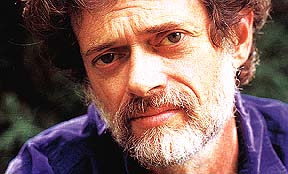
“The Cost Of Sanity, In This Society, Is A Certain Level Of Alienation”

By Caitlin Johnstone

Source: CaitlinJohnstone.com

The late psychonaut/philosopher Terence McKenna once said “The cost of sanity, in this society, is a certain level of alienation,” and I think my regular readers will immediately and experientially understand exactly what he was talking about.

It’s not always easy to be on the outside of consensus reality. Our entire society, after all, has been built upon consensus–upon a shared agreement about what specific mouth sounds mean, on what money is and how it works, on how we should all behave toward each other in public spaces, and on what normal human behavior in general looks like.

We all share a learned agreement that we picked up from our culture in early childhood that it’s normal and acceptable to stand around with your hands in your pockets and babble about the weather to anyone who gets too close to you, for example, whereas it would be considered weird and disruptive to stand around slathered in Cheese Whiz shrieking the word “Poop!” But we could just as easily reverse that consensus on behavioral norms tomorrow, and as long as we all agreed to it we could do it without missing a beat.

In exactly the same way, there exists a general consensus about what’s going on in our world at the moment. There’s a general consensus that we live in the kind of society we were taught about in school: a free and democratic nation which maybe did some not so great things in the past, but is now a supremely virtuous beacon of light on this earth that kicked Hitler’s ass and then surfed into the present day on a wave of truth and sensible fiscal policy. There’s a general consensus that the news reporters on our screens paint us a more or less accurate picture of world affairs, that there are a lot of Bad Guys in our world with whom the Good Guys in our government are fighting, and that most of our nation’s problems are caused by the people in the other political party.

This consensus is grounded in delusion. It is insanity.

In reality, of course, we live in a world where our understanding of the world is constantly being deceitfully manipulated by oligarchic media propaganda and the utterances of oligarch-owned politicians. Where elections are mostly just a live action role-playing game which allows the rabble to pretend that they have some degree of influence over the things that their government does. Where our government routinely forms alliances with the worst Bad Guys on the planet while manufacturing consent to topple governments whose downfall would be utterly disastrous. Where our nation’s problems have almost nothing to do with half its population disagreeing with our personal ideology, and practically everything to do with the loose international alliance of plutocrats and government agencies who actually run things behind the facade of the comings and goings of official elected governments.

Sanity means seeing this as it is, rather than subscribing to the mass delusion of the consensus worldview. Which, as you probably already know, can make it difficult to relate to others in some ways. Conversations about politics often either get heated very rapidly when you challenge a tightly-held orthodoxy or dead-end in awkwardness. Friendships can end. Family relationships can be ruined. Collective narratives about you can be woven and circulated within your social circle which have nothing to do with how you actually see things.

And that’s just if you talk about your worldview. If you keep your views to yourself, as many do, that’s just another kind of alienation. It’s to stand outside of public political discourse completely, unable to participate out of fear of the backlash you’d receive from your friends, loved ones and acquaintances if you started talking about Trump as a symptom rather than the disease, or said that Corbyn is being targeted by a transparently bogus smear campaign, or said that Russia’s interventions in world affairs are clearly dwarfed by America’s by orders of magnitude. The specific heresies will vary depending upon the social circle, but the inability to voice them necessarily comes with the same sense of alienation.

But the alternative to that sense of alienation is to live a lie. It’s to climb back inside the distorted funhouse-mirror reality tunnel of the establishment narrative control matrix and plug yourself back into the same delusions that everyone else is living. Most of us couldn’t even do that if we wanted to. Even if we could the intense mental gymnastics we’d have to perform just to avoid the discomfort of cognitive dissonance would make it not worth the effort.

We close ourselves off from a full sense of participation in our society when we depart from the consensus worldview, but in closing that door we open so many more. Because, as it turns out, all that effort that people pour into staying on the same wavelength as everyone else closes them off to a vast spectrum of potential human experience. The allure of the mass delusion is that you need to devote yourself to being plugged into it in order to achieve what the mass delusion defines as “success”, but in so doing you lose the ability to leap down psychological and experiential rabbit holes of consciousness that those still jacked into the matrix can’t even imagine. And in so doing you open up the possibility for an immensely more fulfilling and enjoyable life that has really deeply explored the more intimate questions about what it means to be a human being on this planet.

Jiddu Krishnamurti once said, “It is no measure of health to be well-adjusted to a profoundly sick society.” And a profoundly sick society is indeed what we have here. The alienation which we experience is an alienation from something that isn’t worth belonging to anyway.

I began this essay with a quote from one of the celebrated thought leaders of the psychedelic movement, and I think the question of what we can do to cope with the alienation McKenna spoke of is best answered by ending with a quote from another such leader, Timothy Leary:

“Admit it. You aren’t like them. You’re not even close. You may occasionally dress yourself up as one of them, watch the same mindless television shows as they do, maybe even eat the same fast food sometimes. But it seems that the more you try to fit in, the more you feel like an outsider, watching the ‘normal people’ as they go about their automatic existences. For every time you say club passwords like ‘Have a nice day’ and ‘Weather’s awful today, eh?’, you yearn inside to say forbidden things like ‘Tell me something that makes you cry’ or ‘What do you think deja vu is for?’. Face it, you even want to talk to that girl in the elevator. But what if that girl in the elevator (and the balding man who walks past your cubicle at work) are thinking the same thing? Who knows what you might learn from taking a chance on conversation with a stranger? Everyone carries a piece of the puzzle. Nobody comes into your life by mere coincidence. Trust your instincts. Do the unexpected. Find the others.”