A Nonviolent Strategy to End the Climate Catastrophe

emgnpollution2

By Robert J. Burrowes

As the evidence mounts that we are fast approaching the final point-of-no-return beyond which it will be impossible to take sufficient effective action to prevent climate catastrophe – see ‘The World Passes 400 PPM Threshold. Permanently‘– the evidence of ineffective official responses climbs too. See, for example, ‘Climate Con: why a new global deal on aviation emissions is really bad news’.

Even worse, we continue to be given response options that, even when they are well meaning, are naïve and inadequate whether they are suggested by individuals – see, for example, ‘Committing Geocide: Climate Change and Corporate Capture‘– or major environment organizations such as Greenpeace, 350.org and
Friends of the Earth.

Moreover, given the myriad indications of progressive environmental breakdown in domains unrelated to the climate catastrophe, one must be terrified and delusional to suggest or even believe that anything less than a comprehensive strategy, which goes well beyond anything governments and corporations will ever endorse, gives us any chance of averting the sixth mass extinction event in planetary history. A mass extinction that will include us.

As an aside, if you believe the ‘end of century’ scenario (for human extinction) being driven by the same corporate interests that drove climate denial for so long, then you are simply a victim of their latest attempt to drive ‘business as usual’ while delaying action for as long as possible at any cost.

Another problem, if you understand anything about human psychology and political organization, is that mobilizing people in large numbers to act strategically and powerfully is not easy. Of course, if it wasn’t so difficult, this crisis would not have arisen in the first place. We would have responded intelligently and strategically decades ago as some aware individuals, starting with Mohandas Karamchand Gandhi 100 years ago, suggested.

To briefly recap the wider nature of the crisis we face: Consider our synergistic and devastating assaults on the environment through military violence (often leaving vast areas uninhabitable), rainforest destruction, industrial farming, mining, commercial fishing and the spreading radioactive contamination from Fukushima. We are also systematically destroying the limited supply of fresh water on the planet which means that water scarcity is becoming a frequent reality for many people and the collapse of hydrological systems is now likely by 2020. Human activity drives 200 species of life (plants, birds,animals, fish, amphibians, insects, reptiles) to extinction each day and 80% of the world’s forests and over 90% of the large fish in the ocean are already gone. Despite this readily available information, governments continue to prioritize spending $US2,000,000,000 each day on military violence, the sole purpose of which is to terrorize and kill fellow human beings.

So what are we to do?

Well, if you are inclined to assess the evidence and to design a response strategy that has the possibility of success built into it,then I invite you to consider the strategy outlined on the Nonviolent Campaign Strategy website.  This strategy identifies all twelve components of a nonviolent strategy to end the climate catastrophe, including the myriad of strategic goals for such a strategy to be comprehensive and effective. You are very welcome to suggest improvements in this strategy and to invite other individuals and groups to participate in helping to implement it.

If you are happy to leave strategic responses to others but still wish to contribute powerfully, then you and others you know are welcome to participate in the simple fifteen-year program outlined in ‘The Flame Tree Project to Save Life on Earth‘. You might also consider signing the online pledge of ‘The People’s Charter to Create a Nonviolent World‘.

One final point: a tragic outcome of modern humans terrorizing their children into obedience (to maintain social control) is that most of the human population is (unconsciously) terrified, self-hating and powerless. For a full explanation of this, see ‘Why Violence?‘ and ‘Fearless Psychology and Fearful Psychology: Principles and Practice‘.

So don’t wait around waiting for others to act first. It is your leadership that is required in this circumstance. And it is your leadership that might ultimately make the difference.


Biodata: Robert J. Burrowes has a lifetime commitment to understanding and ending human violence. He has done extensive research since 1966 in an effort to understand why human beings are violent and has been a nonviolent activist since 1981. He is the author of ‘Why Violence?‘ His email address is flametree@riseup.netand his website is at http://robertjburrowes.wordpress.com

Robert J. Burrowes
P.O. Box 68
Daylesford
Victoria 3460
Australia
Email: flametree@riseup.net

Websites:
Nonviolence Charter
Flame Tree Project to Save Life on Earth
‘Why Violence?’
Nonviolent Campaign Strategy
Nonviolent Defense/Liberation Strategy
Anita: Songs of Nonviolence
Robert Burrowes
Global Nonviolence Network

Tomgram: Frida Berrigan, A Mother Thinks the Unthinkable

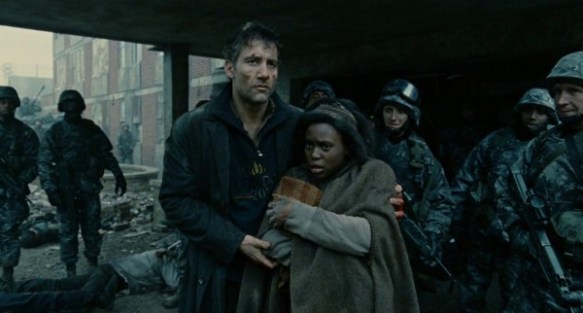
Children-of-Men-1024x550

By Tom Engelhardt and Frida Berrigan

Source: TomDispatch.com

Frida Berrigan’s piece today speaks to me very personally. At 71, I have two children and a grandchild in this world, and I feel some responsibility for the sorry planet I’m leaving them. TomDispatch began as a no-name listserv, springing from a post-9/11 foreboding that, though I had been mobilized and active in the Vietnam War era, what was coming would be the worst years of my life, politically speaking. As those repetitive ceremonies in which we celebrated ourselves and our country as the greatest victims, survivors, and dominators on the planet spread, as they refused to end, as the urge for revenge of some all-encompassing sort grew and was encouraged by the Bush administration, as I began to grasp where its top officials were thinking about taking us (to hell and back, to quote a movie title of my childhood), I had the urge to do something.

I had done good work as a book editor over the years, but this was different.  It was a powerful feeling that I couldn’t just leave what seemed to be a degrading country or world to my children without lifting a hand, without trying to do something.  I had no idea what, but from that feeling, thanks to happenstance, dumb luck, and obsession, TomDispatch stumbled into existence.  And because I was then indeed doing something, I felt, amid the gloom, a certain hope.

So I’ve never looked back.  But, of course, one small critical website that attempts to offer ways to reframe what’s happening on our increasingly embattled planet hardly represents a world-saving act, nor did I ever think that such an act could be mine — or really any individual’s.  What this has meant, though, is that, 14 years later, when with utter exuberance my grandson “races” me down a city block pulling me by the hand, I feel just the sort of pleasure (at one remove since I’m no longer the parent) that TomDispatch regular Berrigan describes so movingly with her own daughter.  And every time I’m with him, just as she describes, there are those other moments, the ones when I suddenly remember what’s happening on this planet, the ones when I look at him and feel overcome by sadness verging on grief at the potentially devastated world that may be his inheritance, my “gift” to him.  Those are indeed fears “too big to name.”  Still, Berrigan does a remarkable job of bringing to consciousness a new sensibility that, however seldom mentioned, must be increasingly common currency on this planet. Tom

Parenting on the Brink
Wrestling With Fears Too Big to Name
By Frida Berrigan

Madeline is in the swing, her face the picture of delight. “Mo, mo,” she cries and kicks her legs to show me that she wants me to push her higher and faster. I push, and push, and push with both hands. There is no thought in my head except for her joy. I’m completely present in this moment. It’s perfection. Madeline embodies the eternal now and she carries me with her, pulling me out of my worries and fears and plans.

But not forever: after a few minutes, my mind and eyes wander. I take in the whole busy playground, crowded with toddlers plunging headlong into adventure and their attendant adults shouting exhortations to be careful, offering snacks, or lost in the tiny offices they carry in their hands. It’s a gorgeous day. Sunny and blue and not too hot, a hint of fall in the breeze. And then my eye is caught by a much younger mom across the playground trying to convince her toddler that it’s time to go.

When Madeline graduates from high school, I will be 57. Jeez, I think, that mom will still be younger than I am now when her kid walks across that stage. If I live to be 85, Madeline will be 46 and maybe by then I’ll have some grandkids.  In fact, I’m suddenly convinced of it.  Between Madeline and her three-year-old brother Seamus and their eight-year-old sister Rosena, I will definitely live to see grandkids.  I reassure myself for the millionth time that having kids in my late thirties was totally fine.

And then another thought comes to mind, the sort of thought that haunts the parents of this moment: When I’m 85, it will be 2059, and what will that look like? When my grandkids are my age now, it could be almost a new century. And what will our planet look like then? And I feel that little chill that must be increasingly commonplace among other parents of 2015.

And then I’m gone. You wouldn’t know it to look at me.  After all, I’m still pushing the swing, still cooing and chatting with my buoyant 18-month-old daughter, but my mind is racing, my heart is pounding. This playground will not be here. This tranquil, stable, forever place wasn’t built to last 100 years, not on a planet like this one at this moment anyway.

I look around and I know. None of this — the municipal complex, the school across the street, the supermarket up the road — is built for 100 years, especially not this hundred years. It won’t last. And I can’t imagine a better future version of this either. What comes to mind instead are apocalyptic images, cheesy ones cribbed from The Walking Dead, that zombie series on AMC; The Day After, a 1980s made-for-TV dramatization of a nuclear attack on the United States; Cormac McCarthy’s haunting novel The Road; Brad Pitt’s grim but ultimately hopeful World War Z; and The Water Knife, a novel set in the western United States in an almost waterless near future.

They all rush into my head and bump up against the grainy black-and-white documentary footage of Hiroshima in 1945 that I saw way too young and will never forget. This place, this playground, empty, rusted, submerged in water, burned beyond recognition, covered in vines, overrun by trees. Empty. Gone.

Then, of course, Madeline brings me back to our glorious present. She wants to get out of the swing and hit the slides. She’s fearless, emphatic, and purposeful. She deserves a future.  Her small body goes up those steps and down the slide over and over and over again. And the rush of that slide is new every time. She shouts and laughs at the bottom and races to do it again. Now. Again. Now. This is reality. But my fears are real, too. The future is terrifying. To have a child is to plant a flag in the future and that is no small responsibility.

We Have Nothing to Fear but…

We mothers hear a lot these days about how to protect our children. We hear dos and don’ts from mommy magazines, from our own mothers, our pediatricians, each other, from lactation experts and the baby formula industry, from the Centers for Disease Control and the Food and Drug Administration, from Doctor Bob Sears, from sociologists and psychiatrists and child development specialists. We are afraid for our kids who need to be protected from a world of dangers, including strangers, bumblebees, and electrical outlets.

Such threats are discussed, dissected, and deconstructed constantly in the media and ever-newer ones are raised, fears you never even thought about until the nightly news or some other media outlet brought them up. But hanging over all these humdrum, everyday worries is a far bigger fear that we never talk about and that you won’t read about in that mommy magazine or see in any advice column.  And yet, it’s right there, staring us in the face every single day, constant, existential, too big to name.

We can’t say it, but we are increasingly afraid of the future, of tomorrow, afraid for our children in ways that, in themselves, are frightening to bring up. It’s as diffuse as “anything can happen” and as specific as we are running out of ______ [fill in the blank: clean water, fossil fuels, space for people, arable land, cheap food stuffs, you name it]. Even if the supply of whatever you chose to think about isn’t yet dwindling in our world, you know that it will one of these days. Whatever it is, that necessity of everyday life will be gone (or too expensive for ordinary people) by ______ [2020, 2057, 2106].

It’s paralyzing to look at Madeline and think such thoughts, to imagine an ever-hotter planet, ever-less comfortable as a home not just for that vague construct “humanity,” but for my three very specific children, not to speak of those grandchildren of my dreams and fantasies.

It’s something that’s so natural to push away. Who wouldn’t prefer not to think about it?  And at least here, in our world, on some level we can still do that.

For those of us who are white and western and relatively financially stable, it’s still possible to believe we’re insulated from disaster — or almost possible anyway. We can hold on to the comfort that our children are unlikely to be gunned down or beaten to death by police, for example. We can watch the news and feel sadness for the mass exodus out of Syria and all those who are dying along the way, but those feelings are tinged with relief in knowing that we will not be refugees ourselves.

But for how long? What if?

They say: enjoy your kids while they’re young; pretty soon they’ll be teenagers. Haha, right? Actually, I’m excited about each stage of my kids’ lives, but Madeline won’t be a teenager until 2027. According to climate scientists and environmentalists, that may already be “past the point of no return.” If warming continues without a major shift, there will be no refreezing those melting ice shelves, no holding back the rising seas, no scrubbing smog-clogged air, no button we can press to bring water back to parched landscapes.

These are things I know. This is a future I, unfortunately, can imagine. These are the reasons I try to do all the right things: walk, eat mostly vegetarian, grow some of our own food, conserve, reuse, reduce, recycle. We had solar panels installed on our roof. We only have one car. We’re trying, but I know just as well that such lifestyle choices can’t turn this around.

It will take everyone doing such things — and far more than that. It will require governments to come to their senses and oil companies to restrain the urge to get every last drop of fossil fuel out of the ground.  It will take what Naomi Klein calls a “Marshall Plan for the Earth.” In her groundbreaking and hopeful book, This Changes Everything, she writes,

“I am convinced that climate change represents a historic opportunity on an even greater scale [than the New Deal]. As part of the project of getting our emissions down to the levels many scientists recommend, we once again have the chance to advance policies that dramatically improve lives, close the gap between rich and poor, create huge numbers of good jobs, and reinvigorate democracy from the ground up.”

Which brings me to fear and how it paralyzes. I don’t want to be paralyzed in the face of catastrophic climate change or any other looming calamity. I want to be motivated and spurred to action not by an apocalyptic vision of our local playground engulfed in flames or submerged under several feet of water, but by the potential for the brighter future than is surely within our grasp — within my grasp today and Madeline’s in some future that she truly deserves.

Preparing for the Unthinkable 

Growing up, I heard this a lot: “Don’t be so First World, Frida.”

That’s what Phil Berrigan — former priest, brazenly nonviolent activist, tireless organizer for peace and justice — would tell me, his eldest daughter. If I was flippant or tweenish, that’s what he would always say. “Don’t be so First World.” It was his rejoinder when I asked for spending money or permission to go to the movies. What he meant was: regulate your wants, consider others, be comfortable being alone, put yourself second, listen, be in solidarity, choose the harder path.

My father’s admonishment sounds a discordant note amid today’s morass of parenting messages with their emphasis on success and ease and happiness. But it prepared me for much of what I encountered along the road to adulthood and it resonates deeply as I parent three children whose futures I cannot imagine. Not really. Will they have clean water, a home, a democracy, a playground for their children? Will they be able to buy food — or even grow it? Will they be able to afford transportation? I don’t know.

What I can do is prepare them to distinguish needs from wants, to share generously and build community, to stand up for what they believe and not stand by while others are abused. When, as with Madeline at that playground, the unspoken overwhelms me, I wonder whether I shouldn’t sooner or later start teaching them how the world works and basic skills that will serve them well in an uncertain future: what electricity is and how to start a fire, how to navigate by the stars, how to feed themselves by hunting and gathering, how to build a shelter or find and purify water, or construct a bicycle out of parts they come across on the road to perdition.

The only problem is that, like most of my peers and friends, I actually don’t know how to do any of that (except maybe for the bicycle building), so I better get started. I should also be planting nut trees in our backyard and working for global nuclear disarmament. I can help New London (a water’s edge community) be prepared and more resilient in the face of rising sea levels and be active in our local Green Party.

I know that there’s no simple solution, no easy or individual fix to what’s coming down the road. I know as well that there is no future except the one we are making right now, this second, again and again and again. And in our world, I call that hope, not despair. Perhaps you could just as easily call it folly.  Call it what you will.  I don’t have a label for my parenting style. I’m not a helicopter mom or a tiger mom. But like a lot of other people right now, whether they know it or not, realize it or not, I am parenting on the brink of catastrophe. I’m terrified for my children, but I am not paralyzed and I know I am not alone, which makes me, despite everything, hopeful, not for myself, but for Madeline.


Frida Berrigan, a TomDispatch regular, writes the Little Insurrections blog for WagingNonviolence.org, is the author of It Runs In The Family: On Being Raised By Radicals and Growing Into Rebellious Motherhood, and lives in New London, Connecticut.

 

The Superpower Conundrum

The Rise and Fall of Just About Everything

By Tom Engelhardt

Source: TomDispatch.com

The rise and fall of great powers and their imperial domains has been a central fact of history for centuries.  It’s been a sensible, repeatedly validated framework for thinking about the fate of the planet.  So it’s hardly surprising, when faced with a country once regularly labeled the “sole superpower,” “the last superpower,” or even the global “hyperpower” and now, curiously, called nothing whatsoever, that the “decline” question should come up.  Is the U.S. or isn’t it?  Might it or might it not now be on the downhill side of imperial greatness?

Take a slow train — that is, any train — anywhere in America, as I did recently in the northeast, and then take a high-speed train anywhere else on Earth, as I also did recently, and it’s not hard to imagine the U.S. in decline.  The greatest power in history, the “unipolar power,” can’t build a single mile of high-speed rail?  Really?  And its Congress is now mired in an argument about whether funds can even be raised to keep America’s highways more or less pothole-free.

Sometimes, I imagine myself talking to my long-dead parents because I know how such things would have astonished two people who lived through the Great Depression, World War II, and a can-do post-war era in which the staggering wealth and power of this country were indisputable.  What if I could tell them how the crucial infrastructure of such a still-wealthy nation — bridges, pipelines, roads, and the like — is now grossly underfunded, in an increasing state of disrepair, and beginning to crumble?  That would definitely shock them.

And what would they think upon learning that, with the Soviet Union a quarter-century in the trash bin of history, the U.S., alone in triumph, has been incapable of applying its overwhelming military and economic power effectively?  I’m sure they would be dumbstruck to discover that, since the moment the Soviet Union imploded, the U.S. has been at war continuously with another country (three conflicts and endless strife); that I was talking about, of all places, Iraq; and that the mission there was never faintly accomplished.  How improbable is that?  And what would they think if I mentioned that the other great conflicts of the post-Cold-War era were with Afghanistan (two wars with a decade off in-between) and the relatively small groups of non-state actors we now call terrorists?  And how would they react on discovering that the results were: failure in Iraq, failure in Afghanistan, and the proliferation of terror groups across much of the Greater Middle East (including the establishment of an actual terror caliphate) and increasing parts of Africa?

They would, I think, conclude that the U.S. was over the hill and set on the sort of decline that, sooner or later, has been the fate of every great power. And what if I told them that, in this new century, not a single action of the military that U.S. presidents now call “the finest fighting force the world has ever known” has, in the end, been anything but a dismal failure?  Or that presidents, presidential candidates, and politicians in Washington are required to insist on something no one would have had to say in their day: that the United States is both an “exceptional” and an “indispensible” nation? Or that they would also have to endlessly thank our troops (as would the citizenry) for… well… never success, but just being there and getting maimed, physically or mentally, or dying while we went about our lives? Or that those soldiers must always be referred to as “heroes.”

In their day, when the obligation to serve in a citizens’ army was a given, none of this would have made much sense, while the endless defensive insistence on American greatness would have stood out like a sore thumb. Today, its repetitive presence marks the moment of doubt. Are we really so “exceptional”? Is this country truly “indispensible” to the rest of the planet and if so, in what way exactly? Are those troops genuinely our heroes and if so, just what was it they did that we’re so darn proud of?

Return my amazed parents to their graves, put all of this together, and you have the beginnings of a description of a uniquely great power in decline. It’s a classic vision, but one with a problem.

A God-Like Power to Destroy

Who today recalls the ads from my 1950s childhood for, if I remember correctly, drawing lessons, which always had a tagline that went something like: What’s wrong with this picture?  (You were supposed to notice the five-legged cows floating through the clouds.)  So what’s wrong with this picture of the obvious signs of decline: the greatest power in history, with hundreds of garrisons scattered across the planet, can’t seem to apply its power effectively no matter where it sends its military or bring countries like Iran or a weakened post-Soviet Russia to heel by a full range of threats, sanctions, and the like, or suppress a modestly armed terror-movement-cum-state in the Middle East?

For one thing, look around and tell me that the United States doesn’t still seem like a unipolar power.  I mean, where exactly are its rivals?  Since the fifteenth or sixteenth centuries, when the first wooden ships mounted with cannons broke out of their European backwater and began to gobble up the globe, there have always been rival great powers — three, four, five, or more.  And what of today?  The other three candidates of the moment would assumedly be the European Union (EU), Russia, and China.

Economically, the EU is indeed a powerhouse, but in any other way it’s a second-rate conglomeration of states that still slavishly follow the U.S. and an entity threatening to come apart at the seams.  Russia looms ever larger in Washington these days, but remains a rickety power in search of greatness in its former imperial borderlands.  It’s a country almost as dependent on its energy industry as Saudi Arabia and nothing like a potential future superpower.  As for China, it’s obviously the rising power of the moment and now officially has the number one economy on Planet Earth.  Still, it remains in many ways a poor country whose leaders fear any kind of future economic implosion (which could happen).  Like the Russians, like any aspiring great power, it wants to make its weight felt in its neighborhood — at the moment the East and South China Seas.  And like Vladimir Putin’s Russia, the Chinese leadership is indeed upgrading its military.  But the urge in both cases is to emerge as a regional power to contend with, not a superpower or a genuine rival of the U.S.

Whatever may be happening to American power, there really are no potential rivals to shoulder the blame.  Yet, uniquely unrivaled, the U.S. has proven curiously incapable of translating its unipolar power and a military that, on paper, trumps every other one on the planet into its desires.  This was not the normal experience of past reigning great powers.  Or put another way, whether or not the U.S. is in decline, the rise-and-fall narrative seems, half-a-millennium later, to have reached some kind of largely uncommented upon and unexamined dead end.

In looking for an explanation, consider a related narrative involving military power.  Why, in this new century, does the U.S. seem so incapable of achieving victory or transforming crucial regions into places that can at least be controlled?  Military power is by definition destructive, but in the past such force often cleared the ground for the building of local, regional, or even global structures, however grim or oppressive they might have been.  If force always was meant to break things, it sometimes achieved other ends as well.  Now, it seems as if breaking is all it can do, or how to explain the fact that, in this century, the planet’s sole superpower has specialized — see Iraq, Yemen, Libya, Afghanistan, and elsewhere — in fracturing, not building nations.

Empires may have risen and fallen in those 500 years, but weaponry only rose. Over those centuries in which so many rivals engaged each other, carved out their imperial domains, fought their wars, and sooner or later fell, the destructive power of the weaponry they were wielding only ratcheted up exponentially: from the crossbow to the musket, the cannon, the Colt revolver, the repeating rifle, the Gatling gun, the machine gun, the dreadnaught, modern artillery, the tank, poison gas, the zeppelin, the plane, the bomb, the aircraft carrier, the missile, and at the end of the line, the “victory weapon” of World War II, the nuclear bomb that would turn the rulers of the greatest powers, and later even lesser powers, into the equivalent of gods.

For the first time, representatives of humanity had in their hands the power to destroy anything on the planet in a fashion once imagined possible only by some deity or set of deities.  It was now possible to create our own end times.  And yet here was the odd thing: the weaponry that brought the power of the gods down to Earth somehow offered no practical power at all to national leaders.  In the post-Hiroshima-Nagasaki world, those nuclear weapons would prove unusable.  Once they were loosed on the planet, there would be no more rises, no more falls.  (Today, we know that even a limited nuclear exchange among lesser powers could, thanks to the nuclear-winter effect, devastate the planet.)

Weapons Development in an Era of Limited War

In a sense, World War II could be considered the ultimate moment for both the narratives of empire and the weapon.  It would be the last “great” war in which major powers could bring all the weaponry available to them to bear in search of ultimate victory and the ultimate shaping of the globe.  It resulted in unprecedented destruction across vast swathes of the planet, the killing of tens of millions, the turning of great cities into rubble and of countless people into refugees, the creation of an industrial structure for genocide, and finally the building of those weapons of ultimate destruction and of the first missiles that would someday be their crucial delivery systems.  And out of that war came the final rivals of the modern age — and then there were two — the “superpowers.”

That very word, superpower, had much of the end of the story embedded in it.  Think of it as a marker for a new age, for the fact that the world of the “great powers” had been left for something almost inexpressible.  Everyone sensed it.  We were now in the realm of “great” squared or force raised in some exponential fashion, of “super” (as in, say, “superhuman”) power.  What made those powers truly super was obvious enough: the nuclear arsenals of the United States and the Soviet Union — their potential ability, that is, to destroy in a fashion that had no precedent and from which there might be no coming back.  It wasn’t a happenstance that the scientists creating the H-bomb sometimes referred to it in awestruck terms as a “super bomb,” or simply “the super.”

The unimaginable had happened.  It turned out that there was such a thing as too much power.  What in World War II came to be called “total war,” the full application of the power of a great state to the destruction of others, was no longer conceivable.  The Cold War gained its name for a reason.  A hot war between the U.S. and the USSR could not be fought, nor could another global war, a reality driven home by the Cuban missile crisis.  Their power could only be expressed “in the shadows” or in localized conflicts on the “peripheries.”  Power now found itself unexpectedly bound hand and foot.

This would soon be reflected in the terminology of American warfare.  In the wake of the frustrating stalemate that was Korea (1950-1953), a war in which the U.S. found itself unable to use its greatest weapon, Washington took a new language into Vietnam. The conflict there was to be a “limited war.”  And that meant one thing: nuclear power would be taken off the table.

For the first time, it seemed, the world was facing some kind of power glut.  It’s at least reasonable to assume that, in the years after the Cold War standoff ended, that reality somehow seeped from the nuclear arena into the rest of warfare.  In the process, great power war would be limited in new ways, while somehow being reduced only to its destructive aspect and nothing more.  It suddenly seemed to hold no other possibilities within it — or so the evidence of the sole superpower in these years suggests.

War and conflict are hardly at an end in the twenty-first century, but something has removed war’s normal efficacy.  Weapons development has hardly ceased either, but the newest highest-tech weapons of our age are proving strangely ineffective as well.  In this context, the urge in our time to produce “precision weaponry” — no longer the carpet-bombing of the B-52, but the “surgical” strike capacity of a joint direct attack munition, or JDAM — should be thought of as the arrival of “limited war” in the world of weapons development.

The drone, one of those precision weapons, is a striking example.  Despite its penchant for producing “collateral damage,” it is not a World War II-style weapon of indiscriminate slaughter.  It has, in fact, been used relatively effectively to play whack-a-mole with the leadership of terrorist groups, killing off one leader or lieutenant after another.  And yet all of the movements it has been directed against have only proliferated, gaining strength (and brutality) in these same years.  It has, in other words, proven an effective weapon of bloodlust and revenge, but not of policy.  If war is, in fact, politics by other means (as Carl von Clausewitz claimed), revenge is not.  No one should then be surprised that the drone has produced not an effective war on terror, but a war that seems to promote terror.

One other factor should be added in here: that global power glut has grown exponentially in another fashion as well.  In these years, the destructive power of the gods has descended on humanity a second time as well — via the seemingly most peaceable of activities, the burning of fossil fuels.  Climate change now promises a slow-motion version of nuclear Armageddon, increasing both the pressure on and the fragmentation of societies, while introducing a new form of destruction to our lives.

Can I make sense of all this?  Hardly.  I’m just doing my best to report on the obvious: that military power no longer seems to act as it once did on Planet Earth.  Under distinctly apocalyptic pressures, something seems to be breaking down, something seems to be fragmenting, and with that the familiar stories, familiar frameworks, for thinking about how our world works are losing their efficacy.

Decline may be in the American future, but on a planet pushed to extremes, don’t count on it taking place within the usual tale of the rise and fall of great powers or even superpowers. Something else is happening on Planet Earth. Be prepared.

Tom Engelhardt is a co-founder of the American Empire Project and the author of The United States of Fear as well as a history of the Cold War, The End of Victory Culture. He is a fellow of the Nation Institute and runs TomDispatch.com. His latest book is Shadow Government: Surveillance, Secret Wars, and a Global Security State in a Single-Superpower World.