Jeremy Farrar’s book from August 2021 is relatively more candid than most accounts of the initial decision to lock down in the US and UK. “It’s hard to come off nocturnal calls about the possibility of a lab leak and go back to bed,” he wrote of the clandestine phone calls he was getting from January 27-31, 2020. They had already alerted the FBI and MI5.
“I’d never had trouble sleeping before, something that comes from spending a career working as a doctor in critical care and medicine. But the situation with this new virus and the dark question marks over its origins felt emotionally overwhelming. None of us knew what was going to happen but things had already escalated into an international emergency. On top of that, just a few of us – Eddie [Holmes], Kristian [Anderson], Tony [Fauci] and I – were now privy to sensitive information that, if proved to be true, might set off a whole series of events that would be far bigger than any of us. It felt as if a storm was gathering, of forces beyond anything I had experienced and over which none of us had any control.”
At that point in the trajectory of events, intelligence services on both sides of the Atlantic had been put on notice. Anthony Fauci also received confirmation that money from the National Institutes of Health had been channeled to the offending lab in Wuhan, which meant that his career was on the line. Working at a furious pace, the famed “Proximal Origin” paper was produced in record time. It concluded that there was no lab leak.
In a remarkable series of revelations this week, we’ve learned that the CIA was involved in trying to make payments to those authors (thank you whistleblower), plus it appears that Fauci made visits to the CIA’s headquarters, most likely around the same time.
Suddenly we get some possible clarity in what has otherwise been a very blurry picture. The anomaly that has heretofore cried out for explanation is how it is that Fauci changed his mind so dramatically and precisely on the merit of lockdowns for the virus. One day he was counseling calm because this was flu-like, and the next day he was drumming up awareness of the coming lockdown. That day was February 27, 2020, the same day that the New York Times joined with alarmist propaganda from its lead virus reporter Donald G. McNeil.
On February 26, Fauci was writing: “Do not let the fear of the unknown… distort your evaluation of the risk of the pandemic to you relative to the risks that you face every day… do not yield to unreasonable fear.”
The next day, February 27, Fauci wrote actress Morgan Fairchild – likely the most high-profile influencer he knew from the firmament – that “be prepared to mitigate an outbreak in this country by measures that include social distancing, teleworking, temporary closure of schools, etc.”
To be sure, twenty-plus days had passed between the time Fauci alerted intelligence and when he decided to become the voice for lockdowns. We don’t know the exact date of the meetings with the CIA. But generally until now, most of February 2020 has been a blur in terms of the timeline. Something was going on but we hadn’t known just what.
Let’s distinguish between a proximate and distal cause of the lockdowns.
The proximate cause is the fear of a lab leak and an aping of the Wuhan strategy of keeping everyone in their homes to stop the spread. They might have believed this would work, based on the legend of how SARS-1 was controlled. The CIA had dealings with Wuhan and so did Fauci. They both had an interest in denying the lab leak and stopping the spread. The WHO gave them cover.
The distal reasons are more complicated. What stands out here is the possibility of a quid pro quo. The CIA pays scientists to say there was no lab leak and otherwise instructs its kept media sources (New York Times) to call the lab leak a conspiracy theory of the far right. Every measure would be deployed to keep Fauci off the hot seat for his funding of the Wuhan lab. But this cooperation would need to come at a price. Fauci would need to participate in a real-life version of the germ games (Event 201 and Crimson Contagion).
It would be the biggest role of Fauci’s long career. He would need to throw out his principles and medical knowledge of, for example, natural immunity and standard epidemiology concerning the spread of viruses and mitigation strategies. The old pandemic playbook would need to be shredded in favor of lockdown theory as invented in 2005 and then tried in Wuhan. The WHO could be relied upon to say that this strategy worked.
Fauci would need to be on TV daily to somehow persuade Americans to give up their precious rights and liberties. This would need to go on for a long time, maybe all the way to the election, however implausible this sounds. He would need to push the vaccine for which he had already made a deal with Moderna in late January.
Above all else, he would need to convince Trump to go along. That was the hardest part. They considered Trump’s weaknesses. He was a germaphobe so that’s good. He hated Chinese imports so it was merely a matter of describing the virus this way. But he also has a well-known weakness for deferring to highly competent and articulate professional women. That’s where the highly reliable Deborah Birx comes in: Fauci would be her wingman to convince Trump to green-light the lockdowns.
What does the CIA get out of this? The vast intelligence community would have to be put in charge of the pandemic response as the rule maker, the lead agency. Its outposts such as CISA would handle labor-related issues and use its contacts in social media to curate the public mind. This would allow the intelligence community finally to crack down on information flows that had begun 20 years earlier that they had heretofore failed to manage.
The CIA would hobble and hamstring the US president, whom they hated. And importantly, there was his China problem. He had wrecked relations through his tariff wars. So far as they were concerned, this was treason because he did it all on his own. This man was completely out of control. He needed to be put in his place. To convince the president to destroy the US economy with his own hand would be the ultimate coup de grace for the CIA.
A lockdown would restart trade with China. It did in fact achieve that.
How would Fauci and the CIA convince Trump to lock down and restart trade with China? By exploiting these weaknesses and others too: his vulnerability to flattery, his desire for presidential aggrandizement, and his longing for Xi-like powers over all to turn off and then turn on a whole country. Then they would push Trump to buy the much-needed personal protective equipment from China.
They finally got their way: somewhere between March 10 or possibly as late as March 14, Trump gave the go ahead. The press conference of March 16, especially those magical 70 seconds in which Fauci read the words mandating lockdowns because Birx turned out to be too squeamish, was the great turning point. A few days later, Trump was on the phone with Xi asking for equipment.
In addition, such a lockdown would greatly please the digital tech industry, which would experience a huge boost in demand, plus large corporations like Amazon and WalMart, which would stay open as their competitors were closed. Finally, it would be a massive subsidy to pharma and especially the mRNA platform technology itself, which would enjoy the credit for ending the pandemic.
If this whole scenario is true, it means that all along Fauci was merely playing a role, a front man for much deeper interests and priorities in the CIA-led intelligence community. This broad outline makes sense of why Fauci changed his mind on lockdowns, including the timing of the change. There are still many more details to know, but these new fragments of new information take our understanding in a new and more coherent direction.
The Washington Post defended campus researchers collaborating with federal agencies to censor Americans in an awkward, bumbling article last week, alleging that congressional staff demanding university documents were “harassing academics” who studied falsehoods spread by Trump. In reality, Congress is investigating campus employees who have little in common with traditional university scholars teaching Proust or studying the atmospheric chemistry of distant planets.
Just last year, one Stanford University researcher disclosed that he and other academics at Stanford and the University of Washington worked with an agency in the Department of Homeland Security (DHS) “to fill the gap of the things the government could not do themselves,” admitting that academics served as a cutout for federal censoring of Americans. The DHS agency campus researchers collaborated with is called the Cybersecurity & Infrastructure Security Agency or CISA.
In a recent investigation, Tablet magazine noted that in 2021 CISA began determining which ideas Americans were allowed to discuss and debate during the COVID-19 pandemic.
Documents I discovered at Twitter’s headquarters further tie these censorship efforts to another researcher—Brown University’s Claire Wardle.
Who is Claire Wardle?
Largely unknown to most Americans, Wardle is a central figure in the disinformation industry and helped organize many of today’s campus disinformation groups in 2015 with funding from Google. But searching through Twitter’s files, I uncovered a government document marked “for official use only” that finds Wardle had also been chosen to brief CISA’s advisory committee.
A spokesperson for CISA emailed yesterday that he would get back to me and explain how often Wardle had briefed the agency.
Wardle has no training or background in science, yet she has long sought to define herself as an expert on vaccines. In a 2019 Twitter email that I discovered, Wardle tried to involve the company’s executives in a Ted Talk event that would define “credible sources” and “quality information around vaccines.”
That next year, Wardle emailed Twitter executives a report she had written looking into what she deemed to be antivaccine conspiracies and narratives found on social media. Wardle sent the email days after Pfizer announced initial positive findings for their COVID vaccine—results which Wardle said forced her to hurry up the report’s release.
“The dominant vaccine narrative is designed to undermine confidence in institutions and scientific sources,” Wardle alleged, in her email to Twitter. Wardle claimed in her report that vaccine mandates are “one of the prominent anti-vaccination narratives”—a narrative which, oddly enough, proved to be accurate when US companies as well as state and federal agencies began mandating COVID vaccines.
Since Wardle published her vaccine findings, one of the report’s authors joined a secretive UK government agency that investigative journalists exposed in recent weeks for censoring British citizens. Meanwhile, one of the report’s contributing researchers now works for a global PR firm that an Australian investigation found was helping that country’s government to censor its own people.
So it turns out the US intelligence cartel has been working intimately with online platforms to regulate the “cognitive infrastructure” of the population. This is according to a new investigative report by The Intercept, based on documents obtained through leaks and an ongoing lawsuit, on the “retooling” of the Department of Homeland Security from an agency focused on counterterrorism to one increasingly focused on fighting “misinformation, disinformation, and malinformation” online.
While the DHS’s hotly controversial “Disinformation Governance Board” was shut down in response to public outcry, the Intercept report reveals what authors Lee Fang and Ken Klippenstein describe as “an expansive effort by the agency to influence tech platforms” in order to “curb speech it considers dangerous”:
According to a draft copy of DHS’s Quadrennial Homeland Security Review, DHS’s capstone report outlining the department’s strategy and priorities in the coming years, the department plans to target “inaccurate information” on a wide range of topics, including “the origins of the COVID-19 pandemic and the efficacy of COVID-19 vaccines, racial justice, U.S. withdrawal from Afghanistan, and the nature of U.S. support to Ukraine.”
Docs show Facebook and Twitter closely collaborating w/ Dept of Homeland Security, FBI to police “disinfo.” Plans to expand censorship on topics like withdrawal from Afghanistan, origins of COVID, info that undermines trust in financial institutions. https://t.co/Zb3zmI1dQF
The report reveals pervasive efforts on the part of the DHS and its Cybersecurity and Infrastructure Security Agency (CISA), along with the FBI, to push massive online platforms like Facebook, Instagram and Twitter to censor content in order to suppress “threats” as broad as fomenting distrust in the US government and US financial institutions.
“There is also a formalized process for government officials to directly flag content on Facebook or Instagram and request that it be throttled or suppressed through a special Facebook portal that requires a government or law enforcement email to use,” The Intercept reports.
“Emails between DHS officials, Twitter, and the Center for Internet Security outline the process for such takedown requests during the period leading up to November 2020,” says The Intercept. “Meeting notes show that the tech platforms would be called upon to ‘process reports and provide timely responses, to include the removal of reported misinformation from the platform where possible.’”
While these government agencies contend that they are not technically forcing these tech platforms to remove content, The Intercept argues that its investigation shows “CISA’s goal is to make platforms more responsive to their suggestions,” while critics argue that “suggestions” from immensely powerful institutions will never be taken as mere suggestions.
“When the government suggests things, it’s not too hard to pull off the velvet glove, and you get the mail fist,” Michigan State University’s Adam Candeub tells The Intercept. “And I would consider such actions, especially when it’s bureaucratized, as essentially state action and government collusion with the platforms.”
This is absolutely wild. The government is secretly transforming "national security" agencies into a new Narrative Police.
“If a foreign government sent these messages,” said the former ACLU president, “there is no doubt we would call it censorship.”
The current CISA chief is seen justifying this aggressive government thought policing by creepily referring to the means people use to gather information and form thoughts about the world as “our cognitive infrastructure”:
Jen Easterly, Biden’s appointed director of CISA, swiftly made it clear that she would continue to shift resources in the agency to combat the spread of dangerous forms of information on social media. “One could argue we’re in the business of critical infrastructure, and the most critical infrastructure is our cognitive infrastructure, so building that resilience to misinformation and disinformation, I think, is incredibly important,” said Easterly, speaking at a conference in November 2021.
Another CISA official is seen suggesting the agency launder its manipulations through third party nonprofits “to avoid the appearance of government propaganda”:
To accomplish these broad goals, the report said, CISA should invest in external research to evaluate the “efficacy of interventions,” specifically with research looking at how alleged disinformation can be countered and how quickly messages spread. Geoff Hale, the director of the Election Security Initiative at CISA, recommended the use of third-party information-sharing nonprofits as a “clearing house for trust information to avoid the appearance of government propaganda.”
But as a former ACLU president tells The Intercept, if this were happening in any government the US doesn’t like there’d be no qualms about calling it what it is:
“If a foreign authoritarian government sent these messages,” noted Nadine Strossen, the former president of the American Civil Liberties Union, “there is no doubt we would call it censorship.”
Indeed, this report is just another example of the way western powers are behaving more and more like the autocracies they claim to despise, all in the name of preserving the values the west purports to uphold. As The Intercept reminds us, this business of the US government assigning itself the responsibility of regulating America’s “cognitive infrastructure” originated with the “allegation that Russian agents had seeded disinformation on Facebook that tipped the 2016 election toward Donald Trump.” To this day that agenda continues to expand into things like plots to censor speech about the war in Ukraine.
[Thread]
Hundreds of former agents of a notorious Israeli spying organization are now working in key positions at the world’s biggest tech/comms corporations, including Google, Facebook and Microsoft.
Other examples of this trend coming out at the same time include Alan MacLeod’s new report with Mintpress News that hundreds of former agents from the notorious Israeli spying organization Unit 8200 are now working in positions of influence at major tech companies like Google, Facebook, Microsoft and Amazon (just the latest in MacLeod’s ongoing documentation of the way intelligence insiders have been increasingly populating the ranks of Silicon Valley platforms), and the revelation that The Grayzone’s Max Blumenthal and Aaron Maté were barred from participating in a Web Summit conference due to pressure from the Ukrainian government.
We’re told we need to defeat Russia in Ukraine in order to preserve western values of freedom and democracy, and in order to facilitate that aim we’re getting less and less free speech. Less and less free thought. Less and less free press. Less and less democracy.
I keep thinking of the (fictional) story where during World War II Winston Churchill is advised to cut funding for the arts to boost military funding, and he responds, “Then what are we fighting for?” If we need to sacrifice everything we claim to value in order to fight for those values, what are we fighting for?
Dissent is becoming less and less tolerated. Public discourse is being more and more aggressively disrupted by the powerful. We’re being shaped into the exact sort of homogeneous, power-serving, tyrannized, propagandized population that our leaders criticize other nations for having.
Any journalists or press freedom advocates out there care about a US gov’t ally, Ukraine, pressuring a media conference to cancel two journalists? https://t.co/sPwaQAIiTV
If the powerful are becoming more tyrannical in order to fight tyranny, what’s probably actually happening is that they are just tyrants making up excuses to do the thing they’ve always wanted to do.
As westerners in “liberal democracies” we are told that our society holds free speech, free thought and accountability for the powerful as sacrosanct.
Our leaders are showing us that this is a lie.
The problem with “western values” is that the west doesn’t value them.
In reality, those who best exemplify “western values” as advertised are the ones who are being most aggressively silenced and marginalized by western powers. The real journalists. The dissidents. The skeptics. The free thinkers. The peace activists. Those who refuse to bow down to their rulers.
Our ongoing descent into tyranny in the name of opposing tyrants calls forth a very simple question: if defeating autocracy requires becoming an autocracy, what’s the point of defeating autocracy?
FILE – In this May 6, 2019, file photo Microsoft CEO Satya Nadella delivers the keynote address at Build, the company’s annual conference for software developers in Seattle. Microsoft says it has detected more than 740 infiltration attempts by nation-state actors in the past year targeting U.S.-based political parties, campaigns and other democracy-focused organizations including think tanks and other non-profits. (AP Photo/Elaine Thompson, File)
Russia, China and Iran are already being blamed for using tech to undermine the 2020 election. Yet, the very technologies they are allegedly using were created by a web of companies with deep ties to Israeli intelligence.
As World War II drew to a close in Europe, British philosopher Bertrand Russell wrote that “neither a man nor a crowd nor a nation can be trusted to act humanely or to think sanely under the influence of a great fear.”
Though numerous examples in the post-World War II era have proven Russell’s point, perhaps one of the best examples was the U.S. public’s willingness to swallow lie after lie about Saddam Hussein’s Iraq due to the climate of fear that followed the September 11 attacks. Those lies, propagated by dubious intelligence, government officials and a compliant media, resulted in catastrophes – large and small, both abroad and at home.
Today, an analogous narrative is being crafted by many of the same players – both in media and government – yet it has avoided scrutiny, even from independent media.
Over the past several months and with a renewed zeal in just the last few weeks, anonymous intelligence officials, dubious “experts” and establishment media outlets have crafted a narrative about the coming “chaos” of the 2020 election, months before it takes place. Per that narrative, certain state actors will use specific technologies to target the “American mind” in order to undermine the coming presidential election. The narrative holds that those efforts will be so successful that the U.S. will never recover as a democracy.
Though these anonymous government sources and their stenographers have already named the countries who will be responsible and the technologies they will use, they also admit that no evidence yet exists to back up these claims, meaning they are — at best — pure speculation.
Historically, the goal of such fear-inducing narratives has been the trading of civil liberties for increased security, or rather, the appearance of increased security. Yet, when the need for security is felt due to a fear that is based on government-driven speculation and not on evidence, the goal of that narrative is not about protecting the public from a real, tangible threat but instead about the consolidation of power by the very groups responsible for crafting it — in this case, the intelligence community and other key players in the national security state.
However, what is particularly odd about this narrative surrounding imminent “chaos” and meddling in the upcoming 2020 election is the fact that, not only have the instruments of said meddling been named and described in detail, but their use in the election was recently simulated by a company with deep ties to both U.S. and Israeli intelligence. That simulation, organized and run by the Israeli-American company Cybereason, ended with scores of Americans dead, the cancellation of the 2020 election, the imposition of martial law and a spike in fear among the American populace.
Many of the technologies used to create that chaotic and horrific scenario in the Cybereason simulation are the very same technologies that U.S. federal officials and corporate media outlets have promoted as the core of the very toolkit that they claim will be used to undermine the coming election, such as deep fakes and hacks of critical infrastructure, consumer devices and even vehicles.
While the narrative in place has already laid the blame at the feet of U.S. rival states China, Russia and Iran, these very technologies are instead dominated by companies that are tied to the very same intelligence agencies as Cybereason, specifically Israeli military intelligence.
With intelligence agencies in the U.S. and Israel not only crafting the narrative about 2020 foreign meddling, but also dominating these technologies and simulating their use to upend the coming election, it becomes crucial to consider the motivations behind this narrative and if these intelligence agencies have ulterior motives in promoting and simulating such outcomes that would effectively end American democracy and hand almost total power to the national security state.
Media, intelligence foreshadow tech-powered doom for 2020
Even though the 2020 U.S. election is still months away, a plethora of media reports over the past six months (and even before then) have been raising concern after concern about how the U.S. election is still so vulnerable to foreign meddling that such meddling is essentially an inevitability.
Part of the reason for the recent pick-up in fear mongering appears to have been the release of a joint statement issued by key members of the Trump administration last November. That statement, authored by Attorney General Bill Barr, Defense Secretary Mark Esper, acting DHS Secretary Kevin McAleenan, acting Director of National Intelligence Joseph Maguire, FBI Director Christopher Wray, NSA Director Gen. Paul Nakasone, and Cybersecurity and Infrastructure Security Agency (CISA) Director Christopher Krebs, claimed that foreign interference in 2020 was imminent despite admitting that there is no evidence of interference having taken place:
Our adversaries want to undermine our democratic institutions, influence public sentiment and affect government policies. Russia, China, Iran, and other foreign malicious actorsall will seek to interfere in the voting process or influence voter perceptions. Adversaries may try to accomplish their goals through a variety of means, including social media campaigns, directing disinformation operations or conducting disruptive or destructive cyber-attacks on state and local infrastructure.
While at this time we have no evidence of a compromise or disruption to election infrastructure that would enable adversaries to prevent voting, change vote counts or disrupt the ability to tally votes, we continue to vigilantly monitor any threats to U.S. elections (emphasis added).”
Despite the key caveat of there being no evidence at the time the statement was issued, media reports used the statement to claim that foreign interference in 2020 was imminent, such as in these reports fromBuzzFeed, ABC News, and Newsweek.
In addition to the reports that have cast the involvement of state actors — namely Russia, Iran and China — as assured despite no evidence, other reports have made the claim that this allegedly imminent interference will inevitably be successful, largely due to claims that the tactics used will rely heavily on technology that the U.S. can’t hope to successfully counter. CSO Online, an online news outlets that provides news, analysis and research on security and risk management, recently warned that “fixing America’s voting and election infrastructure problems is a long-term proposition, one that won’t be fixed in time for the election in November” while the New York Times warned of imminent chaos and that “stealthier” malevolent foreign actors had already created the foundation for “an ugly campaign season marred by hacking and disinformation.” Wired claimed last year that U.S. election security “is still hurting at every level.”
In another example, Rolling Stone published an article earlier this month with the headline “Hackers Are Coming for the 2020 Election — And We’re Not Ready,” which claims that “the reality is that: “We’ve made progress since the last election — but we’re much less secure than we should be.” The article goes on to say that claim that the goal isn’t necessarily to hack voting machines or change results, but “to merely create the impression of an attack as a way to undermine our faith in the electoral process.”
It continues:
The target is the minds of the American people,” says Joshua Geltzer, a former counterterrorism director on the National Security Council. “In some ways, we’re less vulnerable than we were in 2016. In other ways, it’s more.” Nearly every expert agrees on this: The worst-case scenario, the one we need to prepare for, is a situation that causes Americans to question the bedrock of our democracy — free and fair elections.”
Well before this type of rhetoric made its way into the U.S. media, Israeli intelligence-linked tech firm Cybereason claiming in a release on its website that “messing with a voter’s mind” would have a bigger impact than changing vote totals, even before the 2016 election. That release, published by Cybereason prior to the last presidential election, was authored by the company’s CEO, Lior Div, who used to lead offensive hacking operations against nation-states for Israeli military intelligence.
Notably, of all of these media reports, there is a clear consensus that one of the main tactics that will soon be used to meddle in the coming U.S. election will be the use of so-called “deep fakes.” Deriving its name from a combination of “deep learning” and “fake,” deep fakes involve video and audio that has been manipulated using artificial intelligence (AI) to create media that appears to be authentic, but is not. Concern about its use in the upcoming election has spurred not only a wealth of media reports on the matter but has prompted both the U.S. military and Congress to take action to limit its potential misuse.
One thing that stands out about the media narrative regarding election meddling and deep fakes is that several news organizations have published articles that state that deep fakes will be used to undermine the 2020 election, as opposed to stating that they could be used or that they are a phenomenon worthy of attention (though some reportshave taken this more measured approach).
The reason for this level of confidence may owe to statements made by prominent U.S. intelligence officials last year, including those made by Dan Coats, the former Director of National Intelligence (DNI), who claimed in the 2019 Worldwide Threat Assessment for the U.S. Intelligence Community that deep fakes and other hi-tech forms of fake media would be used to disrupt the 2020 election. Coats specifically stated:
Adversaries and strategic competitors probably will attempt to use deep fakes or similar machine-learning technologies to create convincing—but false—image, audio, and video files to augment influence campaigns directed against the United States and our allies and partners.”
Since Coats made the warning, numerous media reports have promoted the concern with little scrutiny, representing just one of the numerous times in U.S. history where narratives first authored by U.S. intelligence are subsequently promoted heavily by U.S. media, even when the claim made by intelligence officials is speculative, as it is in this case. Indeed, the narratives being promoted with respect to the 2020 election involve many of the same intelligence agencies (American and Israeli) and media outlets who promoted claims that were later proven false about “weapons of mass destruction” in Iraq prior to the 2003 invasion, among other pertinent examples.
Notably, deep fakes figured prominently and was the tool most used by malevolent hackers in Cybereason’s 2020 election simulation, which saw both video and audio-only deep fakes used to spread misinformation on national and local TV channels in order to impersonate police officers and election officials and to create fake bomb threats by posing as the terror group Daesh (ISIS). Cybereason also happens to be a partner of the organization funding the most well-known creator and producer of deep fakes in the world, an organization that — much like Cybereason itself — is openly tied to Israeli intelligence.
Aside from deep fakes, other technologies weaponized in Cybereason’s election simulation have also been the subject of several media reports, such as the hacking of Internet of Things (IoT) devices and appliances and even the hacking of vehicles that have some form of internet connectivity. In the Cybereason simulation, IoT hacks were used to cut power to polling stations and disseminate disinformation while vehicles were hacked to conduct terror attacks against civilians waiting in line to vote, killing several and injuring hundreds.
Most media reports have claimed that these technologies will be part of the coming “explosion” in cyber warfare in 2020 and do not specifically link them to imminent election meddling. Others, however, have made the link to the election explicit.
Naming the culprits in advance
In addition to the apparent consensus on how foreign meddling will occur during the 2020 election, there is also agreement regarding which countries will be responsible. Again, this is largely based on statements made by U.S. national security officials. For instance, the joint statement issued last November by the DOJ, DOD, DHS, DNI, FBI, NSA, and CISA regarding 2020 election security, states that “Russia, China, Iran, and other foreign malicious actors all will seek to interfere in the voting process or influence voter perceptions” before adding “at this time we have no evidence.”
Similarly, the 2019 Worldwide Threat Assessment for the U.S. Intelligence Community, written by then-Director of National Intelligence Dan Coats, names these same three countries in relation to imminent 2020 election interference and states that their interference in the 2020 election is “almost certain.” The assessment adds the following about each nation:
Russia: “Russia’s social media efforts will continue to focus on aggravating social and racial tensions, undermining trust in authorities, and criticizing perceived anti-Russia politicians.”
China: “China will continue to use legal, political, and economic levers—such as the lure of Chinese markets—to shape the information environment. It is also capable of using cyber attacks against systems in the United States to censor or suppress viewpoints it deems politically sensitive.”
Iran: “Iran, which has used social media campaigns to target audiences in both the United States and allied nations with messages aligned with Iranian interests, will continue to use online influence operations to try to advance its interests.”
The vast majority of warnings regarding future election interference have come from U.S. intelligence officials with a dubious record of trustworthiness and a history of using the media to spread propaganda and disinformation, most famously through Operation Mockingbird. Most — if not all — of the recent and numerous articles on imminent interference rely heavily on claims made by the two aforementioned government documents, documents crafted by U.S. intelligence agencies for public consumption, as well as claims made by anonymous U.S. officials.
A recent New York Times article, for example, titled “Chaos Is the Point’: Russian Hackers and Trolls Grow Stealthier in 2020,” is based almost entirely on “interviews with dozens of officials and experts,” though the only government official named in the article is Shelby Pierson, the intelligence community’s election threats executive. The most quoted experts named in the article are Ben Nimmo, formerly of the hawkish, NATO-funded Atlantic Council and now with Graphika, and Laura Rosenberger, director of the neoconservative-created Alliance for Securing Democracy. The article nonetheless cites “American officials” and “current and former officials” several times to make claims about imminent election interference that paint a bleak picture of the current election season.
A recent article from The Hill relies on the acting head of DHS, Chad Wolf, as its only source, citing Wolf’s claim that “we fully expect Russia to attempt to interfere in the 2020 elections to sow public discord and undermine our democratic institutions” amid other warnings that Wolf gave about Chinese and Iranian cyber threats to U.S. elections. Other articles, including one titled “Russia, China plan to adjust their tactics to hack, influence 2020 elections” cite only Shelby Pierson of the U.S. intelligence community as its source for that headline’s claim. Another titled “Russia isn’t the only threat to 2020 elections, says U.S. intel” cites only anonymous U.S. intelligence officials, as the headline suggests.
Though Russia and China have consistently been named as the most likely election meddlers, reports have also been drumming up the likelihood that Iran will emerge as 2020’s foreign meddler of choice, especially in the months prior to and weeks after the killing of Iranian General Qassem Soleimani by the Trump administration. A recent “informal poll” conducted by the Washington Post asked hawkish think tank fellows, employees at companies like Raytheon and current and former federal officials if Iran would likely retaliate against the U.S. via cyberattack. The Post ran the results of the poll under the headline “Get ready for serious cyberattacks from Iran, experts say.”
Despite the media’s numerous warnings of imminent and “serious” cyber-retaliation from Iran, the only cyberattack attributed to the country after Soleimani’s death was the vandalism of the Federal Depository Library Program website, a rather benign act that was nevertheless blasted across headlines such as “US government website hacked with pro-Iranian messages, image of bloodied Trump.” The U.S. government is quoted in that article as saying that “At this time, there is no confirmation that this was the action of Iranian state-sponsored actors.”
Also notably absent from media reports is the fact that WikiLeaks revealed in 2017 that the CIA had stockpiled a library of “stolen” cyberattack techniques produced in other nations, including Russia and Iran. Those revelations, part of the Vault 7 release, revealed that the CIA’s UMBRAGE group was capable of “misdirect[ing] attribution [for cyberattacks actually done by the CIA] by leaving behind the ‘fingerprints’ of the groups that the attack techniques were stolen from.” In other words, the CIA was more than capable of conducting “false flag” cyber attacks and blaming them on foreign actors.
Conflict of interest-ridden Microsoft “defends democracy”
Last year saw the tech behemoth Microsoft join the effort to blame foreign state actors, specifically Iran, for cyberattacks against the U.S. This helped to bolster assertions that had largely originated with a handful of U.S. intelligence officials and hawkish, neoconservative-aligned think tanks as media reports on Microsoft’s related claims treated the company as an independent private sector observer.
Yet, as MintPress investigations have revealed, Microsoft has clear conflicts of interest with respect to election interference. Its “Defending Democracy” program has spawned tools like “NewsGuard” and “ElectionGuard” that it claims will help protect U.S. democracy, but — upon closer examination — instead have the opposite effect.
Last January, MintPress exposed NewsGuard’s neoconservative backers and how special interest groups were backing the program in an effort to censor independent journalism under the guise of the fight against “fake news.” Subsequent investigations revealed the risk that Microsoft’s ElectionGuard poses to U.S. voting machines, which it claims to make more secure and how the platform was developed by companies closely tied to the Pentagon’s infamous research branch DARPA and Israeli military intelligence Unit 8200.
ElecionGuard software has since been adopted by numerous voting machine manufacturers and is slated to be used in some Democratic Primary votes. Notably, the push for the adoption of ElectionGuard software has been spearheaded by the recently created Cybersecurity and Infrastructure Security Agency (CISA), which is the federal agency tasked with overseeing election security and is headed by Christopher Krebs, a former high level Microsoft executive.
In recent months, Microsoft has also been at the center of claims that Iran attempted to hack U.S. presidential campaigns ahead of 2020 as well as claims that Iran plans to target the U.S. power grid and other critical infrastructure with cyberattacks.
Last October, Microsoft penned a blog post discussing a “threat group” it named Phosphorus that they “believe originates from Iran and is linked to the Iranian government.” The post went on to claim that Phosphorus attempted to target a U.S. presidential campaign, which later media reports claimed was President Trump’s re-election campaign. Microsoft concluded that the attempt was “not technically sophisticated” and ultimately unsuccessful, but felt compelled to disclose it and link it to Iran’s government.
Media reports also left out the fact that Microsoft is a major government contractor for the U.S. intelligence community and the Pentagon. Notably, the Trump campaign, which Microsoft said was the target of this attack, was later identified as the only major presidential campaign using Microsoft’s “AccountGuard” software, part of its dubious “Defending Democracy” program that also spawned NewsGuard and ElectionGuard. AccountGuard claims to protect campaign-linked emails and data from hackers.
Microsoft surfaced not long after, again claiming that Iran was maliciously targeting the United States’ civilian infrastructure. This subsequent claim was first published by Wired and later covered by other outlets. Those reports cite a single person, Microsoft security researcher Ned Moran, who claimed that an Iran-backed hacking group called APT33 was targeting the U.S. “physical control systems used in electric utilities, manufacturing, and oil refineries.”
“They’re trying to deliver messages to their adversaries and trying to compel and change their adversaries’ behavior,” Moran told Wired. Moran also stated that “Microsoft hasn’t seen direct evidence of APT33 carrying out a disruptive cyberattack rather than mere espionage or reconnaissance, it’s seen incidents where the group has at least laid the groundwork for those attacks (emphasis added).”
Cybereason helps craft the narrative
While U.S. intelligence officials and media outlets alike have been largely responsible for setting the narrative that imminent meddling will be conducted by Russia, China and Iran, key components of that narrative, particularly with respect to China and Iran, have been laid by Cybereason, a company that recently ran 2020 doomsday election simulations and that has close ties to the intelligence communities of both the U.S. and Israel.
We’re three days into 2020, and the world is already on high alert from last night’s airstrike in #Baghdad. Read our latest blog to learn more about their history of #cyber retaliation and what could be in store. https://t.co/GktqUa4iaf
Shortly after the killing of Iranian General Qassem Soleimani earlier this month, an operation conducted in concert with Israeli intelligence, Cybereason warned that Iran could imminently retaliate with a cyber threat and quoted its own employees who explained what and how Iran would likely target in retaliation. Cybereason’s CSO Sam Curry, who actively participated in the firm’s 2020 doomsday election simulations, stated:
This means that Iran’s “forceful revenge” response is likely to be less about the flash and all about the bang. If you have connected systems that are responsible for kinetic world effects, like ICS systems and critical infrastructure around water, energy or vital services, it’s time to pay attention. Iran and the US are engaged in Cyber brinksmanship, which means that the gloves are off as Iran picks it’s targets (emphasis added).”
Cybereason also quoted visiting fellow for the National Security Institute and former advisor to the U.S. Secret Service (which participated in Cyberaeson’s election simulations), Anne Marie Zettlemoyer, who claimed that Iran could soon target Wall Street and critical U.S. infrastructure like the power grid:
An attack against the financial systems can be devastating economically and weaken the confidence and viability of markets. However, we cannot ignore the physical consequences and manifestations that can come from a cyberattack, particularly against critical infrastructure like energy and industry control systems.”
Cybereason’s claims regarding Iran’s interest in “critical infrastructure” systems likely originated with Microsoft, the claims were then parroted by the media in several reports, many of which quoted Cybereason’s Sam Curry. Curry is also a contributor to major news outlets like Forbes where he writes about Iran’s cyber warfare capabilities.
The Iranian hacking group, APT33, has been targeting industrial control systems used by power grids, manufacturing and oil refineries. Read CSO, @samjcurry's take on the group's focus in @ForbesTech. https://t.co/gAl3abUvlg
Notably, in Cybereason’s recent allegations against Iran, it states that “it’s clear that Iran has been preparing for future geopolitical conflict by gaining access to critical infrastructure and other important operations in the United States.” It backs these claims by citing an article authored by Curry for Forbes. Following Soleimani’s death, numerous media reports, including in the UK’s The Independent and ABC News, have cited Curry as an “expert” source in claiming that Iran would retaliate with cyberattacks.
Microsoft’s claims about foreign hackers and meddling — the evidence for which have never been made public but has been parroted as fact nonetheless — are frequently supported by Cybereason.
Last August, Microsoft claimed to have foiled Russian attempts at hacking two Republican-affiliated think tanks and, despite providing no evidence, Cybereason’s then-senior director of intelligence services Ross Rustici was quoted as an expert in several media reports as saying that such behavior was to be expected from Russia. In one such report, Rustici stated:
We’re very good at fighting the last war, but the Russians are very good at evolving their game. I suspect if they’re going to do a psychological operation around the elections, the way they do it will be different than what they did in 2016. How effective the defenses we’ve built for what they did in 2016 will be for those attacks is yet to be seen.”
None of the media reports quoting Rustici mentioned Cybereason’s ties to Israeli intelligence, referring to tech firms only a “Boston-based cybersecurity company” and similar variants. Cybereason’s Intelligence Group is stuffed with former and active members of U.S. and Israeli intelligence services and has released several reports about nation-state hacking with a focus on Russia and China.
Cybereason has also been at the forefront of claims that China has been engaged in aggressive cyberattacks against multinational companies that have also seen widespread coverage in U.S. media, despite the untransparent nature of the evidence for Cybereason’s claims.
In a story that received major coverage from outlets such as Fox News, Reuters, CNBC and others, Cybereason unveiled what it called “Operation Soft Cell,” an operation that stole mass troves of data from several global telecommunications companies. In each story, Cybereason is the sole source of the claim and declined to provide the name or location of any of the affected companies. The firm also claimed to have determined that the attack was likely perpetrated by someone “backed by a nation state, and is affiliated with China.” It further claimed to have debriefed and coordinated responses with U.S. intelligence.
In an article for Reuters, Cybereason stated that “this time as opposed to in the past we are sure enough to say that the attack originated in China” while Cybereason separately told CyberScoop that it had “found hacking tools such as a modified web shell and a remote access trojan that are commonly associated with, but not unique to, Chinese hackers.” Despite the incongruity, media reports laid the blame squarely on China, as seen in headlines such as “Chinese spies have been sucking up call records at multinational telecoms, researchers say.”
Prior to uncovering Operation Soft Cell, Cybereason had warned on its blogs in the months and years prior that China would imminently targetU.S. companies. The revelation of Operation Soft Cell — which originated exclusively with Cybereason — has been used to build the case that China is openly engaged in cyberwarfare against its rival states, like the United States, and targeting “democracy itself.”
Best Known Deep Fake Creator is Funded by Israeli Intelligence
While the media, and even Cybereason itself, have helped lay the foundation to blame specific state actors for 2020 election meddling well ahead of the fact, it is worth revisiting Cybereason’s “Operation Blackout” election simulation and the tactics used by the “bad actors” in that scenario.
That simulation, discussed in detail in the first installment of this series, saw the weaponization of specific technologies, namely deep fakes, hacks of Internet of Things (IoT) devices and hacks of vehicles, in order to target the 2020 U.S. election, resulting in the cancellation of the election and the imposition of martial law.
Given the current narrative regarding what state actors are likely to meddle in the 2020 election — namely Russia, China and Iran — and the tactics they will allegedly use, it is important to explore the sources of the technologies weaponized per that narrative as well as in “Operation Blackout.”
Indeed, if there is any clear overlap between the creators of those technologies and the state actors being blamed in advance for their imminent use, it would certainly lend credibility to the claims promoted by U.S. intelligence, the media and companies like Microsoft and Cybereason.
Yet, upon closer examination, it becomes clear that the companies and state actors most involved in developing these technologies are the very ones claiming that Russia, China and Iran will use them to undermine the 2020 election.
Take for instance the use of deep fakes. Not only have numerous media reports focused on how deep fakeswill be used to meddle in the 2020 elections, but Cybereason’s doomsday election simulation saw “bad actors” rely heavily on their use to spread disinformation and even make fake bomb threats. While much has been said of the coming election and deep fakes, remarkably few reports have bothered to look at the company best known for creating viral deep fakes.
Canny AI has garnered considerable media attention over the past few years for its persuasive deep fake videos that have frequently gone viral. In the last year alone, the tech firm’s viral deep fakes have included a controversial video of Mark Zuckerberg where the Facebook co-founder appears to be saying “Imagine this for a second: One man, with total control of billions of people’s stolen data, all their secrets, their lives, their futures,” as well as a video showing Richard Nixon giving a speech he never actually gave. More recently, Canny AI was behind the viral videos immediately prior to the 2019 U.K. general election that appeared to show Jeremy Corbyn and his rival Boris Johnson endorsing each other and another video that showed world leaders singing John Lennon’s “Imagine”:
Oddly, many of the media reports that discuss these viral videos fail to mention the role of Canny AI in creating these viral deep fakes and instead only mention the organization or artists with whom Canny AI partnered to create them. For instance, the Corbyn-Johnson videos were reported to have been producedby the group Future Advocacy and artist Bill Posters, but it was actually Canny AI that created those videos for that group. Similarly, the Nixon Speech deep fake was reported by several outlets as having been solely created by MIT’s Center for Advanced Virtuality. However, the Boston Globe noted that “the [MIT] team worked with Canny AI, an Israeli company that does Video Dialogue Replacement, and Respeecher, a Ukrainian startup specializing in speech-to-speech synthetic voice production” to create the video.
The Zuckerberg deep fake that Canny AI created led to lots of positive press for the company, with several media reports dubbing them as the company using “deep fakes for good” and that uses the controversial technology “responsibly.” The Zuckerberg deep fake has been cited as one of the main drivers behind Facebook’s new “deep fake” policy, which only bans some deep fake videos and has been criticized by U.S. lawmakers as insufficient. Notably, neither Facebook nor Facebook-owned Instagram ever took down Canny AI’s deep fake of Zuckerburg.
Given the concern over deep fakes in relation to the coming election and Canny AI standing out as the main producer of deep fakes that have gone viral over the past year, it is important to point out that Canny AI has ties to a state actor with a history of election meddling: the state of Israel.
Indeed, Canny AI is 100 percent funded by an Israeli start-up accelerator called Xcelerator, a joint venture between Tel Aviv University and Israeli intelligence agency Shin Bet (sometimes called Shabak). According to Start Up Nation Central, the Paul Singer-created organization that promotes Israeli technology start ups, Xcelerator-funded “start-ups participating in the program benefit from close mentoring from content and technology experts from the Shabak, experts from Tel Aviv University, and industry leaders. The connection to the Shabak also provides the entrepreneurs with ways to test the capabilities of their technologies and cooperation opportunities (emphasis added).”
It is also worth noting that Xcelerator also backs an “anti-fake news” start-up called Cyabra, which has direct ties to Israel’s Mossad and offers its AI-driven “disinformation protection” to government agencies as well as politicians, particularly during election seasons. Two of Cyabra’s co-founders previously co-founded Psy-Group, which attempted to interfere in the 2016 U.S. election by weaponizing “fake news” and social media and later closed down its operations after U.S. government scrutiny into its activities began as part of the Mueller investigation.
Psy-Group also engaged in doxxing campaigns targeting Palesintian rights activists in the U.S. which were planned in conjunction with Ram Ben-Barak, the former deputy director of the Mossad who now advises Cyabra. Given that much of the concern ahead of the next election is related not only to deep fakes but also “fake news,” Cyabra’s rise and its clear ties to Mossad and the now defunct Psy-Group are important to note.
Furthermore, in examining the other technologies weaponized during Cybereason’s 2020 election simulation and cited in the aforementioned media narrative regarding 2020 meddling, a pattern similar to that of Canny AI emerges.
Indeed, the other technologies linked to these “bad actors” and foreign meddlers — namely hacking IoT devices and hacking vehicles — are also pioneered by companies with deep ties to Israeli military intelligence, specifically Unit 8200, and Israeli tech companies that have aggressively spied on U.S. government institutions in collusion with Israeli intelligence in the past, namely Comverse (now Verint) and Amdocs.
Hacking the Internet of Things
In Cybereason’s doomsday election simulation, another of the tactics used was the hacking of devices and appliances connected to the internet, often referred to as the Internet of Things (IoT) and which includes everything from smartphones to power grid infrastructure to city traffic lights.
While most reports on IoT hacks to date have focused on “lone wolf” or non-state-aligned actors, one company has stood out for its efforts to create a tool that would allow governments and intelligence agencies to hack these devices with ease. That company, called Toka, announced in 2018 that it planned to offer “a one-stop hacking shop for governments that require extra capability to fight terrorists and other threats to national security in the digital domain,” with “a special focus on [hacking] the so-called Internet of Things (IoT), covering tech like Amazon Echo, Nest connected home products, as well as connected fridges, thermostats and alarms.”
The Israel-based company, which raised $12.5 million within months of launching, has since been busy marketing its services to governments around the world, most recently France where it described its product portfolio as “empower[ing] governments, Intelligence, and law enforcement agencies to enhance Homeland Security with groundbreaking cyber-intelligence and operational capabilities” during an exposition in Paris last November.
Even though Toka openly markets the ability to hack private consumer devices to governments and law enforcement agencies around the world, the clear threat to privacy has gone ignored by media outlets as the company has garnered nearly no media attention since it launched nearly two years ago.
Yet, Toka is not only notable for what it offers but also for its founders and investors. Indeed, the co-founders of Toka have been described as an “all-star” team, largely because of the role of former Israeli Prime Minister and former head of Israeli military intelligence, Ehud Barak. Barak, in addition to co-founding the company, serves as its director and is also the chairman of the board of the controversial Israeli company Carbyne911, which markets software to emergency call centers in the United States. Interestingly, Cybereason’s 2020 doomsday election simulation also dealt with the hacking and weaponization of 911 call centers. Also of note is the fact that another of Carbyne911’s leadership team, former Unit 8200 commander Pinchas Buchris, is an adviser to Cybereason.
Toka’s top brass is a who’s who of former Israeli military and intelligence officials
In addition to Barak, Toka was co-founded by retired Brigadier General Yaron Rosen, former Chief of the IDF’s cyber staff, where he was “the lead architect of all [IDF] cyber activities” including those executed by Israeli military intelligence Unit 8200. Rosen, who now serves as Toka’s CEO, has stated that Toka’s technology will only be sold to countries allied with the U.S. and Israel, telling Forbes that “Russia, China and ‘other enemy countries’ would never be customers.”
Toka’s leadership and software architects are similarly tied into Israel’s national security state. Several — including the “architect” of its hacking software — previously worked for Israel’s Prime Minister’s Office and developed “offensive technologies” for Israel’s head of state and other top Toka employees and executives share numerous connections to Unit 8200, other divisions of Israeli military intelligence and Unit 8200-connected tech companies like Check Point Technologies.
Though Toka’s leadership team makes its ties to Israeli military intelligence abundantly clear, important connections also appear in examining Toka’s investors. One of the major investors in Toka is Dell technologies, one of the world’s largest technology companies that was founded by Michael Dell, a well-known pro-Israel partisan who has donated millions of dollars to the Friends of the IDF and one of the top supporters of the so-called “anti-BDS” bills that prevent publicly employed individuals or public institutions from supporting non-violent boycotts of Israel, even on humanitarian grounds. It goes without saying that a major technology company investing in a company that markets the hacking of that very technology (computers, IoT, smartphones, etc.) should be a red flag.
With a major foot in the door through its connections to Dell, whose products are used by the private and public sectors around the world, other investors in Toka again reveal its ties to Israel’s military intelligence and the same controversial Israeli tech companies that have aggressively spied on the U.S. government in the past — Amdocs and Comverse. For instance, Entrèe Capital, a venture capital fund that is one of Toka’s main investors, is managed by Aviad Eyal and Ran Achituv. The latter, who manages Entrée’s investment in Toka and sits on Toka’s board of directors, is the founder of the IDF’s satellite-based signals intelligence unit and also a former senior Vice President at both Amdocs and Comverse Infosys (Verint).
Another notable investor in Toka is the venture capital firm Andreesen Horowitz, which is advised by former Secretary of the Treasury Larry Summers, a close friend of the infamous pedophile Jeffery Epstein, whose own ties to Israeli military intelligence have been discussed in several MintPress reports. Epstein was also a close friend of Ehud Barak, co-founder and director of Toka, and invested at least $1 million in another company with close ties to Barak, Carbyne911. The remaining investors in Toka are Launch Capital, which is deeply tied to the Pritzker family — one of the wealthiest families in the U.S. with close ties to the Clintons and Obamas as well as the U.S.’ pro-Israel lobby, and Ray Rothrock, a venture capitalist who spent nearly three decades at VenRock, the Rockefeller family venture capital fund.
Unit 8200 – From Hacking Cars to Protecting Them?
Arguably the most disturbing aspect of Cybereason’s “Operation Blackout” election simulation was the hacking of vehicles that were then rammed into civilians waiting in line to vote at polling stations. In the simulation, this led to scores of dead Americans and hundreds of injuries.
As was the case with other technologies used to undermine the 2020 election in the simulation, this technology — the hacking of vehicles — is the bread and butter of an Israeli cybersecurity firm called Upstream Security that specializes in automobiles and boasts deep ties to the country’s military intelligence service.
Though vehicle hacking seemed out of left field when the 2020 election simulation took place last November, media reports about the imminent dangers of “car hacking” began to emerge just a month after the exercise took place, most of which cited a December 2019 report created by Upstream. Some of those reports have warned that car hacking could be used to undermine the coming U.S. election.
One report titled “Car Hacking Hits the Streets,” cites only Upstream’s report to claim that “In 2020, the connected-car market will reach a tipping point, with the majority of vehicles already connected to the Internet when sold in the United States, representing a large base of potential targets for attacks.” Another report, titled “New study shows just how bad vehicle hacking has gotten,” uses Upstream’s report (i.e. study) to claim that hacks of regular vehicles have exploded since 2016 and that most of the cars on U.S. roads today are vulnerable to hackers and that over 80 percent of those hacks occur remotely.
Neither report noted Upstream’s ties to Israeli military intelligence. Equally notable is the fact that both reports that covered the Upstream-written study say that only manufacturers can address the problem by partnering with a company like Upstream.
Lucky for Upstream, they have already partnered with a slew of auto manufacturers, including Hyundai, Volvo, Renault and even U.S. auto insurance giants like Nationwide, who now number among Upstream’s most important investors. The company’s original investors are Charles River Ventures, one of Cybereason’s first investors, and Israeli venture capital firm Glilot Capital.
Glilot Capital’s interest in Upstream is telling given the firm’s deep ties to Israel’s Unit 8200. Glilot was founded by two former Israeli military intelligence officers and has “a heavy focus on the cyber sector and the entrepreneurs who emerge from the elite Unit 8200,” according to the Jerusalem Post. Even the name of the firm is an homage to Unit 8200, as the unit’s main base is located in Glilot, near Herzliya.
“It’s as if Americans called a VC Fort Meade Capital [the US Army base in Maryland where the National Security Agency and the United States Cyber Command are headquartered], some VC names are meant to be symbolic, as in our case. Glilot is the home of several of the best intelligence and technology units in the IDF, it’s where we came from and it is where we find our best entrepreneurs,” Glilot Capital co-founder Arik Kleinstein told the Jerusalem Post in 2016.
Upstream is certainly the type of company that Glilot Capital is used to investing in. It was founded by two Israelis who both served in the IDF, with one of them serving in an elite intelligence unit. Upstream’s co-founders, Yoav Levy and Yonathan Appel, met while working at Check Point Technologies, the Unit 8200 alumni-founded company with deep ties to Israel’s military intelligence and military-industrial complex as well as the IoT hacking company Toka. Notably, Upstream recently partnered with the Japanese company Fujitsu, a longtime partnerwith Softbank — Cybereason’s main investor.
Softbank has also invested heavily in another Unit 8200-founded vehicle security start-up called Argus Cyber Security, a firm known for its numerous demonstrations showing how easy it is to hack vehicles. Argus is also backed by Nadav Zafrir, the former Unit 8200 commander who now runs Team8. Argus’ CEO Ofer Ben-Noon, a former captain in Unit 8200, told Forbes in 2014 that “Everything will be hacked in every single [car] brand. It will take time, it might be weeks, months, or a couple of years, but eventually it will happen.”
Since then, Unit 8200 alumni from Argus, Upstream and other Israeli automobile cybersecurity firms have shown media outlets around the world how much easier hacking vehicles has become in the years since Ben-Noon first made the claim. One such report from VICE includes a vehicle hacking demonstration, courtesy of a Unit 8200 alumni, and notes that “most cars today are susceptible to hacker attacks.”
Of course, Unit 8200 isn’t the only intelligence agency known to be experts at hacking vehicles. Indeed, in 2017, WikiLeaks revealed that the CIA was capable of hacking vehicles and exploring their use in committing “undetectable assassinations.”
“Bring down nations to their knees”
At the Tel Aviv Cybertech Conference in 2017, Israeli Prime Minister Benjamin Netanyahu stated the following:
Today warfare has changed dramatically…With a click of a button, you can bring down nations to their knees very rapidly if you so desire and if you’re willing to take the risks, because every system can be hacked. Our hospitals, our airplanes, our cars, our banks. The most important word here is our data banks, they can be hacked.”
Media reports and even members of the Israeli public and private sector have openly acknowledged that Israel’s intelligence apparatus — from Unit 8200 to the Mossad — remains directly linked to many of the private technology companies founded by its former members, especially in the field of cybersecurity. Though reports on the matter often praise this merging of Israel’s public and private spheres, they rarely acknowledge the documented corruption within Unit 8200, the unit’s dark past in recruiting felons and even pedophiles to join its ranks, or the danger posed by having companies directly linked to foreign intelligence being given access to the U.S. government’s most classified and sensitive systems and data.
As was mentioned in the first installment of this series, Cybereason’s CEO Lior Div offers a clear example of this worrisome bridge between Israel’s public and private sector, as Div has openly stated that he views his work at Cybereason as a “continuation” of his service to Israeli military intelligence, where he led offensive cyberattacks against other nations.
Given Div’s past statements and his company’s clear ties to both Israeli and U.S. intelligence, Cybereason’s simulation of the 2020 U.S. election — which involved terrorist attacks and led to the election’s cancellation and the imposition of martial law — is highly concerning. This is particularly so considering that Cybereason’s investors have direct ties to individuals who would benefit from the election’s cancellation and also considering the clear narrative that has emerged in recent months regarding how the coming election will inevitably fall victim to tech-driven “chaos” in coming months.
The clear overlap between Cybereason’s simulation and the intelligence-driven media narrative is clear cause for concern, especially considering that the technologies that they highlight as ultimately upending the election are dominated by the very same intelligence agencies simulating and crafting that narrative.
The keyword that has been used to describe the end result of both Cybereason’s simulation and the prevailing media narrative regarding the 2020 election is “chaos,” chaos so imminent, widespread and unruly that it will shake American democracy to its core.
What has been left unsaid, however, is that a government’s solution to “chaos” is always the imposition of “order.” This means that — whatever “chaos” ultimately ensues prior to or on election day — will result in a government response that will do much more to crush freedom and undermine democracy than any act of foreign meddling has, be it real or imagined.
In 2015, the iron fist of power clamped down on humanity, from warfare to terrorism (I repeat myself) to surveillance, police brutality, and corporate hegemony. The environment was repeatedly decimated, the health of citizens was constantly put at risk, and the justice system and media alike were perverted to serve the interests of the powers that be.
However, while 2015 was discouraging for more reasons than most of us can count, many of the year’s most underreported stories evidence not only a widespread pattern that explicitly reveals the nature of power, but pushback from human beings worldwide on a path toward a better world.
1. CISA Pushed Through the Senate, Effectively Clamping Down on Internet Freedom: For years, Congress has attempted to legalize corporate and state control of the internet. First, in 2011, they attempted to pass PIPA and SOPA, companion bills slammed by internet and tech companies and ultimately defeated after overwhelming public outcry. Then they passed CISPA — which the president had threatened to veto, having caught wind of the public’s opposition to heavy regulation of the internet (earlier this year, Obama reversed his position). However, corporate interests, like Hollywood’s studio monopoly, kept lawmakers’ tenacity afloat.
In October, Congress passed CISA, the Cybersecurity Information Sharing Act, but as the Electronic Freedom Foundation explained: “CISA is fundamentally flawed. The bill’s broad immunity clauses, vague definitions, and aggressive spying powers combine to make the bill a surveillance bill in disguise. Further, the bill does not address problems from the recent highly publicized computer data breaches that were caused by unencrypted files, poor computer architecture, un-updated servers, and employees (or contractors) clicking malware links.” Just before Christmas, Congress went even further, adding an amendment to the annual omnibus budget bill that strips CISA’s minimal privacy provisions even more. That budget bill was approved, though Representative Justin Amash of Michigan has vowed to introduce legislation to repeal the CISA provisions when Congress reconvenes.
But CISA wasn’t the only attack on citizens’ privacy this year. Though lawmakers touted the USA Freedom Act as a repeal of the mass surveillance state, in reality, it simply added a bureaucratic step to the process by which government agencies obtain private information. Further, a hack on Italian security firm, aptly called Hacker Tools, revealed that various agencies — including the DEA, NSA, Army, and FBI — possess software that enables them to, as Anti-Mediareported, “view suspects’ photos, emails, listen to and record their conversations, and activate the cameras on their computers…” At the same time, the United Kingdom and France moved to tighten their already comprehensive surveillance States in the wake of multiple terrorist attacks. Though governments claim systematic surveillance is necessary to protect citizens — and Snowden’s leaks endangered that safety — the United States government has been unable to produce sufficient evidence the programs work. Instead, the documents the Department of Defense released this year as proof of the alleged endangerment were entirely redacted.
2. CIA Whistleblower Sent to Prison for Revealing Damning Information to a Journalist: While the government has no problem invading the privacy of its citizens, it offers swift backlash for those who attempt to violate its own clandestine operations. Jeffrey Sterling, a former CIA agent, had his first altercation with the CIA when he sued for racial discrimination in 2001. He was subsequently fired. Years later, the CIA filed espionage charges against him for speaking with New York Times journalist, James Risen. Sterling had revealed a botched CIA scheme, Operation Merlin, to infiltrate Iranian intelligence that ultimately worsened the situation, gave Iran a nuclear blueprint, and was deemed espionage, itself. Rather than acknowledge the woeful misstep, the CIA arrested him, charged him, and ultimately sentenced him to 42 months in prison. The trial was reportedly biased, but nevertheless, was severely underreported by the media. Sterling’s conviction reflects the ongoing war on whistleblowers, which Obama has successfully expanded during his presidency. Sterling joins the ranks of Edward Snowden, Chelsea (formerly Bradley) Manning, and others, including a whistleblower who worked for OSHA’s Whistleblower Protection Program and was fired for exposing dysfunction and incompetence within the ranks.
3. Press Freedom Continued to Deteriorate: An annual report from the World Press Freedom Index saw the United States slip 29 spots from last year, landing 49th out of 180 total. Investigative journalist Barrett Brown was sentenced to five years in prison for exposing the findings of hacker Jeremy Hammond. Brown was charged with obstructing justice, aiding and abetting, and separate charges of allegedly threatening the FBI in a rant. Hammond, who exposed severe violations of privacy on the part of Stratfor, a CIA contractor, was sentenced to ten years in prison. Brown’s experience was not an isolated incident. Journalists around the world, like several journalists who were killed while investigating ISIS in Turkey, faced increased danger. One small-town journalist in India was burned alive after exposing a corrupt politician.
4. Multiple Activists Arrested, Charged with Felonies for Educating Jurors About Their Rights: In an ongoing trend, otherwise peaceful, non-violent individuals were harassed by police and courts — not for exposing clandestine information, but for providing information to potential jurors about their rights in the courtroom. One Denver jury nullification activist, followed by another, was charged with multiple felonies for handing out pamphlets that explain a juror’s right to vote “not guilty” in a verdict, even if the defendant is clearly guilty. This right was established to allow jurors to vote with their conscience and question the morality of laws, from the 19th century’s Fugitive Slave Act to Prohibition, both of alcohol in the 1920s and of marijuana today. The Denver activists are awaiting trial, while more recently, a former pastor was charged with a felony for the same reason.
5. Six-year-old Autistic Boy Killed by Police: 2015 established not only that the justice system remains broken, but the the enforcement class — police officers — continues to terrorize citizens. In one underreported case, a six-year-old boy was fatally caught in the crossfire of a police shootout against his father, who was unarmed. In another case, an African-American motorist was shot and killed by University of Cincinnati police over a missing front license plate. While high-profile cases of misconduct, including Freddie Gray and Sandra Bland, rightly dominated the news cycle, many more cases of police brutality received little attention. In fact, in 2015, it was revealed not only that the media-propagated “War on Cops” in America was a myth, but that American police kill exponentially more people in weeks than other countries’ police kill in years. On the bright side, many police officers did face charges — and even prosecution — in 2015, including one repeat rapist who cried upon being convicted of his crimes. The officers involved in the shooting of the six-year-old boy were also charged with murder.
6. Earth Enters Sixth Mass Extinction: 2015, like many years before, was disastrous for the environment. Researchers from Stanford University, University of California, Berkeley, and Princeton determined Earth is entering its sixth mass extinction, citing that species are disappearing at a rate 100 times faster than the normal rate between mass extinctions. Further, thanks, in part, to the widespread use of Monsanto’s glyphosate-based Roundup herbicide, populations of bees and Monarch butterflies dwindled — though, happily, the Monarchs appear to have bounced back. Polar bears also met continued endangerment.
7. Civilian Casualties in Western Wars Continue: Though ISIS and other terrorist groups were rightly condemned for killing civilians in 2015, the West pointed fingers while committing the same crimes. In fact, one U.N. report released in September found U.S. drone strikes have killed more civilians in Yemen than al-Qaeda. Another analysis released this year proved Obama’s drone wars have killed more people than were murdered during the Spanish Inquisition. Though the U.S. military’s bombing of a Doctors Without Borders (MSF) hospital received global attention and outrage, many other incidents went underreported. In May, one U.S. airstrike on Syria killed 52 civilians in one fell swoop. Additionally, U.S.-backed coalitions have bombed civilian populations, like in Yemen, where Saudi Arabia killed at least 500 children, not to mention thousands more adult civilians. In other egregious misdeeds, it was revealed that the U.S. military sanctions pedophilia in Afghanistan.
8. Insurrection at the Pentagon’s Defense Intelligence Agency Over Misleading Reports on ISIS: Over the summer, dissent grew within the ranks of the DIA, the Pentagon’s internal intelligence agency. In September, news broke that 50 intelligence analysts filed a report with the Department of Defense’s Inspector General to expose their superiors’ alleged manipulation of intelligence. The intention of the coverup was to downplay the threat of ISIS and the U.S.’s losing effort to fight it, all to maintain the Obama administration’s narrative the bombing campaigns have been successful.
10. The FDA Approved OxyContin for Use in Children: Though the approval of the powerful, addictive painkiller for use in 11-year-olds and younger children was unsurprising, the FDA’s justification was shocking. After lawmakers wrote a letter expressing concern to the FDA, the agency’s spokesperson, Eric Pahon, said the news was, in fact, not that serious because it was already standard practice. “It’s important to stress that this approval was not intended to expand or otherwise change the pattern of use of extended-release opioids in pediatric patients,” Pahon said. “Doctors were already prescribing it to children, without the safety and efficacy data in hand with regard to the pediatric population.”
In other stories regarding the misconduct of agencies tasked with keeping people safe, the FDA continued to allow meat companies to use a pharmaceutical additive banned in 150 countries, while whistleblowers at the USDA revealed several plants were producing pork filled with fingernails, hair, bile, and feces.
11. The Federal Government Finally Admitted Cannabis May Help Fight Brain Cancer: Though the government has long known about the medical benefits of cannabis — it holds patents on several medicinal qualities — the National Institute on Drug Abuse made waves this year when it published a document acknowledging the healing properties of cannabidiol, a non-psychoactive endocannabinoid. In particular, it noted “[e]vidence from one animal study suggests that extracts from whole-plant marijuana can shrink one of the most serious types of brain tumors.” Though more research is needed, the government’s admission was unexpected, albeit welcomed by many cannabis enthusiasts. Other studies this year revealed cannabis may help heal broken bones and is associated with lower rates of obesity.
Though many Americans still faced criminal prosecution for treating themselves and their children with cannabis, 2015 demonstrated the long-term trend of decriminalization and legalization will not be reversed. Nations around the world, from Ireland to Costa Rica to Canada laid groundwork to legalize marijuana to various degrees, while a majority of Americans now support legalization.
12. Nestle Paid $524 to Plunder the Public’s Water Resources: This year, Anti-Mediareported on the insidious relationship between Nestle and the Forest Service in California. The investigation found not only that Nestle was using an expired permit to turn exponential profit on 27 million gallons of water, but that a former Forest Service official went on to consult for the company.
While corporate exploitation ran rampant in 2015, many countries around the world fought back. India banned one Nestle product for containing lead, while nations around the world banned Monsanto and GE products. Scotland, Denmark, and Bulgaria, among others, all moved to ban GE crops, while multiple lawsuits highlighted the serious potential health consequences of the widespread use of pesticides. Though corporate power remains all but monolithic, 2015 saw humans across the world rise up to resist it. Most recently (and comically), a proposed initiative in California is about to enter the next phase — signature gathering — to place it on the 2016 ballot. If placed on the ballot and passed, it will force California legislators to wear the logos of their top ten donors while they participate in legislative activities. The effort has drawn widespread praise and enthusiasm.
13. Establishment Caught Manipulating News to Fit Narratives: Following the death of Freddie Gray in Baltimore, contentious protests broke out, eventually resulting in limited rioting and looting. However, while the media attempted to paint protesters as aggressive, it failed to report officers’ systemic prohibition of their physical movement, to say nothing of the riot gear police showed up wearing. After being unable to move, a brick was thrown, but the media failed to reporting the instigation and discrimination law enforcement imposed that ultimately led the students and protesters to grow unruly.
In other manipulations, it was revealed that one Fox News contributor lied about his experience as a CIA agent; he had never been employed at the agency, and only obtained later national security jobs by lying about his CIA experience. Further, CBSedited out comments from Muslims, who discussed U.S. foreign policy as a driver of Islamic extremism during a televised focus group.
A study by fact checker, Politifact, revealed that all the major outlets surveyed — Fox News, CNN, and MSNBC— consistently report half-truths and lies. It is little wonder, then, that another survey found only 7% of Americans still harbor “a great deal of trust” in the mainstream media.
Still, it wasn’t just the media that lied. On multiple occasions, government agencies were caught attempting to distort facts. In March, news emerged that an IP address linked to the NYPD had attempted to edit the Wikipedia page on Eric Garner. Computers inside Britain’s parliament were linked to attempted edits on pages detailing sex scandals, among other transgressions. In a related story, the FBI reported it had foiled yet another terrorist plot, and once again, it was revealed the culprits were provided support from an informant working for the bureau.
15. Sharp Uptick in Islamophobia: Amid the carnage of the Paris terror attacks, the recent shooting in San Bernardino, and the surge in Syrian refugees seeking asylum in Western nations, attacks against Muslims skyrocketed in 2015. In the United States, Muslims have been attacked for praying in public, wearing traditional head scarves, and for simply being out in public. Sikhs have been caught in the crossfire for the crime of being brown and wearing cloth on their heads — and thus being confused with Muslims — while at least one Christian has been terrorized as a result of the unmitigated hate currently permeating modern society. Many European nations and U.S. states have rejected the influx of refugees from war-torn Syria.
2015 was a year of chaos, violence, hate, and an ongoing struggle of freedom versus oppression. In many ways, it was like the years, decades, and even centuries and millenia that came before. But amid the conflict and often discouraging headlines, humanity has continued to persevere, offering resistance to seemingly all-powerful forces and paving the way for, if nothing else, potential peace, freedom, and respect for human life.

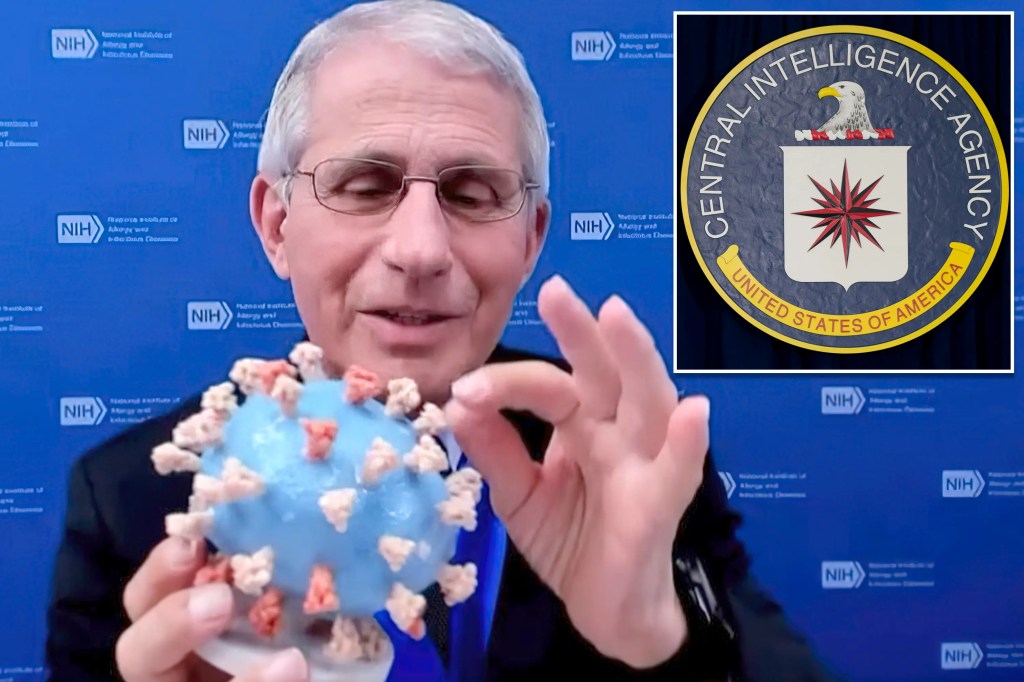
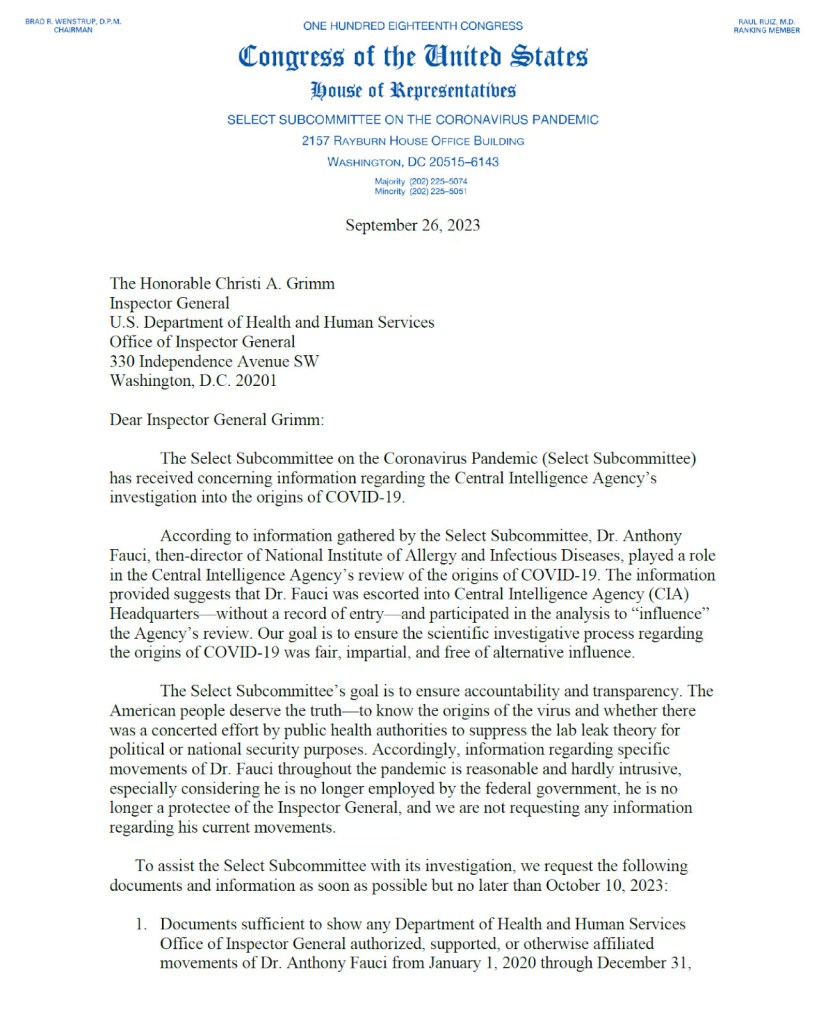
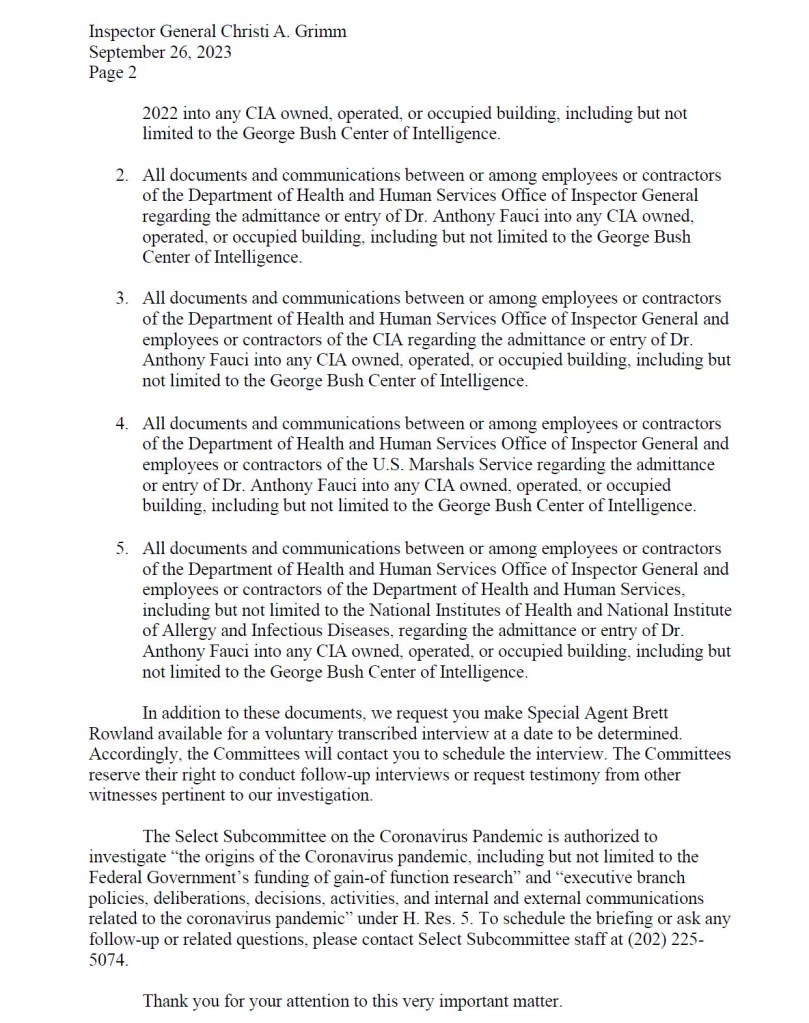
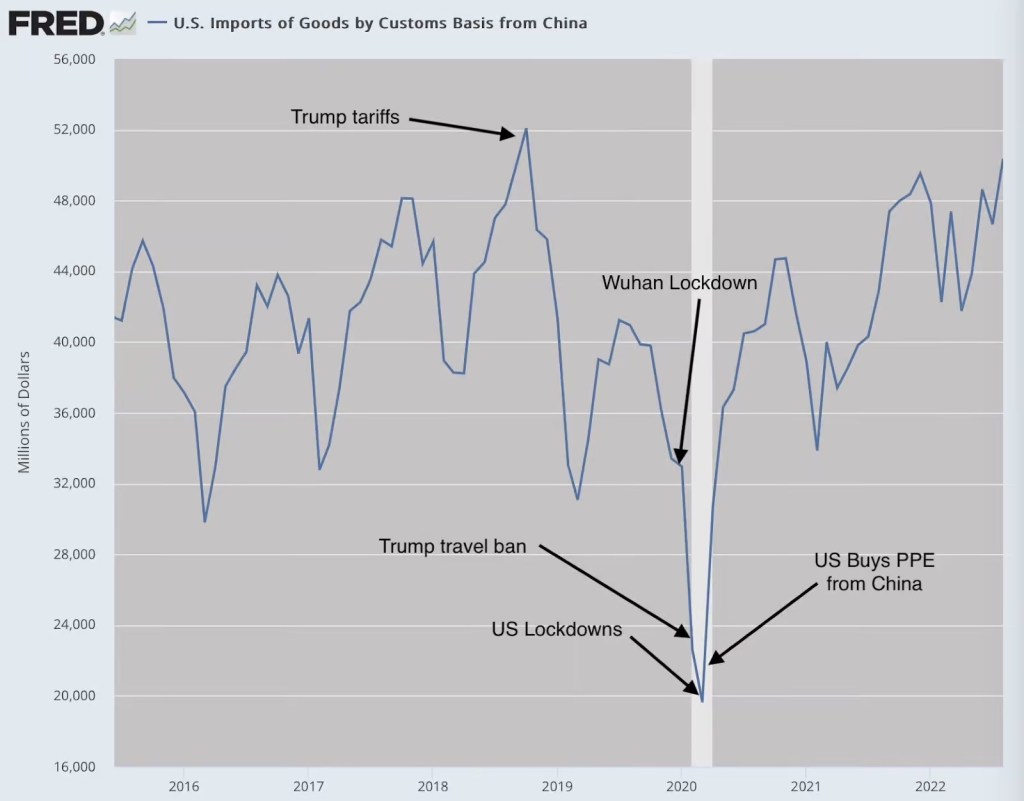
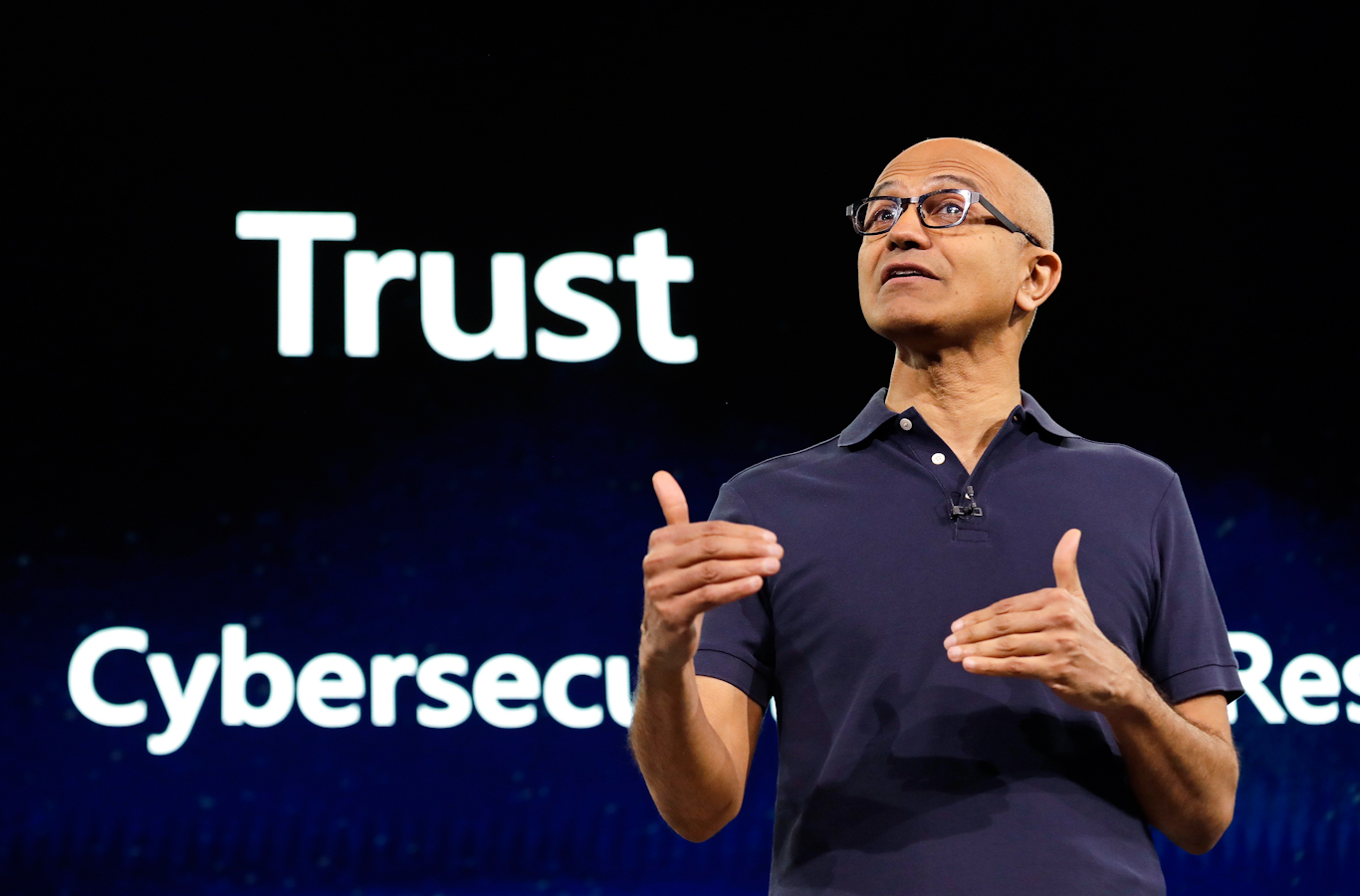
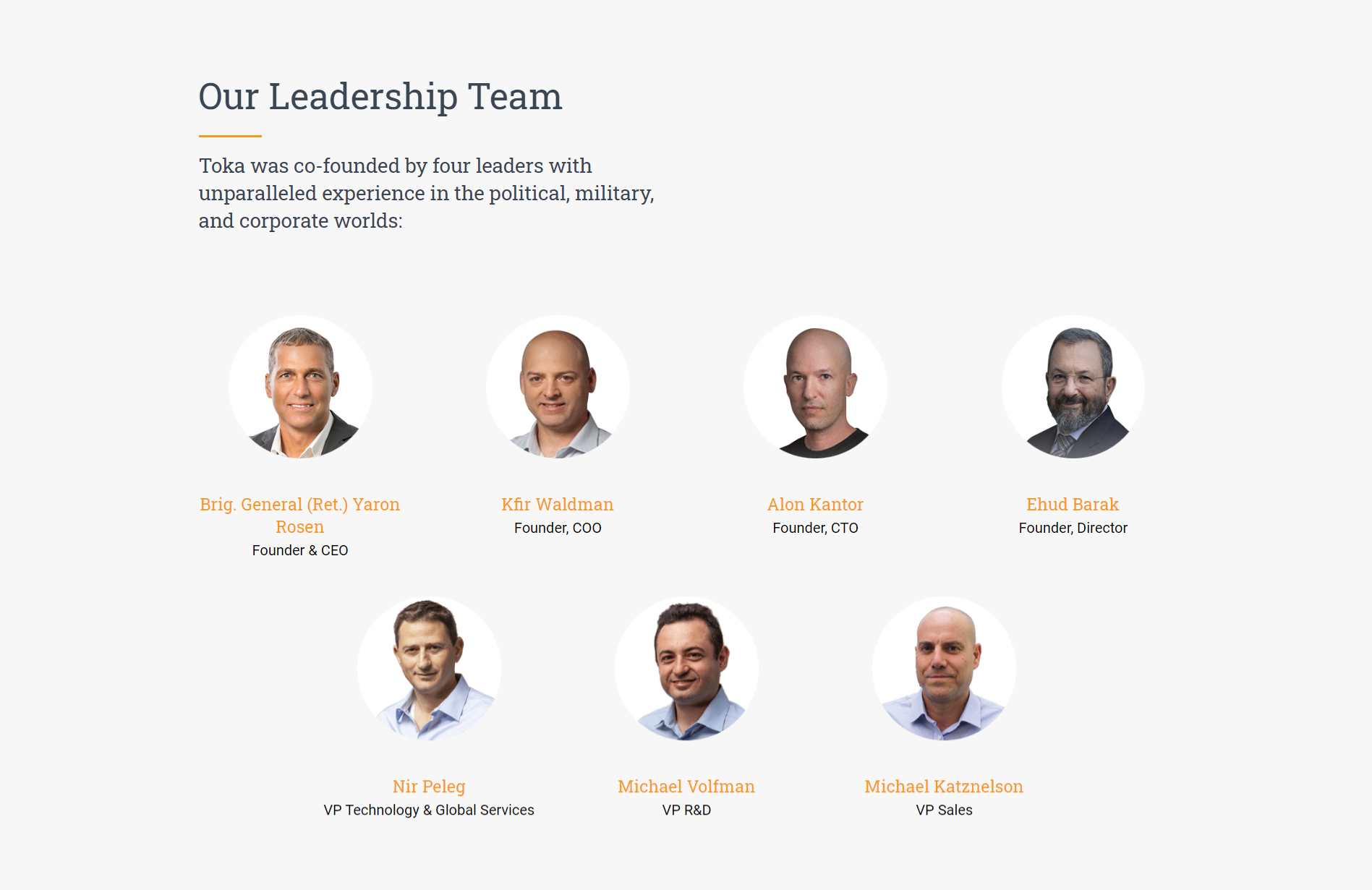
 After the Crash