Twenty Years Later: Facts About the OKC Bombing That Go Unreported

mcveigh601

By Kevin Ryan

Source: Washington’s Blog

Next week will mark the 20th anniversary of the terrorist bombing of the Murrah Federal Building in Oklahoma City, which killed 168 people including 19 children. The mainstream media will undoubtedly focus its attention on Timothy McVeigh, who was put to death in June 2001 for his part in the crime. They might also mention Terry Nichols, who was convicted of helping McVeigh plan the bombing and is serving a life sentence without parole.

There will be less discussion about how the FBI spent years hunting for a man who witnesses say accompanied McVeigh on the day of the bombing. They called this accomplice John Doe #2 and theories about his identity range from an Iraqi named Hussain Al-Hussaini, to a German national described below, to a neo-nazi bank robber named Richard Guthrie. The Justice Department finally gave up its search and said it was all a mistake— that there was never any credible evidence of a John Doe #2 being involved.

That reversal demonstrates a pattern of cover-up by authorities and limited media coverage in the years since the crime. This week, accounts will not repeat early reports of secondary devices in the building, or reports of the involvement of unknown middle-eastern characters. There will also be little if any mention of the extensive independent investigation into the crime that was conducted by leading members of the OKC community. Here are seven more facts that will probably not see much coverage on the 20th anniversary.

  1. Attorney Jesse Trentadue began investigating the case after his brother Kenney was killed in prison, apparently having been tortured to death by the FBI in its search for John Doe #2. Trentadue’s investigation led to a federal judge nearly finding the FBI in contempt of court for tampering with a key witness. Trentadue now says, “There’s no doubt in my mind, and it’s proven beyond any doubt, that the FBI knew that the bombing was going to take place months before it happened, and they didn’t stop it.”
  1. Judge Clark Waddoups, who presided over the case brought by Jesse Trentadue, ruled in 2010 that CIA documents associated with the case must be held secret. These documents show that the CIA was involved in the OKC bombing investigation and the prosecution of McVeigh. This means that foreign parties were involved because the CIA is prohibited from interfering in purely domestic investigations.
  1. Andreas Strassmeir, a former German military officer, was suspected of being John Doe #2. Strassmeir became close friends with McVeigh and they were both associated with a neo-nazi organization located in Elohim City, OK. A retired U.S. intelligence official claimed that Strassmeir was “working for the German government and the FBI” while at Elohim City. Mainstream reports about the OKC bombing typically avoid reference to Strassmeir.
  1. Larry Potts was the FBI supervisor who was responsible for the tragedies at Ruby Ridge in 1992, and Waco in 1993. Potts was then given responsibility for investigating the OKC bombing. Terry Nichols claimed that McVeigh—who allegedly had been recruited as an undercover intelligence asset while in the Army—had been working under the supervision of Potts.
  1. Terry Yeakey, an officer of the OKC Police Department, was among the first to reach the scene and he was heralded as a hero for rescuing many victims. Yeakey was also an eyewitness to conversations and physical evidence that convinced him that there was a cover-up of the bombing by federal agents. Yeakey was committed to getting to the truth about what happened but a year after the bombing he was found dead off the side of a rural road. His death was ruled a suicide despite overwhelming evidence that he was murdered. Authorities reported that Yeakey, “slit his wrists and neck… then miraculously climbed over a barbed wire fence… walked over a mile’s distance, through a nearby field, and eventually shot himself in the side of the head at an unusual angle.” No weapon was found, no investigation was conducted, no fingerprints were taken, and no interviews were conducted. His family continues to fight for the truth about his death.
  1. Gene Corley, the engineer who was hired by the government to support its claims about the structural fire at the Branch Davidian complex in Waco, was brought in to investigate the destruction of the Murrah Building. Corley brought along three other engineers: Charles Thornton, Mete Sozen, and Paul Mlakar. Their investigation was conducted from half a block away—where they could not observe any of the damage directly—yet their conclusions supported the pre-existing official account. A few years later, within 72 hours of the 9/11 attacks, these same four men were on site leading the investigations at the Word Trade Center and the Pentagon.
  1. There are many other links between OKC and 9/11. For example, the alleged hijackers visited the OKC area many times and even stayed in the same motel that was frequented by McVeigh and Nichols. After both the OKC bombing and 9/11, building monitoring videos went missing, FBI harassment of witnesses was seen, and officials ignored evidence that did not support the political story. Additionally, numerous oddities link the OKC area to al Qaeda. In 2002, OKC resident Nick Berg was interrogated by the FBI for lending his laptop and internet password to alleged “20th hijacker” Zacarias Moussoui. Two years after this interrogation, Berg became world famous as a victim of beheading in Iraq. Investigators looking for clues about these connections will be particularly interested in two airports in OKC, the president of the University of Oklahoma, and the CIA leader who both monitored the alleged hijackers in Germany and was hired at the university just before 9/11.

On April 19, 2015, at the 20th anniversary of one of the worst terrorist attacks in history, citizens should be reminded that we don’t know what happened that day. We don’t know because officials have covered-up the crime for unknown reasons and most media sources will not challenge that cover-up.

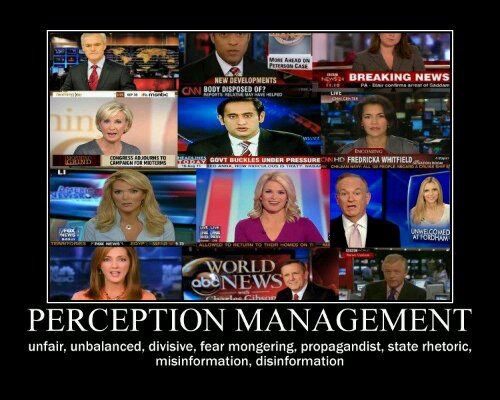
The Victory of ‘Perception Management’

wpid-facebook_-1640825551

By Robert Parry

Source: Consortium News

To understand how the American people find themselves trapped in today’s Orwellian dystopia of endless warfare against an ever-shifting collection of “evil” enemies, you have to think back to the Vietnam War and the shock to the ruling elite caused by an unprecedented popular uprising against that war.

While on the surface Official Washington pretended that the mass protests didn’t change policy, a panicky reality existed behind the scenes, a recognition that a major investment in domestic propaganda would be needed to ensure that future imperial adventures would have the public’s eager support or at least its confused acquiescence.

This commitment to what the insiders called “perception management” began in earnest with the Reagan administration in the 1980s but it would come to be the accepted practice of all subsequent administrations, including the present one of President Barack Obama.

In that sense, propaganda in pursuit of foreign policy goals would trump the democratic ideal of an informed electorate. The point would be not to honestly inform the American people about events around the world but to manage their perceptions by ramping up fear in some cases and defusing outrage in others – depending on the U.S. government’s needs.

Thus, you have the current hysteria over Russia’s supposed “aggression” in Ukraine when the crisis was actually provoked by the West, including by U.S. neocons who helped create today’s humanitarian crisis in eastern Ukraine that they now cynically blame on Russian President Vladimir Putin.

Yet, many of these same U.S. foreign policy operatives – outraged over Russia’s limited intervention to protect ethic Russians in eastern Ukraine – are demanding that President Obama launch an air war against the Syrian military as a “humanitarian” intervention there.

In other words, if the Russians act to shield ethnic Russians on their border who are being bombarded by a coup regime in Kiev that was installed with U.S. support, the Russians are the villains blamed for the thousands of civilian deaths, even though the vast majority of the casualties have been inflicted by the Kiev regime from indiscriminate bombing and from dispatching neo-Nazi militias to do the street fighting.

In Ukraine, the exigent circumstances don’t matter, including the violent overthrow of the constitutionally elected president last February. It’s all about white hats for the current Kiev regime and black hats for the ethnic Russians and especially for Putin.

But an entirely different set of standards has applied to Syria where a U.S.-backed rebellion, which included violent Sunni jihadists from the start, wore the white hats and the relatively secular Syrian government, which has responded with excessive violence of its own, wears the black hats. But a problem to that neat dichotomy arose when one of the major Sunni rebel forces, the Islamic State, started seizing Iraqi territory and beheading Westerners.

Faced with those grisly scenes, President Obama authorized bombing the Islamic State forces in both Iraq and Syria, but neocons and other U.S. hardliners have been hectoring Obama to go after their preferred target, Syria’s President Bashar al-Assad, despite the risk that destroying the Syrian military could open the gates of Damascus to the Islamic State or al-Qaeda’s Nusra Front.

Lost on the Dark Side

You might think that the American public would begin to rebel against these messy entangling alliances with the 1984-like demonizing of one new “enemy” after another. Not only have these endless wars drained trillions of dollars from the U.S. taxpayers, they have led to the deaths of thousands of U.S. troops and to the tarnishing of America’s image from the attendant evils of war, including a lengthy detour into the “dark side” of torture, assassinations and “collateral” killings of children and other innocents.

But that is where the history of “perception management” comes in, the need to keep the American people compliant and confused. In the 1980s, the Reagan administration was determined to “kick the Vietnam Syndrome,” the revulsion that many Americans felt for warfare after all those years in the blood-soaked jungles of Vietnam and all the lies that clumsily justified the war.

So, the challenge for the U.S. government became: how to present the actions of “enemies” always in the darkest light while bathing the behavior of the U.S. “side” in a rosy glow. You also had to stage this propaganda theater in an ostensibly “free country” with a supposedly “independent press.”

From documents declassified or leaked over the past several decades, including an unpublished draft chapter of the congressional Iran-Contra investigation, we now know a great deal about how this remarkable project was undertaken and who the key players were.

Perhaps not surprisingly much of the initiative came from the Central Intelligence Agency, which housed the expertise for manipulating target populations through propaganda and disinformation. The only difference this time would be that the American people would be the target population.

For this project, Ronald Reagan’s CIA Director William J. Casey sent his top propaganda specialist Walter Raymond Jr. to the National Security Council staff to manage the inter-agency task forces that would brainstorm and coordinate this “public diplomacy” strategy.

Many of the old intelligence operatives, including Casey and Raymond, are now dead, but other influential Washington figures who were deeply involved by these strategies remain, such as neocon stalwart Robert Kagan, whose first major job in Washington was as chief of Reagan’s State Department Office of Public Diplomacy for Latin America.

Now a fellow at the Brookings Institution and a columnist at the Washington Post, Kagan remains an expert in presenting foreign policy initiatives within the “good guy/bad guy” frames that he learned in the 1980s. He is also the husband of Assistant Secretary of State for European Affairs Victoria Nuland, who oversaw the overthrow of Ukraine’s elected President Viktor Yanukovych last February amid a very effective U.S. propaganda strategy.

During the Reagan years, Kagan worked closely on propaganda schemes with Elliott Abrams, then the Assistant Secretary of State for Latin America. After getting convicted and then pardoned in the Iran-Contra scandal, Abrams reemerged on President George W. Bush’s National Security Council handling Middle East issues, including the Iraq War, and later “global democracy strategy.” Abrams is now a senior fellow at the Council on Foreign Relations.

These and other neocons were among the most diligent students learning the art of “perception management” from the likes of Raymond and Casey, but those propaganda skills have spread much more widely as “public diplomacy” and “information warfare” have now become an integral part of every U.S. foreign policy initiative.

A Propaganda Bureaucracy

Declassified documents now reveal how extensive Reagan’s propaganda project became with inter-agency task forces assigned to develop “themes” that would push American “hot buttons.” Scores of documents came out during the Iran-Contra scandal in 1987 and hundreds more are now available at the Reagan presidential library in Simi Valley, California.

What the documents reveal is that at the start of the Reagan administration, CIA Director Casey faced a daunting challenge in trying to rally public opinion behind aggressive U.S. interventions, especially in Central America. Bitter memories of the Vietnam War were still fresh and many Americans were horrified at the brutality of right-wing regimes in Guatemala and El Salvador, where Salvadoran soldiers raped and murdered four American churchwomen in December 1980.

The new leftist Sandinista government in Nicaragua also was not viewed with much alarm. After all, Nicaragua was an impoverished country of only about three million people who had just cast off the brutal dictatorship of Anastasio Somoza.

So, Reagan’s initial strategy of bolstering the Salvadoran and Guatemalan armies required defusing the negative publicity about them and somehow rallying the American people into supporting a covert CIA intervention inside Nicaragua via a counterrevolutionary force known as the Contras led by Somoza’s ex-National Guard officers.

Reagan’s task was made tougher by the fact that the Cold War’s anti-communist arguments had so recently been discredited in Vietnam. As deputy assistant secretary to the Air Force, J. Michael Kelly, put it, “the most critical special operations mission we have … is to persuade the American people that the communists are out to get us.”

At the same time, the White House worked to weed out American reporters who uncovered facts that undercut the desired public images. As part of that effort, the administration attacked New York Times correspondent Raymond Bonner for disclosing the Salvadoran regime’s massacre of about 800 men, women and children in the village of El Mozote in northeast El Salvador in December 1981. Accuracy in Media and conservative news organizations, such as The Wall Street Journal’s editorial page, joined in pummeling Bonner, who was soon ousted from his job.

But these were largely ad hoc efforts. A more comprehensive “public diplomacy” operation took shape beginning in 1982 when Raymond, a 30-year veteran of CIA clandestine services, was transferred to the NSC.

A slight, soft-spoken New Yorker who reminded some of a character from a John le Carré spy novel, Raymond was an intelligence officer who “easily fades into the woodwork,” according to one acquaintance. But Raymond would become the sparkplug for this high-powered propaganda network, according to a draft chapter of the Iran-Contra report.

Though the draft chapter didn’t use Raymond’s name in its opening pages, apparently because some of the information came from classified depositions, Raymond’s name was used later in the chapter and the earlier citations matched Raymond’s known role. According to the draft report, the CIA officer who was recruited for the NSC job had served as Director of the Covert Action Staff at the CIA from 1978 to 1982 and was a “specialist in propaganda and disinformation.”

“The CIA official [Raymond] discussed the transfer with [CIA Director] Casey and NSC Advisor William Clark that he be assigned to the NSC as [Donald] Gregg’s successor [as coordinator of intelligence operations in June 1982] and received approval for his involvement in setting up the public diplomacy program along with his intelligence responsibilities,” the chapter said.

“In the early part of 1983, documents obtained by the Select [Iran-Contra] Committees indicate that the Director of the Intelligence Staff of the NSC [Raymond] successfully recommended the establishment of an inter-governmental network to promote and manage a public diplomacy plan designed to create support for Reagan Administration policies at home and abroad.”

During his Iran-Contra deposition, Raymond explained the need for this propaganda structure, saying: “We were not configured effectively to deal with the war of ideas.”

One reason for this shortcoming was that federal law forbade taxpayers’ money from being spent on domestic propaganda or grassroots lobbying to pressure congressional representatives. Of course, every president and his team had vast resources to make their case in public, but by tradition and law, they were restricted to speeches, testimony and one-on-one persuasion of lawmakers.

But things were about to change. In a Jan. 13, 1983, memo, NSC Advisor Clark foresaw the need for non-governmental money to advance this cause. “We will develop a scenario for obtaining private funding,” Clark wrote. (Just five days later, President Reagan personally welcomed media magnate Rupert Murdoch into the Oval Office for a private meeting, according to records on file at the Reagan library.)

As administration officials reached out to wealthy supporters, lines against domestic propaganda soon were crossed as the operation took aim not only at foreign audiences but at U.S. public opinion, the press and congressional Democrats who opposed funding the Nicaraguan Contras.

At the time, the Contras were earning a gruesome reputation as human rights violators and terrorists. To change this negative perception of the Contras as well as of the U.S.-backed regimes in El Salvador and Guatemala, the Reagan administration created a full-blown, clandestine propaganda network.

In January 1983, President Reagan took the first formal step to create this unprecedented peacetime propaganda bureaucracy by signing National Security Decision Directive 77, entitled “Management of Public Diplomacy Relative to National Security.” Reagan deemed it “necessary to strengthen the organization, planning and coordination of the various aspects of public diplomacy of the United States Government.”

Reagan ordered the creation of a special planning group within the National Security Council to direct these “public diplomacy” campaigns. The planning group would be headed by the CIA’s Walter Raymond Jr. and one of its principal arms would be a new Office of Public Diplomacy for Latin America, housed at the State Department but under the control of the NSC.

CIA Taint

Worried about the legal prohibition barring the CIA from engaging in domestic propaganda, Raymond formally resigned from the CIA in April 1983, so, he said, “there would be no question whatsoever of any contamination of this.” But Raymond continued to act toward the U.S. public much like a CIA officer would in directing a propaganda operation in a hostile foreign country.

Raymond fretted, too, about the legality of Casey’s ongoing involvement. Raymond confided in one memo that it was important “to get [Casey] out of the loop,” but Casey never backed off and Raymond continued to send progress reports to his old boss well into 1986. It was “the kind of thing which [Casey] had a broad catholic interest in,” Raymond shrugged during his Iran-Contra deposition. He then offered the excuse that Casey undertook this apparently illegal interference in domestic politics “not so much in his CIA hat, but in his adviser to the president hat.”

As a result of Reagan’s decision directive, “an elaborate system of inter-agency committees was eventually formed and charged with the task of working closely with private groups and individuals involved in fundraising, lobbying campaigns and propagandistic activities aimed at influencing public opinion and governmental action,” the draft Iran-Contra chapter said. “This effort resulted in the creation of the Office of Public Diplomacy for Latin America and the Caribbean in the Department of State (S/LPD), headed by Otto Reich,” a right-wing Cuban exile from Miami.

Though Secretary of State George Shultz wanted the office under his control, President Reagan insisted that Reich “report directly to the NSC,” where Raymond oversaw the operations as a special assistant to the President and the NSC’s director of international communications, the chapter said.

“Reich relied heavily on Raymond to secure personnel transfers from other government agencies to beef up the limited resources made available to S/LPD by the Department of State,” the chapter said. “Personnel made available to the new office included intelligence specialists from the U.S. Air Force and the U.S. Army. On one occasion, five intelligence experts from the Army’s 4th Psychological Operations Group at Fort Bragg, North Carolina, were assigned to work with Reich’s fast-growing operation.”

A “public diplomacy strategy paper,” dated May 5, 1983, summed up the administration’s problem. “As far as our Central American policy is concerned, the press perceives that: the USG [U.S. government] is placing too much emphasis on a military solution, as well as being allied with inept, right-wing governments and groups. …The focus on Nicaragua [is] on the alleged U.S.-backed ‘covert’ war against the Sandinistas. Moreover, the opposition … is widely perceived as being led by former Somozistas.”

The administration’s difficulty with most of these press perceptions was that they were correct. But the strategy paper recommended ways to influence various groups of Americans to “correct” the impressions anyway, removing what another planning document called “perceptional obstacles.”

“Themes will obviously have to be tailored to the target audience,” the strategy paper said.

Casey’s Hand

As the Reagan administration struggled to manage public perceptions, CIA Director Casey kept his personal hand in the effort. On one muggy day in August 1983, Casey convened a meeting of Reagan administration officials and five leading ad executives at the Old Executive Office Building next to the White House to come up with ideas for selling Reagan’s Central American policies to the American people.

Earlier that day, a national security aide had warmed the P.R. men to their task with dire predictions that leftist governments would send waves of refugees into the United States and cynically flood America with drugs. The P.R. executives jotted down some thoughts over lunch and then pitched their ideas to the CIA director in the afternoon as he sat hunched behind a desk taking notes.

“Casey was kind of spearheading a recommendation” for better public relations for Reagan’s Central America policies, recalled William I. Greener Jr., one of the ad men. Two top proposals arising from the meeting were for a high-powered communications operation inside the White House and private money for an outreach program to build support for U.S. intervention.

The results from the discussions were summed up in an Aug. 9, 1983, memo written by Raymond who described Casey’s participation in the meeting to brainstorm how “to sell a ‘new product’ – Central America – by generating interest across-the-spectrum.”

In the memo to then-U.S. Information Agency director Charles Wick, Raymond also noted that “via Murdock [sic] may be able to draw down added funds” to support pro-Reagan initiatives. Raymond’s reference to Rupert Murdoch possibly drawing down “added funds” suggests that the right-wing media mogul had been recruited to be part of the covert propaganda operation. During this period, Wick arranged at least two face-to-face meetings between Murdoch and Reagan.

In line with the clandestine nature of the operation, Raymond also suggested routing the “funding via Freedom House or some other structure that has credibility in the political center.” (Freedom House would later emerge as a principal beneficiary of funding from the National Endowment for Democracy, which was also created under the umbrella of Raymond’s operation.)

As the Reagan administration pushed the envelope on domestic propaganda, Raymond continued to worry about Casey’s involvement. In an Aug. 29, 1983, memo, Raymond recounted a call from Casey pushing his P.R. ideas. Alarmed at a CIA director participating so brazenly in domestic propaganda, Raymond wrote that “I philosophized a bit with Bill Casey (in an effort to get him out of the loop)” but with little success.

Meanwhile, Reich’s Office of Public Diplomacy for Latin America (S/LPD) proved extremely effective in selecting “hot buttons” that would anger Americans about the Sandinistas. He also browbeat news correspondents who produced stories that conflicted with the administration’s “themes.” Reich’s basic M.O. was to dispatch his propaganda teams to lobby news executives to remove or punish out-of-step reporters – with a disturbing degree of success. Reich once bragged that his office “did not give the critics of the policy any quarter in the debate.”

Another part of the office’s job was to plant “white propaganda” in the news media through op-eds secretly financed by the government. In one memo, Jonathan Miller, a senior public diplomacy official, informed White House aide Patrick Buchanan about success placing an anti-Sandinista piece in The Wall Street Journal’s friendly pages. “Officially, this office had no role in its preparation,” Miller wrote.

Other times, the administration put out “black propaganda,” outright falsehoods. In 1983, one such theme was designed to anger American Jews by portraying the Sandinistas as anti-Semitic because much of Nicaragua’s small Jewish community fled after the revolution in 1979.

However, the U.S. embassy in Managua investigated the charges and “found no verifiable ground on which to accuse the GRN [the Sandinista government] of anti-Semitism,” according to a July 28, 1983, cable. But the administration kept the cable secret and pushed the “hot button” anyway.

Black Hats/White Hats

Repeatedly, Raymond lectured his subordinates on the chief goal of the operation: “in the specific case of Nica[ragua], concentrate on gluing black hats on the Sandinistas and white hats on UNO [the Contras’ United Nicaraguan Opposition].” So Reagan’s speechwriters dutifully penned descriptions of Sandinista-ruled Nicaragua as a “totalitarian dungeon” and the Contras as the “moral equivalent of the Founding Fathers.”

As one NSC official told me, the campaign was modeled after CIA covert operations abroad where a political goal is more important than the truth. “They were trying to manipulate [U.S.] public opinion … using the tools of Walt Raymond’s trade craft which he learned from his career in the CIA covert operation shop,” the official admitted.

Another administration official gave a similar description to The Miami Herald’s Alfonso Chardy. “If you look at it as a whole, the Office of Public Diplomacy was carrying out a huge psychological operation, the kind the military conduct to influence the population in denied or enemy territory,” that official explained. [For more details, see Parry’s Lost History.]

Another important figure in the pro-Contra propaganda was NSC staffer Oliver North, who spent a great deal of his time on the Nicaraguan public diplomacy operation even though he is better known for arranging secret arms shipments to the Contras and to Iran’s radical Islamic government, leading to the Iran-Contra scandal.

The draft Iran-Contra chapter depicted a Byzantine network of contract and private operatives who handled details of the domestic propaganda while concealing the hand of the White House and the CIA. “Richard R. Miller, former head of public affairs at AID, and Francis D. Gomez, former public affairs specialist at the State Department and USIA, were hired by S/LPD through sole-source, no-bid contracts to carry out a variety of activities on behalf of the Reagan administration policies in Central America,” the chapter said.

“Supported by the State Department and White House, Miller and Gomez became the outside managers of [North operative] Spitz Channel’s fundraising and lobbying activities. They also served as the managers of Central American political figures, defectors, Nicaraguan opposition leaders and Sandinista atrocity victims who were made available to the press, the Congress and private groups, to tell the story of the Contra cause.”

Miller and Gomez facilitated transfers of money to Swiss and offshore banks at North’s direction, as they “became the key link between the State Department and the Reagan White House with the private groups and individuals engaged in a myriad of endeavors aimed at influencing the Congress, the media and public opinion,” the chapter said.

The Iran-Contra draft chapter also cited a March 10, 1985, memo from North describing his assistance to CIA Director Casey in timing disclosures of pro-Contra news “aimed at securing Congressional approval for renewed support to the Nicaraguan Resistance Forces.”

The chapter added: “Casey’s involvement in the public diplomacy effort apparently continued throughout the period under investigation by the Committees,” including a 1985 role in pressuring Congress to renew Contra aid and a 1986 hand in further shielding the Office of Public Diplomacy for Latin America from the oversight of Secretary Shultz.

A Raymond-authored memo to Casey in August 1986 described the shift of the S/LPD office – where Robert Kagan had replaced Reich – to the control of the Bureau of Inter-American Affairs, which was headed by Assistant Secretary of State Elliott Abrams, who had tapped Kagan for the public diplomacy job.

Even after the Iran-Contra scandal unraveled in 1986-87 and Casey died of brain cancer on May 6, 1987, the Republicans fought to keep secret the remarkable story of the public diplomacy apparatus. As part of a deal to get three moderate Republican senators to join Democrats in signing the Iran-Contra majority report, Democratic leaders agreed to drop the draft chapter detailing the CIA’s domestic propaganda role (although a few references were included in the executive summary). But other Republicans, including Rep. Dick Cheney, still issued a minority report defending broad presidential powers in foreign affairs.

Thus, the American people were spared the chapter’s troubling conclusion: that a secret propaganda apparatus had existed, run by “one of the CIA’s most senior specialists, sent to the NSC by Bill Casey, to create and coordinate an inter-agency public-diplomacy mechanism [which] did what a covert CIA operation in a foreign country might do. [It] attempted to manipulate the media, the Congress and public opinion to support the Reagan administration’s policies.”

Kicking the Vietnam Syndrome

The ultimate success of Reagan’s propaganda strategy was affirmed during the tenure of his successor, George H.W. Bush, when Bush ordered a 100-hour ground war on Feb. 23, 1991, to oust Iraqi troops from Kuwait, which had been invaded the previous August.

Though Iraqi dictator Saddam Hussein had long been signaling a readiness to withdraw – and Soviet President Mikhail Gorbachev had negotiated a withdrawal arrangement that even had the blessings of top U.S. commanders in the field – President Bush insisted on pressing ahead with the ground attack.

Bush’s chief reason was that he – and his Defense Secretary Dick Cheney – saw the assault against Iraq’s already decimated forces as an easy victory, one that would demonstrate America’s new military capacity for high-tech warfare and would cap the process begun a decade earlier to erase the Vietnam Syndrome from the minds of average Americans.

Those strategic aspects of Bush’s grand plan for a “new world order” began to emerge after the U.S.-led coalition started pummeling Iraq with air strikes in mid-January 1991. The bombings inflicted severe damage on Iraq’s military and civilian infrastructure and slaughtered a large number of non-combatants, including the incineration of some 400 women and children in a Baghdad bomb shelter on Feb. 13. [For details, see Consortiumnews.com’s “Recalling the Slaughter of Innocents.”]

The air war’s damage was so severe that some world leaders looked for a way to end the carnage and arrange Iraq’s departure from Kuwait. Even senior U.S. military field commanders, such as Gen. Norman Schwarzkopf, looked favorably on proposals for sparing lives.

But Bush was fixated on a ground war. Though secret from the American people at that time, Bush had long determined that a peaceful Iraqi withdrawal from Kuwait would not be allowed. Indeed, Bush was privately fearful that the Iraqis might capitulate before the United States could attack.

At the time, conservative columnists Rowland Evans and Robert Novak were among the few outsiders who described Bush’s obsession with exorcising the Vietnam Syndrome. On Feb. 25, 1991, they wrote that the Gorbachev initiative brokering Iraq’s surrender of Kuwait “stirred fears” among Bush’s advisers that the Vietnam Syndrome might survive the Gulf War.

“There was considerable relief, therefore, when the President … made clear he was having nothing to do with the deal that would enable Saddam Hussein to bring his troops out of Kuwait with flags flying,” Evans and Novak wrote. “Fear of a peace deal at the Bush White House had less to do with oil, Israel or Iraqi expansionism than with the bitter legacy of a lost war. ‘This is the chance to get rid of the Vietnam Syndrome,’ one senior aide told us.”

In the 1999 book, Shadow, author Bob Woodward confirmed that Bush was adamant about fighting a war, even as the White House pretended it would be satisfied with an unconditional Iraqi withdrawal. “We have to have a war,” Bush told his inner circle of Secretary of State James Baker, national security adviser Brent Scowcroft and Gen. Colin Powell, according to Woodward.

“Scowcroft was aware that this understanding could never be stated publicly or be permitted to leak out. An American president who declared the necessity of war would probably be thrown out of office. Americans were peacemakers, not warmongers,” Woodward wrote.

The Ground War

However, the “fear of a peace deal” resurfaced in the wake of the U.S.-led bombing campaign. Soviet diplomats met with Iraqi leaders who let it be known that they were prepared to withdraw their troops from Kuwait unconditionally.

Learning of Gorbachev’s proposed settlement, Schwarzkopf also saw little reason for U.S. soldiers to die if the Iraqis were prepared to withdraw and leave their heavy weapons behind. There was also the prospect of chemical warfare that the Iraqis might use against advancing American troops. Schwarzkopf saw the possibility of heavy U.S. casualties.

But Gorbachev’s plan was running into trouble with President Bush and his political subordinates who wanted a ground war to crown the U.S. victory. Schwarzkopf reached out to Gen. Powell, chairman of the Joint Chiefs of Staff, to make the case for peace with the President.

On Feb. 21, 1991, the two generals hammered out a cease-fire proposal for presentation to the NSC. The peace deal would give Iraqi forces one week to march out of Kuwait while leaving their armor and heavy equipment behind. Schwarzkopf thought he had Powell’s commitment to pitch the plan at the White House.

But Powell found himself caught in the middle. He wanted to please Bush while still representing the concerns of the field commanders. When Powell arrived at the White House late on the evening of Feb. 21, he found Bush angry about the Soviet peace initiative. Still, according to Woodward’s Shadow, Powell reiterated that he and Schwarzkopf “would rather see the Iraqis walk out than be driven out.”

In My American Journey, Powell expressed sympathy for Bush’s predicament. “The President’s problem was how to say no to Gorbachev without appearing to throw away a chance for peace,” Powell wrote. “I could hear the President’s growing distress in his voice. ‘I don’t want to take this deal,’ he said. ‘But I don’t want to stiff Gorbachev, not after he’s come this far with us. We’ve got to find a way out’.”

Powell sought Bush’s attention. “I raised a finger,” Powell wrote. “The President turned to me. ‘Got something, Colin?’,” Bush asked. But Powell did not outline Schwarzkopf’s one-week cease-fire plan. Instead, Powell offered a different idea intended to make the ground offensive inevitable.

“We don’t stiff Gorbachev,” Powell explained. “Let’s put a deadline on Gorby’s proposal. We say, great idea, as long as they’re completely on their way out by, say, noon Saturday,” Feb. 23, less than two days away.

Powell understood that the two-day deadline would not give the Iraqis enough time to act, especially with their command-and-control systems severely damaged by the air war. The plan was a public-relations strategy to guarantee that the White House got its ground war. “If, as I suspect, they don’t move, then the flogging begins,” Powell told a gratified president.

The next day, at 10:30 a.m., a Friday, Bush announced his ultimatum. There would be a Saturday noon deadline for the Iraqi withdrawal, as Powell had recommended. Schwarzkopf and his field commanders in Saudi Arabia watched Bush on television and immediately grasped its meaning.

“We all knew by then which it would be,” Schwarzkopf wrote. “We were marching toward a Sunday morning attack.”

When the Iraqis predictably missed the deadline, American and allied forces launched the ground offensive at 0400 on Feb. 24, Persian Gulf time.

Though Iraqi forces were soon in full retreat, the allies pursued and slaughtered tens of thousands of Iraqi soldiers in the 100-hour war. U.S. casualties were light, 147 killed in combat and another 236 killed in accidents or from other causes. “Small losses as military statistics go,” wrote Powell, “but a tragedy for each family.”

On Feb. 28, the day the war ended, Bush celebrated the victory. “By God, we’ve kicked the Vietnam Syndrome once and for all,” the President exulted, speaking to a group at the White House. [For more details, see Robert Parry’s Secrecy & Privilege.]

So as not to put a damper on the post-war happy feelings, the U.S. news media decided not to show many of the grisliest photos, such as charred Iraqi soldiers ghoulishly still seated in their burned-out trucks where they had been incinerated while trying to flee. By that point, U.S. journalists knew it wasn’t smart for their careers to present a reality that didn’t make the war look good.

Enduring Legacy

Though Reagan’s creation of a domestic propaganda bureaucracy began more than three decades ago – and Bush’s vanquishing of the Vietnam Syndrome was more than two decades ago – the legacy of those actions continue to reverberate today in how the perceptions of the American people are now routinely managed. That was true during last decade’s Iraq War and this decade’s conflicts in Libya, Syria and Ukraine as well as the economic sanctions against Iran and Russia.

Indeed, while the older generation that pioneered these domestic propaganda techniques has passed from the scene, many of their protégés are still around along with some of the same organizations. The National Endowment for Democracy, which was formed in 1983 under the supervision of Walter Raymond’s NSC operation, is still run by the same neocon, Carl Gershman, and has an even bigger budget, now exceeding $100 million a year.

Gershman and his NED played important behind-the-scenes roles in instigating the Ukraine crisis by financing activists, journalists and other operatives who supported the coup against elected President Yanukovych. The NED-backed Freedom House also beat the propaganda drums. [See Consortiumnews.com’s “A Shadow Foreign Policy.”]

Two other Reagan-era veterans, Elliott Abrams and Robert Kagan, have both provided important intellectual support for continuing U.S. interventionism around the world. Earlier this year, Kagan’s article for The New Republic, entitled “Superpowers Don’t Get to Retire,” touched such a raw nerve with President Obama that he hosted Kagan at a White House lunch and crafted the presidential commencement speech at West Point to deflect some of Kagan’s criticism of Obama’s hesitancy to use military force.

A New York Times article about Kagan’s influence over Obama reported that Kagan’s wife, Assistant Secretary of State Victoria Nuland, apparently had a hand in crafting the attack on her ostensible boss, President Obama.

According to the Times article, the husband-and-wife team share both a common world view and professional ambitions, Nuland editing Kagan’s articles and Kagan “not permitted to use any official information he overhears or picks up around the house” – a suggestion that Kagan’s thinking at least may be informed by foreign policy secrets passed on by his wife.

Though Nuland wouldn’t comment specifically on Kagan’s attack on President Obama, she indicated that she holds similar views. “But suffice to say,” Nuland said, “that nothing goes out of the house that I don’t think is worthy of his talents. Let’s put it that way.”

Misguided Media

In the three decades since Reagan’s propaganda machine was launched, the American press corps also has fallen more and more into line with an aggressive U.S. government’s foreign policy strategies. Those of us in the mainstream media who resisted the propaganda pressures mostly saw our careers suffer while those who played along moved steadily up the ranks into positions of more money and more status.

Even after the Iraq War debacle when nearly the entire mainstream media went with the pro-invasion flow, there was almost no accountability for that historic journalistic failure. Indeed, the neocon influence at major newspapers, such as the Washington Post and the New York Times, only has solidified since.

Today’s coverage of the Syrian civil war or the Ukraine crisis is so firmly in line with the State Department’s propaganda “themes” that it would put smiles on the faces of William Casey and Walter Raymond if they were around today to see how seamlessly the “perception management” now works. There’s no need any more to send out “public diplomacy” teams to bully editors and news executives. Everyone is already onboard.

Rupert Murdoch’s media empire is bigger than ever, but his neocon messaging barely stands out as distinctive, given how the neocons also have gained control of the editorial and foreign-reporting sections of the Washington Post, the New York Times and virtually every other major news outlet. For instance, the demonizing of Russian President Putin is now so total that no honest person could look at those articles and see anything approaching objective or evenhanded journalism. Yet, no one loses a job over this lack of professionalism.

The Reagan administration’s dreams of harnessing private foundations and non-governmental organizations have also come true. The Orwellian circle has been completed with many American “anti-war” groups advocating for “humanitarian” wars in Syria and other countries targeted by U.S. propaganda. [See Consortiumnews.com’s “Selling ‘Peace Groups’ on US-Led Wars.”]

Much as Reagan’s “public diplomacy” apparatus once sent around “defectors” to lambaste Nicaragua’s Sandinistas by citing hyped-up human rights violations now the work is done by NGOs with barely perceptible threads back to the U.S. government. Just as Freedom House had “credibility” in the 1980s because of its earlier reputation as a human rights group, now other groups carrying the “human rights” tag, such as Human Rights Watch, are in the forefront of urging U.S. military interventions based on murky or propagandistic claims. [See Consortiumnews.com’s “The Collapsing Syria-Sarin Case.”]

At this advanced stage of America’s quiet surrender to “perception management,” it is even hard to envision how one could retrace the many steps that would lead back to the concept of a democratic Republic based on an informed electorate. Many on the American Right remain entranced by the old propaganda theme about the “liberal media” and still embrace Reagan as their beloved icon. Meanwhile, many liberals can’t break away from their own wistful trust in the New York Times and their empty hope that the media really is “liberal.”

To confront the hard truth is not easy. Indeed, in this case, it can cause despair because there are so few voices to trust and they are easily drowned out by floods of disinformation that can come from any angle – right, left or center. Yet, for the American democratic Republic to reset its goal toward an informed electorate, there is no option other than to build institutions that are determinedly committed to the truth.

Investigative reporter Robert Parry broke many of the Iran-Contra stories for The Associated Press and Newsweek in the 1980s. You can buy his latest book, America’s Stolen Narrative, either in print here or as an e-book (from Amazon and barnesandnoble.com). You also can order Robert Parry’s trilogy on the Bush Family and its connections to various right-wing operatives for only $34. The trilogy includes America’s Stolen Narrative. For details on this offer, click here.

False Flagging the World towards War. The CIA Weaponizes Hollywood

PROPAGANDA

By Larry Chin

Source: GlobalResearch.ca

Almost all wars begin with false flag operations.

The coming conflicts in North Korea and Russia are no exception.

Mass public hysteria is being manufactured to justify aggression against Moscow and Pyongyang, in retaliation for acts attributed to the North Korean and Russian governments, but orchestrated and carried out by the CIA and the Pentagon.

The false flagging of North Korea: CIA weaponizes Hollywood

The campaign of aggression against North Korea, from the hacking of Sony and the crescendo of noise over the film, The Interview, bears all the markings of a CIA false flag operation.

The hacking and alleged threats to moviegoers has been blamed entirely on North Korea, without a shred of credible evidence beyond unsubstantiated accusations by the FBI. Pyongyang’s responsibility has not been proven. But it has already been officially endorsed, and publicly embraced as fact.

The idea of “America under attack by North Korea” is a lie.

The actual individuals of the mysterious group responsible for the hacking remain conveniently unidentified. A multitude of possibilities—Sony insiders, hackers-for-hire, generic Internet vandalism—have not been explored in earnest. The more plausible involvement of US spying agencies—the CIA, the NSA, etc. , their overwhelming technological capability and their peerless hacking and surveillance powers—remains studiously ignored.

Who benefits? It is illogical for Pyongyang to have done it. Isolated, impoverished North Korea, which has wanted improved relations with the United States for years (to no avail), gains nothing by cyberattacking the United States with its relatively weak capabilities, and face the certainty of overwhelming cyber and military response. On the other hand, Washington benefits greatly from any action that leads to regime change in North Korea.

But discussion about Pyongyang’s involvement—or lack of—risks missing the larger point.

This project, from the creation of The Interview to the well-orchestrated international incident, has been guided by the CIA, the Pentagon, and the State Department from the start. It is propaganda. It is a weapon of psychological warfare. It is an especially perverted example of military-intelligence manipulation of popular culture for the purpose of war.

There is nothing funny about any of it.

The Interview was made with the direct and open involvement of CIA and Rand Corporation operatives for the express purpose of destabilizing North Korea. Star and co-director Seth Rogen has admitted that he worked “directly with people who work in the government as consultants, who I’m convinced are in the CIA”. Originally conceived to be a plot taking place in an “unnamed country”, Sony Pictures co-chairman Michael Lynton, who also sits on the board of the Rand Corporation, encouraged the film makers to make the movie overtly about murdering Kim Jong-Un. Bruce Bennett, the Rand Corporation’s North Korean specialist, also had an active role, expressing enthusiasm that the film would assist regime change and spark South Korean action against Pyongyang. Other government figures from the State Department, even operatives connected to Hillary Clinton, read the script.

The infantile, imbecilic, tasteless, reckless idiots involved with The Interview, including the tasteless Rogen and co-director Evan Goldberg, worked with these military-intelligence thugs for months. “Hung out” with them. They do not seem to have had any problem being the political whores for these Langley death merchants. In fact, they had fun doing it. They seem not to give a damn, or even half a damn, that the CIA and the Pentagon have used them, and co-opted the film for an agenda far bigger than the stupid movie itself. All they seem to care about was that they are getting publicity, and more publicity, and got to make a stupid movie. Idiots.

The CIA has now succeeded in setting off a wave of anti-North Korea war hysteria across America. Witness the ignorant squeals and cries from ignorant Americans about how “we can’t let North Korea blackmail us”, “we can’t let Kim take away our free speech”. Listen to the ridiculous debate over whether Sony has the “courage” to release the film to “stand up to the evil North Koreans” who would “blackmail America” and “violate the rights” of idiot filmgoers, who now see it as a “patriotic duty” to see the film.

These mental midgets—their worldviews shaped by the CIA culture ministry with its endorsed pro-war entertainment, violent video games, and gung-ho shoot ‘em ups—are hopelessly brain-curdled, irretrievably lost. Nihilistic and soulless, as well as stupid, most Americans have no problem seeing Kim Jong-Un killed, on screen or in reality. This slice of ugly America is the CIA’s finest post-9/11 army: violent, hate-filled, easily manipulated, eager to obey sheeple who march to whatever drumbeat they set.

And then there are the truly dumb, fools who are oblivious to most of reality, who would say “hey lighten up, it’s only a comedy” and “it’s only a movie”. Naïve, entitled, exceptionalist Americans think the business of the war—the murderous agenda they and their movie are helping the CIA carry out —is all just a game.

The CIA’s business is death, and that there are actual assassination plans in the files of the CIA, targeting heads of state. Kim Jong-Un is undoubtedly on a real assassination list. This is no funny, either.

The real act of war

The provocative, hostile diplomatic stance of the Obama administration speaks for itself. Washington wanted to spark an international incident. It wants regime change in Pyongyang, does not care what North Korea or China think, and does not fear anything North Korea will do about it.

On the other hand, imagine if a film were about the assassination of Benjamin Netanyahu and the toppling of the government in Tel Aviv. Such a film, if it would ever be permitted even in script form, would be stopped cold. If it made it through censors that “magically” never slowed down The Interview (and yes, there is censorship in America, a lot of it) Obama would personally fly to Tel Aviv to apologize. At the very least, Washington would issue statements distancing themselves from the film and its content.

Not so in the case of The Interview. Because American elites actually want the Kim family murdered.

Despite providing no proof of North Korean involvement, President Barack Obama promised a “proportional response”. Promptly, North Korea’s Internet was mysteriously shut down for a day.

Unless one is naïve to believe in this coincidence, all signs point to US spy agencies (CIA, NSA, etc.) or hackers working on behalf of Washington and Langley.

Given the likelihood that North Korea had nothing to do with either the hacking of Sony, the initial pulling of the movie (a big part of the publicity stunt, that was not surprisingly reversed) or the “blackmailing” of moviegoers, the shutting down of North Korea’s Internet was therefore a unilateral, unprovoked act of war. Washington has not officially taken responsibility. For reasons of plausible denial, it never will.

Perhaps it was a dry run. A message. The US got to test how easily it can take down North Korea’s grid. As we witnessed, given overwhelming technological advantage, it was very easy. And when a war against Pyongyang begins in earnest, American forces will know exactly what they will do.

The US is flexing its Asia-Pacific muscles, sending a message not only to Pyongyang, but to China, a big future target. Some of the other muscle-flexing in recent months included the anti-Beijing protests in Hong Kong (assisted by the CIA and the US State Department), ongoing provocations in the South China Sea over disputed oil, and new defense agreements that place new anti-missile systems and missile-guided naval vessels to the region.

The bottom line is that America has once again been mobilized into supporting a new war that could take place soon. The CIA and Sony have successfully weaponized a stupid movie, making it into a cause and a battle cry.

If and when bombs fall on North Korea, blood will be on the hands of the makers of The Interview, every single executive who allowed it to be made, and the hordes who paid to see it.

If America were a decent, sane society, The Interview would be exposed, roundly denounced, boycotted and shunned. Instead it is celebrated.

The CIA should be condemned. Instead, Seth Rogen hangs out with them. America, increasingly dysfunctional, loves them. Obeys them.

The false flagging of Russia

Regarding The Interview, Russian Foreign Ministry spokesman Alexander Lukashevich issued a statement in sympathy with North Korea, correctly calling the film’s concept aggressive and scandalous, and decried the US retaliatory response as counterproductive and dangerous to international relations.

Of course. Washington has no interest in improved international relations.

The Russians should know.

Like Kim Jong-Un, Vladimir Putin has been vilified, demonized and false-flagged, incessantly. If Kim is today’s object of ridicule, Putin is Evil Incarnate.

Consider the hysterical, desperate provocations by Washington in recent months.

A US-NATO coup, engineered by the CIA, toppled the government of Ukraine, planting a pro-US neo-Nazi criminal apparatus on Russia’s doorstep. The CIA and its worldwide network of propagandists pinned the blame on Putin and Russia for aggression, and for obstructing “democracy”.

The MH-17 jetliner is downed by Ukrainian operatives, with the support of the CIA, Mi-6, etc. etc. This false flag operation was blamed on Russia— “Putin’s Missile”. The US and NATO are still trying to pin these murders on Putin.

The war against the Islamic State—a massive CIA false flag operation—seeks to topple with the the Assad government as well as to militarily counter Russia. The ongoing Anglo-American conquest of regional oil and gas supplies, and energy transport routes is also aimed at checkmating Russia and China across the region.

The US and NATO have attacked the Russian federation with sanctions. The US and Saudi Arabia have collapsed oil prices, to further destroy the Russian economy. Full-scale military escalations are being planned. The US Congress is pushing new legislation tantamount to an open declaration of war against Russia.

What next? Perhaps it is time for the CIA to produce a Seth Rogen-James Franco movie about assassinating Putin. Another “parody”. Or how about a movie about killing Assad, or anyone else the United States wants to make into a Public Enemy? Don’t think Langley isn’t working on it.

The return of the Bushes (who were never gone) 

In the midst of all escalating war hysteria comes news that Jeb Bush is “actively exploring” running for president in 2016. The long predicted return of the Bush family, the kings of terrorism, the emperors of the false flag operation, back to the White House appears imminent.

The CIA will have its favorite family back in the Oval Office, with true CIA scion to manage the apocalyptic wars are likely to be launched in earnest in the next two years: Russia/Ukraine, North Korea, the Middle East.

Jeb Bush will “finish the job”.

The 2016 presidential “contest” will be a charade. It is likely to put forth two corrupt establishment political “friends” posing as adversaries, when in fact, they are longtime comrades and conspirators. On one side, Hillary (and Bill) Clinton. On the other side, Jeb Bush, with George H.W., George W. and all of the Bush cronies crawling back out of the rotten woodwork. The fact is that the Clintons and Bushes, and their intertwined networks, have run the country since the 1980s, their respective camps taking turns in power, with Obama as transitional figurehead (his administration has always been run by neoliberal elites connected to the Clintonistas, including Hillary Clinton herself).

The collective history of the Bushes stretches back to the very founding of the American intelligence state. It is the very history of modern war criminality. The resume is George H.W. Bush—the CIA operative and CIA Director—is long and bloody, and littered with cocaine dust. The entire Bush family ran the Iran-Contra/CIA drug apparatus, with the Clintons among the Bush network’s full partners in the massive drug/weapons/banking frauds of that era, the effects of which still resonate today. And we need not remind that the Bush clan and 9/11 are responsible for the world of terror and false flag foreign policy and deception that we suffer today.

While it remains too early to know which way the Establishment will go with their selection (and it depends on how world war shakes out between now and 2016), it is highly likely that Jeb

Bush would be the pick.

Hillary Clinton has already been scandalized—“Benghazi-ed”. Jeb Bush, on the other hand, has ideal Establishment/CIA pedigree. He has waited years for the stupid American public to forget the horrors that his family—Georges H.W. and W.— brought humanity. And now Americans , with their ultra-short memories, have indeed forgotten, if they had ever understood it in the first place.

And the American public does not know who Jeb Bush is, beyond the last name. Jeb Bush, whom Barbara Bush always said was the “smart one”, has been involved in Bush narco-criminal business since Iran-Contra. His criminal activities in Florida, his connection with anti-Castro Cuban terrorists and other connections are there, for those who bother to investigate them. His Latin American connections—including his ability to speak fluent Spanish, a Latin wife and a half-Latin son (George P. Bush, the next up and coming political Bush)—conveniently appeals to the fastest-growing demographic, as well as those in the southern hemisphere drug trade. Recent Obama overtures towards the Latino demographic—immigration, Cuba—appear to be a Democratic Party move to counter Jeb Bush’s known strengths in the same demographic.

Today, in the collective American mind, Kim Jong-Un and Vladimir Putin are “the bad guys”. But the mass murdering war criminal Bushes are saints. “Nice guys”.

A Jeb Bush presidency will be a pure war presidency, one that promises terror, more unspeakable than we are experiencing now, lording it over a world engulfed in holocaust.

This is not a movie.

The CIA-engineered oil glut to bring down Putin and Maduro

Russian President Vladimir Putin shakes hands with his Venezuelan counterpart Nicolas Maduro during a signing ceremony at the Kremlin in Moscow

By Wayne Madsen

Source: Intrepid Report

John Brennan’s long familiarity with Saudi Arabia, owing to the time he spent there as the CIA station chief in Riyadh in the 1990s and his knowledge of Saudi oil operations, has paid off. WMR has learned that Brennan’s agents inside Saudi Aramco convinced the firm’s management and the Saudi Oil Ministry to begin fracking operations to stimulate production in Saudi Arabia’s oldest oil fields.

By pumping salt water into older wells, some at a depth of 3 to 6 thousand feet, an inordinate amount of pressure was built up. The CIA’s oil industry implants knew what would occur when the fracking operations began. Due to the dangerously high water pressure, the Saudis were forced continuously pump oil until the pressure became equalized. That process is continuing. If the Saudis ceased pumping oil, they would permanently lose the wells to salt water contamination. In the current “pump it or lose it” situation, the Saudis are forced to pump at a rate that may take up to 5 years before they can slow down production rates.

The net result of the CIA-inspired fracking operations, which the Saudis were warned not to pursue by petroleum engineers working for some foreign-based firms like Schlumberger, is that there will be an oil supply glut for the next 5 years. The glut will be followed by a reduction in Saudi oil production unless new oil fields are brought on line. There is now a major push by U.S. and Canadian oil companies to bring the Keystone XL pipeline from Canada to the United States to offset the expected sharp rise in oil prices in five years.

The CIA operation to frack Middle Eastern oil fields was not only limited to Saudi Arabia. WMR has learned from oil industry sources that similar fracking caused overproduction problems in Kuwait and Iraq.

The result of the sudden decline in oil prices has resulted in heavy damage to the economies of the CIA-targeted countries of Russia, Iran, and Venezuela. Brennan and his economic warfare operatives banked on the Saudi overproduction to harm the economies of all three countries and the CIA has not been disappointed. The CIA figures that the governments of Vladimir Putin in Russia, Ayatollah Ali Khamenei in Iran, and Nicolas Maduro in Venezuela will have long since collapsed and been replaced by pro-Western regimes within 5 years.

Already, from his base in Switzerland, exiled Russian tax evader billionaire Mikhail Khodorkovsky has called for Putin’s overthrow and even his assassination. Meanwhile, the U.S. Congress and the Obama administration have taken cues from the CIA to impose devastating economic sanctions on both Russia and Venezuela. Similar congressional legislation to increase sanctions on Iran is pending.

Russia has been harmed the most by the CIA’s Saudi oil production scheme. The Russian ruble fell 56 percent in value against the U.S. dollar while Russian interest rates climbed to 17 percent. The price of shares of Russia’s largest lending bank, Sberbank, fell 18 percent. Although the Russian economic collapse has resulted in financial ripples around the world, with Austrian and French banks losing their stock values and the value of the Polish zloty and Hungarian forint falling against the dollar, the Obama administration says that there will be no easing on economic sanctions imposed on Russia over Ukraine. Obama has put the investments of American holders of Russian bonds in dire jeopardy.

The Pacific Investment Management Company’s (PEBIX) Emerging Markets Bond Fund, which holds over $800 million in Russian bonds, has lost almost 8 percent in value in the past few weeks.

Russian Central Bank Vice Chairman Sergei Shvetsov said, “What is happening is a nightmare that we could not even have imagined a year ago.”

Meanwhile, basic staples in Venezuela, including cooking oil, rice, and corn flour, are becoming hard to obtain. The U.S. dollar has jumped 1,700 percent in value against the Venezuelan bolivar on the black market. The CIA is using the financial collapse to push for an undemocratic overthrow of the Venezuelan government.

Iran, which has been under punitive Western economic sanctions for a number of years over its nuclear power program, is probably best able to weather the storm. Iran has built up a rather impressive domestic food production, telecommunications, and oil industry infrastructure to survive the sanctions. However, Iranian President Hassan Rouhani appears very aware of the Saudi role in the conspiracy to drive down oil prices.

Rouhani recently said, “The main reason for [the oil price plunge] is [a] political conspiracy by certain countries against the interest of the region and the Islamic world and it is only in the interest of some other countries . . . Iran and people of the region will not forget such conspiracies, or in other words, treachery against the interests of the Muslim world.”

Brennan’s and the CIA’s industrial sabotage of the Saudi and other Middle East oil industries will continue to have far-reaching effects on the world economy. Oil industry insiders fear that the CIA has unleashed something that may deal a devastating blow to the global economy.

Obama’s Reaction to the Senate Report: Torture is Good

obama_war_crimes

By Chris Floyd

Source: Empire Burlesque

A truncated version of the Senate investigation into the CIA’s Terror War torture regime has finally been released. Even in its limited form, it details an operation of vile depravity, one which would plunge a civilized nation into a profound crisis of conscience and spark a deep and anguished debate on how best to transform a system of government — and a national ethos — that could lead to such putrid crimes. It would also occasion a wide-ranging effort to subject the originators, perpetrators and accomplices of the torture program to the full measure of legal punishment they deserve.

Needless to say, nothing like that is going to happen in America. Indeed, even before the report was released, the New York Times — the standard-bearer and shaper of “decent” liberal thought for the nation — was splashing an opinion piece on the front page of its website, demanding that we “Pardon Bush and Those Who Tortured.” This was the very first “think piece” pushed by the Times on the morning of the report’s release.

I’m sure that by the end of the day, the dust will have already settled into the usual ruts. The Hard Right — and its pork-laden publicists — will denounce the investigation and continue to champion torture, as they have done in the weeks running up to the release. The somewhat Softer Right that constitutes the “liberal” wing of the ruling Imperial Party (and its outriders in the “progressive” media) will wring their hands for a bit — as they did during the multitude of previous revelations about systematic torture, White House death squads, Stasi-surpassing surveillance programs, war profiteering, military aggression and so on. Then they will return to what is always their main business at hand: making sure that someone from their faction of the Imperial Party is in the driver’s seat of the murderous War-and-Fear Machine that has now entirely engulfed American society.

Speaking of the Machine, what has been the reaction of the current driver, the belaurelled prince of progressivism, Barack Obama? He sent out the present head of the CIA, John Brennan, an “Obama confidant,” as the Guardian notes, to … defend the use of torture.

You see, one of the main points of the report was that the abominable practices ordered at the highest levels of the American government and used far more widely than previously admitted were not even effective. This, of course, is the most damning criticism one can make of the soul-drained technocrats who staff the Empire. Morality and humanity be damned; the real problem was that torture didn’t work. It produced reams of garbage and falsehood from hapless victims who, like torture victims the world over, from time immemorial, simply regurgitated what they thought their tormentors wanted to hear.

So in the end, the torture regime was not only ineffective, it was counterproductive: this is the report’s conclusion. But it is this that the Technocrat-in-Chief cannot bear. And so he sent his confidant Brennan out to refute this heinous charge. Brennan actually got up in public and said, openly, that torture did work and that it’s a good thing:

“Our review indicates that interrogations of detainees on whom EITs were used did produce intelligence that helped thwart attack plans, capture terrorists, and save lives. The intelligence gained from the program was critical to our understanding of al-Qaida and continues to inform our counterterrorism efforts to this day,” Brennan said.

“EIT” is, of course, the technocratic euphemism for the systematic brutalization of helpless, captive human beings by wretched cowards armed with the power of the state. Brennan — Obama’s confidant — says, in the name of the president, that torture “saved lives.” What’s more, he admits that Obama is still using the fruits of the torture program to “inform our counterterrorism efforts to this day.”

Let’s say this again: the conclusion of the Barack Obama administration is that the use of torture is a good thing, and that it is still “informing” its Terror War operations “to this day.”

One of the chief objections mouthed by the torture champions opposed to the release of the report was that public exposure of these crimes would rouse anger and anti-American feeling around the world. This was always a specious argument, of course; the people targeted by Washington’s Terror War have always known full well what is being done to them and theirs. This latest report will merely be another confirmation, another tranche of evidence to add to the mountain of war crime and atrocity they have experienced.

No, it is not the report itself, but the reaction of the American establishment — particularly the Obama Administration itself — that will be the true scandal, a new outrageous slap in the face. A door opens up on a sickening chamber of horrors …. and all that Obama can say is that torture is good; yea, it is even salvific, it saves lives, it is good and effective and necessary and we need it.

Torture is good. That is Barack Obama’s takeaway from the Senate report. It is astounding — or would be astounding, if we were not living in an age given over to state terror and elite rapine.


War, Media Propaganda, and the Police State

looks-like-youve-had-a-bit-too-much-to-think-support-your-local-thought-police-dont-speak-out-or-question-closed-minds-stop-thought-crimes

By James F. Tracy

Source: Memory Hole

The following essay is intended to provide a brief overview of topics addressed in a discussion graciously recorded by Julie Vivier at the offices of the Center for Research on Globalization in Montreal Canada on August 5, 2014.-JFT

Modern propaganda techniques utilized by the corporate state to enforce anti-democratic and destructive policies routinely entail the manufacture and manipulation of news events to mold public opinion and, as Edward Bernays put it, “engineer consent” toward certain ends.

Such events include not only overt political appeals, but also acts of seemingly spontaneous terrorism and militarism that traumatize the body politic into ultimately accepting false narratives as political and historical realities.

Western states’ development and utilization of propaganda closely parallels the steady decay of political enfranchisement and engagement throughout the twentieth century. Upon securing a second term in 1916, the Democratic administration of Woodrow Wilson plunged the United States into the most violent and homicidal war in human history. Wilson, a former Princeton University academician  groomed for public office by Wall Street bankers, assembled a group of progressive-left journalists and publicists to “sell the war” to the American people.

George Creel, Walter Lippmann, Edward Bernays and Harold Lasswell all played influential roles in the newly-formed Committee on Public Information, and would go on to be major figures in political thought, public relations, and psychological warfare research.

The sales effort was unparalleled in its scale and sophistication. The CPI was not only able to officially censor news and information, but essentially manufacture these as well. Acting in the role of a multifaceted advertising agency, Creel’s operation “examined the different ways that information flowed to the population and flooded these channels with pro-war material.”

The Committee’s domestic organ was comprised of 19 subdivisions, each devoted to a specific type of propaganda, one of which was a Division of News that distributed over 6,000 press releases and acted as the chief avenue for war-related information. On an average week, more than 20,000 newspaper columns carried data provided through CPI propaganda. The Division of Syndicated Features enlisted the help of popular novelists, short story writers, and essayists. These mainstream American authors presented the official line in a readily accessible form reaching twelve million people every month. Similar endeavors existed for cinema, impromptu soapbox oratory (Four Minute Men), and outright advertising at home and abroad.[1]

With the experiences and observations of these war marketers variously recounted and developed throughout the 1920s (Lippmann, Public Opinion, The Phantom Public, Bernays, Propaganda, Crystallizing Public Opinion, Creel, How We Advertised America, Lasswell, Propaganda and the World War), alongside the influence of their elite colleagues and associates, the young publicists’ optimism concerning popular democracy guided by informed opinion was sobered with the realization that public sentiment was actually far more susceptible to persuasion than had been previously understood. The proposed solutions to guarantee something akin to democracy in an increasingly confusing world lay in “objective” journalism guided by organized intelligence (Lippmann) and propaganda, or what Edward Bernays termed “public relations.”

The argument laid out in Lippmann’s Public Opinion was partly motivated by the US Senate’s rejection of membership in the League of Nations. An adviser to the Wilson administration, a central figure behind intelligence gathering that informed postwar geopolitical dynamics laid out at the Paris Peace Conference, and an early member of the Council on Foreign Relations, Lippmann increasingly viewed popular democracy as plagued by a hopelessly ill-informed public opinion incapable of comprehending the growing complexities of modern society. Only experts could be entrusted with assessing, understanding, and acting on the knowledge accorded through their respective professions and fields.

Along these lines, journalism should mimic the then-fledgling social sciences by pursuing objectivity and deferring to the compartmentalized expertise of established authority figures. News and information could similarly be analyzed, edited, and coordinated to ensure accuracy by journalists exercising similar technocratic methods. Although Lippmann does not exactly specify what body would oversee such a process of “organized intelligence,” his postwar activities and ties provides a clue.

Edward Bernays’ advocacy for public opinion management is much more practical and overt. Whereas Lippmann suggests a regimented democracy via technocratic news and information processing, Bernays stresses a privileged elite’s overt manipulation of how the populace interprets reality itself. Such manipulation necessitates contrived associations, figures and events that appear authentic and spontaneous. “Any person or organization depends ultimately on public approval,” Bernays notes,

“and is therefore faced with the problem of engineering the public’s consent to a program or goal … We reject government authoritarianism or regimentation, but we are willing to be persuaded by the written or spoken word. The engineering of consent is the very essence of the democratic process, the freedom to persuade and suggest.[2]

Bernays demonstrates an affinity with Lippmann’s notion of elite expediency when pursuing prerogatives and decision-making the public at large cannot be entrusted to interpret. In such instances,

democratic leaders must play their part in leading the public through the engineering of consent to socially constructive goals and values. This role naturally imposes upon them the obligation to use educational processes, as well as other available techniques, to bring about as complete an understanding as possible.[3]

Written in the early 1950s, these observations become especially apt in the latter half of the twentieth century, where the US is typically a major aggressor in foreign (and eventually domestic) affairs. Yet what does Bernays mean by, for example, “educational processes”? An indication may be found by noting his central role in the promotion of tobacco use, municipal water fluoridation, and the overthrow of the democratically-elected Arbenz regime in Guatemala.[4]

With the advent of the national security state in 1947, secret programs emerge where the people are as a matter of course intentionally left unaware of the state’s true rationales and objectives.

Indeed, a wealth of contemporary historical examples suggest how the “engineering of consent” is wholly calculating and anti-democratic, and where the crises requiring such drastic and immediate public relations and military measures are themselves the result of the same leadership’s policies and actions. The US economic provocation of the Japanese attack on Pearl Harbor and the Tonkin Gulf incident precipitating US military occupation of Vietnam are obvious examples of such manufactured events.

Similar techniques are apparent in the major political assassinations of the 1960s, where to this day the public is prompted to partake in the false reality that Lee Harvey Oswald was the sole culprit in the murder of President John F. Kennedy, much as Sirhan Sirhan was responsible for the death of Senator Robert F. Kennedy.

In fact, in each instance overwhelming evidence points to Central Intelligence Agency involvement in orchestrating the assassinations while training and presenting Oswald and Sirhan as the would-be assassins.

The US government’s assassination of Dr. Martin Luther King Jr., probably the most influential African American public persona of the twentieth century, is not even open to debate, having been soundly proven in a court of law.[5] Yet as with the Kennedys, it is a genuine public relations achievement that much of the American population is oblivious to the deeper dynamics of these political slayings that are routinely overlooked or inaccurately recounted in public discourse.

Along these lines, in the historical context of Operation Gladio, the Oklahoma City Murrah Federal Building bombing, the events of September 11, 2001, the London 7/7/2005 bombings, and lesser episodes such as the “shoe” and “underwear” bombers, the engineering of consent has reached staggering new heights where state-orchestrated terrorism is used to mold public opinion toward acceptance of militarized policing operations, the continued erosion of civil liberties, and major sustained aggression against moderate Middle Eastern nations to cartelize scarce resources and politically reconfigure an entire region of the world.

Again, the public is essentially compelled to believe that political extremism of one form or another is the cause of each event, even in light of how the sophistication and scope of the Oklahoma City and 9/11 “attacks” suggest high-level forces at work. If one is to delve beneath the public relations narrative of each event, the recent Newtown massacre and Boston Marathon bombing likewise appear to have broader agendas where the public is again purposely misled.

Conventional journalists and academics are reluctant to publicly address such phenomena for fear of being called “conspiracy theorists.” In the case of academe this has severely curtailed serious and potentially crucial inquiry into such deep events and phenomena in lieu of what are often innocuous intellectual exchanges divorced from actually existing social and political realities that cry out for serious interrogation and critique.

The achievements of modern public relations are further evident in the Warren and 9/11 Commissions themselves, both of which have spun the fantastic myths of Allan Dulles and Peter Zelikow respectively, and that today maintain footholds in public discourse and consciousness.

Indeed, the “conspiracy theory” meme, a propaganda campaign waged by the CIA beginning in the mid-1960s to counter criticism of the Warren Commission report, is perhaps as little-known as Operation Mockingbird, the CIA program where hundreds of journalists and publishers actively devoted their services to spread Agency disinformation. The overall effect of these combined operations has been an immensely successful program continues to shape the contours of American political life and mediated reality.[6]

The present socio-political condition and suppression of popular democracy are triumphs of modern propaganda technique. So are they also manifest in the corporate state’s efforts to engineer public acquiescence toward such things as the colossal frauds of genetically modified organisms masquerading as “food,” toxic polypharmacy disguised as “medicine,” and the police state and “war on terror” seeking to preserve “national security.”

Notes

[1] Aaron Delwiche, “Propaganda: Wartime Propaganda: World War I, The Committee on Public Information,” accessed September 28, 2014 at http://www.propagandacritic.com/articles/ww1.cpi.html; George Creel, How We Advertised America, New York: Harper and Brothers, 1920. Available at http://archive.org/details/howweadvertameri00creerich

[2] Edward Bernays, Public Relations, Norman OK: University of Oklahoma Press, 1952, 159-160.

[3] Ibid. 160.

[4] “You can get practically any ideas accepted,” Bernays reflected on the campaign to fluoridate New York City’s water supply. “If doctors are in favor, the public is willing to accept it, because a doctor is an authority to most people, regardless of how much he knows, or doesn’t know … By the law of averages, you can usually find an individual in any field who will be willing to accept new ideas, and the new ideas then infiltrate the others who haven’t accepted it. Christopher Bryson, The Fluoride Deception, New York: Seven Stories Press, 2004, 159.

[5] William F. Pepper, An Act of State: The Execution of Martin Luther King, New York: Verso, 2003.

[6] James F. Tracy, “Conspiracy Theory: Foundations of a Weaponized Term,” Global Research, January 22, 2013.


ISIS Beheadings on Cue from US & UK?

McCain_and_Syrian_rebels-550x251-e1403308183299

By Finian Cunningham

Source: The 4th Media

The gruesome beheading of a British aid worker by the ISIS terror group in Syria over the weekend provoked a stern warning from Britain’s Prime Minister David Cameron who vowed to “hunt down the murderers” for their “act of pure evil”.

The British victim was named as David Haines, a 44-year-old aid worker, who had been held hostage in Syria for many months. A graphic video released by his killers shows Haines kneeling on the ground dressed in an orange jumpsuit as a masked executioner severs his throat with a knife. The dead man’s prone body is then filmed with a decapitated, bloody head placed on the corpse’s back.

Some analysts have disputed the veracity of the video, saying it is a fake. But Haine’s foreboding demeanor and his final words spoken to the camera tend to verify the recording as genuine. The British government has also stated that it believes the footage to be authentic.

Haines was the third Westerner to be apparently murdered by the ISIS militants in the past four weeks using the same macabre ritual.Earlier this month, on September 3, a video showed American journalist Steven Sotloff also being decapitated in the same grisly manner. Two weeks before that, another abducted American citizen, James Foley, also a journalist, met the same grim fate at the hands of his captors.

A fourth man, another British national named as Alan Hemming, is feared to be the next ISIS victim, with unconfirmed video footage of his execution also posted this weekend.

The shocking scenes of brutality have sparked public outrage in the US and around the world. President Barack Obama addressed the nation in a prime-time television broadcast last week in which he declared that American forces would track down and destroy the ISIS terrorists. The group is also known by the alternative acronyms IS or ISIL, referring ostensibly to an aspired fundamentalist Islamic caliphate that incorporates Iraq and Syria.

At the same time that Obama was addressing the nation, US secretary of state John Kerry was in the Middle East drumming up support for an American-led international coalition to launch military strikes against ISIS, whose strongholds are in northern Iraq straddling the border with eastern Syria.

ISIS has been a prominent force among a myriad of militant cohorts that have been waging war against the Syrian state since March 2011. There is substantial evidence that Western governments have been covertly supporting ISIS and other extremists under the guise of assisting the “moderate rebels” for the ultimate purpose of destabilizing the Assad government of Syria and regime change. Assad is a staunch ally of Russia and Iran, and therefore is in the Western crosshairs for regime change.

But latterly ISIS has gained notoriety for its kidnapping and murder of Western citizens.

The newly formed US-led coalition against ISIS includes 10 Arab countries comprising Egypt, Lebanon, Iraq and Jordan as well as the Persian Gulf kingdoms of Saudi Arabia, Bahrain, Kuwait, Qatar, the United Arab Emirates and Oman.

Paradoxically, it may seem, Saudi Arabia and Qatar have been accused of being leading financial sponsors of the extremist groups fighting in Syria, including ISIS. But this link is not so paradoxical when the covert Western-designated role of the terror group is understood, as we shall see.

Washington has also, not surprisingly, garnered the support of Britain, France, Germany, Canada and Australia for its supposed anti-ISIS coalition.

A meeting this week in Paris will allegedly firm up military tactics on how the US-led coalition will carry out its putative strikes. So far, Washington has said that it will not be committing ground troops as in the previous Iraq War (2003-2012) and the ongoing US-led campaign against the Taliban in Afghanistan. Obama said the modus operandi against ISIS would be like its “counter-terror operations in Yemen and Somalia”, where US air power is assisted by “partners on the ground”.

The fledgling Iraqi government of Prime Minister Haider al Abadi has welcomed the US air strikes. Since last month, American warplanes have launched nearly 150 bombing raids on suspected ISIS positions in northern Iraq. Last week saw the widening of these US air strikes to include western Iraq near Haditha. Because of Baghdad’s approval, the US-led coalition has legal cover to operate in Iraq. But this is not the case in neighboring Syria.

The Syrian government of President Bashar al Assad has not given its consent to the American plans, nor has it been consulted. Washington claims that Assad has no legitimacy or right to sovereignty because it alleges his “regime” has been repressing the civilian population – a claim that is contradicted by the re-election of Assad as president in June with a massive 88.7 per cent majority based on a voter turnout of 73.4 per cent.

Damascus has pointed out that any US military action in its territory – even if that action is against the enemy ISIS network – will amount to aggression against the Syrian state.

The objective legal position was also stipulated by the Russian government this week. Moscow said that, without Syrian government consent or a United Nations Security Council mandate, any US-led air strikes inside Syria would be “a gross violation of international law”.

Nevertheless, Obama has unequivocally stated that his proposed military coalition will conduct attacks on ISIS bases inside Syria. The legal implications of that contingency, however, appear to be unnerving the main US NATO allies – Britain, France and Germany.

In Berlin last week both the German foreign minister Frank-Walter Steinmeier and his British counterpart Philip Hammond issued categorical statements saying that their countries would not be carrying out air strikes in Syria.

Hammond, like Steinmeier, gave full backing to US strikes against ISIS in Iraq, but he told the Reuters news agency: “Let me be clear: Britain will not be taking part in any air strikes in Syria. We have already had that discussion in our parliament last year and we won’t be revisiting that position.” Britain’s top diplomat added that the “legal permissiveness” of military operations in Iraq and Syria was completely different.

Hammond was referring to the vote in the British parliament last year in which MPs voted overwhelmingly against Britain joining a proposed American military intervention in Syria, following the deadly chemical weapons attack near Damascus on August 21.

Washington was lining up air strikes on Syria to purportedly avenge the killing of hundreds of civilians from poisonous gas. That incident was blamed on the armed forces of the Assad government but it was subsequently shown to be the covert work of anti-government militants, aimed at contriving as a false flag outrage to elicit Western military intervention.

The British parliament was therefore vindicated in its vote against military intervention in Syria, and that vote put paid to Washington’s plans back then. It signaled a rare British dissent in the “special relationship” with Washington, where Britain is usually a reliable junior partner for American militarism overseas.

At the time of the Westminster vote at the end of August 2013, British leader David Cameron was visibly downcast at the rejection of the proposed intervention in Syria. Given that the British government is a major player in the US-led regime-change conspiracy in Syria, Cameron’s dismay was understandable.

This week on the day after Hammond made the announcement in Berlin of non-intervention in Syria, he appeared to be over-ruled by his boss in 10 Downing Street. David Cameron contradicted his foreign minister by telling British media that “nothing had been ruled out” for Britain’s participation in the American-led anti-ISIS coalition. Cameron was clearly indicating that British fighter jets might indeed launch air strikes inside Syria.

Such a move would over-turn the British parliament’s landmark vote outlawing military intervention in Syria. It would also negate the majority sentiment of the British public, which has been trending strong opposition to their government becoming embroiled militarily in Syria.

However, graphic videos of extremists slicing off the head of a British aid worker could be a decisive turning point. It’s hard to imagine a more repugnant act of cruel depravity to turn public opinion away from its erstwhile opposition to war toward giving consent for military action to, as Cameron put it, “hunt down this pure evil”.

Note too that in recent weeks Western governments and their mass media have been raising security concerns about Western “jihadists” returning to their home countries to carry out terror missions. Australia’s government of Tony Abbott is the latest to put its country on “high alert”. Abbott told media this weekend that his government was also sending a 600-man military force to the Middle East to join the US-led coalition, and he cited the barbaric beheading of the British national as part of the reasoning for the Australian deployment.

The macabre video executions have also overturned anti-war public feeling in the US. When Obama was planning to launch air strikes in Syria last year following the chemical weapons incident, polls showed that a big majority – 70 per cent – of Americans were opposed to any intervention. That opposition, plus the British parliament’s rejection, was a major factor in why Obama backed down then on his proposed military strikes during September 2013.

But after the latest videos showing two American journalists being brutally slain, US public opinion, according to recent polls, is now strongly in favour of Obama’s anti-ISIS bombing coalition; not just operating in Iraq, but more significantly, the American public wants the coalition to go after ISIS inside Syria too. Thus, where the chemical weapons horror last year failed to convince the American public to give its approval for US air strikes in Syria, the beheading of American hostages has succeeded.

For Washington and its close London ally, the British public is a crucial constituency to also win over. It seems more than a coincidence that ISIS has now carried out the same sickening execution of a British national as it did with the two Americans. President Obama said after the videoed slaying of Briton David Haines that the US “stands shoulder-to-shoulder” with the British people.

The question is this: are these shocking executions, with their highly stylised graphic videos, being used to manipulate public consent for Western military intervention in Syria? In that case, ISIS is not acting in some apparent rogue fashion, turning on its Western intelligence masters, but rather it is obeying orders as usual as part of a macabre charade to facilitate Western military intervention.

Once again, what we are seeing is a variation of “humanitarian pretext” to pave the way for the covert, ulterior agenda of Western-orchestrated regime change in foreign countries. That ploy was used previously by NATO forces in former Yugoslavia at the end of the 1990s and more recently in Libya during 2011.

It is well documented that ISIS, IS or ISIL, is a terror network created by US, British and Saudi military intelligence going back to the early years of the Iraq War beginning in 2003, when the group played a vital role in fomenting sectarian strife in Iraq to the advantage of the Western occupying armies.The network has antecedents in Western collusion with radical Islamist mercenaries in Afghanistan during the 1980s against the former Soviet Union, which led to the formation of Al Qaeda, and also in Chechnya in the mid-1990s.

ISIS leader Abu Bakr Baghdadi is known to be a US intelligence asset, according to a former senior Al Qaeda operative, Nabil Naim, among other sources. Former CIA personnel have also disclosed that ISIS, like Al Qaeda, was set up to further geopolitical goals for Washington and its allies in the Middle East. These goals include regime change in target countries, such as Syria, and perpetuating the money-spinning American military-industrial complex by creating an endless security threat. Officially, the network may be a proscribed terror organization and “an enemy of the state”. But in the underworld of black operations, ISIS is a covert instrument of US government and corporate interests.

Given the strategic importance of the US-led regime-change objective in Syria – and in particular the importance of obtaining public support for military intervention in that country – it is not beyond the realm of possibility that the ISIS network is carrying out beheadings of Western citizens on the orders of its handlers in the CIA and Britain’s MI6. Perhaps even, the outward political leadership in Washington and London, Obama and Cameron, are unaware of their own dark forces at work, which gives their public reactions of indignation an air of authenticity and credibility.

Indeed, the evident political consequences from the latest execution of Briton David Haines and Americans Jim Foley and Steven Sotloff are strongly indicative of a Western psychological operation. That makes Washington and London culpable of murdering their own citizens for geopolitical expediency. These victims are sacrificial lambs in the foulest sense.


America’s “War on Drugs” Has Triggered a “Humanitarian Crisis” in Central American. Children Converging at the US Border

war-on-drugs

By Joachim Hagopian

Source: Global Research

Since 2011 the US has not only continued “losing” its war on drugs while militarizing so called anti-drug police forces throughout Central America (not unlike the secret dirty wars of yesteryear), during this exact same time period murderous violence in Central America has skyrocketed.

Meanwhile, since 2011 simultaneous effects from US foreign policy in the region have only promoted more drug trafficking as well as child trafficking in the form of the massive proliferation of children from Central America (currently 73% from Central America while just 25% are now coming from Mexico) crossing the Mexican border into the US unaccompanied by adults. Just five years ago these percentages were nearly reversed when only 17% of unaccompanied minors originated in Central America and 82% were from Mexico. These four co-occurring developments, the US militarization of the region, nonstop increasing flow of drugs into US, the intensifying, out of control drug cartel-gang violence and influx of young children pouring into the US are all interconnected and intentionally driven by US foreign policy. Either by calculated design or minimally by complicity, America has thousands and thousands of children crossing our border. 

None of these phenomena deviate in the least from the oligarch-US-EU-NATO global agenda to destabilize all nations throughout every region on earth through a unified, consistent policy of militarization and globalization that in turn lead directly to political destabilization, racial and class warfare, economic impoverishment, increased violence, war, civil breakdown and ultimate societal and national collapse. This then further creates undermining crises conditions ripe for predatory world bank-IMF loans that cause national bankruptcy and extreme economic hardship accompanied by a full frontal assault unimpeded by transnational corporations to systematically move in for the kill, raping, pillaging, plundering and privatizing every nation on the planet.

The agenda to “balkanize” as in the West’s 1990’s model of breaking up Yugoslavia into 13 small ineffectual, defenseless pieces is currently being executed in Iraq with the formation of three separate states controlled by the Kurds in the north and the Sunni and Shiite sections dividing the rest of the country. Again, this formulaic divide and conquer strategy has proven 100% effective in weakening each nation and region’s sovereignty and autonomy that in turn facilitate and maximize exploitation, ensuring ultimate materialization of the oligarchs’ New World Order agenda.

This parallel process is unfolding in both Latin America and the US. The CIA controls and manages global drug smuggling from the Afghan poppy fields to the coca plantations run by Central-South American-Mexican drug cartels that supply and feed the constant demand for illicit drugs into both North America as well as Europe. Worldwide drug distribution operates under the convenient cover of the tax funded US war on drugs just like the tax funded US war on terror. They are designed to continue on indefinitely as the long as the US government is able to persist in getting away with this global theft, death and destruction on such an unparalleled, unprecedented, monumental scale.

Ever since the Iran-Contra Affair of the 1980’s when CIA got caught red-handed running drugs for guns during the Reagan years, and financing, arming, and training death squad commandos throughout Central America, the US government has always played an integral and active role in covert drug smuggling operations generating over the decades trillions in drug money revenue laundered through the central banking cabal. San Jose Mercury journalist Gary Webb exposed their “Dark Alliance” operations and paid for it with his life in December 2004. That is how powerful and heavily invested the US government is through its CIA cover in the international drug trade.

The fact remains that to this day, the CIA meets regularly with informants and representatives from selected Latin American drug cartels, making deals to gain incriminating information on rival cartels while assuring favored ones a free pass of drugs entering North America (an example is using the Sinaloa cartel to get to the Juarez cartel). Numerous inside US government officials including current Secretary of State (then Senator) John Kerry, and both CIA as well as the Drug Enforcement Administration (DEA) whistleblowers, corroborated further by various Mexican government officials and high ranking cartel players all admit how the CIA manages the highly lucrative international drug smuggling business. In fact, El Universal reports that more than 2,000 US officials that include Border Patrol agents, police officers among other agency officials are currently being investigated this year for their ties to organized crime, proving widespread grand scale corruption. Thus, despite common knowledge that the so called war on drugs is a complete and utter failure as defined by its abysmal record in actual interdiction and cutoff of any drug flow into America, with inside US assistance, the prolonged war on drugs has only steadily increased the narco supply during the four plus decades since Nixon declared war on drugs way back in 1971.

That is why President Obama calling upon Congress last week to implement the same policy toward unaccompanied children from Central America as those from Mexico is a hypocritically disingenuous way to sweep what he himself calls “a humanitarian crisis” swiftly and conveniently under the rug by making their deportation instantaneous after a brief Border Patrol interview. Obama knows full well why since last October 52,000 kids mostly from El Salvador, Honduras and Guatemala have been showing up at our doorstep in droves in recent months. In a joint press conference with the Costa Rican president during a brief visit to the Central American country in May 2013, President Obama made the statement:


“But we also have to recognize that problems like narco-trafficking arise in part when a country is vulnerable because of poverty, because of institutions that are not working for the people, because young people don’t see a brighter future ahead.”

Obama understands the plain and simple truth very well – Central America’s weak and corrupt governments that the US supports cannot protect the children from the rampant murder and rape that befall this young, most defenseless population. Desperate parents wanting to protect their children from death are sending them to seek political asylum even in such poor neighboring nations as Nicaragua as well as Belize, Mexico, Panama and Costa Rica also in record numbers (rising by 712 percent). The spiked violence in their own countries has them not just swarming to the US but seeking safety in any and all surrounding nations throughout the region. Their arrival in America has nothing to do with sponging off US social services or gaining an economic advantage as some would have the American public believe.

With 52,000 already in the US, a projected 90,000 children are expected for the fiscal 2014 year. Because the bulk of the migrant kids have been apprehended at the eastern Mexico-Texas Rio Grande border, quickly overwhelming the facilities there, busloads and planeloads of thousands of children have been transported to Arizona and most recently California. Initial reports from the facility in Nogales, Arizona raised humanitarian issues of overcrowding. The Border Patrol has not allowed media inside the facility. Vehement protests in Murrieta, California where the three California planeloads were originally scheduled had to be re-routed to San Diego. Many of the children in these groups now in San Diego already have adult sponsors or family members. Others will need local housing.

Meanwhile, during the last decade that the US has funded the militarization of Latin American security forces, violence in Mexico and Central America has increased exponentially, at times committed by the security forces themselves, not just by the criminal thugs from drug cartels. Human rights violations perpetrated by both the cartels as well as the government security forces are reminiscent of the dirty secret civil wars of the 1980’s. In short, US funded militarization dating back to the Bush regime has only inflicted substantial collateral damage on the civilian populations and neither diminished the drug cartel empires nor diminished the flow of drug trafficking into the US. Under Obama’s watch, well over $2.5 billion US tax dollars were allocated for beefing up Latin American security forces. The bottom line is that the corrupt governments from Mexico and Central America are too often colluding with the drug cartels, which in turn do business covertly with various US governmental agencies. The result – enormous US tax waste, financial malfeasance, increasingly unsafe drug war zones in Latin America and uninterrupted drug flow passage into North America.

Incredibly in the face of glaring evidence of policy failure and the bloodbath spillage of increasing violence and terror in Mexico and Central America that is the direct result, the State Department’s head of the Bureau of International Narcotics and Law Enforcement Affairs, William Brownfield, recently told the Associated Press that “the bloodshed tends to occur and increase when these trafficking organizations…come under some degree of pressure.” More boldface government lies in a feeble and vain effort to justify US caused death and destruction.

Current immigration laws distinguish between the policy for handling unaccompanied Mexican children at the US border and unaccompanied children from other nations. Standing protocol has children from Mexico interviewed by a Border Patrol agent to discern if grounds for potential political asylum are present. If the interviewer concludes that conditions are not met, the child is then deported back to Mexico immediately. Last week Obama requested that Congress make the policy for handling the children from Central America the same as Mexico’s, which would rescind current existing laws voted into place during the Bush administration specifically designed to protect potential asylum seeking youth from other countries. After taking lots of flack and criticism for his rigidly harsh and hypocritical stand all week, today Obama backed down away from that hard-line position. Instead, the White House announced today that the current children in federal custody from Central America will be processed under existing law and given due process that ensures the children will be granted opportunity for an immigration hearing that might lead to legal asylum. However in a seemingly hollow, face saving gesture, it was also announced today that “most of the children will be deported.” And Obama aims still to expedite legislation for removal of all future undocumented children at the border regardless of their national origin or danger at home.

Also $2 billion in additional emergency funding was requested this week to deal with the growing crisis. The funding will be allocated for more immigration judges along with legal aid and detainment facilities to provide adequate housing and care for the children.

Public announcements in Central America are already being aired on television in attempt to dissuade parents from sending their children to the US. Yet that may be a hard sell when parents observe their children already in the US being allowed to stay in America, especially when other family members already are living in America.

Many Americans who have never experienced the dangerously dire conditions that families in Central American nations face every single day cannot possibly grasp how parents can be so “coldhearted” as to ship their children away. But it is all relative. Their option of trying to keep their kids safe in their own country is simply weaker than the calculated risk involved in sending them 1500 miles or more north to America to face an unknown, uncertain future there.

Two reputable investigations found that a high percentage of the children meet the necessary criteria to qualify for political asylum. The United Nations agency, the High Commissioner for Refugees (UNHCR), assessed 404 young people who left Latin America and found that 58 percent of the minors were seeking international asylum because their own nations failed to protect them. A 2012 report from the Vera Institute determined that at least 40 percent warranted consideration for asylum. With the worsening conditions in Central America just in the last two years, that percentage would undoubtedly be higher now. A look at current life conditions in the children’s homelands of these three “Northern Triangle” Central American nations might shed light to explain why parents in desperation are so willing to send their offspring to far away foreign lands.

Displacement of families in Central America due to systematic criminal violence and extortion by drug cartels and local gangs are extremely commonplace. So is murder. The murder rates in Mexico, Honduras, Guatemala and El Salvador have skyrocketed, largely due to oppressive national security forces as well as highly organized street gangs and very powerful drug cartels. All are murdering innocent people at will. In Mexico alone since 2006, the war on drugs has killed150,000 people. Known as the murder capital of the world, Honduras has 85 to 91 killings per 100,000 people and a daily rate of 19 murders a day. Out of the 52,000 unaccompanied children at the border since last October, over 15,000 are from Honduras.

After the military coup in 2009, trafficking gangs diverted their weapons and narco-routes from South America through Honduras into Mexico. An estimated three-quarters of all US-bound cocaine passes through Honduras. Two out of three people in the country live in poverty. The two transnational gangs imported from California prisons – Mara Salvatrucha and Barrio 18 gangs compete in turf wars and control the cities. Gang members recruit children as young as kindergarteners. They will kill those young people who refuse to become members and will target “girlfriends” that are customarily raped by one or more members. Because 40% of the Honduran population is under 15 years of age, they are extremely vulnerable to being forced into violent and destructive gang life. This is the primary reason why parents send their children away seeking refuge in other safer countries.

El Salvador suffered from a US induced civil war from 1980 to 1992. Infamous death squads financed, armed and trained by US Special Operations forces murdered nearly 40,000 people. As a result, two million Salvadorans reside in the US, the third largest Hispanic group behind Mexicans and Puerto Ricans. This is another reason many families in El Salvador with relatives in the US are sending their children to America. And with the US policy re-militarizing El Salvador’s national security forces ostensibly to fight drug cartels and gangs, a reactivation of the ruthless killing of citizens en masse once again has become the norm. Elizabeth Kennedy, a Fulbright researcher working in the country, has stated that the current homicide rates are even more than during the civil war, and that assault, rape, disappearance and extortion are at higher rates than ever before. El Salvador murder rate ranks at number two in the world behind Honduras. Nearly 11,500 youth from El Salvador comprise the 52,000 children apprehended at the border.

Guatemala sustained a civil war from 1960 to 1996. For multiple generations war, violence and rape are all Guatemalans have known. Ethnic cleansing of Mayan Indians and mass murder over such a prolonged period has given rise to a lawless drug trafficking operation that is an organized crime syndicate. In 2012 this small nation incurred nearly 100 murders a week. Rape and teenage pregnancy are among the highest in the Northern Triangle. Nearly 13,000 of the 52,000 migrant children are from Guatemala.

Another high risk for children in central America is falling victims to human trafficking, prostitution, and child slavery that have become a major global problem. The regional crime syndicates not only traffic drugs but humans as well. Just from all these horrific, highly disturbing Central American statistics, young family members seeking safety and escape in other countries appears not only understandable but a prudent decision as well.

Extracted from the UN Commissioner report, 17-year old Alfonso offers the following compelling testimony:

“The problem was that where I studied there were lots of M-18 gang members, and where I lived was under control of the other gang, the MS-13. The M-18 gang thought I belonged to the MS-13. They had killed the two police officers who protected our school. They waited for me outside the school. It was a Friday, the week before Easter, and I was headed home. The gang told me that if I returned to school, I wouldn’t make it home alive. The gang had killed two kids I went to school with, and I thought I might be the next one. After that, I couldn’t even leave my neighborhood. They prohibited me. I know someone whom the gangs threatened this way. He didn’t take their threats seriously. They killed him in the park. He was wearing his school uniform. If I hadn’t had these problems, I wouldn’t have come here.”

Unfortunately the issue of so many children converging at the US border has been politicized (like everything else in Washington) and used as a hot potato weapon against any chance of passing much needed, long overdue immigration reform. And during an election year when politicians play it safe and focus exclusively on getting reelected, what to do with unwanted kids at the border has put the nail in the coffin. No attempt to even deal with such a volatile and divisive issue will be forthcoming from Congress and status quo inactivity only buys more time of business as usual deportations that continue breaking up thousands of immigrant families.

Since 2009 Obama, Homeland Security and the Border Patrol have teamed up with local law enforcement agencies throughout the US and began an accelerated and unprecedented campaign of deporting parents as undocumented immigrants, ruthlessly ripping families apart, creating orphans of their children as legal US born citizens. Obama removes illegal immigrants at nine times the rate of just twenty years ago, far more than any other president. Two million of the undocumented have in fact been removed already. Regardless of how long a person may be residing in America, and regardless of having a family here, being a law biding, productive citizen, it makes no difference. Victims of the US militarized police state are only being sent back to militarized Latin American police states funded and largely created by the US where the deported are frequently persecuted, tortured and murdered. The hardship and tragedy brought down on so many hardworking, taxpaying families are anything but humane and compassionate. But then American Empire aggression has never been humane and compassionate.

Another oligarch plan is to homogenize all regions of the earth through massive migrant immigration globally. This systematic leveling of the so called playing field between the developed Western world (North America and Europe) and the developing Third World is simply part of the plan leading to the New World Order. Hence, the globalized aggressive attack and disintegration of the middle class around the world is designed to lower the standard of living in the West, homogenizing a destabilized worldwide lower standard of living that will facilitate maximum control over a desperate, struggling global population. With this bigger picture in mind, current policies promoting mass migrant immigration perceived by the likely majority in the host nation as unwanted guests and an additional burden, in effect stirs up tension and conflict between ethnicities and classes, acting as more evidence of the divide and conquer tactic. By design, the present humanitarian crisis at the US border is US made.

Joachim Hagopian is a West Point graduate and former US Army officer. He has written a manuscript based on his unique military experience entitled “Don’t Let The Bastards Getcha Down.” It examines and focuses on US international relations, leadership and national security issues. After the military, Joachim earned a masters degree in Clinical Psychology and worked as a licensed therapist in the mental health field for more than a quarter century. He now concentrates on his writing.


Related Podcast: Peter Dale Scott covers CIA drug trafficking and the Deep State on “Guns and Butter” (7/9/14):

http://archives.kpfa.org/data/20140709-Wed1300.mp3