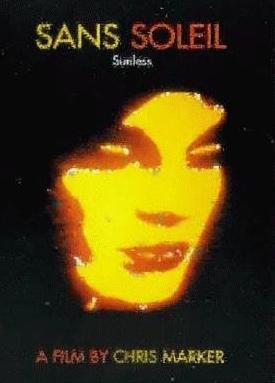
“Sans Soliel” (1983) is an experimental film by acclaimed French director Chris Marker which compiles footage recorded in various countries around the world and presents it in collage-like form. The movie features no synchronized sound, but instead ties the various segments together with music and voice-over narration pondering such topics as memory, technology and society. As the scenes shift, locations range from Japan to Iceland to Africa, creating a truly international work.
In his newest film, French documentarian and cinema-essayist Chris Marker reflects on French and international politics, art and culture at the start of the new millennium. In November 2001, the filmmaker became intrigued, as did many other Parisians, by the sudden appearance of alluring portraits of grinning yellow cats on buildings, Metro walls and other public surfaces. Marker’s cinematic efforts to document the mysterious materializations of this charming feline throughout Paris are a recurring theme of THE CASE OF THE GRINNING CAT.
This engaging record of Marker’s cinematic peregrinations throughout the city, visually energized by his free-association montage style, chronicles strikes, demonstrations, memorials, election campaigns, celebrity scandals, international political incidents, and a seemingly endless variety of political protests (against the Iraq War, against China’s occupation of Tibet, against the government’s ban on the wearing of Muslim headscarves). The personalized commentary running throughout THE CASE OF THE GRINNING CAT offers the simultaneously learned and witty reflections of the filmmaker, now in his early eighties, on both the contemporary and historical implications of these varied events and personalities.
The mysterious grinning yellow cats soon begin to appear amidst the banners and signs in some of the political demonstrations. Eventually, the creator of the grinning cats is revealed to be an art collective known as Mr. Cat, whose members are shown painting a massive representation of their mascot on the plaza before the Pompidou Center. The filmmaker’s own famous cat caricature soon allies with Mr. Cat, as Marker speculates on the political possibilities of such a feline association.
Chris Marker concludes THE CASE OF THE GRINNING CAT with thoughts on the vital importance of such expressions of imagination in our public lives, echoing the May ’68 slogan that “La poésie est dans la rue” (“Poetry is in the street”).
What living director has drawn the descriptor “surreal” more often than David Lynch? If you’ve seen, or rather experienced, a few of his films — particularly Eraserhead, Lost Highway, Mulholland Dr., or Inland Empire, or even the first half of his television series Twin Peaks — you know he’s earned it. Like any surrealist worth his salt, Lynch creates his own version of reality, with its own set of often unfathomable and inexplicably but emotionally and psychologically resonant qualities. In 1987, the year after his breakthrough Blue Velvet opened in theaters, the BBC apparently thought him enough of an authority on the matter of cinematic surrealism to enlist him to present an episode of Arena on the subject.
And so we’ve highlighted, just above in two parts, the fruit of their collaboration, with apologies for the straight-from-the-VHS quality of the video. (I just think of the slight muddledness as adding another welcome layer of unreality to the proceedings.)
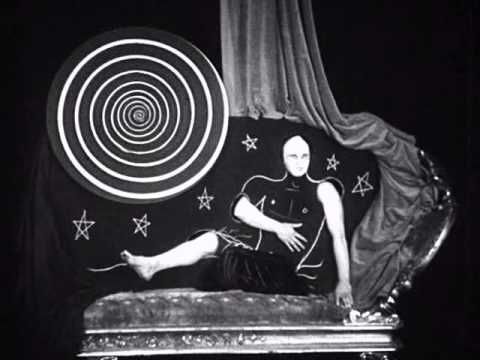
Lynch’s duties on the broadcast include providing facts about the films and filmmakers excerpted throughout to tell the history of surrealist film. (He also provides several choice opinions, as when he calls Philadelphia “one of the sickest, most corrupt, decadent, fear-ridden cities that exists.”) We see bits and pieces of pictures like Luis Buñuel and Salvador Dali’s 1929 Un Chien Andalou, Jean Cocteau’s 1932 Blood of a Poet, Fernand Léger’s 1947 The Girl with the Prefabricated Heart, and Chris Marker’s 1962 La Jetée. Not only does Lynch contextualize them, he discusses their influence on his own work. Casual filmgoers who’ve caught a Lynch movie or two and taken them as the imaginings of an entertaining weirdo will, after watching this episode, come to understand how long a tradition they fit into — and they’ll no doubt want to see not just more of Lynch’s work, but his sources of inspiration as well. (They may, however, after hearing all he has to say here, still regard him as a weirdo.)
“La Jetée” (1962) is a short sci-fi feature directed by filmmaker, poet, novelist, photographer, editor, videographer and digital multimedia artist Chris Marker. Comprised entirely of narration over still photos (except for one crucial scene), La Jetée tells the story of a post-nuclear war time travel experiment and is considered one of the most influential and radical science-fiction films ever made (directly inspiring Terry Gilliam’s “12 Monkeys”).

 After the Crash